The Sequencing of Game Complexes in Women's Volleyball
←
→
Page content transcription
If your browser does not render page correctly, please read the page content below
ORIGINAL RESEARCH
                                                                                                                                                  published: 30 April 2020
                                                                                                                                          doi: 10.3389/fpsyg.2020.00739

                                            The Sequencing of Game Complexes
                                            in Women’s Volleyball
                                            Raúl Hileno 1 , Marta Arasanz 1 and Antonio García-de-Alcaraz 2,3*
                                            1
                                             National Institute of Physical Education of Catalonia (INEFC), University of Lleida, Lleida, Spain, 2 Faculty of Education
                                            Science, University of Almería, Almería, Spain, 3 LFE Research Group, Universidad Politécnica de Madrid, Madrid, Spain

                                            In volleyball, each team must use no more than three hits to return the ball to the
                                            opponent’s court. This unique aspect of volleyball means that playing actions can be
                                            grouped into different complexes, mainly based on the initial defensive action. The
                                            purpose of this study was to find out which game complexes are most common in
                                            women’s volleyball and how those phases are sequenced. The study analyzed 4,252
                                            complexes from 1,176 rallies or points (seven matches, with 27 sets in total) in the
                                            2015 and 2016 Copa de la Reina. The variables analyzed were the game complex,
                                            complex efficacy, and number of complexes per point. Two Markov chains were
                           Edited by:       defined to visualize how the complexes are sequenced. The first chain looked only at
                       Pietro Avanzini,
             University of Parma, Italy
                                            categories of the game complex variable, taking seven states and 24 transitions into
                        Reviewed by:
                                            consideration. The second chain combined the game complex and complex efficacy
                         José Afonso,       variables, taking 26 states and 125 transitions into consideration. These chains provide
          University of Porto, Portugal
                                            practical information regarding which sequences of complexes occur most frequently in
                       Enrique Ortega,
           University of Murcia, Spain      the competition analyzed, and therefore which ones should be the main focus in training
                 *Correspondence:           sessions. The most frequent sequence was Complex 0 (the serve), followed by Complex
           Antonio García-de-Alcaraz        I with in-system attack, followed by Complex II without continuity.
         antoniogadealse@gmail.com
                                            Keywords: match analysis, performance analysis, team sports, Markov chain, game sequence
                   Specialty section:
         This article was submitted to
        Movement Science and Sport          INTRODUCTION
                           Psychology,
               a section of the journal     Volleyball is a sport in which two teams compete against each other from opposite sides of a court
               Frontiers in Psychology
                                            divided by a net. The objective is to send the ball over the net and make it touch the floor in the
         Received: 24 January 2020          opposite team’s court. Each team can use up to three hits (excluding the block and a consecutive
          Accepted: 26 March 2020
                                            contact at the first hit of a team) to send the ball over the net. The official rules published by the
           Published: 30 April 2020
                                            Fédération Internationale de Volleyball (2016) define a rally as “the sequence of playing actions
                            Citation:       from the moment of the service hit by the server until the ball is out of play” (p. 22). The playing
             Hileno R, Arasanz M and
                                            actions that can take place during a rally are the serve, reception, set, attack, block, defense, and
      García-de-Alcaraz A (2020) The
     Sequencing of Game Complexes
                                            counterattack (Selinger and Ackermann-Blount, 1992). In both training and competition, these
                in Women’s Volleyball.      actions are usually grouped into game complexes (each of which is denoted by the letter K, followed
               Front. Psychol. 11:739.      by a numeral) so that the structure and dynamics of the game can be understood more easily
      doi: 10.3389/fpsyg.2020.00739         (Rodríguez-Ruiz et al., 2011). Each type of complex differs from the others based primarily on

Frontiers in Psychology | www.frontiersin.org                                       1                                                  April 2020 | Volume 11 | Article 739
Hileno et al. Game Complexes in Volleyball
the initial defensive action (Hileno and Buscà, 2012). Complex I volleyball and how those complexes are sequenced, analyzing
(KI), for instance, starts with the service reception and continues their efficacy and transitions using Markov chains.
with the set and the attack. Complex II (KII), on the other
hand, starts with the attack defense and continues with a set and
a counterattack. MATERIALS AND METHODS
Initially, when the old side-out scoring system was used in
the twentieth century, coaches only distinguished between two Participants
types of complexes when analyzing matches and organizing We analyzed 4,252 game complexes from 1,176 points in two
training sessions (Zhang, 2000). The first was the side-out matches (six sets) in the 2015 Copa de la Reina (the Spanish
phase (KI), which was performed by the team that was national knockout cup competition in women’s volleyball) and
receiving serve, with the aim of recovering serve and rotating. five matches (21 sets) in the 2016 competition. The matches
The second was the point phase (KII), which was performed involved seven teams: CVB Barça, Feel Volley Alcobendas, Fígaro
by the team that was serving, with the aim of scoring a Peluqueros Haris, GH Leadernet Navarcable, Haro Rioja Voley,
point and continuing to serve (Valladares et al., 2016). In Naturhouse Ciudad de Logroño, and VP Madrid. All teams used
the twenty-first century, following the introduction of the a 5-1 offensive formation, a two- or three-player serve-receive
rally point scoring system in 1998, research on volleyball pattern, and a player-back defensive system (USA Volleyball,
(Hurst et al., 2016, 2017; Laporta et al., 2018a,b) and beach 2009). Each rally began with the serve and ended when the
volleyball (Medeiros et al., 2017) has identified six game first referee indicated that the ball was out of play. Complex
complexes. These complexes can also be used for planning 0 was recorded as soon as a player served the ball and the
and organizing technical and tactical training. The four new other complexes were recorded straight after the first touch
complexes, in addition to KI and KII, are Complex 0 (K0), of each possession, unless the point ended earlier as per the
which is also known as the serve, and complexes III, IV, rules of the game.
and V (KIII, KIV, and KV), which begin, respectively, with a
counterattack defense, an offensive block defense, and a free- Variables
ball defense, and continue with a set and then a counterattack The game complex refers to the period during which one team is
(Hileno and Buscà, 2012). in possession of the ball (Laporta et al., 2015). Following Hurst
Specialized theoretical literature on volleyball that diagrams et al. (2016, 2017), Loureiro et al. (2017), and Laporta et al.
the sequencing of game actions (e. g., Eom and Schutz, 1992; (2018a,b), this study distinguished between six game complexes:
Selinger and Ackermann-Blount, 1992; Meier, 1994; Marcelino (a) Complex 0 (K0: serve); (b) Complex I (KI: service reception,
et al., 2008) is more plentiful than the literature showing the set, and attack); (c) Complex II (KII: attack defense, set, and
sequencing of game complexes. Palao et al. (2004) produced a counterattack); (d) Complex III (KIII: counterattack defense,
flowchart with only three game complexes (KI, KII, and KIII). set, and counterattack); (e) Complex IV (KIV: offensive block
Laporta et al. (2018a) developed another flowchart with six game defense, set, and counterattack); and (f) Complex V (KV: free-
complexes (labeled from K0 to KV), from which the authors ball defense, set, and counterattack). The present study adds a
identified a total of 13 transitions between complexes (K0 to seventh complex, called “undefined complex” (UK), to capture
KI; KI to KII, KIV, and KV; KII to KIII and KIV; KIII to complexes that were hard to classify, since they began with an
KIII, KIV, and KV; KIV to KIII and KV; and KV to KIII and unusual defensive action, such as defending an “overpass spike”
KIV). Unfortunately, the diagrams did not show which complex or a “joust.” An overpass spike occurs when a player spikes
transitions were the most frequent and which needed to be an overpass that is just above the net due to a poor reception,
worked on the most in training. defense, or set by the opposite team; a joust occurs when at least
Various researchers recently addressed this shortcoming one player from each team simultaneously makes contact with a
by using social network diagrams and measuring eigenvector ball that is just above the net after a poor first or second hit.
centrality to analyze the connections between game complexes The complex efficacy indicates how well the observed game
in elite women’s and men’s volleyball (Hurst et al., 2016, 2017; complex is executed. This study uses an adaptation of the ordinal
Loureiro et al., 2017; Laporta et al., 2018a,b). In addition to scale proposed by Palao et al. (2015), with four categories to
the game complex variable, the researchers considered other evaluate the efficacy of the game complex: (a) no continuity
variables that are established during a rally, such as the serve type, (0: the complex does not allow play to continue); (b) no spike
serve zone, reception zone, setting zone, and number of attackers (1: the complex does not allow the attack or counterattack
available. One key variable, however, is absent from their match to culminate with a spike, ending instead with a free-ball);
analyses: complex efficacy. Lames and McGarry (2007) analyzed (c) out-of-system offense (2: the complex allows the attack
the transitions between six game actions (serve, reception, set, or counterattack to culminate with a spike, but the build-up
attack, block, and dig), taking into account their efficacy (winning to the spike is disorganized because the set is performed by
points) and analyzing interactions using a Markov chain. This a player other than the setter or because the setter receives
approach is similar to social networks, and is based on the study a poor pass, in other words, a pass that goes to the setter’s
of transition probabilities between events or states (Isaacson and forearms, a pass that goes to a position that is not ideal for
Madsen, 1976). Therefore, the purpose of the present study was setting, or a pass that leaves the middle hitter unavailable);
to find out which game complexes are most frequent in women’s and (d) in-system offense (3: the complex allows the attack
Frontiers in Psychology | www.frontiersin.org 2 April 2020 | Volume 11 | Article 739Hileno et al. Game Complexes in Volleyball
or counterattack to culminate with a spike following a well- which the probability of an event occurring (state j) depends only
organized build-up, with the first hit being good enough to allow on the immediately preceding event (state i). In mathematical
the setter to perform a dump on the second touch or to deliver terms, the probability of moving from state i to state j is expressed
a good-quality set from an ideal court position, with the middle as follows:
hitter available). pij = Pr x1 = j|x0 = i
The variable for the number of complexes per point indicates
the total number of complexes between the ball being served These transition probabilities (pij ) were calculated from two two-
and the first referee indicating that the ball is out of play. dimensional contingency tables, applying the following equation
If the server did not produce a legal serve, only Complex 0 in each table cell:
was recorded. This meant that at least one game complex was pij = nij /ni
recorded for each point.
where nij is the frequency observed in the cell located in row i and
column j in the contingency table, and nxi is the total frequency
Procedures
of row i in the contingency table.
The two competitions were recorded using a digital video camera
All the statistical analysis was performed in Stata/IC v. 15.1
on a tripod located in the center of one of the stands situated
(StataCorp, College Station, TX, United States) and the Markov
at one end of the court. The recorded video files were played
chains were performed in MATLAB v. 9.6 (The MathWorks, Inc.,
back using the sports video analysis software Kinovea v. 0.8.15
Natick, MA, United States). A significance level of 0.05 was used
(Joan Chartman and contributors, Free Software Foundation,
for all the statistical tests.
Inc., Boston, MA, United States) and the data were recorded
in a Microsoft Excel 2013 (Microsoft Corp., Redmond, WA,
United States) spreadsheet.
RESULTS
To analyze the reliability of the data, a set from one match
in the sample was selected at random. The chosen set had 154 The mean number of complexes per point was 3.62, with a
game complexes and 41 points. Two observers – both certified standard deviation of 1.78. Every point had from 1 to 13
volleyball coaches – recorded data for the set. The first observer complexes. The median number of complexes was 3 and the
recorded the data, then did the same again 2 weeks later; the interquartile interval was 3–4.
second observer recorded data only once. Before this reliability The most frequent numbers of complexes per point were 3
test, both observers trained for 2 h to familiarize themselves (45.1%), 4 (16.5%), 5 (10.7%), 1 (9.5%), 2 (6.8%), and 6 (5.2%).
with the log sheet and the variables being studied. Agreement Only 6.2% of the points had from 7 to 13 complexes.
among the observations was estimated using Cohen’s kappa As shown in Table 1, K0 was the most frequent game complex
coefficient. The coefficient was greater than 0.97 for all three (27.66%), followed by complexes KI, KII, KIII, KIV, KV, and UK.
variables both in the comparison of the two observations by A significant moderate relationship was found between the
observer 1 and in the comparison between observers 1 and 2. In game complex and complex efficacy variables (χ2 = 1,093.49,
accordance with the scale proposed by Landis and Koch (1977), df = 15, p < 0.001, Ccorr = 0.59). Furthermore, eight significant
the strength of agreement was therefore almost perfect for all positive relationships were found between categories of these
three variables analyzed. two variables (adjusted residuals or z scores ≥1.96). As shown
in Table 2, the end of a point (no continuity) was associated
Statistical Analysis with KII, KIII, KIV, and UK; a free-ball (no spike) at the
Firstly, a descriptive analysis was carried out for two variables: end of a complex was associated with KIV; a disorganized
number of complexes per point and game complex. For the counterattack (out-of-system offense) at the end of a complex was
game complex variable, the confidence interval for a proportion
(1-α confidence interval for π) was also calculated using
the Wilson method. TABLE 1 | A descriptive analysis (absolute and relative frequencies) and inferential
Secondly, the relationship between the game complex and analysis (confidence interval for a proportion calculated using the Wilson method)
complex efficacy variables (and their respective categories) was of the game complex variable.
studied using Pearson’s chi-squared test (χ2 ), the corrected
95% CI
contingency coefficient (Ccorr ), and adjusted residuals or
Allison and Liker z scores (Allison and Liker, 1982). The Game complex n % LL UL
corrected contingency coefficient was used to determine whether
the strength of the relationship was weak (Ccorr < 0.30), Complex 0 1,176 27.66 26.33 29.02
moderate (Ccorr ≥ 0.30 and ≤ 0.70), or strong (Ccorr > 0.70) Complex I 1,064 25.02 23.74 26.35
(Kraska-Miller, 2014). Complex II 711 16.72 15.63 17.87
Finally, two Markov chains or state transition diagrams Complex III 680 15.99 14.92 17.12
were constructed to show transition probabilities (pij ) between Complex IV 280 6.59 5.88 7.37
Complex V 249 5.86 5.19 6.60
different game complexes. The first chain took complex efficacy
Undefined 92 2.16 1.77 2.65
into account; the second did not. According to Isaacson and
Madsen (1976), a Markov chain is a discrete stochastic process in n, number of observations; CI, confidence interval; LL, lower limit; UL, upper limit.
Frontiers in Psychology | www.frontiersin.org 3 April 2020 | Volume 11 | Article 739Hileno et al. Game Complexes in Volleyball
TABLE 2 | Relationships between the game complex and complex efficacy variables (adjusted residuals).
Game complex
Complex performance Complex I Complex II Complex III Complex IV Complex V Undefined
No continuity −22.95*** 15.38*** 10.03*** 6.34*** −8.77*** 4.94***
No spike −0.52 −0.14 −0.36 2.96** −1.83 0.60
Out-of-system offense 1.07 −1.34 2.52* −1.55 −1.05 −1.52
In-system offense 23.39*** −14.74*** −12.68*** −7.22*** 11.46*** −4.13***
*p < 0.05, **p < 0.01, ***p < 0.001.
associated with KIII; and an attack or counterattack (in-system two K0→KI→KIV sequences, and one K0→KI→KV or
offense) at the end of a complex was associated with KI and K0→KI→UK sequence for every ten serves.
KV, respectively. João et al. (2010) indicate that the mean length of points is
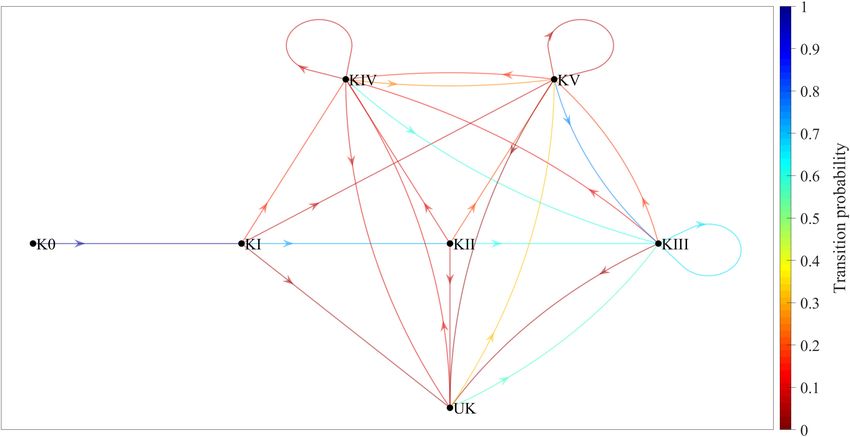
Figure 1 shows a Markov chain for the game complex variable usually longer in women’s volleyball than in the men’s game due
only, with seven states and 24 transitions. The colors show the to the different anthropometric and physiological characteristics
transition probabilities between different states, as per the color of men and women. Indeed, in the present study, long rallies
scale on the right. The conditional probability, for example, of with seven or more complexes were rare, but long rallies with
KII occurring after KI has occurred is about 0.70. In other words, four to six complexes were fairly common, since they accounted
p(KII | KI) ≈ 0.70. for a third of all points. In practical terms, this finding suggests
Figure 2 shows another Markov chain, this time combining that ball control drills using a net should not require women
the game complex and complex efficacy variables, with 26 states players to practice long rallies with more than six complexes or
and 125 transitions. The grayscale tones show the transition ball exchanges over the net.
probabilities between different states, as per the grayscale bar on Laporta et al. (2018a) found that the most frequent game
the right. The conditional probability, for example, of KII without complex in elite women’s volleyball was K0, followed in order of
continuity occurring after KI with in-system attack has occurred frequency by KI, KII, KIII, KV, and KIV. In the present study,
is about 0.50. In other words, p(KII-0 | KI-3) ≈ 0.50. however, the order of frequency was K0, KI, KII, KIII, KIV, KV,
and UK. One possible reason why KIV was more frequent than
KV in this study, rather than the other way around, is the addition
DISCUSSION of the undefined complex (UK). In other words, if the present
study had not defined a separate UK category and such complexes
The main objective of this study was to understand how game had been categorized as KV (which to a certain extent would
complexes are sequenced in women’s volleyball by analyzing make sense, since both are the result of a poor first or second
them using Markov chains – a different approach from social hit in the previous complex), KV would also have been more
networks. Although the structure might look identical, the frequent than KIV, as was the case in the aforementioned study.
information that a Markov chain (state transition diagram) Another possible explanation might be the performance level of
provides is not exactly the same as what a social network players analyzed, who are non-elite, in contrast to the elite players
(sociogram) provides. Both processes involve a series of dots, observed by Laporta et al. (2018a).
points, events, states, nodes, or vertices connected to each The analysis of the relationship between game complexes
other by lines, arrows, transitions, edges, tiles, bridges, links, or and their efficacy found that KI and KV were most closely
connections. In sociograms, however, the size of the nodes tends associated with an in-system offense, whereas KII, KIII, KIV,
to be modified to indicate the node degree (number of edges and UK were most closely associated with no continuity. This
connected to a node) and the thickness of the edges tends to be may be because the defensive actions that initiate KI (receiving
modified to indicate the weight or “cost” of the connections in a serve) and KV (defending a free-ball) start further away from
the network (Newman, 2003). In state transition diagrams, on the net, thus allowing a longer reaction time than the defensive
the other hand, the size of the states and the thickness of the actions that initiate KII (defending an attack), KIII (defending
transitions are normally unmodified, with transition probabilities a counterattack), KIV (defending an offensive block), and UK
between adjacent states indicated using numbers or colors. (defending an overpass spike or a joust). Castro and Mesquita
Regarding the number of game complexes per point, almost (2010) argue that the further away the opposite team’s offensive
half of the points in the present study had only three game action is from the net, the easier it is to produce a better-
complexes each. This fact and the transition probabilities quality first touch and then to build a well-organized attack
shown in the first Markov chain (Figure 1) show that the or counterattack.
most frequent sequence of complexes is K0→KI→KII, The Markov chain in Figure 1 is less complex and easier
followed by the sequences K0→KI→KIV, K0→KI→KV, to interpret than the one in Figure 2, since there are fewer
and K0→KI→UK. Consequently, for training to reflect transitions between complexes (24 in Figure 1 vs. 125 in
competition play as closely as possible, KI training sessions Figure 2). The first chain, however, is less accurate than the
should work on approximately seven K0→KI→KII sequences, second one, since it only covers transient (K0, KI, and KII) and
Frontiers in Psychology | www.frontiersin.org 4 April 2020 | Volume 11 | Article 739Hileno et al. Game Complexes in Volleyball FIGURE 1 | Game-complex transition probabilities (without taking complex efficacy into account) shown in a Markov chain consisting of seven states and 24 transitions. K0, complex 0; KI, complex I; KII, complex II; KIII, complex III; KIV, complex IV; KV, complex V; UK, undefined complex. FIGURE 2 | Game-complex transition probabilities (taking complex efficacy into account) shown in a Markov chain consisting of 26 states and 125 transitions. 0, no continuity; 1, no spike; 2, out-of-system offense; 3, in-system offense. recurrent (KIII, KIV, KV, and UK) states without ever completing There are two other important matters to consider regarding the sequence initiated with K0. Despite its complexity, the second the first Markov chain, which did not take complex efficacy chain is a much better reflection of the reality of the game, since into account: (a) there were seven main transitions between in addition to transient and recurrent states, it also includes complexes (K0 to KI; KI to KII; and KII, KIII, KIV, KV, and absorbing states such as KI-0 (Complex I without continuity), UK to KIII), each with a transition probability of around 0.60 or in which the sequence begins with a serve and ends with an higher; and (b) even without taking into account the transitions error made during KI. involving the UK, this Markov chain showed three transitions Frontiers in Psychology | www.frontiersin.org 5 April 2020 | Volume 11 | Article 739
Hileno et al.                                                                                                           Game Complexes in Volleyball

(KII to KV, KIV to KIV, and KV to KV) that were not present in             important for the analyzed women’s volleyball teams to work
the theoretical diagram by Laporta et al. (2018a). Furthermore,            on are K0 and KI, followed by KII and KIII; (b) KIV should be
in the second Markov chain, which did take complex efficacy                worked on slightly more than KV; (c) teams looking to work on
into account, there are two additional aspects that should be              short rallies should focus in particular on the K0→KI-3→KII-
considered: (a) the most relevant sequence of complexes was                0 sequence, with a controlled serve to make it easier for the
K0→KI-3→KII-0 (K0 [the serve], followed by KI with in-                     team receiving serve to build an in-system offense; and (d) teams
system attack, followed by KII without continuity), because the            looking to work on long rallies should carry out ball control drills
transition probability between the states was high (close to 0.50)         in which the ball crosses the net four to six times in total, with the
and because the most common number of complexes per point                  sequence starting with a poor reception of serve or a poor defense,
in the present study was three; and (b) the most likely transition         resulting in a free-ball or an out-of-system offense. The findings
other than KII-3, KIII-3, KIV-3, KV-3, and UK-3 (that is, KII,             would allow designing an adequate training session following
KIII, KIV, KV, and UK, each with in-system counterattack) was              specific competition demands. Moreover, trainers or strength and
KIII-0 (Complex III without continuity), which means that a                condition coaches may find in this study a useful guide of the
good counterattack is more likely than not to result in the point          most frequent movements and the sequence of actions demanded
ending during the next complex.                                            in these game complexes. Thus, the development of youth players
   Finally, despite the contributions of the present study, a              and/or the sign up of new players may develop according to the
number of methodological constraints have been identified that             demands of this specific context.
could be covered in future research. First, only senior women’s
volleyball at the national level was analyzed. Future studies
should therefore check whether game complexes follow similar               DATA AVAILABILITY STATEMENT
sequences in men’s volleyball, in other age categories, and at other
                                                                           The datasets generated for this study are available on request to
levels of competition (initial stages and top-levels). Second, the
                                                                           the corresponding author.
transitions between complexes were analyzed without taking into
account contextual variables such as quality of opposition, match
status, and match period, even though performance analysis                 ETHICS STATEMENT
in team sports such as soccer (García-Unanue et al., 2018),
basketball (Sampaio et al., 2010), and volleyball (Marcelino et al.,       Ethical review and approval was not required for the study
2012) does take them into account.                                         on human participants in accordance with the local legislation
                                                                           and institutional requirements. Written informed consent
                                                                           from the participants was not required to participate in this
CONCLUSION                                                                 study in accordance with the national legislation and the
                                                                           institutional requirements.
The research presented in this paper found that the most
frequent number of game complexes per point in the national
championship analyzed is three. The most common complex                    AUTHOR CONTRIBUTIONS
is K0, followed by KI, KII, KIII, KIV, KV, and UK, in that
order. KI and KV are associated with an in-system offense, while           RH worked on the conceptualization and design of the study,
KII, KIII, KIV, and UK are more closely associated with no                 analysis and interpretation of the data, and drafting of the
continuity. The most common sequence of complexes is K0 (the               manuscript. MA worked on the collection and interpretation of
serve), followed by KI with in-system attack, followed by KII              the data, and drafting of the manuscript. AG participated in the
without continuity.                                                        data interpretation and reviewed the content of the manuscript.
   The methodology of analyzing game-complex transitions
using Markov chains is considered a valid alternative to the               FUNDING
social networks methodology, providing practical information
about which sequences are most likely to occur in competition,             This study was conducted with support and funding from the
thus indicating which sequences training sessions should focus             National Institute of Physical Education of Catalonia (INEFC)
on the most. The two Markov chains presented in this paper                 and the Generalitat de Catalunya Research Group, Grup de
show that the sequencing of game complexes in competition                  Recerca i Innovació en Dissenys (GRID) – Tecnologia i
is not as straightforward as various theoretical diagrams have             aplicació multimedia i digital als dissenys observacionals (grant
traditionally proposed. Moreover, the Markov chain that takes              number 2017 SGR 1405).
complex efficacy into account reflects the reality of the game of
volleyball much better than the one that does not.
                                                                           ACKNOWLEDGMENTS
PRACTICAL IMPLICATIONS                                                     We would like to thank the Spanish Royal Volleyball Federation
                                                                           and Madrid Volleyball Federation for allowing the filming of
The main contributions of this paper that coaches can apply in             matches from outstanding locations. We are especially grateful
training are as follows: (a) the game complexes that are most              to Mr. Adan Aliseda for his help in the reliability process.

Frontiers in Psychology | www.frontiersin.org                          6                                           April 2020 | Volume 11 | Article 739
Hileno et al. Game Complexes in Volleyball
REFERENCES Loureiro, M., Hurst, M., Valongo, B., Nikolaidis, P., Laporta, L., and Afonso,
J. (2017). A comprehensive mapping of high-level men’s volleyball gameplay
Allison, P. D., and Liker, J. K. (1982). Analyzing sequential categorical data on through social network analysis: analysing serve, side-out, side-out transition
dyadic interaction: a comment on Gottman. Psychol. Bull. 91, 393–403. doi: and transition. Monten. J. Sports Sci. Med. 6, 35–41. doi: 10.26773/mjssm.2017.
10.1037/0033-2909.91.2.393 09.005
Castro, J. M., and Mesquita, I. (2010). Analysis of the attack tempo determinants Marcelino, R., Mesquita, I., and Sampaio, J. (2008). Estudo dos indicadores de
in volleyball’s complex II - A study on elite male teams. Int. J. Perf. Anal. Spor. rendimento em voleibol masculino em função do número do set. R. Bras. Ci.
10, 197–206. doi: 10.1080/24748668.2010.11868515 e Mov. 16, 1–23. doi: 10.18511/rbcm.v16i3.841
Eom, H. J., and Schutz, R. W. (1992). Statistical analyses of volleyball team Marcelino, R., Sampaio, J., and Mesquita, I. (2012). Attack and serve
performance. Res. Q. Exercise Sport. 63, 11–18. doi: 10.1080/02701367.1992. performances according to the match period and quality of opposition in elite
10607551 volleyball matches. J. Strength Cond. Res. 26, 3385–3391. doi: 10.1519/JSC.
Fédération Internationale de Volleyball. (2016). Official Volleyball Rules 2017-2020: 0b013e3182474269
Approved by the 35th FIVB Congress 2016. Available online at: https://www.fivb. Medeiros, A. I. A., Marcelino, R., Mesquita, I. M., and Palao, J. M. (2017).
com/en/volleyball/thegame_glossary/officialrulesofthegames Performance differences between winning and losing under-19, under-21 and
García-Unanue, J., Pérez-Gómez, J., Giménez, J. V., Felipe, J. L., Gómez-Pomares, senior teams in men’s beach volleyball. Int. J. Perf. Anal. Spor. 17, 96–108.
S., Gallardo, L., et al. (2018). Influence of contextual variables and the pressure doi: 10.1080/24748668.2017.1304029
to keep category on physical match performance in soccer players. PLoS One. Meier, M. (1994). Movement dynamics in volleyball with young players. Int. Volley
13:e0204256. doi: 10.1371/journal.pone.0204256 Tech. 1, 11–16.
Hileno, R., and Buscà, B. (2012). Observational tool for analyzing attack coverage Newman, M. E. J. (2003). The structure and function of complex networks. SIAM
in volleyball. Rev. Int. Med. Cienc. AC. 12, 557–570. Available online at: http: Rev. Soc. Ind. Appl. Math. 45, 167–256. doi: 10.1137/S003614450342480
//cdeporte.rediris.es/revista/revista60/artRIMCAFD639.htm Palao, J. M., Manzanares, P., and Ortega, E. (2015). Design and validation of an
Hurst, M., Loureiro, M., Valongo, B., Laporta, L., Nikolaidis, P. T., and Afonso, observation instrument for technical and tactical actions in indoor volleyball.
J. (2016). Systematic mapping of high-level women’s volleyball using social Eur. J. Hum. Mov. 34, 75–95.
network analysis: the case of serve (K0), side-out (KI), side-out transition Palao, J. M., Santos, J. A., and Ureña, A. (2004). Effect of team level on skill
(KII) and transition (KIII). Int. J. Perf. Anal. Spor. 16, 695–710. doi: 10.1080/ performance in volleyball. Int. J. Perf. Anal. Spor. 4, 50–60. doi: 10.1080/
24748668.2016.11868917 24748668.2004.11868304
Hurst, M., Loureiro, M., Valongo, B., Laporta, L., Nikolaidis, P. T., and Afonso, Rodríguez-Ruiz, D., Quiroga, M. E., Miralles, J. A., Sarmiento, S., Saá de, Y.,
J. (2017). Systematic mapping of high-level women’s volleyball using social and García-Manso, J. M. (2011). Study of the technical and tactical variables
network analysis: the case of attack coverage, freeball, and downball. Monten. determining set win or loss in top-level European men’s volleyball. J. Quant.
J. Sports Sci. Med. 6, 57–64. Anal. Sports 7, 1–13. doi: 10.2202/1559-0410.1281
Isaacson, D. L., and Madsen, R. W. (1976). Markov Chains: Theory and Sampaio, J., Lago, C., Casais, L., and Leite, N. (2010). Effects of starting score-line,
Applications. New York, NY: Wiley. game location, and quality of opposition in basketball quarter score. Eur. J. Sport
João, P. V., Leite, N., Mesquita, I., and Sampaio, J. (2010). Sex differences in Sci. 10, 391–396. doi: 10.1080/17461391003699104
discriminative power of volleyball game-related statistics. Percept. Mot. Skills Selinger, A., and Ackermann-Blount, J. (1992). Power Volleyball. Paris: Vigot.
111, 893–900. doi: 10.2466/05.11.25.PMS.111.6.893-900 USA Volleyball. (2009). Volleyball Systems & Strategies. Champaign, IL: Human
Kraska-Miller, M. (2014). Nonparametric Statistics for Social and Behavioral Kinetics.
Sciences. Boca Raton, FL: CRC Press. Valladares, N., García-Tormo, J. V., and João, P. V. (2016). Analysis of variables
Lames, M., and McGarry, T. (2007). On the search for reliable performance affecting performance in senior female volleyball world championship 2014. Int.
indicators in game sports. Int. J. Perf. Anal. Spor. 7, 62–79. doi: 10.1080/ J. Perf. Anal. Spor. 16, 400–410. doi: 10.1080/24748668.2016.11868895
24748668.2007.11868388 Zhang, R. (2000). How to profit by the new rules. The Coach. 1, 9–11.
Landis, J. R., and Koch, G. G. (1977). The measurement of observer agreement for
categorical data. Biometrics 33, 159–174. doi: 10.2307/2529310 Conflict of Interest: The authors declare that the research was conducted in the
Laporta, L., Afonso, J., and Mesquita, I. (2018a). Interaction network analysis of six absence of any commercial or financial relationships that could be construed as a
game complex in high-level volleyball through the use of eigenvector centrality. potential conflict of interest.
PLoS One. 13:e0203348. doi: 10.1371/journal.pone.0203348
Laporta, L., Afonso, J., and Mesquita, I. (2018b). The need for weighting indirect Copyright © 2020 Hileno, Arasanz and García-de-Alcaraz. This is an open-access
connections between game variables: social network analysis and eigenvector article distributed under the terms of the Creative Commons Attribution License
centrality applied to high-level men’s volleyball. Int. J. Perf. Anal. Spor. 18, (CC BY). The use, distribution or reproduction in other forums is permitted, provided
1067–1077. doi: 10.1080/24748668.2018.1553094 the original author(s) and the copyright owner(s) are credited and that the original
Laporta, L., Nikolaidis, P., Thomas, L., and Afonso, J. (2015). Attack coverage in publication in this journal is cited, in accordance with accepted academic practice.
high-level men’s volleyball: organization on the edge of chaos? J. Hum. Kinet. No use, distribution or reproduction is permitted which does not comply with
47, 249–257. doi: 10.1515/hukin-2015-0080 these terms.
Frontiers in Psychology | www.frontiersin.org 7 April 2020 | Volume 11 | Article 739You can also read


