Vacant Site Levy Waterford City & County Council - Waterford City & County Council
←
→
Page content transcription
If your browser does not render page correctly, please read the page content below
Habitats Directive Article 6

     Appropriate Assessment Screening

       Vacant Site Levy
Waterford City & County Council
  Proposed Variation No. 3a to Waterford City
         Development Plan 2013-2019

 Proposed Variation No. 3a to Waterford County
         Development Plan 2011-2017

 Proposed Variation No. 3a to Dungarvan Town
         Development Plan 2012-2018

                October 2016

                                                 1
Contents
1. Introduction to the Habitats Directive and Article 6 Assessment 3
2. Process of Habitats Directive Assessment 4
3. Screening Assessment 14
4. Conclusion 20
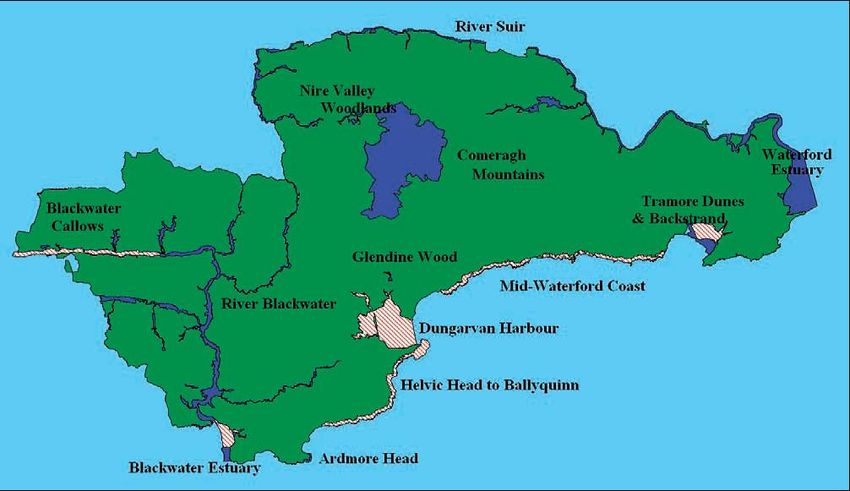
Map 1. SACs and SPAs in County Waterford
21. Introduction to the Habitats Directive and Article 6 Assessment
The aim of the European Habitats Directive (Council Directive 92/43/EEC on the
conservation of wild habitats and of wild fauna and flora) is to create a network of
protected wildlife sites in Europe, maintained at a favourable conservation status1.
Each member state must designate their most important natural areas as Special Areas
of Conservation. The Directive specifies the scientific criteria on the basis of which
SAC sites must be selected and very strictly curtails the grounds that can be used as
justification for damaging a site. The network of sites is referred to as NATURA 2000
and includes SACs (Special Areas of Conservation) for protected habitats and species
and SPAs (Special Protection Areas) for protected birds.
The European Habitats Directive (Council of the European Communities 1992) was
transposed into Irish legislation by the European Communities (Natural Habitats)
Regulations 1997 and amended in 1998, 2005 and 2011. The Birds and Habitats)
Regulations 2011 and (Part XAB) of the Planning and Development Act 2000 (as
amended) , set out the obligations of planning authorities under the Birds and
Habitats Directives.
Article 6 of the Habitats Directive provides a strict assessment procedure for any plan
or project not directly connected with or necessary to the management of a designated
European site but which has the potential to have implications for the site in view of
the site’s conservation objectives.
1 The conservation status of a species can be taken as "favourable" when population dynamics data on the species
concerned indicate that it is maintaining itself on a long term basis as a viable component of its natural habitats,
the natural range of the species is neither being reduced nor is likely to be reduced for the foreseeable future and
there is and will continue to be a sufficiently large habitat to maintain its populations on a long-term basis.
Article 1 (i) of the Habitats Directive 92/43/EEC
The conservation status of a habitat can be taken as "favourable” when its natural range and area it covers within
that range is stable or increasing and the ecological factors that are necessary for its long-term maintenance exist
and are likely to continue to exist for the foreseeable future.
32. Guidance on the implementation of Article 6
The European Commission’s guidance on the provisions of article 6(3) and 6(4) of
the Habitats Directive sets out four stages for Appropriate Assessment.2
Stage 1. Screening — the process which identifies the likely impacts upon a Natura
2000 site of a project or plan, either alone or in combination with other projects or
plans, and considers whether these impacts are likely to be significant;
Stage 2. Appropriate assessment — the consideration of the impact on the integrity
of the Natura 2000 site of the project or plan, either alone or in combination with
other projects or plans, with respect to the site’s structure and function and its
conservation objectives. Additionally, where there are adverse impacts, an assessment
of the potential mitigation of those impacts;
Stage 3. Assessment of alternative solutions — the process which examines
alternative ways of achieving the objectives of the project or plan that avoid adverse
impacts on the integrity of the Natura 2000 site;
Stage 4. Assessment where no alternative solutions exist and where adverse
impacts remain — an assessment of compensatory measures where, in the light of
an assessment of imperative reasons of overriding public interest (IROPI), it is
deemed that the project or plan should proceed.
3. Procedure for stage one screening
This report consists of a screening for a proposed variation 3a to the Waterford
County Development Plan 2011-2017, Waterford City Development Plan 2013-2019
and the Dungarvan Town Development Plan 2012-2018.
This stage examines the likely effects of the proposed variation on Natura 2000 sites
in Waterford and within a 15km radius of the county and considers whether it can be
objectively concluded that these sites will not be significantly impacted. This
assessment comprises four steps:-
2 Assessment of plans and projects significantly affecting Natura 200 sites- methodological guidance on the provisions of Article
6(3) and 6 (4) of the Habitats Directive 92/43/EEC.
Managing Natura 2000 sites The provisions of Article 6 of the Habitats Directive 92/43/EEC.
European Commission (2002)
4Step 1: determining whether the project or plan is directly connected with or
necessary to the management of the site: -
The enactment of the Urban Regeneration and Housing Act in September 2015 forms
part of the national Construction 2020 Strategy which seeks to address key issues such
as the provision of housing whilst developing a more sustainable construction sector.
The Urban Regeneration and Housing Act 2015 provides for a range of actions to
encourage developers and landowners to develop land zoned for residential use and/or
urban land identified by local authorities in need of regeneration. The primary
mechanisms are:
Introduction of a Vacant Sites Levy;
Revisions to Part V Social & Affordable Housing and Development
Contribution requirements.
Variation 3a focuses on the introduction of the Vacant Sites Levy and making
provision for same in the 3 no. development plans underpinning Waterford City and
County.
The proposed variation is not directly connected to the management of any Natura
2000 sites.
Step 2: describing the project or plan and the description and characterisation
of other projects or plans that in combination have the potential for having
significant effects on the Natura 2000 site;
The purpose of the vacant site levy is to incentivise the development of vacant sites in
urban areas for housing and regeneration purposes. The levy mechanism is a tool to
ensure that vacant or underutilised land in urban areas is brought back into beneficial
use. Under the Act it is mandatory for all Planning Authorities to establish a vacant
site register.
Step 3: Identifying the potential effects on the Natura 2000 site;
The DoEHLG Guidance on Appropriate Assessment on Plans and Projects in Ireland
(December 2009) states that all N2000 sites within or adjacent the county must be
mapped and tabulated, and site integrity and site conditions necessary to support the
site integrity must be indicated.
The information presented in Table 1 comprises a breakdown of Natura 2000 sites
within Waterford. The N2000 sites are listed by designation; Special Areas of
Conservation / Special Protection Areas. The following information is listed for each
N2000 site:
Site code
5 Site name
Qualifying interests
Conservation objectives
Threats to site integrity
Table 2 details sites outside Waterford but within a 15km buffer zone of the county.
Step 4: Assessing the significance of any effects on the Natura 2000 site.
The screening stage involves application of the precautionary principle proportional to
the policy/objective and the Natura 2000 site in question. The proposed variation
and its impact on the N2000 have been screened to ascertain if the variation is likely
to have significant effects on any Natura 2000 sites, using the following framework.
Proposed variation
N2000 site
Qualifying interests
Threats to site integrity
Potential impacts from proposed variation
Risk of significant impact (Y/N)
Potential 'in combination' impacts
Risk of significant impacts (Y/N)
Avoidance and (then) mitigation measures
Action required: objective/action change needed / rewording /
Where no significant effects are found, the proposed variation is accepted and a
Finding of no Significant Effects Report is concluded and no further assessment is
required.
Where the proposed variation does have a significant effect, then the policy needs to
be amended or rejected and a Stage 2 Appropriate Assessment is required.
67
Table 1: Natura 2000 sites within Waterford

Waterford                                                          Special Areas of Conservation (SACs)
Site code   Site    Qualifying interests                           Conservation objectives                                                Threats to site integrity
name
 0002137             Alluvial Wet Woodlands and Yew Wood,           To maintain or restore the favourable conservation condition of the    Obstructions, impassable weirs, gross
 Lower River Suir    Floating River Vegetation, Atlantic Salt       Annex I habitat(s) and/or the Annex II species for which the SAC       pollutants, specific pollutants, channel
                     Meadows, Old Oak Wood and Eutrophic
                     Tall Herbs                                     has been selected.                                                     maintenance, man-made barriers to
                     Sea Lamprey, Brook Lamprey, River                                                                                     migration, eutrophication, leisure fishing
                     Lamprey, Freshwater Pearl Mussel, Crayfish,                                                                           drift netting, use of pesticides, fertilisation,
                     Twaite Shad, Atlantic Salmon, Otter                                                                                   removal of hedges and copses, removal of
                                                                                                                                           scrub, felling of native or mixed woodland,
                                                                                                                                           professional fishing(including lobster pots
                                                                                                                                           and fyke nets)hunting, trapping, poisoning,
                                                                                                                                           poaching, sand and gravel extraction,
                                                                                                                                           mechanical removal of peat, urbanised
                                                                                                                                           areas, human habitation, continuous
                                                                                                                                           urbanisation, industrial or commercial
                                                                                                                                           areas, discharges, disposal of household
                                                                                                                                           waste, industrial waste, inert materials,
                                                                                                                                           other discharges, routes, autoroutes,
                                                                                                                                           bridge, viaduct, water pollution, other
                                                                                                                                           forms of pollution, infilling of ditches,
                                                                                                                                           dykes, pods, pools, marshes or pits,
                                                                                                                                           drainage, management of aquatic and
                                                                                                                                           bank vegetation for drainage purposes,
                                                                                                                                           removal of sediments, canalisation or

                                                                                                                                                                                         8
modifying structures of inland water
course
Overgrazing,infilling and reclamation,
inappropriate grazing levels and invasive
species, clearance for agriculture or felling
for timber, planting of non-native conifers,
Increased development
002123 Dry coastal heath and vegetated sea cliffs. To maintain or restore the favourable conservation condition of the Amenity use, residential and other
Ardmore Head Annex I habitat(s) and/or the Annex II species for which the SAC development in adjacent areas,
has been selected. encroachment of scrub
000072 Estuary, Mudflats, Shingle Banks, Salt To maintain or restore the favourable conservation condition of the Professional fishing, taking of flora, fauna,
Blackwater River Meadows, Floating River Vegetation, Old Annex I habitat(s) and/or the Annex II species for which the SAC Water pollution, climate change, change in
(Cork/Waterford) Oak Woods, Alluvial Woodland, Yew has been selected. species composition, aquaculture, bait
Woodland, Freshwater Pearl Mussel, White- digging, aggregate extraction,
clawed Crayfish, Shad, Lampreys, Salmon, To restore the favourable conservation condition of the Freshwater industrialisation, port/marina,
Pearl Mussel in the Blackwater River SAC.
Otter, Killarney Fern communications networks, water
pollution, reclamation of land, coastal
protection works, invasion by a species,
erosion and accretion, overgrazing,
infilling and reclamation, inappropriate
grazing levels, clearance for agriculture or
felling for timber, increased development
Obstructions, impassable weirs, channel
maintenance, barriers, eutrophication,
leisure fishing, drift netting
use of pesticides, fertilisation, removal of
hedges and copses, removal of scrub,
felling of native or mixed woodland,
9professional fishing(including lobster pots
and fyke nets)hunting, trapping, poisoning,
poaching, sand and gravel extraction,
mechanical removal of peat, urbanised
areas, human habitation, continuous
urbanisation, industrial or commercial
areas, discharges, disposal of household
waste, industrial waste, inert materials,
other discharges, routes, autoroutes,
bridge, viaduct, water pollution, other
forms of pollution, infilling of ditches,
dykes, pods, pools, marshes or pits,
drainage, management of aquatic and
bank vegetation for drainage purposes,
removal of sediments, canalisation or
modifying structures of inland water
course
Collection of samples, outdoor recreation,
woodland clearance, overgrazing,
hydrocarbons, global warming, climate
change, modifications to the hydrology of
sites through afforestation, road
development or hydro-electric engineering.
Air pollution
001952 Blanket bog, Dry, Wet and Alpine Heath, To maintain or restore the favourable conservation condition of the Agriculture, burning, sand and gravel
Comeragh Rocky Slopes, Oligotrophic Lakes, Floating Annex I habitat(s) and/or the Annex II species for which the SAC extraction, urbanisation, industrialisation,
Mountains River Vegetation, Shining Sicklemoss has been selected. acidification, tropospheric ozone and
nitrogen enrichment caused by
atmospheric deposition
10Abandonment, overgrazing, burning,
quarrying, outdoor recreation
002324 Semi-natural Woodland with rare assemblages To maintain or restore the favourable conservation condition of the Collection of samples, outdoor sport and
Glendine Wood of Ground Flora. Annex I habitat(s) and/or the Annex II species for which the SAC leisure, human disturbance in localities
has been selected. used for recreational purposes. Woodland
clearance, overgrazing, natural processes
such as wind felling of trees.
Modifications to the hydrology of a site
through afforestation, road development
or hydro-electric engineering, water
pollution, air pollution, hydrocarbons,
global warming, climate change
000665 Vegetated Sea Cliffs and Dry Heath. To maintain or restore the favourable conservation condition of the Agriculture, burning, sand and gravel
Helvick Head Annex I habitat(s) and/or the Annex II species for which the SAC extraction, urbanisation, industrialisation,
has been selected. acidification, tropospheric ozone and
nitrogen enrichment caused by
atmospheric deposition
000668 Old Oak Woodlands and Dry Heath To maintain or restore the favourable conservation condition of the Inappropriate grazing levels and invasive
Nier Valley Woods Annex I habitat(s) and/or the Annex II species for which the SAC species, clearance for agriculture or felling
has been selected. for timber, planting of non-native conifers
Agriculture, burning, sand and gravel
extraction, urbanisation, industrialisation,
acidification, tropospheric ozone and
nitrogen enrichment caused by
atmospheric deposition
002162 Estuary, Mudflats, Salt Meadows, Floating To maintain or restore the favourable conservation condition of the
11River Nore and River Annex I habitat(s) and/or the Annex II species for which the SAC
River Vegetation, Dry Heath, Marginal River has been selected.
Barrow Vegetation,
Petrifying Springs, Old Oak Woods, Alluvial
Woods, White-clawed Crayfish, Freshwater
(Waterford Pearl Mussel, Whorl snail, Shad, Lampreys,
Estuary) Salmon, Otter, Killarney Fern
00671 Mudflats and sandflats, shingle banks, salt To maintain or restore the favourable conservation condition of the Erosion, walking, horseriding and non
Tramore Dunes and meadows, embryonic, white and fixed dunes. Annex I habitat(s) and/or the Annex II species for which the SAC motorised vehicles, trampling, overuse, sea
Back Strand has been selected. defence or coastal protection works,
undergrazing, invasion by a species,
camping and caravans, agricultural
improvement, stock feeding, overgrazing,
paths, tracks, cycle routes, golf courses,
restructured agricultural land holding,
disposal of household waste, sand and
gravel extraction, other pollution or human
activities, aquaculture, professional
fishing, bait digging, removal of fauna,
aggregate extraction, removal of beach
material, industrialisation, port/marina,
communication networks, water pollution,
reclamation of land,
Special Protection Areas (SPAs)
Site code Qualifying interests Conservation objectives Threats to site integrity
Site name
Tramore Brent Geese, Golden Plover, Grey Plover, To maintain or restore the favourable conservation condition of the Disturbance, Water Quality, Invasive
bird species listed as Special Conservation Interests for this SPA.
Backstrand Black-tailed Godwit, Bar-tailed Godwit, Species
Lapwing, Dunlin, Sanderling,
Dungarvan Bay Brent Goose, Black-tailed Godwit , Bar-tailed To maintain or restore the favourable conservation condition of the Disturbance, Water pollution, climate
bird species listed as Special Conservation Interests for this SPA.
Godwit, of international importance change, change in species composition,
12Nationally important numbers of Shelduck, aquaculture, bait digging, aggregate
Wigeon, Red-breasted Merganser, Grey extraction, industrialisation, port/marina,
Plover, Golden Plover, Lapwing, Knot, communications networks, water pollution
Sanderling, Dunlin, Redshank and Turnstone
Blackwater Whooper swan, Bewick’s Swan, To maintain or restore the favourable conservation condition of the Disturbance, change in agricultural
bird species listed as Special Conservation Interests for this SPA.
Callows Golden Plover, Kingfisher practices
Blackwater Estuary Little Egret, Golden Plover, Bar-tailed To maintain or restore the favourable conservation condition of the Disturbance, Water pollution
bird species listed as Special Conservation Interests for this SPA.
Godwit, Sandwich Tern, Roseate Tern,
Common Tern
Helvick Head Peregrine, Chough To maintain or restore the favourable conservation condition of the Development, Change in agricultural
bird species listed as Special Conservation Interests for this SPA.
Coast Kittiwake and Guillemot practices, agricultural abandonment,
encroachment of scrub, loss of close-
sward grazing,
Mid-Waterford Peregrine, Chough To maintain or restore the favourable conservation condition of the Development, Change in agricultural
bird species listed as Special Conservation Interests for this SPA.
Coast practices, agricultural abandonment,
encroachment of scrub, loss of close-
sward grazing,
Table 2: Natura 2000 sites within 15km of Waterford
County Cork Special Areas of Conservation (SACs)
Site code Site Qualifying interests Conservation objectives Threats to site integrity
name
Ballymacoda Bay Estuaries, salt meadows, mudflats and To maintain or restore the favourable conservation condition of the Professional fishing, taking for fauna,
taking for flora, water pollution, climate
SPA sandflats Annex I habitat(s) and/or the Annex II species for which the SAC change, change in species composition,
has been selected. Invasive Species, Erosion and accretion,
Aquaculture, professional fishing, bait
digging, removal of fauna, aggregate
extraction;(removal of beach material,
industrialization, Port/Marina,
communications networks, water pollution,
13reclamation of land, coastal protection
works, invasion by a species
Co. Wexford
Bannow Bay SAC Embyonic Shifting Dunes, White Dunes, To maintain the Annex I habitats and Annex II species for which the cSAC Professional fishing, bait digging, removal
and SPA Fixed Grey Dunes, Halophilous Scrub, and SPA has been selected at favourable conservation status. of fauna/flora, ,aggregate extraction,
Atlantic Salt Meadows, Mediteranean Salt removal of beach material,
Meadows, Estuary industrialisation, port/marina,
Brent Geese, Golden Plover, Bar-tailed communication networks, water pollution,
Godwit reclamation of land, climate change,
change in species composition
Co. Kilkenny
0002162 Alluvial Wet Woodlands, Petrifying Springs, To maintain the Annex I habitats and Annex II species for which Passage Obstructions, impassable weirs,
the cSAC has been selected at favourable conservation status
River Barrow and Old gross pollution, specific pollutants,
River Nore Oak Woodlands, channel maintenance, weirs, man made
Floating River Vegetation, Estuary, Tidal
Mudflats, Salicornia Mudflats, Atlantic barriers to migration, eutrophication,
Salt Meadows, Dry Heath and Eutrophic leisure fishing, drift netting, use of
Tall Herbs pesticides, fertilisation, removal of hedges
Sea Lamprey, Brook Lamprey, River
Lamprey, Freshwater Pearl Mussel, and copses, removal of scrub, felling of
Nore Freshwater Pearl Mussel, native or mixed woodland
Crayfish, Twaite Shad, Atlantic
Salmon, Otter, Vertigo moulinsiana,
Killarney Fern
145. Screening Assessment
Table 4 presents issues concerning the conservation status of the larger Natura 2000 sites and species where they occur in Waterford
Table 4. Habitats Directive Assessment Matrix to determine nature of risk of significant effects on SACs and SPAs.
Natura 2000 Pressure Possible impacts from Risk of Significant Mitigation measure
Site Topic Proposed Variation Impact
SAC
Lower River Water quality No significant impacts No significant impacts No significant impacts anticipated
Suir Waste Water anticipated anticipated
Treatment
(EPA classify Lower
Suir Estuary trophic
status as
Intermediate, Upper
Suir Estuary as
Eutrophic)3
Blackwater Water Quality and No significant impacts No significant impacts No significant impacts anticipated
River Waste Water anticipated anticipated
Treatment
(EPA classify trophic
status as eutrophic in
both Upper and
Lower Blackwater
Estuary)
River Nore Water quality No significant impacts No significant impacts No significant impacts anticipated
3 Ireland’s Environment 2008 (EPA)
15and River (EPA list trophic anticipated anticipated
Barrow status as
including Intermediate)
Waterford Waste Water
Estuary Treatment
Tramore Recreational Pressure No significant impacts No significant impacts No significant impacts anticipated
Dunes and anticipated anticipated
Back Strand
Comeragh Recreational Pressure No significant impacts No significant impacts No significant impacts anticipated
Mountains anticipated anticipated
Natura 2000 Pressure Topic Possible impacts from Risk of Significant Mitigation measure
Site Proposed variation Impact
SPA
Helvick Head Disturbance No significant impacts No significant impacts No significant impacts anticipated
Coast anticipated anticipated
Mid-Waterford Disturbance No significant impacts No significant impacts No significant impacts anticipated
Coast anticipated anticipated
Dungarvan Bay Water quality No significant impacts No significant impacts No significant impacts anticipated
Waste Water anticipated anticipated
Treatment
(EPA classify trophic
status as
Intermediate.
SERBDMP state the
area requires
restoration to reach
good status under the
WFD by 2015).
Tramore Back Disturbance No significant impacts No significant impacts No significant impacts anticipated
Strand anticipated anticipated
16Annex II National Threats to Conservation Status on a national level Comment/ Mitigation measure
species Conservation
Status4
Freshwater Bad Water quality No significant impacts anticipated
Pearl Mussel
Killarney Fern Good Modifications to the hydrology of Killarney Fern sites through No significant impacts anticipated
afforestation, road development
Salmon Bad Water quality No significant impacts anticipated
Crayfish Poor Water quality No significant impacts anticipated
Twaite Shad Bad Water quality No significant impacts anticipated
Otter Poor Water quality No significant impacts anticipated
Clearance of riparian vegetation
River Lamprey Good Water quality No significant impacts anticipated
Sea Lamprey Poor Weirs and Channel maintenance No significant impacts anticipated
4 The Status of EU Protected Habitats and Species in Ireland DoEHLG 2008
175.2 Potential Impacts and Mitigation
5.2.1 Proposed Variation
The proposed variation will provide for the inclusion of an Urban Regeneration Section within
the Core Strategy of each of the relevant development plans, with a specific objective for the
development, redevelopment and reuse of vacant sites in designated areas. The objective is as
follows;
Urban Regeneration
The Urban Regeneration and Housing Act 2015 introduced a vacant site levy in order to
incentivise the development of vacant sites in urban areas for housing and regeneration purposes.
The application of the levy is intended to bring underutilised and vacant sites and buildings in
urban areas into beneficial use.
Waterford City & County Council will examine lands within the City, as appropriate, for the
purposes as set out in the Urban Regeneration and Housing Act 2015, in relation to the vacant
site levy.
It is an objective of this Plan to promote the appropriate development and renewal of urban sites
and areas, identified having regard to the core strategy, that are in need of regeneration, in order
to ensure there is no -
(i) adverse effects on existing amenities in such areas, in particular as a result of the
ruinous or neglected condition of any land,
(ii) urban blight and decay,
(iii) anti-social behaviour, or
(iv) shortage of habitable houses or of land suitable for residential use or a mixture of
residential and other uses.
No changes are proposed to any land use zoning objectives in the Waterford City Development
Plan, Waterford County Development Plan or Dungarvan Town Development Plan under this
variation process.
Potential impacts on the Natura 2000 network from the proposed variation were assessed and
found not to pose significant effects on Natura 2000 sites.
6. Impacts on Natura sites within 15km of County Waterford
There are 3 Natura 2000 sites located within 15km of County Waterford- Ballymacoda Bay in
Co. Cork, Waterford Estuary and Bannow and they not be directly affected by the proposed
variation.
18All the River SACs within Waterford (Blackwater, Lower River Suir, Barrow and Nore,)
traverse the county boundary with Counties Cork, South Tipperary and Kilkenny. No
significant impacts arising from the proposed variation are anticipated for these river corridors.
7. Conclusion
A Habitats Directive Screening Assessment was carried out on the proposed variation 3a to the
Waterford County Development Plan 2011-2017, Waterford City Development Plan 2013-2019
and the Dungarvan Town Development Plan 2012-2018.
A review of conservation objectives and threats to site integrity for the range of Natura 2000
sites in Waterford was undertaken to identify sites that may be impacted by the proposed
variation.
As the principal changes to be applied across Waterford City and County involve incentivised
development of vacant sites in urban areas for housing and regeneration purposes intended to
bring underutilised and vacant sites and buildings in urban areas into beneficial use and no
changes are proposed to any land use zoning objectives in the Waterford City Development Plan,
Waterford County Development Plan or Dungarvan Town Development Plan there are no
significant impacts anticipated arising from the proposed variation.
Any proposed development that may impact on Natura 2000 sites will be subject project level
AA in keeping with the requirements of Articles 6(3) and 6(4) of the Habitats Directive and
Section 177(v) of the Planning and Development Act 2000 as amended.
It is not considered the proposed variation on 3a to the Waterford County Development Plan
2011-2017, Waterford City Development Plan 2013-2019 and the Dungarvan Town
Development Plan 2012-2018 will give rise to significant effects on Natura 2000 sites in
Waterford City and County. This assessment should be read in conjunction with the proposed
variation and the accompanying SEA Screening Statement prepared in fulfilment of the SEA
process.
1920
You can also read


