Volume 35 - November 2016 - Nya Kangri from Arganglas Valley. Photo Divyesh Muni - The Himalayan Club
←
→
Page content transcription
If your browser does not render page correctly, please read the page content below
Volume 35 - November 2016

Nya Kangri from Arganglas Valley. Photo Divyesh Muni
THE HIMALAYAN CLUB E-LETTER

                               CONTENTS
Climbs   and explorations                                                     3
Sikkim and nepal himalaya                                                     3
First ascent – north face of nyainqentangla south east (7046m)                3
Kumaon and garhwal himalaya                                                   4
Vishnu killa (5968m)– first ascent                                            4
Indo-scottish vishnugarh darh expedition 2016                                 6
Himachal pradesh                                                              7
Sersank peak(6050m) - first ascent of north buttress                          7
First ascent of the north west ridge of gangstang (6162m)                     8
North spur of marakula killa (5755m) – first ascent                           9
Ladakh, zanskar and kashmir                                                  10
Ascent of brahma ii (6425m) south face                                       10
First ascent of lak kangri – pk6222 and thrung-ma kangri – pk6315            10
Attempt on shahi kangri(6934m)                                               10
Karakoram                                                                    14
Death on ogre ii (6980m)                                                     14
Attempt on gulmit tower(5801m)                                               15
The   himalayan club news                                                    16
Kolkata section                                                              16
Delhi section                                                                18
Pune section                                                                 20
The   himalayan club awards                                                  21
Kekoo naoroji book award                                                     21
Jagdish nanavati award for   excellence in mountaineering and
jagdish nanavati garud medal                                                 21
News &    views                                                              21
Piolets d’or asia awards - 2016                                              21
Secret to an adventurous life as told by reinhold messener                   22
Climbing officially approved for 2020 olympics                               22
Disaster waiting to happen in arunachal pradesh                              23
Two weeks in the mountains can change your blood for months                  23
Obituaries                                                                   24
Pradeep chandra sahoo - (1967 – 2016)                                        24
The first woman to climb mount everest,   junko tabei, has died aged   77.   24
Kim schmitz dies in a car accident                                           26
90th Year Celebrations of the Himalayan Club                                 27
Office bearers of the himalayan club for the year 2016                       30

                                        2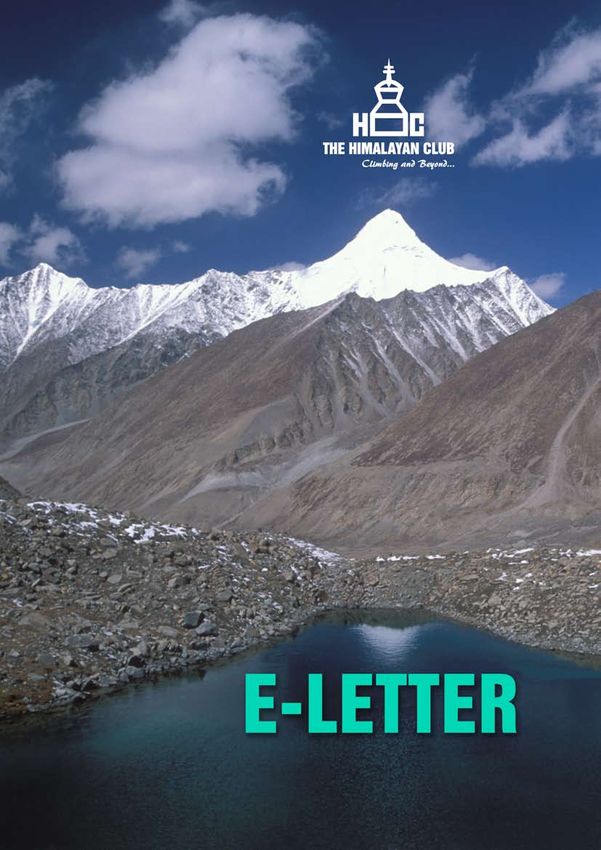
THE HIMALAYAN CLUB E-LETTER

                CLIMBS AND EXPLORATIONS
                     Sikkim and Nepal Himalaya
First Ascent – North face of Nyainqentangla South East (7046m)
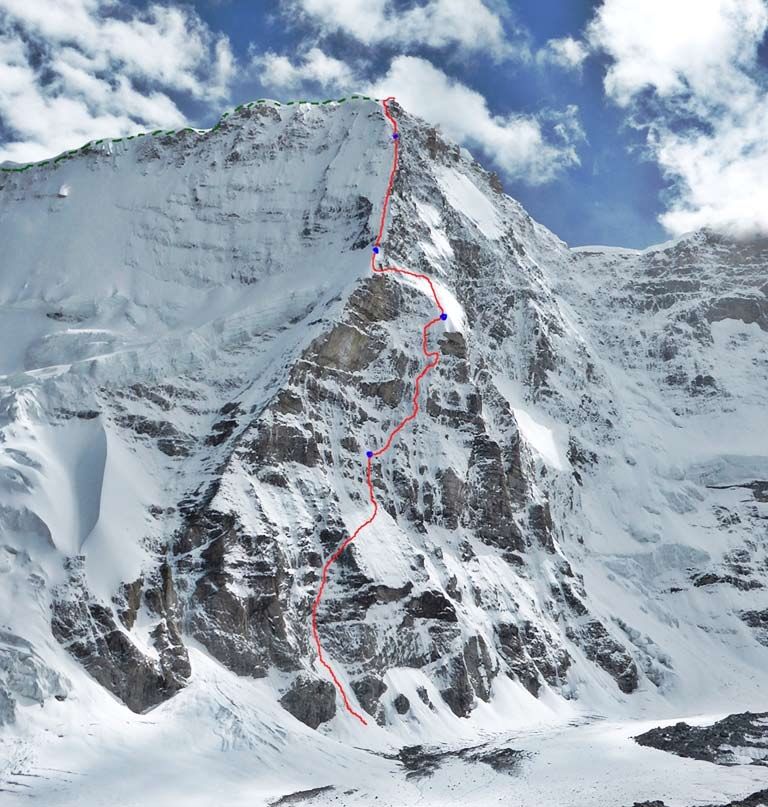
British Climbers Nick Bullock and Paul Ramsden made the first ascent of
the north face of a rarely visited Nyainqentangla South East (7046m) on
October 2-8, 2016. Difficulty of getting a permit to climb and the persistent
bad weather has made this mountain relatively inaccessible. According to
the climbers, this was the first ascent of the South East peak.

North Buttress of Nyainqentangla South East, first ascent by Paul Ramsden/Nick Bullock.

                                          3
THE HIMALAYAN CLUB E-LETTER

In Nick Bullock’s words
    After the five days’ acclimatisation, some bad weather, some resting
    (for me), Paul and I walked up the valley with bags packed. Being
    camped beneath the triangular face made the word, insignificance,
    have meaning. The face was huge. In the night it hailed and
    snowed several inches. We had time, so we left all of the gear and
    ran away, but remember, this was a Ramsden trip and Ramsden
    does not really do waiting well, so after only one day of rest, we
    were again camped beneath the face. On this day of walking we
    had been granted our first full day of sun and dry since we arrived,
    it had to be a sign, a pointer from the gods, a good luck gift, but
    of course it wasn’t, it was just another card, an incitement pulled
    from the bag of weather tricks this range had in its pocket.
see http://nickbullock-climber.co.uk/2016/10/10/nyainqentangla-
south-east-via-the-north-buttress/ for a detailed account.

                Kumaon and Garhwal Himalaya
Vishnu Killa (5968m)– First Ascent
Martin Moran led a team of 10 climbers to this remote valley and climbed
the PK 5968m called Vishnu Killa – The abode of Lord Vishnu. The range
is call Vishnu Ghar Dhar. The peak is not high but looks complex, serrated
and heavily glaciated. Ascents at sub-6000m altitude are possible on a
three-week time budget – a definite plus to those with working lives.
The team travelled from Delhi to Haridwar to Urgam, 15 km before
Joshimath. The low starting altitude of 2000m meant a big ascent on day
one of the trek. The team tramped 1500 metres uphill to emerge from the
forest on the ridge of Bansi Narayan. After a strike of porters and amidst
thunder showers, they established their base camp at the snout of Gimme
Glacier.
The Gimme Glacier curves up into an impressive icefall and at its head lies
a 5300m col. The col is to be crossed to reach Peak 5968m.
While the good weather lasted, the team made a push for the col. At
the col, a blindingly beautiful view broke forth. Across the gulf of the
Panpatia valley lay the bulwarks of Parvati Parabat and 6596m Nilkanth.
Most importantly, the crown of Peak 5968m rose up to the left. The team

                                     4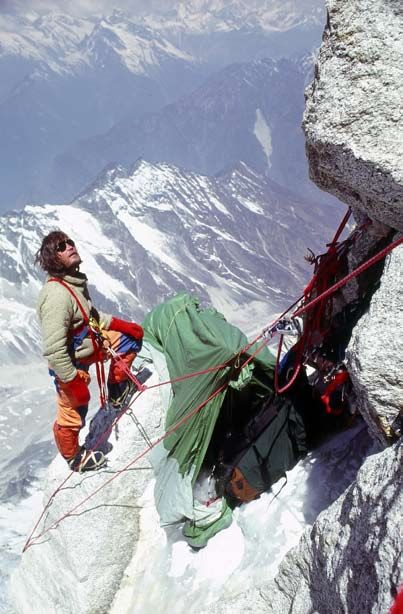
THE HIMALAYAN CLUB E-LETTER

need to descend a hundred metres before it could commence the summit
climb. This was a climb to be done at night, but the route was undoubtedly
feasible with a margin of safety.
The team got up at 10.30pm to start the summit bid in two parties. The
descent from the col was the psychological threshold. The night hours
passed in the ascent of the glacier, weaving round huge crevasses and ice
walls. The eastern skyline was punctured by the spears and obelisks of the
great peaks of the Nanda Devi range. The sunrise came slow but at 6.00am
the sun burst forth. A part of the team, passed the second team on their
descent. Had they been to the top? Well, yes and no. True to the sporting
tradition of amateur mountaineering they had stopped three metres below
a crowning cornice and decreed that the summit plinth should remain
the domain of god Vishnu and his cohorts. The second team had no such
scruples. The reached the top. By midday the last stragglers staggered back
into camp. The team returned safely to base camp.

Vishnu Killa.

                                    5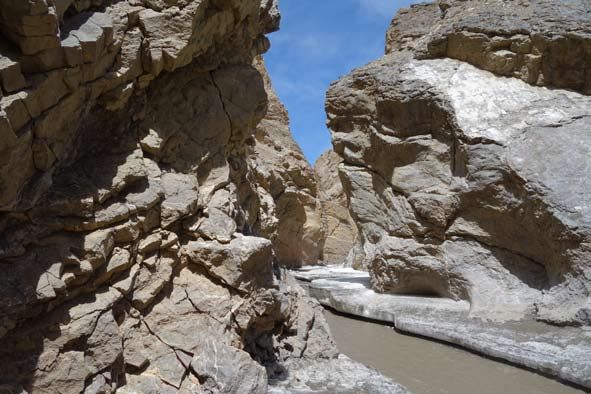
THE HIMALAYAN CLUB E-LETTER

Indo-Scottish Vishnugarh Darh Expedition 2016, Garhwal
The expedition’s objective was to explore unclimbed mountains in a
reasonably accessible range between Joshimath and Badrinath, in Garhwal,
Uttarakhand, India. The ridge is called the Vishnugarh Darh (Vishnu’s
Fortress), south of the Panpatia Glacier, which is to the south of Nilkanth.
All the peaks are under 6000m, and they require minimal hassle of permits,
liaison officers and their concomitant costs.
Susan Jensen met Anindya ‘Raja’ Mukherjee in Delhi on 22 May 2016,
travelled to Joshimath. The team organised food, tents, kitchen equipment,
kerosene and all the other miscellany at Joshimath. On 27 May the team
started a two day walk up to base camp, another day moving base camp to
a better place, then a couple of days in recce to decide where to begin.
From the beginning of the walk up to base camp Raja’s breathing had
started going rough. After a couple of recce days, on 2 June the team
went up to a higher position (about 4200m) from which the next day the
team would move into a glacial bowl that would present them with their
first set of unclimbed peaks.
The morning arrived and Raja’s breathing was painful. It didn’t have
the usual symptoms of HAPE, but it was also obvious that he wasn’t
acclimatising. Susan went for a recce walk to 4765m to peek into that
glacial bowl, then went back to the tent, packed up and walked back
down to base camp
The next day (4 June) Raja rested in base camp and Susan went to a
lower bivvy at the base of a couloir that led into a cirque in a easterly
section of the Vishnugarh Darh. Susan was on top of a 4400m peak in the
early morning. Subsequently she returned to the camp. Meanwhile, Raja’s
health was detoriating. He needed immediate medical attention.
The following day, Susan and Dinesh (one of the base camp staff) returned
to Joshimath to send the porters up. On June 7, Raja and Zaman returned
to Joshimath.On June 9, the team returned to Haridwar; on 10 June Susan
flew to UK and Raja returned on a train to Kolkata. Raja had developed
a lung infection.
Team Members : Susan Jensen, Anindya ‘Raja’ Mukherjee

                                     6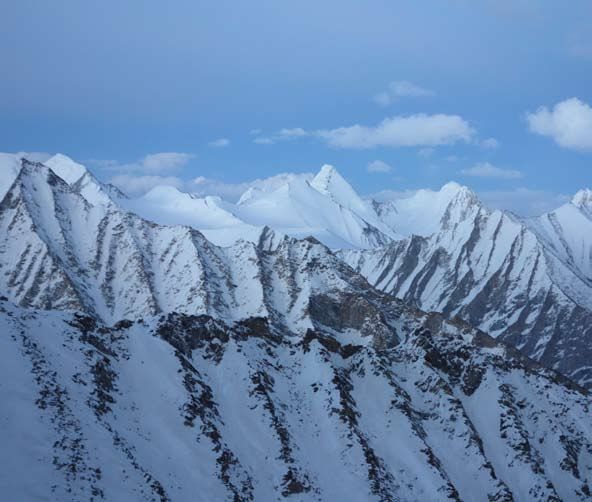
THE HIMALAYAN CLUB E-LETTER

                            Himachal Pradesh
Sersank Peak (6050m) - First ascent of North Buttress
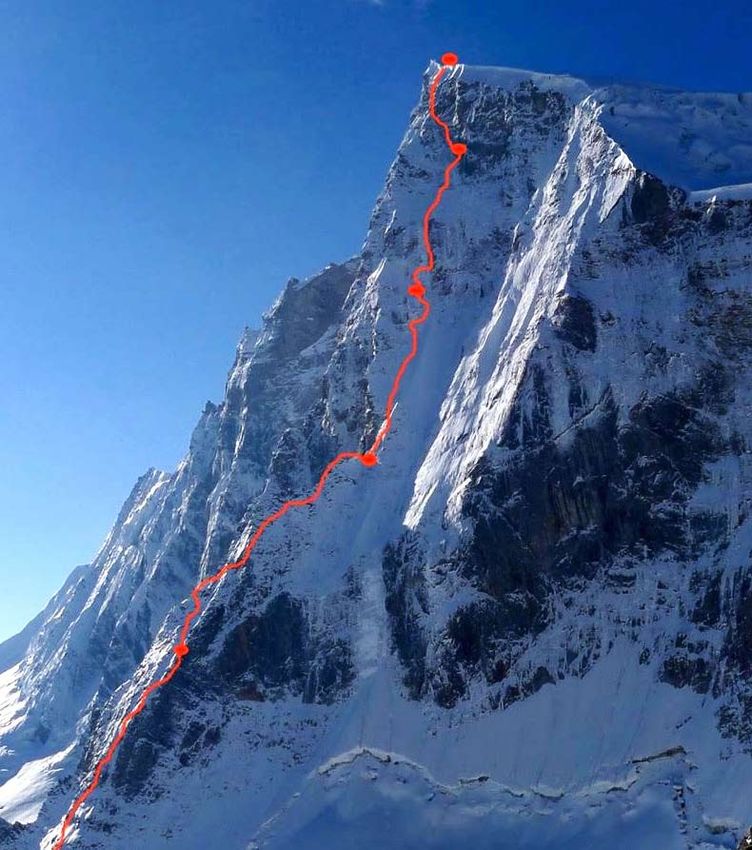
Mick Fowler and Victor Saunders made the first ascent of the North Buttress
of Sersank Peak also known as Shiv Shankar. This peak was first climbed in
2008 from the west side by a Japanese team. The Japanese team stopped
40m shy of the top because of a request from the locals.
The pair set of on September 26, 2016 and returned after eight days.

North Buttress of Shersank Peak.

                                    7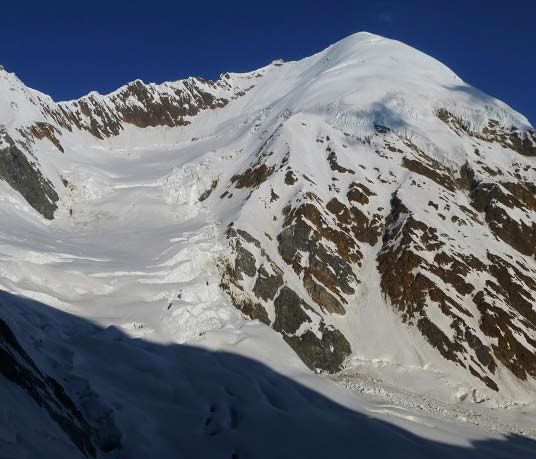
THE HIMALAYAN CLUB E-LETTER

“The technical difficulties were exciting, varied and challenging,” Fowler
said. “It was a brilliant and memorable outing. The first day was crossing
the Sersank La to the foot of the face. The second day was slow going
with powder on steep rock. The third day was mainly a sharp, exposed
crest with powder and rock challenges (crampons removed at one point)
and the fourth, fifth and sixth days were fantastic ice/mixed climbing. Day
7 was mixed/snow climbing to the summit followed by glacial terrain in
descent. Day 8 was very complex and satisfying glacial terrain involving
several abseils from abalakovs.”
See http://www.alpinist.com/doc/_print/web16f/newswire-mick-fowler-and-
victor-saunders-make-first-ascent for details

First ascent of the north west ridge of Gangstang (6162m)
The aim of this expedition in May and June 2016 was to make the first
ascent of the NW Ridge of Gangstang (6163m) in the Lahaul district of
Himachal Pradesh, India. Gangstang lies near the Chandra-Bhaga River
and is normally approached from Keylong (3350m) for the Voie Normal
(SW Ridge) from the Gangstang Glacier. However, for this expedition we
approached from the road head of Nainghar further to the west. The
expedition was blessed with excellent weather with a usual pattern of late
afternoon and very early morning mist, drizzle or snow and fine days.
Gangstang was first reportedly climbed by Italians in 1945 and again in 1973
by a team from Calcutta. It is most commonly climbed via the SW Ridge.
Successful parties have approached from the Gangstang Glacier to the East.
In 2001 a Japanese party broke new ground by approaching the peak via
the glacier below the North Face and from here made the first approach of
the East Ridge. In 2007, Martin Moran brought a commercial expedition to
the Thirot Valley. During that time his team successfully climbed what they
called Thirot Shivling (5324m), a prominent rocky bastion at the far end
of the NW 1 Ridge of Gangstang, PD- and established a partial new route
up a curving snow couloir on the west face of Gangstang before joining
the standard SW Ridge.
The team started walking towards their objective from the village of
Naingarh. The base camp was established at 4200m after a two-day trek.
After acclimatising for a few days and climbing Neelkantha (5324m), the
team was ready to tackle the main objective.

                                     8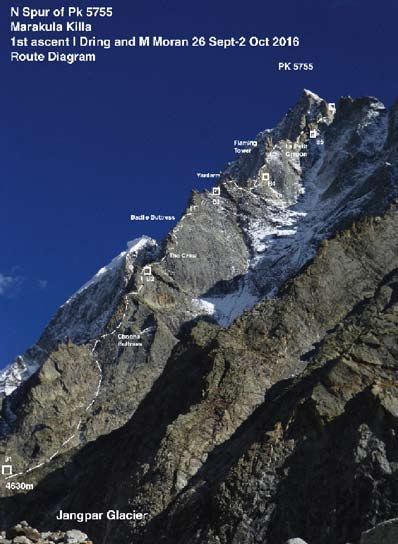
THE HIMALAYAN CLUB E-LETTER

On the morning of 6 Jun, the team headed back up the moraine and
toward the base of the glacier that sits under the North face of Gangstang.
Over the next three days they climbed the rock and ice face and summited
on June 9 in bad weather. Subsequently they descended safely to the
base camp.
The expedition consisted of Malcolm Bass (Leader) and Guy Buckingham
(climber), Mr Parmender Sharma (Liaison Officer) Mr Bhim Bahadar Lama
(Guide) Mr Santabir Sherpa (Chef), Mr Dawa Bhutiya (Assistant)

North Spur of Marakula Killa (5755m) – First Ascent
Team Members Ian Dring and Martin Moran
Ian Dring and Martin Moran made the first ascent of the north spur of
Marakula Killa (5755m). This beautiful peak also called Crocodile Rock is
                                                  in Miyar Valley of Lahul
                                                  District of Himachal
                                                  Pradesh.
                                                   It was an alpine style
                                                   attempt with first bivvy
                                                   at 4630m and over
                                                   the next 6 days they
                                                   reached the top on a
                                                   sheer rock face.
                                                   They reached the top
                                                   on October 1, 2016
                                                   and returned safely.

Marakula Killa. Photo Martin Moran

                                     9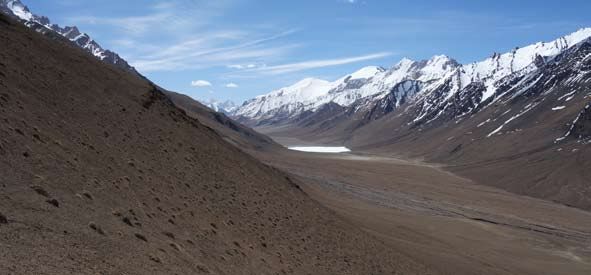
THE HIMALAYAN CLUB E-LETTER

                 Ladakh, Zanskar and Kashmir
Ascent of Brahma II (6425m) South Face
Chris Gibisch and Jeff Shapiro made the first ascent of the 1300m south
face of Brahma II on November 7, 2016. They chose a line which was safer
from rock fall and avalanche due to the warm conditions they experienced.
On the first day they climbed for 13 hours to reach the South West ridge
and an ideal place for bivvy. On the next day, after a long climb on the
face, they summited at 6.30 pm in clam weather. They rappelled about 5
rope lengths on to a lower ice slope to spend the second nigh in ice seats
for lack of flat ground. They descended to the base camp in another day
and a half. The climb was funded in part by Mugs Stump award.

First ascent of Lak Kangri – PK6222 and Thrung-ma Kangri – PK
6315
Five members of the Alpine Club visited the remote Rassa Glacier beyond
Arganglas between August 25 and Oct 2, 2016.They travelled via Delhi to
Leh (3,500m) where they spent two days acclimatising before crossing the
5,370m Kardung La into the Nubra Valley. Following two additional days
near Sumur the team transferred to the small town of Tirit from where
they began a three-day trek up the Tirit Phu to establish a base camp at
4,756m, a little beyond Arganglas and close to the confluence of the Rassa
and Phunangma glacial outflows.
After identifying an optimised access to the lower Rassa Glacier, an advance
base camp was subsequently established on 5th September on a sandy area
at 5,100m. Further forays resulted in two high camps on the glacier proper;
Camp 1 at 5,585m and Camp 2 at 5,675m. From the higher camp team
members successfully made the first and second ascents of PK 6222 (Lak
Kangri) via the SE face on the 10th & 11th September respectively. Eight
days later, on 19th September, the team accomplished the first ascent of
their main target, PK 6315 (Thrung-ma Kangri), via the steep south face.
The team members were Derek Buckle, Mike Cocker, Drew Cook, Gus
Morton, Knut Tønsberg.

Attempt on Shahi Kangri(6934m)
Our expedition to Shahi Kangri (6934 m.) was organized under the aegis
of The Himalayan Club.

                                    10
THE HIMALAYAN CLUB E-LETTER
Rajesh Gadgil, Ratnesh Javeri, Vineeta Muni, Dinesh Korday, Roshmin
Mehandru and I met up with our 10-member support staff. We reached
Leh on 5th May via Srinagar, Sonamarg, Kargil and Mulbek.
On 9th May, we drove from Leh to Shyok village via Darbuk. En route,
we crossed the Changla (5360m). Snow levels were still high and
temperatures were low. It was late evening when we reached the Border
Roads Organization post at Shyok, where we spent the night.
The following day we drove 150 kms to Murgo. At Sultan Chusku we
crossed the Shyok river. We camped at Murgo for the next three days
awaiting the final clearance from the local Army unit for us to proceed.
The road-head camp was located a few hundred metres from the Chip
Chap nala near Chongtash.
We started recceing a route to base camp. Our first foray was along the
Chip Chap nala itself. The route traversed on flat ground for a kilometre
and then we had to descend to the Chip Chap nala on some very loose
scree. We went along the nala for a few kilometres crossing the river at
many places. Unfortunately, we were stopped at a narrow section of the
nala where the water was touching both edges of the nala.
The following day, we attempted to climb high and find a way to pass
the bottle neck. A 600m climb brought us to a high pass overlooking the
nala. It was not possible to negotiate this route with all our rations and
equipment. We would have to find a different path.
We started off along the true left of the nala and traversed the slopes
about 200 m above the riverbed. For the first two km the route gave us
hope. Suddenly the slopes fell steeply into the nala just beyond the bottle
neck. The drop was nearly 70 degrees with loose mud and rubble all the
way down. Unfortunately, the route was too loose and steep for us to plan
shifting our loads to Base Camp.
After discussion, we decided to call off our attempt to reach Shahi Kangri.
Our quest for adventure was far from satisfied. We decided to attempt a
peak in the ‘open’ area, Nya Kangri which was unclimbed as yet. We soon
made our way to the Nubra valley.
We spent two days in Tirit re-organizing our loads, and arranging for horses.
The approach trek started at near the Tirit Monastery, climbing about 900
m before traversing the valley from its true left. It was late evening by the
11THE HIMALAYAN CLUB E-LETTER
The Bottle Neck on Chip Chap Nala. Photo Divyesh Muni
time we reached Wasekhar – (jungle camp). On the next day, by evening,
we were still some distance away from Base Camp, and unsure about the
route ahead. We decided to camp for the night and continue only after
we had confirmed a safe route.
On 21st May, we finally established base camp at Phonglas (4630 m). On
28th May, we shifted to ABC at 5430 m The following day we ventured
further up the glacier and were happy to discover a possible route which
we could negotiate.
The route to summit camp started along the glacier just above the ABC
site. It was a steady climb till we reach a basin below the east ridge and
south west ridge of Nya Kangri. The south west ridge route seemed to be
safer. Initially the slopes were easy angled with a layer of snow cover. After
the initial 200 m the route got steeper and the ice was exposed. A short
section of rope was fixed just below the campsite due to the hard ice.
On 2nd June, we moved to summit camp at 5965 m. Early next morning
we started up the ridge. The initial 100 m. was steep followed by a short
traverse to overcome a bergschrund. The angle eased a bit for the next
100 m and then we hit a section of steep blue ice. Another 100 m brought
us to more steep blue ice. This would lead us to the rock outcrop that
12THE HIMALAYAN CLUB E-LETTER
would culminate at the final summit ridge. We were now about 250 m
from the summit. It was 10:30 a.m. but a steady wind was blowing and it
had started to snow. We realized that the next 250 m, with sections of steep
blue ice, would take us considerable time to negotiate. Keeping the fast
changing weather in mind, we decided to turn back for the day.
We all moved down to base camp for rest and recuperation giving time
for the weather to settle. After five days, on 7th June, we moved to ABC
and were back at summit camp on the 8th.
We woke up at 2:00 a.m. on 9th June to the sound of a constant patter
of snowfall on the tents. A peek outside was disheartening - the visibility
was barely a few feet. Hoping the weather would settle, we decided to
postpone the summit attempt by a day. The snow fall was intermittent
during the day. Unfortunately, the weather turned worst by late evening
and it continued to snow heavily through the night. In the morning, we
quickly wound up camp and made our way down. By late afternoon we
had wound up ABC and were at BC. We had reached so close to the
summit that it seemed certain that we would get there. We had now run
out of rations and fuel and our horses were expected in two days. We had
no choice but to call off further attempts.
The weather we had experienced had paralyzed the Nubra valley for a few
days. News was that Khardung La was blocked and hundreds of vehicles
were stranded due to the sudden and heavy snowfall. It was only after we
returned to Leh on 14th June that the weather finally cleared.
By Divyesh Muni
The Chogtash Plains. Photo Divyesh Muni
13THE HIMALAYAN CLUB E-LETTER
Karakoram
Death on Ogre II (6980m)
Kyle Dempster and Scott Adamson perished on Ogre II in Karakoram.
They were last seen on August 22, 2016 on the North Face of Ogre II. A
storm arrived on August 23 and cleared after 11 days on September 3. No
trace of the climbers was found. A search and rescue operation was aided
through a crowd funding effort, raising $198,000 in 6 days. Nearly 5000
people contributed to the fund raising.
According to Jonathan Thesenga of Black Diamond: “In light of those
extensive yet unsuccessful efforts, the search team and knowledgeable
observers in the US, and Europe, assessed that there remained a very
slim chance than any evidence of their passage would be revealed in
subsequent sweeps of the mountain. Given the time that has elapsed and
the nearly continuous stormy weather since they were last seen, and the
substantial risks that such high-altitude missions entail, Kyle and Scott’s
families have made the extremely difficult decision to end the search
efforts.”
The Ogre II
14THE HIMALAYAN CLUB E-LETTER
The Ogre – as the name suggests means a monster of a fairy tale which
feeds on humans, lives up to its name. It is a sharp tooth like structure high
above the Choktoi Glacier near the Latok Peaks. The north face of Ogre II
is 1400m tall with falling debris and vulnerable to storms. The north face
has not been climbed.
The same pair had attempted the north face in 2015 reaching an altitude
of 6631m- 367m below the summit.
See Alpinist September 9, 2016 post for a detailed report
Attempt on Gulmit Tower (5801m)
A two-member British team of Pete Thompson and Aiden Laffey abandoned
the attempt on Gulmit Tower East face and South East ridge due to rock fall
and unsafe conditions on the glacier. They moved to Moorkhun Valley to
attempt Pregar(6112m). Pete Thomson reached within 20m of the summit
and had to turn back due to poor snow conditions.
15THE HIMALAYAN CLUB E-LETTER
THE HIMALAYAN CLUB NEWS
Kolkata Section
88th Founders Day Celebrations Held on March 5, 2016
The 88th Founders Day Celebrations were held by the Kolkata Section at
Rotary Sadan on 5th March 2016. The program started with a presentation
by Mr. Aadrito Paul on the latest expedition organized by the Club. The
Himalayan Club Kolkata Section, in its quest for newer challenges,
organized an expedition to Mt. Koa Rong-III (6145m), jointly with the Indian
Mountaineering Foundation, in September 2015. With fewer climbing
members available and a dream to climb alpine style, the KR group of peaks
located deep in the lesser trodden mountains of the Himachal Pradesh was
a natural choice. Young Aadrito in his presentation eloquently described the
hazardous climb which, though could not be concluded successfully due
to extreme bad weather condition, proved to be a learning experience for
many of them. This was followed by an illuminating talk by the Director of
Tourism, Jammu & Kashmir, Mr. Mahmood Shah, who impressed upon the
audience that Kashmir was a safe tourist destination now. Mr. Shah, who is
also a mountaineer and President of Jammu and Kashmir Mountaineering
and Hiking Club, had trekked a hundred high altitude lakes in Jammu &
Kashmir. The next speaker, Mr. Tanmoy Banerjee, regaled the audience with
a well manicured National Geographic produced video of his trip to the
Arctic along with the photographs taken by him on the expedition.
The last speaker, Mr. Ratanlal
Biswas’s ‘The Forbidden
Land of Nepal’ was a well
documented series of his
journey through Upper Dolpo
and the Mustang valley
following in the footsteps
of David Snellgrove. Mr.
Nilay Chakraborty, Hony.
Local Secretary, thanked the
audience, the speakers and the
Mr. Mahmood Shah, Director of Tourism -
dignitaries present, and invited
Jammu-Kashmir them to share tea and snacks.
16THE HIMALAYAN CLUB E-LETTER
Grandeur of Everest – Lure of Sagarmatha at Rotary Sadan Kolkata
on July 6th 2016
The Consulate General of Nepal in Kolkata and The Himalayan Club,
Kolkata Section organised the program “Grandeur of Everest, The
Lure of Sagarmatha 2016”, which highlighted newer developments in
mountaineering tourism in Nepal, felicitation of the successful mountaineers
from West Bengal who scaled Everest in 2016, and the recount of climbing
accounts on Everest this year.
Their Excellencies Mr. Eak Narayan Aryal, Consul General of Nepal in
Kolkata and Mr. Sudarshan Prasad Dhakal, Director General of Tourism,
Nepal jointly inaugurated the program and set the ball rolling. The main
program, commenced with a note of silence, in fond remembrance of our
beloved HC member Goutam Ghosh and other friends from the Bengal
mountaineering fraternity, who made their peace with their maker on
the summit slopes of Mt. Everest and Dhaulagiri in the spring climbing
season 2016.
T h e r e a f t e r,
Mr. Pradeep
Chandra Sahoo
spoke from his
heart on his
presentation –
‘Sacred Summit
of Sagarmatha’,
describing the
climb and efforts
on Everest,
from 2014 to
his eventual
Mr. Eak Narayan Aryal, Consul General of Nepal and Mr. ascent in 2016.
Sudarshan Dhakal, Director of Tourism, Nepal inaugurating the The program
function
w r a p p e d
up with a
felicitation being made to the climbers from West Bengal. The program
was followed by a grand dinner hosted by the Consulate General of Nepal
in Kolkata at their premises.
By Niloy Chakraborty
17THE HIMALAYAN CLUB E-LETTER
Delhi Section
Many talks and films were organised by the Delhi section of the club during
2016. These were :
K2 and the Invisible Footmen – May 18, 2016 - Film directed by
Lara Lee
For many climbers, K2, the second-highest mountain on Earth, is an even
greater prize than Everest, with limited routes, a steeper ascent, and a
harder push to its summit. Nicknamed the ‘Savage Mountain’, K2’s peak
juts unprotected into the atmosphere, regularly exposing climbers and
porters to life-threatening weather conditions. In ‘K2 and the Invisible
footmen’, filmmaker Lara Lee and her team chronicle the lives of both
high-altitude porters (HAPs) and sherpas. The film also follows the climbing
team, made up of former high-altitude porters from Gilgit–Baltistan, who
successfully summited in 2014, in celebration of the 60th anniversary of
the first successful climb of K2. Amid breathtaking scenery, the film depicts
the everyday sacrifices of porters and the courage of those indigenous
climbers who choose to return to scale K2 in spite of past tragedies. Collab:
Indian Mountaineering Foundation
‘Birds of the Western Himalaya’. – March 13, 2016 - Illustrated
Talk by Commander K. B. Singh
The Himalaya is one of the most spectacular physical features of our world.
The abrupt rise of the Himalayan mountains from less than 500 metres
to more than 8000 metres results in a diversity of ecosystems that range,
in only a just couple of hundred kilometres, from alluvial grasslands and
subtropical broadleaf forests along the foothills to temperate broadleaf
forests in the mid hills, mixed conifer and conifer forests in the higher hills,
and alpine meadows above the tree line. The greatest part of the avian
biodiversity of South Asia is to be found in the narrow space along the
Himalayan range. Birdlife International has identified four Endemic Bird
Areas (EBAs) that overlap partially or fully with the Himalaya hotspot.
The Western Himalaya EBA has 11 species restricted to it, including the
Himalayan Quail as well as the Cheer Pheasant (Catreus wallichii, VU)
and the Western Tragopan (Tragopan melanocephalus, VU).The Himalaya
also hold large areas of alpine habitat with its own diverse avifauna. The
arid plateaux to the north of the range has its own sparse and distinctively
18THE HIMALAYAN CLUB E-LETTER
Tibetan avifauna. The illustrated talk provided an introduction to the rich
birdlife of the Western Himalaya, including the adjacent trans-Himalayan
regions of Ladakh and Lahaul & Spiti. Few critical species found here
and associated conservation challenges were also discussed. Commander
Kanwar B. Singh is a retired naval officer with a keen interest and passion
for ornithology for the last two decades. He coordinates various birding
activities in Delhi and is also the founder of Facebook forum ‘Indian Birds’,
which is the largest online community of bird enthusiasts in India. Cdr K. B.
Singh has also been closely associated with the Himalayan Club for many
years and has served in the Management Committee of the Club.
‘Why do we climb? Exploring the answer through my expeditions.’
– February 27, 2016 - Illustrated Talk by Prem Kumar Singh
Mountaineer Prem Kumar Singh dwelled on what motivates one to climb
mountains and whether it is really worth the investment of human potential
and what is the return on investment. Prem has climbed various peaks across
the Himalaya, including Mt. Deo Tibba (6001m), Mt. Satopanth (7075m),
Mt. Everest (8848m), and Mt. Nun (7135m). He has also climbed various
peaks outside of the Himalayan range, including Mt. Elbrus (5642m, the
highest in Europe), Mt. Aconcagua (6961m, the highest in South America),
and Mt. Puncak Jaya (4884m, the highest in Oceania). He featured on an
adventure reality TV show on NDTV Prime called ‘Volvo XC Adventure’,
which he won after a gruesome 15-episodes journey. Nowadays, apart
from putting together a team for his next expedition to Mount Janahut
(6805m), he has embarked on cleaning expeditions, the first one to Mt.
Ladakhi (5345m) from where they brought back 30 kg of garbage.
‘The Trails Less Travelled’ – January 22, 2016 - Illustrated Talk
by Avay Shukla
Avay Shukla recounted his experiences of high-altitude trekking in Himachal
Pradesh over twenty years, including in the Great Himalayan National
Park in Kullu district, which was declared a UNESCO World Heritage
Site in 2015, of which little is known and even less written. He did not
limit himself to describing the stunning landscapes but also chronicled
interesting mountain lore, local mythology, amusing anecdotes, and rare
wildlife sightings. He also flagged some of the conservation issues that have
long bedevilled nature lovers and administrators. Avay Shukla retired from
19THE HIMALAYAN CLUB E-LETTER
the Himachal Pradesh cadre of the IAS in 2010. He is a passionate nature
lover, a founder-member of the Eco-Tourism Society of India and President
of the HP Trekking Association. He considers himself fortunate to have
served in a state so richly endowed by nature, and to have held positions
in government which have enabled him to contribute to conservation
focused policies, such as notification of the Green Belt in Shimla, creation
of two new National Parks, notification of GHNP as a World Heritage Site.
formulation of the country’s first Eco-Tourism and Home Stay policies and
mitigation of the impact of Hydel power projects on the environment.
‘High Adventure in Western Garhwal’ - December 23, 2015
Illustrated Talk by Maninder Kohli, accompanied by Arati Shriram, Pooja
Gandhi, and Amina Bharat Ram
This illustrated talk presented images of four spectacular treks—Baraadsar
Lake, Maldaru Lake, Kanasar Lake, and the crossing of Bali Pass (4840m).
The speakers have visited the Western Garhwal many times, exploring the
immense beauty of the region and its lesser known lakes. The talks also
reflected the personal journey of each of the trekkers, building on physical
endurance, apprehensions, fitness, use of high-quality gear, awareness of
altitude issues, and mentoring new participants whilst pushing each other
to greater heights. The key trek featured in the talk was the recent crossing
of Bali Pass (4840m) where all the learning of previous treks was put to the
test to support a group of 18 getting across the Bali Pass.
Compiled by Rama Goel and Maninder Kohli
Pune Section
The Pune section of the Himalayan Club has been very active during the
last year. Some of the highlights of the programs organised were
The Annual Program of the Pune Section held on April 10, 2016 at the
Symbiosis Vishwabhavan Auditorium, Pune. Vineeta Muni a member of
the club with many expeditions and treks to her credit, delivered the Dr.
Vrinda Chinchwadkar Memorial Lecture - “A life of Adventure”.
She narrated her experience through a unique audio visual presentation
and described how adventure and mountains transformed her life and
inspired her through years. The lecture was followed by the Banff Mountain
Film Festival. It was attended by over 500 persons.
20THE HIMALAYAN CLUB E-LETTER
The Pune section under the able leadership of Dr. Godbole organised a
high altitude trekof the Dhaulagiri Circuit in Nepal Himalaya from May 10
to 31, 2016. The trek involved crossing two high passes of 5000+ meters.
The Pune section also organised four monsoon treks in lush green Western
Ghats to Rajgad Fort, Raireshwar Fort, Pandavgad Fort and a traverse
of the Panshet Valley. These were enjoyed by more than 100 members
and guests.
From information received from Dr. Godbole
THE HIMALAYAN CLUB AWARDS
Kekoo Naoroji Book Award
Doug Scott is the recipient of this years Kekoo Naoroji Book Award for
Himalayan Literature. He will be present during the annual function to
receive the award in February 2017.
Jagdish Nanavati Award for Excellence in
Mountaineering and Jagdish Nanavati Garud Medal
Nominations are invited for the above awards. Please recognise people
who have made a difference and nominate them for the Jagdish Nanavati
awards. The details can be found on the Himalayan Club Web Site.
NEWS & VIEWS
Piolets d’Or Asia Awards - 2016
2016 Piolets d’Or Asia Award Lifetime Award -
Tamotsu Nakamura
Gentleman Tamotsu Nakamura born in 1934 led an expedition to Peru and
Bolivia in 1961, where he made the several first ascents. After living and
working around the world in Pakistan, Mexico, New Zealand and Hong
Kong, he seriously devoted his life to the mountains in the borderlands of
south–east Tibet and west China: Sichuan, Yunnan, Qinghai. Over 25 years
he conducted 38 expeditions for discovery, photographing and mapping
of countless unclimbed peaks, untrodden glaciers, high plateau, lakes,
21THE HIMALAYAN CLUB E-LETTER
gorges and Tibetan culture. Not only having written several books, one in
Germany, he edited the Japanese Alpine News for 15 years.
These forays have garnered numerous awards from internationally
recognized societies such as the UIAA Award (2007), the Royal Geographical
Society’s Busk Medal (2008) and International Explorers Award in Poland
(2010). In 2016 he published life-work “East of the Himalaya-Mountain
Peak Maps-Alps of Tibet and beyond.”
11th Piolets d’Or Asia Award
The joint winners of the main award were confirmed as:
A Korean Team led by Mr. Chang-Ho, Kim, who has completed all 14
Himalayan Giants without supplementary oxygen. He and two team members
climbed a new route on the south face of Mt. Ganggapurna (7,455m) in
the Annapura region under the name “KOREAN-WAY PROJECT 2016.”
Their climbing achievements in itself were excellent, however, most of all
they left nothing on the mountain.
Secret to an adventurous life as told by Reinhold Messener
“I would never have been able to climb Cerro Torre in Patagonia free,
without using bolts, like David Lama did,” Messner says. “I am very
impressed and interested in seeing what’s happening today because
mountaineering is in a period of great change. Ninety percent of the people
going to the mountains today are tourists or sporty people. They climb in
the gym, and they do some very difficult climbing, but this is not what I’d
call alpinism. Traditional adventure alpinism is a very limited activity in
these times. I have the greatest respect for these young climbers who go
back to tradition and true alpinism.”
http://www.climbing.com/people/advice-reinhold-messner-on-the-secret-
to-an-adventurous-life/
Climbing officially approved for 2020 Olympics
It’s official. Climbers will compete for gold in the 2020 Olympic Games in
Tokyo. the International Olympic Committee (IOC) approved a package
of new events including baseball/softball, karate, skateboarding, climbing,
and surfing. The decision was based on a desire to appeal to a young
audience.
22THE HIMALAYAN CLUB E-LETTER
“We want to take sport to the youth,” said IOC President Thomas Bach.
“With the many options that young people have, we cannot expect any
more that they will come automatically to us. We have to go to them.”
The climbing event will include three disciplines: sport, bouldering, and
speed. 40 climbers (20 men and 20 women) will compete over four days,
and the medalists will be chosen based on the combined results of all three
disciplines.
For more detailed reading visit
http://www.climbing.com/news/climbing-officially-approved-for-2020-
olympics/
Disaster Waiting to Happen in Arunachal Pradesh
This is an eye opening article about the environmental damage waiting to
happen in Arunachal Pradesh because of Hydel Power projects. Worth a
read.
http://scroll.in/article/802708/why-private-companies-want-to-give-their-
hydel-projects-in-arunachal-to-nhpc
Two weeks in the mountains can change
your blood for months
This is an interesting article on physiology at high altitude – a must read. It
challenges the long held view that low-oxygen conditions cause the body
to build new red blood cells, making it easier to supply oxygen to muscles
and vital organs
http://www.sciencemag.org/news/2016/10/two-weeks-mountains-can-
change-your-blood-months
23THE HIMALAYAN CLUB E-LETTER
OBITUARIES
Pradeep Chandra Sahoo - (1967 – 2016)
Members of the Himalayan Club are deeply grieved to learn about the
sad and sudden demise of Mr Pradeep Sahoo on 20th November 2016 in
Harare, Zimbabwe. He was a respected member of the Himalayan Club
and its Vice President representing the Eastern Section from 2012 to 2014.
He had been a member since 2006 and also served as the Honorary Local
Secretary of the Eastern Section. During these years he played an active
role in his own quiet way to bring up the Eastern section.
By all accounts he was a fine, gentlemanly and extremely skilled
mountaineer, who achieved many summits - his most recent one was
standing atop Mount Everest with his wife and climbing partner, Chetna
just a few months ago. He was the biggest mentor, friend, philosopher and
guide to his support staff and younger mountaineers alike.
His sudden passing has come as a great shock to the Members of the
Himalayan Club, several who knew him personally as well as the whole
mountaineering fraternity and those whose lives he touched during his
years as a climber.
On behalf of the Members of the Himalayan Club as well as myself pray for
his soul and offer deepest condolences to his family. May God give them
strength to bear this hard loss.
I end with a quote from Pradeep, when he resigned as Vice President:
The journey had been very challenging and also very satisfying for me.
Like any other journey, there have been highs and lows that taught me
life’s lessons and made me stronger. I convey my sincere thanks to all of
you who helped me to bring me this far in the journey.
By Tanil Kilachand
The first woman to climb Mount Everest, Junko Tabei,
has died aged 77
The Japanese climber had been diagnosed with cancer and died at a
hospital outside of Tokyo.Tabei reached the summit of the world’s highest
mountain in 1975, at the age of 35.
24THE HIMALAYAN CLUB E-LETTER
In 1992, she also became the first
woman to complete the Seven
Summits, reaching the highest
peaks of the seven continents.
Tabei climbed her first mountain in
elementary school, when she was
led by her teacher to the summit
of Mt Nasu, her official website
states. She later established the
Ladies Climbing Club: Japan, with
the slogan “Let’s go on an overseas
expedition by ourselves”.
“Back in 1970s Japan, it was still
widely considered that men were
the ones to work outside and
women would stay at home,” Tabei
Ms. Junko Tabie. Photo Harish Kapadia told the Japan Times in 2012.
“Even women who had jobs — they were asked just to serve tea.”
When she left on her Everest expedition, as part of a 15-member, all-
women team, “we were told we should be raising children instead”, she
told the newspaper.
“There was never a question in my mind that I wanted to climb that
mountain, no matter what other people said.”
She had continued climbing later in life, and her website said she went
abroad “seven to eight times a year to climb the highest mountain of each
country”.
As of 2008, Tabei had climbed the highest peaks of 56 countries, it
stated.
Tabei was married with two children.
She completed a degree in English and American Literature at Showa
Women’s University in 1962, and a master’s degree in comparative
social culture, focusing on garbage problems in the Himalayas, at Kyushu
University in 2000.
She campaigned for sustainable mountaineering and was chairperson
of the Himalayan Adventure Trust of Japan, which is dedicated to the
protection of mountain environments.
25THE HIMALAYAN CLUB E-LETTER
Kim Schmitz Dies in a Car Accident
Kim Schmitz a long time climbing partner of John Roskelly died in a
car accident while driving to Spokane, Washington, USA. His long time
climbing partner and friend John Roskelley said,
“Kim loved the simplicity of trekking and time travel through the Asian
cultures he so much admired. He seemed much more at peace with himself
on the trail, and the more remote the better. Once on the climb, though,
his intensity was fierce and focused. It was Kim’s Yin and Yang; the joy of
living life fully, yet continuing to look death in the eye.”
Kim Schmitz had
climbed with John
Roskelley. To his
credit, he had the
first ascent of Trango
Tower (6286m) and
Uli Bihao (6109m) in
Karakoram.
He was part of the team
which made the first
ascent of Gaurishnaker
(7181m) in 1979. He
participated in a 300
km ski traverse of
Karakoram with Galen
Rowell.
Last year he received
the American Alpine
Club’s Robert and
Miriam Underhill
award for a lifetime
of contribution to
climbing.
Kim Schmitz on Gaurishankar (7181m).
Photo John Roskelley
26THE HIMALAYAN CLUB E-LETTER
"OOPVODJOHUIF$PNNFODFNFOUPG
UIFUI:FBS$FMFCSBUJPOTPGUIF)JNBMBZBO$MVC
A glimpse of the formidable line up of guest speakers at
the Himalayan Club’s Annual Seminar February 18 & 19, 2017
KC College Auditorium, Churchgate, Mumbai.
Doug Scott Leo Houlding Nungshi & Tashi Malik
27THE HIMALAYAN CLUB E-LETTER
Doug Scott
Doug Scott has made 45 expeditions to the high mountains of Asia. He has
reached the summit of 40 peaks, of which half were climbed by new routes
or for the first time in Alpine Style. Apart from his climb up the South West
Face of Everest with Dougal Haston during Chris Bonington’s Expedition
of 1975, he has made all his climbs in lightweight or Alpine Style, without
the use of artificial oxygen. He has reached the highest peaks on all seven
continents – ‘the seven summits’.
He is a past President of the Alpine Club and was made a CBE in 1994. In
1999 he received the Royal Geographical Society Patron’s Gold Medal.
- Extracted from Doug Scott’s website
Doug Scott, CBE, will be in Mumbai to receive the Kekoo Naoroji Book
Award for the first part of his autobiography Up and About. He will address
audiences at the Seminar on February 18 – 19 2017. Block your dates.
Leo Houlding
If modern British adventure has a face, it looks a lot like Leo Houlding.
Based in the Lake District, UK, he is one of Britain’s top climbers and
among the best in the world.
He is a veteran of a score of epic ascents, including Everest, but specialises
in free climbing the most technical peaks and biggest walls in the world.
An experienced base jumper he is at the forefront of Para-Alpinism (climbing
up then flying down). Leo pushes the limits of exploratory adventure by
taking the ultimate in extreme sports to the most extreme environments.
An articulate communicator he has captivated and inspired audiences
around the world with his tales of adrenalin-fuelled exploits.
He sports an impressive television résumé, including an infamous
appearance on the BBC’s Top Gear, his own show on Virgin One “Take Me
To The Edge”, and an IMAX movie released in 2010, “The Wildest Dream”,
retracing the last steps of Mallory and Irvine on their fateful expedition to
Everest in 1924.
Most recently he has teamed up with natural historian and adventurer Monty
Halls to film the TV series ‘Lost Worlds’ for the Discovery Channel. Together
they make the perfect team to explore the exotic and dangerous locations
and truly get to grips with the ecology and wildlife that surrounds them.
28THE HIMALAYAN CLUB E-LETTER
In 2013 Leo led his most ambitious and challenging expedition to date in
brutal conditions to make the first ascent of Ulvetanna’s remarkable, mile
long north east ridge. They spent 35 days in the harsh beauty of Antarctica
testing themselves to their limits during the climb of their lives.
In 2009, he produced and featured in the multi award-winning movie,
“The Asgard Project”, an epic, arctic adventure to free climb and BASE
jump from one of the world’s toughest and most remote big walls.
Leo has become an ambassador for the younger generation of climbers and
has been called one of Britain’s top ten adventurers by The Telegraph.
- Extracted from the Leo Houlding Website
Leo Houlding will deliver the Kaivan Mistry Memorial Lecture on
February 18 2107 and also speak to audiences and make slide, video and
film assisted presentations on February 18 - 19, 2017 on the occasion of
the Annual Seminar of the Himalayan Club. Block your dates.
Nungshi & Tashi Malik
Despite roots in rural Haryana, notorious for its skewed sex ratio in favour of
boys, Nungshi and Tashi Malik have achieved several global gender iconic
milestones. They are the world’s first siblings and twins to complete the
‘Adventurers Grand Slam’ (scaling highest peaks in all continents and skiing
to North and South Poles). They are also world’s youngest persons ever and
the first South Asians to complete it. They are also the youngest South Asians
to scale the Seven Summits and to reach the South and North Pole on Skis.
The twins were featured in 60th edition of Guinness World Records, 2015.
They are fellows of the Royal Geographical Society, London.
The twins are India’s most reported mountaineers in India and abroad.
The have set up the NungshiTashi Foundation dedicated to the Indian girl
child with the motto ‘Gender Equality Now: Fight Female Feticide’.
The twin sisters have graduated with diploma in Sport and Exercise under
New Zealand’s Prime Minister’s scholarship in December 2015. Recently
they attended the US Government’s Global Sports Mentorship Program for
‘emerging women leaders in sports’.
- Extracted from the NungshiTashi FoundationWebsite
The Malik Twins will make slide and video presentations on the Explorers
Grand Slam achievement as well as their work for the Foundation
and girl empowermenton the occasion of the Annual Seminar of the
Himalayan Club, February 18 - 19, 2017. Block your dates.
29THE HIMALAYAN CLUB E-LETTER
OFFICE BEARERS - HIMALAYAN CLUB - 2016
OFFICERS
President Tanil Kilachand
Vice President Motup Chewang
Divyesh Muni
Dr. Kallol Das
Hon. Treasurer Deepak Bhimani
Hon. Secretary Nandini Purandare
Members of the Committee
Shailesh Mahadevia Dr. Raghunath Godbole
Rishad Naoroji Rajesh Gadgil
Debabrata Mukherji Dr. Ravi Mariwala
Gp. Capt. V. K. Sashindaran Ratnesh Jhaveri
Dinesh Korday
Additional Members of Balloting Committee
Monesh Devjani Manik Banerjee
Ravindra Apte Falgooni Mehta
Hon. Local Secretaries
India
Almora Himanshu Pandey
Bangalore Kamlesh Venugopal
Darjeeling Dorjee Lhatoo
Delhi Maninder Kohli
Jammu & Kashmir Sat Paul Sahni
Kolkata Niloy Chakraborty
Leh Motup Chewang
Manali Mahavir Thakur
Mussoorie Stephen Alter
30THE HIMALAYAN CLUB E-LETTER
Mumbai -
Pune Dr. Raghunath Godbole
Shimla Deepak Sanan
Uttarkashi Depender Panwar
Imphal Yamden Laba
Overseas
Australia Garry Weare
France Claude Gardien
Korea Bae Seung Youl
New Zealand John Nankervis
Pakistan Nazir Sabir
Spain Jose Paytubi
South Africa Dr. S. A Craven
Sweden Ake Nilsson
Switzerland Eric Bernhardt
U.K Derek Buckle
U.S.A. Donald Goodman
Paddy Iyer
Hon. Editor Nandini Purandare
Hon. Librarian Group Capt V K Sashindran
Hon. Asst. Librarians Rajeev Das (Mumbai)
Debraj Datta (Kolkata)
Hon. Asst. Equipment Officer Subhashis Roy (Kolkata)
Hon. Asst. Treasurer Rajarshi Roy (Kolkata)
Web Master Dinesh Korday
E-Letter Editor Dr. Ravi Mariwala
E-Group Moderator Cdr. K. B. Singh
Divyesh Muni
Dinesh Korday
President Emeritus Dr. M.S. Gill
Editor Emeritus Harish Kapadia
31THE HIMALAYAN CLUB E-LETTER
View from the summit camp of Nya Kangri peaks seen – Argan Kangri (on the right)
and Abale (on the left). Photo Divyesh Muni
Edited by
Dr. Ravi Mariwala
Published for the Himalayan Club
Himalayan Club Centre, 314, Turf Estate, Shakti Mills Lane,
Off Dr. E. Moses Road, Mahalaxmi [West], Mumbai 400011, India.
Phone: [91-22] 24912829
Website: www.himalayanclub.org
If you do not wish to receive the e-letter, please let us know at info@himalayanclub.org
(For private circulation only)
32You can also read


