VORTEX 2019 ABRIDGED INDUSTRIAL NETWORK SUPPORT REPORT - Indu-Sol
←
→
Page content transcription
If your browser does not render page correctly, please read the page content below

VORTEX        ABRIDGED INDUSTRIAL NETWORK SUPPORT REPORT

                        2019

         EN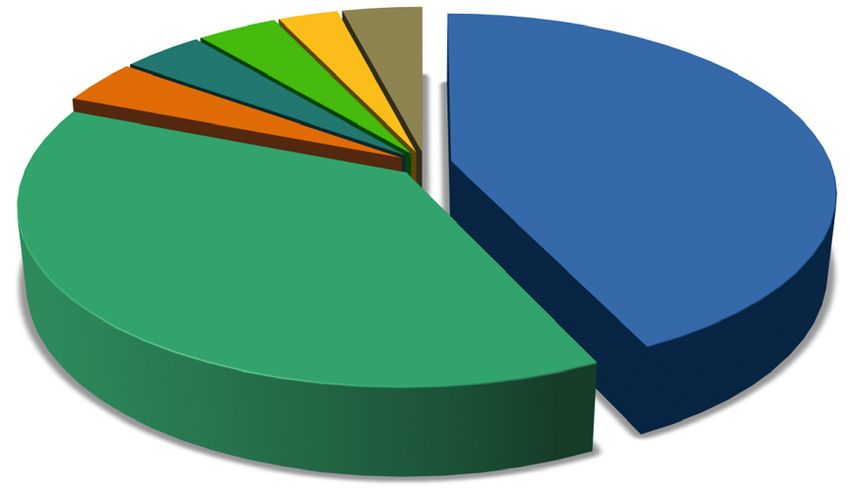
PREFACE
Future-proof industrial networks: Focus on infrastructure!
Dear customers,
dear business partners,
dear interested readers,

proudly advertised slogans in brochures or television commercials              The basis are findings from practical experience. That is why we’d like
are a daily reminder of how rapidly the infrastructure performance             to take you once again this year on a short tour through the abridged
of modern computers is growing: Processors, RAM and graphics cards −           findings from several hundred service calls carried out by Indu-Sol
each component is adapted to ever increasing requirements of possible          GmbH during 2018 to determine the communication quality in indus-
future applications. Manufacturers never know in advance whether the           trial networks.
future user “only” wants to do word-processing and perhaps prepare
                                                                               To begin with, you can perform a self-check on page 3: The conditions
his tax return, or whether he is a passionate gamer with a preference
                                                                               in your networks are crucial in determining how long such a service
for sophisticated multimedia tasks.
                                                                               call may take. Have you created all the necessary conditions for a fast

A similar trend can be observed with regard to industrial networks:            completion?

Ethernet-based communication architectures are increasingly gaining
ground here and also allow applications that are not directly required         With best wishes for always sufficient bandwidth,
                                                                               Your René Heidl
for the automation process to use the network (e. g. energy manage-
ment, printers, image processing, ERP data).

If this growing amount of acyclic data traffic is not taken into account       Director of Technology & Support
in network planning, the probability of sporadic, non-reproducible             Indu-Sol GmbH
events will increase. This can result in “perplexing” malfunctions of
time-critical automation processes. It is therefore worth paying much
greater attention to the topics of network structure and the perfor-
mance of infrastructure components in order to handle the increasing
data volumes and flexible connection requirements of future-proof in-
dustrial automation.

                                                                           2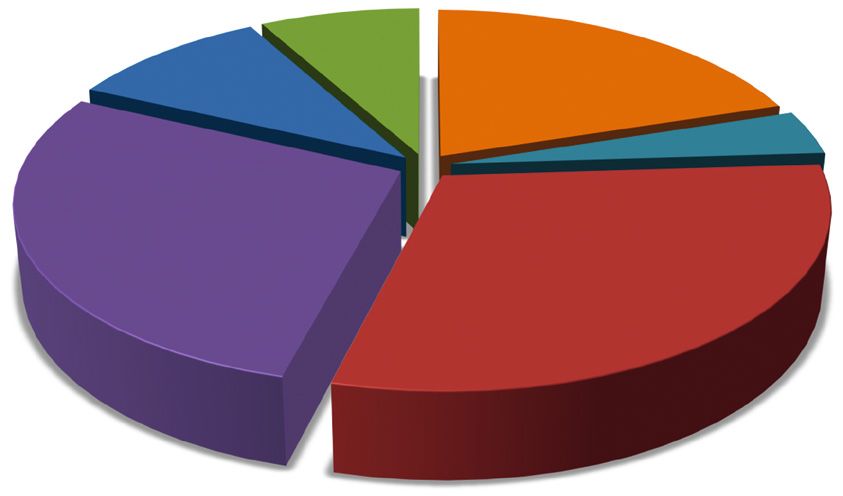
YOUR TURN NOW...
Your self-check: How you can influence the duration of a service call
No coffee for the evaluation Communication
meeting? Back to 51 error-free again
47 48 55 ZIEL
49 50 51 52 53 54
56 Instructions
No: Data loggers Here you can simulate the
46 Yes: Faster help about orienta-
tion, downtimes, device replace-
must run for one potential scenario of a service
night at least
ment, implementing recommen- call at your premises:
dations
45 43 41 39 38 37 36
44 42 40 Go through the
35 fields and answer
Is there a contact person on
the questions for
site who knows the system? Yes: Valuable starting
No: Service technician must your machines/
solve problem himself; delays to
implement recommendations…
No: Up-to-date
points for trouble-
shooting 34 systems. Each
information must
be gathered first “Yes” allows you
Do reports or similar
to take a shortcut,
No: Must be
created manually
documentation exist?
30 31 32 33 each “No” causes an
25 28 29 unnecessary delay.
24 26 27
Are historic diagnostic In the best case you only
23 Yes: This information data available? need 22 fields to reach the
Yes: speeds up troubleshooting, finish, in the worst case all
If topology is Yes: Measure- continue with 31
correct, con- 56.
ment starts
22 tinue with 27 immediately.
21 16
20 19 18 17 15 14 13 12 Your number of
Is there an up-to-date fields:
topology? No:
Retrofitting Are there accessible
Yes: A service technician 22 - 33
required… measuring points? will be with you within 11
Customer call: Trouble- 48 hours.
shooting required! 34 - 45
5 6 8 9 10
START 2 3 4 7
46 - 56
1 Are you using
Clarifying service call parameters the SOS flat rate? No: You get the next free appointment
3NUMBER/LENGTH OF CALLS
Equipping instead of retrofitting: How to meet growing service demands
Although more and more manufacturing companies rely on monitor-
ing their automation networks, this topic is not yet as widely recog-
nized as in the IT sector. As already indicated on page 3 and as can
also be seen in the graph on the right, this leads to an ever longer
duration of service calls, which could be prevented.
This is because if a monitoring system is in place, minor weak spots
are detected preventively and can usually be remedied by the custom-
er. The external service technician is then only needed for tricky spe-
cial cases, but even then is able to consult historical diagnostic data.
In machines and installations without a monitoring system, there is
no early warning mechanism, so that a response is only possible when
there is an obvious malfunction. By then, however, the damage has
already been done and the detection and elimination of the causes will
take much longer than necessary.
While the number of annual service calls − at least with Indu-Sol − is
continuously decreasing, the service demand of industrial networks
keeps increasing all the time. One way to avoid expensive investments
in retrofitting monitoring systems or costly service calls is to select
the network infrastructure components based on performance rather
than primarily on price. For example, modern switches have onboard
network diagnostics and thus provide important diagnostic data when
servicing is required.
4DIAGRAM
Number and duration of Indu-Sol service calls per calendar year
3535 800 800
32
3030
700 700
677 646
600 600
2525
547 500 500
2020
454
400 400
14,5 16,5
1515
300 300
13
1010
200 200
55 100 100
00 0 0
2015
2015
2016
2016
Average duration of a measurement done in hr
20172017
Annual number of measurement calls
2018
2018
Average duration of service calls in hours Total service calls per calendar year
SOS calls, proportion
Year Total calls Number of troubleshootings Number %
2015 677 399 133 33
2016 646 349 148 42
2017 547 312 157 50
2018 454 239 133 56
5DISTRIBUTION OF CALLS
Separation was yesterday ‒ Ethernet is conquering automation
In the early 2000s, classic fieldbuses were still the undisputed leaders
in automation technology. However, the first experiments with Ether-
net-based communication were already under way. The maintenance
departments of manufacturing companies, however, were concerned
about opening up their automation networks (OT networks) to exter-
nal access. For this reason, a strict separation of IT and OT was initially
called for.
Due to the growing demand for data for monitoring production pro-
cesses for predictive maintenance, and the options for remote access
to machines and systems, Ethernet-based communication protocols
have now become well established in the OT area as well. As a result,
IT and OT are becoming more and more closely interlinked, and the
service demand in Ethernet-based networks is increasing noticeably
(see chart on the right). To keep network maintenance costs to an
acceptable level, it is necessary to rethink current structures and pro-
cedures. A proposal can be found on page 11.
In parallel, service requirements in the PROFIBUS sector keep declin-
ing in proportion: Learning from ever more frequent symptoms of wear,
customers are increasingly installing monitoring systems that perma-
nently monitor the bus and give early preventive warning.
6DIAGRAM
Why customers request service calls by Indu-Sol
Industrial Further
Ethernet
2015 2016 2017 2018
55 % 49 % 45 % 43 % For the first time in recent
years, 2018 saw a signifi-
28% 32 % 36 % 38 %
cant need for service calls
5% 6% 7% 4%
to determine communica-
2% 4% 4% 4% tion quality in Industri-
Industrial al Ethernet networks – a
Ethernet 0,07 % 0,2 % 0,3 % 4%
clear indicator of the in-
5% 5% 5% 3%
creasing interlinking of IT
Further 5% 4% 3% 4% and OT.
7ERROR SOURCES
Aging infrastructure meets modern equipotential bonding
In addition to faultless software and configuration, stable data com-
munication requires faultless hardware: This is where many stumbling
blocks are lurking, since the wear of connectors, cables and the like is
rarely even considered as a possible cause of communication errors. So
before starting to replace expensive devices, it is worth taking a look
at the connecting elements. In 2018 the reasons for Indu-Sol service
calls were in more than 50 % of cases hardware issues (connectors,
cables, excessive cable lengths).
Experience has shown: The foundation of a long-term stable data com-
munication includes training the responsible maintenance personnel
in the safe handling of the automation technology, compiling techni-
cal delivery specifications, and performing final acceptance measure-
ments. This allows purposeful identification of error causes that are
easy to repair. The costs pay for themselves after only a short time
by avoiding needless replacement of devices that are still in perfect
working order.
Since higher-frequency power electronics are being used more and
more in industrial automation, equipotential bonding is becoming
increasingly important in addition to the network infrastructure it-
self. Due not least to a new guideline, the intermeshed design is in-
creasingly becoming the standard, resulting in higher EMC resistance
for machines and systems. Whereas four years ago this was the main
source of errors, in 2018 it only occupied third place.
8DIAGRAM
Typical error sources found during service calls
Other
Excessive cable length EMC
Software & devices
Cables
Connectors
2015 2016 2017 2018
Connectors 11 % 18 % 20 % 30 %
Cables 15 % 14 % 31 % 28 %
EMC 36 % 24 % 23 % 20 %
Excessive cable
4% 9% 4% 10 %
length
Software &
21 % 20 % 16 % 4%
devices
Other 13 % 15 % 6% 8%
9FORECAST
Performance starts with infrastructure: Enterprise level in the OT sector
Planning, acceptance test and commissioning as well as the maintenance
of industrial networks tie up more and more resources in manufacturing
companies (where such resources may not even exist). High performance
and availability of the automation processes, on the other hand, are es-
sential prerequisites for remaining competitive. Increasing data volumes
and a growing degree of networking therefore call for new approaches in
terms of structure and for more powerful components.
To keep the administrative burden of increasing data volumes and higher
levels of networking manageable, the creation of a higher-level Industrial
IT (IIT) is an appropriate solution. For this purpose, the automation net-
work is detached from the machines/systems and managed centrally. The
individual applications are connected to data transfer points, so that the
manufacturing company remains flexible and keeps the network adminis-
tration in its own hands.
The switch as an intelligent, high-performance data crossover is becoming
much more important: Firstly, it must function reliably with high network
loads. However, it must also be prepared for OT-specific special events
such as the occurrence of leakage currents on the shields of data lines. The
demands placed on the pinpoint provision of relevant diagnostic data are
also growing on an almost daily basis. Already in the near future, indus-
trial automation will require switches with enterprise-level performance.
Conclusion: Being stingy with infrastructure quality means saving at
the wrong end, because any savings will be spent many times over
on services.
10SAMPLE CONFIGURATION
Actively shaping the integration of IT and OT without WORLD
loss of competence ‒ with Industrial IT (IIT) WIDE WEB
Database Database
IT
Database
Network monitoring system
Maintenance Control system Error message system
IIT
PROmanage® NT
FOG Cloud
Database
PROFINET
OT
11Indu-Sol GmbH
Blumenstrasse 3
04626 Schmoelln
Telephone: +49 (0) 34491 5818-0
Telefax: +49 (0) 34491 5818-99
info@indu-sol.com
www.indu-sol.com
Certified according to DIN EN ISO 9001:2015 More about Indu-Sol:
Updated 03/2019You can also read


