Wairarapa College - 2020 Year 12 Course Information Booklet Our Vision 'A thriving, student-centred learning environment, educating students for ...
←
→
Page content transcription
If your browser does not render page correctly, please read the page content below
Wairarapa College

                                2020
     Year 12
Course Information
     Booklet
                                       Our Vision
‘A thriving, student-centred learning environment, educating students for their future.’
                 ‘Te puāwaitanga o te manu e kai ana i te mātauranga.’
Table of Contents
   NCEA Credit Requirements ................................................................................................................................................... 3
   Heads of Department & Teacher in Charge .......................................................................................................................... 4
   Pastoral Support ................................................................................................................................................................... 4
   Senior Leadership Team ........................................................................................................................................................ 4
   Option Selection Choices ...................................................................................................................................................... 6
   KAMAR Portal Instructions.................................................................................................................................................... 7
   Vocational Pathways ............................................................................................................................................................. 8
   Volcanics Online Learning Community ................................................................................................................................. 9
Senior School Information ....................................................................................................................................................... 13
   Compulsory Subjects ........................................................................................................................................................... 13
   Frequently Asked Questions ............................................................................................................................................... 13
   Recommended Device Specifications ................................................................................................................................. 14
   Device Minimum Specifications .......................................................................................................................................... 14
   Drama ................................................................................................................................................................................. 16
   Music................................................................................................................................................................................... 16
   Visual Art & Photography.................................................................................................................................................... 17
   Level Two English ................................................................................................................................................................ 19
   Media Studies ..................................................................................................................................................................... 22
   ESOL – English as a Second Language ................................................................................................................................. 22
   French ................................................................................................................................................................................. 24
   Māori .................................................................................................................................................................................. 24
   Languages Through Te Kura (The Correspondence School)/Volcanics ............................................................................... 25
   Level Two Mathematics ...................................................................................................................................................... 27
   Primary Industry Trades Academy Agricultural and Horticultural Science ......................................................................... 29
   Agricultural & Horticultural Science .................................................................................................................................... 30
   Level Two Science ............................................................................................................................................................... 30
   Biology ................................................................................................................................................................................ 31
   Chemistry ............................................................................................................................................................................ 31
   Physics................................................................................................................................................................................. 32
   Geography........................................................................................................................................................................... 34
   History................................................................................................................................................................................. 34
   Classical Studies .................................................................................................................................................................. 35
   Accounting .......................................................................................................................................................................... 35
   Economics ........................................................................................................................................................................... 36
   Health ................................................................................................................................................................................. 38
   Physical Education .............................................................................................................................................................. 38
   Sports Academy .................................................................................................................................................................. 39
   Sports Studies ..................................................................................................................................................................... 39
   Design & Visual Communication ......................................................................................................................................... 42
   Food and Nutrition .............................................................................................................................................................. 42
   Hospitality ........................................................................................................................................................................... 43
   Pathways Courses ............................................................................................................................................................... 44
   Resistant Materials Technology .......................................................................................................................................... 45
   Digital Technology & ICT ..................................................................................................................................................... 45
   Gateway .............................................................................................................................................................................. 48
   Transition ............................................................................................................................................................................ 49
   Tourism Studies .................................................................................................................................................................. 50
Trades Academy 2020.............................................................................................................................................................. 51
   Palmerston North Programmes 2020 ................................................................................................................................. 58
   Course Progression ............................................................................................................................................................. 59

                                                                                                                                                                                            2
GENERAL INFORMATION
NCEA Credit Requirements
Level               Credits Required
NCEA Level 1        80 credits at any level,
                    including at least 10 credits in Literacy and 10 credits in Numeracy
                    Literacy credits are available through
                         • specified achievement standards available through a range of subjects
                    Numeracy credits are available through
                         • specified achievement standards available through a range of subjects
NCEA Level 2        80 Credits
                         • including 60 Credits at Level 2 or above
                         • 20 other credits from Level 1
                         • Level 1 Literacy and Numeracy
NCEA Level 3        80 Credits
                         • including 60 Credits at Level 3 or above
                         • 20 other credits at Level 2 or above
Certificate         Students require 50 credits at Excellence to gain an NCEA Certificate Endorsed with Excellence and 50
Endorsement         credits at Merit (or Merit and Excellence) to gain NCEA endorsed with Merit. To gain a school leavers
                    scholarship at university (based on Level 2 grades) the number of Excellence credits required varies
                    from year to year.

                    Students can also gain Course Endorsements for individual subjects. If they pass 14+ credits at
                    Excellence, they will gain an Excellence course endorsement, and 14+ credits at Merit (or Merit and
                    Excellence) will earn a Merit course endorsement.

                    For both endorsements, you need at least 3 internal and 3 external credits, excluding Physical
                    Education and Level 3 Visual Arts which are internally assessed. Course endorsements must be gained
                    in one calendar year.
University          You must have the following
Entrance                 • NCEA Level 3
                         • At least 14 Level 3 credits in three approved UE subjects *link below
                         • UE Literacy (5 reading and 5 writing credits at Level 2 or above)
                         • UE Numeracy (10 credits at Level 1 or above from specific achievement standards, or three
                             specific numeracy standards)

                         *See the following link for more information:
                    http://www.nzqa.govt.nz/qualifications-standards/awards/university-entrance/approved-subjects/
Additional          All universities have their own GES and the requirement depends on the degree.
University
Entrance Criteria   For example: At Victoria University the Guaranteed Entry Score (GES) from NCEA is 150 points for all
                    undergraduate degrees, except the Bachelor of Architectural Studies and Bachelor of Building Science
Guaranteed Entry    which requires a Guaranteed Entry Score of 180 points.
Score (GES)
                    An entry score will be calculated by awarding points as follows: Excellence- 4 points, Merit- 3 points
                    and Achieved- 2 points. Research more information for each university.

                    NB: Auckland University have guidelines to follow for English credits.

                                                                                                                             3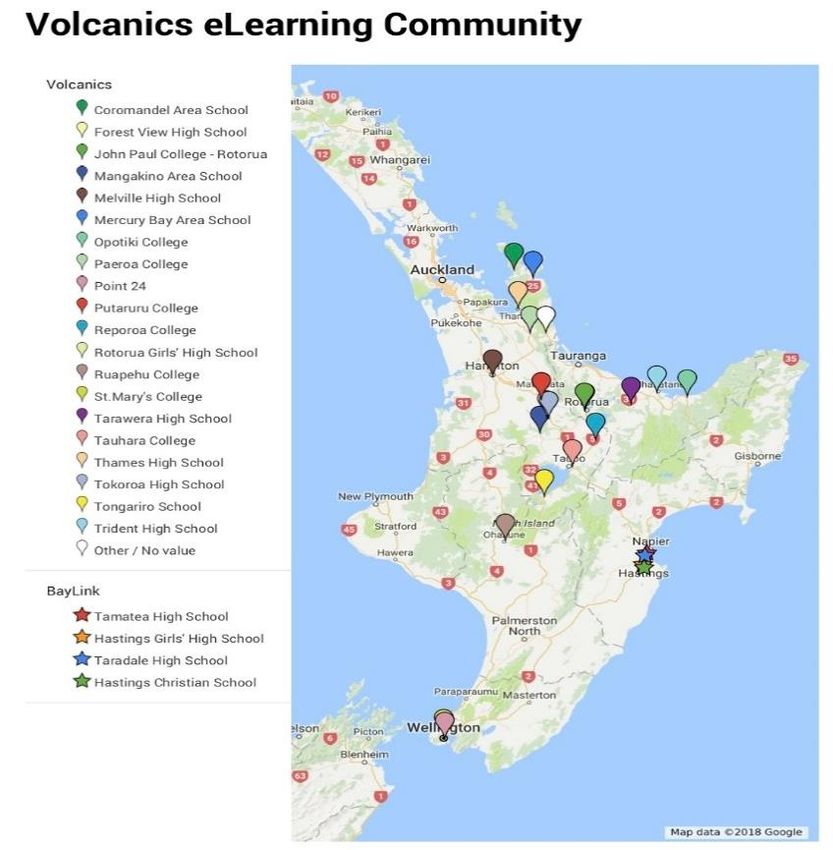
GENERAL INFORMATION
Heads of Department & Teacher in Charge
Agriculture & Horticultural Science          Mr Dan Grace
Art                                          Mr Nikolai Kokx
Biology                                      Ms Kathryn Houliston
Chemistry                                    Dr Lynton Baird
Commerce (Accounting / Economics)            Mr Dave Jones
Digital Technology                           Mr Richard Swallow
Classical Studies                            Mrs Kate Murray
English                                      Mrs Pam Grant
Geography / Social Studies / Tourism         Mrs Charmaine Nelson
Health                                       Miss Esther Lanser
History                                      Mrs Jenna Katia
Food & Nutrition / Hospitality               Mrs Sam Jones
French                                       Mrs Jo Brunskill
Drama                                        Mr Bevan Connell
Language Resource                            Mrs Ella Kokx
Library                                      Mr Ewan Hyde
Mathematics                                  Mr Mike van Woerkom
Māori                                        Whaea Huria Robens
Media Studies                                Mr Richard Wallis
Music                                        Ms Belinda Carey
Physical Education / Sports Studies /        Mr Willie Schaefer
Sports Academy
Science / Physics                            Mr Hansel Wiramanaden
Supported Learning Centre                    Mrs Amanda Kawana
Technology / Design & Visual Communication   Mr Lindsay Moore
Transition / Retail / Gateway                Mrs Beth Pottinger

Pastoral Support
Year 9 Deans                                 Mrs Kate Murray
                                             Mr Alistair Payne
Year 10 Deans                                Ms Kathryn Houliston
                                             Mr Willie Schaefer
Year 11 Dean                                 Mr Jaco le Roux
Year 12 Dean                                 Mr James O’Connor
Year 13 Dean                                 Mrs Cathy Mabey
E-Dean                                       Mr Richard Wallis
Guidance Counsellor                          Mr Paul Adamson
Careers Adviser                              Mrs Beth Pottinger

Senior Leadership Team
Principal                                    Ms Shelley Power
Deputy Principal – Year 11                   Mrs Pam Redpath
Assistant Principal - Year 12/13             Mr Mark Williams
Assistant Principal – Year 10                Mrs Jo Bisset
Assistant Principal – Year 9                 Mr Aaron Perkins

                                                                     4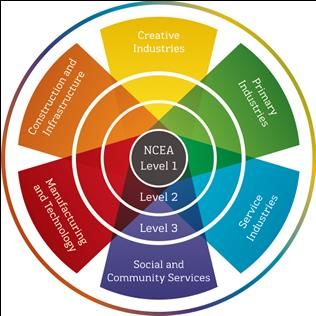
GENERAL INFORMATION
Take some time to consider your next step in your educational pathway:
What are the subjects you would like to select?

                        Year 11                  Year 12                 Year 13
                        English                  English                 Option 1
                         Maths                  Option 1
                      Science or                                         Option 2
                     Agriculture                Option 2
                       Option 1                                          Option 3
                                                Option 3
                       Option 2                                          Option 4
                                                Option 4
                       Option 3                                          Option 5
                                                Option 5

 My career ideas. Go to (www.careers.govt.nz) to help you

Pre-requisites
What are the pre-requisites I need for my subjects?

                                                                                    5
GENERAL INFORMATION
Option Selection Choices
One subject, English, is compulsory. You study six subjects in total.
You are required to select five more subjects.

Look through this booklet to determine the pre-requisites. Write them down here:

                        Subject                                           Pre-Requisites

 Subject One                                             12ENG1 - 14 Credits at Level 1, including one
                                                         internal writing standard and one external
 English - Compulsory                                    12ENG2 - 9-14 credits at Level 1 including one
                                                         writing standard.
                                                         12ENG3 - Between 3 and 8 credits gained in Level 1.

 Subject Two

 Subject Three

 Subject Four

 Subject Five

 Subject Six

                                                                                                               6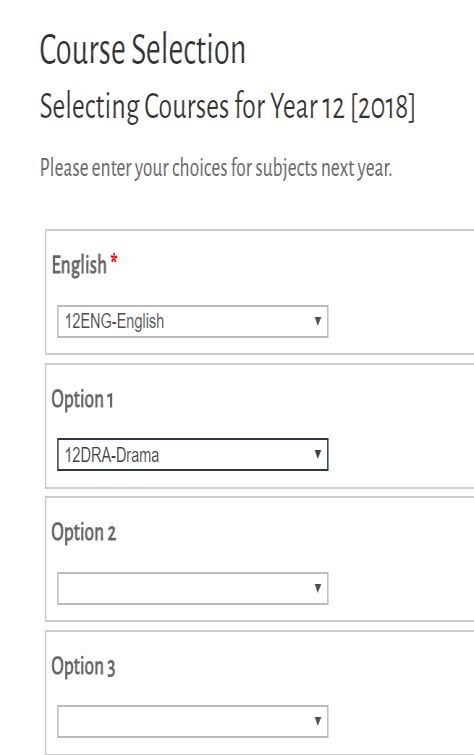
GENERAL INFORMATION
KAMAR Portal Instructions
Please note that option selection is only available when using the parent password. This is so that there will be
a conversation with your child to make these important decisions.

                  The KAMAR Portal will be open from Tuesday 13 August 2019 and closes on
                                           Friday 30 August 2019.

If you do not have a password, or you are unable to submit your choices online for any reason, please contact
the college office.

    1.   Go to the Wairarapa College Website www.waicol.nz
    2.   Select KAMAR from the top menu

    3.   Login using the parent username and password

    4.   Choose Course Selection from the menu. Below is an example at Year 12.

    5.   Press the save button at the bottom of the page.

                                                                                                                7
GENERAL INFORMATION
Vocational Pathways
The Vocational Pathways provide a clear framework for vocational options, support better programme design
and careers advice, and improve the links between education and employment.
The Vocational Pathways are the product of a partnership between government agencies, the industry training
sector, secondary and tertiary education representatives, and industry and employer representatives.
There are six pathways which represent new ways to structure and achieve NCEA Level 2 and provide a more
coherent framework for foundation vocational education and training. The pathways will help students to
develop their own individual education plan, so they are better informed and able to make better choices to
meet their goals.
Vocational Pathways Award
If your NCEA Level 2 includes enough credits from recommended standards, and you meet the NCEA literacy
and numeracy requirement, you can have one of the six industries awarded as your Vocational Pathway on
your NZQA Record of Achievement. This will be a real advantage when you get out there and look for work and
training opportunities in a specific sector.
Vocational Profile
The Vocational Profile is a visual graph which will show learner achievement against the six Vocational
Pathways. Learners will be able to identify their progress and identify where they need to raise their level of
achievement when planning their courses for the following year and check that their course selections provide
the pathways they need to achieve their goals.
Getting Started
Start your journey at www.youthguarantee.net.nz
1. Work out which standards you have achieved.
2. Enter your standards into the Profile Builder.
3. View your Vocational Profile - The bar graph shows the industry sectors your standards work towards
and the progress you are making.
4. Check out your Job Opportunities - You can find information on the type of jobs available in the 6
industry sectors and where the job opportunities are.
Useful Links
www.careers.govt.nz
www.youthguarantee.net.nz
8ONLINE LEARNING
Volcanics Online Learning Community
The schools on the map are members
of the Volcanics eLearning
Community. Volcanics schools who
work together to provide high quality
learning opportunities based around
the New Zealand Curriculum. We
work with other similar clusters
nationally to provide a wide range of
curriculum subjects.
As a member of Volcanics, we are
able to provide students with access
to courses taught by teachers from
other schools nationally via online
learning.
Each student will demonstrate:
• Commitment to attend all timetabled online classes
• To attend all Video / Zoom conferences
• Work four hours in class plus two hours additional
• Follow the termly Learning Plan set out by the teacher
• To communicate every two weeks with your virtual teacher
• To view school emails every day
• To check school notices daily
• To respond to requests for information in a timely manner
• To submit work when required
• To communicate with Wairarapa College’s eDean – Mr Wallis as required and if you have problems
with your course, technology or teacher
Student qualities
• Great time management and organization skills
• Clear sense of direction and perseverance
• A desire to do of your best work, when times get tough and difficult
• To contribute to group / class discussions and ask questions
Benefits
There are multiple benefits to enrolling through Volcanics in an online course.
• A personalised approach can be used to meet students’ needs.
• Year 10 students are welcome to enrol in NCEA Level One courses as an extension opportunity.
• Successful online learners are also very well prepared for tertiary study.
The students selecting an Online Learning option will have an eDean who is able to help and support students.
The eDean for 2020 is Mr Richard Wallis.
9ONLINE LEARNING
Entry Criteria
• Students are able to take courses that are not currently offered at their school.
• Subject clashes.
How it works
Each Online Learning course will have one or more of the following learning components:
• Paper based (workbooks, textbooks and notes)
• An online component accessed through an online learning environment such as Canvas, Google
Classroom, Google Docs.
• Video conferencing (VC), or web based conferencing using Zoom or Google Hangouts
Access to a personal device, laptop or chromebook, is recommended. Personal headphones with a
microphone is highly recommended.
All NCEA courses offer NZQA Achievement Standards. Communication is maintained through video-
conferencing and a combination of tools in the online learning environments such as email, Google
Communities, Google Drive, Google Sites, learning management systems, Skype and texts.
Acceptance into online courses will also be determined by a recommendation that the student is sufficiently
self-motivated and has the ability to work with less direct teacher supervision than would normally be the case
in a face to face class.
Please note
This is the list of courses offered in 2019. Most of the courses will be offered next year and we hope to have
additional options. Course confirmation happens by the end of Term 4.
Acceptance into an online course is dependent upon available resources, the level of student enrolment and
the timing of the enrolment. Sometimes students may be on a waiting list for a short time.
Completion of an enrolment form is not a guarantee of acceptance into your chosen course.
Contact Information
Wairarapa College eDean Richard Wallis
rwallis@waicol.nz
06 3700 400 ext. 728
Volcanics ePrincipal Sara Field
sara@volcanics.school.nz
021 246 6148
Volcanics Assistant ePrincipal Jan Collier
jan@volcanics.school.nz
027 380 8735
Volcanics Website www.volcanics.school.nz
Further Information www.vlnc.org
For more information visit google document or www.volcanics.school.nz or contact Sara Field
sara@volcanics.school.nz
10ONLINE LEARNING
Courses Offered in 2019
Courses Beginners Level 1 Level 2 Level 3/4
Accounting ✓ ✓ ✓
Agriculture ✓ ✓ ✓
Art History ✓ ✓
Biology ✓ ✓
Business Studies ✓
Chemistry ✓ ✓
Chinese (Mandarin) ✓ ✓ ✓
Classical Studies ✓ ✓
Cook Island Māori ✓ ✓ ✓
Computer Programming ✓ ✓ ✓
Design and Visual Communication ✓
Digital Technology ✓ ✓ ✓
Digital Technology – Web Design ✓
Digital Photography ✓ ✓
Drama ✓ ✓
Economics ✓ ✓ ✓
Electronics ✓ ✓
English ✓
French ✓ ✓ ✓ ✓
Geography ✓ ✓ ✓
German ✓ ✓
Health ✓
History ✓ ✓ ✓
Hospitality ✓
Japanese ✓ ✓ ✓ ✓
Korean ✓ ✓ ✓ ✓
Maths with Calculus ✓
Maths with Statistics ✓
Media Studies ✓
Music ✓ ✓
Philosophy ✓
Photography ✓
Physics ✓ ✓
Physical Education ✓ ✓
Psychology ✓ ✓
Religious Studies ✓ ✓ ✓
Samoan ✓ ✓ ✓ ✓
Spanish ✓ ✓ ✓ ✓
Social Studies ✓ ✓ ✓
Te Reo Māori ✓ ✓ ✓
Tongan ✓ ✓
Visual Art ✓
11ONLINE LEARNING
Tertiary Courses
Course Provider Level 2 Level 3
Agriculture Telford Rural Polytech ✓ ✓
Apiculture Telford Rural Polytech ✓
Dairy/Cattle Telford Rural Polytech ✓
Equine Telford Rural Polytech ✓
Forestry Telford Rural Polytech ✓
Horticulture Telford Rural Polytech ✓ ✓
Sheep Farming Telford Rural Polytech ✓
Please note that the cost of Tertiary courses are covered by STAR funding, Gateway funding or by the student
and their families where funding is not available.
Frequently Asked Questions
1. How do I select an on-line course on the KAMAR portal?
You select “ELEA” on the portal, then Mr Wallis will see you and you will be asked to complete an
application form. The course will be confirmed early in 2020.
2. Who will be my teacher?
If you are enrolled in an online course, your eTeacher will be from another school in NZ.
3. How often will I see my teacher?
You will have an hour-long video or web conferencing class each week, and your eTeacher will
provide an online classroom (like a website) in which you will work 3-4 hours each week.
4. How will I communicate or get work to and from my teacher?
You will be able to communicate regularly with your eTeacher through emails, online forums, online
forums, online chats, news forums, discussion boards and Skype and text messages.
5. How do I receive work or send work to my eTeacher?
You will be able to upload assignments, assessments, tests and any other work into your online
classroom. You can also email your work, share it e.g. through Google Docs, Dropbox or simply post
it. For work sent online, your eTeacher will mark your work online and send it back the same way.
6. Do I need access to a computer or device at home?
You will require access during school time to a computer or a device (e.g. tablet, laptop, phone) and
the internet, so that you can work independently in your ‘online environment / online classroom.’ If
you have the internet at home, this is an added bonus.
7. What happens if I have another class at that time?
Video-conference lessons take precedence. You will have to make up for the lost time by working
with your teacher from school on what you have missed in their lesson. This is why you need to be
self-motivated.
8. Who can apply for an online class?
You may apply through Mr Wallis to be enrolled in an online course, if the subject/course you wish to
study is:
• Not currently offered at school
• Clashes with another timetabled class
• Offered through a tertiary organisation
Students who apply must:
• Be self-motivated and well organised
• Have suitable prior leaning for the course they are applying for.
12SENIOR SCHOOL INFORMATION
Senior School Information
Unit Standards are indicated where applicable, all other standards are Achievement Standards.
Compulsory Subjects
Year 12 students are automatically placed into an English course; this does not need to be selected on the
portal. If studying Maths at Year 12 please select 12MAT.
Frequently Asked Questions
1. How do I qualify for a subject?
Each student’s performance in 2019 will be the major factor in approval for entry into courses in 2020.
Entry criteria are outlined in this booklet. The subject pathway outlines (at the beginning of each learning
area) lets you see where a course leads in later years. Final entry to subjects for Year 12 & 13 is
completed at the Course Confirmation Day at the beginning of 2020. This is in consultation with the HOD
or Teacher in Charge. The important question in approving courses is students meeting the
pre–requisites and whether the student has a reasonable chance of achieving academic success. Some
subjects currently offered may not be available, if too few students opt to take them.
2. How many subjects do I have to take?
• Year 12 take an English course and five other courses.
3. Can I choose any new subject at Level 2 or 3?
Success gained in one or more subjects this year may allow you to take a new subject. Carefully check
the entry criteria for each subject you are considering.
4. Can I take subjects at Level Three in Year 12?
This will apply to some of you who have already completed a Year 12 course. Taking subjects at a
higher level is possible only from having the pre–requisites and with the agreement of the HOD and
your Dean/SLT.
5. What about taking subjects at a lower level?
There is nothing to stop students working at Level 2 as a Year 13 student, for example, taking a
subject you are interested in at Level 2 or even Level 1. Just ensure that you have considered the
effect on your chances of achieving your Level 2 or 3 NCEA.
6. What if I still don’t know what to choose?
There are plenty of people who can advise you. For details on courses at tertiary level (universities
and polytechnics), see Mrs Pottinger (Careers Advisor).
13SENIOR SCHOOL INFORMATION
Recommended Device Specifications
Wairarapa College has identified some devices which best fit the way we are using technology. Some subject
areas may use more specialised software applications which have additional requirements. For a device to be
a productive tool in class, it needs to be capable of running Microsoft Office 2016 – which all students will
receive free of charge during their time at Wairarapa College.
If you prefer to select your own device, please ensure that it is running Windows 10. For smoothest operation,
we also recommend at least 4GB of RAM and a battery that can last a whole day.
Microsoft Office is available for Mac, iPad and Android tablet users. However it doesn’t have the same
functionality as the Windows version; subsequently these devices are not recommended by the college. If you
select a device that does not meet these recommendations, the device may not perform in the way intended
by the classroom teacher and they may not be able to support the student as well in their learning.
Level 1 Courses where having a device may be advantageous
11 English 1 Geography
Accounting Health
Design & Visual Communication History
Drama Music
Economics Physical Education
Food and Nutrition Visual Art
French
Device Minimum Specifications
Wairarapa College has identified some devices which best fits the way we are using technology. Some subject
areas may use more specialised software applications which have additional requirements. For a device to be
a productive tool in class it needs to be capable of running Microsoft Office 365 – which all students will
receive free of charge during their time at Wairarapa College.
Checklist for your child’s laptop - if you are buying a laptop it should:
• Have a minimum of 4GB Ram. 8GB will improve performance
• Have processor of at least 2.2GHZ or Intel Core i3 minimum (i5 recommended)
• Be internet capable and able to access the school’s wireless network (Wireless 802.11n/ac)
• Have sufficient storage space to store documents. Recommended minimum 64GB of internal storage.
Solid State Disk (SSD) instead of traditional Hard Disk Drive (HDD) is highly recommended (SSD are
much faster and provide longer battery life)
• Have a readable screen, minimum of 10”.
• Have a keyboard
• Have a good battery life (more than 6 hours)
• Be lightweight enough that it can be carried easily
• Have a back-up device (e.g. a USB stick or external hard drive). While documents are stored in their
Microsoft© cloud it is good practice to learn to backup
14THE ARTS
Drama Drama Drama Drama Drama
9DRA 10DRA 11DRA 12DRA 13DRA
WaiCol
on Stage
(9WOS)
Music Music Music Music Music
9MUS 10MUS 11MUS 12MUS 13MUS
Visual Art Painting
12VAR 13PNT
Visual Art Visual Art Visual Art
9VAR 10VAR 11VAR
Photography Photography
12PHO 13PHO
15THE ARTS
Drama
12DRA – NCEA Level 2 Drama
The course builds on from Year 11. Students should have a strong interest in all aspects of Drama and have
the confidence to perform on stage. The emphasis is on group work, learning a theatre form
(Elizabethan/Shakespearean) and performing often advanced scripts.
Entry Requirements: Year 11 Drama
External Credits Internal Credits Highly Recommended Materials
4 18 None
Course Leads to: Year 13 Drama
Standard Title Credits Level Literacy Numeracy
91213 Display drama techniques through performance 4 2 R N
91214 Devise and perform a drama 5 2 N N
Internal
Learn about a theatre form (Elizabethan) and
91216 4 2 R N
perform.
91218 Perform a major role 5 2 R N
91215 Demonstrate understanding of a theatre form 4 2 B Y
E
Total Credits 22
Music
12MUS – NCEA Level 2 Music
This course builds on individual strengths and offers a range of standards that allow students to focus on
developing more advanced skills in performance, composition, music studies and music technology.
Students need to agree on a set of standards worth 20 credits at the start of the year in consultation with the
Head of Music. Students must enrol in music instrumental lessons and will be expected to contribute to school
events.
Entry Requirements: Level 1 Music, Voice or Instrument Lessons to a grade 3 or above standard.
External Credits Internal Credits Highly Recommended Materials
Up to 8 Up to 23 Recommended Workbook
Course Leads to: Year 13 Music
Standard Title Credits Level Literacy Numeracy
Perform two substantial pieces of music as a
91270 6 2 N N
featured soloist
Perform a substantial piece of music as a
91274 3 2 N N
featured soloist on a second instrument
Internal
Demonstrate ensemble skills by performing a
91272 substantial piece of music as a member of a 4 2 N N
group
91271 Compose two substantial pieces of music 6 2 N N
91278 Investigate an aspect of New Zealand music 4 2 N
91273 Devise an instrumentation for an ensemble 4 2 N N
Ext
Demonstrate knowledge of conventions in a
91276 4 2 N
range of music scores
Total Credits 20/31
16THE ARTS
Visual Art & Photography
12VAR – NCEA Level 2 Visual Art
Students extend their understanding, knowledge and skill in Visual Art through developing a body of work
(artworks) within painting in response to independently chosen theme/idea. The course focuses on students
developing a proposition, independently researching and generating ideas based on traditional and
contemporary artist models. The course extends students’ prior learning in Photoshop.
Entry Requirements: 12 credits in 11VAR
External Credits Internal Credits Highly Recommended Materials
12 8 A3 clear file
Course Leads to: Year 13 Painting
Standard Title Credits Level Literacy Numeracy
Use drawing methods to apply knowledge of
91311 4 2 N N
Internal
conventions appropriate to painting
Develop ideas in a related series of drawings
91316 4 2 N N
appropriate to established painting practice
Produce a systematic body of work that shows
Ext
91312 understanding of art making conventions and 12 2 N N
ideas within painting.
Total Credits 20
12PHO – NCEA Level 2 Photography
Students extend their understanding, knowledge and skill in Visual Art through developing a body of work
(artworks) within photography in response to independently chosen theme/idea. The course focuses on
students developing a proposition, independently researching and generating ideas based on traditional and
contemporary artist models. The course extends students’ prior learning in Photoshop and includes teaching
of basic digital camera skills.
Entry Requirements: 12 credits in 11VAR
External Credits Internal Credits Highly Recommended Materials
12 8 A3 Ilford galerie smooth pearl paper
Course Leads to: 13 Photography
Standard Title Credits Level Literacy Numeracy
Use drawing methods to apply knowledge of
91312 4 2 N N
Internal
conventions appropriate to photography
Develop ideas in a related series of drawings
91317 4 2 N N
appropriate to established photography practice
Produce a systematic body of work that shows
Ext
91322 understanding of art making conventions and ideas 12 2 N N
within photography
Total Credits 20
17ENGLISH
English English English English English
9ENG 10ENG 11ENG* 12ENG* 13ENG
* 11 * 12
ESOL
English 11ENG1 English 12ENG1
11ENG2 12ENG2 Year 9-13
11ENG3 12ENG3
11ENGD
Media Media
Studies Studies
12MST 13MST
18ENGLISH
Year 12 English classes are determined by results from the previous year. For example, Year 12 is determined
by Year 11 results. The 5 + 5 reading and writing credits at Level 2 or above are required for entry into
University. These credits are available across most subjects and are indicated on each Y12 & 13 subject outline.
Year 12 students are automatically placed into an English Course.
This does NOT need to be selected on the portal.
Level Two English
12ENG1 - NCEA Level 2 English 1
This is a mainstream course which will prepare students for the study of English at Level 3. At this level,
students gain literacy skills which will benefit them in all subjects and give essential communication skills for
life. Total credits available will range between 22 and 28, depending on the strengths of the student.
Entry Requirements: 14 Credits at Level 1, including one internal writing standard and one external
External Credits Internal Credits Highly Recommended Materials
12 16 None
Course Leads to: 13 English (with 9 credits)
Standard Title Credits Level Literacy Numeracy
91101 Crafted and controlled writing (optional) 6 2 N Y
Internal
91102 Oral text 3 2 N N
91255 Write developed Media text 3 2 N Y
91106 Independently read text 4 2 R N
91098 Written text 4 2 B Y
External
91099 Visual text 4 2 N Y
91100 Unfamiliar written text 4 2 B Y
Total Credits 22 / 28
University Entrance Literacy Key:
R Reading Literacy
W Writing Literacy
B Both Reading and Writing Literacy
N None
19ENGLISH
12ENG2 - NCEA Level 2 English 2
This is a Level 2 course designed for those students who were below the required number of credits required
for a full Level 2 programme, or who really struggled to reach the 14-credit level and will need support at Level
2. Students will be offered some or all the following standards, depending on skills and ability.
Students will not be able to gain university entry from this course.
Entry Requirements: 9-14 credits at Level 1 including one writing standard.
External Credits Internal Credits Highly Recommended Materials
12 13 None
Course Leads to: 13 English (with 9 credits) depending on whether reading and writing standards
have been achieved.
Standard Title Credits Level Literacy Numeracy
91102 Oral text 3 2 N N
91107 Close viewing of visual text 3 2 N N
91255 Write developed media text 3 2 N Y
Internal
91106 Independently read text (optional) 4 2 R N
US 3492 Write a short report (optional) 3 2 N N
Select, read, and assess texts to gain
US 2989 3 2 N N
knowledge (optional)
91098 Written Text 4 2 B Y
ern
Ext
al
91099 Visual Text 4 2 N Y
Total Credits 24
University Entrance Literacy Key:
R Reading Literacy
W Writing Literacy
B Both Reading and Writing Literacy
N None
20ENGLISH
12ENG3 - NCEA Level 2 English 3
This course offers a programme of reading, writing, viewing and presenting. It aims to build on the skills and
credits gained the previous year, therefore, students will have an individualised assessment programme.
Most students will be entered at Level 1 but, where appropriate, may be offered a Level 2 Unit or Achievement
Standard. There may be some changes made in standards chosen in 2020.
Students will not be able to gain university entry from this course.
Entry Requirements: Between 3 and 8 credits gained in Level 1
External Credits Internal Credits Highly Recommended Materials
0 17 None
Course Leads to: It is recommended that students undertaking this course do not continue with English
the following year.
Standard
Title Credits Level Literacy Numeracy
Show an understanding of visual and/or oral texts
90856 through close viewing and/or listening, using 3 1 Y -L1 N
Viewing
supporting evidence
Analyse aspects of visual and/or oral text(s)
91107 through close viewing and/or listening supported 3 2 Y-L1 N
by evidence
US 3483 Fill out a form 2 1 N N
US 3490 Incident Report 3 1 N N
Writing
US 2989 Select, read and assess texts to gain knowledge 3 2 N N
US 3492 Write a short report 3 2 N N
Research a topic using oral, visual and written
US 8824 3 2 N N
sources and evaluate the research process
90857 Construct and deliver an oral presentation 3 1 Y -L1 N
Presenting
Construct and deliver a crafted and controlled
91102 3 2 Y -L1 N
oral text
Demonstrate understanding of selected elements
90990 3 1 Y -L1 N
of media text(s)
Total Credits 29
Literacy – Level 1 only
21ENGLISH
Media Studies
12MST – NCEA Level 2 Media Studies
There are two aspects to this course. The practical component and the theory component. Some standards
are essay-based others are not.
Entry Requirements: 12 credits from Level 1 English including one “essay-type” external and internal
External Credits Internal Credits Highly Recommended Materials
3 17
Course Leads to: Level 3 Media Studies
Standard Title Credits Level Literacy Numeracy
Demonstrate understanding of narrative in media
91249 4 2 N N
texts
Demonstrate understanding of representation in
91250 3 2 N
Internal
media texts
Produce a design and plan for a developed media
91252 4 2 N
product
Complete a developed media product from a
91253 6 2 N
design
Demonstrate understanding of the relationship
Ext
91248 3 2 B Y
between a media product and its audience.
Total Credits 20
ESOL – English as a Second Language
Year 9 – 13
Our ESOL course is targeted to the needs of the individual student. The multi-level class is small (5-10
students) and the course focusses on the development of vocabulary, accuracy in syntax, New Zealand English,
idioms, spoken language and cultural understanding. At present, there are no specific ESOL credits offered,
but the course aims to support the students to achieve in their selected NCEA courses.
Entry Requirements: English Language Learner
Course Leads to: Language Development – Some credits at Level 1 and Level 2 may be offered.
University Entrance Literacy Key:
R Reading Literacy
W Writing Literacy
B Both Reading and Writing Literacy
N None
22LEARNING LANGUAGES
French French French French French
9FRE 10FRE 11FRE 12FRE 13FRE
Te Reo Te Reo Te Reo Te Reo Te Reo
Māori Māori Māori Māori Māori
9MAO 10MAO 11MAO 12MAO 13MAO
23LEARNING LANGUAGES
French
12FRE – NCEA Level 2 French
This course develops the students’ ability to communicate in French in areas of familiar matters and in genuine
contexts. Topics may include: Family and Friends; Holidays and Exchanges; Youth; A Region of France; Health
Issues; Future Plans; Current Events and a novel and/or film study. The topics may alternate with the Level 3
course. There is flexibility to adapt to student interest. Cultural practices are interspersed in the topics.
Students may apply to go on our Biennial French trip to Tahiti.
Entry Requirements: 10 Level 1 credits, including 5 external credits
External Credits Internal Credits Highly Recommended Materials
10 14 12-month Language Perfect subscription
Course Leads to: Level 3 French
Standard Title Credits Level Literacy Numeracy
Give a spoken presentation in French that
91120 4 2 N N
communicates information, ideas and opinions
Interact using spoken French to share information
Internal
91119 5 2 N N
and justify ideas and opinions in different situations.
Write a variety of text types in French to convey
91122 information, ideas, and opinions in genuine 5 2 N N
contexts.
Demonstrate understanding of a variety of spoken
91118 5 2 N N
External
French texts on familiar matters.
Demonstrate understanding of a variety of written
91121 5 2 N N
and/or visual French text(s) on familiar matters.
Total Credits 24
Māori
12MAO – NCEA Level 2 Māori
This course develops students’ ability to communicate further in Te Reo Māori in less familiar contexts. Topics
covered include Karakia, Tauparapara and extension on the topics covered in Level 1.
Entry Requirements: Level 1 Māori
External Credits Internal Credits Highly Recommended Materials
6 12 None
Course Leads to: Level 3 Māori
Standard Title Credits Level Literacy Numeracy
91285 Kōrero kia whakamahi i te reo o te ao torotoro 6 2 N N
Int
91288 Waihanga tuhinga auaha, i te reo o te ao torotoro 6 2 N Y
91287 Tuhi i te reo o te ao torotoro 6 2 N Y
n
e
a
E
x
r
t
l
Total Credits 18
24LEARNING LANGUAGES
Languages Through Te Kura (The Correspondence School)/Volcanics
Students may study a language through Te Kura/Volcanics if they meet the following criteria:
• Ethnic reasons: if they have a cultural affinity such as a parent/grandparent of that ethnic group
• If they meet the Gifted Criteria. They must be in the top 5 percentile for their age group and testing
results must be provided to support this.
• If they transfer mid-year from another school and the language is not taught at Wairarapa College.
Whilst they may be enrolled at their chronological level, their level of the language will be assessed by Te
Kura/Volcanics and they may be provided with work at a different curriculum level.
Generally, there is a set of work that is required each fortnight assuming approximately 5 hours of study plus
homework per week. Students will be considered on their merits and must have a proven record of being able
to work independently and meet deadlines. Te Kura/Volcanics will withdraw their enrolment if they do not
submit work as outlined and they will not be eligible for re-enrolment until the following year.
A negotiated area to work is provided for the students, upstairs in the library.
Work is often online and students are expected to download digital material including listening exercises and
video material. They must also record oral material to email their Te Kura/Volcanics tutor. See Mrs Redpath
about Te Kura/Volcanics information enrolment.
25MATHEMATICS
Calculus
13MTC
Maths Maths Maths Maths
9MAT 10MAT 11MAT* 12MAT Maths
13MAT
Statistics
13MTS
* 11
Maths
11MAT1
11MAT2
11MAT3
11MATD
26MATHEMATICS
Level Two Mathematics
12MAT1 – NCEA Level 2 Mathematics 1
A full year course comprising six Level 2 NCEA Achievement Standards, three internal and three externals, all
within the National Curriculum Framework.
Entry Requirements: 12 credits or more in 11MAT1 including A/S 91027 [Algebra] and A/S 91028 [Graphing]
External Credits Internal Credits Highly Recommended Materials
13 11 Recommended Workbook
Course Leads to: Level 3 Mathematics - 13MTC and/or 13MTS
Standard Title Credits Level Literacy Numeracy
91257 Apply graphical methods in solving problems 4 2 N Y
Internal
91259 Apply trigonometric relationships in solving 3 2 N Y
problems
91264 Use statistical methods to make an inference 4 2 Y
91261 Apply algebraic methods in solving problems 4 2 N Y
External
91262 Apply calculus methods in solving problems 5 2 N Y
91267 Apply probability methods in solving problems 4 2 Y
Total Credits 24
12MAT2 – NCEA Level 2 Mathematics 2
A full year course comprising six Level 2 NCEA Achievement Standards, five internal and one external, all within
the National Curriculum Framework.
Entry Requirements: Students will need to have shown competency in an examination situation by passing the
one external, Chance & Data 91037, either in the national exam or previously in our college practice exam and will
require a minimum of 16 credits from a Maths course studied in the previous year.
External Credits Internal Credits Highly Recommended Materials
4 13 Recommended Workbook
Course Leads to: Level 3 Statistics
Standard Title Credits Level Literacy Numeracy
91258 Apply sequences and series in solving problems 2 2 N Y
91259 Apply trigonometric relationships in solving 3 2 N Y
Internal
problems
91264 Use statistical methods to make an inference 4 2 Y
91268 Investigate a situation using simulation 2 2 Y
91269 Apply systems of equations in solving problems 2 2
91267 Apply probability methods in solving problems 4 2 Y
E
Total Credits 17
27SCIENCES
Agriculture
&
Horticulture
Agriculture Agriculture 13AGH
& &
Agriculture Agriculture
Horticulture Horticulture
9AGR 10AGR
11AGH / 12AGH /
11AGP 12AGP
Grow, Feed,
Protect
13GFP
Science Science Science Science
9SCI 10SCI 11SCI * 12SCI
* 11
Science
11SCI1
11SCI2
11SCID
Biology Biology
12BIO 13BIO
Physics Physics
12PHY 13PHY
Chemistry Chemistry
12 CHE 13CHE
28SCIENCES
Primary Industry Trades Academy Agricultural and Horticultural Science
12AGP - Agricultural and Horticultural Science 2 (PITA)
This course develops students’ knowledge of primary production practices in New Zealand and the impact on
our environment.
Entry Requirements: Entry by invitation – it is a two-year course for students who are not suited to 11AGH1
which is Achievement Standard based.
External Credits Internal Credits Highly Recommended Materials
20+ Unit Standards
Course Leads to: Level 2 Primary Industry Trades Academy
Standard Title Credits Level Literacy Numeracy
Connect up and perform repairs and maintenance
US 31 2 2 N N
on an on-farm water supply system
Demonstrate knowledge of the safe operation of a
US 24557 3 2 N N
quad bike, (External Provider)
Ride a quadbike on a flat terrain in the workplace
US 24554 4 2 N N
(External provider)
Internal Unit Standards
Demonstrate knowledge of safe handling and health
US 18191 3 2 N N
problems of dairy cattle associated with milking
US 18192 Demonstrate knowledge of how cows produce milk 2 2 N N
Install, dismantle and store temporary electric
US 561 2 2 N N
fences
US 577 Dag and Treat lambs 5 2 N N
US 19112 Check and report on livestock 4 2 N N
Describe the operational requirements of a
US 15053 5 2 N N
woolshed environment
Describe the activities and hazards in a wool shed
US 19147 2 2 N N
environment
US 25853 Shear sheep under supervision (optional) 6 2 N N
Total Credits 38
University Entrance Literacy Key:
R Reading Literacy
W Writing Literacy
B Both Reading and Writing Literacy
N None
29SCIENCES
Agricultural & Horticultural Science
12AGH – NCEA Level 2 Agricultural and Horticultural Science
This course develops students’ knowledge of how primary production practices can be manipulated to
increase yields on New Zealand farms and understand how these production practices affect the environment.
Entry Requirements: 12 Credits from Level 1 AGH
External Credits Internal Credits Highly Recommended Materials
12 11 Field Trips –Dairy Field Trip
Course Leads to: Level 3 Agricultural and Horticultural Science
Standard Title Credits Level Literacy Numeracy
US 19114 Assist with handling and treatment of livestock 6 2 N N
Report on the environmental impact of the production
Internal
91298 4 2 N
of a locally produced primary product.
Assist with handling livestock when moving and
US 19106 4 2 N N
drafting, and when livestock are distressed
Demonstrate understanding of how New Zealand
91294 commercial management practices influence livestock 4 2 N
External
growth and development.
Demonstrate understanding of techniques used to
91290 modify physical factors of the environment for New 4 2 N
Zealand plant production.
Total Credits 22
Level Two Science
12SCI – NCEA Level 2 Science
This course is provided to help students gain Level 2 Science credits. The credits can then be used to gain
entry into many courses outside of the college. This course does not lead to Level 3 Physics, Biology or
Chemistry.
Entry Requirements: 12 Credits from Level 1 Science, or by negotiation with HOD.
External Credits Internal Credits Highly Recommended Materials
0 12 Mataikona Field Trip
Course Leads to: Level 3 Biology by negotiation with HOD
Standard Title Credits Level Literacy Numeracy
Carry out procedures to identify ions present in
91162 3 2 N N
solution
Investigate geological processes in a New Zealand
91189 4 2 N
locality
Internal
Investigate how organisms survive in an extreme
91190 4 2 N
environment
Investigate biological material at the microscopic
91160 3 2 N N
level
Investigate a pattern in a ecological population or
91158 4 2 N
community
Total Credits 18
30SCIENCES
Biology
12BIO – NCEA Level 2 Biology
Level 2 Biology aims to introduce the learner to some of the wealth of knowledge that has been gathered so
far about life and life processes, from how cells function to how organisms function and the survival of species
from one generation to the next. Biology stimulates learner engagement and critical thinking and is a useful
pathway, or destination, for many careers. Biology at school may be essential if you wish to work in one of the
many health or medical fields.
Entry Requirements: 12 Credits from Level 1 Science, or by negotiation with HOD.
External Credits Internal Credits Highly Recommended Materials
8 11 Level 2 Biology SciPAD
Course Leads to: Level 3 Biology - 13Biology, Scholarship Biology
Standard Title Credits Level Literacy Numeracy
Carry out a practical investigation in a biology
91153 4 2 N Y
context, with supervision
Internal
Investigate how organisms survive in an extreme
91190 4 2 N
environment
Demonstrate understanding of adaption of plants or
91155 3 2 N
animals to their way of life
Demonstrate understanding of life processes at the
4 2 N
External
91156
cellular level
Demonstrate an understanding of genetic variation
91157 4 2 N
and change
Total Credits 19
Chemistry
12CHE – NCEA Level 2 Chemistry
This course consolidates and builds on chemistry concepts introduced in Years 9, 10 and 11. There is a large
practical component of the course covering quantitative and qualitative analysis of samples. Theoretical
concepts covered include: structure and properties of solids, thermochemistry, organic chemistry and
equilibrium, and acid-base chemistry.
Entry Requirements: 12 credits NCEA Level 1 Science course which includes an External standard
External Credits Internal Credits Highly Recommended Materials
13 7 Level 2 Chemistry SciPAD
Course Leads to: Level 3 Chemistry
Standard Title Credits Level Literacy Numeracy
Carry out a practical investigation into a substance
91910 present in a consumer product using quantitative 4 2 N N
Internal
analysis
Carry out an investigation into chemical species
91911 3 2 N N
present in a sample using qualitative analysis
Demonstrate understanding of bonding, structure,
91164 4 2 N
properties and energy changes
External
Demonstrate understanding of the properties of
91165 4 2 N
selected organic compounds
91166 Demonstrate understanding of chemical reactivity 5 2 N
Total Credits 20
31SCIENCES
Physics
12PHY – NCEA Level 2 Physics
This course extends on concepts covered in NCEA Level 1 Physics. The Internal component of the course is
aimed at familiarising students with skills and practices required when working in a laboratory and includes
analysis of data and an extended practical investigation. The External component provides a sound basis in the
fundamental concepts of Physics including mechanics, electricity, light and wave phenomena. This will benefit
all students wishing to pursue a career in the Sciences.
Entry Requirements: 12 credits NCEA Level 1 Science course which includes an External standard
External Credits Internal Credits Highly Recommended Materials
16 4 None
Course Leads to: Level 3 Physics
Standard Title Credits Level Literacy Numeracy
Carry out a practical physics investigation that
Int
91168 4 2 Y
leads to a non-linear mathematical relationship
61170 Demonstrate understanding of waves 4 2 Y
External
91171 Demonstrate understanding of mechanics 6 2 Y
Demonstrate understanding of electricity and
91173 6 2 Y
electromagnetism
Total Credits 20
University Entrance Literacy Key:
R Reading Literacy
W Writing Literacy
B Both Reading and Writing Literacy
N None
32SOCIAL SCIENCES
Geography Geography Geography
11GEO 12GEO 13GEO
Social Social
Studies Studies
9SOC 10SOC
History History History
11HIS 12HIS 13HIS
Classical Classical
Studies Studies
12CLS 13CLS
Economics Economics Economics
11ECO 12ECO 13ECO
Economics Economics
9ECO 10ECO
Accounting Accounting Accounting
11ACC 12ACC 13ACC
33SOCIAL SCIENCES
Geography
12GEO – NCEA Level 2 Geography
Topics include: the natural landscapes of the Central Volcanic Plateau, development and poverty in Tanzania
and the World, Wellington urban development and local environmental issues. There is a three-day field trip to
the Central Plateau and a one day field trip to Wellington.
Entry Requirements: Level 1 Geography (12 credits with at least one external) or 12 credits in both Level 1 English and
Science
External Credits Internal Credits Highly Recommended Materials
Skills book
8 11
Tongariro & Wellington trips
Course Leads to: Level 3 Geography, Level 3 Tourism
Standard Title Credits Level Literacy Numeracy
Demonstrate geographic understanding of an urban
91241 3 2 N
pattern
Internal
91244 Conduct geographic research with guidance 5 2 Y
Explain aspects of a contemporary New Zealand
91245 3 2 N
geographic issue
Demonstrate geographic understanding of differences
91242 4 2 B N
Ext
in development
91243 Demonstrate understanding of a given environment 4 2 N
Total Credits 19
History
12HIS – NCEA Level 2 History
History invites students to ask, and helps them answer, today’s questions by engaging with the past and
imagining and speculating on possible futures. It is a social science in which students engage with history at
personal, local and international levels. They investigate the histories of their communities, New Zealand and
the wider world. Topics include: Revolution in Russia, New Zealand’s War History and Origins of World War 1.
Entry Requirements: Level 1 History (12 credits with at least one external achievement standard) or 12 credits in Level
1 English
External Credits Internal Credits Highly Recommended Materials
9 14 None
Course Leads to: Level 3 History
Standard Title Credits Level Literacy Numeracy
Carry out an inquiry of an historical event or place that
91229 4 2 R N
is of significance to New Zealanders
Examine an historical event, or place, of significance to
Internal
91230 5 2 R N
New Zealanders
Interpret different perspectives of people in an
91232 historical event that is of significance to New 5 2 R N
Zealanders
Examine sources of an historical event that is of
91231 4 2 B Y
External
significance to New Zealanders
Examine causes and consequences of a significant
91233 5 2 B Y
historical event
Total Credits 23
34You can also read


