Wairarapa College - 2020 Year 13 Course Information Booklet Our Vision 'A thriving, student-centred learning environment, educating students for ...
←
→
Page content transcription
If your browser does not render page correctly, please read the page content below
Wairarapa College

                                2020
     Year 13
Course Information
     Booklet
                                       Our Vision
‘A thriving, student-centred learning environment, educating students for their future.’
                 ‘Te puāwaitanga o te manu e kai ana i te mātauranga.’
Table of Contents
General Information .................................................................................................................................................................. 3
   What do I need to succeed in 2020? ..................................................................................................................................... 3
   NCEA Credit Requirements ................................................................................................................................................... 4
   Heads of Department & Teacher in Charge .......................................................................................................................... 5
   Pastoral Support ................................................................................................................................................................... 5
   Senior Leadership Team ........................................................................................................................................................ 5
   Option Selection Choices ...................................................................................................................................................... 7
   KAMAR Portal Instructions.................................................................................................................................................... 8
   Vocational Pathways ............................................................................................................................................................. 9
   Volcanics Online Learning Community ............................................................................................................................... 10
Senior School Information ....................................................................................................................................................... 14
   Compulsory Subjects ........................................................................................................................................................... 14
   Frequently Asked Questions ............................................................................................................................................... 14
   Recommended Device Specifications ................................................................................................................................. 15
   Device Minimum Specifications .......................................................................................................................................... 15
   Music................................................................................................................................................................................... 17
   Drama ................................................................................................................................................................................. 18
   Painting & Photography ...................................................................................................................................................... 18
   Level Three English ............................................................................................................................................................. 21
   Media Studies ..................................................................................................................................................................... 22
   ESOL – English as a Second Language ................................................................................................................................. 22
   French ................................................................................................................................................................................. 24
   Māori .................................................................................................................................................................................. 24
   Languages Through Te Kura (The Correspondence School)/Volcanics ............................................................................... 25
   Level Three Mathematics .................................................................................................................................................... 27
   Agricultural & Horticultural Science .................................................................................................................................... 30
   Primary Industry Trades Academy Agricultural and Horticultural Science ......................................................................... 31
   Biology ................................................................................................................................................................................ 32
   Chemistry ............................................................................................................................................................................ 32
   Physics................................................................................................................................................................................. 33
   Geography........................................................................................................................................................................... 35
   History................................................................................................................................................................................. 36
   Classical Studies .................................................................................................................................................................. 37
   Accounting .......................................................................................................................................................................... 37
   Economics ........................................................................................................................................................................... 38
   Health ................................................................................................................................................................................. 40
   Physical Education .............................................................................................................................................................. 40
   Sports Studies ..................................................................................................................................................................... 41
   Design & Visual Communication ......................................................................................................................................... 44
   Hospitality ........................................................................................................................................................................... 44
   Pathways Courses ............................................................................................................................................................... 45
   Resistant Materials Technology .......................................................................................................................................... 46
   Digital Technology & ICT ..................................................................................................................................................... 47
Alternative Pathways ............................................................................................................................................................... 49
   Transition ............................................................................................................................................................................ 49
   Gateway .............................................................................................................................................................................. 50
   Tourism Studies .................................................................................................................................................................. 51
Trades Academy 2020.............................................................................................................................................................. 52
   Palmerston North Programmes 2020 ................................................................................................................................. 59
   Course Progression ............................................................................................................................................................. 60

                                                                                                                                                                                            2
GENERAL INFORMATION
General Information
What do I need to succeed in 2020?
It is extremely important to select a course where students will be successful and have a wide range of subjects that will
make available several possible career pathways.

To be able to perform at the next level in a number of subjects, students will need to carefully take note of the pre-
requisites. At Year Eleven all students take English, Mathematics and Science and /or Agricultural & Horticultural Science.
There are a number of different levels of learning in each of these subjects. The HOD of each of these subjects will allocate
students to a particular class from the results in Year Ten including the examination in term four.

To enter university, students are required to study at least four approved subjects in Year 13.

        University Approved Level 3 Subjects
        Accounting                                     Education for Sustainability      Photography (Practical Art)
        Agriculture & Horticulture                     English                           Physical Education
        Biology                                        French                            Physics
        Business Studies                               Geography                         Psychology
        Calculus                                       German                            Printmaking (Practical Art)
        Chemistry                                      Health Education                  Processing Technologies
        Chinese                                        History                           Religious Studies
        Classical Studies                              History of Art                    Samoan
        Construction and Mechanical                    Home Economics                    Science
        Technologies
        Cook Islands Māori                             Indonesian                        Sculpture (Practical Art)
        Dance                                          Japanese                          Spanish
        Design (Practical Art)                         Korean                            Social Studies
        Design and Visual Communication                Latin                             Statistics
        Digital Technologies                           Mathematics                       Te Reo Māori
        Drama                                          Media Studies                     Te Reo Rangatira
        Earth and Space Science                        Music Studies                     Technology
        Economics                                      Painting (Practical Art)          Tongan

A full list of standards in each of these subjects is available here: http://www.nzqa.govt.nz/qualifications-
standards/awards/university-entrance/approved-subjects/

How does Scholarship at Level Three work?
New Zealand Scholarship aims to extend the most academically able students. Students may enter one or more scholarship
assessments as well as Level Three assessments. These assess student’s ability to apply higher level thinking based on in-
school and independent learning. It requires extra work.

All assessments are external. For each standard, the scholarships that can be gained include: single subject award, top
subject scholar award, scholarship award, outstanding scholar award and premier award. All students have their success
recorded on their Record of Learning and can receive a monetary award, with top scholars nationally receiving $10,000 per
year during their tertiary studies. It is economically worth twice as much if you pass three scholarship subjects and students
can retain the scholarship for three years of University study. So, students should seriously consider whether they have three
potential scholarship subjects.

                                                                                                                                3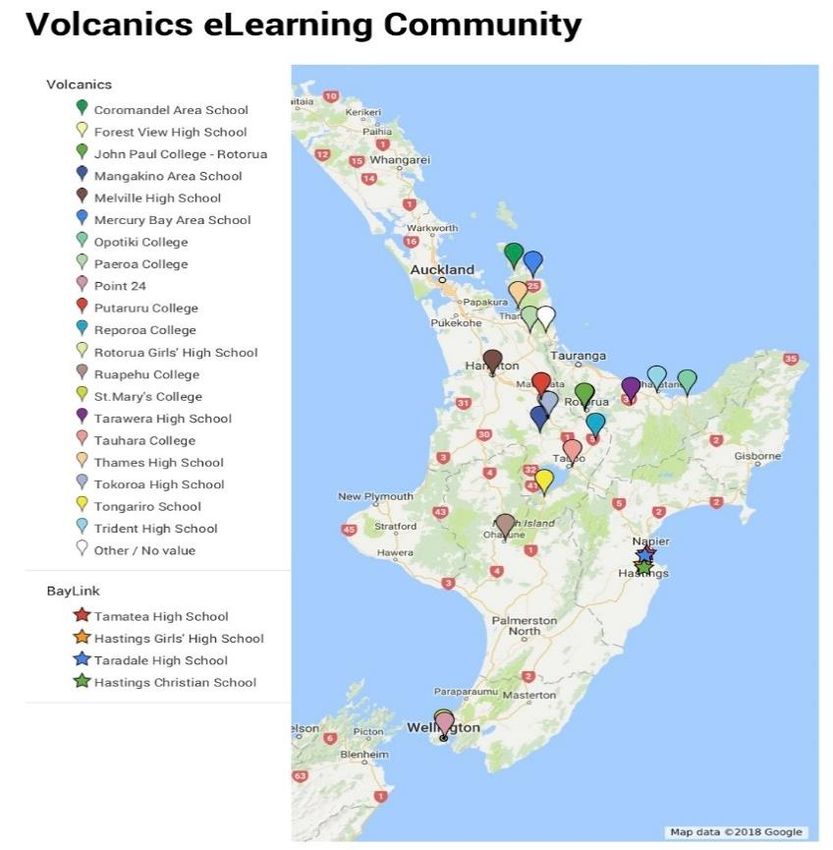
GENERAL INFORMATION
NCEA Credit Requirements
Level               Credits Required
NCEA Level 1        80 credits at any level,
                    including at least 10 credits in Literacy and 10 credits in Numeracy
                    Literacy credits are available through
                         • specified achievement standards available through a range of subjects
                    Numeracy credits are available through
                         • specified achievement standards available through a range of subjects
NCEA Level 2        80 Credits
                         • including 60 Credits at Level 2 or above
                         • 20 other credits from Level 1
                         • Level 1 Literacy and Numeracy
NCEA Level 3        80 Credits
                         • including 60 Credits at Level 3 or above
                         • 20 other credits at Level 2 or above
Certificate         Students require 50 credits at Excellence to gain an NCEA Certificate Endorsed with Excellence and 50
Endorsement         credits at Merit (or Merit and Excellence) to gain NCEA endorsed with Merit. To gain a school leavers
                    scholarship at university (based on Level 2 grades) the number of Excellence credits required varies
                    from year to year.

                    Students can also gain Course Endorsements for individual subjects. If they pass 14+ credits at
                    Excellence, they will gain an Excellence course endorsement, and 14+ credits at Merit (or Merit and
                    Excellence) will earn a Merit course endorsement.

                    For both endorsements, you need at least 3 internal and 3 external credits, excluding Physical
                    Education and Level 3 Visual Arts which are internally assessed. Course endorsements must be gained
                    in one calendar year.
University          You must have the following
Entrance                 • NCEA Level 3
                         • At least 14 Level 3 credits in three approved UE subjects *link below
                         • UE Literacy (5 reading and 5 writing credits at Level 2 or above)
                         • UE Numeracy (10 credits at Level 1 or above from specific achievement standards, or three
                             specific numeracy standards)

                         *See the following link for more information:
                    http://www.nzqa.govt.nz/qualifications-standards/awards/university-entrance/approved-subjects/
Additional          All universities have their own GES and the requirement depends on the degree.
University
Entrance Criteria   For example: At Victoria University the Guaranteed Entry Score (GES) from NCEA is 150 points for all
                    undergraduate degrees, except the Bachelor of Architectural Studies and Bachelor of Building Science
Guaranteed Entry    which requires a Guaranteed Entry Score of 180 points.
Score (GES)
                    An entry score will be calculated by awarding points as follows: Excellence- 4 points, Merit- 3 points
                    and Achieved- 2 points. Research more information for each university.

                    NB: Auckland University have guidelines to follow for English credits.

                                                                                                                             4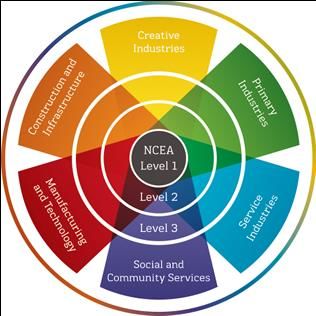
GENERAL INFORMATION
Heads of Department & Teacher in Charge
Agriculture & Horticultural Science          Mr Dan Grace
Art                                          Mr Nikolai Kokx
Biology                                      Ms Kathryn Houliston
Chemistry                                    Dr Lynton Baird
Commerce (Accounting / Economics)            Mr Dave Jones
Digital Technology                           Mr Richard Swallow
Classical Studies                            Mrs Kate Murray
English                                      Mrs Pam Grant
Geography / Social Studies / Tourism         Mrs Charmaine Nelson
Health                                       Miss Esther Lanser
History                                      Mrs Jenna Katia
Food & Nutrition / Hospitality               Mrs Sam Jones
French                                       Mrs Jo Brunskill
Drama                                        Mr Bevan Connell
Language Resource                            Mrs Ella Kokx
Library                                      Mr Ewan Hyde
Mathematics                                  Mr Mike van Woerkom
Māori                                        Whaea Huria Robens
Media Studies                                Mr Richard Wallis
Music                                        Ms Belinda Carey
Physical Education / Sports Studies /        Mr Willie Schaefer
Sports Academy
Science / Physics                            Mr Hansel Wiramanaden
Supported Learning Centre                    Mrs Amanda Kawana
Technology / Design & Visual Communication   Mr Lindsay Moore
Transition / Retail / Gateway                Mrs Beth Pottinger

Pastoral Support
Year 9 Deans                                 Mrs Kate Murray
                                             Mr Alistair Payne
Year 10 Deans                                Ms Kathryn Houliston
                                             Mr Willie Schaefer
Year 11 Dean                                 Mr Jaco le Roux
Year 12 Dean                                 Mr James O’Connor
Year 13 Dean                                 Mrs Cathy Mabey
E-Dean                                       Mr Richard Wallis
Guidance Counsellor                          Mr Paul Adamson
Careers Adviser                              Mrs Beth Pottinger

Senior Leadership Team
Principal                                    Ms Shelley Power
Deputy Principal – Year 11                   Mrs Pam Redpath
Assistant Principal - Year 12/13             Mr Mark Williams
Assistant Principal – Year 10                Mrs Jo Bisset
Assistant Principal – Year 9                 Mr Aaron Perkins

                                                                     5
GENERAL INFORMATION
Take some time to consider your next step in your educational pathway:
What are the subjects you would like to select?

                       Year 11                  Year 12                  Year 13
                        English                 English                  Option 1
                        Maths                  Option 1
                     Science or                                          Option 2
                     Agriculture               Option 2
                      Option 1                                           Option 3
                                               Option 3
                      Option 2                                           Option 4
                                               Option 4
                      Option 3                                           Option 5
                                               Option 5

 My career ideas. Go to (www.careers.govt.nz) to help you

Pre-requisites
What are the pre-requisites I need for my subjects?

                                                                                    6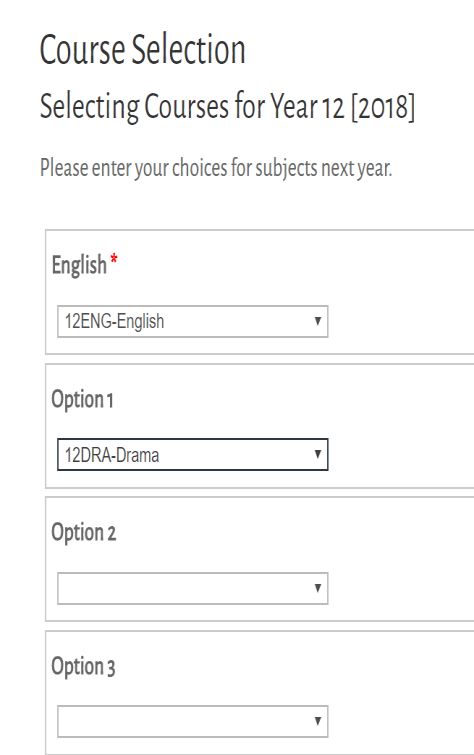
GENERAL INFORMATION
Option Selection Choices
In Year 13, you are able to select five courses. However, you will need to check you have the Year 12
University Entrant Literacy Requirements if you are intending to go to University.

You will need to closely check pre-requisites to determine if you can gain access to courses.
                        Subject                                             Pre-Requisites

 Subject One

 Subject Two

 Subject Three

 Subject Four

 Subject Five

                                                                                                        7
GENERAL INFORMATION
KAMAR Portal Instructions
Please note that option selection is only available when using the parent password. This is so that there will be
a conversation with your child to make these important decisions.
The KAMAR Portal will be open from Tuesday 13 August 2019 and closes on
Friday 30 August 2019.
If you do not have a password, or you are unable to submit your choices online for any reason, please contact
the college office.
1. Go to the Wairarapa College Website www.waicol.nz
2. Select KAMAR from the top menu
3. Login using the parent username and password
4. Choose Course Selection from the menu. Below is an example at Year 12.
5. Press the save button at the bottom of the page.
8GENERAL INFORMATION
Vocational Pathways
The Vocational Pathways provide a clear framework for vocational options, support better programme design
and careers advice, and improve the links between education and employment.
The Vocational Pathways are the product of a partnership between government agencies, the industry training
sector, secondary and tertiary education representatives, and industry and employer representatives.
There are six pathways which represent new ways to structure and achieve NCEA Level 2 and provide a more
coherent framework for foundation vocational education and training. The pathways will help students to
develop their own individual education plan, so they are better informed and able to make better choices to
meet their goals.
Vocational Pathways Award
If your NCEA Level 2 includes enough credits from recommended standards, and you meet the NCEA literacy
and numeracy requirement, you can have one of the six industries awarded as your Vocational Pathway on
your NZQA Record of Achievement. This will be a real advantage when you get out there and look for work and
training opportunities in a specific sector.
Vocational Profile
The Vocational Profile is a visual graph which will show learner achievement against the six Vocational
Pathways. Learners will be able to identify their progress and identify where they need to raise their level of
achievement when planning their courses for the following year and check that their course selections provide
the pathways they need to achieve their goals.
Getting Started
Start your journey at www.youthguarantee.net.nz
1. Work out which standards you have achieved.
2. Enter your standards into the Profile Builder.
3. View your Vocational Profile - The bar graph shows the industry sectors your standards work towards
and the progress you are making.
4. Check out your Job Opportunities - You can find information on the type of jobs available in the 6
industry sectors and where the job opportunities are.
Useful Links
www.careers.govt.nz
www.youthguarantee.net.nz
9ONLINE LEARNING
Volcanics Online Learning Community
The schools on the map are members
of the Volcanics eLearning
Community. Volcanics schools who
work together to provide high quality
learning opportunities based around
the New Zealand Curriculum. We
work with other similar clusters
nationally to provide a wide range of
curriculum subjects.
As a member of Volcanics, we are
able to provide students with access
to courses taught by teachers from
other schools nationally via online
learning.
Each student will demonstrate:
• Commitment to attend all timetabled online classes
• To attend all Video / Zoom conferences
• Work four hours in class plus two hours additional
• Follow the termly Learning Plan set out by the teacher
• To communicate every two weeks with your virtual teacher
• To view school emails every day
• To check school notices daily
• To respond to requests for information in a timely manner
• To submit work when required
• To communicate with Wairarapa College’s eDean – Mr Wallis as required and if you have problems
with your course, technology or teacher
Student qualities
• Great time management and organization skills
• Clear sense of direction and perseverance
• A desire to do of your best work, when times get tough and difficult
• To contribute to group / class discussions and ask questions
Benefits
There are multiple benefits to enrolling through Volcanics in an online course.
• A personalised approach can be used to meet students’ needs.
• Year 10 students are welcome to enrol in NCEA Level One courses as an extension opportunity.
• Successful online learners are also very well prepared for tertiary study.
The students selecting an Online Learning option will have an eDean who is able to help and support students.
The eDean for 2020 is Mr Richard Wallis.
10ONLINE LEARNING
Entry Criteria
• Students are able to take courses that are not currently offered at their school.
• Subject clashes.
How it works
Each Online Learning course will have one or more of the following learning components:
• Paper based (workbooks, textbooks and notes)
• An online component accessed through an online learning environment such as Canvas, Google
Classroom, Google Docs.
• Video conferencing (VC), or web based conferencing using Zoom or Google Hangouts
Access to a personal device, laptop or chromebook, is recommended. Personal headphones with a
microphone is highly recommended.
All NCEA courses offer NZQA Achievement Standards. Communication is maintained through video-
conferencing and a combination of tools in the online learning environments such as email, Google
Communities, Google Drive, Google Sites, learning management systems, Skype and texts.
Acceptance into online courses will also be determined by a recommendation that the student is sufficiently
self-motivated and has the ability to work with less direct teacher supervision than would normally be the case
in a face to face class.
Please note
This is the list of courses offered in 2019. Most of the courses will be offered next year and we hope to have
additional options. Course confirmation happens by the end of Term 4.
Acceptance into an online course is dependent upon available resources, the level of student enrolment and
the timing of the enrolment. Sometimes students may be on a waiting list for a short time.
Completion of an enrolment form is not a guarantee of acceptance into your chosen course.
Contact Information
Wairarapa College eDean Richard Wallis
rwallis@waicol.nz
06 3700 400 ext. 728
Volcanics ePrincipal Sara Field
sara@volcanics.school.nz
021 246 6148
Volcanics Assistant ePrincipal Jan Collier
jan@volcanics.school.nz
027 380 8735
Volcanics Website www.volcanics.school.nz
Further Information www.vlnc.org
For more information visit google document or www.volcanics.school.nz or contact Sara Field
sara@volcanics.school.nz
11ONLINE LEARNING
Courses Offered in 2019
Courses Beginners Level 1 Level 2 Level 3/4
Accounting ✓ ✓ ✓
Agriculture ✓ ✓ ✓
Art History ✓ ✓
Biology ✓ ✓
Business Studies ✓
Chemistry ✓ ✓
Chinese (Mandarin) ✓ ✓ ✓
Classical Studies ✓ ✓
Cook Island Māori ✓ ✓ ✓
Computer Programming ✓ ✓ ✓
Design and Visual Communication ✓
Digital Technology ✓ ✓ ✓
Digital Technology – Web Design ✓
Digital Photography ✓ ✓
Drama ✓ ✓
Economics ✓ ✓ ✓
Electronics ✓ ✓
English ✓
French ✓ ✓ ✓ ✓
Geography ✓ ✓ ✓
German ✓ ✓
Health ✓
History ✓ ✓ ✓
Hospitality ✓
Japanese ✓ ✓ ✓ ✓
Korean ✓ ✓ ✓ ✓
Maths with Calculus ✓
Maths with Statistics ✓
Media Studies ✓
Music ✓ ✓
Philosophy ✓
Photography ✓
Physics ✓ ✓
Physical Education ✓ ✓
Psychology ✓ ✓
Religious Studies ✓ ✓ ✓
Samoan ✓ ✓ ✓ ✓
Spanish ✓ ✓ ✓ ✓
Social Studies ✓ ✓ ✓
Te Reo Māori ✓ ✓ ✓
Tongan ✓ ✓
Visual Art ✓
12ONLINE LEARNING
Tertiary Courses
Course Provider Level 2 Level 3
Agriculture Telford Rural Polytech ✓ ✓
Apiculture Telford Rural Polytech ✓
Dairy/Cattle Telford Rural Polytech ✓
Equine Telford Rural Polytech ✓
Forestry Telford Rural Polytech ✓
Horticulture Telford Rural Polytech ✓ ✓
Sheep Farming Telford Rural Polytech ✓
Please note that the cost of Tertiary courses are covered by STAR funding, Gateway funding or by the student
and their families where funding is not available.
Frequently Asked Questions
1. How do I select an on-line course on the KAMAR portal?
You select “ELEA” on the portal, then Mr Wallis will see you and you will be asked to complete an
application form. The course will be confirmed early in 2020.
2. Who will be my teacher?
If you are enrolled in an online course, your eTeacher will be from another school in NZ.
3. How often will I see my teacher?
You will have an hour-long video or web conferencing class each week, and your eTeacher will
provide an online classroom (like a website) in which you will work 3-4 hours each week.
4. How will I communicate or get work to and from my teacher?
You will be able to communicate regularly with your eTeacher through emails, online forums, online
forums, online chats, news forums, discussion boards and Skype and text messages.
5. How do I receive work or send work to my eTeacher?
You will be able to upload assignments, assessments, tests and any other work into your online
classroom. You can also email your work, share it e.g. through Google Docs, Dropbox or simply post
it. For work sent online, your eTeacher will mark your work online and send it back the same way.
6. Do I need access to a computer or device at home?
You will require access during school time to a computer or a device (e.g. tablet, laptop, phone) and
the internet, so that you can work independently in your ‘online environment / online classroom.’ If
you have the internet at home, this is an added bonus.
7. What happens if I have another class at that time?
Video-conference lessons take precedence. You will have to make up for the lost time by working
with your teacher from school on what you have missed in their lesson. This is why you need to be
self-motivated.
8. Who can apply for an online class?
You may apply through Mr Wallis to be enrolled in an online course, if the subject/course you wish to
study is:
• Not currently offered at school
• Clashes with another timetabled class
• Offered through a tertiary organisation
Students who apply must:
• Be self-motivated and well organised
• Have suitable prior leaning for the course they are applying for.
13SENIOR SCHOOL INFORMATION
Senior School Information
Unit Standards are indicated where applicable, all other standards are Achievement Standards.
Compulsory Subjects
There are no compulsory subjects in Year 13
Frequently Asked Questions
1. How do I qualify for a subject?
Each student’s performance in 2019 will be the major factor in approval for entry into courses in 2020.
Entry criteria are outlined in this booklet. The subject pathway outlines (at the beginning of each learning
area) lets you see where a course leads in later years. Final entry to subjects for Year 12 & 13 is
completed at the Course Confirmation Day at the beginning of 2020. This is in consultation with the HOD
or Teacher in Charge. The important question in approving courses is students meeting the
pre–requisites and whether the student has a reasonable chance of achieving academic success. Some
subjects currently offered may not be available, if too few students opt to take them.
2. How many subjects do I have to take?
• Year 13 are required to select five courses.
3. Can I take subjects at Level Three in Year 12?
This will apply to some of you who have already completed a Year 12 course. Taking subjects at a
higher level is possible only from having the pre–requisites and with the agreement of the HOD and
your Dean/SLT.
4. What about taking subjects at a lower level?
There is nothing to stop students working at Level 2 as a Year 13 student, for example, taking a
subject you are interested in at Level 2 or even Level 1. Just ensure that you have considered the
effect on your chances of achieving your Level 2 or 3 NCEA.
5. Can I take six subjects in Year 13?
Yes, in consultation with the Principal. Select your six subjects on the portal and then make an
appointment with the Principal.
6. What if I still don’t know what to choose?
There are plenty of people who can advise you. For details on courses at tertiary level (universities
and polytechnics), see Mrs Pottinger (Careers Advisor).
14SENIOR SCHOOL INFORMATION
Recommended Device Specifications
Wairarapa College has identified some devices which best fit the way we are using technology. Some subject
areas may use more specialised software applications which have additional requirements. For a device to be
a productive tool in class, it needs to be capable of running Microsoft Office 2016 – which all students will
receive free of charge during their time at Wairarapa College.
If you prefer to select your own device, please ensure that it is running Windows 10. For smoothest operation,
we also recommend at least 4GB of RAM and a battery that can last a whole day.
Microsoft Office is available for Mac, iPad and Android tablet users. However, it doesn’t have the same
functionality as the Windows version; subsequently these devices are not recommended by the college. If you
select a device that does not meet these recommendations, the device may not perform in the way intended
by the classroom teacher and they may not be able to support the student as well in their learning.
Level 1 Courses where having a device may be advantageous
11 English 1 Geography
Accounting Health
Design & Visual Communication History
Drama Music
Economics Physical Education
Food and Nutrition Visual Art
French
Device Minimum Specifications
Wairarapa College has identified some devices which best fits the way we are using technology. Some subject
areas may use more specialised software applications which have additional requirements. For a device to be
a productive tool in class it needs to be capable of running Microsoft Office 365 – which all students will
receive free of charge during their time at Wairarapa College.
Checklist for your child’s laptop - if you are buying a laptop it should:
• Have a minimum of 4GB Ram. 8GB will improve performance
• Have processor of at least 2.2GHZ or Intel Core i3 minimum (i5 recommended)
• Be internet capable and able to access the school’s wireless network (Wireless 802.11n/ac)
• Have sufficient storage space to store documents. Recommended minimum 64GB of internal storage.
Solid State Disk (SSD) instead of traditional Hard Disk Drive (HDD) is highly recommended (SSD are
much faster and provide longer battery life)
• Have a readable screen, minimum of 10”.
• Have a keyboard
• Have a good battery life (more than 6 hours)
• Be lightweight enough that it can be carried easily
• Have a back-up device (e.g. a USB stick or external hard drive). While documents are stored in their
Microsoft© cloud it is good practice to learn to backup
15THE ARTS
Drama Drama Drama Drama Drama
9DRA 10DRA 11DRA 12DRA 13DRA
WaiCol
on Stage
(9WOS)
Music Music Music Music Music
9MUS 10MUS 11MUS 12MUS 13MUS
Visual Art Painting
12VAR 13PNT
Visual Art Visual Art Visual Art
9VAR 10VAR 11VAR
Photography Photography
12PHO 13PHO
16THE ARTS
Music
13MUS – NCEA Level 3 Music (University Entrance Approved)
This course builds on individual strengths and offers a range of standards that allow students to focus on
developing more advanced skills in performance, composition, music studies and music technology.
Entry Requirements: Students need to agree a set of standards worth 20 credits at the start of the year in
consultation with the Head of Music. Students must enrol in instrumental music lessons.
External Credits Internal Credits Highly Recommended Materials
4 Up to 30
Course Leads to:
Standard Title Credits Level Literacy Numeracy
Perform two programmes of music as a featured
91416 8 3 N N
soloist
Perform a programme of music as a featured
91417 4 3 N N
soloist on a second instrument
Internal
Demonstrate ensemble skills by performing two
91418 4 3 N N
substantial pieces of music as a member of a group
Communicate a musical intention by composing
91419 8 3 N N
three original pieces of music
91425 Research a music topic 6 3 R N
Demonstrate understanding of harmonics and
Ext
nal
4 3 N N
er
91421
tonal conventions in a range of music scores
Total Credits 34
13MUS – Sound Arts
In addition to the full Year 13 Music course, you can join this line as a Year 12 or 13 student and study a range
of Music Technology credits. These can also be done in conjunction with the credits offered in 13MUS.
This aims to give students the opportunity to continue in Music gaining a range of Level 2 and 3 credits and to
specialise more in Music Production and Technologies.
Title Level Credits
Demonstrate and apply knowledge of sound control and enhancement 2 4
processes required for a performance context
Take responsibility for a production area of a performance 2 4
Select and apply a range of processes to enhance sound in a performance 3 6
context
Demonstrate knowledge of the development of music technology equipment 2 4
and techniques US 27657
Demonstrate and apply knowledge of electronic music production and music 2 4
notation applications(s)
Operate music sequencing, editing, and music notation application(s) 3 8
17THE ARTS
Drama
13DRA – NCEA Level 3 Drama (University Entrance Approved)
Students should have a strong interest in all aspects of Drama, and have the desire to perform at all times on
stage. The emphasis is on personal (monologue) and smaller group work, learning two theatre forms (New
Zealand theatre and American Realism) and performing advanced scripts at an advanced level.
Entry Requirements: Year 12 Drama
External Credits Internal Credits Highly Recommended Materials
4 18 None
Course Leads to: Scholarship Drama and University Courses
Standard Title Credits Level Literacy Numeracy
Display drama techniques through
91512 4 3 R N
performance
Internal
91513 Devise and perform a drama 5 3 N
Learn about a theatre form and
91515 4 3 R N
perform
91517 Perform a major role 5 3 R N
Demonstrate understanding of a
Ext
91514 4 3 B Y
theatre form
Total Credits 22
Painting & Photography
13PNT – NCEA Level 3 Painting (University Entrance Approved)
Students independently develop original ideas to research and develop into a body of work (artworks). The
course focuses on producing highly refined artworks reflective of an in depth understanding of ideas within
painting practice.
Entry Requirements: 12 credits in 12VAR
External Credits Internal Credits Highly Recommended Materials
12 10 A3 clear file
Course Leads to: University or Polytechnic degree courses such as: Design, Fine Art, Architecture
Standard Title Credits Level Literacy Numeracy
Use drawing methods to apply knowledge of
91446 4 3 N N
Internal
conventions appropriate to painting
Systematically clarify ideas using drawing
91451 4 3 N N
informed by established painting practice.
Produce a systematic body of work that
Ext
91456 integrates conventions and regenerates 14 3 N N
ideas within painting practice.
Total Credits 22
18THE ARTS
13PHO – NCEA Level 3 Photography (University Entrance Approved)
Students independently develop original ideas to research and develop into a body of work (artworks). The
course focuses on producing highly refined artworks reflective of an in depth understanding of ideas within
photography practice.
Entry Requirements: 12 credits in 12PHO
External Credits Internal Credits Highly Recommended Materials
14 8 A3 Ilford galerie smooth pearl paper
Course Leads to: University or Polytechnic degree courses such as: Design, Photography, Fine Art
Standard Title Credits Level Literacy Numeracy
Use drawing to demonstrate understanding of
91447 4 3 N N
Internal
conventions appropriate to photography
Systematically clarify ideas using drawing informed
91452 4 3 N N
by established photography practice
Produce a systematic body of work that integrates
Ext
91457 conventions and regenerates ideas within 14 3 N N
photography practice
Total Credits 20
University Entrance Literacy Key:
R Reading Literacy
W Writing Literacy
B Both Reading and Writing Literacy
N None
19ENGLISH
English English English English English
9ENG 10ENG 11ENG* 12ENG* 13ENG
* 11 * 12
ESOL
English 11ENG1 English 12ENG1
11ENG2 12ENG2 Year 9-13
11ENG3 12ENG3
11ENGD
Media Media
Studies Studies
12MST 13MST
20ENGLISH
Year 13 English classes are determined by results from the previous year. For example, Year 13 is determined
by Year 12 results. The 5 + 5 reading and writing credits at Level 2 or above are required for entry into
University. These credits are available across most subjects and are indicated on each Y12 & 13 subject outline.
Level Three English
13ENG - NCEA Level 3 English (University Entrance Approved)
This is a mainstream course which meets university requirements. The skills gained will benefit students in all
subjects.
Entry Requirements: 14 Credits at Level 1, including one internal writing standard and one external
External Credits Internal Credits Highly Recommended Materials
12 10 None
Course Leads to: Tertiary Studies
Standard Title Credits Level Literacy Numeracy
91476 Oral text 3 3 N
Internal
91478 Respond to significant connections 4 3 N
91480 Close viewing of visual text 3 3 N
91472 Written text 4 3 B N
External
91473 Visual text 4 3 W N
91474 Unfamiliar written text 4 3 B N
Total Credits 22
University Entrance Literacy Key:
R Reading Literacy
W Writing Literacy
B Both Reading and Writing Literacy
N None
21ENGLISH
Media Studies
13MST – NCEA Level 3 Media Studies (University Entrance Approved)
There are two aspects to this course. The practical component and the theory component. Some standards
are essay-based others are not.
Entry Requirements: 12 credits from Level 2 Media Studies OR 12 credits from Level 2 English
External Credits Internal Credits Highly Recommended Materials
4 16
Course Leads to: Level 3 Media Studies
Standard Title Credits Level Literacy Numeracy
Demonstrate understanding of the meaning of a
91491 3 3 N
media text through different readings
Write a media text to meet the requirements of a
Internal
91497 3 3 W N
brief
91494 Produce a design for a media product 4 3 N
Produce a media product to meet the
91495 6 3 N
requirements of a brief
Demonstrate understanding of a relationship
Ext
91493 4 3 B N
between a media genre and society.
Total Credits 20
ESOL – English as a Second Language
Year 9 – 13
Our ESOL course is targeted to the needs of the individual student. The multi-level class is small (5-10
students) and the course focusses on the development of vocabulary, accuracy in syntax, New Zealand English,
idioms, spoken language and cultural understanding. At present, there are no specific ESOL credits offered,
but the course aims to support the students to achieve in their selected NCEA courses.
Entry Requirements: English Language Learner
Course Leads to: Language Development – Some credits at Level 1 and Level 2 may be offered.
22LEARNING LANGUAGES
French French French French French
9FRE 10FRE 11FRE 12FRE 13FRE
Te Reo Te Reo Te Reo Te Reo Te Reo
Māori Māori Māori Māori Māori
9MAO 10MAO 11MAO 12MAO 13MAO
23LEARNING LANGUAGES
French
13FRE – NCEA Level 3 French (University Entrance Approved)
This course develops the students’ ability to explore and justify various ideas and perspectives. Topics include:
Social and Environmental Issues; The Working World; Modern Technology; Future Plans; Travel Trends and a
novel and/or film study. The topics may alternate with the Level 2 course. There is flexibility to adapt to
student interest. Cultural practices are interspersed in the topics. Students may apply to go on our Biennial
French trip to Tahiti.
Entry Requirements: 10 Level 2 credits
External Credits Internal Credits Highly Recommended Materials
10 14 12-month Language Perfect subscription
Course Leads to: University Study
Standard Title Credits Level Literacy Numeracy
Give a clear spoken presentation in French that
91544 communicates a critical response to stimulus 3 3 N N
material.
Internal
Interact clearly using spoken French to explore
91545 and justify varied ideas and perspectives in 6 3 N N
different situations
Write a variety of text types in clear French to
91547 5 3 N N
explore and justify varied ideas and perspectives
Demonstrate understanding of a variety of
91546 5 3 N N
extended written and/or visual French texts.
Ext
Demonstrate understanding of a variety of
91543 5 3 N N
external spoken French texts
Total Credits 24
Māori
13MAO – NCEA Level 3 Māori
This course will cover topics such as careers, contemporary events, significant historical events and cultural
practices.
Entry Requirements: Level 2 Māori
External Credits Internal Credits Highly Recommended Materials
6 12 None
Course Leads to: Tertiary Study
Standard Title Credits Level Literacy Numeracy
Kōrero kia whakamahi i te reo Māori o te ao
91651 6 3 N
whānui
Int
Waihanga tuhinga whai take i te reo Māori o te
91654 6 3 W N
ao whānui
91653 Tuhi i te reo Māori o te ao whānui 6 3 W N
n
e
a
E
x
r
t
l
Total Credits 18
24LEARNING LANGUAGES
Languages Through Te Kura (The Correspondence School)/Volcanics
Students may study a language through Te Kura/Volcanics if they meet the following criteria:
• Ethnic reasons: if they have a cultural affinity such as a parent/grandparent of that ethnic group
• If they meet the Gifted Criteria. They must be in the top 5 percentile for their age group and testing
results must be provided to support this.
• If they transfer mid-year from another school and the language is not taught at Wairarapa College.
Whilst they may be enrolled at their chronological level, their level of the language will be assessed by Te
Kura/Volcanics and they may be provided with work at a different curriculum level.
Generally, there is a set of work that is required each fortnight assuming approximately 5 hours of study plus
homework per week. Students will be considered on their merits and must have a proven record of being able
to work independently and meet deadlines. Te Kura/Volcanics will withdraw their enrolment if they do not
submit work as outlined and they will not be eligible for re-enrolment until the following year.
A negotiated area to work is provided for the students, upstairs in the library.
Work is often online and students are expected to download digital material including listening exercises and
video material. They must also record oral material to email their Te Kura/Volcanics tutor. See Mrs Redpath
about Te Kura/Volcanics information enrolment.
25MATHEMATICS
Calculus
13MTC
Maths Maths Maths Maths
9MAT 10MAT 11MAT* 12MAT Maths
13MAT
Statistics
13MTS
* 11
Maths
11MAT1
11MAT2
11MAT3
11MATD
26MATHEMATICS
Level Three Mathematics
13MAT – NCEA Level 3 Mathematics (University Entrance Approved)
A full year course comprising five (5) Level 3 NCEA Achievement Standards, 4 internal and 1 external, all within
the National Curriculum Framework. Students cannot take 13MAT in conjunction with 13MTS or 13MTC.
Entry Requirements: 12 credits or more in 12MAT1 or 12MAT2
External Credits Internal Credits Highly Recommended Materials
4 12 Recommended Workbook
Course Leads to: Tertiary Study
Standard Title Credits Level Literacy Numeracy
91574 Apply linear programming methods in solving 3 3 N Y
problems
91576 Use critical path analysis in solving problems 2 3 N Y
Internal
91581 Investigate Bivariate measurement data 4 3 N Y
91585 Apply systems of simultaneous equations in solving 3 3 N Y
problems
91587 Apply probability concepts in solving problems 4 3 N Y
Ext
Total Credits 16
13MTC – NCEA Level 3 Calculus (University Entrance Approved)
A full year course comprising five (5) Level 3 NCEA Achievement Standards, 2 internal and 3 externals, all
within the National Curriculum Framework.
Entry Requirements: 12 credits or more in 12MAT1 including A/S 91261 [Algebra] and A/S 91262 [Calculus]
External Credits Internal Credits Highly Recommended Materials
17 7 Recommended Workbook
Course Leads to: Tertiary Study
Standard Title Credits Level Literacy Numeracy
91575 Apply trigonometric methods to solving problems 4 3 N Y
Int
91587 Apply systems of simultaneous equations in solving 3 3 N Y
problems
91577 Apply the algebra of complex numbers in solving 5 3 N Y
External
problems
91578 Apply differentiation methods in solving problems 6 3 N Y
91579 Apply integration methods in solving problems 6 3 N Y
Total Credits 24
27MATHEMATICS
13MTS – NCEA Level 3 Statistics (University Entrance Approved)
A full year course comprising six (6) Level 3 NCEA Achievement Standards, three internal and three externals,
all within the National Curriculum Framework.
Entry Requirements: 12 credits or more in 12MAT1 or 12MAT2 including A/S 91264 [Inference] and A/S 91267
[Probability Methods] and L2 Literacy
External Credits Internal Credits Highly Recommended Materials
12 12 Recommended Workbook
Course Leads to: Tertiary Study
Standard Title Credits Level Literacy Numeracy
91580 Investigate time series data 4 3 Y
Internal
91581 Investigate bivariate measurement data 4 3 Y
91582 Use statistical methods to make a formal inference 4 3 Y
91584 Evaluate statistically-based reports 4 3 W Y
External
91585 Apply probability concepts in solving problems 4 3 N Y
91586 Apply probability distributions in solving problems 4 3 N Y
Total Credits 24
University Entrance Literacy Key:
R Reading Literacy
W Writing Literacy
B Both Reading and Writing Literacy
N None
28SCIENCES
Agriculture
&
Horticulture
Agriculture Agriculture 13AGH
& &
Agriculture Agriculture
Horticulture Horticulture
9AGR 10AGR
11AGH / 12AGH /
11AGP 12AGP
Grow, Feed,
Protect
13GFP
Science Science Science Science
9SCI 10SCI 11SCI * 12SCI
* 11
Science
11SCI1
11SCI2
11SCID
Biology Biology
12BIO 13BIO
Physics Physics
12PHY 13PHY
Chemistry Chemistry
12 CHE 13CHE
29SCIENCES
Agricultural & Horticultural Science
13AGH – NCEA Level 3 Agricultural and Horticultural Science (University Entrance Approved)
This course develops students’ understanding of how market forces affect supply and demand for New
Zealand primary products and how the production process meets the market requirements for these products.
Entry Requirements: 10 Achievement Standard credits from Level 2 AGH
External Credits Internal Credits Highly Recommended Materials
10 14
Course Leads to: Tertiary Study
Standard Title Credits Level Literacy Numeracy
Carry out an investigation into an aspect of a New
91528 4 3 Y
Zealand primary product or its production
Internal
Research and report on the links between production
91529 and marketability of a New Zealand primary product 6 3 R Y
Demonstrate understanding of how the production
91531 process meets the market requirements for a New 4 3 B N
Zealand primary product
External
Analyse a New Zealand primary production
91532 5 3 B N
environmental issue
Demonstrate understanding of how market forces
91530 affect supply and demand for New Zealand primary 5 3 B Y
products
Total Credits 24
University Entrance Literacy Key:
R Reading Literacy
W Writing Literacy
B Both Reading and Writing Literacy
N None
30SCIENCES
Primary Industry Trades Academy Agricultural and Horticultural Science
13GFP – Trade Academy – Grow, Feed, Protect (PITA)
The programme involves learning theory and practical skills with qualified industry tutors on selected
farms/sites, as well as gaining valuable industry and career advice.
Students will spend one day a week out of school with an external primary trade’s academy tutor.
Students who are accepted for this course will only be able to complete 4 other options at school, with Year 12
and 13 Gateway not being available due to the amount of time out of other classes.
Entry Requirements: Entry by invitation – All students choosing this option will go through an interview process.
Only 10 places will be available.
External Credits
Internal Credits Highly Recommended Materials
36 Unit Standards
Course Leads to: Diploma in Agriculture or Future employment in the primary industry.
Standard Title Credits Level Literacy Numeracy
Identify factors, and describe how to manage
US 23542 factors, that contribute to injury in a rural 4 3 N N
workplace.
Handle and move livestock.
US 19115 6 3 N N
Internal Unit Standards
Demonstrate understanding of livestock
US 28971 6 3 N N
reproductive processes and practices.
Assist with feeding pastoral livestock to meet
US 28923 8 3 N N
production targets.
Demonstrate knowledge of methods for promoting
US 19103 on-farm livestock health and health problems of 8 3 N N
livestock.
Describe the environmental implications of
US 19372 3 3 N N
spreading fertiliser and associated activities.
Demonstrate knowledge of fertiliser, and the
US 19373 3 3 N N
implications for handling and spreading fertiliser.
Total Credits 36
31SCIENCES
Biology
13BIO – NCEA Level 3 Biology (University Entrance Approved)
Level 3 Biology extends Level 2 learning further into the areas of our relationships with our environment,
evolution and human evolution. The course encompasses the studies for scholarship and prepares students
for lifelong learning.
Entry Requirements: 12 Credits from Level 2 Biology, or by negotiation with HOD.
External Credits Internal Credits Highly Recommended Materials
8 10 Level 3 Biology SciPAD
Course Leads to: Scholarship Biology, University Study
Standard Title Credits Level Literacy Numeracy
Carry out a practical in a biology context with
91601 4 3 Y
guidance
Internal
Demonstrate an understanding of how an animal
91604 3 3 R N
maintains a stable internal environment
Integrate biological knowledge to develop an
91602 3 3 B N
informed response to a socio-scientific issue
Demonstrate understanding of the responses of
91603 5 3 B N
Ext
plants and animals to their external environment
91606 Demonstrate an understanding of human evolution 3 3 B N
Total Credits 18
Chemistry
13CHE – NCEA Level 3 Chemistry (University Entrance Approved)
This course extends on concepts covered in NCEA Level 2 Chemistry. The Internal component of the course is
aimed at familiarising students with skills and practices required when working in a laboratory and includes
analysis of spectroscopic data and an extended practical investigation. The External component provides a
sound basis in the fundamental concepts of Chemistry, including periodic trends, thermochemistry, organic
chemistry and aqueous solutions. This will benefit all students wishing to pursue a career in the Sciences.
Entry Requirements: 18 credits NCEA Level 2 Chemistry
External Credits Internal Credits Highly Recommended Materials
10 (15) 9 Level 3 Chemistry SciPAD
Course Leads to: Tertiary Study
Standard Title Credits Level Literacy Numeracy
Demonstrate understanding of oxidation-reduction
91393 3 3 N N
processes
Internal
Demonstrate understanding of spectroscopic data
91388 3 3 N N
in chemistry
Demonstrate understanding of chemical processes
91389 3 3 B N
in the world around us
Demonstrate understanding of thermochemical
91390 principles and the properties of particles and 5 3 N
substances
External
Demonstrate understanding of the properties of
91391 5 3 N
organic compounds
Demonstrate understanding of equilibrium
91392 (5) 3 Y
principles in aqueous systems (optional)
Total Credits 19 (24)
32SCIENCES
Physics
13PHY – NCEA Level 3 Physics - (University Entrance Approved)
In Physics, you will investigate physical phenomena (in the areas of mechanics, electricity, electromagnetism,
waves and modern physics) and produce qualitative and quantitative explanations for a variety of unfamiliar
situations.
Entry Requirements: 12 credits NCEA Level 2 Physics course which includes an External standard
External Credits Internal Credits Highly Recommended Materials
16 7 None
Course Leads to: Tertiary Studies
Standard Title Credits Level Literacy Numeracy
Carry out a practical investigation to test a physics
Internal
91521 theory relating two variables in a non-linear 4 3 N
relationship
91525 Demonstrate understanding of Modern Physics 3 3 N
91523 Demonstrate understanding of wave systems 4 3 N
Externa
91524 Demonstrate understanding of mechanical systems 6 3 N
l
91526 Demonstrate understanding of electrical systems 6 3 N
Total Credits 23
University Entrance Literacy Key:
R Reading Literacy
W Writing Literacy
B Both Reading and Writing Literacy
N None
33SOCIAL SCIENCES
Geography Geography Geography
11GEO 12GEO 13GEO
Social Social
Studies Studies
9SOC 10SOC
History History History
11HIS 12HIS 13HIS
Classical Classical
Studies Studies
12CLS 13CLS
Economics Economics Economics
11ECO 12ECO 13ECO
Economics Economics
9ECO 10ECO
Accounting Accounting Accounting
11ACC 12ACC 13ACC
34SOCIAL SCIENCES
Geography
13GEO – NCEA Level 3 Geography - (University Entrance Approved)
Topics include: coastal processes, contemporary geographic issues, local events and issues related to the
conflict diamond trade. There are field trips associated with this course.
Entry Requirements: Level 2 Geography (12 credits with at least one external) or 12 credits in both Level 2 English
and a Science
External Credits Internal Credits Highly Recommended Materials
Skills book
8 11
Castlepoint trip
Course Leads to: Tertiary Study
Standard Title Credits Level Literacy Numeracy
91430 Conduct geographic research with consultation 5 3 Y
Internal
Analyse aspects of a contemporary geographic
91431 3 3 R N
issue
Analyse aspects of a geographic topic at a global
91432 3 3 Y N
scale
Demonstrate understanding of how a cultural
91427 4 3 B N
External
process shapes geographic environment(s)
Demonstrate understanding of a given
91429 environment(s) through selection and application 4 3 B N
of geographic concepts and skills
Total Credits 19
University Entrance Literacy Key:
R Reading Literacy
W Writing Literacy
B Both Reading and Writing Literacy
N None
35SOCIAL SCIENCES
History
13HIS – NCEA Level 3 History (University Entrance Approved)
History invites students to ask, and helps them answer, today’s questions by engaging with the past and
imagining and speculating on possible futures. It is a social science in which students engage with history at
personal, local and international levels. They investigate the histories of their communities, New Zealand and
the wider world. Topics include: The French Revolution and New Zealand History.
Entry Requirements: Level 2 History (12 credits with at least one external achievement standard) or 12 credits in
Level 2 English
External Credits Internal Credits Highly Recommended Materials
10 15 None
Course Leads to: Tertiary Study
Standard Title Credits Level Literacy Numeracy
Research an historical event or place of significance
91434 to New Zealanders, using primary and secondary 5 3 R N
sources
Internal
Analyse an historical event, or place, of significance
91435 5 3 R N
to New Zealanders
Analyse different perspectives of a contested event
91437 5 3 R N
of significance to New Zealanders.
Analyse evidence relating to an historical event of
91436 4 3 B N
External
significance to New Zealanders
Analyse the causes and consequences of a
91438 6 3 B N
significant historical event
Total Credits 25
36You can also read


