The Compatibility of Qualifications in Ireland and New Zealand
←
→
Page content transcription
If your browser does not render page correctly, please read the page content below
The National Qualifications Authority of Ireland and

                                                       The Compatibility of Qualifications
                                                             in Ireland and New Zealand
The New Zealand Qualifications Authority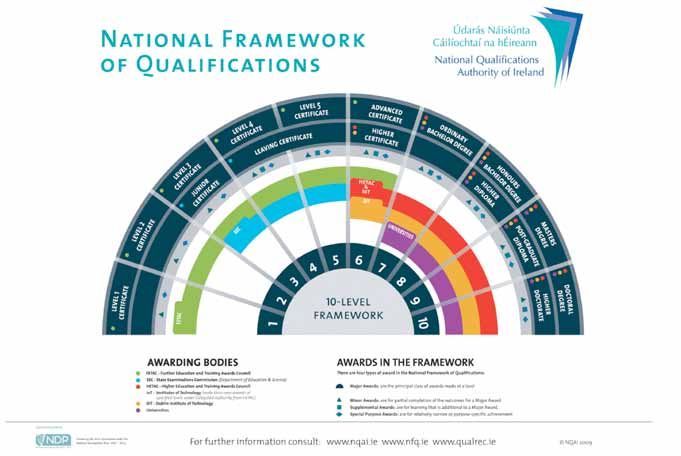
The National Qualifications Authority of Ireland and the The New Zealand Qualifications Authority
2   The Compatibility of Qualifications in Ireland and New Zealand

    Joint Foreword by New Zealand
    and Ireland

       Kei ngaˉ rangatira e kawe nei i te maˉtauranga puta noa i te ao, teˉnaˉ koutou katoa.
       To all the chiefly people who carry the basket of knowledge throughout the world, we salute you.
       Trí choinneal a shoilsíonn gach dorchacht: fírinne, nádúr agus eolas
       Three candles which illume every darkness: truth, nature and knowledge.

    The Compatibility of Qualifications in Ireland and New Zealand sets out the findings of the joint project between the National
    Qualifications Authority of Ireland (NQAI) and the New Zealand Qualifications Authority (NZQA). This project aims to
    improve the basis on which Ireland and New Zealand recognise each other’s qualifications.
    NZQA and NQAI value the opportunity to work in partnership with one another to develop global human capital
    through leadership in the field of qualifications recognition policy. The joint project provides a systems-level opportunity
    for NZQA and NQAI to:
    • fulfil their respective roles of ensuring that New Zealand and Irish qualifications are accepted as credible and robust
      nationally and internationally
    • contribute to government and education sector priorities by increasing international understanding, comparability and
      recognition of New Zealand and Irish qualifications for both study and employment
    • assist the mobility of learners and skilled workers by increasing their confidence that their qualifications and periods
      of study undertaken in New Zealand and Ireland will be recognised.
    The development and implementation of qualifications recognition agreements between countries is not new. What is new
    in this joint project is the negotiation of the recognition of qualifications based on the compatibility of national qualifications
    framework level descriptors, qualifications definitions and non-outcomes criteria (entry and credit requirements and
    progression opportunities). This report provides a snapshot of how such an agreement is negotiated.
    The report also contributes to the development of the strategic approach to qualifications recognition being promoted in
    the context of the Convention on the Recognition of Qualifications Concerning Higher Education in the European Region,
    the Bologna Process, and the European Qualifications Framework for Life Long Learning.
    NZQA and the NQAI undertake to continue to collaborate with each other to further develop the improved approach
    to qualifications recognition.
    Ngaˉ mihi nui ki a koutou katoa.
    Greetings to you all.
    Beirigí bua agus beannacht,
    May you prosper.

    Karen Poutasi                                                           Jim Murray
    NZQA Chief Executive                                                    NQAI Chief Executive

    June 2010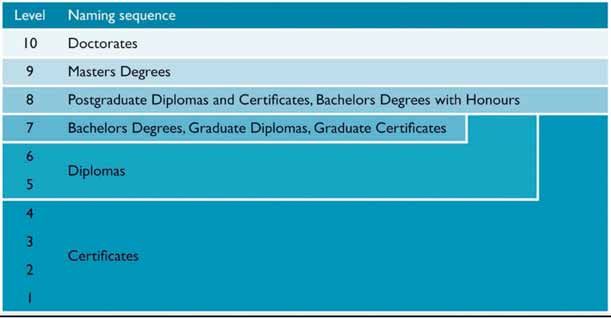
The National Qualifications Authority of Ireland and the The New Zealand Qualifications Authority
3   The Compatibility of Qualifications in Ireland and New Zealand

    Contents

    Joint Foreword by New Zealand and Ireland                                                            2
    Abbreviations                                                                                        4
    Summary                                                                                              5
         Aim                                                                                             5
         Structure                                                                                       5
         Main messages                                                                                   5
         Lessons learnt                                                                                  6
    Part 1         Introduction                                                                          8
           1.1     Overview                                                                              8
           1.2     What is new?                                                                          8
           1.3     Implications                                                                          8
           1.4     Approach                                                                              9
           1.5     International experts                                                                 9
           1.6     Consultation processes                                                                9
           1.7     Criteria and procedures                                                               9
    Part 2         Responses to Criteria and Procedures                                                 10
           2.1     Criterion and Procedure 1                                                            10
           2.2     Criterion and Procedure 2                                                            11
           2.3     Criterion and Procedure 3                                                            13
           2.4     Criterion and Procedure 4                                                            15
           2.5     Criterion and Procedure 5                                                            16
           2.6     Criterion and Procedure 6                                                            20
    Appendices                                                                                          21
         Appendix A: The Irish National Framework of Qualifications                                     22
         Appendix B: The New Zealand qualification types and levels                                     23
         Appendix C: National consultation groups                                                       24
         Appendix D: Comparison process                                                                 25
         Appendix E: Comparison tables: Levels 7−10 NZ Register and Irish NFQ                           26
    Glossary                                                                                            37
    Selected Sources of Information                                                                     40
         New Zealand                                                                                    40
         Ireland                                                                                        40
The National Qualifications Authority of Ireland and the The New Zealand Qualifications Authority
4 The Compatibility of Qualifications in Ireland and New Zealand
Abbreviations
Common abbreviations that occur throughout the text are explained below:
ECTS European Credit Transfer System Accumulation System
FETAC Further Education and Training Awarding Council
HETAC Higher Education and Training Awarding Council
ITPQuality Institutes of Technology and Polytechnics Quality
Irish NFQ Irish National Framework of Qualifications
NQAI National Qualifications Authority of Ireland
NZ Register New Zealand Register of Quality Assured Qualifications
NZQA New Zealand Qualifications AuthorityThe National Qualifications Authority of Ireland and the The New Zealand Qualifications Authority
5 The Compatibility of Qualifications in Ireland and New Zealand
Summary
Note: From July 2010 the New Zealand Qualifications Main messages
Framework became the single repository of New Zealand
qualifications replacing the New Zealand Register of Quality Following are the main messages based on the findings of the
Assured Qualifications (KiwiQuals) and the National joint project. The joint project’s findings were agreed by national
Qualifications Framework. reference groups and the international experts to the joint
project.
Aim Comparing national qualifications frameworks
This report sets out the findings of the joint project undertaken A national qualifications framework is a particular model for
by the National Qualifications Authority of Ireland (NQAI) and describing a nation’s quality-assured qualifications, based on
the New Zealand Qualifications Authority (NZQA) to improve the concept of “learning outcomes”. National qualifications
the basis on which they recognise each other’s qualifications. frameworks serve to describe different learning paths and
The approach to enhancing the basis for improved recognition clarify how qualifications within a national system relate to
of qualifications includes comparisons of the national qualifications each other, thus promoting learner mobility within the country.
frameworks of the two countries (see Appendix A and Appendix
The development and implementation of national qualifications
B). Decisions relating to the recognition of qualifications in each
frameworks has evolved over two decades, and they are
country will be informed by the compatibility statements contained
increasingly being used to assist with the recognition of
in this report but will not be confined to these statements.
qualifications internationally. Having qualifications described in
terms of learning outcomes enhances the recognition process,
as previously recognition relied heavily on input factors such
Structure
as programme duration. Qualifications frameworks are now
Part 1 describes: proliferating rapidly under the impetus of globalisation. The joint
New Zealand Ireland project represents a desire by both
• the international context, purpose and implications of the countries to consider the recognition implications of exploring
joint project the compatibility of qualifications in the two countries.
• how Ireland and New Zealand worked together to negotiate The Irish NFQ and the NZ Register are learning outcomes-
the agreed compatibility of the Level 7−10 qualifications in based national qualifications frameworks. This means that the
the Irish National Framework of Qualifications and the New levels of the frameworks and the definitions of qualifications
Zealand Register of Quality Assured Qualifications.1 that sit at the levels are described in terms of the knowledge,
In Part 2 the comparisons of the Irish and New Zealand skills and competences the learner gains as an outcome of
qualification systems are set out as responses to the “criteria and completing the qualification. Although the Irish and New
procedures”.The criteria and procedures have been adapted from Zealand frameworks happen each to have 10 levels, direct
those used by Bologna Process member states when verifying the correlation to numeric levels was not sought. The upper levels
compatibility of their national qualifications frameworks with the have been found to be broadly compatible both content-wise
European meta-framework, the Framework for Qualifications of and numerically; the lower levels are less compatible.
the European Higher Education Area commonly referred to as This common national policy base (ie, both countries have
the Bologna Framework.2 national qualifications frameworks) has provided the
The responses to Criterion and Procedure 1 and Criteria and opportunity for Ireland and New Zealand to recognise each
Procedures 3 to 7 include comparisons of the legal requirements, other’s qualifications in terms of the compatibility of the levels
the policies and the quality assurance requirements of the Irish on which they are placed in the frameworks. Guided by the
National Framework of Qualifications (Irish NFQ) and the New Bologna Process criteria for verification of compatibility, the
Zealand Register of Quality Assured Qualifications (NZ Register). NZQA and the NQAI have included the level descriptors and
The response to Criterion 2 contains the comparisons of the the qualifications definitions of the Irish NFQ and the NZ
Level 7−10 degree qualifications in the Irish NFQ and the NZ Register in the compatibility exercise, as well as the non-
Register. The response also includes conclusions on the mapping outcomes criteria (ie, the entry and credit requirements and
of Levels 1 to 6 of the Irish NFQ and the NZ Register. the progression opportunities).
After the main text there are appendices supplying supporting
information, a glossary of terms, and selected sources of
information for New Zealand and Ireland.
1 The NZ Register has the function of what other countries call a national qualifications framework. From July 2010 the New Zealand Qualifications Framework became
the single repository of New Zealand qualifications replacing the New Zealand Register of Quality Assured Qualifications (KiwiQuals) and the National Qualifications
Framework www.nzqf.govt.nz
2 Please see the Glossary for explanations of various terms used and the names of the main organisations.The National Qualifications Authority of Ireland and the The New Zealand Qualifications Authority
6 The Compatibility of Qualifications in Ireland and New Zealand
The term “broadly compatible” is used because, although each • the Level 9 New Zealand master’s degree and the Level 9
country has particular traditions and approaches to awarding Irish master’s degree are broadly compatible
qualifications, the outcomes of qualifications (or what the
• the Level 10 New Zealand doctoral degree and the Level 10
learner is able to do as a result of gaining the qualification)
Irish doctoral degree are broadly compatible.
can be deemed compatible or similar. When comparing
qualifications there may not be an exact match across some
Compatibility of Level 7−9 certificates and diplomas
descriptors, but by utilising a scale of strong, moderate or weak
compatibility, a conclusion can be reached as to the overall It is agreed that:
compatibility of outcomes. This “best fit” approach is consistent
• the above statements on the compatibility of the degree
with the Bologna Process criteria.
qualifications do not necessarily imply that certificates and
The agreement on compatibility undertaken in this project diplomas sitting at the same level (Levels 7−9) of the NZ
represents the implementation, by New Zealand and Ireland, of a Register and the Irish NFQ are broadly compatible − such
global recognition policy based on the qualifications frameworks certificates and diplomas have not been included in this
model as it is now agreed in the European region and as it may compatibility exercise and will continue to be recognised
be utilised by, and extended to, countries outside the region. on a case-by-case basis
The agreement of compatibility confirms that qualifications
• further work may be undertaken at a later stage to verify the
frameworks are of great benefit to learners in facilitating fair
compatibility of the full range of qualifications (certificates
recognition of their qualifications in other countries.
and diplomas) at Levels 7−9 of the Irish NFQ and the NZ
The agreement also confirms the usefulness of national Register.
qualifications frameworks in enabling governments to improve
their recognition processes by interrogating each other’s Review of conclusions
systems, based on common policies and protocols, and enables
It is agreed that each country will retain the capacity to test
them to benefit from the lessons learnt. For New Zealand in
inferences, conclusions, inconsistencies in frameworks or level
particular, as a country outside the European Union but an
allocations that have arisen out of this compatibility exercise
important exporter of education, it provides an impetus to
in the future, without prejudice.
strengthen global recognition of New Zealand qualifications.
The joint project has confirmed that the inclusion of Note on Levels 1−6 qualifications
comparisons of national qualifications frameworks level
descriptors and qualification definitions improves the basis on Technical work on the mapping of Levels 1−6 of the NZ
which qualifications are recognised in Ireland and New Zealand. Register and the Irish NFQ was completed as phase 2 of the
project. Findings indicate that ongoing implementation of the
The joint project found that although comparisons of national NZ Register and the Irish NFQ is required to improve the
qualifications frameworks level descriptors and qualification compatibility between frameworks at these levels.
definitions were broadly compatible, the arrangements for
progression opportunities in New Zealand and Ireland are not
similar for certain qualifications. The Convention on Recognition Lessons learnt
of Qualifications Concerning Higher Education in the European
Region (1997), known as the Lisbon Recognition Convention,3 Following is a summary of the lessons learnt concerning the
provides a solution for this issue. use of national qualifications frameworks as the basis for
international qualification recognition and negotiating country-
The Lisbon Recognition Convention ensures that qualifications to-country agreements on qualification compatibility.
in host countries are recognised in a similar manner as they are
in the country in which the qualification was gained. National qualifications frameworks
Compatibility of the Level 7−10 degree qualifications The qualifications authorities of New Zealand and Ireland
acknowledge that the inclusion of comparisons and the analysis
Decisions relating to the recognition of degree qualifications in of national qualifications framework level descriptors and
each country will be informed by compatibility statements but definitions in qualifications recognition processes improves
will not be confined to these statements. Such decisions will and consolidates the basis for the recognition of qualifications.
also be made having regard to the principles of the Lisbon However, it is likely to take time for the improved qualifications
Recognition Convention and existing understandings of the recognition processes to be implemented.
qualifications, including progression opportunities, within and
between each country. National qualifications frameworks are dynamic instruments
that require continuous review and revision. The joint project
It is agreed that: confirms the need for ongoing implementation of the Irish
• the Level 7 New Zealand bachelor degree and the Level 7 NFQ and the NZ Register, as identified in other reports and
Irish ordinary bachelor degree are broadly compatible4 contexts.
• the Level 8 New Zealand bachelor honours degree and
the Level 8 Irish honours bachelor degree are broadly
compatible
3 Ireland ratified the Lisbon Recognition Convention in 2003; New Zealand followed in 2008.
4 Refer to note on page 12The National Qualifications Authority of Ireland and the The New Zealand Qualifications Authority
7 The Compatibility of Qualifications in Ireland and New Zealand
A framework of qualifications having the same number of levels The Lisbon Recognition Convention and the associated
as another framework of qualifications does not imply explanatory notes formed a useful reference to support the
compatibility of the two frameworks. In the case of the NZ judgements of compatibility and substantial differences.
Register and the Irish NFQ, both frameworks consist of 10
levels but compatibility across all 10 levels was not established. Negotiating country-to-country agreements
National qualifications frameworks provide an opportunity to Successful negotiation of country-to-country agreements
develop descriptors of learning outcomes. Ongoing refinement requires good professional working relationships. The initial
of the common language of descriptors is required to ensure face-to-face meeting of the Joint Working Group was an
that the intent and content of the learning outcomes is easily important first step in developing a collegial approach and
understood by all users, including learners, employers and enabled both countries to collaborate easily.
qualifications assessors.
The joint project was arranged in two phases. Phase 1 compared
It is important that all qualifications on national frameworks of Levels 7−10 and phase 2 compared Levels 1−6. The comparison
qualifications have their own associated qualifications of the level descriptors, qualifications definitions and non-
definitions, learning outcomes and non-outcomes criteria (ie, outcomes criteria was shared by NQAI and NZQA. NZQA
entry and credit requirements and progression opportunities). compared Levels 7 and 8 and the NQAI compared Levels 9 and
It should not be inferred that all qualifications that sit at the 10; draft reports were shared and agreed. In retrospect, it may
same level on a framework are identical. have been helpful for both countries to compare all of the level
descriptors, qualification definitions and non-outcomes criteria.
The European meta-frameworks − the Framework for
This might have allowed more focus on the transition levels.
Qualifications of the European Higher Education Area
(commonly referred to as the Bologna Framework) and the Internet-based communication, in particular video conferencing,
European Qualifications Framework for Lifelong Learning was a useful way of conducting “face-to-face” meetings and
− were useful formal reference points when considering the helping to manage opposing time zones and annual calendars.
compatibility of the NZ Register and the Irish NFQ level
descriptors. For example, the fact that the European
Qualifications Framework for Lifelong Learning does not
include a descriptor similar to the Irish NFQ descriptor
“competence insight” is a reasonable basis upon which to
consider the absence of this kind of descriptor in the NZ
Register as not being critical to compatibility.The National Qualifications Authority of Ireland and the The New Zealand Qualifications Authority
1
8 The Compatibility of Qualifications in Ireland and New Zealand
Part 1 Introduction
1.1 Overview 1.2 What is new?
Countries working in partnership to negotiate qualifications
Increasingly for higher education the rapid pace recognition agreements is not new. What is new in this joint
of globalization requires new instruments for project is the use of national qualifications frameworks, the Irish
global recognition of qualifications. Overnight, National Framework of Qualifications (the Irish NFQ) and the
New Zealand Register of Quality Assured Qualifications (the
students are wanting internationally portable NZ Register),8 to negotiate the compatibility of qualifications
qualifications: school leavers in Hamburg for international recognition. National qualifications frameworks
Germany or Florida USA will want firstly to offer a common language of learning outcomes, within which
learning is usually described in terms of levels of knowledge
study their degrees in places like NZ or
and skills gained from the qualification, regardless of particular
Australia, and they will want to take this degree institutional, workplace or experiential pathways and the types
to get a job in the UK or maybe Hong Kong.5 of qualifications individual countries may offer.
In the context of country-to-country agreements, national
Dr Judy Forsyth paints a picture of the rapidly emerging
qualifications frameworks are instruments for recognising
demands of learners for improved approaches to the global
qualifications that focus directly on the compatibility of the
recognition of qualifications. In response, governments and
learning outcomes achieved. Formerly these judgments were
economic regions all over the world are introducing national
determined by the procedure through which the qualification
qualifications frameworks as a basis on which to negotiate the
was earned, such as institutional regulations for entry
value of qualifications. As an indication of the strength of this
requirements, course length and content, and staff qualifications.
policy response, 23 nations became involved in a recent major
OECD6 project on qualifications systems, including New
Zealand and Ireland as key team leaders. This work has been
1.3 Implications
an important source of information on the structure, role and
function of qualifications frameworks.7 Ireland has played, and continues to play, a key role in the
The National Qualifications Authority of Ireland (NQAI) and development and implementation of the two European
the New Zealand Qualifications Authority (NZQA) are meta-frameworks: the three-cycle Framework for Qualifications
collaborating in a joint project to improve the basis on which of the European Higher Education Area (commonly referred to
they recognise each other’s qualifications. The partnership as the Bologna Framework) for degree qualifications, and the
offers unique opportunities to benefit the mobility of learners eight-level European Qualifications Framework for Life Long
and skilled workers by increasing their confidence that their Learning, which includes all qualifications. These meta-frameworks
qualifications and periods of study will be recognised in New have been designed as translating and negotiating instruments
Zealand and Ireland respectively. This report sets out the for countries developing national qualifications frameworks.
outcomes of the joint project. The Bologna Framework is deemed to be compatible with
This project is taking place in a dynamic context: 2010 is the Levels 6−8 of the European Qualifications Framework for Life
target year for many countries to introduce qualifications Long Learning. Bologna Process member states are committed
frameworks under their European Union / European to developing national qualifications frameworks for higher
Commission commitments. Implementation is a huge challenge. education and verifying their compatibility with the Bologna
This joint project, between two countries with substantial Framework by 2012. European Union member states are
experience of qualifications frameworks, is an early exemplar committed to developing national qualifications frameworks
of many to come in which countries with a common policy and referencing these to the European Qualifications
commitment will be collaborating to explore the compatibility Framework for Life Long Learning by 2010. Ireland verified the
of their frameworks to support global qualifications recognition. compatibility of its NFQ with the Bologna Framework in 2006
and referenced it to the European Qualifications Framework
for Life Long Learning in 2009.
5 Dr Judy Forsyth, international expert to the project, presentation to the New Zealand Reference Group, 13 August 2009.
6 Organisation for Economic Co-operation and Development
7 OECD (2007). Qualifications systems: Bridges to lifelong learning. http://www.oecd.org/document/20/0,3343,en_2649_39263238_38465013_1_1_1_1,00.html
8 The NZ Register has the function of what other countries call a national qualifications framework. From July 2010 the New Zealand Qualifications Framework became
the single repository of New Zealand qualifications replacing the New Zealand Register of Quality Assured Qualifications (KiwiQuals) and the National Qualifications
Framework www.nzqf.govt.nzThe National Qualifications Authority of Ireland and the The New Zealand Qualifications Authority
9 The Compatibility of Qualifications in Ireland and New Zealand
New Zealand is not a member of the Bologna Process or the 1.7 Criteria and procedures
European Union. This report on the compatibility of qualifications
in Ireland and New Zealand suggests that there is a relationship To guide and assist the process of mapping the NZ Register
between the bachelor, master’s and doctoral qualifications at qualifications to the Irish NFQ qualifications, the criteria and
Levels 7−10 of the NZ Register and the respective cycles and procedures were adapted from those used by countries to
levels of the Bologna Framework and the EQF to which the Irish verify the compatibility of their national qualifications
NFQ has been formally aligned. However, this project does not frameworks with the Bologna Framework10. The criteria
fulfil the protocols necessary to formally align the NZ Register and procedures are set out below.
with the Bologna Framework nor the EQF.
1. The New Zealand Register of Quality Assured
Qualifications and the Irish National Framework of
1.4 Approach Qualifications and the bodies responsible for their
development are designated by the national
A Joint Working Group of officials from NQAI and NZQA
ministries with responsibility for education and
facilitated the joint project and provided guidance. In March
training. Their responsibilities are clearly defined and
2008 the Joint Working Group members, Jim Murray and
published and they shall agree the compatibility of
Carmel Kelly (NQAI) and Prue Wilson and Kathy Maclaren
Levels 7 to 10 degree qualifications on the New
(NZQA), met in Dublin to establish a working relationship and
Zealand Register of Quality Assured Qualifications
to develop a process and timeline of milestones for the project.
and the Irish National Framework of Qualifications.
NQAI and NZQA agreed that the joint project would be
carried out in two phases. Phase 1 would establish the
2. There is a clear and demonstrable link between
compatibility of Levels 7−10 of the NZ Register and the Irish
the level descriptors, qualification definitions and
NFQ; phase 2 would establish the compatibility of Levels 1−6
non-outcomes criteria (ie, the entry and credit
of the NZ Register and the Irish NFQ, and would be carried
requirements and the progression opportunities)
out on completion of phase 1.
of the New Zealand Register of Quality Assured
The joint project adapted Bologna Process criteria and Qualifications and the Irish National Framework
procedures,9 which guide Bologna Process member states in of Qualifications.
verifying the compatibility of their national qualifications
frameworks with the Bologna Framework. The criteria and 3. The New Zealand Register of Quality Assured
procedures were adapted to reflect the country-to-country Qualifications and the Irish National Framework of
nature of the joint project and are set out at the end of Part 1. Qualifications are demonstrably based on learning
In May 2008 the project brief was agreed and documents to outcomes and the system of credit allocation is
support the comparison of the NZ Register and the Irish NFQ compatible.
level descriptors, qualifications definitions and non-outcomes
criteria were exchanged. Draft reports were exchanged in 4. The procedures for inclusion of qualifications
October 2008, January 2009, and September, October, in the New Zealand Register of Quality Assured
November and December 2009. Internet-based Qualifications and the Irish National Framework
communication was used to assist cross-border communication, of Qualifications are transparent.
and opposing annual calendars and time zones.
5. The national quality assurance systems for tertiary
education in New Zealand refer to the New
1.5 International experts Zealand Register of Quality Assured Qualifications
and the national quality assurance systems for higher
Dr Judy Forsyth, former Executive Officer, Australian education in Ireland refer to the Irish National
Qualifications Framework, and Sjur Bergan, Head of the Framework of Qualifications. The agreed
Department of Higher Education and History Teaching, the compatibility of Levels 7 to 10 degree qualifications
Council of Europe, agreed to advise the Joint Working Group includes the stated agreement of the quality
as international experts to the joint project. They provided assurance bodies in New Zealand and Ireland.
comments on the draft reports as they were developed. The
valuable contributions to the report made by Gerard Madill, 6. The agreement of compatibility process shall involve
formerly of Universities Scotland, were also appreciated. international experts and agreed compatibility of
levels 7 to 10 of the New Zealand Register of
Quality Assured Qualifications and the Irish National
1.6 Consultation processes Framework of Qualifications will be referenced in
NQAI used existing consultation processes for awarding and relevant publications and disseminated appropriately.
quality assurance bodies to discuss and disseminate project
findings. NZQA established a national consultation group and
processes (see Appendix C).
9 Established in the report of the Bologna Framework Working Group adopted by the European Ministers for Higher Education at Bergen, 2005. http://www.
bologna-bergen2005.no/Bergen/050503_General_rep.pdf
10 Verification of compatibility of Irish National Framework of Qualifications with the Framework for Qualifications of the European Higher Education Area: Final report (2006).
http://www.nqai.ie/publication_nov2006.htmlThe National Qualifications Authority of Ireland and the The New Zealand Qualifications Authority
2
10 The Compatibility of Qualifications in Ireland and New Zealand
Part 2 Responses to Criteria
and Procedures
Part 2 gives the joint project’s responses to the criteria and procedures given at the end of Part 1,
which were used as the basis for comparing the national qualifications frameworks of New
Zealand and Ireland.
2.1 Criterion and Procedure 1 The NZ Register14 is a comprehensive database of all nationally
endorsed15 and local16 quality-assured qualifications (that are 40
credits or above) from tertiary education organisations17 and
1.The New Zealand Register of Quality Assured secondary schools in New Zealand. All qualifications quality
Qualifications and the Irish National Framework assured by a recognised approval and accreditation body are
of Qualifications and the bodies responsible automatically included on the NZ Register. The qualifications
on the NZ Register build sequentially, moving from Level 1
for their development are designated by certificates up to the most advanced Level 10 doctoral degrees.
the national ministries with responsibility for
However, as shown below, there are several types of
education and training.Their responsibilities qualification that sit at Levels 7−9 because they share the same
are clearly defined and published and they learning outcomes. The qualification types are as follows:
shall agree the compatibility of Levels 7 to 10 • certificates at Levels 1 to 7
degree qualifications on the New Zealand
• diplomas at Levels 5 to 7
Register of Quality Assured Qualifications and
• bachelor degrees and graduate diplomas and certificates
the Irish National Framework of Qualifications.
at Level 7
Introduction • bachelor honours degrees and postgraduate diplomas
and certificates at Level 8
Both the NZ Register and the Irish NFQ, and the bodies
responsible for their development, are designated or authorised • master’s degrees and postgraduate diplomas and certificates
by national ministries with responsibility for higher education. at Level 9
The NZQA’s functions and responsibilities are set out in the • doctoral degrees at Level 10.
Education Act 1989.11 The NQAI’s functions and responsibilities
are set out in the Qualifications (Education and Training Act) Ireland
1999.12
Under legislation NQAI is required “to establish and maintain
Both the NZ Register and the Irish NFQ are outcomes-based a framework … for the development, recognition and award
10-level qualifications frameworks that cover the initial stages of of qualifications in the State based on standards of knowledge,
learning at Level 1 to the most advanced learning at Level 10.13 skill and competence”, and to “establish policies and criteria
Both frameworks describe the quality-assured qualifications that on which the framework of qualifications will be based.”
belong to the education system in each country. In order to be
included on the NZ Register or the Irish NFQ, qualifications The Irish NFQ was developed by NQAI in consultation with
must undergo and satisfy a rigorous quality assurance process. stakeholders and launched in October 2003. It is a 10-level
framework which captures all learning, from the very initial stages
New Zealand to the most advanced. Qualifications achieved in school, further
education and training, and in higher education and training, are
NZQA must act in accordance with the Treaty of Waitangi all included in the framework. Each of these qualifications is
because it is a Crown entity. The Treaty of Waitangi is the quality assured, and every provider delivering programmes that
founding document of New Zealand. It establishes the lead to qualifications in the framework is also quality assured.
relationship between the Crown and Maˉori as tangata whenua
(indigenous people) of New Zealand. NZQA acts in accordance The Irish NFQ includes award types of different classes, including
with the Treaty of Waitangi by ensuring the NZ Register the large or “major” awards. Qualifications are also awarded for
supports Maˉori to achieve educational success as Maˉori. smaller learning achievements, which are known in the Irish
Qualifications have been developed that specifically recognise NFQ as minor, special purpose and supplemental awards.
Maˉori pedagogy, knowledge and skills. Maˉori qualifications
reflect the NZ Register level descriptors and qualifications
definitions. These qualifications range from Level 1 to Level 10.
11 http://www.legislation.govt.nz/act/public/1989/0080/latest/DLM175959.html?search=ts_act_education+Act+1989&sr=1
12 http://www.nqai.ie/Qualifications%20(Education%20and%20Training)%20Act,%201999.pdf
13 This does not mean that they automatically align. See the Summary, “Main messages”, page 5
14 http://www.kiwiquals.govt.nz.
15 Nationally endorsed qualifications are developed by recognised standard-setting bodies and are endorsed by the relevant bodies.
16 Local qualifications are developed by providers, including universities.
17 Tertiary institutions include universities, institutes of technology, polytechnics, private training establishments and waˉnanga. Waˉnanga are tertiary institutions characterised
by teaching and research that maintains, advances, and disseminates knowledge, develops intellectual independence, and assists the application of knowledge regarding
aˉhuatanga Maˉori (Maˉori tradition) according to tikanga Maˉori (Maˉori custom).The National Qualifications Authority of Ireland and the The New Zealand Qualifications Authority
11 The Compatibility of Qualifications in Ireland and New Zealand
Sixteen major award types have been established for the Irish Introduction
NFQ as follows:
The process for establishing a clear and demonstrable compatibility
• level 1 certificate at Level 1 between the level descriptors and the qualification definitions
• level 2 certificate at Level 2 of the NZ Register and the Irish NFQ is set out in Appendix E.
• level 3 certificate at Level 3
Conclusions
• junior certificate at Level 3
• level 4 certificate at Level 4 Compatibility of the Level 7 New Zealand bachelor
• level 5 certificate at Level 5 degree and the Irish ordinary bachelor degree
• leaving certificate at Levels 4 and 5 Based on analysis of the level descriptors, qualification
• advanced certificate at Level 6 definitions and non-outcomes criteria of the Level 7 bachelor
degree in the NZ Register, and the level indicators, award-type
• higher certificate at Level 6
descriptors and non-outcomes criteria of the Level 7 ordinary
• ordinary bachelor degree at Level 7 bachelor degree in the Irish NFQ (see Appendix E, Tables E1−
• honours bachelor degree at Level 8 E3), it is has been found that:
• higher diploma at Level 8 • the level descriptors, qualification definition/award-type
• master’s degree at Level 9 descriptors and non-outcomes entry requirements are
• postgraduate diploma at Level 9 broadly compatible
• doctoral degree at Level 10 • there is a substantial difference in some non-outcomes
• higher doctorate at Level 10. criteria, specifically in relation to credit allocations and
progression opportunities:
Each of these 16 major award types has a descriptor associated
with it, which describes the purpose, level, volume, learning - in New Zealand, a significant proportion of Level 7
outcomes, progression, transfer and articulation associated with bachelor degrees (nearly 40%) have more than 180
it. Each of the award types is understood to be different to the European Credit Transfer and Accumulation System
other award types in an Irish context, and to have value and (ECTS) equivalent credits allocated to them, whereas
relevance for the labour market and progression to further in Ireland all Level 7 ordinary bachelor degrees have
learning opportunities. 180 credits allocated to them
Access to employment of different kinds is generally accepted - in New Zealand, a Level 7 bachelor degree holder might
across society with different levels and major award types of have direct entry to a master’s programme, whereas in
higher education awards. This is underpinned in research Ireland this is typically not the case
undertaken annually by the Higher Education Authority, which • a significant number of New Zealand Level 7 bachelor
tracks the first destination (in employment or further learning) degrees are accepted as meeting the standard for entry
of graduates. It is also worth noting that the Bologna into particular professions, including teaching for primary
Declaration18 established that the degree awarded after the and secondary education.
first cycle will also be relevant to the European labour market
as an appropriate level of qualification. In this regard, the Level 7 conclusions
research referred to above verifies such relevance.
• It is agreed that the Level 7 New Zealand bachelor degree
and the Level 7 Irish ordinary bachelor degree are broadly
2.2 Criterion and Procedure 2 compatible.
• It is agreed that recognition of the above-named qualifications
2.There is a clear and demonstrable in each country will be informed by the compatibility
compatibility between the level descriptors, statements above but will not be confined to these
statements. Such decisions will also be made having regard
qualification definitions and non-outcomes to the principles of the Lisbon Recognition Convention19
criteria (ie, the entry and credit requirements and existing understanding of the qualifications, including
and the progression opportunities) of the New progression opportunities, within and between each country.
Zealand Register of Quality Assured
Qualifications and the Irish National
Framework of Qualifications.
18 Bologna Declaration (1999): is a pledge by 29 countries to reform the structures of their higher education systems in a convergent way.
19 Each country shall recognise qualifications − whether for access to higher education, for periods of study or for higher education degrees − as similar to the
corresponding qualifications in its own system unless it can show that there are substantial differences between its own qualifications and the qualifications for which
recognition is sought. Recognition of a higher education qualification issued in another country shall have one or more of the following consequences: “- access to
further higher education studies, including relevant examinations and preparations for the doctorate, on the same conditions as candidates from the country in which
recognition is sought;–the use of an academic title, subject to the laws and regulations of the country in which recognition is sought;–in addition, recognition may
facilitate access to the labour market.” http://www.coe.int/t/dg4/highereducation/Recognition/LRC_en.aspThe National Qualifications Authority of Ireland and the The New Zealand Qualifications Authority
12 The Compatibility of Qualifications in Ireland and New Zealand
• Ireland has acknowledged that there is an apparent Compatibility of the Level 9 New Zealand master’s
inconsistency in the treatment of both the ordinary bachelor degree and the Irish master’s degree
degree (Level 7) and the honours bachelor degree (Level 8)
Based on analysis of the level descriptors, qualification
as first-cycle qualifications compatible with the Bologna
definitions and non-outcomes criteria of the Level 9 NZ
first-cycle descriptor. While the compatibility of both has
Register master’s degree and the level indicators, award-type
been demonstrated in terms of the comparison of learning
descriptor and non-outcomes criteria of the Level 9 Irish NFQ
outcomes, the first-cycle ordinary bachelor degree
master’s degree (see Appendix E, Tables E7−E8), it has been
qualification does not typically give access to programmes
found that the:
leading to second-cycle qualifications.20
• Level 9 New Zealand master’s degree level descriptors and
Compatibility of the Level 8 New Zealand bachelor the Level 9 Irish NFQ level indicators are broadly compatible
honours degree and the Irish honours bachelor degree
• qualification definition of the New Zealand master’s degree
Based on analysis of the level descriptors, qualification and the award-type descriptor for the Irish master’s degree
definitions and non-outcomes criteria of the Level 8 bachelor are broadly compatible
honours degree in the NZ Register, and the level indicators,
• entry and credit requirements and the progression
award-type descriptor and non-outcomes criteria of the Level
opportunities are similar for the New Zealand master’s
8 honours bachelor degree in the Irish NFQ (see Appendix E,
degree and the Irish master’s degree.
Tables E5−E7), it has been found that the:
• Level 8 New Zealand bachelor honours degree level Level 9 conclusions
descriptors and the Level 8 Irish NFQ level indicators
• It is agreed that the New Zealand master’s degree and
are broadly compatible, where the New Zealand level
the Irish master’s degree are broadly compatible.
descriptors exist
• It is agreed that recognition of the above-named
• qualification definition of the New Zealand bachelor
qualifications in each country will be informed by the
honours degree and the award-type descriptor for the
compatibility statements above but will not be confined to
Irish honours bachelor degree are broadly compatible
these statements. Such decisions will also be made having
• entry and credit requirements and the progression regard to the principles of the Lisbon Recognition
opportunities are similar for the New Zealand bachelor Convention and existing understanding of the qualifications,
honours degree and the Irish honours bachelor degree. including progression opportunities, within and between
each country.
Level 8 Conclusions
Compatibility of the Level 10 New Zealand doctoral
• It is agreed that the New Zealand bachelor honours degree
degree and the Irish doctoral degree
and the Irish honours bachelor degree are broadly compatible.
Based on analysis of the level descriptors, qualification
• It is agreed that recognition of the above-named qualifications
definitions and non-outcomes criteria of the Level 10 NZ
in each country will be informed by the compatibility
Register doctoral degree, and the level indicators, award-type
statements above but will not be confined to these
descriptor and non-outcomes criteria of the Level 10 Irish
statements. Such decisions will also be made having regard
NFQ doctoral degree (see Appendix E, Tables E9−E10), it
to the principles of the Lisbon Recognition Convention
has been found that the:
and existing understanding of the qualifications, including
progression opportunities, within and between each country. • Level 10 New Zealand doctoral degree level descriptors
and the Level 10 Irish NFQ level indicators are broadly
• Ireland has acknowledged that there is an apparent
compatible
inconsistency in the treatment of both the ordinary bachelor
degree (Level 7) and the honours bachelor degree (Level 8) • qualification definition of the New Zealand doctoral degree
as first-cycle qualifications compatible with the Bologna and the award-type descriptor for the Irish doctoral degree
first-cycle descriptor. Although the compatibility of both has are broadly compatible
been demonstrated in terms of the comparison of learning
• entry and credit requirements and progression opportunities
outcomes, the first-cycle ordinary bachelor degree
are similar for the New Zealand doctoral degree and the
qualification does not typically give access to programmes
Irish doctoral degree.
leading to second-cycle qualifications.21
20 Verification of compatibility of the Irish National Framework of Qualifications with the Framework for Qualifications of the European Higher Education Area (2006), p. 6.
http://www.nqai.ie/documents/VerificationofCompatibility220609.pdf
21 Verification of compatibility of the Irish National Framework of Qualifications with the Framework for Qualifications of the European Higher Education Area (2006), p 6.
http://www.nqai.ie/documents/VerificationofCompatibility220609.pdfThe National Qualifications Authority of Ireland and the The New Zealand Qualifications Authority
13 The Compatibility of Qualifications in Ireland and New Zealand
Level 10 conclusions 2.3 Criterion and Procedure 3
• It is agreed that the New Zealand doctoral degree and the
Irish doctoral degree are broadly compatible. 3.The New Zealand Register of Quality Assured
• It is agreed that recognition of the above-named Qualifications and the Irish National Framework
qualifications in each country will be informed by the of Qualifications are demonstrably based on
compatibility statements above but will not be confined to
these statements. Such decisions will also be made having
learning outcomes and the system of credit
regard to the principles of the Lisbon Recognition allocation is compatible.
Convention and existing understanding of the qualifications,
including progression opportunities, within and between Introduction
each country.
The NZ Register and the Irish NFQ are learning outcomes-
Compatibility of Level 7−9 certificates and diplomas based qualifications frameworks. Both New Zealand and Ireland
have established national credit guidelines/requirements for
• Levels 7−9 of both the NZ Register and the Irish NFQ qualifications based on notional learning time.
contain qualifications other than those described above.
For example, the higher diploma is included at Level 8 of New Zealand
the Irish NFQ and the postgraduate diploma is included at
Level 9 of the Irish NFQ, while postgraduate diplomas and The NZ Register and learning outcomes
certificates are registered at Level 8 on the NZ Register.
New Zealand legislation (see Criterion 1) requires NZQA to
• It is agreed that the above statements on the compatibility oversee the setting of standards for qualifications in secondary
of the degrees do not necessarily imply that certificates and schools and in post-secondary school education and training.
diplomas sitting at the same level (Levels 7−9) of the NZ
Register and Irish NFQ are compatible. Such certificates and In 1994 the Ministerial Tertiary Lead Group recommended to
diplomas will be recognised on a case-by-case basis. the Minister of Education that registration onto the single
harmonised qualifications framework requires that degrees and
• It is agreed that further work may be undertaken at a later postgraduate qualifications be specified in terms of learning
stage to verify the compatibility of the full range of outcomes and objectives.22 The recommendation was
qualifications (certificates and diplomas) at Levels 7−9 confirmed by The Tertiary Action Group Report, which stated that
of the NZ Register and the Irish NFQ. a learning outcome is used to describe an activity, or set of
activities, that a person has been assessed as able to carry out
Review of conclusions against stated assessment criteria. The focus is on what a
It is agreed that New Zealand and Ireland will retain the right person is able to do as a result of undertaking the programme
to test the inferences, conclusions, inconsistencies or level to complete the qualification.23
allocations in the NZ Register and Irish NFQ that have arisen The strands of learning in the NZ Register Levels 1−7 level
out of the joint project in the future without prejudice. descriptors are:
Note on Levels 1−6 qualifications • process: carry out processes that (skills strand)
Technical work on mapping Levels 1−6 of the NZ Register and • learning on demand: employing (recall and understanding
the Irish NFQ was completed as phase 2 of the project. The of knowledge strand)
findings indicate that ongoing implementation of the NZ • responsibility: applied (ability to apply the skills in terms
Register and Irish NFQ is required to improve the compatibility of directed or self-directed activity).
between frameworks at these levels. Incompatibilities between
qualification levels of the NZ Register and the Irish NFQ relate The strand of learning in the NZ Register Levels 8−10 level
specifically to the positioning of secondary school qualifications descriptors is:
and vocational qualifications. • involves knowledge and skills that enable the learner to.
The New Zealand National Certificates of Educational The level descriptors are included in the NZ Register policy,24
Achievement (NCEA) sit at Levels 1−3 of the NZ Register. The which states that for each qualification on the Register there
Irish junior and higher leaving certificates sit at Levels 3−5 of must be a statement of learning outcomes. There is no
the Irish NFQ. The New Zealand trade and advanced trade standardised way of expressing these learning outcomes.
qualifications sit at Levels 4 and 5 of the NZ Register and The NZ Register sets out the requirements for the learning
professional qualifications sit at Level 6. The Irish Advanced outcomes.25
Certificate – Craft sits at Level 6 of the Irish NFQ.
Ireland and New Zealand will keep each other informed as each
country further implements its frameworks from Levels 1 to 6.
22 A single harmonised framework: Report of the Ministerial Tertiary Lead Group (1994), Wellington: The Group, p. 6.
23 Tertiary Action Group report (1996), Wellington: New Zealand Qualifications Authority, p. 10.
24 http://www.kiwiquals.govt.nz/publications/index.html
25 http://www.kiwiquals.govt.nz/about/outcomestatements.htmlThe National Qualifications Authority of Ireland and the The New Zealand Qualifications Authority
14 The Compatibility of Qualifications in Ireland and New Zealand
The NZ Register and credit requirements The descriptors for the major award types are included in
Appendix 4 of the NQAI’s determinations document.29 Irish
The quality assurance requirements under the Education Act
higher education awarding bodies have agreed to use the
1989 and the NZ Register provide the foundation and
descriptors of the higher education award types as the
structure for credit recognition and transfer. The NZ Register
descriptors of the awards they make.
provides the basis for consistent credit recognition and transfer
by New Zealand education providers.26
The Irish NFQ and links to credit systems
The Tertiary Action Group Report set out generic definitions of
Following the establishment of the Irish NFQ, NQAI, in partnership
credits for the national qualifications framework, and these are
with education and training stakeholders, proceeded to develop
used by the NZ Register. They include:
a national approach to credit within the context of the general
• time spent learning approach to access, transfer and progression. A twin track
approach was pursued − one for further education and training,
• time taken to practise outcomes
the other for higher education and training) − because at the
• time taken to gather and provide evidence for assessment time the direction on credit was more clearly signposted for
purposes higher education and training within the context of the Bologna
Process and the general acceptance and use of the ECTS.
• time taken to be assessed in all the outcomes in required
contexts. Since that time, however, the Irish awarding body Further
Education and Training Awarding Council (FETAC) has been
Notional learning time is expressed in credits. In New Zealand,
working on the development of a credit system for further
1 credit is equivalent to 10 notional learning hours. The typical
education and training in the context of its ongoing work on
learner will complete 120 credits in a one-year, or two-
developing its Common Awards System. The Common Awards
semester, full-time course of study, so that 120 credits equal
System, and the associated credit arrangements, applies to
two semesters of full-time study.
FETAC awards at Levels 1−6 of the Irish NFQ, but does not
The NZ Register policy outlines the minimum credit apply to the school awards (the junior certificate and leaving
requirements for qualification titles (Levels 7−10) for quality- certificate) included at Levels 3−5 in the Irish NFQ.
assured qualifications on the NZ Register.27 The credit
At present, as is the case generally in Europe, there are no
requirements for degree qualifications at Levels 7−10 are set
immediate plans to develop a credit system for general
out in the comparison tables in Appendix E.
education within the school sector. The following paragraphs
outline developments with regard to credit in higher education
Ireland
and training and further education and training.
The Irish NFQ and learning outcomes
Credit and higher education and training
The Irish NFQ is required by law to be based on learning
In 2004 NQAI’s Technical Advisory Group on Credit (Higher
outcomes. Section 7 of the Qualifications Act requires NQAI
Education Track) published a set of Principles and Operational
“to establish and maintain a framework … for the development,
Guidelines for the Implementation of a National Approach to
recognition and award of qualifications in the State based on
Credit in Irish Higher Education and Training.30 These principles
standards of knowledge, skill or competence”. Under section 8,
and operational guidelines have been adopted by NQAI. The
NQAI is required to “establish policies and criteria on which
operational guidelines recommend that a typical credit volume
the framework of qualifications shall be based”.
or credit range be established for each major award type from
In its Policies and Criteria for the Establishment of the National Levels 6 to 9 in the Framework in line with existing ECTS
Framework of Qualifications (2003)28, NQAI determined that conventions and current practice in the Irish higher education
award standards are the expected outcomes of learning for all and training system, as follows:
education and training. They concern the knowledge, skill and
• Level 6 higher certificate = 120 credits
competence that are expected from the learner who is to
receive an award. They cover both general standards (for a level • Level 7 ordinary bachelor degree = 180 credits
in the Irish NFQ or an award type) and the specific standards for
• Level 8 honours bachelor degree = 180−240 credits
named awards in particular subjects or fields of learning. A full
description of the learning outcomes approach in the Irish NFQ, • Level 8 higher diploma = 60 credits
and the underlying concepts, is available in Policies and Criteria for
• Level 9 master’s degree (taught) = 60−120 credits
the Establishment of the National Framework of Qualifications.
• Level 9 postgraduate diploma = 60 credits.
The descriptors for the level indicators and major award types
in the Irish NFQ are based on strands and sub-strands of Irish doctoral degrees and master’s degrees (by research) do not
learning outcomes, as follows: usually have credit values assigned to them. However, master’s
degrees (by research) typically have a two-year duration, which
• knowledge: breadth and kind
would equate to an appropriate number of credits. Institutional
• know-how and skill: range and selectivity practice for assigning credit to professional doctorates differs.
National discussions on developing a possible credit range for
• competence: context, role, learning to learn and insight.
doctorates, which could include professional doctorates, are at
26 http://www.nzqa.govt.nz/qualifications/creditpolicy.pdf
27 http://www.kiwiquals.govt.nz/publications/index.html
28 http://www.nqai.ie/publication_oct2003b.html
29 http://www.nqai.ie/publication_oct2003c.html
30 http://www.nqai.ie/publication_nov2004.htmlYou can also read


