WAKERLEY QUARRY, WAKERLEY, NORTHAMPTONSHIRE
←
→
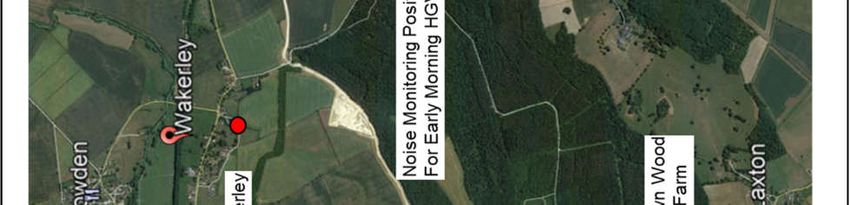
Page content transcription
If your browser does not render page correctly, please read the page content below
ASSESSMENT OF NOISE FROM EARLY MORNING HGV DEPARTURES

                     WAKERLEY QUARRY, WAKERLEY,
                              NORTHAMPTONSHIRE

                                     MICK GEORGE LTD

                                            MARCH 2021

                                                      LF Acoustics Ltd
                                                            Pond Farm
                                                         7 High Street
                                                       Pulloxhill, Beds
                                                            MK45 5HA

                                                      t: 01525 888046
                                             e: mail@lfacoustics.co.uk

                                               Registered in England
                                              Company Reg: 8434608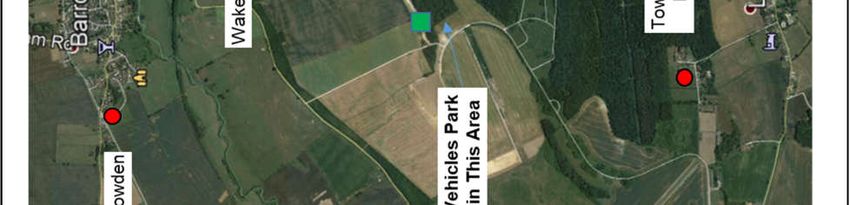
ASSESSMENT OF NOISE FROM EARLY MORNING HGV DEPARTURES

                                                                    WAKERLEY QUARRY, WAKERLEY,
                                                                             NORTHAMPTONSHIRE

                                                                                                              MICK GEORGE LTD

                                                                                                                              MARCH 2021

                         Status                                            Prepared By                                     Date

                           1.0                                  L Jephson BEng (Hons) MIOA                               24/3/21

                       This report has been prepared using all reasonable skill and care within the resources and brief agreed with the client.
LF Acoustics Ltd accept no responsibility for matters outside the terms of the brief or for use of this report, wholly or in part, by third parties.

   Wakerley Early Morning HGV Noise v1.0
   240321.docx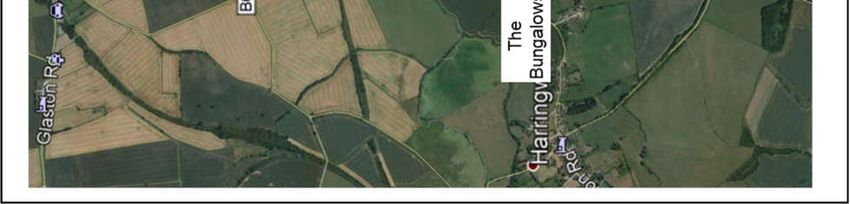
Contents

1.       Introduction                                                                            1

2.       Planning Conditions and Relevant Guidance                                               2

3.       Noise Monitoring                                                                        4

4.       Calculation and Assessment of Noise Levels Attributable to Vehicle Movements Between
                                                                                       etween
         06:00 – 07:00 hours                                                                     8

5.       Summary                                                                                11

         Figures

         Appendix

 Wakerley Early Morning HGV Noise v1.0
 240321.docx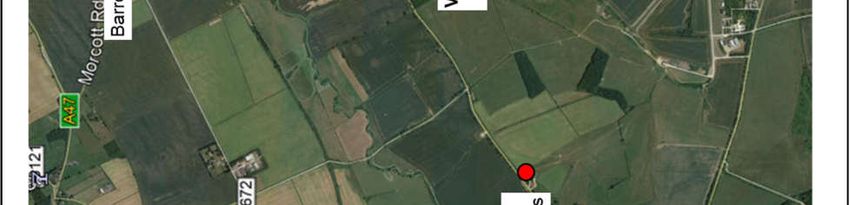
1.       Introduction

1.1.     Mick George Ltd are seeking planning permission to allow HGVs to leave Wakerley Quarry from
         06:00 hours, to enable them to service their contracts. At present, HGVs are allowed to enter
         and leave the quarry from 07:00 hours, with vehicles having to depart early, presently having
         to be parked off site.

1.2.     The vehicles would be loaded during the previous day and parked within the area adjacent to
         the main quarry office. The vehicles departing early, would be started, with daily checks carried
         out and driven directly out of the quarry along the access road.

1.3.     LF Acoustics Ltd were appointed by MGL to carry out an assessment of noise attributable to the
         movements between 06:00 – 07:00 hours at surrounding residential properties.

1.4.     MGL operated a trial with vehicles leaving the site between 06:00 – 07:00 during late February
         / early March 2021.

1.5.     Unattended noise monitoring was carried out adjacent to the quarry access and observations
         made within the surrounding villages to ascertain the noise levels attributable to the
         movements.

1.6.     The monitoring data has subsequently used to calculate noise level based upon the maximum
         number of vehicles which would potentially depart during this period, with the levels assessed
         against relevant criteria.

 Wakerley Early Morning HGV Noise v1.0              1
 240321.docx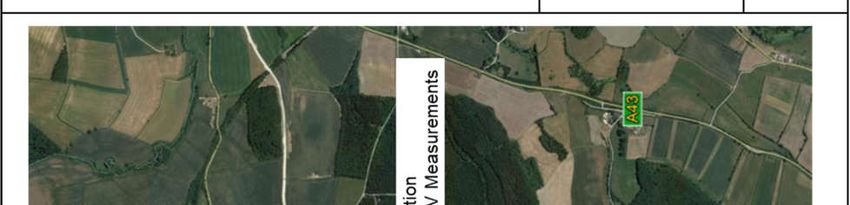
2.       Planning Conditions and Relevant Guidance

         A description of the noise units referred to in this report is provided in Appendix A.

2.1.     Planning Conditions

2.1.1. The planning permission to operate the quarry (NCC Ref. 08/00026/MIN) include conditions
       relating to operational hours and noise at neighbouring properties associated with the
       presently permitted operations.

2.1.2. Conditions 5 & 6 specify the operational hours for the quarry, as follows:

2.1.3. Condition 34 specifies the noise limits relating to noise attributable to the plant operating
       within the quarry at the surrounding residential properties, as follows:

2.2.     Minerals Planning Policy Guidance

2.2.1. MGL are seeking a variation to Condition 5 to enable vehicles to leave the quarry from 06:00
       hours, with no amendments to the operational hours for the quarry plant, which would remain
       as existing.

2.2.2. The site noise limits specified in Condition 34 relate to the daytime operations.

2.2.3. With regards noise during the early morning period the MPPG [1] specifies:

         “For any operations during the period 22.00 – 07.00 noise limits should be set to reduce to a
         minimum any adverse impacts, without imposing unreasonable burdens on the mineral
         operator. In any event the noise limit should not exceed 42dB(A) LAeq,1h (free field) at a noise
         sensitive property.”

 Wakerley Early Morning HGV Noise v1.0               2
 240321.docx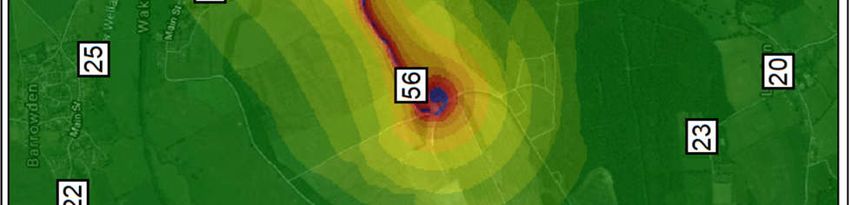
2.2.4. On this basis noise levels attributable to the early morning vehicle departures should be
       minimised to reduce any potential adverse impacts and not exceed a level of 42 dB LAeq, 1 hr at
       the surrounding properties.

2.3.     British Standard BS 8233

2.3.1. British Standard BS 8233 [2] principally provides design guidance for new buildings. Overnight,
       for residential premises, the guidance advises levels of noise internally not exceeding
       30 dB LAeq, 8 hour within bedrooms at night are desirable, with a level of 35 dB LAeq, 8 hour still
       maintaining a reasonable standard of noise.

2.4.     World Health Organisation Guidelines

2.4.1. The World Health Organisation guidance [3] provides additional guidance upon potential
       effects in relation to noise.

2.4.2. The guidance advises for a good night’s sleep, noise levels within bedrooms should not exceed
       30 dB LAeq,8 hour with individual noise events not regularly exceeding 45 dB LAmax (a limit of
       between 10 – 15 events is considered as a reasonable maximum number).

2.4.3. Assuming an open window provides a reduction in noise levels of between 10 – 15 dB(A), during
       the night-time the WHO guidance indicates that external noise levels should remain below 40
       – 45 dB LAeq, 8 hour to maintain the restorative processes of sleep.

2.4.4. The WHO produced additional noise guidance in relation specifically to night-time noise in 2009
       [4], which is generally considered to be the most noise sensitive period. This report provides a
       description of the no observed adverse effect level (which is equivalent to a No Observed
       Effects Level, NOEL) and advises for night-time noise that this concept is less useful, as the
       adversity of effects are less clear. Instead, it advises the use of the observed effects thresholds,
       above which an effect starts to occur or shows itself to be dependent upon the exposure level.

2.4.5. The guidance is presented in terms of external and internal recommendations to minimise any
       potential adverse effects. Externally, the guidance advises that an average night-time noise
       level Lnight (the LAeq, 8 hour) of 40 dB is equivalent to the Lowest Observed Adverse Effect Level
       (LOAEL) and advises this guideline value is recommended for the protection of public health
       from night-noise.

2.4.6. The guidance advises that an external night-time noise level of 30 LAeq, 8 hour would be equivalent
       to the NOEL, as their research indicated that there were no detectable effects on sleep
       observed below this level.

2.4.7. The potential for Significant Observed Adverse Effects (SOAEL) were identified to occur at levels
       considerably above 40 dB LAeq, 8 hour.

 Wakerley Early Morning HGV Noise v1.0              3
 240321.docx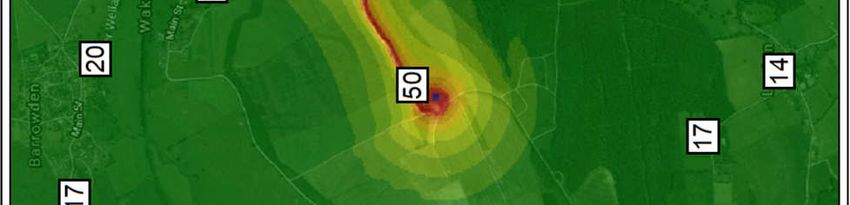
3.       Noise Monitoring

3.1.     Introduction

3.1.1. Vehicles departing the quarry from 06:00 hours would have been loaded during the permitted
       operational hours on the evening before and would be parked within the area adjacent to the
       main quarry office.

3.1.2. During the early morning periods, the drivers would arrive and undertake their required daily
       checks. This entails the vehicles being started and left idling typically for around 5 minutes prior
       to departure.

3.1.3. Upon departure, the vehicles would drive out from the parking area and onto the main quarry
       access road. No vehicles would enter the quarry void during the period prior to 07:00 hours.

3.1.4. The access road has been tarmacked to provide a good running surface, with the level of the
       access road lowered and the soils used to create bunding to a height of between 2 – 3 metres
       alongside. The bunding effectively screens the vehicles as they travel along the access.

3.1.5. The access road is typically at least 500 metres from the neighbouring properties within
       Wakerley, Laxton and Barrowden, with the closest dwellings located approximately 325 metres
       at the eastern end of Wakerley Village.

3.1.6. Given the large distances, it was considered appropriate to monitor noise levels attributable to
       the vehicle movements during a trial exercise carried out during February / March 2021. During
       this period, there were up to 14 HGVs parked at the quarry overnight, which departed between
       06:00 – 07:00 hours. The vehicles do not tend to depart at the same time, departing during the
       period, to enable them to meet their delivery schedules.

3.1.7. Noise measurements were primarily obtained adjacent to the access road during a period of 2
       weeks based upon an unattended noise survey, where the noise from the vehicle movements
       was the principal source of noise and included the HGVs departing and both drivers and staff
       arriving into the quarry. These measurements were used to enable noise levels to be calculated
       at the surrounding properties.

3.1.8. In addition, observations of the noise levels were made within Wakerley and Barrowden
       villages, the villages most likely to be affected by the vehicle movements, for one morning
       whilst the survey was being undertaken.

3.1.9. The monitoring procedure had been discussed and agreed with local authority officers prior to
       undertaking the surveys.

3.2.     Unattended Noise Monitoring Exercise

3.2.1. Unattended noise monitoring was carried out at a position along the access road between
       Wednesday 24th February and Tuesday 9th March 2021.

3.2.2. The monitoring location was set along the eastern section of the access road and positioned at
       a distance of 14 metres. The microphone was set freefield and at a height of 1.4 metres above
       the ground. From the monitoring position, there was a good line of sight onto the access road
       surface.

3.2.3. The monitoring locations are indicated on Figure 1.

 Wakerley Early Morning HGV Noise v1.0              4
 240321.docx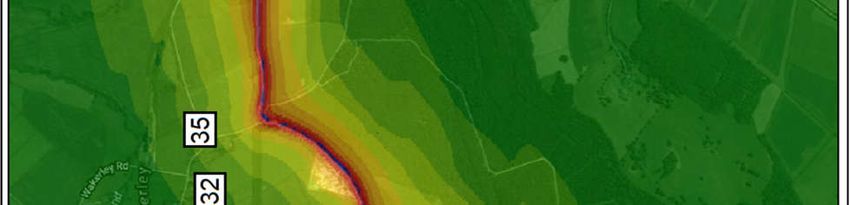
3.2.4. A Rion NL-52 Class 1 Sound Level Meter was used for the exercise, which was calibrated before,
       during and after the exercise, using a Rion NC-74 Class 1 Acoustic Calibrator, with the
       instrument reading 94.0 dB on each occasion.

3.2.5. The instrument was configured to record over 1 second / 15 minute monitoring periods during
       the survey. In addition, the instrument was fitted with audio recording capability, which was
       configured to capture audio when noise levels exceeded 60 dB(A) (the level was set to capture
       the HGV movements, but aimed to exclude noise from other sources, including birdsong, which
       was clearly audible at dawn).

3.2.6. To supplement the noise monitoring, a Davis Vantage View weather station was set up within
       the site for the duration of the survey, which was configured to log wind speed and direction,
       precipitation and temperature.

3.2.7. A summary of the weather conditions between 06:00 -07:00 hours is provided in Table 3.1.

                Date                     Conditions       Wind Strength           Wind Direction
  Wednesday            24/2/21                 Dry            4m/s                     SE
    Thursday           25/2/21                 Dry            2m/s                     W
     Friday            26/2/21                 Dry            1m/s                     W
    Saturday           27/2/21                 Dry            Calm                      -
    Sunday             28/2/21                 Dry            Calm                      -
    Monday             1/3/21                  Dry            Calm                      -
    Tuesday            2/3/21                  Dry            Calm                      -
  Wednesday            3/3/21                  Dry            Calm                      -
    Thursday           4/3/21                  Dry            Calm                      -
     Friday            5/3/21                  Dry            Calm                      -
    Saturday           6/3/21                  Dry            Calm                      -
    Sunday             7/3/21                  Dry            1m/s                     W
    Monday             8/3/21                  Dry            2m/s                     W
    Tuesday            9/3/21                  Dry            2m/s                     W

Table 3.1      Summary of Weather Conditions

3.2.8. The weather conditions were good throughout the survey period and considered suitable for
       undertaking an environmental noise survey.

3.2.9. The results obtained from the unattended noise survey have been subsequently analysed to
       derive the noise levels at the survey position for the period when the early morning vehicles
       would depart between 06:00 – 07:00 hours.

3.2.10. The analysis has included Sunday morning periods, when there were no vehicle departures to
        provide a comparison with the general noise environment, which is principally attributable
        birdsong and distant road traffic at this time. Note that the survey was undertaken during
        period of national lockdown associated with the COVID-19 pandemic and noise levels during
        this period would have been lower, due to low volumes of traffic on the main road network
        (principally the A47 to the north).

 Wakerley Early Morning HGV Noise v1.0                5
 240321.docx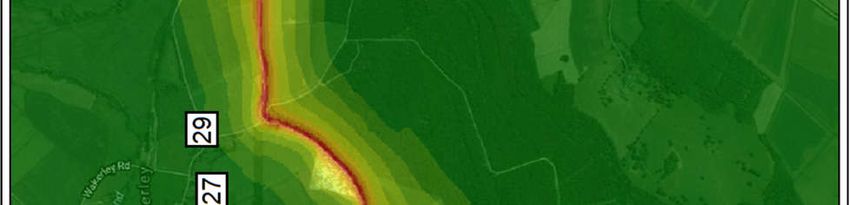
Date                                                 Noise Levels [dB]
                                              LAeq, 1hr                    LAmax,F              LA90
  Wednesday             24/2/21                 50.1                        67.8                43.4
    Thursday            25/2/21                 47.9                        69.4                35.8
       Friday           26/2/21                 48.1                        67.0                38.6

    Saturday            27/2/21                47.5                         69.7                35.8
       Sunday           28/2/21                 40.0                        61.7                32.6
    Monday              1/3/21                  49.1                        73.2                36.5
    Tuesday             2/3/21                  49.2                        70.5                36.9
  Wednesday             3/3/21                  48.7                        67.8                33.0
    Thursday            4/3/21                  49.2                        70.9                37.7
       Friday           5/3/21                  48.5                        69.1                36.3
    Saturday            6/3/21                  47.1                        69.6                33.0

       Sunday           7/3/21                 44.4                         66.7                30.9
    Monday              8/3/21                  48.7                        73.3                40.4
    Tuesday             9/3/21                  48.8                        70.0                39.7

Table 3.2       Period Noise Levels at Unattended Survey Position Between 06:00 – 07:00 hours

3.2.11. The results indicate typical levels of between 47 – 49 dB LAeq, 1 hr noise levels associated with the
        vehicle movements between 06:00 – 07:00 hours.

3.2.12. Marginally higher noise levels were observed during Wednesday 24 February. An analysis of
        the audio files indicated that noise levels during this period were influenced by the surrounding
        trees rustling in the breeze and not directly attributable to the site traffic.

3.2.13. It is also noted that the noise levels during Sundays were between 40 – 44 dB LAeq, 1 hr,
        attributable to other surrounding noise sources and thus the general ambient noise
        environment is likely to have had some influence on the noise levels during the periods when
        the vehicles were operating. Assuming that the levels measured are attributable solely to the
        vehicle movements would provide for a worst case assessment.

3.3.        Observations in Surrounding Villages

3.3.1. To evaluate the noise associated with the departing HGVs, observations and noise
       measurements were made at the agreed noise monitoring positions within Wakerley Village
       and Barrowden during the morning of Tuesday 2 March 2021. The monitoring positions are
       indicated on Figure 1.

3.3.2. Observations were initially made at Barrowden from 06:00 hours.

3.3.3. The HGVs departing the quarry were visible from this location from their headlights, as they
       turned onto the main access road. However, the vehicle movements were not audible at this
       location, indicating that the vehicles were generating very low levels of noise.

3.3.4. A noise measurement was obtained between 06:00 – 06:15, which indicated the following
       results.

 Wakerley Early Morning HGV Noise v1.0                       6
 240321.docx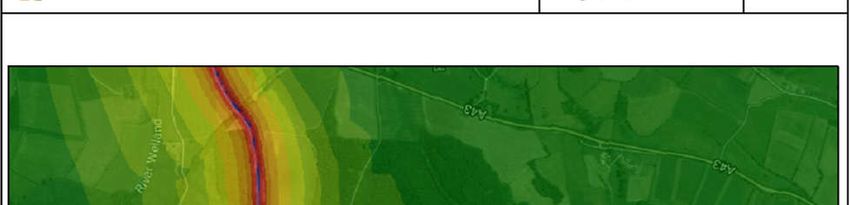
Time                                           Noise Levels [dB]
                                          LAeq, 15min               LAmax,F            LA90
            06:00 – 06:15                   39.7                     55.2             33.9

Table 3.3     Results of Noise Measurement Made at Barrowden

3.3.5. Observations made during this period indicated that the noise levels monitored were
       influenced by road traffic from vehicles travelling along the A47 to the north, birdsong and
       sheep bleating in the surrounding fields, with the HGV movements having no influence on the
       measured noise levels.

3.3.6. Further observations / measurements were obtained within Wakerley between 06:25 – 06:55
       hours. Again, whilst there were vehicles on the access road during this period, they were not
       audible.

3.3.7. The results of the measurements are presented below.

                Time                                           Noise Levels [dB]
                                          LAeq, 15min               LAmax,F            LA90
            06:25 – 06:40                   39.2                     57.1             33.8
            06:40 – 06:55                   42.4                     61.6             35.9

Table 3.4     Results of Noise Measurement Made at Wakerley

3.3.8. Noise levels monitored at this location were observed to be principally influenced by birdsong
       and distant road traffic.

 Wakerley Early Morning HGV Noise v1.0                  7
 240321.docx
4. Calculation and Assessment of Noise Levels Attributable to Vehicle Movements Between
06:00 – 07:00 hours
4.1. Calculation of Noise Levels
4.1.1. The observations made within the surrounding villages during the trial period indicated that
the early morning vehicle movements were not audible. On this basis, it was considered
appropriate to calculate the noise levels at the surrounding properties, based upon the results
obtained from the unattended noise survey.
4.1.2. Calculations of the noise levels attributable to the vehicle movements have been modelled
using the SoundPlan computer modelling package. This package implements the calculation
procedures defined in ISO9613-2 [5].
4.1.3. Ground levels used within the modelling have been based upon LiDAR mapping for the
surrounding area. The model has incorporated the bunding which has been constructed
alongside the access road.
4.1.4. The calculations have been made freefield and assuming a receptor height of 4 metres,
representative of a first floor bedroom window.
4.1.5. The vehicle movements have been modelled along the access road, assuming a line source,
taking account of the number of vehicles and speed along the access. Based upon the results
of the noise monitoring, a Sound Power Level of 101 dB(A) was assumed for the vehicle
movements and assuming a speed of 20 km/h (this is lower than the access road speed limit
and thus provides a higher calculated level, as the vehicles would take longer to travel along
the access).
4.1.6. Consideration has also been given to the noise associated with the drivers entering their
vehicles, starting up and leaving the vehicles idling for a period of 45 minutes whilst the
required daily checks are completed. For these activities, the following source noise levels were
assumed:
HGV Door Closed Start Up and Drive Off – 93.6 dB SWL; and
HGV Idling – 95.4 dB(A) SWL.
4.1.7. Calculations have been made on the basis of 14 vehicles departing to calibrate the noise model.
The results of this preliminary modelling are presented on Figure 2, which indicates a level of
50 dB LAeq, 1 hour at the noise monitoring position, marginally higher than measured and thus
providing confidence that the calculations are providing worst case conditions and have taken
account of other vehicle movements associated with staff arriving at the quarry during this
period.
4.1.8. Further calculations have been made on the basis of the maximum anticipated number of HGV
departures between 06:00 – 07:00. Initially, it is anticipated that there would be around 14
vehicles departing, as per the trial exercise, which would increase over time with a worst case
of 50 vehicles considered. The number of vehicles would vary depending upon market demand
and as indicated previously, the vehicles would normally not depart all at the same time and
would leave periodically during this time to ensure they arrive at their delivery location at the
correct time. Vehicles leaving between 06:00 – 07:00 would all have been loaded the previous
day, with no empty vehicle movements during this period. The calculations over this period
have been made on the basis of an increase in noise levels based upon 10 x Log (50/14), which
indicates a difference of 5.5 dB(A).
Wakerley Early Morning HGV Noise v1.0 8
240321.docx4.1.9. Figure 3 presented the results of the modelling based upon the maximum vehicle movements.
4.2. Assessment of Noise Levels
4.2.1. Noise levels attributable to the maximum vehicle movements between 06:00 – 07:00 hours
have been calculated within the surrounding villages and indicate the following levels.
Location Calculated Noise Level [dB LAeq, 1 hour]
Wakerleyy 32 – 35
Barrowden 22 – 25
Laxton 20 – 23
The Bungalows 17
Table 4.1 Calculated Noise Levels
4.2.2. The MPPG advises “For any operations during the period 22.00 – 07.00 noise limits should be
set to reduce to a minimum any adverse impacts, without imposing unreasonable burdens on
the mineral operator. In any event the noise limit should not exceed 42dB(A) LAeq,1h (free
field) at a noise sensitive property.”
4.2.3. The calculations based upon a worst case assumption of 50 vehicles departing indicate noise
levels at the surrounding villages at least 7 dB(A) below the limit specified. An assessment
against the requirements of the MPPG would therefore conclude that the vehicles would be
unlikely to result in adverse noise impacts at the surrounding properties.
4.2.4. The mitigation measures provided along the access road seek to minimise noise levels. Drivers
would also be required to minimise noise, whilst undertaking their daily checks, which would
be adopted through appropriate management controls. These measures seek to ensure noise
levels are minimised in accordance with the requirements of the MPPG.
4.2.5. Observations made during the trial period of operation indicated that the vehicles departing
the quarry were not audible at the properties potentially most affected within Wakerley and
Barrowden villages, with noise levels within villages during this period influenced by distant
road traffic on the surrounding road, principally the A47 to the north. Considering an increase
in vehicle movements compared to those used in the trial would still result in noise levels not
being audible.
4.2.6. Consideration has also been given to the noise levels within the properties at this time,
particularly the levels of noise within bedrooms.
4.2.7. BS 8233 advises to maintain a good standard of noise internally, noise levels should remain
below 30 dB LAeq, 8 hour overnight. An open window will provide between 10 – 15 dB(A) reduction
in noise levels between outside an in. Noise levels internally within the properties potentially
most affected would be of the order of 25 dB LAeq, 1hour or lower attributable to the vehicle
movements at the quarry and thus maintain a good standard of noise and ensure any potential
adverse noise impacts were minimised.
Wakerley Early Morning HGV Noise v1.0 9
240321.docx4.2.8. Consideration has also been given to the maximum noise levels attributable to the vehicle
movements. The WHO guidance recommends that a level of 45 dB LAmax,F should not be
exceeded more than 10 times overnight within bedrooms to maintain the restorative processes
of sleep, which is equivalent to an external level of the order of 60 dB LAmax,F externally.
4.2.9. The noise measurements taken along the access indicated that the maximum noise levels at
this position were typically 20 dB(A) higher than the LAeq, 1 hour noise levels, based upon up to 14
HGV departures. Taking account of the maximum number of vehicles, maximum noise levels
would not change, although the difference would reduce to 15 dB(A).
4.2.10. Taking account of this difference, the maximum noise levels anticipated at the properties would
be of the order of 50 dB LAmax,F. This level of noise is substantially below the WHO guideline
value and would ensure that maximum noise levels within the properties remained below
40 dB LAmax,F and thus below a level which would result in any adverse noise impacts.
4.2.11. In summary, the assessment above has concluded that the noise levels attributable to the
vehicle movements between 06:00 – 07:00 hours would remain very low at the surrounding
properties and below a level which would have the potential to result in adverse noise impacts.
4.2.12. The operation would therefore ensure the requirements of the MPPG were maintained.
Wakerley Early Morning HGV Noise v1.0 10
240321.docx5. Summary
5.1. Mick George Ltd are seeking planning permission to allow HGVs to leave Wakerley Quarry from
06:00 hours, to enable them to service their contracts. At present, HGVs are allowed to enter
and leave the quarry from 07:00 hours, with vehicles having to depart early, presently having
to be parked off site.
5.2. The vehicles would be loaded during the previous day and parked within the area adjacent to
the main quarry office. The vehicles departing early, would be started, with daily checks carried
out and driven directly out of the quarry along the access road.
5.3. LF Acoustics Ltd were appointed by MGL to carry out an assessment of noise attributable to the
movements between 06:00 – 07:00 hours at surrounding residential properties.
5.4. A noise monitoring exercise was carried out during a trial operating period with a limited
number of vehicles on site. The results and observations from this exercise have been used to
calculate noise levels from the maximum number of vehicles which could potentially depart
during the early morning.
5.5. The assessment concluded that the vehicles departing would generate low levels of noise
within the surrounding villages, with noise levels substantially below a limit which would have
the potential to give rise to adverse noise effects.
Wakerley Early Morning HGV Noise v1.0 11
240321.docxReferences
1. Department for Communities and Local Government. Planning Practice Guidance. Assessing
Environmental Impacts from Minerals Extraction. Revision Date 6 March 2014.
2. British Standards Institute. Guidance on Sound Insulation and Noise Reduction in Buildings.
BS 8233: 2014.
3. World Health Organisation. Guidelines for Community Noise. 1999. WHO Geneva.
4. World Health Organisation. Night Noise Guidelines for Europe. 2009.
5. ISO. Acoustics – Attenuation of Sound During Propagation Outdoors – Part 2: General Method
of Calculation. ISO 9613-2. 1996.
Wakerley Early Morning HGV Noise v1.0
240321.docxFigures Wakerley Early Morning HGV Noise v1.0 240321.docx
Wakerley Early Morning HGV Noise v1.0
240321.docx
Wakerley Early Morning HGV Noise v1.0
240321.docx
Wakerley Early Morning HGV Noise v1.0 240321.docx
Appendix A
Noise Units

Decibels (dB)

Noise can be considered as ‘unwanted sound’. Sound in air can be considered as the propagation of
energy through the air in the form of oscillatory changes in pressure. The size of the pressure changes
in acoustic waves is quantified on a logarithmic decibel (dB) scale firstly because the range of audible
sound pressures is very great, and secondly because the loudness function of the human auditory
system is approximately logarithmic.

The dynamic range of the auditory system is generally taken to be 0 dB to 140 dB. Generally, the
addition of noise from two sources producing the same sound pressure level will lead to an increase in
sound pressure level of 3 dB. A 3 dB noise change is generally considered to be just noticeable, a 5 dB
change is generally considered to be clearly discernible and a 10 dB change is generally accepted as
leading to the subjective impression of a doubling or halving of loudness.

A-Weighting

The bandwidth of the frequency response of the ear is usually taken to be from about 18 Hz to 18,000
Hz. The auditory system is not equally sensitive throughout this frequency range. This is taken into
account when making acoustic measurements by the use of A-weighting, a filter circuit that has a
frequency response similar to the human auditory system. All the measurement results referred to in
this report are A-weighted.

Units Used to Describe Time-Varying Noise Sources (LAeq, LAmax, LA10, and LA90)

Instantaneous A-weighted sound pressure level is not generally considered as an adequate indicator of
subjective response to noise because levels of noise usually vary with time.

For many types of noise the Equivalent Continuous A-Weighted Sound Pressure Level (LAeq,T) is used as
the basis of determining community response. The LAeq,T is defined as the A-weighted sound pressure
level of the steady sound which contains the same acoustic energy as the noise being assessed over a
specific time period, T.

The LAmax is the maximum value that the A-weighted sound pressure level reaches during a
measurement period. LAmax F, or Fast, is averaged over 0.125 of a second and LAmax S, or Slow, is averaged
over 1 second. All LAmax values referred to in this report are Fast.

The LA90 is the noise level exceeded for 90% of the measurement period. It is generally used to quantify
the background noise level, the underlying level of noise that is present even during the quieter parts
of measurement period.

 Wakerley Early Morning HGV Noise v1.0
 240321.docx
You can also read


