WHAT IS AN INTEGRATED ECOSYSTEM ASSESSMENT AND WHAT IS IT GOOD FOR? - Andy Arnell, Science Programme, UNEP-WCMC. With input from Claire Brown ...
←
→
Page content transcription
If your browser does not render page correctly, please read the page content below
WHAT IS AN INTEGRATED ECOSYSTEM ASSESSMENT AND WHAT IS IT
GOOD FOR?
Andy Arnell, Science Programme, UNEP-WCMC. With input from Claire Brown
                                                                          31/05/2018
OVERVIEW

• Description of what an Integrated Ecosystem Assessment (IEA) is
    • Including background on ecosystems, the ecosystem approach etc.
• IEA frameworks

• IEA examples
    • National scale:
       • UK National Ecosystem Assessment
    • Other examples:
       • successes, lessons learned and criticisms
• Summary

                                                     31/05/2018

                                                                        5/31/2018
WHAT IS AN INTEGRATED ECOSYSTEM
ASSESSMENT AND WHAT IS IT GOOD FOR?

What is it?

In short: it provides a framework for organising science to inform decision making.

What is it good for?

It is especially good for guiding the ecosystem approach to management.
Similarly at the national level they are useful reporting upwards to bodies such as
IPBES.
                                                     31/05/2018

                                                                                      5/31/2018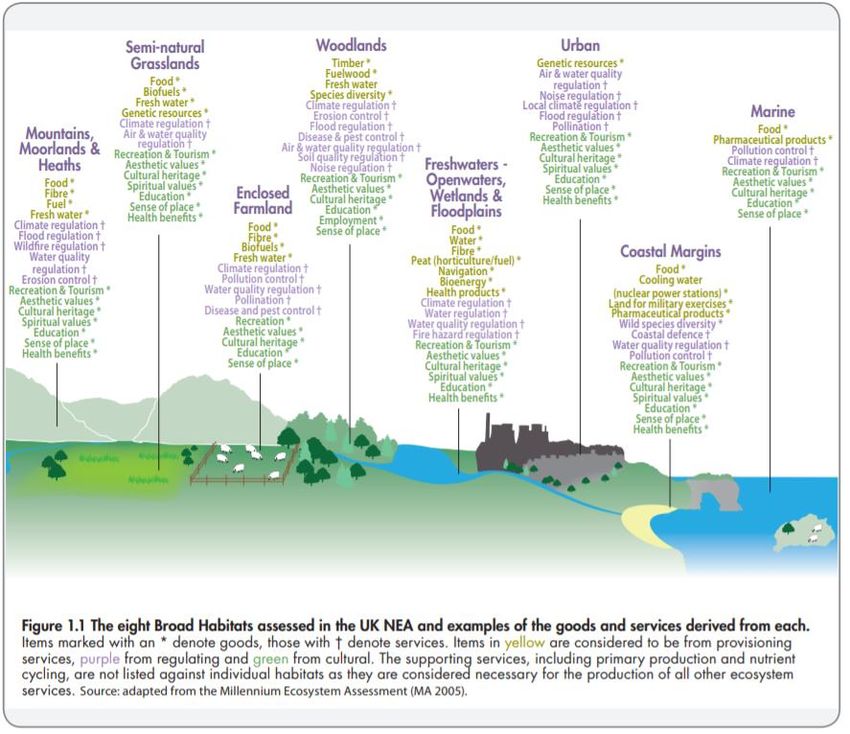
WHAT IS AN INTEGRATED ECOSYSTEM
ASSESSMENT?

• IEA is a process that leads to the provision of joined-up and consistent
  advice that addresses society's needs to manage anthropogenic
  pressures on the ecosystem.

• Importantly, it does not lead to one answer, but provides the information
  and knowledge to facilitate exploring the space for decision-making and
  policy development

                                                 31/05/2018

                                                                              5/31/2018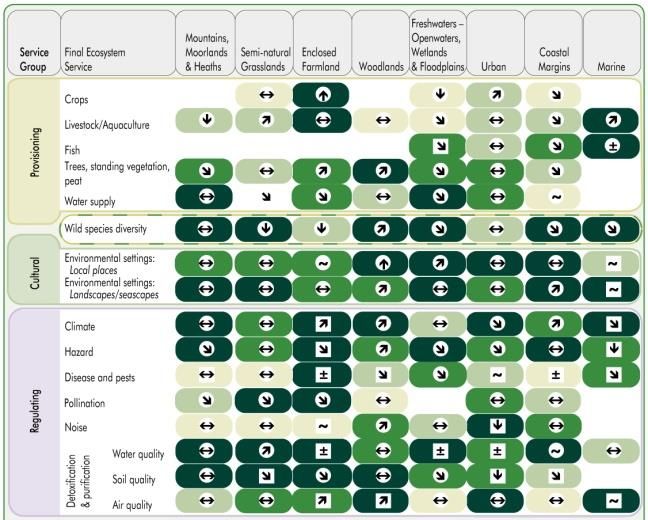
BACKGROUND: THE ECOSYSTEM
APPROACH
• This was chosen at the Conference of the Parties (CoP).

• "Ecosystem" means a dynamic complex of plant, animal and micro-organism
  communities and their non-living environment interacting as a functional unit“
  (Article 2 of the Convention on Biological Diversity).

• A level that encompasses essential processes, functions and interactions
  among organisms and their environment.

• Recognises humans are an integral component of ecosystems.

• Facilitating it’s implementation is priority (from the 7th CoP meeting)
                                                           31/05/2018

                                                                                   5/31/2018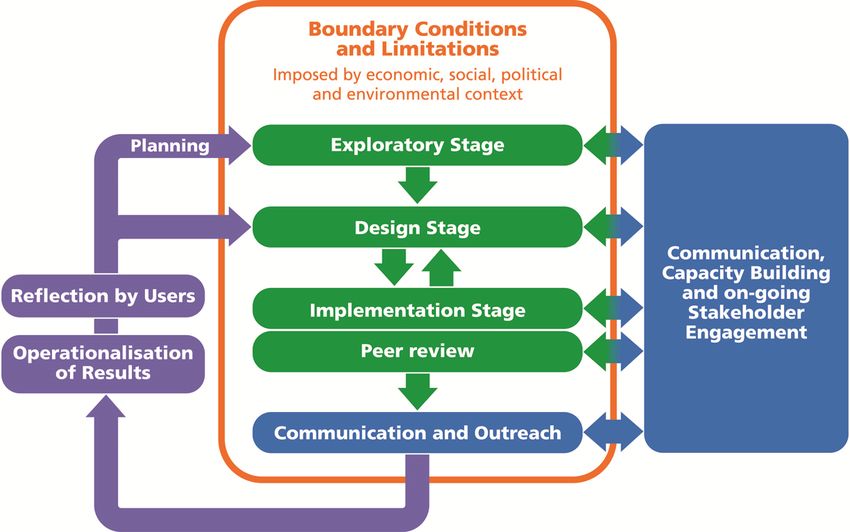
ECOSYSTEM-BASED MANAGEMENT
• It recognizes the full array of interactions within an ecosystem, including humans,
  rather than considering single issues, species, or ecosystem services in
  isolation.

• It can be applied to studies in the terrestrial and marine environments

• The term is most commonly used in the marine realm

• It evolved from a vague principle to a central paradigm in marine resource
  policy

                                                                 31/05/2018

                                                                                        5/31/2018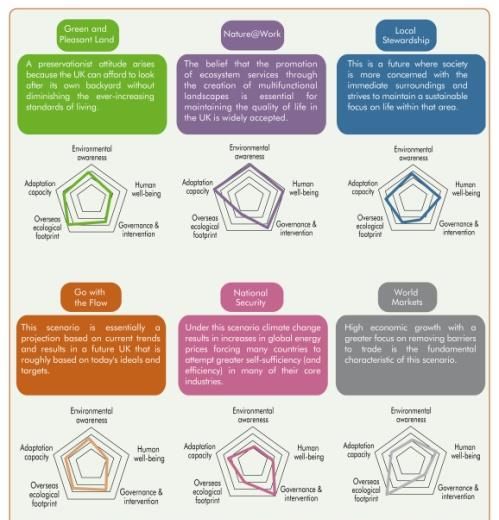
INTEGRATED ECOSYSTEM
ASSESSMENTS
• Levin et al., (2009) proposed Integrated Ecosystem Assessments as a framework for
  organizing science in order to inform decisions in marine EBM

• It has the ability to synthesize and analyse scientific information in relation to specified ecosystem
  management objectives

• It is especially suitable for engaging different stakeholder and decision maker groups.

• The main purpose of IEAs is to integrate physical, biological, and socio-economic data to evaluate
  trade-offs among objectives across different ecosystem goods and services.

• Previously practical advice was scarce on how to achieve EBM goals.

• There are many frameworks…
                                                                       31/05/2018

                                                                                                           5/31/2018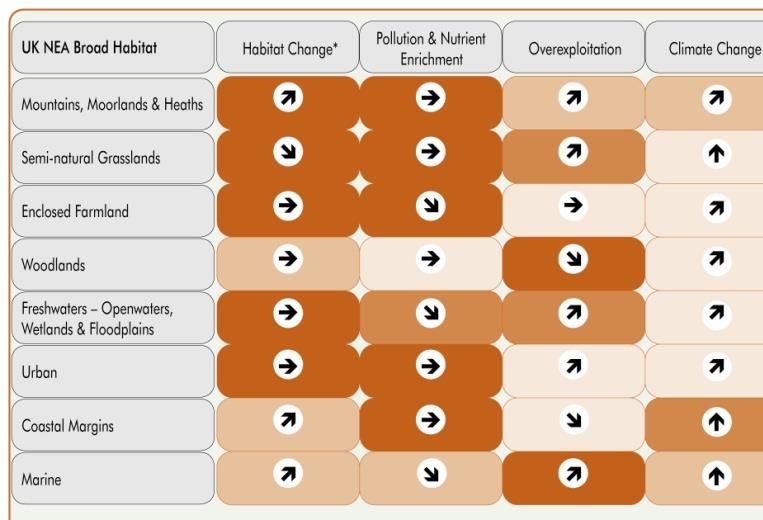
Source:
  31/05/2018Ash et al. (2010): Ecosystems and Human Well-

being. A Manuel for assessment practitioners. Island
Press, p.9
                                                  5/31/2018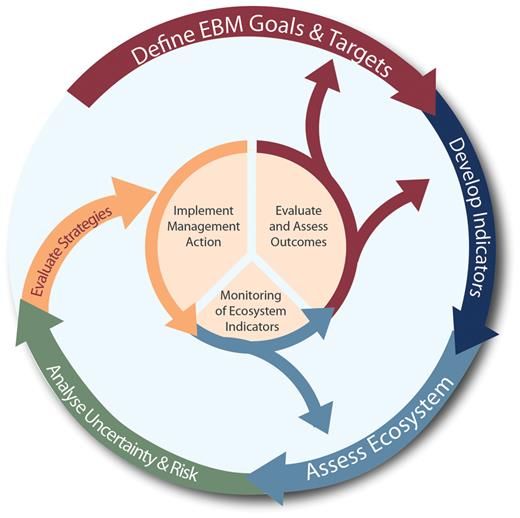
The Five-Step Process of Integrated Ecosystem
Assessment

                                      31/05/2018

                                       Levin et al., 2009. PLOS Biology
                                                                          5/31/2018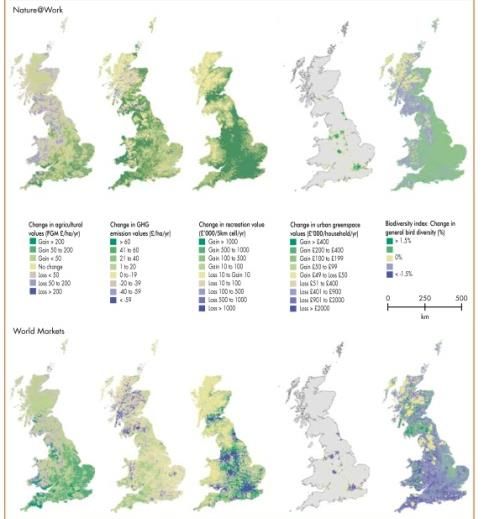
Conceptual schematic describing the cyclical, iterative
nature of IEAs at the US NOAA

                                               Samhouri et al., 2014. CES Journal of Marine
                                            31/05/2018

                                               Science

                                                                                              5/31/2018
WHERE DO ECOSYSTEM SERVICES FIT
IN?
ESMERALDA project modified these frameworks to explicitly show ES
31/05/2018
5/31/201831/05/2018
Burkhard, B. et al., 2018. One Ecosystem
5/31/2018Brown, C.,
Potschin, M. and
R. Haines-Young
(2017) based
on Burkhard et al.
2018 and
31/05/2018
2nd MAES report
(EC 2014)
5/31/2018EXAMPLE: UK NATIONAL ECOSYSTEM
ASSESSMENT (UK NEA)
• Two year analysis, reported in 2011, follow on in 2014.
• Aims:
1. Produce an independent and peer-reviewed
assessment for the whole of the UK.
2. Raise awareness of the importance of the natural
environment to human well-being and economic
prosperity.
3. Ensure full stakeholder participation and
encourage different stakeholders and
communities to interact and, in particular, to
foster better inter-disciplinary cooperation
between natural and social scientists, as well as
economists.
31/05/2018
5/31/2018EXAMPLE: UK NATIONAL ECOSYSTEM
ASSESSMENT (UK NEA)
31/05/2018
5/31/2018EXAMPLES: UK NEA - UPTAKE
92 commitments set out in England’s White paper
✓ supporting Local Nature Partnerships, to strengthen local action
✓ new Nature Improvement Areas
✓ improving public health locally, by making high-quality green space available
✓ new Green Areas Designation, empowering communities to protect local environments
Status No. Commitments
(Oct 2014)
Completed 53
Completed with ongoing commitments 21
to ensure benefits
In progress 18
31/05/2018
No progress 0
5/31/2018EXAMPLES: SUCCESSES
Marine realm – Europe:
• The IEA concept has developed within the International Council for the Exploration of the Sea.
(ICES) from a few solitary expert groups to a wide network.
• Used a “sticky” process to create new regional IEA groups
• This allows knowledge and methodology transfer between regions.
• Today, this group is called SSGRSP and composed of a network of IEA groups
• To ensure further progress, SSGRSP initiated a series of Workshops on Benchmarking
Integrated Ecosystem Assessments (WKBEMIA).
Dickey-Collas (2014)
31/05/2018
5/31/2018EXAMPLES: LESSONS LEARNED
Marine realm – USA:
i) engage with stakeholders, managers, and policy-makers early, often, and continually;
ii) conduct rigorous human dimensions research;
iii) recognize the importance of transparently selecting indicators;
iv) set ecosystem targets to create a system of ecosystem based management (EBM) accountability;
v) establish a formal mechanism(s) for review of IEA science;
vi) serve current management needs, but not at the expense of more integrative ocean management;
vii) provide a venue for EBM decision-making that takes full advantage of IEA products; and
(viii) embrace realistic expectations about IEA science and its implementation.
Samhouri et al., 2014
31/05/2018
5/31/2018ISSUES
• Uptake has previously been hampered by lack of awareness, ambiguity, or assumptions around
feasibility.
• Some bemoan slow implementation of IEAs, but it takes time to develop new processes and
protocols – it is natural part of the developmental process.
• Expectations that implementation will take an ordered, stepwise approach will lead to
disappointment and frustration
• This is a consequence of the need to operate in an adaptive manner in a complex system.
• Dickey-Collas (2014) notes that although it may be messy, the need to consider broader factors
when managing resources is highly warranted
• An adaptable, innovative approach across multiple considerations – such as IEA - is very much
required 31/05/2018
5/31/2018SUMMARY
• IEAs help provide an evidence base for decision making
• More than just an academic exercise
• They help guide ecosystem based management
• Focus on whole ecosystems - incl. humans and interactions - not just a single part.
• IEAs have moved from the “what are they?” stage to “how can they be implemented?”
• Numerous IEA frameworks exist, with ecosystem services a principle component
• IEA examples at the national level include the UK NEA
• The marine realm has embraced IEAs and this experience has strengthened guidance for
their implementation
• It still can be a slow process, but this should be expected
• IEAs are key for guiding policy at multiple levels, and ultimately informing conservation
practitioners and land use planners
31/05/2018
5/31/2018UN Environment World Conservation Monitoring Centre 219 Huntingdon Road, Cambridge, CB3 0DL www.unep-wcmc.org @unepwcmc ANDY ARNELL Programme Officer, Science Programme andy.arnell@unep-wcmc.org
You can also read


