WORLD ONLINE SCHOOL CHESS TOURNAMENT - (2020 - 2021) EXPO DUBAI 2020 - Accion Cultural ...
←
→
Page content transcription
If your browser does not render page correctly, please read the page content below

INTELLIGENCE FOR LIFE

 DOSSIER | Presentation and Rules

 WORLD ONLINE
 SCHOOL CHESS
 TOURNAMENT
 (2020 – 2021)

 EXPO DUBAI 2020

                        Co-curated Project with Expo:
2

Contents
1. INTRODUCTION AND OBJECTIVES

2. EVENT ORGANIZATION AND SCHEDULE

     2.1. Age range of the students participating

     2.2. Participation in the Tournament

     2.3. Registration and selection of the teams

     2.4. Participants per team
     2.5. Speed of the games

     2.6. Schedule and competition phases

     2.7. Number of teams in the on-site final phase in
     Dubai
     2.8. Technological requirements for entry

3. ANNEXES: RULES AND ENTRY FORM
     3.1. General competition rules

     3.2. Registration

     3.3. Organization of groups and the online matches

     3.4. Final phase (on Site)

     > Registration Form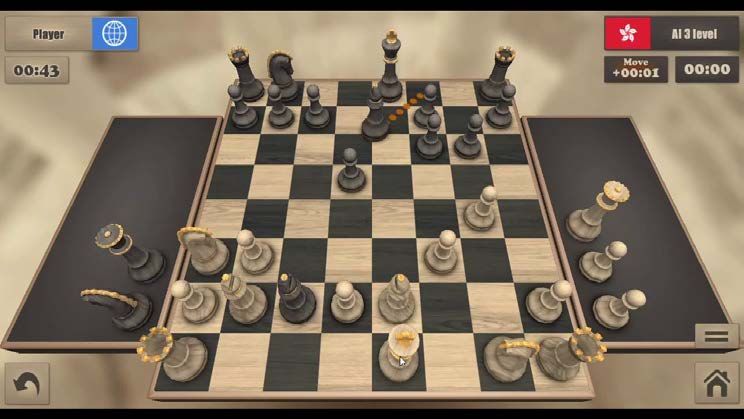
01
Introduction
and objectives

                 4
Introduction and Objectives

 Chess is a universal game (191 countries in the International Chess Federation) that goes
 back over a thousand years. It came to Europe through the Arabs, who in the 8th century
 brought it to the Iberian Peninsula. The chess that is played throughout the world today
 was created in Spain at the end of the 15th century, when the queen became the most
 powerful piece. From there it spread to western Europe and the Americas. Its common
 language allows people to communicate regardless of race, language, religion, age or
 gender.

 The Spain Pavilion in Expo Dubai 2020, in line with the theme of this universal exposition
 of "Connecting Minds, Creating the Future" invites all member countries to participate in
 an event that aims to "increase intelligence for life" and expand awareness of the potential
 of chess as a key educational tool, as supported by sound scientific studies.

 Given the unanimous opinion that education is the best tool for ensuring an intelligent
 future, what better than a game that consists of thinking and developing many different
 values? Moreover, there are also very reliable studies that consider chess the best mental
 gymnastics for delaying or preventing the ageing of the brain and Alzheimer's.

 Chess is also very closely linked to the development of computers. It was the Spaniard
 Leonardo Torres Quevedo who invented the first analogical chess computer in 1915. The
 pioneers of computing, Alan Turing and Claude Shannon, chose chess as a field of
 experimentation for artificial intelligence in 1948. The scientific progress spurred by the
 victory of the Deep Blue (IBM) program over the World Chess Champion Gary Kasparov in
 1997 were subsequently applied in many different fields of science (pharmaceuticals,
 agriculture, finance, etc.). Now it is the turn of the best non-human player, AlphaZero,
 developed by Deep Mind (Google), which dominates chess after training by playing
 millions of games against itself.

 Chess is the only sport that can be played via the Internet, so we can bring children from
 all countries together through a stimulating competition. In this way, we will boost the
 development of intelligence and the values of coexistence between cultures, using chess
 as the vehicle for union.

                                                                                                5
02
Event
organization
and schedule

               6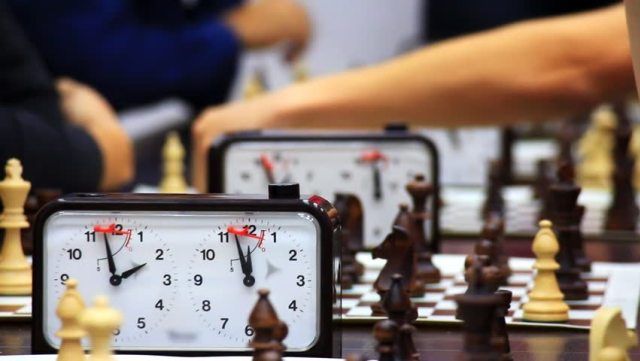
Event Organization and Schedule

The event we propose is
unprecedented in the world of chess in
terms of the potential participants
involved, as it is open to all the
countries (almost 200) that will
participate in Expo Dubai 2020.
Combined with its duration, this scope
will make the competition a global
model for interconnected chess via the
Internet.

                                         2.1. Age range of
                                         the school
                                         participants
                                         The categories of school chess,
                                         accepted around the world, range
                                         from Sub8 (children under 8 years of
                                         age) to Sub18 (the maximum age
                                         band).
                                         Any player born after 31 December
                                         2003 can participate (any
                                         category up to Sub16 inclusive).

                                                                                7
Event Organization and Schedule

2.2. Participation in the Tournament

 All interested schools may enter, provided that they have the minimum
 technological requirements for participating in the competition (details below).
 Countries participating in Expo 2020 are asked for their support in publicizing
 the event; and the countries that have a team classified for the finals are asked
 to help by paying their teams' travel costs to Dubai and giving visibility to the
 presence of their teams in the Expo.

2.3. Registration and selection of the teams
Each educational centre interested in
participating must register by a computer
application installed on the official Tournament
portal. It will have to provide details on its
activities related to chess.

If there are more than ten applications from a
single country, the application will select the ten
teams to participate based on the following
criteria: five of them on the basis merit (sporting
results of their players, introduction of chess into
the curriculum or extra-curricular activity in the
school, etc.). The other five teams will be
selected by lot, with no criteria of merit used.
                                                                                     8
This system provides the opportunity for all the
schools to take part, while also stimulating those
who have incorporated chess into their activities,
or want to increase its importance.

When a team classifies classifies for the on-site
final, the country will pay the costs of the trip and
stay for its teams in Dubai, as well as ensuring
the visibility of their presence in the Expo.
Event Organization and Schedule

2.4. Participants per team
       Each team will be composed of:
       7 first-team players

       2 reserves

       There will also be:

       one captain;

       and an adult delegate responsible for the team during the whole competition.

       Section 3, the Tournament Rules, explains these requirements in more detail.

       Schools are urged to make their balance between male and female players as
       equal as possible.

2.5. Speed of the games
     The games will be played over 20 minutes, with 10 more seconds per move for each of
     the two players. The time will be controlled by an online chess clock for each game. The
     average duration of a game will be around 60 minutes.

                                                                                                9
Event Organization and Schedule

2.6. Schedule and competition
phases
        The competition will consist of three phases:
        • A registration period for the countries that are interested: 15 January to 31 May
          2020.

        • Online classification phase: from Summer 2020 to 15 December 2020.

        • Knock-out rounds in 2020, taking into account the school calendar. The finalists will
          be decided starting 15 December 2020.

        • The on-site final phase will take place in Dubai on 29, 30 and 31 March, 2021.

2.7. Number of teams in the on-site
final phase in Dubai
    The number of teams that will reach the final phase in Dubai will be a minimum of 10 and
    a maximum of 12. They will have passed the elimination phases, with a total of 90-108
    young people, depending on the number of teams that reach the final.

                                                                                                  10
Event Organization and Schedule
2.8. Technological requirements for
entry
To ensure the competition operates correctly, the participating schools will have to
guarantee that the teams entered have access to certain minimum technological
resources, as follows:
> Fast fibre-optic or ADSL connection.
> Computers with one of the latest Windows operating systems (Windows 8 or 10)
>Ability to communicate with those responsible in the competition administration via e-
mail/Skype/WhatsApp on the days when each team is playing.
1103
ANNEXES
Tournament
rules and entry
forms
12Rules of the Tournament
3.1. General competition rules
1) The Expo Dubai 2020 school chess tournament is for teams of 7 players. It will be held between the
Summer and December 2020 in its classification phase. The on-site phase will be held in March 2021,
in accordance with these rules.
2) Each of the Classification Phases in this tournament will be held online, through team matches played
on the chess platform Chess24.
3) The Final Phase of the competition will be held on-site in March 2021 during Expo Dubai 2020.
3.2. Registration
1) The competition is open to public and private educational institutions from around the world. Each
institution may enter one (1) team.
2) On registration, each institution must present a minimum of 7 and a maximum of 9 players (including
substitutes).
The teams should be as evenly divided as possible between male and female players.
The players appearing on the official entry form must be listed in order of strength, as determined by the
institution entering each team. The order must be maintained during all the online phases. Specific rules will
be issued for the on-site phase.
The corresponding entity may replace a maximum of two (2) players before the start of the online phase.
Once this phase begins, the players may not be replaced except in the case of a duly certified accident or
illness. The Organization reserves the right to refuse any changes to the players entered for any other
reason.
3) All the players entered must be no more than 16 years of age (ctegories Sub16), the latterand must be
under 16 yearas of age on January 2020. They must be students of the educational institution that presents
them. The head of the institution must certify the students' link to the institution and the veracity of the data
included on the entry form.
4) If the number of institutions entered by country is higher than this, the computer application through
which the registration is made will automatically select the 10 teams allowed by the competition rules.
The Organization may establish prior requirements relating to the online connections of the institutions that
enter the competition. However, it will be the responsibility of the countries, federations and educational
13
institutions entered to have the appropriate technical means for taking part in the online matches.
5) Each team must appoint a Delegate and Sub-Delegate, both over the age of 18, who will represent the
team in their contacts with the Organization. They will be the only persons authorized to submit any claims
for incidents occurring during the games.
Any registration that is not made on the official forms or is not submitted within the deadline to the
Organization will not be considered.
6) The registration must be accompanied by a certificate signed by the director of the centre attesting that
the data included in it are correct.
7) Registration implies giving authorization to the chess federation of the corresponding country (as well as
the International Chess Federation FIDE) to receive these data for the purpose of subsequently offering
other activities and improving the organization of school chess in each country.Rules of the Tournament
3.3. Organization of the groups and the online matches
1) The event’s organising committee will put the teams into groups according to their location and time
zone, as indicated by the teams on registering. Teams will be seeded to prevent theoretically stronger
teams from being in the same group.
The composition of the groups will be notified in good time, at least 15 days before the first match; it will
also be published on the Tournament’s website.
The composition of the groups depends on the number of players entered. In any event, there will be two
(2) online phases (Preliminary and Semi-Final), with a minimum of 5 matches in each of the phases.
However, if very many players are entered, an additional phase may be added.
The precise structure of the groups and of the different phases will be published after the close of
registration and before the start of the Preliminary Phase.
2) The matches will be held via the platform Chess24 on the dates and at the times established in the
composition of the groups.
Each match will be held on 7 boards. The composition of each team must follow the order of strength
specified when the players were entered.
3) The games will be played at a speed of 20 minutes for the whole game, with 10 additional seconds for
each move made. The indications given by the clocks on the platform shall be considered correct.
The player who uses up the time will lose the game if it has not already finished. There is no minimum time
for making the first move.
4) The match will be won by the team whose players score more than 50% of the points corresponding to
the games played (excluding games with a double forfeiture). The match will be drawn if both teams win
50% of the points corresponding to the games played (excluding games with a double forfeiture). The
following scoring system will be used for each match:
^ 3 points for each game won.
^ 2 points for each game drawn.
^ 1 point for each game lost.
^ 0 points for each game lost with 2 or fewer players participating.
5) The classification in each group will be established as follows:
a) By the sum of the points won in each match.
14
b) If there is a draw, by the total of the individual boards won in each match.
c) If there is still a draw, by the individual results of the drawn players.
d) If there is still a draw, by the player in the drawn game on board 1 who played black.
6) The organization may establish any measure it considers appropriate to supervise the games played,
similar to the FIDE anti-cheating guidelines, including (but not limited to) analysis of the games using
computer modules, encouraging the installation of webcams at the points where games are
played, or any similar measure.
Any breach by a participating team of the instructions received from the Organization, or the reasonable
suspicion of the use of illegal assistance, will be sufficient cause for the elimination of the team involved
from the competition.Rules of the Tournament
3.4. Final phase (on site)
1) The Final Phase will be held on site during the Expo Dubai 2020.
2) A minimum of 10 and a maximum of 12 teams classified in the Semi-Final Phase will pass on to the
Final Phase.
The teams classified must confirm their participation in this Final Phase before 15 January 2021. If at this
date one of the teams has not confirmed its attendance, it will lose its right, which may be assigned by the
Organization to one or more of the teams classified in second place in the Semi-Final Phase. If the place(s)
is/are not covered, the Organization may designate one of the participating teams in accordance with its
own criteria.
3) The Final Phase will be held in a round-robin system (each team playing each other once) including the
teams that have confirmed their participation within the deadline, or which have been invited by the
Organization.
The matches will be held at the same speed of play and with the same requirements of order of strength
and gender of the participating players.
Specific rules will be issued for this Final Phase. They will be duly communicated to all the participating
teams.
EXAMPLES OF POSSIBLE DIVISION INTO GROUPS:
Initial Phase Preliminary Phase Semi-Final Phase Final
Teams Groups Eq x Grp Groups Eq x Grp Groups Eq x Grp Teams
500 72 7 12 6 12
640 80 8 10 8 10
1200 100 10 12 10 12
2160 360 6 60 6 10 6 10
960 96 10 12 8 12 15
768 96 8 12 8 12Registration
EXPO DUBAI CHESS 2020
School/Institution
Representative Name
Address
Province Country
GMT timetable
Website
Contact e-mail Telephone number
REGISTRATION OF PARTICIPATING PLAYERS
Position Name FIDE Id Code Gender Yr. Birth
Board 1
Board 2
Board 3
Board 4
Board 5
Board 6
Board 7
Replacement 1
Replacement 2
REGISTRATION OF REPRESENTATIVES
Position Name E-mail Telephone 16
Delegate
Vice-delegateRegistration
17
The registration must be accompanied by a certificate signed by the director of the centre attesting that the data
included in it are correct.
Registration implies giving authorization to the chess federation of the corresponding country (as well as the
International Chess Federation FIDE) to receive these data for the purpose of subsequently offering other activities and
improving the organization of school chess in each country.
Countries interested in collaborating on this project should send an email indicating a contact person to this email
address.Co-curated Project with Expo: For more info contact: infochess@expospain2020.es expo@chess24.com
You can also read


