Year 10 Handbook 2018 - Scoresby Secondary College Cavell Street, Scoresby
←
→
Page content transcription
If your browser does not render page correctly, please read the page content below
Year 10 Handbook 2018

      Scoresby Secondary College Cavell Street, Scoresby
                                 www.scoresbysc.vic.edu.au
Scoresby Secondary College - Year 10 Handbook 2018

Contents
 Senior Leadership Team                            3
 Common Acronyms                                   3
 Letter from Head of Senior School                 4
 Year 10 Course Guidelines                         5

 What subjects are available to students?          8

  Core
  English                                          9
  Mathematics                                      10
  Science - General Science                        11

  Electives
  The Arts -                                       12
     Art                                           13
     Drama                                         13
     Media                                         13
     Music                                         14
     Visual Communication Design                   14
  Health and Physical Education -                  15
    Health and Human Development                   16
    Physical Education                             16
  Humanities -                                     17
    Commerce                                       17
    History                                        18
    Legal Studies                                  19
  Language - French                                20
  Science -
     Advanced Biology / Psychology                 21
     Advanced Physics / Chemistry                  21
  Technology -                                     22
     Design Technology—Materials                   23
     Foods Technology                              23
     Digital Technology                            23

 VCE Requirements                                  24
 VCE Subjects
  The Arts -
    Drama                                          27
    Media                                          28
    Studio Arts                                    29
    Visual Communication Design                    30
  Health and Physical Education -
    Health and Human Development                   31
    Physical Education                             32
  Humanities -
    Business Management                            33
    History                                        34
    Legal Studies                                  35
  Language - French                                36
  Science -
     Biology                                       37
     Psychology                                    38
  Technology -
     Foods Technology                              39
     Product Design and Technology                 40

                                                       Page 2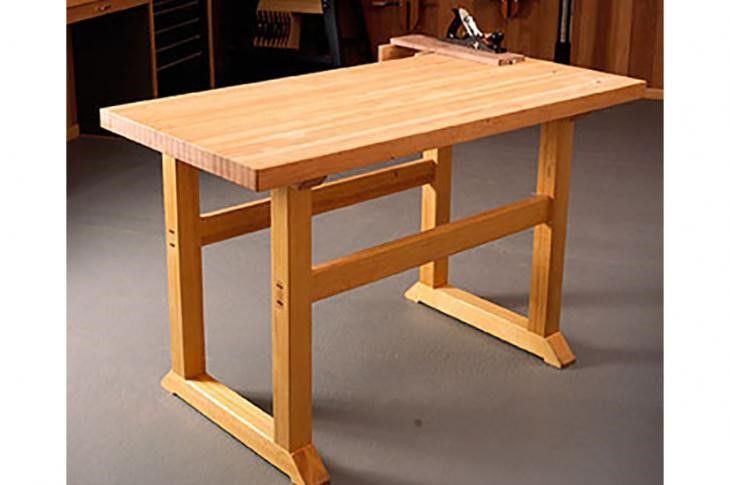
Scoresby Secondary College - Year 10 Handbook 2018

Senior Leadership Team 2017
Principal:                                                               Mrs Gail Major

Assistant Principal:                                                     Mr Chris Knight

Head of Senior School:                                                   Ms Ellen Sawyer

Year 10 Coordinator:                                                     Mr Tom Santos

Year 11 Coordinator:                                                     Mrs Sylvia Wood

Year 12 Coordinator:                                                     Ms Vicki Manioudakis

Head of Curriculum & Pedagogy:                                           Mrs Gail Major

Careers Advisor:                                                         Ms Bronwyn Haines

VCAL Coordinator:                                                        Mrs Gail Major / Mr Michael Meadows

VASS Administrator:                                                      Mr Andrew Young

Learning Area Leader—English:                                            Mrs Sarah Gerrard

Learning Area Leader—LOTE (French & Chinese) and Humanities:             Ms Su-nhi Kim

Learning Area Leader—Mathematics:                                        Ms Leanne Wilson

Learning Area Leader—Science:                                            Mr John Healy

Learning Area Leader—The Arts & Technology:                              Ms Erin O’Sullivan

Learning Area Leader—Health & Physical Education:                        Mrs Emma Morris
*The 2018 Senior School Team will be confirmed in Term 4.

Common Acronyms
ATAR                     Australia Tertiary Admission Rank

DET                      Department of Education and Training

EAL                      English as an Additional Language

MIPS                     Managed Individual Pathways

SAC                      School Assessed Coursework

SAT                      School Assessed Task

VCAA                     Victorian Curriculum and Assessment Authority

VCAL                     Victorian Certificate of Applied Learning

VCE                      Victorian Certificate of Education

VICTER                   Victorian Tertiary Entrance Requirement

                                                                Page 3
Scoresby Secondary College - Year 10 Handbook 2018

A Message from the Head of Senior School

Welcome to Year 10 in 2018. Over the next few weeks you will be making some important decisions
about your learning program for next year and, to some extent, for future years. It is important that you
read this guide, attend the information night, and seek further information from the suggested staff.
In Year 9, students undertake core subjects and selected electives, however at year 10 there is slightly
different model where students undertake six subjects per semester and have more periods per subject.
Year 10 will provide students with greater choice and they will need to be well prepared and informed to
make these choices.
As students enter into this next phase of their school life, they will be expected to take greater
responsibility for their own learning. This starts now as they consider the certificate (VCE or VCAL) they
would like to enrol, in as well as which subjects would be most appropriate for them. The options
available will provide opportunities for students to explore areas of interest, and possibly provide the
foundation for course/subject selection in later years.
It is for these reasons that students must make wise choices, based on carefully considered information
and advice from adults who are looking after their best interests. Don’t, for example, choose subjects
purely on the basis that your friends have chosen them – apart from the risk of not enjoying the work or
not succeeding in those subjects, there is no guarantee that you will be placed in the same classes
anyway! Year 10 provides an opportunity for students to explore and develop a deeper understanding of
a wide range of subjects.
The 2018 timetable will be created from the selections that students make; it is for this reason that
subject changes may not be possible unless there are exceptional circumstances. It is important that
students take every opportunity to talk over their choices with parents, teachers, careers advisor and
coordinators who want to advise and support individuals through this process.
Students’ personal and social development is also of great importance at this time and hopefully extra-
curricular activities, such as sporting events, productions and leadership and other activities will engage
students whilst at school.
I hope you enjoy taking this next step forward and facing the challenges ahead. Hopefully your time will
be rewarding as you continue your education at Scoresby Secondary College.

Ms Ellen Sawyer
Head of Senior School

                                                    Page 4
Scoresby Secondary College - Year 10 Handbook 2018
Year 10 Course Guidelines
Welcome to the Senior School at Scoresby Secondary College. This handbook contains information about selecting subjects for
Year 10 in 2018. Before deciding upon any subject of study, students and parents/guardians are advised to read this handbook
carefully and seek further clarification if required.
In order to cater for the needs of individuals, Scoresby Secondary College offers a more flexible curriculum structure for Year
10 students which provides:
A rigorous and in depth course/pathway counselling process that gives students and parents a thorough understanding
of their options at Year 10 and beyond;
A curriculum that gives students a choice of subjects they can select from to best cater for their needs, interests and
abilities;
A structure that provides the opportunity for access to some VCE or VET Unit 1 and 2 Units for suitably qualified Year 10
students. The decision about whether a student will be recommended for inclusion in this program will be made by the
Senior School Transition Team in consultation with the Year 9 Team to ensure the student has the best possible chance
at succeeding in any advanced placement.
Victorian Curriculum
The Victorian Curriculum sets out what every student should learn during their first eleven years of school (Prep-Year 10). The
curriculum is the common set of knowledge and skills required by students for life-long learning, social development and active
and informed citizenship.
The Victorian Curriculum incorporates the Australian Curriculum and reflects Victorian priorities and standards. Scoresby
Secondary College curriculum reflect the Victorian Curriculum Learning areas and Capabilities:
LEARNING AREAS CAPABILITIES
The Arts Critical and Creative Thinking
Dance Ethical
Drama Intercultural
Media Arts Personal and Social
Music
Visual Arts
Visual Communication Design
English
Health and Physical Education
The Humanities
Civics and Citizenship
Economics and Business
Geography
History
Languages
Mathematics
Science
Technologies
Design and Technologies
Digital Technologies
Page 5
Scoresby Secondary College - Year 10 Handbook 2018
Selecting a Year 10 Course
The timetable at Scoresby Secondary College operates on a two week cycle of 25 periods per week (ie: 50 periods per cycle). A
cycle program for a Year 10 student will comprise of English (9 periods) and Mathematics (9 periods) along four other subjects
(8 periods per cycle):
Students will be required to undertake three core subjects - English, Mathematics and General Science, while the remaining
subjects will be electives. The “elective subjects”, make up the balance of the student’s program and choices should be made
remembering the need to maintain a broad subject selection in order to retain potential for a range of future study options
and a clear pathway beyond Year 10. Subject selection should be made after consultation with parents /guardians and
teachers. Scoresby Secondary College reserves the right to refuse a course structure if it is felt to be limiting and/or
detrimental to a student’s future success or pathway.
Year 10 Course Structure
Compulsory Subjects Elective Choices
English The Arts (Semester length courses)
Mathematics Humanities (Semester length courses)
General Science (Semester length) Health and Physical Education (Semester length courses)
Digital Technology (Semester length courses)
Languages - French (Full year course)
Science (Semester length courses)
VCE (Full year courses)
Electives may be withdrawn if the number of students selecting that unit is below the minimum numbers to run. Note, some
other small classes may exist where the programs are eligible for additional external funding to resource them.
Victorian Certificate of Education (VCE)
Students who would like to undertake a VCE Units 1 and 2 subject at Year 10, should indicate their interest on the Course Selection
Sheet. All students considering this option should note these are full year courses. Access to a VCE is dependent on Year 9 individual
academic results and availability of places after Year 11 students have been accommodated. Students should be aware that a VCE
subject, if approved, will replace two of their elective choice units. For information about the range of VCE subjects offered at
Scoresby Secondary College can be found within the VCE section of this handbook.
Criteria for entry to a VCE subject at Year 10
Students are advised the following criteria will be used to assist in determining positions made available to Year 10 students to enter
a VCE subject in 2017:
Overall Year 9 results
Demonstrated well developed organisational ability and time management skills
Availability of the Unit of Study elective
Participation in course counselling with a member of the Senior School staff; (ie: Assistant Principal, Year Level Coordinator,
Careers Advisor)
The final access to a VCE Subject will be made after discussion between the Senior School Transition Team and the relevant teachers.
Page 6
Scoresby Secondary College - Year 10 Handbook 2018
Curriculum
Year 10 is an important year as students start a year of preparation for their studies in Year 11 and 12 and is therefore an
opportunity for students to experience a range of subjects which will help them make sensible choices for Year 11 & 12.
The following should be taken into account when choosing a Year 10 program:
Personal interests
Academic strengths
Tertiary and career pathways
Continuing Languages – there are many inherent benefits of studying a language other than English in Unit 3 & 4.
Year 10 is organised in semester units. There are four semesters of compulsory units including two units of English and two
units of Mathematics. The remaining eight semester units are elective and there are no restrictions on choices. For some
students it will include the opportunity to study a VCE subject. All subjects in Year 10 (excluding Foundation Mathematics)
provide an introduction to and preparation for VCE studies.
It is important that students make careful selections of elective subjects to provide both depth and breadth in their course,
allowing them to explore strengths, interests and preferences before committing to a subject in VCE.
KIOSC
KIOSC may also offer additional TAFE “Trade Tasters” in which students can participate.
Enhancement
Enhancement subjects are subjects which students complete a year ahead of normal, for example a Year 11 subject com-
pleted by a Year 10 student. Selection of students to all enhancement programs is rigorous. In order to enter an enhance-
ment subject, students must have strong results in all subjects.
Continuation in an enhancement subject is dependent on the student’s results in this subject, all other subjects and their
teacher’s recommendation. They will have demonstrated outstanding achievement in the study and all other subjects.
Students wishing to complete an enhancement subject (other than Maths and English) should select it as one of their elec-
tives. The list of students wishing to complete an enhancement subject will be thoroughly checked by subject teachers,
Learning Area Leaders and the sub school management team before the final list is announced prior to the end of the year.
Final selection is determined with the Principal, Assistant Principal, Head of Senior School or their delegate.
Work Experience
All Year 10 students are expected to complete a period of work experience in June.
In preparation for Work experience students will undertake the ‘Preparing for Work Experience’ activities delivered by the
Careers Coordinator. The Careers Coordinator can assist students to find their own work experience places. There is an
extensive database of employers available in the Careers Room for students to access. Students will be required to com-
plete the DET Safe@Work occupational health and safety program before they begin their work experience. During the
placement all students will be contacted by the College, either with a personal visit or a phone call, whilst in their place-
ment. Students will receive written assessment by the employer describing the employability skills they have demonstrated.
Participation by students in the Work Experience program is designed to assist them in planning their future pathway.
Page 7
Scoresby Secondary College - Year 10 Handbook 2018

What subjects are available to Year 10 students?

The table below states the subjects available for Year 10 students. More detailed unit descriptions are outlined in
the following pages.
There are a selection of Unit 1/2 (Year 11) subjects available to students.
*Final subjects offered are dependent upon student demand.

                                                    Core Subjects
 English                                  Mathematics                             Science
 English                                  Mathematics                             General Science

                                                  Elective Subjects
  The Arts                                 Health and Physical                   Humanities
  Art                                      Education                             Commerce
  Drama                                    Health                                Geography
  Media                                    Physical Education                    History
  Music

  Visual Communication and Design

 Languages                                Science                                Technology
 French                                   Biology & Psychology                   Design Technology - Materials

                                          Physics & Chemistry                    Food Studies

                                                                                 Digital Technology

                     VCE subjects available (refer to VCE section of Handbook)

 Drama                                  Physical Education                    Biology

 Media                                  Business Management                   Psychology

 Studio Arts (Art)                      History                               Food Studies

 Visual Communication                   Legal Studies                         Product and Design Technology

 Health & Human Development             LOTE - French

                                                        Page 8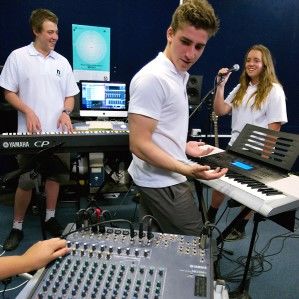
Scoresby Secondary College - Year 10 Handbook 2018
English
English encourages students to develop as critical, imaginative and creative thinkers. When we
speak, listen, read and write well, we are better equipped to understand, critique and appreciate
the world around us, including our Australian identity.
Learning Focus
Students produce, study and respond critically to spoken, written, and visual texts created for a
wide range of audiences and purposes. They learn to be critical and independent users of texts
and language appropriate to situations in school, in their daily lives and in the workplace.
Students read and respond to a range of classic, contemporary and popular texts. They develop a critical understanding of the
contemporary mass media. They explore and interpret different perspectives on complex issues, analysing how different texts
are likely to be interpreted by different groups.
Students use writing to explore different perspectives on complex and challenging issues. They develop their skills in writing
appropriately and effectively in a range of text types for a variety of purposes and audiences. They practise writing
expressively about thoughts, feelings, opinions and ideas, and constructing considered arguments to persuade others to share
a point of view.
Students listen to and are provided with opportunities to produce a range of spoken texts in a variety of formal and informal
situations characterised by complexity of purpose and subject matter.
In spoken, written, visual and electronic texts students apply their skills to planning and developing formal arguments about
complex issues, and use evidence systematically to justify points of view and develop logical conclusions.
Assessment Task
Writing tasks
Text Response
Oral Presentation
Examination
There is a Materials Cost of $15.00 for this course.
Page 9
Scoresby Secondary College - Year 10 Handbook 2018
Mathematics
Learning Focus
Year 10 Mathematics encapsulates a number of key areas of study.
In Number students connect the compound interest formula to repeated applications of simple
interest using appropriate digital technologies. Factorise algebraic expressions by taking out a
common algebraic factor. Simplify algebraic products and quotients using index laws. Apply the
four operations to simple algebraic fractions with numerical denominators. Expand binomial
products and factorise monic quadratic expressions using a variety of strategies. Substitute values into formulas to determine
an unknown. Solve problems involving linear equations, including those derived from formulas. Solve linear inequalities and
graph their solutions on a number line. Solve linear simultaneous equations, using algebraic and graphical techniques including
using digital technology. Solve problems involving parallel and perpendicular lines. Explore the connection between algebraic
and graphical representations of relations such as simple quadratics, circles and exponentials using digital technology as
appropriate. Solve linear equations involving simple algebraic fractions. Solve simple quadratic equations using a range of
strategies
In Statistics and Probability students describe the results of two- and three-step chance experiments, both with and without
replacements, assign probabilities to outcomes and determine probabilities of events. Investigate the concept of
independence. Use the language of ‘if ....then, ‘given’, ‘of’, ‘knowing that’ to investigate conditional statements and identify
common mistakes in interpreting such language. Determine quartiles and interquartile range. Construct and interpret box plots
and use them to compare data sets. Compare shapes of box plots to corresponding histograms and dot plots. Use scatter plots
to investigate and comment on relationships between two numerical variables. Investigate and describe bivariate numerical
data where the independent variable is time. Evaluate statistical reports in the media and other places by linking claims to
displays, statistics and representative data.
In Measurement and Geometry students solve problems involving surface area and volume for a range of prisms, cylinders and
composite solids. Formulate proofs involving congruent triangles and angle properties. Apply logical reasoning, including the
use of congruence and similarity, to proofs and numerical exercises involving plane shapes. Solve right-angled triangle
problems including those involving direction and angles of elevation and depression.
In Year 10 Mathematics, students complete practice and conceptual work and apply their knowledge to real life
situations. They regularly undertake problem solving tasks.
There is provision for students to opt for additional content within the mainstream structure.
Year 10 Assessment Tasks
Tests
Project work
Examination
There is a Materials Cost of $15.00 for this course.
Page 10Scoresby Secondary College - Year 10 Handbook 2018
Science
Year 10 Subjects
General Science (core)
Advanced Biology and Psychology (elective) - refer to science elective section
Advanced Physics and Chemistry (elective) - refer to science elective section
General Science
Learning Focus
Students will work to develop an understanding of how DNA and genes influence the transmission of heritable characteristics
from one generation to the next. They will examine how evolution through natural selection explains the diversity of living
things. They will review the evidence to support scientific theories such as evolution and how the scientific method is applied.
Students will examine the construction of the periodic table and how our understanding of atomic structure and elemental
properties lead to its development. They will examine how different types of chemical reactions are used to produce a wide
range of chemicals and how a variety of factors can influence the speed at which a reaction occurs.
Students will explore the universe, examining features such as galaxies, stars and solar systems. They examine the “Big Bang
Theory” to explore the origins of the universe. Students will examine how global systems such as the carbon cycle involve
complex interactions between the biosphere, lithosphere, hydrosphere and atmosphere.
Students will explore important physical laws such as the conservation of energy and examine how energy conservation can
be explained through energy transfer and transformations. Students will examine how the motion of large objects can be
described and predicted using physical laws such as Newton’s three laws of motion.
Students will explore how our scientific understanding is challenged, changed and refined over time through a process of
review by the scientific community. Students will examine how advances in scientific understanding often rely on
developments in technology and technological advances are often linked to scientific discoveries. Students will use their
scientific knowledge to evaluate whether they should accept claims, explanations or predictions in advertising and the media.
Students will examine how the values and needs of contemporary society can influence the focus of scientific research.
Students will learn to formulate questions or hypotheses that can be investigated scientifically.
Assessment Tasks
Practical reports
Research projects
Logbook
Tests
Examination
There is a Materials Cost of $15.00 for this course
Page 11Scoresby Secondary College - Year 10 Handbook 2018
The Arts
Learning Focus
Students design, make and present art works. They develop skills in making decisions
about creative ways of generating and implementing ideas. They reflect on their
experiences and observations, consider what they have learned about styles and forms
and explore issues with concrete and abstract concepts to generate ideas.
Students experiment with, select, vary combinations and manipulate in order to realise
their ideas, represent their observations and communicate their interpretations of issues and concepts. Students consider
others’ perspectives when seeking solutions. They develop a personal style and become more independent in their approach
to exploring, developing and refining art works.
Students experiment with imaginative and innovative ways of using traditional and contemporary skills, techniques and
processes and a variety of media, materials, equipment and technologies. Students consider purpose and presentation
context when they prepare and present art works to different audiences.
Students use evaluation and reflection on their arts experiences to improve the making and presenting of their arts
works. They maintain a record of their exploration, development and refinement of ideas, use of elements and principles and/
or conventions and application of techniques and processes when making and presenting their art works.
Students develop knowledge and understanding of key concepts, techniques, processes and practices associated with
particular art forms. They develop aesthetic and critical awareness through observation, research, discussion and analysis of
art works. They compare art works to consider similarities and differences in the styles, themes, intentions and aesthetic
qualities. They develop skills in presenting and justifying personal interpretations of, and opinions about, art works using
appropriate art language.
Year 10 Subjects
Art
Drama
Media
Music
Visual Communications
VCE Options
Drama—Units 1 & 2
Media - Units 1 & 2
Studio Art (Art) - Units 1 & 2
Visual Communication and Design – Units 1 & 2
Page 12Scoresby Secondary College - Year 10 Handbook 2018
The Arts
Art
Within Art students create visual art works that communicate, challenge and express their own and others’ ideas. They
develop perceptual and conceptual understanding, critical reasoning and practical skills through exploring and expanding
their understanding of their world, and other worlds. They learn about the role of the artist, craftsperson and designer
and their contribution to society, and the significance of the creative industries including the roles of critics, curators and
commentators. Students learn about the relationships between the viewer and artworks and how artworks can be
displayed to enhance meaning for the viewer.
Assessment Tasks:
Visual diary of development work, class notes and handouts
Folio of completed artworks
Art theory and analysis assignments
Examination
There is a Materials Cost of $70.00 for this course.
Drama
Students will study the characteristics of non-naturalism in depth focusing on dramatic storytelling. They will explore
and workshop non-naturalistic styles such as: Poor theatre, Epic Theatre and Theatre of Cruelty. Students will
experiment with non-naturalistic and naturalistic theatrical conventions and dramatic elements to create an ensemble
and/or solo performance around a stimulus that reflects personal, cultural and/or community experiences and stories.
During this elective students will build on reflective and critical thinking as they comment on the process of the creation
of their own work, the work of their peers and professional performances, how they are shaped and given meaning.
Students will see a live performance and reflect on the non-naturalistic conventions conveyed. Students will comment
on how the use of theatrical conventions, dramatic elements and stagecraft enhance a non-naturalistic performance.
Assessment Tasks:
Assignments
Performances
Examination
There is a Materials Cost of $40.00 for this course.
Media
Students participate in practical and theoretical learning about the construction and reception of media texts. They form
understanding of genre, stereotypes and methods through which media texts convey meaning. Through these
understandings students are able to plan for and build skills in a group short film tasks and construct individual
photographic representations. Students learn the value and importance of the media production process when creating
a media product, from planning through to realisation.
Assessment Tasks:
Film Genre Analysis
Assignments
Representation Photography
Examination
There is a Materials Cost of $45.00 for this course.
Page 13Scoresby Secondary College - Year 10 Handbook 2018
The Arts
Music
Students develop themselves in collaboration with original musical artists currently recording and managing their EP
launches in the Australian Music Industry.
Students will have the opportunity to develop a live set of material in collaboration with a practicing industry artist. Students
will learn from and perform alongside selected artists to enhance their creative and industry knowledge. Innovative song-
writing and arranging techniques will be explored to foster original and creative musical outcomes. Students will continue
exploring music production software and its ability to integrate and enhance live performances. The study of music theory
topics will continue to develop each artist’s musicianship.
Music industry studies will include making an impact as a musical artist in the industry and releasing/promoting your own
material.
Assessment Tasks:
Live performance
Musicianship
Composition / Arranging
Examination
There is a Materials Cost of $25.00 for this course.
Visual Communication
Visual Communication Design conveys ideas and information to an audience through visual language. In Visual
Communication Design students develop conceptual and aesthetic understandings about design solutions in the
world around them. The ideation and visualisation of ideas and observational drawing are the basis for researching
and developing visual communication designs. Design thinking which involves the application of creative, critical
and reflective techniques, is fundamental to learning in Visual Communication Design. Students learn about design,
and the role of the visual communication designer and their contribution to society.
Assessment Tasks:
Visual diary of development work, class notes and handouts
Design theory and analysis assignments
Examination
There is a Materials Cost of $70.00 for this course.
Page 14Scoresby Secondary College - Year 10 Handbook 2018
Health and Physical Education
Learning Focus
Students develop proficiency in a range of high-level movement and manipulative skills and
focus on ways of improving their performance during games, physical activities and sports.
Students investigate different components of fitness, how they vary between activities and
how they contribute to the wellbeing of people at different stages of their lives. They
investigate community facilities available for health and physical fitness activities, engage in a
variety of recreational and outdoor adventure activities, and develop skills, knowledge and
behaviours for enhancing safe participation in these activities. They develop, implement and evaluate a personal fitness plan.
Students describe social and cultural factors which influence the development of personal identity, including the development
of identity as it relates to gender. They discuss ways to express independence and rehearse strategies for being assertive when
protecting their own and others’ health.
Students discuss relationships. They explore issues related to sexuality and sexual health. They learn strategies to support
themselves and other young people experiencing difficulties in relationships. They investigate and evaluate policies and
practices in relation to sexual and racial harassment, homophobia and/or discrimination.
Students examine factors that impact on ones health and how they can impact in a positive or negative way.
Students explore assertiveness and resilience strategies. They learn to use simple health data to identify the major causes of
illness, injury and death in Australia. They investigate the health of a selected population group. Students also develop an
event for a target group base on the needs identified. They develop skills in working and leading a team.
Year 10 Subjects
Health Education
Physical Education
VCE Options
Health and Human Development – Units 1 & 2
Physical Education – Units 1 & 2
Page 15Scoresby Secondary College - Year 10 Handbook 2018
Health and Physical Education
Health Education
Health in Year 10 examines physical, social and mental health and personal development across various stages of the
lifespan. It focuses on safety and the identification of strategies to minimise harms associated with particular situations
or behaviours. Students compare the health of different population groups in Australia and consider reasons for the
differences. They examine the area around them and identify aspects that can be positive or negative for health.
Students work collabrotively to develop a health promoting activity for a focus group within the school community.
Topics include:
What is Health?
Categories of health
Health for different population groups
Factors effecting Health
Sexual Health
Common diseases & conditions
Development of a health promoting event
Assessment Tasks:
Workbook
Assignments
Topic Tests
Examination
There is a Materials Cost of $25.00 for this course.
Physical Education
Physical Education provides students with an introduction to topics cover in VCE Physical Education while also providing
students with the knowledge and skills required to lead an active lifestyle. Through the course students will undertake
both theory and practical lessons where they will put theoretical knowledge into practice.
Topics covered include:
Assessment of Physical Activity
Human Anatomy (skeletal, muscular, cardiovascular systems)
Energy Systems
Fitness Components
Biomechanical Principles
Training Principles and Methods
Assessment Tasks:
Workbook
Assignments
Practical work
Topic Tests
Examination
There is a Materials Cost of $35.00 for this course.
Page 16Scoresby Secondary College - Year 10 Handbook 2018
Humanities
Learning Focus
The Year 10 Humanities program at the college includes studies in Commerce, Geography and
History.
Year 10 Subjects
Commerce
Geography
History
VCE Options
Business Management - Unit s1 & 2
History - Units 1 & 2
Legal Studies - Units 1 & 2
Commerce
Learning Focus
Students learn how the Australian economy is managed, particularly within the international economic context. They
investigate the relationship between economic growth, ecological sustainability and the standard of living.
Students research economic problems (eg: whether tolls should be charged on freeways).
Running a small business
Personal finance
Consumer protection
Economics of the market
Politics for everyday living
Investigating economics
Law in Action
Assessment Tasks
Research assignment on a topical issue
Folio of exercises
Topic Test
Starting a Business Project
Integrated Project
Examination
There is a Materials Cost of $15.00 for this course.
Page 17Scoresby Secondary College - Year 10 Handbook 2018
Humanities
History - the Rise of Nazism
Learning Focus
After Germany’s defeat in World War 1 the country was faced with significant political, economic and social problems.
Moving forward from traditional imperial rule, Germany embarked on a new democratic era known as the Weimar
Republic. High unemployment, harsh living conditions and the impossibility to meet the unrealistic demands of the
Treaty of Versailles meant that the Weimar government was doomed to fail. From this turmoil emerged the charismatic
and unrelenting leader, Adolf Hitler, who not only changed German history, but the history of the whole world.
Throughout this semester, students will study a range of topics including the Treaty of Versailles, the Weimar Republic,
the rise of the Nazi Party, Nazi propaganda, the Holocaust, Germany at War and the aftermath of the 2 nd World War.
Assessment Tasks
Assignments
Folio of exercises
Topic Test
Examination
There is a Materials Cost of $15.00 for this course.
Page 18Scoresby Secondary College - Year 10 Handbook 2018
Humanities
Geography
Learning Focus
Students examine one geographical issues (population geography) and investigate the impact of population displacement
on the natural environment and global resources. Students use an inquiry-based approach to examine issues at the local,
national and global level.
Students research and compare two countries and the impact of environmental issues and/or conflict which has led to
population movement. They investigate the impact of projects, policies and strategies involved in assisting displaced
population during and after their re-settling in a new area.
Students apply geographical techniques (eg: mapping) to interpret environment changes throughtout a period of time.
This comprises the study of physical and human environments from a spatial perspective. It evaluates and explains the
changing patterns that shape human and natural environment. Topic focuses include population geography, standards of
living and environment degradation/sustainability. Students investigate and predict trends in the area of our ever moving
population and the reason for this. Students analyse global responses to these issues and propose ongoing strategies for
management.
Topics include:
Reasons for displacement (case studies)
Impacts/consequences of conflict and natural disasters on populations
Humanitarian Aid
Quality of life—comparisons
The world’s response—projects, policies and strategies
Assessment Tasks
Classwork
Tests
Assignment
Presentation
Examination
There is a Materials Cost of $15.00 for this course.
Page 19Scoresby Secondary College - Year 10 Handbook 2018
Languages - French
Learning Focus
Students compare and contrast aspects of life in the LOTE-speaking countries with those in
Australia and other countries, and identify similarities and differences.
Students learn to recognise their language proficiency and develop strategies for extending
their language skills, knowledge and cultural understanding.
Students interact to exchange information and opinions on topics such as leisure and relationships. By participating in
classroom discussion and by writing, students expand their knowledge of spoken and written conventions.
Students understand the cumulative nature of language learning. They are aware of the distinctive cultural, social and
linguistic nature of the study of language. They understand the need to extend and reinforce their learning in a sequential and
systematic way.
Students consider the audience, purpose and appropriate language for a range of listening, speaking, reading and writing
tasks. They use a range of communicative tools and ICT applications. They communicate in response to prompting and
experiment with language in new contexts.
Learning Activities
Students participate in general conversation, language drills, rotating pair work and role plays to develop their oral skills. They
identify information in listening and reading comprehension tasks and re-use this information to respond to questions or use it
in another context.
Students write letters, postcards and short texts, create posters and complete grammar exercises to demonstrate their writing
skills.
Students use ICT to reinforce their language skills, research cultural knowledge and create visual presentations.
Assessment Tasks
Oral performances – unscripted dialogue, role plays, conversation tasks, oral report
Listening Comprehension tasks
Reading Comprehension tasks
Writing folio – personal and informative pieces
Tests
Assignments
Examination
There is a Materials Cost of $20.00 for this course.
VCE Options
LOTE – French Units 1 & 2
Page 20Scoresby Secondary College - Year 10 Handbook 2018
Science
In addition to the general science, students are able to select up to two advanced science courses.
In these two advanced science electives, students will conduct a number of projects designed to
broaden their understanding of Chemistry and Physics or Biology and Psychology. Students have
the opportunity to engage in a number of extension projects focussed on two VCE areas of science
in each elective. The aim of these courses is to provide a deeper level of engagement for students
considering VCE science as a course selection.
VCE Options
Biology – Units 1 & 2
Psychology - Units 1 & 2
Advanced Biology and Psychology
This unit introduces students to the scientific fields of Biology and Psychology in order to assist them in making informed
decisions when considering VCE options. In Biology, students will explore the topics of Cells and Microscopes, Scientific
method and Evolution. Students are introduced to the many different branches of Psychology as well as the general
principles and methodologies that are typically applied across the entire field.
Assessment Tasks
Practical Investigation / Exercises
Assignments
Topic Tests
Examination
There is a Materials Cost of $15.00 for this course
Advanced Physics and Chemistry
In this subject, students conduct long investigations in topics that require knowledge from both scientific disciplines.
The course is designed to reflect real scientific endeavour which often requires collaboration from scientists from a wide
variety of disciplines.
Assessment Tasks
Reports
Forensic Investigation
Poster Presentation
Examination
There is a Materials Cost of $15.00 for this course
Page 21Scoresby Secondary College - Year 10 Handbook 2018
Technology
Learning Focus
Students specialise in an area of design and technology. Specialisations focus on materials such as
wood, metal, plastics, ceramics or food. Alternatively, specialisations focus on systems such as
computer- controlled systems, robotics and electronics or on areas such as foods or furniture.
Students work with design briefs and consider and investigate aspects of function and
aesthetics. They develop their capacity to model, assemble and disassemble products and systems
and communicate their ideas verbally and in written form, with two-dimensional drawing and three-dimensional modelling.
Students explore and assess the past and future consequences of technology on society, culture and the environment. Using
annotations and through discussion, students explain and justify design features and properties of selected materials/
ingredients, systems components and production techniques in relation to the design brief.
Students safely and efficiently construct products, models or prototypes to specifications and standards. They make decisions
about safety precautions and wear personal protective clothing and equipment. Students develop skills in using a range of
techniques, equipment and tools. They learn to use time and resources economically and try to minimise waste.
Students develop appropriate evaluation criteria and use them to assess design ideas, choice of materials/ingredients and/or
systems components, production techniques and/or performance of a system.
Year 10 Subjects
Design Technology - Materials
Food Studies
Digital Technology
VCE Options
Food Studies – Units 1 & 2
Design Technology - Units 1 & 2
Page 22Scoresby Secondary College - Year 10 Handbook 2018
Technology
Design Technology - Materials
Through the construction of self designed projects, students investigate the properties and characteristics of wood and
construction. Students study methods of joining and shaping this material. Students also study and practise the design
processes in their folios to develop ideas and working drawings for their serving trays, footstools and furniture projects
which along with joinery form the basis of their assessment tasks. Students learn to use the appropriate tools, how to
finish projects to a high standard and about safety.
Assessment Tasks
Folio & Workbook
Learning exercises – Practical productions
Assignments
Examination
There is a Materials Cost of $100.00 for this course
Food Studies
This unit extends the food preparation skills to prepare students for VCE Food Studies. Key focus areas for this unit are
personal hygiene, food safety, food labelling, sensory evaluation, food preservation techniques and food styling. Using
the design process students produce brandy snaps with packaging and design their own cheesecake. Students explore
complex preparation and preservation techniques and demonstrate safe food handling practices when selecting tools
and equipment.
Assessment Tasks
Folio & Workbook annotations
Record of Practical productions
Design Process Production Assignment
Examination
There is a Materials Cost of $95.00 for this course
Digital Technology
This unit introduces students to software applications and programming languages that provide solutions to Digital
Technology. Applications cover a range of Microsoft software applications and HTML.
Assessment Tasks
Folio of Classwork
Assignments
Examination
There is a Materials Cost of $20.00 for this course
Page 23Scoresby Secondary College - Year 10 Handbook 2018
VCE Requirements
Students wishing to undertake a Unit 1&2 subject while in Year 10 will need to understand the requirements of VCE and for
the selected subject will be considered a Year 11.
It is recommended that entry into Year 12 depends upon satisfactory completion (S) of eight units at Unit 1 and 2 level.
Attendance
At Scoresby Secondary College ALL students in Years 11 and 12 are required to attend College for a minimum of 90% of
scheduled classes to complete the year or the semester unit satisfactorily. Absences covered by medical certificates or
appropriate professional evidence are not normally deducted. Lateness to class will be treated on a pro-rata basis. If
students are ill and have missed the date for completion of coursework, a valid medical certificate should be provided
immediately on return to school before the student will be allowed to undertake coursework which has been missed. In Year
12, medical certificates must be handed to the Head of Senior School (Ms Ellen Sawyer). The College cannot accept medical
certificates where a doctor is unable to confirm that a student was ill on a particular day.
Assessment in the VCE is continuous and is based on completion of set tasks throughout the year. Students need to attend
regularly and may have their enrolment reviewed if attendance at the College is poor. Where a student has completed work
but there has been a substantive breach of attendance rules meaning that work cannot be authenticated and the College
therefore wishes to assign N to the unit, the College must assign N for one or more outcomes and thus the unit.
Absence on the day of a SAC
On the day of a School Assessed Coursework (SAC) task, each student is expected to attend every lesson on his/her timetable
prior to the SAC. If a student arrives significantly late to their first class or misses any class without a satisfactory reason as
outlined below, the student may receive a penalty.
If a student misses a timetabled class, the process they should follow to request that their absence be approved is one of
the student obtains a medical certificate prior to the SAC and it explains why they were absent for only part of the day
and that they are now fit to sit for the SAC
the student missed the class prior to the SAC with extenuating circumstances that can be verified (eg. Sick Bay) and
that did not allow the student to gain an advantage for study purposes
the Head of Senior School or Year Level Coordinator is contacted prior to the SAC, outlining reasons for an absence/
lateness, allowing them to provide advice.
In all instances, the onus is on the student to contact the College prior to the SAC to advise of their situation unless
there are extenuating circumstances. The Head of Senior School reserves the right to make decisions on a case-by-case
basis where there are extenuating circumstances.
Page 24Scoresby Secondary College - Year 10 Handbook 2018
VCE Requirements
Authentication of Students’ Work
The Victorian Curriculum and Assessment Authority (VCAA) states that:
Students must ensure that all unacknowledged work submitted for Coursework is genuinely their own.
Students must acknowledge all resources used, including:
text and source material
the name(s) and status of any person(s) who provided assistance and the type of assistance provided.
A student must not receive undue assistance from any other person in the preparation and submission of work.
Students must not submit the same piece of work for assessment more than once.
Students who knowingly assist other students in a breach of rules may be penalised.
Students must sign the Declaration of Authenticity at the time of submitting the completed task. This declaration states
that all unacknowledged work is the student’s own. Students must also sign a general declaration that they will observe
the rules and instructions for the VCE, and accept disciplinary provisions.
If a suspected breach of the rules about authentication occurs:
The parents/students concerned will be notified, and invited to appear before a panel. Parents cannot advocate on
behalf of students.
The student will be invited to present evidence to the panel in support of their case and given an opportunity to explain
their position.
The panel, after deliberation may impose the following penalties if a breach has been identified:
reprimand a student
or
give the student the opportunity to resubmit work if this can occur within the dates designated by the VCAA
or
refuse to accept that part of the work which infringes the rules and base a decision whether to award the outcome an N
or an S upon the remainder of the work
or
refuse to accept the work which infringes the rules and submit a score solely on an assessment of the remainder
or
refuse to accept any of the work if the infringement is judged to merit such a decision, in which case an N will be
awarded for the outcome.
Appeals
Students have a right of appeal to the VCAA against the decision of the Principal if a penalty has been imposed because of a
breach of the VCAA rules set out above.
There is no appeal to the VCAA in the case of a school refusing to accept the late submission of work.
Page 25Scoresby Secondary College - Year 10 Handbook 2018
VCE General Information
Special Provision
Arrangements are made to allow students who are experiencing significant hardship the maximum opportunity to
demonstrate both what they know and what they can do.
Students are eligible for Special Provision for school based assessment if their ability to demonstrate achievement is adversely
affected. Special Provision in Year 12 is determined by VCAA after application.
Students who are eligible for Special Provision are not exempt from meeting the requirements for satisfactory completion of
the VCE, or from being assessed against the outcomes for a study. Special Provision ensures that the most appropriate
arrangements and options are available for students whose learning, assessment programs and ability to demonstrate their
capabilities are affected by illness, impairment or personal circumstances.
Note: Special Provision will not be given to a student who has been absent from school or study for prolonged periods.
Where prolonged absence has occurred, it may be necessary to repeat the Unit.
A student who misreads an exam timetable will not be eligible to apply for Special Provision. Teacher absence and other
teacher-related difficulties are not acceptable grounds for consideration.
Enhancement
Enhancement subjects are subjects which students complete a year ahead of normal, for example, a Year 11 subject completed
by a Year 10 student. Selection of students to all enhancement subjects is rigorous. In order to enter an enhancement subject,
students must have strong results in all subjects, and high grade in the subjects directly related to the enhancement subject.
Continuation in an enhancement subject is dependent on the student’s results in this subject, all other subjects and their
teacher’s recommendation. They will have demonstrated outstanding achievement in the study and all other subjects.
Students wishing to complete an enhancement subject (other than Maths and English) should select it as one of their electives.
The list of students wishing to complete an enhancement subject will be thoroughly checked by subject teachers, Learning
Area Leaders and the sub school management team before the final list is announced prior to the end of the year.
Final selection is determined with the Principal, Assistant Principal, Head of Senior School or their delegate.
Page 26Scoresby Secondary College - Year 10 Handbook 2018
The Arts - Drama
Drama focuses on the creation and performance of characters and stories in
naturalistic and non-naturalistic ways. Students draw on a range of stimulus
material and play-making techniques to develop and present devised work.
Students also explore a range of performance styles and conventions, dramatic
elements and stagecraft. They use performance and expressive skills to explore
and develop role and character. The analyse the development of their own work
and performances by other drama practitioners.
There is a Materials Cost of $20 for this course for unit 1&2
Unit 1: Dramatic Storytelling Unit 2: Non-naturalistic Australian Drama
Students examine storytelling through the creation of solo Students create, present and analyse a performance
and/or ensemble devised performance/s. They based on a person, an event, an issue, a place, an
manipulate expressive skills in creation and presentation artwork, a text and/or an icon from a contemporary or
of characters, and develop awareness and understanding historical Australian context. Students use a range of
of how characters are portrayed in naturalistic and non- stimulus material in creating the performance and
naturalistic performance styles and document the examine non-naturalistic performance styles from a range
processes they use. They investigate a range of stimulus of contexts relevant to Australia and Australians.
material and learn about stagecraft, conventions and
Students analyse their own performance work as well as
performance styles from a range of contexts.
undertake the analysis of a performance of an Australian
Assessment Tasks work by other actors.
Journal Assessment Tasks
Written report/s Journal
Performance/s Performance/s
Examination Written report/s
Outcomes Examination
1. Devise and document solo and/or ensemble drama Outcomes
work/s based on experiences and/or stories
1. Devise and document the processes used to create
2. Perform a devised drama work/s to an audience a solo or ensemble non-naturalistic performance
work
3. Analyse the development and performance to an
audience of their devised work 2. Present a performance of a devised non-
naturalistic work to an audience
4. Analyse the portrayal of stories and characters in a
drama performance by professional or other 3. Analyse the creation, development and
drama practitioners performance to an audience for their non-
naturalistic devised work
4. Analyse a performance of an Australian drama
work
Page 27Scoresby Secondary College - Year 10 Handbook 2018
The Arts - Media
The media is everywhere. We use it every day and it is such an important part of our lives. However, we
generally don’t think about how we learned to understand it and what its impact might be. Does the media
influence us? Definitely! Is this influence a good thing or a bad thing? Both! Is it important to learn about
how and why the media works as it does? Absolutely! How can we do it? Enrol in the challenging, thought
provoking and entertaining VCE Media Studies course.
There is a Materials Cost of $60 for this course for unit 1&2
Unit 1: Media Forms, Representations and Australian Unit 2: Narrative Across Media Forms
Stories
Students further develop an understanding of the
concept of narrative in media products and forms in
Students develop an understanding of audiences and the
different contexts. Students analyse the influence of
core concepts underpinning the construction or
developments in media technologies on individuals and
representations and meaning in different media forms.
society, examining in a range of media forms the effects
They explore media codes and conventions and the
of media convergence and hybridisation on the design,
construction of meaning in media products.
production and distribution of narratives in the media
Students analyse how representations, narrative and and audience engagement consumption and reception.
media codes and conventions contribute to the Assessment Tasks
construction of the media realities audiences engage with
Oral Presentation
and read. Students gain an understanding of audiences as
producers and consumers of media products. Production Design plan
Assessment Tasks Film production
Analysis of representations Australian Media organisation analysis
Production Design plan Examination
Film Production Outcomes
New Media Research task 1. Analyse the intentions of media creators and
producers and the influences of narratives on the
Examination
audience in different media forms.
Outcomes
2. Apply the media production process to create,
1. Explain how media representations in a range of develop and construct narratives.
media products and forms, and from different
3. Discuss the influence of new media technologies
periods of time, locations and contexts, are
on society, audiences, the individual, media
constructed, distributed, engaged with, consumed
industries and institutions.
and read by audiences.
2. Use the media production process to design,
produce and evaluate media representations for
specified audiences in a range of media forms.
3. Analyse how the structural features of Australian
fictional and non-fictional narratives in tow or
more media forms engage, and are consumed and
read by, audiences.
Page 28Scoresby Secondary College - Year 10 Handbook 2018
The Arts - Studio Art
Students develop an understanding of the way artists work in a range of cultures and periods of time,
the artists’ perceptions, beliefs and actions and their relationship with the viewer. Student research
focuses on critical, reflective and creative thinking, the visual analysis of artworks and the
investigation of how artists have interpreted sources of inspiration and influences in their art making.
Students examine how artists develop their practice and have used materials, techniques and
processes to create aesthetic qualities in artworks. They study how artists have developed style and explored their cultural
identity in their artwork. Students use this knowledge to inform their own studio practice and to support art making. Visiting a
variety of art exhibition spaces is integral to the student’s artistic and creative development. Students also consider the ways in
which artists work to develop and resolve artworks, including their use of inspiration and their creative process. Students
research aspects of the art industry including the presentation, conservation and marketing of artworks.
There is a Materials Cost of $75 for this course for unit 1&2
Unit 1: Studio inspiration and techniques Unit 2: Studio exploration and concepts
Students focus on developing an individual understanding Focus on establishing and using a studio practice to
of the stages of studio practice and learn how to explore,
produce artworks. Students explore and develop ideas
develop, refine, resolve and present artworks. Students
and subject matter, create aesthetic qualities and record
explore sources of inspiration, research artistic influences,
the development of the work in a visual diary as part of
develop individual ideas and explore a range of materials
and techniques related to specific art forms. Students also the studio process. Through the study of art movements
research and analyse the ways in which artists from and styles, students begin to understand the use of other
different times and cultures have developed their studio artists’ work in the making of new artworks. Students also
practice to interpret and express ideas, source inspiration develop skills in the visual analysis of artworks. Artworks
and apply materials and techniques in artworks. The made by artists from different times and cultures are
exhibition of artworks is integral. analysed to understand developments in studio practice.
Assessment Areas: Using a range of art periods, movements or styles,
Folio of developmental work exploring ideas and students develop a broader knowledge about the history
2D and 3D materials, techniques and processes. of art. Analysis is used to understand the artists’ ideas
Folio of finished artworks. and how they have created aesthetic qualities and subject
matter.
Written analysis of artworks
Assessment Tasks:
Examination
Outcomes: The production of a developmental folio and
finished artworks
1. Identify sources of inspiration and artistic Written analysis of artworks from different times
influences and outline individual ideas, art forms and cultures.
and aesthetic qualities, and translate these into Examination
visual language.
Outcomes:
2. Produce at least one finished artwork and
progressively record the development of their 1. Develop an individual exploration proposal to form
studio practice, conveying individual ideas through the basis of a studio process, and from this
the exploration of materials and techniques in the produce and document a variety of potential
selected art form/s. directions in a visual diary for at least one artwork.
3. Discuss the artistic practice of artists from different 2. Compare a range of historical and contemporary
times and cultures, their sources of inspiration, art periods, styles or movements, and analyse the
materials and techniques for at least two artworks ways in which artists communicate ideas, develop
by each artist. styles and demonstrate aesthetic qualities in
artworks.
Page 29You can also read


