Year 5/6 Spring 2021 - Bellfield Primary School
←
→
Page content transcription
If your browser does not render page correctly, please read the page content below
Year 5/6 Spring 2021
Immersion
        SPARCS                 Experiences         Presentation of Learning

Carousel learning day     KS2—Battle of Hastings   Completed Bayeux tapestry
                          on the field
Whole School Art
exhibition - Recreating
Leonid Afremov (Flames
of Happiness)
National Curriculum Links History                                                                                                      Historians

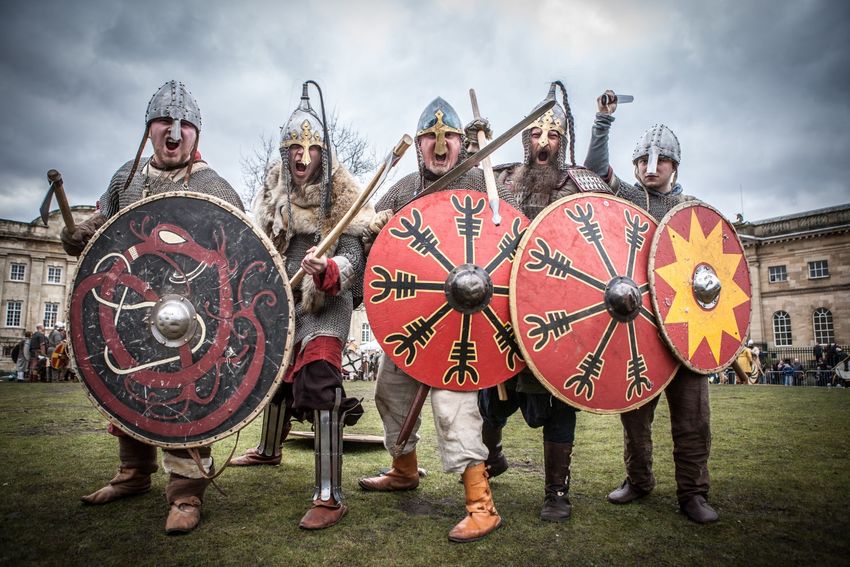
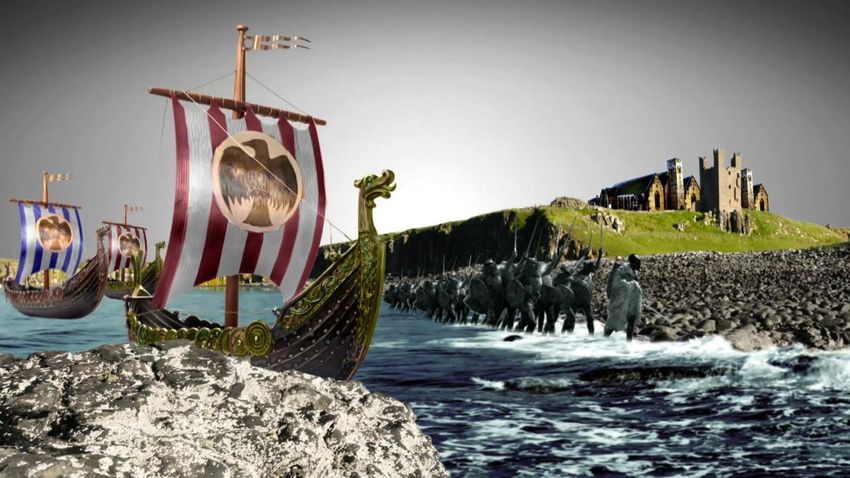
NC4: I can learn about the Viking and Anglo-Saxon struggle for the Kingdom of England                                    As Historians we will we will be studying the Viking reign from 800-1066 ending with the
                                                                                                                          Battle of Hastings. We will study their way of life, where they settled and look at the
to the time of Edward the Confessor
                                                                                                                        changes in life over the vast period of time. We will use sources of evidence to explore the
                                                                                                                          past and talk about the impact this period of time had on Britain. We will learn what is
                                                                                                                        meant by ’invaders’ and settlers’ in the context of the Anglo-Saxons and Vikings from this
                                                                                                                                                           historic period of time.

                                                                                       History Final Outcome
                                                                                  To write a balanced argument.
                                                     Statement – The Vikings were just the same as the Anglo-Saxons and nothing but vicious raiders.

                                                 Skill                                                          Skill                                                          Skill

                     To be able place Vikings periods of rule in Britain in           To understand who the Vikings were and why they               To understand the struggle between the Anglo-Saxons
                                     chronological order,                                             invaded Britain.                                   and the Vikings for the Kingdom of England.

                           Knowledge                           Vocabulary                  Knowledge                          Vocabulary                   Knowledge                          Vocabulary

                       To know that Vikings              period, decade, century,      To know different                    invade, settle,          To know the period of          battle, kingdoms (names),
                      invaded Britain in the               chronological, date,        history periods of               overcrowded, farmland,        history were Anglo-            kings, united, defence,
                      past. This was a time                     significant          Britain. To understand               native land, riches         Saxons crossed the              land, coincide, unify,
                     period for our country.                                           that Vikings didn't                                          Vikings. To know England            cause and affect.
                       To be able to order                                           originate from Britain.                                         hasn't always been one
                             dates.                                                                                                                      united country.

                                                 Skill                                                          Skill                                                          Skill

                     To understand the achievements of the Vikings and               Housing—To identify continuity and change in housing            Society—To identify the social structures of the Vi-
                         their impact nationally and internationally.                     from Anglo-Saxon Britain to Viking Britain.                      kings and compare to the Anglo-Saxons.

                                                                                       Food - To identify the types of food available to            Beliefs/Religion—To identify the changes in religious
                                                                                           Vikings and through Viking exploration.                         beliefs throughout the Vikings period.

                           Knowledge                           Vocabulary                  Knowledge                          Vocabulary                   Knowledge                          Vocabulary

                      To know that Vikings                  Sources, primary,          To know the Vikings              Derive, deduce, sources,    To know the Vikings did-           Derive, deduce, sources,
                    weren't just ‘vicious’. To             secondary, accuracy,      didn't live the same way              continuity, change,      n't live the same way we               continuity, change,
                     know that things were                      reliability           we did or eat the same            concept, community, life-     did or believe in the               concept, community,
                    learnt from the Vikings.                                         sorts of food using the                 style, classes               Christian God.               lifestyle, classes, beliefs
                                                                                          same methods.
Humanities                                                                                                                     Assessment

         History                                               End of Lower KS2                                                                                   End of Upper KS2
To investigate and interpret    • Handle and use Primary and Secondary sources to find out about a period studied in or-         • Handle and use a range of source and begin to identify Primary and Secondary sources.
the past                        der to make comparisons and find out information about the past                                  Start to compare accounts of events form using different sources.
                                • Use a range of sources/evidence to build up a picture of the past, beginning to evaluate       • Bring knowledge together to construct an informed response, giving some reasons for dif-
                                the usefulness of the source/s                                                                   ferent versions of events
                                • Describe different accounts of a historical event, explaining the reasons why the ac-          • Analyse a wide range of evidence in order to justify claims about the past
                                counts may differ                                                                                • Be aware that different evidence will lead to different conclusions, some evidence/authors
                                • Suggest causes and consequences of some of the main events and changes in history              may be persuading or giving a specific viewpoint
                                Ask questions such as: What was (historical focus) like at an earlier time in history? How       • Understand that no single source of evidence gives the full answer to questions
                                    has (historical focus) changed for stayed the same during or since the period studied?       • Ask questions such as: How has (historical focus) developed or continued over time? Evalu-
                                    What caused the (historical focus) and what consequences of (historical focus) can we        ate why some things have remained the same over several periods of history. How did political
                                    still see today in Britain? Why was such an event see as significant after the time?         changes in a period result in social and cultural changes? What were the short and long-term
                                    Why is this period in history seen as significant to Britain now?                            consequences of (historical focus or event)?

To build an overview of world   • Give a broad overview of life in Britain from ancient until medieval times                     • Compare some of the times studied with those of the other areas of interest around the
history                         • Describe the social, ethnic, cultural or religious diversity of past society                   world
                                • Describe the characteristic features of the past, including ideas, beliefs, attitudes and      • Describe the social, ethnic, cultural or religious diversity of past society
                                experiences of men, women and children                                                           • Describe the characteristic features of the past, including ideas, beliefs, attitudes and ex-
                                                                                                                                 periences of men, women and children.
To understand chronology        • Sequence events on a time line using dates, for people and events beyond living memory         • Place key events from current period of study on a time line and make comparisons within or
                                • Understand the concept of change over time, representing this, along with evidence, on a       across anther period of time. Ensure time lines use relevant and more complex dates. Summa-
                                time line                                                                                        rise and evaluate the timeline.
                                • Use dates and terms to describe events                                                         Describe the main changes in a period of history (using terms such as: social, religious, politi-
                                                                                                                                 cal, technological and cultural)
                                                                                                                                 • Identify periods of rapid change in history and contrast them with times of relatively lit-
                                                                                                                                 tle change
                                                                                                                                 • Understand the concepts of continuity and change over time, representing them, along
                                                                                                                                 with evidence, on a time line
                                                                                                                                 • Use dates and terms accurately in describing events
To communicate historically     • Use appropriate historical vocabulary when talking about and writing about the past. Vo-       • Use appropriate historical vocabulary when talking about and writing about the past. Vocab-
                                cabulary to include: dates, time period, era, change, chronology, similar, difference, signif-   ulary to include: dates, time period, era, chronology, continuity, change, century, decade, lega-
                                icant, impact, interpret, affect, cause, generation, proceed, decade and source                  cy, significant, impact, interpret, affect, cause, generation, proceed, decade, source, unify,
                                • Use literacy and numeracy to high standard when communicating information about the            attribute, perceive, media, relevant, primary, secondary and successor
                                past                                                                                             • Use literacy and numeracy to an exceptional standard when communicating information
                                                                                                                                 about the past
                                                                                                                                 • Use original and creative ways to present information and ideas

Vocabulary                      Understand and use:                                                                              Understand and use:
                                period, significant, impact, affect, cause, perceive, successor, generation, decade, similar,    period, significant, impact, affect, cause, perceive, successor, generation, decade, similar,
                                difference, interpret, proceed, media, concept, (into writing) duration, considerable, rel-      difference, interpret, proceed, media, concept, duration, considerable, relevant, document,
                                evant, document, legislate, sources, impact, justify, derive, deduce, primary, sec-              legislate, sources, impact, justify, derive, deduce, primary, secondary (into writing) coincide,
                                ondary                                                                                           unify, concept,
National Curriculum Links Geography Geographers
NC2: name and locate counties and cities of the UK and identify human and physical characteristics, and As Geographers we will be studying human and physical geography. We will look at why the
land-use patterns; and understand how some of these aspects have changed over time. Vikings settled where they did in Britain; taking into account the Human and Physical
NC5: describe/understand key aspects of human geography; including types of settlement and land use features. We will plot on a map where the Vikings settled and look at the land-use.
Geography Final Outcome
Produce a detail map explaining invasions and
settlement locations of the Vikings
Skill Skill Skill
To name and locate the countries of the UK and To name and locate the Kingdoms of England during the To identify the physical (and human) features of the
surrounding seas. Vikings period. UK and how they have changed over time.
Knowledge Vocabulary Knowledge Vocabulary Knowledge Vocabulary
To know England is part globe, England, Ireland, To know that the UK change, unity, location, To know that physical community, human,
of the UK. To know we Scotland, wales, UK,, wasn't always divided in community, distance, features change due to physical, terrain,
live on a island Great Britain, Sea names, the same way. To know locate. land changes and environment, population.
surrounded by water. island, England was united during weather. To know human
the Viking period. features are added based
on current needs.
Skill Skill Skill
To identify the land use within the UK and understand To describe and understand types of settlement. To explain how different settlement types have
how and why this has changed over time. changed over time.
Knowledge Vocabulary Knowledge Vocabulary Knowledge Vocabulary
To know that the use of population, rural and To know that different hamlet, village, town and To know that settlements needs, location, features,
the land has changed urban, farming, community structures city. community, have developed and grown hamlet, village, town and
though different periods agriculture, arable, dairy, form different types of population. as the population and city. community, popula-
of history due to the sheep, forestry settlements. need for housing has tion.
needs of the communi- increased.
ties.Humanities Assessment
Geography End of Lower KS2 End of Upper KS2
To investigate places • Ask and answer geographical questions about the physical and human characteristics • Collect and analyse information to draw clear conclusions about locations
of a location being studied • Identify and describe how the physical features affect human activity
• Use maps, atlases, globes and digital/computer mapping to locate countries and de- • Use different types of fieldwork (random and systematic) to observe, measure and
scribe features record the human and physical features in the local area. Record the results in a range
• Use fieldwork to observe and record the human and physical features in the local area of ways.
using a range of methods including sketch maps, plans and graphs and digital technolo- • Analyse and give views on the effectiveness of different geographical representa-
gies tions of a location (such as aerial images compared with maps and topological maps)
• Use a range of resources to identify the key physical and human features of a loca- • Name and locate some of the countries and cities of the world and their identifying
tion human and physical characteristics, including hills, mountains, rivers, key topographical
• Name and locate counties and cities of the United Kingdom, geographical regions and features and land-use patterns; and understand how some of these aspects have
their identifying human and physical characteristics, including hills, mountains, cities, changed over time.
rivers, key topographical features and land-use patterns; and understand how some of • Name and locate the countries of North and South America and identify their main
these aspects have changed over time physical and human characteristics
• Name and locate the countries of Europe and identify their main physical and hu-
man characteristics
To investigate patterns • Name and locate the Equator, Northern Hemisphere, Southern Hemisphere, the Trop- • Identify and describe the geographical significance of latitude, longitude, Equa-
ics of Cancer and Capricorn, Arctic and Antarctic Circle and date time zones. Describe tor, Northern Hemisphere, Southern Hemisphere, the Tropics of Cancer and Capricorn,
some of the characteristics of these areas Arctic and Antarctic Circle, and time zones (including day and night).
• Describe geographical similarities and differences between countries • Understand some of the reasons for geographical similarities and differences be-
• Describe how the locality of the school has changed over time tween countries
• Describe how locations around the world are changing and explain some of the reasons
for change
• Describe geographical diversity across the world
Geographical content • Describe key aspects of: • Describe/understand key aspects of:
• physical geography, including: rivers, mountains, volcanoes and earthquakes and the • physical geography, including: climate zones, biomes and vegetation belts, riv-
water cycle. ers, mountains, volcanoes and earthquakes and the water cycle
• human geography, including: settlements and land use • human geography, including: settlements, land use, economic activity including
• Use the eight points of a compass, four-figure grid references, symbols and key to trade links, and the distribution of natural resources including energy, food, minerals
communicate knowledge of the United Kingdom and the wider world and water supplies
• Use the eight points of a compass, four-figure grid references, symbols and a key
Use geographical vocabulary: to communicate knowledge of the United Kingdom and the world
process, globe, erode, cycle, decline, symbol, feature, label, locate, annual, • Create maps of locations identifying patterns (such as: land use, climate zones, popu-
resource, perspective, survey, route, orient, co-ordinate, community, envi- lation densities, height of land).
ronment Use geographical vocabulary:
economy, currency, migrate, process, globe, erode, cycle, decline, symbol,
feature, label, locate, annual, isolate, phenomenon, resource, perspective,
survey, route, orient, co-ordinate, community, environmentNational Curriculum Links Art and Design
NC1: I can create sketch books to record their observations and use them to review and As Artists we will look at using a range of media to create our own Viking ship
revisit ideas collage pictures. We will look at collage and talk about how to create a collage
NC2: I can improve their mastery of art and design techniques, including drawing, painting picture. We will investigate and evaluate a range of media and find which ones
and sculpture with a range of materials (for example, pencil, charcoal, paint, clay) are fit for purpose. We will sketch our designs first and look at the intricate
details of Viking boats.
Art and Design Final Outcome
Create an A3 Viking Boat that reflects the style and materials
used at that time.
Skill Skill Skill
I can create original pieces that show a range of I can mix textures (rough and smooth, plain and pat- I can use a variety of techniques to add interesting
influences and styles. terned) for a purpose. effects (e.g. reflections, shadows, direction of sketch)
Material exploration Sketch
Research
Knowledge Vocabulary Knowledge Vocabulary Knowledge Vocabulary
To know that art is Inspiration, purpose, How the aesthetics of a Rough, smooth, plain, To know that different Reflection, shadow,
Art usually inspired by
others, beliefs or
culture, belief product can be changed patterned, aesthetic, sketching techniques can direction of sketch, light,
through the combination purpose, texture add different interesting dark, mood, tone
experiences. of colours and textures. effects to a drawing.
Skill Skill Skill
I can annotate sketches, showing in depth my ideas and I can consider how to combine visual and tactile I can evaluate my own and peers work and act upon
how these are conveyed to a specific audience qualities to create artwork feedback.
Design Make Evaluate
Knowledge Vocabulary Knowledge Vocabulary Knowledge Vocabulary
How to communicate Annotate, communicate, How the aesthetics of a 2D, 3D, texture, textile, To know feedback is es- Warm/cold feedback,
ideas through drawings, ideas, share, feedback, product can be changed rough, smooth, patterned, sential for improvement, suggestions,
labels, sketches and sketch through the combination plain, aesthetic, purpose To understand how harsh improvements,
diagrams. of colours and textures. feedback can be difficult recommendations,
to take (kind and helpful
words).National Curriculum Links Design and Technology Design and Technologists
NC2: I can generate, develop and communicate their ideas through discussion, annotated sketches, cross-sectional/exploded diagrams, proto- As designers we will study the Bayeux Tapestry and talk about the techniques used.
types, We will create our own tapestry using sewing. We will design our own section (based
NC3: I can select from and use a wider range of tools/equipment to perform practical tasks (eg. cutting, shaping, joining and finishing) accu-
on piece given) and then stitch it using a range of applique techniques, including
rately
NC4: I can select from and use a wider range of materials/components, including textiles, according to their functional properties and aes- sewing. We will attach all pieces together and use to display our own tapestry.
thetic qualities
NC6: I can evaluate their ideas and products against their own design criteria and consider the views of others to improve their work Year 5 —Running and cross stitch outline
NC7: I can select from and use a wider range of tools and equipment to perform practical tasks [for example, cutting, shaping, joining and Year 6—Running and cross stitch and in fill.
finishing], accurately
NC8: I can select from and use a wider range of materials and components, including construction materials and textiles, according to their
functional properties and aesthetic qualities
Design Technology Final Outcome
To contribute to the recreation of the Bayeux Tapestry created
by KS2.
Skill Skill Skill
I can create innovative designs (sketching) I can show an understanding of the qualities I can thread a needle and tie off the embroi-
that recreate an existing piece of art work. of materials to choose appropriate tools to dery thread when changing colour.
sketch and outline, cut and shape
Research
Knowledge Vocabulary Knowledge Vocabulary Knowledge Vocabulary
To know the purpose of a Audience, product, pur- To know why materials Texture, sustainability, The thread needs to be Knot, twist, wind, thread,
model, to know who the pose, design, intention are selected for differ- colour, appeal, thread, through the needle to eye, taut,
audience is, consider the ent purpose, words to aida create the stitch. To be
cost of the product. describe the sensory as- able to do it safely.
pect of materials.
Skill Skill Skill
I can use a combination of I can make products through stages making I can evaluatethe design of products
stitching techniques (such as back stitch for continual refinements. to suggest improvements to the
seams and running stitch to attach user experience.
decoration) to create a product.
Knowledge Vocabulary Knowledge Vocabulary Knowledge Vocabulary
To know that some em- Cross, running, in-fill, To know that all products Plan, design, sketch, out- To know feedback is es- Evaluate, discuss, test,
broidery is done on ma- outline, single, double are made through stages, line, label, shade, blend sential for improvement, fit for purpose, suitabil-
chines and some by hand, To know that changes can To understand how harsh ity, durability, consumer,
to know there is a variety be made as problems feedback can be difficult audience.
of stitches for different arise. to take (kind and helpful
purposes. words).Art and Design Technology Assessment
DT End of Lower KS2 End of Upper KS2
Art End of Lower KS2 End of Upper KS2 To master Materials • Cut materials accurately and • Cut materials with precision and refine
practical safely by selecting appropriate the finish with appropriate tools (such
Collage Select and arrange a range of Mix textures (rough and smooth,
skills tools. as sanding wood after cutting or a more
materials for a striking effect plain and patterned) for a • Measure and mark out to the precise scissor cut after roughly cutting
Use coiling, overlapping, tessellation purpose nearest millimetre. out a shape).
and mosaic to create a visually Consider how to combine visual • Apply appropriate cutting and • Show an understanding of the qualities
shaping techniques that include of materials to choose appropriate tools
pleasing piece of artwork and tactile qualities to cre-
cuts within the perimeter of the to cut and shape
ate artwork material
Use mosaic techniques • Select appropriate joining
Drawing Use different hardness’s of pencils Choose a style of drawing suita- techniques.
to show line, tone and texture ble for the work and time Textiles • Understand the need for a • Create objects (such as a cushion)
Annotate sketches to explain and period seam allowance. that employ a seam allowance.
• Join textiles with appropriate • Join textiles with a combination of
elaborate ideas, showing more Annotate sketches, showing in
stitching. stitching techniques (such as back stitch
awareness of an audience depth their ideas and how • Select the most appropriate for seams and running stitch to attach
Use shading to show light and these are conveyed to a spe- techniques to decorate textiles. decoration).
shadow. cific audience • Use the qualities of materials to cre-
ate suitable visual and tactile effects in
Use hatching and cross hatching to
the decoration of textiles (such as a
show tone and texture soft decoration for comfort on a cush-
ion).
Construction • Choose suitable techniques to • Develop a range of practical skills to
construct products or to repair create products (such as cutting, drilling
Textiles Stitch materials that have been Show precision in techniques items. and screwing, nailing, gluing, filing and
shaped Choose from a range of • Strengthen materials using sanding).
suitable techniques.
Use basic cross stitch and back stitching techniques.
To design, make, evalu- • Design with purpose by identi- • Design with the user in mind, motivat-
stitch Combine previously learned ate and improve fying opportunities to design. ed by the service a product will offer
Colour fabric through a range of techniques to create pieces. • Make products by working ef- (rather than simply for profit).
techniques ficiently (such as by carefully • Make products through stages
Create patterns using weaving
selecting materials). of prototypes, making continual refine-
Art Replicate some of the techniques Explain in detail (including using • Refine work and techniques as ments.
Appreciation work progresses, continually • Ensure products have a high quality
used by notable/famous artists their own sketches where
evaluating the product design. finish, using art skills where appropriate.
Create original pieces that are appropriate) about the style • Use software to design and • Use prototypes, cross-sectional dia-
influenced by studies of artists of some notable/famous art- represent product designs. grams and computer aided designs to
studied ists represent designs.
To take inspiration from • Identify some of the great de- • Combine elements of design from a
Select appropriate techniques when Talk about and explain how the
design throughout history signers in all of the areas of range of inspirational designers through-
creating pieces influenced by work of those studied was study (including pioneers out history, giving reasons for choices.
artists studied influential in horticultural techniques) to • Create innovative designs that improve
Create original pieces that show generate ideas for designs. upon existing products.
• Improve upon existing designs, • Evaluate the design of products so as
a range of influences and
giving reasons for choices. to suggest improvements to the us-
styles • Disassemble products to un- er experience.
derstand how they work.National Curriculum Links Music
Charanga
NC1: play and perform in solo and ensemble contexts, using their voices and playing musi- Year5: Spring A: Living on a Prayer (As musicians we will learn to sing a classic rock inspired song. We will learn
cal instruments with increasing accuracy, fluency, control and expression about the style of rock and where is originated)
NC2: improvise and compose music for a range of purposes using the inter-related dimen- Year5: Spring A: Classroom Jazz 1 (As musicians we will learn a 3 note and 5 note swing Jazz rift and use this
sions of music to improvise our own jazz inspired music)
NC3: listen with attention to detail and recall sounds with increasing aural memory Year6: Spring B: Happy (As musicians we will learn to sing a modern pop song and learn about the origins of pop
NC4: use and understand staff and other musical notations music. We will learn to sing in unison and listen and appraise a range of pop songs)
NC5: appreciate and understand a wide range of high-quality live and recorded music drawn Year6: Spring B: Classroom Jazz 2 (As musicians we will learn Bacharach Anorak and Meet the Blues and learn
from different traditions and from great composers and musicians about the origins of jazz through improvisation around these 2 tunes)
NC6: develop an understanding of the history of music.
Music Final Outcome
Perform song
(using voices and instruments)
Skill Skill Skill
I can play and perform in solo and ensemble contexts, using I can improvise and compose music using the inter-related I can listen with attention to detail and recall sounds with
their voice and playing musical instruments with increasing dimensions of music separately and in combination increasing aural memory
accuracy, control and expression
Knowledge Vocabulary Knowledge Vocabulary Knowledge Vocabulary
Accuracy To know the difference Compose To know haw to Memorise
To know how to follow Control between improvising and
Improvise mirror playing Listening
sheet music to play an following sheet music. instruments.
instrument Expression Unison Attention
To know how to compose To be able to pick out
To know how to create Ensemble a successful piece of Cannon Detail
differences in piece
to expression with a Solo music.
of music.
range of instruments.
InstrumentMusic Assessment
Music End of Lower KS2 End of Upper KS2
Perform • Sing a range of songs from memory with accurate pitch • Sing or play from memory with confidence.
• Keep a simple part within a group when singing and playing either the glockenspiel or • Perform solos or as part of an ensemble.
violin (Yr4) • Sing or play expressively and in tune.
• Use breathing accurately to control the voice when singing a song • Hold a part when singing within a round, knowing that you need to listen to the whole
• Play notes accurately on a glockenspiel or violin (Yr4) group to sing in time
• Start to show awareness of an audience and how to perform with greater control for • Sing in harmony
others • Sustain a drone or a melodic ostinato to accompany singing
• Perform to an audience with controlled breathing (voice) and skilful playing
(instrument)
Compose • Compose and perform melodic songs as part of a group and solo • Create songs with verses and a chorus
• Create repeated patterns using a glockenspiel and Violin (yr4) and a range of un-tuned • Create rhythmic patterns that show an awareness of timbre and duration
instruments • Combine melody, rhythm and chords to create a short musical piece
• Create accompaniments for familiar tunes • Select a range of musical elements to create a desired effect based on a theme
• Choose, order, combine and control sounds to create an effect for a specified theme • Use a melodic ostinato, based on the pentatonic scale to create a short piece
Transcribe • Devise their own non-standard symbols to indicate when to play and when to rest • Use standard musical notation of crotchet, minim and semibreve to indicate how
• Recognise the notes EGBDF and FACE on the musical stave many beats to play when composing
• Recognise the symbols for a minim, crotchet and semibreve and say how many beats • Read and create notes on the musical stave
they represent • Understand the purpose of the treble and bass clefs
• Understand the # (sharp) and ♭ (flat) symbols
• Use and understand simple time signatures
Describing music • Talk about the terms: duration, timbre, pitch, beat, tempo, texture and use of silence • Use a wide range of musical vocabulary to describe and appraise a range of musical
when describing music genres. Vocabulary will include: pitch, dynamics, tempo, timbre, texture, lyrics, melody,
• Evaluate music to identify areas of likes and dislikes solo, round, harmonies, ensemble accompaniment, drone and ostinato.
• Discuss the effect layers of sound have on the overall mood and feeling of pieces of • Describe how lyrics can reflect the cultural and or social context of music and how
music from a range of genres music has changed over time
Musical Genres RnB, Rap, Pop, Hip Hop, Soul, Gospel, Reggae and Disco Classic Rock, Old School Hip Hop, Reggae, Jazz, Pop Ballard, Classical, Soul, Rhythm and
Blues and Folk RockNational Curriculum Links PE
NC1: I can use running, jumping, throwing and catching in isolation and in combination In Spring A, both Year 5 and 6 will participate in boxing training delivered by an external
NC2: I can play competitive games, modified where appropriate and apply basic principles suitable for at- coach. They will learn the rules of the sport and how to compete in a match safely.
tacking and defending
NC5: I can take part in outdoor and adventurous activity challenges both individually and within a team In Spring B, Year 5 and 6 will have another external coach teaching cricket. They will learn
how to bowl, hit and field. They will work towards having a cricket match between the year
groups.
Skill Skill Skill
I can understand stance and guard and the importance I can understand the delivery of the core shots in I can understand the various boxing defences
Final Outcome
of base which allows correct movement. boxing and the various and number combinations.
To achieve the award
in boxing.
Knowledge Vocabulary Knowledge Vocabulary Knowledge Vocabulary
To know that stance is base, stand, guard, To know that there are 6 rotation, extension, recoil To understand the Push away, step across,
the base and all the footwork, extend, different punches and importance and need for side-step, wedge block,
movement comes from correct how they are different, defence and the elbow block
the stance. different types.
Skill Skill Skill
I can link together a range of skills and use in I can collaborate with a team to choose, use and adapt I can use a range of tactics for attacking and
Final Outcome
combination rules in games defending in the role of bowler, batter and fielder
To have a cricket
match between Year 5
Knowledge Vocabulary Knowledge Vocabulary Knowledge Vocabulary
and 6.
To know good hand eye co overarm, wicket, bowl, to know how to work as a sportsmanship, teamwork, To know how to work as a sportsmanship, teamwork,
-ordination and know how stumps, field team, choose sides and overarm, wicket, bowl, team, choose sides and overarm, wicket, bowl,
to catch a ball. play games showing stumps, field play games showing stumps, field
sportsmanship sportsmanshipPE Assessment
PE End of Lower KS2 End of Upper KS2
Games Throw and catch with control and accuracy. Choose and combine techniques in game situations (running, throwing, catching, passing, jumping and kicking, etc.).
Strike a ball and field with control. Use teamwork skills to score points, baskets etc.
Use knowledge of tactics to develop a strategy for a game. Use control to hit and field balls successfully.
Understand the basic rules to play a game. Understand different strokes in racket games and use them at appropriate times.
Maintain possession of a ball (with, e.g. feet, a hockey Field, defend and attack tactically by understanding the rules and what works effectively.
stick or hands). Understand the principles of fair play and how we should act in a range of sporting situations.
Show ability to work together as a team and in some situa- Lead others in game and in the coaching of games to younger children.
tions, lead a team.
Dance Plan, perform and repeat sequences. Create dance sequences that show expression and creativity linked to a central theme.
Move in a way appropriate to the sequence. Perform expressively and hold a precise and strong body posture.
Sequence movements together that begin to show under- Appraise successful dance routines, thinking about how the
standing of an idea or a theme. Plan to perform with high energy, slow grace or other themes and maintain this throughout a piece.
Change speed and levels within a performance. Perform complex moves that combine strength and stamina gained through gymnastics activities (such as cartwheels or handstands)
Develop physical strength and suppleness by practising
more complex moves and stretching.
Gymnastics Plan a sequence of actions. Create complex and well-executed sequences that include a full range of movements including: travelling, balances, swinging, springing,
Refine movements into sequences. flight, vaults, inversions, rotations, bending, stretching and twisting
Show changes of direction, speed and level during a per- Plan and hold shapes that express an idea or meaning.
formance. Include in a sequence set pieces, choosing the most appropriate linking elements.
Travel in a variety of ways, including flight, by transfer- Vary speed, direction, level and body rotation during floor performances.
ring weight to generate power in movements. Practise and refine the gymnastic techniques used in performances (listed above).
Swing and hang from equipment safely (using hands). Use equipment to vault and to swing (remaining upright).
Swimming Swim between 25 and 50 metres unaided.
Use more than one stroke and coordinate breathing as appropriate for the stroke being used.
Coordinate leg and arm movements.
Swim at the surface and below the water.
Athletics Sprint over a short distance using correct technique. Combine sprinting with low hurdles.
Begin to run over longer distances and think about pacing. Understand how to pace themselves over a range of distances.
Develop different throws for different situations e.g. Throw accurately in a range of ways while understanding how to improve technique.
throwing underarm for accuracy. Show control in take off and landings when jumping.
Develop standing jumps and five step jumps focusing on Compete with others and keep track of personal best performances, setting targets for improvement.
landing correctly and safely.
Understand the concept of personal bests and how to de-
velop and improve them.
Outdoor Choose equipment to complete OAA activities safely and successfully.
Adventurous Identify possible risks and ways to manage them, asking for and listening carefully to expert advice.
Understand how teamwork will help to develop the success of the team.
Communicate effectively with each other to address problems and overcome challenges.
Remain positive even in the most challenging circumstances.
Use a range of devices in order to orientate themselves.
Quickly assess changing conditions and adapt plans to ensure safety comes first.
Spring 1 Spring 2
Year 5 - Boxing Year 5 - Cricket
Year 6 - Boxing Year 6 - CricketYear 5
National Curriculum Links Computing
NC10 - understand computer networks including the internet; how they can provide multiple Computing
services, such as the world wide web; and the opportunities they offer for communication and
collaboration In this unit we will look at how computers effect peoples everyday life. We will look at how to stay
NC11 - use search technologies effectively, appreciate how results are selected and ranked, and be safe when using the internet and the damages using technology can have on the body, mentally and
discerning in evaluating digital content physically. We will use a range of media content within a powerpoint to present our work.
NC12 - select, use and combine a variety of software (including internet services) on a range of
digital devices to design and create a range of programs, systems and content that accomplish
given goals, including collecting, analysing, evaluating and presenting data and information
NC13 - use technology safely, respectfully and responsibly; recognise acceptable/unacceptable
behaviour; identify a range of ways to report concerns about content and contact.
Skill Skill Skill
I can evaluate information online. I can evaluate own content against success criteria a I can build a website with a range of multimedia
(Digital Literacy) and make improvements accordingly.
(Information Technology)
content.
(Computer Science)
To make a PowerPoint
presentation explaining
how computers impact
peoples lives.
Knowledge Vocabulary Knowledge Vocabulary Knowledge Vocabulary
Understand how the Media Understand that a Audience Know how to add links to Embed
media shapes ideas Data website needs to be fit Embed a website URL
online Online identity for the target audience URL Link
Misinformation Link Understand what a Media
Understand different Disinformation Understand what makes a Media footer is and how to add Footer
actions which make Hoax successful website Footer details about the
people feel negative Sceptical - visually appealing Evaluate website’s developers
online Fake news - easy to navigate User feedback
Understand the Clickbait - range of multimedia Know how to add
difference between Cyber bullying - informative multimedia content to a
mis-information and website
dis-information
Working knowledge of
Understand that not the app ‘TouchApp
everything online is creator’ or ‘Google Sites’.
honest, accurate or legal
Know some online content
targets people to gain
money or information
illegallyYear 6
National Curriculum Links Computing
Computing
NC10 - understand computer networks including the internet; how they can provide multiple ser- In this unit, we will learn the importance of keeping information private and how to spot spam and
vices, such as the world wide web; and the opportunities they offer for communication and collabo- fake emails. We will learn about things on the internet that are there to get us to click on them
ration (click bait). We will look at online bullying and how to deal with anything we see or hear that is
NC11 - use search technologies effectively, appreciate how results are selected and ranked, and be
discerning in evaluating digital content inappropriate.
NC12 - select, use and combine a variety of software (including internet services) on a range of dig-
ital devices to design and create a range of programs, systems and content that accomplish given
goals, including collecting, analysing, evaluating and presenting data and information
Skill Skill Skill
Evaluate content against success criteria and To be able to identify potential online.
To create a mixed-media
Work independently on a topic to build and create a
make improvements accordingly. (Information website with pages, titles, images, videos and text. To stay safe online at all times.
technology) Recognise an audience when designing and creating a
website. (Computer Science) project showing the
range of different
issues that could be
encountered online, as
Knowledge
Understand how
Vocabulary
Media
Knowledge Vocabulary
Embed
Knowledge Vocabulary well as advising how to
prevent them from
Know how to code To know what a
media can be pre- Data to create a website URL safe website looks Online identity
sented using com- Online identity page. Link like. Misinformation
puters and Ipads. Misinformation
Disinformation
Understand who Media
Footer
To understand Disinformation
Copyright
happening
Be able to clearly will be looking at what happens to
express what is Hoax Feedback Privacy
their website and information when it
effective and what Sceptical Coding Cyber-bullying
make it appropriate is entered online
is ineffective when Fake news HTML Cybercrime
for that audience. To explain what
present infor- Clickbait Electronic footprint
Cyber bullying To recognise issues copyright is and Information
mation. in written code and why it is in place. Data
debug these issues. To explain safe Firewall
procedure for when
connecting to the
internet.
To understand
what should be
done when a web-
site makes you feel
uncomfortable.Other Curriculum
Elements
Enterprise drivers RE
Year 5 - Hindu Beliefs/Easter
Children will make and sell a range of How can Brahman be everywhere and in
Easter crafts to parents. We will earn how everything?
to budget, price up, bulk buy and price to Did God intend Jesus to be crucified?
make a profit on the items we sell.
Year 6 - Beliefs and Meaning/Easter
Is anything ever eternal?
Is Christianity still a strong religion 200 years
after Jesus was on Earth?
British Values and SMSC Jigsaw PSHE
British Values and SMSC
Throughout the year children will have the Spring 1— Dreams and Goals
opportunity to listen to others opinions,
beliefs and thoughts. Through the study of Spring 2— Healthy Me
the Vikings the children will discover how
the British Values have changed over a
period of time.You can also read


