YEAR 7 INFORMATION HANDBOOK 2019 - Hastings Secondary College
←
→
Page content transcription
If your browser does not render page correctly, please read the page content below
YEAR 7 INFORMATION HANDBOOK 2019

CONTENTS
A message from the Hastings Secondary College Campus Principal      2
A message from the Hastings Secondary College Executive Principal   3
A message from your Year Advisers                                   4
Voluntary School Contributions and Fees                             5
School Map                                                          6
Where is Everything                                                 7/8
School Wide Special Activities Program                              9
Outline of Compulsory Subjects                                      10
English                                                             10
Mathematics                                                         11
Human Society and Its Environment History                           12
Geography                                                           12
Science                                                             13
Music / Visual Arts                                                 14
Personal Development, Health and Physical Education                 15
Technological and Applied Studies                                   15
Creative Industries Academy                                         16
Sport Academy                                                       17
Science Technology Engineering and Maths (STEM) Academy             18
Personal Interest Projects – Food Design                            19
Personal Interest Projects – Farmers’ Market                        20
Personal Interest Projects – Computing Technologies                 21
Personal Interest Porjects – Build and Design                       22
School Library                                                      23
Clontarf Academy                                                    24
School Sport                                                        25
School Excursion / School Camp / Bell Times                         26
College Ongoing Attitude to Learning (COAL) Score                   27
Merit System / Student Wellbeing                                    28
Student Support / Classes / Discipline Policy                       29
Subject Requirements / Events during 2018                           30
On the First Day                                                    31

                                            1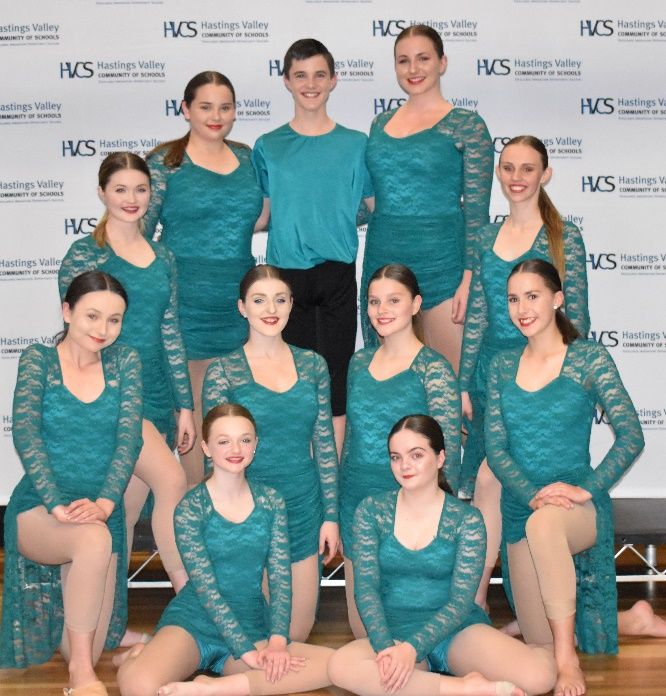
Welcome to Port Macquarie Campus, a proud member of the Hastings
                                Valley Community of Schools. We welcome you warmly and trust that you
                                will enjoy your time with us.

                                Our values are reflected in our Positive Behaviour for Learning. They are:
                                Proud, Motivated, Honest and Safe. These are the qualities we strive to
                                instil in the young men and women who attend our school and this school
                                aims to develop all students to become responsible and active participants
                                in our community at school and beyond its perimeter. Your responsibility
                                is to try to do your best in everything you do whether it is in the classroom,
                                in cultural undertakings such as art, music and drama, in the sporting arena
                                or in leadership.

The school also offers many avenues to support students through their high school years. There are a
number of key personnel who can offer assistance to both students and parents. These include year
advisors, faculty head teachers, deputy principals, girl’s supervisor and counsellors.

There are many opportunities for you to take up. Some of you have chosen acadamies and some personal
interest projects. There are many other opportunities in sport and in cultural activities such as choir, bands,
public speaking. Voluntary work is an important part of our school life. Take up the opportunities offered
to you.

Once again, welcome to Port Macquarie Campus. We look forward to developing a close relationship with
you and your family and continuing the great work your primary schools have done in helping you to achieve
your best academically, culturally, in sports and as a valuable and productive member of our school.

My advice to you and your parents is to contact the school if you have any concerns. We will do our best
to address them. Talk to us as soon as an issue arises.

The Year 7 Camp is in Term 1. It is a great opportunity to meet students who have come from other primary
schools and to have fun.

Geoffrey Duck
Relieving Principal
Port Macquarie Campus

                                                      2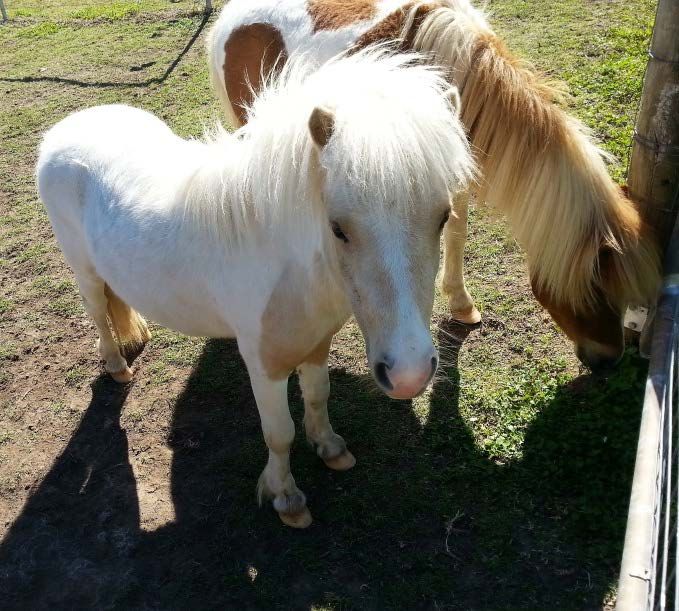
Hastings Secondary College came into existence through the successful amalgamation of two local Year 7 to 12
campuses, Westport Campus and Port Macquarie Campus. The College actively promotes its values of excellence,
innovation, opportunity and success by providing first class programs supported by highly qualified teachers. Students
at Hastings Secondary College learn in an optimum educational environment to realise their true potential. Dedicated
teachers actively build a caring culture throughout the College that places students at the centre of College life,
supported by innovative, contemporary approaches to education and learning.

Academies and PIPs

Students in Years 7 and 8 are offered the opportunity to apply for a place in one of our three Academies in Creative
Industries, Sport and STEM. All three Academies are available at each Campus and are an opportunity for students
with special talents and skills to be extended and further developed in these important areas.

Students not involved in one of the Academies will be well catered for by choosing from a range of Personal Interest
Project (PIP) classes, based on special interest areas such as History, Hospitality, Agriculture, Film Making and
Computing. These new courses are designed to increase student choice in their learning, develop interests and better
engage students in their secondary education.

Hastings Secondary College develops students as successful learners, confident and creative individuals and active and
informed citizens of both their local and the global community. Our main focus is on high expectations, excellence in
learning and a commitment to delivering opportunities for all students to succeed in a safe and nurturing environment.

Curriculum

Hastings Secondary College offers an extensive curriculum program as well as high quality, comprehensive extra-
curricular opportunities. Our students excel in creative and performing arts, sport, community volunteering and
fundraising, leadership and academic extension. Caring and experienced staff enable your child to access specialist
classes, programs and events across the College.

Hastings Valley Community of Schools

Hastings Secondary College is the provider of secondary education within the Hastings Valley Community of Schools
(HVCS). This is a Kindergarten to Year 12 collaboration of the public schools in the Hastings Valley and comprises
Hastings Public School, Lake Cathie Public School, Port Macquarie Public School, Tacking Point Public School, Telegraph
Point Public School and Westport Public School. The Community of Schools is led by the nine principals who are
dedicated to the provision of high quality public education for all students of the Hastings Valley.

Educational Partnerships

Hastings Secondary College students benefit from strong links and educational partnerships with Charles Sturt
University, University of Newcastle, University of New South Wales Rural Medical School, TAFE, Port Macquarie
Community College, Mid Coast Connect, local Service Clubs, Birpai Local Area Lands Council, the Clontarf Foundation,
Port Macquarie Hastings Council and private businesses.

As a new College, our main focus is commitment to innovation. We continually refine existing practice and innovate
with new approaches to educational delivery to achieve excellence, enhance learning opportunities and build success
for all students.

Willem Holvast -Executive Principal

                                                          3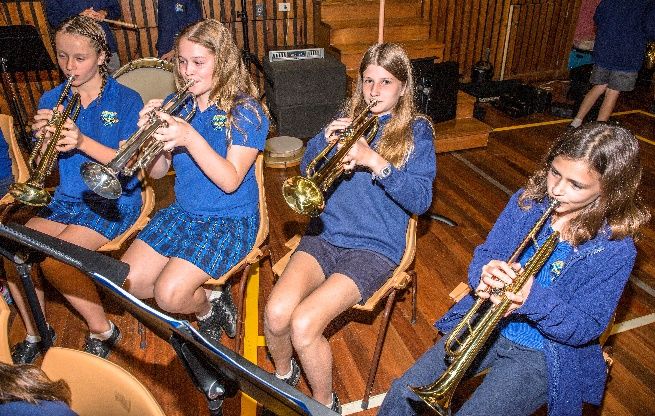
Dear Parents/Guardians

Welcome to Hastings Secondary College Port Macquarie Campus Year 7 2019. We are looking forward to
meeting you all and developing our relationships over the next six years of schooling. Our role put simply is
to do our best to encourage the wellbeing of all our students as they navigate secondary school. The
important partnership between teachers, parents, students and the Year Advisors is vital to maximise
learning and personal growth.

As a year group we are hoping to develop a strong team atmosphere with us as your coaches or mentors.
Behind this team are some values that we will have as cornerstones of our interactions with other people
in our school environment. Those values are integrity, honesty and respect. With those essential and wide
ranging values reinforced, we aim to maximise learning, prepare students as for the outside world and help
them to grow into responsible and tolerant young people.

Within the Campus and College structure, there are so many exciting opportunities for students to involve
themselves in to add so much to their overall experience. These include sport, cultural pursuits like band,
dancing and productions, academic competitions and community events like Iron Man volunteering. Get
involved.

Also to further enhance the well being of students we have a number of Year 10 mentors who will be
assisting with orientation and in organised events to support the Year 7 students. They will hopefully act
like big brothers and sisters and be a smiling and friendly face as well as helping coordinate activities and
be a trusted person Year 7 students can go to for advice or support.

Finally all parents are invited to keep the lines of communication open with us so we can understand all the
influences on students well being from home and keep you informed about issues that may be affecting
learning or student welfare. If you have any concerns please feel free to contact us on
Michael.sanderson@det.nsw.edu.au or colin.rogers@det.nsw.edu.au or call on 65 831844.

Regards

Mr Michael Sanderson and Mr Colin Rogers

                                                     4
The school endeavours to provide the best education for its students. However, Government grants
provided to assist with text books, equipment, maintenance and Special Education fall short of the school’s
needs.

Many items have to be purchased from funds raised by the school and P&C including library books,
magazine subscriptions, duplicating paper, first aid needs, gardening and grounds equipment, office
supplies, general maintenance items, sporting equipment and computers. Voluntary contributions charged
by the school contribute towards the provision of these essential services and equipment for your children.

Voluntary Contributions: which includes membership of the P&C Association are –

 2019 All Years          $50 per student

Should any family feel that they are unable to pay this contribution per term, this can be paid in fortnightly
or monthly instalments.

Elective Course Fees

Some subjects carry specific fees to cover the cost of materials purchased on behalf of he students and used
directly by them. These fees are listed in this booklet.

All contributions and fees are payable at the school office where cash register receipts will be issued. These
need to be shown to course teachers to verify payment so that tuition may be continued.

EFTPOS facilities are available through the school office. Credit card payments from Mastercard, Visa or
Bankcard are available through the school office and can also be paid over the phone by calling 6583 1844.

                                                      5
A BLOCK-GROUND FLOOR                 A BLOCK-TOP FLOOR
Executive Principal’s Office         English Staffroom
Principal’s Office                   English Rooms
Deputy’s Offices                     Textiles & Design Rooms
Front Office
Staff Common Room
Sick Bay
Hospitality & Cooking Rooms
B BLOCK-GROUND FLOOR                 B BLOCK-TOP FLOOR
History Staffroom                    Social Sciences / HSIE Staffroom
Science Laboratories                 CAPA Staffroom
History Rooms                        HSIE Rooms
                                     Art Rooms
                                     Music Rooms
C BLOCK- GROUND FLOOR                C BLOCK-TOP FLOOR
Performing Arts Centre               HSIE Rooms
Toilets                              PD/H/PE Rooms
Living Skills Classroom              LOTE Staffroom
                                     School Counsellors’ Office
L BLOCK- GROUND FLOOR                L BLOCK-TOP FLOOR
Mathematics Staffroom                Careers Advisor Office
Mathematics Rooms                    Computer Rooms
Science Staffroom                    Mathematics rooms
Science Laboratories                 Library
Marine Studies Area                  Language Room + Junior IM Room
LEARNING CENTRE                      T BLOCK
Learning and Support Staffroom       TAS Staffroom
Connected Classroom                  Metal & Woodwork Rooms
Study Area                           Computer Rooms
Toilets                              HT Welfare Office
Dark Room
D BLOCK                              MPC (Multi-purpose Centre)
PD/H/PE Staffroom                    Uniform Shop
Senior Study Area
Living Skills Classroom

                                 6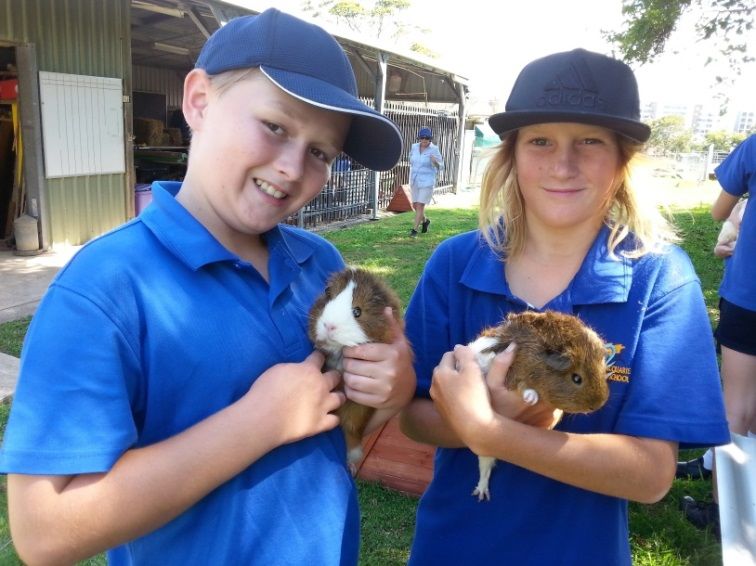
WHERE IS EVERYTHING?
   GROUND FLOOR

         7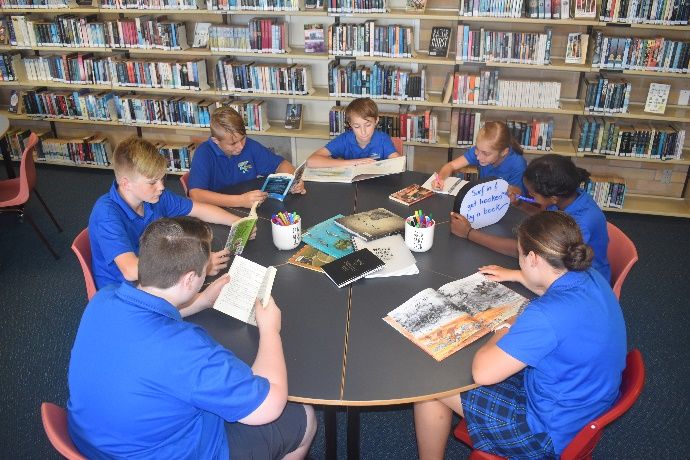
8

School Wide Special Activity Programs

Excursions/incursions                                   Dance
Instrumental Music Program:                             School Performance
-Choir                                                  School Sports
-College Concert Band                                   Overseas Excursions
-Stage Band                                             Debating
-Boys Vocal Ensemble                                    Public Speaking
                                                        Robotics
                                                        Tournament of the Minds

                                                  Year 7

English                                                 Art
Mathematics                                             Music
Science                                                 PD/H/PE
History                                                 Sport
Geography                                               Technology

Stage 4 Personalised Learning Programs:
Acadamies:                                              Personal Interest Projects:
Creative Industries                                     Food Design
Sport                                                   Farmers Market

STEM (Science, Technology, Engineering & Maths)         Computing Technologies

                                                        Design & Build

                                                    9
Next year you will begin Stage 4 and start some of the mandatory requirements for the award of
a Record of School Achievement (ROSA) at the end of Year 10. These courses are Art, Languages
other than English, Music and Technological and Applied Studies. Some of these have course fees
which are compulsory as those fees are used to purchase material and equipment used in the
course.
In Years 7 and 8, students communicate with peers, teachers, individuals, groups and community
members in a range of face-to-face and online/virtual environments. They experience learning in
both familiar and unfamiliar contexts that relate to the school curriculum, local community,
regional and global contexts.
Students engage with a variety of texts for enjoyment. They listen to, read, view, interpret,
evaluate and perform a range of spoken, written and multimodal texts in which the primary
purpose is aesthetic, as well as texts designed to inform and persuade. These include various types
of media texts including newspapers, magazines and digital texts, early adolescent novels, non-
fiction, poetry and dramatic performances. Students develop their understanding of how texts,
including media texts, are influenced by context, purpose and audience.
The range of literary texts for Foundation to Year 10 comprises Australian literature, including the
oral narrative traditions of Aboriginal and Torres Strait Islander peoples, as well as the
contemporary literature of these two cultural groups, and classic and contemporary world
literature, including texts from and about Asia.
Literary texts that support and extend students in Years 7 and 8 as independent readers are drawn
from a range of realistic, fantasy, speculative fiction and historical genres and involve some
challenging and unpredictable plot sequences and a range of non-stereotypical characters. These
texts explore themes of interpersonal relationships and ethical dilemmas within real-world and
fictional settings and represent a variety of perspectives. Informative texts present technical and
content information from various sources about specialised topics. Text structures are more
complex, including chapters, headings and subheadings, tables of contents, indexes and glossaries.
Language features include successive complex sentences with embedded clauses, unfamiliar
technical vocabulary, figurative and rhetorical language, and information supported by various
types of graphics presented in visual form.
Students create a range of imaginative, informative and persuasive types of texts, for example narratives,
procedures, performances, reports and discussions, and are beginning to create literary analyses and
transformations of texts.
FEE: NIL
10Stage 4 Mathematics in Years 7 and 8 is a single course leading to Stages 5.1, 5.2 and 5.3 courses in Years
9 and 10. It is presented in 3 strands with working mathematically embedded in all strands.
Working Mathematically
Number and Measurement and Statistics and
Algebra Geometry Probability
Students are initially banded in Year 7. This may change throughout the year and students can be placed in an
appropriate class based upon their performance in common tests and examinations. Each class covers the same
course, however, the depth of study for some content is adjusted to suit the ability to the specific needs of the
class.
All students will require the following:
ruler
protractor
pair of compasses
Scientific Calculator, as pictured.
Students are required to have a scientific calculator with them at all times.
All common assessments have a non-calculator and calculator component. Students who
do not have their own calculator put themselves at a significant disadvantage.
Calculators are available from the school canteen and are appropriate for use right
through to Year 12 and beyond. With proper care such calculators have an indefinite life
span.
FEE: NIL
11Year 7 History will look at questions like: What is History? Why do we study and preserve our
Heritage? And what may we learn from the study of our past? Students will have the opportunity
to trace their family tree and look at their immediate and past history as well as to select people
and / or historical sites to study from our environment.
Topic options for detailed study include the Ancient Societies of Egypt, Greece and Ancient Rome
and Aboriginal society.
History concentrates upon the medieval world, North American Indians and the indigenous people
of Australia and Southern Africa. Other studies may include the Tudors, the Stuarts and the French
Revolution. Students will also look at one significant group, event or force which has helped shape
the modern world.
FEE: NIL
The aim of Geography is to stimulate students’ interest in and engagement with the world.
Through geographical inquiry they develop an understanding of the interactions between people,
places and environments across a range of scales in order to become informed, responsible and
active citizens.
In years 7 and 8 students in Geography will study:
Landscapes and Landforms
Water in the World
Place and Liveability
Interconnections
FEE: NIL
12Students will be given the opportunity to immerse
themselves in the wonder and awe of Science. We
emphasise that Science is a creative and collaborative
human endeavour that helps students make sense of their
world. Having an understanding of Science assists
students to be effective and successful members of
society, especially in this rapidly changing technological
world.
Students gain practical and critical thinking skills using improved data logging equipment used in
conjunction with our school iPads to ensure students are engaged in scientific method, data collection
and data analysis. We adopt a differentiated practical approach to the learning of Science, providing
many opportunities for hands on and minds on activities. Many of these activities challenge students
and assist them in organising their thoughts while others require students to unpack information and
ideas, repackage or manipulate them to show understanding. Each student will be provided many
diverse opportunities to excel.
The Science program combines
higher order thinking tools and ICT to
promote innovative and creative
problem solving and approaches to
learning science. It builds on the
collaborative nature of learning by
enabling students to learn with and
from one another by sharing their
work, ideas and thoughts through the vast capabilities of technology.
Students have the opportunity to learn and explore their ideas through Enquiry Based Learning,
where students explore possible solutions, develop explanations for phenomena, elaborate on
concepts and processes, and evaluate or assess their understandings using the evidence they have
gathered. Year 8 students have their skills and knowledge tested in VALID, an online interactive state
wide test. FEE: $20 – for consumable items such as chemicals and resources for practical activities.
Term Year 7 Year 8
1 Introduction to Science Elements
Mixtures Compounds
2 Cells Living organisms
Classification Scientific discoveries
3 Sky stories Techno task
Ecology Resources
4 Energy Forces
Energy Conversions Chemical changes
13Music in Year 7 provides students with an
opportunity to develop an understanding of
concert band instruments, reading and writing
basic notation and aspects of performance.
Students will learn to work in an ensemble to
perform and complete listening tasks that will
build their awareness of musical concepts. They
will work towards composing their own music.
Students have the opportunity to learn concert
band instruments including, but not limited to,
trumpet, clarinet, flute, trombone, saxophone,
percussion and French horn.
Year 7 Music students will perform in their ensemble at one of the Creative & Performing Arts
Showcases in either Semester 1 or 2, where parents will have the opportunity to attend and watch
their child perform.
CONSUMABLE FEE: $30 This includes a Music Book, sterilizing wipes (used to clean mouthpieces),
Music score sheets, reeds and/or strings and maintenance of concert band instruments.
This course inspires creative learning and problem solving, drawing inspiration from our
environment and surroundings. Students will experiment with various types of media and create
artworks in the forms of 2-D printmaking, drawings, paintings and 3-D sculptures.
During the course, students will learn about Abstract Art, The Archibald Prize Exhibition in Australia,
portraiture and about making sculpture using natural materials. All Year 7 Visual Arts students will
showcase their work at one of the Creative & Performing Arts Showcases in either Semester 1 or 2,
allowing parents to see their child’s artwork in an exhibition.
CONSUMABLE FEE: $30 This covers the cost of all
materials used in class including paints, brushes,
etching plates, specialized papers, framing cardboard
and art making tools.
NOTE – Students will need to supply their own A4
Visual Arts Process Diary, available in the book pack
or office/art supply stores, as well as standard school
supplies, such as lead pencils, erasers and rulers.
14The aim of the Year 7 and 8 PD/H/PE program is to develop students capacity to enhance personal
health and wellbeing, enjoy an active lifestyle, maximise movement potential and advocate lifelong
health and physical activity.
Four main strands are covered in both theory and practical course components, including:
Self and relationships
Movement skill and performance
Individual and community health
Lifelong physical activity
A wide range of personal and community health issues
are addressed, such as fitness, nutrition, safety, drug use,
road safety, child protection, HIV/AIDS and mental
health.
Practical activities enable students to develop skills in games, dance, gymnastics, athletics and
swimming.
Fee:
FEE: NIL
Technology is a mandatory course in both Year 7 and 8 involving designing and producing products to meet
identified needs and opportunities. Through the practical
application of knowledge and understanding integrated
throughout the course students will learn about Agriculture
and Food Technologies, Digital Technologies, Engineered
Systems and Materials Technologies.
In both Years 7 and 8 students will spend one semester
developing skills in Food Technology and Textiles workshops,
then one semester in Timber and Metal Technologies
workshops with computer and digital technology access
throughout the course. Each student must complete safety
awareness programs to provide a positive accident free environment.
Students will need appropriate fully enclosed shoes in all areas and an apron when in Food Technology
kitchens and workshops.
CONSUMABLE FEE: Year 7 Technology (Food / Textiles) $30 Year
Year 7 Technology (Timber / Metal) $30 Year
15The Creative Industry Academy program extends
students in terms of their skills and academic
knowledge in their artistic field of choice. Students will
undertake an intensive study in their main creative
interest, with a choice of Visual Art, Music, Dance and
Drama. They will gain valuable understanding of
professional practice and the creative industry in these
fields and build an autonomous approach to creating a
portfolio or performance for showcase.
Each creative field has been developed to build
student achievement through engaging and exciting
learning opportunities and a relevant academic
curriculum that focuses on both traditional and
contemporary practices. Our specialised staff assist
students to improve their current personal best
through learning activities and content that cater to all
interests.
Our program is centred around professional practice and focuses on producing performances and portfolios
of work for showcase. It is an expectation when students join the academy that they are confident, or
working towards confidence, on the stage and show a commitment to regular performances. Visual Arts
students are expected to have competence in the use of art making mediums and materials and have
experience in competitions and/or exhibitions in Primary School or the wider community. They must show
a commitment to the showcase events throughout the year by assisting with the curatorial process of
exhibitions.
Years 7 and 8 Creative Industries Academy Course is studied as 100 hours and students learn about:
The Entertainment Industry and the many
ways performances or exhibitions are
viewed by audiences for enjoyment and to
celebrate culture
The different styles of Dance, Drama,
Music or Visual Art and their histories, as well
as critical analysis of contemporary
practices.
The many ways technology is used by the
21st Century artist, musician, dancer and or
performer.
FEE: $100
Fees are inclusive of A4 process diaries, art making materials, dance costumes, some excursions and
workshops, sheet music, props for productions and entrance to venues.
16Students will study an enhanced sports curriculum based on their
personal requirements, which engages and challenges all students to
maximise their individual talents and abilities. It provides
opportunities for personal challenge, enjoyment and satisfaction.
The Sports Academy enables students to access training,
conditioning and coaching that facilitates them in reaching both their
academic and sporting goals. The program caters for students in all
sports. Our dedicated and enthusiastic staff utilise individualised
Project Based Learning to meet each students specific personal and
sporting requirements. The Sports Academy is integrated with a full academic curriculum which caters for
the special needs of the sports athlete, whether they are talented or an emerging talent.
Current Year 6 and 7 students who demonstrate an ability, interest and/or potential in their individual
and/or team sport . Talented sports athletes and students with emerging talent in sport who are actively
involved in sport locally and in competitions at higher levels within the region, state or country. Students
who are enthusiastic and motivated to attain their optimum potential in their chosen sport would benefit
from participation in this enriched curriculum program.
Students will study an enhanced Sports curriculum which develops, engages and challenges all students to
maximise their individual talents and abilities. It provides opportunities for personal challenge, enjoyment
and satisfaction. Students will specialise and study individual interest areas in depth, to work towards a
performance goal, pursue a formal qualification or examine an issue of interest related to physical activity
and sport. Our program will deliver enhanced learning about movement and provide students with
opportunities to develop their movement skills, analyse movement performance and assist the
performance of others. Hastings Secondary College Sports Academy will provide opportunities for
continued development and improvement in their nominated sport utilising specialised development
programs.
17FEE: NIL
There may be additional expenses for professional experts and/or longer excursions, of which you will be
notified.
STEM is an acronym for Science, Technology, Engineering and Mathematics education. We focus on
these areas together because the skills and knowledge in each discipline are essential for student
success. The fields are deeply intertwined in the real world and enable students to learn most
effectively. Hastings Secondary College’s STEM Academy provides students with the ability to
investigate practice, theoretical and real world solutions to the challenges in the world of Science
Engineering. Our innovative teaching integrates STEM skills into a
cohesive learning model based on real-world applications in an
engaging and integrated way. The combination of STEM subjects is
an initiative that is growing across all sectors of education and
gaining international credence. STEM skills are behind the growing
global reliance on technology and innovation, and provide
opportunities to increase Australia’s productivity.
Our STEM Academy is designed for the problem solvers, innovators
and entrepreneurs of the future. Students who are curious about the world around them, interested
in the design process or enjoy critical thinking.
Students who have ability, interest or enthusiasm for Science, Technology, Engineering or
Mathematics and their real world applications, relish problem-solving and challenges.
Students who apply may have interest in one or more STEM fields and are interested in inquiry-
based and real world problem-based learning.
Students will study an enhanced and integrated STEM curriculum, based on problem solving and
real-world applications. The curriculum develops, engages and challenges all students to maximise
their individual talents and abilities. It provides opportunities for personal challenge, enjoyment and
18satisfaction. STEM will include Engineering fundamentals, Aerodynamics, Renewable Energy,
Motion Electronics, Design and Scientific investigation. STEM is an interdisciplinary and applied
approach that is coupled with hands-on, problem-based learning. Students will develop skills in
scientific investigation, reports and the design process. Students will gain deep knowledge of STEM
and apply this to practical engineering tasks both as personalised projects and as part of College,
State and National challenges and competitions. Numerous opportunities to enhance their real
world innovation capacity both as an individual and as part of a dynamic team.
FEE: $40 which covers specialist consumable items.
There may be additional expenses for excursions, of which you will be notified.
If you enjoy designing, creating, preparing, presenting food and examining the many aspects
related to food then Food Design is for you.
Semester 1 – What’s Cooking ! - Students will develop knowledge, skills and confidence to
independently prepare a range of meals for breakfast, lunch and dinner as well as tasty treats and
healthy snacks suitable for themselves, family and friends. Basic cooking skills and essential
cooking techniques will be developed.
Students will enjoy making and eating a wide selection of healthy and nutritious foods prepared in
class both individually and in small groups. The student interest project will allow students to
design create lunch and dinner menus suitable for family or friends and prepare a selection of their
chosen meals.
Semester 2 – Chef’s Table - Students will develop knowledge, skills and confidence to
independently prepare a range of culinary delights, suitable for entertaining family and friends
including appetisers, entrees, main courses, desserts and sweet treats. More complex cooking
skills and techniques will be developed throughout the course. The student interest project will
engage students to investigate how to organise and plan a special occasion or event, design a
suitable menu and prepare a selection of their chosen menu items.
Consumable Fee (Covers all food practicals): Semester 1: $35 and Semester 2: $35
19Practical Requirements for Food Design: Fully enclosed leather shoes, butcher’s style apron, tea
towel and container. See Home Economics teachers for any course enquiries.
Farmers Market is designed to enable students
to enjoy a hands-on practical experience in the
farming environment, while developing a
variety of research, teamwork, communication
and vocational skills.
Students work in teams to research, monitor
and care for plants and animals in their
respective enterprises. A range of options will
be provided to allow students the freedom to
choose an enterprise of personal interest.
20Students will learn about a number of animals (e.g. dairy calves, miniature horses) and plants plus
each team will then develop the projects of their choice from seed/egg to sale of the produce at a
‘Farmers Market’ e.g. chickens, ducks,
aquaculture, hydroponics, vegetable & herb
production, rabbits or guinea pigs.
FEE: $15
Are you ready to start your programming journey that
may, in the future, lead you to produce the next
PokomonGo, Flappy Bird, Candy Crush or Angry Birds
application? You may be about to head down the
photography path and have a website selling photos, you
created and edited, around the world. Perhaps you are the
next big DJ sensation editing and mixing music and audio
created by you.
This is a general course looking at the different ways
computers can be used in creative arts, entertainment and
creating applications.
21A number of areas will be looked at each semester and you will work through topics at your own
pace enabling those with some knowledge to go further and attain a higher level.
Challenges will be set to use the skills learnt to create different solutions depending on your
individual interests and talents.
Graphics, Audio, Video, Websites and programming are some of the different areas that we
examine. You will learn the basic skills, and how to combine skills from different areas, to produce
solutions to your chosen tasks.
No previous ability with computers is required.
Assessment
Assessment is based on your level attained in each area covered.
FEE: NIL
• Problem solving skills
• Skills using, wood, metal, plastics, computer programs, 3D and laser printing.
• Hobby interests delivered through project based learning.
• Creativity and relevance with connections to industry
Students will develop skills to use a variety of machinery and hand tools safely in the wood and metal
workshops. Access to industry standard technology to build each of their projects. Work collaboratively in
teams and organise themselves in a project management style learning like a ‘real world’ situation. Tailor
their projects to suit individual creativity and use peer assessment as a learning tool.
Fee: $35 each semester (for consumables)
22We have a comprehensive library situated at the
top of L block. All students are more than
welcome to use this facility before school or
during the lunch breaks. Desktop computers are
available for student use during these times for
school work only (no online games). Students
are automatically able to borrow books once
they are enrolled at this school. No library card
is necessary – just bring selected books to the
front counter and the librarians will assist in the
borrowing process.
23The library has plenty of non-fiction books to assist with
assignment work, these can also be borrowed or just viewed
during breaks. The librarians are always willing to help students
with accessing resources for research either online or physical
copies on the shelves.
In the Year 6 into 7 pack there is a Junior Membership
Application for the Port Macquarie town library. It is not
compulsory but recommended if a child is not already a member.
Having membership of the town library enables students to
access digital resources such as databases from computers at
school. These include online references to history, science, literature, academic searches, the State
and National library, newspapers, plus numerous other resources. These online resources become
more and more important as students’ progress through the school years and are of particular
relevance in senior studies.
Students are encouraged to come in and sit on the
comfortable lounges, bean bags or cushions and enjoy
individual reading time with graphic novels, magazines or
any of the novels or story books that are available. We have
chess boards or colouring-in resources and various other
games which students can use during breaks.
The Port Macquarie Clontarf Academy was established at Hastings
Secondary College (Port Macquarie Campus) in 2016 with 28 Clontarf
Academy members.
Now in 2018 we have grown to almost 90 Clontarf Academy members
across both Port Macquarie Campus and Westport Campus, which is
fantastic and look forward to the new crop of Year 7 students joining our
program in 2019, it’s very exciting.
What is Clontarf:
The Clontarf Foundation exists to improve the education, discipline, life skills, self-esteem and employment
prospects of young Aboriginal and Torres Strait Islander men and by doing so equips them to participate
meaningfully in society. Since opening its first Academy for 25 boys in 2000 the Foundation has grown to
24cater for over 6,500 boys in 97 schools across Western Australia, Northern Territory, Victoria, New South
Wales and Queensland.
The Foundation believes that failure to experience achievement when young, coupled with a position of
under-privilege can lead to alienation, anger and more serious consequences. As a prelude to tackling these
and other issues, participants are first provided with an opportunity to succeed and in turn raise their self-
esteem. Our Academies provide an important school-engagement mechanism for many at-risk students
who would otherwise not attend or have low school attendance.
Full time, locally based Clontarf staff mentor and counsel students on a range of behavioural and lifestyle
issues while the school caters for their educational needs. Using a comprehensive approach of supportive
relationships, a welcoming environment, and a diverse range of activities, the students develop improved
self-esteem and confidence.
Academy activities are planned within the focus areas of education, leadership, employment, healthy
lifestyles, life skills and football. In order to remain in the programme, participants must continue to work
at school and embrace the objectives of the Foundation. The Foundation’s approach has been very
successful, not only in attracting young men to school and retaining them but also in having them embrace
more disciplined, purposeful and healthy lifestyles.
If you would like further information about the Port
Macquarie Clontarf Academy at Port Macquarie Campus,
please contact the below Clontarf staff.
Charlie Maher
Director
Mobile: 0448 900 903
Branston Brewer-Charles
Operations Officer
Mobile: 0447 504 289
Students in Year 7 participate in a variety of sporting
activities organised by the school or as a college. Students
who excel in their sporting endeavours have the
opportunity to go on to zone, regional, state and even
national level. A number of our students have competed
at state level over the past few years.
Year 7 students start their sporting program in Semester
1 trialing a wide variety of sporting options, including:
Tennis, Volleyball, Basketball, Swimming and Lifesaving, Indoor Activities, Athletics, Soccer, Touch
Football, Rugby Union and AFL.
In Term 1 Week 9/ 10 Lifesaving students will be taken to the pool at a cost of $4.00.
25Following this, students can select from the variety of other sporting options also available to all
students in Years 7 to 10. Students also have an opportunity to do sporting exchange with
Westport Campus and a Year 7 Sport Day. The details of these sports include:
SPORT Term when Estimated SPORT Term when COST
[Bus Travel] running Cost [Walk to Sport] running
Add $4.00
Ten Pin 1,2,3,4 $6.00 Mountain Biking 2&3 Nil
Hydro Golf 1,2,3,4 $10.00 Walking 1,2,3,4 Nil
Your Life Fitness 1,2,3,4 $5.50 Soccer 1,2,3,4 Nil
Rock Climbing 1,2,3,4 $7.00 Netball 2&3 Nil
Dark Zone
Golf 1&4 $4.00 Towns Surfing 1,2,3,4 Nil
Futsal 1,2,3,4 $5.00 Basketball 1,2,3,4 Nil
Stand Up Paddle $11.00 Volunteering 1,2,3,4 Nil
Boarding
Rollerskating 1,2,3,4 $10.00 Skating 1,2,3,4 Nil
Beach Games 1,2,3,4 Nil
Eastport Tennis 3&4 $4.00 Basketball 1,2,3,4 Nil
Swimming –Flynns 4 $4.00 Multi Sports at School 1,2,3,4 Nil
Beach
Ultimate Vortex/ Oz Tag 1,2,3,4 Nil
Surf survival 1&4 Nil
Dance 1,2,3,4 Nil
Students in Year 7 have the opportunity to be involved in an overnight excursion in 2019 to ensure
their transition into high school is a successful process. They may also be included in other
excursions to reinforce and develop skills, knowledge and values learnt in the classroom
environment. Students may also have the opportunity to represent the school through sporting
excursions. Information is forwarded to parents at appropriate times during the year.
In the later years of schooling, students have the opportunity to participate in year group excursions,
day excursions for various subjects, overseas excursions for subjects, virtual excursions and HSC
Study Days. These are all valuable opportunities for students and financial assistance may be applied
for in special circumstances.
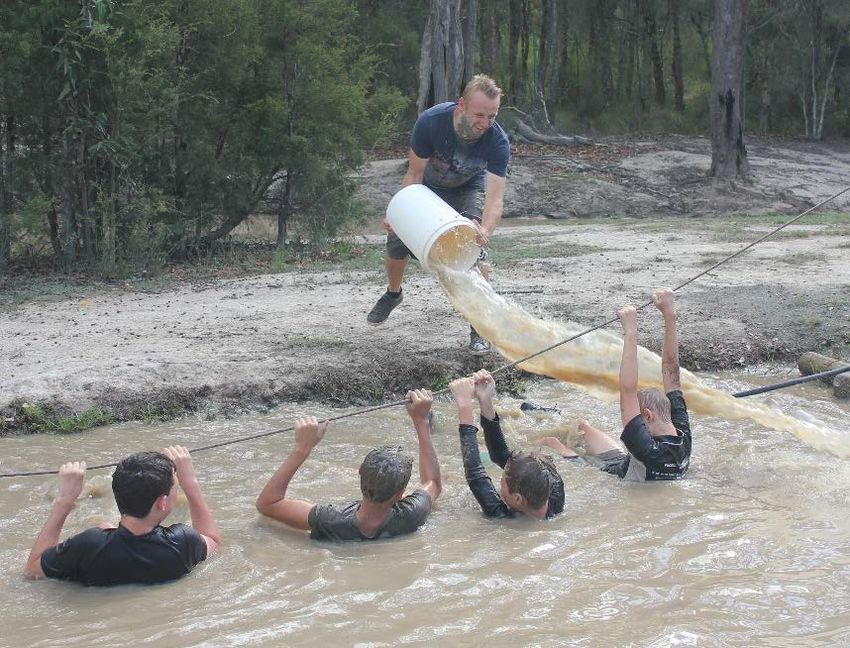
Camp next year has been booked! Year 7s will have the opportunity to attend the Great Aussie Bush Camp
in Term 1, Week 6 (6, 7 & 8 March 2019). We aim to focus on relationships during the camp, our goal is to
create new, lasting friendships. Some peer leaders will also be attending to build relationships.
26Term 1 has been decided as the best term to work on this as new friendship groups are created
with the beginning of your secondary school journey at Hastings Secondary College. Information
will be formalised closer to the date, but in the meantime make sure to save the date!
Monday Tuesday Wednesday Thursday Friday
Period 1 Period 1 Period 1 Period 1 Period 1
8.15 – 9.12 8.15 – 9.12 8.15 – 9.05 8.15 – 9.12 8.15 – 9.12
Connect Connect Connect Connect
Please note: Connect Please note: Please note: Connect Please note: Connect
Roll Call
Incorporates Assembly Incorporates Incorporates
Marked
roll call Incorporates roll call roll call
Period 1
9.12 – 9.27 roll call 9.12 – 9.27 9.12 – 9.27
9.12 – 9.27
Period 2 Period 2 Period 2 Period 2 Period 2
9.27 – 10.24 9.27 – 10.24 9.05 – 9.55 9.27 – 10.24 9.27 – 10.24
Lunch 1 Lunch 1 Lunch 1 Lunch 1 Lunch 1
10.24 – 10.54 10.24 – 10.54 9.55-10.25 10.24 – 10.54 10.24 – 10.54
Period 3 Period 3 Period 3 Period 3 Period 3
10.54 – 11.51 10.54 – 11.51 10.25 – 11.15 10.54 – 11.51 10.54 – 11.51
Period 4 Period 4 Period 4 Period 4 Period 4
11.51 – 12.48 11.51 – 12.48 11.15 – 12.05 11.51 – 12.48 11.51 – 12.48
Lunch 2 Lunch 2 Lunch 2 Lunch 2 Lunch 2
12.48 – 1.18 12.48 – 1.18 12.05 – 12.35 12.48 – 1.18 12.48 – 1.18
Period 5 Period 5 Sport Period 5 Period 5
1.18 – 2.15 1.18 – 2.15 12.35 – 2.15 1.18 – 2.15 1.18 – 2.15
Students are advised to arrive at school at least ten minutes before lessons in order to get to class
on time. The school requires that students do not leave the school grounds at lunch time.
Students who need to leave the school during the day must bring a note from home. This note
should be handed to the PD/H/PE staffroom before the commencement of lessons and the student
will be issued with a leave pass to show on exit of the front gate.
The College Ongoing Attitude to Learning (COAL) Score is a method of providing regular feedback to parents
/ carers, on their child’s application to the learning process. While semester reports have, and will continue
to, provide information to parents / carers on student efforts in class, the COAL score initiative is a
supplementary method of providing more regular feedback.
This process involves each class teacher allocating each student a score out of ten based on the student’s
efforts as per a scoring matrix. These class scores will in turn be averaged in order to obtain the overall
(COAL) score. A letter will be mailed home, detailing the individual class and overall average COAL score
for that student. This process is repeated every four weeks so as to provide regular (ongoing) feedback to
parents / carers. It is important to note that a student’s COAL score is not a reflection of student academic
ability / performance, it is based on the attitude and behavior they demonstrate in class.
At a school level, students consistently scoring in the Gold (9 & 10 band) will have their efforts reinforced
through a range of reward structures. Similarly, students scoring in the Brown (4 to 5) and Red (1 to 3)
bands will be identified for additional learning support.
2710 Outstanding Is an outstanding student all of the time. Always has correct gear and equipment, and appropriate uniform for
subject. Gets equipment out without having to be directed; frequently volunteers answers in classroom
discussions; is always on task; always addresses teacher and other students politely; is consistently punctual;
well-organized and up to date with bookwork – demonstrates extra care; is always honest, displays the highest
order of citizenship and gets on well with all students – modelling the correct behaviours; always obeys
classroom rules; a self-motivated learner.
9 Excellent Is generally an excellent student. Has correct gear and equipment, and appropriate uniform for subject. Gets
equipment out without having to be directed; volunteers answers in classroom discussions; is on task;
addresses teacher and other students politely; is punctual; organized and up to date with bookwork –
demonstrates care; is honest, displays the good citizenship and gets on well with most students; obeys
classroom rules. Is usually a self-motivated learner.
8 Very good Is generally a very good student. Almost always has correct gear and equipment, and appropriate uniform for
subject. Gets equipment out without having to be directed almost all of the time; answers questions in
classroom discussions; is on task – may need very infrequent redirection; addresses teacher and most students
politely; is punctual; exercises care and is usually up to date with bookwork; is honest, displays some citizenship
and gets on well with most students; obeys classroom rules.
7 Good Is a good student most of the time. Mostly has correct gear and equipment, and appropriate uniform for
subject. Usually gets equipment out with minimum reminders from the teacher; attempts to answer in some
classroom discussions; is usually on task; addresses teacher and other students politely; is punctual; usually up
to date with bookwork; is honest, displays occasional citizenship and gets on well with selected students; obeys
classroom rules. Consistency of work and behaviour is more the issue.
6 Satisfactory Is a good student most of the time – but needs encouragement to be more involved and is slightly
underperforming; Book not quite up to standard; may need the occasional reminder to be on task/follow rules
(these should be minor infringements.) Has equipment but needs reminders to get it out. Occasionally forgetful
about gear. Does work – but not to their highest standard. Talkative at times. Manners at an acceptable
standard.
5 Marginal Needs reminders to be on task and follow rules. Teacher needs to supervise to get student to work. Avoids
work at times. Work is disorganised or incomplete. Homework or assignments not done. Talkative, needs
frequent rule reminders; Punctuality is an issue. Gear, equipment or uniform are more frequently forgotten.
Doesn’t always display appropriate manners.
4 Some Concerns This student is causing concern. Gear, equipment or uniform is often forgotten or ignored. Is distracted or
disruptive at times. They fail to respond to teacher directions on occasion and need fairly constant supervision
to get started and stay on task. Working to a minimum standard. Punctuality can be an issue. Begin to mention
to Head Teacher. Some behaviours recorded on SENTRAL. Parents may be involved.
3 Serious Concerns As above – but of greater concern. Head Teacher needs to be involved. Behaviours significant enough to put on
SENTRAL. Attempts have been made to improve behaviour through faculty monitoring, detentions, parent
contact etc. May need referring to Learning Support Team. Rude/ disruptive/ not engaged or making due
progress
2 Unsatisfactory As above. Warning letters sent and attempts must have been made to involve parents. Possible referral to DP –
Performance depending on performance in other subjects?
1 Non-performance Attends class. Does nothing. May be an occasional truanter. Attempts must have been made to involve parents
and a variety of discipline strategies attempted without noticable improvement.
0 Non-attendance Student has not attended class in the COAL period.
PURPOSE
This Merit System aims to maximize the personal, social and educational development of all students. It will
recognize and reward students who demonstrate our Campus’ PBL values of: Proud, Motivated, Honest and
Safe. Students who participate enthusiastically in extra curricula activities and build upon the Campus
reputation and positive image within the community will be recognized. This system aims to encourage
students to develop a positive culture of behaviour and expectations in our Campus.
THE MERIT SYSTEM
A very important part in the development of a safe and positive environment for the campus is the
recognition of the efforts students make to help themselves and others during their time at Hastings
Secondary College Port Macquarie Campus.
To provide recognition for this effort, an across the school Merit System has been implemented. The system
aims at recognising and acknowledging students who make a worthwhile contribution to their own
education and community.
28There are four Merit Awards: Bronze, Silver, Gold and Principal. Students achieve Awards by receiving merit
certificates in a number of different categories.
No merits will be issued to students while they are on behaviour monitoring booklet. All students must
be in full school uniform to accept merits and/or prizes on assembly.
Students at Port Macquarie Campus feel supported, encouraged and inspired by staff that are
willing to provide the extra assistance necessary to help them to achieve their best academically,
culturally, on the sporting field and in community participation. Students are supported in their
education in a variety of ways, including support from the Head Teacher of Welfare, the Learning
and Support Team (LAST), Year Advisors and Pastoral Care Teachers.
Students are also supported by two trained Counsellors whose primary responsibilities are to
provide confidential counselling and support to students and their families.
The school is also fortunate to have the services of an Aboriginal Education Officer (AEO). Angela,
the AEO, is available to assist Aboriginal and Torres Strait Islander students in their schooling and
organisers a variety of cultural activities throughout the year.
Student success is celebrated and documented as part of our “Learning Expectations” and student
merit and reward system. Our student discipline system is focused on the rights of the teacher to
teach and the students to learn, while also providing strong welfare support for students.
Port Macquarie Campus students are supported in a variety of ways through their education.
Students with additional needs through to Gifted and Talented Students are supported and
catered for in learning. Careers Education also provides support for students in their transition to
post-school opportunities. Senior students have the opportunity to elect a staff mentor, who
assists them with the extra responsibilities of senior education. The school also has links with
Home School Liaison Officers, Youth Liaison Officers and organisations within the community that
support students’ additional needs.
Port Macquarie Campus provides support for students with additional needs in three support
classes, as well as support in mainstream settings.
Port Macquarie Campus has three support classes for students with additional needs. There is a
Multi-Categorical class designed to meet the needs of students with a variety of disabilities and
diagnosis. There are two classes for students with mild intellectual disabilities. We have a junior
29class (students in Year 7, 8 and 9) and a senior class (students in Years 10, 11 and 12). Students in all
of these classes access the curriculum studying an individualised learning program. Their program
is designed to enable them to achieve their individual goals as determined by their personalised
learning plan meetings, held with the student, parent(s), and school personnel. Students are
supported by trained Student Learning Support Officers’ as required.
There is also support for students with special needs that are in the mainstream setting.
Students are encouraged to represent the school in Athletes with Disabilities events for swimming,
cross country and athletics. Students also have the opportunity to participate in a local Sailability
program, supported work experience program, VET classes, Vocational classes at TAFE and the
ADHC Transition to Work or Community Participation Programs.
The school subscribes to the belief that students are responsible for their own self-discipline and
need to understand that there are consequences for their actions and decisions that they may
make. The expectations of students are based around the 4 School Values of
Proud, Motivated, Honest and Safe (PMHS).
If an issue is unresolved using classroom discipline, students may be moved to the “Student
Responsibility System”. This system encourages students to take responsibility for their actions and
follows a Green, Yellow and Red Plan before the event of In-school withdrawal and Pre-Suspension
meetings. Parents or carers are involved at each stage. Behaviours that may warrant suspension will
be referred directly to a deputy principal. A resolution meeting will be held after a suspension and
the student will be placed on a monitoring system.
GENERAL REQUIREMENTS FOR ALL SUBJECTS
• School Planner (diary) will be supplied to all students at the start of the term.
• HB Pencil
• Blue or Black Pens
• Red Pen
• Glue
• Scissors
• Coloured Pencils
• Eraser
• Pencil Sharpener
• Ruler
• Highlighters
• USB
All students will need to wear closed in black leather shoes in order to participate safely in practical
lessons in Science, Design and Technology and Agriculture.
30PD/H/PE Uniform may be worn to school on the days of practical lessons, or carried in school bag to
change in the break before the lesson.
There will be numerous activities and opportunities available during 2018 to year 7. These
include, but are not limited to the following:
• Swimming Carnival (Term 1, 2019 February 11)
• Year 7 Camp (The Great Aussie Bush Camp) (Term 1 2019 March 6,7,8)
• Athletics Carnival (Term 2, 2019 June 5 – Full Day, June 6 – Half Day)
• Cross-Country Carnival (Term 2, 2019 May 10)
• Year 7 Sports Day (Term 3, 2019 September 20)
• Various other sporting events and competitions
• Various academic and extra-curricular events and competitions
Please ensure that your child is prepared with equipment and correct uniform before the first day
of school in 2019. If you have any questions or concerns that arise before then, please do not
hesitate to phone the school on 65 831844, we are happy to assist.
On the first day, year 7 will take part in various activities that will assist with settling in to the new
school environment and making new friends. Students are provided with an orientation pack which
includes bell times and a school map. Students will be given a school tour during Orientation Day in
December which will further assist them with finding buildings.
Year 7 will be assigned an older student as Peer Support, who they will meet on orientation day in
December 2018. This peer support is designed to further assist Year 7 students in particular on their
first day and the first few weeks of 2019.
Year Advisors, Michael Sanderson and Colin Rogers will be waiting at the front gate. On this day
students will need to be at school at 8am with back pack and correct school uniform. Bring food
and drinks for lunch 1 and lunch 2. Please arrange your transport home after school finishes at
2.15pm.
3132
Volunteering at Iron Man                  Abseiling at Year 7 Great Aussie Bush Camp 2018
      Event 2018

                       Kayaking at Year 7 Great Aussie Bush Camp 2018

                      More fun at the Year 7 Great Aussie Bush Camp 2018

                                           33
You can also read


