YEAR 8 CURRICULUM INFORMATION 2018 - 2019 - St Anthony's School ...
←
→
Page content transcription
If your browser does not render page correctly, please read the page content below
YEAR 8

CURRICULUM INFORMATION

      2018 – 2019
This document provides an overview of the work boys will be doing in Year 8. Some pupils in this cohort will be facing the prospect of entry assessments for schools such as: Dulwich; MTS; Harrow; Sevenoaks; UCS: Waiting List; Westminster: Waiting List; St Paul’s Waiting List. For others, they may be facing the challenge of academic, sport, art and music scholarship assessments for schools such as: Eton; Aldenham; Harrow; St. Paul’s; Westminster; Shrewsbury; Tonbridge; King’s Canterbury; Mill Hill. For the majority, it may also be the need to pass Common Entrance at a suitable level commensurate with their initial conditional offer or for setting purposes. Advice has already been given to orientate pupils into the Summer holidays with a proper sense of how they might use the summer wisely. We are hopeful that the feedback on reports has also been helpful. Throughout the year, classes take place and specialist help is provided, to help pupils meet these challenges with a sense of confidence and, we hope, a continued sense of sense of the fun of learning. Please contact the school if there is any area which is still concerning you or your son. Throughout, we provide hyper-links to the relevant section of the target school’s websites. See below for the links to the websites pertaining to the most likely applications for our Y8 cohort. http://www.iseb.co.uk/ (C.E. key syllabus website)
School                                  Link to Admissions
ACS Cobham International School         https://www.acs-schools.com/admissions-acs-cobham
Aldenham School                         https://aldenham.com/admissions
Ampleforth College                      https://www.ampleforth.org.uk/college/admissions
Bedales School                          https://www.bedales.org.uk/home/admissions
Belmont                                 https://www.millhill.org.uk/belmont/admissions
Brighton College                        https://www.brightoncollege.org.uk/admissions
Cardinal Vaughan                        https://www.cvms.co.uk/Admissions
Charterhouse                            https://www.charterhouse.org.uk/admissions/welcome
City of London School                   https://www.cityoflondonschool.org.uk/apply/admissions
Dulwich College                         https://www.dulwich.org.uk/admissions
Eltham College                          https://www.elthamcollege.london/admissions
Eton College                            https://www.etoncollege.com/registration.aspx
Forest School                           https://www.forest.org.uk/senior-school/admissions/admissions-welcome
Harrow School                           https://www.harrowschool.org.uk/Admissions-Home
Haileybury                              https://www.haileybury.com/admissions/welcome
Highgate School                         https://www.highgateschool.org.uk/admissions
King's School Canterbury                https://www.kings-school.co.uk/admissions/
King's College Wimbledon                https://www.kcs.org.uk/admissions
Lancing College                         https://www.lancingcollege.co.uk/admissions
Latymer Upper School                    http://www.latymer-upper.org/admissions
Merchant Taylors' School                https://www.mtsn.org.uk/admissions
Mill Hill School                        https://www.millhill.org.uk/admissions/
Northbridge House Canonbury             https://www.northbridgehouse.com/senior-canonbury/admissions
Rugby School                            https://www.rugbyschool.co.uk/admissions/welcome
Sevenoaks School                        https://www.sevenoaksschool.org/admissions/introduction
Sherbourne School                       https://www.sherborne.org/admissions/welcome
Shrewsbury School                       https://www.shrewsbury.org.uk/admissions
St. Albans School                       https://www.st-albans.herts.sch.uk/about-us/admissions
St. Benedict's School                   https://www.stbenedicts.org.uk/admission-senior-school
St. Paul's                              https://www.stpaulsschool.org.uk/admissions
Stonyhurst                              https://www.stonyhurst.ac.uk/contact-admissions
Sylvia Young Theatre School             http://www.syts.co.uk/page/?title=Admissions&pid=43
The American School in London           https://www.asl.org/admissions
The Haberdashers' Aske's Boys' School   https://www.habsboys.org.uk/Main-School-Admissions-Overview
The London Oratory School               http://www.london-oratory.org/school-admissions/88.html
Tonbridge School                        https://www.tonbridge-school.co.uk/admissions
University College School               https://www.ucs.org.uk/admissions
Westminster                             https://www.westminster.org.uk/admissions
Wetherby Senior School                  https://www.wetherbysenior.co.uk/admissions
Winchester College                      http://www.winchestercollege.org/admissions
Worth School                            http://www.worthschool.org.uk/admissions.php
Common Entrance English: Year 7 and 8

At St. Anthony’s, our overarching aim for Year 7&8 English is to promote high standards of
language and literacy by equipping the boys with a strong command of the spoken and written
word, and to develop their love of literature through widespread reading for enjoyment. Our
aims for Year 7 and 8 boys are for them to:

•      read easily, fluently and with good understanding;
•      develop the habit of reading widely and often, for both pleasure and information;
•      acquire a wide vocabulary, an understanding of grammar and knowledge of linguistic
       conventions for reading, writing and spoken language;
•      appreciate our rich and varied literary heritage;
•      write clearly, accurately and coherently, adapting their language and style in and for a
       range of contexts, purposes and audiences;
•      use discussion in order to learn; they should be able to elaborate and explain clearly
       their understanding and ideas;
•      be competent in the arts of speaking and listening, making formal presentations,
       demonstrating to others and participating in debate.

Reading in Year 7 and Year 8:

The boys will develop an appreciation and love of reading, and read increasingly challenging
material independently through:
•      reading a wide range of fiction and non-fiction, including, in particular, whole books,
       short stories, poems and plays with a wide coverage of genres, historical periods,
       forms and authors. The range will include high-quality works from English literature,
       both pre-1914 and contemporary, including prose, poetry and drama (examples of
       texts studied are: Sherlock Holmes, The Woman in Black, Lord of the Flies);
•      Shakespeare – one play in depth throughout the 2 year course;
•      choosing and reading books independently for challenge, interest and enjoyment
       (choice of literature text for CE);
•      re-reading books encountered earlier to increase familiarity with them and provide a
       basis for making comparisons;

Understand increasingly challenging texts through:

•      learning new vocabulary, relating it explicitly to known vocabulary and understanding
       it with the help of context and dictionaries;
•      making inferences and referring to evidence in the text;
•      knowing the purpose, audience for and context of the writing and drawing on this
       knowledge to support comprehension;
•      checking their understanding to make sure that what they have read makes sense.

Read critically through:

•      knowing how language, including figurative language, vocabulary choice, grammar,
       text structure and organisational features present meaning;
•      recognising a range of poetic conventions and understanding how these have been
       used;
•      studying setting, plot, and characterisation, and the effects of these;
•      understanding how the work of dramatists is communicated effectively through
       performance and how alternative staging allows for different interpretations of a play
•      making critical comparisons across texts;
•      studying a range of authors, including at least two authors in depth each year.

Writing in Year 7 and Year 8:

Boys will be taught to write accurately, fluently, effectively and at length for pleasure and
information through:
•      writing for a wide range of purposes and audiences, including: well-structured formal
       expository and narrative essays stories, scripts, poetry and other imaginative writing;
•      notes and polished scripts for talks and presentations;
•      a range of other narrative and non-narrative texts, including arguments, and personal
       and formal letters;
•      summarising and organising material, and supporting ideas and arguments with any
       necessary factual detail;
•      applying their growing knowledge of vocabulary, grammar and text structure to their
       writing and selecting the appropriate form;
•      drawing on knowledge of literary and rhetorical devices from their reading and listening
       to enhance the impact of their writing.

Boys will plan, draft, edit and proof-read through:

•      considering how their writing reflects the audiences and purposes for which it was
       intended;
•      amending the vocabulary, grammar and structure of their writing to improve its
       coherence and overall effectiveness;
•      Paying attention to accurate grammar, punctuation and spelling; applying the spelling
       patterns.

Grammar and vocabulary

The boys will be taught to consolidate and build on their knowledge of grammar and
vocabulary through:
•     extending and applying their grammatical knowledge to analyse more challenging
      texts;
•     studying the effectiveness and impact of the grammatical features of the texts they
      read;
•     drawing on new vocabulary and grammatical constructions from their reading and
      listening, and using these consciously in their writing and speech to achieve particular
      effects;
•     knowing and understanding the differences between spoken and written language,
      including differences associated with formal and informal registers, and between
      Standard English and other varieties of English;
•     using Standard English confidently in their own writing and speech.

English (in association with Drama objectives): Spoken English

Boys will be taught to speak confidently and effectively, including through:
•     using Standard English confidently in a range of formal and informal contexts, including
      classroom discussion;
•     giving short speeches and presentations, expressing their own ideas and keeping to
      the point;
•     participating in formal debates and structured discussions, summarising and/or
      building on what has been said.
•     improvising, rehearsing and performing play scripts and poetry in order to generate
      language and discuss language use and meaning, using role, intonation, tone, volume,
      mood, silence, stillness and action to add impact.

Scholars
In conjunction with the CE syllabus, scholars are stretched and prepared for the examination
papers of their chosen school. Weekly lessons take place before school: these are taken by
the HoD.
Mathematics Teachers strive to ensure that the school´s syllabus is delivered with the most suitable and varied resources available and seek ways to motivate boys to take responsibility for their learning appropriate to their age. Through robust written work with emphasis on good mathematical structure and presentation, regular exercise of mental skills and exciting online work adapted to each boy’s ability, the Mathematics department aims to prepare the boys for application of Mathematics wherever they may encounter it in everyday life whilst stimulating mathematical thinking and reasoning skills. We know that Mathematics is often perceived to be a difficult, theoretical pursuit, therefore we aim on the practical application of the subject and to make it accessible to all. The Mathematics syllabus for Year 8 contains all topics listed in the 13+ ISEB Level 3 and CASE syllabus for Common Entrance and Common Academic Scholarship Examinations. Further to this, the school makes sure boys are prepared for the specific external examinations they sit which may vary slightly in topic content and character. An integral part of this preparation is actively encouraging boys to attempt to solve unfamiliar mathematical problems where they need to apply novel thought to synthesise what they may know, e.g.,. in the Junior Mathematics Challenge. Furthermore, towards the end of their studies at St. Anthony’s, candidates are given the opportunity to explore in a basic way how Mathematics is applied within a host of professions: Finance and Banking, Business, Architecture, Medicine, Science, Engineering, Economics, Social Sciences and IT security. These studies may be enhanced by visits to the Bank of England and Bletchley Park. The school makes available to boys an array of online resources. These include: DrFrostMaths.com MyMaths.co.uk Kerboodle.com Mangahigh.com Mathsworkout.co.uk These serve both as a good introduction to a new topic and for consolidation when some learning has taken place. However, nothing replaces the effort put in grappling with mathematical problems using pencil and paper, expressing solutions in a clear and concise way. Other helpful maths websites include: Mathsonline.org Brainpop.com Coolmath.com – lots of games, problems and puzzles Thatquiz.org bbc.co.uk/bitesize
SCHEME OF WORK – YEAR 8X CE – OVERVIEW
Week Unit Topic Referenc Review & Practice Completion
e %
Term
F My My My S
A R P C A
C01-05.09 A Whole numbers and decimals 3C-1
C02-10.09 B Measures, perimeter and area – CAT4 3C-2
Christmas 1
C03-17.09 C Expressions and formulae – MidYIS 3C-3
C04-24.09 D Fractions, decimals and percentages 3C-4
C05-01.10 E Angles and 2D shapes 3C-5
C06-08.10 F Graphs 3C-6
C07-15.10 G, R BIDMAS – Assessment 8.1 3C-7 - A-G 7.1:
Half-term
C08-29.10 H Statistics 3C-8
C09-05.11 I Transformations and scale – Exam Week 3C-9
Christmas 2
C10-12.11 J Equations – Mock examination 3C-10
C11-19.11 K Powers and roots 3C-11
C12-26.11 L Constructions and Pythagoras 3C-12
C13-03.12 M Sequences 3C-13
C14-10.12 N, R 3D shapes – Assessment 8.2 3C-14 H-N 7.2:
Christmas Holidays
E01-08.01 O Ratio and proportion 3C-15
E02-14.01 P Probability 3C-16
Easter 1
E03-21.01 Q CE 13+ L3 Examination
E04-28.01 A, B Whole numbers and decimals, Geometry 3C-1-2
E05-04.02 C, D Expressions and formulae, Fractions, decimals, % 3C-3-4
E06-11.02 Q, R CE 13+ L3 Examination – Assessment 8.3 3B: O-L 7.3:
Half-term
E07-25.02 E, F Angles and 2D shapes, Graphs 3C-5-6
E08-04.03 G, H BIDMAS, Statistics 3C-7-8
Easter 2
E09-11.03 I, J Transformations and scale, Equations 3C-9-10
E10-18.03 K, L Powers and roots, Constructions and Pythagoras 3C-11-12
E11-25.03 Q Exam Week: CE 13+ L3
E12-01.04 Q, R Feedback and improvement – Assessment 8.4 7.4:
Easter Holidays
S01-24.04 M, N Sequences, 3D shapes 3C-13-14
Summer 1
JMC
S02-29.04 W Junior Maths Challenge
S03-06.05 O, P Ratio and proportion, Probability 3C-15-16
S04-13.05 R Revision 3C: A-P
MyA1 MyA2 MyA3 MyA4
S05-20.05 R Revision 3C: A-P
Half-term
S06-03.06 Q CE Examination – CE 13+ L3 ISEB
Summer 2
S07-10.06 S Year 8 Post Examination Programme – Week 1 Booklet
S08-17.06 T Year 8 Post Examination Programme – Week 2 Booklet
S09-24.06 U Year 8 Post Examination Programme – Week 3 Booklet
S10-01.07 V St. Anthony’s Maths Marathon – PTM Booklet
Weekly W Challenges Booklets
All Year
Weekly X Homework Booklets
Weekly Y Mental Arithmetic S&S
Weekly Z Glossary & Spelling Log Booklet
SCHEMES OF WORK – YEAR 8Y CE – OVERVIEW
Week Unit Topic Referenc Review & Practice Completion
e %
Term
F My My My S
A R P C A
C01-05.09 R Warm-up
C02-10.09 A Whole numbers and decimals – CAT4 3B-1
Christmas 1
C03-17.09 A Whole numbers and decimals – MidYIS 3B-1
C04-24.09 B Measures, perimeter and area 3B-2
C05-01.10 B Measures, perimeter and area 3B-2
C06-08.10 C Expressions and formulae 3B-3
C07-15.10 R Revision – Assessment 8.1 – PUMA Autumn 9 3C: A-C 7.1: PUM
A
Half-term
C08-29.10 D Fractions, decimals and percentages 3B-4
C09-05.11 D Fractions, decimals and percentages 3B-4
Christmas 2
C10-12.11 E Angles and 2D shapes 3B-5
C11-19.11 E Angles and 2D shapes 3B-5
C12-26.11 F Graphs 3B-6
C13-03.12 F Graphs 3B-6
C14-10.12 R Revision – Assessment 8.2 3B: D-F 7.2:
Christmas Holidays
E01-08.01 G Decimal calculations 3B-7
E02-14.01 H Statistics 3B-8
Easter 1
E03-21.01 H Statistics 3B-8
E04-28.01 I Transformations and scale 3B-9
E05-04.02 J Equations 3B-10
E06-11.02 R Revision – Assessment 8.3 – PUMA Spring 9 3B: G-J 7.3: PUM
A
Half-term
E07-25.02 K Powers and roots 3B-11
E08-04.03 L Constructions and Pythagoras 3B-12
Easter 2
E09-11.03 L Constructions and Pythagoras 3B-12
E10-18.03 M Sequences 3B-13
E11-25.03 N 3D shapes – Mock Examination 3B-14
E12-01.04 R Revision – Assessment 8.4 3B: K-N 7.4:
Easter Holidays
S01-24.04 O Ratio and proportion 3B-15
Summer 1
S02-29.04 O - W Ratio and proportion – Junior Maths Challenge 3B-15 JMC
S03-06.05 P Probability 3B-16
S04-13.05 P Probability 3B-16
S05-20.05 R Revision – PUMA Summer 9 3B: A-P MyA1 MyA2 MyA3 MyA4 PUM
A
Half-term
S06-03.06 Q CE Examination – CE 13+ L2/L3 ISEB
Summer 2
S07-10.06 S Year 8 Post Examination Programme – Week 1 Booklet
S08-17.06 T Year 8 Post Examination Programme – Week 2 Booklet
S09-24.06 U Year 8 Post Examination Programme – Week 3 Booklet
S10-01.07 V St. Anthony’s Maths Marathon Booklet
Weekly W Challenges Booklets
All Year
Weekly X Homework Booklets
Weekly Y Mental Arithmetic S&S
Weekly Z Glossary Booklet
SCHEME OF WORK – YEAR 8 MTS – OVERVIEW
Week Unit Topic Referenc Review & Practice Completion
e %
Term
F My My My S
A R P C A
C01-05.09 A Whole numbers and decimals 3C-1
C02-10.09 B Measures, perimeter and area – CAT4 3C-2
Christmas 1
C03-17.09 C Expressions and formulae – MidYIS 3C-3
C04-24.09 D Fractions, decimals and percentages 3C-4
C05-01.10 E Angles and 2D shapes 3C-5
C06-08.10 F Graphs 3C-6
C07-15.10 G BIDMAS – Assessment 8.1 3C-7 A-G 8.1: PUM
A
Half-term
C08-29.10 H Statistics 3C-8
C09-05.11 I Transformations and scale – Exam Week 3C-9
Christmas 2
C10-12.11 J Equations – Mock examination 3C-10
C11-19.11 K Powers and roots 3C-11
C12-26.11 L Constructions 3C-12
C13-03.12 M Sequences 3C-13
C14-10.12 N 3D shapes – Assessment 8.2 3C-14 H-N 8.2:
Christmas Holidays
E01-08.01 O Ratio and proportion 3C-15
E02-14.01 P Probability 3C-16
Easter 1
E03-21.01 Q MTS Examination
E04-28.01 L Pythagoras 3C-12
E05-04.02 L Pythagoras 3C-12
E06-11.02 R Revision – Assessment 8.3 3B: O-L 8.3: PUM
A
Half-term
E07-25.02 N Trigonometry 3C-14
E08-04.03 N Trigonometry 3C-14
Easter 2
E09-11.03 S Mathematics in the professions – Economics Booklet
E10-18.03 S Mathematics in the professions – Sciences Booklet
E11-25.03 S Mathematics in the professions – Engineering Booklet
E12-01.04 R Revision – Assessment 8.4 3B: A-P 8.4:
Easter Holidays
S01-24.04 S Mathematics in the professions – Medicine Booklet
Summer 1
S02-29.04 S-W Mathematics in the professions – IT – JMC Booklet JMC
S03-06.05 T Codes and codebreaking Booklet
S04-13.05 T Codes and codebreaking Booklet
PUM
S05-20.05 T Codes and codebreaking Booklet A
Half-term
S06-03.06 Welcome to Year 8 – Booklet for Year 7
Summer 2
S07-10.06 U Year 8 Post Examination Programme – Week 1 Booklet
S08-17.06 U Year 8 Post Examination Programme – Week 2 Booklet
S09-24.06 U Year 8 Post Examination Programme – Week 3 Booklet
S10-01.07 V St. Anthony’s Maths Marathon Booklet
Weekly W Challenges Booklets
All Year
Weekly X Homework Booklets
Weekly Y Mental Arithmetic S&S
Weekly Z Glossary Booklet
SCHEME OF WORK – YEAR 8 SCHOLARSHIP – OVERVIEW
Week Unit Topic Reference Review & Practice Completion
%
Term
F My My My S
A R P C A
C01-05.09 A Whole numbers and decimals 3C-1
C02-10.09 B Measures, perimeter and area – CAT4 3C-2
Christmas 1
C03-17.09 C Expressions and formulae – MidYIS 3C-3
C04-24.09 D Fractions, decimals and percentages 3C-4
C05-01.10 E Angles and 2D shapes 3C-5
C06-08.10 F Graphs 3C-6
C07-15.10 G, R BIDMAS – Assessment 8.1 3C-7 - A-G 7.1:
Half-term
C08-29.10 H Statistics 3C-8
C09-05.11 I Transformations and scale – Exam Week 3C-9
Christmas 2
C10-12.11 J Equations – Mock examination 3C-10
C11-19.11 K Powers and roots 3C-11
C12-26.11 L Constructions 3C-12
CD L3 CD L3 C CAS
C13-03.12 M Sequences 3C-13 NC E
C14-10.12 N, R 3D shapes – Assessment 8.2 3C-14 H-N 7.2:
Christmas Holidays
E01-08.01 O Ratio and proportion 3C-15
E02-14.01 P Probability 3C-16
Easter 1
E03-21.01 Q CASE Examination ISEB
CASE
E04-28.01 S CASE Papers ISEB
CASE
E05-04.02 S St. Paul’s Papers SPS
E06-11.02 S St. Paul’s Papers SPS 7.3:
Half-term
E07-25.02 S Eton Papers EC
E08-04.03 S Eton Papers EC
Easter 2
E09-11.03 S Westminster Challenge WS
E10-18.03 S Westminster Challenge WS
E11-25.03 Q Mock Examination SPS
7.4:
E12-01.04 Q Feedback and improvement
Easter Holidays
S01-24.04 S Revision – Scholarship papers
Summer 1
S02-29.04 Q - W Scholarship Examination – Junior Maths Challenge JMC
S03-06.05 T Codes and codebreaking Booklet
S04-13.05 T Codes and codebreaking Booklet
S05-20.05 T Codes and codebreaking Booklet
Half-term
S06-03.06 Welcome to Year 8 – Booklet for Year 7 ISEB
Summer 2
S07-10.06 U Year 8 Post Examination Programme – Week 1 Booklet
S08-17.06 U Year 8 Post Examination Programme – Week 2 Booklet
S09-24.06 U Year 8 Post Examination Programme – Week 3 Booklet
S10-01.07 V St. Anthony’s Maths Marathon Booklet
Weekly W Challenges Booklets
All Year
Weekly X Homework Booklets
Weekly Y Mental Arithmetic S&S
Weekly Z Glossary BookletScience
In Year 8, pupils continue to develop their knowledge, skills and understanding in the
disciplines of Biology, Chemistry and Physics while moving towards their 13+ examinations.
A significant portion of the year is spent going over practice papers and revising topics covered
in Key Stages 2 and 3. Pupils follow the Independent Schools Examination Board (ISEB)
curriculum for science, the content of which is divided into theme-based topics.
The topics for Year 8 are:
Food and Nutrition;
Plants and Their Reproduction;
Breathing and Respiration;
Unicellular Organisms;
Combustion;
The Periodic Table;
Metals and Their Uses;
Rocks;
Fluids
Light;
Energy Transfers;
Earth and Space;
Topics are covered in a hands-on and investigative manner throughout the school. Pupils in
Years 7 and 8 are expected to move on to higher-level investigative skills, including:
• understanding the power and limitations of science and potential ethical questions and
debates;
• considering the validity of experimental results in terms of fair testing;
• using scientific theories, models and explanations to develop hypotheses;
• planning investigations to make observations and to test hypotheses, including identifying
variables as independent, dependent or control, and measure and consider other factors
which need to be taken into account when collecting evidence
• using knowledge of techniques, apparatus, and materials, during fieldwork and laboratory
work, selecting those that are appropriate to the investigation, and using them
appropriately, adapting apparatus and strategy flexibly when problems arise and paying
attention to health and safety;
• measuring and manipulating concentrations;
• representing random distribution of results and estimate uncertainty; interpreting
observations and data, including identifying patterns and trends and using observations,
measurements and data to make inferences and draw conclusions;
• evaluating data critically, showing awareness of potential sources of random variations
and systematic errors, and suggesting improvements
• communicating the scientific rationale for the investigation and the methods used, giving
accounts of findings, reasoned explanation of data in relation to hypotheses and reasoned
conclusions through written reports and electronic presentations.
Useful websites:
https://www.bbc.co.uk/education/subjects
https://quizlet.comFRENCH
The Grammar covered in Year 8 finishes the Common Entrance syllabus. There is
significantly more practice of past papers across the skill areas of Listening, Reading
and Writing, and the pupils will complete their preparation for the oral topics for the
final French Speaking Exam. Pupils will continue to have one hour per week of oral
lessons with the native French-speaking Assistante whereby all activities will support
the curriculum and will enrich through cultural themes.
Pupils will have a series of mock examinations including several mock oral tests
building their confidence in role-plays and free conversation.
For pupils applying to destination schools, specific provision and direction will be
given. New grammar items can be introduced at the pace of the group or to individuals
for use or for recognition purposes.
Pupils will have online access to VocabExpress to support their vocabulary learning
and topic work. Regular homework tasks will continue to play an important part of the
learning cycle.
A variety of resources will be used. There will be much attention given to revision and
examination technique.
Term 1 Term 2 Term 3
Y8 CE Oral Revision of Topic & Listening & CE past Revision
Topics 3 tenses Role-Play Reading papers
(Family, practice Comprehension
Free time, practice
Home,
School) Writing Pronouns
skills
The Negative
Useful websites:
https://www.bbc.co.uk/education/subjects
http://www.languagesonline.org.uk
https://www.quia.com/shared/french
http://www.verb2verbe.com
https://www.vocabexpress.comLatin Boys will have 2 classes of 60 minutes per week. Following on from Year 7, the upper set will complete the CE level 2 in the Christmas term, covering: Comparative and superlative of adjectives in us and er, the pluperfect tense; 3rd declension nouns with ium in genitive plural; postquam, antequam, quamquam; possum; nemo and nihil; nonne, num? solus, unus; comparative and superlative of bonus, malus and multus; is, ea, id; positive, comparative and superlative of 3 rd declension adjectives: tristis, ingens; formation of adverbs; comparative and superlative of adverbs; review of commands and prohibitions; eo and compounds; numbers 11-20; use of the reflexive se. The boys work through a set of CE level 2 practice papers before sitting a past paper towards the end of the term. They will then start to read The Odyssey in Basic Latin, a Level 2 reader that encourages reading fluency and broadens vocabulary. In the Easter term, this set moves on to Latin for CE Level 3 and Scholarship. Chapters 1- 12 cover the Level 3 syllabus: Present, imperfect, future, perfect and pluperfect tenses of the passive voice; 5 th declension; time and place; volo & nolo; fero; totus; relative pronouns and clauses; idem; celer; alius; ipse; dum; past participle passive; present participle active; imperfect subjunctive, active and passive; purpose clauses and indirect commands Any boys wishing to sit the Common Academic Scholarship, or a senior school scholarship exam will need to complete the following prescribed scholarship syllabus which is covered in Chapters 13-19 of Latin for CE Level 3 and Scholarship: Ablative absolute; present infinitive passive; deponent verbs; 4th declension nouns; indirect statements; perfect infinitive, active and passive; pluperfect subjunctive, active and passive; cum + imperfect subjunctive. It is important to recognize that the Latin Scholarship papers for Westminster, Eton and Winchester are so composed to allow boys to show their ability and sustained commitment to the subject. Success in these highly competitive exams requires not only mastery of the core grammar and vocabulary but also familiarity of a range of Latin authors through selected passages of prose. To encourage elementary prose composition, the Copa Latina is awarded annually to the boy who makes the best effort in translating into Latin a passage of English based on the story of the Odyssey. The boys in the lower set will revise and consolidate the CE Level 1 syllabus by working their way through The Odyssey in Very Basic Latin by Fred Pragnell. This reader, along with the sets of exercises, has the triple aim of improving reading fluency, preparing the boys to answer questions in the CE grammar section and providing the opportunity to revise the story of the Odyssey introduced in Year 6.
GEOGRAPHY
Christmas Term
Rivers and Coasts
Coursework write up, commences at the beginning of Year 8 (whole Christmas term).
Boys are given guided time to write up and explore the deeper theory behind river
dynamics for the Common Entrance coursework. This period also allows some
individual’s time to develop their ICT skills.

Transport and Industry
i).the value of transport routes for people and industry
ii).the principal modes of transport today – road, rail, sea and air – together with their
impact on the environment
iii).employment structure: the different types (sectors) of economic activity (learn
definitions and examples)
Globalisation, Multinationals   in  developing   countries   &    effects  on
economy/wages/price of good e.g. Case Study: Nike in Indonesia: PT Kukdong or
Coke in India
iv).how economic activities operate in contrasting locations
v).how economic development can be made sustainable

Case Study: High Speed 2, a planned rail route in the UK

Easter/Summer Terms
OS Map Skills
   i.    Revision of all practical skills
  ii.    Links to economic activities, settlement and environmental issues
  iii.   Orientation and use of maps in the field.

Population and Settlement
How and why attempts are made to plan and manage environmentally sensitive areas
e.g. The Olympic Park Village. This includes ideas of conservation and sustainable
development. Why and how The Olympic Park Village is being managed and the
effects (both positive and negative) of this management both on people and the
environment.

Revision
     a. Revision of all main topics from Year 6 to Year 8
     b. Completion of past papers.
        Common Entrance Case studies
Topic Specific reason Case study Developing or Key points and key terms
for the case study location and
Developed
date
Weather and No Case study No Case study No Case study
Climate needed! needed! needed!
Earthquakes Volcanic eruption Eyjafjallajokull The nature, causes,
and Volcanoes eruptions 2010 environmental and human
effects, and human
Developed responses.
Earthquakes Volcanic eruption Mount Merapi Developing The nature, causes,
and Volcanoes (Indonesia) environmental and human
2010 effects, and human
responses.
Earthquakes Earthquake Kobe Developed The nature, causes,
and Volcanoes earthquake environmental and human
Developing effects, and human
1995
responses.
Nepal Disaster
2015 Developing
Rivers and Flooding Boscastle Developed The causes and effects of and
coasts Floods 2004 responses to Boscastle
Floods i.e. physical and
human causes, the human,
economic and environmental
impact and ways of reducing
the risks.
Transport and Example of HS2 planned Developed The benefits and problems
Industry economic activity project (including environmental)
which this activity brings to the
areas.
Industry Example of Nike in Developing Reasons for the location e.g.
Trans/Multi Indonesia: natural resources/raw
National Company materials, site, labour, power
PT Kukdong source, market, transport,
their inputs, throughputs,
Globalisation
outputs and linkages.
Population and Housing project Queen Elizabeth Developed The management of a
Settlement developed in an Olympic Park in completed housing project
environmentally east London developed in an
sensitive way 2012 environmentally sensitive
way.
Suggested websites
http://www.weatherstations.co.uk/vue_main.htm
OS website activities (www.mapzone.co.uk)
http://digimapforschools.edina.ac.uk/
http://www.metlink.org/pdf/teachers/simple_weather_instruments.pdf
http://www.weatherforschools.me.uk/html/clouds.htmlBBC clip of Google office in Zurich www.news.bbc.co.uk/1/hi/7290322.stm Google Earth www.primaryresources.co.uk Suggested reading list Geography for Common Entrance Third Edition Geography for Common Entrance 13+ Revision Guide Geography for Common Entrance: Physical Geography Geography for Common Entrance: Human Geography Geography for Common Entrance 13+ Exam Practice Questions Geography for Common Entrance 13+ Exam Practice Answers Scholarship prep We pride ourselves in ensuring that boys are not only prepared for the challenge of the Common Entrance examinations but also enjoy the journey. I work with scholars to devise individual targets to enable them improve on their performances. I keep abreast of the changing transfer practices of senior schools. Boys sit for demanding papers which at times approach KS4 levels of difficulty and applied thinking; with them I hit the books ardently from the outset. I concentrate on the minutiae of the revision plan. Regardless of the scholarly approach to outstanding academic success, I combine knowledge, strategy and nerve by going through a rigorous revision exercise to grasp the essentials, expand the glossary terms and explaining in more depth. Clinics These play their part and are offered before school starts (8 – 9am) or after school (4- 5pm) for boys who would like further help with their CE studies e.g. academic scholarship. Clinic timetables are: a. Tuesdays, Scholarship Geography in Mathematics room at 8-9am b. Thursdays, catch up Geography (to boys who are behind) in 80 at 8-9am c. Fridays, Merchant Taylors’ School (MTS) sessions in the 8O at 8-9am History In Year 8, we continue the Common Entrance Course studying the period known as the Making of the United Kingdom: 1485-1750. We begin by completing the Tudors, picking up from where the course left off the previous year. We then move on to James I, teaching the Stuarts chronologically. Much of the focus is on political/dynastic history. However, we also study the social structures of Tudor/Stuart England, looking at different classes and the lives that they led. We also undertake a study of the impact of economic changes and crises for example the issue of poverty in Elizabethan England and the new Poor Law. Nobody can form intelligent judgements about this period without an understanding of the religious issues. We look at the opposition to the Elizabethan Settlement and the Church of England from both the Catholics and the Puritans. As a Catholic school, it is of particular importance to study the persecution of Catholics in England from 1603: one of the earliest of these topics is examining the persecution of Catholics surrounding the Gunpowder Plot.
Each cohort undertakes a topic each year that we study in greater depth, selected by
the exam board. For the current Year 8, this is: The Plague and Fire of London 1665-
1666.

Materials

Resources include the use of several textbooks; the main textbook used is The Making
of the UK by Hodder. Pupils will also be given a booklet in the Summer Term, tailored
each year for revision purposes and to supplement the textbook, exercise book and
independent revision, in preparation for the end of year examination. We also use a
great deal of visual material, including portraits, contemporary drawings and paintings.
Pupils also demonstrably show greater progress with the addition of documentaries,
and films (enacted recreations of historical events) and are encouraged to watch
specific ones at home at certain points in the year. The suggested revision book is:
History for Common Entrance 13+ Revision Guide (Galore Park Common
Entrance/13+)

Aims:

To help pupils develop historical knowledge, to engage with and develop a keen
understanding of the broad narrative themes of the periods studied and conceptual
understanding. We provide rigorous courses, which teach pupils the Common
Entrance course through a clear chronological and narrative framework. Clearly,
pupils need to develop a body of factual knowledge. That said, to succeed in the
essay part of the examination the focus is more upon depth of knowledge rather than
breadth.
They also need to be taught how historians think about the past and what concepts
are used. For example, concepts such as long term and short term causation are
taught. Evidence is examined and pupils are taught to think about evidence and to
ask themselves how we know about the past. They are taught to find evidence in a
wealth of sources and to appreciate the fact that we learn history from much more
than books, for example, buildings, paintings, plays, poems and so much more.
Pupils are given the opportunity to evaluate evidence and to look at such concepts
as bias and objectivity.

Resources:
https://www.historic-uk.com/HistoryMagazine/DestinationsUK/LondonPlaguePits/
https://www.rmg.co.uk/discover/explore/great-plague-numbers
https://www.rmg.co.uk/discover/explore/great-fire-numbers

http://www.bbc.co.uk/bitesize/ks3/history/tudors_stuarts/
http://www.bbc.co.uk/history/british/civil_war_revolution/
http://www.nationalarchives.gov.uk/henryviii/
Use the search button on the National Archives website to find out about lots of the
topics covered in Year 7 and 8. Of particular interest are the numerous primary
sources from the period, for example:
http://www.nationalarchives.gov.uk/education/res
http://www.nationalarchives.gov.uk/education/resources/great-plague/ources/great-
plague/
British political topics, eg: http://www.britpolitics.co.uk/causes-of-the-civil-war
The History Learning Site is great for revising and researching many topics, for
example: https://www.historylearningsite.co.uk/stuart-england/london-and-
the-great-plague-of-1665/
https://www.bbc.com/bitesize/topics/zynp34j

Documentaries:
David Starkey’s Monarchy to study the later Tudors and Stuarts.
Simon Schama’s A History of Britain (episodes relevant cover The later Tudors
and Stuarts)
Please always keep an eye on whatever the BBC is producing at present on
BBCiplayer by checking the Documentaries and History section. Good ones last year
included Elizabeth Is Secret Agents and The Stuarts by Dr Clare Jackson.
Art and Design Technology
Year 8 Artists, Engineers and Designers, will study a wide breadth of creative
disciplines.

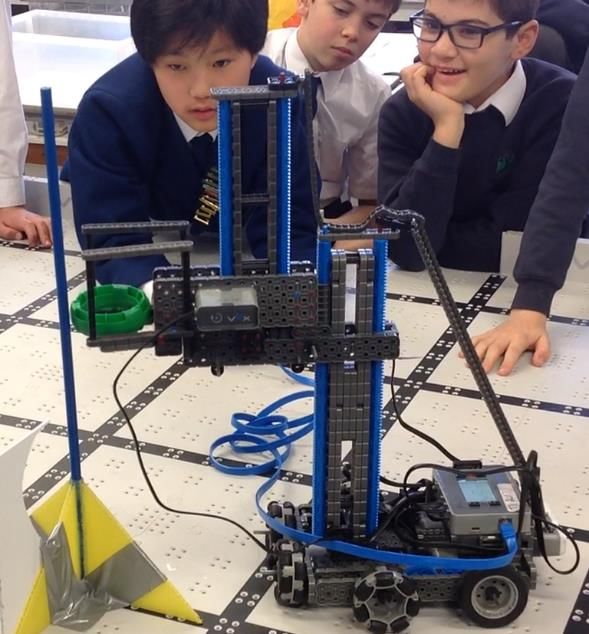
Autumn: VEX IQ Project

-Building upon their Y7 work with VEX IQ.

-Designing, constructing and programming robots.

-Keeping an engineering notebook to record the development process.

-Working effectively as a team to compete against other school’s robots.

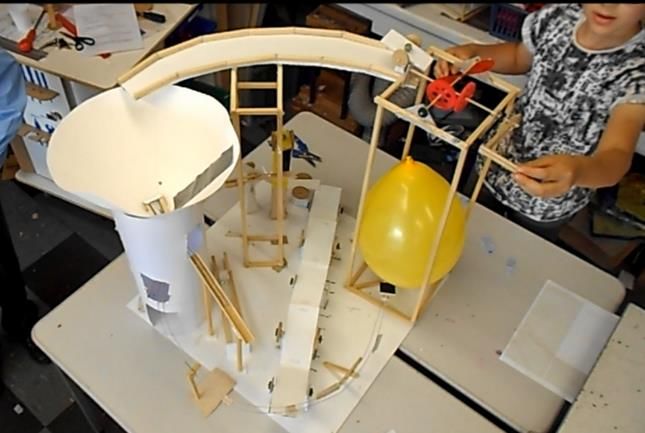
Easter: Chain Reaction project

-Studying the 6 simple machines which form the basis of all mechanical engineering
systems.

-Constructing a system of 6 simple machines which pop a balloon .

New this year: Students will be able to use their Autumn robots in this system too!
Self-directed Art project
-Pursuing an Art project of their choice.
N.B. Projects will need to extend the student’s existing knowledge and be discussed with
Oliver as they progress.
ICT/Computing
Computer Science at St Anthony’s aims to bring coding and digital literacy to everybody in a
fun and engaging way. Each and every interaction between humans and computers is
governed by it. With technology changing every industry on the planet, computing knowledge
has become part of a well-rounded skillset. Digital literacy is the ability to effectively,
responsibly, safely and critically navigate, evaluate and create digital artefacts using a range
of digital technologies. Our Year 7 pupils are thought how to dismantle and build computers,
followed by troubleshooting a number of basic computer issues. In this world of Digital
Literacy, we make sure that our pupils’ are equipped with the right skills, so that they can
complete a number of computational tasks and resolve problems, by using troubleshooting
algorithms.
E-Safety
VEX IQ Robotics Programming
o https://www.vexrobotics.com/vexiq
Bebras Competition
o http://www.bebras.uk/
Designing & Programming 3D printing objects.
Dismantle and rebuild a computerReligious Education
Pupils continue to study CE Syllabus B. Candidates offering Syllabus B are expected to study
the principal beliefs and practices of the Roman Catholic Church. The syllabus seeks to
balance challenging academic questions with a sincere and faithful exploration of Roman
Catholicism. The questions are set in such a way that candidates are invited to explore a range
of religious questions, as well as to show an awareness of the moral and spiritual teaching
within Roman Catholicism through the official teaching of the Church, Bible and reason. The
syllabus is divided into three sections. References to the Compendium of the Catechism of
the Catholic Church will not be tested explicitly.
The full syllabus is available at this link.
https://www.iseb.co.uk/Schools/Examination-syllabuses-specimen-papers/Common-
Entrance-at-13
Pupils use a variety of source materials including the relevant stage of The Way, The Truth
and The Life.
Pupils build on the knowledge and skills from Year 7. They are issued with a full revision
booklet composed by the school. Candidates offering RE for scholarship, and those doing the
RE section of entry exams at schools such as MTS, are given extra sessions which focus on
the specific needs of those papers. Special emphasis is paid to links with the History syllabus
which requires in-depth knowledge of themes concerning the Papacy and English and
Continental Reformation. The syllabus also requires the ability to argue at a high level and this
complements work done in English on discursive writing. Wherever possible we use major
examples of religious poetry and literature which also informs their skills in English
comprehension and creative writing.
Some useful websites:
http://www.bbc.co.uk/religion/religions/christianity/;
http://www.tere.org/index.php?id=104 This websites contains, amongst much other useful
material, some revision games.
http://www.nationalgallery.org.uk/visiting/floorplans/level-2/room-66 The National Gallery
is well worth visiting, and the website also includes some interesting information about
important religious works of art.
http://www.vatican.va/archive/ENG0015/_INDEX.HTM The Catechism of the Catholic
Church, included on the Vatican website.Drama Year 8 will begin their performance work in the Autumn term, by devising a play based on the script “Room Service” by Allen Boretz and John Murray. The boys will use their experiences and skills in Drama to create, rehearse and direct their own version of this play. Niyazi will guide them through the comedy genre and support them through the devising process. They will then showcase they work to the Senior House students, staff and parents in February 2019. Students will end their study in Drama with a Film Making project, where they will draw upon all their skills from the three years of study. Working with the Head of Drama, Niyazi Unugur, they will brainstorm, script, storyboard, pitch and produce their ideas for this year’s film making week. Once these have been given the green light, they will refine their work and ideas through the pre-production stage. Finally, they will film and edit their work during Film Making week and showcase their finished films at their end of year showcase event.
Music Music in the Senior House is divided into several key areas including: Great Composers; Instruments of the Orchestra; Music Genres; Music Theory; Singing and Vocal Development; Musical of the Term; Composition using Sibelius and Audacity; Aural Skills; Performing and Keyboard Skills. Great Composers From Bach to Beethoven, Mozart to Mendelssohn and Schumann to Schubert; the history of Music is populated by Great Composers who have influenced one another and performers throughout the ages. Pupils discover the relevance of these incredible musicians and how their music has shaped cultural development.
Instruments of the Orchestra
Strings, Woodwind, Brass and Percussion instruments all combine to create the
unique sound of the orchestra. In this topic pupils will explore each of the four families
of instruments, researching famous musicians and composers relevant to each
instrument.

Music Genres
Classical, Jazz, Popular, World and Folk, just some of the Music Genres that will be
covered in this topic; pupils will develop an appreciation of the vast array of different
musical styles and how these have influenced cultures, countries and continents.

Music Theory
An integral part of any musician’s vocabulary; Music Theory is the essential tool which
lays the foundation of all we do in Music. Pupils will cover aspects of the Grade 5
ABRSM Music Theory syllabus with options for more advanced pupils to prepare for
Grade 5 Theory examinations. Topics will include irregular time signatures, the tenor
clef, scales and key signatures, chords, composition, musical terms and signs. There
is also a Music Theory Club for pupils who wish to develop their knowledge and skills
further.
Singing and Vocal Development
There is no instrument quite like the human voice; singing can move the soul and
regular training of the voice is essential for emotional and musical development. Pupils
in Year 8 have the option to audition for the Chamber Choir with opportunities to sing
and perform in concerts, carol services and Mass. There are also links in the local
community including carol singing at the Spring Grove Residential Home.

Musical of the Term
Each term, there is a musical focus where pupils learn the stories and sing the songs
behind some of the world’s greatest musicals. Recent musicals have included The
Wizard of Oz, Willy Wonka and the Chocolate Factory, The Sound of Music, Oliver,
Annie and Joseph and the Amazing Technicolour Dreamcoat. Year 8 put on a yearly
production with cross-curricular collaboration between the Music, Drama and Art
departments.
Composition using Sibelius and Audacity
The Music Room is equipped with ten computers which include a number of music
technology programs. Pupils have the opportunity to use their composition skills using
the latest updated Sibelius software. Composition using music technology in a more
contemporary way is highly encouraged. Pupils use the open-source program
Audacity in the classroom supported by a website (freesounds) that provides samples
to use. Pupils use the program to import audio files, edit files and add effects.
Aural Skills
From the very beginning years at St. Anthony’s, pupils are encouraged to recognise pitch and
rhythm, sing intervals and rhythmic patterns accurately and sing both in unison and parts. All
practical ABRSM exams have an aural section and boys are assessed in the following areas:
Musical memory
Sight-singing
Answering questions on features of a piece
To clap the rhythm of the notes in an extract and
identifying whether it is in 2, 3 or 4 timePerforming and keyboard skills St. Anthony’s offers a number of excellent performing opportunities for pupils, including regular concerts and performances; Senior and Junior House concerts, concerts for advanced performers and opportunities for the many ensembles to perform including String Group, Jazz Band, Rock Band, Recorder Ensemble, Cello Ensemble, Singing Group, Senior and Chamber Choir. The Music Room is also equipped with ten electronic keyboards for pupils to develop their keyboard skills.
Sport
All boys in the Senior House have a PE/Swimming lesson each week and two Games
sessions at Brondesbury. In addition, we run an extra-curricular programme that runs
before and after School, giving boys the opportunity to take part in physical activity
every day of the week. The major Sports at the School are Football, Rugby, Cricket
and Cross-Country.
PE/Swimming
Year 8 – PE/Swimming: The boys spend half the term doing PE and the other half
Swimming. Activities in PE include Basketball, Health Related Fitness and a topic on
International Sports. Selected boys take part in competitive swimming galas including
the National IAPS competition. They have a range of activities in swimming including
speed testing, endurance testing, life-saving, water polo, synchronized swimming and
more.
Games
Games lessons take place at Brondesbury Cricket Club, which is a 10 minute bus
journey away from St. Anthony’s. Facilities at Brondesbury include 6 x 7 a side football
pitches, 2 x Rugby pitches, 2 cricket pitches, 2 squash courts, 7 tennis courts, 3 cricket
nets and athletics equipment.
Year 7&8 – Games: Years 7&8 boys mix together to create the U13s Sports teams.
The U13s fixtures take part on a Wednesday afternoon either at Brondesbury or the
opposing Schools playing fields. They also have an additional Games session on a
Tuesday afternoon. The boys take part in Football and Squash during the Christmas
Term. They get the choice between Rugby or Hockey during the Easter Term and the
choice between Cricket, Tennis and Athletics in the Summer Term. We also enter
U13s into a variety of events including Cross-Counry, Athletics, Table Tennis,
Duathlon and national Football, Rugby and Hockey competitions.
School Games Kit
All Games kit can be purchased online through Uniform4Kids.
Years 7&8 – for the first two terms, all boys require a green football shirt, (Yellow
Goalkeeper top for keepers) blue shorts, blue and green football socks, studded
football boots, shin pads, trainers and a mouth guard for Rugby/Hockey. If the boys
choose Rugby, they need to purchase the School’s blue rugby shirt. OPRO are visiting
the School in September to fit mouth guards for boys. During the Summer Term, boys
require a white branded school PE t-shirt (Years 7&8 also require this for PE lessons
throughout the year, along with blue shorts and white socks and trainers), blue shorts
and white trainer socks. Those playing Cricket require full cricket whites and protective
batting equipment if they strive to play hard ball cricket. School Sun hats are also
available.
All boys in School require Swimming Trunks, Goggles, towel and flip flops for
Swimming lessons.
PSHEE
Personal, Social, Health and Economic Education

The PSHEE programme for boys in Year 8 will enable the boys to develop and
gradually enrich their understanding of a set of overarching concepts, set out below:

1. Identity (their personal qualities, attitudes, skills, attributes and achievements and
   what influences these; understanding and maintaining boundaries around their
   personal privacy, including online)

2. Relationships (including different types and in different settings, including online)

3. A healthy (including physically, emotionally and socially), balanced lifestyle
(including within relationships, work-life, exercise and rest, spending and saving and
lifestyle choices)

4. Risk (identification, assessment and how to manage risk, rather than simply the
avoidance of risk for self and others) and safety (including behaviour and strategies
to employ in different settings, including online in an increasingly connected world

5. Diversity and equality (in all its forms, with due regard to the protected
characteristics set out in the Equality Act 2010)

6. Rights (including the notion of universal human rights), responsibilities (including
fairness and justice) and consent (in different contexts)

7. Change (as something to be managed) and resilience (the skills, strategies and
‘inner resources’ we can draw on when faced with challenging change or
circumstance)

8. Power (how it is used and encountered in a variety of contexts including online;
how it manifests through behaviours including bullying, persuasion, coercion and how
it can be challenged or managed through negotiation and ‘win-win’ outcomes)

9. Career (including enterprise, employability and economic understanding)

To further support the three core themes the boys will study: Health and Well- Being,
Relationships and Living in the wider world (economic well-being, careers and the
world of work) they will also take part in the Sutton Life Skills experience.

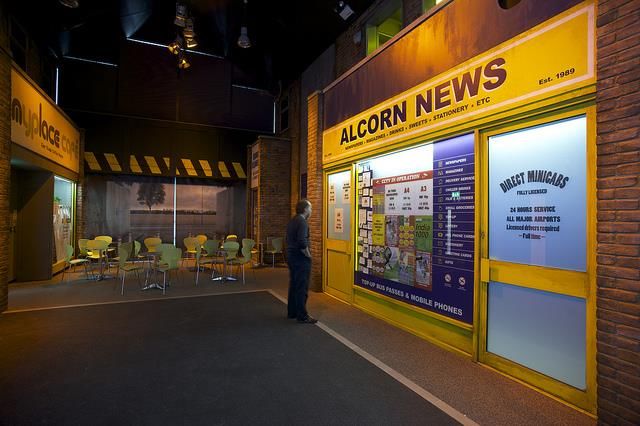
The Street Experience at The Sutton Life Centre http://www.suttonlifecentre.org

An urban setting with real shop facades. This is where students will be faced with some
of the dilemmas and difficult choices that growing up may throw at them, including peer
pressure, alcohol, smoking, street crime, gangs, knives and bullying.
Useful links:
https://www.ceop.police.uk/safety-centre/
https://www.thinkuknow.co.uk/
https://parentinfo.org/
https://www.saferinternet.org
https://www.childnet.com/parents-and-carers
https://www.actionforchildren.org.uk/
ICT Computing
Computing for year 8’s at St. Anthony’s focuses mainly on STEM projects, with the
main tasks being, programing and building Robots, for the VEX IQ International
competition. Computer programming brings new challenges and opportunities on a
daily basis. Some of these changes may require you to update computer knowledge
and existing skills. We make sure that our pupils are equipped with a number of tasks
that they can take with them to secondary school, including a good knowledge and
understanding of Digital Literacy. After completing a number of STEM projects our
pupils will have a great understanding of Digital Literacy which will help them to
effectively, responsibly, safely and critically navigate, evaluate and create digital
artefacts using a range of digital technologies.
E-Safety
VEX IQ Robotics Programming
o https://www.vexrobotics.com/vexiq
Bebras Competition
o http://www.bebras.uk/
Designing & Programming 3D printing objects.
Dismantle and rebuild a computerYou can also read


