Yegna in my head campaign - (Covid-19 Centered) Baseline Study January 2021 - UNICEF
←
→
Page content transcription
If your browser does not render page correctly, please read the page content below
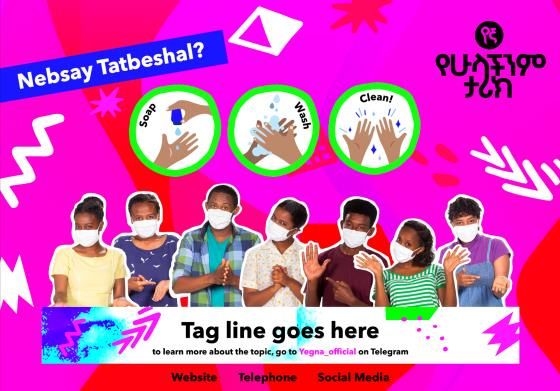
Yegna in my head campaign
(Covid-19 Centered)
Baseline Study
January 2021

Contents

    Background                                Slides 3-5

    Measurement                               Slides 6-10

    Summary of Findings                       Slides 10-11

    Media Access & Yegna Awareness            Slides 12-23

    Thematic                                  Slides 24-57

      -    COVID – 19
      -    Nutrition
      -    Menstruation
      -    Mental Health
      -    Violence against women and girls
Background

Yegna was launched in 2014 with an all-female cast, producing radio and music content. Over the
past 7 years Yegna has built up a vast and loyal fan based

In 2014 Yegna was born! The platform consisted of a radio drama, radio talk show
and music, and focused on the lives of 5 teenage girls, who formed their
friendship through forming a music band. The girls faced challenges which they
solved as a team - and produced music that reflected their experiences.

The core Yegna audience was girls aged 13-15. However, Yegna gained huge
popularity, not only with adolescent girls but with communities more widely.

From 2012–2019 Yegna’s branded offering included radio content and music in
the Ethiopia’s national working language, Amharic. The radio was broadcast in
Addis and Amhara, but the music reached far and wide with the first single
winning ‘best single of the year’ in a national award.

 In 2019 Yegna introduced a gender-mixed cast and developed a new TV drama;
“Yegna – the story of all of us”, which is now aired nationally in multiple
languages. Yegna drama is the first ever teen drama in Ethiopia that tackles
difficult social issues with warmth, humour and music.

                                                                                      Summary of    Media Access &
                                                           Background   Measurement                                  Thematic
                                                                                        Findings   Yegna Awareness
UNICEF funded Yegna to create a communications initiative focusing on inspiring Ethiopian
adolescents to protect their Health and Wellbeing during COVID Times

            Yegna In My Head Campaign is a series to shine a light on internal
Project     conflicts young people are facing regarding COVID-19 that are not
            necessarily discussed openly and to help young people specially to
            wrestle through these questions and dilemmas.

            Increasing knowledge and attitude of Increased dietary diversity,
            reduced consumption of processed snack and sugar sweetened
Objective   beverages, improved menstrual hygiene, increased handwashing
            with soap, Improved mental health coping behaviours, including
            uptake of gender-based-violence support services as appropriate
            and GBV related messaging.

            A 20 weeks Communication Campaign (Short advertisements/Max
Product     1 min video and audio using the Yegna Cast). Targeting
            approximately 20 million and producing in 3 languages, with
            distribution means of Radio and TV and Billboards.

                                                                                  Summary of    Media Access &
                                                       Background   Measurement                                  Thematic
                                                                                    Findings   Yegna Awareness
Measurement
Research Objectives

 Survey Objective

 The M&E planned inline with the project will be a quantitative tracking study with open ended questions
 incorporated to measure impact of the covid-19 communication initiative. Two waves of data will be collected,
 one at baseline (pre-campaign) and one at end line (post campaign) and each will be with a cross sectional
 sample of 700. The following objectives will be assessed against the baseline and end line findings.

             Understand the scale of reach of the communication initiative/campaign across Ethiopia

             Understand levels of engagement

             Understanding which communication channel has the highest reach and engagement

             Understanding key barriers to exposure

             Measuring self reported impact from consumption of the campaign

                                                                                   Summary of    Media Access &
                                                        Background   Measurement                                  Thematic
                                                                                     Findings   Yegna Awareness
Research Approach
Design
This study is designed in a way that we do baseline study with 700 respondents before the actual launch of the
campaign and then we have the campaign and we do an end line after the campaign period. This survey report is
specifically for the baseline study we did in November.
Campaign End line Study
Baseline Study
December 2020 to May,2021
November 2020
April 2021
Done (This Report)
Live (On Progress)
Summary of Media Access &
Background Measurement Thematic
Findings Yegna AwarenessResearch Approach
Sampling * The interviews lasted between 15 - 20 minutes once
consent had been sought from caregiver for those
below 18 years old assessing exposure to media
platforms, engagement with media platforms,
n =700 respondents awareness and attitude towards COVID-19, Nutrition,
*50/50 Male female and 50/50 adolescents adult Menstruation, Mental Health and Gender based
distribution violence and source of information on the mentioned
topics.
* People aged 15+ across Ethiopia were contacted
and quota is set on age, and gender, with natural * Adolescent respondents answered the survey away
fall out on location from caregivers, so data collected represents their
opinions.
* The survey was national representative and a
‘random digit dialling’ system is used to make the * A CATI (Computer Assisted Telephone Interview)
sample as representative as it can be approach was used to collect data considering covid-19
* Worked with a fieldwork agency called SART and data
collection took place between November 6th – 20th
Summary of Media Access &
Background Measurement Thematic
Findings Yegna AwarenessThe demographic profile of the final sample of respondents at baseline
Respondent Demographics
n=705 respondents
Location
…………………………………………….
…………………………………………….
Age Gender
Addis Ababa
Afar 2% 5%
Amhara 0% 1%
Benishangul
Dire Dawa
26% Female 23%
Age 15-19 48% Gambela 28%
Age 20-65 74% Male 52% Harari
Oromia 2%
35%
SNNPR
1%
Somali
1% 2%
Sidama
Q00. Age Group Q08. Gender Q09. Region Summary of Media Access &
Background Measurement Thematic
Findings Yegna AwarenessSummary of Findings
Summary of Findings

                                  Almost all respondents know about covid-19 and prevention methods and
                                  knowledge of the measures to avoid the transmission is high; but still
                                  implementation specially hand washing and mask wearing is low

                                  Frequency of eating processed food and eating a more diverse diet has changed
    There is an average use of    for the better amongst a notable minority; but there is some room for
   media platforms but still TV   improvement
   viewership is comparatively
                                  Nearly half of all women aged 15-30 already say that they have been feeling
     higher than Social Media     more confident about managing their menstrual hygiene, but there are some
   use and Radio listenership.    false perceptions about the interchangeable use of disposable and reusable
   And a third of respondents     pads and lack of sufficient information on MHM related facts
        confirm seeing any
        billboard recently.       While almost everyone is happy and excited that schools are reopening and that
                                  they will see their friends again, there is some concern and discomfort around
                                  the reopening and adults show slightly higher levels of concern/worry

                                  Knowledge about the right measures to take if witnessing or advising people
                                  about violence against women is high and there is a good understanding of the
                                  general definitions of it, but only a small proportion of the sample had
                                  seen/heard any information about how.

                                                                            Summary of    Media Access &
                                                Background   Measurement                                   Thematic
                                                                              Findings   Yegna Awareness
Yegna Awareness and Media
AccessYegna Awareness
Almost a third of respondents are aware of Yegna and awareness is high among adults and females

Yegna Awareness

                                                              34% Adult
                                                         30% Adolescents                      TV drama followed by Music is what comes
                                                                                              to the mind of those aware of Yegna first
          31% are of                                                                          when asked about the brand/Yegna.

              Yegna                                                                           -       TV Drama = 36%

                                                             36% Female                       -       Music = 27%
                                                               26% Male

      Q9. All respondents (n=705) - Have you ever heard of a group/brand
      called 'Yegna’?
      Q10. All aware of Yegna (n=310) - When I say 'Yegna', what comes to your
                                                                                                                Summary of    Media Access &
      mind first?                                                                Background       Measurement
                                                                                                                  Findings
                                                                                                                                               Thematic
                                                                                                                             Yegna Awareness
Few of those aware of Yegna confirm of hearing and/or seeing a content from Yegna and TV Drama
is what they consumed most followed by social media content and music
Yegna consumption
- Product consumption is almost
equivalent among adults/adolescents
11% have seen
and male/female
or heard any
product from
Yegna Note: this is only baseline and there was no campaign
content on any of the Yegna media platforms. The only thing
respondents can recall at this point was the TV Drama which
was aired 8 months back.
Q11. All aware of Yegna (n=219) - Thinking about the last 4 weeks/1
month, have you seen or heard any product from Yegna?
Q12. All who consume Yegna (n=24) - In the last 4 weeks/1 month, what
Summary of Media Access &
have you seen or heard from Yegna? Background Measurement Thematic
Findings Yegna AwarenessMedia Access
TV Viewership is significantly higher than Social Media use and Radio listenership

     Satellite TV Viewership                                   Social Media Use                                     Radio Listenership

         Everyday                  40%                            Everyday        22%                                 Everyday       13%

   A few times in a                                      A few times in a                                      A few times in a
                          21%                                                     14%                                                14%
        week                                                  week                                                  week

   Once in a week        6%                              Once in a week           4%                            Once in a week       8%

 Less than once in                                    Less than once in                                   Less than once in a
                                                                                  2%                                          6%
   a week/a few…
                         6%                             a week/a few…                                      week/a few times…
                                                          Never/not at all                     55%              Never/not at all
   Never/not at all         26%                                                                                                                      57%
                                                             Do not know          2%
      Do not know         1%                                                                                       Do not know       1%

                                                                                                               Prefer not to say     0%

         Q1. All Respondents (n=705) - Thinking about the last 4 weeks/1 month,
         how often would you say you have watched satellite TV?
         Q3. All Respondents (n=705) - Thinking about the last 4 weeks/1 month,
         how often would you say you have listened to radio?
         Q7. All respondents (n-705) - Thinking about the last 4 weeks/1 month,                                     Summary of      Media Access &
                                                                                  Background     Measurement                                               Thematic
         how often would you say you have used social media platform?                                                 Findings     Yegna Awareness
Use of media platforms is high among adults and male except for the case of TV where we find
more female watching than male
Use of media platforms
TV Viewership is high among Radio listenership is high among
Adults than adolescents (82 % Vs 71 %) Adults than adolescents (43% Vs 41%)
Female than male (76% Vs 71%) Males than females (55% Vs 29%)
Social Media use is high among
Adults than adolescents (48% Vs 41%)
Males than females (50% Vs 36%)
Q1. All Respondents (n=705) - Thinking about the last 4 weeks/1 month,
how often would you say you have watched satellite TV?
Q3. All Respondents (n=705) - Thinking about the last 4 weeks/1 month,
how often would you say you have listened to radio?
Q7. All respondents (n-705) - Thinking about the last 4 weeks/1 month,
Summary of Media Access &
how often would you say you have used social media platform? Background Measurement Thematic
Findings Yegna AwarenessEBS, ETV News and Fana are the most watched satellite TV channels among those who view
satellite TV followed by Walta and KanaTVs
Most watched TV Channels
EBS TV focuses on various entertainments related subjects such
EBS TV 42% as talk shows, game shows, movies, dramas and others. The
channel also known for daily news segments including local to
ETV News 40% global news.
Fana TV 40%
Walta TV 26%
Kana TV 19%
ETV News (etv ዜና) is the main news channel with 24 hours coverage, with
Amhara TV 17% content on culture, politics, documentaries, and economy. Broadcast mostly
Other 17% in Amharic with the exception of some news segments which are broadcast
in other languages.
ETV Meznagna (ETV… 16%
ESAT 15%
OBN 13%
Nahoo TV 11% FBC is a news media company operating in Ethiopia and focuses mostly on
political, social and economical reports about Ethiopia.
Q2. All those who have access (n=518) - In the last 4 weeks/1 month,
which channels did you watch most often? Summary of Media Access & Thematic
Background Measurement
Findings Yegna AwarenessOromia radio and Debub FM are the most listened radio channels among those who listen to radio
followed by Ethiopian National Radio
Most Listened Radio Channels
Other 21%
Oromia Radio 13% Content is mostly focused on news from the Oromia regional state,
but also covers news from the national and international levels. The
Debub FM 100.9 11%
majority of broadcasts are in Afaan Oromo (the native language of
Ethiopian Radio National 10% the Oromo people) with some programs in Amharic (the federal
Amhara Radio 8% language of Ethiopia) and English.
FM Bahir Dar 96.9 7%
Fana Jimma FM 98.1 7%
Fana FM 98.1 7%
FM Addis 97.1 6% The Debub FM radio station is established and controlled by
Fana Radio 6% Southern Nations, Nationalities and People's Media Agency in
Sheger FM 102.1 5% Hawassa. It is trusted as a source of information and a vital
player of development broadcasting content prepared
Ethio FM 5%
strategically and appropriately to prompt the people to be
Fana Gondar FM 98.1 5% socially engaged in development activities.
Fana Shashamane FM 103.4 5%
Q4. All those who have access (n=292) - In the last 4 weeks/1 month, which
channels do you listen most often? Summary of Media Access &
Background Measurement Thematic
Findings Yegna AwarenessFacebook and Telegram are the most used social media platforms among those who use social
media followed by You Tube and Instagram
Most used social media platform
Facebook is a website which allows users, who sign-up for free profiles,
Facebook 75% to connect with friends, work colleagues or people they don't know,
online. It allows users to share pictures, music, videos, and articles, as
Telegram 60% well as their own thoughts and opinions with however many people
they like.
Other 22%
YouTube 18%
Telegram is a messaging app with a focus on speed and security, it's
Instagram 10% super-fast, simple and free. You can use Telegram on all your devices at
the same time — your messages sync seamlessly across any number of
Tik Tok 8% your phones, tablets or computers.
Twitter 2%
Q8. All those who have access (n=301) - Thinking about the last 4
weeks/1 month, which social media platforms do you use most often? Summary of Media Access &
Background Measurement Thematic
Findings Yegna AwarenessAlmost a third of respondents have seen any billboard in the past four weeks
Those who see Billboard recently
29% Adult
23% Adolescents
25%
have seen
billboard recently
31% Male Note: As this is a baseline and as there
was no Yegna content out on billboard,
18% Female almost all (90%) confirm of seeing a
Non-Yegna billboard advertisement.
Q5. All respondents (n=705) - Thinking about the last 4 weeks/1 month,
have you seen any billboard advertisements?
Q6. All who saw billboard recently (n=174) - What kind of things have
you seen on billboards in the past 4 weeks/1 month? Mention example Summary of Media Access &
Background Measurement Thematic
please? Findings Yegna AwarenessThematic
- COVID – 19
- Nutrition
- Menstruation
- Mental Health
- Violence against
24
women and girlsCovid-19
25Almost all respondents know about covid-19 and prevention methods - knowledge is same across
male/female and adolescent/adults
Awareness of COVID - 19 Knowledge of prevention measures
Wearing masks 92%
Avoiding social gatherings … 90%
99% of
respondents Washing hands ... 88%
know about Using sanitizer … 50%
COVID-19
Other 17%
Staying at home … 11%
Coughing/sneezing on the arm 10%
Q17. All respondents (n=705) - Do you know about Covid 19/corona virus? Summary of Media Access &
Background Measurement Thematic
Findings Yegna AwarenessKnowledge of the measures to avoid the transmission of the disease is high among those aware of
covid-19 that majority were able to respond correct to the true/false questions
Covid prevention – True/False Questions
Correct
Answer
You should always wear a mask if in social spaces 99%
You do not need to wash your hands with soap; water is 99% - Knowledge is equivalent
sufficient across male/female and
adolescent/adults
You should wash your hands all the time with soap every 20 min 91%
You should wear face mask all the time 13%
Q19.1 – Q 19.4 All those aware of Covid-19 (n=698) – True/False
Questions Summary of Media Access & Thematic
Background Measurement
Findings Yegna AwarenessThe majority of respondents were able to correctly answer questions relating to the transmission of
COVID-19
Covid prevention – Agree/Disagree Questions
Correct
Answer
It is important to follow and practice any measures to avoid the
97%
transmission of the disease/covid-19
I do not think I am responsible for the transmission of covid-19 92% - Knowledge is equivalent
and therefore the measures to avoid the transmission of the across male/female and
disease do not apply to me adolescent/adults
I don't think I have to follow and practice the measures set out to 89%
avoid the transmission of the disease
I am not sure of the the measures set to avoid the transmission of 86%
the disease
Q20.1 – Q 20.4 All those aware of Covid-19 (n=698) – Agree/Disagree
Questions Summary of Media Access &
Background Measurement Thematic
Findings Yegna AwarenessFrequency of washing hands and use of facemask is not that significant but still respondents are
washing hands and using facemasks slightly higher in recent times
Frequency of washing hands and use of facemask in the past 4 weeks
Face mask use 28% 32% 40%
Washing hands 33% 29% 37%
Same Less More
Q21. All aware of Covid-19 (n=698) - Would you say that you are washing
your hands with soap more/less/the same compared to 4 weeks ago?
Q22. All aware of Covid-19 (n=698) - Would you say that you are wearing Summary of Media Access &
Background Measurement Thematic
a face mask more/less/the same compared to 4 weeks ago? Findings Yegna AwarenessMore than half of those aware of covid-19 have seen/heard any information on preventative
measures in the past 4 weeks
Access to content about prevention methods Source of information
TV 65%
57% have Other 28%
seen/heard any Radio 19%
information on
Social Media 14%
preventative
Billboard 3%
Social media Yegna Content 2%
Q23. All aware of Covid-19 (n=698) - Have you seen/heard any information
on preventative measures for the transmission of covid-19 past 4 weeks?
Q24. All who see any content (n=528) - In the last 4 weeks, from where did Summary of Media Access & Thematic
you see/hear/get this information? Background Measurement
Findings Yegna AwarenessEBS TV and Facebook are the main source of information for those who have heard/seen
information on preventative measures of covid-19
Platform for source of information
I got the information from different television programs
and by listening to discussions held by Ministry of
Other 36%
health. I learned lessons on how I should protect myself
and learned about ways of keeping my hygiene and be
Facebook 23% protected from the corona virus. Female, Adult
EBS TV 23%
Fana Radio 14% To bend our necks and cover our mouth with our arms
when we are coughing or sneezing. Male, Adolescent
Q27. All those who get information (n=22) - In the past 4 weeks, from
where did you see/hear/get this information? Summary of Media Access &
Background Measurement Thematic
Findings Yegna AwarenessAlmost half of those aware of covid-19 confirm of feeling high to medium risk in the past 4 weeks –
while more than half feel No to low risk
Feeling of risk
- Adults and male are more likely to feel at risk
No risk 30%
Medium risk 25%
Because I am not implementing the safety measures as
High risk 22%
I used to-such as washing hands for 20 seconds. I think
we are even at the stage where people are saying the
Low risk 21%
disease doesn't exist-There is reluctance. Male, Adult
Q30. All aware of Covid-19 (n=698) In relation to Covid - 19, how at risk
do you feel personally in the last 4 weeks? Summary of Media Access &
Background Measurement Thematic
Findings Yegna AwarenessNutrition
33A majority of respondents are aware of information that teaches them about having a
healthy/nutritious diet, mostly eating fruit and vegetables
Awareness of nutrition information Knowledge of nutritional/healthy diet
67% of Fruit & veg eating 72%
respondents have Nutrients & protein… 53%
seen information Diverse diet / eating… 49%
about healthy Other 21%
eating/nutrition Good hygiene food… 16%
Avoiding junk food 11%
- Females and those aware of Yegna are more
Drinking pure water… 8%
likely to hear/see any information about
nutrition/healthy eating
Q32. All respondents (n=703), Do you know of any information that
teaches about healthy/nutritious diet?
Q33. All those aware of nutrition information (n=470) What is that
Summary of Media Access &
information Background Measurement Thematic
Findings Yegna AwarenessKnowledge is high that sugary drinks are not healthy and that organic food and a diverse diet is
healthy, but knowledge is lower about processed snack foods being unhealthy
Nutrition – True/False Questions
Correct Answer
Drinking sugary drinks is better and healthier than 84%
only water
Eating non processed organic food and a diverse 82%
diet is healthy 52% Teens
Eating processed sugary drinks is unhealthy 81% 64% Adults
Eating processed snack foods is healthy 55%
Q34.1 – Q 34.4 All (n=703) – True/False Questions
Summary of Media Access &
Background Measurement Thematic
Findings Yegna AwarenessMost respondents agree that girls and boys should eat the same diet, at the same time, and most
understand that a balanced diet means eating diverse and organic food
Nutrition – Agree/Disagree Questions
Correct Answer
I believe that girls and mothers should eat after the males in HH 89%
Boys should eat a more balanced diet than girls 89%
Balanced diet means eating diverse and organic food 85%
I believe that girls and boys should eat the same diet 84%
Q35.1 – Q 35.4 All (n=703) – Agree/Disagree Questions
Summary of Media Access &
Background Measurement Thematic
Findings Yegna AwarenessOnly a minority feel that the food given to girls, and how it is given has changed, with adults being
more likely to feel this
Change in (the way) food is given to boys and girls
35% of
40%
respondents say
the way food is Adult
given to girls and
boys has changed
Q36. All respondents (n=703), Would you say in your household or a
typical household the food given to girls and boys and how it is given
has changed? Background Measurement
Summary of Media Access & Thematic
Findings Yegna AwarenessFrequency of eating processed food and eating a more diverse diet has changed for the better
amongst a notable minority but there is some room for improvement
Frequency of eating processed food/diverse diet in last 4 weeks
Eating
processed 41% 44% 11%
food Well, as we all heard on TV, processed foods
are so bad to our health and that is why I
Eating more have started eating less processed foods
12% 53% 34%
diverse diet
than before. Male, Adult
Less Same More
Q38. All (n=703) Are you eating more/less/the same amount of
processed foods/snacks as 4 weeks ago?
Q40. All (n=703) Are you eating more/less/the same diversity of food Summary of Media Access &
Background Measurement Thematic
as 4 weeks ago Findings Yegna AwarenessOnly a few people had seen or heard any information on nutrition in the past 4 weeks
Access to content about nutrition Source of information
TV 63%
14% have
seen/heard any
Other 19%
information on
nutrition
Social media 19%
- Those aware of Yegna are more likely to hear/see Radio 13%
any information on nutrition
Q42. All respondents (n=703) Have you seen/heard any information on
nutrition in the past 4 weeks? Background Measurement
Summary of Media Access & Thematic
Findings Yegna AwarenessMenstruation
40Almost all women know how to manage their menstruation, which is mostly disposable pads, but
also keeping their personal hygiene good, drinking hot drinks and using reusable pads
Awareness of ways to manage menstruation Knowledge of ways to manage menstruation
Disposable pads 94%
Keeping personal hygene 34%
Drinking hot drinks 22%
94% of females
Other 19%
know ways to
Reusable pads 17%
manage their
Resting enough 8%
menstruation Eating well 5%
Asking advice 2%
Adapting days at school 1%
Q49. All females (n=362) In relation to menstruation, do you know any
ways to manage menstruation? Background Measurement
Summary of Media Access & Thematic
Findings Yegna AwarenessUnderstanding that people can produce reusable pads themselves at home is high but there are some
false perceptions about the interchangeable use and health of using disposable and reusable pads
Menstruation – True/False Questions
Correct Answer 78% Female
67% Male
One can produce reusable pads at home/by 73%
themselves
One cannot use reusable and disposable pads 63%
interchangeably
Using reusable pads is not as healthy as disposable 36%
pads
66% Teens
During menstruation girls can ONLY use either 23%
disposable or reusable pads 55% Adults
Q51.1 – Q 51.4 All (n=692) – True/False Questions
Summary of Media Access &
Background Measurement Thematic
Findings Yegna AwarenessAttitudes towards menstruation are sympathetic & supportive of women & the discomfort felt by
some women during menstruation, especially among adults and females
Menstruation – Agree/Disagree Questions
Correct Answer
Girls should communicate/ask for advice about 97%
menstruation 94% Female
Menstruation is normal/natural and many women 96% 82% Male
experience it
Supporting and cooperating with menstruating 96%
women is normal
Having pain and discomfort at the time of 88% 86% Teens
menstruation is normal; pain may differ
94% Adults
Q52.1 – Q 52.4 All (n=692) – Agree/Disagree Questions
Summary of Media Access &
Background Measurement Thematic
Findings Yegna AwarenessNearly half of all women aged 15-30 already say that they have been feeling more confident about
managing their menstrual hygiene in the past 4 weeks
Changing in menstruation confidence in last 4 weeks
This is not something new for me. I have had
it for about 3 or 4 months. I can now even
explain to others and advise them. This is not
Change in something I am ashamed of because it is part
menstrual 47% 3% 48%
confidence of my womanhood. Female, Adolescent
Less Same More
But only a tiny minority (6%) had heard any
information about menstruation in the past 4 weeks
Q53. All females aged 15-30 (n=278) Are you feeling more
confident/less confident/the same about managing your menstrual
hygiene in the past 4 weeks?
Q55. All (n=692) Have you seen/heard any information about Summary of Media Access & Thematic
Background Measurement
menstruation in the past 4 weeks Findings Yegna AwarenessMental Health
45Although many activities were not kept up during lockdown, household chores were most likely to be
continued with adults and males most likely to say they didn’t stay home
Activities during Covid-19 lockdown
Household chores 58%
Reading 44%
Other 41%
- Adults less likely to read but more likely to say
Exercise 15%
life continued as usual or they didn’t stay home
Life as usual 13%
Internet social media 12% - Females much more likely to say they continued
the household chores while men say life
Didn't stay home 6% continued as usual or they didn’t stay home
Economic activity 5%
Creative activities 4%
Q62. All (n=684) In relation to Covid-19, how did you cope and keep
up your daily routine while you were staying at home? Summary of Media Access &
Background Measurement Thematic
Findings Yegna AwarenessWhile respondents are finding coping/keeping up a routine hard, they overwhelmingly say that they
can cope by staying cautious and creative and that they shouldn’t forget about their studies
Mental health – True/False Questions
Best Answer
Cope with the situation by keeping precautionary measures 95%
and being creative at home
You can forget about school and studying till school opens 88%
again
Forget about keeping daily routine till everything is normal 72%
Coping up and keeping routine is not hard at all 52%
Q63.1 – Q 63.4 All (n=703) – True/False Questions
Summary of Media Access &
Background Measurement Thematic
Findings Yegna AwarenessThe vast majority of adolescents and a minority of adults were attending school during the Covid-19
outbreak
School attendance during Covid-10 outbreak Education level
Secondary 54%
88%
Adolescents
70% were Primary 36%
attending school
First degree 9%
during the Covid-
19 outbreak
2nd degree and above 1%
Q64a. All (n=684) Were you attending school last year during the Covid-
19 outbreak?
Q64b All who attended school during the Covid-19 outrbreak (n=478) Summary of Media Access &
Background Measurement Thematic
What was your education level? Findings Yegna AwarenessWhile almost everyone is happy that schools are reopening and that they will see their friends again,
there is some concern and discomfort around the reopening
Mental health – Agree/Disagree Questions
Correct
Answer
I am very happy that school is opening back again 97% 87%
I feel so happy that I am meeting up with my friends and school 91% Adults
community again
I was missing the school, school community and my friends and 79%
feel happy to meet them but still don’t feel as I used to because
the pandemic frustrates me
School reopening is such an interesting fact but I don’t feel 63%
comfortable fearing the pandemic
Q64c.1 – Q 64c.4 All (n=692) – Agree/Disagree Questions
Summary of Media Access &
Background Measurement Thematic
Findings Yegna AwarenessThe predominant feeling about school reopening is that of excitement/happiness, however, adults
show slightly higher levels of concern/worry
Mental health – Agree/Disagree Questions
67%
Excited/happy 75%
Adults
Because I miss my friends very much.
At risk/concerned 13% Because it a must for us to continue
18% with our education. Male, Adolescent
Frustrated/worried 9% Adults
I have two younger brothers, and I
Normal 2%
worry that I might infect them and
my parents. Female, Adolescent
Q65. All (n=684) What do you feel most about school reopening?
Base: All (684) Summary of Media Access &
Background Measurement Thematic
Findings Yegna AwarenessInformation about schools re-opening was widespread with nearly half having seen/heard some
information, especially adults
Access to content about school reopening Source of information
TV 61%
46% have
Other (mostly school) 30%
seen/heard any
information on Radio 18%
school reopening
Social media 14%
- Adults are more likely to hear/see any Billboard 1%
information on school reopening
Q67. All (n=684) Have you seen/heard any information about school
reopening and ways of coping with it in the past 4 weeks? Summary of Media Access &
Background Measurement Thematic
Findings Yegna AwarenessViolence against Women and
Girls
52Nearly half of the respondents have seen/heard information in relation to violence against women,
with adults most likely to have done so
Awareness of violence against women/girls Source of information
45% of Other 86%
respondents have
Help lines/phone
seen 13%
numbers
communications
One stop ceners like
about gender 7%
Pawlos
violence
Organizations like
2%
- Adults are more likely to hear/see any Gegnit
information about violence against women
Q74a. All respondents (n=687), In relation to violence against women
and girls, have you seen/heard of any communication or support
systems/channels? Background Measurement
Summary of Media Access & Thematic
Findings Yegna AwarenessKnowledge about the right measures to take if witnessing or advising people about violence against
women is high and there is a good understanding of the general definitions of it
Violence against women – True/False Questions
Correct
Answer
Advising people around and reporting violence against women 98%
and girls is the right measure to take
You should keep quiet when you see violence 94%
Violence against women and girls is anything done by force or 94%
without the will of the person that can cause physical or
psychological harm
Violence against women and girls is any harm/abuse 70%
done/made based on the person’s gender
Q75.1 – Q 75.4 All (n=687) – True/False Questions
Summary of Media Access &
Background Measurement Thematic
Findings Yegna AwarenessThere is clear understanding that violence against women and girls can happen at any time or place,
by anyone and to anyone as well as a strong belief that it can be solved by communication
Violence against women – Agree/Disagree Questions
Correct Answer
Violence against women and girls can be solved 95%
through comms and support channels 77% Teens
Violence against women and girls can happen to 84% 84% Adults
anyone you know
Violence against women and girls can happen any time 79%
or place
Violence against women and girls can happen by 71% 68% Teens
anyone you know
80% Adults
Q76.1 – Q 76.4 All (n=687) – Agree/Disagree Questions
Summary of Media Access &
Background Measurement Thematic
Findings Yegna AwarenessKnowledge and actions re. violence against women has improved in the last 4 weeks
Changing in knowledge of gender violence in last 4 weeks
It was told on Tv and different medias that girls were
being raped by there fathers. People were saying to
Improved 56% support them. By listening to these things my
knowledge about it has improved. Female, Adult
Not improved 34% I have also changed. Because the
media has also been talking about it
and I learned a lot. Male, Adolescent
Q77. All (n=687) Would you say that your knowledge and actions
regarding violence against women and girls communication and
support system has improved/not improved in the past 4 weeks? Summary of Media Access & Thematic
Background Measurement
Findings Yegna AwarenessOnly a small proportion of the sample had seen/heard any information about gender violence in
the past 4 weeks
Access to content about school reopening Source of information
TV 61%
14% have
Other 26%
seen/heard any
information on
Radio 9%
gender violence
Social media 10%
Billboard 1%
Q79. All (n=687) Have you seen/heard any information about violence
against women and girls communication and support system in the
last 4 weeks? Background Measurement
Summary of Media Access & Thematic
Findings Yegna AwarenessThank You
You can also read


