YOUNG PEOPLE STRATEGY 2021-2024 - Edmonton Police Commission
←
→
Page content transcription
If your browser does not render page correctly, please read the page content below
YOUNG PEOPLE
  STRATEGY
  2021–2024
TABLE OF CONTENTS
                                                              Message from Leadership 			               2

                                                              Overview			                               4

                                                              Process for Developing the Strategy			    6

                                                              Background			                             7

                                                              Our Current Context			                    7

                                                              Brains Under Construction			              9

                                                              What Else Affects Behaviour?			           10

                                                              Risk and Protective Factors			            12

                                                              Resilience			                             13

                                                              Harm To and By Young People			            15

                                                              Crime and Vulnerability			                16

                                                              Young People and the Law			               16

                                                              Role of Police with Young People			       18

                                                              Case Study			                             20

                                                              Strategy-At-A-Glance			                   22

                                                              Scope of the Strategy			                  24

                                                              Principles			                             25

                                                              Strategic Pillars			                      26

                                                              Focus Areas			                            28

                                                               FOCUS AREA 1: EARLY IDENTIFICATION 			   30
                                                               AND INTERVENTION
                                                               FOCUS AREA 2: CONSISTENT SERVICE			      33
                                                               AND COORDINATED APPROACH
                                                               FOCUS AREA 3: SPECTRUM OF RESPONSES		    34
                                                               FOCUS AREA 4: CONTINUOUS LEARNING 			    36
                                                               AND IMPROVEMENT

                                                              Glossary			                               39

                                                              List of Partners Consulted			             40

                                                              Key Themes from the Feedback			           40

B   Edmonton Police Service YOUNG PEOPLE STRATEGY 2021–2024
MESSAGE FROM LEADERSHIP

                                                         A Message From
                                                         Dale R. McFee
                                                         Chief of Police

                          Although young people aged 10-24 are only 20            The EPS has many specialized units focused
                          per cent of Edmonton’s population, they are 100         specifically on youth, but the reality is that all
                          per cent of our future, and at much greater risk of     frontline officers will interact with young people
                          being involved with or becoming victims of crime.       at some point. This strategy is the cornerstone
                                                                                  of an organization-wide approach, providing
                          The Edmonton Police Service’s Young People
                                                                                  officers with the knowledge and resources needed
                          Strategy 2021-2024 reflects the responsibility
                                                                                  to build positive relationships. The result is a
                          police have in reducing the dangers crime and
                                                                                  consistent approach driven by data, measured with
                          violence pose to some of our youngest and
                                                                                  coordinated outcomes and backed by research and
                          most vulnerable demographics. Although they
                                                                                  the knowledge of our community partners.
                          come from diverse backgrounds, they all face
                          the complexities of navigating a developmentally        Developing EPS’ Young People Strategy was
                          informative path from childhood to adulthood.           no small task, and I would like to commend
                                                                                  the work of the multidisciplinary team of internal
                          There are countless factors that can influence
                                                                                  and external experts that made it possible. It is
                          a young person’s involvement in crime, and
                                                                                  an invaluable tool that leverages our community
                          no two individuals will share the same set of
                                                                                  partnerships to put prevention, intervention and
                          circumstances. At any stage in their journey,
                                                                                  diversion at the forefront, setting a framework to
                          interactions with the police can significantly impact
                                                                                  hold young people accountable while engaging
                          their perceptions of crime and safety, and greatly
                                                                                  their families and community supports to avoid
                          affect their future involvement with the criminal
                                                                                  unnecessary involvement with the criminal
                          justice system. Police and community services play
                                                                                  justice system.
                          a crucial role in redirecting, establishing support
                          and helping to build better outcomes for young          As always, we will hold ourselves accountable to
                          people, their families and the community.               the goals we set within this strategy. This document
                                                                                  is more than words: it is the future of empowering
                                                                                  and building resiliency for the long-term safety
                                                                                  and well-being of Edmonton’s young people.

         2                                     Edmonton Police Service YOUNG PEOPLE STRATEGY 2021–2024
“Kids are not adults. By holding them accountable in                                          NUMBER OF CRIME INCIDENTS PER 100,000 PEOPLE
OVERVIEW

            developmentally appropriate ways we can reduce the                                  12000

            harm and risk they pose to themselves and others.”
                                                                                                10000
           International Association of Chiefs of Police, 2014

           Edmonton’s crime rates are decreasing at a slower rate than the national average,    8000
           while also remaining higher than the national average. The highest crime and
           victimization rates are among young people. The Edmonton Police Service’s
                                                                                                6000
           2020-2022 Strategic Plan calls for a balance between enforcement and support.
           This balance is especially critical for young people. Under- or over-intervening
                                                                                                4000
           in the early years can impact an individual’s likelihood of future contact with
           the criminal justice system, further widening any socioeconomic disparities and
           inequities in long-term outcomes. Much of the behaviour and thinking of young        2000

           people can be attributed to their developmental stage. Science tells us that the
           brain does not fully mature until the age of 24. This strategy was developed             0
           based on the current best practices and builds on our strong foundation of                        2015            2016           2017           2018            2019

           youth-focused programming to invest more wisely in all young people from                                 EDMONTON CRIME RATE            NATIONAL CRIME RATE
           10 to 24 years of age who come into contact with the criminal justice system.

                                                                                               Interactions with young people present a unique set of challenges and
                                                                                               opportunities for law enforcement. We recognize that a more holistic, integrated,
                                                                                               and flexible approach is needed in order to ensure the safety and well-being of
                                                                                               young people and the community. By providing the right response at the right time
                                                                                               and specific to a young person’s needs, we can help build resilience and support
                                                                                               positive life trajectories.

                                                                                               The safety and well-being of young people is a collective effort. This strategy
                                                                                               developed by a multi-disciplinary team from across the service. The team worked
                                                                                               collaboratively to identify and analyze issues, opportunities, and outcomes for
                                                                                               police and young people. The team leveraged their collective expertise and
                                                                                               experience, and they tested their observations and assumptions using data from
                                                                                               the service and national benchmarks. They consulted with many government and
                                                                                               community agencies and young people, whose feedback and suggestions are
                                                                                               infused throughout this document.

                                                                                               This groundwork guided the EPS in selecting the
                                                                                               following priority areas for its interactions with young
                                                                                               people in 2021-2024:
                                                                                                                                                      ITIVE O
                                                                                                                                                   POS       UT
                                                                                               1. Early Identification and Intervention

                                                                                                                                                                  CO
                                                                                               2. A Consistent and Coordinated Approach

                                                                                                                                                                    ME
                                                                                                                                                                      S
                                                                                               3. A Spectrum of Responses

                                                                                               4. Continuous Learning and Improvement

                                                                                                         Edmonton Police Service YOUNG PEOPLE STRATEGY 2021–2024
                                                                                                                                                                                   5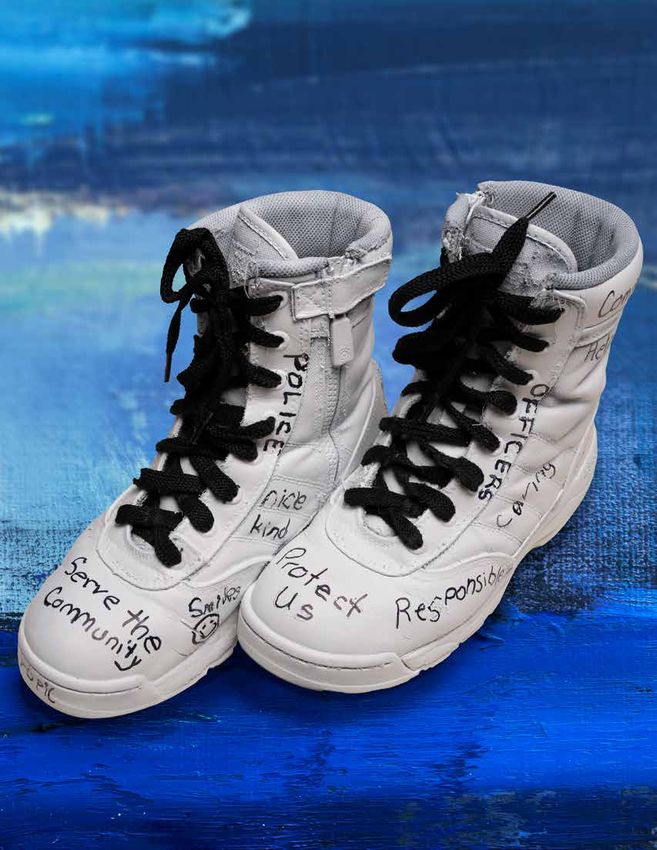
780 3,397 4,823
Of the 9,000 incidents: 72% 30%
9,000 INCIDENTS involved involved
property crime violent crime
72% 30%
72% 28% Were responible for Note that one incident might involve multiple types of crime.
PROCESS FOR DEVELOPING THE STRATEGY BACKGROUND OUR CURRENT CONTEXT
57%
involved involved
AND property crime violent crime
Were involved in Were involved in more
In March 2020, a multidisciplinary team of ten Theonly
teamone
brainstormed
incident. creative ways to involve
than one incident. In 2013,
ofthe
all Edmonton
incidents Police Service (EPS) Young people have some of the highest crime rates
Note that one incident might involve multiple types of crime.
members with expertise in policing young people the voice of young people in the strategy. A call recognized the need In 2019,
for an 9,319response
organizational young people were
in Edmonton, andvictims
the highestof crime.
rates of violent crime.
was drawn from across the organization to lead for young people’s artwork that reflects everyday to youth 12 to 17 years of age. There was increasing They are also at high risk of being victims of crime.
the development of a young people strategy for experiences with police was distributed with the 10–14
public concern 15–19
around the number of youths 20–24
Better understanding adolescent development and
the service. It included representation from Youth Of thewith
support of our partners. We also engaged 9,000 incidents:
In 2019, 9,319 YE���
young
committing �L�
people
crimes YE���
and beingwere �L�
victims
victimized in the of crime. YE���
the factors that make �L�
some young people more
Services, Missing Persons, Child Protection, Gang several young people with lived experience of City of Edmonton. Analysis of youth crimes likely to be involved in crime and/or be victims of
Suppression, and Strategic Design. The team met
six times over a period of several months. strategy. 72% 10–14
EPS programming to get their input into the draft
YE��� �L�
15–19
30%
showed that the magnitude of harm to and
YE��� �L� 936
youth was significant.
andinvolved
2,650
After extensive
20–24
by
YE��� �L�
research
development, in 2014 a service-wide response
crime can lead to improved interactions between
5,733
police and young people. If the EPS invests wisely
the Service can enhance the short-term safety and
involved
At the beginning of the process, members leveraged In addition, we consultedproperty
with a total of 25 crimein the shape of a continuum of 9,319 accountability
crime violent
was launched INCIDENTS of young people and the long-term
their collective expertise and experience to identify individuals from 15 partner organizations. The EPS
936 2,650
programming spanning engagement, intervention,
Note that one incident might involve multiple types of crime. 5,733
safety and well-being of all citizens.
current challenges and trends in the involvement Youth Services Section has developed and fostered and enforcement.
of young people in crime and victimization many strong partnerships with government and
in Edmonton. To test their observations and community agencies, and a Modern Policing Collaborative9,319
efforts INCIDENTS
between civilian and sworn NUMBER OF CRIME INCIDENTS
Analysis lens In
was2019,
Of the 9,000 incidents:
members balanced the need for community safety (PER 100,000 PEOPLE)
assumptions, the team looked at evidence from
9,319and
used to identify young people
reach out were victims of crime.
the peer-reviewed literature, Legislations and to organizations that serve young people for a with the rehabilitative and individual safety needs
61% 39%
8000
20–24
of youth. The EPS also provided a range of youth
Regulations, international police service strategies,
10–14
diversity of input.
15–19 Ofengagement
education and the 9,000 incidents:
activities. Recognizing 6000
reports from community engagement with
YE���
The �L�
partners YE���
contributed �L�range of
a broad YE��� �L� were victims of
the complex realities that face our highest-risk
were victims of
young people and the community, and program property crime violent crime
61% 39%
perspectives around the needs of and supports 4000
evaluations. In total, over 200 documents were youth, multiple cross-agency collaborations were
for Indigenous peoples, new immigrants, and also developed.
reviewed and used to inform the strategy.
936 2,650
faith-based communities, as well as services for 5,733
were victims of
Note that one incident might
were victims of
involve multiple types of crime.
2000
In addition, the team collaborated with business young people around employment, recreation, property crime violent crime
In 2019, although individuals 0
intelligence to analyze EPS data to better 9,319
housing, justice, education, mental health and INCIDENTS
–14
–19
4
30 9
4
40 9
45 4
50 9
4
60 9
4
70 9
75 4
80 9
4
+
agedone 10-24
incident made up 17.9%
multipleof
–7
–7
–4
–6
85
–3
–5
–2
–2
–3
–4
–5
–6
–8
15
10
Note that might involve types of crime.
20
35
25
55
65
understand the organizational context. The results addictions, and child intervention. Partners were
were compared to national benchmarks using asked for their perceptions of the role of police the Edmonton population, they AGE 26% 29%
data from Statistics Canada. All this information with young people, what the EPS is doing well contributed to: of all offenders of all violent
offenders
was used by the team to confirm and prioritize right now, and areas for improvement. Of
Theythe
were 9,000 incidents:
key issues and opportunities and to draft the also asked for their feedback around the draft 31% 24% 26%
26%
RATE OF VICTIMIZATION
29%
(PER 100,000 PEOPLE)
61% 39%
of property
23%
of violent crime of social disorder
strategy components. strategy components. Within the organization,
consultations were conducted with over 15
occurances occurances
of all offenders
crimes
16000
of all violent
offenders 31%
of social disorder of victims of
The draft strategy content was tested with a
broad range of stakeholders. From the beginning,
individuals from diverse areas such
were victims of 31%
as professional 24%
were victims of 26% 12000
subjects
POS
violent crimes
ITIVE O
UT
property crimeofand violent crime of property
23%
development, investigations, legal services, violent
the crime of social disorder
in the spirit of “nothing about us without us”,
Community Solutions Accelerator.
occurances occurances crimes 31%
CO
8000
the team considered how the strategy could of social disorder of victims of
Note that one incident might involve multiple types of crime.
ME
subjects violent crimes
be developed in partnership with young people This strategy reflects the collective input and
S
4000
and include their voice wherever possible and suggestions from our membership, our partners, They made up:
appropriate. Due to the pandemic, our capacity to young people, and best practices in policing. 0
26%
4
9
–14
20 9
4
30 9
35 4
40 39
45 4
50 9
55 4
60 9
64 4
70 9
75 4
80 9
4
+
engage young people was quickly limited.
29%
–7
-7
–4
–6
85
–5
–2
5–
–1
–2
0–
–3
–4
–5
–6
-8
–
15
10
25
of all offenders of all violent
AGE
offenders
31% 24% 26%
of property
23%
of violent crime of social disorder
occurances occurances crimes 31%
of social disorder of victims of
subjects violent crimes
ITIVE O
POS UT
Edmonton Police Service YOUNG PEOPLE STRATEGY 2021–2024
7
CO
ME
S
BRAINS UNDER CONSTRUCTION
                                                                                                                   Scientific research into how brains develop helps us understand the high rates
                                                                                                                   of involvement of young people in offending and victimization. Adolescence is
                                                                                                                   a distinct period between childhood and adulthood that starts at around age 10
                                                                                                                   and continues until age 24.1 It is when individuals acquire the skills and capacities
                                                                                                                   necessary to successfully take on adult roles. This time is a period of significant
                                                                                                                   and rapid brain development and biological, psychosocial, and emotional changes.

                                                                                                                   Brains are built in stages over time. 2 The part of the brain responsible for
                                                                                                                   stimulation and risk-taking matures before the executive functions needed
                                                                                                                   for planning and decision making. It’s as if the brain’s accelerator is pushed to
                                                                                                                   the floor before there is a good braking system in place. 3 The result is that the
                                                                                                                   adolescent brain processes, perceives, and responds differently than adult brains.
                                                                                                                   Adolescents are:

                                                                                                                   More prone to risk taking
                                                                                                                   Adolescents are inherently more likely than adults to take chances.4,5 They often
                                                                                                                   engage in activities of greater risk and higher stimulation than children or adults
                                                                                                                   in efforts to achieve similar levels of excitement.

                                                                                                                   Less focused on the future
                                                                                                                   Adolescents tend to underestimate the level of risk of activities, and to downplay
                                                                                                                   the threat of punishment. They place more emphasis on the short-term than
                                                                                                                   on long-term consequences.6

                                                                                                                   More influenced by peers
                                                                                                                   While they are influenced by both parents and peers, adolescents are more likely
                                                                                                                   to respond to the influences of their peers.6 They are also more likely to take risks
                                                                                                                   while in the presence of their peers.7,8

                                                                                                                   Sensitive to perceived injustice
                                                                                                                   Adolescents are more keenly aware of injustices, and the appearance of unfairness
                                                                                                                   will reinforce this perception. They may be more likely to accept responsibility if
                                                                                                                   they feel that processes are fair and transparent.9

                                                                                                                   The good news is that impulsive behavior declines with age. As an adolescent’s
                                                                                                                   brain matures, they are better able to make rational decisions, and their likelihood
                                                                                                                   of being involved in crime and/or becoming victims of crime decreases.*

                                                                                                                   *Visit www.albertafamilywellness.org for more information and resources on how brains are built.

“Brain Architecture” illustration courtesy of the Alberta Family Wellness Initiative (albertafamilywellness.org)                 Edmonton Police Service YOUNG PEOPLE STRATEGY 2021–2024
                                                                                                                                                                                                                      9
WHAT ELSE AFFECTS BEHAVIOUR?
     Distinguishing what might be “normal” behaviour for a young person with a
     developing brain can be complicated by other issues. Risky behaviour, feelings
     of invincibility, moodiness, aggression, withdrawal, poor impulse control, and
     defiance, for example, all fall within the normal range of adolescent behaviour—
     but can also be symptoms of:

     Toxic Stress                               Mental illness is also increasingly

     Although not all stress is bad, when
                                                threatening the lives of young people.
                                                                                           Certain behaviours can
                                                Suicide is among the leading causes of
     exposure to strong, frequent, or
                                                death in 15- to 24-year-old Canadians,       be misinterpreted as
     prolonged stress occurs without the
                                                                                           intentional misconduct
                                                second only to accidents. 20
     support of a caring adult, it is called

                                                                                          or disobedience, but is it
     toxic stress.10 Toxic stress causes
     physical changes to the body’s stress      Alcohol and Drugs
     systems that can impact how a young        Adolescence is often when drinking,          that a young person
     person responds to perceived or actual
     threats.11 They may have difficulties
                                                smoking, and experimentation with
                                                recreational drugs begins. Alcohol
                                                                                            won’t do what is asked
     distinguishing dangerous situations        can change the part of the brain              of them...or can’t?
     from safe ones.                            responsible for impulse control and
                                                decision-making skills. 21
     Trauma and ACEs
     Traumatic events that occur in             Developmental Disabilities
     childhood and can cause emotional,         Developmental disabilities can have
     psychological, and/or physical             physical, mental, learning, and/or
     consequences are called Adverse            behavioural implications. Individuals
     Childhood Experiences (ACEs).12            with Fetal Alcohol Spectrum Disorders
     Research has shown that the more           (FASD) are overrepresented in the
     ACEs a young person has, the more          criminal justice system. 22 FASD are
     likely they are to have poorer health      effects due to prenatal exposure to
     outcomes,13 be involved in crime,14,15     alcohol and are often not diagnosed
     and have repeat involvement with           until adolescence or adulthood, if
     the criminal justice system.16,17          at all. FASD can impact an individual’s
                                                memory, impulsivity, and recognition
     Mental Health and                          of social cues. 22
     Addictions
     Young people aged 15 to 24 are more
     likely to experience mental illness
     and/or substance use disorders than
     any other age group.18 70% of all
     mental health disorders surface for the
     first time in childhood or adolescence,
     but only 1 out of 5 young people
     who need mental health services
     receives them.19

10                         Edmonton Police Service YOUNG PEOPLE STRATEGY 2021–2024        “Toxic Stress” illustration courtesy of the Alberta Family Wellness Initiative (albertafamilywellness.org)
RISK AND PROTECTIVE FACTORS                                                             RESILIENCE
     Public health approaches to policing offer a lens for understanding how a young
     person’s well-being and behaviour are heavily influenced by social and economic         The EPS and its officers have a duty – and an opportunity – to respond to
     factors, including race, gender, income, education, housing, and employment.            young people in developmentally appropriate ways and to help build the
                                                                                      23

     Risk factors suggest why certain people or groups are more or less likely to            resilience needed for long-term safety and well-being.
     become involved in crime or be victims of crime. 24 Risk factors can be individual
     characteristics or related to a young person’s environment, including their family,
     peers, school, and community. Factors can be static (not amenable to change,            Adolescents are specially primed to learn                          Protective factors such as positive interactions
     such as past experiences of trauma) or dynamic (able to change, such as the             fromtheir circumstances and environments.           31
                                                                                                                                                                with adults, supportive relationships, and safe
     quality of relationships).                                                              In comparison to adults, young people                              environments and communities tip the scale
                                                                                             demonstrate a greater capacity for growth                          towards the positive. But when toxic stress and
     Risk factors can accumulate and interact with each other. For example,                  and are more likely to respond to interventions                    negative experiences outweigh positive supports,
     intergenerational trauma may lead to parental alcohol abuse, which in turn              to bolster their social environments.    32
                                                                                                                                                                the scale can tip toward negative life outcomes
     may generate family conflict, and in turn influence a young person’s own                                                                                   like mental health challenges, addiction, and
     substance use. An intersectionality lens can help identify certain groups that          An adolescent’s development can be imagined
                                                                                                                                                                involvement in crime.
     may be placed at higher risk than others. For example, because of many historical       as a scale that has two sides. 33 As an individual
     and current compounding factors, the rate of violent victimization is over two          develops, positive or negative factors in their                    Informed by the work of Dr. Michael Ungar and
     times higher for Indigenous people, and the rate for Indigenous females is twice        experiences, relationships, and skill-building                     the Resilience Research Centre, 34 we define
     that for Indigenous males. 25                                                           opportunities stack up like weights on a scale,                    resilience as the outcome when individuals
                                                                                             tipping their development and life course                          navigate to and negotiate for the resources
     Protective factors are positive influences that can help reduce the potential           trajectory toward positive or negative outcomes.                   they need. 35 Individuals, especially young people,
     negative effects of risk factors. These include:26                                                                                                         are not solely responsible for building resilience.
                                                                                                                                                                The EPS sees its role as supporting young people
     • Family connectedness and the presence of a caring adult;
                                                                                                                                                                by working collaboratively with them, their
     • School connectedness and performance;                                                                                                                    families, and our partners to connect them with
                                                                                                                                                                appropriate resources.
     • Feeling of safety in one’s environment; and

     • Positive relationships and engagement with law enforcement.

     Early intervention and interventions that build on existing strengths and target
     multiple, dynamic factors help young people and communities better counteract
     negative experiences and risk factors. 27,28 For complex cases, this is best achieved
                                                                                                                                                            POSITIVE O
     when human service professionals across the system collaborate in identifying and                                                                                 UT
     mitigating risks that lead to harm. 29,30

                                                                                                                                                                                   CO
                                                                                                                                                                                      ME
                                                                                                NEGATIV
                                                                                                            E SUPPOR

                                                                                                                                                                                        S
                                                                                                                     TS

                                                                                                                                                                                                          POSITIVE
                                                                                                                                                                                                                         SUPPORT
                                                                                                                                                                                                                                   S

12                  Edmonton Police Service YOUNG PEOPLE STRATEGY 2021–2024                                       “Scales” illustration courtesy of the Alberta Family Wellness Initiative (albertafamilywellness.org)
HARM TO AND BY YOUNG PEOPLE
In Edmonton in 2019, 5,283 young people between the ages of 10 and 24
were involved in a total of 9,000 incidents of crime.
10–14 15–19 20–24
YE��� �L� YE��� �L� YE��� �L�
780 3,397 4,823
9,000 INCIDENTS
72% 28% AND
Were responible for
57%
Were involved in Were involved in more
only one incident. than one incident. of all incidents
Of the 9,000 incidents:
72% 30%
involved involved
property crime violent crime
Note that one incident might involve multiple types of crime.
In 2019, 9,319 young people were victims of crime.
10–14 15–19 20–24
YE��� �L� YE��� �L� YE��� �L�
“[The officer] was 936 5,733
2,650
genuinely worried about me.
9,319 INCIDENTS
He would ask me ‘Are
you okay? Are you safe?’
He never pointed blame.” Of the 9,000 incidents:
– Taylor*, Age 29 61%
were victims of
39%
were victims of
property crime violent crime
Note that one incident might involve multiple types of crime.
Victims of crime are at higher risk of future criminal behavior—known as the victim-offender overlap. 36,37
26%
While there are sizable numbers of young people who continue to be victimized but desist or decrease 29%
of allof
their offending behaviors, very few adolescents continue to offend in the absence offenders of all violent
continued victimization.
offenders
In 2019, 20% of young people who offended were also victims. This proportion increased with every additional
31% 24% 26%
offense, doubling to 40% of the 50 young people who offended the most.
*Names have been changed to protect confidentiality of property
23%
of violent crime of social disorder
occurances occurances crimes 31%
of social disorder of victims of
subjects violent crimes
14 Edmonton Police Service YOUNG PEOPLE STRATEGY 2021–2024 Edmonton Police Service YOUNG PEOPLE STRATEGY 2021–2024
15
CRIME AND                                              YOUNG PEOPLE                                           Parents should be informed of measures or proceedings involving their children

                                                                                                                                                                                                     YOUNG PEOPLE AND THE LAW
                                                                                                              and encouraged to support them in addressing any concerns.
VULNERABILITY                                          AND THE LAW
                                                                                                              At age 18, young people begin falling under theCriminal Code of Canada. How and
Although they are included in the criminal code,       In response to learnings about adolescent brain        when young people transition to the adult criminal justice system depends on their
the following violations are categorized as            development, the Youth Criminal Justice Act            circumstances and the procedures of the different agencies involved.
social disorder rather than criminal in nature:        (YCJA)38 was introduced in Canada in 2003 to
                                                       ensure that the consequences for young people
• Mental health
                                                       at least 12 but under 18 years old who break the       Young people are protected by several other statutes,
• Nuisance behaviour such as public mischief           law are balanced. It emphasizes rehabilitation
                                                                                                              regulations, and bylaws including:
                                                       and the opportunity for youth to mature, learn
• Suspicious behaviour such as trespassing
                                                       from mistakes, accept consequences, and make           Alberta Child, Youth and Family Enhancement Act provides authority to intervene
• Substance use                                        amends. The amendments adopted by Parliament           in cases of child maltreatment
                                                       in 2012 and 2018 aimed to further strengthen the
• Missing or eloped persons and welfare checks                                                                Children First Act allows for greater information sharing when children are at risk
                                                       ways in which the youth justice system deals with
In Edmonton in 2019, 8,698 young people were           repeat and violent offenders.                          Family Law Act applies to young people who are involved in and impacted
involved in a total of 12,101 incidents of social                                                             by custody cases
disorder. Of these individuals, 20% were involved
                                                       The YCJA mandates that police                          Education Act governs the quality of and access to education for young people
in multiple incidents and were responsible for 40%
of all incidents. Of the 8,698 individuals, 22% were
                                                       must emphasize:
                                                                                                              Missing Persons Act provides direction for investigating and working with
also involved in a criminal incident.                  Enhanced procedural protection to ensure that
                                                                                                              missing young people
                                                       young people are treated fairly and that their
How police respond to young people involved in
                                                       rights, including their right to privacy, are          Adult Guardianship and Trusteeship Act authorizes the police to assist guardians
these behaviours is important, because conditions
                                                       protected.                                             with protecting young people in their care
such as mental illness or addictions should not
be punished or criminalized. Furthermore, early        Timely intervention that reinforces the link between   Canadian Charter of Rights and Freedoms sets out rights that include the interaction
identification and treatment of issues dramatically    the offending behaviour and its consequences.          between the justice system and individuals to ensure fair treatment at every stage
improves the chance for a young person’s recovery                                                             of the justice process
and long-term well being. As first responders
                                                       Victims should be:
to many of these complex situations, the EPS
is well positioned to support young people             Treated with courtesy, compassion and respect
in navigating to and negotiating for the most          for their dignity and privacy and should suffer
appropriate supports.                                  the minimum degree of inconvenience as a result
                                                       of their involvement with the youth criminal
                                                       justice system.

                                                       Provided with information about the proceedings
                                                       and given an opportunity to participate and
                                                       be heard.

                                                                                                                         Edmonton Police Service YOUNG PEOPLE STRATEGY 2021–2024
                                                                                                                                                                                                     17
Police are often the first contact that young people have with the Mechanisms for holding The safety and well-being of
ROLE OF POLICE WITH YOUNG PEOPLE
criminal justice system because police are typically the first ones young people accountable individuals and the community
should not be the same as those is a shared responsibility. The EPS
on the scene when there’s a safety issue or suspected crime.
for adults. Formal measures is only one part of a complex system
and court involvement can have supporting young people and
long-term detrimental effects on community safety and well-being.
Patrol
Reponse
a young person. The service works closely and
Diversion
to Call for Programs collaboratively with:
Service Developmentally informed policing40 promotes
Young People
Y accountability by providing a setting and
OU N
NG PERSO opportunity for young people to accept
INT
Offender responsibility for their actions, make amends to Wherever possible, young people should be
ERA
Child
Protection Management engaged as partners in the decisions and systems
Programs individual victims and the community for any harm
CT
caused, and participate in community service or that impact their lives.
IO N S
other types of programs. It aims to divert young
Domestic
Violence
Education
and people as much as possible and as appropriate Families
IT
W
Interventions Awareness
H Search for out of or away from the criminal justice system. The EPS defines families broadly, including but
SER Missing
VIC E S not limited to immediate and extended family
Persons Balancing enforcement and support for young
people means preventing the escalation of members, trusted adults, and other natural
criminal behaviours and/or victimization while not supports. Family members such as caregivers
damaging the life chances of young people with or siblings may also benefit from connection to
Interactions between young people and police can take many forms. 39 Contact can
overly punitive and stigmatizing sanctions. supports and services.
be initiated by young people, police, or the community and may occur in formal
Partner Agencies
police-led programs or through day-to-day interactions in community and young
people settings. Young people may be a witness, complainant, victim, or suspect.
They may play any of these roles in a given incident, or in different incidents over The EPS works in collaboration across the
time. The EPS has many officers and programs that support the accountability, criminal justice system, including Prosecution
safety, and well-being of young people. Services, Defense Bar, Courts, Legal Aid,
Correctional Services, and Restorative Justice
Services. The EPS also works closely with
The EPS’s mission is to be relentless on crime and
healthcare, education, children’s services, and
a leading partner in building community safety. community organizations.
With respect to young people, this means balancing
enforcement and support in developmentally appropriate
ways to:
Role Mentor
Hold young people accountable through measures that are proportionate to Model Law Enforcer
the seriousness of the offence and the degree of responsibility of the young person.
Before taking any formal measures against a young person alleged to have
Family Connector
committed an offence, officers must use their discretion to consider whether
Support
it would be sufficient to take no further action, warn the young person, or HOW OFFICERS DESCRIBE THEIR ROLE
administer a caution.
Refer and navigate young people to programs or agencies in the community Relationship Educator
to address the circumstances and root causes underlying their risky or Builder Navigator Trusted
problematic behaviours. Adult
Treat young people fairly and ensure that their rights, including their right to
privacy, are protected.
Edmonton Police Service YOUNG PEOPLE STRATEGY 2021–2024
19At any stage in their life, a young person might come into contact with police.
CASE STUDY : OPPORTUNITIES IN A YOUNG PERSON’S JOURNEY
Each interaction is an opportunity to help individuals and families navigate
to and negotiate for supports. Early is best, but it is never too late to impact
trajectories and decrease harm to or by young people.
Collaborate with
Chi��r��’� S�r�i��s
Navigate to Warning Given
Fam��� Th��a�y S����ce� to ����g �e�s��
Early is best, but it
is never too late to
impact trajectories and
decrease harm.
Collaborate with
yo��� p���on’� �ro�� ��me
on ����t� �la���n�
Navigate to Connect to
Chi��r��’� M�n�a� H��l�� re���r��i�� j���ic� ���ce��
Car� ����ic�� an� j�� ��ar�� s����r��
20 Edmonton Police Service YOUNG PEOPLE STRATEGY 2021–2024 Edmonton Police Service YOUNG PEOPLE STRATEGY 2021–2024
21STRATEGY-AT-A-GLANCE
SCOPE OF THE STRATEGY PRINCIPLES
All young people between the ages of 10 and 24
• Safety • Empowerment, Voice and Choice
who interact with the criminal justice system
• Trustworthiness and Transparency • Culture, Gender, and History
OUTCOMES KEY INDICATORS
Long-term Outcome • Crime rate for young people
Reduced frequency and severity • Crime severity index STRATEGIC PILLARS
of offending and victimization by for young people
and of young people. • Data and Evidence • Partnerships
• Repeat offending
Immediate Outcome • Repeat victimization
Right response at the right time • Reoffending into adulthood
for the right young person.
FOCUS AREAS
1 EARLY IDENTIFICATION
AND INTERVENTION 2 CONSISTENT SERVICE AND
COORDINATED APPROACH 3 SPECTRUM OF
RESPONSES 4 CONTINUOUS LEARNING
AND IMPROVEMENT
Outcomes: Outcomes: Outcomes: Outcomes:
• EPS and partners collaborating on identification • A consistent approach being used in all • Members having skills and confidence in • Understanding of risk factors impacting the
of, and intervention planning for young people interactions with young people responding to and working with young people safety of young people and use of them to
at risk identify individuals
• Young people still involved with the justice • Members having knowledge of resources and
• Young people being diverted out of or away system at age 18 are supported in navigating programs for young people and families • Young people being partners in the design
from the criminal justice system as appropriate, into the adult system and development of programming
• Harm to and by young people being reduced
and much as possible
• The EPS and its partners having shared • Programming for young people adapting to
• Young people and families at risk being accountability for the safety of young people evidence and changing community needs
connected to resources and agenciesScope of the Strategy PRINCIPLES
SCOPE OF THE STRATEGY
This strategy applies to all young people between the ages of 10 and 24 who41
interact with the criminal justice system. Officers will use their discretion and be Principles inform and guide decisions and choices. These principles apply to all
guided by the Acts and Legislations. When needed, they will be supported with contexts and interactions between EPS members and young people. They are
consultation and mentorship. For complex cases, they can access specialized founded on the principles of the Youth Criminal Justice Act, trauma-informed
services across the EPS. Services can be tailored to the needs of specific age care,42 and procedural justice.43
ranges (e.g., youth 12 to 17 years old), risk areas and level, and/or the primary
concern (e.g., domestic violence or chronic offending). Safety Empowerment, Voice,
• Ensuring physical and psychological and Choice
The Right Response at the Right Time safety for young people, families, • Listening to what young people
Every young person is unique, and every situation is unique. The right response is natural supports, and officers have to say and seeking first
individualized, proportionate to the level of risk and complexity of the situation, • Focusing on reducing risk factors to understand
and informed by evidence of what works. Wherever possible, it considers the and strengthening protective factors • Giving young people and families a
preferences of the young person and their family and other supports. It balances
• Ensuring safe and appropriate use of choice whenever possible
short-term safety and accountability with long-term safety and well-being.
information about young people • Providing the opportunity for young
people to express opinions about
Outcomes
Trustworthiness a situation prior to formal police
Long-term Outcome and Transparency decision-making
Reduced frequency and severity of offending and victimization by and • Building trusting, supportive • Facilitating opportunities for young
of young people. relationships with young people people and families to provide input
while setting clear boundaries • Building on the strengths of
Immediate Outcome • Consistent and neutral young people, families, and
Right response at the right time for the right young person. decision-making and rules natural supports
• Ensuring young people and families
Key Indicators are treated fairly and that their
Culture, Gender,
rights are protected and History
• Crime rate for young people
• Clearly explaining next steps, • Understanding and being respectful
• Crime severity index for young people
options, and consequences of different cultures and worldviews
• Repeat offending
• Considering culturally appropriate
• Repeat victimization supports and programming
• Reoffending into adulthood • Recognizing the importance of
history (e.g., traumatic histories,
cultural histories)
Every young person
is unique, and every
situation is unique.
Edmonton Police Service YOUNG PEOPLE STRATEGY 2021–2024
25STRATEGIC PILLARS
Strategic pillars are the foundations needed to effectively and efficiently achieve
the activities identified in the focus areas.
Data and Evidence
We collect and analyze a wide range of quantitative and qualitative data in order
to identify and understand issues and impact – both intended and unintended.
We value the experience and expertise of young people, families and natural
supports, officers, partners, and community. We are informed by published
research and emerging practices. We protect the safety of data and monitor
systems for potential biases.
Partnerships
We connect and collaborate with partners across the criminal justice system and
with service partners and community to understand and address the complex
needs of young people. Effective partnerships involve shared outcomes and
accountability, as well as collaborative planning and problem solving.
Effective partnerships
involve shared outcomes
and shared accountability.
26 Edmonton Police Service YOUNG PEOPLE STRATEGY 2021–2024 Edmonton Police Service YOUNG PEOPLE STRATEGY 2021–2024
271 2 3 4
FOCUS AREAS
EARLY IDENTIFICATION CONSISTENT SERVICE AND SPECTRUM OF CONTINUOUS LEARNING
AND INTERVENTION COORDINATED APPROACH RESPONSES AND IMPROVEMENT
Young people who come to serious harm and/ Young people can come into contact with the EPS Officers will use their discretion and be Engaging with young people, families, and
or seriously harm others have often interacted through a variety of ways. A consistent approach guided by the Legislations and Regulations. the systems that support them can be complex
with police in previous years. Proactive and early by all officers and areas ensures fair, effective, and When needed, they will be supported with and requires a holistic response. Officers may
identification of individuals who may be at greatest equitable treatment for all young people. consultation and mentorship. For complex cases, vary in training, experience, and skills when
risk can help keep young people and families from they can access specialized services across interacting with young people. They may also
To keep young people from falling through the
coming to greater harm. Early interventions should the EPS. These programs and services are have different degrees of knowledge of the many
cracks, we need to coordinate across service
consider and target multiple dynamic factors. Early typically tailored to the needs of specific age and evolving resources and services for young
areas, share information, and collaborate on
identification and intervention will support young ranges (e.g., youth 12 to 17 years old), the degree people and families.
complex files. The EPS will reduce barriers to
people and families at highest risk in navigating of risk, and/or the primary concern (e.g.,
services in order to ensure that young people and We will support and train officers in what practices
to and negotiating for services and resources to domestic violence or chronic offending).
families do not have to be traumatized by telling work, for whom, and in what context, so that
address root causes of crime and victimization. A spectrum of responses will ensure members
their stories multiple times. We will build shared they can choose the right response at the right
have options for enforcement and support for
accountability with our partners for navigating time for each young person along the spectrum
This will lead to:
young people, as well as clear guidelines on
young people and families to supports that of responses.
when and how to use which response.
• EPS and partners collaborating on identification enhance their safety and well-being. Consistent
We will learn from each other. We understand that
of, and intervention planning for young people service and coordinated approach will provide
at risk effective and equitable services to young people. This will lead to: police are but one service supporting the safety
and well-being of young people. We will listen to
• Members having skills and confidence in
• Young people being diverted out of or away and learn from young people, families and other
from the criminal justice system as appropriate, This will lead to: responding to and working with young people
supports, partners, and community to understand
and much as possible • A consistent approach being used in all • Members having knowledge of resources and their evolving needs. We will adapt our practices
interactions with young people programs for young people and families and programs to ensure continued value and
• Young people and families at risk being
impact. We will share our learnings and advocate
connected to resources and agencies • Young people still involved with the justice • Harm to and by young people being reduced
for broader systems change using evidence and
system at age 18 are supported in navigating
trends. Continuous learning and improvement will
into the adult system
align responses to young people with evidence and
• The EPS and its partners having shared evolve to meet the needs of young people, families,
accountability for the safety of young people and the community.
INCREASING RISK & COMPLEXITY
OFFICER ENGAGES This will lead to:
SPECIALIZED PROGRAMMING
• Understanding of risk factors impacting the
“A lot of times, someone safety of young people and use of them to
identify individuals
isn’t ready to talk or to
OFFICER IS ABLE TO RESPOND
WITH CONSULTATION AND GUIDANCE
• Young people being partners in the design
accept help, so having and development of programming
options is important.” OFFICER IS
CONFIDENT RESPONDING
• Programming for young people adapting to
evidence and changing community needs
– Taylor*, Age 29
*Names have been changed to protect confidentiality
28 Edmonton Police Service YOUNG PEOPLE STRATEGY 2021–2024 Edmonton Police Service YOUNG PEOPLE STRATEGY 2021–2024
29FOCUS AREAS
1 EARLY IDENTIFICATION AND INTERVENTION
EPS STRATEGIC YOUNG PEOPLE EPS STRATEGIC YOUNG PEOPLE
PLAN STRATEGY KEY ACTIVITIES MEASURES PLAN STRATEGY KEY ACTIVITIES MEASURES
OUTCOMES OUTCOMES OUTCOMES OUTCOMES
EPS uses a EPS and partners • Build and expand • Number of young people EPS manages Young people • Leverage community and • Increase in school
variety of collaborate on collaborations with identified and supported offenders more are diverted justice diversion resources attendance and
responses, identification of agencies serving effectively out of the graduation rates
• Number of collaborative • Create alternative to
informed by and intervention young people in through criminal justice
tables for young people custody programming • Proportion of chargeable
needs, data planning for key areas including collaboration system as
with EPS involvement young people in
and evidence young people gang intervention, and partnerships appropriate • Create pathways to
non-violent crimes who
to enhance at risk homelessness, mental • Distribution of to reduce and much as community restorative
were charged
public safety health, and justice partnerships across the recidivism possible justice programs
support young person age range • Proportion of incidents
• Leverage the expertise of
with young people
• Continue participation in • Programs are EPS programs
where alternate measures
Zebra Intake meetings for evidence-based to support young people
were used
child sexual abuse and evaluated (e.g., HELP, PACT,
and IOM) • Number of referrals to
• Scale the Zebra model
community restorative
to other areas of • Develop collaborative
justice programs
vulnerability diversion programming
through existing • Number of partnerships
• Collaborate across EPS
partnerships across that contain restorative
areas to support chronic
the full range of justice practices
missing young people
developmental stages
• Proportion of incidents
• Work in collaboration
with young people who
with partners to educate
offend where alternate
young people around
measures are used
safety, based on identified
trends
EPS connects Young people • Expand partnerships • Number of young people
offenders, and families to ensure coverage connected to appropriate
witnesses, at risk are across key risk factors resources based on
and victims connected to for young people identified risks
to services so resources and
• Develop, measure, • Number of families
that diversion agencies
and report on common connected to appropriate
pathways are
outcome measures resources based on
created
with partners identified risk
• Self-reported resilience
by young people
30 Edmonton Police Service YOUNG PEOPLE STRATEGY 2021–2024 Edmonton Police Service YOUNG PEOPLE STRATEGY 2021–2024
31FOCUS AREAS
2 CONSISTENT SERVICE AND COORDINATED APPROACH
EPS STRATEGIC YOUNG PEOPLE
PLAN STRATEGY KEY ACTIVITIES MEASURES
OUTCOMES OUTCOMES
EPS members A consistent • Establish service-wide • Officer-reported level of
are given clear approach is response expectations confidence in responding
expectations used in all and protocols for to young people
and priorities interactions responding to
• Trust in police by young
to guide action with young young people
people, broken down by
more effectively people
• Provide training in identify factors
adolescent-focused
policing practices to
frontline members
EPS connects Young people • Clarify transition process • Number of young people
young offenders, involved with between Y50 and the successfully transitioned
witnesses, the justice Integrated Offender
• Reduction in recidivism
and victims system at Management Initiative.
to services so age 18 are • Proportion of incidents
• Maintain strong justice
that diversion supported in where charges were laid
partnerships within
pathways are navigating against a young person
youth-focused areas
created into the adult that progressed to court
(e.g., Youth Probation,
system and proportion of those
Youth Crown prosecutors,
that resulted in conviction
Edmonton Young
Offenders Centre)
EPS manages EPS and its • Work with partners • Number of shared
offenders more partners to identify, measure, outcome measures
effectively have shared and report on shared reported on
through accountability outcomes for young
• Reduction in recidivism
collaboration for the safety of people
and partnerships young people
to reduce
recidivism
Artwork submitted by a class from Ben Calf Robe School showing their experience of police in community using tangible media.
32 Edmonton Police Service YOUNG PEOPLE STRATEGY 2021–2024 Edmonton Police Service YOUNG PEOPLE STRATEGY 2021–2024
33FOCUS AREAS
3 SPECTRUM OF RESPONSES
EPS STRATEGIC YOUNG PEOPLE EPS STRATEGIC YOUNG PEOPLE
PLAN STRATEGY KEY ACTIVITIES MEASURES PLAN STRATEGY KEY ACTIVITIES MEASURES
OUTCOMES OUTCOMES OUTCOMES OUTCOMES
EPS members Members have • Train new and current • Officer-reported EPS is Harm to and by • Coordinate services • Reduction in recidivism
are given clear skills and members in key issues level of confidence in responsive young people is between Youth Offender
• Perceived safety by
expectations confidence in of adolescent brain navigating systems to high-harm reduced Management Unit (Y50
young people
and priorities responding to development including crimes Program) and Integrated
• Officer-reported level
to guide action and working trauma, ethnocultural Offender Management • Percent of citizens
of access to resources
more effectively with young awareness, and Initiative who report feeling
when needed
people understanding the very or reasonably safe
• Create an Integrated
LBGTQ2S+ community • Officer-reported when walking alone in
Offender Management
knowledge of their neighbourhood
• Participate in joint training Initiative that meshes
internal supports
within youth-serving suppression with
agencies partnering intervention practices
with EPS
• Conceptualize and
• Provide linkages between create an offender
frontline members and management program for
subject matter experts in medium-risk offenders
EPS and the community
• Youth Services Branch
maintains strong
collaborative relationships
EPS members Members have • Create easily accessible • Officer-reported
with Youth Probation and
are given clear knowledge of list of resources for young level of confidence in
Youth Crown Prosecutors
expectations resources and people and families navigating systems
and priorities programs for
• Incorporate experiential • Officer-reported level
to guide young people
learning placements of access to resources
action more and families
at partner agencies and when needed
effectively
specialized EPS areas
• Improved connections
for recruits
between officers and
community partners
34 Edmonton Police Service YOUNG PEOPLE STRATEGY 2021–2024 Edmonton Police Service YOUNG PEOPLE STRATEGY 2021–2024
35FOCUS AREAS
4 CONTINUOUS LEARNING AND IMPROVEMENT
EPS STRATEGIC YOUNG PEOPLE
PLAN STRATEGY KEY ACTIVITIES MEASURES
OUTCOMES OUTCOMES
EPS uses Risk factors • Work with partners • Self-reporting rates
evidence impacting the to share and combine of victimization
and data to safety of young risk data
• Number of collaborative
determine root people are
• Use risk factors, data, and risk analyses / reports
causes to understood and
trends to develop early
prevent crime used to identify
identification protocols
individuals
• Provide mechanisms
whereby young people
feel safe disclosing
and reporting
• Monitor data systems for
possible biases
EPS has a range Young people • Incorporate the voice • Number of opportunities
of perspectives are partners in and lived experience of provided for young people
which allow it the design and young people and families and family involvement
to continuously development of into program design and
adapt to a programming development
changing
environment
EPS has a range Programming • Collect data on • All programs
of perspectives for young identity factors of are evaluated
which allow it people young people to better
• Program outcomes
to continuously adapts to understand possible
are more equitable
adapt to a evidence inequities in-line with
for all young people
changing and changing organizational direction
environment community
• Evaluate effectiveness
needs
of programs for
young people
36 Edmonton Police Service YOUNG PEOPLE STRATEGY 2021–2024 Edmonton Police Service YOUNG PEOPLE STRATEGY 2021–2024
37GLOSSARY
Bias: A subjective opinion, preference, prejudice, or inclination, often formed
without reasonable justification, that influences an individual’s or group’s ability to
evaluate a particular situation objectively or accurately
Child: An individual under 12 years of age.
Equity: Fair treatment of people that addresses specific needs, barriers, and
accommodations to ensure all have equal opportunity to participate in all aspects
of a program or opportunity
Diversion: The utilization of community resources or other government services,
by an individual independently and/or as directed by the court, to have charges
stayed or withdrawn by the Crown.
Fairness: Individuals being treated according to the rule of law, without
discrimination, while also considering a person’s individual characteristics
throughout the process.
Harm: Physical, psychological, and/or emotional injury, damage or loss, that
impacts the health and wellbeing of an individual.
Navigation: Providing a continuum of care through referrals to support services.
Resilience: The outcome when individuals navigate to and negotiate for the
resources they need
Trauma: The lasting (and overwhelming) emotional, spiritual, and/or physical
response that impacts an individual’s ability to cope as a result of living through
distressing event(s).
Violation: An illegal act for which there is a penalty and it is within the mandate
“We need new strategies that of the Edmonton Police Service to investigate and lay charges.
produce bigger impacts and we Well-being: The experience of feeling safe, happy and healthy, having a sense of
meaning or purpose, and being socially and/or spiritually connected, accepted,
need a better understanding and valued.
of why interventions work – Youth: An individual between the ages of 12 and 17.
or don’t work – for whom
Young adult: An individual between the ages of 18 and 24.
and in what contexts.”
Young person: An individual between the ages of 10 and 24.
– Dr. Jack Shonkoff,
Director, Harvard University
38 Edmonton Police Service YOUNG PEOPLE STRATEGY 2021–2024 Edmonton Police Service YOUNG PEOPLE STRATEGY 2021–2024
39LIST OF PARTNERS KEY THEMES FROM
CONSULTED THE FEEDBACK: 1
Arain, M., Haque, M., Johal, L., Mathur, P., Nel, W., Rais, A., Sandhu, R., & Sharma, S. (2013). Maturation of the
adolescent brain. Neuropsychiatric disease and treatment, 9, 449–461. https://doi.org/10.2147/NDT.S39776
Indigenous: Current understanding of the role National Scientific Council on the Developing Child. (2007). The Science of Early Childhood Development:
2
Closing the Gap Between What We Know and What We Do. Retrieved from www.developingchild.harvard.
of police with young people: edu.
• Bent Arrow Traditional Healing Society 3
Steinberg, . (2012) “Should the Science of Adolescent Brain Development Inform Public Policy?” Issues in
Science and Technology 28, no. 3.
• Good knowledge and awareness of certain 4
Gardner, M., & Steinberg, L. (2005). Peer Influence on Risk Taking, Risk Preference, and Risky Decision Mak-
New Immigrants and Youth Section programs but generally limited ing in Adolescence and Adulthood: An Experimental Study. Developmental Psychology, 41(4), 625–635.
Faith-based: knowledge about other programs and interactions 5
Steinberg L. (2004) Risk taking in adolescence: what changes, and why? Ann N Y Acad Sci., Jun;1021:51-8.
6
Reppucci, N.D. (1999). Adolescent development and juvenile justice. American Journal of Community Psy-
• Africa Centre • Polarized and inconsistent experiences chology, 27(3), 307-326.
with individual officers 7
Gardner, M., & Steinberg, L. (2005). Peer influence on risk taking, risk preference, and risky decision making
• Edmonton Mennonite Centre in adolescence and adulthood: an experimental study. Developmental psychology, 41(4), 625–635.
• Limited understanding by many about the 8
Rodrigo, M. J., Padrón, I., de Vega, M., & Ferstl, E. C. (2014). Adolescents’ risky decision-making activates
Employment / Recreation / nature and complexity of police work neural networks related to social cognition and cognitive control processes. Frontiers in human neurosci-
ence, 8, 60. https://doi.org/10.3389/fnhum.2014.00060
Housing: 9
National Research Council. (2013). Reforming Juvenile Justice: A Developmental Approach. Committee
Perceptions of the ideal role of on Assessing Juvenile Justice Reform, Richard J. Bonnie, Robert L. Johnson, Betty M. Chemers, and Julie
• Working Warriors at Bent Arrow
police with young people: A. Schuck, National Research Council. (2013). Reforming Juvenile Justice: A Developmental Approach.
Committee on Assessing Juvenile Justice Reform, Richard J. Bonnie, Robert L. Johnson, Betty M. Chemers,
• YOUCAN Youth Services and Julie A. Schuck, Eds. Committee on Law and Justice, Division of Behavioral and Social Sciences and
• Enforce laws and hold youth accountable Education. Washington, DC: The National Academies Press. Eds. Committee on Law and Justice, Division of
• YMCA of Northern Alberta Behavioral and Social Sciences and Education. Washington, DC: The National Academies Press.
• As police are often the first contact young 10
National Scientific Council on the Developing Child. (2005/2014). Excessive Stress Disrupts the Architecture
• Duke of Edinburgh Award people have to the court system, use diversion of the Developing Brain: Working Paper 3. Updated Edition. http://www.developingchild.harvard.edu
and alternative measures wherever possible 11
Elzinga, B. M., & Bremner, J. D. (2002). Are the neural substrates of memory the final common pathway in
• REACH Edmonton Council for Safe Communities posttraumatic stress disorder (PTSD)?. Journal of affective disorders, 70(1), 1–17. https://doi.org/10.1016/
and appropriate
s0165-0327(01)00351-2
• YESS
• Be a connector/navigator 12
elitti V.J., Anda, R.F., Nordenberg, D., Williamson, D.F., Spitz, A.M., Edwards, V., Koss, M.P., & Marks, J.S.
F
(1998). Relationship of childhood abuse and household dysfunction to many of the leading causes of death
Justice: • Act as a trusted adult / mentor / role model in adults. The Adverse Childhood Experiences (ACE) Study. Am J Prev Med., May;14(4):245-58. doi: 10.1016/
s0749-3797(98)00017-8. PMID: 9635069.
• Edmonton Young Offender Centre
13
Sacks, V., Murphey, D., & Moore, K.(2014). Child Trends Research Brief. Adverse Childhood Experiences:
What EPS is doing well right now: National and State Level Prevalence. Publication 28.
• Legal Aid 14
Baglivio, M. T., Epps, N., Swartz, K., Huq, M., Sheer, A., Hardt, N. (2014). The prevalence of adverse childhood
• The Youth Section has cultivated really great experiences (ACE) in the lives of juvenile offenders. Journal of Juvenile Justice, 3, 1–23.
• Young Offender Community Corrections relationships in the community 15
ierkhising, C. B., Ko, S. J., Woods-Jaeger, B., Briggs, E. C., Lee, R., & Pynoos, R. S. (2013). Trauma histories
D
among justice-involved youth: findings from the National Child Traumatic Stress Network. European journal
• The Youth Section programs are well-respected of psychotraumatology, 4, 10.3402/ejpt.v4i0.20274. https://doi.org/10.3402/ejpt.v4i0.20274
Education: 16
Baglivio, M. T., Wolff, K. T., Piquero, A. R., Bilchik, S., Jackowski, K., Greenwald, M. A., & Epps, N. (2016). Mal-
• Specific EPS members are proactive and going treatment, Child Welfare, and Recidivism in a Sample of Deep-End Crossover Youth. Journal of youth and
• Edmonton Islamic Academy
above and beyond in their role with young adolescence, 45(4), 625–654. https://doi.org/10.1007/s10964-015-0407-9
people, families, and partners
17
Wolff, K. T., Baglivio, M. T., & Piquero, A. R. (2017). The Relationship Between Adverse Childhood Experiences
Mental Health and Addictions: and Recidivism in a Sample of Juvenile Offenders in Community-Based Treatment. International journal of
offender therapy and comparative criminology, 61(11), 1210–1242.
• Mix of sworn and civilian members works well
• Alberta Health Services Children and Youth
18
Pearson, C., Janz, T., and Ali, J. (2013). Health at a glance: Mental and substance use disorders in Canada.
Statistics Canada Catalogue no. 82-624-X.
• Alberta Health Services Urgent and What EPS could improve on: 19
Canadian Mental Health Association. (2014). Fast Facts about Mental Illness. http://www.cmha.ca/media/
fast-facts-about-mentalillness/#.Uw0Eo3lupg0
Intensive Services
• Enhance trauma-informed approach 20
tatistics Canada. (2018). Deaths and age-specific mortality rates, by selected grouped causes, Canada,
S
• Alberta Health Services Provincial Justice 2016. Table: 13-10-0392-01
• Improve consistency in approach across the service 21
Squeglia, L. M., Jacobus, J., & Tapert, S. F. (2014). The effect of alcohol use on human adolescent brain struc-
and Mental Health
tures and systems. Handbook of clinical neurology, 125, 501–510. https://doi.org/10.1016/B978-0-444-62619-
• Broaden diversion pathways 6.00028-8
Children’s Services: • Strengthen partnerships and community
22
Flannigan, K., Pei, J., Stewart, M., & Johnson, A. (2018). Fetal Alcohol Spectrum Disorder and the criminal
justice system: A systematic literature review. International journal of law and psychiatry, 57, 42–52. https://
involvement in interventions doi.org/10.1016/j.ijlp.2017.12.008
• Government of Alberta Children’s Services
• Address any inequities in responses to and
outcomes for youth
• Leverage restorative justice programs
Edmonton Police Service YOUNG PEOPLE STRATEGY 2021–2024
41You can also read


