Zero Gap Fund State of the Portfolio - Embargoes until 12:01am EDT Monday, July 12, 2021 - The Rockefeller ...
←
→
Page content transcription
If your browser does not render page correctly, please read the page content below

Zero Gap Fund
State of the Portfolio

                         Embargoes until 12:01am EDT
                         Monday, July 12, 2021
MANAGEMENT LETTER                                                                                                                 ZERO GAP FUND UPDATE 2020

                                     The past year has been a period of                           Realized impact included:

                    Driving Impact
                                     unprecedented challenge and dislocation                      • LeapFrog expanded its reach to emerging consumers
                                     around the globe, yet also a time of                           by nearly 23% with investments in companies offering

                    at Scale
                                                                                                    essential services like healthcare and insurance to 221
                                     resilience and determination. Our
                                                                                                    million people.
                                     collective response to the Covid-19
                                                                                                  • The Forest Resilience Bond (FRB) completed 50% of its
                                     pandemic and its many ongoing shocks                           total restoration work despite Covid-19 restrictions and
                                     called for fortitude and creativity in the                     the largest forest fire season on record in the United
                                     face of unexpected change. We saw that                         States.

                                     spirit across our partners in the Zero Gap                   • Sixup emphasized resilience and proactively enrolled its
                                     Fund (ZGF or the Fund).                                        student borrowers into a Covid deferment program,
                                                                                                    including access to additional support services.

                                     Launched in partnership with the John D. and Catherine       • The CRAFT fund made its first investment into a solar
                                     T. MacArthur Foundation and its flagship Catalytic Capital     hydro-panel company and as of December 2020, 5,552
                                     Consortium (C3), ZGF’s mandate is focused on financial         panels were producing at least 1,222,675 liters of water
                                     innovation – namely, showing how new investment                across 48 different countries.
                                     solutions can overcome traditional market barriers to
                                                                                                  • The Women’s Livelihood Bond 2 directly impacted over
                                     channel critical financing to impact-driven investments
                                                                                                    31,000 women, exceeding its target by over 20% and
                                     at scale and unlock nascent market opportunities long
                                                                                                    supported their borrowers to successfully navigate
                                     ignored by private investors.
                                                                                                    Covid-19 challenges.

                                     By design, the Fund channels private investment toward
                                     solutions addressing the world’s most pressing challenges:
                                                                                                  The ZGF team looks to build off the resourcefulness and
                                     climate change, inequalities of opportunity, access to
                                                                                                  resilience of 2020 to identify and support new ways to
                                     critical healthcare, among others.
                                                                                                  improve the lives of vulnerable communities and ecosystems
                                                                                                  around the world. This impact report speaks to the driving
                                     Through the targeted deployment of patient, risk-tolerant,
                                                                                                  motivation behind our work by highlighting the tangible
                                     flexible capital, ZGF focuses on supporting new investment
                                                                                                  ways the Fund’s portfolio has enhanced lives and broadened
                                     products and mechanisms marrying deep impact with the
                                                                                                  opportunities, even in a year defined by uncertainty.
                                     potential for replication and growth.

                                     ZGF portfolio companies were able to deliver on their
                                     impact mandates in 2020, despite the many adversities.
                                     The impact achieved in 2020 was a welcome reprieve for
                                     communities navigating the ongoing pandemic and shows        Maria Kozloski
                                     promise for the future sustainability and scaling of ZGF     Senior Vice President, Innovative Finance
                                     portfolio companies.                                         The Rockefeller Foundation

                                                                                                                                                               2
INTRODUCTION ZERO GAP FUND UPDATE 2020
Overview promote their growth, development, and potential to boost
large-scale private investment in the UN’s SDGs.
$
INVESTMENT TYPE
Multi-Asset Class
Zero Gap Fund Over its 15-year tenor, the ZGF aims to mobilize billions in
private capital to help meet the SDGs.
In its second year of full operation, the Fund has
succeeded in seeding cutting-edge financial innovation
PURPOSE
The Fund contains a portfolio of new investment and in catalyzing crucial investment support for projects
Addressing the SDG Financing solutions that address critical market failures and across diverse sectors and geographies, from low-
Gap deliver measurable social, environmental, and income students in California to emerging consumers
across Africa and Asia. Focused squarely on high-impact
economic benefits for vulnerable people and financial innovation, the Fund’s flexibility allows it to
LAUNCHED
communities at scale. take nontraditional roles to diminish risk and disentangle
2019 impediments among a multitude of stakeholders.
FUND SIZE
$30M Meeting the Challenge in 2020
The Rockefeller Foundation (RF) has long recognized the
critical importance of engaging with the private sector
$ COMMITTED to scale private dollars for social good. The Foundation
ZGF’s investment period sits squarely against the backdrop
$18M led the impact investing industry into the mainstream in
of the global Covid-19 pandemic. The pandemic has
2008. Through its grantmaking work under RF’s Innovative
uncovered and exacerbated inequalities, heightening the
PRIVATE CAPITAL Finance program, the Foundation set out in 2015 to
$ need to deploy more capital to organizations and business
MOBILIZED TO DATE* reimagine financial innovation as a tool for scaling impact.
models geared toward solving these entrenched problems.
$521M+ The Zero Gap program began by incubating innovative
ZGF combats those inequalities by expanding the
financial mechanisms with the potential to mobilize private
boundaries of financial innovation for impact. To date, its
capital at scale to address the Sustainable Development
CATALYTIC LEVERAGE deployment of $18 million has catalyzed close to $500M
RATIO** Goals (SDGs). These mechanisms offered a variety of
of additional capital through eight investments that will
innovations: a more efficient allocation of risk, a novel
31x continue to scale and deliver impact well into the future.
arrangement of stakeholders and shareholders, or a
groundbreaking investment strategy. Today, RF’s Zero
GEOGRAPHY Gap grant portfolio stands at nearly 50 products and
Global investment solutions across diverse geographies, sectors,
and asset classes.
The ZGF aims to unlock billions
In 2019, The Rockefeller Foundation partnered with the in private capital investment for
John D. and Catherine T. MacArthur Foundation via the
SDG-aligned impact.
Catalytic Capital Consortium (C3) to create the Zero
Gap Fund. Tapping opportunities in both the Zero Gap
grant (ZGF) portfolio and the broader market, the Fund
* As of June 2021
deploys catalytic capital into promising innovative financial
** Catalytic Leverage Ratio = Additional Investment Capital Directly
Mobilized ($)/ZGF Investment ($) mechanisms, providing essential investment financing to
3
INVESTMENT SUMMARY TABLE                                                                                                                                                                      ZERO GAP FUND UPDATE 2020

                                                                                                                                        The Zero Gap Fund must answer the following questions
                                                                                                                                        on each of its investments:

    The Zero Gap
    Fund Portfolio                                                                                                                             What are we trying to achieve?

                                                                                                                                               Who are we trying to reach?

                                                                                                                                               How much change do we expect to see,
                                                                                                                                               and how quickly?
ORGANIZATION                      INVESTMENT(S)                     IMPACT
                                                                                                                                               What is the investment’s contribution
                                                                                                                                               toward generating this change?
Apis & Heritage                   Legacy Fund I                     Enabling job preservation and asset ownership for low-income and
                                                                    minority workers in the United States through employee ownership.
                                                                                                                                               What are the risks of unintended
Blue Forest Conservation          Forest Resilience Bond – Yuba     Restoring forests and assuring water quality for farmers and
                                                                                                                                               consequences?
                                                                    communities threatened by wildfires.
                                                                                                                                               5 Dimensions of Impact – Impact Management Project
                                                                                                                                               https://impactmanagementproject.com/impact-management/
Founders First Capital Partners   Founders First Capital Partners   Providing revenue-based financing to underfunded and                       impact-management-norms/
                                                                    underrepresented entrepreneurs across the United States.

Impact Investment Exchange        Women’s Livelihood Bond 2         Providing capital and other assistance to women-owned
                                                                    businesses in Southeast Asia.

LeapFrog                          Emerging Consumer Fund III        Assuring access to financial services and healthcare for emerging
                                                                    consumers in Africa and Asia.

Lightsmith Group                  CRAFT Fund                        Financing global solutions for climate resilience to improve the
                                                                    lives of underserved communities globally.

Sixup                             Sixup PBC and Community Fund II   Providing student loans to high-performing, low-income students
                                                                    in the United States.

                                                                                                                                                                                                                      4
Investments
Overview

INVESTMENT PORTFOLIO                                                                                                                                           ZERO GAP FUND UPDATE 2020

                    INVESTMENT TYPE
          $
                    Intermediated Debt
                                                                                                                              The FRB is structured to align the interests of all the parties
                                                                                                                              who stand to benefit from well-managed forests and
                                                          Forest Resilience Bond
                    PURPOSE
                                                                                                                              watersheds: federal, state, and local governments, as well
                    Climate Mitigation via Forest
                                                                                                                              as water suppliers, power companies and other public and
                    Restoration
                                                          A unique bond structure                                             private entities. Investors eager to invest in environmentally

                                                          that addresses funding
                                                                                                                              sound projects provide funds to pay for the work upfront.
                    YEAR OF INVESTMENT                                                                                        The principal and interest are repaid through contracted

                                                          bottlenecks
                    2018                                                                                                      cost-share contributions by the various parties benefiting
                                                                                                                              from the forest restoration work.
                    ZERO GAP FUND CATALYTIC
          $
                    INVESTMENT                                                                                                Despite the challenging year, the FRB model is succeeding.
                    $1M                                                                                                       Blue Forest Conservation is developing future projects in
                                                                                                                              both California and the Pacific Northwest, a new market
                                                                                                                              with potential for both forest and wetlands restoration. In
                    ROLE OF CATALYTIC CAPITAL
          $
                                                                                                                              April 2021, Blue Forest Conservation launched fundraising
                    ZGF provided capital that enabled                                                                         for its second Forest Resilience Bond. The Yuba II FRB
                    participation from a diverse mix of        Forests provide a host of financial, cultural, and             follows Blue Forest’s model of building on pilot FRBs with
                    investors that were critical to the        environmental benefits that are increasingly under threat      large-scale FRBs, targeting efficiency and leveraging
                    success and future scaling of the          due to changing climate conditions. Last year alone, nearly    stakeholder relationships to complete restoration not in an
                    investment model.                          10,000 individual wildfires burned across 4.2 million          isolated area but across an entire landscape.
                                                               acres in California. These 2020 wildfires impacted over
      $             PRIVATE CAPITAL MOBILIZED                  more than 4% of land in the state, and efforts to control
                    TO DATE                                    the blazes were made more difficult by the effects of the
                    $3M                                        global COVID-19 pandemic, which led to shortages of
                                                               both forestry technicians and firefighters. The sustainable
                                                               management of forests—clearing of overgrowth, controlled
                    LEVERAGE RATIO
                                                               burning, removal of invasive species, and the protection of        The Forest Resilience Bond (FRB)
                    3x
                                                               rivers and streams—is crucial for the protection of both the       is a public-private partnership that
                    GEOGRAPHY
                                                               public and the natural world.                                      enables private capital to finance
                    United States                              At the landscape scale, however, forest restoration is a
                                                                                                                                  much-needed forest restoration in
                                                               costly endeavor. Nearly half the 193 million acres managed         the Western U.S. to reduce fire risk
                                                               by the United States Forest Service’s (USFS) requires              while protecting communities and
                                                               restoration, at an estimated cost of over $100 billion. At
                                                                                                                                  habitats.
                                                               current levels of government spending, it will take over
                                                               200 years to complete this critical work. Blue Forest
      Alongside 3 other SDGs                                   Conservation is meeting this challenge through the Forest
                                                               Resilience Bond (FRB), an innovative debt financing tool
                                                               that supports forest restoration efforts on the ground.

                                                                                                                                                                                            6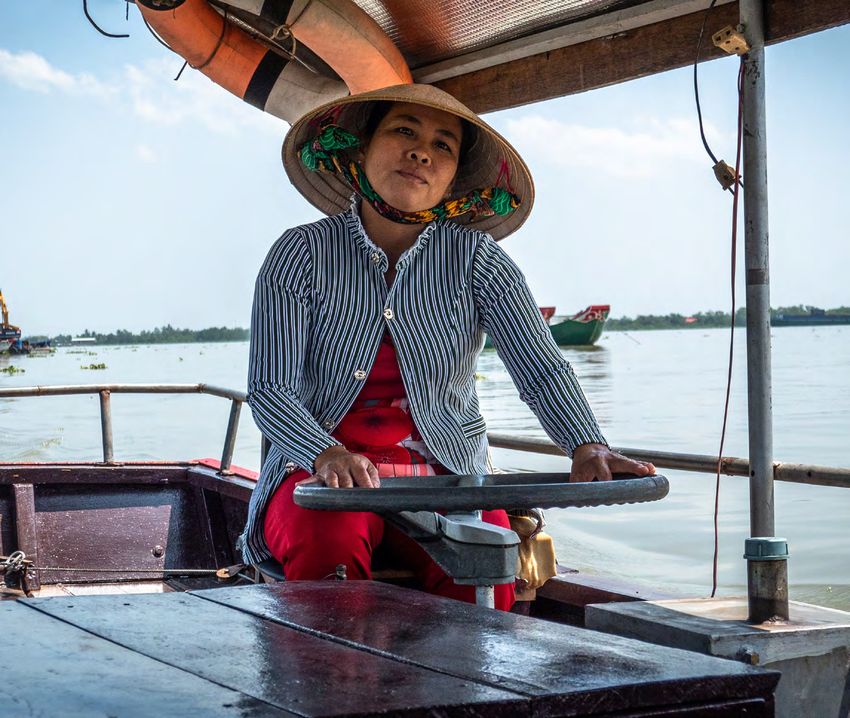
INVESTMENT PORTFOLIO                                                                                                                                                     ZERO GAP FUND UPDATE 2020

                       Blue Forest’s restoration work within                                                                                        Impact Measurement
                       California’s Yuba River Watershed
   Impact Spotlight    provides the ultimate proof of concept
   The Yuba            for turning investment-grade bonds                                                                                                  WHAT

   River Project       into impact on the ground. Launched in                                                                                              Long-term ecological restoration
                                                                                                                                                           to reduce the frequency and
                       partnership with the U.S. Forest Service,                                                                                           severity of wildfires and increase
                       the project seeks to combat wildfires                                                                                               forest health and resilience.
                       by managing thousands of acres of the
                       Tahoe National Forest. It does so with                                                                                              WHO

                       the use of private capital in the form of a                                                                                         The pilot project improves
                                                                                                                                                           the resilience of communities
                       Forest Resilience Bond.                                                                                                             and forests in California, while
                                                                                                                                                           testing a model to finance forest
                       The Yuba Project started relatively small in 2018, with a                                                                           restoration throughout the U.S.
                       few key partners and 15,000 acres under management. It        This work also protects the infrastructure that Yuba Water
                       has since expanded to a coalition of nine partners with an    Agency relies upon to provide services to the community.
                                                                                                                                                           EXPECTATION/TIMING
                       agreed scope of work encompassing 275,000 acres that          A major wildfire could cause thousands of tons of debris to
                       will play out over the next two decades.                      clog the reservoir, requiring costly and complex forms of             Active restoration across 15,000
                                                                                     cleanup and remediation.                                              acres in North Yuba to be
                       One of the project’s central partners and beneficiaries is                                                                          completed by 2023, additional
                       the Yuba Water Agency, which manages water resources          The other emerging benefit to Yuba Water Agency is the                restoration across 25,000 acres
                       in Yuba County. Yuba Water manages a reservoir that           improved water quality—and quantity—that results from                 starting in 2022.
                       provides water, power generation, irrigation, and other       a well-managed forest. “If we can get the forest back to
                       services to the community but is under threat from            a more natural state, then that water can make its way                INVESTMENT CONTRIBUTION
                       surrounding wildfires that could drop ash, mud, or debris     into the aquifer and find its way into the reservoir,” says           Dollars leveraged directly and
                       into the reservoir. The Yuba Project’s benefits to the        Willie Whittlesey, the agency’s general manager. “That can            indirectly—$1 million toward $3
                       water agency and to residents will come from minimizing       increase water yield. And if we have more water, that’s               million in additional funding.
                       all risks to water quality, whether for farmers, boaters,     good for everyone.”
                       fishermen or wildlife.
                                                                                                                                                           KEY IMPACT RISKS
                                                                                     As a beneficiary of the work, the Yuba Water Agency pays
                       When the density of forests is managed, the risk of a         into the project and assures the investors make a return.             Blue Forest Conservation, the
                       catastrophic wildfire is reduced. Due to nearly a century     The agency is paying $1.5 million over five years for the             investment team behind the FRB,
                       of natural fire suppression in California and across the      first project and is now committed to another $6 million              has not yet achieved financial
                       American West, a greater number of trees are competing        over 10 years for the next scope of work, which will cover            sustainability; U.S. Forest Service
                       for limited water resources in the forest. Removing some      25,000 acres.                                                         withdraws support; differences
                       trees and reintroducing fire as an ecological process                                                                               in regional regulatory rules may
                       improves the overall health of the forest and makes it more   “This project is proving that the concept works and has real          hinder replication; large fire in
                       resilient to disturbances like drought, wildfire, or pine     impact,” Whittlesey said. “We want the FRB to be used as a            target region obscures impact.
                       beetle infestations.                                          model that can be replicated across the West.”

                                                                                                                                                                                                 7
INVESTMENT PORTFOLIO                                                                                                                                                                                                     ZERO GAP FUND UPDATE 2020

                    INVESTMENT TYPE
         $
                                                                IIX Women’s Livelihood Bond 2
                    Intermediated Debt

                    PURPOSE                                     A blended finance approach to launch
                    Decent Work and Economic
                    Growth, Gender Equality,                    the world’s first gender-lens impact investing
                    Climate Action
                                                                security listed on a stock exchange
                    YEAR OF INVESTMENT
                    2020

         $
                    ZERO GAP FUND CATALYTIC                 In much of Southeast Asia, woman entrepreneurs face
                    INVESTMENT                              multiple obstacles—with access to financing at the top of
                    $1.5M                                   the list. The International Finance Corporation estimates
                                                            that women-owned small businesses in developing
         $          ROLE OF CATALYTIC CAPITAL               countries face an annual financing gap of nearly $1.5
                                                            trillion. Loan approval rates for women entrepreneurs
                    The ZGF was critical in supporting
                                                            are 15–20% lower than those of men. Small microfinance
                    the initial close of WLB2, mobilizing
                                                            institutions, which often focus on the most remote and
                    senior investors via its subordinated
                                                            vulnerable populations—including a disproportionate           multi-sector social bond to support a group of women-          In July 2021, the WLB1 is expected to mature, establishing
                    role in the capital structure, and
                                                            focus on women—remain exceedingly underfunded.                focused, high-impact enterprises in Asia-Pacific.              a critical track record to investors for the financial and
                    paving the path for replication.
                                                            Furthermore, low-income women in developing countries                                                                        social success of the world’s first public markets financial
                                                            tend to lack the resources to cope with worsening climate-    Within a month of launch, WLB2 deployed its full $12           instrument for women. With all coupon payments made
     $              PRIVATE CAPITAL MOBILIZED               related losses and shocks. As such, the key to building       million to women-focused microfinance institutions (MFIs)      on time, even throughout the COVID-19 pandemic, the
                    TO DATE                                 greater resilience for women and climate resilience           and small and medium enterprises (SMEs) in Cambodia,           bond provided investors with an annual return of 5.65%
                    WLB 2 - $10.5M, WLB 3 – 27.7M           for their communities is to empower them to become            Indonesia, and Sri Lanka. Covid-19 struck shortly thereafter   from 2017-2021.
                                                            solutions to climate change through sustainable livelihoods   but did not slow the pace of IIX’s execution. WLB2
                                                                                                                          exceeded its impact target by more than 20% in the first
                    LEVERAGE RATIO
                                                            Singapore-based Impact Investment Exchange (IIX)              year of operations (31,050 women directly impacted vs
                    25x                                     stepped up to address this challenge by developing and        target of 25,650) and IIX launched the $27.7M WLB3 in
                                                            launching the region’s first Women’s Livelihood Bond          December with participation from institutional investors,
                    GEOGRAPHY                               (WLB). The Bond leverages a blended finance structure         impact investors, and family offices from across the world
                                                            and specialized approach to gender-lens investing to          including the United States, Europe, Asia, and the Pacific.        WLB2 generates deep impact
                    Asia
                                                            attract new sources of private sector capital, empowering     Most telling, WLB3 was launched with less subordinated             through support of women-owned
                                                            underserved women in emerging markets to transition from      capital than WLB2, demonstrating increased market                  business in SE Asia, introducing a
                                                            subsistence to sustainable livelihoods while advancing 12     confidence in IIX’s strategy and execution even in the
                                                            of the 17 United Nations Sustainable Development Goals.       uncertain and challenging Covid-19 context. IIX engages
                                                                                                                                                                                             new investment structure to the
     Alongside 7 other SDGs                                                                                               additional donors to provide subordinated capital for WLB3         market and highlighting Asian
                                                            In January 2020, IIX launched the second Women’s              and subsequent issuances through a next generation                 investor demand for impact products.
                                                            Livelihood Bond (WLB2), a $12 million multi-country,          innovative finance instrument, the Women’s Catalyst Fund.

                                                                                                                                                                                                                                                    8
INVESTMENT PORTFOLIO                                                                                                                                                                 ZERO GAP FUND UPDATE 2020

                                                                                                also drove up prices for organic rice, further improving        Impact Measurement
                                                                                                her bottom line. Her success illustrates how IIX’s Women’s
                       Impact Spotlight                                                         Livelihood Bonds are helping empower women in

                       Cambodia’s Amru Rice
                                                                                                underserved communities.
                                                                                                                                                                       WHAT
                                                                                                Amru Rice has implemented an ambitious training                        The WLB2 brings a gender-
                                                                                                program across Cambodia to teach thousands of farmers                  focused capital markets
                                                                                                on better water usage, thus increasing yield and reducing              product front and center by
                                                                                                impact on the land.                                                    pooling a group of high impact
                                                                                                                                                                       enterprises focused on women
                                                                                                The WLB2 proceeds are supporting women-focused SMEs                    empowerment and creating
                                 Covid-19 disrupted supply chains, made
                                                                                                like Amru Rice to push ahead on other innovations to lower             a portfolio that balances risk,
                                 work more complicated and often led                            its environmental profile. It has begun to experiment with             return, and impact.
                                 to wild swings in commodity prices.                            more climate-resilient rice varieties that are capable of
                                                                                                dealing with the impact of climate change, including swings
                                 Through it all, Cambodia’s Amru Rice, and                                                                                             WHO
                                                                                                of excessive rain and periods of drought. It is also rolling
                                 the women farmers in its supply chain,                         out solar panels to power some of its warehouses and other
                                                                                                                                                                       Women entrepreneurs from low-
                                                                                                                                                                       income, rural or marginalized
                                 managed to prosper, in some cases                              facilities to help with milling and drying while drawing less
                                                                                                                                                                       communities in SE Asia.
                                 because of the uncertainty.                                    electricity from Cambodia’s often unreliable power grid.

                                                                                                This is fantastic testament to how investing in women’s                EXPECTATION/TIMING
                                 A locally owned rice exporter, Amru Rice borrowed from the     economic resilience through products like the WLB can                  100,000 direct women
                                 proceeds of IIX’s $12 million second Women’s Livelihood        help create greener supply chains in emerging markets and              beneficiaries and 250,000 total
                                 Bond in 2020, just as the pandemic swept across Asia. The      builds food security across the world.                                 (direct and indirect) beneficiaries.
                                 company, which just celebrated its 10th anniversary, sources                                                                          WLB2 expects to generate a Social
                                 sustainable rice from thousands of farming families, 70%                                                                              Return on Investment1 of at least
                                 of which have women as the lead farmer. Supply-chain                                                                                  3.0, or $3 of social value for every
                                 disruptions helped drive up rice prices, but Amru Rice and                                                                            $1 of investment capital mobilized.
                                 its network of local farmers were unfazed.

                                                                                                                                                                       INVESTMENT CONTRIBUTION
                                 Champei is one smallholder farmer now working through
                                 Amru Rice’s nationwide sourcing network. Before she                                                                                   Dollars leveraged directly and
                                 signed on with the company, Champei lacked a stable                                                                                   indirectly—$1.5 million toward
                                 market to sell her rice and thus had to absorb wild swings                                                                            $10.5 million in additional funding
                                 in prices offered by middlemen. A climate-smart training                                                                              for WLB2.
                                 program financed by the IIX WLB 2 bond improved her
                                 farming techniques, prompting a 20% increase in yield.                                                                                KEY IMPACT RISKS
                                 At the same time, Champei has increased her income                                                                                    Underrepresentation/underservice
                                 through fair pricing and access to market. She now earns                                                                              of lower-income people.
                                 premium prices for her organic products. The pandemic

                                                                                                                                                                                                              9
INVESTMENT PORTFOLIO                                                                                                                                                                                   ZERO GAP FUND UPDATE 2020

                INVESTMENT TYPE                                                                                       LeapFrog’s Emerging Consumer Fund III invests in
          $                                                                                                           businesses that serve low-income individuals and
                Intermediated Equity
                                                          LeapFrog                                                    communities across 149 countries. These companies offer
                                                                                                                      crucial access to insurance, savings, credit, pensions,
                PURPOSE
                Addressing Global Inequities &
                                                          Equity investment                                           medicines, and healthcare services to 67.1 million people—

                                                          alongside the first
                                                                                                                      most of whom earn less than $2-10 a day and are often
                Expanding Access to Healthcare                                                                        accessing these critical services for the first time.
                and Financial Services
                                                          of its kind blended                                         The ZGF investment served as a catalyst for other investors
                YEAR OF INVESTMENT
                2019
                                                          finance insurance tool                                      to come in with significantly larger inputs, thereby
                                                                                                                      leveraging our impact reach. The Covid-19 pandemic proved
                                                                                                                      to be challenging across the region as economic and health
                                                                                                                      pressures grew. Fund III portfolio companies have so far
                ZERO GAP FUND CATALYTIC
          $                                                                                                           enabled over 17,000 quality jobs and delivered impact by
                INVESTMENT
                                                      In emerging markets, low-income consumers are largely           scaling highly needed protection and empowerment amid
                $3M
                                                      deprived of essential services such as healthcare and           the pandemic. The Fund made significant progress towards
                                                      access to financial services. For example, over two-            achieving its impact targets and collectively reached over
                ROLE OF CATALYTIC CAPITAL             thirds of adults in emerging markets do not have a bank         52 million underserved people and households across the
          $
                The ZGF leveraged its investment      account at a formal financial institution. 2 Without a formal   financial and healthcare industry.
                contribution through the creation     bank account, individuals lack access to a broader range
                of an innovative insurance            of services, such as savings accounts and insurance             Over 2020, Emerging Consumer Fund III continued
                product focused on addressing         products, that provide critical safety nets to escape           deploying and now stands with ten portfolio companies.
                tail-end performance risks to         extreme poverty in case of financial or health shocks.          The Fund’s best performing assets remained those focused
                mobilize additional private capital   Moreover, most of the health expenditure in emerging            on tech-enabled healthcare, insurance, and remittances,
                toward investment in low-income       markets is driven by out-of-pocket spending, compared to        which have performed well as consumers move away
                emerging consumers.                   just 13% in developed markets. 3 As a consequence, there        from traditional business models, in the wake of Covid-
                                                      is enormous inequity in access to healthcare services,          19. The year saw good overall growth, with average local
                PRIVATE CAPITAL MOBILIZED             with the poor and vulnerable often deprived of meeting          currency unit (LCU) compound annual growth rate (CAGR)
      $
                TO DATE                               their essential needs.                                          growth rate of 12.8% in revenue4 and 22.9% in emerging
                $270M                                                                                                 consumers reached.
                                                      LeapFrog’s Emerging Consumer Fund III—the largest-ever
                                                      private equity fund by a dedicated impact fund manager—
                LEVERAGE RATIO
                                                      is focused on providing affordable products for the over
                90x                                   two billion emerging, low-income consumers across
                                                      Africa and Asia. The Fund focuses on scaling companies                                                 The Zero Gap Fund’s investment in
                GEOGRAPHY                             whose products and services improve productivity,                                                      LeapFrog Fund III targets tail-end risks of
                Africa and Asia                       enable future planning, and enhance the resilience                                                     the traditional private equity fund model,
                                                      of vulnerable populations in the face of financial and
                                                      health shocks. In total, the Fund targets 70 million low-
                                                                                                                                                             unlocking $270 million in institutional
                                                      income consumers across Africa and Asia through the                                                    capital for high-impact enterprises
                                                      deployment of $743 million in portfolio companies that                                                 serving low-income emerging consumers.
     SDGs                                             deliver meaningful social impact.

                                                                                                                                                                                                                              10
INVESTMENT PORTFOLIO ZERO GAP FUND UPDATE 2020
Impact Measurement
Impact Spotlight
Insurance in Indonesia and WHAT
Genetic Testing in India
Invest in businesses that
provide affordable, high-impact
healthcare and financial services
for low-income consumers
and communities in emerging
LeapFrog has a large roster of markets.
investments, but two stand out for
showing strength and flexibility WHO
“Emerging Consumers” in sub-
during a tough year—one in Indonesia, Saharan Africa, South Asia, and
the other in India. Southeast Asia, whose daily
per capita income is between
The Indonesian tech firm PasarPolis serves as a digital $2.72 and $10.67 and MSMEs
broker for insurance products across a wide swath of that employ between 5 and 100
sectors in several countries. As an insurance broker, people.
PasarPolis’s customers are its partners that distribute
and sell its policies to consumers. Its business model is EXPECTATION/TIMING
entirely digital, instant and simple: a system designed to In 2020, the company launched over 10 different genetic Serve 70 million Emerging
expand access to insurance for all walks of life, including tests and rolled out a novel Covid-19 test to help combat Consumers by 2029.
communities in remote and underprivileged areas. the surge of cases in India. They have also developed
a genetic screen to assess the risk for cardiovascular
INVESTMENT CONTRIBUTION
Over the past year, PasarPolis developed a range of diseases, which are accelerating across India and will likely
new offerings, including specific Covid-19 policies, that affect over 10% of the population. Dollars leveraged directly and
provided an enhanced safety net for consumers. These indirectly—$3 million toward $270
new products fit well with the company’s mission to offer MedGenome’s work carries huge potential for medical million in additional funding.
first-time insurance buyers a diversity of micro insurance breakthroughs in all areas of health, from cancer treatment
products products and to revolutionize insurance so that and diabetes to heart care and ophthalmology. At the same KEY IMPACT RISKS
protection can be accessed more easily, quickly, and time, the company has established genome centers in Ensure the most vulnerable and
on target by utilizing the latest technology. PasarPolis several Indian cities to help patients increase awareness of low-income consumers gain
established itself in Indonesia in 2015, expanding in recent health risks through personalized medical care. access to key products and
years into Vietnam and Thailand. services.
LeapFrog has partnered with MedGenome with the
MedGenome, meanwhile, is India’s leading genetic ambition towards expanding affordable diagnostic
diagnostics, research, and data company. The company services more widely across India, as well as further in
has used that leadership perch and its various research Asia, the Middle East and Africa. The company has drawn
partnerships to build the largest database of South Asian investments globally and is now looking to raise another
genetic variants. $31 million in a new round of fundraising.
11INVESTMENT PORTFOLIO ZERO GAP FUND UPDATE 2020
INVESTMENT TYPE
$
Sixup
Direct Equity & Intermediated
Debt
PURPOSE
Creating a new asset class that
Education Financing Reducing mobilizes institutional capital
to an underserved market
Inequality
YEAR OF INVESTMENT
2018
ZERO GAP FUND CATALYTIC
$
INVESTMENT
$4M
ROLE OF CATALYTIC CAPITAL
$ High-achieving, low-income students often struggle to
Augmenting Sixup’s lending
finance their college education. Without sufficient funding,
capacity and providing balance
pathways to the best colleges and to the economic
sheet capital to extend the
opportunities that flow from a top college degree remain out loan cycle. Sixup’s methodology of investing in students The company itself was not immune to the difficulties of
company’s runway towards its
of reach, even when these students qualify for traditional (“upfunding”) to attend better schools positions the student the pandemic as they navigated fundraising headwinds.
next round of financing.
loans or other support. Access to finance remains the top (“upmatching”) to achieve better outcomes. Data shows By the end of 2020, the team secured additional financing
barrier for low-income students seeking education. Federal that when students choose their highest quality option, they to continue to build out their operations and strengthen
PRIVATE CAPITAL MOBILIZED data shows that around seven million high-achieving, low- have 6x lower default rates and 6x higher graduation rates.6 the team through 2021. Sixup’s expansion will lead to more
$
TO DATE
income students get into college yet cannot afford the cost loans for the next-generation of leaders while proving
$26M of tuition, room and board, even with assistance. One recent The multitude of Covid-19 challenges hit colleges and Sixup’s unique credit model of placing more value on
survey found that more than four in ten college students universities especially hard as their entire education model academic achievement instead of FICO history.
LEVERAGE RATIO face food insecurity, while more than half struggle to afford went remote, sending students home and further exposing
7x housing. This out-of-pocket gap can range from $5,000 to deep inequities. Beyond adjusting to at-home learning, many
$15,000 a year—resulting in a national tuition funding gap of students faced the grim reality of pending loan debt in a
around $70 billion annually.5 Covid-19 job market.
GEOGRAPHY
United States Sixup, an online lending platform for high-achieving, low- Low-income students, the core of Sixup’s business ethos, With big-data analytics to facilitate
income students, helps fill the financial gap students face have proven resilient in the face of adversity and push to
when other forms of tuition assistance fall short and when remote learning caused by Covid-19 restrictions. Thanks
underwriting and enhance loan
traditional student loans are hard to acquire, often need to a combination of student grit, and Sixup’s move to performance, Sixup presents a
a co-signer and do not cover all funding needs. Sixup automatically enroll them in a temporary Covid-deferral financing model for funding high-
disrupts current underwriting models by tapping into data program and access additional support services not offered
achieving, low-income students
analytics and a range of wraparound services to support by your typical lender, the students are in a stronger position
a student’s education and early career through the entire to return to classes in person. who lack access to traditional credit.
12INVESTMENT PORTFOLIO ZERO GAP FUND UPDATE 2020
Impact Measurement
Impact Spotlight
Providing a Bridge for the WHAT
Resourceful Student Bridge the financing gap that
prevents low-income students
from attending four-year colleges
by identifying, underwriting, and
incubating undervalued students.
Hayley knew exactly what she wanted
WHO
from her college education: a respected
High-achieving, low-income
political science degree that would set students who are underserved
her up for law school. and underfunded. Often first-
generation students and students
As a goal-oriented, high-achiever, she had one public “I applied to so many places for a loan – ones that said that of color.
school in mind that met all her needs. She got accepted, ‘maybe, sometimes we don’t require a cosigner.’ But Sixup
but soon faced another challenge: the school was in was the only place that approved me.” EXPECTATION/TIMING
another state, and thus far more expensive. Decrease the number of low-
Because Sixup was developed with low-income or self- income students that are
Her parents’ offer to provide some support fell far short of reliant students like Hayley in mind, they do things a bit accepted but cannot afford to
what she would need for tuition and expenses. That left her differently. They emphasize student achievement and take higher education and close the
one good option. She would crimp and work for her first note of the wider contours of a student’s life rather than degree attainment gap between
year to prove herself financially independent and qualify simply seeking a credit-history. And to Hayley’s distinct high- and low-income adults.
for in-state tuition. She worked 30 hours a week in an relief, they don’t require a co-signer.
on-campus job and obtained a Federal Stafford Loan. But
INVESTMENT CONTRIBUTION
that still would not cover her financial needs. Sixup gave her a loan that filled the necessary financial gap.
Dollars leveraged directly and
Her next step was to hunt for student loans. This is where Now embarking on the third year of her studies, Hayley indirectly—$3 million toward $26
things got still trickier, and where Sixup filled the gap. officially secured in-state tuition, is on track to graduate million in additional funding.
early with high marks, and still has her sights set on law
Low-income students know that the financing space is school. Though it took tremendous time-management, KEY IMPACT RISKS
littered with catch-22’s. Either you need a strong credit- coordination, and maneuvering to fund her dreams, Hayley Student over-indebtedness.
history or a co-signer – which can both be impossible for is clear that she made the right choice and recognizes Sixup solvency.
a student requiring loans, given life circumstances or age. Sixup’s critical role in unlocking her future.
In Hayley’s case, she did not have that credit-history and a
co-signer would make her ineligible for future in-state status. “Because I was able to get that student loan from Sixup, I
was able to attend my university. Sixup was instrumental to
Thanks to the magic of the digital age and a well-placed be able to pursue my education.”
YouTube Ad, Hayley found Sixup.
13INVESTMENT PORTFOLIO ZERO GAP FUND UPDATE 2020
INVESTMENT TYPE
$
CRAFT
Intermediated Equity
PURPOSE Pioneering a new strategy in climate
finance and scaling investment into
Climate Adaptation
YEAR OF INVESTMENT
2019
global climate adaptation technologies
ZERO GAP FUND CATALYTIC
$
INVESTMENT
$4M
Efforts to combat climate change have spawned a CRAFT— will help to open a new avenue for investing in a
multitude of investment opportunities and garnered growing array of climate adaptation and resilience services
ROLE OF CATALYTIC CAPITAL
$ global attention. Investments into climate adaptation companies. The chief insight of the CRAFT approach is that
ZGF was the first private investor and resilience, on the other hand, have received far less technologies to address climate change currently exist,
in the Fund and gave credibility focus and funding. Despite widespread agreement that presenting a compelling investment opportunity when
to a new fund manager seeking diminishing the harm wrought by climate change will be expanded across developed and developing regions alike.
to catalyze a novel strategy in increasingly vital in the years ahead, climate adaptation CRAFT’s mission is to fund, facilitate, and steward this
impact-driven growth equity in efforts now receive just 6% of all climate finance flows—the growth to maximize its potential for profit and public good.
climate adaptation. vast majority of which comes from public sector funders.
CRAFT’s founders believe the fund will pave the way for
PRIVATE CAPITAL MOBILIZED In late 2019, the Zero Gap Fund teamed up with Lightsmith similar strategies to flourish in the near future, without
$
TO DATE Group to address this funding imbalance. Together with need for concessional funding. In 2020, UNEP estimated
other investors, they launched the first-ever private sector the costs of adapting to climate change to be up to $300
$108M
investment fund focused exclusively on climate adaptation. billion per year in developing countries alone. The need
If successful, this financing vehicle—known by its acronym, for climate adaptation is greater than ever, and CRAFT
LEVERAGE RATIO is demonstrating one strategy to drive much-needed
26x capital towards climate resilience globally. Despite COVID
disrupting deployment, CRAFT continues to uncover
GEOGRAPHY a strong pipeline of climate adaptation investment
opportunities, including software companies with digital
Global
CRAFT, the first-ever private mapping, risk analytics, and geospatial intelligence
investment fund for climate applications related to assessing climate impacts in
agriculture, consumer goods, and shipping/logistics, and
adaptation, accelerates capital companies with physical products and services for more
flows to a new generation of resilient water, energy, and food and agriculture.
companies that build community
In mid-2020, CRAFT closed its first investment into
resilience.
SOURCE Global, a renewably-powered water harvesting
technology company and Public Benefit Corporation.
14INVESTMENT PORTFOLIO ZERO GAP FUND UPDATE 2020
Impact Measurement
Of the 175,000 or so people who live on the parched
Navajo Nation, about 40% have no access to reliable water
and must haul it by car. That is expensive, wasteful and
carbon intensive. Once the panels are in place, the water WHAT
from SOURCE’s hydropanels is none of those. Global private equity fund
focused on climate adaptation.
“This is an elegant solution to a lot of problems,” said Rob
Bartrop, Chief Revenue Officer for SOURCE, Global, PBC.
WHO
“This is an endlessly replenishable supply. We can pull pure
water out of the air no matter how dry it is and no matter Direct and indirect impacts on
what the air quality.” poor and vulnerable populations
through accelerated expansion
SOURCE’s panels are now in use in dozens of countries, and deployment of ‘climate
supplying not just households but also businesses, resilience solutions.
schools, remote work locations, hospitals, and entire
communities in water-challenged environments. In many EXPECTATION/TIMING
communities, the onerous task of water gathering falls Focus on technologies that can be
heaviest on women and girls, so this technology can scaled rapidly.
liberate them for better uses of their time and energy.
INVESTMENT CONTRIBUTION
“This technology is the sort of thing that illustrates the
distinction between incremental change and a systemic Dollars leveraged directly and
Pulling water from the air in one of the transformational approach to the climate crisis,” said indirectly—$4 million mobilizing
driest places in the world may sound $108 million in additional funding.
Impact Spotlight like magic. Even more so when it’s done
Lightsmith co-founder and managing director, Jay Koh.
Bringing Water to entirely with energy and heat from the sun.
SOURCE has made strides so far this year to bring clean
water to underserved communities in the U.S. In addition
KEY IMPACT RISKS
Possibility of funding low- or
Navajo Nation That is what Arizona-based SOURCE Global is doing on the
to the Navajo project and many others, it has installed
panels at a community center as a demonstration project
negative-impact companies.
Navajo Nation for far-flung households that have never had in Allensworth, CA, a town originally settled by Black
access to clean and safe drinking water. Backed by a $16 leaders in the early 1900s also facing water contamination
million investment from CRAFT, SOURCE’s breakthrough exacerbated by climate change. It completed a similar
hydropanels have changed daily life for dozens of Navajo project for a church in Florence, South Carolina.
residents like Abbie Rose Nez, who lives alone in a small
house on the vast reservation and has always had to bring On a far larger scale, SOURCE has recently completed a
water in from afar. water farm of 200 panels to distribute water through a
community dispenser to the Confederated Tribes of Warm
Hers is one of 506 homes in the community that will soon Springs, Oregon. In addition to installing hydropanels on 50
have access to reliable fresh water through compact homes located farther away from the community center.
panels designed to extract water from the air using solar
power. A single panel can offset up to 54,750 plastic
bottles over its 15-year lifetime.
15INVESTMENT PORTFOLIO New to The Zero Gap Fund in 2021
INVESTMENT TYPE Founders First is addressing this gap by offering businesses
$ revenue-based financing, an innovative funding instrument
Founders First
Direct Equity
that generally requires entrepreneurs to pay a fixed percentage
Enhancing bankability and access to
of revenue up to a predetermined cap. This solution offers
PURPOSE minority-owned small businesses an attractive alternative that
capital for minority-led entrepreneurs
Increased access to funding for aligns with business performance, self-liquidates, and avoids
minority-owned businesses ownership dilution for small business proprietors.
YEAR OF INVESTMENT
with revenue-based financing Founder First funds service-based companies generating
annual revenues of $250K to $5M that are led by women,
2020
military veterans, LGBTQ+ and BIPOC founders, offering
them more flexible growth capital than traditional bank debt.
ZERO GAP FUND CATALYTIC The Challenge
$ The financing seeks to position businesses for scale and
INVESTMENT demonstrate the value proposition in supporting minority-led
$1.5M small businesses.
Access to capital is one of the primary barriers facing
small businesses in the United States. More than 80% of
ROLE OF CATALYTIC CAPITAL In addition to capital, Founders First pairs financing with
entrepreneurs cannot access private capital during the
$ hands-on technical assistance through its accelerator
Direct investment into an startup phase of their business. Structural issues within the
program, Founders First Community Development Corporation
innovative revenue-based lending capital markets have left millions of small and medium sized
(CDC). From 2018 through August 2019 the Founders First
platform to provide an operational enterprises (SMEs) woefully underfunded – an estimated
CDC customers were 80% women; 70% people of color; 55%
track record that demonstrates funding gap of up to $90 billion.7
women of color; 20% veterans; 71% in low-to-moderate income
the credit model and mobilizes
areas; 85% under $1 million annual revenues.
at least $100M towards minority- For minority entrepreneurs, this paradigm creates a
led small and medium sized disproportionate challenge. Minority-owned businesses
businesses in the United States. tend to pay higher interest rates compared to their non- Scaling it Up
minority counterparts, are less likely to receive bank credit
or venture capital, and often forgo applying for loans for fear
PRIVATE CAPITAL MOBILIZED In November of 2019, Founders First closed on a $100 million
$ of rejection. A recent study found that new black-owned
TO DATE credit facility from Community Investment Management
businesses start with almost three times less in terms of
$107.5M overall capital compared to new white-owned businesses (CIM). With funding through the Zero Gap Fund, Founders
– a gap that remains until a start-up’s seventh year of First will have the necessary growth capital to build the
LEVERAGE RATIO operation. Likewise, women have been shown to use operating capacity to execute the CIM credit line and expand
significantly less capital at startup than men and are less the Company’s national footprint. The new funding will
72x
likely to apply for bank loans, despite research showing enable the Company to provide revenue-based lending to as
nearly identical approval rates.8 many as 250 small businesses with an average transaction
GEOGRAPHY size of $250,000.
United States
Meeting the Challenge
Among the 400 companies that have gone through the
Founders First accelerator programs, 83% reported increased
revenues in 12 months and 53% reported increased revenues
In addressing this challenge, the small business funding
by 25% in 6 months. As of Summer 2021, 3 companies
landscape requires alternative credit models better suited
working with Founders First have been recognized by Inc.
to fit the operational needs and risk profile of typical SMEs.
5000 as among America’s fastest-growing private companies.
16INVESTMENT PORTFOLIO ZERO GAP FUND UPDATE 2020
Companies racing to begin developing vaccines and other
drugs turned to OnShore to get them through various Impact Measurement
regulatory approval steps.
“I was drinking from a firehose and was in desperate need
WHAT
of new staff,” Valerie said. “That investment from Founders
First meant the world to me.” Her revenues doubled last Fill the funding gap for
year, to $4 million, and are on track to top $5 million this underserved businesses or
year. With follow-up funding from Founders First, Onshore business owned by underserved
will acquire a software platform that will help scale their persons with flexible, non-
solutions into the life science market. With this investment dilutive, revenue-based lending.
they will get access to $1 million in growth capital.
WHO
Tahjar Roamartinez turned to Founders First for quite Target 75% of loans to businesses
different reasons. The founder of a company called Cyber led by women, ethnic minorities,
Warfighters Group, which offers full-service digital security military veterans, LGBTQ, or
analysis and protection to all types of enterprises, was operate in low to moderate
relatively new to the corporate world. She had spent income areas, and lending to
22 years as a communications officer in the U.S. Army, small businesses located outside
including four deployments to Iraq. major capital hubs with diverse
founders.
Launched in 2018, the company has grown well: She now has
Impact Spotlight 15 fulltime employees, 25 contractors and clients that include
banks, utilities, and hospitals. But Roamartinez suspected
EXPECTATION/TIMING
Onshore her profit margins were too thin and she was not properly Serve up to 250 small and
medium businesses that are
Technology
focused on the most lucrative aspects of what she did.
Sometimes, success brings its own underserved businesses or owned
forms of hardship and challenge, as
& Cyber So, for nearly three months, she went through a series of and operated by underserved
persons by 2024.
Valarie King-Bailey learned well last year. Founders First accelerator classes at night, which culminated
Warfighters The chief executive officer of OnShore with her having to pitch her company to investors in a
competition among other students. She came in third. INVESTMENT CONTRIBUTION
Technology Group, a black-owned
Group Chicago-based consulting company, was “The program gave me real applicable knowledge that I
Dollars leveraged directly and
indirectly—$1.5 million toward
experiencing such rapid growth in 2020 could implement right then and there,” Roamartinez said. $100 million in additional funding.
“It had me niche down, and really understand my strengths,
that she needed help to expand her staff. so I could scale up.”
KEY IMPACT RISKS
So she turned to Founders First, who came through with The Founders First program convinced her to switch sales Various factors may impact
a $250,000 revenue-based loan that allowed her to hire approach to a subscription model, where clients would hire growth of Founders First Capital
the specialists she needed to test and validate corporate her indefinitely for a set fee per month. “They gave me some Partners’ (FFCP) portfolio
software systems. Onshore, recently recognized by Inc. very practical tools to fine tune the strong things that I had companies or their ability to
5000, has a large roster of clients in the life-science in my business,” she said. “They helped me understand execute.
industry, including Moderna, so her business took off in the much better that I am a businessperson who happens to be
months after Covid-19 hit. an engineer, not an engineer trying to run a business.”
17INVESTMENT PORTFOLIO New to The Zero Gap Fund in 2021
INVESTMENT TYPE
$ owners a fair market price for their businesses, often with
Intermediated Debt
Apis & Heritage
significant tax advantages, as employees become the
employee/owners of the business with A&H’s assistance. The
Preserve jobs and build wealth
PURPOSE A&H Legacy Fund I implements a unique racial equity lens in
their screening criteria to enable job preservation and asset
BIPOC Wealth Creation
among Black, Indigenous, transfer for low-income and BIPOC workers via employee
stock ownership plan (ESOP) conversions. The employee
People of Color (BIPOC)
YEAR OF INVESTMENT ownership structure is designed to bring greater returns
Juneteenth – 2021 to workers, rather than concentrating equity appreciation
populations in the USA through among a few at the top. This strategy protects jobs at risk
of being lost in a sale to a competitor or a private equity
employee ownership
ZERO GAP FUND CATALYTIC
$
INVESTMENT investor, provides stability and builds wealth for workers.
$3M
Resource constraints—of expertise as well as capital—
prevent employee ownership from being used as an explicit
ROLE OF CATALYTIC CAPITAL racial equity strategy. The A&H model directly addresses
$
Anchor new A&H fund managers these capital and technical assistance gaps by mobilizing
(majority BIPOC) and flagship The Challenge the professional ESOP industry to specifically benefit the
Legacy 1 fund to send strong owners of color and BIPOC communities. A&H partners with
impact signal to the market and advisers well versed in the world of employee ownership to
catalyze engagement from other The United States suffers from extraordinary inequality of help counsel new ownership teams on appropriate types of
tentative early partner, including income and wealth along racial lines. In 2019, the median accounting and governance. Research suggests that these
reputable organizations with a white family had nearly eight times the wealth of the typical cultural and governance practices lead to companies that
history of addressing income and Black family, and five times the wealth of the typical Hispanic are more durable, earn higher profits, pay employee-owners
opportunity inequality. family.9 Furthermore, 60 percent of Black workers and 75 higher wages, and retain staff for longer.
$ percent of Latinx workers retire with no retirement assets.10
PRIVATE CAPITAL MOBILIZED
The benefits of at least some wealth accumulation are Scaling it up
dramatic across all fronts. Wealth enables housing security,
TO DATE
stability through financial shocks, risk-taking in pursuit of
$27M upward mobility, and a more comfortable retirement. Baby boomers (age 55+) own 2.3M US businesses and only
17% of those have succession plans. In what is often called
LEVERAGE RATIO Meeting the Challenge the ‘Silver Tsunami,’ 60% of these businesses are expected
9x to close or be sold before 2030. This creates a huge impact
and investment opportunity for A&H over the next 20 years,
GEOGRAPHY Asset ownership is a key driver of wealth accumulation, potentially building wealth for tens of thousands of workers of
helping decrease the racial wealth gap among Black, color, their families and their communities. A&H’s streamlined
United States
Indigenous, and People of Color (BIPOC) communities. There process appeals to retiring owners looking for a complete exit
are two main ways to begin to build wealth in America - to and legacy preservation. Fund I is targeting a $25-40 million
own one’s home or to own one’s business. Apis & Heritage launch fund, but given the success of its first close at $25+
offers an innovative mechanism for business-asset ownership million with ZGF’s help, A&H now hopes to reach its maximum
– the BIPOC-led private equity fund has developed an fund size of $50 million, thus driving more wealth to BIPOC
“employee-led buyout” (ELBO) model that gives retiring workers if successful.
18INVESTMENT PORTFOLIO ZERO GAP FUND UPDATE 2020
companies into owners. A&H is targeting companies Impact Measurement
where at least 40% of its workforce are workers of color.
Impact Spotlight This investment is another instance of the ZGF seeking
All Eyes on the Racial
to support companies using innovative financial tools to
advance racial equity and justice in the U.S. WHAT
Wealth Gap
Reduce the racial wealth gap
The A&H model aims to help the workers in the by creating equity, engagement
companies it invests in build between $70,000 and and security for BIPOC workers
$120,000 in their retirement accounts, not counting by investing in profitable small
any savings assembled within a traditional 401k. At the companies with meaningful
start, A&H will target companies involved in sectors such BIPOC workforces and
Before they founded Apis & Heritage as waste hauling, landscaping, elder care, commercial transitioning them to 100%
Capital Partners (A&H) to address cleaning, and food processing, where the share of employee-ownership.
workers of color is high.
the racial wealth gap head on, Todd
Leverette and Philip Reeves did many Todd and Philip first met as students at Morehouse
WHO
Workers of color in essential
things: worked on Wall Street, advised College in Atlanta, the alma mater of Martin Luther King
services and other businesses
investment firms, sold residential real Jr. The idea for A&H began percolating when Todd was
that have large representation of
consulting for a nonprofit that focused on employee
estate, helped small businesses get ownership as a racial equity tool, specifically in Detroit.
workers of color.
underway. Nothing before, though, He then went on to work for the Democracy at Work
promises to have the impact of their Institute, which helped incubate the fund. EXPECTATION/TIMING
500+ workers over 10 years
current business plan, which will begin to
“We then came to the conclusion that we needed to bring will own enterprises worth
show its first results later this year. real capital to this space, if we actually want to scale it,” approximately $35 million.
Todd said.
“These are life-changing, paradigm-shifting, wealth- INVESTMENT CONTRIBUTION
changing things that we’re looking to do through this first Aside from home ownership, owning a business or part of
Dollars leveraged directly and
fund,” said Todd, who is an A&H partner, along with Philip. a business is one of the surest paths to long-term wealth
indirectly – $3M toward $35M in
creation not just for that owner, but for generations to come.
additional investment into the Apis
Both see A&H as the culmination of their many years in & Heritage Legacy Fund I.
finance, but also a distillation of their thinking on what is really
needed to address economic inequities in American society.
KEY IMPACT RISKS
“Our idea is to use the tools of big finance and the tools Underperformance of enterprises
of employee ownership to help businesses survive and owned by the workers of color
thrive, but also to build wealth for the workers in those and attendant lessening of value
businesses,” said Phillip. of their ESOP accounts.
Using capital supplied by the ZGF and other investors,
A&H aims to buy out at least eight company owners in
its first five years, turning at least 500 workers at those
19You can also read


