06CHAPTER THOUGHTS ON THE FUTURE STATE - National Healthcare Group
←
→
Page content transcription
If your browser does not render page correctly, please read the page content below
CHAPTER

                                    06
                                    THOUGHTS ON
                                    THE FUTURE STATE

115   © National Healthcare Group                      © National Healthcare Group   116
FIRST STEPS IN POPULATION HEALTH
ASSOCIATE PROFESSOR TAI HWEI YEE, GROUP CHIEF QUALITY OFFICER, NHG
4. Cost Control Platform f. Use predictive models and health risk assessments
that take into account situational factors, medical
a. Achieve less than three per cent inflation yearly
history, and prior resource utilisation to deploy
Right from the inception of NHG as a new healthcare In June 2009, a small group of four NHG leaders attended for per capita cost by developing cooperative
resources to high-risk individuals.
cluster in 1999, population health was on the minds of a gathering in London of 19 organisations that had relationships with physician groups and other
its Senior Management. I recall the first NHG Strategic come together to learn how to implement strategies healthcare organisations committed to reduce waste g. Set and execute strategic initiatives related to
Retreat in Sentosa then, together with about 30 to 40 and action plans to achieve “Triple Aim” as a large scale of healthcare resources. reducing inequitable variation in outcomes or
other senior clinicians and administrators from the entities strategy within a country or for a region. Among the 19 undesirable variation in clinical practice.
b. Achieve lowest decile performance in the Dartmouth
that were to make up the new NHG cluster. As a group, we organisations, eight had already started work on five key Atlas measures by breaking or countering incentives In addition, we learnt how important and challenging it
crafted the Vision, Mission Statement, and Core Values for design concepts, and they included the UK, Scotland, and for supply-driven care. was to measure progress to achieve the “Triple Aim” at
this new entity. Our facilitator had challenged us to look County Jönköping, Sweden. The five key concepts were: the population-level. Mr Henriks and Mr Nolan shared how
beyond the mundane familiar statements and to really c. Reward healthcare providers, hospitals, and
1. Focus on Care for Individuals and their Families the Vision could be best supported by building a robust
think deeply on what, as healthcare providers, we had healthcare systems for their contribution in
learning system through developing explicit theories for
really wanted to create for the future. From this retreat, a. For medically and socially complex patients, establish producing better health for the population, and not
system changes and then testing changes sequentially.
our NHG Vision “Adding Years of Healthy Lives” to the partnerships among individuals, families, and just producing more healthcare.
They introduced the concept of “Act on the Individual
Population of Singapore was born. Little did we know then caregivers, including identifying a family member d. Orient care over time - the “patient journey” - and Learn for the Population”. The “Esther project” was
that this Vision would eventually come to embody our or friend who will be supported and developed to targeted to the best feasible outcomes. an illustration of that concept.
aspirations as a group of diverse healthcare organisations coordinate services among multiple providers of
to achieve what we know today as the “Triple Aim” for care. From that early initiation to the current work of population
5. Creating New Structures and Systems to Design and
population health. Many international experts visited, health, NHG has gleaned many valuable lessons from this
b. Jointly plan and customise care at the level of Implement Changes across Entities, Cost Control
shared, and interacted with us over the years including international community of experts and organisations,
the individual. Platform, and System Integration and Execution
Dr Donald Berwick, President Emeritus and Senior Fellow, and adapted many initiatives into our own systems and
c. Actively learn from the patient and family to inform a. Match capacity and demand for healthcare and social structures. Besides that, we have also continued to be a
Institute for Healthcare Improvement (IHI); Professor
work for the population. services across suppliers. part of this learning community, contributing the lessons
Lucian Leape, Physician and Professor at Harvard School
of Public Health; and Mr Goran Henriks, Chair Emeritus, learned from our own local experimentation of population
d. Enable individuals and families to better manage b. Ensure that strategic planning and execution with all
International Forum Programme Advisory Committee and health. At the International Forum of Quality and Safety
their own health. suppliers including hospitals and physician practices
Chief Executive of Learning and Innovation, Jönköping in Healthcare in September 2018 in Melbourne, Australia,
are informed by the needs of the population.
County Council, Sweden, have commented how apt our Professor Philip Choo, Group CEO, NHG, shared our “River
2. Redesign Primary Care Services and Structures c. Develop a system for on-going learning and
Vision is in guiding our organisation in its quest for better of Life” concept with the audience. We are truly part of
a. Have a team for basic services that can deliver at improvement. the international community where “All Teach, All Learn”
population health.
least 70 per cent of the necessary medical and d. Institute a sustainable governance and financial is a philosophy that sustains the passion for improving
“Triple Aim”, as a concept, was publicly articulated by IHI’s health-related social services to the population. and “Adding Years of Healthy Life” for our patients, our
structure for the “Triple Aim” system.
Dr Berwick at a National Forum in 2007. But this has evolved community, and our population.
over many years, with thinkers such as Mr Thomas Nolan b. Deliberately build an access platform for maximum e. Efficiently customise services based on appropriate
and Dr John Whittington. The main focus of the concept, flexibility to provide customised healthcare for the segmentation of the population.
was to not only look at healthcare from the perspective of needs of patients, families, and providers.
improving care for an individual patient, but also to view c. Cooperate and coordinate with other specialties,
it from the “widest possible lens” for outcomes that would hospitals, and community services related to health.
impact the entire population. A challenging paradox was
having to address, not just clinical outcomes, but also 3. Prevention and Health Promotion
the cost of providing care and creating the best possible
experience that care renders simultaneously. a. Work with the community to advocate and provide
incentives for smoking prevention, healthy eating,
exercise, and reduction of substance abuse.
b. Develop multi-sector partnerships, utilise key
stakeholder resources (worksites, schools, etc),
and align policies to provide community-based
support for all who wish to make health-related
behaviour change.
c. Integrate healthcare and publicly available
community-level data utilising Geographic
Information System (GIS) mapping to understand the
local context to strategically determine where and for
whom health-related community-level prevention,
health promotion, and disease-management support
interventions would be most useful.
117 © National Healthcare Group © National Healthcare Group 118
BRIDGING LABORATORY AND LIFE FOR EFFECTIVE
           POPULATION HEALTH MANAGEMENT
           PROFESSOR LIM TOCK HAN, DEPUTY GROUP CEO (EDUCATION AND RESEARCH), NHG

           The beginning of all human civilisation can be traced back        This is but the first step. Generating impressive data and   understanding of the healthcare system. Healthcare              The best designed system will only work if its people believe
           to a river or a lake, with water being a source of life. A        research studies will amount to little without tangible      professionals will be trained in knowledge management,          in its purpose. In this regard, we need to continually foster
           healthy river system – one that is robust and sustainable –       outcomes. These resources should be translated into          evidence synthesis, and in optimising the clinical network      a culture that encourages curiosity, eagerness to learn,
           is vital for the continuation of life on earth. This is similar   novel applications for clinical practice and in turn,        to provide value-driven and cost-effective care for patients.   an openness to change, and most importantly, a heart
           to the role of our healthcare system: an ecosystem that           improve patient care and safety. NHG bridges this divide     Besides practising at the top of their licences, healthcare     for the patient. Only then, will we be able to establish an
           sustains rather than depletes its resources, rich in both         by developing a strong pipeline of Clinician Scientists,     professionals should embrace improvement sciences to            ecosystem of health that is able to add many more healthy
           quality and innovation, and fluid in adapting to new              who serve as conduits between laboratory and clinical        ensure that care delivery stays ahead of the curve. A more      years to our River of Life.
           technology. This can only be achieved if we shift the             research. Together with NHG’s primary clinical training      comprehensive training programme will ensure that best
           paradigm: from ‘sick’ care to ‘health’ care.                      partner, LKCMedicine, we have jointly developed a            practices consistently permeate the workplace among
                                                                             comprehensive research career development roadmap            both healthcare professionals and administrative staff.
           Singaporeans now enjoy one of the highest life expectancies
                                                                             for our Clinician Scientists. They will help enhance NHG’s   Towards this end, NHG College has introduced a series of
           in the world. In the past three decades, our life expectancy
                                                                             research in niche areas such as metabolic diseases,          faculty development programmes to build and strengthen
           has increased by almost 10 years. Yet, with every year of
                                                                             including diabetes, infectious diseases, skin disorders,     the capabilities of our educators. These programmes
           increased longevity, we see only two-thirds of an increase in
                                                                             mental health, geriatrics, and healthy lifestyle.            include the Health Professions Educators’ Essentials
           Healthy Life Expectancy (HALE) – a measure of the quality
                                                                                                                                          (HaPEE) which is tailored to our local context, study trips
           of these additional years. We need to bridge this gap.            In tandem, medical education is expanding its horizons
                                                                                                                                          made to global organisations to learn best practices, and
                                                                             to incorporate not just clinical knowledge, but a holistic
           Traditionally, medical research and education focused on                                                                       regular faculty development workshops for staff.
           treating diseases when they occur, rather than prevention
                                                                                                                                          As compared to formulating treatment plans for the sick,
           and maintenance of health. Now, we are increasingly shifting
                                                                                                                                          devising healthcare interventions for population health
           our academic pursuits upstream to support population
                                                                                                                                          requires us to see things through wider lens. Sociology,
           health management for more value-driven outcomes.
                                                                                                                                          behavioural sciences, health economics, and medical
           To understand how to run an effective population health                                                                        technology are just as important as systems biology in
           management system is to first understand the “nuts and                                                                         providing us with new insights. We are therefore investing
           bolts” that make up the complex healthcare system. Research                                                                    in the creativity and energy of our younger generation.
           analyses how the various healthcare determinants weave                                                                         NHG is in a multi-party collaboration with tertiary
           together, and the gaps of the current system that prevent it                                                                   education institutions in Singapore to develop gaming
           from reaching its ultimate potential or goal, which is to cure                                                                 prototypes to address challenges in healthcare and to
           humanely, to relieve, to care, and to prevent, where possible.                                                                 empower self-care in patients. Termed the ‘ALIVE-POLY-
                                                                                                                                          ITE Student Internship Programme’, the gAmes for heaLth
           This is where epidemiology research comes in. We can
                                                                                                                                          InnoVations centrE (ALIVE), a collabration between NHG
           only begin to build the infrastructure of a population
                                                                                                                                          and LKCMedicine, will provide professional healthcare
           health management system if we have enough raw
                                                                                                                                          expertise to students in developing serious games
           materials to study and work with. Carefully collected and
                                                                                                                                          prototypes that may translate into user-friendly solutions
           diverse data is needed to study the trajectory of diseases,
                                                                                                                                          for better health outcomes and population wellness.
           their causes, and previously unknown risk factors, in order
           to identify the sub-populations at risk, and eventually                                                                        These key factors – exhaustive research, a fine-tuned
           design evidence-based preventive strategies and practical                                                                      education programme, and a relentless drive for
           interventions. The on-going Health for Life in Singapore                                                                       improvement and innovation – will fortify the population
           (HELIOS) Study serves this purpose. Established and led                                                                        health management infrastructure, and in turn lay the
           by Nanyang Technological University (NTU)/Lee Kong                                                                             foundation for NHG to eventually become the Academic
           Chian School of Medicine (LKCMedicine), in partnership                                                                         Health System (AHS) we aspire to be. Together with NTU,
           with NHG and Imperial College London (ICL), the                                                                                LKCMedicine, and ICL, we are working towards developing
           Study aims to mine a wide breadth of data from 10,000                                                                          a population-centred AHS with our newly formed Joint
           Singaporeans/Permanent Residents to better predict,                                                                            Strategic and Implementation Committee (JSIC). This
           prevent, and manage chronic diseases. HELIOS, which                                                                            Committee brings together Clinicians and Academia to
           is the first large-scale longitudinal health study done on                                                                     design, evaluate, and implement initiatives promoting
           Asians, will be a formidable databank for global scientists                                                                    population health.
           and doctors deepen their medical research.

119   © National Healthcare Group                                                                                                                                                                                                                    © National Healthcare Group   120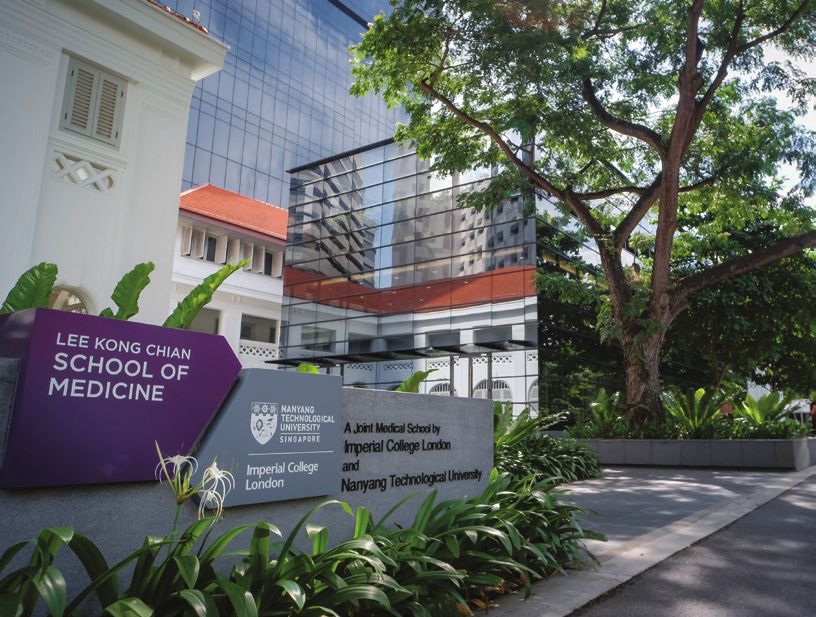
TRANSFORMING PRIMARY CARE:
A FUTURE STATE WISHLIST 1. Fulfil the Tenets of Primary Care To achieve these strategic goals, several system-level
ASSOCIATE PROFESSOR CHONG PHUI-NAH, CEO, NATIONAL HEALTHCARE GROUP POLYCLINICS enablers will be crucial for NHGP. Integration of care across
Together with our GP and hospital partners in the
AND PRIMARY CARE the various care settings will need to be further supported.
region, we continue to pursue innovative and scalable
We hope that with the Next Generation Electronic Medical
ways to improve accessibility, comprehensiveness, and
Record (NGEMR) coming onstream in 2020, the flow of
coordination of care.
Primary Care Vision 2025: A world-class, relationship-based Primary Care ecosystem. This is the future of Primary Care in information for patient care across public health institutions
the Central Region as envisioned by National Healthcare Group Polyclinics (NHGP) in early 2015 when we asked ourselves will improve, enabling the development and sustaining
2. Optimise Population Health of holistic integrated patient care plans. This is especially
what we would like to move towards to and build over the next decade. Five strategic objectives were identified:
We seek to gain a deeper understanding of the population important for chronic care management. Patients should
under our care, as well as strengthen partnerships with own and have access to their care plans which enhance
1. New Care Delivery Model 3. Patient Engagement and Activation
the community to enhance primary and secondary care communication and goal-setting between patients and
Since then, NHGP has remodelled the way it delivers care To truly engage and activate our patients, we recognise prevention. care providers, to monitor each patient’s progress.
across all its polyclinics. Its patient empanelment teamlet the importance of developing a health literate workforce
Technology advances are changing the way in which our
care model has brought about improved clinical outcomes, as an essential first step since our staff can be our health 3. Activate Patients, Family, and Caregivers
society communicates, obtains, and shares knowledge.
reduced diabetes and hypertension-related emergency ambassadors. NHGP seeks to understand the gaps,
Patients remain our first priority in our ecosystem. They Primary Care will need to adopt and adapt to new
visits, and increased patients’ uptake of primary and identify ways and has put in place training to raise health
are key ‘players’ in our empanelment teamlet care model, technology, and manage the accompanying risks, to stay
secondary preventive health screening. literacy among all levels of staff.
and more will be done to activate them and their families relevant to how our patients live and work. Virtual access
to make and sustain behavioural changes for better self- to care to complement clinic visits, technology-enabled
2. Expansion of Primary Care Capacity 4. Staff Engagement and Development
care and good health. self-monitoring, and patient education and engagement
5. Stewardship and Setting Standards
Over the past four years, NHGP has also established through mobile platforms are examples of how we are
patient right-siting collaborations with General As NHGP transforms Primary Care, it is important to ensure 4. Research and Innovate harnessing technology as part of care transformation.
Practitioners (GPs), and successfully handed over three that our people are committed to the highest standards Machine-learning and Artificial Intelligence (AI) are also
To drive our transformational efforts, we will invest more
Family Medicine Clinics (FMCs) set up with selected GP of ethical conduct, and exercise collective responsibility providing us with opportunities to do more and better,
in developing a culture of innovation and Primary Care
partners while continuing to jointly oversee the clinics’ for the resources to provide care to our patients and the in view of increasing healthcare demand and a shrinking
research, with the aim of scaling and spreading successful
clinical governance. In line with the Ministry of Health’s population. There are staff development projects such workforce. Primary Care providers will need to partner
proof-of-concepts across our Primary Care ecosystem.
(MOH) support of GPs to deliver holistic chronic care as job redesign for operations staff and training on how technology providers to contextualise the know-how, and
Staff and partners will be encouraged to experiment with
through the Primary Care Networks (PCNs), NHGP is to work better as teamlets. We have also continued to develop effective and sustainable solutions which meet
new ideas to enable our patients to live well.
leading the Central-North PCN. Some 30 GP clinics now improve the quality of our care and service delivery. our patients’ needs. Regulatory sandboxes which allow for
work closely with NHGP and NHG Institutions through this experimentation and collaboration in new ways to deliver
5. Lead in Clinician Training
network to serve residents in the Northern and Central care will be necessary.
regions of Singapore. Clinician training must focus on the future, and we aim to
The future state of Primary Care will continue to be
provide our clinicians with the skills to manage conditions
dependent on the building of strong relationships
such as Frailty and mental health within Primary Care,
between the patient and provider, and provider-provider
more so with an ageing population.
partnerships. While MOH reviews Singapore’s healthcare
THE FUTURE AHEAD 6. Develop High-Performing Staff financing model, NHGP and our partners continue to
and Providers work closely and leverage on key enablers to improve our
quality and integration of care.
In 2017, Health Minister Mr Gan Kim Yong shared MOH’s This ecosystem, comprising NHGP and GPs in our
Emphasis will be placed on attracting, developing and
Three Beyonds strategy – Beyond Hospital to Community, region, is underpinned by a strong spirit of cooperation Primary Care is the cornerstone of a sustainable healthcare
retaining high-performing staff in NHGP, and over time to
Beyond Healthcare to Health, and Beyond Quality to Value and knowledge-sharing, enabled by supportive funding, system. The success of NHG’s Primary Care Transformation
also raise the capability and standard of our Primary Care
– for a sustainable healthcare system. This strategy further technological and physical infrastructure. will be a key determinant of whether the River of Life is a
ecosystem providers collectively. This is done through
bolsters our Primary Care Vision 2025, by bringing the axis powerful, yet calm life-changing force.
In late 2018, we reviewed and updated our strategic on-going sharing and knowledge exchange, learning, and
of care to the primary and community levels, and closer to
approaches to ensure that we are on track to achieve development.
the patient and population. The push for our Primary Care
Vision 2025. With a focus on ensuring future-readiness and
Transformation is gaining impetus as we continue to build
an emphasis on partnership with the rest of the Primary
on our Vision of a world-class, relationship-based Primary
Care ecosystem, we have distilled six strategic goals and
Care ecosystem for the Central Region of Singapore.
are developing corresponding strategies to achieve them.
121 © National Healthcare Group © National Healthcare Group 122
MAINSTREAMING MENTAL HEALTH AND WELL-BEING
PROFESSOR CHUA HONG CHOON, DEPUTY GROUP CEO (CLINICAL), NHG;
CEO, INSTITUTE OF MENTAL HEALTH
TAKING CHARGE FOCUSING ON JOY IN WORK
One in seven adults in Singapore has experienced a mood,
anxiety, or alcohol use disorder in their lifetime. This was A HOLISTIC APPROACH Central to this concept of Living Well, even with illness, is This focus on personal health and well-being is something
TO HEALTH -
the ‘ownership’ of health — empowering and motivating that can help us as healthcare workers too. We all know
one of the key findings from the Singapore Mental Health individuals to take charge of their health. One of the that delivering high quality healthcare can be extremely
Study (SMHS) 2016 led by the Institute of Mental Health
(IMH). The nation-wide epidemiological study looked NO HEALTH WITHOUT ways we are looking to do this in NHG is by incorporating challenging, and that healthcare professionals are facing
MENTAL HEALTH
health coaching as an adjunct to treatment. In fact, we increasing stress and burnout, not just in Singapore but
at the prevalence of common mental disorders in the are already doing this to some extent. Often when we see worldwide. Stress and burnout in healthcare workers
Singapore resident population aged 18 years and above, patients, we advise them to make lifestyle changes that adversely affect the quality of care we provide to our
their associated factors, as well as the population’s help- will help to improve their health outcomes and quality patients. It can lead to lower levels of staff engagement
Often when we talk about health, we tend to overlook
seeking behaviour. It was also one of the few studies of life. Long-term lifestyle change is perhaps the most and productivity, and higher staff turnover. How do
mental health or see it as separate from physical health.
worldwide that made a deliberate attempt to track the important factor to sustain improvement, especially in we deal with this challenge? One way, the Institute of
The two, however, are inextricably linked. Studies show
mental health status of a country over a period of time. the management of chronic conditions such as diabetes Healthcare Improvement in the United States says, is for
that people with schizophrenia, bipolar disorder, and
Compared with the first SMHS in 2010, we found that and hypertension as well as certain mental health issues. the healthcare workforce to reclaim the “Joy in Work”
major depressive disorder (MDD) are more likely to also
the prevalence of mental illness had increased, and that It is also often perceived as extremely daunting, to have that has led many to embark on a career in healthcare
experience chronic conditions such as diabetes and heart
younger people, aged 18 to 34, emerged as the group to make changes to diet, exercise, and sleep, which have in the first place. We need to re-focus on the meaning
disease, and have reduced life expectancy of between 15
more vulnerable to mental health issues. become lifelong habits. Health coaching focuses on this of our work, to see how every minute of the day at work
and 20 years compared to the general population. These
While the SMHS 2016 showed that those who sought help are common mental disorders; MDD is in fact the most often difficult aspect of chronic disease management; directly contributes to our personal goal of giving care to
for mental health issues were doing so sooner compared common mental disorder in Singapore, with one in 16 the aim is to work with patients to draw out their people in need. We should improve the communication
with SMHS 2010, more than 75 per cent of people with a people having experienced it at some point in their life. self-motivation to make long-term changes and adopt we have with our colleagues, stop doing things that are
mental disorder were not seeking any professional help health-supporting habits that will help them to achieve not meaningful, and help each other so we do not feel
Conversely, people with chronic physical conditions have
for their problems. Why is this happening in a modern, their personal goals. alone and unsupported. I believe this is the way forward,
a higher risk of developing mental health problems, like
developed country with a well-educated population? and at the heart of this concept is to find meaning in what
depression and anxiety, than the general population. If For instance, an elderly man with poorly controlled
We think that this could be due partly to the inability we do and what brings us joy in our work.
we compare two individuals who have diabetes or even hypertension and diabetes may not be motivated to
of sufferers to recognise their distressing feelings and reduce his salt and sugar intake just for the sake of being I have started a workgroup to explore how we can bring
cancer, research shows that the person who is mentally
experiences as symptoms of treatable mental health healthier, but health coaching could help this man to focus “Joy in Work” back to all at NHG, and am working with some
healthier tends to have better outcomes.
conditions. The persistent societal and personal stigma instead on being well enough to see his favourite grandson very enthusiastic and passionate colleagues who want to
associated with mental illness is another key reason. How As we push ahead with a population approach to
graduate from university, a meaningful enough reason develop this into a movement in NHG. “Joy in Work” will be
can we do better? healthcare, an important question we have to ask
to give up salt and sugar! Health coaching goes beyond a participative and voluntary process involving staff at all
ourselves is “What does it truly mean to be healthy?”
curing individuals of their illness; it is about helping them levels of NHG as we define what matters to us individually
The World Health Organization (WHO) defines health
to understand how their illness prevents them from living and as an organisation, understand the barriers to “Joy in
as a “state of complete physical, mental and social
the life they want. It is about focusing on what they value Work”, and how we can address them.
well-being and not merely the absence of disease or
most to serve as a catalyst for change.
infirmity.” This widely accepted definition recognises If we can learn to bring back “Joy in Work” among
the interlinked nature of mental, physical and social colleagues at all levels of NHG, I believe that we will be
well-being; and while we have some way to go in working poised to show the way for other organisations to create
beyond our areas of healthcare specialties, I would very a more positive work environment. We spend most of our
much like to see a closing of the gaps between the three adult life at work so it is important that our workplace is
in our work. I hope that healthcare professionals across all one that supports mental, physical, and social well-being.
disciplines will see individuals holistically, and attend to
all aspects of their health — mental, physical and social.
I believe that this will help to change how people view
mental illness, and in turn reduce stigma.
We also need to look beyond illness to wellness. Being
healthy does not only mean the absence or prevention
of illness but rather living well, enjoying meaningful
relationships, being productive at work, and being able
to engage in and contribute to one’s community, even if
one is living with illness. Modern science and medicine
today allow persons with chronic illness to continue
living meaningful and happy lives, and this should be no
different for those with mental illnesses.
123 © National Healthcare Group © National Healthcare Group 124
BRINGING DERMATOLOGY CARE INTO THE COMMUNITY
ASSOCIATE PROFESSOR TAN SUAT HOON, DIRECTOR, NATIONAL SKIN CENTRE
A FUTURE-READY WORKFORCE DRIVING DERMATOLOGICAL
Skin diseases are one of the health problems in Singapore conditions requiring a degree of specialised care now
INNOVATION THROUGH
community and broad-based care, dermatology should RESEARCH
In preparing our future physicians for the shift to more
that cause the most disability. In terms of Years of “healthy have the option of being treated closer to home through
life” Lost to Disability (YLD), skin and subcutaneous Tele-DERM, an e-consult service that enables Family be taught to all medical students. It should no longer be
diseases have been ranked as the fifth leading cause of Physicians at polyclinics to discuss skin care cases and an elective and its training curriculum should be uniform, Strong clinical care and a vigorous teaching culture need
non-fatal burden in Singapore1. treatment options with NSC dermatologists promptly. so that all medical students get to see the common and to be complemented with progressive research. Inter-
It reduces the need for patients to go for additional less common (but equally important) skin conditions that institutional and inter-disciplinary collaborations are
Eczema is the leading cause of skin health problems,
follow-up appointments at NSC, allowing them to receive they may encounter in their practice, be it in the primary necessary to generate innovative and practical ideas that
largely contributed by its high prevalence of 20 per cent in
dermatology care sooner and at their convenience. or specialist setting. This calls for a more innovative can be translated into improved clinical and healthcare
school going children and 11 per cent in adults2 3. Among the
elderly aged 70 and above, there is a high burden of skin In serving as a tertiary centre in this hub-and-spoke approach to education so that all medical students outcomes for the population.
disease where eczema, ulceration, other skin conditions, model, NSC will continue to facilitate inter-cluster transfer who rotate through the training centre in dermatology
Thus, the Skin Research Institute of Singapore (SRIS), a
skin cancer, infections, and pruritus are key issues4 5. of patients who require complex diagnostic workup, are taught to familiarise themselves with a core list of
collaboration between Agency for Science, Technology
phototherapy, medical or surgical treatment. The new diagnoses. It will be an extension of what is currently done
Taken together, what the data suggests is that skin and Reseach (A*Star), Nanyang Technological University
NSC building, when opened in 2022, will have capabilities for our examinations. Common modalities of treatment
conditions affect a high proportion of the population, (NTU)/Lee Chong Kian School of Medicine (LKCMedicine),
for specialised allergy testing and a facility to administer can be taught by both physicians and non-physicians
estimated at 30 to 70 per cent of individuals, across all and NSC, was formed to harness the expertise and
general anaesthesia, opening up opportunities for interactively, and this is what NSC has introduced.
cultures and ages. experience of scientists, engineers, and clinicians, to
dermato-surgical procedures for paediatric patients and The dermatology training programme should evolve discover new treatments for some of the diseases that
other more complicated dermato-surgical procedures. to a standardised national training programme where a cause the most disability in Singapore. Such inter-
QUALITY DERMATOLOGY Team-based care for the management of chronic skin
diseases will be the norm. While physician-led, such
trainee goes through different care settings. This includes disciplinary collaboration not only promotes industry
CARE FOR THE POPULATION multidisciplinary teams ensure patients still receive
Acute Hospitals which may have select subspecialty
capabilities geared for the community, as well as in NSC,
partnerships but actualise translational research outcomes
and commercial applications for better population
good care from other healthcare professionals during which is a tertiary specialty centre with the full range of health outcomes and quality of life. Its skin research and
In people affected by chronic skin diseases such as home visits. Frail patients, in particular, will benefit from subspecialties. Medical students will therefore undergo innovation will also contribute to the global skin research
eczema and psoriasis, most hope to still enjoy quality home-based care provided by Community Nurses from a well-rounded training programme with exposure to community and help improve patient care.
living with good control (if not cure) of the condition. In NSC or by care teams formed in collaboration with the different work environments; this will broaden their scope
Singapore where accessible healthcare is the norm, this Home Nursing Foundation (HNF). Much effort has also been devoted to building a nurturing
of career opportunities, giving them more options based
notion is compounded with demands for quick and direct environment in which innovative ideas can flourish and
on their professional aspirations and culture fit.
specialist care and a shorter waiting time to see a doctor. take shape. Budding research talent can be cultivated
This model of education will also ensure continual training through joint research collaborations and formal
However, there are challenges to this. In an era of expensive for physicians in areas that are core to critical service. appointments with NTU/LKCMedicine and NSC, and
biologic drugs, selecting the most appropriate treatment In line with the shift towards broad-based generalist through a harmonised governance framework for the
will incur high cost for both the healthcare system and the specialists in the hospital setting, dermatology rotations NHG cluster. Grants from the National Medical Research
patient. There are also aspects of psycho-social care that should be made compulsory for Internal Medicine trainees, Council (NMRC), NHG, and LKCMedicine will help to
impact the clinical outcome of the condition which cannot either at the junior or senior residency level. This should develop research talents and advance their research work,
be completely addressed by medication, and which goes also apply to Family Medicine trainees at the Primary increasingly through the PhD route. Centre grants from
beyond traditional delivery by the physician. Care level. The teaching faculty will therefore need to NMRC are still critical to ensure core research manpower
In Singapore, access to good quality dermatology care develop training curriculums tailored for specific groups and infrastructure support. Competitive programme
therefore requires the effective use of health resources. – undergraduate, postgraduate non-dermatologist, grants need to be secured based on where the most value
post graduate dermatology specialists, and in addition, can be gained, rather than as an all-inclusive grant.
training courses for GPs and postgraduate dermatology
MAKING DERMATOLOGY fellowships to meet national and regional needs. The
As we move towards an era where community-based
care will become the gold standard in population health
CARE ACCESSIBLE TO THE nursing and pharmacy training curriculum will need to be
developed in tandem so that our healthcare professionals
management, specialist dermatology care should similarly
POPULATION are empowered to practise at the top of their licence to
strive to become wholly accessible and cost-effective. This
can be achieved through providing multidisciplinary care,
support team-based care for the future.
an education model that upskills Primary Care providers
Since a great deal of dermatological care can be delivered and translational cutting-edge research. Together, we will
at the Primary Care level, our efforts to shift care from the be able to improve the overall skin health of our population.
hospital to the community must continue to be encourged.
To ensure seamless integrated care at this level, the National
Skin Centre (NSC) will continue to be the hub for polyclinics
and General Practitioner (GP) network. Patients with skin
1
GBD 2016 Disease and Injury Incidence and Prevalence Collaborators. “Global, Regional, and National Incidence, Prevalence, and Years Lived with Disability for 328 Diseases and Injuries for 195 Countries,
1990–2016: A Systematic Analysis for the Global Burden of Disease Study 2016.” Lancet 390, no. 10100 (2017): 1211-259.
2
Tay, Y-K., K-H. Kong, L. Khoo, C-L. Goh, and Y-C. Giam. “The Prevalence and Descriptive Epidemiology of Atopic Dermatitis in Singapore School Children.” British Journal of Dermatology 146, no. 1 (2002): 101-
06. doi:10.1046/j.1365-2133.2002.04566.x.
3
Cheok, S., F. Yee, J.y. Song Ma, R. Leow, M.s.l. Ho, Y.w. Yew, Y.k. Tay, S.a. Rebello, N. Luo, and M.j.a. Koh. “Prevalence and Descriptive Epidemiology of Atopic Dermatitis and Its Impact on Quality of Life in
Singapore.” British Journal of Dermatology 178, no. 1 (2017): 276-77. doi:10.1111/bjd.15587.
4
Yap, KB, MG Siew, and CL Goh. “Pattern of Skin Diseases in the Elderly Seen at the National Skin Centre (Singapore) 1990.” Singapore Medical Journal 35, no. 2 (1994): 147-50.
5
Hay, Roderick J., Nicole E. Johns, Hywel C. Williams, Ian W. Bolliger, Robert P. Dellavalle, David J. Margolis, Robin Marks, Luigi Naldi, Martin A. Weinstock, Sarah K. Wulf, Catherine Michaud, Christopher J.l.
Murray, and Mohsen Naghavi. “The Global Burden of Skin Disease in 2010: An Analysis of the Prevalence and Impact of Skin Conditions.” Journal of Investigative Dermatology 134, no. 6 (2014): 1527-534.
doi:10.1038/jid.2013.446.
125 © National Healthcare Group © National Healthcare Group 126
BUILDING A FUTURE-READY NURSING WORKFORCE To achieve the goals articulated by WoW, more than
50 innovative ideas across the care spectrum have
10% Productivity by year 2020
MR YONG KENG KWANG, DEPUTY CHAIRMAN, NURSING COUNCIL, NHG; been generated and evaluated, and five key areas for
CHIEF NURSE, TAN TOCK SENG HOSPITAL productivity improvement have also been identified. The
potential productivity gains for each area – Clinical Care, Percentage Clinical care
Hygiene Care, Patient Self-Services, Support Services, (3%)
and Administration Support – have been estimated, and Hygiene care
An ageing population. A higher chronic disease burden. An older and shrinking workforce. Evolving demands and
collectively, they make up the 10 per cent productivity (2%)
expectations of patients and the population.
target set for 2020 in the FNCRC report. Patient self-services
These converging factors have made it imperative for Singapore to make fundamental shifts in how and where healthcare 10% (1%)
Many initiatives under WoW are work-in-progress, with Productivity
is delivered to Singaporeans. The new approach is to promote good health throughout life, with emphasis on preventive Support services
timelines for their implementation and the actualisation of
care, and on continuing care at home and in the community. This transformation entails investing in people working in (3%)
productivity gains estimated to be between one and three
healthcare, and to prepare them with future skills so that they can continue to deliver the best and safe care regardless Administration
years, and three and five years, respectively. Technology support
of care setting.
and robotics can play a significant role in achieving a (1%)
Nursing staff make up 44 per cent of the overall healthcare manpower in public general hospitals, of which 54 per cent and greater margin of productivity improvement, and they are
nine per cent are in the general wards and Specialist Outpatient Clinics (SOCs), respectively. With nursing at the core of the being adopted in tandem with our continual review and
healthcare workforce, it is being reshaped and redesigned to effectively support our Care Transformation. redesign of best nursing practices and care models.
Established in May 2017, the NHG Nursing Executive Council seeks to drive and devise measures at system-level, and to
harmonise best practices aligned to the new strategic thrusts identified by the Ministry of Health (MOH) Future Nursing Competency: To practise at top of the Community: To engage the public
Career Review Committee (FNCRC). They comprise the ‘three Cs’ – Care, Competency, and Community. The Council Licence, provide direct patient care and in healthy living, active ageing, and
has since developed a blueprint to guide the Nursing Transformation efforts of NHG. implement role redesign continuous learning
For nurses to take on expanded roles, the broadening and As NHG works with our population to change the role
THE THREE STRATEGIC THRUSTS strengthening of individual competencies is critical. This
requires changes to how we educate and train nurses to
of our healthcare system from one of “Provider of Care”
to “Partner in Care”, our nurses will be expected to move
raise their job value, and to do likewise for support care staff. into the community to provide collaborative care that is
Care: To enhance delivery of care and Increasingly, our nurses collaborate with inter-disciplinary characterised by person-centredness, continuity of care,
Besides role redesign, role integration by incorporating
increase manpower productivity teams to enhance patient experience, outcomes, and self-care, and preventive health. This means the need to
productivity. This shift in practice involves shared learning relevant sub-specialised roles can help raise cost
deploy more nurses in Primary Care settings, community
We aim to empower and enable nurses to focus more on effectiveness and sustainability. For example, a Respiratory
and knowledge exchange, and reframing mindsets and hospitals, care centres, hospices, and homes to engage our
patient care by removing unnecessary work, improving Specialty Nurse equipped with a wide range of skills in
attitudes. Priority is given to augmenting care coordination, population and enable right-siting of care.
their work processes, and boosting productivity by 10 per advanced respiratory care can sub-specialise in asthma
data analytics, assistive and sensing technologies, and
cent by 2020 and by 20 per cent by 2030. To guide our care and also review patients with other respiratory In January 2018, an NHG Community Nursing Committee
quality and workflow improvements. As more of NHG
productivity efforts across the cluster, we have adopted the conditions, where appropriate. was set up to synergise efforts in the Central, Yishun, and
nursing manpower is allocated to inpatient settings, we
innovation cycle approach that is based on a framework to Woodlands Zones. Besides leveraging on shared leadership
decided to lay the groundwork for productivity efforts in It is important to bolster the core competencies of
reduce waste by redesigning care and processes; cut cost from both clinical and non-clinical expertise in the areas of
these areas. NHG nurses across the board. Geriatric Care has been
by using automation, IT and robotics; and increase value clinical protocol, IT, competency, and career development
Wards without Walls (WoW) is one such initiative. Its four highlighted as a domain for NHG nurses to fortify their
through job redesign, such as upskilling, substitution, and for Community Nursing, NHG has also been actively looking
strategic components not only guide and support nurses knowledge and skills — Tan Tock Seng Hospital’s (TTSH)
expansion of job roles. into improving work processes, and streamlining care
in managing care transitions in a timely, appropriate and Geriatric Resource Nurse Training (GRN) is a potential
delivery by our Community Nursing and Community Health
Collectively, these efforts will lessen administrative, non- programme for all NHG nurses involved in clinical settings.
seamless manner across various settings, but they too Teams. As of September 2018, we have 81 Registered Nurses
clinical and non-essential clinical activities so that nurses Other domains for consideration include transition care
empower patients and their families to be actively informed and nine Community Care Associates.
spend their time more meaningfully on direct patient care. and palliative care.
and to participate in the care process. This aligns with our
Vision for these stakeholders to take greater ownership We will tier interventions based on needs, be it for the well,
With the increasing prevalence of co-morbidities
Figure 1: NHG Ward without Walls Objectives of their health and to live fulfilling lives, including those pre-Frail, Frail, and for those who require complex and
leading to more complex cases, there is a greater need
afflicted with illness. palliative care. We will partner our patients from beginning
for nurses to be adept in multiple clinical domains.
to end, encourage them to participate in their care plans
Empowered Patient Hence, NHG advocates team-based competency where
Supported by sensors, robotics
and eventually, cultivate a culture of health ownership. Our
multidisciplinary healthcare professionals work together,
and infrastructure overall aim is to keep our population healthy, to slow down
and combine their respective expertise and training to
the progression of Frailty and/or pre-empt hospital admission
Home Acute Hospital Community implement more comprehensive, holistic care plans. The
with home care, and to facilitate more Advance Care Planning
National Healthcare Group Polyclinics (NHGP) Teamlet
(ACP) to ensure our patients ultimately leave well.
Care Model is a good example. Patients are assigned to a
Care Team comprising doctors, a Care Manager who is a The NHG Nursing Transformation Journey is daunting
Manage Patient Ward Shared-care Approach
nurse, and a Care Coordinator, often with positive patient because of the multiple “moving pieces” required to fit
Complexities without Care management with
Use of data analytics patients, families and outcomes and feedback. together seamlessly. Yet when successful, the outcomes
Walls
and robotics community providers to be realised from this journey will be more impactful
A New Care Paradigm Through such approaches, we hope to increase intra-cluster
and sustainable. NHG has made good progress as
collaboration and improve NHG’s ability to tackle the evolving
we continue to work towards the targets under the
healthcare challenges and seasonal/system demands.
‘three Cs’ strategic thrusts. We will champion innovation
No Boundaries and collective leadership at every level to deliver integrated,
Care is not defined by a
physical setting timely, person-centred, and safe care for our patients and
the population we serve.
127 © National Healthcare Group © National Healthcare Group 128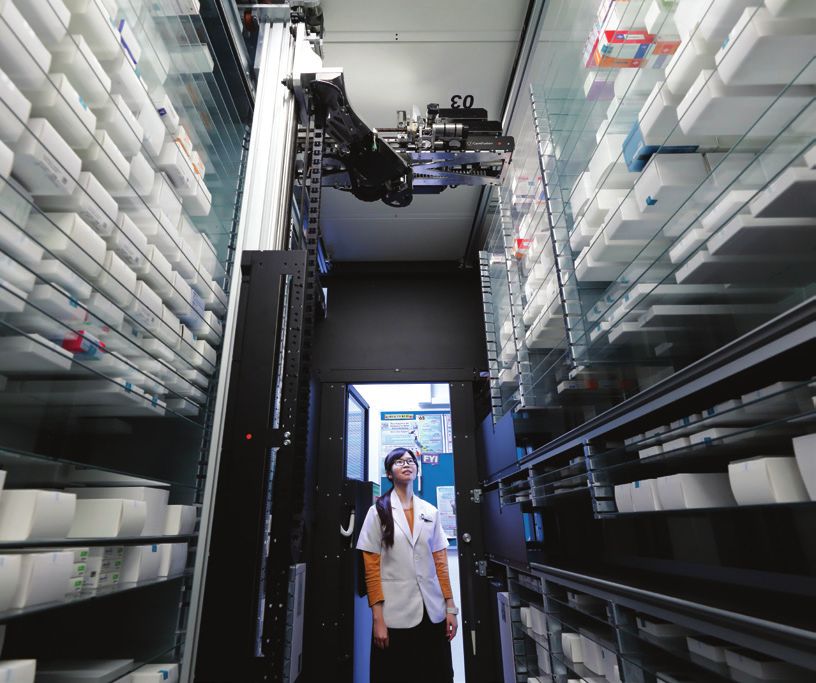
PHARMACY TRANSFORMATION FOR Figure 1: The National Pharmacy Strategy
THE NATIONAL PHARMACY STRATEGY (NPS) HAS 5
POPULATION HEALTH KEY THRUSTS THAT ALIGN TO THE KEY SHIFTS IN
MS CHAN SOO CHUNG, EXECUTIVE DIRECTOR, NHG PHARMACY
THE HEALTHCARE TRANSFORMATION STRATEGY
1. Pharmaceutical Care Excellence
CHALLENGES AND OPPORTUNITIES IN THE CHANGING Enhancing pharmacy services that
HEALTHCARE LANDSCAPE 1
Pharmaceutical
bring health and value for everyone in
our community
Care
Singapore’s healthcare landscape is faced with the the role of the Pharmacy Workforce. For example, it is Excellence
2. Confident Pharmacy Workforce
following long-term challenges: an ageing population already possible to tailor the right therapy based on the
Providing a skilled, future-ready, and
with increasing chronic disease conditions, a declining characteristics of a person’s genetic profile to obtain alth
Mov
eB innovative Pharmacy Workforce
workforce due to lower national fertility rate, rising the best outcomes in the management of some cancers. 5 re
to
He ey
on 2
healthcare costs, higher expectations for value-driven With the help of pharmacogenomics, the pharmacist will
d
a
Technology Confident
hc
Ho
3. Redesign Supply Chain
alt
Enablement To enable Pharmacy
sp
patient-centred services, rising staff expectations and have the information to determine the likely response of
He
To help and Singaporeans
Workforce
ita
support to receive Delivering seamless, convenient,
Move Beyond
l to
career aspirations due to higher education, and the impact the patient to the drug and be able to better optimise Singaporeans
to lead
appropriate
care in the
accessible, affordable, and safe
Community
healthier lives. community and
of technology advancement on the future of work. medication use and personalise the therapy. Advancement closer to home.
medications at every point of care
of Precision Medicine requires better trained pharmacists
The issues with medication are increasing, with rising
to understand and drive the use of pharmacogenomic data
incidences of chronic disease alongside the development To give every Singaporean 4. Information Enablement
to optimise medication therapy. best value, while keeping
of more potent medicines. Medication use and outcomes keeping our system
sustainable.
Empowering people to get the best
are not optimal and medication-related hospital admission The use of automation for inpatient and outpatient M
out of their medications and achieve
rates are a concern. Some of these concerns can be medication dispensing has freed up manpower from 4 ov
eB
eyo e
3 care goals
nd Qu alu
attributed to poor communication and coordination of the mundane work of picking and packing medication. Information ality to V Redesign
Enablement Supply Chain
care across different settings as patients consult multiple The shift from a distribution function to a more patient- 5. Technology Enablement
prescribers, raising the risk of medication errors and focused role can now accelerate in tandem with the Delivering seamless and effective
drug wastage. More needs to be done to holistically changing models of care. transition of care across all care settings
manage concomitant conditions, systematically identify through technology as an enabler
In addition, the digital transformation wave of big data
and address the medication problems faced by patients,
analytics, machine learning, Artificial Intelligence (AI), and
increase patients’ ownership of their health, and help them
the Internet of Things (IoT) will change the way pharmacy
understand the medicines they are taking.
operates and how the public will eventually gain access to PHARMACY TRANSFORMATION
The advancement of medical technologies and automation medication. It will allow analysis of trends from prescription
brings many opportunities and will rapidly change records, and help identify poor adherence.
The Pharmacy Leadership in NHG also addressed the Quality Prescribing
challenges facing the workforce and the medication-
The pharmacist is well-placed to review the appropriateness
NATIONAL PHARMACY STRATEGY related problems experienced by patients. The Shared
Vision of “Keeping the Population Well through Safe and
of prescriptions, monitor drug treatment, and check for
potential adverse drug reactions and drug interactions.
Appropriate Medicine Use” was hence developed.
The National Pharmacy Strategy (NPS), launched by the Pharmacists intervene in the choice of drug, dosing regimen,
Ministry of Health (MOH) in 2017, outlines five key strategic The three key priorities for change endorsed by NHG Senior and route of administration to improve medication safety,
thrusts to transform the pharmacy landscape: Management were to improve the Quality of Prescribing, efficacy, and adherence. Being specifically trained in drug
Medication Adherence, and to establish the flow of the therapy, integrating the pharmacist into the healthcare team
1. Pharmaceutical Care Excellence Single Source of Truth for medication information. With will improve quality, safety, patient satisfaction and reduce
2. Confident Pharmacy Workforce MOH’s initiatives as a foundation, a Pharmacy Transformation costs. The APPRAISE workgroup’s focus is on designing
Steering Committee (PTSC) chaired by Mrs Chew Kwee tools and curriculum to boost the competency of the
3. Supply Chain Redesign Tiang, CEO, Khoo Teck Puat Hospital (KTPH) and Yishun Pharmacy profession to conduct accurate assessment of
4. Information Enablement Health, and Associate Professor Thomas Lew, Chairman patient’s needs and optimise therapy for better outcomes.
Medical Board, Tan Tock Seng Hospital (TTSH) and Central The workgroup also explores new practice models and
5. Technology Enablement Health, was set up to spearhead the pharmacy transformation skills (for example, motivational interviewing, and shared
The Pharmacy Leadership Teams across Institutions have initiatives across NHG Institutions. The PTSC reports to Dr decision-making) needed to shift the Pharmacy Workforce
been actively involved in the planning and delivery of Jason Cheah, Deputy Group CEO (Transformation), NHG, towards a more value-adding clinical role.
these strategies which involve changes to drug formulary and CEO, Woodlands Health Campus.
Currently, the data collected is being analysed to
policies, education and training of pre-registration Three workgroups, namely, APPRAISE, ONE-PML, and identify the segment of patients who are at high-risk of
pharmacists, development of advanced practitioners, ELITE, comprising representatives from various NHG experiencing drug-related problems and who will benefit
career and skills development of pharmacy technicians, Institutions were formed to drive the three key thrusts of from closer monitoring and reviews. Work is also in
development of the National Harmonised Integrated Quality Prescribing, Medication Information Flow, and progress to develop a guide to conduct systematic patient
Pharmacy System (NHIPS), Pharmaceutical Care Services Patient Activation. assessment, medication reconciliation, medication review,
for the community, and the formation of the Supply Chain
and develop the pharmaceutical care plan.
Organisation – ALPS Pte Ltd.
APPRAISE is the acronym for Appropriately Propagating carePlans towards the Resolution of DRPs related to Adherence, Indication, Safety and Efficacy
ONE-PML is the acronym for One-Patient Medication List
ELITE is the acronym for its mission: Empowering patients and/or caregivers through health Literacy, Information Technology and Education
129 © National Healthcare Group © National Healthcare Group 130
Medication Information Flow
SAFE MEDICATION – COLLECTIVE LEADERSHIP AND COLLABORATIONS
The risk of medication errors is the highest during
transitions of care. This is due to multiple factors such
ACROSS AND CONNECT To facilitate systemic changes and collective ideation, the Pharmacy Transformation team has created several platforms
as the lack of communication and coordination among for networking, engagement, and teaming among the various healthcare professionals and other stakeholders.
healthcare providers, patients’ difficulty in remembering In order to address the medication challenges faced by
instructions post-discharge, as well as confusion over patients who seek care in multiple settings, Pharmacy The TTSH Kaizen Office was engaged to facilitate a “Go-and-See” exercise, involving a total of 60 doctors, nurses,
changes in medication. This is compounded by the Transformation at NHG has rolled out two projects — pharmacists, administrators, and other professionals, to observe the patient flow and transitions across 20 sites including
different incomplete sources of patients’ medication ACROSS and CONNECT. acute hospitals, polyclinics, community hospitals, Nursing Homes, General Practitioner (GP) clinics, and patient homes.
information, which often makes the work of reconciling Future State Mapping workshops, also involving diverse groups of stakeholders, were conducted in 2018 and 2019 to
ACROSS (Activation, Communication and
the Patient’s Medication List (PML) very complex and jointly define the dream state and conceptualise proof-of-concept pilots. Through such workshops, participants had the
Rules Of engagement for Single Source of
time-consuming. rare opportunity to work with people across healthcare settings, understand different perspectives, and visualise the
truth)
end-to-end processes. Champions were also identified to spearhead the various Pharmacy Transformation initiatives.
The ONE-PML workgroup strives to enable a seamless The projects aim to provide safe medication across NHG
communication of accurate, complete, and trusted The table below summarises the feedback from patient focus groups and Future State Map workshops conducted with
Institutions. They redesign current workflows to prevent
patient’s medication information across disciplines and stakeholders, on what patients need and value about medication management.
harm, address medication information needs, and activate
care settings. Workshops have been held to understand patients.
the issues and co-create the process flow of information. Figure 2: What Patients Need and Value
These were attended by different stakeholders from the 1. Standardise Medication information Update, Retrieval
acute hospitals and Nursing Homes, and proved to be very and Flow across NHG (SMURF)
PATIENT ACTIVATION AND MEDICATION INFORMATION
fruitful as participants were keen to collaborate and resolve Targeting prescribers across all our Institutions, SMURF ENGAGEMENT HARM PREVENTION FLOW
the issues they have faced for a long time. enables the standardisation of prescribing guidelines Confused Activated Errors Quality Prescribing Fragmented Holistic
Separately, the pharmacists at the polyclinics have across NHG.
implemented the process of medication reconciliation 2. Support through COmmunity & Patient Engagement Patient’s Value What We Can Do Patient’s Value What We Can Do Patient’s Value What We Can Do
targeting recently discharged patients from the acute (SCOPE) I UNDERSTAND Patient awareness I expect my Harmonised I expect my Communication
hospitals. Changing the sequence of the patient’s journey and can and education medication prescribing healthcare channels among
to see the pharmacist before the doctor (instead of SCOPE is aimed at patients discharged from the hospital COMMUNICATE therapy to be practice providers across healthcare
information APPROPRIATE, settings to KNOW professionals
being the last stop), resulted in a significant reduction in transition to the polyclinic and community. It helps to regarding my Effective COST EFFECTIVE MY CONDITIONS
communication Common Care across care
in the incidence of prescription errors. Through patient assess a patient’s risks and needs, and administer relevant medication and and SAFE for me WELL and I do
settings
medical condition channels with Plan not have to repeat
interviews, the pharmacists were also able to identify assistance prior to discharge and for polyclinic follow-up. patient and myself
I want a SIMPLE
I KNOW my caregiver medication plan Visibility of
many drug-related problems and resolve them. At the 3. Streamline from HOspital to Polyclinics (SHOP) Shared Rules
medications and with less pills to of Engagement I am supported by complete patient
end of the visit, patients are given their Medication List, UNDERSTAND take. Don’t OVER- a COORDINATED medication
SHOP focuses on polyclinic patients referred by the Information among healthcare
and benefits as well as side effects explained. how they work communicated TREAT me professionals CARE TEAM information to
hospital for further intervention at NHGP’s medication in preferred
across settings all healthcare
clinics. It streamlines the patient journey and medication I need only I want to make professionals
Patient Activation RELEVANT
language,
avoiding jargon JOINT DECISIONS
Optimised
I receive CLEAR,
clinic work processes, such that patients with potential information with my healthcare medication RELEVANT and
As Singapore’s healthcare needs get more complex, the therapy Shared Rules
medication problems can seamlessly move to polyclinic to be given to providers CONSISTENT
me in EASY Multilingual regarding my information from of Engagement
ability of patients to understand their medical condition, medication clinics for further intervention. among healthcare
to understand medication labels, medication Shared decision all providers
ask questions about their therapy and follow instructions LANGUAGE pictogram therapy professionals
making
becomes critical to their continued health. Many studies have 4. Updated medication list for Complex Care patients I want
linked low health literacy to poor health. Conversely, the more Across Multiple Institutions (CCAMI) I must be HEARD Medication I want CONTINUOUS Streamlined
and RESPECTED AFFORDABLE All healthcare RAPPORT with
reconciliation upstream and
active and engaged the patients, the more they can manage by my care team care professionals any care team, and
Designed for complex care patients in Specialist and review downstream
maintain a single not transactional
their own health. Outpatient Clinics (SOCs) visiting multiple prescribers source of truth for rapport
processes
I need consistent
Among the patients with chronic diseases, studies have across NHG Institutions, CCAMI helps to identify and SUBSIDIES no Community medication list
support Common IT
share medication lists for complex care patients, who matter where I am
shown that poor medication adherence is the top medication- Harmonised drug
platforms shared
related problem faced. The ELITE workgroup focuses on are concurrently chronic patients of TTSH, KTPH, and across NHG
Portability of formulary
NHGP. Institutions
improving the pharmacy health literacy awareness among subsidies
staff, developing communication strategies to engage and Common Care
empower patients and caregivers, and developing assessment
CONNECT (COnnecting NHG and Nursing Plan
tools to identify poor medication adherence.
Homes through rules of Engagement,
Communications and single source of
The workgroup organised the NHG’s Cluster Campaign Truth)
“Know Your Medicines, Get it Right,” held in conjunction with For the first time in NHG, the issues with medication are being tackled on a large scale by a multidisciplinary group.
The project works to establish and facilitate open
Pharmacy Week in October 2018, to increase awareness about There have been surprising discoveries, immense learning, and many intense discussions due to its complexity. As the
communication between Nursing Homes and NHG
the importance of creating one’s own PML. In collaboration teams develop new prototype workflows, they are concurrently developing new capabilities including problem-solving,
(inpatient and SOC). It ensures a platform and workflow
with National Healthcare Group Polyclinics’s (NHGP) Patient strategic-thinking, communication, engagement, and leadership.
for PML creation, documentation, maintenance and flow;
Education and Activation team, frontline pharmacy staff
and rules of engagement and communication channels. As one of the enablers for the River of Life Transformation Journey, we will have both the challenging and exciting task
are being trained in health literacy concepts and effective
of engaging and aligning with all the workstreams due to the inter-related aspects of patient care.
communication, to strengthen their confidence in supporting
patients and caregivers to better understand their medication
and make decisions in managing their medications and
conditions. A tool to identify medication adherence issues is
currently being validated.
131 © National Healthcare Group © National Healthcare Group 132
You can also read


