SWAPO PARTY ELECTION MANIFESTO 2014 - CONSOLIDATING PEACE, STABILITY AND PROSPERITY
←
→
Page content transcription
If your browser does not render page correctly, please read the page content below
2014
 SWAPO PARTY
   ELECTION
  MANIFESTO

CONSOLIDATING PEACE, STABILITY AND PROSPERITY

                                                1
2
Inner Party Democracy At It’s Best

                                     3
Message From
The President

4
I am immensely honoured to present the SWAPO Party’s Manifesto for the 2014
Presidential and National Assembly Elections. This Manifesto, like others in the past, is
designed to serves as a social contract between the Party and the Namibian people.
The Manifesto is informed by our practical experiences and successes over the last

                                                                                                 “In this
24 years as a governing Party. It is guided by the proud history of SWAPO Party as a
broad-based national mass movement that spearheaded the struggle for freedom
and independence.
In this Manifesto we set out the SWAPO Party’s vision for Namibia for the next five years.
In so doing, we again seek a renewed mandate from Namibian voters during the
                                                                                               manifesto
                                                                                               we set out
upcoming elections to continue serving all our people, while consolidating the gains
of the past 24 years.

                                                                                             the SWAPO
Our vision is to further expand and spread the opportunities for growth and prosperity
to be enjoyed by all Namibians in all parts of the country, with a specific focus on
disadvantaged sections of the population. Over the past 24 years, the SWAPO Party
Government has worked tirelessly and succeeded to bring about and maintain peace
and stability, provide direction and take action in the implementation of our country’s
development priorities.
                                                                                             Party’s vision
Under the SWAPO Party Government, our country has remained united. We have
enjoyed peace and stability. We have promoted democracy, tolerance and good
                                                                                             for Namibia
governance. We have remained determined to spare no effort and to allocate
resources to ensure that our people have access to basic amenities, such as quality          for the next
healthcare, education, land, and housing. This is the basis of a sustainable and
functioning democracy, based on fundamental values, norms, culture, traditions and
values of Namibians.
                                                                                              five years.”
Dear Compatriots, as a governing Party during the past 24 years; the SWAPO Party
has been focussed on optimising the security and welfare of Namibians. We have
executed the mandate of leading our country on the basis of accountability, honesty,
commitment.
We have a sound track record. Our institutions of higher learning such as the University
of Namibia (UNAM), the Polytechnic of Namibia, and vocational training centres are
thriving and producing qualified graduates who are equipped with modern skills in
different fields and able to contribute to the development of our country.

                                                                                                         5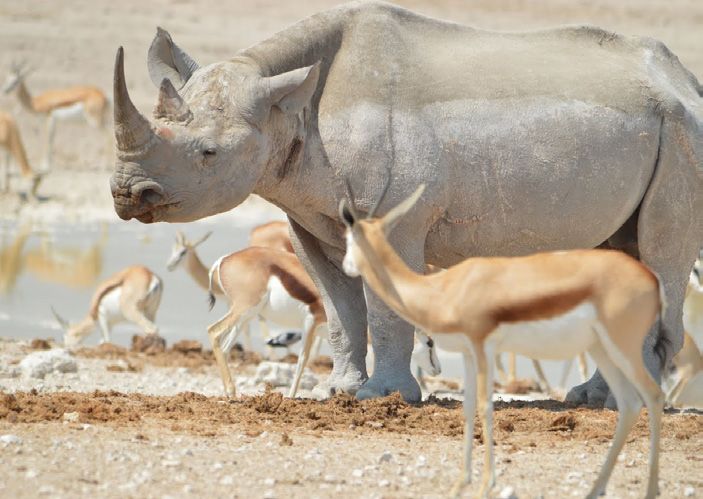
We have also improved and expanded access to primary                 mobile telecommunication technology throughout the country.
education. In 2013, the SWAPO Party Government abolished
                                                                     Land reform and redistribution continues to be a critical area
the requirement for parents and guardians to pay for school
                                                                     in addressing socio-economic inequities and the legacies
development funds. The same arrangement will be expanded
                                                                     of apartheid colonialism. The SWAPO Party Government has
to the secondary school phase, starting in the 2016 academic
                                                                     decided to consolidate the Agricultural (Commercial) Land
year. This is part of our strategy to ensure free primary and
                                                                     Reform Act, Act 6 of 1995 and the Communal Land Reform Act,
secondary education for Namibian children. We are proud
                                                                     Act 5 of 2002 into a single piece of legislation, covering both
that today, the majority of our children of school going age,
                                                                     communal and commercial land tenure systems. This process is
especially the girls, are now enrolled in schools.
                                                                     now at an advanced stage.
Other successes have been achieved in the priority area of
                                                                   In order to ensure food security and food self-sufficiency in
expanding access to health and medical care for all our people.
                                                                   the country, the SWAPO party Government has implemented
In this connection, the SWAPO Party Government has built and
                                                                   initiatives, such as providing assistance to dry-land crop
will continue to modernise our health facilities by renovating
                                                                   producers as well as the Green Scheme Projects. In this
existing facilities and building new hospitals, clinics and health
                                                                   manner, we have helped our subsistence farmers to increase
centres in all parts of our country.
                                                                   their output, while investments in Green Scheme Projects have
The provision of housing has been an important priority of the helped to generate thousands of employment opportunities for
SWAPO Party Government since independence. In order to our people and considerably contribute to our Gross Domestic
accelerate the provision of housing and drastically reduce the Product (GDP).
housing backlog in the country, our Government is implementing
                                                                   Dear Compatriots, as the SWAPO Party remains fully committed
the National Mass Housing Programme, to complement existing
                                                                   in our resolve to improve the quality of life of all Namibians.
interventions.
                                                                   We are aware that in order to effectively alleviate poverty,
Furthermore, the government has expanded the supply of safe unemployment and underdevelopment, we must pursue socio-
and clean drinking water to rural areas. New water pipelines economic development policies and programmes that are
have been laid and community water points have been people-centred and inclusive. We undertake to implement
established in many communities. Today, more than 90% of our these strategies with the renewed mandate of the Namibian
population has access to safe drinking water. We are proud of people at the ballot box later this year. We undertake to continue
this achievement.                                                  implementing our short, medium and long-term development
                                                                   plans and programmes for the benefit of all our people.
Since it started in 1995, our Government’s vigorous rural
electrification programme has brought electricity to thousands Guided by the need for pragmatism and our experience in
of Namibians. Today, significantly more of our people in the rural governance over the past 24 years, we will continue to improve
areas have access to electricity. The SWAPO Party Government on programmes that have produced successful results in
has also invested substantially in the expansion of our physical expanding service delivery, creating jobs and strengthening
and communications infrastructure including the building of governance. Those that have not been successful will be
new roads, the modernisation of our harbours and the roll out of dispensed with. For example, the New Equitable Economic

  6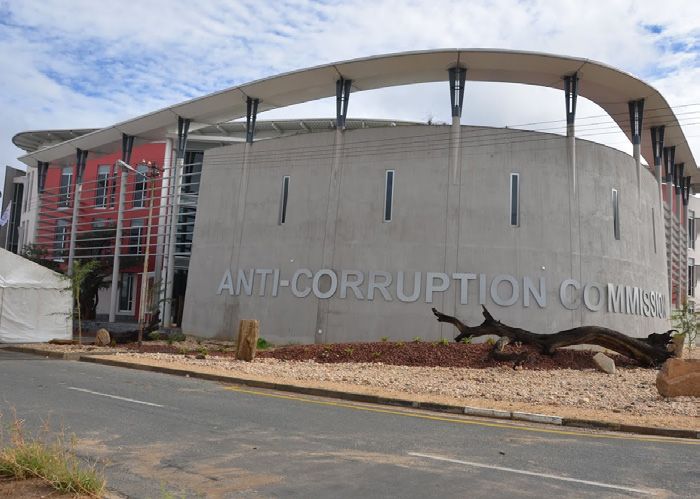
Empowerment Framework (NEEEF), which is aimed at promoting empowerment and
the equitable distribution of the nation’s resources, is currently under discussion for
implementation.
Dear Compatriots, we are proud to acknowledge that we have build a strong
foundation for democratic governance and socio-economic development of our
country over the past 24 years. At the same time, we are mindful of the prevailing            “The SWAPO
                                                                                                   Party
challenges facing our country. We will, therefore, redouble our efforts to implement
workable strategies and programmes that are designed to take our nation forward.
Now is not the time for complacency or to dismantle foundations we have laid. It is
time for consolidation and for moving forward. It is time to take the steps set out in this
Manifesto.                                                                                    Government
                                                                                              remains fully
Through this forward-looking document, the SWAPO Party enters into a contract with
YOU - the people of Namibia - to lead YOU to peace, stability and prosperity.

                                                                                              committed...
The challenge facing Namibia in the election is whether we will continue to build on
what we have started, or risk losing the gains of our hard won struggle for independence,
progress, peace and prosperity of the past 24 years.
We are confident that the Namibian people will, once again, reaffirm their trust and
confidence in the SWAPO Party by giving us a resounding victory at the polls during
                                                                                               to improve
                                                                                               the quality
the Presidential and National Assembly Elections in November.
Vote for peace and stability. Vote for inclusivity and progress. Vote for the SWAPO

                                                                                               of life of all
Party.

Hifikepunye Pohamba
                                                                                              Namibians.”
President of the SWAPO Party and the Republic of Namibia

                                                                                                            7
Rooted in Democracy, Unity, Peace,
Stability and the Rule of Law

8
Democracy                                                          Furthermore, the enforcement of law and order by the Namibia
                                                                   Police Force is a critical element in guaranteeing peace, safety
Namibia is founded on the principles of democracy, the rule and security within the country.
of law and justice for all. Therefore, one of the most important
priorities of the SWAPO Party Government during the past 24 For an independent and sovereign state, well-equipped and
years has been the creation and establishment of the institutional motivated defence and security forces are prerequisites for
framework necessary for democratic governance.                     Namibia to continue building on the gains of the past 24 years.

More specifically, during the past five years, the SWAPO Party Rule of Law
Government continued with the important task of nation-
                                                                      In line with the founding principles of our Republic, the SWAPO
building and the consolidation of democracy.
                                                                      Party places a high premium on the establishment, maintenance
Unity                                                                 and continual improvement of a credible administration of
                                                                      justice.
The SWAPO Party values unity of the people of Namibia. Unity
is underpinned by the principle of inclusivity. It is through unity Rendering of legal advice and services enhances the rule
that the SWAPO Party was able to successfully carry out the of law and the administration of justice in Namibia, and also
political, diplomatic and armed liberation struggle for Namibia’s ensures that Government institutions conduct their activities and
independence. It is because of this unity that SWAPO Party administrative actions within the confines of the Constitution and
is a national political party with structures in every region and relevant statutory requirements.
constituency of this country. It is this unity that enables the SWAPO During the past 24 years, the SWAPO Party Government built
Party to field candidates at every election at local, regional, infrastructure in line with its administration of justice programme.
national and presidential levels. This commitment to unity and A High Court was built at Oshakati in the Oshana Region, and
inclusivity is entrenched in the SWAPO Party Constitution, culture several new Magistrate Courts were constructed across the
and philosophy.                                                       country including in Khorixas, Tsumkwe and Otjinene. There are
                                                                      plans to soon build Magistrates Courts at Okahao, Omuthiya
Peace and Stability                                                   and Nkurenkuru.
The SWAPO Party recognises that peace and stability are pre- The SWAPO Party Government put in place critical interventions
requisites for nation building. Therefore, as an experienced to better serve the ends of justice including restorative justice
and tested political party, the SWAPO Party has been able to in the form of community service. A community court system is
maintain political stability throughout the past 24 years.            in place and forms an important part of the administration of
Equally, the SWAPO Party regards defence and national              justice.
security as an instrument of guaranteeing the sovereignty, and     Further, to implement the constitutional provisions on promoting
territorial integrity of Namibia. The Namibia Defence Force has    justice based on equal opportunity and fair trial, there is provision
demonstrated its commitment and capability to do so.               for legal aid in the form of legal advice and representation for
                                                                   the poor at State’s expense.

                                                                                                                                   9
In essence, the SWAPO Government has increased the number of service
delivery points by taking judicial services to the communities.
                                                                                     “...The SWAPO Party
                                                                                       Government has
OUR PROMISE
99 The SWAPO Party Government adopted the policy of National Reconciliation
                                                                                  increased the number of
   to heal the wounds of the past and to place the nation permanently on          service delivery points by
   the path to peace, stability and progress. As a cornerstone of this policy,
   the Government will continue to encourage Namibians to embrace each            taking judicial services to
   other, to face the future together and to work for the achievement of a
   common and prosperous future for the country and all her people.
                                                                                      the communities.”
99 Continued consolidation and harmonisation of common and customary
   laws in Namibia to ensure that the basic rights and freedoms of the
   Namibian people are not compromised.
99 Continued speedy repeal of obsolete laws, and thus put in place relevant
   ones, including the development and promulgation of new legislation
   aimed at improving the lives of Namibians such as a framework for
   protection of the Namibian consumers in sectors like health, retail, banking
   and property.
99 Continued strengthening of Government agencies responsible for the
   delivery of justice.
99 Improve and strengthen traditional courts by establishing appropriate
   structures that are more responsive to the needs of the various communities.
99 Continued reform of legislation applicable to gender-based and domestic
   violence aimed at preventing gender-based and domestic violence in
   Namibia.
99 Continued placement of a high premium on the safety and security of the
   people and their properties. To this end, the law enforcement agencies
   will be strengthened to be more efficient, responsive and confident in the
   execution of their duties.
99 Continued provision of the necessary resources for the improvement
   of conditions of service, including living conditions and the working
   environment of the men and women in uniform.

 10
99 Continued improvement of the capacity of the Namibia 99 Namibia played its part in the maintenance of peace,
Defence Force to ensure that they are combat ready for the law and order in the region, continent and the world at
protection of the territorial integrity of Namibia and for the large through its participation in numerous regional and
delivery of support services to the civilian population in times international peacekeeping missions.
of natural calamities.
99 Continued strengthening of the armed forces to contribute to
regional, continental and world peace within the framework
of the Southern Africa Development Community (SADC),
African Union (AU) and the United Nations (UN).
99 Increased investment in the defence industry, research and
development to serve as a catalyst for industrial development
along with other relevant sectors.
WE HAVE A SOUND TRACK RECORD
99 During the past 24 years, the SWAPO Party made law reform
a priority area of development to ensure conformity of the
applicable laws with the Namibian Constitution. The law
reform programme focuses on traditional courts, regional
and local authorities, electoral system, public enterprises and
statutory institutions, and land delivery, amongst others.
99 The defence and security forces were strengthened to
have confidence and the ability to execute their duties and
responsibilities in defence of the inhabitants of and visitors
to Namibia. In addition, efforts were made to improve the
conditions of service of defence and security personnel.
99 The SWAPO Party created the basis for the development of
the defence industry to contribute to the socioeconomic
development of the country, in addition to its traditional
role of protecting and defending the territorial integrity of
Namibia. In this regard, the objective of the SWAPO Party
was for the defence industry to complement national efforts
towards economic growth and industrialisation. Concerted
efforts were made for this initiative to receive the support of
all the relevant sectors.
11Governance and Nation Building 12
OUR PROMISE
T he Namibian nation is founded on the principles of good
governance, respect for the rule of law, respect for human life
                                                                        99 Ensure unity, national sovereignty and human dignity as
                                                                           these are key to nation building.
and dignity, and strong African morals.
                                                                        99 Ensure that everyone contributes to the development of
Our track record in governance has received international                  Namibia.
acclaim by bodies such as the World Economic Forum, the Mo-
                                                                        99 Promote the family as the basic unit of society where
Ibrahim Foundation and Transparency International to name but
                                                                           youth are taught to understand the world around them,
a few. We are a ‘clean country’ from a corruption perspective
                                                                           community norms and values.
as attested by ratings done by Transparency International and
our courts that are operating without fear or favour. The press in      99 Strengthen the implementation of laws, policies and
Namibia is the freest in Africa and among the top few globally.            programmes directed towards the combating of antisocial
In short, critical governance institutions in Namibia function             practices and behaviours, such as crime, illicit substance
effectively.                                                               and alcohol abuse, child abuse, gender-based violence
                                                                           and intolerance.
Before we are Namibians, we are first and foremost Africans,
and our values, identity and moreover our future destiny is             99 Institute programmes to mould a new Namibia that is
intertwined with that of the African continent. We, therefore              materially and spiritually strong, productive and respects
strongly subscribe to African values, cultures and traditions              the values of solidarity, freedom and justice.
that give us an identity. These values promote peace, security,         99 Work with community, traditional, spiritual and academic
independence, and patriotism. They also provide social and                 leaders to inculcate love and respect for elders, and
political stability. Embracing these values will make us stronger          neighbours.
as a people, enabling us to fend off a number of social ills such
as murder, illicit substance abuse, and violence. This will result in   99 Promote cultural and traditional values that have sustained
reduced wastage of resources on rehabilitation.                            Namibians over centuries.
                                                                        99 Strengthen and improve access to facilities and services for
Due to its conviction in the maintenance and upholding of
                                                                           psycho-social support and rehabilitation.
values of Namibian culture, tradition and morals, the SWAPO
Party Constitution provides for the establishment of the SWAPO

                                                                             “Before we are
Party Elders Council, which is the custodian of these values. We
see the SWAPO Party Youth League and Pioneers Movement as
the transitional belt and source of future leaders.
The SWAPO Party recognises the important role traditional
leaders play and has established a good working relationships
                                                                          Namibians, we are first
with traditional authorities.
                                                                          and foremost Africans.”
                                                                                                                                   13
WE HAVE A SOUND TRACK RECORD
• Creation of special institutions and programmes that have
helped Namibians to interact with their counterparts in
Africa and the world at large. Namibians hosted their
counterparts from across the world at events in the country.
• Participation in international events devoted to the
promotion and exchange of cultures and the sharing
of moral values and norms through songs, dance and
folklores.
• Provision of civic education, national voluntary service
and skills training through national institutions.
• Provision of financial assistance for education and training
to students based on merit and in the priority fields of
studies.
• Launch of the Nationhood and National Pride Campaign
aimed at enhancing a sense of nationhood and national
pride in all Namibians.
• Firm placing of annual cultural festivals at national,
regional, local and institutional levels.
• Exposure of visitors to the Namibian way of life and
traditions through tours, songs, dance, arts, folklores and
drama, films and cuisine.
“Our track record in
governance has received
international acclaim.”
14Economic Growth
and Job Creation
15A. Macroeconomic or cross-cutting
T he inherited socio-economic deficit of Namibia has resulted
in the country having one of the highest global imbalances in
interventions
income distribution. While SWAPO Party upholds the principle of 99 Maintenance of sound monetary and fiscal policy;
fundamental rights as enshrined in the Namibian Constitution, 99 Refinement and improvement of the implementation of
which include the protection of private property, it recognises strategies towards industrialisation;
the urgent need for land delivery and access to natural resources
99 Promotion of value addition, SME, and economic
to improve the living standards and conditions of Namibians.
infrastructure development;
In demonstrating its commitment to the socio-economic 99 Refinement of public procurement as a tool for industrialisation,
transformation of Namibia, the SWAPO Party Government economic development and empowerment;
has put in place Vision 2030, National Development Plans
and strategic plans for each Ministry. Mid-Term Expenditure 99 Promotion of local industries and increasing local ownership
Frameworks and Annual Action Plans were established for in all the sectors of the economy;
offices, ministries and agencies to implement at local, regional 99 Promotion of bilateral, multilateral, regional, economic
and national levels. This mode of management is designed cooperation and trade to help Namibia to attract and retain
to ensure transformation of the socioeconomic development investments and gain market access for its products.
within the framework of the laws of the Land.
99 Acceleration of the reform process and management of
The SWAPO Party has, therefore, made its pivotal role to address public enterprises so that they remain pivotal and provide
structural problems including gender disparities, inadequate economic growth and development, and contribute to the
access to basic social services such as education, potable State revenue;
water, housing, sanitation and health amongst others.
99 Acceleration of the reform process related to, skills
OUR PROMISE development, empowerment, property ownership, credit
and lending, and industrial relations; and
99 To grow the economy, and create wealth and job
opportunities for all Namibians. 99 Implementation of public-private partnerships and promotion
99 To pursue policies and strategies to safeguard of private investments in the regional and local economies.
macroeconomic stability, promote economic diversification
and transformation of the Namibian economy to be more
B. SECTORAL AND MICROECONOMIC
inclusive and resilient to internal and external shocks. INTERVENTIONS
99 To adopt inclusive and sustained economic transformation Specific sectoral policies and microeconomic reforms aimed at
programmes that can be divided into two sub-categories accelerating economic growth and job creation are outlined
namely macroeconomic or cross-cutting policy reforms below.
and initiatives and specific sectoral or microeconomic
interventions.
16B.1. Agriculture and Food Security - Feeding the Nation
A key priority of the SWAPO Party Government during the past 24 years has been
ensuring food security for the nation. As a result we focused on ensuring that
food security was addressed at national and household level. Measures aimed at
promoting food security are embedded in key national documents such as Vision
2030, National Development Plans and strategic plans of relevant government
institutions. Namibia also subscribe and support AU resolutions on development of
the agricultural sector in general and food security in particular. More critically, the
SWAPO Party Government has ensured that sufficient funding is channeled through
the national budget towards achieving our goal of food security. As a result of the
commendable efforts of the SWAPO Party Government in the area of agriculture
large dams were built for irrigation purposes, as well as the development of the
Green Scheme Initiative.
OUR PROMISE
• Continued advancement of agriculture development through the provision of
support services to commercial and subsistent farmers to increase both crop
and livestock production.
• Increased investment towards research, extension and quarantine services,
regulation, and financing of physical infrastructure.
• Continued development of horticulture, commercial and individual fruit and
vegetable production activities to ensure agronomic development and food
security at national and household levels.
• Promotion of the agro-industry and value addition to agriculture produce.
• Continued development of agronomic projects and infrastructure for
production, storage, processing and marketing to ensure food security and
foreign earnings through the export of agriculture products.
• Ensuring that Namibia increases its share of the domestic, regional and
international markets for agriculture produce.
• Ensuring that funding is responsive to the national agricultural agenda, with
specific focus on financing of land acquisition and development, as well as
production, processing and marketing.
17• Establishment of programmes and projects for research on 99 During the past 5 years close to 10,000 hectares of total
new methods and techniques of agriculture production and land allocated and close to 4,000 hectares already under
processing. production in IIKaras, Kavango East, Kavango West, Zambesi
• Adaption of agriculture technology which will be accessible and Omusati regions.
to farmers, and provision of training. 99 The Green Scheme also makes provision for the development
of small scale farming, and covers products such as maize,
WE HAVE A PROVEN TRACK RECORD OF wheat, rice, vegetables, bananas and grapes.
PROMOTING FOOD SECURITY 99 Under the National Horticulture initiative, two Fresh Produce
• Under the SWAPO Party Government the Green Scheme Hubs were completed, one in Rundu [Kavango East] and one
Programme; the National Horticulture Development Initiative; in Ongwediva [Oshana region] and have been inaugurated
the Dry Land Crop Production Programme; Kalimbeza Rice by His Excellency the President of the Republic of Namibia, Dr
Project; the National Strategic Food Reserves Programme; Pohamba, while commencement of a third one in Windhoek
and the Livestock Production Improvement and Animal [Khomas region] will soon start.
Health Programme were introduced to promote food 99 Under the SWAPO Party led Government the share of locally
security. Some significant achievements under each of these produced fruits and vegetables in the domestics market has
programmes and projects include: increased from less than 10 percent at Independence to
99 Under the Green Scheme Programme, the SWAPO Party close to 40 percent by 2014.
Government has committed to putting 27,000 hectares of 99 Under the Orchard development programme, the SWAPO
land under irrigation over a 30 year period. Party Government had actively promoted the planting
18of trees in various communities. In total 70,000 trees were 99 Plans are in an advanced stage to expand storage capacity
planted of which 38,000 are fruit trees and 18 orchards with 8 to enable Namibia to hold at least 20,000 metric tons of
trial plots covering 230 hectares were established. food reserves at any time, and in the long-term to increase
99 Under the SWAPO Party Government, the Dry Land Crop it to 60,000 metric tons, or the equivalent of four months of
Production Programme was implemented in all crop growing emergency food reserve.
regions [Kavango East, Kavango West, Zambesi, Oshikoto, 99 With regard to animal surveillance, crossing points for animals
Oshana, Ohangwena, Omusati and Kunene]. In the financial between borders of Namibia and neighboring countries
year 2011/12 alone 15,294 farmers benefitted from this have been identified, and internal fences separating high risk
programme. areas of Zambesi and Kavango East regions in terms of food
99 The SWAPO Party Government promoted the construction and mouth diseases have been erected.
of strategic food reserves to guarantee food security during 99 Under the SWAPO Party government the abattoirs in Outapi
national crises such as floods and droughts, as well as to and Eenhana have been upgraded and the bull scheme
stabilize food prices due to volatile price movements. aimed at improving cattle breeds have been introduced.
99 Under the SWAPO Party Government a number of silos with 99 On traceability, under the SWAPO Party Government, close
total storage capacity of 14,000 metric tons were constructed to 1 million cattle have been tagged, and a dossier was
in the Zambesi, Kavango East, Ohangwena, Omusati and submitted to the World Organisation for Animal Health to
Oshikoto regions. declare large areas of the Northern Communal Areas as
FMD free.
19B.2. Manufacturing high priority as a way of harnessing resources, and reducing
the public debt burden.
• Implementation of the industrial development policy;
• Establish mechanisms for a dialogue that will unlock access
• Creation of a favourable environment for the development to finance for viable commercial, SME and individual projects
and expansion of the existing manufacturing enterprises and with a potential to contribute to Namibia’s economic
encourage the establishment of new ones. development.
• Provision of incentives to promote the production, distribution, • Review the current operational mechanism of existing
procurement, marketing and exporting of locally produced public financial institutions, including the Development Bank
goods, for both resource-based and non-resource-based of Namibia (DBN), Agricultural Bank (Agribank), Small and
industries. Medium Enterprise Bank (SME Bank), Government Institutions
• Reservation of specific sectors such as catering, retail, textiles, Pension Fund (GIPF), Social Security Commission (SSC) and
and auxiliary services for local people. National Housing Enterprise (NHE) and create new institutions
as may be necessary to support a dynamic and growing
• Review and reform the current operational environment
economy.
of private financial and development institutions and state
development agencies, to ensure resources contribute
to manufacturing, value addition and entrepreneurial
development in the county.
B.3. Financial development
• Ensure that the management of monetary policy remains
supportive of maintaining the foreign reserves and the
balance of payments at levels that promote the socio-
economic development of Namibia, and advance the
objectives of macroeconomic stability.
• Ensure that Namibia’s monetary policy is in conformity with
the Common Monetary Area (CMA) to the extent that it
supports and advances national development as well as
economic and financial interests.
• Support and implement fiscal policies that are aimed at
ensuring the country’s debt remains manageable and within
the internationally acceptable range.
• Link public borrowing to priority sectors. In this regard, the
design and implementation of PPP projects will be given a
20B.4. Tourism and hospitality B.5. Fisheries and marine resources
• Promotion and support of tourism to play its potential role • Promotion of policies to protect national marine resources
in economic growth and development processes. Tourism to contribute to the socioeconomic development of the
has the potential to generate more employment and bring country.
in foreign exchange earnings. Special focus will be paid to • Develop infrastructure and financing schemes for inland
marketing, product and human resource development. fisheries, including aquaculture, to accelerate food sustenance
• Launch of a marketing strategy to improve Namibia’s tourism and nutrition, provide income generation and job creation.
industry, increase the dollar value of tourism market through • Support diversification of fish products by adding value locally
diversified marketing strategies. through on-shore processing and increased local content,
• Promotion of the participation of the rural communities while supporting the development of export markets.
through heritage and historic sites, cultural villages and eco-
tourism as new tourism products in Namibia.
• Pursue deliberate measures and programmes to accelerate
local participation in the tourism sector.
21B.6. Mining and energy B.8. Specific poverty reduction strategies
• Continued refinement and implementation of policies, 99 Intensification of education and training programmes, SME
laws and strategies to reform the mining sector so that promotion, skills development, and adjustment to create
Namibians own a substantial share in the industry and the opportunities for income generation.
disadvantaged Namibians are substantially represented in 99 Continued support to the vulnerable groups within the
top management structures of mining companies. society through the improvement of safety nets and other
• Improved measures and strategies aimed at encouraging social support services.
and increasing value addition to minerals to create and 99 Designing of programmes and projects to increase access
sustain employment as well as generate foreign earnings. to basic services and commodities especially for the needy
• Continued establishment of regional technology and including youth, students, and women, the elderly, people
marketing centres in proximity to small scale mining sites to living with disabilities and the destitute.
support income generation and self-sustenance for small 99 Refinement and upgrading of the implementation process
scale miners. to ensure the full realisation of the set objectives.
B.7. Specific employment creation initiatives WE HAVE A SOUND TRACK RECORD
• Continued institutional reforms for the registration and 99 Sound economic management that was acknowledged
establishment of a database of the unemployed to reflect
internationally by way of credit ratings.
the type of skills they possess, skills development needs,
and available skills development institutions for placement, 99 Maintenance of prudent fiscal policies, which resulted
required incentives to the trainers, and employers and in a strong Government balance sheet, enabling the
available employment opportunities. Government to continue using fiscal policy to support the
economy.
• Increased resource allocation towards sectors that have a
higher potential to generate short, medium and long term 99 Successfully weathering of negative effects of the global
employment opportunities. economic slowdown, with sustained strong growth rates
averaging above 4% since 2010.
• Establishment of mechanisms for the provision of incentives
required by public institutions to facilitate job opportunities 99 Provision of tax relief to low income earners.
for graduates, especially those trained by vocational 99 Strong increases in Government revenue from N$10.6 billion
institutions, and those with on-the-job training and work in the 2002/3 financial year to N$38 billion in 2012/13 financial
experience. Monitoring and evaluation systems will be put year
in place to ensure the effectiveness of these incentives.
99 Provision of an enabling environment for the establishment
• Improvement of SME development strategies to create the of new development finances while strengthening existing
necessary synergy and capacity in the urban and rural areas. ones to improve access to finance and promote job creation,
self-employment and socio-economic development.
2299 Reforming and amending legislation pertaining to access 99 Provision of electricity through rural electrification resulting
to land, in both rural and urban areas, providing finance for in electricity connections of rural centres and Government
business development. buildings, particularly schools in all the 14 regions of the
99 Reforming public enterprises tasked with the promotion of country. More than 1,160 villages and 170 schools were
business development and access to funding and technical connected to the grid during the last two years.
know-how. 99 Commissioning of a number of mines and mineral based
99 Provision of incentives to SMEs including benchmarking industries, including the B2Gold, the Ohorongo Cement
sectors that are reserved for SMEs only. Factory, the Husab Uranium Mine and the Swakop Uranium
Mine.
99 Establishment and operationalisation of the Namibia Statistics
Agency (NSA) and the Communications Regulatory Authority 99 Establishment of institutions to advance economic
of Namibia (CRAN). development, namely, Agribank, DBN, SME Bank, AMTA, and
provision of access to credit facilities, production inputs and
99 Introduction of a training levy to promote skills development. markets, especially for disadvantaged Namibians.
99 Increased funding to vocational and specialised training 99 Significantly reduced poverty levels from 70% in 1993 to 28%
institutions. in 2011.
99 Development of a public-private partnership (PPP) policy to 99 Lifted close to 400 000 (four hundred thousand) people out of
facilitate partnerships between private businesses and public poverty between 1993 and 2010.
institutions.
99 Facilitation of employment growth to 298 650 between 2008
99 Created Business and Intellectual Property Authority (BIPA). and 2013.
99 Development and value addition to indigenous crops such 99 Adoption and implementation of the National Rural
as the canning of black eye beans and the production of Development policy and strategy, which is aimed at reducing
mahangu biscuits. rural poverty.
99 Increased contribution of the fisheries sector to GDP. Fisheries
employment was estimated at 14,823 in 2013, which presents
an increase of 22% from the 12.1% estimated in 2012.
99 Increased electricity generation capacity at Ruacana Hydro “Provision of tax
relief to low income
Power Station from 240 MW to 320 MW.
99 Commissioning of a biomass plant that is generating about 2
Megawatts for rural areas.
99 Establishment of a solar revolving fund to support needy
Namibians to acquire solar based energy solutions. earners.”
23Infrastructure Development
Housing and Sanitation
24w
the surfacing of the paved road network of Namibia is currently
valued at N$ 33 326 billion, making it by far the country’s most
ell-maintained infrastructures are critical to the stimulation of
valuable asset.
economic activities which can boost growth and employment
creation. We are proud that the road network grew from 41,815 kilometres
in the year 1990, to 44,121 kilometres at present, thus an increase
Since independence, the SWAPO Party Government has invested
of 5.5%.
heavily in infrastructure development and maintenance, to
ensure this critical component, which forms the foundation of At independence, the total bitumen road network was 4,572
our economy, is adequately developed and maintained. kilometres. However, at present, the total bitumen road network
is 6,664 kilometres. This means that the bitumen road network
Overall, modern infrastructure is a catalyst for both socioeconomic
has increased by 45.76% since independence.
development and employment creation. Infrastructure
development also serves to address other national objectives The gravel road network was 25,550 kilometres in 1990 and
such as housing and shelter, water and electricity. increased to 25,710 kilometres. It must however be noted that
many of the gravel roads were upgraded to bitumen standard,
Namibia has made significant strides in infrastructure develop-
thus the increase in the gravel road network appears small.
ment and its maintenance thereof since independence. Today,
Namibia rightfully boasts one of the most modern infrastructure The total lengths of ongoing bitumen road construction projects
networks on the continent and globally. are 1,171 kilometres where as the total length of ongoing gravel
road projects amounts to 342 kilometres.
OUR PROMISE The SWAPO Party Government will build 1,480 kilometres of
To ensure that Namibia remains competitive, the SWAPO Party bitumen standard roads during the next five (5), along with
will continue to invest aggressively in all four modes of transport,
3,206.8 kilometres of gravel roads. The areas that will benefit
energy provision, water infrastructure, housing and sanitation from the planned road network include, among others, Onhuno-
and information communication technology over the next five Eenhana (Rehabilitation), Ongwediva-Ondangwa-Omuthiya
years. (Dual carriage), Okahandja-Otjozondu-Okondjatu (Bitumen),
Windhoek-Hosea Kutako Airport (Dual Carriage), Windhoek –
A. Transport infrastructure: Connecting Rehoboth (Dual Carriage), Rehoboth-Mariental (Rehabilitation),
the Nation Grunau-Keetmanshoop-Mariental (Rehabilitation), Walvis Bay
behind dunes (Dual Carriage), Swakopmund – Henties Bay –
The SWAPO Party Government, during the past 24 years ensured Kamanjab (Rehabilitation).
efficient management of the national road network through
sound management principles and strategies. Currently, the Some of the planned gravel roads include: DR 3639 Etomba - DR
road network comprises of an enormous 44,121 kilometres of 3624 Omundaungilo, MR 111 Epato - DR 3643 Onaushe MR 123 to
roads, of which 6,664 kilometres are paved roads and 37,457 DR 3642 Okathitu; DR 3605 Uukwiyuushona - DR 3645 Omuntele,
kilometres unpaved roads (earth graded, earth track, gravel Ompundja - Naravandu Gate; DR 3447 Ncaute – Masivi, Lizauli;
and salt). The replacement value (RV) of only the top layers and Sachona; Otjinene – Epukiro Pos 3; Palmwag – Sesfontein.
2599 Continued renovation, upgrading, maintenance and 99 Mobilisation of private sector financial resources, knowledge expansion of critical sections of the transport network with and skills to complement public resources earmarked for the a view to ensure safe and convenient travelling, stimulate development of public transportation systems and assets economic activities, and facilitate movement of goods and development and effective management. services within Namibia and across the borders. 99 Development of strategies and programmes to improve urban and rural transport systems countrywide for easy travelling of people and to facilitate market access for rural produced goods. 26
B.   Housing delivery                                                99 Promote increased electricity generation including through
                                                                        thermal, hydro and renewable energy sources.
99 Continued facilitation and support programmes and
   strategies directed towards ensuring fast delivery of housing     99 Address demand sites by promoting electricity saving
   units, thereby addressing the backlog in housing delivery and        technologies.
   enhancing access to affordable housing for all Namibians,         99 Promote improved access to electricity for heating and
   especially for the lower income citizens.                            lighting of rural areas via power line communication.
99 Introduction of programmes and strategies directed towards
   the engagement of stakeholders in housing provision and
   development with a view to facilitate housing ownership.
99 Streamlining policies, programmes and projects on housing
   development and acquisition.
99 Support and provision of initiatives for research, development,
   manufacturing, marketing and distribution of locally
   produced building materials. This will enhance competitive
   housing and promote an integrated housing development
   approach.
99 Financially assist local authorities to increase the supply of
   serviced residential land.
99 Review the distribution methods used by local authorities to
   ensure that households in real need of housing enjoy priority.
99 Review the national housing policy, specifically with regard
   to the provision of funding for low income housing.

C. Energy infrastructure
99 Continued implementation of existing policies, as well as
   research and development of new policies and strategies
   aimed at providing energy security for sustainable
   socioeconomic development.
99 Fast tracking of energy generating programmes and projects
   by making deliberate efforts to ensure the development of
   Namibia’s energy resources to the fullest for the benefit of
   Namibia and the world.

                                                                                                                             27
D. Water infrastructure and sanitation WE HAVE A SOUND TRACK RECORD
99 Continued implementation and improvement of the delivery 99 Development of strategies and plans to scale-up investments
of health and sanitation services; especially in the rural areas, in infrastructure development as the conduit for long-term
villages, formal and informal settlements, schools and places investment.
where people live, settle or assemble. 99 Development of infrastructure such as industrial parks,
99 Continued maintenance and access to potable water for technology centres, and agriculture processing hubs.
rural communities, villages, formal and informal settlements, 99 Tremendous improvement in economic and service
schools and all other places where people live, settle or infrastructure, such as roads, and upgrading of sea and air
assemble. transport facilities.
99 Continued development of strategies and programmes 99 Commencement of deepening and expansion of the Port
towards ensuring water security for human and livestock of Walvis Bay and the development of a new container
consumption, as well as for agriculture and industrial terminal.
development.
99 Acceleration of the Kudu Gas project.
E. Information communication technology 99 Development of a water desalination plant and
99 Enhancement of the use and application of ICTs for commencement of construction of the Neckartal Dam.
socioeconomic development. Further investments will be 99 Introduction of the mass housing initiative.
made in ICT infrastructure development and connectivity
so as to provide access to modern communication systems, 99 Significant expansion of the road network including rural
technology transfer, and adaption for industrial use. feeder roads.
99 Encouragement and promotion of cooperation among ICT
service providers in the development and utilisation of ICT
infrastructure to enhance communication and accelerate
“Since independence, the
socioeconomic development.
99 Promotion of public-private partnership funding for
SWAPO Party Government
technology centres to advance ICT literacy. has invested heavily in
99 Acceleration of the implementation of E-governance to
improve public service delivery. infrastructure development
and maintenance.”
28QUALITY HEALTHCARE
DELIVERY
29A healthy nation is a productive nation, and therefore an
investment in the health sector is an investment in the future
99 Providing new public health services such as promotion,
preventive and curative services.
of the country. Namibia, like any other emerging economy, 99 Introducing healthcare packages and specialised services
is afflicted by both communicable and non-communicable to district and regional hospitals to enhance access and
diseases that affect mostly the productive segment of the response.
population.
99 Continued promotion of strategies and programmes that
The SWAPO Party is committed to Article 95 of the Namibian address both communicable and non-communicable
Constitution which obliges the State to promote and maintain diseases.
the welfare of the people by adopting relevant policies.
99 Deployment of health technology.
OUR PROMISE 99 Upgrade the deployment of health technology in detecting
99 The SWAPO Party will strengthen existing institutions and and monitoring diseases, treatment and research.
put in place appropriate programmes for the regulation,
management, procurement and distribution of quality
health services.
99 Amending existing legislation and regulations as well
as developing new legislation, policies, standards and
regulations governing health service delivery.
99 Ensuring that Namibian environmental laws and policies are
in conformity with acceptable international and regional
standards and regulations.
99 Upgrading the existing infrastructure and developing new
health facilities to cater for the fast increasing population.
99 Developing new health facilities to effectively deal with the
existing and emerging diseases.
99 Undertaking research and training to achieve national
public health objectives.
99 Installing equipment of a high standard and ensuring an
inventory of equipment procurement, maintenance, and
replacement is kept.
30“Mortality
rates from
HIV/AIDS,
tuberculosis
and malaria
were
drastically
reduced.”
31WE HAVE A SOUND TRACK RECORD 99 The enactment of the Tobacco Act to protect the public from the harmful effect of tobacco. In addition, the Public Health Bill, Environmental Health Bill and the Food Safety Bill and the Traditional Medicine Bill will be enacted. 99 Development of the training programmes for multidisciplinary health workers for deployment in all the health facilities. This training complements the training that is undertaken at the National Health Training Centres in Windhoek, Rundu and Keetmanshoop. 99 Introduction of highly specialised services such as orthopaedic and spinal surgery, hip and knee replacement, maxillo-facial surgery, blindness prevention, nuclear medicine and cardiac surgery. 99 Expansion of the existing health facilities, and the range of health service packages available within the existing and newly developed health facilities. These packages include those that are aimed at prevention and management of HIV/AIDS, malaria and tuberculosis. 99 Under the Strategic Intervention of Improved Access to Health Facilities and Services Project a number of infrastructure improvements were undertaken, including the construction and renovation of various clinics, health centres and hospitals, the renovation of the maternity wards at the Windhoek Central Hospital, Oshakati Intermediate Hospital and Opuwo District Hospital. 99 Exemption from paying user fees was extended to include persons over the age of sixty 60 years. 99 Mortality rates from HIV/AIDS, tuberculosis and malaria were drastically reduced. 32
Human capital development
and deployment

                            33
H
to gain on-the-job experience, improve employability, work
ethics and productivity.
uman capital development is key to the advancement of
national development agenda. It is for this reason that over the 99 Increased funding to UNAM’s School of Medicine to upsurge
past 24 years, the SWAPO Party Government made significant the annual enrolment from 55 to 80 students per year, UNAM’s
investments in human capital development. Many changes School of Pharmacy from 25 to 40 students per year and
were made to the education system, including vocational introduce new programmes in Dentistry, Medical Laboratory
training, with a new curricula introduced at all levels. Efforts to and Rehabilitation Sciences.
improve the qualifications of teachers and other instructors and 99 Strengthen the capacity of the Departments of Engineering
to obtain a suitably qualified teaching force were carried out. and Information Technology and Agriculture and Natural
There were improvements to the infrastructure, access, equity Science to increase the number of graduates by 30%.
and efficiency in the system.
99 Create an enabling environment for the transition of the
The overall vision of the SWAPO Party with regard to human Polytechnic of Namibia to Namibia’s University of Science
capital is that Namibia should be characterised by a high quality and Technology to increase its enrolment and the number
and internationally recognised education system that will help of graduates.
Namibians to meet current and future demands for skills and
innovation. 99 Strengthen accountability systems in human resource
development, deployment and utilisation through periodic
OUR PROMISE human resources audit.
99 Continued mobilisation of resources toward provision of 99 Ensure improved learning standards and curricula and
free quality primary education and the introduction of free teacher development, and improved availability of text
secondary education. books.
99 The possibility of free tertiary/higher education in priority 99 Improve the conditions of service for teachers.
sectors will be explored. 99 Promote early childhood development through phasing in of
99 Modernisation of physical capacity, equipment and free Government run ECD centres, focusing on the poorest
technology of existing schools, vocational and skills sections of society.
development centres, as well as education and training 99 Increase spending on research, development and innovation.
institutions.
99 Increased capacities and improvement of the quality of
delivery of vocational skills development.
“The SWAPO Party Government
99 Strengthening of existing programmes and exploring of new made significant investments in
human capital development.”
mechanisms to improve skills development through access
to technology transfer, pairing and attachment to industries
34WE HAVE A SOUND TRACK RECORD
99 A progressive policy was put into place to enhance the opportunities for
Namibians to access education and training, choose the fields of study even if
offered abroad, and engage in occupations of their choice.
99 Provision of significant Government funding was made towards education and
training programmes for offices, ministries and agencies.
99 Children’s enrolment in schools has increased to almost 100%, with females
surpassing their male counterparts. The literacy rate is also among the highest on
“More than,
the Africa continent and even globally. 270 000 learners
99 A number of Namibians have been and are being trained abroad to create the
critical mass of cadres needed for national development. benefitted from
99 Several in-house training programmes aimed at improving leadership,
management and public service delivery, were developed in collaboration with the National
various private training institutions culminating in the establishment of Namibia
Institute for Public administration and Management (NIPAM). School Feeding
99 The SWAPO Party Government introduced the National School Feeding Programme
(NSFP) which is mandated to provide rations to learners. This programme runs Programme and
100 000 more
in all 14 regions and targets needy primary school learners. More than, 270 000
learners benefitted from the National School Feeding Programme and 100 000
more learners are currently being added.
99 In an attempt to provide quality education to all children, the SWAPO Party learners are
currently being
Government has adopted a system of inclusive education.
99 The SWAPO Party Government created the National Institute for Special Education
for the advancement of special education, training and research. The institute is
currently focusing on Namibian Sign Language as a medium of instruction for added.”
deaf learners and also as an examinable subject.
35WE HAVE A SOUND TRACK RECORD 99 Integrating people living with disabilities in the mainstream of society is one of the strategic objectives of the Government. Twelve (12) deaf adult education facilitators were trained and are currently teaching deaf adult learners in, Khomas, Ohangwena, Omusati and Oshana regions. 99 The SWAPO Party Government has intensified the Family Literacy Programme which aims at educating parents in early childhood development and help their children to learn. 99 Fourteen (14) Community Learning and Development Centres (CLDC) were established in the regions to serve as a life-line for neo-literates. 99 NAMCOL enrolments increased significantly since its inception. The institution currently boasts of more than 30 000 students. 99 The SWAPO Party Government established the Namibia Library and Archives Service (NLAS) to ensure that adequate, appropriate and relevant information services and resources are available to users at all levels of the Namibian society. 99 A further exciting development in the sphere of vocational education was the establishment of a Vocational Education and Training Policy in 2005. 99 The Education and Training Sector Improvement Programme (ETSIP) represents the sector’s response to substantially enhance the education sector’s contribution to the attainment of strategic national development goals, and to facilitate the transition to a knowledge-based economy. 36
Environmental Management and
Sustainable Utilisation of Natural Resources
                                               37
WE HAVE A SOUND TRACK RECORD
T he SWAPO Party Government will continue to devise
measures to ensure the protection, conservation and respect of
99 The establishment of the Environmental Investment Fund
(EIF) in 2011 and its subsequent capitalisation to the tune of
our environment and sustainable utilisation of non-renewable N$40 million has been a major achievement. The EIF awarded
resources for the benefit of current and future generations. its first round of grants to 11 projects in April 2012. A total of
In addition, the SWAPO Party Government will continue to N$3.1 million was donated to the grant recipients.
implement laws and policies to ensure sustainable exploration 99 The SWAPO Party Government has expanded the impressive
and utilisation of our natural resources to achieve national system of National Parks. The national protected area network
developmental objectives. covers 17% of the country, and while the century old Etosha
National Park and Namib-Naukluft Park are deservedly
OUR PROMISE regarded as the flagships of Namibia’s conservation success,
99 Establish a Research and Development Centre for genetic all the country’s protected areas have something unique to
resources associated with traditional knowledge, and offer.
adding commercial value to our genetic resources and 99 Over the past 24 years, 79 conservancies were registered,
associated traditional knowledge. It will also be an important benefiting more than 250 000 rural communities in the
tool for fostering fair and equitable partnerships between country. This brings Namibia’s total land surface area under
communities and the private sector. conservation management to 43.5% which surpasses that of
99 Grant concessions to communities and continue promoting many countries.
fair and equitable joint ventures with commercial partners. 99 Namibia has established three Transfrontier Conservation
99 Ensure that protected areas contribute to economic Areas (TFCA)in the last 24 years, namely:
development and secure a representative sample of • Ai-Ais Rictersveld Transfrontier Conservation Area with the
Namibia’s biodiversity and that natural resource assets Republic of South Africa,
(parks, habitats and species) self-fund their maintenance
and provide economic opportunities and benefits for the • Kavango Zambezi Transfrontier Conservation Area with the
private sector and neighbouring communities. Republics of Angola, Botswana, Zambia and Zimbabwe,
99 Illegal hunting of wildlife will not be tolerated. The protection • Iona Skeleton Coast Transfrontier Conservation Area with
of wildlife will essentially involve crime prevention. The focus the Republic of Angola.
will be on preventing animals being killed illegally and not 99 Tourism in general, and trophy hunting in particular, has grown
just on follow-up action after they have been killed. to be one of the most important industries in Namibia in terms
of its strong contribution to GDP, employment creation and
the well-being and social upliftment of rural communities.
38You can also read


