2018   Free to Think
       Report of the Scholars at Risk
       Academic Freedom Monitoring Project
←
→
Page content transcription
If your browser does not render page correctly, please read the page content below

2018 Free to Think
Report of the Scholars at Risk
Academic Freedom Monitoring Project
ACKNOWLEDGMENTS
Scholars at Risk (SAR) gratefully acknowledges the members of higher education communities worldwide
who have inspired us through their courage and dedication. We acknowledge especially the researchers
contributing to the Academic Freedom Monitoring Project by reporting and analyzing incidents, tracking
down sources and witnesses, and helping to develop advocacy responses. We thank the Office of
the Provost and New York University for hosting SAR, as well as the many other member institutions,
associations, partners, and individuals that contribute to our work beyond the Monitoring Project. These
include especially the Vivian G. Prins Foundation for core support for services for threatened and refugee
scholars, the National Endowment for Democracy, the Open Society Foundations, the Andrew W. Mellon
Foundation, the Carnegie Corporation of New York, the Winston Foundation, the Charina Endowment
Fund, Stichting Polar Lights, the Fritt Ord Foundation, the AAUP Foundation, the Microsoft Corporation,
Newman's Own Foundation, our anonymous donors, the members of SAR's Board and Ambassadors
Council, and the many friends of Scholars at Risk who help us each day to protect more scholars.

This report is the result of research conducted by the Monitoring Project and may not reflect the views of
individual network members, institutions, or participating individuals. Special thanks to Ilene Cohen for
her assistance in preparing this report. Scholars at Risk invites comments on this report or inquiries about
our work at scholarsatrisk@nyu.edu.

SAR depends on the generous financial support of friends inside and outside higher education
communities to sustain our work. Gifts of any size are gratefully appreciated, including matching gifts and
bequests.

To donate, please visit www.scholarsatrisk.org.

October 2018
ISBN 978-0-9994844-0-1

© Scholars at Risk 2018. All rights reserved.
For use or information, contact Scholars at Risk at scholarsatrisk@nyu.edu.

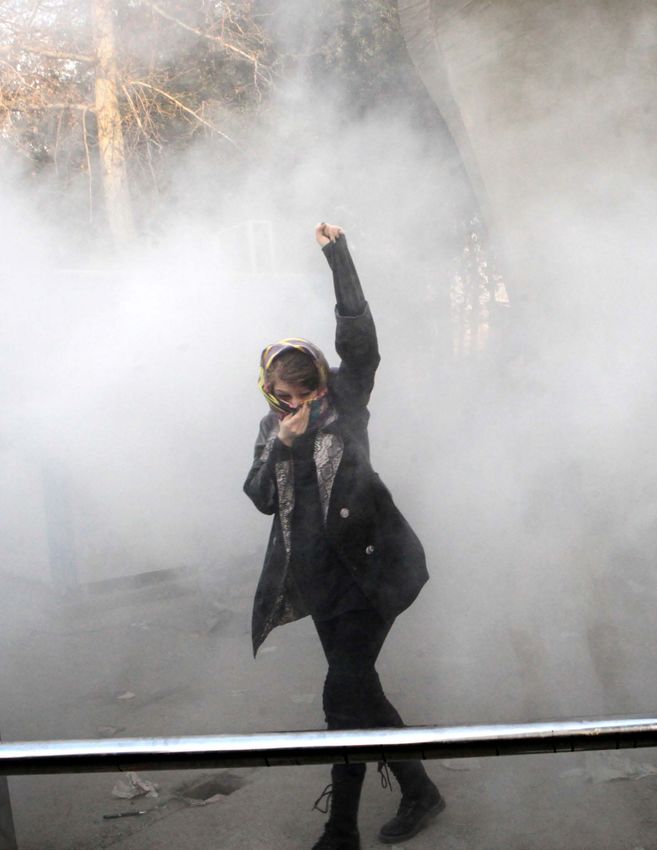
Cover: A student attends a protest at Iran's University of
Tehran. Protests over economic conditions and policies,
largely led by students, gripped the country from late
December 2017 to early January 2018. State authorities
have arrested and prosecuted at least 150 students in
connection with the protests.

© 2017 Associated Press
Free to Think 2018
Report of the Scholars at Risk Academic Freedom Monitoring Project

TABLE OF CONTENTS
Executive Summary.............................................................................................................................................................. 4

Violent Attacks on Higher Education Communities..................................................................................................... 6

Wrongful Imprisonment & Prosecution of Scholars...................................................................................................10

Targeted Attacks on Scholars & Students in Iran........................................................................................................15

Detention of Uyghur Scholars & Students in China...................................................................................................18

Pressures on Student Expression.................................................................................................................................... 21

Ongoing Threats to Turkey's Higher Education Sector..............................................................................................28

Restrictions on Travel........................................................................................................................................................ 35

Tensions in the United States.......................................................................................................................................... 39

Threats to Institutional Autonomy................................................................................................................................. 43

Recommendations.............................................................................................................................................................. 46

Appendix: Table of Incidents............................................................................................................................................ 48

Appendix: Methodology................................................................................................................................................... 53

SAR Publications & Materials.......................................................................................................................................... 54
Scholars at Risk Academic Freedom Monitoring Project

EXECUTIVE SUMMARY
Around the world, attacks on scholars, students, staff, and their institutions occur with alarming frequency.
These attacks are carried out by both state and non-state actors, in open and closed societies, using a
range of methods. Ultimately, these attacks not only harm the individuals and institutions directly targeted;
they undermine entire higher education systems and shrink everyone’s space to think, question, and share
ideas freely and safely.

Through its Academic Freedom Monitoring Project, Scholars at Risk (SAR) responds to these attacks by
identifying and tracking key incidents, with the aim of protecting vulnerable individuals, raising awareness,
encouraging accountability, and promoting dialogue and understanding that can help prevent future
threats. Free to Think 2018, the fourth in a series of annual reports analyzing attacks on higher education
communities around the world,1 analyzes 294 reported attacks in 47 countries that occurred between
September 1, 2017, and August 31, 2018.2

The Monitoring Project collects data on defined types of attacks on higher education. These include:
killings, violence, and disappearances; wrongful prosecution and imprisonment; loss of position and
expulsion from study; improper travel restrictions; and other severe or systemic issues (including, for
example, university closures or military occupation of campuses). While they differ across states and
regions and by severity and type, these attacks all share a common motivation: to control or silence
higher education institutions and personnel. This report focuses on key developments and trends over the
reporting year.

As in past years, armed groups and individuals continue to carry out severe, violent attacks on higher
education communities. These include attacks in countries experiencing extremism or conflict, where
higher education communities may be targeted as perceived symbols of state authority or sources of
opposition to radical ideologies. These also include targeted attacks against individual scholars or students
that are intended to retaliate against or deter inquiry and expression. Over the past year, SAR reported
both violent attacks on campuses in Afghanistan, Kenya, Nigeria, and Pakistan, and targeted attacks on
                                                             individual scholars in India, Pakistan, Turkey, and
   REPORTED ATTACKS ON HIGHER EDUCATION                      Yemen.
    SEPTEMBER 1, 2017 – AUGUST 31, 2018
                                                             State authorities use detentions, prosecutions,
                                                             and other coercive legal measures to
        Killings, Violence, Disappearances          79
                                                             retaliate against and deter academic activity,
                                                             expression, or association. In Iran, students
        Imprisonment                                88
                                                             and scholars have come under increasing risk
                                                             of imprisonment, prosecution, and custodial
        Prosecution                                 60
                                                             abuse. And in China, authorities have detained a
                                                             growing number of scholars and students from
        Loss of Position                            22
                                                             the Uyghur minority community in so-called “re-
                                                             education camps” and other facilities.
        Travel Restrictions                         15

        Other                                       30       1 For past editions of Free to Think, see https://www.
                                                             scholarsatrisk.org/bytype/free-to-think/.
                                                             2 Given limited resources, as well as the scope, variety, and
        Total                                     294        complexity of attacks, a comprehensive accounting of all
                                                             attacks during this period is not yet possible.

4
Free to Think 2018

SAR has reported at least 875 students killed, arrested, or subjected to other
coercive force in connection with their expressive activity. These attacks            “a global
                                                                                       crisis of
are part of a long-standing global problem of attacks on peaceful student
expression. Such attacks often trigger, and seek justification in, incidents in
which some students engage in violent acts, including clashes with opposing
student groups and authorities or the destruction of university property.
Violent and coercive attacks on student expression threaten the future of
                                                                                   attacks [...]
strong, nonviolent student movements.
                                                                                     requiring
                                                                                     a robust,
Turkish authorities have continued their campaign of sweeping and targeted
actions against the country’s higher education sector, aimed at silencing and
removing individuals from academia who have endorsed a petition critical
of state military actions or who have been accused of association with
groups disfavored by the government. These actions include imprisonments,
                                                                                         global
prosecutions, dismissals, expulsions, and travel restrictions against thousands
of scholars, administrators, staff, and students.
                                                                                   response.”
Authorities in at least nine countries have used travel restrictions, including restrictions on entry, exit, and
residence, to obstruct academic inquiry and expression. These include reports of travel restrictions by state
authorities in Russia, Cameroon, and Hong Kong that targeted individual scholars. These also include broad
travel restrictions on academic communities in Turkey, where thousands of academic personnel dismissed
and banned from public service remain subject to a travel ban; in the Occupied Palestinian Territories,
where foreign academics face opaque rules that threaten their ability to conduct work at universities there;
in Tajikistan, whose government tightened restrictions on academic travel outside the country; and in the
United States, where academics and students from Iran, Libya, North Korea, Somalia, Syria, and Yemen are
barred from entry as a result of an executive order banning entry of all travelers from those countries.

Also in the United States, provocative off-campus groups and individuals have chosen colleges and
universities as the sites of controversial speeches and rallies that frequently result in confrontations. In
several cases, these confrontations became violent, endangering students, faculty, and others. Political
actors seeking to expose alleged bias among scholars and students have taken a variety of public measures,
including the creation of online watchlists, surreptitious audio and video recording, and advancing
restrictive and potentially overbroad legislation, all of which have prompted concerns about a shrinking
campus space for free, open inquiry and debate.

Governments around the world target universities and other academic institutions through legislative,
administrative, and political attacks on their autonomy and operations. These include both new and
ongoing cases in Hungary and Russia, where authorities have threatened to close academic institutions and
restrict academic disciplines.

The incidents covered by this report are only a small portion of all incidents involving attacks on higher
education over the previous year. Nevertheless, they are sufficient evidence of a global crisis of attacks
on scholars, students, and other members of the higher education community requiring a robust, global
response. Scholars at Risk calls on states, higher education leaders, and civil society around the world to
respond to this crisis: to reject violence and coercion aimed at restricting inquiry and expression; to protect
threatened students, scholars, and universities; and to reaffirm publicly their support for the principles
that critical discourse is not disloyalty, that ideas are not crimes, and that everyone should be free to think,
question, and share ideas.

                                                                                                              5
Scholars at Risk Academic Freedom Monitoring Project

VIOLENT ATTACKS ON HIGHER
EDUCATION COMMUNITIES
Violent attacks on scholars, students, and higher      Attacks on Campuses
education communities remain a grave concern.
These incidents not only harm their immediate          Significant attacks on universities occurred in
victims but also damage the university space more      Kenya, Pakistan, Nigeria, and Afghanistan.
generally, by sending a message that certain ideas
are off limits, and anyone who expresses them risks    In Kenya, on October 10, 2017, a group of gunmen
physical harm.                                         ambushed a van carrying students, staff, and
                                                       faculty from off-campus housing to the campus of
During the past year, SAR reported 79 violent          the Technical University of Mombasa (TUM) (AFMI
attacks against higher education communities in        529). As many as ten gunmen had reportedly been
27 countries. At least 77 students, scholars, staff,   hiding on the side of the road, apparently waiting
campus security personnel, and others died in          for the vehicle. Two TUM lecturers were killed in
these attacks, with hundreds more injured.             the attack, while the driver and two police officers
                                                       were injured. Authorities suspect Al Shabaab
                                                       militants, with their history of violent activity in the
                                                       area, of carrying out the attack.
           Killings, Violence,
                                                       In Pakistan, on December 1, 2017, three men
           and Disappearances                          wearing burqas and suicide vests entered the
            During this reporting period, SAR          campus of the Agricultural Training Institute in
issued 79 reports of killings, violence, and           Peshawar, where they fired on security personnel,
disappearances. These incidents include                killing one guard and injuring another (AFMI 546).
killings and disappearances either in retaliation      They then made their way to a dormitory, where
for particular academic content or conduct,            they shot at students from outside the building.
or targeting of members of higher education            Police arrived at the scene, setting off a firefight
communities, including higher education                that lasted several hours. All told, 12 people,
leaders, academic and nonacademic staff, and           including 6 students, were killed in the attack, while
higher education students. Disappearance               another 37 were injured. The militant group known
includes arrest, detention, abduction, or              as Tehreek-e-Taliban Pakistan claimed responsibility
other deprivation of liberty by government or          for the attack.
quasi-government officials, by groups, or by
individuals acting on behalf of, with support,         In Nigeria, the University of Maiduguri has endured
consent or acquiescence of the government,             a series of violent attacks dating back to January
followed by a refusal to disclose the fate or          2017. On February 19, 2018, a group of soldiers
whereabouts of the persons concerned, or               monitoring the university’s perimeter noticed an
a refusal to acknowledge the deprivation of            individual who appeared to be a suicide attacker
their liberty, which places such persons outside       near the campus walls (AFMI 590). They fired on
the protection of the law. Violence includes           the attacker, detonating the individual’s suicide
violent physical assaults causing serious harm         vest. Only the attacker was injured. On April 8,
to individual members of higher education              2018, a group of attackers wearing suicide vests
communities, including beatings, shootings, or         attempted another attack on the university (AFMI
other injuries with weapons, and torture.              630). This time, one of the attackers was shot,
                                                       detonating his vest, while another was killed after

6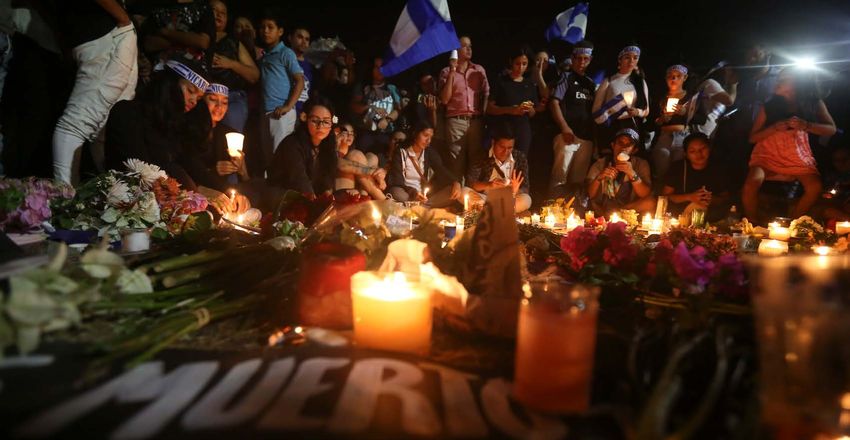
Free to Think 2018

A rescue worker gestures toward bullet holes in the wall of a computer lab after an armed attack on the Agricultural
Training Institute in Peshawar, Pakistan, on December 1, 2017 (AFMI 546).
© 2017 REUTERS/Fayaz Aziz

being pursued by an air force helicopter. Boko               and that suicide bombings were forbidden by
Haram, an extremist organization whose name                  Islam. Shortly thereafter, a bomber detonated
translates as “Western education is forbidden,”              an explosive device outside the tent where the
was suspected but did not claim responsibility               council had met, killing 14 of its members and
for either attack. (It had taken responsibility for at       injuring at least 20 (AFMI 663). On August 15,
least one earlier attack.) These were the seventh            2018, another bomber detonated an explosive
and eighth attacks on the University of Maiduguri            device at the Mowud Education Center (MEC) in
in the past two years.3 Following earlier attacks in         Kabul’s Dasht-i-Barchi district (AFMI 713). As many
2017, university officials took measures to increase         as 500 students in their teens and twenties were
security, including digging a trench around the              studying for university entrance exams at MEC at
campus. These appear to have significantly limited           the time of the attack, which left 34 dead and at
the damage from the recent attacks.                          least 57 injured. On August 16, the Islamic State
                                                             claimed responsibility for the attack. The education
In Afghanistan, more than 2,000 Islamic scholars,            center is largely attended by Kabul’s minority Shiite
members of a group known as the Ulema Council,               Hazara community. Reports suggest that the attack
had convened in early June 2018 on the campus                is part of a pattern of violence against the Hazara
of the Polytechnic University of Kabul. They met             community.
during Ramadan to discuss the Afghan war and
attacks by the Taliban and the Islamic State. On the         Targeted Attacks
morning of June 4, the group of scholars issued a
fatwa, or religious edict, stating that the insurgency       Individual scholars and students in several
by those extremist groups had no religious basis             countries have also been the targets of violent,

3 See Free to Think 2017, pp. 7-8.

                                                                                                                       7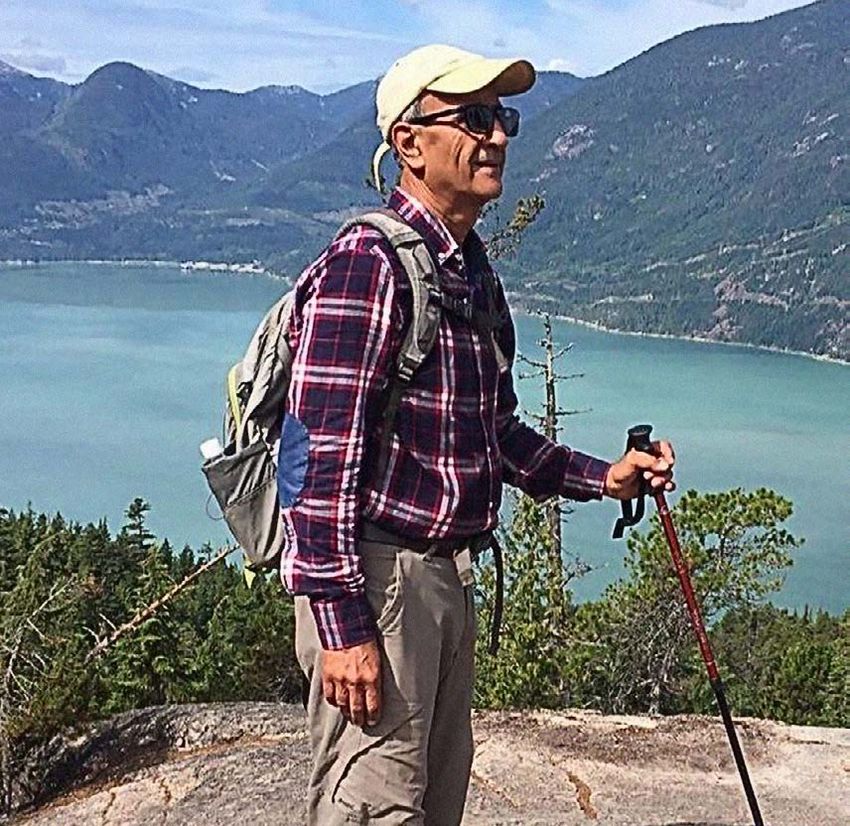
Scholars at Risk Academic Freedom Monitoring Project

often sectarian attacks. SAR reported targeted                 University and around Turkey of being followers
attacks that left nine dead and at least three                 of Mr. Gülen. Multiple university staff members
injured.                                                       complained to law enforcement, alleging that Bayar
                                                               was mentally unstable and a threat. Authorities
In Pakistan, on January 22, 2018, Sareer Ahmad,                declined to take action against him, claiming that
principal of the New Islamia Public College (NIPC),            Bayar was performing his civic duty by exposing
in Shabqadar, was killed by second-year student                Mr. Gülen’s followers. The attack sparked student
Faheem Shah during a confrontation over the                    protests on the Osmangazi campus and outside the
student’s absence from classes (AFMI 576). Mr.                 offices of Turkey’s Higher Education Council (YÖK).
Shah was absent while attending a series of                    Authorities responded to these protests with
protests led by members of Tehreek-e-Labaik, a                 violent force and detentions.4
national religious party. The protesters charged
that the wording of a 2017 election bill was                   In Yemen, on May 16, Najat Ali Muqbil, dean of
blasphemous. After Mr. Shah returned to NIPC on                the Health Sciences College at the University of
January 22, Principal Ahmad confronted him about               Aden, was attacked in her home (AFMI 650). The
his absence. Mr. Shah accused Principal Ahmad of               attackers entered her home before dawn, carrying
blasphemy (for not supporting his protest of the               automatic weapons. They killed Professor Muqbil,
allegedly blasphemous bill) and shot him multiple              her son, and her granddaughter. Authorities
times, killing him. The student was subsequently               arrested a suspect following the attack. On May
arrested and taken into police custody.                        29, it was reported that a court in Brega convicted
                                                               and sentenced to death the suspect, Abdulkarim
In Bangladesh, on March 3, Muhammad Zafar Iqbal,               Majour, who allegedly confessed to killing
a professor of computer science and engineering,               Professor Muqbil and her family members because
a fiction writer, and a vocal critic of sectarian              they belonged to a Muslim Shiite sect.
politics and radicalism, was attacked during an
event at Shahjalal University of Science and                   And in India, on August 17, Sanjay Kumar, assistant
Technology, where he teaches (AFMI 599). The                   professor of sociology at Mahatma Gandhi Central
attacker approached Professor Iqbal from behind                University, was attacked at his home in retaliation
and stabbed him in the head at least three times,              for recent expressive activity, including social
before he was stopped by others at the event                   media posts that criticized the late, former Prime
and later arrested. Professor Iqbal survived the               Minister Atal Bihar Vajpayee (AFMI 715). Soon after
attack. Authorities claim that the attacker is tied            he published the posts, at least ten men stormed
to an extremist internet forum that has accused                Professor Kumar’s apartment and dragged him to
Professor Iqbal of being an atheist and, therefore,            the street where they beat him and doused him
an appropriate target for attack.                              with gasoline. Professor Kumar survived the attack
                                                               but suffered serious injuries.
In Turkey, on April 5, Osmangazi University
research assistant Volkan Bayar shot and killed                Lethal Violence against
four university administrators on campus (AFMI                 Student Protesters
628). Mr. Bayar was arrested on the scene. The
attack occurred against the backdrop of sustained              Violence against university student protesters is
national pressures on higher education personnel—              a particular concern. While these incidents are
and in particular on personnel thought to be                   discussed in detail later in this report,5 it bears
followers of the exiled Muslim cleric Fethullah                mentioning here that eight incidents resulted in
Gülen. Mr. Bayar accused without evidence                      deaths of student protesters.
more than one hundred academics at Osmangazi

4 See p. 25 for details on these and other student protests.
5 See pp. 22-24 for more information.

8
Free to Think 2018

Most prominently, these included widespread
attacks against student protesters in
                                                      CASE UPDATES
Nicaragua. On April 18, 2018, students                Disappearance of Student
began demonstrating against government
corruption, demanding democratic reforms
                                                      Protesters in Mexico
and rejecting government austerity measures.
                                                                                The case of the disappearance
The protests quickly spread and continued                                       of 43 students from the Raúl
nationwide for more than four months.                                           Isidro Burgos Rural Teachers’
Police violence against the protesters has                                      College in Ayotzinapa, Mexico,
been frequent. Clashes between protesters                                       in September 2014 remains
and security forces have resulted in at least                                   unresolved. The college
317 people killed and at least 1,830 injured,                                   students were reportedly
including many students.6                                                       kidnapped and forcibly
                                                                                disappeared following a
                                                      confrontation with municipal police, as they returned
Authorities also killed students in connection
                                                      to Ayotzinapa from an off-campus protest. Although
with protests in Senegal, Bolivia, and Kenya,
                                                      a government investigation has led to more than
as discussed in detail later in this report.7         one hundred prosecutions, it has reportedly failed to
                                                      resolve questions of the students’ ultimate fate and
                        ***                           the identities of the perpetrators. In a March 2018
                                                      report titled “Double Injustice: Report on Human
SAR condemns these targeted, violent                  Rights Violations in the Investigation of the Ayotzinapa
attacks on higher education communities               Case,” the UN Office of the High Commissioner for
and calls on state authorities to investigate         Human Rights found that there were strong grounds
these incidents, to make every effort to hold         for believing that suspects had been tortured,
                                                      arbitrarily detained, and subjected to other human
perpetrators accountable, and to ensure the
                                                      rights violations in the course of the investigation of
security of all members of the community.
                                                      the case. According to the report, these incidents,
SAR also calls on higher education institutions       among other things, have led to a continuing failure
and civil society to press state authorities          to resolve the matter. Parents of the disappeared
for greater protection and accountability,            students continue to call for a full, transparent
and to contribute to efforts to understand            investigation.
and reinforce principles of autonomy and                                           © 2015 Daniel Cima/CIDH (CC BY 2.0)
academic freedom.
                                                      Giulio Regeni
                                                                               The murder of Italian PhD
                                                                               student Giulio Regeni remains
                                                                               unresolved. Regeni, a graduate
                                                                               student at Cambridge
                                                                               University, was researching
                                                                               labor issues in Egypt when he
                                                                               disappeared in late January
                                                                               2016. His body was found
                                                                               outside Cairo roughly a week
                                                      later, showing signs of torture. Egyptian authorities
                                                      deny any official involvement in Regeni’s murder,
                                                      although they have acknowledged that he was being
                                                      monitored. Italian prosecutors have commenced their
                                                      own investigation of the case, which remains ongoing.
6 See https://news.un.org/en/story/2018/08/1016682.
7 See pp. 22-24

                                                                                                                    9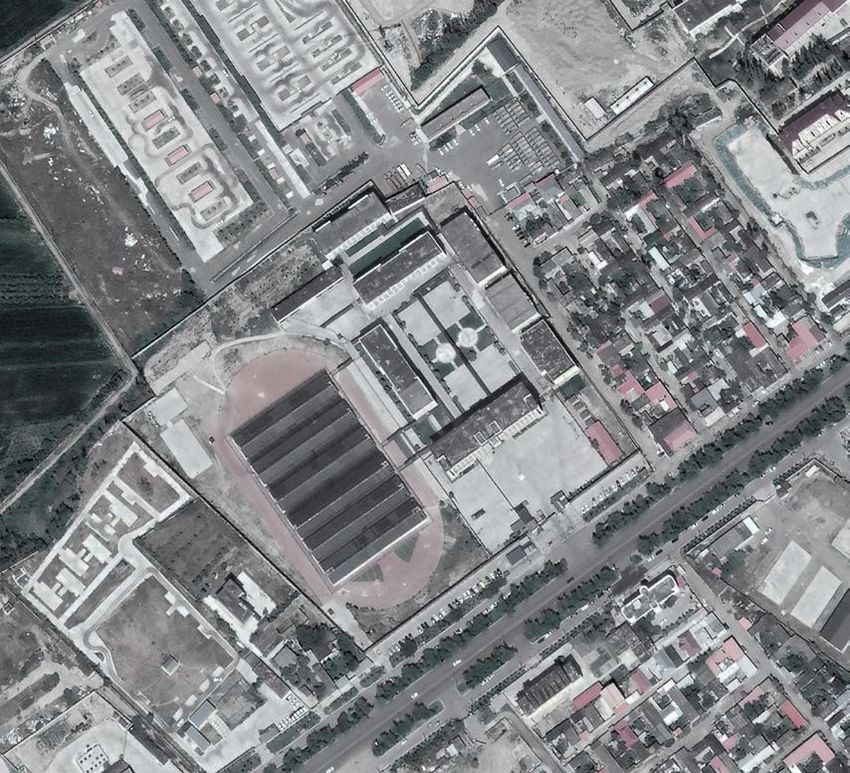
Scholars at Risk Academic Freedom Monitoring Project

WRONGFUL IMPRISONMENT &
PROSECUTION OF SCHOLARS
Scholars and students, through their teaching,             communities at large: that crossing certain lines can
fieldwork, public discussions, and other activities,       come at a price.
challenge norms, beliefs, and established structures
of power. To maintain control, state authorities           During this period, SAR reported 104 incidents in
frequently retaliate against and restrict scholars’        which scholars and students were imprisoned or
and students’ academic work and expression, by             prosecuted in connection with their academic or
launching criminal investigations, issuing warrants,       expressive activities. These include a PhD student
and through detentions and other coercive legal            arrested in Egypt while conducting interviews, as
measures. These actions are often carried out              well as scholars detained incommunicado in Saudi
under laws related to terrorism, national security,        Arabia for their women’s rights activism.
and defamation, among others.
                                                           Academic Content & Conduct
As a result, scholars and students are silenced,
subjected to lengthy trials and appalling prison           In at least 11 incidents reported this year,
conditions, and ultimately made to suffer                  authorities detained or took other coercive legal
irreparable harm to their careers and personal well-       action against scholars in apparent retaliation for
being. For the authorities, the real value of these        their scholarly work or expression.
tactics lies in their message to higher education
                                                                                In Malaysia, on September
                                                                                25, 2017, federal officials
                                                                                arrested Mustafa Akyol, a
                                                                                Turkish scholar and journalist,
                                                                                who was in the country
                                                                                to give a series of lectures
                                                                                (AFMI 525). Prior to his third
                                                                                lecture, titled “The Islamic
                                                                                Jesus: The Commonalities
                                                                                between Judaism, Christianity
                                                                                and Islam,” a group of men
                                                                                approached Mr. Akyol,
                                                                                introduced themselves
                                                                                as “religious enforcement
                                                                                officers,” and indicated that
                                                                                he should not speak about
                                                                                religion without authorization
                                                                                from the Federal Territory
                                                                                Islamic Affairs Department
                                                                                (JAWI). Event organizers
 On August 1, 2018, Chinese police reportedly raided the home of                decided to cancel the lecture
 prominent scholar Wenguang Sun during a live telephone interview with
 Voice of America (AFMI 700). He was detained and held at several different     in response to the encounter.
 locations until his release on August 12.                                      Later that day, as Mr. Akyol
                                                                                prepared to leave the
 © 2013 TANIA LEE/AFP/Getty Images
                                                                                country, federal authorities

10
Free to Think 2018
at Kuala Lumpur International Airport took him
into custody and eventually transferred him to Wrongful Imprisonment
JAWI headquarters. The next morning, authorities & Prosecution
brought Mr. Akyol to a Shariah (Islamic law) court
and interrogated him for two hours. Authorities During this reporting period, SAR reported
then released Mr. Akyol and allowed him to leave 60 incidents of wrongful prosecution and 88
incidents of wrongful imprisonment. Wrongful
the country.
prosecution includes administrative, civil, or
criminal proceedings against higher education
In Thailand, on October 9, 2017, historian Sulak leaders, academic and nonacademic staff, or higher
Sivaraksa was charged with lèse-majesté—which education students involving false or otherwise
prohibits criticism of Thailand’s king, queen, wrongful grounds; or charges directly relating to,
crown prince, or regent—in response to comments or in retaliation for, the expression of academic
he had made at an academic conference on opinions or other professional or student activity;
October 5 (AFMI 528). According to prosecutors, or in retaliation for other exercise of fundamental
Mr. Sulak raised questions about a popular human rights including free expression and
historical narrative concerning a battle fought by freedom of association. Wrongful imprisonment
includes the arrest, interrogation, detention, and/
the sixteenth-century Thai king Naresuan. Mr.
or prosecution of scholars, students, or other
Sulak reportedly told the audience “not to easily
members of higher education communities on false
believe in things. Otherwise they will fall prey to or otherwise wrongful grounds or charges, directly
propaganda.” He also reportedly characterized relating to, or in retaliation for, the expression of
King Naresuan as being “cruel.” On October 9, Thai academic opinions, or other professional or student
police summoned Mr. Sulak and formally charged activity, as well as in retaliation against other
him. On January 17, 2018, a judge dropped the exercise of fundamental human rights, including
lèse-majesté charge due to a lack of evidence. free expression and freedom of association.
In the Gambia, on January 31, 2018, authorities
arrested political science professor Ismaila Ceesay never attended class. University authorities
on a charge of “incitement to violence,” based on overrode Dr. Maindo’s decision, granting Mr.
his comments to the media about government Kabundi a passing grade, which Dr. Maindo later
policy (AFMI 582). The allegations relate to an challenged in a letter to his department dean. The
interview with Voice magazine, in which Professor letter, which was subsequently leaked over social
Ceesay criticized Gambian national security media, prompted Mr. Kabundi to bring a criminal
policies, commenting that some military officers defamation complaint against Dr. Maindo, which
“feel rejected by the administration,” which might remains pending as of this report.
result in “pockets of mutiny.” Following Professor
Ceesay’s arrest, activists held an overnight vigil In Turkey, on May 22, state prosecutors launched a
outside the police station where he was being held. criminal investigation against Bülent Şık, a scholar
The next morning, authorities released Professor specializing in food and public health, in response
Ceesay and dropped the charge against him. to a series of his articles about government
research findings (AFMI 654). In the articles, which
In the Democratic Republic of Congo, on February were published on the website of the newspaper
7, authorities charged Alphonse Maindo, a Cumhuriyet in April 2018, Dr. Şık alleged that the
professor of political science at the University of Turkish Ministry of Health withheld the findings
Kisangani, with defamation in connection with a of a study on cancer-causing agents found in
grading dispute with one of his students (AFMI several cities exhibiting above-average cancer
584). In October 2017, Dr. Maindo refused to grant rates. According to Dr. Şık, who had worked on the
a passing grade to Innocent Kabundi, a military research behind the Ministry study, agricultural
general and one of his students, who allegedly products and drinking water from these cities
11Scholars at Risk Academic Freedom Monitoring Project
exhibited higher levels of pesticide, heavy metals, indicate that authorities had held Mr. Salem
and other pollutants. In response to a complaint incommunicado for four days without access to
about the article filed by the Ministry of Health, a lawyer before he was arraigned in court, also
public prosecutors opened an investigation against without counsel. Mr. Salem remains in prison as of
Dr. Şık, alleging that he violated Turkish Penal this report.
Code Articles 334, 336, and 258, which relate to
the handling of so-called “prohibited” information. And in China, on August 1, police detained
According to Dr. Şık, public prosecutors are now Wenguang Sun, a prominent scholar and retired
considering bringing terrorism-related charges professor of economics at Shandong University,
against him. during a live telephone interview with Voice of
America (AFMI 700). The radio station’s US-based
In Egypt, on May 24, authorities detained Mandarin service was interviewing Professor
Walid Salem, a PhD student at the University of Sun, who at the time was home in China, about
Washington in the US. They later charged him an open letter he had written regarding China’s
with “spreading false news” and “joining a terrorist foreign policy and spending practices. During the
group” (AFMI 656). The charges are apparently call, police abruptly entered Professor Sun’s home
connected to Mr. Salem’s research activities and demanded that he end the interview. In the
concerning judicial independence in Egypt; he had recording, Professor Sun can be heard refusing the
just concluded an interview with a prominent law order and protesting the officers’ presence in his
professor at the time he was detained. Sources home, before the phone line goes dead. Authorities
held Professor Sun at several different
locations until August 12, when he
was returned home under close state
surveillance.
Activism & Dissent
Authorities frequently target scholars
and students8 with imprisonment
and prosecution in connection with
their views and activism related to
important public issues, including
human rights, democracy, and politics,
often charging them under laws
concerning terrorism and national
security.
These include hundreds of university
personnel in Turkey who have been
imprisoned or prosecuted over the
past year in apparent connection with
their endorsement of the Academics
for Peace petition, which criticized
state military actions, or their
On May 24, 2018, Egyptian authorities detained Walid Salem, a
University of Washington PhD student, and later charged him with associations with groups disfavored by
“spreading false news” and “joining a terrorist group,” in connection
8 While this section focuses on scholars,
with his research activities (AFMI 656).
see pp. 21-27 for more extensive analysis
Photo courtesy of Mr. Salem's Family of students imprisoned and prosecuted for
expressive and associative activity.
12Free to Think 2018
the government.9 Similarly, Iranian
authorities have detained and
prosecuted at least 150 students
in connection with nationwide
protests that began in December
2017.10
In Ethiopia, on March 8, 2018,
authorities detained without charge
Seyoum Teshome, a scholar of
management at Ambo University
and a blogger, apparently in
retaliation for his writings criticizing
the state of emergency declared in
February 2018 (AFMI 604). About
two weeks later, on March 25,
authorities detained 6 university
professors, along with 13 journalists
and other professionals, who
had gathered for a meeting to
discuss establishing a new political
party (AFMI 618). The Ethiopian Women’s history scholar and activist Dr. Hatoon Al-Fassi was
detained by Saudi authorities in June 2018 amidst a government
government has since released
crackdown on human rights defenders (AFMI 677).
thousands of individuals, including
scholars and students who had been
detained in connection with their activism. Among their activism related to women’s rights reforms in
those released are Professor Teshome and the six the country. Their activism includes efforts to lift
professors detained on March 25. a ban on women driving and to end the country’s
male guardianship system. Scholars targeted in
In China, on April 28, police detained Zi Su, a the crackdown include Dr. Eman Al Nafjan, an
retired professor of political science, in connection assistant professor of linguistics, and Aziza Al-
with a letter he had published online (AFMI 641). Yousef, a former lecturer in computer science at
The letter, titled “Proposal for Democratic Direct King Saud University. Both were detained along
Elections at the 19th National Congress and with at least five others between May 15 and 18
Nomination of Mr. Hu Deping as New General (AFMI 648). The next month, between June 21 and
Secretary of the Chinese Communist Party,” 24, authorities also took into custody prominent
criticized Chinese president Xi Jinping, described women’s history scholar Dr. Hatoon Al-Fassi shortly
his rule as a dictatorship, and called for him to step after she publicly announced plans to celebrate
down. On June 14, authorities formally arrested Zi the coming repeal of the driving ban (AFMI 677).
for “incitement to subvert state power.” This has SAR understands that the scholars and activists are
since been replaced with the more serious charge being held in unknown locations without access to
of “subversion of state power,” which carries a family or legal counsel.
minimum prison sentence of ten years.
In India, on June 6, police arrested Shoma Sen,
In Saudi Arabia, authorities began detaining an English professor at Rashtrasant Tukadoji
scholars and activists in May 2018, apparently for Maharaj Nagpur University (RTMNU), along with
9 See pp. 28-34 for more information on the imprisonment and prosecutions of academic personnel in Turkey.
10 See pp. 15-17 for more information.
13Scholars at Risk Academic Freedom Monitoring Project
four activists (AFMI 665). The group of five has ***
been charged under India’s Unlawful Activities
(Prevention) Act for “spreading controversial Since the first Free to Think report in 2015, SAR
pamphlets” and “delivering hate speeches,” and has reported thousands of scholars and students
under the country’s anti-terrorism law for having imprisoned, prosecuted, and subjected to other
alleged links to the banned Communist Party of coercive legal force in connection with their
India (Maoist). The charges are apparently based on peaceful academic conduct and expression. While
the defendants’ alleged participation in a January governments have a legitimate right to protect
1 memorial event that commemorated a battle national security and stability, they also have
that occurred in 1818 between Dalit soldiers of a responsibility to refrain from using security
the British army and the upper-caste Peshwas. At concerns as a pretext for interfering in the
the event, members of the right-wing Bharatiya peaceful exercise of academic freedom, freedom
Janata Party protested and clashed violently with of expression, freedom of association, and other
participants, resulting in at least one person killed. related human rights.
Professor Sen’s daughter maintains that her mother
had no connection with the Bhima Koregaon Scholars at Risk urges state authorities to release
event beyond expressing solidarity with the scholars, students, and other members of the
movement. On June 8, RTMNU officials suspended higher education sector who have been wrongfully
Professor Sen from her position as head of the imprisoned or prosecuted in connection with
English department due to her arrest and ongoing nonviolent expression and, pending their release,
prosecution. to uphold relevant obligations under domestic
and international law, including especially those
And in Bangladesh, on August 5, authorities related to due process and the humane treatment
arrested Shahidul Alam, a visiting professor at of prisoners. SAR further urges state authorities,
Sunderland University, a public intellectual, and an higher education communities, and society at large
acclaimed photojournalist, in apparent retaliation to review laws used to prosecute scholars and
for his public comments on student protests in students and to amend or repeal them as necessary
Bangladesh (AFMI 703). Alam spoke on Facebook to ensure that scholars and students can peacefully
Live and Al Jazeera earlier that day about a protest exercise their rights to academic freedom and
at which he and a group of journalists were the freedom to think more generally, without
attacked by alleged members of the Bangladesh retribution.
Chhatra League, a youth organization backed by
the ruling government party. In his interview with
Al Jazeera, Alam alleged that police hired armed
individuals to attack student protesters. Hours
after the interview aired, at least thirty police
officers raided Alam’s home, took him into custody,
interrogated him, beat him, and charged him under
section 57 of the International Communication and
Technology Act (ICT Act) for electronically sharing
material that “tends to deprave and corrupt” the
public and causes “deterioration in law and order.”
Alam, who was temporarily hospitalized due to
police officers’ use of force, remains in jail as of this
report.
14Free to Think 2018
TARGETED ATTACKS ON SCHOLARS &
STUDENTS IN IRAN
Reports of attacks on higher education in Iran detained 15 students (AFMI 563). Students had
have increased in the past year. These include gathered on campus, chanting anti-government
crackdowns on student protests, prosecutions slogans. Police responded with violent force,
of scholars on security-related charges, and including using tear gas against the students. Some
imprisonment and custodial abuses of scholars and protesters reportedly threw stones at police in
researchers. response.
Crackdowns on Protests Following these arrests, on January 1, 2018,
members of the University Trade Unions’ Council
On December 28, 2017, protests began in of Iran (UTUCI), a student union, met with the
Mashhad, Iran’s second most populous city, over University of Tehran’s chancellor to negotiate the
economic stagnation and lack of opportunity. detained students’ release. Following the meeting,
Within days, the protests spread to other cities four of the UTUCI members were themselves
throughout the country, including Tehran, and arrested (AFMI 565). As many as 150 students are
expanded in scope to embrace a more generalized estimated to have been detained and prosecuted
critique of Iran’s ruling regime. University in connection with the nationwide protests, which
campuses—which for several weeks had been many of the students claimed they had never
the sites of isolated protests over tuition fees attended.11
and gender discrimination—quickly became
major staging grounds for the nationwide protest In the months that followed, several students
movement. and professors received long prison sentences
in connection with the protests. These include
At the University of Tehran, throughout a three- University of Tehran students Sina Rabeiei, Mohsen
day protest that began on December 30, police Haghshenas, and Leila Hosseinzadeh, who were
11 See https://iranhumanrights.org/2018/07/iran-is-imprisoning-university-students-accused-of-attending-protests/.
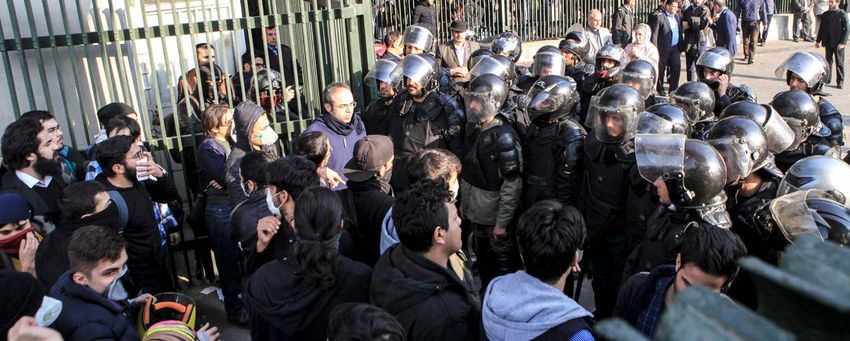
Iranian police block University of Tehran students from participating in protests on December 30, 2017. As many as
150 students are estimated to have been detained and prosecuted in connection with the protests.
© 2017 Associated Press
15Scholars at Risk Academic Freedom Monitoring Project
sentenced in early March to one year, two years, Compounding the imprisonments and prosecutions
and six years in prison, respectively (AFMI 607). are reports that authorities have excluded
Sadegh Zibakalam, a professor of political science applicants from graduate programs in retaliation
at the University of Tehran, was convicted on for their alleged participation in protests, writings
March 12 for public statements he made during on social media, and other expressive activity.12
the protests (AFMI 608). He was sentenced to This practice, which has reportedly occurred
18 months in prison and banned for two years at various times over the past decade, involves
from giving public speeches, publishing articles, marking students’ applications with a star,
giving interviews, and engaging in social media ostensibly indicating that they allegedly lack
activity. University of Tehran student activists required documents. Students seeking to rectify
Sina Darvish Omran and Ali Mozaffari were the alleged problems with their applications report
sentenced on June 11 to eight years in prison and being asked to sign pledges promising that they will
banned from political and social media activities refrain from protest activities. On December 11,
for two years (AFMI 667). Rouhullah Mardani, a 2017, it was reported that 27 “starred” applicants
former student and a teacher at the University of had been denied admissions to graduate programs
Tehran, was sentenced on July 4 to six years in (AFMI 552). As of this report, Iran’s parliament
prison for his alleged participation in the protests is considering legislation that would end the
(AFMI 685). And on July 29, Branch 28 of Tehran’s practice.13
Revolutionary Court convicted and sentenced
Pedram Pazireh, vice chairman of the University of Prosecutions & Long-term
Tehran’s Student Union, to seven years in prison Detentions
and 74 lashes in connection with the protests
(AFMI 566). In all of these cases, the charges related Over the past year, SAR has reported on scholars in
to national security and included “propaganda Iran facing national security–related charges, such
against the regime,” “action against national as espionage or collection of classified materials.
security,” and “spreading false information.” These cases also raise grave concerns about due
process and ill treatment of the accused. Most
have been detained in Evin Prison, where reports
of mistreatment and denial of medical care are
frequent.
On January 24, 2018, Iranian authorities arrested
on espionage charges Dr. Kavous Seyed-Emami,
a professor of sociology at Imam Sadiq University
and a co-founder of the Persian Wildlife Heritage
Foundation; at least seven other environmentalists
were arrested along with him (AFMI 578). On
February 9, authorities notified his wife that he had
died in custody at Evin Prison. The following day,
they announced his arrest and death in custody,
claiming it was a suicide. His colleagues and family
deny this claim. Professor Seyed-Emami, a dual
Sociologist Dr. Kavous Seyed-Emami was arrested on Canadian-Iranian national, was an environmentalist
espionage charges in January 2018 (AFMI 578). On who led camping trips for Iranian youth. During
February 9, Iranian authorities reported that he died those trips he placed cameras in the wilderness to
in prison, claiming that he had committed suicide.
Authorities have not disclosed evidence supporting the
12 See https://www.hrw.org/news/2018/09/05/irans-student-
espionage charges or the suicide claim.
activists-denied-education.
Photo courtesy of Mr. Seyed-Emami's family 13 See http://www.universityworldnews.com/article.
php?story=2018091818331121.
16Free to Think 2018
track rare animals. Authorities alleged that he
and his colleagues were “collecting classified
ONGOING DETENTION CASES
information about the country’s strategic
The case of Ahmadreza Djalali, an
areas under the guise of carrying out scientific Iranian-Swedish dual citizen and a
and environmental projects.” The authorities scholar of disaster medicine, raises
have yet to publicly disclose any evidence major concerns. Originally arrested
supporting the charges or the claim of suicide. in April 2016 while attending
In March 2018, state authorities barred Dr. academic conferences in Iran, Dr.
Seyed-Emami’s wife Maryam Mombeini from Djalali was reportedly forced to sign
exiting the country with her sons, reportedly a false confession to national security-related crimes
due to the ongoing prosecutions against the the following February. On October 21, 2017, he
was sentenced to death. His counsel was denied an
detained environmentalists. As of this report,
opportunity to appeal the conviction. His sentence was
Ms. Mombeini remains in Iran.
affirmed on December 9, 2017. He remains detained
in Evin Prison. As of August 2018, Dr. Djalali was
On April 15, Professor Abbas Edalat, a British- reportedly suffering from significant health problems
Iranian professor of computer science and and had been denied essential medical care.
mathematics at the Imperial College London,
was arrested on espionage charges (AFMI Similarly grave concerns persist
637). Professor Edalat is an anti-war activist about Xiyue Wang, a Princeton
who maintains a home in Tehran and has been University graduate student in
a regular commentator on Iranian state media. Eurasian history who was arrested in
August 2016. Mr. Wang was charged
In April 2018, while Professor Edalat was in
with crimes relating to “infiltration”
Iran attending an academic workshop, Islamic
after conducting research in Iran’s
Revolutionary Guard Corps soldiers raided national archives, a process that is approved and
his Tehran home, confiscated his belongings, strictly overseen by Iranian authorities. His research
and arrested him. Professor Edalat’s family included scanning documents from the nineteenth
reportedly posted bail for him, but he refused and early twentieth centuries. Authorities have alleged
it, arguing that he was innocent and should be that Mr. Wang was conveying information discovered
cleared of the charges against him outright. in his research to foreign entities, including the US
State Department. Authorities, however, have not
*** disclosed any evidence supporting this claim and have
not indicated what documents in Mr. Wang’s research
were classified. Mr. Wang was convicted in July 2017,
These actions by the Iranian authorities
and sentenced to ten years in prison. His sentence
appear to be driven by the false view that was upheld on appeal the following month. Mr. Wang
students, professors, and the scholarship remains detained in Evin Prison, where he has been
they produce represent a threat to national subjected to torture and other ill-treatment and suffers
security. This perception constitutes a direct from significant health problems.
threat to Iran’s rich intellectual tradition.
SAR urges Iranian leaders to reverse this Hamid Babaei, a doctoral student
worrisome trend, to release scholars and in finance at the University of Liège
students who have been detained for acts of in Belgium, is likewise being held in
Evin Prison. On August 13, 2013,
expression or academic inquiry, and to ensure
Mr. Babaei was arrested while on
protection of fundamental rights including
a trip to Iran with his wife. After
academic freedom, freedom of expression, he reportedly refused a request to
freedom of assembly, and due process. spy on his fellow Iranian students in Belgium, he was
charged with the crime of “acting against national
security by communicating with a hostile government.”
He is now serving a six-year prison sentence.
17Scholars at Risk Academic Freedom Monitoring Project
DETENTION OF UYGHUR SCHOLARS &
STUDENTS IN CHINA
SAR reports with grave concern efforts by Chinese Uyghur students and academic personnel.16 Experts
authorities to detain scholars and students of the further report that detainees have been denied
Uyghur community. access to legal counsel or family and are at grave
risk of physical and psychological abuse.
The Uyghur are an ethnic religious community,
living predominantly in China’s northwestern As of September 2018, China’s central government
Xinjiang Uyghur Autonomous Region (XUAR). authorities had not publicly acknowledged the
The Uyghurs have been subjected to government existence of the camps. However, an official
restrictions under the guise of anti-terrorism and Chinese Communist Party Youth League recording
national unity policies, including policies that from October 2017 titled “What Kind of Place
restrict their use of the Uyghur language and their Is the Educational Transformation Center?”
exercise of the Islamic faith. Scholars and activists acknowledged their existence. It claimed that
who have addressed these restrictions in their the camps’ purpose is to “[treat] people who
academic work and public advocacy have been are infected with ideological illnesses.”17 Local
targeted with imprisonment and prosecution. government officials have also confirmed reports
These include Ilham Tohti, a prominent scholar of Uyghurs being sent to camps.18 Due to the
of economics at China’s Minzu University, who is challenges in accessing information on individuals
serving a sentence of life in prison.14 detained in China, SAR’s reporting on this situation
is limited to a few cases.
In January 2017, state authorities launched a
campaign ordering Uyghur students studying In December 2017, Chinese authorities detained
abroad to return to China. The campaign reportedly prominent Islamic scholar Muhammad Salih Hajim,
includes detentions of and threats to detain family along with his family, without charge (AFMI 548).
members in China of students who refuse to They were taken to an unknown location. Hajim is
return voluntarily, as well as pressures on foreign reportedly the first scholar to translate the Quran
governments to detain and repatriate Chinese- into the Uyghur language. In January 2018, Uyghur
Uyghur students studying in their countries.15 rights groups reported that Hajim died while
in custody. One report suggests that his death
Starting in April 2017, Chinese authorities began may have been the result of torture and other ill
taking Uyghurs into custody without charge, treatment he allegedly suffered while in custody.
transferring them to so-called “re-education Authorities have confirmed his death, but declined
camps,” often formally referred to as “Professional to comment on the circumstances or to release his
Education Schools,” among other titles. It is body to his family.
suspected that many Uyghurs who have been
reported missing are in state custody in such Also in December 2017, Rahile Dawut, an
camps. According to one Uyghur rights group, internationally renowned scholar of Uyghur studies
those detained likely include tens of thousands of at Xinjiang University, went missing after leaving
14 See https://www.scholarsatrisk.org/report/2014-09-22-central-university-nationalities/.
15 See Free to Think 2017, p. 30.
16 NGOs estimate that as many as one million Uyghurs have been detained. See https://tbinternet.ohchr.org/Treaties/CERD/
Shared%20Documents/CHN/INT_CERD_NGO_CHN_31745_E.pdf and https://tbinternet.ohchr.org/Treaties/CERD/Shared%20
Documents/CHN/INT_CERD_NGO_CHN_31898_E.docx.
17 See https://www.rfa.org/english/news/uyghur/infected-08082018173807.html.
18 See https://www.rfa.org/english/news/uyghur/township-08062018145657.html.
18Free to Think 2018
As many as tens of thousands of Uyghur students and scholars are estimated to have been detained at so-called “re-
education camps” and other detention facilities in China's Xinjiang Uyghur Autonomous Region (XUAR). The above
map of the XUAR indicates locations of suspected re-education camps and detention facilities, according to analysis
of government documents and satellite imagery by University of British Columbia law student Shawn Zhang. (Data
last accessed on August 18, 2018). Learn more about Mr. Zhang's research at https://medium.com/@shawnwzhang.
Urumqi to travel to Beijing (AFMI 547). Professor 581). Police raided Professor Jalaleddin’s home,
Dawut’s family and friends, fearing retaliation, placed a black hood over his head, and took him
waited nearly eight months to make news of her into custody. As of this report, Professor Jalaleddin
disappearance public. They, along with human remains in detention without access to legal
rights groups, suspect that state authorities have counsel or family. Authorities have not disclosed
detained Professor Dawut in a re-education camp his whereabouts nor have they revealed any
or prison. Government officials have not disclosed evidence or charges related to his detention.
her location nor any charges brought against her.
And in May 2018, Guligeina Tashimaimaiti, a
On January 29, 2018, Chinese authorities detained PhD student at the University of Technology
Abdulqadir Jalaleddin, a well-known literature in Malaysia, was reported missing in the XUAR
professor at Xinjiang Pedagogical University (AFMI (AFMI 661). Ms. Tashimaimaiti had previously
19You can also read


