Key Stage 4 2019/2020 - The Cotswold School
←
→
Page content transcription
If your browser does not render page correctly, please read the page content below

Key Stage 4
                                       Options

An ‘Outstanding’ 11-18 School, Ofsted 2002, 2006, 2009 and 2015
     “Students are well prepared for life in Modern Britain”
                          Ofsted 2015

                 2019/2020
                                 1
Options 2019
Starting GCSEs
Beginning your GCSE courses represents a landmark in your Secondary education. Many of you will sit in the same
classrooms and sometimes you’ll be taught by the same teachers, but studying for GCSEs will place new demands
on you. You will learn new skills and strategies. Hard work and excellent attendance will be vital in securing your
success.

The Curriculum
You are required to study certain Core subjects.
In all subjects your GCSE grade depends on your performance in final written examinations at the end of Year 11.
In a few subjects there is an element of controlled assessment that will be marked in school.
You will be able to choose certain subjects.

Choosing Subjects
                                                The Core subjects
You will study GCSEs in English Language, English Literature, Mathematics and Combined Science (or Triple
Science).

You must choose either Geography or History (you can choose both).
If you have been studying a Modern Foreign Language this year, you will have to study at least one Language for
GCSE, unless there are good reasons that prevent you from doing this

                                                 Option Subjects
You will be able to choose two further subjects from…
Art, Business, Business (Vocational), Child Development, Computing, Drama, Food Preparation and Nutrition,
French, Graphic Products, ICT, Materials Technology, Music, Sports Science (PE), BTEC Sport, Religious Studies,
Textiles, Triple Science.

How to choose your subjects?
The choice is yours but you must involve your parents and teachers. The choices you make now may affect
opportunities later, so need to be made with care.

Most students have no fixed idea about what they would like to do after GCSE. In this case it is best to choose
subjects you enjoy and are successful in.

If you know what career you wish to follow, you should choose the subjects that may be needed as qualifications so
that you can progress them to A level.

Physical Education (Non GCSE)
All students receive one 70 minute lesson of PE a week. In Year 10 students follow a prescribed programme of
activities which allows them to build on activities studied in Key Stage 3 as well as experience new activities. In
Year 11 students opt into activities, designing their own pathway. Students are encouraged to design a well
balanced programme of activities making full use of the available facilities. It is expected that GCSE PE students
use core Physical Education lessons to improve their practical GCSE PE grades. School teams will be run in a
number of sports and students will be actively encouraged to participate in these and other extra-curricular
activities.

RE (Non GCSE)
There are Religious Education Days for both Year 10 and 11 students. These days provide opportunities for
students to engage with relevant, contemporary and challenging questions that impact on all of our lives:
questions about spirituality, meaning and purpose, equality and diversity, authority, and global citizenship.
Students engage with religious and human questions, explore religious beliefs, teachings and practise and express
personal responses. Dates of these days can be found on The Cotswold School calendar.

                                                          2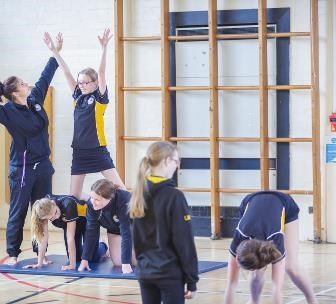
PERSONAL , SOCIAL AND HEALTH EDUCATION: (PSHE)
The purpose of the course is to help equip young people with information and skills which will be of use to them
in their adult life. The PSHE programme is delivered via dedicated days spread throughout the Key Stage.

                                              Year 10 Programme
Careers and Work Experience
Sound careers advice and Higher Education guidance are given to ensure that students are well prepared for their
life after The Cotswold School. We help our students make the right choices by providing professional advice,
careers days, work experience opportunities and guest speakers from universities, colleges and potential
employers.
Further independent, professional advice is provided to any student who requests it (or who is recommended by
their tutor) from our qualified Careers Advisor.

Students are also encouraged to take up the many and varied opportunities to visit employment and education
exhibitions, aimed at both raising aspirations and providing inspiration. Valuable practice interview sessions are
provided with the support of our local Rotary Club and professionals living in our community. Meanwhile our tutors
play an important role as student mentors, taking time to speak to each student 1-to-1, ensuring they are receiving
support to find any information they may need.

Our approach is one that supports and encourages but also challenges.

Sex and Relationships Education
Specialists from the Sex and Relationships education team will lead a variety of sessions concerning issues such as
consent, values, unplanned pregnancy, contraception, coping with stress and pressure, staying safe re alcohol/
drugs/on-line.

Economic and Financial Awareness
Experts from the National Westminster Bank will lead a range of different sessions to raise pupil awareness of
personal and corporate finances.

                                              Year 11 Programme
Be the Boss – Political Campaigns
This day will focus on raising political awareness and an understanding of current affairs and key social and
economic issues within society. Pupils will work in groups planning a political campaign and presentation.

Senior Citizens’ Christmas Party
Students will work in groups with their team of Year 11 Form Tutors planning and preparing food, decorations,
entertainment, transport etc, to ensure that senior citizens within our community have a wonderful Christmas
party.

University of Gloucester study skills day
Skilled experts will lead sessions with our students on study and revision skills which will provide invaluable
preparation for the forth-coming GCSE examinations

                                                      Charges
In certain subjects, provision of materials or visits form an integral part of the course.
Parents will be invited to provide materials or ingredients. Where parents would like to possess the finished product,
the school reserves the right to charge the cost or require the supply of the necessary materials.
For visits occurring during school time, the school will invite a voluntary contribution from parents to meet costs.
For visits outside school time, parents will be charged for all allowable costs.
For residential visits, parents will also be charged the full cost of board and lodgings.
If a child is in receipt of Free School Meals, the School will help with the costs.

                                                             3
English language/Literature
Set out below is an outline of the examination process involved. More detailed information will be availa-
ble in the summer term. All students will follow a combined course which in most cases will lead to two
GCSE certificates in English Language and English Literature.

Students will have 4 doubles a week of English in both Year
10 and 11. They will have two English teachers, one for
English Language and one for English Literature. During
these lessons, students will study for two GCSEs- English
Language and English Literature. Key skills in reading
comprehension and inference are covered as well as the
creative use of language for a variety of purposes and
audiences. Alongside the functional aspect of English,
students are encouraged to embrace literature and will
study a wide range of texts from Shakespeare and 19th
century literature through to modern poetry, drama and
prose.

 Year 10                                                             Year 11
 Students will begin year 10 with a focus on the AQA                 In Year 11 students will build on their knowledge
 poetry anthology as well as descriptive writing and                 and experience of both English literature and
 fiction reading skills. This will help to familiarise               English language skills. They will start the year by
 them with the demands of the exams. They will                       studying their 19th century novel, either A Christmas
 then go on to study their Shakespeare play,                         Carol or Jekyll and Hyde. They will also revise their
 Macbeth as well as their modern drama, Blood                        15 anthology poems and revisit the key skills of the
 Brothers and focus on preparation for their non-                    two GCSE English language papers. During Year 11
 fiction GCSE Language exam.                                         students will also complete a formal speaking and
                                                                     listening assessment which is certificated by AQA.

Internal Assessment                                                                    External Assessment

Both English Language and English Literature are now assessed    English Language: Paper 1 - Explorations in creative writing
through 100% examination. During the course of Key Stage 4,      and reading (50%) Paper 2 - Writers’ viewpoints and
students will undertake assessments which mirror the exams       perspectives (50%) English Literature: Paper 1 - Shakespeare
they will take at the end of Year 11 in order to best prepare    and the 19th century novel (40%) Paper 2 - Modern texts and
them and to monitor their progress.                              Poetry (60%)

        Course Title                     Exam Board               Specification Code                    Website
 GCSE English Language GCSE                  AQA                          8700                      www.aqa.org.uk
            English Literature               AQA                          8702
Next Steps: English is a vital subject whatever students decide to do when they finish their GCSEs and, through the duration of
the course, students are equipped with many transferable reading and writing skills. Many colleges require a grade 4 (C grade)
for entry to further education courses. Both English Language and English Literature are available to study at A level at The
Cotswold School. Students can opt to take one or both of these A levels as separate courses.

                                              Head of Department: Mrs L. Sewell
                                                                 4
Mathematics
The key to unlocking options and opportunities in future education and careers.

GCSE Mathematics is a compulsory core subject which is
studied over three years (starting in Year 9) by all students.
Students are set into one of five ability sets on both sides of
the year group at the beginning of Year 10.

Students work towards either a higher or foundation tier
entry. The final decision on the appropriate tier of entry for
each student is made halfway through Year 11.

 Year 10                                                              Year 11
 Students in each set follow specific programmes                      Students continue to follow specific schemes of
 tailored to their ability with regular tests at the end              work based on their setting and have regular tests
 of each topic and formal assessments at the end of                   at the end of each topic. All students sit a formal
 each term. Students can expect homework to be set                    mock exam before Christmas and again before
 every week and all students sit an end-of-year exam                  Easter. They are then entered for either higher or
 under formal conditions.                                             foundation tier GCSE in the summer.
                                                                      There are focused intervention programmes and
                                                                      revision sessions for students throughout Year 11.

Internal Assessment                                                                    External Assessment
 End of topic tests, end of term assessments, end of year             There are three formal GCSE examinations at the end of
 formal exam.                                                         Year 11; two calculator papers and one non-calculator.
                                                                      Each paper is one and a half hours long.

         Course Title                      Exam Board             Specification Code                     Website
 GCSE (9-1) in Mathematics               Edexcel Pearson                   1MA1                 qualifications.pearson.com

Next Steps: Students can go on to study A level Maths and Further Maths

                                               Head of Department: Mr G. Thomas
                                                                  5
Triple Science
“We do these things not because they are easy, but because they are difficult” - John F. Kennedy

Students can choose to take GCSEs in Biology, Chemistry
and Physics rather than Combined Science. This takes up
one option block.

Separate Sciences are difficult subjects and are designed to
prepare students for A level Sciences. Students should be on
track to achieve a grade 5 in order to take Separate
Sciences. Teachers of borderline students will be asked
about the effort, application and love of Science
demonstrated by these students when their applications are
being assessed.

Practical work is used whenever possible to enhance
students’ understanding and there are a set of required
practicals that students must complete.

 Year 10                                                                    Year 11
 Biology:                                                                    Biology:
 Cells and Organisation                                                      Biological Responses
 Disease and Bio-energetics                                                  Genetics and Reproduction
 Chemistry:                                                                  Chemistry:
 Atoms, Bonding and Moles                                                    Rates, Equilibrium and Organic Chemistry
 Chemical Reactions and Energy Changes                                       Analysis and the Earth’s Resources
 Physics:                                                                    Physics:
 Energy and Energy Resources                                                 Forces in Action
 Particles at Work                                                           Waves, Space and Electromagnetism

                        Internal Assessment                                                    External Assessment
Students will take two tests at the end of every topic. The offi-       Six exams taken at the end of Year 11.
cial AQA test will give them realistic exam practice and our re-
                                                                        Two Biology, two Chemistry and two Physics papers, each 1
call test will examine their revision and recall of scientific facts.
                                                                        hour 45 mins long at Higher tier.
Major exams will take place at the end of Year 10 and twice in
Year11

         Course Title                        Exam Board                  Specification Code                      Website
GCSE Biology, GCSE Chemis-                        AQA                       8461, 8461, 8463               www.aqa.org.uk

Next Steps: Separate Sciences are ideal preparation for Science A levels and onto degree level.

                                                  Head of Department: Mr T. Redding

                                                                        6
Combined Science
“Science is nothing but organized common sense” - Thomas Huxley

Students who do not opt to take Triple Science will take a
double GCSE in Combined Science. It is worth two GCSEs
and the students can achieve split grades (eg 8-7 or 5-4).

The content is split equally between Biology, Chemistry and
Physics and each class will have three teachers attached to
them. Practical work is used whenever possible to enhance
students’ understanding and there are a set of required
practicals that students must complete.

Due to the content-heavy nature of the course, students
must work hard to learn the scientific facts as they go along.
For example, a formula sheet is no longer given and stu-
dents must memorise the Physics formulae.

 Year 10                                                                    Year 11
 Biology:                                                                   Biology:
 Cells and Organisation                                                     Biological Responses
 Disease and Bio-energetics                                                 Genetics and Reproduction
 Chemistry:                                                                 Chemistry:
 Atoms, Bonding and Moles                                                   Rates, Equilibrium and Organic Chemistry
 Chemical Reactions and Energy Changes                                      Analysis and the Earth’s Resources
 Physics:                                                                   Physics:
 Energy and Energy Resources                                                Forces in Action
 Particles at Work                                                          Waves and Electromagnetism

                        Internal Assessment                                                   External Assessment
Students will take two tests at the end of every topic. The offi-       Six exams taken at the end of Year 11.
cial AQA test will give them realistic exam practice and our re-
                                                                        Two Biology, two Chemistry and two Physics papers, each 1
call test will examine their revision and recall of scientific facts.
                                                                        hour 15 mins long at Higher or Foundation
Major exams will take place at the end of Year 10 and twice in
Year11

         Course Title                        Exam Board                  Specification Code                      Website
  Combined Science Trilogy                        AQA                           8464                       www.aqa.org.uk

Next Steps: It is possible to continue to A level Sciences from Combined Science.

                                                  Head of Department: Mr T. Redding

                                                                        7
Art & Design
Set out below is an outline of the examination process involved. More detailed information will
be available in the summer term...

The creative sector is one of the fastest growing areas in the
UK economy and has never been more relevant to the
future careers of young people. Art is a subject that
complements any other subject, providing skills in
perception, time management, resilience, creative problem
solving and independence that are essential in life.

We follow the AQA ‘Fine Art’ syllabus but students are only
limited by their imaginations! We encourage students to
experiment in a range of 2D and 3D media ranging from
drawing and painting to printmaking, mixed media, digital
media, photography, installation and film. Students are
encouraged through a mixture of workshops and tutorial
style teaching to find their own strengths and develop skills
in areas that suit them best. The use of a sketchbook to
draw and record insights and the willingness to experiment
in using colour and paint are important skills to develop.

 Year 10                                                              Year 11
 Students will create portfolios of work from a given                 Students will begin the year by completing the
 topic. The two main topics during Year 10 will be                    coursework element of the GCSE. This will focus on the
 ‘structures’ and ‘objects’. Through these projects,                  topic of their own choosing, as part of which students
 students will develop their skills in observational                  will study the work of suitable artists. The students will
 drawing, artist analysis, media and technique                        then be given an externally set assignment from the
 experimentation and development of a personal                        exam board to produce the exam portfolio, unit 2 of the
 response. Students will gain inspiration from a wide                 GCSE.
 range of artists.

                        Internal Assessment                                               External Assessment
 The Portfolio consists of 2 ½ projects completed between            The Externally Set Assignment is a project which starts in
 September 2019 and December 2020. .                                 January 2020 with a theme chosen from an exam paper
                                                                     and the final response completed in 10 hours of exam in
                                                                     April 2020

         Course Title                     Exam Board                 Specification Code                   Website
           Fine Art                           AQA                          8202                       www.aqa.org.uk

                                                Head of Department: Mr S. Hillier

                                                                 8
Business Studies
GCSE Business Studies (1BS0)

This popular course aims to develop students’
understanding of business and encourages creative thinking
and decision making. Students learn about the world of
business through research and investigation as well as
practical tasks. Students are not expected to have a
knowledge of business but should be interested in learning
about the world around them, how businesses are set up
and what it is that makes someone a great entrepreneur.

 Year 10                                                             Year 11
 Unit 1 – Investigating Small Business                               Unit 2 – Building a Business
 Unit 1 focuses on key business concepts, issues and skills          Unit 2 examines how a business develops beyond the
 involved in starting and running a small business. It               start-up phase. It focuses on the key business concepts,
 provides a framework for students to explore core                   issues and decisions used to grow a business, with
 concepts through the lens of an entrepreneur setting up             emphasis on aspects of marketing, operations, finance
 a business. Students will be introduced to local and                and human resources. Unit 2 also considers the impact of
 national business contexts and will develop an                      the wider world on the decisions a business makes as it
 understanding of how these contexts impact business                 grows. Students will be introduced to national and global
 behaviour and decisions. Students will develop an                   business contexts and will develop an understanding of
 understanding of the interdependent nature of business              how these contexts impact business behaviour and
 activity through interactions between business                      decisions. Students will learn about how the functional
 operations, finance, marketing and human resources, as              areas of operations, finance, marketing and human
 well as the relationship between the business and the               resources influence business activity and how
 environment in which it operates.                                   interdependencies and relationships between them
                                                                     underpin business decisions.

                       Internal Assessment                                             External Assessment

 n/a                                                            2 examinations:
                                                                Paper 1 will assess the Unit 1 content and is worth 50% of the
                                                                qualification
                                                                Paper 2 will assess the Unit 2 content and is worth 50% of the
                                                                qualification
                                                                (Both papers are 90 minutes and will consist of calculations, multi-
                                                                choice questions, short answer and extended writing questions)

        Course Title                     Exam Board              Specification Code                        Website
       GCSE Business                         Edexcel                      1BS0            https://qualifications.pearson.com/en/
                                                                                          qualifications/edexcel-gcses/business-
                                                                                                          2017.html
                                               Head of Department: Mrs N. Hester

                                                                 9
Vocational Business
Cambridge National in Enterprise & Marketing

Year 10
Unit R064: Enterprise and marketing concepts
Students explore the techniques businesses use to
understand their market and develop products,
investigate what makes a product viable and understand
how businesses attract and retain customers.

Unit R065: Design a business proposal
Students are presented with a business challenge from
which they create a researched and costed business
proposal. They will carry out market research, present
data, use idea generation tools, seek and act on
feedback, and cost their proposals. In their work on this
unit they will develop their self-assessment,
collaborative working, creativity, numeracy, research
and evaluative skills.

Year 11
Unit R066: Market and pitch a business proposal
Students prepare for and pitch the business proposal that they developed in the previous unit. They develop a brand
identity and investigate how best to promote their product and then plan, practise and finally deliver their pitch.
Afterwards they review both their performance and their business proposal. This will help develop their analysis and self-
evaluative skills as well as those relating to self-presentation.

                      Internal Assessment                                           External Assessment
Units R065 and R066 are internally assessed and externally     Unit R064 is externally assessed and is worth 50% of the
moderated. They are each worth 25% of the overall              overall qualification.
qualification.
                                                               The external assessment will consist of a 90 minute
                                                               examination.

                                                               A range of different types of questions will be used,
                                                               including multiple choice questions, short/medium answer
                                                               questions and extended response analysis and evaluation
                                                               questions. Some of the questions will be context based.
                                                               Learners will be presented with a short scenario and will
                                                               apply their knowledge of enterprise and marketing
                                                               concepts to produce a relevant response.

       Course Title                     Exam Board             Specification Code                   Website
 Cambridge National in                      OCR                       J819            https://www.ocr.org.uk/qualifications/
 Enterprise & Marketing                                                                cambridge-nationals/enterprise-and-
                                                                                        marketing-level-1-and-2-certificate-
                                                                                                      j819/
                                            Head of Department: Mrs N. Hester

                                                             10
Child Development
This qualification is for learners aged 14-16 who wish to develop applied knowledge and practical skills in
child development. It is designed with both practical and theoretical elements, which will prepare students
for further qualifications in Child Care, Health and Social Care, Psychology, Sociology and Biology.
What will the student study as part of this qualification?
All students will study three mandatory topics as follows:
Year 10 - Health and well-being for child development
Year 11 - Understand the equipment and nutritional
needs of children from birth to five years
Year 11 - Understand the development norms of a child
from birth to five years.
Year 10 Year 11
Unit 1: Health and well-being for child development. In the second topic of study, students will gain
knowledge of the equipment needs of babies and
The first topic of study underpins all of the other
young children and an understanding of the factors to
learning in this qualification. Students will develop the
be considered when choosing appropriate equipment
essential knowledge and understanding in child
to meet all of these needs. This topic will also cover
development, covering reproduction, parental
nutrition and hygiene practices and students will be
responsibility, antenatal care, birth, postnatal checks,
given the opportunity to investigate feeding solutions,
postnatal provision, conditions for development,
comparing these to nutritional requirements and
childhood illnesses and child safety. Knowledge gained
evaluating the outcomes.
would be of use for further studies in PHSE, Biology and
other child development qualifications.
Internal Assessment External Assessment
Unit 2: Understand the equipment and nutritional needs of Unit 1: Health and well-being for child development
children from birth to five years
1 hour and 15 min 80 mark exam paper externally assessed)
(internally assessed course work) 25% final grade 50% final grade
Unit 3: Understand the development norms of a child from
birth to five years.
(internally assessed course work) 25% final grade
Course Title Exam Board Specification Code Website
Child Development OCR - Cambridge National JB18 vocational.qualifications@ocr.org.uk
Head of Department: Mrs N Lewis
11Computer Science
You should be on target to achieve at least Grade 6 in Mathematics to be considered for
Computer Science
The role of computer science as a discipline and as a subject
that that underpins the development of scientific,
engineering and business technology is growing rapidly.
Businesses require large numbers of technologically-aware
individuals. A range of opportunities exist in cyber security,
robotics, data mining and Artificial Intelligence. There are
also interesting roles in gaming, mobile and web related
industries, PR and advertising. This specification has been
designed with these opportunities in mind. As part of this
course, students will extend their design and coding skills;
develop their knowledge of hardware components;
understand how computer systems communicate with each
other; discuss the value of the internet and how computer
systems impact all areas of our lives.
Year 10 Year 11
Component 01 Component 03/04
Systems Architecture Programming techniques
Memory Analysis
Storage Design
Wired and wireless networks Development
Network topologies, protocols and layers Testing and evaluation and conclusions
System security
Ethical, legal, cultural and environmental concerns
Component 02
Algorithms
Programming techniques
Producing robust programs
Computational logic
Translators and facilities of languages
Data representation
Internal Assessment External Assessment
Component 03/04 – Internally assessed programming project Component 01 (Computer systems) – Externally assessed the-
ory exam (50%)
Component 02 (Algorithms) – Externally assessed theory ex-
am (50%)
Course Title Exam Board Specification Code Website
Computer Science OCR J276 https://www.ocr.org.uk/
Head of Department: Mary Bogdiukiewicz
12Cambridge Nationals in Information Technologies
You should demonstrate an ability and eagerness to extend
your ICT skills by the end of Year 9 to be considered for ICT.
All results are awarded on the following scale:
Level 2 – Distinction*(*2), Distinction (D2), Merit (M2),
Pass (P2)
Level 1 – Distinction (D1), Merit (M1), Pass (P1) and
Unclassified.
Year 10 Year 11
R013 – Using ICT to create business solutions R012 – Tools and techniques for ICT applications.
This unit will enable learners to develop ICT skills that will From personal computers to smartphones, computing
equip them to operate effectively in a business devices are an essential feature of the modern world.
environment and complements the theory covered in Technology may be changing every day, but the
R012. In this unit they will plan, execute and evaluate a knowledge and understanding of how to use computers
system solution for a given client. They will select and use effectively and safely is the same regardless of the
software to create, edit and format content to meet the technology being used. Computers are powerful devices
specified business purposes. for the storage and manipulation of data, but how can
they be used effectively and how can important data be
Learners will use a wide range of applications that are
stored securely?
commonly used in businesses, hospitals and in higher
education. They will learn how to select the most This unit covers project planning and application of ICT
appropriate software to complete tasks to meet specified systems with emphasis on data storage, data
business requirements in a variety of contexts. manipulation and legislation. They will learn about cyber
security and how to mitigate the risks of cyber attacks.
Internal Assessment External Assessment
n/a 2 units of assessment:
RO12 – Externally assessed 1¾ hour theory exam (50%)
RO13 – Centre assessed OCR set task (50% )
Course Title Exam Board Specification Code Website
Cambridge Nationals in OCR Cambridge Nationals J808 www.ocr.org.uk/Images/371960-
Information Technologies specification.pdf
Head of Department: Mary Bogdiukiewicz
13Drama
Our focus is on creating an engaging, fun and exciting learning environment, with the vast
majority of lessons being practical– involving group rehearsal and performance work.
At the heart of Drama GCSE is the pure enjoyment of creating live theatre. The
subject is fun, exciting and challenging. Drama fosters creativity and independence,
lessons are active and collaborative. The majority of lessons are practical, as even
the written aspects of the course are rooted in performance. Students work with
others, so lessons are lively and encourage debate and discussion in order for
everyone to make progress.
We cover a broad spectrum of theatre history and theatrical styles which provide
students with a wide range of cultural influences and an understanding of Drama.
The practical and collaborative nature of the assessments means that students
must take responsibility, not just for their own work, but also for the work of
others, so students must be prepared to collaborate and commit.
Seeing live theatre is an essential part of the course which feeds into practical work
but is also an assessed element of the written paper. We run regular theatre trips
and work hard to minimise the financial impact of these trips but there will be
some cost to parents.
Year 10 Year 11
Students will study a range of drama skills and work on Pupils refine their understanding of the set text—
scripted and devised projects, taking influence from varied working practically as well as refining their examination
styles, practitioners and writers. technique.
We will introduce the set text and begin to explore it from The whole cohort will go to see a production to analyse
the point of view of an actor, director and designer. and evaluate in the final written exam. Some lessons
will be focused on understanding the text and analysing
Students will have an opportunity to perform in public- an
the performance.
excellent opportunity to boost their confidence and refine
their performance skills. The Year 10 showcase usually takes The scripted performance (Component 2) will take
place in December. place in January or February.
In the summer term, students will complete Component 1–
40% of their grade.
Internal Assessment External Assessment
Component 1– Devised Performance—40% of overall grade Component 2—Scripted Performance—20% of overall grade
Pupils devise their own performance, working in groups of 3-5. Pupils perform in groups, two extracts from a play, to an
They can be assessed as an actor or designer. Practical work will external examiner. Pupils can choose to be assessed as a
be influenced by the work of a practitioner, style or theatre designer. Assessment takes place in Jan/Feb of Year 11.
company. The practical work is accompanied by a piece of
controlled assessment (750 words) about the creative process, Component 3—Written Examination—40% of overall grade
and an evaluation of the final performance. Section A asks the students to write about a set text from the
perspective of an actor, director and designer. Section B asks
the students to analyse and evaluate a piece of live theatre.
Course Title Exam Board Specification Code Website
GCSE Drama Eduqas 3609QS https://www.eduqas.co.uk/qualifications/
drama-and-theatre/gcse/
Next Steps: If you are interested in GCSE Drama but want to know more then come and speak to Mrs Monk or Mrs Dowie. To
help prepare for the GCSE course, try to take part in performance opportunities and see some live theatre.
Head of Department: Mrs M. Monk
14Food Preparation & Nutrition
Applying scientific theory, relating to Food Preparation and Nutrition, learnt through as many
practical means as possible.
The specification sets out the knowledge, understanding
and skills required to cook and apply the principles of food
science, nutrition and healthy eating. Students will learn
information about how you can apply nutrition through
practical work and cooking of food. Students will also look
at sources of food and food provenance.
Throughout Year 10 students will learn and practise food
preparation skills.
Year 10 Year 11
Practical lessons - learning food preparation skills, in- The focus of Year 11 is to complete two pieces of NEA
cluding the application of food science. Students will also and revisit the knowledge learnt in Year 10 in order to
apply nutritional knowledge to dishes produced and ex- revise for their written examination.
plore the different types of food science and functions.
NEA Food Science investigation 15%
This prepares students for their NEA (Non-Exam Assess-
ment) in Food Science and NEA in Food Preparation. NEA Food Preparation 35%
Theory lessons - Students will build knowledge on the Revision programme for the end of Year 11– revisiting
specification topics in order to apply this in the practical topics learnt in Year 10– written examination 50%
classroom. This equips students with the knowledge re-
quired for their written examination.
Homework– Students will evaluate dishes and apply the
knowledge learnt in food science tasks.
Internal Assessment External Assessment
15% Food Science investigation– Year 11 students spend up to 50% Written examination at the end of Year 11 which includes
8 hours experimenting with different types of food products descriptive and essay/extended writing style questions.
before producing a report including photographs.
35% Food Preparation Assessment– Year 11 (task to be set by
the examination board). Produce three dishes showing as many
technical skills as possible. Maximum 12 hours, three hours for
practical production.
Course Title Exam Board Specification Code Website
GCSE Food Preparation and Eduqas C560P1 www.eduqas.co.uk
Nutrition
Next Steps: Studying Food Preparation and Nutrition at GCSE can lead on to a number of exciting careers e.g. Catering,
Hospitality, Chef, Nutritionist, Dietician, Food Manufacturing etc.
Head of Department: Mr K Thomas
15Geography
Geography is a subject that goes beyond the realms of map skills and capital cities! It will make you
think about the World around you, your place within it and the impact our actions have upon it.
A broad range of topics are covered, utilising a wide range
of transferable skills – from problem solving and team work
to data handling and map interpretation; these will all help
students to academic success and in their life outside the
classroom. Geography is a sought after discipline in the
workplace; this is due to the lateral thinking and team work
skills that it fosters alongside the academic rigour that it
demands.
Students achieve extremely well and a high proportion
choose to go on to study the discipline further.
NOTE- There are TWO fieldwork experiences that all GCSE
Geographers will need to participate in. They will be
examined on this experience in Paper 3—Geographical
application
Year 10 Year 11
Students will be taught by two teachers and will cover
Teacher 1 Teacher 2
the following topics:
Hazards - Tectonic Changing Econ. World
Teacher 1 Teacher 2
Hazards - Climate Changing Econ. World -
UK Landscapes - Coasts Urban Nigeria
UK Landscapes - Rivers Resources Climate Change Changing Econ. World - UK
Ecosystems Water Resources
Geographical skills are utilised throughout all modules
delivered (Cartographic, graphical, numerical (including
Fieldwork will be carried out in the Summer term of Y10
the use of statistical data), literacy and the formulation of
and Autumn term of Y11
enquiry and arguments.)
Internal Assessment External Assessment
Students are regularly assessed via a range of media. Here are 3 written examinations
the core methods utilised:
Paper 1—Living with the physical environment -1 hour 30
File reviews—staff and peer minutes. This equates to 35% of their final grade
Mid and end of unit tests Paper 2—Challenges in the human environment—1 hour 30
minutes. This equates to 35% of their final grade
Homework tasks extending understanding and practising Paper 3—Geographical application—1 hour 15 minutes. This
exam responses. equates to 30% of their final grade. This is based on a pre-
Students are expected to actively engage with the feedback release booklet and the two field visits that students are
process both within their folders and assessed tasks. required to participate in throughout the course.
Course Title Exam Board Specification Code Website
Geography AQA 8035 http://www.aqa.org.uk/subjects/
geography/gcse/geography-80
Head of Department: Mrs E. Johnstone
16Graphic Products Technology
Developing technological capability in order to investigate, design, prototype and manufacture a
range of products using Graphic Products media
The specification sets out the knowledge, understanding
and skills required to design and manufacture products
using Graphic Products media. Students will develop a
variety of practical skills through mini projects in Year 10 to
prepare them for their final project in Year 11. Theory of
Design and Technology concepts is taught alongside
practical lessons and students will be expected to use ICT
and CAD/CAM to enhance the quality of their work.
Year 10 Year 11
Practical lessons—Students develop a range of practical The focus for Year 11 is to complete a Non-Exam
skills alongside core Computer Aided Design (CAD) skills. Assessment (NEA). This will consist of a design folio and a
manufactured prototype.
Theory lessons—Students will acquire knowledge on a
range of topics, this will equip them with the information Students will follow the design process to research,
and skills required for their written examination. Theory design, model, manufacture and evaluate a product
topics are focused around materials, processes, working under a design context set by the examination
manufacturing and sustainability within design. board.
The NEA is worth 50% of a student’s final grade and
encourages creativity and high level manufacturing.
Internal Assessment External Assessment
50% Non-Exam Assessment. The students will start their 50% Written examination at the end of Year 11.
coursework in June of Year 10. The project will run until March/
Candidates will answer all questions in three sections.
April of Year 11.
Section A is core principles based on all areas of Design and
The design context of the NEA will be set by the examination
Technology. Section B is specialist principles based on
board.
materials, components and manufacturing processes in the
Section C tests the designing capability of the students.
Course Title Exam Board Specification Code Website
GCSE Design and Technology AQA 8552 www.aqa.org.uk
Next Steps: Studying Design and Technology—Graphic Products Technology at GCSE can lead on to a number of exciting
careers. e.g. Advertising, Graphic Design, Industrial Design, Packaging Design, Architecture, Media and Fine Art etc.
Head of Department: Mr K Thomas
17History
“A people without a knowledge of their past history, origin and culture, is like a tree without
roots”. Marcus Garvey
History is a very popular and highly valued GCSE. The new
GCSE course offers a broad coverage of British, European
and World history over a wide time period.
Lessons are engaging, lively and use a variety of learning
approaches and teaching styles. The department is very
well resourced. The course builds upon pupils’ knowledge
and skills gained in Key Stage 3 and operates as a stepping
stone to further study at A-Level and beyond. Students
enhance their abilities as critical and reflective thinkers with
enquiring minds, developing the ability to ask relevant
questions about the past and to investigate them critically.
They also learn to organise and communicate their
historical knowledge and understanding in creative and
different ways whilst reaching substantiated judgements.
Year 10 Year 11
In year 10 we study two topics for Paper 2 focusing on In year 11, we study ‘Germany 1890-1945, Democracy
key periods of change in British History, “Shaping the and Dictatorship’ and ‘Conflict and Tension in Asia 1950-
Nation”. As a consequence students will be exploring 1975’. Here we explore German history from the Kaiser,
‘Health and the People, c1000 to the present day’. The through the turmoil of World War One to the rise of
course explores the development of medicine and Hitler and his control of the nation. It includes political,
health care as well as the understanding of science and economic and social topics that are fascinating and very
the treatment of disease. Key factors for the popular. At the same time, we also study The Cold War,
development of medicine, such as religion, war and focusing on conflict and tension in Asia, 1950-1975.
technology are analysed and compared. At the same Through this topic we look at the causes, events and
time pupils study a key period of British history: consequences of the Korean and Vietnam wars in depth.
Elizabethan England, c1568-1603. This topic brings As well as military history, students learn about the
together an understanding of the Elizabethan court, life impacts on the countries affected and build a better
in Tudor England, exploration, Elizabeth’s relationship understanding of the modern world today.
with Mary Queen of Scots and war with Spain. The topic
also includes a historic environment element which
changes every year.
Internal Assessment External Assessment
Regular practice assessment questions in class; 2 x 2hr exams at the end of year 11 covering all 4
Online quizzes and in-class tests; topics studied.
Mock exams in year 10 and 11.
Course Title Exam Board Specification Code Website
GCSE History AQA History 8145 https://www.aqa.org.uk/subjects/
history
Next Steps: History is a highly regarded subject by employers in a wide variety of professions. Law, journalism, politics, media,
business, education and others are all possible career paths with History. Every year, many students go on to read History at
university.
Head of Department: Mrs Emma Wahlen
18Materials Technology
Developing technological capability in order to investigate, design, prototype and manufacture a
range of products in media such as Timbers and Plastics
The specification sets out the knowledge, understanding
and skills required to design and manufacture products
using materials such as Timbers and Plastics. Students will
develop a variety of practical skills through mini projects in
Year 10 to prepare them for their final project in Year 11.
Theory of Design and Technology concepts is taught
alongside practical lessons and students will be expected to
use ICT and CAD/CAM to enhance the quality of their work.
Year 10 Year 11
Practical lessons—Students develop a range of practical The focus for Year 11 is to complete a Non-Exam
skills alongside core Computer Aided Design (CAD) skills. Assessment (NEA). This will consist of a design folio and a
manufactured prototype.
Theory lessons—Students will acquire knowledge on a
range of topics, this will equip them with the information The students will follow the design process to research,
and skills required for their written examination. Theory design, model, manufacture and evaluate a product
topics are focused around materials, processes, working under a design context set by the examination
manufacturing and sustainability within design. board.
The NEA is worth 50% of a student’s final grade and
encourages creativity and high level manufacturing.
Internal Assessment External Assessment
50% Non-Exam Assessment. The students will start their 50% Written examination at the end of Year 11.
coursework in June of Year 10. The project will run until March/
Candidates will answer all questions in three sections.
April of Year 11.
Section A is core principles based on all areas of Design and
The design context of the NEA will be set by the examination
Technology. Section B is specialist principles based on
board.
materials, components and manufacturing processes in the
material area chosen. Section C tests the designing capability
of the students.
Course Title Exam Board Specification Code Website
GCSE Design and Technology AQA 8552 www.aqa.org.uk
Next Steps: Studying Design and Technology—Materials Technology at GCSE can lead on to a number of exciting careers. e.g.
Product Design, Engineering, Construction Development, Manufacturing etc.
Head of Department: Mr K Thomas
19Modern Foreign Languages
Set out below is an outline of the examination process involved. More detailed information will be
available in the summer term.
The GCSE in Spanish, French and German consists of four
externally examined papers. Listening, Speaking, Reading
and Writing are all equally weighted at 25% for each skill
area. Students will complete the speaking element in April/
May and the listening, reading and writing elements in May/
June of the year of exam entry. (Year 11 for the majority of
students)
Themes covered in KS4: Skills developed:
Identity and Culture (Who am I?, Daily life and Cultural Translations (from target language into English and from
life) English into target language)
Local area, holiday and travel (Holidays, Travel and Formal and informal letter writing
tourist attractions and town, region and country)
Role play scenarios
School (What school is like, School activities)
Spontaneous speaking
Future aspirations, study and work (Using languages
Reading for gist
beyond the classroom, ambitions and work)
Decoding skills
International and global dimensions (Bringing the world
together and Environmental issues) Grammatical knowledge
Internal Assessment External Assessment
An extensive range of internal assessments will be carried out Foundation exam: Listening 40 minutes, Speaking 7-9
over the two years of study including full Mock examinations minutes, Reading 50 minutes, Writing 60 minutes
to ensure students are equipped with the vocabulary,
Higher exam: Listening 50 minutes, Speaking 10-12 minutes,
grammatical knowledge and skills needed to be able to sit the
Reading 60 minutes, Writing exam 75 minutes
four elements of the GCSE. All students will take the four
elements at a single tier of entry; foundation or higher.
Course Title Exam Board Specification Code Website
GCSE Spanish Edexcel 1SPO (Spanish) http:// qualifications.pearson.com
GCSE French Edexcel 1FR0 (French)
GCSE German Edexcel 1GN0 (German)
Head of Department: Miss Tingle
20Music
Component 1: Performing 30%; Solo performing and
ensemble performing. Component 2: Composing 30%.
Students compose two compositions of at least three
minutes combined duration. One composition to a brief
set by Eduqas of at least one minute in duration.
Component 3: Appraising 40%. Areas of study 1: Musical
forms and devices, Area of Study 2: Music for ensemble.
Area of Study 3: Film Music. Area of Study 4: Popular
music
Year 10 Year 11
We start by studying the first two areas of study: Musical We complete our preparation for the listening exam by
forms and devices, understanding the element of music studying Film music and Popular music
and how we write about what we can hear; and Music
Pupils complete their second composition. This is to a set
for ensemble, looking at orchestras through to Rock
brief by the exam board.
bands, musicals to Jazz trios.
Pupils make their performance recordings. You must sub-
Pupils complete their first composition in a style of their
mit a minimum of two recordings of performances you
choice.
have made, these must be between 4 – 6 minutes when
Pupils make practice performance recordings combined. A minimum of one performance must be an
ensemble performance of at least one minute.
Internal Assessment External Assessment
Controlled Assessment (Performance) 30%: These can be in Listening Examination 40%
any style of your choice. You can perform vocally or on an
This is based on our study of four areas of music. Musical
instrument. For ensemble performance you may perform with
Forms and Devices, Music for Ensembles, Film Music and
pupils on the course or people outside the course or school.
Popular music. In the exam you answer questions on 8 pieces
This is your time to shine!
of music, two of which we will study in detail in advance, and
Controlled Assessment (Composition) 30%: : You must submit six pieces that are ‘unprepared’ where we study/identify
two compositions that you have made with recordings and stylistic features that we will have studied in a variety of
either scores or a description of how you created your pieces. pieces in advance.
These can be in any style of your choice.
A sample is then externally moderated from pupils work.
Course Title Exam Board Specification Code Website
GCSE Music Eduqas C660QS http://www.eduqas.co.uk/
Next Steps: To take music you do need to play an instrument or sing to a standard of grade 2/3 or above. It helps to read music
and if you currently do not have this skill, you will need to learn it. The key is that you are interested in music as a whole and
want to be inspired by new styles as well as research styles that interest you.
Head of Department: Suzie Buckley
21Religious Studies
GCSE Religious Studies is a vibrant and fulfilling course that aims to develop learners’ knowledge
and understanding of religious and non-religious beliefs, such as atheism and humanism.
Religious Studies will look at teachings, practices, and sources of
authority, including through their reading of key texts of the religions they
are studying (Christianity and Islam).
Students will develop their ability to construct well-argued, well-informed,
balanced and structured written arguments, demonstrating their depth
and breadth of understanding of the subject whilst also engaging with
questions of belief, value, meaning, purpose, truth, and their influence on
human life. Skills of evaluation and critical thinking are nurtured and
developed through debates and their written work.
Religious Studies challenges learners to reflect on and develop their own
values, beliefs and attitudes in the light of what they have learnt and it
contributes to their preparation for adult life in a pluralistic society and
global community.
50% of the course is on beliefs, teachings and practices of two religions
(Christianity and Islam). 50% of the course of on religion, philosophy and
ethics in the modern world
Year 10 Year 11
Component 1 Component 1
Issues of Relationships (sexual relations, Issues of Good and Evil (crime and punishment,
relationships, gender prejudice) forgiveness, good, evil and suffering)
Issues of Life and Death (the world, human life, Issues of Human Rights (human rights, social
death and the afterlife). justice, prejudice and discrimination, wealth and
poverty).
Component 2
Christian beliefs and teachings. Component 2
Christian practices.
Component 3
Islam beliefs and teachings. Component 3
Islam practices.
Internal Assessment External Assessment
n/a 1 x 2 hour paper: Religious, Philosophical and Ethical Studies
in the Modern World
1 x 1 hour paper: Christianity beliefs teachings and practices
1 x 1 hour paper: Islam beliefs teachings and practices
Course Title Exam Board Specification Code Website
Religious Studies (Route A) Eduqas C120P3 https://www.eduqas.co.uk/
qualifications/religious-studies/gcse/
Next Steps:
Head of Department: Helen Holland
22Sports Science
This course builds on the knowledge, understanding
and skills established during Physical Education in Key
Stage 3. This qualification is linear. Linear means that
students will sit all their exams and submit all their
non-exam assessment at the end of the course in year
11. It is made up of a theory component (60%) and a
Practical/Controlled Assessment component (40%)
which are outlined below.
Students taking this course should be competing in at
least one sport to a good standard outside of school as
their performance in 3 sports, will contribute to a large
proportion of their overall grade.
Year 10 Year 11
Physical Training (Health and fitness, Components of Socio-cultural influences (Participation,
fitness, Fitness Testing, Principles of Training, Training Commercialisation, Technology, Ethical conduct,
Thresholds, Training Methods, Injury Prevention, Training Performance Enhancing Drugs, Spectator behaviour)
Seasons, Altitude Training, Warm-ups and Cool-Downs)
Health, fitness and well-being (Health, Sedentary
Sport Psychology (Skill and Ability, Goal Setting, lifestyles, Somatotypes, Energy use, Diet and Nutrition,
Information Processing, Guidance and Feedback, Arousal, Water Balance)
Aggression, Personality Types, Motivation)
Applied Anatomy and Physiology (Skeletal system,
Muscular system, Respiratory system, Cardiovascular
system, Effects of exercise, Recovery Process)
Internal Assessment External Assessment
2 x Theory Papers - 1 hour 15mins each. Practical Performance in 3 activities (1 team, 1 individual
and 1 of either category.
Paper 1: The human body and movement in physical activity 75 marks in total (30% of overall GCSE): 10 marks for
and sport. performance of skills and 15 marks for full context
performance in each sport.
Paper 2: Socio-cultural influences and well-being in physical
Coursework (Analysing and Evaluating Performance).
activity and sport.
78 marks available on each paper 25 marks in total (10% of overall GCSE)
60% of overall grade All assessed by teacher and moderated by AQA.
Course Title Exam Board Specification Code Website
Physical Education AQA 8582 https://www.aqa.org.uk/
Next Steps: Sports Coach, Fitness instructor, Teaching, Physiotherapist, Leisure Centre Manager Sports Therapist, Sports
Professional
Head of Department: Mrs C. Elvin
23Level 2 National Certificate: Sport Studies
The Cambridge National in Sport Studies takes a more
sector-based focus, whilst also encompassing some core
sport/physical education themes. Students have the
opportunity to apply theoretical knowledge about different
types of sport and physical activity, skills development and
sports leadership to their own practical performance. They
will learn about contemporary issues in sport such as
funding, participation, ethics and role models, and sport and
the media. Students will develop an appreciation of the
importance of sport locally and nationally, different ways of
being involved in sport and of how this shapes the sports
industry.
Year 10 Year 11
Unit R051: Contemporary Issues in Sport (60 UMS 25%) Unit R053: Sports Leadership (60 UMS 25%)
This unit sets the context of sport within the wider In this unit, students learn more about different
environment and how it reflects society and its values. leadership roles and styles. They will then go on to plan
Students will explore a range of topical and and deliver effective and safe sessions and evaluate their
contemporary issues in sport, as well as the promotion of own performance.
values and ethical behaviour through sport.
Unit R054: Sport and the Media (60 UMS 25%)
Unit R052: Developing Sports Skills (60 UMS 25%)
In this unit learners look at the differences in sports
Students will develop their skills, techniques and use of coverage across a range of media outlets; the impacts
tactics/strategies/compositional ideas in both an the media has on sport and how this has changed over
individual and a team sporting activity. the years.
Internal Assessment External Assessment
Unit R052: Developing sports skills Unit R051 Contemporary issues in sport is a timetabled 1hr
exam (60 marks). The question paper consists of short
Unit R053: Sports leadership
answer questions, extended response questions and some
Unit R054: Sport and the media use of multiple choice questions.
Course Title Exam Board Specification Code Website
OCR Level 1/2 Cambridge OCR J813 www.ocr.org.uk
National Certificate: Sport
Studies
Next Steps: Sports Coach, Fitness instructor, Teaching, Physiotherapist, Leisure Centre Manager, Sports Therapist, Sports
Professional
Head of Department: Mrs C. Elvin
24Textiles Technology
Developing technological capability in order to investigate, design, prototype and manufacture a
range of products using Textiles.
The specification sets out the knowledge, understanding
and skills required to design and manufacture products
using Textiles. Students will develop a variety of practical
skills through mini projects in Year 10 to prepare them for
their final project in Year 11. Theory of Design and
Technology concepts is taught alongside practical lessons
and students will be expected to use ICT and CAD/CAM to
enhance the quality of their work.
Year 10 Year 11
Practical lessons—Students develop a range of practical The focus for Year 11 is to complete a Non-Exam
skills alongside core Computer Aided Design (CAD) skills. Assessment (NEA). This will consist of a design folio and a
manufactured prototype.
Theory lessons—Students will acquire knowledge on a
range of topics, this will equip them with the information The students will follow the design process to research,
and skills required for their written examination. Theory design, model, manufacture and evaluate a product
topics are focused around materials, processes, working under a design context set by the examination
manufacturing and sustainability within design. board.
The NEA is worth 50% of a student’s final grade and
encourages creativity and high level manufacturing.
Internal Assessment External Assessment
50% Non-Exam Assessment. The students will start their 50% Written examination at the end of Year 11.
coursework in June of Year 10. The project will run until
Candidates will answer all questions in three sections.
March/April of Year 11.
Section A is core principles based on all areas of Design and
The design context of the NEA will be set by the examination
Technology. Section B is specialist principles based on
board.
materials, components and manufacturing processes in the
material area chosen. Section C tests the designing
capability of the students.
Course Title Exam Board Specification Code Website
GCSE Design and Technology AQA 8552 www.aqa.org.uk
Next Steps: Studying Design and Technology—Textiles Technology at GCSE can lead on to a number of exciting careers. e.g.
Fashion Design. Textile Manufacturing. Media etc.
Head of Department: Mr K Thomas
25You can also read


