2019 Arizona LSTA Grant Guidelines - Arizona State Library
←
→
Page content transcription
If your browser does not render page correctly, please read the page content below

2019 Arizona LSTA
 Grant Guidelines

  Free Book Box in Palominas / Cochise County Library District
Contents
What Are LSTA Grants? .................................................................................................................... 3

Important Dates and Useful Links .................................................................................................... 3

Eligibility Requirements ................................................................................................................... 4

Allowable and Unallowable Costs .................................................................................................... 5

Project Grants vs General Operating Grants ................................................................................... 5

Review Criteria ................................................................................................................................. 6

Grant Categories .............................................................................................................................. 6

Application Worksheet .................................................................................................................... 9

Frequently Asked Questions .......................................................................................................... 12

Grant Administration Guidelines ................................................................................................... 14

Workshops and Webinars .............................................................................................................. 16

Celebrations and Best Practices ..................................................................................................... 16
What Are LSTA Grants?
Through the Library Services and Technology Act (LSTA), the Institute of Museum and Library Services (IMLS) is able to
provide funding to support library services to all 50 states, the District of Columbia, and the Territories. In Arizona, those
funds are administered by the Arizona State Library in the form of statewide initiatives, sub-grants, and cooperative
agreements.
In order to receive the LSTA allotment from IMLS, the Arizona State Library creates a Five Year Plan that details its library
service goals based on the LSTA purposes and priorities. The goals for the 2018 LSTA grants are to:
Provide access to information in a variety of formats, tapping the capabilities of current and emerging
technologies.
Support informal educational programs that help Arizona’s residents explore, experience and expand their
knowledge.
Offer inclusive community resources to enhance engagement, to develop workforce skills, and to learn life
literacies such as parenting, health and finance.
Stimulate excellent services in Arizona libraries by improving technology resources, staff skills, programs, and
collections.
LSTA grants are awarded for innovative ventures as well as for more traditional projects. Contact a Library Development
Consultant to review your project idea!
Important Dates
March 8, 2019 2018 LSTA application electronically submitted and Certification postmarked
May 3, 2019 Grant awards announced
May 17, 2019 Grant funds available
May 17, 2019 Grant recipients workshop or webinar
August 3, 2020 2019 LSTA projects completed; funds fully encumbered
September 4, 2020 2019 LSTA final reports due; funds fully expended
Useful Links
https://www.imls.gov/grants/grants-state/purposes-and-priorities-lsta
http://www.azlibrary.gov/libdev/funding/lsta
2019 LSTA Grant Guidelines | Arizona State Library, Archives & Public Records 3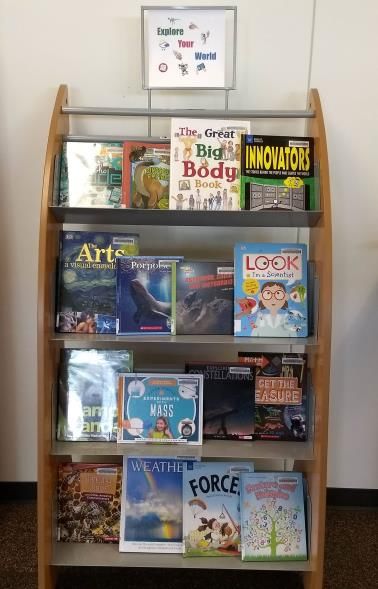
Eligibility Requirements
To be eligible to receive LSTA funds in Arizona, all libraries must meet the following criteria:
Be open to the public at least 750 hours per year, with regular, posted hours.
Provide core library services, such as borrowing privileges and computer use, free of charge to all residents
within the library’s service area. A school or academic library may define its service area as its academic
community.
In addition, LSTA-funded projects must directly serve the general public.
Academic Libraries
Serve a public college or university.
Agree to:
1. Provide materials to other Arizona public, regent, or community college members with postage charges
capped at $6 per item.
2. Write and publish a detailed Arizona State Library Resource Access and Attainment Policy, and provide an
electronic copy to the Arizona State Library each time the policy is updated.
Submit to the State Library all reports in a complete, accurate and timely manner.
Public Libraries
Receive a minimum of 50 percent of funding from public sources OR be organized as a non-profit.
Agree to all the provisions in the Arizona State Library Resource Access and Attainment Policy found on
http://www.azlibrary.gov/libdev/funding/lsta
Submit to the State Library annual public library statistics and all other reports in a complete, accurate and
timely manner.
Demonstrate an ability to provide quality virtual information to library patrons.
School Libraries
Serve a public or charter school in Arizona.
Participate in resource sharing with other school libraries in the same school district.
Be managed by a certificated school librarian.
Submit to the State Library all reports in a complete, accurate and timely manner.
Special Libraries
Serve as a library for a governmental unit or non-profit organization.
Upon library request, loan materials to Arizona libraries at no charge.
Be managed by a librarian with an MLS or Arizona Library Practitioner Certification.
Provide services to Arizona residents.
Submit to the State Library all reports in a complete, accurate and timely manner.
Tribal Libraries
Be recognized and supported by a tribal government in Arizona.
Submit to the State Library annual library statistics and all other reports in a complete, accurate and timely
manner.
Demonstrate an ability to provide quality virtual information to patrons.
4 Arizona State Library, Archives & Public Records | 2019 LSTA Grant Guidelines
Allowable and Unallowable Costs
Most costs reasonable, allocable and applicable for the proper and efficient administration of a grant project are
allowable costs that may be proposed as budget items in an LSTA grant application. Grant funds may be expended for
the items identified as allowable costs in the Uniform Administrative Requirements, Cost Principles, and Audit
Requirements for Federal Awards (2 CFR 200).
Examples of allowable costs include:
Salaries and benefits of temporary personnel hired specifically for the grant
Consulting or contractual services
Furnishings that are necessary to support the project
Hardware, software, and/or technology necessary to support the project
Indirect costs
Library materials that are necessary to support the project
Postage, printing costs and supplies for project materials
Travel and/or training expenses related to the project for library or project staff
The following costs are unallowable and may not be proposed as grant project costs:
Apparel
Bad debts
Construction
Contingencies
Contributions and donations
Entertainment / Performances
Fines and penalties
Food
Gifts, models, souvenirs
Interest and other financial costs
Existing staff salaries and benefits
Under recovery of costs under grant agreements (excess costs for one grant application is not chargeable to
another grant application)
Project Grants vs. General Operating Grants
LSTA grants are competitive project grants. A project is defined as a temporary endeavor with a beginning and end that
creates a unique product, service, or result. Projects are differentiated from operations, which are the ongoing activities
that comprise the day-to-day operations of a library. LSTA grants should fund project costs, not general operational
costs. Some operational costs that LSTA Grants will NOT fund include:
Major infrastructure upgrades (e.g. RFID technology; document, charging, or self-service stations)
Replacement desktops and laptops
Vehicles and trailers
Furnishings not associated with a specific project
Computers and other electronic devices not associated with a specific project
The only exception to general operating costs is the indirect cost rate for administrative overhead. If you have questions
about whether your budget includes operational costs, contact a library consultant.
2019 LSTA Grant Guidelines | Arizona State Library, Archives & Public Records 5
Review Criteria
Applications will be evaluated based on the following criteria:
Is the project clearly explained?
How well does the project address the Arizona LSTA goals outlined in the Five Year Plan?
Is a community need clearly identified? Does the applicant provide evidence of the community need through
community conversations, surveys, publicly available data, or other means?
Is the project plan thoughtful, realistic, and does it address the identified community need?
Are the time, personnel, and financial resources identified appropriate and realistic for the scope and scale of
the project?
Is the project likely to make a significant, sustainable difference in the community, now or in the future?
Is the schedule of work realistic and achievable? Will the project plan achieve the desired outcomes? Does the
applicant have the capacity to execute the work effectively or have a plan to meet the needed capacity?
Grant Categories
Information Access
Arizona’s residents will have access to information in a variety of formats, tapping
the capabilities of current and emerging technologies.
Information Access Grants should address these LSTA priorities:
Establish or enhance electronic and other linkages and improved
coordination among and between libraries and entities for the purpose of
improving the quality of and access to library and information services.
Develop library services that provide all users access to information
through local, state, regional, national, and international collaborations and
networks.
Examples of Information Access projects include access to ebooks; providing
materials for the visually impaired or those with other disabilities; digitization of
Juvenile Non-Fiction STEAM Books historical materials; outreach delivery; access through alternative technologies
Avondale Public Library such as mobile hotspots, and electronic resource development.
Information Access Mini-Grant
Collections And Programming (CAP) grants are $4,000 awards to help libraries enhance materials for targeted
audiences. Go to www.azlibrary.gov/libdev/funding/lsta for a link to the online application.
For questions regarding Information Access Grants, contact Mary Villegas, mvillegas@azlibrary.gov, 602-542-6255.
6 Arizona State Library, Archives & Public Records | 2019 LSTA Grant GuidelinesInformal Education
Arizona’s residents of all ages will explore, experience, and expand their knowledge through libraries’ informal
educational programs.
Informal Education Grants should address these LSTA
priorities:
Expand services for learning and access to information
and educational resources in a variety of formats, in all
types of libraries, for individuals of all ages in order to
support such individuals' needs for education, lifelong
learning, workforce development, and digital literacy
skills.
Target library services to individuals of diverse
geographic, cultural, and socioeconomic backgrounds,
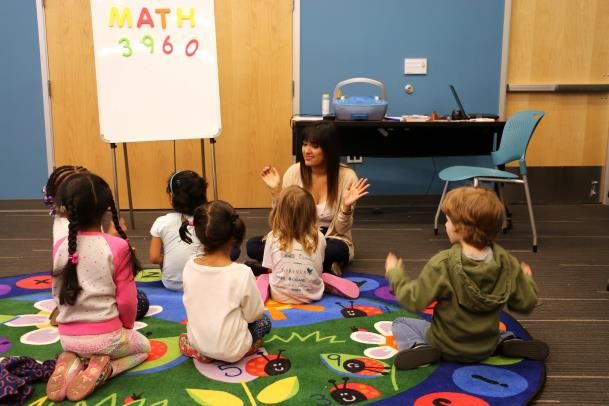
Ready, Set, Kindergarten
and to individuals with limited functional literacy or
Chandler Public Library
information skills.
Target library and information services to persons having difficulty using a library and to underserved urban and
rural communities, including children (from birth through age 17) from families with incomes below the poverty
line.
Examples of Informal Education projects include early literacy STEM programs; digital literacy classes; creative aging
workshops; school readiness; and reading programs.
Informal Education Mini-Grant
STEAM in Your Library Mini-Grants are grants of $3,000 each to enhance informal STEAM education for youth in your
communities. Program ideas include STEAM camps, maker fairs, robotic clubs, coding programs, and early literacy
STEAM programs. These programs can focus on the child or the parent, but all of them should include a parent
education component. Projects may include collection materials and kits. Go to www.azlibrary.gov/libdev/funding/lsta
for a link to the online application.
For questions regarding Informal Education Grants, contact Donna Throckmorton, dthrockmorton@azlibrary.gov,
602-542-6257.
2019 LSTA Grant Guidelines | Arizona State Library, Archives & Public Records 7Inclusive Communities
Arizona’s residents will find resources in libraries to engage with their communities, develop workforce skills, and learn
life literacies such as parenting, health and finance regardless of cultural and socioeconomic backgrounds.
Inclusive Communities Grants should address these LSTA priorities:
Develop public and private partnerships with
other agencies and community-based
organizations.
Target library services to individuals of diverse
geographic, cultural, and socioeconomic
backgrounds, and to individuals with limited
functional literacy or information skills.
Target library and information services to
persons having difficulty using a library and to
underserved urban and rural communities,
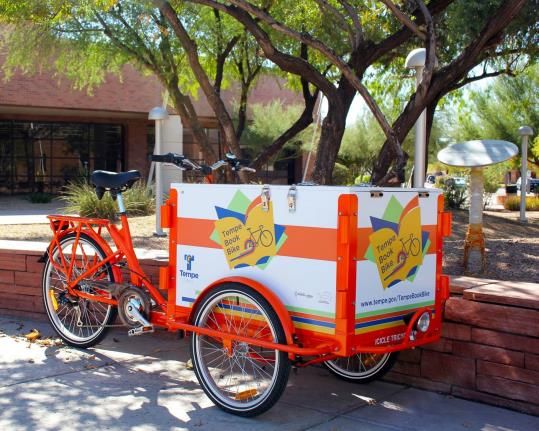
Book Bike
including children (from birth through age 17)
Tempe Public Library
from families with incomes below the poverty
line.
Examples of Inclusive Communities projects include job help programs; makerspaces; community conversation
programs; community referral; and library “outposts”; and other programs targeting underserved communities or
groups.
For questions regarding Inclusive Communities Grants, contact Jaime Ball, jball@azlibrary.gov, 602-542-6266.
8 Arizona State Library, Archives & Public Records | 2019 LSTA Grant GuidelinesApplication Worksheet
Answer all parts of these questions. Reference the online application for word counts. As the online application
will automatically log applicants out after a period of inactivity, we HIGHLY recommend composing your
responses in a separate document and then copying and pasting the responses as plain text into the online
application
1. Needs Assessment
What audiences are you targeting with this project and why?
What community need or opportunity does your project address?
How do you know this is a need?
How does this project relate to your library’s mission or strategic plans?
2. Project Outcomes
What specific change(s) do you intend to achieve with this project?
Briefly explain why you have selected this outcome, tying it to the Needs Assessment provided.
3. Project Activities
What will you do, and how will you do it? Give specific information about the types of activities, number
of programs, or resources you'll make available.
What steps has your library taken to prepare for this project?
Why did you choose this approach for your project? Did you consider any alternative approaches?
List at least one product or activity that will help you meet the outcome. All products and activities that
are a part of your project should be linked to an outcome.
4. Project Evaluation
Describe what tool(s) or method(s) you will use to evaluate each product or activity listed. Examples
include pre- and post-assessments, surveys, focus groups, interviews, and observations.
5. Project Personnel
Provide a list of the names of project personnel, the organization they represent and their title, and a
description of their duties for this project.
Identify the project director, and explain why he or she is appropriate for this project
If special skills or expertise are necessary for project personnel, briefly list their qualifications.
Provide a brief resume for any consultant for whom you are requesting LSTA funds.
6. Partners
If you are partnering with other organizations for this project, describe each partner’s role.
Include a letter of support from each institutional partner.
7. Timeline/Schedule of Activities
Provide a timeline that includes planning, implementation and evaluation, and indicates when funds will
be spent. Remember, funds are not available before May 17, 2019, and must be spent by September 4,
2020.
8. Sustainability
Will you continue this project once the grant period has ended? If so, how will you sustain it?
2019 LSTA Grant Guidelines | Arizona State Library, Archives & Public Records 99. Project Summary
Briefly describe the project, by completing the following: The goal of this project is . Funds will be used
to ___________. Community members will benefit because .
10. Budget Justification
Provide a detailed explanation and justification of the proposed LSTA expenditures. Quotes, estimates, mileage,
and other methods of calculating budget items should be detailed.
11. Budget Form
a. Complete the budget form for the project described in this application.
b. Local in-kind services or funds are required for LSTA 2019 grants.
Budget Category LSTA $ Local $ Description
Salaries, Wages, Benefits
Consultant Fees
Travel
Supplies/Materials
Equipment
Services
TOTAL
Budget Notes
Categories Notes
Salaries/Wages/Benefits Includes all salaries, wages, and fringe benefits paid to temporary project staff directly
contributing to the project.
Consultant Fees All expenses related to acquiring the services of a consultant for a specific activity within the
project can be included in this category. Costs may include fees, travel, accommodation, and
support services hired directly by the consultant.
Travel Travel costs must be related to the project activities and must be incurred by the staff working
on the project. The costs include airfare, ground transportation, accommodation, meals, etc.
Supplies/Materials Include costs for supplies and materials including computing devices (if the acquisition cost per
unit is less than $5,000) purchased specifically for the project.
Equipment Means tangible personal property (including information technology systems) having a useful
life of more than one year and a per‐unit acquisition cost which equals or exceeds $5,000.
Services List the costs of project activities to be undertaken by a third‐party contractor or vendor.
Includes printing, subscriptions, maintenance, etc. Subscriptions must end by September 30,
2019.
Indirect Costs An Indirect Cost is an organization's incurred cost that cannot be readily isolated or identified
with just one project or activity. These types of costs are often referred to as "overhead costs."
Typical examples are charges for utilities, general insurance, use of office space and equipment
that you own, local telephone service, and the salaries of the management and administrative
personnel of the organization.
There are four options for indirect costs:
1. Count indirect costs as part of your Local Match.
2. Use a current indirect cost rate that has been negotiated with a federal agency. You
must email a copy of the current negotiated agreement to the Grants Consultant.
3. Use a rate of 10% of total direct costs if you have never had a federally negotiated
indirect cost rate.
4. Do not include any indirect costs.
10 Arizona State Library, Archives & Public Records | 2019 LSTA Grant Guidelines12. Risk Assessment
How many years of experience does the project manager have specifically managing grants?
When was the library’s most recent reorganization?
How many years has the project manager been employed in the applying library’s system?
Does your accounting system identify and track expenditure and receipt of program funds separately for
each grant award?
13. The Certification of Application must be postmarked by March 8, 2019. Registered or certified mail is
recommended.
2019 LSTA Grant Guidelines | Arizona State Library, Archives & Public Records 11Frequently Asked Questions
How much money can my library ask for?
Although mini-grants are funded with fixed amounts, the general LSTA grants have no set minimums or maximums. The
typical award ranges between $10,000 and $50,000. Visit www.azlibrary.gov/libdev/funding/lsta to see a list of recently
funded projects.
Can LSTA funds be used to pay for salaries?
Independent contractors may be paid with LSTA funds, but salaries, wages, and/or benefits for existing full-time
employees are not allowable.
Can LSTA funds be used to pay for travel?
Travel and per diem expenses may be included only for project personnel at the rate authorized by the State. The most
recent authorized rates are available on https://gao.az.gov/travel/travel-information
What is the difference between Equipment and Supplies/Materials?
Only items costing more than $5,000 should be budgeted as equipment; all other items should be listed as supplies.
Are matching funds required?
Local funds, whether in-kind or cash, are required. The amount of match may vary; it does not have to be 1:1. The match
must be allowable under LSTA and specifically allocable to the project. Consider staff time spent administering the
project or the supplies purchased to support it. Documenting that LSTA leverages local funds is important to IMLS in
justifying the program to Congress. If you have questions, please contact a Library Development Consultant.
Is partnering with other organizations required?
Libraries are encouraged to partner with other organizations when applying for LSTA funds. All partners must benefit
from the project, and those benefits should be clear in the application. The library must serve as the applicant, and
assume fiscal responsibility, if the grant is awarded. Be sure that all potential partners have been contacted before
including them in the grant proposal. Include a letter of support from each partner.
My library’s project was funded by LSTA last year. Can we apply for funds to continue the project?
LSTA funds are primarily targeted for new projects that serve as models or pilots. Libraries may apply for subsequent
phases of a project that is underway. Libraries may also apply for funding of an ongoing project if it reaches new
audiences, incorporates new methodologies or significantly expands the reach of the project, throughout the project,
not just as an add-on at the end.
What about marketing our project?
You are strongly encouraged to market your LSTA project. LSTA funds for project promotion can be included in your
budget, but those funds can only be used to market the grant project. LSTA funds cannot be used to market general
library services or unrelated projects. If you are unsure about whether the marketing you are planning to include in your
project budget promotes your project or general library services, please contact a consultant.
12 Arizona State Library, Archives & Public Records | 2019 LSTA Grant GuidelinesWhat other requirements are there?
Children’s Internet Protection Act (CIPA)
If awarded a grant, public and school libraries must certify that they are CIPA compliant before receiving LSTA funds to
purchase computers to access the Internet or to pay for the direct cost associated with accessing the Internet. If funded,
you will certify this on a form sent to you by the State Library. For more information about CIPA, go to
http://www.ala.org/advocacy/advleg/federallegislation/cipa/.
Limited English Proficiency Guidelines
Federal regulations require that grant recipients take reasonable steps to ensure meaningful access to the information,
programs, and services they provide to people with limited English proficiency. Please consider language assistance
services, if appropriate, when designing your project.
2019 LSTA Grant Guidelines | Arizona State Library, Archives & Public Records 13Grant Administration Guidelines
Grant Guidance
Library Services and Technology Act (LSTA) grant funds are provided by the Institute of Museum and Library
Services (IMLS), through the Arizona State Library. The grantee assumes the legal responsibility of administering the
grant in accordance with the LSTA statutory and regulatory requirements, and the Arizona Revised Statutes. The award
is based on the approved grant proposal and budget. The award letter provides notification.
Requesting Funds
Funds must be requested between May 17, 2019 and June 30, 2020. Use the LSTA Funds Request form that will be
supplied to successful applicants.
Interest on Grant Funds
It is against federal regulations to put your Federal LSTA funds into interest-bearing accounts, savings accounts or
investment-type funds. If interest is earned on LSTA grant funds by the sub-grantee, the amount of the interest must be
refunded to the Arizona State Library, Archives and Public Records, and subsequently returned to IMLS in Washington.
Project Numbers
A grant number will be assigned to all LSTA 2019 funded projects and should be available at the Grants Recipients
Workshop. The Catalog of Federal Domestic Assistance (CFDA) number is 45.310.
Budget Revisions and Programmatic Changes
Subgrantees must not deviate from the approved budget for carrying out the grant project as contained in the awarded
grant application unless prior approval is obtained from the Grants Consultant. Similarly, subgrantees must request prior
approval for significant departures from approved project plans, including changes in the scope of the project, changes
in project objectives, and changes in the project manager or other key project personnel. Change requests must be
made in writing to the Library Development Grants Consultant, Janet “Jaime” Ball at jball@azlibrary.gov.
Requirements for Publications and Presentations
All promotion materials, press releases, bibliographies, reports and other such publications resulting from an LSTA grant
project must contain the following acknowledgment:
This project is supported by the Arizona State Library, Archives & Public Records, a division of the Secretary of State, with
federal funds from the Institute of Museum and Library Services.
If the grant project results in copyrightable material, the subgrantee or any subcontractor of the subgrantee is free to
copyright the work. However, IMLS and the State Library reserve a royalty-free, exclusive and irrevocable license to
reproduce, publish, or otherwise use and authorize others to use the work for government purposes.
Equipment Inventory Requirements
Grantees must submit and maintain inventory records of all non-expendable personal property, defined as items having
a useful life of more than one year and a unit acquisition cost of $5,000 or more. Inventories of all such property may be
conducted to verify the existence, current utilization, and continued need for the property. Disposition of such property
shall be in accordance with 2 CFR 200.313.
14 Arizona State Library, Archives & Public Records | 2019 LSTA Grant GuidelinesGrant Close Out Procedures
All funds must be encumbered/obligated by August 3, 2020. All payments using LSTA funds must be completed before
the final report is submitted on September 4, 2020. Should it not be possible to obligate the funds prior to August 3,
2020, the State Library is to be notified by July 1, 2020 so arrangements can be made to return the funds to the State
Library. If received by the State Library before the last month of the grant period, these funds can be reprogrammed into
other Arizona projects; otherwise, reverted funds must be sent back to IMLS.
Record Retention Requirements
Taken from 2 CFR §215.53
(b) Financial records, supporting documents, statistical records, and all other records pertinent to an award shall be
retained for a period of three years from the date of submission of the final expenditure report or, for awards that are
renewed quarterly or annually, from the date of the submission of the quarterly or annual financial report, as authorized
by the Federal awarding agency. The only exceptions are the following.
(1) If any litigation, claim, or audit is started before the expiration of the 3-year period, the records shall be
retained until all litigation, claims or audit findings involving the records have been resolved and final action
taken.
(2) Records for real property and equipment acquired with Federal funds shall be retained for 3 years after final
disposition.
(3) When records are transferred to or maintained by the Federal awarding agency, the 3-year retention
requirement is not applicable to the recipient.
(4) Indirect cost rate proposals, cost allocations plans, etc. as specified in 2 CFR §215.53(g).
Complaint Process
Complaints or questions about the LSTA program received by State Library will be forwarded to the Library Development
Grants Consultant, who will respond as appropriate either through a phone call, an email message or a formal letter. If
the person making the complaint is not satisfied with the information provided by the Library Development Grants
Consultant, the question or complaint will be sent to the State Librarian. The State Librarian will respond as is
appropriate to the situation, and is the person of last resort for complaints.
Audit Requirements
All libraries that expend $750,000 or more during their fiscal year in Federal awards must have a single or program-
specific audit conducted for that year. See 2 CFR §200.501 for all audit requirements.
Monitoring Project Progress
Arizona LSTA projects are part of a network of community-driven, exemplary work being accomplished in libraries across
the country. To support these efforts and to ensure that projects are in compliance with LSTA and State Library
requirements, the Grants Consultant will monitor projects during the grant year, usually by phone or email. In some
cases, the Grants Consultant will want to meet with the project manager in person. Prior to an in-person visit, the Grants
Consultant or other Library Development staff will provide in advance a list of materials to be reviewed. The Consultants
will also ask for highlights of activities that are going especially well, or that are especially challenging.
2019 LSTA Grant Guidelines | Arizona State Library, Archives & Public Records 15Workshops and Webinars
Learn About LSTA workshops and webinars will be scheduled in January 2019. Please check
https://www.azlibrary.gov/events/libdev for dates and times.
Visit https://www.azlibrary.gov/libdev/funding/lsta for links to presentation PDFs and tips for writing your application.
Are you thinking about applying for a grant to fund an early learning project? We have a webinar for you. Go to
http://go.azsos.gov/fj7d to view “Preparing to Apply for Early Literacy Grants”. The webinar focuses on MapLit which is
an interactive tool developed by ReadOn partners to identify key data sets that impact early literacy outcomes in
communities. Find out about researching and applying these data to strengthen your grant application.
Grant Recipients Workshop
It is required that the project contact for each 2019 LSTA funded project attend the Grant Recipients Workshop on May
17, 2019 from 9AM to Noon in Phoenix. In addition to important grants administration information, this workshop
provides an excellent opportunity to meet Library Development staff and to network with other grant recipients. Be sure
to include expenses for travel to this workshop in your grant budget, if needed.
Information covered in the Grant Recipients Workshop includes:
Overview of LSTA project management
Data collection
Evaluation methods and tools
Final reporting requirements
Celebrations and Best Practices
If awarded an LSTA grant, think about involving your community and partners in an open house, launch or capstone
event. Arizona State Library staff want to help you celebrate your successes. Consider inviting the State Librarian to help
celebrate at a culminating or other special event. Be sure to send invitations to the LSTA Coordinator as well.
Since 2013, the Library Development team at the State Library has presented an LSTA project showcase at the Arizona
Library Association Annual Conference. The showcase is an opportunity to share best program practices with library staff
from around the state.
Contact Jaime Ball, jball@azlibrary.gov, 602-542-6266 if you have questions about events or the LSTA showcase.
16 Arizona State Library, Archives & Public Records | 2019 LSTA Grant GuidelinesYou can also read


