2019 Cycling Monitor Germany - Selected results Last update: January 07th, 2020 - BMVI
←
→
Page content transcription
If your browser does not render page correctly, please read the page content below
2019 Cycling Monitor Germany

Selected results

 Last update: January 07th, 2020
Key findings
Availability and use of means of transport

◼    76 percent of German households have at least one bicycle (without electrical assistance) and 14 percent have a
     pedelec.

◼    44 percent of the persons surveyed regularly – i. e. daily or several times a week – use the bicycle or pedelec as
     means of transport and/or during leisure time.
     –     The youngest age group (14-19 years) most frequently uses the bicycle, followed by the group of 20-29 year-olds;
           with increasing age, the usage decreases gradually.
◼    The trend in terms of bicycle use is positive. In comparison with 2017, regular use of the bicycle has increased by 3
     percentage points and by 6 percentage points when compared to 2015.

◼    The popularity of bicycles has also continued to increase from year to year. .
     –     In 2019, 65 percent stated that they enjoyed or enjoyed very much using the bicycle as a means of transport. In comparison with
           2017, this is an increase of 1 percentage point, and of 10 percentage points when compared to 2015. Riding the bicycle as a
           leisure activity is even more popular. 70 percent of the persons surveyed stated that they enjoyed using the bicycle (very much).
           (2017: +7 pp, 2015: +11 pp)

     –     The car has lost some popularity and, with 71 percent, is yet only slightly ahead of the bicycle as a leisure time activity. (2017: -
           4 pp, 2015: -8 pp)

◼    In the future, 41 percent of the persons surveyed intend to use the bicycle more often.
     –     Among the younger ones (14-19 years), the intention is particularly strong with 63 percent.

© SINUS-Institut 2019                                                                                                                              2
Key findings
Transport policy, mutual respect, feeling of security and wearing of helmets
◼ The most urgent demands on politicians with regard to bicycle traffic are:
– Build more cycle paths (60 percent)
– Better separation of cyclists from car drivers (53 percent) and pedestrians (45 percent)
– Establish more protective and mandatory cycle lanes (44 percent)
– Provide safe parking facilities (44 percent)
– Increase number of cycle-only roads (43 percent)
◼ About half of the persons surveyed (49 percent) stated that they enjoyed cycling in their community.
◼ The feeling of safety while cycling is increasing: 56 percent of cyclists state that they feel very or rather safe (2017:
53 percent). Accordingly, 44 percent feel less safe on their bikes.
◼ The number of cyclists who wear a helmet has also increased from year to year – 38 percent wear headgear
always or most of the time; that is 8 percentage points more than 2017.
– The youngest surveyed age group between 14 and 19 years wears a helmet the least (27 percent), the group of 30 to 39 year-
olds most frequently wears one (46 percent).
© SINUS-Institut 2019 3Key findings
Pedelecs, cargo cycles, bike sharing and personal light electric vehicles
◼ 24 percent of the persons surveyed have already ridden a pedelec.
◼ 54 percent are familiar with cargo bikes, but only 2 percent of those surveyed use one.
◼ 10 percent of those surveyed can imagine buying one.
◼ 69 percent of those surveyed have heard of bike sharing (public rental bike systems) and 17 percent have used
them before.
◼ 13 percent intend to use e-scooters (personal electric light vehicles) more frequently in the future.
◼ 2 percent are planning on buying a personal light electric vehicle within the next 12 months, and 12 percent is
considering maybe buying one.
© SINUS-Institut 2019 4Key findings
Reasons to use the bicycle and commuter potentials of cycle superhighways
◼ Bicycles are most frequently used for small errands or grocery shopping (66 percent at least a few times a month).
◼ Just under one third of those surveyed who are working or undergoing training stated that they used the bicycle at
least a few times a week on the way to their place of work or education.
– The bicycle is more often used for commuting among young people and in urban areas.
◼ Those who do not use their bicycle to commute most often say that the reason is that the distance is too long (42
percent) or they are exposed to wind and weather (41 percent) 19 percent do not cycle to work/study, because it's
too dangerous for them.
◼ The construction of cycle paths is generally viewed very positively. 37 percent of those surveyed who are yet to
cycle as a means of transportation say they would use the bicycle if there were express cycle paths on their way to
work/education would. 74 percent of those already commuting would use the bicycle more often than before.
© SINUS-Institut 2019 5Key findings
Protected bike lanes and cycle-only roads
◼ About 40 percent of those surveyed have heard of the concept of "protected bike lanes", but only 7 percent have
used a protected bike lane.
◼ Cycle-only roads are significantly better known (70 percent of the persons surveyed). About one-third has already
used a cycle-only road (34 percent).
◼ Slightly less than half of cyclists who have already used a cycle route prefer this form of cycling compared to other
cycle paths(48 percent).
© SINUS-Institut 2019 6Key findings
Cycle tourism and bicycle market
◼ 44 percent of cyclists have undertaken a bicycle tour of half a day or longer in the last two years.
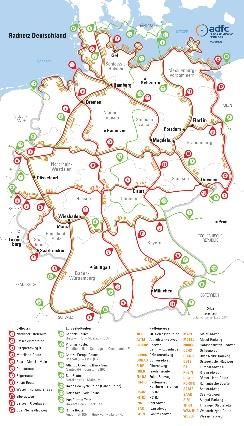
◼ 15 percent of those surveyed know the German Cycle Network (D-routes) which comprises about 11,700 km.
8 percent have already used one or more D-routes.
– The Rhine Route (20 %) and the Elbe Route (17 %) are the ones most frequently used.
– The majority has used the D-routes during a longer bicycle tour (60 percent).
◼ In 2019, 31 percent of those surveyed plan to buy a new bicycle within the next 12 months. At 865 euros, the sum
that each person is willing to spend is considerably higher than the average value of 2017 (+ € 184).
– The choice is often made in favour of the pedelec: 42 percent say they want to buy a pedelec. Compared to 2017, this is a
significant increase of 27 percentage points.
– This is followed by the conventional bicycle with 32 percent and the mountain bike with 22 percent. Currently 5 percent of
potential buyers are planning to buy a cargo bike.
◼ Conventional bicycles such as ladies’ bicycles or city bikes are still most frequently used by cyclists in Germany
(62 percent).
– Presently, 14 percent of cyclists use a pedelec and 3 percent use cargo bikes.
© SINUS-Institut 2019 7Key findings
Urban vs. rural area
◼ In urban areas, the bicycle or pedelec is more frequently used than in rural areas (45 percent vs. 33 percent).
◼ Cargo bikes and bike sharing are more relevant in cities.
– In urban areas, more people than in the countryside have already heard about rental bikes (+15 PP city vs. countryside). While 62
percent of those surveyed from the city state that they have a rental bike system in their place of residence, this applies to only
10 percent of rural population.
– Persons surveyed who live in urban areas are more likely to consider buying a cargo cycle than persons who live in rural areas
(11 percent vs. 7 percent).
– Interviewees from urban areas are more likely than those from rural areas to imagine buying a cargo bike. (11 percent urban vs.
7 percent rural)
◼ In the case of pedelecs, the use, the experience and the interest of the persons surveyed differ only marginally
between rural and urban areas.
© SINUS-Institut 2019 8Availability and use of means of
01
transport
9Available means of transport
“What means of transport can be found in your household?” (more than one answer possible)
Number in
household
Fahrrad ohne elektrische
Bicycle without electric assistance 76
Unterstützung approx. 2.2
Auto
Car 75
approx. 1.4
Pedelec
Pedelec 14
Moped/Roller
Moped/Scooter 8 Bikes used by
their owners
Motorrad
Motorcycle 8
approx. 1.1
E-Bikes, S-Pedelecs
E-bikes/high-speed pedelecs 3
Kein No
Verkehrsmittel
means of transport 8
Figures in percent N = 3,053; all persons surveyed
1 0Frequency of use of means of transport
Bicycle compared to other means of transport
“How often do you use the following means of transport?”
At least a few times
Several times a A few times a a month
Daily
week month
By foot 52 30 11 93
Car 28 33 13 74
Bicycle/pedelec 15 29 21 44 % 65
Local/regional public means of transport 17 20 21 58
Long-distance train (IC, ICE, EC, others) 12 9 12
Moped/Scooter 1 3 3 7
Motorcycle 12 4 7
Long-distance coach 012 3
Aircraft 012 3
E-bikes/high-speed pedelecs 110 2
Figures in percent N = 3,053, all persons surveyed
1 1Regular use of means of transport
Time comparison survey 2019 – 2017 – 2015
“How often do you use the following means of transport?”
(at least a few times a week)
82
By foot 84
78
61
Car 64
70
2019***
44 2017**
2015*
Bicycle/pedelec 41
***N = 3,053 persons
38 **N = 3,156 persons
*N = 2,000 persons
Figures in percent
1 2Type of bicycle use – means of transport vs. leisure time
Time comparison survey 2019 – 2017 – 2015
“How often do you use the following means of transport?”
Bicycle
(means of transport/leisure time activity)
At least several
Mindestens mehrmalstimes
proa 43
week 41
Woche 38
At least ein
Mindestens a few times
paar Mala 65 2019***
62
im Monat month 62 2017**
2015*
Mindestens
Even lessseltener alsa
than once 78
77
ein Mal im Monat
month 83
Bicycle just as a means of Bicycle as a leisure time activity
transport
At least several
Mindestens mehrmalstimes
proa 38 At least several
Mindestens mehrmalstimes
proa 27
week 34 week 22
Woche 30 Woche 21
At least ein
Mindestens a few times
paar Mala 54 At least ein
Mindestens a few times
paar Mala 56
month 52 44
im Monat 48 im Monat month 45
Even lessseltener
Mindestens than once
alsa 69 Mindestens
Even lessseltener alsa
than once 75
month 70 67
ein Mal im Monat 72 ein Mal im Monat
month 72
***N = 3,053 persons
**N = 3,156 persons
Figures in percent *N = 2,000 persons
1 3Regular use of means of transport
Regular users by size of town/city
“How often do you use the following means of transport?” – Daily/Several times a week
Size of Population up to 20,000 Population between 20,000 and 50,000
town/city
77
70
68
61
Ø 61
54
51
46 46 46
44
Ø 44
Ø 37 34 33
30
23
18
Car Local/regional public passenger transport Bicycle/pedelec
Figures in percent N = 3,053; all persons surveyed
1 4Regular use of means of transport
Regular users by age
“How often do use the following means of transport?”– Daily/Several times a week
Age 14-29 years 30-49 years 50-69 years
63
60
Ø 61 58 57
50
46
Ø 44
Ø 37 36
34
28
Car Local/regional public passenger transport Bicycle/pedelec
Figures in percent
N = 3,053; all persons surveyed
1 5Regular use of means of transport
Bicycle/pedelec
“How often do you move on using the following means of transport?” (bicycle/pedelec)
Several times a Daily/Several times a
Daily week
week
Total 15 29 44
Women 13 27 40
Men 15 32 47
14-19 y. 24 31 55
20-29 y. 18 30 48
30-39 y. 14 34 48
40-49 y. 13 31 45
50-59 y. 12 27 39
60-69 y. 10 23 33
Low formal education 11 22 33
Medium formal education 12 30 42
High formal education 18 34 52
Population up to 20,000 8 25 33
Population between 20,000 and 50,000 16 30 46
Population between 50,000 and 100,000 11 35 46
Population between 100,000 and 500,000 16 30 46
Population of 500,000 or more 16 28 44
Figures in percent N = 3,053; all persons surveyed
1 6Popularity of means of transport among users
Time comparison survey 2019 – 2017 – 2015
”How much do you enjoy using ... on a scale from 1=very much to 6=not at all?”
Bicycle as a means of
1 = very much transport 6 = not at all
2019 31 33 19 12 3 1
2017 32 31 21 9 5 2
2015 27 27 24 12 7 3
1 = very much
Bicycle as a leisure time activity 6 = not at all
2019 35 35 19 8 21
2017 32 31 20 10 5 2
2015 30 29 20 11 7 3
1 = very much
Car 6 = not at all
2019 44 27 18 7 2 3
2017 52 23 13 6 3 3
2015 53 26 11 5 3 2
Means of transport (2019 n=2106; 2017 n=2214; 2015 n= 1445)
Leisure time activity (2019 n=2272; 2017 n=2124 , 2015 n=1444)
Car (2019 n=2547; 2017 n=2885, 2015 n=1850)
Figures in percent Basis: use the respective means of transport
1 7Greater use of means of transport in the future
“Which of these means of transport would you like to use more frequently in the future?" (more than one answer possible)
Focus:
Bicycle 41 14 to 19-year-olds: 63 %
By foot 36
Focus:
Car 27 14 to 19-year-olds: 37 %
Local/regional public passenger
transport
26
Focus:
Pedelec 24
Males: 28 %
Miniature Electric Vehicle 13 Focus:
14 to 19-year-olds: 18 %
Long-distance train 11
Aircraft 8
Moped/Scooter 7
Long-distance coach 6
Motorcycle 5
None 14
Figures in percent N = 3,053; all persons surveyed
1 8Greater use of means of transport in the future
By size of town/city
"Which of these means of transport would you like to use more frequently in the future?" (more than one answer possible)
Size of up to 20,000 between 20,000 and 50,000 between 50,000 and 100,000 between 100,000 and 500,000 500,000 or more
town/city
43 43 43
41
Ø 41
34
31 31 32
29
27 27
Ø 27 25
Ø 26
22 23
20
Car Local/regional public passenger Bicycle as a means of transport
transport
Figures in percent N = 3,053; all persons surveyed
1 9Greater use of means of transport in the future
Time comparison survey 2019 – 2017 – 2015
"Which of these means of transport would you like to use more frequently in the future?" (more than one
answer possible)
41
Bicycle as a means of transport 34
35
36 2019***
By foot 29
30 2017**
2015*
27
Car 32
35
26
Local/regional public transport 26
28
***N= 3,053 persons
**N= 3,156 persons
Figures in percent *N= 2,000 persons
2 0Transport policy, mutual respect,
02 feeling of security and wearing of
helmets
2 1Improvements for cycling (1/2)
What people want policymakers to do
“In your opinion, in what areas do you think federal, state and local politicians could do more for cycling?" (more than one answer possible)
build more bike paths 60
Separation of cyclists from car drivers 53
Separation of cyclists from pedestrians 45
Set up more safety and cycle lanes 44
more safe bicycle parking facilitites 44
create more cycle lanes 43
improve the surface of the cycle paths 39
making intersection areas more visible 37
more parking facilities 34
Figures in percent N = 3,053; all persons surveyed
2 2Improvements for cycling (2/2)
What people want policymakers to do
“In your opinion, in what areas do you think federal, state and local politicians could do more for cycling?" (more than one answer possible)
vorhandene Radwege
Make existing cycleverbreitern (auch
tracks wider (alsofür
forLastenräder)
cargo bikes) 33
Kampagnen
Improve besseres
mutual Miteinander
respect Verkehrsteilnehmer/innen
among road users through campaigns 30
ProvideMobilitäts- undroad
mobility and Verkehrserziehung,
safety education,z.B.
e.g.aninSchulen
schools 27
Verkehrsregeln für Radfahrende fahrradfreundlicher/sicherer
Make traffic rules more cycle-friendly/safer for cyclists
gestalten
26
Weniger
ReduceRadwege
number unmittelbar neben
of cycle tracks parkenden
directly next to Fahrzeugen
parking cars 26
Bekanntmachung der Verkehrsregelungen
Make known trafficfür Radfahrende
rules for cyclists 22
Provide (better)Rad-Aufstellflächen
(Bessere) waiting spots for cyclists at intersections
im Kreuzungsbereich 19
Start image campaigns
Imagekampagnen for more
für mehr cycling
Radverkehr 13
Other
Andere fields
Bereiche 3
Figures in percent N = 3,053; all persons surveyed
2 3Statements regarding cycling in municipalities/cities
“Please state to what extent the following statements are applicable to your municipality/city.”
Fully agree Partially agree Don’t know Rather disagree Fully disagree
50
Due toDue
thetoway
the they ride ride
way they theirtheir
bike, many
bike, cyclists
many are
cyclists area afactor
factorof
of
25 39 % 10 20 6
uncertainty ininroad
uncertainty roadtraffic.
traffic.
Cycling in my
Cycling municipality/city
in my municipality/cityisisfun.
fun. 10 39 13 24 14
There
There is enough
is enough spacespace
for thefor the bicycle
bicycle in my city/municipality,
in my city/municipality, the tracks
8 34 9 31 18
the tracks areare
sufficiently
sufficientlywide.
wide.
Cycle Cycle
trackspaths
are regularly cleaned/cleared
are regularly cleaned/clearedwhere
whereI Ilive.
live. 9 31 22 23 15
CyclingCycling
infrastructure in my
infrastructure in municipality/city is is
my municipality/city family-friendly.
family-friendly. 7 31 13 31 18
InInmy
mymunicipality/city, trafficlights
municipality/city, traffic lightsare
are programmed
programmed in ainway
a way
that
helps cyclists moveon
onquickly.
quickly. 7 27 24 26 16
that helps cyclists move
In my In
municipality/city, all road
my municipality/city, users
all road show
users mutual
show mutualrespect.
respect. 5 29 10 34 22
The municipality/city takes care that cars don’t park on cycle
The municipality/city takes care that cars don’t park on cycle tracks. 8 24 22 25 21
tracks.
Figures in percent N = 3,053; all persons surveyed
2 4Statements regarding cycling in municipalities/cities
“Please state to what extent the following statements are applicable to your municipality/city.” - Fully agree/rather agree
Total Overrepresented
Due toDue to the
the way way
they ridethey
theirride their
bikes, bike,
many manyare
cyclists cyclists are
a factor ofauncertainty
factor of
64
uncertainty in road traffic. in road traffic. 60 to 69-year-olds 71
Cycling in my municipality/city is fun.
Cycling in my municipality/city is fun. 49
Population up to 20,000 55
ThereThere is enough
is enough space
space for for the
bicycles bicycle
in my in my city/municipality,
city/municipality, the
the paths are wide 42
tracks are sufficiently wide. enough. Population up to 20,000 and 47
between 20,000 and 50,000
Cycle tracks are regularly cleaned/cleared where I live.
Cycle paths are regularly cleaned/cleared where I live. 40
Population between 50,000 43
and 100,000
Cycling infrastructure in my municipality/city is family-friendly.
Cycling infrastructure in my municipality/city is family-friendly. 38
Population up to 20,000 and 43
between 20,000 and 50,000
InInmy
mymunicipality/city, trafficlights
municipality/city, traffic lights
areare programmed
programmed in a in
waya way that
that helps
34
helps cyclists move on quickly. cyclists move on quickly. Population between 50,000 39
and 100,000
In my municipality/city, all road users show mutual respect.
In my municipality/city, all road users show mutual respect. 34
14 to 19-year-olds 46
The municipality/city takes care that cars don’t park on cycle
The municipality/city takes care that cars don’t park on cycle tracks. 32
tracks. Population between 100,000 34
and 500,000
Figures in percent N = 3,053; all persons surveyed
2 5Feeling of security when cycling in road traffic
Subjective feeling of security
“Do you feel safe when cycling in road traffic?”
No, not at all. Yes, very secure.
8% 5%
No, rather not. Yes, mostly.
36% 51%
N= 2,376; cyclists
2 6Feeling of security when cycling in road traffic
Time comparison survey 2019 – 2017 – 2015
“Do you feel secure when cycling in road traffic?”
Very secure Mostly secure Very/mostly secure
2019*** 5 51 56
2017** 4 49 53
2015* 3 48 51
***N=2,376 cyclists
**N= 2,440 cyclists
Figures in percent *N= 1,644 cyclists
2 7Reasons for feeling insecure in road traffic
“Why doyou
“Why do you feel
feel (rather)
(rather) insecure?”
insecure?”
Subjective feeling of security (more than
(more thanone answer
one possible)
answer possible)
zuToo
vielmuch
Verkehr
traffic 68
“Do you feel secure when cycling in road traffic?”
rücksichtsloseReckless
Autofahrende
car drivers 68
No, not at Yes, very
all. secure.
5% zuNot
wenig separate
enough separateRadwege
cycle tracks 59
8%
zu schnell mit Autos gefahren
Cars being wird
driven too fast 56
No, rather Passenger car doors suddenly being
plötzlich öffnenden PKW-Türen
opened 53
not.
36% Yes, mostly. Too much heavy goods vehicle traffic
44 % 51%
zu viel Schwerverkehr (Busse, LKW)
(buses, HGV) 46
Fahrzeuge betrachten
Cars stoppingden Radweg
on cycle tracks
als Haltezone
42
Reckless cyclists
rücksichtslose Radfahrende 37
schlechterCycle tracks in
Zustand derpoor condition
Radwege 34
(Rather)
insecure unterschiedliche Geschwindigkeit
Different speeds of other cyclists
anderer Radfahrer
21
generelle
General feeling Unsicherheit
of insecurity on auf dem
the bicycle
Fahrrad
11
Figures in percent
N= 2,376; cyclists N= 1,035; persons who rather not or not at all feel secure in road traffic
2 8Statements regarding mutual respect in road traffic
“To what extent do you agree with the following statements regarding mutual respect between road users?”
Fully agree Partially agree Don’t know Rather disagree Fully disagree
As a cyclist, I always follow the rules of the German Road Traffic
38 46 4 10 2
Regulations.
As a car driver, I always follow the rules of the German Road
48 34 10 6 2
Traffic Regulations.
I often find that car drivers give a bad example in road traffic. 30 50 5 12 3
There is a lot of tension between cyclists and other road users. 30 42 8 16 4
I often find that bicycle drivers give a bad example in road
25 45 6 19 5
traffic.
Other road users show a sufficient amount of respect for
6 36 9 37 12
cyclists.
As a cyclist, I only follow traffic rules that I consider appropriate. 7 22 6 26 39
About innovations in the German road traffic regulations that
6 23 14 32 25
affect bicycle traffic, I feel informed by media and politics.
As a car driver, I only follow traffic rules that I consider
4 14 11 20 51
appropriate.
Figures in percent N = 3,053; all persons surveyed
2 9Possession and use of cycle helmets
Possession Use
“Do you or does your household possess a cycle helmet?” “How often do you wear a cycle helmet?”
Immer
21%
Kein
Besitz
No 42% 38 %
42% Yes
58% Meistens
17%
Nie Eher
8% selten
12%
N= 2,376; cyclists
3 0Possession and use of cycle helmets
Possession & use Separated by age and sex
“How often do you wear a cycle helmet?” (always/mostly)
Total 21 17
Always Female 19 16
21%
Male 22 19
No
possession 14-19 years 14 13
42% At least mostly:
38 %
20-29 years 16 15
Mostly
17% 30-39 years 25 21
40-49 years 21 17
Never Not too
8% often 50-59 years 22 18
12%
60-69 years 27 15
Figures in percent
N= 2,376; cyclists
3 1Wearing of helmets
Time comparison survey 2019 – 2017 – 2015
“Do you wear a cycle helmet?”
Always Mostly Always/mostly
2019*** 21 17 38
2017** 15 15 30
2015* 16 15 31
***N=2,376 cyclists
**N= 2,440 cyclists
Figures in percent *N= 1,644 cyclists
3 2Innovations:
03 Pedelecs, cargo bikes, bike sharing and
micro electric vehicles
3 3Experience with pedelecs
In terms of socio-demographics
Experience Experience
“Have you ever used a bicycle with an electric motor (pedelec) for support?”
by gender and age
Total 24
Female 19
Yes Male 29
24%
14-19 22
No 20-29 28
76%
30-39 28
40-49 25
50-59 21
60-69 20
Figures in percent
N = 3,053; all persons surveyed
3 4Awareness and use of cargo bicycles
In terms of socio-demographics
Awareness and use of Awareness and use of
“Have you ever heard of cargo cycles?”
by gender and age
Use Familiarity
Cargo cycle users
2% Total 2 52
Female 2 45
Male 3 58
No Yes 14-19 years 3 27
46% 52%
20-29 years 5 40
30-39 years 4 51
40-49 years 2 58
50-59 years 1 55
60-69 years 0 66
Figures in percent
N = 3,053; all persons surveyed
3 5Awareness and buying potential of cargo bicycles
Awareness and use of Buying potential
“Have you ever heard of cargo cycles?” “In general, could you imagine buying a cargo
cycle?”
Cargo cycle users
2%
This 20 % equals 10 %
of the total
population.
Yes
20%
No Yes
46% 52%
No
80%
N = 3,053; all persons surveyed N= 1,578; cargo cycles known, but no owner
3 6Awareness and spread of bike sharing
Awareness of Spread
“"Have you ever heard of public rental bike systems?” "Is there a bike rental system at your place of
residence?"
Yes I don’t know No
56 16 28
No
31% Spread by size of town/city
Total 56
Population up to 20,000 10
Yes
Population between 20,000
69% 13
and 50,000
Population between 50,000
27
and 100,000
Population between 100,000
Focus on major cities: 58
and 500,000
Population of 500,000 or more:
79 % Population of 500,000 or more 81
N = 3,053; all persons surveyed Figures in percent N= 2,111; hire cycles known
3 7Statements regarding bike sharing (1/2)
“To what extent do you agree with the following statements regarding bike rental systems?”
Fully agree Partially agree Don’t know Fully disagree Rather disagree
50
I have
I have no no need
need for hire
for bike cycles
rental as Ias
systems prefer using
I prefer mymyown
using ownbike
bikeas
as
%
59 20 8 6 7
part of my daily routine.
part of my daily routine.
I prefer to explore
I prefer foreign
to explore cities
foreign citiesbybyfoot.
foot. 36 38 8 13 5
In foreign cities where I don’t have my own bike available, hire
In foreign
cyclecities whererepresent
schemes I don’t have
an my own bike
attractive available, bike
alternative rental
to public 28 34 17 11 10
systems present an attractive alternative to public transport for me.
transport for me.
It is a great advantage for me that hire cycles offer the chance
It isexperience
to a great advantage
foreignfor me in
cities that bike rentals
a straight andoffer the chance to
unconventional 21 40 21 11 7
experience foreign cities in a straight and unconventionalway.
way.
I use Ibike
userentals
hire cycles only rarely
only rarely because
because I generally
I generally prefer
prefer other otherof
means 33 18 14 12 23
means of transport for my daily routes.
transport for my daily routes.
In my opinion, hire cycle schemes are a helpful supplement of or
In my opinion, bike rental systems are a helpful supplement of or
temporary alternative to local public transport (for example,
temporary alternative to local public transport. 14 30 26 14 16
when there are delays, coverage is not sufficient or outside…
Figures in percent N= 2,111; hire cycles known
3 8Statements regarding bike sharing (2/2)
“To what extent do you agree with the following statements regarding hire cycle schemes?”
Fully agree Partially agree Don’t know Fully disagree Rather disagree
50
Hire cycles are inflexible because rental and return is tied to specific %
Hire cycles are inflexible because rental and return is tied to
locations. 14 28 29 19 10
specific locations.
All cycles
All cycles are properly
are properly maintained
maintained and
and roadworthy.
roadworthy. 13 26 45 11 5
I findI find
the the
costs forfor
costs hire cycles
hire appropriate.
cycles appropriate. 10 24 48 12 6
I find the
I findpayment scheme
the payment simple
scheme andand
simple uncomplicated
uncomplicatedtotouse.
use. 11 21 51 11 6
Registration for the hire cycle scheme is simple and
Registration for the hire cycle scheme is simple and uncomplicated. 11 21 54 9 5
uncomplicated.
HireHire
cycles areare
cycles heavy and
heavy clumsy
and clumsytotouse.
use. 8 23 39 20 10
Figures in percent N= 2,111; hire cycles known
3 9Buying potential of personal light electric vehicles
In terms of socio-demographics
Interest Interest by gender
and age
“Are you planning on buying a micro electric vehicle in the next twelve
months?”
(yes, for sure/yes, maybe)
Yes, for
sure. Total 14
Yes, maybe.
2%
12% Female 9
14 %
Male 19
14-19 years 9
20-29 years 18
Probably not.
27% 30-39 years 17
40-49 years 15
No, for sure
not. 50-59 years 14
59%
60-69 years 8
Bike rental users 26
Figures in percent
N = 3,053; all persons surveyed
4 0Reasons for travelling by bicycle and
04 commuting potentials via
bike superhighways
4 1Reason to use the bicycle
Total and relevant above average groups
“How often do you use the bicycle for the following reasons?” (daily/several times a week/a few times a month)
Shopping/little errands 66
60 to 69-year-olds 70
Getting to school/university/place of education 58
Basis: Undergoing training (n=330)
Population between 100,000 and 500,000 67
Visit friends, family or acquaintances 54
14 to 19-year-olds 62
Getting to work/place of training 51
Basis: people at work (n=1467)
Population between 100,000 and 500,000 56
Getting to leisure activities 44
14-19-year-olds 53 Total
Day trips 43 Overrepresented group
Population between 50,000 51
and 100,000
Sports 31
Men 37
Carrying cargo 25
14 to 19-year-olds 34
Accompanying people 15
30-39-year-olds 24
Carrying people 10
30-39-year-olds 23
Cycling holidays 9
14
Population between
Figures in percent N= 2,376; cyclists
50,000 and 100,000
4 2Reason to use the bicycle – short errands
Maximum distances
Frequency Maximum distance
51
%
7%
16%
28%
31%
18% 84 % 18%
3%
28%
Up to 2 2 to 5 km 5 to 10 More
Daily
km km than 10
Several times a week km
Several times a month
Less than once a month
Never
N= 2,376; cyclists N= 2,004; persons that use the bicycle for shopping groceries or making little errands
4 3Satisfaction with parking situation
“Please assess the parking situation at the following locations using school grades."
Very good Good Satisfactory Sufficient Poor Insufficient
Place of work/training 31 31 21 8 6 3
School/university/place of
26 31 23 11 6 3
education
Residential environment 27 28 19 11 10 5
Town/city centre 9 23 29 18 15 6
Authorities 7 21 27 22 15 8
(Train) stations 9 19 24 18 18 12
Figures in percent N= 2,376 persons surveyed; however, as up to 50 % made no indication in each category, adjustments were made.
4 4Use of the bicycle to get to place of work/education
In terms of socio-demographics
Regular use of the bicycle to get to place of Bicycle commuters
work/education
(at least a few times a week) by gender, age, urban/rural area
17% Total 30
30% Female 29
Male 31
14-29 years 36
30-49 years 31
53%
50-69 years 21
Rural area (population
15
50,000)
Never use the bicycle
N= 2,155; employed or undergoing training
4 5Reasons not to use of the bicycle to get to place of
work/education
“For which of the following reasons do you not use the bicycle to get to your place of work/training or to school/university/the place of education?“ (more than
one answer possible)
Weg too
Distance ist zularge
weit 42
Dem Windto
Exposed und Wetter
wind andausgesetzt
weather 41
Dauert
Takes too muchzu lange
time 39
Zu anstrengend
Too hard 28
No developed
Keine ausgebautencycle tracks/cycle paths
Radwege/Fahrradstreifen 22
TooZu
dangerous
gefährlich 19
Keine No secure
sicheren parking facilities
Abstellmöglichkeiten 13
Car is important forBeruf
Auto für profession
wichtig 12
Too much work to getunbequem
Fahrrad the bicycle (e.g. from
zu erreichen the
(z.B. im cellar)
Keller) 10
Distance tooZu
small/walking distance
kurzer Weg /Gehdistanz 9
Not
Zu enough parking facilities für
wenig Abstellmöglichkeiten forFahrräder
bicycles 9
Use ride sharing
Nutze Mitfahrgelegenheit 4
Other
Sonstiges 9
N= 1,151; cyclists who do not/irregularly use the bicycle to get to the place of work/training OR to school/university/the place of education and who are employed or
Figures in percent undergoing training
4 6Perceived dangers
“Why is it too dangerous (to use the bicycle to get to the place of work/education]?“ (more than one answer possible)
Too
Zu much
viel car traffic
Autoverkehr 72 69 72
Reckless
Rücksichtsloses Verhalten andererbehaviour of other road users
Verkehrsteilnehmer/innen 58 38 61
No cycle
Keine Radwege/Radfahrstreifen paths/cycle
vorhanden lanes
bzw. nuror only
auf in sections
Teilstrecken 53 52 62
Cycle paths
Radwege nicht genügend voninsufficiently
der Fahrbahn separated
der Autosfrom car lanes
abgetrennt 38 27 39
TrafficVerkehrsregelung
Unklare regulations on the
aufroute not clear
der Strecke 31 15 34
Cycle tracks
Schlechter in poor
Zustand condition
der Radwege 29 19 30
Cycle tracks
Radwege für andere not clearly visible
Verkehrsteilnehmer to other
nicht road users
klar erkennbar 28 15 29
Unsafe
Unsichere neighbourhood,
Gegend, fear of being addressed/attacked
Angst angesprochen/angegriffen zu werden 25 19 26 Rural area Urban area
Cycle tracks/cycle lanesnicht
Radwege/Radfahrstreifen not wide
breit enough
genug 23 19 24
Cycle
Schlechte Beleuchtung der tracks/cycle lanes poorly lit
Radwege/Radfahrstreifen 23 27
22
N= 214; cyclists who don’t use the bicycle to get to the place of work/education because they think it is too dangerous
Figures in percent
4 7Incentives to use the bicycle to get to place of
work/education
“What would be important for you to use the bicycle to get to your place of work/training or to school/university/the place of education?” (more than one answer
possible)
Besser ausgebautecycle
Better developed Radwege
paths 43
Mehrcycle
More Radwege
paths 38
Sichere Fahrradabstellplätze
Secure parking facilities 34
Umkleidemöglichkeiten
Changing facilities 25
Radfahrende
Cyclists erhalten
get a bonus einen
(voucher for Bonus (Gutschein
bike repair, für
employer
25
Radreparatur, Firmenrad, etc.)cycle, etc.)
Washing facility/shower
Waschgelegenheit/Duschmöglichkeit 22
MoreFahrradabstellplätze
Mehr cycle parking spaces 20
Room
Möglichkeit, for Radwäsche
nasse drying wet cycle clothes
zu trocknen 16
Repair options (air
Reparaturmöglichkeit pump, breakdown
(Luftstation, kit,etc.)
Pannenset, etc.) 15
Miss nothing
Ich vermisse nichts 29
Figures in percent N= 596; cyclists who do not use the bicycle to get to the place of work/training and are employed or undergo training
4 8Assessment of the cycle superhighway initiative of the
Federal Government
“In general, how do you assess the initiative to set up cycle superhighways
nationwide so that commuters, in particular, use the bicycle more often to get to
Assessment by urban/rural area
their place of work/training?“
Entirely positive Rather positive I don’t know
Entirely
Don’t know Rather negative Entirely negative
positive
24% 31%
50 %
Urban area
Urban area
(population 32 38 23 43
Entirely > 50,000)
negative 3 %
69 % 70 %
Rather
negative
4%
Rural area
(population
Rural area 24 40 31 41
Rather < 20,000)
positive
38% 64 %
Figures in percent
N = 3,053; all persons surveyed
4 9Cycle superhighways & commuting potential
More frequent bicycle use of bicycle commuters – in terms of socio-demographics
Assuming there was a cycle superhighway to your place of work/education. Could
you imagine to use the bicycle more frequently for this route if this was the case?
Commuting potential
by gender and age
Total 74
No
26%
Female 77
Male 71
14-19 years 83
20-29 years 76
30-39 years 73
Yes 40-49 years 69
74%
50-59 years 72
60-69 years 60
Figures in percent
N= 1,201; persons surveyed who use the bicycle for the way to school/university/place of education or to the place of work/training
5 0Protected bike lanes and cycle-only
05
roads
5 1Protected bike lanes and cycle-only roads
Awareness and use of
Protected bike lanes Cycle-only roads
7%
Already used
30%
34%
34% Known, but not
yet used.
59%
Unknown
36%
N = 3,053; all persons surveyed
5 2Preference of cycle-only roads over other cycle tracks
“Do you prefer cycle-only roads over other cycle tracks?”
No
8%
Yes
48%
Equivalent to other
cycle tracks
44%
N= 922; persons surveyed who have already use a cycle-only road
5 306 Bicycle tourism and bicycle market
5 4Bicycle tour in the last two years
In terms of socio-demographics
"In the last two years, have you taken a cycling tour of
at least ½ day up to several days?" Separated by gender and age
Total 44
Female 41
Yes
44% Male 46
No
56%
14-19 years 45
20-29 years 45
30-39 years 47
40-49 years 46
50-59 years 41
60-69 years 38
Figures in percent
N= 2,376: Cyclists N= 2,376; cyclists
5 5Use of D-routes
“Have you ever used a ‘D route’?” “Which ‘D-route(s)’ have you already used?”
(more than one answer possible)
2%
Route 1: North Sea Coast Route 15
6%
Route 2: Baltic Coast Route 14
7%
Route 3: European Bicycle Route 14
Route 4: Mittelland Route 10
Route 5: Saar-Mosel-Main Route 15
Route 6: Danube Route 15
Route 7: Pilgrimage Route 7
85% Route 8: Rhine Route 20
Route 9: Weser Romantic Route 10
Yes, one or more complete routes. Route 10: Elbe Cycle Route 17
Yes, partially.
Route 11: Baltic Sea - Upper Bavaria
No Route
8
Unknown
Route 12: Oder-Neiße Cycle Route 6
Figures in percent
N = 3,053; all persons surveyed N= 229; persons who have already cycled on a D route
5 6Type of bicycle used
“What type of bicycle or what types of bicycles do you personally use?” (more than one answer possible)
Conventional bicycle (ladies bicycle, city bicycle or similar) 62
Mountain bike 27
Trekking bike 17
Pedelec 14
Sports bicycle (fitness bicycle, racing bicycle or similar) 8
Cargo bike 3
Folding bike 2
Individual custom-designed bike 1
Other 3
Figures in percent N= 2,376; cyclists
5 7Plans to buy a bicycle
Type of bicycle and budget
1. “Are you planning on buying a new bicycle in the next twelve months?”
2. “What type of bicycle or what types of bicycles will you most probably buy then?“
3. “How much will you probably spend on this bicycle including accessories?“ (aggregate of all types of bicycles)
1. Planned purchase 2. Type(s) of bicycles 3. Budget
(more than one answer possible)
Elektrofahrrad
Electric bicycle (pedelec) 42 Up to € 100 4
(Pedelec)
Herkömmliches Up to € 300 17
Conventional bicycle
Fahrrad (Damenrad,…
32
37%
6% Up to € 500 18
Mountainbike
Mountain bike 22
SportsSportrad (Fitnessbike,
bicycle (fitness bicycle, Up to € 800 12
31 % racingRennrad
bicycle oro.ä.)
the like)
13
25% Up to € 1,000 12
Trekkingrad
Trekking bike 13
Up to € 1,500 13
32% Lastenfahrrad
Cargo bike 5
Up to € 2,000 11
Faltrad
Folding bike 2 Upwards of € 2,000
Yes, for sure. 7
individuelle
Yes, maybe. Individual custom-designed bike 1 I don’t know 6
Sonderanfertigung
Probably not.
Other
Sonstiges 1
No, for sure not. Ø approx. € 865,-
Figures in percent N = 3,053; all persons surveyed N= 933 persons, who are planning on buying a new bicycle in the next twelve months
5 8Plans to buy a bicycle
Time comparison survey 2019 – 2017 – 2015
“Are you planning on buying a new bicycle in the next twelve months?”
“How much will you probably spend on this bicycle including accessories?“
Yes, for Maybe Ø spending
sure.
2019*** 6 25 € 865,-
31
%
2017** 5 24 € 681,-
29
%
2015* 4 21 € 603,-
25
%
N = 3,053, all persons surveyed ***N= 924 potential buyers
**N= 3,156 all persons surveyed **N= 925 potential buyers
Figures in percent *N= 2,000 all persons surveyed *N= 492 potential buyers
5 9Plans to buy a bicycle – type of bicycle
Time comparison survey 2019 – 2017
“What type of bicycle or what types of bicycles will you most probably buy then?“ (more than one answer possible)
42
Pedelec 15
32
Conventional bike 43
22
Mountain bike 23
13
Trekking bike 13
13
Sports bike (e.g. racing bike) 20 2019**
5 2017*
Cargo bike 3
**N= 924 potential buyers
Figures in percent *N= 925 potential buyers
6 0Comparison: cyclists in rural areas vs.
07
cyclists in urban areas
6 1Frequency of bicycle use
Urban vs. rural area
“How often do you use the bicycle/pedelec?”
Several times a A few times a
Daily
week month Regular use
BICYCLE/PEDELEC
Rural area (population of less than 20,000) 8 25 25 33 %
Urban area (population greater than
50,000)
15 30 21 45 %
Figures in percent N = 3,053; all persons surveyed
6 2Improvements for cycling (1/2)
Urban vs. rural area
"In your opinion, what are the areas where politicians could do more for cycling?" (more than one answer possible)
mehr 64
BuildRadwege bauen
more cycle paths 60
Trennung der Radfahrenden von den Pkw-fahrenden 50
Separate cyclists from car drivers 53
Trennung der Radfahrenden von den Fußgängern 41
Separate cyclists from pedestrians 45
mehrmore
Schutz- und Radfahrstreifen 42
Establish advisory and mandatoryeinrichten
cycle lanes 45
sichere
ProvideFahrradabstellanlagen
secure parking facilities
41
44
mehr Fahrradstraßen
Establish einrichten
more cycle-only roads 40
43
Belag der Radwege
Improve surface ofverbessern
cycle paths 36
40
Improve
Kreuzungsbereiche visibility
besser at intersections
einsehbar gestalten 35 Rural area (populationImprovements for cycling (2/2)
Urban vs. rural area
"In your opinion, what are the areas where policymakers could do more for cycling?" (more than one answer possible)
vorhandene Radwege 27
Make existing cycleverbreitern (auch
paths wider (alsofür
forLastenräder)
cargo bikes) 34
30
Kampagnenfor
Campaigns zum besserenmutual
improving Miteinander
respectvon Fußgängern,
between Rad-
pedestrians, 25
und Autofahrern cyclists and car drivers 30
ProvideMobilitäts- undroad
mobility and Verkehrserziehung,
safety education,z.B.
e.g.aninSchulen
schools
21
28
Verkehrsregeln für Radfahrende fahrradfreundlicher/sicherer 23
Make traffic rules more cycle-friendly/safer for cyclists
gestalten 27
Weniger
ReduceRadwege
numberunmittelbar neben
of cycle paths parkenden
directly next to Fahrzeugen
parking cars 18
27
Make known trafficfür
Bekanntmachung der Verkehrsregelungen rules for cyclists
Radfahrende 16
23
Provide (better)Rad-Aufstellflächen
(Bessere) waiting spots for cyclists at intersections
im Kreuzungsbereich 15
20
11 Rural area (populationReasons for insecurity
Rural vs. urban area (selection of statements with relevant deviations)
“Why do you feel (rather) insecure?” (more than one answer possible)
Da zu viel Verkehr auf den 61
There is too much traffic onStraßen ist
the roads. 69
Da andereOther
Autofahrende 62
car driversrücksichtslos sind
behave reckless. 68
Da zu schnell mit being
Autosdriven
gefahren 61
Cars are toowird
fast. 55
Da isbei
There theparkenden Fahrzeugen
danger that die Gefahr
doors of parking von sich
vehicles are plötzlich
suddenly 38
öffnenden Pkw-Türen besteht being opened. 56
Da many
zu viele Fahrzeuge den Radweg als Haltezone betrachten 30
Too vehicle drivers consider cycle paths a drop-off zone.
44
Da andere Radfahrende 20
Other cyclistsrücksichtslos sind
behave reckless.
40
Da viele Fahrradwege 29
Manyincycle
einem schlechten
paths Zustand
are in poor sind
condition.
35
Rural area (population 50,000)
Figures in percent N= 1,035; cyclists who feel (rather) insecure on the bicycle
6 5Summary: urban vs. rural area
Overview of the most significant differences
Rural area Urban area
(population up to 20,000) (population of 50,000 or more)
Means of transport that will be used more
Car (34 %) Bicycle (43 %)
frequently in the future*
Regular bicycle use (at least several times a
33 % 45 %
week)
Reasons insecurity on bicycle*
Reckless car drivers (62 %) Too much traffic on the roads (69 %)
(Basis: cyclists who feel insecure)
Most frequently used type of bicycle
Roadway without marked cycle lanes Roadway with separately marked cycle lanes
routes*
(51 %) (53 %)
(Basis: cyclists)
Feeling of security on this type of track 80 % feel insecure 34 % feel insecure
Regular use of cycle helmets
37 % 38 %
(Basis: cyclists)
Cycling in my city is fun. 55 % 49 %
Awareness of bike rental systems 56 % 71 %
Interest in pedelecs 48 % 44 %
Awareness of cargo bikes 41 % 56 %
Cargo bike potential 7% 11 %
*refers to the most frequently given response in each case
6 6© Copyright Sinus Markt- und Sozialforschung GmbH, Heidelberg.
Funded from resources for the National Cycling Plan by the Federal Minister of Transport and Digital Infrastructure
Quotes and reprints must acknowledge the source.
Sinus Markt- und Sozialforschung GmbH
Adenauerplatz 1 / D - 69115 Heidelberg
HRB 332922 Mannheim
Managing Directors:
Manfred Tautscher, Berthold Flaig
Tel.: +49(0)6221-8089-0/ Fax: +49 (0) 6221-8089-25
Email: info@sinus-institut.de
Web: http://www.sinus-institut.de
6 7You can also read


