2019

              February 13, 2019
The University of North Carolina at Greensboro
         Greensboro, North Carolina
←
→
Page content transcription
If your browser does not render page correctly, please read the page content below
2019
February 13, 2019
The University of North Carolina at Greensboro
Greensboro, North Carolina
Contents

                   2 Welcome

                   3 General Conference Information

                   5 Plenary Presenters

                   6 Awards

                  12 Past Award Recipients, Community Conversation and
                     Mini-Session Description

                  13 Workshop Descriptions

                                             Connect with
                                    North Carolina Campus Compact

                                          www.nccampuscompact.org

                                    www.facebook.com/nccampuscompact

                                 Twitter and Instagram @NCCampusCompact

                                                 @garvin_leslie

                                                 #NCPACE19

 UNC Greensboro Wireless Network Access
        Wireless Network: UNCG-wireless
Important: Do not fill out the self registration form.
     Click "sign in" and enter the info below.
         Username: pace@guest.uncg.edu
                Password: 14429647
     Check the box to accept the terms of use.
            Click on the Log In button.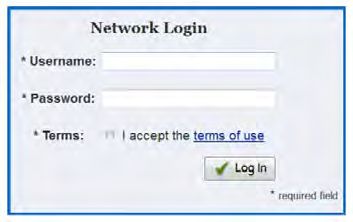
2019 PACE Conference
                                        Plenary sessions and lunch are in Cone Ballroom.
             Workshops are located throughout Elliott University Center. See workshop descriptions for room locations.

8:30 a.m.                Check-in and Continental Breakfast

9:30 a.m.                Opening Session
                                   Welcome
                                        Franklin D. Gilliam, Jr., Chancellor,The University of North Carolina at Greensboro

                                   Acknowledgement of Collegiate Hunger Challenge winners
                                   Presentation of Community Partner Award (New!) and
                                   Civic Engagement Professional of the Year Award
                                        Leslie Garvin, Executive Director, NC Campus Compact
                                        Meg Ham, President, Food Lion
                                   Presentation Engaged Faculty Award and
                                   Leo M. Lambert Engaged Leader Award
                                        Nido Qubein, President, High Point University, and
                                        Chair, NC Campus Compact Executive Board

 Introduction of Plenary Speaker
			 Philip Dubois, Chancellor,The University of North Carolina at Charlotte
		"Toward Educational Justice: Student Success and Civic Engagement"
			 John B. King Jr., President and CEO,The Education Trust

11:15 a.m.                     Workshop Block I

12:25 p.m.                     Lunch

1:40 p.m.                      Workshop Block II

2:50 p.m.                      Workshop Block III

4:00 p.m.                      Afternoon Plenary

 Introduction of Plenary Speaker
			 Leslie Garvin
		 "An Informed Democracy & Higher Education’s Responsibility: Understanding
			    Issues of Misinformation & News Media Literacy"
			 Adam Gismondi, Director of Impact, Institute for Democracy and Higher Education

4:50 p.m.                      Closing Remarks, Professional Resource Giveaway, and Adjourn
Welcome
Educating the mind, without educating the heart is no education at all.
- Anonymous
When all of our talk about politics is either technical or strategic, to say nothing of partisan and polarizing,
we loosen or sever the human connections on which empathy, accountability, and democracy itself depend.
- Parker J. Palmer
Healing the Heart of Democracy:The Courage to Create a Politics Worthy of the Human Spirit
Lately I have been reflecting on sentiments such as those expressed in the above quotes.
From the political gridlock in Washington fueled by incivility and a lack of thoughtful
deliberation to the allegations of election fraud here in North Carolina; from the national
debates about the lives of refugees and immigrants to the increased racial tensions and
violence such as the massacre at the Tree of Life synagogue in Pittsburgh last year, I have
become even more resolute in my belief that our mission – educating students for civic and
social responsibility, partnering with communities for positive change, and strengthening
democracy - is more critical than it has ever been in my 13 year tenure with the Compact.
I truly believe the habits of the heart – compassion, empathy, dialogue, humility, etc. - that we are seeking to imbed in the life
of our institutions and communities are critical to building bridges across divides and creating the space for us to work together
to solve the pressing issues of our day. It goes without saying that higher education is tasked with helping our students develop
the skills and knowledge they need to be effective in their chosen profession, however, it is just as important that we are
preparing them to be ethical, civic-minded professionals, engaged citizens, and public problem solvers. It is just as necessary that
we are co-creating, with our communities, mutually respectful partnerships in pursuit of a just, equitable, and sustainable future
for our neighborhoods, nation, and world.
Welcome to the 2019 Pathways to Achieving Civic Engagement Conference! We are privileged to be in a space with like-
minded individuals who believe in the transformative power of education, I encourage you to drink deeply from this well of
knowledge and support. Today we will celebrate leaders in the service-learning community engagement field. We will learn
about community-campus partnerships, courses, projects, and initiatives that are housing refugees, feeding hungry students and
community members, rebuilding neighborhoods devastated by natural disasters, addressing the opioid crisis, and promoting
college access and building wealth in Hispanic communities; just to name a few. We will learn about efforts to promote racial
equity, to engage students in the electoral process, to integrate deliberation and dialogue skills into the curriculum, and to
engage in community-based participatory research for sustained impact. Fill up so that we can leave invigorated for the vital
work of “contributing to the health and strength of our communities—economically, socially, environmentally, educationally,
and politically” (from the Campus Compact 30th Anniversary Action Statement).
Leslie Garvin, Executive Director
North Carolina Campus Compact
2General Conference Information
Workshop Location Recycling
Workshop rooms are located on the first and ground floors Recycle your name badge at the information table in the
of Elliott University Center (EUC). The EUC floor plans are Cone Ballroom lobby as you leave this afternoon.
included in your folder.
Tweet Off
Acknowledgements Whoever tweets the most substantive posts
throughout the conference (e.g. capturing
Many thanks to The University of North Carolina at ideas, highlights, challenging questions) using
Greensboro for hosting, and to the incredible events and #NCPACE19 will win a Visa gift card at the
facilities team. Today would not be possible without the end of the day. This is an opportunity to curate highlights for
workshop presenters and speakers. those unable to attend.
Special thanks to all who submitted proposals and
nominations, and to the 2019 committee members. Media Opt-Out
Workshop Proposal Committee: Visit the registration desk to obtain an “opt-out” sticker to
Jennifer Ahern-Dodson, Duke University be placed on your name badge if you do not wish to be
Maggie Commins, Queens University of Charlotte included in any photos we take today.
Leslie Garvin, North Carolina Campus Compact
Beth Wall-Bassett, Western Carolina University Professional Resource Giveaway
We invite you to visit the resource tables to review
Award Selection Committee:
publications. Thank you to the publishers who generously
Jennifer Brown, Elizabeth City State University
donated resources. For your convenience, several of the
Joan Clifford, Duke University
publishers provided conference discount order forms.
Jennifer Hine, WA Campus Compact
Tamara Johnson, UNC Charlotte Submit your name to receive a resource during the closing
Cathy Kramer, Warren Wilson College session.You must be present to win.
Kelly Misiak, Pfeiffer University
Sinda Nichols, MN Campus Compact Association of American Colleges and Universities (AAC&U)
Tiveeda Stovall,VA Campus Compact American Political Science Association
Information Age Publishing (IAP)
Kettering Foundation Press
Lunch Conversation
Michigan State University Press
As we share lunch this afternoon we will spend a few Red Wheel Weiser
minutes honoring and reflecting with local members of Routledge Taylor & Francis Group
the community of SLCE practitioner-scholars ("Clayton Rutgers University Press
& Colleagues") that received the 2018 Distinguished Stylus Publishing
Career recognition from the International Association for Teachers College Press
Research on Service-Learning and Community Engagement Temple University Press
(IARSLCE). Vanderbilt University Press
Dietary Restrictions/Requests Feedback
Food buffet items are labeled appropriately for our guests We appreciate your participation in an online evaluation
by UNCG Catering Services so that you may make the best inviting your feedback at http://bit.ly/PACENC19 no later
personal choice for your lunch meal. than February 27.
2019 PACE Conference 3Thank you to our Sponsors Books Available for Purchase
Please visit representatives of our sponsors in the lobby to Throughout the day, NC Campus Compact will be selling
receive valuable information for your institution. the four books pictured below. Swing by the table for an
opportunity to meet authors of Collaborative Communication
Print Plus (Stylus Publishing) and Critical Intersections in Contemporary
Scholars Strategy Network Curriculum and Pedagogy (Information Age Publishing).
YMCA Blue Ridge Assembly
Aramark, our Presidents Forum sponsor, will also be in the
lobby during the morning.
Thank you to our advertising partner, Sustained Dialogue
Institute.
NC Campus Compact Upcoming Opportunities
Engaged Faculty Scholars Initiative 2019 CSNAP Student Conference
Application opens: March 1 Deadline: May 18 November 8-9, venue TBD
Cost: $100/pp for Campus Compact members
Two faculty members from the NC Campus Compact $125/pp for non-members
network will be selected to promote and deepen the
scholarship of engagement at their own institution, and Started in 1993, this annual conference brings students
assist in building the infrastructure for faculty engagement together to network, share ideas, and develop skills that help
on another member institution. them be more effective leaders of community and civic
engagement efforts. Topics include volunteerism, leadership,
Participating scholars receive a stipend and professional service-learning, social entrepreneurship, advocacy and
development funding. activism. A different institution hosts CSNAP each year.
Community Engagement Administrators Conference Deliberative Dialogue Moderator Training and Theatre
Community Colleges as Civic Powerhouses: Aligning Community of the Oppressed Facilitation
Engagement with Community College Priorities
Since 2013 NC Campus Compact has trained over 450
June 12, Central Piedmont Community College individuals to moderate a Deliberative Dialogue forum. This
Registration: March 11-May 31 ($75 pp) method, promoted by the National Issues Forum, brings
people together in a small gathering to effectively and
This gathering will provide tools, strategies, and models
efficiently deliberate challenging issues. This is an ideal tool
for how community engagement can assist community
for campuses to build citizens and community.
colleges in achieving access and success; diversity, equity, and
inclusion; and, career progression.Verdis Robinson, Director, Theatre of the Oppressed uses theater as means of
Community College Engagement, Campus Compact, will promoting social and political change. These participatory
be the facilitator. theatrical forms were developed by Brazilian theatre
practitioner Augusto Boal in the 1970s. Image Theater is
4th Annual North Carolina College Voter Summit a creative way to help groups explore solutions to social
September 20, Elon University problems and Newspaper Theater is designed to help
participants critique the media messages we receive and
Join us for a one-day training to support students, faculty,
accept exploring questions of power and privilege.
and staff who lead non-partisan, campus-wide voter
engagement efforts. The Summit will focus on best practices Contact Leslie Garvin for more details, lgarvin@elon.edu.
and idea exchange.
4Plenary Presenters
Toward Educational Justice: Student Success and Civic Engagement
John B. King Jr., PhD, is the president and CEO of The Education Trust, a national
nonprofit organization that seeks to identify and close opportunity and achievement gaps,
from preschool through college. King served in President Barack Obama’s cabinet as the
10th U.S. Secretary of Education. Before becoming education secretary, King carried
out the duties of the U.S. Deputy Secretary of Education. King joined the department
following his tenure as New York State Education Commissioner. King holds a Bachelor
of Arts in government from Harvard University, a J.D. from Yale Law School, as well as a
Master of Arts in the teaching of social studies and a doctorate in education from Teachers
College at Columbia University. King serves as a visiting professor at the University of
Maryland’s College of Education and is a member of several boards, including those for
The Century Foundation, The Robin Hood Foundation, and Teach Plus. He also serves
on several advisory boards, including Former First Lady Michelle Obama’s Reach Higher
Initiative, the Rework America Task Force, the GOOD+ Foundation’s Fatherhood Leadership Council, and the National
Center for Free Speech and Civic Engagement at the University of California.
You can follow King on Twitter via @JohnBKing.
An Informed Democracy & Higher Education’s Responsibility: Understanding Issues of
Misinformation & News Media Literacy
Adam Gismondi, PhD, works with qualitative research, resource production and
dissemination, and social media outreach at the Institute for Democracy and Higher
Education. His research largely focuses on civic outcomes of media use by college
students, and his doctoral dissertation focused on how college student social media use
impacts student civic learning and engagement. Adam also currently serves as a part–time
faculty member at the Boston University School of Education, as an advisory board
member for SXSWedu, and as president of the William & Mary Alumni Boston Chapter.
Prior to working in a research capacity, Adam spent six years working as a student affairs
administrator at Florida State University and University of Florida. He holds a BA from
William & Mary, an MEd from the University of Florida, and a PhD from Boston College.
You can follow Gismondi on Twitter via @AdamGismondi
While we know that many of you will want to get on the road early in order to beat rush hour traffic, we strongly encourage
you to stay for Dr. Gismondi’s presentation. Here is a brief summary of what he will share.
In recent years, one of the most significantly damaging trends in our democracy has persisted: Growing societal distrust and
confusion regarding news and public information.Who are the “experts” that we can trust? Are we too skeptical in our
consumption of information, or not skeptical enough? How do digital spaces play into these issues? Are we too confident
in our own abilities? This discussion will explore some of the big questions, showcase some specific examples of the problem
at hand, and consider ways colleges and universities can play a role in advancing a society that can parse fact from fiction,
support the public interest, and educate for informed democratic engagement.
2019 PACE Conference 52019 COMMUNITY PARTNER AWARD (NEW!)
This Award recognizes a community partner that has engaged in the development of a sustained,
reciprocal partnership with an NC Campus Compact member institution.
Boys and Girls Club of the Coastal Plain
Partner Institution: East Carolina University
For over a decade BOYS AND GIRLS CLUB OF THE curriculum to develop a youth council for the Farmville Boys
COASTAL PLAIN (BGCCP) and East Carolina University and Girls Club.
have served as co-educators in the experiential learning
process for both youth and college student leaders. Today the In 2018 BGCCP was one of 13 ECU community partners
partnership stands as one of ECU’s signature relationships in to participate the inaugural Community University Partners
the local Greenville community, acting as a hub for most of Academy (CUPA). Over the course of a four-week seminar,
their youth outreach and engagement activities. CUPA participants discussed community issues, created
connections with university faculty, identified how research
BGCCP serves over 1800 youth (ages 6-18) throughout can assist with problem solving, developed leadership skills,
their 17 clubs in seven rural counties in eastern North and gained a better understanding of university process and
Carolina. This includes five clubs in Pitt County where policies. CLCE focused on the leadership competencies
ECU is located. In 2008 the Volunteer and Service-Learning needed to form more effective, impactful partnerships
Center - now called the Center for Leadership and Civic between the campus and local community.
Engagement (CLCE) - began partnering with BGCCP to
provide volunteer and service-learning opportunities for their In April 2018, at the NC Center for Afterschool Programs
students. Each year, more than 100 ECU students serve as Synergy Conference, staff from the CLCE and BGCCP co-
regular volunteers at club locations. facilitated a conference session on leveraging collaborative
community partnerships to provide high quality out of school
From the beginning, the partnership has engaged students afterschool programs.
as tutors and mentors through student-led programs such
as the Pirate PALS (Peers Advocating for Learning Success), BGCCP has partnered with several ECU departments
Pirate Playtime, and Reading Buddies programs. In 2016 the during this collaboration. These collaborations include a wide
partnership expanded to include an NC Campus Compact variety of areas from the Colleges of Business, Education,
NC Afterschool Corps member to help grow the capacity of Engineering and Nursing to the Office of Community
three individual clubs, and sustain the relationship between Engagement and Research and the STEM center to the
them.VISTA provides indirect programmatic support for ECU Honors College, School of Hospitality and Leadership,
specific BGCCP units to develop programs at the direction and Brody School of Medicine. These partnerships have
of the unit director while facilitating connections with ECU allowed both ECU students and BGCCP youth to further
and other external partners. their programming, build relationships and capacity and have
introduced youth to college life to impact their futures.
The 2016-17 VISTA member helped establish Design for
Change Mentor League; a program in which a group of
regular ECU student volunteers work with about 10 students
at the Police Athletic League South Greenville location.
Volunteers mentor these youth as they go through the
Design for Change curriculum which helps them investigate
social issues, brainstorm solutions, develop action plans, and
implement their ideas. In summer 2017, AmeriCorps Summer
Associates, undergraduate student interns, utilized the
62019 CIVIC ENGAGEMENT PROFESSIONAL OF THE YEAR AWARD
This award recognizes a staff person at an NC Campus Compact member campus who
has worked for the institutionalization of service, fostered a campus-wide vision of service, supported
faculty and students, and formed innovative campus-community partnerships.
Sean Langley, The University of North Carolina at Charlotte
For nearly a decade, SEAN LANGLEY, he co-founded the Jamil Niner Student
MA, has developed, deepened and Pantry where he is responsible for day-to-
expanded co-curricular community day operations, including coordinating the
engagement initiatives at UNCC. During many community-campus partnerships
this time there has been exponential that keep it running. The pantry serves
growth in the rate of student engagement nearly 3200 students annually. This
and in the number and variety of academic year he partnered with several
community partners and volunteer sites. campus entities to become one of only
two campuses in North Carolina to
As the Assistant Director for Leadership participate in Swipe Out Hunger. This
and Community Engagement since 2009, national program re-allocates meal swipes
Langley is responsible for articulating and to students in need. Additionally, Langley
carrying out the vision for community helped establish a Food Recycling
engagement in the Office of Student Program where students collect food from
Affairs. By strengthening the partnership between Student campus and disseminate it to local homeless shelters.
Affairs and Academic Affairs he has helped drive a steep
rise in the number of faculty, staff, classes, and learning Prior to serving in the Office of Leadership and Community
communities that are formally involved in service learning. Engagement, Langley served as the Director of Community
Most recently he served on the Community Engagement Research and Services at UNCC’s Urban Institute where he
Task Force formed to develop strategies to envision UNCC served as principal investigator for over 15 social/research/
as a national model for community engagement for an urban community outreach projects. Langley has taught part-
research university. He will work to integrate his efforts with time as an adjunct professor at Winthrop University, Stanly
those of the Office of Engaged Scholarship that emerged as a Community College,York Technical College, and Central
result of the visioning process. Piedmont Community College. In 2016 he co-authored a
paper "A University-Community Partnership to Combat
In addition to being a strategic leader, Langley has helped Food Insecurity among College Students" in NC Campus
develop many of the signature community engagement Compact’s online peer-reviewed journal, Partnerships: A
programs at UNCC. Langley co-directs the Bonner Leaders Journal of Service-Learning & Civic Engagement Vol. 7 (01),
Program, an intensive four-year community engagement 11. Langley received UNCC's 2017 Student Advising for
initiative for undergraduate students, which he helped bring Freshman Excellence award and the 2016 Black Student
to UNCC in 2016. He coordinates Alternative Spring Break Union Unsung Hero Award.
Trips focused on affordable housing, has led a trip to El
Salvador to build Habitat homes, and serves as the Advisor for Langley extends his community outreach beyond UNCC
the UNCC Habitat for Humanity Chapter. by volunteering at Freedom School, a summer literacy
program for underserved children, serving on the Board for
One nominator referred to Langley as the “point person for the Charlotte Mecklenburg Food Policy Council and as a
providing support, resources, referrals” for students-in-need. member of 100 Black Men of America. Langley received his
This is especially evident with regard to students facing food bachelor’s degree from Johnson C. Smith University and his
insecurity. In 2014, with a $6000 grant from Food Lion, MA in Sociology from UNCC.
2019 PACE Conference 72019 ENGAGED FACULTY AWARD
Alessandra Von Burg, Wake Forest University
ALESSANDRA VON BURG, PhD, an or in places other than what they may
Associate Professor of Communication consider home. To better understand the
and Chair of East Asian Languages & influx of migrants and refugees happening
Culture, sees community engagement in North Carolina,Von Burg traveled to
as “a synergistic practice” across her Greece, Italy, and Belgium between 2016
teaching, research, and service. Since and 2018, meeting refugees and migrants,
arriving at Wake Forest in 2006, she has along with local residents, officials,
developed numerous community engaged government and non-governmental
courses and built sustained relationships organizations, international aid agencies,
with community partners. and volunteers.
Beyond her own courses,Von Burg was In 2017 Von Burg started an Every
instrumental in establishing the ACE Campus a Refuge (ECAR) chapter at
(academic and community engaged) Wake Forest, along with two colleagues.
course designation at Wake Forest and They were inspired by Diya Abdo who
serves as chair of the ACE Advisory Council. She convenes founded ECAR at Guilford College in 2015 calling on every
faculty each semester to review syllabi for various courses and college and university in the world to partner with their local
occasionally provides one-on-one coaching for faculty who refugee resettlement agencies to house refugees on campus
are working to make their courses community engaged. ACE grounds and assist them in resettlement. They successfully
courses align with the Carnegie Foundation’s classification lobbied the administration to designate some campus housing
of community engagement and connect academic content to support incoming refugees. Since the ECAR chapter began
to community engagement through collaboration with at Wake Forest, they have partnered with World Relief to
community partners. host 8 refugees, providing housing, tutoring, and translation
services.Von Burg uses her personal time to advocate for
Since 2010 she has been the co-principal investigator for the the families with regard to education, health, housing, and
Benjamin Franklin Transatlantic Fellows (BFTF) Summer employment. She also advises the student group, Students
Institute, a U.S. Department of State grant that brings for the Advancement of Refugees, which works with World
European, Eurasian, and American high-school students to Relief and several resettled refugee families to organize events,
Wake Forest, Philadelphia and Washington, DC, to learn about educate others about what is happening both in Europe and
international relations, diplomacy, advocacy, civic engagement, the U.S., and support existing initiatives with and for refugees.
and leadership. As the BFTF curriculum director,Von Burg Von Burg was part of a team that came together to organize
works with her colleagues to develop a program that prepares two fundraising events for World Relief, resulting in over
the Fellows for their engaged and active role as citizens which $140,000.
includes projects with local long-term community partners.
Von Burg is a board member and vice-chair of El Buen
Von Burg describes her teaching and scholarship as the Pastor Latino Community Services, another one of her
exploration of “citizenship, mobility, the movement of people long-term partners.Von Burg earned her PhD and MA in
who often are at the margins and have become stateless, communication from the University of Pittsburgh.
with and without rights or a place to call home” and has
published numerous articles on these themes. Her recent
work focuses on the concept of citizenship deserts: non-places
for abandoned non-citizens, those who often are in exile
8ENGAGED FACULTY AWARD
This award recognizes one faculty member from a North Carolina Campus Compact member institution for exemplary
engaged teaching and/or scholarship, including leadership in advancing students’ community and civic learning, conducting
community-based research, fostering reciprocal community partnerships, building institutional commitments to service-
learning and community engagement, and other means of enhancing higher education’s contributions to the public good.
Between 2006 - 2017, NC Campus Compact presented the Robert L. Sigmon Service-Learning Award,
recognizing one faculty member in our network who made significant contributions to the practice
of service-learning. The award was named in honor of Robert L. Sigmon, service-learning pioneer
and North Carolina native. In 1967, along with Bill Ramsay and Wendell Russell, he coined the
phrase “service-learning” to better describe the community-based internships they facilitated at
the Southern Regional Education Board. In 2009, Mr. Sigmon donated his personal library and
research to Elon University to create the Robert L. Sigmon Service-Learning Collection. In 2016,
the archive was digitized and is now available online. Sigmon contributed to the publication Where's
The Wisdom in Service-Learning? (Information Age Press, 2017), which included reflections from 10
service-learning pioneers about the current state of service-learning.
In 2017 Sigmon asked that his name be removed from the award because “it is the service-learning movement in its many
variations, rather than any one or two individuals who need to be recognized. The service-learning language has now had a
50-year run with all kinds of frameworks added and subtracted.” To honor his wishes we have expanded the award beyond
service-learning to recognize other forms of engaged teaching and learning, and we launched the Community Partner Award
this year. We are forever indebted to Mr. Sigmon for his vision, leadership, and legacy.
“I long to see the day when citizens and institutions around
the world - both service and educational - encourage “developing
imaginations” (i.e. young people) to work cooperatively using
the basic principles of reciprocity, of mutual service and learning,
and of movement toward just relationships as the bedrock of their
evolving life patterns.”
~ Robert L. Sigmon
2019 PACE Conference 92019 LEO M. LAMBERT ENGAGED LEADER AWARD RECIPIENT
President A. Hope Williams, North Carolina Independent Colleges and Universities
A native North Carolinian, HOPE WILLIAMS, PhD, has Williams is a long-term supporter of North Carolina
dedicated her life to improving the quality of life in the state. Aquariums, starting in the 1970s when she worked for
Having served for 32 years at North Carolina Independent the NC Department of Administration in which the three
Colleges and Universities (NCICU), 26 of Aquariums were located. Recognizing
those years as its President, Williams is the their educational potential, she
longest serving leader of an independent was instrumental in overseeing the
college state association. She represents organization set-up of these state sites
the sector on matters of federal and state working to ensure state appropriations
policy areas such as teacher education, and staffing. When the nonprofit
weapons on campus and sales and property Aquarium Society was created, she joined
tax issues. She supports the 36 member the Board of Directors where she served
presidents, helping work through issues tirelessly chairing several key committees
both campus-based and within the broader over the years. She currently chairs the
higher education field and provides Development Committee. The Aquariums
oversight of meetings with directors, of now boast over 1.3 million annual visitors
more than 16 major administrator groups, placing them among the state’s most
and faculty to resolve campus issues, and popular attractions.
provide staff development. Williams also
represents NCICU on the Governor’s From 2009 to 2014 Williams served on
North Carolina Education Cabinet. the Board of Rise Against Hunger (formerly Stop Hunger
Now), an international hunger relief organization. She
Williams has helped to secure strong partnerships with the helped strengthen the fiscal position of this rapidly growing
corporate sector. She recently worked with the national organization by serving on the Fundraising and the Audit/
Council of Independent Colleges to secure funding to Finance Committees. She also actively advocated for the
develop seamless transfer pathways, in the fields of psychology organization’s engagement of private higher education
and sociology, between the community college and institutions in meal packaging projects thus providing millions
independent sector. of meals to feed the hungry.
Under Williams’ leadership NCICU has coordinated Williams received her undergraduate degree in French and
collaborative programs to help ensure the development of History from Duke University, an MPA degree from North
civically-engaged graduates. One example is the NCICU Carolina State University and a PhD in Education from the
Ethics Bowl, an annual competition since 2012 in which University of North Carolina at Chapel Hill. She received
student teams from 24 NCICU campuses respond to the Outstanding Service Award from the Rotary Club of
case studies around a specific theme. The 2018 theme Raleigh in 1997, was named the 1999 Distinguished Woman
was "Ethics and the Future of Community" and included of North Carolina in Education, one of the top 25 Women
competition rounds on topics such as the ethics of deporting in Business in 2001 by The Triangle Business Journal and a
undocumented immigrants and how to exercise personal “Woman Extraordinaire” in 2005 by Business Leader Magazine.
responsibility to ensure ethical standards and practices in social She has served as president of the North Carolina Adult
media. NCICU also sponsors an Undergraduate Research Education Association and of the North Carolina Association
Program to provide funding for undergraduate research in of Institutional Researchers. She currently serves on the
STEM, especially to students from underrepresented groups. National Advisory Board of the Institute for Emerging Issues,
and on the boards of College Foundation, Incorporated and
Communities in Schools of North Carolina.
10LEO M. LAMBERT ENGAGED LEADER AWARD
In the 2012 celebration of the 10th anniversary of NC Campus Compact, the executive board created this award
to honor President Lambert’s significant contributions to our shared work.
The Board annually selects a North Carolina college president or chancellor, nominated by their peers, who is
committed to creating and sustaining engagement that deeply impacts community and campus.
LEO M. LAMBERT led Elon’s rise to energy consumption and set conservation
national prominence from 1999 to 2018, standards for university construction and
promoting a student-centered culture operations. In addition, the university
that values strong relationships between created the Elon Environmental Center
students and their faculty and staff mentors. on the Loy Farm property as a hub for
Focused on developing students as global engaged learning, where students learn
citizens, ethical leaders and creative practical skills in sustainable agriculture,
problem-solvers, Lambert led two strategic design and construction techniques. The
plans, creating a model for the modern Center includes a large solar farm and
liberal arts university. serves as a place for students to study
the environmental, business, social, and
Led by President Lambert, Elon built political implications of renewable energy
a national reputation for academic at Elon.
excellence across the curriculum, and
for its innovative programs in study abroad, undergraduate In 2009, he received the inaugural William M. Burke
research, leadership, interfaith dialogue, civic engagement and Presidential Award for Excellence in Experiential Education
community service, and preparing students for meaningful from the National Society for Experiential Education. In
careers and advanced study. 2010, he received the Periclean Service Award from Project
Pericles. As a prominent figure in North Carolina’s Triad
In 2002 Dr. Lambert convened a group of 15 presidents and region, Lambert was named one of the “most influential
chancellors to launch a Campus Compact affiliate in North leaders” for six consecutive years by the Triad Business
Carolina and agreed to host the state office at Elon. He served Journal. In 2011 he was named the #1 large workplace
as the NC Campus Compact Executive Board Chair until leader in a survey by the Greensboro News & Record. He
2008. He also served on the national Campus Compact Board also received the Thomas Z. Osborne Distinguished Citizen
of Directors from 2003-2009. Award, the highest honor bestowed by the Greensboro, N.C.,
Chamber of Commerce, and was named a “Father of the Year”
With a priority on expanding partnerships with K-12 by the American Diabetes Association Greater Greensboro
public education, Lambert was instrumental in the creation Area Father’s Day Council.
of the Elon Academy in 2007, an enrichment program for
academically talented high school students in the Alamance- Lambert has written extensively about post-secondary
Burlington School System who have financial need or have education and is co-author of a book, The Undergraduate
no family history of college attendance. The program has Experience: Focusing Institutions on What Matters Most, published
become a national model of excellence, enrolling nearly all of by Jossey-Bass (2016). Lambert assumed the title of President
its graduates in higher education. Emeritus on March 1, 2018, and is spending a sabbatical year
working on a new book project with Elon faculty member
Under Lambert’s guidance, land was designated for the Peter Felten. He will teach in the university’s master of higher
creation of the Elon University Forest, and the university education program when he returns from sabbatical.
created an environmental sustainability master plan to reduce
2019 PACE Conference 11PAST AWARD RECIPIENTS
CIVIC ENGAGEMENT PROFESSIONAL OF THE YEAR AWARD
2018 - Dr. Charlotte Williams, Lenoir-Rhyne University 2012 - Aubrey Swett, UNC Pembroke
2017 - Dr. Smith Jackson, Elon University 2011 - Mary Morrison, Elon University
2016 - Emerging Leader: Kelly Misiak, Pfeiffer University 2010 - Jenny Huq, UNC-Chapel Hill
Sustainer: Cathy Kramer, Warren Wilson College 2009 - Emerging Leader: Julie Lawson, Peace College
2015 - Emerging Leader: Dr. Lane Perry, Western Carolina University Sustainer: Dr. Stacey Riemer, Davidson College
Sustainer: Dena Shonts, Central Piedmont Community College Innovator: Dr. Susan Harden, UNC Charlotte
2014 - Emerging Leader: Dr. Joe Blosser, High Point University 2008 - James Shields, Guilford College
Sustainer: Dr. Emily Janke, UNC Greensboro 2007 - Jenny Koehn, Appalachian State University
2013 - Dr. Elaine Madison, Duke University 2006 - Jason Denius, East Carolina University
SIGMON/ENGAGED FACULTY AWARD
2018 - Dr. Annie Jonas, Warren Wilson College 2011 - Dr. Della Pollock, UNC-Chapel Hill
2017 - Dr. David M. Malone, Duke University 2010 - Dr. Michele Gillespie, Wake Forest University
2016 - Dr. Patricia Bricker, Western Carolina University 2009 - Pam Kiser, MSW, Elon University
2015 - Travis Hicks, M.Arch., UNC Greensboro 2008 - Dr. Cheryl Brown, Greensboro College
2014 - Dr. Jim Cook, UNC Charlotte 2007 - Dr. Rachel Willis, UNC-Chapel Hill
2013 - Dr. Rebecca Dumlao, East Carolina University 2006 - Dr. Betsy Alden, Duke University
2012 - Dr. Spoma Jovanovic, UNC Greensboro
LAMBERT ENGAGED LEADER AWARD
2018 - President Carol E. Quillen, Davidson College
2017 - President William "Bill" G. Ingram, Durham Technical Community College
2016 - Chancellor Steve Ballard, East Carolina University
2015 - President Nathan O. Hatch, Wake Forest University
2014 - Chancellor Philip L. Dubois, The University of North Carolina at Charlotte
2013 - Chancellor Harold L. Martin, Sr., North Carolina Agricultural & Technical State University
2012 - Chancellor Linda Brady, The University of North Carolina at Greensboro
Workshops
Community Conversations
Similar to a “think tank” this format offers an opportunity to explore a topic of interest with colleagues across stakeholder
groups. After facilitators provide context setting, participants will engage in mutual examination and dialogue on the topic.
Mini-Sessions (20 minute presentations)
These session combine depth with brevity to stimulate idea generation and conversations. Two presentations, on a related topic,
will occur within the 1 hour session.
Locations
Please see Elliott University Center (EUC) floor plans for room locations.
12Workshop Block I Going Deeper: Using Issue Guides to Deepen
11:15 a.m. - 12:15 p.m. Conversations and Engagement (Mini-Session)
Topic: Creating & Sustaining an Engaged Campus
Service after the Storm: Best Practices for Engaged
Location: Dail
Disaster Response
Discussing how and why systems advantage some and
Location: Alexander
disadvantage others is not easy to distill and communicate
An intentional and engagement-focused action plan is through one program or event. In this presentation, we will
essential for responding to a disaster rather than just reacting. share how our office, in collaboration with student leaders,
Using the Carolina Center for Public Service’s ongoing created social issue guides that can serve as an entry point
response to Hurricane Florence and past storms as a to deeper conversation while also providing a road map for
model, facilitators will help participants apply best practices engagement.
for grants, relief trips and donation drives, community
Elon University
partnerships, and campus-wide communication to their own
institutions. Kyle Anderson, MEd, Assistant Director of Student Community
Engagement, Kernodle Center for Service Learning and
The University of North Carolina at Chapel Hill
Community Engagement
Sarah Leck, BA, Chancellor's Fellow, Office of the Chancellor Sarah Williams, MEd, Program Coordinator, Kernodle Center for
Becca Bender, MEd, Senior Program Officer for Community Service Learning and Community Engagement
Engagement, Carolina Center for Public Service
The NC Campus Compact Engaged Scholars Bridging the Gap: SLCE and Scholarship
Program: Supporting the Integration of SLCE in (Mini-Session)
Teaching, Research & Service Topic: Creating & Sustaining an Engaged Campus
Location: Azalea Location: Dail
Looking for creative project ideas to deepen the scholarship While there is agreement that SLCE is important work, one
of engagement on your campus? Do you need funding of the limitations is gaining faculty buy-in. One of the most
to support your project? Would you like to contribute to frequently asked questions is, “How does this work count?”
expanding service-learning and community engagement Considering the importance of scholarship in academia, this
beyond your campus to impact the broader field? Then we mini-session will present a framework of structuring SLCE
invite you to learn about the NC Campus Compact Engaged projects in a way that is more conducive to publishing and
Scholars Program, a unique year-long opportunity for faculty presenting findings.
interested in public scholarship, engagement and service-
Western Carolina University
learning. Hear from current and former scholars and leave
with new ideas and inspiration. Cyndy Caravelis, PhD, Associate Professor, Department of
Criminology and Criminal Justice
Annie Jonas, EdD, Professor and Chair of the Department of
Brandi Hinnant-Crawford, PhD, Assistant Professor of Educational
Education,Warren Wilson College
Research, Human Services
Cara Kozma, PhD, Associate Professor of English and Assistant
Director of the Service Learning Program, High Point University
Maggie Commins, PhD, Associate Professor, Political Science and
International Studies, Queens University of Charlotte
Jacquelyn Lee, PhD, Assistant Professor of Social Work, UNC
Wilmington
Jennifer Ahern-Dodson, PhD, Assistant Professor of the Practice in
Writing Studies, Duke University
Rebecca Dumlao, PhD, Professor of Communication, East Carolina
University
2019 PACE Conference 13Building a Partnership: The Process of Campus- as a rural community that has led the state in opioid
Community Collaboration overdoses. By coming together, we are changing the narrative
and rewriting the future.
Location: Claxton
Jennifer Layton, MSPH CHES, Human Services Program
This session will share lessons learned from a three-year
Specialist, Health Education Unit, Stanly County Health and
campus-community partnership to empower Spanish
Human Services
speaking parents with college access information. We will
Delton Russell, Community Engagement Specialist,
focus on the process of partnering - collaborating to identify
Cardinal Innovations
needs and build capacity, implementing, and finally, evaluating
the partnership. Campus and community partner voices
will be incorporated to provide a balanced view of the Fulfilling Duke’s Anchor Mission and Building
process. Community Wealth in Durham
Laura M. Gonzalez, PhD, Associate Professor,Teacher Education/ Location: Phillips
Higher Education, UNC Greensboro
This workshop will explore the partnership between Duke’s
José A.Villalba, PhD,Vice President, Diversity and Inclusion, Chief
Office of Durham Affairs, and the Latino Community Credit
Diversity Officer,Wake Forest University
Union (LCCU) as a model for advancing an anchor mission
Daniel Sostaita, Pastor, Iglesia Cristiana Sin Fronteras,
and building broad community wealth. The successes and
Winston-Salem
challenges of the Duke-LCCU partnership in Durham
will be reviewed to identify the criteria other academic
Impact Beyond the Impact Factor: How Researchers institutions may consider when establishing similar initiatives.
Can Inform Policy Gabriel Treves-Kagan, Director of Development and Community
Location: Dogwood Impact, Latino Community Credit Union
Sam Miglarese, Assistant VP and Director, Duke-Durham
Faculty and student researchers will leave this workshop
Neighborhood Partnership, Duke University
with tools to build their capacity for impact in the policy
realm. Drawing from research and practice evidence from
North Carolina and beyond, participants will learn to Confronting Mis-Educative Service-Learning:
leverage their scientific expertise and skills to identify Training Students for Engaging with Communities
potential policy partners, understand and participate in
Location: Sharpe
the policymaking process, and build lasting, reciprocal, and
trusting relationships. This interactive workshop will address the core knowledge,
skills, and attitudes students need when entering and working
Natalie D. Hengstebeck, PhD, Postdoctoral Fellow, Scholars Strategy
with communities. Duke University created a curriculum and
Network and Duke Sanford School of Public Policy
training focused on: Identity and Positionality, Root Cause
Jenni W. Owen, MPA, Director of Strategic Partnerships,
Analysis, and Power and Community Partnerships. In this
Office of the Governor
workshop, we will lead participants through a training activity
and offer findings from our evaluation of the program.
Rural Poverty and the Opioid Epidemic Dane Emmerling, MPH, PhD Candidate, UNC Gillings School of
(Community Conversation) Global Public Health, UNC-Chapel Hill
Location: Kirkland Duke University
Rural areas have become a hotbed for substance use David Malone, PhD, Faculty Director, Duke Service-Learning,
disorders for a number of reasons including geographic Professor of the Practice, Program in Education
location, limited treatment resources, lack of funding, Jessica Sperling, PhD, Lead, Evaluation and Engagement, Social
stigma, and poverty. While the present seems grim for rural Science Research Institute
communities, we hope to provide encouragement and Lindsey Miller, BA, Program Coordinator, Duke Office of Civic
initiate constructive conversations by sharing our experience Engagement
14Workshop Block II Connecting Graduate Students with Community
1:40 p.m. - 2:40 p.m. Partners (Mini-Session)
Topic: Empowering Students as Colleagues
Beyond Phase One: Networking and Extending Location: Claxton
Racial Equity Consciousness
Through classes and MA thesis research, graduate students
Location: Alexander in High Point University’s MA program in Strategic
This workshop will focus on extending racial equity training Communication work with community partners to develop
and networking engaged staff toward institutional change on messages and materials that the organizations need to
your campus. The panel will offer lessons and strategies from communicate with their constituents. This session will
Duke University’s Racial Equity Learning Arc, a follow-up feature faculty members discussing curricular models for
to the Racial Equity Institute’s Phase One Workshop. Panel enabling these mutually beneficial relationships, and current
includes program organizers and participants, as well as the graduate students discussing their experiences.
principal consultant of The Equity Paradigm. High Point University
Alexa Broderick, BA, Founder and Principal Consultant, Brad Lambert, MFA/MAT, Director of MA program in Strategic
The Equity Paradigm Communication, Nido R. Qubein School of Communication
Rob Powell, MA, Assistant Professor of the Practice of
Duke University
Communication, Nido R. Qubein School of Communication
Leslie Parkins, EdD, Assistant Director, Office of Civic Engagement Ashley Russell, MA student in Strategic Communication
Emily Stewart, BA, Program Coordinator, Human Rights Center at Julee Mitsler, MA student in Strategic Communication
the Franklin Humanities Institute
Kimberly Walker, BA, Associate Director, Center for Health Policy
and Inequalities Research
Infusing Civic Identity Development in the Major: A
Faculty Led Initiative (Mini-Session)
Topic: Empowering Students as Colleagues
Democracy as Pedagogy: Designing Learning
Location: Claxton
Experiences for Civic Engagement
This workshop will focus on the structure and outcomes
Location: Azalea
of a Community of Practice of Warren Wilson professors
Institutions of higher education hold great promise in in Psychology, Chemistry and Physics that examined best
serving as “vital agents and architects of a diverse democracy” practice and explored how to intentionally integrate civic
(Campus Compact, 2012). This workshop is intended to outcomes into the major. The workshop will include
capitalize on the opportunities afforded by the learning examples from the specific departments as well as resources
process and empower participants with practical tools. used to structure the Community of Practice.
Frameworks for civic-minded pedagogy will be discussed,
Warren Wilson College
and strategies to enhance civic-mindedness through
instruction will be provided. Annie Jonas, EdD, Director of Faculty Community Engagement
Langdon Martin, PhD, Chair of Chemistry/Physics
The University of North Carolina at Wilmington
Martha Knight-Oakley, PhD, Chair of Psychology
Jacquelyn Lee, PhD, LCSW, Associate Professor, School of Social Kim Borges, PhD, Professor of Chemistry
Work Cristina Reitz-Kreuger, PhD, Professor of Psychology
Kristen DeVall, PhD, Associate Professor, Sociology and
Criminology
2019 PACE Conference 15Engaging Student-Athletes in Service: An Example Relationships First: Empowering Students through
from Elon (Mini-Session) Community Engagement
Topic: Expanding Student Engagement Location: Dogwood
Location: Dail Empowering undergraduate students as colleagues requires
faculty to be intentional about relationships development.
Elon University found the majority of student-athletes
This presentation will use the “relationship first” framework
(S-A) service was one-time opportunities without much
to explain how one faculty-student partnership has led to
education or reflection and that S-A had limited access to
local and international opportunity to promote positive
service due to their schedules. In response, Elon Athletics and
youth development. The faculty member and the student will
the Kernodle Center for Service Learning and Community
each share their perspective.
Engagement, with a 4-year NCAA grant, partnered to
provide S-A increased access to community service and to The University of North Carolina at Greensboro
deepen those service experiences. Michael A Hemphill, PhD, Assistant Professor of Kinesiology
Elon University Sarah Ragab, Class '21, Kinesiology
Sarah Williams, MEd, Program Coordinator, Kernodle Center for
Service Learning and Community Engagement What do Alumni Say? The Impact of Undergraduate
Molly McInerney, MS, Student Services and Elon Experiences Service Programming
Coordinator, Elon Athletics
Location: Kirkland
This workshop will explore what alumni say about the
Athletes for Good: Benefits and Challenges of impact of their participation in undergraduate service
Student-Athlete Civic Engagement (Mini-Session)
programming. Participants will have the opportunity to share
Topic: Expanding Student Engagement their expectations of what they believe alumni would say
Location: Dail and compare these ideas with the literature and data gathered
through a survey of alumni of the Buckley Public Service
In this session, participants are introduced to Duke’s student-
Scholars program at UNC-Chapel Hill.
athlete civic engagement program, ACE, which draws on
best practices in experiential learning and student-athlete The University of North Carolina at Chapel Hill
development to create immersive service opportunities Ryan Nilsen, MTS, Senior Program Officer for Community
that respond to student-athletes’ needs and challenges. Engagement at the Carolina Center for Public Service
The presentation addresses how student-athletes use their Alanna Gillis, PhD Candidate, Sociology Department
experiences to develop their own Action Plans for ongoing
engagement, continuing a cycle of service and learning.
Learn to Serve, Serve to Lead
Duke University
Location: Phillips
Jaclyne Purtell, MPP, Assistant Director for Assessment, Evaluation
& Strategy for Civic Programs, DukeEngage Few topics are as broad as “leadership.” For 50 years, the
Emily Durham, MSEd, Program Director, Rubenstein-Bing Caldwell Fellows at NC State has developed its students
Student-Athlete Civic Engagement Program on the model of Robert Greenleaf ’s “servant-leadership.”
Andrew Bates, BA, ’19, Evaluation & Communications Assistant, Service-learning is the means that brings this model to
Rubenstein-Bing Student-Athlete Civic Engagement Program life – empowering students to “Learn to Serve and Serve to
Lead.” It is a model that in the words of Fellows, “transforms
service-learning into service-living.”
North Carolina State University
Janice E. Odom, PhD, Director,The Caldwell Fellows
Chandler Marr, Caldwell Fellow and Service-Learning TA
Chyra Savage, Caldwell Fellow and Service-Learning TA
Riley Stephenson, Caldwell Fellow, '21
16Developing, Implementing, and Evaluating a Workshop Block III
Multi-Unit Community-Engaged Grant Program 2:50 p.m. - 3:50 p.m.
(Community Conversation)
Location: Sharpe Community-Based Participatory Research (CBPR):
Shared Power and Partnerships, Sustained Change
The P2 Grant program supports teams of faculty,
administrators, and community partners in developing Location: Alexander
sustainable pathways and partnerships for multi-unit The Healthy Alamance – Elon University community
community-engaged scholarship. Come participate in a academic partnership was formed to address health equity
conversation about the development, implementation, and in the North Park neighborhood of Alamance County. This
evaluation of this community-engaged grant program. workshop will describe CBPR, present the development of
Share questions and lessons learned through your own grant the community-campus partnership using a CBPR model,
experiences or aspirations. discuss the work that has been accomplished to date, explain
The University of North Carolina at Greensboro ways that CBPR partnerships can contribute to pedagogy
and curriculum in undergraduate courses, and describe how
Courtney Caiola, PhD, MPH, RN, Assistant Professor, Family
the shared work can be of benefit to the career trajectories
and Community Nursing
of both community partners and academics. This model
Crystal Dixon, MPH, MCHES, CHC, Assistant Professor, Public
can be adopted by others who are interested in forming
Health Education
new partnerships and restructuring existing partnerships
Jennifer Toller Erausquin, PhD, MPH, Assistant Professor, Public
to include a shared power and shared decision-making
Health Education
configuration.
Emily Janke, PhD, Associate Professor, Institute for Community
and Economic Engagement Stephanie Baker, PhD, Assistant Professor, Public Health Studies,
Nora Jones, Executive Director,The Partnership Project Elon University
Lori E. Kniffin, MS, Assistant Director, Institute for Community Ann Meletzke, BA, Executive Director, Healthy Alamance
and Economic Engagement
Kristin Medlin, MPA, MEd,Visiting Scholar, Institute for
STEAM in Sports: A University and K-12 Year Long
Community and Economic Engagement, UNCG, Assistant
Partnership
Director for Customer Success,TreeTop Commons, LLC
Christina Yongue, MPH, MCHES, Assistant Professor, Director of Location: Azalea
Undergraduate Studies, Public Health Education Discover how a dynamic partnership between a university
and local school district facilitated a yearlong STEAM in
Sports experience engaging 700 sixth grade students around
STEAM careers. The district’s Deeper Learning Initiative
and focus on career exploration, allowed the STEAM in
Sports focus to offer a unique perspective to make real-world
connections through physical education.
Misti Wajciechowski, Doctoral Candidate, Assistant Professor, School
of Education,Virginia Commonwealth University
Rachael Toy, MEd, K-12 STEAM Specialist, Curriculum and
Instruction, Henrico County Public Schools
Benita Turner, BA, Education, K-12 Specialist Health and Physical
Education, Curriculum and Instruction, Henrico County Public
Schools
2019 PACE Conference 17You can also read


