2019 Sustainable Insurance - Principles for - UNEP FI
←
→
Page content transcription
If your browser does not render page correctly, please read the page content below
Principles for

Sustainable
Insurance
2019
QBE Insurance Group Limited

Contents                                   About QBE Insurance Group
                                                     QBE is listed on the Australian Securities Exchange (ASX) and
                                                     headquartered in Sydney. We employ more than 11,000 people
          Principle 1              2                 in 27 countries.
                                                     QBE is a general insurance and reinsurance company. Across our
          Principle 2              5                 operations, we offer commercial, personal and specialty products
                                                     and risk management solutions to our customers.
          Principle 3              6                 Our purpose is to give people the confidence to achieve
                                                     their ambitions.
          Principle 4              6

          Appendix                 7
                                                     About this report
                                                     The Principles for Sustainable Insurance are a framework for the global
                                                     insurance industry to address environmental, social and governance
                                                     risks and opportunities. QBE has been a signatory to the PSI since
                                                     2015 and the Principles inform the approach we take to embedding
                                                     sustainability considerations into our business decision-making.
                                                     As signatories to the PSI, we are required to make an annual disclosure
                                                     outlining our progress in implementing the Principles (this document).
                                                     It should be read in conjunction with QBE’s annual reporting suite,
                                                     particularly the attached 2019 Sustainability Report.

Principle 1
We will embed in our decision-making environmental, social and
governance (ESG) issues relevant to our insurance business.

QBE’s 2019 Sustainability Report (the Report) provides an overview of our approach to sustainability, including our Sustainability
Framework, governance and management, materiality, ongoing stakeholder engagement, memberships and industry
collaboration, and our role in achieving the United Nations Sustainable Development Goals (SDGs).

The Report details the progress we have made in 2019 across the six pillars of our Sustainability Framework and highlights
the steps we have taken to embed sustainability into our business practices. Further information about how ESG issues are
embedded into our decision-making processes can be found in the following sections of the Report and on our website.

2
QBE Insurance Group
                                                                                         Principles for Sustainable Insurance 2019

                                            Sustainability Framework:
                                           Our approach to sustainability

                                                             Responsible
                                                             investments

                                            People and                           Sustainable

                                                                                                        Iden
                                              culture                             insurance
                 Ma n a g i ng r i s k s

                                                                                                            t i fy
                                                                                                         ing opportunitie
                                                          We give people the

                                                           their ambitions

                                                                                                        s
                                           Customer and                         Operational
                                            community                           excellence

                                                            Governance

Sustainability governance and management
QBE’s Group Board of Directors is our highest governing body for sustainability and ESG-related issues. The Board is supported
by the Board Risk & Capital Committee (BRCC) which oversees and guides QBE’s sustainability approach, initiatives and
reporting requirements. The Group Sustainability team provides an update on sustainability performance and activity to the
BRCC at each of its meetings (six meetings were held in 2019).

Our Group Executive Committee (GEC) reviews and approves QBE’s sustainability agenda and priorities and receives updates
on these throughout the year. An Executive Non-Financial Risk Committee (ENFRC) was formed in 2019 to support the GEC in
managing non-financial risks.

Further information about QBE’s sustainability governance can be found in ‘Our approach to sustainability’ on page 9 of the
Report.

Risk management and responsible underwriting
We actively manage current and emerging ESG risks. ESG risks are reported to the Group Chief Risk Officer (CRO) quarterly, with
our ESG Risk Committee overseeing the implementation of our activities to mitigate high rated ESG risks.

In 2019 we developed an ESG Risk Standard that outlines the process for identifying and managing ESG risks across the
business. Our Group ESG Risk team continued to analyse and manage ESG risks and engage with teams across the business to
raise awareness of these risks. Further detail about our approach to risk management across our business can be found in in the
2019 Annual Report.

Our Group Underwriting Standards support our commitment to, and reflect our definition of, responsible underwriting. Further
information can be found in the ‘Sustainable insurance’ section of the Report.

                                                                                                                                 3
QBE Insurance Group
Principles for Sustainable Insurance 2019

    Our commitment to responsible underwriting
    In collaboration with global insurers, reinsurers, brokers, academics and other key industry stakeholders, in 2019 we were
    part of the core project team developing the first industry standard on integrating sustainability in insurance underwriting.
    The guide, Underwriting environmental, social and governance risks in non-life insurance business, once released, will
    outline ESG risks that are most material to different lines of business. We plan to use the guide to continue integrating ESG
    considerations into our underwriting practices.

Product and service development
In 2019, we delivered the following products and services to help reduce risk, have a positive impact on ESG issues and
encourage better risk management for our customers

    •   Through our North American business, NAU Country Insurance Company, we developed two technology solutions to
        support farmers with managing their field health and harvest timing. Field Insights™ provides farmers with the most
        relevant and up-to-date data on environmental conditions for crop harvesting and EASYview Weather™ enables our
        farming customers to estimate and verify the possibility of hail damage to their fields.

    •   We developed a program with SafetyCulture to empower users to maintain safe and efficient workplaces. The inspection
        platform, iAuditor, provides visibility and insights to help raise safety and quality standards for workers and dramatically
        reduces accident frequencies and downtime within their business operations.

    •   We partnered with and are CTP insurer for several autonomous vehicle trials, including the Armidale Regional Driverless
        Initiative (ARDi) which is trialling Australia’s first driverless vehicle operating in open traffic.

    •   In Europe, we established QBE Return+, a holistic bespoke service for rehabilitation services, helping employees return to
        work faster and delivering reduced absence costs for our corporate customers. In Australia Pacific, we developed the QBE
        Active Recovery Clinic in partnership with a healthcare provider to improve recovery for people injured as a result of a
        motor vehicle accident.

    Engaging our people to innovate on sustainability
    We are focused on integrating sustainability into our employee engagement activities. Offering sustainable solutions is an
    increasingly important part of how we support our customers and ensure they are at the core of our decision making. We
    understand that our employees have enormous potential to use their customer relationships, expertise and creativity to
    better understand and address the sustainability challenges facing our customers, now and into the future.

    Leveraging off this belief, the Global Challenge was developed. In 2019, we ran an ideation process encouraging all our
    employees to identify an existing or emerging sustainability topic and to suggest a new way to support our customers
    to manage that challenge – through a risk or opportunity lens. We were delighted to receive 155 submissions from 359
    employees. We had 11 teams shortlisted to develop a more detailed submission and the final round saw four teams present
    their ideas in front of 170 leaders at our Global Leadership Forum in Singapore.

    Our winning idea focused on mental health in the workplace. The business also committed to supporting the other three
    finalists with seed funding, and several other employee‑generated ideas are being pursued within the business.

Claims Management
We continue to focus on responding to clients quickly, fairly, sensitively and transparently and make sure claims processes are
clearly explained and understood. For example, in Australia, we are working on easier, faster and more transparent digital claims
management solutions for our brokers, agents and customers. These are currently being used for Accident and Health claims
and will be extended to other lines from 2020.

4
QBE Insurance Group
                                                                                            Principles for Sustainable Insurance 2019

Responsible investment
As a global investor and signatory to the Principles for Responsible Investment (PRI), QBE believes that integrating
responsible investing into investment decisions is good for long-term, risk-adjusted financial returns and aligned to
our stakeholders’ expectations.

In 2019, we further advanced our approach to responsible investing by conducting an initial carbon foot-printing of
our fixed income (corporate credit) portfolio based on weighted average carbon intensity. This baseline process
identified that our corporate credit portfolio is well positioned and helped us to establish processes for ongoing
monitoring of our corporate credit investments. Further information about how ESG issues are integrated into our
investments can be found in the ‘Responsible investments’ section of the Report.

Principle 2
We will work together with our clients and business partners to raise
awareness of environmental, social and governance issues, manage risk
and develop solutions.

QBE works with clients and business partners to raise awareness of sustainability issues, manage risks and develop solutions by
offering events, seminars, tools and publications that help our clients and brokers build their risk management knowledge and
sustainability awareness. We also promote sustainability awareness by publishing market-leading insights across our divisions
on sustainability-related topics, engaging directly with teams across the business to raise awareness of sustainability, sustainable
solutions and products, impact investing, and promoting financial inclusion and accessibility. Further information can be found
the ‘Sustainable insurance’ and ‘Customer and community’ sections of the Report.

In 2019, we worked with debt investors by continuing our issuance of a Gender Equality Bond, a debt product that incorporates
gender equality with strict investment criteria. Further information about this can be found in the ‘Sustainable insurance’ section
of the Report.

We also continued to enable our customers make a difference through their insurance premiums by contributing to our
Premiums4Good initiative. Through Premiums4Good, select customers can direct up to 25% of their insurance premiums
to impact investments – investments in securities with an additional social or environmental objective, such as social impact
bonds, green bonds and investments in infrastructure with environmental benefits. Through our 2019 Sustainability Report
we announced that we are doubling our ambition for this unique initiative to $2 billion by 2025. Further information can be
found in the ‘Responsible investments’ section of the Report.

                                                                                                                                   5
QBE Insurance Group
Principles for Sustainable Insurance 2019

Principle 3
We will work together with governments, regulators and other
key stakeholders to promote widespread action across society on
environmental, social and governance issues.

QBE engages with governments, regulators and other key stakeholders to promote action on sustainability. In 2019 we:

    •   Collaborated with the finance sector in the Australian Sustainable Finance Initiative (ASFI), established to develop a
        Sustainable Finance Roadmap and to realign the finance sector to support improved social, environmental and economic
        outcomes for the country.

    •   Contributed to the National Crop Insurance Services (NCIS) which continues to advocate for adequate coverage on all
        crops to assist farmers in managing the impacts of catastrophic events.

    •   Participated in the climate measurements standards initiative to develop standard for measuring the physical risk impacts
        of climate change on property damage alongside other Australian general insurers, reinsurers and banks and the Earth
        Sciences and Climate Change Hub, Climate-KIC Australia, Catastrophe Modellers, Hazard Scientists and Financial Reporting
        Professionals.

    •   Participated in the Energy Storage Systems (ESS) working group focused on battery storage as part of the International
        Machinery Insurers Association in Singapore.

We continued to add our voice at key events including on topics such as modern slavery, renewable energy sourcing,
sustainable finance and innovation in the built environment technologies to support the transition to a low carbon economy.
Further information about our work with governments, regulators and other stakeholders to promote action on sustainability
can be found in the ‘Sustainable insurance’ section of the Report.

As part of our focus on stakeholder engagement, we are members of, and signatories to, several global and regional
sustainability-related initiatives. These include the United Nations Environment Programme Finance Initiative (UNEP FI),
Principles for Sustainable Insurance (PSI), Principles for Responsible Investment (PRI), Investor Group on Climate Change
(IGCC), Responsible Investment Association Australasia (RIAA), Carbon Disclosure Project (CDP), ClimateWise Principles, RE100,
Australian Sustainable Finance Initiative (ASFI), Philanthropy Australia, Global Real Estate Sustainability Benchmark (GRESB),
Business Council for Sustainable Development Australia (BCSD Australia) and Women’s Empowerment Principles (WEPs).

Principle 4
We will demonstrate accountability and transparency in regularly
disclosing publicly our progress in implementing the principles.

We have disclosed our progress in implementing the Principles annually since 2015 and discuss the integration of ESG issues
across our business in our annual Sustainability Report and, where appropriate, elsewhere in QBE’s annual reporting suite.

6
Appendix

2019
Sustainability
Report
QBE INSURANCE GROUP LIMITED

                              7
Table of contents
                     Overview                                             Sustainability                                            Performance
                                                                           framework

          2019 snapshot                             2            Sustainable insurance                      16            Sustainability scorecard               68
          Group CEO message                         4            Responsible investments                    24            Our memberships and
          Our approach to sustainability            5                                                                     industry collaboration                 70
                                                                 Customer and community                     32
            Sustainability governance
            and management                          6                                                                     Performance and reporting              70
                                                                 People and culture                         44
            Materiality                             8                                                                     Independent limited
            Advancing the United Nations                         Operational excellence                     54
                                                                                                                          assurance report                       71
            Sustainable Development Goals          12            Governance                                 62
          Addressing climate change                14

                                                          QBE at a glance
                 Who we are
                 QBE is listed on the Australian Securities Exchange (ASX) and headquartered in Sydney. We employ 11,704 people
                 in 27 countries.
                 QBE is a general insurance and reinsurance company. Across our operations, we offer commercial, personal and
                 specialty products, and risk management solutions to our customers.
                 Our purpose is to give people the confidence to achieve their ambitions.

                 Where we are

                                                                                                                       27
                                                                                                                                              1

                                                                                                                       countries of operations

                                                                                                                          North America
                                                                                                                          International
                                                                                                                          Australia Pacific

                 1   QBE’s Group Shared Services Centre is based in the Philippines and is not included in our count of countries of operations. This function
                     provides a comprehensive range of insurance services to QBE’s customers and brokers across North America, Australia Pacific and
                     International such as underwriting support, policy servicing, claims, control and customer service. It also provides knowledge processing
                     services such as finance, technology, HR delivery, data analytics and reporting to QBE businesses globally.

          About the cover
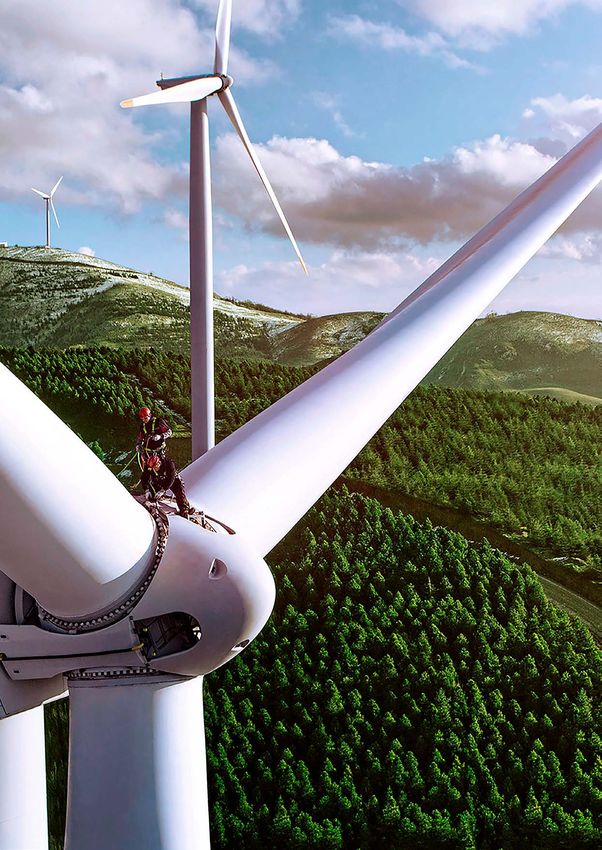
          QBE has been carbon neutral across our global operations since January 2018. Through our partnership with the Qantas
          Future Planet program, one of the projects we support is the Winds of Change in south east Turkey. This project consists
          of 54 wind turbines that avoid emissions by introducing clean power to the electricity grid. The project also provides
          employment and training opportunities during construction and operation, contributing to the local economy.

QBE Insurance Group Limited | ABN 28 008 485 014
1

                                                                                                       Sustainability Report 2019
                                                                                                       QBE Insurance Group
As a company that helps people and businesses
 protect themselves from risk, QBE has a focus

                                                                                                            Overview
 on sustainability. The identification of current
   and emerging environmental, social and
  governance (ESG) trends is an integral part

                                                                                                       insurance
                                                                                                       Sustainable
   of achieving our purpose, understanding
 the needs of our customers and ensuring the
       sustainability of our own business.

                                                                                                       investments
                                                                                                       Responsible
                                                                                                         community
                                                                                                         Customer and
About this Report
This Sustainability Report (the Report) covers the activities of QBE across its divisions during the
financial year ended 31 December 2019. It provides an overview of initiatives underway across

                                                                                                       culture
                                                                                                       People and
the pillars of our Sustainability Framework. We are guided by the Global Reporting Initiative (GRI)
Standards. All financial figures in this Report are in US dollars unless otherwise stated.
The information in this Report is validated by subject matter experts across the business. The
Report is submitted to the Board Risk & Capital Committee for review and approval. QBE also uses
an independent assurance engagement to confirm that certain data sets have been prepared and
presented appropriately in all material aspects.
                                                                                                       excellence
                                                                                                       Operational

We engaged Deloitte Touche Tohmatsu (Deloitte) to work with us to enhance the rigour behind
our sustainability reporting. Deloitte conducted independent limited assurance over QBE’s
global greenhouse gas (GHG) emissions data and environmental indicators, workforce-related
metrics and the total number of Premiums4Good impact investment projects and associated
financial contributions, for the year ended 31 December 2019.
This limited assurance engagement has been undertaken in accordance with the Auditing and
                                                                                                            Governance

Assurance Standards Board’s Australian Standards on Assurance Engagements ASAE 3000
Assurance Engagements Other than Audits or Reviews of Historical Financial Information.
The purpose of this was to provide QBE management with limited assurance over the
reported data, calculated in accordance with selected disclosure requirements outlined in the
GRI Standards and QBE’s Sustainability Reporting Framework, including its GHG Reporting
Framework. The full limited assurance statement, which includes a summary of the specific
reporting criteria used for each of the selected metrics, is available at the end of this Report.
                                                                                                            Performance
2
2019 snapshot 1
Shareholder Net profit after income tax (US$M)
highlights Financial highlights 3
2017 (1,249)
2016 844
Dividend per share (A¢) Combined operating ratio 4 (COR) Adjusted net profit after tax (US$M)
2015 687
52¢ 97.5%
2018 95.7% 6
5 2014
2013 622
(254)
4% from 2018 6
5 742
Dividend payout (A$M)
Gross earned premium
681
by class of business 2019 622
2018 597
Gross written premium
by class of business 2017 (191) Other
A¢ A$M
60 1,500 2016 833
54
52
50
50
Financial & credit
2015 807
45 1,125
Accident & health
Insurance profit and
26
30 750 underwriting result (US$M)
Insurance profit (US$M)
Marine energy & aviation
15 375
708 5
Workers' compensation
861
0 0
708
2015 2016 2017 2018 2019 Professional indemnity
Dividend per share (A¢) $153 from 2018 6 528
290
2019 2018 Public/product liability
Dividend payout (A$M) % %
Commercial &
4% from 2018 domestic property 29.2 29.2 Agriculture
Underwriting
2019
2018
Motor & motor casualty 14.4 15.7 result 4 (US$M)
Agriculture 13.7 12.7 Motor & motor casualty
290
Public/product liability 11.9 11. 1 Insurance
Earnings per share (US¢) Professional indemnity 8.4 7.9 5 profit
Commercial & domestic property
Underwriting
Workers' compensation 7. 1 7.3
41.8¢
result
Marine, energy & aviation 6.6 6.6
Accident & health
Financial & credit
5.3 Insurance
3.3
5.2
(loss) profit
3.8
4%2018 6
$238 from
2018 29.0¢
Other
Underwriting
0. 1 result
0.5 6%
Net earned premium by type
92%
Adjusted cash profit return on Net earned premium (US$M) direct and
average shareholders’ funds 2 facultative
insurance
8.9% 11,609 8% inward
2018 8.0% 1% from 2018 7 reinsurance
1 The information in the tables above is extracted or derived from the Group’s audited financial statements included on pages 84 to 159 of the Annual
Report. The Group Chief Financial Officer’s report sets out further analysis of the results to assist in comparison of the Group’s performance against
2019 targets provided to the market.
2 2019 adjusted cash profit ROE excludes non-cash and material non-recurring items such as restructuring costs, gains (losses) on disposals, the
impact of the Ogden decision in the UK and discontinued operations. 2018 adjusted cash profit ROE excludes the transaction to reinsure Hong Kong
construction workers’ compensation liabilities.
3 2018 and 2019 figures reflect results for continuing operations only.3
Sustainability Report 2019
QBE Insurance Group
Overview
Operational highlights Sustainability highlights
insurance
Sustainable
Average renewal rate increase Renewable Climate change
electricity disclosure
Group-wide 8 Segment use (%)
Target
6.3%
North America 5.8% by 2025
100 %
International 6.0%
DISCLOSURE INSIGHT ACTION
Australia Pacific8 7.3%
5.0%
investments
Responsible
2018
Currently 63% Score: B
Retention Gross written
premium growth 7
Employment Fostering a culture
78% 2%
engagement (%) of innovation
community
Customer and
Ran a global challenge
for employees to identify
2018 81% 2018 3% sustainable solutions
Net investment
return 4
Investments and cash at 31 December 2019
Fixed income
duration
70% Private equity
155
4% from 2018 projects identified
3.6% 2.6 years
Other - growth assets
culture
People and
Developed Market Equities
High yield debt
2018 2.3% 2018 2.1 years Financial inclusion Impact investments
Infrastructure debt
Cash and cash equivalents
Emerging market debt
Cash and investments at 31 December 2019 (US$M)
Property trusts
Premiums4Good: Ethical
excellence
Operational
24,374 QBE joined the program Corporation’s global
Infrastructure assets
in Australia Responsible Business
2019 2018 Short-term money Awards – Finalist, 2019
Investments and cash at 31 December 2019 % %
Corporate bonds 54.4 53. 1 Government bonds
Private equity
Government bonds 23.8 21.7
Short-term money 4.4 5.6
Other - growth assets Corporate bonds
Global disaster relief partnerships
Infrastructure assets 3.7 3.7
Developed Market Equities
Property trusts 3. 1 4. 1
Emerging market debt 2.3 1.0
High yield debt
Cash and cash equivalents 2.2 3.8
Governance
Partnering to
Infrastructure debt
Infrastructure debt 1.6 2.2
build resilient
High yield debt 1.6 0.4
Cash and cash equivalents
communities
Developed Market Equities 1.2 2.5
and futures
Other – growth assets 0.9 1.2
Emerging market debt
Private equity 0.8 0.7
Property trusts
Infrastructure assets
2019 2018 Short-term money
% %
Corporate bonds 54.4 53. 1
4 Excludes the impact of changes in risk-free rates used to discount net outstanding claims.
Government bonds
Government bonds 23.8 21.7
Performance
5 Excludes one-off impact
Short-term money 4.4 of the Ogden decision in theCorporate
5.6 UK.bonds
Infrastructure assets 3.7 3.7
6 Excludes transaction 3. 1to reinsure Hong Kong construction workers’ compensation liabilities.
Property trusts 4. 1
7 Constant currency
Emerging market debt basis.
2.3 1.0
Cash and cash equivalents 2.2 3.8
8 Excludes
Infrastructurepremium rate
1.6 changes relating to Australian compulsory third party motor (CTP).
debt 2.2
High yield debt 1.6 0.4
Developed Market Equities 1.2 2.5
Other – growth assets 0.9 1.2
Private equity 0.8 0.74
Group CEO
In addition to maintaining our carbon neutrality, on World
Environment Day, we announced our commitment to source
100% renewable electricity for our operations by 2025.
message
We have also joined with some of the world’s most influential
companies in the RE100 initiative, with the aim of accelerating
change towards zero carbon grids, at a global scale.
To further promote resilience and enhance disaster
recovery across diverse communities, we have partnered
with two of the world’s leading humanitarian agencies,
Red Cross and Save the Children. Our partnerships
support rapid mobilisation of disaster relief in response
to catastrophic events, and disaster preparedness and
climate resilience initiatives for vulnerable communities.
In response to the recent unprecedented Australian
bushfires, QBE pledged A$500,000 to these agencies
to support bushfire relief and recovery efforts. Additionally,
we waived the policy excess for individual customers
making bushfire-related claims for their personal insurance
and made free counselling available to all our customers
in bushfire affected areas.
Our Premiums4Good program continues to go from
strength to strength. I am very pleased to announce that
At QBE, we work hard to integrate we are doubling our ambition for this unique initiative
sustainability into every facet of our to $2 billion by 2025. Our intent is for more than half of
this amount to be focused on environmentally impactful
operations. As an international insurer and
investments, particularly renewable energy projects.
reinsurer that helps people, businesses
Premiums4Good is a collaboration between QBE,
and communities across the world to our customers, partners and shareholders, which
manage risk, we believe this is essential sees a portion of customer premiums channelled into
to the long-term future success of our investments that have additional social or environmental
benefits. $663 million is already invested across 48 securities,
business and our ability to give people
including social impact bonds, green bonds and other
the confidence to achieve their ambitions. social investments. The success of Premiums4Good was
widely recognised this year with its shortlisting in a range
This Report details the strong progress we have made of prestigious awards.
across the six pillars of our Sustainability Framework,
described on the following page, and includes case studies In 2014, we ran an innovation challenge across our
and examples highlighting the active steps we are taking business where we asked our employees to imagine how
to embed sustainability into our business practices. insurance premiums could be used to create shared value.
Premiums4Good was the result. This year, we ran another
Among the highlights for 2019 was the publication of our company-wide Global Challenge, asking our people to think
Group Energy Policy earlier in the year. This important creatively and innovatively about the macro issues and
statement provides shareholders, customers and the wider challenges facing our customers, and the ways in which
community with a clear explanation of our approach to we could respond. The response from our people was
investing in and underwriting energy projects, now and into overwhelming, with suggestions covering topics including
the future. This clarifies our support for the objectives of the workplace mental health and action on climate change.
Paris Agreement and for decisive action on climate change The four finalist submissions from the Global Challenge
and transitioning to a lower carbon future. received seed funding to further explore their potential
to become something as impactful as Premiums4Good.
As an international insurer, we are acutely aware of the
risks and opportunities that climate change presents for The creativity, diversity and ingenuity of our people
our customers, our business and the wider communities is a differentiator for QBE, and an ongoing area of focus.
in which we live and work. Our Group Energy Policy Our people are key to our ability to respond to our customers’
confirms our intention to phase out all direct insurance current and emerging needs. They are a driver of our future
services for thermal coal customers by 2030, at the latest. success and the ongoing sustainability of our business.
QBE also maintains zero direct investments in thermal coal.
Pat Regan
Group Chief Executive Officer5
Sustainability Report 2019
QBE Insurance Group
Sustainability Framework:
Our approach to sustainability
Overview
Responsible
investments
insurance
Sustainable
People and Sustainable
Iden
culture insurance
Ma n a g i ng r i s k s
t i fy
ing opportunitie
We give people the
investments
Responsible
confidence to achieve
their ambitions
s
Customer and Operational
community excellence
community
Customer and
Governance
culture
People and
As an international insurer and reinsurer, we are focused on good corporate governance and the sustainability of our
business, being a great employer, and making a positive and impactful contribution to the societies, economies and
communities in which we operate. Our approach to sustainability is essential to our ability to deliver on our purpose
to give people the confidence to achieve their ambitions.
Managing risk is what we do at QBE. It is important that current and emerging ESG considerations are built into our
excellence
Operational
decision-making processes to help our customers manage risk through our products and services. We take a holistic,
long-term view to create value for our stakeholders and ultimately protect our organisation’s sustainability.
In 2019, we continued to integrate sustainability considerations across our business. Our Sustainability Framework
helps us drive performance, manage risks and identify opportunities across the areas of sustainability that are most
important to our business, customers and stakeholders. To support our prioritisation efforts, in 2019, we carried out
a comprehensive materiality assessment process, outlined on pages 8 to 11.
Governance
This Report outlines our performance for the year, and initiatives that are underway in the focus areas of our
Sustainability Framework. It highlights our collaboration with key stakeholders to strengthen our collective impact,
and to identify and address ESG risks and opportunities.
Performance6
Sustainability governance
and management
Oversight and The team is responsible for The Sustainability Committee
accountability coordinating the identification, is chaired by our Group
of sustainability analysis and management of Executive Corporate Affairs
The highest governing body for ESG risks and integration into our and Sustainability, a member
sustainability-related issues is our risk management practices and of the GEC. This ensures a close
Group Board of Directors. The systems. The team supports our alignment of the Committee’s
Board is supported by the Board climate change working groups activities with our CEO’s agenda.
Risk & Capital Committee (BRCC) on managing our approach to
climate risks and opportunities. ESG Risk Committee
which oversees and guides QBE’s
sustainability approach, initiatives The ESG Risk Committee, formerly
Group Impact known as the ESG Business Policy
and reporting requirements. and Responsible
The Group Sustainability Committee, was established
Investments team in late 2018 by the Group CRO.
team provides an update on
QBE has a dedicated Group The Committee is responsible
sustainability performance and
Impact and Responsible for managing and overseeing
activity to the BRCC at each of
Investments (IRI) team, which activities to identify and review
its meetings (six meetings were
reports to the Group Chief ESG risks and develop appropriate
held in 2019).
Investment Officer (CIO) and the policy and decision-making
Our Group Executive Committee Group Chief Financial Officer, frameworks. In addition, the
(GEC) reviews and approves a GEC member. The IRI team aims Committee considers and
our sustainability agenda and to integrate ESG considerations recommends policy positions
priorities and receives updates into our investment on ESG risks that impact
on these throughout the year. decision-making process. underwriting, investment and/or
An Executive Non-Financial Risk The IRI team’s activities are also operations across the Group
Committee (ENFRC) was formed overseen by the BRCC and, where to the ENFRC.
in 2019 to support the GEC in appropriate, the Board Investment
managing non-financial risks. Committee. The Group CIO and/ Other governance
or Head of IRI participate in forums
Integrating numerous sustainability-related There are a range of other internal
sustainability across committees including the ESG governance forums and working
our business Risk Committee and Climate groups whose members have
Change Steering Committee. the specialist skills needed to
Group Sustainability team
understand and address existing
The Group Sustainability team, Sustainability Committee and emerging sustainability issues.
operating under a dedicated
The Sustainability Committee These include our:
Group Head of Sustainability,
supports the business in the • Global Emerging Risk Forum;
reports to the Group Executive
delivery and effectiveness of our • Climate Change Steering
Corporate Affairs and
sustainability strategy, initiatives Committee;
Sustainability, a GEC member.
and reporting requirements.
The team drives sustainability • Group Underwriting Committee;
It is made up of senior
across our business, including • Conduct Risk Working Group;
representatives from across
development and implementation • Premiums4Good Global
the Group who are involved
of our sustainability approach Steering Committee;
in the day-to-day management
and initiatives, external • Diversity & Inclusion Council;
of sustainability issues. These
stakeholder engagement, • Health & Safety Working
representatives come from
internal engagement and Group; and
business units including Risk,
communications, performance
Finance, Investments, Investor • QBE Global Foundation
management and reporting.
Relations, People and Culture, Committee.
Communications, Legal, Company
Group ESG Risk team More information about these
Secretariat and Compliance, committees can be found
The Group ESG Risk team Operations and Claims. throughout this Report under
reports to the Group Chief Risk the relevant sections.
Officer (CRO), a GEC member.7
Sustainability Report 2019
QBE Insurance Group
Sustainability
Governance Framework
Highest level of oversight
Overview
Group Board of Directors
Board Risk & Capital Committee
Accountability for sustainability
insurance
Sustainable
Group Executive Committee
Executive Non‑Financial Risk Committee
investments
Responsible
Integrate sustainability across business
Group Impact
Group Group
and Responsible Sustainability ESG Risk
community
Customer and
Sustainability ESG Risk
Investments Committee Committee
team team
team
Drive strategy in focus areas
culture
People and
Global Emerging Climate Change Group Underwriting Conduct Risk
Risk Forum Steering Committee Committee Working Group
excellence
Operational
Premiums4Good QBE
Diversity & Inclusion Health & Safety
Global Steering Global Foundation
Council Working Group
Committee Committee
Governance
Performance8
Materiality
In 2019, we undertook an extensive and comprehensive materiality
assessment process to identify the sustainability topics, risks and
opportunities that are most significant for QBE and our stakeholders.
The analysis considered how Identification community groups, industry
our business creates value Sustainability topics were associations, commercial partners
for all stakeholders across the identified using both internal and think tanks. The process
short, medium and longer-term and external inputs. This involved enabled us to understand our
horizons. Aligned to the Global gathering perspectives from stakeholders’ unique needs,
Reporting Initiative (GRI) a wide range of sources, with both expectations, perceptions
Standards, the assessment internal and external stakeholder or concerns.
also considered our economic, engagement. The process was As part of our broader approach
environmental and social impacts aligned to: to sustainability, we also regularly
across the value chain (including • the GRI Reporting Principles consult with our stakeholders
positive, negative, actual and for defining report content to help us identify risks and
potential) on stakeholders, society and report quality including opportunities, and gain the insights
at large and on QBE. Stakeholder Inclusiveness, we need to ensure our strategy,
We also considered our alignment Sustainability Context, Materiality products and services continue
to the United Nations Sustainable and Completeness; and to meet our stakeholders’ needs
Development Goals (SDGs) as • AccountAbility’s AA1000 and requirements.
part of the process, assessing the AcountAbility Principles Refer to our website for
most relevant SDGs and associated (AA1000AP) 2018 of Inclusivity, further information about
targets for each material topic. The Materiality, Responsiveness our stakeholder engagement
results of our materiality assessment and Impact. process, including our major
stakeholder groups and how
inform our sustainability approach,
As part of the process, we we engage with them.
strategic priorities and reporting.
engaged with a diverse range
We engaged a third party consultant
of stakeholders including
to ensure independence throughout
investors, employees, government,
the process.
The following provides an overview of the key aspects of the methodology:
Desktop Peer Employee Stakeholder Impact
research benchmarking workshops engagement workshop
Including media Considering the A number of In-depth Stakeholders
reports, industry key topics being employees interviews from across
standards, prioritised and participated with internal the business
principles and reported on by in focus group and external participated
benchmarks our global peers sessions to stakeholders, in a workshop
focusing on provide their including a to support
megatrends perspectives wide range of decisions about
and emerging on the most investors the significance
risks and significant topics of impacts for
opportunities for QBE QBE
for the insurance
sector9
Sustainability Report 2019
QBE Insurance Group
The sustainability topics identified The results of this review were used to QBE or of significance to
were mapped to our Sustainability to develop a materiality matrix. particular stakeholder groups.
Framework to ensure coverage These topics warrant further
Each topic was then positioned
Overview
of the risks and opportunities analysis and management.
on our materiality matrix taking
relevant to our role in society
as an international insurance
into account three different stages Validation
of relevance and maturity:
and reinsurance company. Following the development
• Prioritise – Topics with high of the materiality matrix
Prioritisation importance to our stakeholders by QBE in conjunction with
and with a significant impact an independent third party,
Topics raised through the
insurance
Sustainable
on the environment, economy an internal validation workshop
identification process were
and society. These require was held with the Sustainability
reviewed, consolidated and
significant management and Committee to test and validate
prioritised. We were guided
strategic focus. the assumptions used, and the
by the GRI Standards in assessing
• Maintain – Topics with strategic outcomes, taking into account
the significance of QBE’s impact
significance for which we have the short, medium and long-term
on the economy, environment
well-established management potential impacts of each topic.
and society. As part of the
investments
Responsible
processes. Stakeholder interest
process, we considered a range The final outcomes were then
in these topics may vary.
of factors to test the insights presented to and approved
from the identification stage. • Monitor and Manage – Topics
by the BRCC and GEC.
with increasing relevance
community
Customer and
High
Climate risks
Priority and opportunities
Culture
Ongoing importance Customer-centric Diversity Trust &
solutions & inclusion transparency
culture
People and
Customer
Cyber security Conduct
Financial
Importance to Stakeholders
inclusion Corporate governance
Technology Human
Operational & innovation rights Customer Service & Satisfaction
environmental Natural disaster
management Regulatory management
& crisis support
Monitor and manage Leadership
& compliance
& talent
Impact ESG Risk
investing management Responsible investments
Employee
engagement Sustainable Privacy
Sustainable procurement
excellence
Operational
solutions
Learning & Community
development engagement
Financial crime
Future
workforce Performance Appropriate Health, safety
& reward pricing & wellbeing
Employee
relations
Public policy Data and
& advocacy analytics
Community
investment
Governance
Low
Low Significance of economic, environmental, and social impacts High
• • •
Performance
Key: Sustainable insurance Customer and community Operational excellence
• Responsible investment
• People and culture
• Governance10
Material topics for 2019
Based on the extensive review process outlined earlier,
our prioritised material topics for 2019 included:
Climate risks and Culture
opportunities
As a leading international insurance and reinsurance Building an organisational culture that supports and
company, we have a significant role to play in enables us to achieve our purpose and strategy in an
understanding and managing the potential risk ethical and responsible manner is a strategic priority for
exposures and opportunities related to climate change our business. Leadership is key to ensuring that ‘how’
across our entire value chain. In addition to the physical people go about their work is seen as just as important
impacts of climate change, we are also aware of the as ‘what’ gets achieved. Our QBE DNA and Group Code
potential transition risks (e.g. policy, technology, market) of Ethics and Conduct underpin our culture and help
and liability risks. We are well-positioned to use our us deliver on our strategic plan and priorities.
industry expertise to help customers, partners and Refer to People and culture for further information
communities understand and manage the changing risk on how we are addressing this topic.
landscape, build resilience and navigate the transition
to a lower-carbon economy. In 2019, we set three new
climate-related targets for our global operations.
Refer to Sustainable insurance, Customer Customer conduct
and community, Operational excellence, and
our 2019 Annual Report for further information
on how we are addressing this topic. We are committed to maintaining high ethical
standards in how we conduct our business. The actions
and conduct of our employees, and others acting on
QBE’s behalf, are key to maintaining these standards.
This includes our relationships with customers and
Customer service and how we address the risk of unfair outcomes across the
satisfaction design of products and services, marketing and sales,
distribution, claims and complaints.
We are focused on continuous improvement
Refer to Customer and community and Governance for
in customer service, providing appropriate and further information on how we are addressing this topic.
inclusive services, efficient and effective resolution of
customer complaints and ongoing customer education.
We continue to focus on delivering a consistent level
of outstanding customer service across our divisions.
Cyber security
Refer to Customer and community for further
information on how we are addressing this topic.
Cyber security is one of the biggest threats shaping
today’s risk landscape. As an escalating business risk,
cyber security has the potential to impact our operations,
business, customers and other key stakeholders. QBE
employs a global approach to effectively manage
Corporate governance internal and external threats to the confidentiality,
integrity and availability of our customer and corporate
We are committed to the highest standards of data. We proactively monitor and respond to known
corporate governance across our global operations. and emerging threats in all our regions, and assist with
This includes the Board providing guidance and innovation and transformation to benefit our customers
oversight to support ethical behaviour, transparency and shareholders with secure solutions. We manage
and accountable decision making. and mitigate emerging threats, including cyber threats,
Refer to the Corporate governance statement in our by adhering to all legislation relevant to our business
2019 Annual Report for further information on how and our Group Code of Ethics and Conduct.
we are addressing this topic.
Refer to Operational excellence for further information
on how we are addressing this topic.11
Sustainability Report 2019
QBE Insurance Group
Customer‑centric solutions Leadership and talent
Overview
As a customer-centred business, we engage with Developing and empowering our people
our customers to understand their current and to be effective leaders and agents for change,
emerging needs and to continually deliver high-quality and building a diverse talent pipeline, are core
products and services that meet their needs and to how we develop and maintain an effective
expectations. Across the entire product lifecycle, organisational culture. This includes helping our
insurance
Sustainable
we put our customers at the heart of our decision people develop the appropriate skills to deliver
making. This is supported by clear, honest and our strategic priorities.
transparent communication. Refer to People and culture for further
Refer to Sustainable insurance and Customer and information on how we are addressing this topic.
community for further information on how we are
addressing this topic.
investments
Responsible
Regulatory management
and compliance
Trust and transparency
QBE is subject to extensive local and international
laws, regulatory requirements and obligations,
The increased focus on trust in the financial policy, industry codes and business and ethical
community
Customer and
services sector, with greater regulatory scrutiny, standards across our activities, wherever
has led to the need for enhanced transparency and we operate. QBE seeks to take all reasonable
disclosure around key customer issues, ESG risks and steps to minimise compliance risk – not only
opportunities and tax transparency. We do this through because it is required, but to continue to do the
disclosure of our management practices, business right thing by our stakeholders. QBE maintains
performance and plans for continuous improvement a proactive, open and cooperative relationship
in relation to material sustainability topics. with our regulators. We have embedded
culture
People and
Refer to Sustainable insurance, Customer and community, robust regulatory processes and frameworks
People and culture, Operational excellence and Governance to ensure transparency.
for further information on how we are addressing this topic.
Refer to Governance for further information
on how we are addressing this topic. excellence
Operational
Diversity and inclusion
Human rights
Building a diverse, innovative, supportive, inclusive
and performance-driven workplace aligned to local Wherever we operate we respect human rights
and international standards is a core part of our and are committed to avoiding human rights
culture agenda. Underpinned by a Global Diversity harm through our activities and decisions.
and Inclusion Policy and strategy aligned to business
Governance
This includes our response to various laws and
priorities, this includes fostering diversity in gender, norms regarding human rights, including risks
ethnicity, race, thinking and ideas. We also continue related to modern slavery.
to focus on initiatives that contribute to work-life balance
Refer to Governance for further information
for employees and contractors, such as flexible working
on how we are addressing this topic.
hours, carer’s leave and domestic violence leave.
Refer to People and culture for further information
Performance
on how we are addressing this topic.
A summary of our sustainability commitments and targets
can be found in the Sustainability scorecard.12
Advancing the United Nations
Sustainable Development Goals
We believe in, and strongly support, the aims and objectives of the United
Nations SDGs which seek to address the world’s most pressing economic,
environmental and social challenges. As a universal agreement to work
towards a better and more sustainable future, the SDGs closely align with
our purpose – to give people the confidence to achieve their ambitions.
In 2018, we analysed the 17 SDGs
to identify those most closely
aligned to our purpose, strategic
business priorities, Sustainability
Framework, products and services
and business initiatives. We also
considered the interconnectedness
and interdependencies of the SDGs.
A detailed outline of the process can
be found in the 2018 Sustainability
Report, or on our website.
At QBE, we continue to align our
sustainability agenda to support
advancement of these global
goals. All of the SDGs are relevant
to our business in some way.
However, we contribute to the
advancement of some SDGs
more directly than to others. We
have therefore chosen to prioritise
five goals which align most closely
to our purpose and strategic
business priorities. This is where
we feel we can have the greatest
impact. In 2019, we continued
to align our sustainability agenda
to support these five goals.
We continue to engage our innovation process and selection
In addition to the five priority criteria, with several submissions
senior leaders and employees
goals, our community ultimately selected as finalists for
to raise awareness of the
engagement strategy also further action by QBE.
SDGs. In 2019, we invited the
focuses on Goal 3: Good Health
Business Council for Sustainable Refer to Sustainable insurance
and Well-being. We also believe for further information on the
that Goal 17: Partnerships for the Development Australia to hold
Global Challenge.
Goals – underpins everything that workshops across our divisions
we do and will enable achievement on ‘The Good Life Goals’. These Throughout this Report, we have
of the wider 2030 Agenda for provided our employees with included a range of case studies
Sustainable Development. We will tangible, personal actions they and examples to demonstrate
continue to leverage our existing can undertake in their daily lives how we continued to support
partnerships to collaborate on to support the SDGs. In 2019, advancement of the goals this year.
key sustainability topics, and will we also ran a Global Challenge,
seek to collaborate with industry, providing a platform for our
government, community partners employees to innovate on a range
and other stakeholders to help of topics that are important to
advance, and one day achieve, our customers. Our priority SDGs
the SDGs. were considered as part of the13
Sustainability Report 2019
QBE Insurance Group
Our five priority SDGs
GOAL 1: No Poverty
Overview
End poverty in all its forms everywhere
Building the financial and risk resilience of our customers is core to our purpose. We protect people
and businesses against risks – contributing to our customers’ long term financial wellbeing. An accident,
illness or disaster can quickly plunge customers into financial distress. Providing insurance protection
for customers and communities helps them to recover, preventing them from falling into, or deeper
into, poverty.
insurance
Sustainable
GOAL 5: Gender Equality
Achieve gender equality and empower all women and girls
QBE is committed to gender equality both in terms of our own people, and in how we operate our
insurance business. As a signatory to the Women’s Empowerment Principles and with our Group CEO
continuing to be a Male Champion of Change, we retain a strong strategic focus on diversity and inclusion
investments
Responsible
across our business. We have committed to promoting greater gender equality with a target of 35%
women in leadership by 2020. In 2019, we had 34% of women in leadership, and we are well on our way
to achieving our goal.
GOAL 8: Decent Work and Economic Growth
Promote sustained, inclusive and sustainable economic growth,
community
Customer and
full and productive employment and decent work for all
With operations in key areas and markets internationally, we believe that sustainable economic growth
is fundamental to our business and our economic success. Our strategic focus on innovation and building
for the future enables us to promote sustained economic growth that is impactful. We provide insurance
products that support decent work, such as our workers’ compensation and accident and health solutions.
A focus on protecting human and labour rights within our business, and across our supply chain,
is essential to ensure that we remain a responsible employer and business partner.
culture
People and
GOAL 11: Sustainable Cities and Communities
Make cities and human settlements inclusive, safe, resilient and sustainable
We understand that cities and human settlements are rapidly changing and under pressure due to
excellence
Operational
increasing urbanisation, changing transport and energy systems, building codes and exposure to climate
risks. We are committed to building on our existing data, products, services and advice, and collaborating
with industry, government and other stakeholders, to identify sustainable solutions to reduce risk and
enhance safety and resilience.
GOAL 13: Climate Action
Governance
Take urgent action to combat climate change and its impacts
As a general insurer, we are very aware of the risks and opportunities presented by climate change. We are
well positioned to use our industry expertise to help customers, partners and communities mitigate these
risks, and support the uptake of new opportunities and technologies in the transition to a lower carbon
economy, consistent with the 2015 Paris Agreement.
Performance14
Addressing climate change
Climate change is a significant global economic, social and environmental
challenge. From acute physical risks such as severe weather-related
events including floods, bushfires, droughts, hurricanes, heat waves
and cyclones, to longer term chronic impacts such as increasing global
temperatures and rising sea levels, at QBE, we see first-hand the damaging
consequences of climate change on people and communities. We also
are aware of the transition risks associated with changes in policy, laws,
technology and markets.
Our role as an international insurer recommendations and describes Programme – Finance Initiative’s
and reinsurer is to financially protect our progress in meeting them. pilot group, we are working with
people and their assets, assist Refer to the 2019 Annual Report 22 other insurance companies
in recovery efforts from natural for further information. to develop new approaches on risk
disasters and other catastrophes assessment tools. This will enable
During the year, we further
and reduce the economic and the global insurance industry
strengthened our climate change
social impacts of climate change to better understand the impacts
governance by establishing three
on customers and communities. of climate change scenarios on
working groups under the Climate
their lines of business. The pilot
We accept the scientific evidence Change Steering Committee
will make use of the latest climate
from the Intergovernmental to focus our work and efforts
science, including some of the most
Panel on Climate Change, across the key areas of physical,
advanced, forward-looking climate
and support the landmark transition and liability risk.
scenarios available.
international agreement forged In 2019, we published our Group Refer to Sustainable insurance
at the Conference of the Parties Energy Policy, outlining our for further information about
to the United Nations Framework commitment and continued our industry collaboration.
Convention on Climate Change support of our customers as they
in Paris in 2015, which aims to We also acknowledge that
transition to a lower carbon global
contain global warming and reduce minimising disaster risk and
economy. In accordance with the
greenhouse gas emissions over building resilience requires a
Policy, QBE ceased providing any
the long-term. We understand that collective effort with public, private
new direct insurance services
reaching these goals will require and community sectors. Where we
for new construction projects
a rapid reduction in greenhouse cannot help our customers directly,
for thermal coal mines, coal
gas emissions by the global we will continue to play an active
power stations or coal transport
economy, and are continually role both directly, and through our
infrastructure in July. We continue
doing our part to help achieve this. industry associations, in advocating
to maintain zero direct investment
all levels of government for
QBE is fully committed in thermal coal.
initiatives to reduce the risks and
to implementing the final Refer to Responsible
impacts of climate-related disasters.
recommendations of the Financial investments for further
information about how we
Stability Board’s Task Force on manage climate risk in our
Climate-related Financial Disclosures investment portfolio.
(TCFD). The TCFD recommendations
are aimed at helping companies
Additionally, the Policy also Our approach to climate change
commits QBE to phase out all
better disclose key climate-related
direct insurance services for the In 2019, we developed and published
information centred around
thermal coal industry by 2030 ‘Our approach to climate change’,
four core elements: governance,
at the latest, except for statutory outlining how we work across
strategy, risk management, and governance, risk management and
or compulsory insurance such as
metrics and targets. These four underwriting, investments, people and
workers’ compensation insurance.
elements establish a strong and operations, and through our climate
consistent framework for improving We continue to collaborate
partnerships for impact.
climate-related risk management with our industry peers and
stakeholders to deliver impact Further information about this can
and disclosure. Our Climate
be found here.
Change Action Plan outlines at the global level. As part of the
how we will implement the TCFD United Nations EnvironmentYou can also read


