2017-2018 Danila Dilba Health Service
←
→
Page content transcription
If your browser does not render page correctly, please read the page content below

Danila Dilba Health Service

                              2017–2018
Our name, our                                    Our Vision
people, our region                               That Aboriginal and Torres Strait
Our full name, Danila Dilba Biluru Butji         Islander peoples’ health, well-being       Contents
Binnilutlum, was given by the Larrakia           and quality of life equals that of
people, the traditional owners of the            non-Indigenous Australians.                Chairperson’s report                                          2
land where Darwin and Palmerston                                                            Chief Executive Officer’s report                              4
are situated. In the Larrakia language,
Danila Dilba means ‘dilly bag used to            Our Purpose                                Board of Directors                                            6
collect bush medicines’ and Biluru Butji
                                                 Our purpose is to improve                  1.Health for Life                                            10
Binnilutlum means ‘blackfella (Aboriginal
                                                 the physical, mental, spiritual,           1.1 Introduction                                             11
people) getting better from sickness’.
                                                 cultural and social wellbeing of
Aboriginal and Torres Strait Islander            the Biluru community in the                1.2 Why an Aboriginal community controlled health service?   13
people from around Australia have                Yilli Rreung (Greater Darwin)              1.3 Comprehensive primary health care                        15
visited Larrakia country for generations.        area. We achieve this through              1.4 Care across the life course                              16
Some of the visitors stayed and we               innovative comprehensive
are now blessed with a rich cultural             primary health care programs,              2. Outreach, education, engagement & partnership             32
diversity.                                       community services and advocacy.
                                                                                            2.1 Health promotion and education                           33
When we describe ourselves in the                Our work is based on principles
2015–2016 Annual Report, we use the                                                         2.2 Counselling and social support                           36
                                                 of equity, access, empowerment,
words Biluru, Aboriginal, Torres Strait          self-determination and collaboration.      2.3 Events and outreach                                      39
Islander and Indigenous.
                                                                                            2.4 Health research partnerships                             41

                                                 Our Values                                 2.5 Research for advocacy                                    43
Our logo                                         • Respect                                  3. About Danila Dilba                                        44
                                                 • Trust, honesty and integrity             3.1 Overview                                                 45
                                                 • Fairness, transparency and              3.2 Our services                                             46
                                                   accountability
                                                                                            3.3 Continuous Quality Improvement (CQI)                     54
                                                 • High professional standards,
                                                                                            3.4 Organisational development                               57
                                                   ethics and quality
                                                                                            3.5 Our people                                               59

Our logo was designed by                                                                    4. Financial Reports                                         69
Larrakia elder Reverend Wally Fejo.
The story of the logo is:
the fish being in a school are excited
when jumping around and convey to us
our exciting, healthy life. The turtle going
back to lay her eggs represents the
people. The stick represents a hunting
tool on how to find her eggs. The overall           Danila Dilba Biluru Butji Binnilutlum
circle is like looking inside a dilly bag from      Health Service Aboriginal Corporation
above. The snake brings the threat of               ABN 57 024 747 460 / ICN 1276
danger to our wellbeing and reminds us
that we should always sustain ourselves
and be on guard for our health.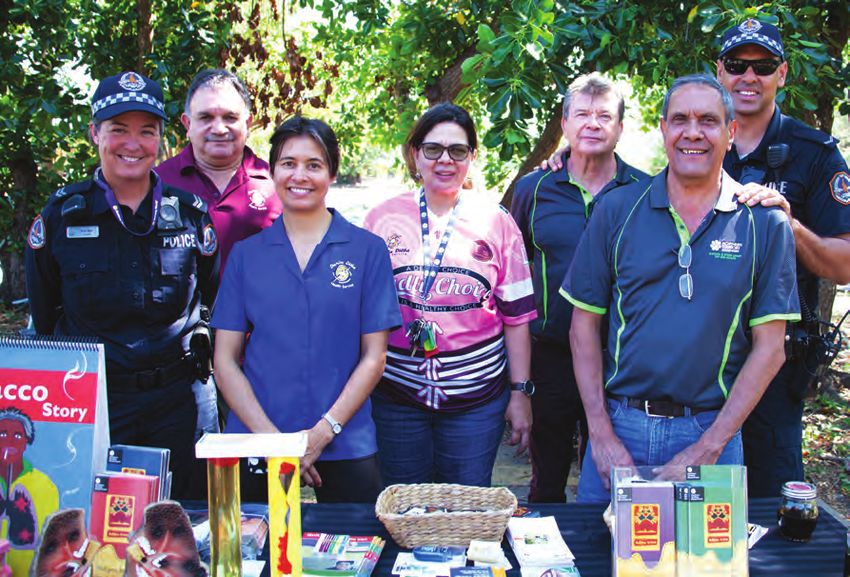
Chairperson’s report                                                            This year we were greatly assisted again by our Audit and Risk Management
                                                                                                                        Committee, which provides independent advice to the Board on risk,
                                        2017-18 was another exceptional year for Danila Dilba, with                     control and compliance and financial responsibilities.
                                        the addition of two clinics, further strengthening of our Board and             Our staff
                                        staff, and great work in outreach and community engagement.                     The Danila Dilba Board values the great work of our staff and supports
                                        Danila Dilba’s Board has leadership responsibility for a big community          professional development of all staff. We especially encourage our Aboriginal and
                                        owned and controlled organisation that now manages seven primary                Torres Strait Islander staff to step up to take on training and career development.
                                        health care clinics across the Greater Darwin region.                           Aboriginal Health Practitioners (AHPs) have a vital role in primary health care
                                        This year we opened our new clinic at Rapid Creek and welcomed                  and this year, we initiated four AHP traineeships, an important step in ‘growing
                                        the Bagot Community Clinic under DDHS management. The Bagot                     our own’ skilled clinicians. Four trainees were employed from a strong field of
                                        Community Health Centre has served Bagot, Kulaluk and Minmarama                 nearly 40 applicants.
                                        Park communities for some 40 years. We are confident that by working            I am pleased to report that the DDHS Human Resources Strategy and
                                        together we can build up this service for long-term sustainability and a        Indigenous Employment and Career Pathways Strategy have been very
                                        secure future.                                                                  successful, increasing Indigenous staffing at all levels. The outcomes reflect a
                                        The Board                                                                       growing Indigenous professional staff in our organisation. In 2017-18,
                                                                                                                        Indigenous staff were:
                                        I thank the directors for their hard work this year. As well as directors’
                                        general responsibilities, everyone contributed to building up the Board’s       • 65% of our leadership team (CEO, General Managers, all Clinic Managers), and
                                        capacity and skills, including:                                                 • 63% of non-GP clinicians and community/social and clinical support staff
                                        • attending an executive masterclass for healthcare boards on                    (AHPs, RNs, clinical administration, community services and client support).
                                          Responsibilities for Leading Quality and Safety,                              Our vision is to ensure continuing leadership by a well-qualified, skilled
                                        • corporate governance training with the Australian Institute of               Indigenous management team. The Board approved creation of a new identified
                                           Company Directors, and                                                       position of Deputy CEO as part of long term succession planning, aiming to
                                        • five day directors’ course with the Australian Institute of Company          make an appointment to this position in 2018-19.
                                          Directors, undertaken by two Board members.
                                                                                                                        Community
                                        An independent review in 2017 found our Board is performing well                As this Annual Report shows, Danila Dilba works to support our community –
                                        and improved in every area compared with the previous review in 2015.           getting involved in community events, outreach and health education for
                                        The review of our CEO, Olga Havnen, also ranked her highly on each              all ages, with active social media on Facebook, YouTube videos and regular
                                        measure of her performance.                                                     quarterly newsletters.

                                        There were changes to the Board this year. Former Chair, Braiden Abala,         Special thanks go to our Community Services team and manager Joseph Knuth.
                                        former Larrakia Officer, Phyllis Mitchell and Independent director, Priscilla   DDHS now provides regular breakfasts for the homeless and people sleeping
                                        Atkins (formerly, Collins), retired this year. On behalf of the Board and       rough, with support from Orange Sky who provide an additional portable
                                        staff, I thank the former Chair and retiring Board members for their            clothes washing service.
                                        commitment and service to Danila Dilba.
                                                                                                                        On behalf of the Board, I also acknowledge and thank our staff who
                                        Continuing Directors were myself (Chairperson), Nicole Butler                   volunteered their time to work with the ‘breakfast team’ and with the
                                        (Deputy Chair), Vanessa Harris, Mark Munnich, and independent                   Youth Support Team working with young people in detention.
                                        non-member director David Pugh.

                                        We welcome new directors Timmy Duggan, Shannon Daly, Malcolm
                                        Hauser, and Larrakia Officer, Wayne Kurnoth. Our new independent
                                        non-member director Dr Bronwyn Rossingh, brings valuable
                                        high-level financial expertise to the Board.                                     Mrs Carol Stanislaus
                                                                                                                         Director / Chairperson

page 2 Danila Dilba Health Service ANNUAL REPORT 2017–2018                                                                                                                         Danila Dilba Health Service ANNUAL REPORT 2017–2018 page 3
Chief Executive Officer’s report
                                          2017-18 was a year of solid growth, expansion                            Advocacy for children and families
                                          and consolidation for Danila Dilba.                                      Since the 2016 Four Corners TV program on Aboriginal youth in
                                                                                                                   detention in Darwin, Danila Dilba has been active in advocacy for
                                          This year we expanded our clinical services with the addition of
                                                                                                                   children in the NT Child Protection and Youth Justice systems.
                                          two clinics – a new DDHS clinic at Rapid Creek, and the inclusion
                                          of the Bagot Community Clinic under Danila Dilba management.             As the Royal Commission that followed has shown, there is a
                                                                                                                   hugely disproportionate level of contact with Aboriginal families and
                                          We now operate seven clinics in the Greater Darwin region and
                                                                                                                   children in both systems, and far too many Aboriginal children taken
                                          have achieved substantial growth in the number of clients, shown
                                                                                                                   into out of home care. DDHS is now hosting a project to develop
                                          by a 20% increase in the number of episodes of care to more
                                                                                                                   Aboriginal-led and managed out of home care and family support
                                          than 55,000 this year.
                                                                                                                   services in the NT.
                                          Investing in our people
                                                                                                                   We made submissions to the Royal Commission and following
                                          Danila Dilba continues to grow our workforce and invest heavily          its recommendations, have advocated for legislative change and
                                          in our staff and their professional development. We aim to make          partnered with peak bodies to call for a tripartite Commonwealth-
                                          Danila Dilba an employer of choice, both to attract talented staff       Territory-NGO forum to lead the strategic response.
                                          and to increase professionalism and capability of staff at every level
                                          of the organisation.                                                     In May-June 2018, Danila Dilba was delegated on behalf of
                                                                                                                   AMSANT1 to conduct extensive community consultations to hear
                                          Investment in training and development has shown enormous                about community experiences of the current systems and ideas
                                          returns this year. Most importantly, we now have a much more stable      about proposed changes to the legislation.
                                          workforce to provide the continuity of care for our clients that is
                                          essential to their well-being and health. In addition, our more stable   Although we have only a small dedicated team of policy and
                                          workforce means we are less reliant on agency and short-term staff,      research workers, Danila Dilba has been recognised and has
                                          generating savings of about $400,000 per year.                           achieved a solid reputation for high quality, well informed research
                                                                                                                   and the capacity to influence and drive long overdue changes in
                                          Australian Nurse Family Partnerships                                     these areas.
                                          One of the great success stories this year was the Australian Nurse
                                          Family Partnership Program (ANFPP). This home visiting service           Finally, I warmly thank and acknowledge all of our Danila Dilba
                                          strengthens families and gives first time mothers the nursing and        staff for embracing yet another year of change and for your
                                          social support they need until their child is two years old.             commitment to our shared goal – to achieve a dynamic health
                                                                                                                   service that respects Aboriginal cultures, is committed to the
                                          ANFPP only began to take clients in January 2018, and after three        world’s best practice, and has a passion to make a difference
                                          moves, settled in its permanent home at Malak in April this year.        to the well-being of Aboriginal people.
                                          Despite these hurdles, in the first year, the program has received
                                          50 referrals, closing the year with 27 active clients and 13 babies!

                                          Our ANFPP home visiting team of Home Nurse Visitors and
                                          Family Support workers is unique. It is made up entirely of Indigenous
                                          women and is the only all-Indigenous ANFPP team in Australia.
                                          Early intervention to support healthy parenting and stronger families
                                          is critically important to our community and Danila Dilba is looking
                                          for ways to expand and strengthen Aboriginal-led child and               Olga Havnen
                                          family services.                                                         Chief Executive Officer

                                                                                                                                                                 1
                                                                                                                                                                     Aboriginal Medical Services Alliance Northern Territory (AMSANT)

page 4 Danila Dilba Health Service ANNUAL REPORT 2017–2018                                                                                                                       Danila Dilba Health Service ANNUAL REPORT 2017–2018 page 5
Our board

                 Directors                                                                                                   Directors

                 Carol Stanislaus                   Nicole Butler                       Shannon Daly (nee Grant)             Timmy Duggan                      Vanessa Harris                     Malcolm Hauser
                 (Chairperson)                      (Deputy Chairperson)
                                                                                        Shannon is employed by the           Timmy is currently Healthy        Vanessa is the Executive           Malcolm is a Senior Project
                 Carol is a Tiwi woman, born        Nicole is a Larrakia/Wadjigan       Top End Health Service as            Living Manager at the National    Officer of the Northern            Officer in the Minerals and
                 and raised in Darwin. She          (Top End) and Eastern Arrernte      the Consumer and Cultural            Heart Foundation, NT Division.    Territory Mental Health            Energy Branch of the Northern
                 has worked in a variety of         (Central Australia) woman.          Consultant at Royal Darwin           Timmy has had a long and          Coalition. She holds a Bachelor    Land Council. He has a
                 Indigenous positions in alcohol    Nicole is a qualified social        Hospital. Shannon has 13 years’      varied career, starting as a      of Health Science, majoring        background in environmental
                 and other drugs, tourism,          worker, having completed a          experience as an Aboriginal          professional basketball player    in Management, from Flinders       and resource management and
                 local government and justice       Bachelor of Social Work at the      Health Practitioner (AHP,            with the Cairns Taipans. He has   University. Vanessa’s career has   has worked with the Northern
                 throughout the Northern            Royal Melbourne Institute of        previously AHW), educator            worked variously as a health      included employment with the       Territory Government as an
                 Territory and holds a Bachelor     Technology (RMIT), graduating       and lecturer, having completed       promotions officer, as youth      Commonwealth Government            Assistant Mining Officer. He
                 of Applied Science in Aboriginal   with Honours. She has defined       her AHP training through             trainer with the Council for      Office of Aboriginal and Torres    has also worked with the
                 Community Management and           her career in child and family      Danila Dilba in 2001. Shannon        Aboriginal Alcohol Program        Strait Islander Health (OATSIH),   Commonwealth Department
                 Development. Carol currently       welfare, with experience in         has worked in various roles          Services (CAAPS), and as          the Katherine West Health          of Health on a Senate Inquiry
                 works with the Department of       child protection, out-of-           that gave her an opportunity         youth worker and mentor           Board, an Aboriginal Community     into the Hearing Health of
                 Prime Minister and Cabinet.        home care, residential care         to see Aboriginal Health             for Indigenous youth at Malak     Controlled Health service, the     Australia.
                                                    services, youth at risk (street     through different lenses.            Re-engagement Centre and          Cooperative Research Centre
                                                    work-outreach), secure care         She is passionate about the          Diversity Dimensions. Timmy       for Aboriginal Health and the
                                                    and juvenile justice. She has       AHP’s vital role in providing        is the founder of the Hoops       Lowitja Institute.
                                                    undertaken research in care         culturally safe and competent        4 Health program. He received
                                                    and protection, and program         care to Aboriginal people and        the Top End NAIDOC Person
                                                    and policy development in           is committed to growing the          of the Year Award in 2012 and
                                                    Victoria and now in the             profession and engaging the          has many other awards and
                                                    Northern Territory. Nicole          profession at various tiers          achievements.
                                                    is currently Assistant Children’s   within Health. She is a team
                                                    Commissioner with the               player who values respect,
                                                    Office of the Children’s            professional support, impartiality
                                                    Commissioner, Northern              and ethical practice. Her
                                                    Territory.                          strengths are in evidence-
                                                                                        based strategic thinking,
                                                                                        critical thinking, innovation
                                                                                        and practicality.

page 6 Danila Dilba Health Service ANNUAL REPORT 2017–2018                                                                                                                             Danila Dilba Health Service ANNUAL REPORT 2017–2018 page 7
Directors                                                                                         Independent non-member directors

                Wayne Kurnoth                     Mark Munnich                                                     Since 2014, the Danila        David Pugh                        Bronwyn Rossingh
                (Larrakia Officer)                Mark Munnich is a Gunggandji
                                                                                    Directors appointed                                          (non-member)                      (non-member)
                                                                                    until 2019 AGM                 Dilba constitution
                Wayne is a Larrakia man of        and Yawuru man, born and                                         has allowed for the           David is the CEO of NT            Bronwyn has been working
                the Fejo family group. He is      raised in Darwin. Mark holds      • Nicole Butler                                             Anglicare and has over            and living in the NT for over
                currently employed as the         a Bachelor of Laws and is            Deputy Chairperson
                                                                                                                   appointment of non-           35 years’ experience in           20 years. She has a strong
                Aboriginal and Torres Strait      currently undertaking his                                        member directors              leadership roles within           background in accounting and
                                                                                    • Vanessa Harris
                Islander union organiser for      Graduate Diploma in Legal                                        who can bring special         NGOs. He holds a Master           governance. She is a Fellow
                United Voice, supporting          Practice. Mark is employed as     • Mark Munnich                                               of Business degree. He was        of the Certified Practising
                                                                                                                   expertise or experience
                members with workplace issues     a Law Clerk with the Solicitor    • Timmy Duggan                                               previously the CEO of             Accountants of Australia
                and workers’ rights across the    for the Northern Territory
                                                                                                                   to add to the skills of the   St Luke’s Anglicare in Bendigo,   and has a PhD in accounting.
                Northern Territory. Previously,   in the Attorney-General’s         Directors appointed            elected directors. Non-       Victoria, has served on a         Bronwyn has worked
                he worked as a boiler maker/      Department (AGD) and he           until 2020 AGM                 member directors are          number of government              extensively in remote
                welder for 17 years in the        is a former Indigenous Fellow     • Carol Stanislaus            independent – they and        advisory councils and has         Aboriginal communities
                shipbuilding, construction        with the Office of the High                                                                    worked in Milingimbi and          in the Northern Territory
                                                                                      Chairperson                  their family members may
                and oil and gas industries. In    Commissioner for Human                                                                         Nhulunbuy. David is a member      and Western Australia in
                2018, Wayne won the ACTU          Rights with the United Nations.   • Wayne Kurnoth               not have financial or other   of the Anglicare Australia        the areas of financial
                Organiser of the Year award.      Mark is also a former staff          Larrakia Officer            interests in Danila Dilba.    Board, the Children and           management, governance,
                                                  member of DDHS.                   • Malcolm Hauser               Their specialist skills may   Families Tripartite Forum         community engagement,
                                                                                                                   include areas such as         and the NT Government             enterprise development,
                                                                                    • Shannon Daly (nee Grant)                                   NGO Consultative                  financial capability and well-
                                                                                                                   community development,        Committee.                        being, education and pathway
                                                                                    Independent non-               health, finance, law or                                         development. Bronwyn is
                                                                                    member directors               accounting. In 2017-18,                                         passionate about supporting
                                                                                    • David Pugh                  the non-member directors                                        the vision of Aboriginal
                                                                                      term expires December 2019                                                                   communities and organisations.
                                                                                                                   were David Pugh and
                                                                                    • Bronwyn Rossingh
                                                                                                                   Bronwyn Rossingh.
                                                                                      term expires March 2021

page 8 Danila Dilba Health Service ANNUAL REPORT 2017–2018                                                                                                               Danila Dilba Health Service ANNUAL REPORT 2017–2018 page 9
1. HEALTH FOR LIFE
1
1.1 Introduction
Health
In 1991, after some 15 years of lobbying and agitation by Aboriginal
community members, Danila Dilba Health Service was established to serve
the health needs of Biluru (Aboriginal and Torres Strait Islander people)
FOR LIFE
in the Yilli Rreung (greater Darwin) region.
Since then, we have grown in size and
capacity from one building and seven staff, Burden of disease
and seven clinics and 170 staff. However,
Burden of disease is a measure of the
the themes of empowerment, self health impact of disease over a given
management and building our capacity year—both through dying from, and living
to deliver high quality health services and with, disease and injuries.
improve the health of our community
remain as important as ever. • The NT overall has substantially higher
burden of disease than other jurisdictions,
Aboriginal and Torres Strait • Lower socio-economic groups have a
Islander health higher burden of disease than people
with higher incomes,
Despite improvements on some measures,
• Socio-economic group accounts for
there are still huge disparities between
21% of differences in burden of disease
Aboriginal and non-Aboriginal health. In in Australia.
the Northern Territory, life expectancy is
16-17 years less for Aboriginal people, and Years of life lost (YLL) because of dying
the burden of disease for the Aboriginal younger is one way to measure burden
population is nearly 3.6 times the national of disease.
average.1 Over 2004-2013,
The leading causes that contribute to the • the YLL rate for the NT Aboriginal
gap in years of life lost are: population aged 30-44 years was 8
times higher than the non-Aboriginal
• cardiovascular disease, population 30-44 years
Danila Dilba • cancer,
• The NT Aboriginal total YLL rate was
• diabetes and
was built by a • kidney disease.2
3.4 times the NT non-Aboriginal rate.
community that • YLL rate in the NT Aboriginal population
was 58% higher than the national
empowered itself to Aboriginal average.
establish, manage and Sources: Australian Institute of Health and Welfare
(AIHW), Australia’s Health 2018; Zhao et al, 2016,
deliver health services NT Burden of Disease Study 2004-2013
to its own people.
1
Zhao et al, NT Burden of Disease Study, 2016 p.4
2
Zhao et al, NT Burden of Disease Study, 2016 p.20
page 10 Danila Dilba Health Service ANNUAL REPORT 2017–2018 Danila Dilba Health Service ANNUAL REPORT 2017–2018 page 11
1. HEALTH FOR LIFE
1.2 W
hy an Aboriginal community
controlled health service?
Social determinants of health
Social determinants - the
The major factors that contribute to ‘causes of the causes’ As an Aboriginal community controlled health service, Danila Dilba has
poor health outcomes are called the social
The World Health Organisation describes
an important role to address health inequality by making high quality health
determinants of health. These include the social determinants of health as “the services available to our community, and by delivering comprehensive primary
living conditions, education opportunities, conditions in which people are born, grow, health care that is easy to access and culturally respectful and safe.
employment, working conditions and income, live, work and age”, the circumstances
access to transport and health care, and that are mostly responsible for unfair and Our vision is to see Aboriginal and Torres In 2017-18, Danila Dilba opened a new
community and social support. avoidable differences in health, between Strait Islander peoples’ health, well-being and clinic in Rapid Creek, and agreed to manage
nations and within countries. quality of life achieve equality with that of the Bagot Community clinic starting with
Social determinants are ‘the causes of non-Indigenous Australians. a twelve month trial, increasing access to
the causes’ of poor health. These are the underlying issues that
primary health care to our clients and
cause or contribute to other health risk We take a holistic approach to health and
Socio-economic disadvantage contributes community. This year saw an increase of
factors like low birthweight or unhealthy well-being that is not only about medical
as much as half of the difference in life behaviours such as smoking, poor nutrition
more than 1,000 regular clients, and Danila
services, but includes prevention, health
expectancy3 and more than one-third or harmful drinking. For example, people Dilba provided 55,712 ‘episodes of care’.
promotion and education, and supporting
(34%) of the overall difference in health with low income may not be able to afford
our clients to manage their health.
(the ‘health gap’) between Indigenous and to eat well or go to a doctor; people
non-Indigenous Australians.4 who have not had much education may
not have ‘health literacy’; people who are About Danila Dilba
Other factors that contribute to the health unemployed or live in poor housing may
gap are: be highly stressed. What makes us different is our focus Regular clients
on clients and their care, starting from
• differences in health risk factors — such The higher a person’s socioeconomic birth and looking after our clients’ 2016-17 2017-18
as higher rates of smoking, risky alcohol position, the healthier they tend to be.
needs as their lives and health changes. Female 3811 4405
consumption, not enough exercise; People in the lowest socio-economic level
Our approach is ‘person-focused’, rather Male 3047 3510
have the poorest health. In other words
• poor access to appropriate health – the people who are the poorest are
than ‘program focused’ or ‘disease focused’. Total 6858 7915
services—Indigenous Australians report generally the sickest, and this is largely The core of our philosophy and approach Danila Dilba’s regular clients have increased by 15% in
greater difficulty in accessing affordable due to factors beyond their control.
can be summed up as: the past 12 months. ‘Regular clients’ are the people who
health services that are nearby.5 Sources: World Health Organisation, http://www. have used our services at least three times in the past
who.int/social_determinants/sdh_definition/en/; • Know our community two years.
Australian Institute of Health and Welfare (AIHW),
Australia’s Health 2018
• Know our clients
• Know our clients’ health Episodes of care*
• Care for our clients’ health across 2016-17 2017-18
their lifetime. Female 27,423 32,856
Knowing our community, clients and their Male 18,592 22,856
health means we can plan ahead and prepare Total 46,015 55,712
Georges et al, “Progress in closing the gap in life expectancy
for the future. For example, we know that
3
at birth for Aboriginal people in the Northern Territory”, This table shows the number of episodes of care provided
1967–2012 MJA 2017; 207 (1): 25-30 the Darwin population is unlikely to increase, to clients. Each episode may be with more than one staff
4
Household income is the largest individual contributor to but there will be increase in the Aboriginal member if related to the same issue. The 20% increase in
the overall gap (14%), followed by employment status (12%), population and the proportion of older the last year reflects a significant increase in new clients.
Australian Institute of Health and Welfare, Australia’s Health
2018, p.307 and pp 339-352 Aboriginal people. Among our older clients, a
5
Australian Institute of Health and Welfare, Australia’s high proportion have chronic disease issues *New counting rules implemented in 2016/7 allow only
one episode of care per client per day.
Health 2018, p.307 such as diabetes. Knowing our clients’ health
means we can plan for their future care
needs and services.
page 12 Danila Dilba Health Service ANNUAL REPORT 2017–2018 Danila Dilba Health Service ANNUAL REPORT 2017–2018 page 13
1. HEALTH FOR LIFE
2017-2022
Annual health checks 1.3 Comprehensive Strategic Priority 4
Annual health checks are a valuable tool
to help us know about our clients’ health.
This year DDHS implemented a new,
streamlined health check template that greatly
primary health care Achieving continuous
improvement and
A Danila Dilba health check is comprehensive simplifies the process and is designed so that integration of
and can identify childhood developmental it asks fewer questions that are not relevant Comprehensive primary health care is a holistic approach to services
problems, risk factors for disease or to particular clients. This helps the team doing health. It includes accessible and culturally appropriate medical
actual disease. the health check and improves the process so services and treatment, but more than that, it tackles illness prevention,
we can gather better health data.
health education and promotion to empower individuals and engage the
broader community to improve and manage health and well-being.
80 80 80
2023 Target 74%
Working this way means working in inter- With the addition of the new clinic at
70 2023 Target 69% 70 70
2023 Target 63%
disciplinary teams and integrating services Rapid Creek, and management of the Bagot
60 60 60 61% in one location wherever possible – so that Community Clinic, Danila Dilba now operates
50
56% 57%
50 50 55%
57%
services are easily accessible and meet the seven clinics across Darwin and Palmerston.
45% 47% 47% full range of our clients’ health needs at Our clinics are all managed by senior
40 40 40
42% 41%
38% every stage of life. Aboriginal staff.
30 30 34% 30
The key elements of our service model are:
20 20 20 Danila Dilba service model
• provide services close to where people live
10 10 10
Accessible health services are critical • integrated services – a ‘one stop shop’
0 0 0 to good health care. The service model
• permanent staff allocated to each clinic to
2014-15
2015-16
2016-17
2017-18
2014-15
2015-16
2016-17
2017-18
2014-15
2015-16
2016-17
2017-18
we developed and have implemented in
build team stability and improve continuity
the past two years is designed to provide
• • •
of care for our clients
0-4 years – completed 15-54 years – completed 55 plus years – completed integrated services – that is, a full range of
Child Health Check Adult Health Check Adult Health Check needed services such as Aboriginal Health • cultural safety
(within past 12 months) (within past 2 years) (within past 2 years)
Practitioners (AHPs), general practice, • extended hours
counselling, specialist clinics, antenatal and
• ‘SQI’ – safety, quality improvement
child health, all in one place and in a
Delivering good quality health care and Danila Dilba knows our client’s health, culturally safe environment. • data collection – informs what we do
health services means so that we can work with people to and how we do it.
• building our clients’ trust improve health, by completing a health
check annually. Overall the percentage of
• working in partnership with others (other
our regular clients who have had a health
organisations, health providers, researchers)
check in the previous year has increased,
• building relationships, and with a big improvement in the over 55
• striving to meet or exceed national targets. age group in the past year.
Danila Dilba Staff
at the Larrakia
Family Day.
page 14 Danila Dilba Health Service ANNUAL REPORT 2017–2018 Danila Dilba Health Service ANNUAL REPORT 2017–2018 page 15
1. HEALTH FOR LIFE
1.4 Care across the life course 2017-2022
Strategic Priority 1
Care across the life course means ensuring that our clients Improving health Pregnancy and birth weight
receive the kind of information, services and health care they and wellbeing
need for the best health outcomes at every stage of life – across the 90 90 90
90%
starting even before birth. life course 80 80 80
88% 88% 86%
70 70 70
Start of life
69%*
National
target 60% 60 60 60
60%*
Antenatal care for women, starting A healthy birthweight is a good start to life, 50 50 53% 55% 52% 50
early in their pregnancy, is important for and especially important for future health. 40 National 40 40
their own and for their baby’s health. Ideally, Babies born with low birthweight (less than 39% 40% target 37%
30 30 30
Danila Dilba links pregnant women with their 2500 grams) have higher risks of health
health professionals (midwife and GP) as early problems in early childhood 20 20 20
as possible when pregnancy is confirmed. and are at greater risk than Women who 10 10 10
healthy weight babies of have their first
Women who have their first antenatal visit 0 0 0
developing chronic disease antenatal visit
before 13 weeks are better able to prepare
2014-15
2015-16
2016-17
2017-18
2014-15
2015-16
2016-17
2017-18
2014-15
2015-16
2016-17
2017-18
as adults – such as diabetes, before 13 weeks
for the birth physically and emotionally, and
cardiovascular disease,
• • •
health staff are better able to support the are better able to
high blood pressure, and prepare for the
First antenatal vist early Smoking in pregnancy Babies born with
mother with her health and make sure the kidney disease.
before 13 weeks normal birthweight
pregnancy is going well. birth physically * meets the national target
(between 2500-3500gms)
and emotionally
DDHS met the national target for first antenatal visit before 13 weeks (60% of clients)
in 2016-17 and 2017-18. There has been some improvement in rates of smoking during
pregnancy in the past year (52%), however the national target is 37%.
Pap smear screening
2014-15 2015-16 2016-17 2017-18
Had screen in last 2 years 802 33% 858 35% 1108 45% 1185 43%
Had screen in last 3 years 1008 41% 1073 43% 1294 53% 1443 52%
Had screen in last 5 years 1260 51% 1279 52% 1411 57% 1602 58%
Total no. of eligible women 2448 2479 2455 2784
Pap smear tests for women are important to prevent cervical cancer.
More eligible women are having women’s health checks and pap smears.
Joyce Farrow-Thomas and baby Jaxon May with trainee
Aboriginal Health Practitioner Kiara Peacock.
page 16 Danila Dilba Health Service ANNUAL REPORT 2017–2018 Danila Dilba Health Service ANNUAL REPORT 2017–2018 page 171. HEALTH FOR LIFE
New directions in maternity care
“You can really see the changes in the client
Danila Dilba has adapted and consolidated throughout pregnancy, while ANFPP for first when you have an Aboriginal team coming
special services and maternity care to support time mothers provides wrap around nursing through. They’re really happy, they’re really
women in pregnancy and help their babies and social support. Our diabetes educator confident and they’re open to having you
to get a healthy start in life. monitors and provides education to pregnant within their home and working with you
women with existing or gestational diabetes, and their family.”
The DDHS Maternal Service has implemented
working with 37 clients in the past year. ANFPP workers Colleen Voss, Katarina Keeler,
the Midwifery Model of Care, incorporating Kay Gehan, Karen Geer. The program can work with other family
midwives in the primary health care team, These programs work together to support members too, with the mothers’ consent,
and in 2017-2018 Danila Dilba also began mothers and their babies during their Australian Nurse Family bringing fathers, siblings and other family
the Australian Nurse Family Partnership pregnancy and into early childhood. Partnerships (ANFPP) on the journey.
Program (ANFPP).
In 2018 Danila Dilba implemented Nurse Since starting the first clients in January 2018,
The Midwifery Model of Care ensures Family Partnerships, a new home visiting the team has grown and moved to a newly
continuity of care by the same midwife social support service funded under the refurbished location attached to Malak clinic.
Australian Government’s ANFP program. It is a friendly and welcoming space, and is
The service is for first time mums having an geographically closer to most clients.
Midwifery Model of Care Aboriginal and/or Torres Strait Islander baby,
The team attended a national ANFPP
In 2016, Danila Dilba adopted the Midwifery supporting new mothers to improve their and
conference in June in Brisbane and was
Model of Care – a ‘shared care’ model where their baby’s health. Clients receive continuity of
very well received. After only six months of
clients receive most of their pregnancy care care through regular home visits from a Nurse
operation, ANFPP is going from strength to
with their midwife, reviewed by a GP Home Visitor and a Family Partnership Worker
strength with about 80% of Danila Dilba’s
when needed. from 16 weeks into the pregnancy until the
current pregnant and new mother clients
baby is two years old.
using the service.
When pregnancy is confirmed, clients are
linked with the midwife who will lead their Our ANFPP workers are all Aboriginal and
View Video:
care until and after birth, ensuring good post- Client Umima Torres Strait Islander women, the only team
Austral (left) and https://youtu.be/6GmxWg6_2cE
natal care. The model’s great strength is the midwife Tennille in Australia to have an all-Indigenous visiting
continuity of care and the relationship the
Macdonald team. “I’m a strong believer in Aboriginal health
holding baby boy
client develops with their midwife. Beau Dukes. in Aboriginal hands and I believe our team can
ANFPP client
deliver really great health outcomes to our mob. Tamara Noakes
“The positive is when the client walks in, like today, We really tailor the care to the needs of our (left) with Nurse
Home Visitor
and says, ‘I need my midwife, Tennille’, reflects “They are coming to those meetings with the community,” says Nurse Katarina Keeler. Katarina Keeler.
nurse / midwife, Elle Crighton. “Then I just think consultant, working, planning and having high
the program is working, because they are referring risk reviews within Danila Dilba, and getting
to the midwife as their midwife. They’ve got that good outcomes,” Elle said. “We are reducing Client profile: Tamara Noakes
relationship and the client doesn’t have to tell our ‘prem’ births and our birthweights are
their story every time they come.” looking good.” Tamara is an ANFPP client who first engaged with source of information in the ANFPP staff – “having
the program at a home meeting. She has enjoyed the one place to go to and you know that those mothers
Pregnancy care The midwives work collaboratively with the the support of the program, and the relaxed, have experienced it” – was one of the most valuable
Family Nurse Partnership (ANFPP) teams casual approach of going to a park or having a aspects of the program for Tamara.
Pregnancy care includes glucose tolerance
that support first time mothers until their coffee whilst being informed about pregnancy,
testing, which has shown excellent results
baby is two years old (see next page). healthy eating and exercise. The chance to meet other new mothers was one
in early detection of diabetes in pregnancy,
of the best aspects of the program, “getting out to
followed up by early intervention from Midwifery services have now been expanded Tamara has enjoyed getting to know the staff and meet new mums and speaking to other young women
our Diabetes Educator. The midwives also to Malak, Knuckey Street, the Bagot clinic found the information about breastfeeding who have had other experiences so you don’t feel so
coordinate monthly High Risk Pregnancy and the new clinic at Rapid Creek. This especially helpful. alone,” she said. “It is scary being a new Mum because
Clinics with a visiting obstetric specialist. means more services, closer to our clients. you don’t know what to expect – children don’t
These are very well attended and clients do Our midwives currently have 100 clients New mothers can get many mixed messages and
come with manuals!”
not have to attend hospital for this service. across the Darwin and Palmerston region. advice about what to do, so having a trusted
page 18 Danila Dilba Health Service ANNUAL REPORT 2017–2018 Danila Dilba Health Service ANNUAL REPORT 2017–2018 page 191. HEALTH FOR LIFE
In 2017-18 there was an increase in referrals
of 27% and a 96% attendance rate at
paediatric clinics.
This year DDHS partnered with PATCHES
Paediatrics, which specialises in diagnosis of
FASD, with the aim of facilitating development
of a FASD multidisciplinary assessment clinic
to enhance our current service and ensure
much needed local access to this service.
In 2017, the Child Health program that had
been based at the Palmerston clinic was
integrated into other Danila Dilba clinics.
This change has resulted in a noticeable
increase in the number of 0-5 year health Deadly Choices team leader Tracey Thompson at a health education
session with students at Moulden Park Primary School.
checks, but we still need to see more children
Clontarf Academy students at Dripstone Middle School. under 5 returning to keep their health checks
up to date. We expect to see this improve Comprehensive Health Check data is
Children and youth through staff training and more family-friendly critical to early detection and prevention
clinics closer to where our clients live. of illness and provides essential information
Care of children is a high priority in Our goal is to reduce anaemia by: about our clients and their health. Health
whole of life care and at Danila Dilba we • treating mothers’ anaemia in pregnancy checks also provide a great vehicle for
encourage families and the community to outreach and health education.
see our services as a key source of friendly • education about diet, and
help and support. • managing anaemia and faltering growth
in children by follow up reminders and
For children in their first five years, supporting parents to engage in care. Child health
Danila Dilba follows the NT Health Under
5 Kids (HU5K) model for health checks and Immunisation 100 100 100 100 100
immunisation schedules, to identify problems The rate of children in the NT who are 97% 96% 96% 96%
early and address them. Some key issues up to date with immunisations is high, but 80 80 84% 81% 80
80%
82% 80 80
77%
that we monitor carefully are testing difficulties in recording and tracking mean 72%
76%
68%
76%
69%
60 60 60 60 67% 60
for anaemia and continually improving this is not always reflected in DDHS data. 60% 60%
64%
60% 60%
immunisation rates. We are exploring a research partnership 40 40 40 40 40
to trial a reminder program for upcoming
Anaemia in children 20 20 20 20 20
immunisations to help carers keep up to date.
Overall the rate of testing for children 0 0 0 0 0
under five is 59% and of those, 89 % of Paediatric care
2014-15
2015-16
2016-17
2017-18
2014-15
2015-16
2016-17
2017-18
2014-15
2015-16
2016-17
2017-18
2014-15
2015-16
2016-17
2017-18
2014-15
2015-16
2016-17
2017-18
regular clients are not anaemic (suffering DDHS supports weekly paediatric clinics for
iron deficiency). Rates of anaemia are higher
in children under two years, when brain
children and adolescents at Palmerston clinic
and a monthly clinic at Bagot clinic with the
• Children growing well
under 5 years
• Children without
anaemia 6 months
• Children immunised
6-11 months
• Children immunised
12 -23 months
• Children immunised
24-71 months
development is critical, so active Top End Health Service (TEHS). These mainly to 5 years
management is especially important. focus on assessing learning and behaviour
problems. The TEHS Child Development This table shows key indicators for children (current clients) who are being seen at
Danila Dilba clinics. The majority of children under five years are growing well. While child
team also consults at Palmerston.
immunisation rates appear lower this year, the data shown may not accurately show the actual rate.
Children can receive their immunisation from other providers or services and our records may not
be updated. To be safe, we check the immunisation register before giving a child immunisation.
page 20 Danila Dilba Health Service ANNUAL REPORT 2017–2018 Danila Dilba Health Service ANNUAL REPORT 2017–2018 page 211. HEALTH FOR LIFE
School based health checks
Danila Dilba began school-based health Early intervention
checks from the Palmerston clinic in 2010, While evidence based health checks are
initially working with the Clontarf Academy valuable in early detection of preventable
in schools where the academy was located. chronic disease, they are also important in
providing information about the causes of
Since then, the Palmerston clinic has reviewed
chronic illness.
and refined the service and expanded to
additional middle and senior schools. As Through delivering this service we have found
well as Clontarf Academy, the program also that children and young people learn about
works with the Stars Foundation, which aims and become more interested in their health
to improve health and education outcomes through their early years. Students get to Menzies School of Health Research Indigenous Reference Group Members
for Indigenous girls. In 2018, the service identify their health concerns early on and Back Row - Katherine Couthard, Sian Graham, Adeliesja Goodrum, Leona Holloway (DDHS),
Sumaria Corpus (DDHS) and Heather D’Antoine Front Row - Ashley Tipungwuti, Frances Turner,
expanded further to include Humpty Doo learn about preventative measures that could Marlenna James, Maxine Fry, Eyvette Hawthorne and Vanya Webster.
Primary School. help them avoid costly medication or long-
term treatment in later life.
The approach of the program is to engage Youth diabetes
and build rapport with Indigenous children Many schools have requested health checks
and adolescents in a familiar environment and Educating young people about taking care Through this clinic, our Danila Dilba
for students, but at this stage our capacity is
encourage them to access primary health of their health is a high priority for Danila Diabetes Educator provides has started
limited to the Palmerston Middle and Senior
care at an early age. The team, made up of Dilba, and especially for young Aboriginal culturally appropriate a monthly
schools and Humpty Doo Primary School.
clinical and non-clinical staff, attend the school and Torres Strait Islander clients who education and advocates multidisciplinary
We hope to expand this service in coming
and carry out culturally and age appropriate develop type 2 diabetes early in life. for clients to ensure they clinic at
years to support more young people to build
primary health checks. This year oral health, receive the best treatment Palmerston to
a lifelong interest in their health. The Menzies School of Health Research
delivered by DDHS Oral Health Therapist, for their diabetes. support young
in Darwin reports that incidence of type
Jess Hallewell, was added to the program. As well as initiating the people who
2 diabetes in young Indigenous people is
specialist clinic, Danila have diabetes
growing rapidly across Northern Australia.
Dilba is supporting and and help them
This illness is quite difficult to manage
working with Menzies to manage
and can have further long term health
and other community their care.
consequences over time.
controlled Aboriginal health
This service Danila Dilba has started a monthly organisations (ACCHOs) in
helps children multidisciplinary clinic at Palmerston to a major research project to
and young support young people who have diabetes and • gather research information about type 2
people learn help them manage their care, including case diabetes in young Aboriginal people across
about, and management and group work with families. northern Australia,
become more
The Youth Diabetes clinic is a result of close • develop effective education and prevention
interested in
collaboration between our Diabetes Educator, materials,
their health
Sumaria Corpus, the Royal Darwin Hospital • learn about and develop best practice
through their
(RDH) paediatrician and the Menzies School models of care for young Indigenous
early years.
of Health endocrinologist. Together we people who have this condition.
advocated for a specialist clinic at Danila Dilba
to overcome barriers to access care and to
meet the increasing demand.
L-R: Trainee Aboriginal Health Practitioner Darren Braun with Phoenix Joe Pool,
Tyrelle Berryman, and Registered Nurse Michael Dornan.
page 22 Danila Dilba Health Service ANNUAL REPORT 2017–2018 Danila Dilba Health Service ANNUAL REPORT 2017–2018 page 231. HEALTH FOR LIFE
DDHS staff
member Karina
Kassman with
client Iesha
Poyner-Gambley.
Chronic disease self management group at Jingili Water Gardens.
Cultural safety
Cultural safety means being treated Chronic disease care and management
with respect and dignity and made
to feel welcome, safe and secure. A significant proportion of Danila Clinic in central Darwin. Chronic disease
Dilba’s clients suffer from chronic care coordination became a core part of
Our clients have the right to health care
disease and have complex care needs. each clinic’s primary health care team. The
that respects their cultural needs and
Among our regular clients over 15 years, benefits from these changes continued this
wishes, including the right to choose DDHS staff Nathan Jones-Cubillo and nearly one quarter have diabetes and 12 % year with increased capacity for outreach
whether to see a male or female doctor Joseph Fitz talking Quit strategies.
Aboriginal have cardiovascular disease. Nearly half of and home visits, better engagement with
or health practitioner, and to professional
staff are well our clients over 55 years have diabetes. local partner services, improved continuity
interpreters if help with language is needed.
represented as a of care and improved access as more
Care coordination services provide intensive
Danila Dilba is strongly committed to vital part of our services are closer to where clients live.
support for these clients, incorporating allied
ensuring that our services are culturally clinical teams
health support services, specialist attention, Care Coordinated clients at 30 June 2018
appropriate and make our clients feel
outreach workers and general clinical services
comfortable. Our clinics are designed to Malak 40
according to our clients’ needs.
feel friendly and welcoming, with Aboriginal Palmerston 56
staff well represented as a vital part of our As part of implementing our new integrated Knuckey St 62
clinical teams – including clinic managers, service model in 2016-17 we changed our
Bagot Clinic 31
reception staff and Aboriginal Health approach to chronic disease care, which was
Practitioners and nurses. Rapid Creek 16
previously centralised at the Knuckey Street
Total clients 205
In addition to general clinics in various Chronic illness regular clients
locations, Danila Dilba also has a Men’s
Clinic and the Gumileybirra Women’s Adrianne Fejo (right) updating client information for
% Number
Health Service which provide more specific Iesha Poyner-Gambley at Malak Clinic. Percentage of clients 15 years plus with Cardiovascular Disease 12% 684
focus on the different needs of male and Percentage of clients 15 years plus with Diabetes 22% 1265
female clients. Total regular clients over 15 years of age 5707
Percentage of clients 55 plus with Diabetes 49% 613
Total regular clients over 55 years of age 1296
This table shows the percentage of regular Danila Dilba clients over 15 with specific chronic conditions
as a percentage of regular clients. Diabetes is more common as people get older. Regular clients are
clients who have used our services at least three times in the past two years.
Karina Lalara, greeting Harry Barriya at Darwin Clinic.
page 24 Danila Dilba Health Service ANNUAL REPORT 2017–2018 Danila Dilba Health Service ANNUAL REPORT 2017–2018 page 251. HEALTH FOR LIFE
Chronic disease management plans
Care Coordination One of the most important parts of chronic The plans also include goals that the client
disease care is to educate, support and sets for their own care as they learn how to
Care Coordinator, Maida Stewart, is empower our clients in their own care. manage and take responsibility for managing
based at the new Rapid Creek clinic, their health.
working with clients to manage some Chronic Disease Management Plans are
of the complexities around their team-based care plans that the GP, nurse and In early 2018 we implemented a more client-
chronic conditions. Aboriginal Health Practitioner prepare with focussed care plan template. While we have
clients who have a chronic disease. The plans the same number of clients on a management
One of the service’s main aims is to aim to work with clients to provide long-term plan at any time, there has been a better
help clients to manage their health to Maida Stewart, Care Coordinator. care and help prevent complications that can flow-through of clients.
stay well and out of hospital. occur when people have chronic diseases.
“It’s all about getting their health back A Danila Dilba social worker was able
on track again, giving people assistance as secure a ground floor unit for the client
Chronic Disease Care Plan
well as giving them the tools to be able and working with occupational therapists,
70 70 70
to do that,” she explained. the team arranged medical equipment 70% 70% 70%
and medical aids, and organised 60 63% 63% 64%
61%
60 63%
61%
63%
61%
60
66%
Care Coordinators work with clients modifications to the home. 50 50 50
who not only have complex health issues,
but quite often complex social issues “Changes like these actually made a really 40 40 40
as well: big difference for their health and also for 30 30 30
their life in general. It made their life so
“Things like housing or homelessness. 20 20 20
much easier,” Maida said.
[Helping] people where their education 10 10 10
is limited, where English isn’t their first A number of the Care Coordination
0 0
language and who may have difficulty in clients also take part in Danila Dilba’s 0
2014-15
2015-16
2016-17
2017-18
2014-15
2015-16
2016-17
2017-18
2014-15
2015-16
2016-17
2017-18
trying to navigate the healthcare system, weekly self management exercise
and hydrotherapy programs under
• • •
such as the hospital system, or any of those
tertiary care systems that can be really, the supervision of physiotherapist Clients with Chronic Clients with Type 2 Clients with Type 2
Heart Disease on a Diabetes on a plan Diabetes and Chronic
really hard for people to find their way Phillipa Cotter. This gives our clients an management plan Heart Disease on a plan
around and to be able to understand opportunity to get out and about and
how things work.” socialise, while exercising safely. Diabetes
As an example of how clients may be Care coordination is funded by the 80 80 80 These tables show two
assisted, the Care Coordination team Australian Government Department 70 70 70
measures (sugar control
71% and blood pressure)
worked with a client living in a second of Health through the NT Primary
60 39% 45% 48% 60 60 65% that tell us how well
floor unit who had mobility issues that Health Network. 47% 61%
58% clients with diabetes
50 50 53% 54% 50
made it very difficult for them to walk 53%
are. Despite an increase
up and down the stairs. 40 40 40 in the number of Danila
Dilba clients diagnosed
30 30 30
with diabetes, the
20 20 20 proportion of clients
with good sugar and
10 10 10
blood pressure control
0 0 0 remains steady.
2014-15
2015-16
2016-17
2017-18
2014-15
2015-16
2016-17
2017-18
2014-15
2015-16
2016-17
2017-18
• Clients with Diabetes
with good sugar control
• Clients with Diabetes
with good blood pressure
• Clients with Diabetes also
with a kidney function test
page 26 Danila Dilba Health Service ANNUAL REPORT 2017–2018 Danila Dilba Health Service ANNUAL REPORT 2017–2018 page 271. HEALTH FOR LIFE
Chronic Disease Self Management exercise group
Every Wednesday, Danila Dilba runs an For client Josephine Clarke, it provides
exercise group at Jingili Water Gardens for support to help her to be a role model to
people who have a range of chronic illnesses. others and has great benefits for her
mental health.
Membership of the group is not limited to
chronic disease sufferers and others can come The regular program includes a walk for
along if they are assessed as being physically cardiovascular fitness, and strengthening, The Chronic Disease
Self Management
able to take part. Physiotherapist, Phillipa balance and flexibility exercises tailored to the exercise group at
Cotter assesses clients and runs the exercise group. At the end of the session the group Jingili Water Gardens.
program, working out what exercises suit each enjoys a healthy lunch prepared by the Danila
client and helping them to go at their own Dilba Chronic Disease Self Management team. Pulmonary Rehab trial a Danila Dilba first
pace at the right intensity.
Visiting speakers also provide In late 2017 Danila Dilba became the The trial of 20 participants “It’s the number
Phillipa points out that one of the benefits of health education and “For a lot
first Aboriginal Medical Service to trial ran over 10 weeks. The aim one treatment
the group is that “For a lot of people, it makes information, such as a renal of people,
home-based pulmonary rehabilitation – is to help clients improve at for lung
dietician who came to promote it makes
them realise their health conditions don’t have a national first. the everyday tasks important disease, but
kidney health and advise on the them realise
to stop them doing regular exercise.” for them; the main exercise almost no one
best foods for kidney health. their health Pulmonary rehab is an effective treatment for
is usually walking. Clients takes it up”
The clients enjoy the group and look forward conditions people with chronic obstructive lung disease.
in the trial took a short
in taking part. It provides a social outing for Danila Dilba is proud to support don’t have It combines education with a personalised
exercise test and were set an individual
people who normally can’t get out and about, this group which is helping to stop them exercise program and support to improve
program. They were helped to understand
and some great friendships have developed. people with chronic illness and doing regular clients’ fitness and wellbeing, contributing to
their condition and how to manage it, and
older people to gain a new lease exercise.” better quality of life, longer life expectancy,
“We care for each other, watch for each other supported to keep up their program by
on life through exercise and and fewer hospitalisations.
and contact each other if we need to,” said home visits or phone calls.
social interaction.
regular client Delma Holt. “We love it, we Despite this, the rate of taking up and
One client (5%) fully completed their
all enjoy it and it’s great to be in the outdoors completing a pulmonary rehab program is
Keep up keeping strong! program and there were other important
instead of watching four walls.” low at less than 10% for both Indigenous and
Video Link: https://youtu.be/B08xHVVJlNo outcomes in improvement of health and
non-Indigenous clients.
fitness of the other participants.
“It’s the number one treatment for lung disease,
“Even if people didn’t take up the full program,
but almost no one takes it up” said Danila
there were still beneficial outcomes for many
Dilba physiotherapist, Philippa Cotter.
of the people who took part in the trial,”
Client profile: Josephine Clarke “We want people to get it, or at least be able
Philippa said.
to offer it to them. Some decline the full rehab
Josephine has been a client for 18 years and program but will come along to the Wednesday “Me going and seeing someone, checking
regularly attends the Chronic Disease Self group – which is a good outcome because it is their medications, checking they are following a
Management group at Jingili. Clients appreciate improving their physical activity levels.” program – that supports all the primary health
that Danila Dilba keeps this program going and stuff that we do. Giving them education around
hope it will continue for a long time. The home-based approach helps to
lung disease – they might not take it up this
overcome some of the barriers that
“We really look forward to it because it’s something that gives us joy, and we laugh and time but they might take it up next time.
discourage people from attending a hospital
talk while we exercise. It’s helping me to stay strong in my belief that I can look after my or centre-based program, like lack of “It shows it can be done,” physio Philippa
health and try to be an example to the younger generation,“ Josephine said. transport, inconvenient timing or distrust Cotter said. “It’s still a work in progress, but
“It helps us to take care of our self and be positive in our state of mind. It’s too easy to of unfamiliar services. it’s looking really promising.”
get disappointed about our health which we can get over by learning to self manage, Philippa is pictured on the far right in the
and just being here with the others is a boost to our mental health as well.” photo of the exercise group above.
page 28 Danila Dilba Health Service ANNUAL REPORT 2017–2018 Danila Dilba Health Service ANNUAL REPORT 2017–2018 page 29You can also read


