TOYOTA BOSHOKU REPORT 2018
←
→
Page content transcription
If your browser does not render page correctly, please read the page content below
TOYOTA BOSHOKU REPORT 2018
2017.4.1—2018.3.31

President
                                                                                                                     Takeshi Numa

               Vice Chairman
               Yoshimasa Ishii

                                                                                     Chairman
                                                                                     Shuhei Toyoda

     A Message from the Chairman, the Vice Chairman and the President
     We would like to take this opportunity to express our appreciation to our stakeholders for their loyal support.
        The environment surrounding the Toyota Boshoku group is evolving as the automobile industry is presently in the midst of a once-in-
     a-century transformational period. Technological innovations starting with autonomous driving technologies are advancing rapidly while
     global competition that also includes the entry of other industries is further intensifying.
        Under these conditions, the Toyota Boshoku group will work as one to address various issues toward realising sustainable growth based
     on our newly formulated 2020 Management Plan with the aim of achieving our Vision “Looking into the future, we will create tomorrow’s
     automobile interior space that will inspire our customers the world over.”
        In working toward our objectives, we ask our stakeholders for their further support and encouragement in the future.

                                                                                                                                    September 2018

                                               Chairman                           Vice Chairman                    President

                                               Shuhei Toyoda                      Yoshimasa Ishii                  Takeshi Numa

1   TOYOTA BOSHOKU REPORT 2018
INDEX                              Table of Contents

 3                  Overview
                     We provide a look at the Toyota Boshoku group’s business domains,

                                                                                                                                                                                                                       Overview
                     profile and fiscal 2018 highlights.

 7                  Value Creation Story
                     Here we introduce the Toyota Boshoku group’s value creation story.
         7              Philosophy / VISION
         9              History of the Toyota Boshoku Group                                                                            Interview with the President

        11              The Toyota Boshoku Group’s Value Creation Process
        13              Identity and Features of the Toyota Boshoku Group
        15              Business Activities That Support Value Creation
        17              Interview with the President
        25               rogress and Results of Mid-term Business Plan for
                        P
                        Implementation 2020
        27              Global Week

                                                                                                                                                                                                                       Value Creation Story
        29               he Toyota Boshoku Group’s Management Concept and
                        T                                                                                                              Global Week
                        KPI Tree of Management Structure
        31              Value Creation by Business Activities
        		               Seat Business
        		               Interior & Exterior Business
        		               Unit Components Business
        		               New Business Promotion

39                  Foundation of Business Activities                                                                                  WorldSkills Competitions
                     We introduce the ESG initiatives that support our business activities.

        39              Governance
        47              Social Activities
        59              Environmental Activities

                                                                                                                                                                                                                       Foundation of Business Activities
65                  Financial Review

78                  Third-Party Comments regarding Toyota Boshoku Report                                                              Cooling and circulating water purification systems
                    2018                                                                                                               “Weets”

Editorial Policy                                                                                      Period covered by report
This report introduces all stakeholders to the Toyota Boshoku group’s initiatives for              This report contains performance data for fiscal 2018 (from April 1, 2017 to March 31, 2018). Some
enhancing corporate value from business, governance, social and environmental aspects.             information on previous or later activities is also included.
Toyota Boshoku has produced this Integrated Report centring on a value creation story that
explains how the Company will provide value to society by utilising its unique strengths               Reference Guidelines
                                                                                                                                                                                                                       Financial Review

cultivated to the present based on the philosophy continuously handed down since our               ∙ IIRC International Integrated Reporting Framework (International  Framework)
founding.                                                                                          ∙ Ministry of Economy, Trade and Industry’s Guidance for Integrated Corporate Disclosure and Company-
    In the preparation of this report, we have referred to the International Integrated              Investor Dialogues for Collaborative Value Creation
Reporting Framework (International  Framework) advocated by the International                  ∙ GRI Sustainability Reporting Standards (GRI Standards)
Integrated Reporting Council and have included interviews with outside experts as well as          ∙ ISO 26000
numerous case examples of specific initiatives as part of efforts to create easy-to-understand     ∙ Environmental Reporting Guidelines (Fiscal Year 2012 Version)
content for our readers. In the future as well, we intend to reflect the opinions of our readers   ∙ Environmental Accounting Guidelines 2005
and stakeholders and further evolve this report as an Integrated Report.
                                                                                                      Cautionary statement with respect to forward-looking statements
    Scope of reporting                                                                             This report contains forecasts and expectations that relate to future plans and strategies in addition to the
The information in this report applies to the Toyota Boshoku group in Japan and other regions      expected financial results of Toyota Boshoku Corporation and the Toyota Boshoku group. These statements
throughout the world. However, the scope of reporting differs for each initiative. Information     are not based on actual results from the past. Rather, they are estimates based on assumptions and
disclosure in this report is carried out according to the scope of reporting below.                opinions that have been formed by the Company from the information available at the time of writing.
∙ Toyota Boshoku group: Japan, The Americas, Asia & Oceania, China and Europe & Africa regions     They also involve risks and uncertainties relating to economic trends, the severe competition affecting the
∙ Toyota Boshoku: Toyota Boshoku Corporation                                                       automobile industry and changes in global demand, taxation regulations, laws, systems, natural disasters
∙ Japan region: Toyota Boshoku Corporation and Japan affiliates                                    and other matters. Accordingly, actual results may differ from the Company’s forecasts.
∙ Outside Japan: The Americas, Asia & Oceania, China and Europe & Africa regions
The scope for some items is stated on respective pages.                                              Numerical values of financial results
                                                                                                   Numerical values on financial results have been rounded off in this report.
The Web mark indicates that more detailed information can be found on our website.

                                                                                                                                                        TOYOTA BOSHOKU REPORT 2018                                 2
[Business Domains]

    Our three business domains provide the ultimate
    mobility life for customers around the world.
    In the three domains of seat, interior & exterior and unit components, the Toyota Boshoku group has delivered a
    variety of products that realise enriched and higher-quality time and space to people in mobility interior spaces in
    order to generate excellent quality and new value.

                                      The Toyota Boshoku group develops seats that            Automobile Seats
                                      elicit the maximum potential of each car, seats that
                                      make the vehicle easier to drive and that ensure
                                      the ultimate in comfort and pleasure. We aim to
                                      develop seats that provide comfort and safety for
                                      everyone in mobility in any setting around the
                                      world.

                                      Message from the Group Chief
                                      of the Seat Business Group

                                         P31・32
   Seat
 Business

                                                                                                                Sports seats (For automobile racing)

                                      The Toyota Boshoku group strives to deliver             Interior Components
                                      automobile interior spaces in which people from
                                      every country and region of the world can create
                                      unforgettable moments with family, friends
                                      and other loved ones that will last a lifetime.
                                      Staying one step ahead of the times, we develop
                                      interiors that enrich users’ mobility life and ensure
                                      uncompromising comfort through total coordination
                                      of the automobile interior.

                                      Message from the Group
 Interior &                           Chief of the Interior &
  Exterior                            Exterior Business
                                      Group
  Business
                                         P33・34
                                                                                              Interior system

                                      In order to develop cars that ensure smooth and         Filters
                                      stable driving under any tough conditions, the
                                      Toyota Boshoku group manufactures products that
                                      maximise engine performance while contributing
                                      to realising a clean and comfortable vehicle interior
                                      space by developing next-generation filtration
                                      technology.

                                      Message from the
                                                                                                  Air filters                         Oil filters
                                      Group Chief of the Unit
                                      Components Business Group
    Unit
                                         P35・36
Components
  Business
                                                                                                                  Cabin air filters

   3     TOYOTA BOSHOKU REPORT 2018
Overview
                                                                                                                          Seat
                                                                                                                          Interior & Exterior
                                                                                                                          Unit Components

                                                                                                                                       Others

                                                                                                                      Non-automobile Seats

                                                                                                                                                                          Value Creation Story
                                                                                                                      Railway seats (Photo provided by East Japan
                                                                                                                      Railway Company)

                                                                                                                      Aircraft seats

                                                                                    Seat frames

                                                                                                                      Textile Components
                                                                                   Exterior Components

                                                                                                                                                      Seat fabrics

                                                                                                                                                                          Foundation of Business Activities
                                                                                   Bumpers

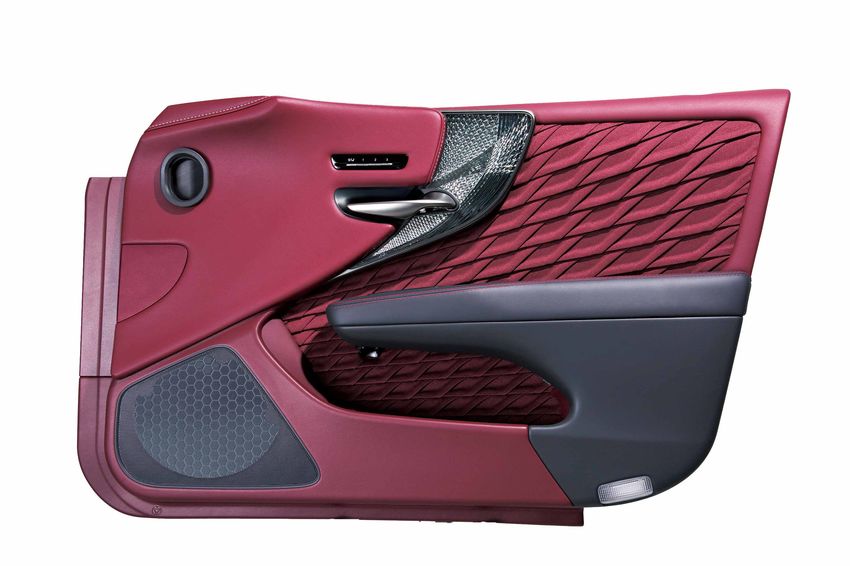
Headliners                             Door trims

                                                                                                                      Curtain-shield airbags

Illuminations                            Package trays                             Fender liners                                                 Seatbelt webbings

Air Induction Systems Products                                                                      Fuel Cell-related Products
                                                                                                                                                                          Financial Review

                                                                                                    Stack manifolds                             Separators

   Air induction systems                 Air cleaners                     Cylinder head covers
                                                                                                    Electric Powertrain-related Products

                                                                                                                                       Motor core constituent parts
   Intake manifolds                                 Oil mist separators                                                                (For hybrid system)
   (For horizontally opposed engine)

                                                                                                                         TOYOTA BOSHOKU REPORT 2018                   4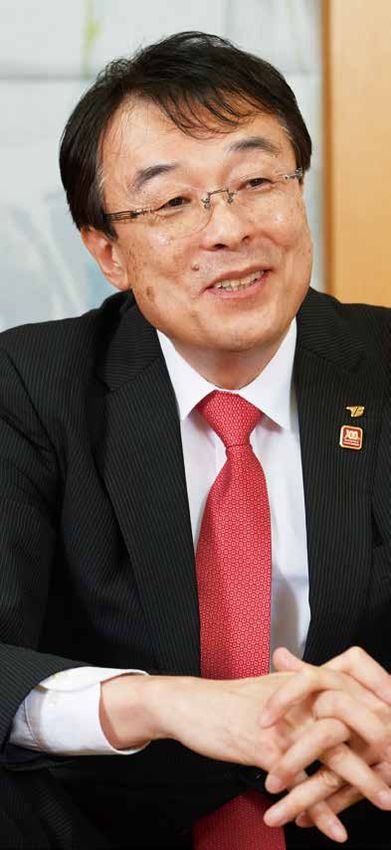
[Profile]

    Toyota Boshoku group undertakes its business
    at development and manufacturing bases in the
    various countries and regions throughout the world.
    More than 50,000 motivated Toyota Boshoku group members enhance competitiveness, strengthen manufacturing
    capabilities and contribute to our customers and local communities in the different countries and regions.

    Business Overview                            Location         1-1 Toyoda-cho, Kariya-shi,                         Business
                                                                                                                      development                        26        countries and regions
                                                                  Aichi 448-8651, Japan
                                                 Capital          8.4 billion yen
                                                                                                                      Number
                                                                                                                      of sites                           107            companies

                                                 Founded          1918                                                Net sales                          1,399.5                  billion yen
                                                 Established      1950
                                                                                                                                                                                   (Ended March 31, 2018)

    Global Network                            Global Mainstay Hub                                                                                                              China
                                              Regional Management & Collaboration Hubs (RM&CH)
                                                                                                                                                              TOYOTA BOSHOKU (CHINA)

          The Americas                                            Europe & Africa                               Asia & Oceania                                                 Japan
    TOYOTA BOSHOKU AMERICA                                     TOYOTA BOSHOKU EUROPE                         TOYOTA BOSHOKU ASIA                              TOYOTA BOSHOKU

                                                                                                                                                 RM&CH

    One Hub per Region                                                                                                             Production entities
                                                                                                                                                              The Americas
                                                                                                                                                                 Region
                                                                                                                                                              Toyota Boshoku
                                                                                                                                                               America, Inc.
    Along with close cooperation between the RM&CH and
    the Global Mainstay Hub, RM&CH work together with
                                                                                              Europe &
    production entities in respective regions as part of the                                Africa Region                   Global
                                                                                            Toyota Boshoku
    “one hub per region” structure.                                                           Europe N.V.                 Mainstay Hub                                         China Region
                                                                                                                            Optimal global                                     Toyota Boshoku
                                                                                                                                                                               (China) Co., Ltd.
                                                                                                                          business operations

                                                                             Asia &
                                                                         Oceania Region                           Japan Region
                                                                          Toyota Boshoku                          Toyota Boshoku
                                                                           Asia Co., Ltd.                           Corporation
                                                                                                                                   Toyota Boshoku plants
                                                                                                                                    Production subsidiaries
                                                                                                                                    Other subsidiaries
                                                                                                                                    Affiliates

5     TOYOTA BOSHOKU REPORT 2018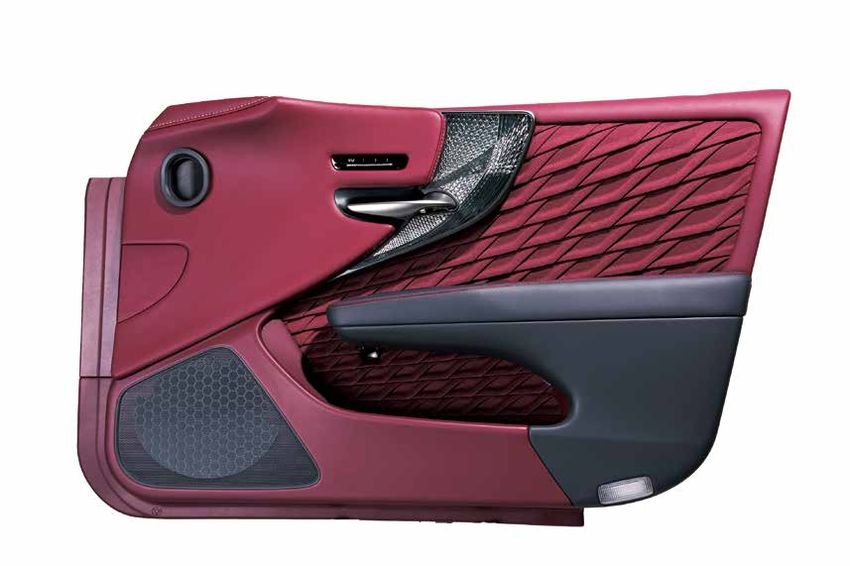
[Fiscal 2018 Highlights]
■ Net sales ■ Operating profit / Operating profit to net sales
(Billions of yen) (Billions of yen) (%)
1,500 1,415.7 1,357.9 1,399.5 80 8
1,305.5 71.9 71.1
1,218.3
59.4
60 6
5.3 5.1
Overview
1,000
4.2
40 4
32.3
28.8
500
20 2.4 2.5 2
0 0 0
2014 2015 2016 2017 2018 (FY) 2014 2015 2016 2017 2018 (FY)
Operating profit Operating profit to net sales
■ Dividends / Dividend payout ratio ■ Users of childcare leave system and shortened work hour system [Toyota Boshoku]
(Yen) (%) (Persons)
80 160 200
197
142.7
169
149 142
60 54 120
50 127
Value Creation Story
111
29
99 98
40 80 100 83
64.1 30 29 72
20 18 18 15 40
20.5 23.5 25
26.5 9 9
15 21
9 9
0 0 0
2014 2015 2016 2017 2018 (FY) 2014 2015 2016 2017 2018 (FY)
Interim Year-end Figures in blue: Annual Dividend payout ratio Childcare leave system Shortened work hour system
■ Number of patents registered ■ Capital expenditures / R&D expenses
(Cases) (Billions of yen)
600 60
543 52.0
51.1 50.1
47.3
40.1 38.8 36.8 38.4
35.5 37.8
Foundation of Business Activities
400 40
323 346
277 298
215
200 172 180 160 184 20
0 0
2014 2015 2016 2017 2018 (FY) 2014 2015 2016 2017 2018 (FY)
Japan Outside Japan Capital expenditures R&D expenses
■ CO2 emissions and basic unit* [Toyota Boshoku group] ■ Water consumption and basic unit* [Toyota Boshoku group]
(Total amount: thousand t-CO2) (Basic unit: t-CO2 / 1,000 units) (Consumption: thousand m³) (Basic unit: thousand m³ / 1,000 units)
400 40 3,000 0.3
35.5 0.26
34.6 0.25
300
292.8 288.6 288.9 309.0 30 2,290
304.8 2,179
Financial Review
2,000 1,946 1,885 1,895 0.2
200 20
16.0 0.11 0.10 0.09
14.2 1,000 0.1
100 13.2 10
0 0 0 0
2014 2015 2016 2017 2018 (FY) 2014 2015 2016 2017 2018 (FY)
Change in basic unit Change in basic unit
CO2 emissions Toyota Boshoku Japan affiliates The Americas Water consumption Toyota Boshoku Japan affiliates The Americas
Asia & Oceania Region China Region Europe & Africa Region Asia & Oceania Region China Region Europe & Africa Region
Toyota Boshoku group basic unit Water consumption and basic unit
* From fiscal 2017, the Toyota Boshoku group shifted to using production volume instead of sales, which are susceptible to external factors, for the basic unit so that improvements
are more accurately measured.
CO2 emission data has been certified by a third party on the Company’s website. Please refer to the Independent Assurance Report on our website.
TOYOTA BOSHOKU REPORT 2018 6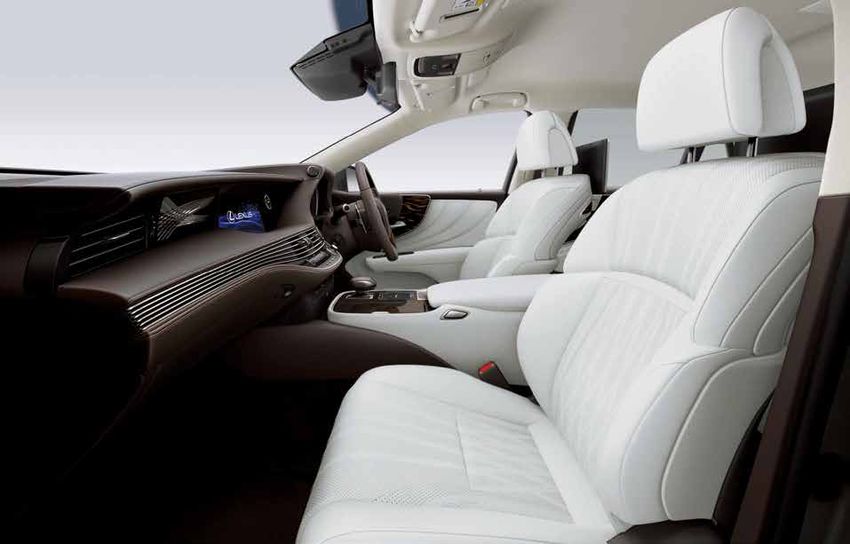
Value Creation Story

    Philosophy / VISION

    The Toyota Boshoku Group Value Creation Story
    The Toyota Boshoku Group formulated our corporate philosophy based on the Principles of Toyoda and under our
    vision, which articulates the type of company we aspire to become, we specify that “Looking into the future, we will
    create tomorrow’s automobile interior space that will inspire our customers the world over.” We have positioned
    “HITOZUKURI*1,” “MONOZUKURI” and “R&D*2” codified in the Principles of Toyoda as the cornerstone of our business
    and will offer “QUALITY OF TIME AND SPACE” in all mobility by proposing excellent mobility for customers throughout
    the world and undertaking manufacturing that enables customers to feel our affection. By doing so, we aim to raise
    economic value and contribute to social value as a trusted company that grows together with all stakeholders.
    *1 Human resources development to realise Principles of Toyoda and Human-centered Monozukuri (Manufacturing and Craftsmanship)
    *2 Research, technology and development

    Elements that support the Toyota Boshoku group’s activities

           1   Principles of Toyoda
                                                                   Handing down the spirit of Sakichi Toyoda (established in 1935)

                                                                   Always be faithful to your duties, thereby contributing to the company and to the
                                                                   overall good.
                                                                   Always be studious and creative, striving to stay ahead of the times.
                                                                   Always be practical and avoid frivolousness.
                                                                   Always strive to build a homelike atmosphere at work that is warm and friendly.
                                                                   Always have respect for spiritual matters, and remember to be grateful at all times.
          Sakichi Toyoda

               Background of the Establishment of the Principles of Toyoda
               As his founding spirit, Sakichi Toyoda aimed to make contributions for the benefit of the world and people as well as for the
               advancement of society and the nation.
                  Sakichi decisively chose to move forward without hesitation as an inventor while marching ahead toward commercialisation to
               spread the benefits of his inventions throughout society.
                  To clearly state Sakichi’s founding spirit as an everyday attitude, the Principles of Toyoda were established in 1935, five years
               after Sakichi’s death, and these have been successively handed down over generations as Toyota Boshoku’s current company
               creed.

           2   Corporate Philosophy
          1. Society            The Company will promote corporate growth while fulfilling the following responsibilities as a good corporate citizen:
                                   1) Maintain ethical values, ensuring that our corporate activities are fair and transparent;
                                   2) Supply safe products that do not harm the environment; Promote corporate activities that help protect the global
                                       environment;
                                   3) Create a better society as a member of our local communities.
          2. Customers          The Company will develop innovative technologies and products to deliver quality that satisfies our customers.
          3. Shareholders	The Company will promote innovative management policies that ensure future corporate growth and the trust of our
                                shareholders.
          4. Employees	The Company will build and maintain positive labour-management relations, respect the individuality of its employees
                                and create safe and comfortable workplaces.
          5. Business partners	The Company will promote open and mutually beneficial relationships with its business partners in pursuit of
                                long-term growth and prosperity.

           3   Code of Conduct
          As members of the Toyota Boshoku Group, we declare that we will observe rules and carry out sensible
          actions in accordance with this code of conduct.
          1. Business activities
             (1) Dealings with customers (2) Dealings with suppliers (3) Dealings with political parties and public agencies
             (4) How to respond to anti-social forces (5) Ensuring safety and quality (6) Consideration of the environment (7) Global business activities
             (8) Protection of company assets (9) Respect for intellectual property rights (10) Handling of confidential information
          2. Relations between employees and the company
             (1) Global human resources development (2) How to build a meaningful workplace (3) Prohibition of illegal and antisocial acts
          3. As members of society
             (1) A healthy social lifestyle (2) Contribution to society (3) Corporate information and publicity (4) Insider trading (5) Traffic safety

7     TOYOTA BOSHOKU REPORT 2018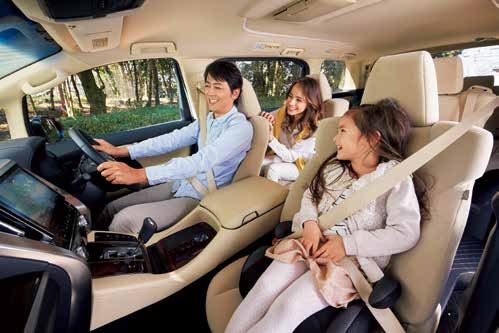
1 Principles
of Toyoda
2 Corporate
Philosophy
Overview
3 ode of
C 5 VISION 4 TB Way
Conduct
Toward our desired status for 2030
4 TB Way
We contribute to society by developing leading-edge technologies and manufacturing high-quality
products.
Value Creation Story
1. We meet challenges with courage and creativity, to realise our dreams. 5. We seek to do our best, act professionally and take responsibility for our
2. We carry out kaizen continuously, aiming to achieve higher goals. actions.
3. We practice genchi-genbutsu by going to the source to analyse problems and 6. We respect the values of other cultures and accept differences, with an
find their root causes. open mind and a global perspective.
4. Once a decision is made, we move quickly to carry out the plan, with passion 7. As a good corporate citizen, we do what is right and contribute to society.
and a sense of mission. 8. We respect the individual and use teamwork to produce the best result.
5
VISION
The Company Looking into the future, we will create tomorrow’s automobile
We Aim to Become interior space that will inspire our customers the world over
Our desired status in Business Our desired status in Society
Foundation of Business Activities
Aiming to achieve “a company that persists in proposing Aiming to secure “a trusted company that grows
excellent mobility for customers throughout the world” together with all stakeholders”
Define our desired status more specifically
Offer “QUALITY OF TIME AND SPACE” in all mobility
We distribute to our Enhance economic value
stakeholders what we achieve Invest in growth Distribute what we achieve
by enhancing economic value
Financial Review
and enhancing corporate value Sustainable growth Expand
Enhance corporate value
Economic value
on a mid-to-long-term basis by business fields Shareholders /
Customers
investors
re-investing toward growth.
International /
Offer multi- local communities
dimensional value
Company
Suppliers
members
Strengthen competitive advantage
Strengthen management foundation
Social value
Corporate Growth While Fulfilling Our Contribute toward
Responsibility in Harmony with Society social value
TOYOTA BOSHOKU REPORT 2018 8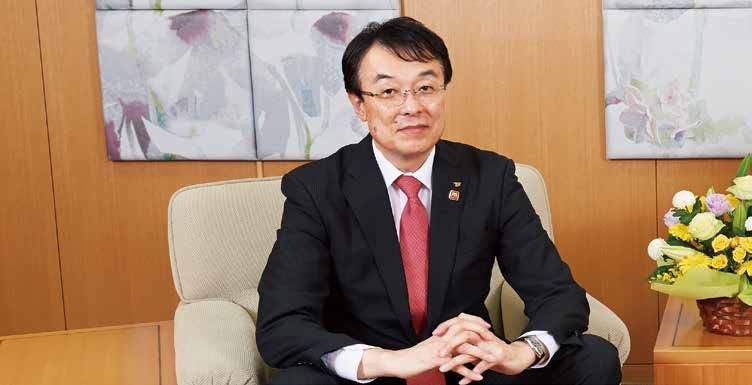
Value Creation Story
History of the Toyota Boshoku Group
100 Years of Evolution in the Toyota Boshoku Group
Our founding spirit to change with the times and contribute to society has been passed down over the
generations and we are committed to carrying it on for the next 100 years.
Early beginnings Shifted to automotive components business
A major change was made in business content to break Evolution into a global
Toyoda Boshoku was founded by Sakichi Toyoda who believed
away from the downturn in the textile market. With the aim of becoming a true
in the importance of self-sufficiency in high-quality yarn to
Production of automotive components then became the deepen unique technology and
develop the automatic loom.
Company’s core business.
1918 1921 1930 1943 1950 1967 1970 1980 1990 2004 2006
1918 1967 2000
Toyoda Boshoku Company name changed from Minsei · S tock listed on Tokyo Stock
Corporation Spinning Co., Ltd. to Toyoda Boshoku Exchange, First Section
was founded by ·M erged with Toyota Kakoh Co.,
Corporation Ltd. with a mainstay business in
Sakichi Toyoda
automotive carpet
Toyoda Boshoku Head Plant 2004
Araco Corporation (car interior
components business), Takanichi
Co., Ltd. and Toyoda Boshoku
1970- Corporation merged to form
Toyota Boshoku Corporation
Entered the automotive components
field
Founder: Sakichi Toyoda Head Plant in Taisho period
Leveraged textile technology in
automotive components and promoted
1921 expansion of non-textile business
Entered China · Started development of car seat fabrics (1970)
Established · Started production of ignition coils (1973),
Toyoda Boshoku seatbelts (1976) and compressors (1981)
Shou
Important events
2005
Shanghai Plant of Toyoda Boshoku
Shou · Formulated the TB Way
· Introduced the One Hub per
1935 Region structure
Formulated the Principles of Toyoda, which led
to the TB Way and Corporate Philosophy 2006
Seat fabrics
·C
onvened the first All TB Skills
1943 Competition
Merged to Toyota Motor Co., Ltd. 1985
(now Toyota Motor Corporation) · Started full-scale production of automotive
filters
1947
Established Arakawa Sheet Metal Industries
Co., Ltd. (later Araco Corporation)
· S tarted reforestation activities in
1950 Indonesia
Established Minsei Spinning Co., Ltd. as a
separate entity from Toyota Motor Co., Ltd. and
becoming independent Air filters Construction of a filter plant
1960
Established Takashimaya Nippatsu Industries FY2005 456.3 billion yen
Co., Ltd. (later Takanichi Co., Ltd.)
Three companies merged
FY1951 1.9 billion yen to form Toyota Boshoku
Corporation
Established Minsei
Spinning Co., Ltd.
Sales trend
9 TOYOTA BOSHOKU REPORT 2018Overview
system supplier Toward the future
Toyota Boshoku is accelerating reform and taking
global system supplier, the three companies were merged to establish a global production structure,
steps with a view to the future amid a once-in-a-
expand business fields.
century transformational period.
2010 2015 2016 2018
2008 2010 2014 2016
· Established Toyota Boshoku Completed construction of the No.2 · Completed Tajimi Technical ·C hanged management structure
Somain S.A.S. (France) as our first building of the Sanage Technical Centre proving ground (product business-based
Value Creation Story
seat assembly base in the EU Centre (concentrated development organisation)
region function for interior parts) · E stablished Silicon Valley Office
· Established the Toyota Boshoku of Toyota Boshoku America, Inc.
Technical Skills Academy with · Announced Mid-term Business
the aim of developing human Plan for Implementation 2020
resources to be the core of a · Announced 2050 Environmental
workplace abounding in technical Vision
skills · S tarted production of fuel cell-
· Established Research related products (separators)
2011
Laboratories (now New Value 2017
Creation Centre, New Field · Started operations at Technical
Skills Training Centre · S igned business partnership
Pioneering Division) agreement with Tachi-S Co., Ltd.
· Constructed the Global Training · Established Boshoku Automotive
Europe GmbH by acquiring the · Took part in the 44th WorldSkills
Centre to develop and strengthen Competition for the first time
global human resources interior components business
from a European component and won a gold medal in the
manufacturer mechatronics category
FY2016 1,415.7 billion yen
2013
Foundation of Business Activities
· Started production of motor core Historic high in sales
2018
constituent parts using the FHS · E stablished a joint venture
process*
100th anniversary in 2018
between Toyota Boshoku,
*Toyota Boshoku’s unique high-precision, 2015 Autoneum and Nihon Tokushu
· Developed new-generation high-speed stamping technology (Fine Hold · J ointly developed the Company’s Toryo Co., Ltd.
automotive seat frames Stamping process) first aircraft seats with All Nippon · S igned an agreement on
Airways Co., Ltd. comprehensive promotion of
industrial-academic collaboration
FY2007 1,082.7 billion yen
with National University
Corporation Kanazawa University
Exceeded 1 trillion yen
· Announced 2020 Management
for the first time
· Received first order for railway Plan
2009 seats
· Started production of cabin air Utilized in the Gran Class
filter material by way of Melt of the Hokuriku Bullet Train
(Shinkansen ) · Integrated the seat frame
Blown Construction Method
mechanism component
Financial Review
businesses of Aisin Seiki Co., Ltd.
and Shiroki Corporation into the
Company
·D eveloped new seat frames
boasting light weight and high
Railway seats (Photo provided by East
Japan Railway Company) rigidity
· Established TB Kawashima Co., · First application
Ltd. for transportation interior of seats made
materials business using the
Foam in Place
Method
· Developed high impact-resistant
plastic together with Toyota
Central R&D Labs., Inc.
TOYOTA BOSHOKU REPORT 2018 10Value Creation Story
The Toyota Boshoku Group’s Value Creation Process
Value Creation Process to Realise Our Vision
The Toyota Boshoku group pursues sustainable growth by way of a value creation process.
Resources supporting value creation*1 Business activities that support value creation
Deploying business based on an
Sound financial foundation awareness of “B to B to C*3”
Consolidated net assets 308.6 billion yen Seat Business
Equity ratio 35.3% Automobile Seats
L ong-term issuer rating by Japan Credit rating AA
Credit Rating Agency, Ltd. Stable rating outlook
Sales ratio P31・32
Sales ratio
HITOZUKURI Diverse members worldwide
umber of group members including
N
temporary staff members 50,119
P roportion of members working in regions Identity of Toyota Boshoku
outside Japan*2 69.9%
R&D
HITOZUKURI Collaboration with business partners
umber of companies that attended the
N
Interior & Exterior
Toyota Boshoku Global Annual Supplier Business
Meeting (held on April 18, 2018) 168 P57 HITOZUKURI MONOZUKURI
Interior Components
Exterior Components
MONOZUKURI Manufacturing foundation
P13・14
Manufacturing entities 77 entities P33・34
Capital expenditures 52.0 billion yen
R&D R&D foundation New business promotion
Development bases 12 bases Aim to create new value and quickly P37・38
R&D expenses 47.3 billion yen commercialise development results (including non-
automotive seats and textile components)
R&D Global business collaboration
usiness integration with Aisin Seiki Co.,
B
Seat Business Ltd. and Shiroki Corporation KPI tree of management structure
Business agreement with Tachi-S Co., Ltd.
Interior & E stablished a joint venture company with
A framework for effectively utilising and managing
Exterior Autoneum (headquarters: Switzerland) and our management resources P29・30
Business Nihon Tokushu Toryo Co., Ltd. P34
Industrial- S igned agreement on comprehensive [Foundation of business activities]
Academic promotion of industrial-academic
Collaboration collaboration with Kanazawa University Corporate CSR
Governance Management
P39-46 P47・48
Principles of Toyoda
Corporate Philosophy 2018
Code of Conduct
TB Way
P7・8
11 TOYOTA BOSHOKU REPORT 2018[VISION]
The Company Looking into the future, we will create tomorrow’s automobile interior
We Aim to Become space that will inspire our customers the world over
Our desired status in Business Our desired status in Society
Aiming to achieve “a company that persists in proposing Aiming to secure “a trusted company that grows
excellent mobility for customers throughout the world” together with all stakeholders”
Overview
P15・16 Fiscal 2018 results*1
Enhanced capital efficiency
ROE 17.3%
Consolidated net sales 1,399.5 billion yen
Operating profit margin 5.1%
Sales ratio Shareholder return
Value Creation Story
Dividend payout ratio 23.5%
Income taxes 22.3 billion yen
HITOZUKURI Member motivation and growth
Innovation of vibrant work style
Unit Components Member satisfaction
Business (KPI on vibrant work environment) 66% P54
Established a work environment for diverse members
P55
F ilters Completed basic design for Global HR Platform
Air Induction Growth
Systems Products Number of people qualified with
National Trade Skill Testing
Fuel Cell-related & Certification Total: 1,555 P56
Foundation of Business Activities
Products
Electric Powertrain-
related Products MONOZUKURI Provision of value to customers
P35・36
Toyota Boshoku group
Seat production 7.4 million units
Seat sales ranking
(Toyota Boshoku research) No. 3 globally
Offer “QUALITY OF TIME AND SPACE”
Installed seats and interior products in new LEXUS LS
R&D Development of new technologies
High added value
Development of rechargeable lithium-ion *1. Results as of the end of fiscal 2018
P36 *2. Including temporary staff members
Financial Review
battery
*3. Toyota Boshoku is striving to provide products that take into
E nvironment / Energy saving / Reduce mould yield ratio account the perspective and viewpoint of the customer so that we
Development of water environment ecology can meet the expectations of end-users (customers) who actually
technology systems P62
ride in the vehicle in addition to the manufacturers and businesses
(direct customers) that purchase our products.
2020 2030 2050
2020 Management Plan P21・25 The Company We Aim to Become by 2030 2050 Environmental Vision
∙ Mid-term Business Plan for Implementation
∙ Business Target (FY2021 Plan / FY2026 Target) P59・60
Offer “QUALITY OF TIME AND SPACE” in all mobility
2020 Environmental Action Plan P59・60
TOYOTA BOSHOKU REPORT 2018 12Value Creation Story
Identity and Features of the Toyota Boshoku Group
Combining the Identity of Toyota Boshoku to Create
Unique Value for the Toyota Boshoku Group
“HITOZUKURI,” “MONOZUKURI” and “R&D” support the
business activities that help the Toyota Boshoku group create
value.
Over the years, we have poured efforts into HITOZUKURI
and MONOZUKURI from the customer’s perspective based on HITOZUKURI
the belief that manufacturing forms an integral part of human
resources development.
One feature of our products is that users touch them We will combine and maximise
directly. That’s why we always keep people in mind during
MONOZUKURI as a way to connect with them and produce the capabilities of our 50,000
items that we know they will feel affection for. Based on this
kind of MONOZUKURI, we will leverage our advanced R&D to members worldwide to
continue providing comfort value.
ensure that our “HITOZUKURI ”
supports us over the next 100
years.
MONOZUKURI
R&D
Our “MONOZUKURI ” over the
past 100 years has created
an affection for our products
that is based on trust and
HITOZUKURI MONOZUKURI assurance.
R&D
Our “R&D” is in pursuit of
comfort in mobility spaces
with a basis in safety and the
environment.
*1 Total Quality Management activities refer to activities aimed at increasing customer creativity and satisfaction while enhancing the vitality of people and the organisation based on the basic philosophies of “customer first,”
“full-member participation” and “continuously carrying out kaizen ” to ensure flexible and resilient corporate quality.
*2 This award recognises achievements made in areas deemed challenging against individual goals that have been set (twice a year) as a means to accomplish policy. The objective is to create a workplace culture that
encourages people to take on bold challenges without fear of failure and to support others in their efforts.
*3 This refers to the creation of production network foundations promoted by Toyota Boshoku, which includes visualisation of production conditions and indication management.
13 TOYOTA BOSHOKU REPORT 2018Overview
Examples of initiatives
Transfer our sense of value Framework
Strengthening of Total Quality P52
Management (TQM) activities*1
[Philosophy] Innovation of vibrant work style P54
ulture to thrive with diversity, learn together and
C Global HR Platform P55
progress together Challenge award*2
Teamwork to challenge with united effort honestly Events
and conscientiously A
ll Toyota Boshoku TQM Meeting P52
Aggressive challenging spirit leading to satisfying Global One TB (Global Week, Ekiden road
work relay race, etc.) P27
Value Creation Story
A gold medal was won at the WorldSkills Competition
in the mechatronics category.
P56
We must have a Customer First philosophy Framework
We should have a challenging spirit for Thorough implementation of Toyota Production System (TPS)
Manufacturing innovation based on
advanced engineering and processing TB Industry 4.0 (IoT)*3
technologies Frontline capabilities using assessments based on
basic plant requirements*4
[Philosophy] Fostering of a culture of quality through the Global
Quality Learning Centre (GQLC)*5 P52
wareness of “B to B to C” to be trusted and
A
Foundation of Business Activities
Events
chosen by customers (Customer perspective) Establishing excellent manufacturing skills through
Human-centered Monozukuri (Manufacturing and the All TB Skills Competition P56
craftsmanship) Karakuri KAIZEN® Exhibition Creating people-friendly processes
A combination of high-quality, low-cost products Awards that include the Outstanding Karakuri (shortened work hour system)
and leading-edge technology for the next century KAIZEN award P55
(AI and Robotics)
Products
Seats and interior components installed in the new LEXUS LS
Aircraft seats that comply with new standards
[Philosophy] Front seat frames developed based on the TNGA*6 concept
Lightweight moulded foam door trim with high
Financial Review
Insatiable curiosity and inquisitive mind at the impact resistance
vanguard of the times Technology
Global collaboration to achieve a lofty goal Development of rechargeable lithium-ion battery
Pursue with passion and a sense of mission Development of water environment ecology
Overcome environmental and energy challenges via technology systems (Weets)
R&D solutions Framework
Agreement on comprehensive promotion of industrial-
academic collaboration with Kanazawa University Develop time and space that provides a
Technical Advisory Board*7 new value of experience.
*4 The aim of this is to strengthen structure mainly by evaluating daily management of plants in such areas as personnel, systems and management and making improvements through genchi-genbutsu (Go, see and study) in an
effort to promote the independence of plants. P51
*5 This is a place for learning the importance of quality first from the customer’s perspective based on examples of past failures.
*6 Toyota New Global Architecture is an initiative by Toyota Motor Corporation directed toward structural reform of automobile manufacturing with the aim of greatly improving basic performance of vehicles and product
appeal.
*7 This is a so-called brain group composed mainly of outside experts with the aim of quickly generating value for our R&D seeds.
TOYOTA BOSHOKU REPORT 2018 14Value Creation Story
Business Activities That Support Value Creation
Proposing Excellent Mobility with Seat, Interior &
Exterior and Unit Components as Our Core Product
Businesses
Amid the evolving environment surrounding the automobile industry, Toyota Boshoku will continue to provide
even-more comfortable time and space by utilising its strengths, namely “HITOZUKURI ,” “MONOZUKURI ” and
“R&D.”
“Value Creation” aimed for by the Toyota Boshoku group
The Toyota Boshoku group aims to continuously expand its core businesses to raise profitability and generate economic value.
Additionally, we will pursue sustainable growth by leveraging the core technologies cultivated in this process to diversify the
value we provide and expand our business fields.
Through these efforts, we aim to create new value that is appropriate for society in the future.
Value Creation in our core businesses
In our core businesses of Seat, Interior & Exterior and Unit Components, we will make consistent responses for each vehicle
model in areas ranging from plans and proposals to production and delivery. In doing so, we will also manage a diverse range
of vehicle models on a one-vehicle-by-one basis (one project). At the same time, we are also establishing a global
manufacturing structure for undertaking in each region functions from planning to production of high-quality products
matched to the needs of customers worldwide.
1 System for producing value
The Toyota Boshoku group is drawing on its accumulated the “Customer First philosophy,” we are working in
know-how and cutting-edge technology development and unison with business partners to globally implement a
working in tandem with automakers to provide even variety of initiatives for raising quality that include
higher-value products to end users throughout the world. fostering a quality-oriented corporate culture utilising the
To thoroughly promote an awareness of “B to B to C” and Global Quality Learning Centre (GQLC).
Quality improvement initiatives Awareness of “B to B to C”
B to B to C
Automaker End users
Sustainable core technology development
Toyota Boshoku
R&D tailored to future needs and seeds
(Multiple departments reorganised as the New Value
Creation Centre in April 2018)
Meet the expectations of customers
Accumulation of
technologies and
Trends throughout the world
products put-on-shelf*1
Customer feedback
Plans and Technical Trial Production
proposals Design design production preparation Production
Market complaint
Enhancing the quality of technical drawings through front loading P52 information
Market
research
Global SPTT*2 activities
Business partners
SPIA*3 P51
Utilise the GQLC to foster a quality-oriented corporate climate (awareness of Customer First philosophy)
*1 This involves putting excellent technologies and information on products onto a shelf, which is a database, and applying these to next-generation product development.
*2 Supplier Parts Tracking Team
*3 Supplier Process Improvement Activity
15 TOYOTA BOSHOKU REPORT 20182 Project management for core businesses Type of vehicles 2018 2019 2020 (FY)
A L
The Toyota Boshoku group undertakes a wide variety of
projects in accordance with the development and B M
Sedan
Overview
production schedules of automakers and vehicle model C M
life. In doing so, we carry out integrated management of
D L
projects from planning to production that covers
scheduling, costs and profits. Based on this project
E L
management for each business, we intend to further
Minivan
solidify our earnings foundation. Also, by internally F M
sharing information on improvements for issues in each G S
project, we aim to further evolve the Identity of Toyota
Boshoku of “HITOZUKURI,” “MONOZUKURI” and “R&D” H L
globally to generate further value.
SUV*4
I M
J S
Plans and Design Technical Trial Production Production
proposals design production preparation
L: Large M: Middle S: Small
Value Creation Story
*4 Sport Utility Vehicle
3 Global manufacturing tailored to needs
The Toyota Boshoku group operates sites at 107 global sites to provide high-quality products matched to
companies in 26 countries and regions to undertake the needs of automakers around the world on a Just-in-
development and production matched to the needs of Time*5 basis. Moreover, to continuously carry out high-
each region. In carrying out MONOZUKURI , we thoroughly quality MONOZUKURI , we are strengthening frontline
implement the Toyota Production System (TPS) globally. As capabilities by meeting basic plant requirements and
one example of the application of TPS, we utilise our carrying out HITOZUKURI .
Global development and manufacturing bases Europe & Africa China
TOYOTA BOSHOKU EUROPE TOYOTA BOSHOKU (CHINA)
Foundation of Business Activities
Japan
TOYOTA BOSHOKU
The Americas
TOYOTA BOSHOKU AMERICA
Financial Review
Global Mainstay Hub
Regional Management & Asia & Oceania
Collaboration Hubs (RM&CH) TOYOTA BOSHOKU ASIA
*5 Producing and transporting only what is needed, when it is needed and in the amount needed
Under our Mid-term Business Plan for Implementation, we are striving to “develop new technologies and new products
toward 2030” and promoting “manufacturing innovation toward 2030” to create new value and expand into new
businesses leveraging our Identity of “HITOZUKURI,” “MONOZUKURI” and “R&D” that we have accumulated to the present.
Toward an even larger number of customers
Toyota Boshoku will focus on “Looking into the future, we will create tomorrow’s automobile
interior space that will inspire our customers the world over.”
TOYOTA BOSHOKU REPORT 2018 16Interview with the President President Takeshi Numa and Keiko Katsu
Realising a Way of Management for
Enhancing Our Corporate Value
The Toyota Boshoku group is smoothly executing its Mid-term Business Plan for Implementation
2020 and is building a new management framework with an eye toward 2030. Here, Toyota Boshoku
welcomes Ms. Keiko Katsu, who is active at the front lines of mass media, for an interview with Toyota
Boshoku President Takeshi Numa. He will explain the way of management needed for driving solid
growth as well as the initiatives aimed at enhancing Toyota Bosoku’s corporate value amidst this
profound transformational period.
President
Strengthening Initiatives for the Future
Takeshi Numa Katsu I believe you have been extremely busy since
taking over the duties of president of Toyota Boshoku
in April 2018. Can you talk candidly about your current
feelings and about matters you consider to be truly
important based on your experience to the present?
Numa I have been given this opportunity to serve as
President of Toyota Boshoku the same year the Company
celebrates the milestone of its 100th anniversary and I
keenly recognise my enormous responsibilities. I hope
to transform the expectations placed on me by our
stakeholders into positive energy that drives the Company
toward the future. During my long years of involvement in
the Quality Division, I learned first-hand about the value of
listening to the voices of customers and markets. During
my career, I also worked overseas, where I learned about
accepting different cultures and diverse values as well as
the importance of communication. As one particularly
memorable experience, when I worked for Toyota Motor
Corporation (TMC) I faced unimaginable difficulties during
my involvement in the launch of the Kentucky Plant. This
plant was the start of TMC’s first independent entry into
vehicle production in North America in 1987.
At this time, I encountered a parts manufacturer who
was adamant that “Toyota Motor’s design standards are
quite strict,” and in response, I politely explained the
importance of Customer First and genchi-genbutsu (Go,
see and study). Through determined efforts based on
policies emphasising good communication for learning the
true intentions of parts manufacturers, we were ultimately
able to create products with the same level of safety,
reliability and high quality as Japanese products.
Katsu I understand your thoughts very well, President
Numa. Will the management path you have followed until
now likely change in the future?
Numa In 2016, Toyota Boshoku formulated the Mid-
term Business Plan for Implementation 2020 (hereafter
Mid-term Business Plan for Implementation). Under this
plan we will focus on solidifying our business footing and
have clarified our desired status in anticipation of 2030,
and started initiatives for the future as well. I personally
had a hand in formulating the Mid-term Business Plan for
Implementation and have actively implemented the plan
up until now. I have just recently assumed the reigns of
leadership from the previous president, Yoshimasa Ishii,
so first of all I intend to firmly maintain measures taken
to the present.
17That said, the environment surrounding Toyota
Boshoku is changing drastically and the automobile Freelance announcer
industry is currently in the midst of a once-in-a-century Keiko Katsu
transformational period. Automated driving technologies
are advancing rapidly while other industries such as
IT (Google, Yahoo, etc.) and consumer electronics
manufacturers (Panasonic, Canon, etc.) are entering the
automotive industry as competition further intensifies
globally.
Amid this environment, I am aware that my expected
role is to accelerate the execution of the Mid-term
Business Plan for Implementation with a sense of speed,
and I am confident I can successfully accomplish this
mission. As the person with the highest responsibility, I
will continue to especially focus on “enhancing corporate
value” and “setting up a strong and resilient business
structure,” two tasks I have been actively involved with
since formulating this plan.
Katsu Can you briefly review your business results and
the main initiatives implemented in fiscal 2018?
Numa Net sales increased 41.6 billion yen from fiscal
2017 to 1,399.5 billion yen on the back of higher
production in China and Europe. Operating profit
decreased 700 million yen from fiscal 2017 to 71.1 billion
yen, reflecting an increase in expenses associated with
new product development and the implementation of
action plans for the future. Nonetheless, we still attained
our target operating profit margin of 5% for the second
consecutive year.
Keiko Katsu
Ms. Katsu graduated from Gakushuin University. While still
in college she appeared on TV Asahi Corporation’s NEWS
STATION and has subsequently worked as a newscaster
and reporter for news, sports and informational programs
at various media stations. Ms. Katsu also participates in
numerous magazine and newspaper interviews. She is also
actively involved in seminars and lectures on communications
utilising her extensive experience as an announcer and
serving as emcee for symposiums and seminars.
2007-2009 Member of Japan Securities Dealers Association’s
“Policy Meeting Concerning Financial and
Capital Markets”
2009~ Environment CSR Advisory Committee Member,
Mitsubishi Corporation
2016~ Director of NGO Girl Power Promotion
18Profit attributable to owners of parent decreased 2.5 products toward 2030. Specifically, we focused on
billion yen from fiscal 2017 to 42.7 billion yen. Looking creating spaces that control the five senses and air quality
ahead to fiscal 2019, we expect to record an increase in and strengthened development capabilities for “sound”
sales and a decrease in profits due to proactive upfront technology, one elemental technology for realising
investments for future growth. However, by promoting comfortable mobility spaces. In working to strengthen our
measures taken to the present, I am confident we will management foundation, we promoted manufacturing
steadily enhance our earnings power. (For specific details, innovation utilising Internet of Things (IoT) technologies,
refer to pages 65-77.) strengthened our profit structure, set up a strong
and resilient business structure and created a global
Fiscal 2018 Results and Fiscal 2019 Full-Year Earnings Forecast
(Consolidated) (Billions of yen)
management foundation. These measures are moving
Fiscal 2018 results Fiscal 2019 forecast
forward as planned and are beginning to bear fruit.
Given this, I believe we steadily improved our competitive
Net sales 1,399.5 1,400.0
advantage and strengthened our management
Operating profit 71.1 62.0
foundation. (For details, refer to pages 25-26.)
Ordinary profit 72.8 64.0
Profit attributable to owners of parent 42.7 35.0 Enhancing Corporate Value Is the
US dollar 111 yen 106 yen Aspiration of Management
Exchange rates
Euro 130 yen 126 yen
Katsu You mentioned earlier that you were focusing
*The fiscal 2019 forecast was announced on July 31, 2018.
on “enhancing corporate value.” Could you explain your
Katsu What was the state of progress of the Mid-term thoughts on this in a little more detail?
Business Plan for Implementation in fiscal 2018? Numa We have defined corporate value as the sum
Numa In looking ahead to 2020, under our Mid- of economic value and social value. The aspiration of
term Business Plan for Implementation we promoted management is to enhance corporate value under a
environmental and corporate social responsibility (CSR) process whereby we contribute to social value through
initiatives for realising “corporate growth while fulfilling growth in harmony with society while striving for
our responsibility in harmony with society” and undertook sustainable growth with a focus mainly on “strengthen
efforts for “strengthening our competitive advantage” competitive advantage” and “strengthen management
and “strengthening our management foundation” in foundation.” These measures will allow us to raise our
striving for sustainable growth. We promoted these economic value and to share the positive results of these
initiatives in accordance with our roadmap. efforts with stakeholders in various forms while also
Regarding strengthening our competitive advantage, reinvesting for the future, thereby enhancing corporate
we worked to develop new technologies and new value over the medium and long term.
19 TOYOTA BOSHOKU REPORT 2018Overview
Katsu What are Toyota Boshoku’s The management structure we aim to achieve
strengths for enhancing corporate value?
Numa We possess three major strengths Enhance economic value
for enhancing corporate value. The first Invest in growth Distribute what we achieve
is “human resources development” that
Sustainable growth Expand
harnesses the strengths of the 50,000
Economic value
Enhance corporate value
business fields Shareholders /
Value Creation Story
Customers
company members around the globe and investors
that will support our growth in the future. International /
Offer multi- local communities
The second is “manufacturing” cultivated
dimensional value
for 100 years that creates affection based on Company
Suppliers
members
trust and assurance. The third is “technology Strengthen competitive advantage
development” that aims to realise comfort Strengthen management foundation
in mobility spaces on the basis of safety
Social value
Corporate Growth While Fulfilling Our Contribute toward
and environment. I believe that improving Responsibility in Harmony with Society social value
and mobilising these strengths will help us
enhance corporate value. (For details, refer
to pages 13-14.)
the KPIs become clear, we can then clarify what should
Enhancing Corporate Value and the KPI Tree of be done and the methods for doing so and can also
Management Structure accurately evaluate results.
Katsu So you mean that besides processes and results,
Foundation of Business Activities
Katsu How will you specifically execute this enormous all other initiatives can be assessed by the KPIs?
task of enhancing corporate value? Numa That is correct. For this reason, the types of KPIs
Numa We introduced our KPI tree of management we select are crucial and we must constantly re-evaluate
structure, a framework for easily monitoring the progress actual KPIs from new perspectives. Evaluations using
status and results of initiatives by organisations and KPIs will allow us to identify the fields of expertise and
company members for enhancing corporate value. (For strengths of each and every company member and each
details, refer to pages 29-30.) For example, we combine department. I believe this will make it easier for everybody
and introduce various resources at production lines when to perform their work.
we seek to raise the competiveness of manufacturing. We Katsu So you are taking a creative approach whereby
then analyse what creates value under these circumstances you execute management while leveraging company
and what needs to be done to raise competitiveness and members’ areas of expertise to enhance job satisfaction
have established key performance indicators (KPIs). Once and also raise production efficiency.
Financial Review
202020 Management Plan
Accomplish Mid-term Business Plan for Implementation coping with changes in market trends
Basic approach
Steadily realize financial benefits from our efforts by improving management capabilities
2020 Management Plan
FY2021 Plan FY2026 Target
Net sales 1,400.0 billion yen Operating profit in existing core businesses
Operating profit 70.0 billion yen 90.0-100.0 billion yen
(Capital Adequacy Ratio: approx. 40%, ROE: approx. 10%, Dividend payout
ratio: approx. 30%) Expand corporate sales by promoting the
Improve profit and secure growth new technologies and products that
opportunities in existing core businesses generate profit
Predict changes in market needs and Incremental profit: +10.0-20.0 billion yen-plus
accelerate measures to create new value
Continue investments in growth areas to
Implement investments for future growth realise sustainable growth
(Billions of yen)
1,600.0-plus
Operating profit: 100.0-110.0 billion yen-plus
Net sales
1,399.5 1,400.0
Operating profit margin: Aiming for 6-7%
Establish business foundation
to secure consistent operating
profit margin of 5% or more Operating profit
6-7%
Existing core
Operating profit 100.0- businesses
90.0-100.0 billion yen
5.1% 5.0% 110.0-
plus
71.1 70.0
New businesses 10.0-20.0 billion yen-plus
FY2018 FY2021 FY2026
actual plan target
21 TOYOTA BOSHOKU REPORT 2018Overview
Numa We will further hone these KPIs in fiscal 2019 circulating water purification systems, and aircraft seats
and I hope to see the entire Toyota Boshoku group move as well as for expanding our core businesses. Meanwhile,
in this same direction. This will make it easier to evaluate we plan capital investments of 180.0 billion yen over the
what each company member must do to contribute to the same three-year period.
company.
Develop New Technologies and New Products
Value Creation Story
Promoting the 2020 Management Plan toward 2030
Katsu Toyota Boshoku announced the 2020 Katsu Recently, the automobile industry is described as
Management Plan. Could you explain the ideas and details being in the midst of a once-in-a-century transformational
of this plan? period. What types of initiatives will you promote in
Numa We will execute the initiatives of the Mid-term technology development?
Business Plan for Implementation while responding to Numa In April 2018, we integrated the Research
changes in market trends and steadily realise financial Laboratories with the pioneering development field to
benefits from our efforts by improving management establish the New Value Creation Centre to accelerate the
capabilities through the KPI tree of management structure. theme of “Develop new technologies and new products
Specifically, in the run-up to 2020 we will accelerate toward 2030.” The opening of this centre represents the
measures to create new value as well as improve start of our efforts to anticipate needs spurred by changes
profit and secure growth opportunities in existing core worldwide and respond with innovative ideas. Within this
businesses to establish a business foundation to secure a centre, we also set up a so-called brain group composed
consistent operating profit margin of 5% or more. of such members as the Technical Advisory Board made
Foundation of Business Activities
Furthermore, in looking ahead to 2025, when we up of outside experts. We aim to incorporate knowledge
expect the positive results of the 2020 Management Plan from the diverse perspectives of these experts and create
to become apparent, we aim for operating profit of 90.0 best practices to quickly generate value for our R&D seeds
billion yen to 100.0 billion yen in existing core businesses within society. Simultaneously, we established the New
and for total operating profit of 100.0 billion yen to Business Promotion Group to drive the commercialisation
110.0 billion yen and an operating profit margin of 6% of various needs and seeds. (For further details, refer to
to 7% through an incremental increase by promoting pages 37-38.)
new technologies and products. Toyota Boshoku also The changes reshaping the automobile industry are
plans to allocate a total of 140.0 billion yen for R&D typified by the acronym CASE, which stands for the
costs over the three-year period from fiscal 2019 through four keywords: connected, autonomous, shared and
fiscal 2021. These funds will be mainly targeted at vehicle electrification. In anticipation of future cars with advances
electrification, fuel cell-related products, cooling and in automated driving and electrification, we will fulfil our
Financial Review
22You can also read


