Resilient Queensland in Action - Progress update February 2020 - Queensland Reconstruction ...
←
→
Page content transcription
If your browser does not render page correctly, please read the page content below
Resilient Queensland
                                         in Action
                                   Queenslanders working together to ensure
                                             disaster resilience is embedded
                                                in our decisions and actions

    Progress update
    February 2020
1     Resilient Queensland in Action
Document details                                                                           Interpreter
     Security classification                           Public
     Date of review of security classification         February 2020
     Authority                                         Queensland Reconstruction Authority
     Document status                                   Final
                                                                                               The Queensland Government is committed to providing accessible services to Queenslanders
     Version                                           1.0                                     from all culturally and linguistically diverse backgrounds. If you have difficulty in understanding
     QRA Reference                                     QRA1636                                  this report, you can access the Translating and Interpreting Services via www.qld.gov.au/languages
                                                                                               or by phoning 13 14 50.
    Copyright                                                                                  Disclaimer
    This publication is protected by the Copyright Act 1968.                                   While every care has been taken in preparing this publication, the State of Queensland accepts
    © The State of Queensland (Queensland Reconstruction Authority), February 2020.            no responsibility for decisions or actions taken as a result of any data, information, statement or
                                                                                               advice, expressed or implied, contained within.
    Licence                                                                                    To the best of our knowledge, the content was correct at the time of publishing.
                                                                                               Copies
                                                                                               Copies of this publication are available on our website at www.qra.qld.gov.au/resilient-queensland
                                                                                               Further copies are available upon request to:
    This work is licensed by State of Queensland (Queensland Reconstruction Authority)
    under a Creative Commons Attribution (CC BY) 4.0 International licence.                    Queensland Reconstruction Authority
                                                                                               PO Box 15428
    To view a copy of this licence, visit www.creativecommons.org/licenses/by/4.0/             City East QLD 4002
    In essence, you are free to copy, communicate and adapt this publication, as long as you   Phone (07) 3008 7200
    attribute the work to the State of Queensland (Queensland Reconstruction Authority).       info@qra.qld.gov.au
    Resilient Queensland is a shared responsibility. Resilient Queensland in Action has been   www.qra.qld.gov.au
    developed in consultation with, and contributions from the following state agencies:
    Department of Agriculture and Fisheries (DAF)
    Department of Communities, Disability Services and Seniors (CDSS)
    Department of Education (DET)
    Department of Employment, Small Business and Training (DESBT)
    Department of Environment and Science (DES)
    Department of Housing and Public Works (HPW)
    Department of Local Government, Racing and Multicultural Affairs (DLGRMA)
    Department of Natural Resources, Mines and Energy (DNRME)
    Office of the Inspector-General Emergency Management (IGEM)
    Queensland Fire and Emergency Services (QFES)
    Queensland Health (QH)
    Queensland Rural and Industry Development Authority (QRIDA)
    Department of State Development, Manufacturing, Infrastructure and Planning (DSDMIP)
    Department of Transport and Main Roads (DTMR)
                                                                                               Cover images: Top (left to right) Aerial of Townsville during 2019 North & Far North
                                                                                               Queensland Monsoon Trough, Cloncurry Flood Warning Infrastructure Network
                                                                                               workshop September 2019, and a team of QFES and QRA officers conducting
                                                                                               Monsoon Trough rapid damage assessments 2019.
                                                                                               Bottom (left to right): Community Recovery team in Townsville, sandbagging prior
                                                                                               to the 2019 Monsoon Trough, and the big map for the North West Queensland
                                                                                               Flood Warning Infrastructure Network workshop.
                                                                                               Image above: Townsville flooding, 2019.

2
                                                                                                                                                                                                     0501

    Resilient Queensland in Action
Message from the Minister
Queensland is the most disaster-affected state in Australia, having been hit by
more than 80 significant natural disaster events in the past decade.
The impacts of these disasters are significant, long term and complex, which
is why our government is committed to making Queensland the most
disaster-resilient state in Australia.
On 31 May 2018, in a nationwide first for disaster recovery and resilience,
the Queensland Government launched Resilient Queensland, a statewide plan
to strengthen Queensland’s resilience to natural disasters and to deliver on
the Queensland Strategy for Disaster Resilience 2017.
The strategy focuses on understanding potential risk, better managing risk,
seeking new opportunities to reduce risk, and continually improving how
we prepare for, respond to and recover from natural disasters.
Resilient Queensland in Action 2019 is a progress update from the past
18 months and includes case studies and initiatives showcasing the
important work happening around Queensland to improve disaster resilience.
It highlights achievements by our state agencies, local governments and
communities, and incorporates climate change risk to deliver a comprehensive,
all-hazards approach to building disaster resilience throughout Queensland.
Resilience can be thought of as our collective ability to understand, anticipate
and quickly ‘bounce back better’ from disaster events. It’s a shared responsibility
– individuals, communities and businesses taking responsibility to be safe and
to minimise personal and property impact.
The Queensland Government has made a commitment that by 2022 every local
government in Queensland will be part of a regional resilience strategy that
clearly identifies and prioritises actions to strengthen disaster resilience
over time.
We’ll do this using an approach that is locally led, regionally coordinated and
state supported, delivering measures and activities that anticipate and adapt
to our changing environment.
By working together and embedding resilience in our thinking and decision-
making, we can empower all Queenslanders to become disaster resilient.

Cameron Dick
Minister for State Development, Manufacturing,
Infrastructure and Planning

                                                  Resilient Queensland in Action      3
4 Resilient Queensland in Action
Resilient Queensland
          Is about creating disaster resilient communities through working together to understand,
 recognise and manage the disaster risks. We need to rethink the way we are currently
 operating because research tells us that Queensland is experiencing the effects of the changing
                  climate through an increase in the frequency and intensity of natural hazards.

  Resilience is a shared and collaborative responsibility for all sectors of society, including all
                   levels of government, business, the non-government sector and individuals.

  A disaster resilient community is            ready with comprehensive local information about hazards and
risks, including who is exposed and who is most vulnerable. They take action to prepare for disasters and
                   are adaptive and flexible to respond appropriately during emergencies.

  People have taken steps to anticipate disasters, reduce                   risks and have robust conversations
 and prepare a plan to protect themselves, their assets and their livelihoods, including their homes and
                                       possessions, cultural heritage and economic capital.

 They have committed the necessary resources and are capable of organising themselves before,
     during and after disasters which helps to restore social, institutional and economic activity.
 People work in partnership with and respect emergency services, their local authorities and other
                   relevant organisations and volunteers before, during and after emergencies.
These relationships ensure community resilience activities are informed by local knowledge, can
                be undertaken safely, and complement the work of emergency service agencies.

    Our leaders regularly   revise emergency management and regional resilience plans to
   ensure they are resilience-based and integrated with strategic planning of government
  and communities, considering risks and risk treatments across the social, built, economic and natural
  environments. Action-based resilience planning revitalises local capacity and capability, with
    greater emphasis on community engagement and a better understanding of the diversity, needs,
 strengths and vulnerabilities within communities. Our leaders in communities, governments and other
organisations consider and recommend resilient                     results      when making decisions, investments,
                  and developing core services, products, policies, infrastructure and mitigation.

 Following disasters our leaders and communities review                    and reflect to continually improve
     how we prepare for, respond to and recover from disasters, knowing that the more resilient our
                                 communities are the more rapidly they can recover.

 Image: Lightning strikes, Brisbane.

                                                                                              Resilient
                                                                                              Resilient Queensland
                                                                                                        Queensland in
                                                                                                                   in Action
                                                                                                                      Action   5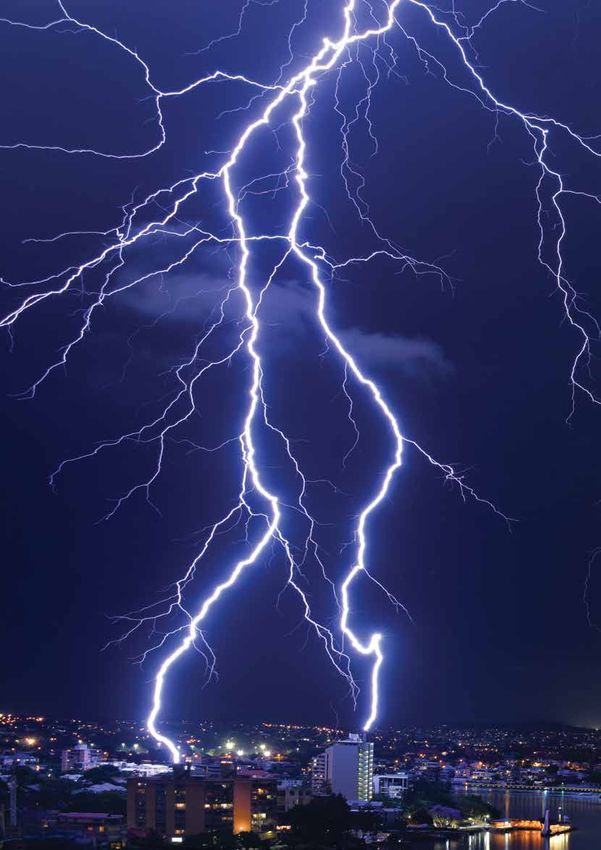
Contents
    Message from the Minister  3
    Context  7
    Progress and case studies 2018-19  11
       Objective 1 – We understand the potential disaster risks we face                                 16
       Objective 2 – We work together to better manage disaster risk                                    29
       Objective 3 – We seek new opportunities to reduce disaster risk                                  44
       Objective 4 – We continually improve how we prepare for, respond to and recover from disasters   56

    Images: (Left) Bullo, flooding, April 2019, (right) Flinders Highway, bridge damage
    following the 2019 Monsoon Trough.

6   Resilient Queensland in Action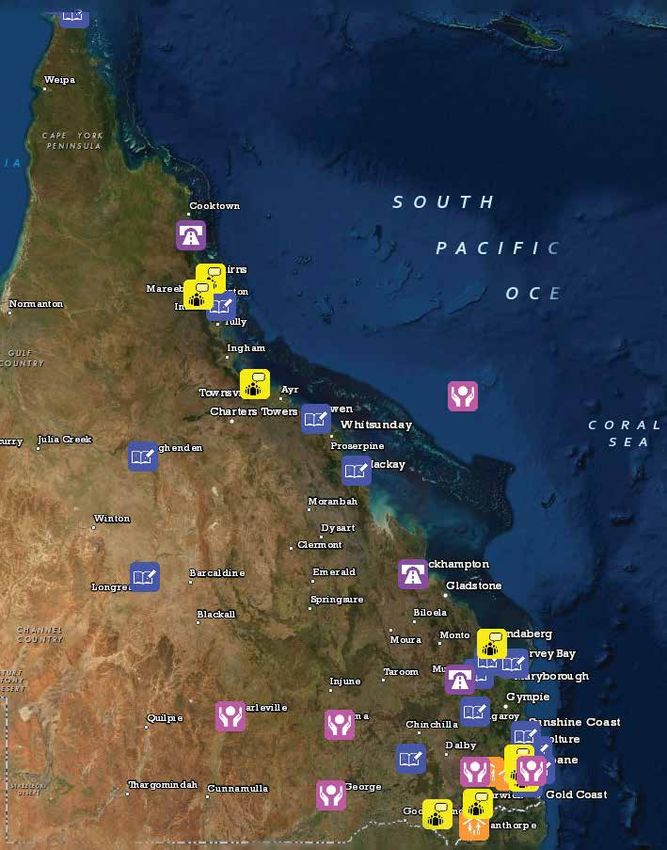
Context
Resilient Queensland in Action                                Disaster resilience means different things to different people.
                                                              We look at what disaster resilience is, examples of what
The objectives of the Queensland Strategy for Disaster        it looks like in Queensland, and our approach under the
Resilience (QSDR) are being delivered through the Resilient   headings of the four objectives of the QSDR.
Queensland 2018 – 2021 engagement and
implementation plan to achieve the Queensland                 Resilient Queensland in Action includes case studies
Government’s vision of making Queensland the most             of successes, learnings and benefits including:
disaster resilient state in Australia.                        • collaborative approaches as a means to strengthen our
The four objectives of the Queensland Strategy for              shared understanding across a wide and varied landscape
Disaster Resilience are:
                                                              • increased knowledge and understanding of the issues and
•   Objective 1 – We understand the potential disaster          challenges facing our communities will support
    risks we face                                               better informed decisions

•   Objective 2 – We work together to better manage           • expanding resilience conversations beyond traditional
    disaster risk                                               partnerships and across a range of disciplines.

•   Objective 3 – We seek new opportunities to reduce         Resilient Queensland is shared responsibility. It is about
    disaster risk                                             working together and bringing together people from all
                                                              professions, across all sectors and in all communities to build
•   Objective 4 – We continually improve how we prepare       our resilience to disasters. Benefits of working together are
    for, respond to and recover from disasters.               that we:
Resilient Queensland in Action showcases learnings and        • prioritise resilience actions over time
good practice, demonstrating some of the great work
happening throughout Queensland to improve disaster           • collaborate to seek shared funding opportunities
resilience. It recognises factors driving the need to           rather than competing
strengthen Queensland’s disaster resilience:
                                                              • share resources to reduce duplication of effort
• natural hazards are more frequent and intense
                                                              • better coordinate our approaches to resilience
• essential services are interconnected and interdependent      activities across Queensland

• people and assets are more exposed and vulnerable           • share ideas that improves our collective knowledge

• disaster impacts are long term and complex                  • embed resilience into our decision making
                                                                and investments
• momentum is building to address financial impacts of
  a changing climate.                                         • reach out to one another when help is needed.

                                                              Resilient Queensland in Action shows progress to date under
                                                              each of the four objectives of Resilient Queensland, outlining
                                                              what has been delivered, work currently underway and future
                                                              actions.

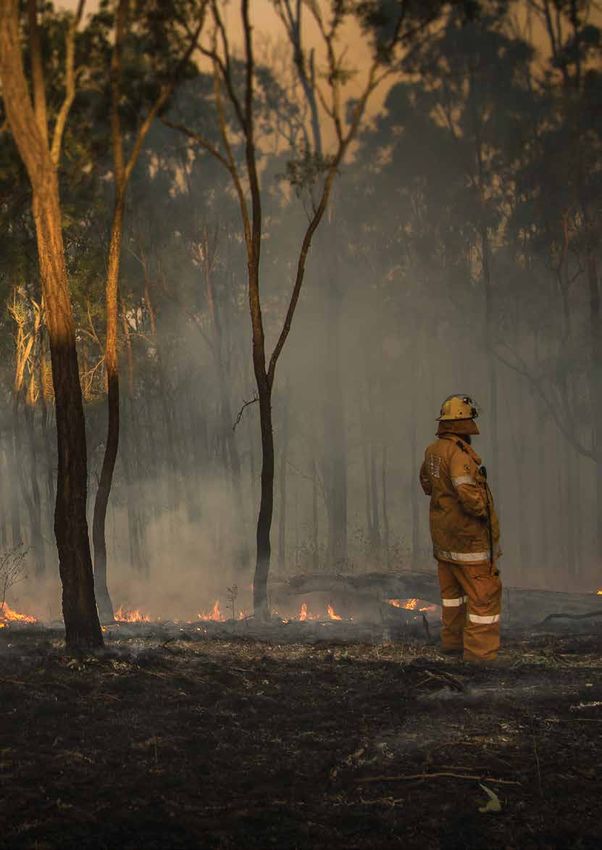
                                                              Images: (Left) Bloomsbury, Central Queensland Bushfires, November 2018,
                                                              (right) Central Queensland Bushfires 22 November – 6 December 2018.
Video: Learn more about Resilient Queensland at:
https://www.qra.qld.gov.au/resilient-queensland
                                                                                                 Resilient Queensland in Action         7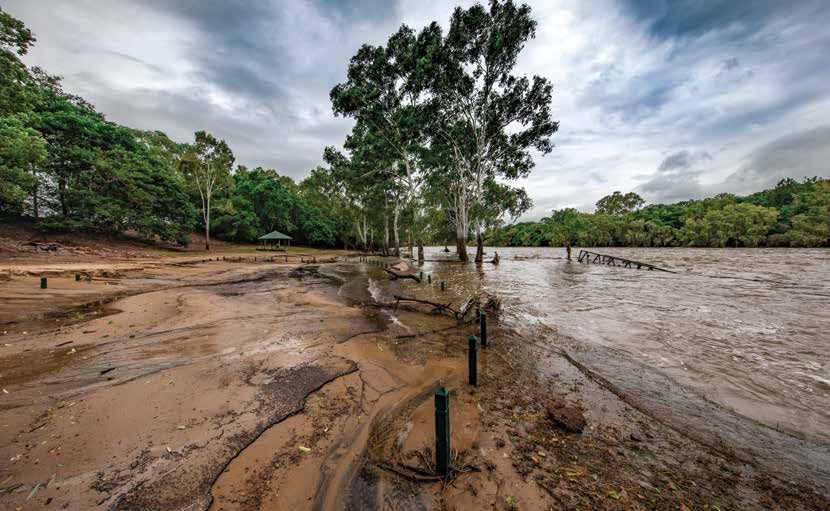
Resilient Queensland – Quotes
    It’s important to recognise systems resilience in           Resilience is a shared responsibility. One of the greatest
    resilience building. Our communities are reliant on         challenges for Resilient Queensland is to
    a range of interconnected systems that contribute           challenge the notion that disaster resilience is the
    to an individual’s resilience, and all parts of             responsibility of any one particular sector, but rather
    the system are dependent on one another.                    to help our communities to embrace resilience as an
    Andrew Bryant                                               integral part of our daily lives and decision making.
    Regional Resilience Coordinator                             Craig Neuendorf
    Wide Bay Burnett Regional Organisation of Councils          Disaster Management Officer
                                                                Longreach Disaster District
    Resilient Queensland is multidisciplinary and calls on
    individuals, professionals, business owners, community      Building resilience is a key driver to ensure the safety of
    organisations and governments to work together to           our community. With noticeable changes and variability
    make Queensland the most disaster resilient state           in climate and weather patterns, disasters are occurring
    in Australia.                                               more frequently and on a larger scale than ever before.
    Alexis Coutts                                               As a community we must be more be aware of hazards
    Organisational Safety Manager                               and risks, and be proactive in our response.
    Isaac Regional Council
                                                                Our essential services and assets can be vulnerable to
    Many Queensland communities are experiencing                a disaster, so as a community we need to be aware that
    prolonged chronic, as well as periodic, stresses.           disasters are complex and can be long term. Economic
    These include regional population loss or pressures         losses caused by a disaster effect the whole of the
    associated with growth, ageing populations,                 country, which is why it is imperative we need to build our
    ongoing challenges associated with the inability            capability and resilience through proactive measures.
    to attract professionals into communities for key           Cr Bill Ludwig
    service provision, drought conditions, etc. What            Mayor, Livingstone Shire Council
    underpins how a community can get through a                 A resilient society recognises and lives comfortably
    shock, is its ability to be resilient in the first place.   with the prospect of disasters as a part of life. To
    Brendan Guy                                                 do that, the community must first attain a level of
    Disaster Management Officer
                                                                understanding and empowerment to drive their
    Fraser Coast Regional Council
                                                                own local solutions to common problems.
    Two key characteristics that disaster resilient             Matthew Pinder
    individuals, organisations and communities                  Emergency Management and Sustainability Manager
    have in common are: the ability to effectively              City of Ipswich
    activate and harness the strengths already
    existing in themselves and their networks when
    required, and the capacity to sustain and grow
    life in the midst of trauma and adversity.
    Selena Gomersall
    CEO, Outback Futures

8   Resilient Queensland in Action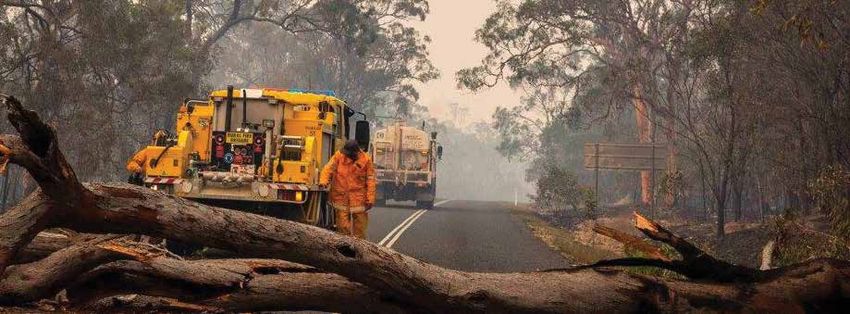
Resilient Queensland Storymap
https://www.qra.qld.gov.au/Resilient-Queensland-Storymap

The aim of the Resilient Queensland Storymap is to            The stories are grouped into five categories:
gradually build a showcase of resilience stories from
                                                              • Education and preparedness
across the state.
Helping Queenslanders strengthen their resilience to          • Vulnerable communities
disasters is a key focus for governments and
                                                              • Communicating risk
community organisations.
Engaging the community in meaningful ways can be a            • Community wellbeing
challenge, particularly if a disaster has not occurred
in recent times.                                              • Resilient infrastructure.

The Resilient Queensland Storymap provides examples           https://www.qra.qld.gov.au/Resilient-Queensland-Storymap
of how different communities are being encouraged to
learn about local disaster risks and take positive steps to
be prepared and stay safe.
                                                                                            Resilient Queensland
                                                                                            Resilient Queensland in
                                                                                                                 in Action
                                                                                                                    Action   9
10 Resilient Queensland in Action
Resilient Queensland 2018-21
       Delivering the Queensland Strategy for Disaster Resilience

     Progress and case studies
                      2018-19

11   Resilient Queensland in Action                Resilient Queensland in Action   11
Resilient Queensland 2018-21
Delivering the Queensland Strategy for Disaster Resilience
Objective 1 – We understand the potential disaster risks we face
Having a clearer understanding of potential risks empowers us to make informed decisions so that we can
better prepare and respond.
Describing
success
We are resilient when:
• we have access to real-time information about disaster impacts
• we find ways to engage with hard-to-reach and vulnerable people such as those from non-English speaking backgrounds
• our community understands and is involved in disaster risk management.
C1.1 Drive attitudinal, cultural and behavioural change across the state, enabling Queenslanders to anticipate,
commitments
respond and adapt to disaster impacts
Strategy
C1.2 U
nderstand the risks associated with a warming climate with improved coastal management
C1.3 Increase community awareness and preparedness for all hazards through community engagement
C1.4 Initiate research and evaluation projects to promote the positive trajectory of building resilience in queensland.
✓✓ Queensland Emergency Risk Management Framework ✓✓ Statewide capture of resilience activities, strategies
QERMF (QFES) and plans 2019 QRA)
✓✓ Queensland State Natural Hazard Risk Assessment ✓✓ On 3 April 2019, the importance of disaster resilience
2017 (QFES) was recognised in Queensland legislation through the
✓✓ Queensland Climate Adaptation Strategy 2017-30 (DES) Queensland Reconstruction Authority Act 2011 (QRA)
✓✓ Queensland Climate Transition Strategy 2017 (DES) ✓✓ Queensland Flood Mapping Program and FloodCheck online
map (DNRME)
✓✓ Get Ready Queensland grants program for
councils (QRA) ✓✓ State Heatwave Risk Assessment 2019 (QFES)
✓✓ Preparing Your Business for Natural Disasters 2016 (DESBT) ✓✓ State Earthquake Risk Assessment 2019 (QFES)
Delivered
✓✓ Cohesive communities: an action plan for Queensland ✓✓ Tsunami Guide for Queensland 2019 (QFES)
2016-18 (DCDSS) ✓✓ Agriculture Sector Adaptation Plan 2017 (DES)
✓✓ Evaluation and improvement of Get Ready Queensland ✓✓ Built Environment and Infrastructure Sector Adaptation
program 2019 (QRA) Plan 2017 (DES)
✓✓ Get Ready Queensland website and brand refresh, ✓✓ Queensland Tourism Climate Change Sector Adaptation
and 2019 ambassador Johnathan Thurston (QRA) Plan 2018 (DES)
✓✓ Get Ready Week 13-19 October 2019 included a media ✓✓ Emergency Management Sector Adaptation Plan for Climate
launch to coincide with the release of Bureau of Change 2018 (QFES)
Meteorology’s Severe Weather Outlook (QRA) ✓✓ Birdie’s Tree resources help young children understand
✓✓ Queensland Language Services Policy (DLGRMA) severe weather events (Health)
✓✓ Climate Week QLD 2019 (DES)
✓✓ Ready and Resilient Working Group - supports the ✓✓ Small and Medium Enterprise Sector Adaptation
coordination of Queensland Government’s key resilience Plan (DES)
communications and engagement ✓✓ Biodiversity and Ecosystems Climate Adaptation
activities (QRA) Plan 2018 (DES)
✓✓ The Get Ready Queensland program is a year-round, ✓✓ Human Health and Wellbeing Climate Change
all-hazards, resilience building initiative to help
Delivering
Adaption Plan 2018 (DES)
communities prepare for natural disasters. The Get
✓✓ Industry and Resources Sector Adaptation Plan (DES)
Ready Queensland program provides $2 million in state
funding each year to help local governments improve their ✓✓ Severe Wind Hazard Assessment for Queensland (QFES)
communities’ resilience (QRA) ✓✓ Queensland Emergency Risk Management Framework -
✓✓ Flood Classifications Step-by-Step Guide (QRA) ongoing (QFES)
✓✓ Operation Community Connect (QFES) ✓✓ Volunteerism Strategy (QFES)
✓✓ State Disaster Risk Register (QFES)
• National Disaster Risk Reduction Framework -Queensland activities under the National Action Plan
Future actions
• State Disaster Risk Report 2020 (QFES)
• Evaluate effectiveness of Get Ready Queensland general awareness, monsoon trough and bushfire advertising campaigns (QRA)
• Evaluate recognition of Johnathan Thurston as Get Ready Queensland Ambassador (QRA)
• Investigate options for Get Ready Queensland program partners to help Queenslanders be better prepared for natural
disasters (QRA)Progress at December 2019
Objective 2 – We work together to better manage disaster risk
By understanding what people value most we can better coordinate and concentrate our efforts.
We are resilient when:
Describing
success
• our community is involved in disaster preparedness activities that meet local needs
• evidence of local vulnerability and risk is used to inform our decision making
• we encourage, promote, and facilitate shared responsibility for all Queenslanders in building disaster resilience
• everyone understands the role they play in contributing to the resilience of our community.
C2.1 B
uild partnerships across community, industry, research organisations and government to improve the health of
commitments
waterways and marine areas
Strategy
C2.2 P
rovide opportunities for community-based solutions to the impacts of disasters
C2.3 D
evelop and implement a strategic framework for flood risk management.
✓✓ Queensland Emergency Risk Management Framework ✓✓ Toolkit - ACOSS Resilient Community Organisations
QERMF (QFES) developed by and for the community sector to help
✓✓ Queensland Regional Natural Resource Management organisations measure and improve their resilience to
Investment Program 2013-2018 (DNRME) disasters and emergencies (Australian Government)
✓✓ Strategic Policy Framework for Riverine Flood Risk ✓✓ Queensland Disaster Management Arrangements
Management and Community Resilience 2017 (QRA) Participants Guide 2018 (QFES)
✓✓ Indigenous Land and Sea Ranger Program 2017 (DES) ✓✓ Queensland Public Cyclone Shelter Maintenance
Guideline - update 2018 (HPW)
✓✓ Queensland Recovery Plan 2017 (QRA)
✓✓ Disaster Management documentation - suite updates
✓✓ Resilience activity analysis to identify opportunities and
2018 including Training Framework and Handbook,
priorities (QRA)
PPRR DM Guideline (QFES)
✓✓ Queensland Critical Infrastructure Working Group (QRA)
✓✓ Queensland Evacuation Centre Management Handbook and
Delivered
✓✓ Brisbane River Catchment Flood Study 2017 (QRA) Planning Toolkit - updates 2018 (Red Cross and Queensland
✓✓ Brisbane River Strategic Floodplain Management Plan Government)
2019 (QRA and project partners) ✓✓ Disability Inclusive Disaster Risk Reduction Framework
✓✓ Burnett Catchment Flood Resilience Strategy 2018 (QRA) and Toolkit 2019 (DCDSS)
✓✓ People with vulnerabilities in disasters: A framework for an ✓✓ Queensland Disaster Management Data Coordination
effective local response, and toolkit (DCCSDS) Initiative (QFES)
✓✓ Drought and Climate Adaptation Program (DAF) ✓✓ Local and District Disaster Management Plans - annual
✓✓ Money Ready Toolkit: disaster-proof your finances (Good delivery
Shepherd Microfinance and Queensland Government) ✓✓ Queensland Disaster Management Arrangements Sharing
✓✓ Toolkit - Community-based organisations Group (QFES)
(CBOs) Disaster management and recovery toolkit, ✓✓ QERMF Risk Assessment Tool (QFES)
developed by the Community Services Industry Alliance in ✓✓ Queensland Future Climate Dashboard (DES)
partnership with the Queensland Government
✓✓ QDMA Situational Awareness Platforms (QFES)
✓✓ Resilience Community of Practice (QRA) ✓✓ Fitzroy Regional Resilience Strategy (QRA)
✓✓ Resilient Queensland Storymap (QRA) ✓✓ Brisbane River Strategic Floodplain Management Plan
✓✓ Pilot and evaluate regional resilience models across a range – 34 of the 52 recommended actions are with Queensland
of communities -Brisbane River, Burnett, Mary, Fitzroy, Government (QRA)
Central West (QRA) ✓✓ Resilient Queensland Collaboration Guide (QRA)
Delivering
✓✓ Disaster Management Officers’ Network (IGEM) ✓✓ Queensland Climate Resilient Councils (QCRC)
✓✓ Research Community of Practice (IGEM) ✓✓ Resilient Queensland Body of Knowledge (QRA)
✓✓ Research Advisory Panel (IGEM) ✓✓ Mass Evacuation Plan - Working Group (QFES, QPS)
✓✓ Central West Regional Resilience Strategy (QRA) ✓✓ Queensland Disaster Management Data Coordination
✓✓ Mary River Regional Resilience Strategy (QRA) Initiative - intelligence function (SDCC, QFES)
✓✓ Volunteerism Strategy Implementation Plan (QFES)
• Burdekin and Haughton Catchment Resilience Strategy Project (QRA)
• Statewide delivery of co-developed regional resilience models - by 2022, every local government in Queensland will be part of a
actions
Future
regional resilience strategy that clearly identifies and prioritises actions to strengthen disaster resilience over time (QRA)
• Develop and implement a strategic framework for flood risk management (QRA)
• Collaborate with the insurance industry to share the most current floodplain risk management information (DNRME)Resilient Queensland 2018-21
Delivering the Queensland Strategy for Disaster Resilience
Objective 3 – We seek new opportunities to reduce disaster risk
Having a big picture view will help us identify opportunities for making our communities, infrastructure and
environment stronger and more adaptable to future stresses.
Describing
We are resilient when:
success
• we incorporate resilience into everyday activities
• we take a proactive approach to resilience building, rather than a reactive one
• we understand how to link policy and funding to prioritised actions
• we focus on long-term risk reduction and resilience to plan for future generations, the economy and the environment.
C3.1 Deliver more resilient infrastructure and transport systems
C3.2 Support the ability of our natural assets to serve as protective buffers against disaster impacts
commitments
C3.3 Promote the incorporation of risk reduction in all planning and development
Strategy
C3.4 Encourage innovation in urban area design for living with the impacts of floods and droughts
C3.5 Further the understanding and management of natural landscapes to reduce the impacts and effects of floods and bushfires
C3.6 B
uild greater business resilience and preparedness
C3.7 M
inimise disaster impacts through flexible and adaptive planning.
✓✓ Queensland Betterment Fund 2013, 2015 and 2017 (QRA) ✓✓ Queensland’s Flood Warning Infrastructure Network
✓✓ State Planning Policy 2017 and supporting guidance and Flood Gauge Network Investment Plans for local
(DSDMIP) governments, the Queensland Gauge Asset Review, and the
Queensland Flood Forecast Location Review (QRA)
✓✓ Prevention, Preparedness, Response and Recovery Disaster
Management Guidelines 2018 (QFES) ✓✓ QCoast2100 – Queensland Local Government Coastal
Hazard Adaptation Program (LGAQ and
✓✓ State Disaster Management Plan 2018 (QDMC)
Queensland Government)
Delivered
✓✓ Queensland Resilience Coordination Committee (QRA)
✓✓ QERMF - Identification of risk mitigation opportunities and
✓✓ Natural Disaster Resilience Program 2017-2018 (QRA) potential links to funding opportunities (QFES)
✓✓ State Infrastructure Plan, Program - 2019 update (DSDMIP) ✓✓ Funding guidance for risk mitigation projects (QFES)
✓✓ Building our Regions, Rounds 1-4 (DSDMIP) ✓✓ Natural hazards, risk and resilience – Bushfire: State
✓✓ Queensland Disaster Resilience and Mitigation Investment Planning Policy – state interest guidance material
Framework (QRA) 2019 (QFES)
✓✓ Bushfire Resilient Communities - Technical Reference Guide
for the State Planning Policy (QFES)
✓✓ Analysis of Queensland’s investment in resilience (QRA) ✓✓ Flood Warning Infrastructure Network Project following
✓✓ Local Resilience Action and Investment Tool (QRA) the Monsoon Trough (QRA)
✓✓ Repeat Event and Dollar Index (REDI) mapping ✓✓ Queensland Disaster Resilience Fund 2018-19 (QRA)
project enhancements (QRA) ✓✓ Implementing the Gender and Emergency Management
Delivering
✓✓ Get Ready Queensland Resilient Australia Awards (QRA) Guidelines in Queensland (IGEM)
✓✓ Queensland Disaster Resilience Fund 2018-19 has ✓✓ Building local food-related disaster resilience (IGEM)
62 successful projects (QRA) ✓✓ Local Government Grants and Subsidies Program
✓✓ Resilient infrastructure – $100 million joint State / 2019–21 (DLGRMA)
Commonwealth Betterment Fund following the ✓✓ Works for Queensland program 2019-21 (DLGRMA)
Monsoon Trough (QRA) ✓✓ Small Business Recovery Advisory Council and Small
✓✓ Building our Regions, 2019 Round 5 (DSDMIP) Business Recovery and Resilience Champion (DESBT)
• Queensland Resilience, Adaptation Pathways and Transformation Assessment Framework (QRA)
• Co-hosting the 2020 Asia-Pacific Ministerial Conference on Disaster Risk Reduction, 29 June - 2 July 2020
Future actions
(Queensland Government)
• Disaster Recovery Funding Arrangements (DRFA) Efficiencies Framework for Queensland (QRA)
• Queensland Disaster Resilience Fund 2019-2020 (QRA)
• Establish a state policy on the assessment, prioritisation and funding of state-funded flood mitigation works (QRA).
• State Disaster Risk Report 2020 (QFES)Progress at December 2019
Objective 4 – We continually improve how we prepare for, respond to
and recover from disasters
Understanding our current and future disaster risks enables us to make informed decisions for current
and future generations.
Describing
We are resilient when:
success
• our disaster management systems are scalable to accommodate future changes
• we are on a journey of continuous improvement
• we work across disciplines and organisations for resilience planning
• we embrace a culture of ongoing improvement through regular monitoring and information sharing.
C4.1 Identify adaptation opportunities following disasters and in anticipation of climate change
commitments
Strategy
C4.2 D
rive continuous improvement in disaster management in Queensland via assurance frameworks and accompanying
performance measures.
✓✓ Queensland Strategy for Disaster Resilience 2017 (QRA) ✓✓ Review - Efficacy of recovery governance (IGEM)
✓✓ Resilient Queensland 2018-21 – Delivering the Queensland ✓✓ The 2018 Queensland Bushfires Review (IGEM)
Strategy for Disaster Resilience (QRA) ✓✓ 2019 Monsoon Trough Rainfall and Flood Review (IGEM)
✓✓ State Disaster Management Plan 2018 (QDMC) ✓✓ 2019 Queensland Government Household
✓✓ Office of the Inspector-General Emergency Management Resilience Program (HPW)
Emergency Management Assurance Framework (IGEM) ✓✓ North and Far North Queensland Monsoon Trough
✓✓ The Cyclone Debbie Review: Lessons for delivering value – Recovery Plan 2019-2021 (IGEM)
Delivered
and confidence through trust and empowerment (IGEM) ✓✓ Central Queensland Bushfires Recovery Plan
✓✓ Queensland Climate Adaptation Strategy 2018-2021 (QRA)
2017 – 2030 (DES) ✓✓ Flood Resilient Building Guidance for Queensland
✓✓ Emergency Management Prioritisation Tool (IGEM) Homes (QRA)
✓✓ Damage Assessment and Reconstruction Monitoring ✓✓ Disaster funding application portal for Queensland councils
system DARMsys™ (QRA) and state agencies - Management and Reporting System -
✓✓ Lessons Management Program (IGEM) MARS (QRA)
✓✓ Resilient Queensland in Action (QRA) ✓✓ Emergency Management Sector Adaptation Plan for Climate
Change 2018 (QFES)
✓✓ Co-develop Queensland specific resilience measures and ✓✓ Queensland Disaster Management Lexicon (IGEM)
toolkits for inclusion in regional resilience models (QRA) ✓✓ Cyclone Resilient Building Guidance for Queensland Homes
✓✓ Regular reporting on the 16 Strategy commitments via (QRA)
Functional Recovery Groups (QRA) ✓✓ Storm Tide Resilient Building Guidance for Queensland
Delivering
✓✓ Monitoring and reporting on Resilient Queensland Homes (QRA)
✓✓ 2019 Queensland Bushfire Review (IGEM) ✓✓ Refresh of the Emergency Management Assurance
✓✓ 2019 Paradise Dam Preparedness Review (IGEM) Framework and Standard for Disaster Management
– comes into effect on 1 July 2020 (IGEM)
✓✓ System-wide lessons management program for disaster
management (IGEM) ✓✓ Small Business Recovery Centre (DESBT)
✓✓ Disaster Management Research Framework (IGEM) ✓✓ Recovery Information Hub (QRA)
• Bushfire Building Guidance for Queensland Homes (QRA, QFES)
• Repeat Event Damage Index enhancements (QRA)
actions
Future
• QAO audit 2021-22 to assess whether Queensland is better able to prevent and prepare for floods following the Queensland
Floods Commission of Inquiry (QAO)
• Resilient buildings - Consider a range of regulatory and incentive-based approaches for increasing resilience of buildings
(HPW, QRA, QFES)Objective 1 –
We understand the potential disaster risks we face
Case studies, learnings and good practice
Natural hazards with the most significant Queensland Emergency
impact in Queensland Risk Management Framework
Queensland is exposed to a range of natural hazards that can The United Nations, through the Sendai Framework
lead to significant consequences for our communities. Within for Disaster Risk Reduction 2015-2030, notes that
the last decade we have experienced natural disasters of a understanding disaster risk is the first priority toward
size and scale that are almost unprecedented; certainly we disaster risk reduction.
have endured some of the most significant events in recent
Hazard identification, the analysis of exposure and
history.
vulnerability and the subsequent identification of risk
The scope of the Queensland State Natural Hazard Risk through this process is the cornerstone of understanding
Assessment (QFES, 2017) includes the hazards of: disaster risk and forms the basis for effective risk-
based planning.
• tropical cyclones
• riverine flooding Under the Queensland State Disaster Management Plan,
QFES is responsible for the conduct of a state level disaster
• bushfires
risk assessment.
• severe weather
The Queensland Emergency Risk Management Framework
• earthquakes
(QERMF) was developed to inform risk-based planning
• heatwaves across the emergency management sector in Queensland
• coastal inundation. and has been endorsed by the Queensland Disaster
The report acknowledges tropical cyclones and riverine Management Committee.
flooding remain the hazards whose impacts pose the The application of the QERMF promotes opportunities for
greatest risk to Queensland. collaboration and communication between Government,
The State Risk Report 2020 (SRR2020) project, being led industry stakeholders and the community across the three
by QFES, will deliver an updated version of the Queensland disaster management levels (local, district andstate) in
State Natural Hazard Risk Assessment 2017, and is Queensland. It also promotes the need for identification and
defined by a broader scope encompassing natural and communication of residual risk across these levels.
anthropogenic hazards as well as a broad overview of the The QERMF assists key stakeholders working within the
impact of climate change to disaster risk in Queensland. Queensland Disaster Management Arrangements to review
existing natural disaster risk management processes and
assist in enhancing resilience as outlined within the QSDR.
https://www.disaster.qld.gov.au/qermf
Images: (Left) False colour satellite image showing the difference between
flooded rivers in light blue and oceans in darker blue, on Sunday,
10 February 2019, (centre) Satellite image of the Queensland bushfires taken
at 7-30am on 29 November 2018, taken by the Himawari 8 Japanese weather
satellite, (right) Tropical Cyclone Owen 9-17 December 2018.
16 Resilient Queensland in ActionNew state risk assessments for heatwave, Climate Week QLD 2019
earthquake, tsunami and severe wind The Queensland Government is committed to transitioning
Recent QFES publications include: the state to a low-carbon, clean-growth economy and
adapting to the impacts of a changing climate.
• State Heatwave Risk Assessment 2019
• State Earthquake Risk Assessment 2019 As a part of this commitment to understand the future impact
of climate change, the Queensland Government hosted
• Tsunami Guide for Queensland 2019 political, business and community representatives from
• Severe Wind Hazard Assessment for Queensland 2019 across Australia and the Asia-Pacific region at Queensland’s
• Emergency Management Sector Adaptation Plan first ever Climate Week from 2–8 June 2019.
(EM-SAP) for Climate Change 2018 Climate Week QLD 2019 provided a forum for leaders
• State Natural Hazard Risk Assessment 2017. and sub-national governments to share ideas and build a
The Queensland State Heatwave Risk Assessment 2019 community of action against climate change.
(SHRA) represents the most comprehensive analysis of future Activities throughout the week included a public program of
climate risk undertaken for a natural hazard risk assessment arts, music, and panel discussions, a First Nations Summit,
in Queensland. and climate leadership training with former US Vice President
The summer of 2018-19 was the hottest on record for Al Gore and the Climate Reality Project.
Australia. The extreme heatwaves and bushfires that
occurred across Queensland are a clear indication that we Community groups, businesses, universities, not-for-profit
are facing unprecedented challenges in understanding and groups, schools, landholders and individuals across
responding to the impacts of natural hazards in a changing Queensland were also invited to host climate action events
climate. during climate week.
The SHRA was developed to provide all stakeholders with Students from years 3 to 10 participated in the 2019
clear and consistent information regarding the changing Minister’s Climate Challenge, coming up with innovative
nature of heatwave risk in Queensland. It was a collaborative solutions to local climate change problems.
effort between multiple stakeholders, coordinated through a https://www.qld.gov.au/environment/climate/climate-
working group led by QFES, QH, and DES. change/climate-week
The Queensland State Earthquake Risk Assessment
2019 and companion Tsunami Guide for Queensland
were developed to provide a comprehensive overview of
earthquake and tsunami risk for the state. Detailed analysis
of these hazards understandably requires a high level of
technical expertise, so QFES partnered with Geoscience
Australia to help contextualise the findings of the National
Seismic Hazard Assessment 2018 and the Probabilistic
Tsunami Hazard Assessment 2018.
The Severe Wind Hazard Assessment for Queensland is a
collaborative project between Geoscience Australia and
QFES, which aims to provide realistic and tangible
information on the potential physical impacts of tropical
cyclones on Queensland communities. This is intended
to enable the emergency management sector and local
governments to more effectively engage with the community
on the current and future risks posed by cyclones and inform
long term risk management strategies.
https://www.disaster.qld.gov.au/qermf Images: Covers (left to right) Tsumani Guide for Queensland 2019,
https://www.disaster.qld.gov.au/qermf/Pages/ State Earthquake Risk Assessment 2019, and Queensland State
Assessment-and-plans.aspx Heatwave Risk Assessment 2019.
Resilient Queensland in Action 17Recent natural disasters in Queensland
Queensland has been hit by more than 80 significant natural disaster events in the past decade.
Since its establishment in 2011, QRA has managed a $15.7 billion program of Natural Disaster Relief and Recovery
Arrangements (NDRRA) and Disaster Recovery Funding Arrangements (DRFA) recovery and reconstruction works.
https://www.qra.qld.gov.au/funding
2006 2007 2008 2009 2010 2011 2012 201
COSTS* $500M $150M $390M $700M $ 2.4B $6.6B $1.5B $1.77B
FNQ Bushfires
Nth & Oct-Dec 2012
W QLD
Flooding QLD Monsoonal QLD Monsoonal QLD Flooding
Jan-Feb 2007 Flooding Flooding Nov 2010-Feb 2011
Jan 2008 1 Dec 2009-Mar 2010
Bowen & SEQ Heavy
Burdekin 2 TC Charlotte 2 2 Rainfall &
Shires Flooding Jan 2009 Flooding
Jan 2006 TC Nelson SE & W QLD TC Neville TC Anthony Jan 2012
Jan-Feb 2007 Storms & Flooding Jan 2010 Jan 2011
Feb 2008 1
L
TC Ellie
Nth & Central
Tara Storms 2 5
Mar 2007 Feb 2009 W QLD Longreach
QLD Flooding Flooding
QLD Monsoonal TC Olga TC Yasi Tropical Low
Mar 2006 Feb 2013
L Flooding Jan 2010 Feb 2011 Jan-Feb 2012
Feb-Mar 2008
SE & Nth Coast 3
L
QLD East
Coast Low 5 TC Ului QLD
L
Aug 2007 Mar 2010 Monsoonal
SE QLD TC Hamish Flooding FNQ Tropical Central &
Storms Mar 2009 Low QLD Trop
Nth & Feb-Mar 2011 Low
W QLD May-Jun Feb 2012
Flooding 2008 Feb-Mar
2013
Jun 2007
JFMAMJJASOND JFMAMJJASOND JFMAMJJASOND JFMAMJJASOND JFMAMJJASOND JFMAMJJASOND JFMAMJJASOND JFMAMJJ
5 3 SW QLD Sunshine Coast, 2 Nth Coast Storms 1
Flooding Gympie & Fraser SW & Flooding & East
Tropical TC Paul Flooding
Jun 2008 Coast Flooding Coast Hybrid Low
Cyclones Mar 2010
Larry & Central & Apr 2009 Apr 2011 Feb-Mar 2012
Monica & S QLD Storms
Flooding Oct 2007
Mar-Apr 2006 L L TC Oswald &
SE QLD Associated
QLD Storms Tropical Low SWQ Low Bushfires
& Associated Rainfall and
Central May 2009 & Associated Aug-Oct 2011 Nth & FNQ Flooding
Flooding Flooding
W QLD Heavy Rainfall Jan 2013
Storms & Nov 2008 Sep 2010 & Flooding
Flooding
Mar 2012
Oct 2007
Far Nth QLD Bushfires
Storms &
Flooding Sep-Oct 2009
Baralaba
Jan 2006 L Storms SE QLD
Localised Heavy
Rainfall Nth QLD L North S
Dec 2008 Flooding Is
S E QLD East Oct 2011
Oct 2010 East Coast
Coast Low
Tropical Low
Dec 2007 SW
- Jan 2008 Mar 2012
Flooding
Nov 2009
1 S QLD
TC Tasha Flooding
Dec 2010 Nov-Dec 2011 SW QLD
Bushfires
Nth, Central
Dec 2012
Key
& SWQ Flooding
L 1-4 5 Dec 2009-
Jan 2010
Storms Flooding/ Bushfires Tropical Tropical Severe Landslide
Heavy Rainfall Low Cyclone Tropical
(TC) Cyclone
18 Resilient Queensland in Action012 2013 2014 2015 2016 2017 2018 2019 2020
$1.77B $328M $357M $225M $800M $297M $1.4B
2
hfires TC Dylan Cape Gulf of
2012 Jan 2014 Cleveland Carpentaria
Bushfires Monsoon
Oct 2015 Trough
Dec 15- Jan 16
Far North QLD
Peninsula
Flooding W QLD
Jan 2014 Heavy
Rainfall &
Central W
Flooding
QLD Heavy L
Jan 2015 Rainfall &
Central & W Flooding
QLD Rainfall Far North QLD
Feb 2016 Tropical Low
& Flooding
Jan 2015 Queensland
Longreach Feb 2014 Monsoonal
Central E
Low Flooding QLD Heavy Flooding
012 Feb 2013 1 Rainfall &
Central QLD 4
Jan 2020
Flooding
TC Fletcher Jan 2015 Surface
Feb 2014 Central Trough
QLD Heavy Feb 2016
L Rainfall & L
Flooding
STC Debbie
ical Central & Sth Dec 2014 SE QLD
QLD Tropical Tropical Mar 2017
NE QLD
2 Low Rainfall & Low SW QLD
Feb-Mar Flooding Apr-May Floods
2013 Feb 2014 2015 May 2016
JASOND JFMAMJJASOND JFMAMJJASOND JFMAMJJASOND JFMAMJJASOND JFMAMJJASOND JFMAMJJASOND JFMAMJJASOND
4
st Storms 1
ing & East
brid Low
5 W QLD
Flooding L STC
Trevor
2012 TC Ita
4 Sep 2016 Mar 2019
FNQ & NW
April 2014 Tropical QLD Tropical
Cyclone Low
Nathan SE QLD
Fernvale Feb 2017
TC Oswald & Mar 2015
Associated 1 Severe
Storm Central QLD
Eastern
QLD
Rainfall and Severe Weather Bushfires
Q Flooding TC Gillian Oct 2015
Jul 2016 Nov 2019
ainfall Jan 2013 March 2014
ng
2
Nth QLD Severe
Weather &
Flooding Central W
Central W QLD QLD Flooding
Feb 2015 Trough
North Stradbroke Coast &
Island Fres Southern Jun 2016 Southern
Mar 2016
QLD Trough QLD
st Dec 2013 Bushfires
Low March 2014
2 5 L Sep 2019
Tropical FNQ & NW
Severe Cyclone QLD Tropical
Thunderstorms Marcia Low
SW QLD Brisbane Feb 2015 Mar 2016
Bushfires Nov 2014
Dec 2012
Resilient Queensland in Action 19Disaster resilience now has a permanent Refresh of the Emergency Management
home in Queensland legislation Assurance Framework and Standard for
On 3 April 2019, the role of Australia’s only permanent Disaster Management
disaster recovery organisation was strengthened, with The Emergency Management Assurance Framework (EMAF)
amendments to the Queensland Reconstruction Authority is a commitment by the disaster management sector to
Act 2011 passing through parliament cementing the role position Queensland as the most disaster resilient state in
of the QRA as the state’s lead agency for disaster recovery, Australia.
resilience and mitigation policy.
The EMAF ensures entities meet their legislative
While initially founded to assist in reconstruction and responsibilities through programs that are effective, aligned
recovery of the state post-floods, QRA has since established to good practice, encourage the best use of resources and
itself as a national and international leader in natural meet the needs of Queensland communities. The EMAF
disaster resilience, and now has the legislative authority and enables a statement of confidence in the effectiveness of
clarity it needs to support government in building a stronger entities operating within Queensland’s disaster management
and more resilient state. arrangements.
The amendments will ensure QRA can undertake its The Standard for Disaster Management in Queensland
responsibilities for the full range of disaster events rather (the DM Standard) provides the parameters for conducting
than only floods, lead the coordination of resilience and disaster management in Queensland. The DM Standard
recovery policy, and facilitate mitigation activities outside of also provides a mechanism to assess performance and
post-disaster events. consists of shared responsibilities, outcomes, indicators and
The resilience activities QRA undertakes will not be limited accountabilities.
to communities affected by a previous disaster event. In 2018 the Office of the IGEM worked with representatives
Amendments to the Act extend the Authority’s functions from across the disaster management sector to refresh the
to facilitate this and demonstrate the Queensland EMAF and the DM Standard, originally developed in 2014.
Government’s commitment to making Queensland the
most disaster-resilient state in Australia. The refresh was informed by more than 1000 hours of
engagement including face-to-face consultation, six working
The main purpose of Queensland Reconstruction Authority groups, 108 responses to external surveys and insights
Act 2011 is to provide for appropriate measures: captured over four years of application.
• to ensure Queensland and its communities effectively The refreshed documents will come into effect on 1 July
and efficiently recover from the impacts of disaster 2020, with resources and workshops supporting a phased
events, and transition for the sector.
• to improve the resilience of communities for potential 2019 survey results indicate that 68 per cent of respondents
disaster events. are keen to understand the DM Standard for application to
their work.
Read the Act at https://www.legislation.qld.gov.au/view/
pdf/2017-07-03/act-2011-001 The EMAF and the DM Standard are http://www.igem.qld.gov.au/
Image: (Left) Parliament House (right) State Disaster Coordination Centre
during the Central Queensland Bushfires.
20 Resilient Queensland in ActionUnderstanding our risk and preparing
our communities
Get Ready Queensland grants program 2019 Get Ready Queensland Ambassador
for councils Johnathan Thurston
The Get Ready Queensland program is a year-round, all- Rugby league great and Indigenous role model Johnathan
hazards resilience-building initiative to help communities Thurston has been announced as the first Get Ready
prepare for natural disasters. Queensland Ambassador, to help raise awareness around
Get Ready Queensland is about building our resilience to being prepared for natural disasters.
deal with the extreme weather and natural disasters that are As part of his role, Mr Thurston will be the face and voice of
part of living in our state. social media and radio advertising campaigns. He is one of
Resilience is about more than just good preparation or Queensland’s most influential people and when he speaks,
effective responding. It is about accepting that extreme our state listens.
weather is part of living in Queensland, and preparing to As a North Queenslander, the new Ambassador has
handle it accordingly. experienced firsthand some of Queensland’s worst
Get Ready Queensland is a year-round, all-hazards, natural disasters. “I’ve been through my fair share of weather
resilience building initiative which provides $2 million to events, including Cyclone Larry in 2006 and Cyclone Yasi in
the state’s 77 councils and one town authority with funding 2011,” Mr Thurston said.
to help communities be better prepared for natural disasters. “The flooding in Townsville and across large parts of
Queensland councils are using this funding for first-aid Queensland in January this year was another jolting reminder
equipment, sandbag machines, training for local disaster of the challenges our state faces from Mother Nature.
management staff, equipment for evacuation centres, and “Because when it comes to extreme weather in Queensland,
much more. it’s not a not matter of ‘if’ but ‘when’.
All of these resilience investments have been chosen by “And as a husband and father of four girls, I know having a
their local communities to best meet their local needs. ‘what-if’ plan in place can be the difference between staying
Councils have been advised of their 2019-20 Get Ready safe or putting my family in danger, so I want to help other
Queensland funding and have been provided with a suite of Queenslanders become better prepared for storms.
key messages, images and communication resources. “These steps can be simple: having a household emergency
Get Ready Queensland Week was held in October 2019 to kit and plan, communicating with your neighbours, checking
coincide with the release of the Bureau of Meteorology’s your insurance.
Severe Weather Outlook. “The Get Ready Queensland website has a range of resources
https://www.qra.qld.gov.au/funding/get-ready- to help Queenslanders take the steps they need to protect
queensland-councils what’s most important to them” he said.
https://www.getready.qld.gov.au
Images: (Left) Get Ready Queensland emergency collateral,
(right) Johnathan Thurston.
Resilient Queensland in Action 21New look: Get Ready Queensland School’s out, safety’s in – get bushfire ready
The Get Ready Queensland brand had a refresh in 2019 On the back of the Central Queensland bushfires in
to modernise the look and feel of the program and new December 2018, there was an intense start to the
products have been made available to Queensland councils 2019 bushfire season in September. The Queensland
to support their disaster preparedness and resilience Government’s $100,000 September-October school holiday
communications and activities. bushfire preparedness awareness campaign encouraged
Queenslanders to take the time to prepare their property
One of the key elements of this brand refresh has been the
and family and have a bushfire survival plan in place before
creation of an extensive image library covering a range of
bushfire strikes.
both dramatic disaster images as well as some photos that
focus on the theme of resilience, community spirit and the The campaign featured print, radio and social media
positive outcomes of planning and preparedness. advertisements in South East Queensland and major
regional centres from 23 September 2019 to 6 October 2019,
50 images are available in the library and the collection
and campaign key messages included:
will continue to expand with suitable, quality photographs
that councils can use for any Get Ready Queensland related • If you’re staying at home you can prepare your household
communications. Councils have also been invited to provide now with some simple steps such as clearing debris from
any images they think would be suitable. your roof and gutters; checking pumps, generators and
water systems; ensuring adequate access for fire trucks;
With an increased emphasis on social media, four short
trimming low branches; and relocating flammable items
social media videos have been produced for councils to use
away from your home
on their social media channels as well as updated social
media tiles and cover images. • If you’re planning a trip, consider the distance from
Other updated resources include a range of A3 posters, emergency services, the likelihood of heightened
pull up banners, DL fridge magnets, Word documents, bushfire risk at the location you’re visiting and if you’re
PowerPoint presentation templates and email banners as travelling to or through bushfire-affected areas
well as refreshed Get Ready Queensland branded items.
• If you are travelling these holidays, check the Queensland
The Get Ready Queensland website includes a new Rural Fire Service website to see where current bushfires
‘In your language’ page linking Queenslanders to are and where there are fire bans in place
government resources in their language and connections
to translating and interpreting services. • Right now is the time to think about your families, pets,
neighbours, homes and businesses, and how to help
https://getready.qld.gov.au/homepage/ keep them safe. Even in urban areas, families should be
https://www.qra.qld.gov.au/funding/get-ready- ready and prepare a bushfire survival plan, prepare your
queensland-councils. home and make sure your insurance is reviewed and
up-to-date.
School holidays are a perfect time for parents to sit down
with their children to ensure all members of the family
are bushfire-ready.
The campaign complements QFES’s existing bushfire
awareness campaign In the line of fire, which ran radio,
outdoor and social media advertising for three months
commencing in August.
https://www.getready.qld.gov.au/campaigns/
bushfire-awareness-campaigns
22 Resilient Queensland in ActionOperation Knock Knock helping communities Operation Community Connect puts the
to connect UNITY in CommUNITY
While the economic impact of natural disasters in Sharing a ‘cuppa’ is a great way to connect with family,
Queensland is significant, social impacts come at a much housemates, neighbours and local community to have a chat
greater cost to the community. The compounding effects about getting ready for the next wild weather event.
of social impact challenges after disasters provide a clear
Operation Community Connect, initiated by QFES in
focus for all levels of government, emergency services
partnership with QRA and LGAQ, took tea to the streets
and communities to collaborate and deliver preparedness
across the state in August 2019 to encourage community
programs to foster connectedness and resilience.
connection and the space to discuss preparation for local
Operation Knock Knock (OKK), led by QFES, presented as disaster risks.
a multi-agency community engagement initiative involving
Thousands of volunteers and staff from emergency services
volunteers and staff from QFES, Red Cross, Surf Lifesaving
agencies engaged with their communities at local events,
Queensland, Volunteer Marine Rescue and local community
public displays and door knocking to build a greater
groups who mobilised together for a door knock and public
understanding of shared responsibility. Approximately
displays in their local communities on 15 September 2018,
40,000 tea bags with targeted messages were distributed
to raise awareness and prepare for local risks through
and consumed in ‘tea and talk tents’ to encourage important
community connection.
conversations and help foster a more connected Queensland
The initiative was coordinated in conjunction with local in the face of emergencies and disasters.
governments and supported by partner agencies including
QRA and LGAQ.
More than 1000 people were deployed on the day across
the state and collected data revealing that of 7788 people
spoken with, 2671 people had been identified as vulnerable.
Observations included, ‘significant fuel loading around
property and one-way access – does not see issue but will
consider a bushfire survival plan’ and ‘prepared – been here
in 1974 and 2011 floods’. Participating services delivered
over and above and in many locations, with multi-agency
groups providing timely and relevant local messaging to
their communities.
In the name of community spirit, OKK saw neighbours
helping neighbours, locals helping locals and mates helping
mates – building resilience in Queensland communities.
Images: (Top left) QFES Operation Knock Knock helping communities to
connect on the North Coast, (top right) Operation Community Connect at
the Ekka in Brisbane and (bottom), Rockhampton Emergency Services
Day tea and talk.
Resilient Queensland in Action 23You can also read


