Festival and Events Guide for Local Government - www.lga.sa.gov.au - LGA SA
←
→
Page content transcription
If your browser does not render page correctly, please read the page content below
Festival and
                                                                    Events Guide
                                                                    for Local
                                                                    Government

                                                                                    www.lga.sa.gov.au
Local Government Association of South Australia | Economic Development | Festival & Events Guide   1
This report was prepared by Greenhill Research & Planning

Disclaimer: This report has been prepared by Greenhill Research
and Planning on the basis of instructions provided by the Local
Government Association of SA and data derived from secondary
sources by Greenhill Research and Planning and consultation with
Local Government and industry. While every care has been taken
in collecting, analysing and preparing the information presented
in this report Greenhill Research and Planning does not provide,
warrant or represent that the data is accurate or comprehensive.

The case studies presented in this report were prepared by
Greenhill Research and Planning on the basis of information
provided by the event managers, council representatives and
information that is sourced from public websites, academic
journals or published reports.

We acknowledge that the information and images for some
international/national & state-wide events were obtained from
the relevant organisations websites and information publicly
available. Whilst every effort has been made to ensure that
the information contained in this resource was accurate at the
time of publication the LGA of SA accepts no responsibility for
the results of any actions taken on the basis of information,
its accuracy or completeness contained in this resource.
Before relying on the resource or any part of it you should
independently verify its accuracy or completeness.

For further information contact:

Local Government Association of SA

GPO Box 2693
Adelaide SA 5000

Ph: (08) 8224 2000

Email: lgasa@lga.sa.gov.au
Foreword
Councils support their communities in a variety of ways and now make a significant
contribution to the economic and social well-being of residents. The days of ‘Roads,
Rates and Rubbish’ are well and truly in the past.
As we all know, South Australia is facing economic challenges The Local Government Association of South Australia (LGA) has
and many regions are competing for residents, business and also produced an accompanying Background Paper on Tourism
visitors to maintain viable, healthy communities. and Local Government and a number of planning templates
and check lists. The LGA will also continue to provide research
With the transition to a serviced based economy, tourism and and analysis relating to tourism and events.
events will play a greater role in regional development by
attracting new money, supporting jobs and by contributing to It is anticipated by the LGA and the South Australian Tourism
the attractiveness of councils as places to ‘live, work and play’. Commission that these resources will assist councils to:
While not all councils boast attractions that result in large Develop an appreciation of the potential for tourism and
numbers of visitors, all councils are involved in strengthening events to contribute to the economic and social well-being
and showcasing their communities, and events provide a of their communities.
mechanism to achieve this.
Strategically plan for tourism and events.
Measure and report the economic and social impacts of
The information contained in this Festival tourism and events to their communities.
and Events Guide is designed to provide an
understanding of festivals and events from a local
government perspective and to support councils in
their planning for the sector.
The Guide covers topics such as strategic planning;
event attraction; leveraging events; reinvigorating
events; event funding; and event impacts and
evaluation. The Guide adopts a case study approach
and includes cases covering a range of festivals and
events in South Australia and elsewhere.
Local Government Association of South Australia | Economic Development | Festival & Events Guide 3
1. Introduction                                         7

contents
       2. Background
       2.1 Events typology
       2.2 Events - drivers of regional tourism
       2.3 Events, social capital and urban renewal

       3. Planning for festivals and events
                                                               9
                                                              10
                                                              11
                                                              14

                                                              19
       3.1 An events strategy                                 19
       3.2 Clustering of events                               22
       3.3 Value adding and increasing return on investment   22
       3.4 Risk and insurance                                 29

       4. Managing festivals and events                       31
       4.1 Event attraction                                   31
       4.2 Assessing capacity to host an event                31
       4.3 Event funding                                      36
       4.4 Leveraging major events                            41

       5. Evaluating Festivals and Events                     51
       5.1 Economic Impact                                    51
       5.2 Marketing Impacts                                  55
       5.3 Social Impacts                                     56
       5.4 Environmental Impacts                              57
       5.5 Cost Benefit Analysis                              57

       APPENDIX a           References                        59
       APPENDIX b           Events Checklist                  60
       APPENDIX c           Event evaluation surveys          72
       APPENDIX d           xxxx                              80
List of case studies
Tunarama – A Hallmark Event                                                                                         12
Plymouth Waterfront BID		                                                                                           15
The Port Festival – Supporting Urban Renewal                                                                        16
Barossa Regional Events Strategy 2014-16                                                                            20
Noosa Festival of Surfing – Leveraging a Niche Sporting Event                                                       25
Snowfest at Gloucester – Event Leveraging                                                                           28
Rural City of Murray Bridge – Event Attraction                                                                      32
Clare SA Masters Games                                                                                              34
The Conference Shop – A Resource for Event Planners                                                                 35
Waymouth Street Party – Transitioning from council to Private Ownership                                             37
Mt Barker Highland Gathering – Re-invigorating an Event                                                             38
Bike SA – Event Attraction and Financial Incentives                                                                 40
Unley Gourmet Gala – Leveraging a Major Event                                                                       42
Santos Tour Down Under – Leveraging a Major Event                                                                   44
Artisans Unearthed – Leveraging a Major Event                                                                       48
Peats Ridge Festival – A Focus on Environmental Sustainability                                                      58

Acronyms used in this Guide:
ACC – Adelaide City Council
LGA – Local Government Association of South Australia
RDA – Regional Development Australia
SATC – South Australian Tourism Commission
SMA – Sports Marketing Australia
TDU – Tour Down Under
VIC – Visitor Information Centre

6                    Local Government Association of South Australia | Economic Development | Festival & Events Guide
1. Introduction
This guide has been prepared as a resource for local government to assist
in the planning, management and evaluation of festivals and events.
Over recent decades cultural policy in Australia Environmental
has shifted from a supply to a market orientation
and events are increasingly supported to Education and promotion of environmental
achieve economic and social outcomes for host programs.
communities1.
Physical
The benefits delivered by festivals and events include:
Legacy of infrastructure and facilities.
Economic
While events offer a range of benefits there may also
Economic impact through expenditure by visitors. be costs for residents. The benefits of festivals and
events should therefore be distributed through the
Retained expenditure where residents choose to community, and the disadvantages - where possible -
‘holiday at home’ rather than travel elsewhere. minimised, managed or compensated.
Employment opportunities and skills
development.
This guide uses case studies to provide
Place branding - improving the awareness and
image of the host region. an overview of best practice with
respect to event development and
Return visitation.
attraction, leveraging and evaluation.
Reducing seasonality. The guide is strategic in focus. In many
Business leveraging and investment opportunities. instances, councils will have developed
event kits and guidelines to assist event
Diversification of the economy.
proponents with approvals and the
Social logistics of event management.
Improving the quality of life enjoyed by host
communities – providing recreation and
entertainment. A number of check lists have also been developed
covering event planning, event marketing and
Celebration of community values, culture and management which are included as an Appendix.
history.
Building social cohesion and community pride.
1
Hadley, B. Hadley, B.
2007. Partnerships, social
capital and the successful
management of small scale
cultural festivals: A case
study of Hobart’s Antarctic
Midwinter Festival. Fourth
International Event Research
Conference, Re-evaluating
the City/Town: Events as
Catalyst for Change.
Local Government Association of South Australia | Economic Development | Festival & Events Guide 7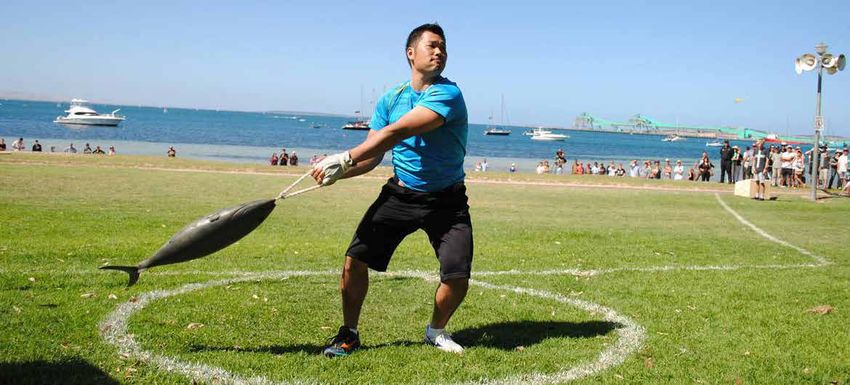
Notes/ideas 8 Local Government Association of South Australia | Economic Development | Festival & Events Guide

2. Background

2.1 Events typology                                          Festivals and events may be classified on the basis of
                                                             the type of experience they deliver, and their level of
From a tourism perspective, a special event is defined by    significance from a tourism perspective.
Jago and Shaw2 as ‘A one-time or infrequently occurring
event of limited duration that provides the consumer         At the most basic level, events may be categorised as
with a leisure and social opportunity beyond everyday        community (primarily of interest to local residents),
experience. Such events, which attract, or have the          tourism (attracting visitors to a region) or business
potential to attract, tourists are often held to raise the   (meetings, incentives, conferences and exhibitions).
profile, image or awareness of a region’.
                                                             Getz (2008)3 has identified four distinct types of leisure
                                                             events: local events; regional events; hallmark events;
                                                             and mega events.
      Medium tourist demand

           Regional events                                                 Low demand and low value
           Regional events have the capacity to attract
           visitors and media interest from outside
           the host region and are associated with              Local events
           medium levels of tourism demand. These               The most common events are local,
           events may be periodic or held just once.            which are associated with low levels of
                                                                demand and low value (from an economic
           Examples include: Kernewek Lowender,                 perspective). Local events are likely to be
           Port Festival, Sea and Vines, Day on                 community driven and provide primarily
           the Green, State Masters Games, Unley                social benefits. They may be periodic or
           Gourmet Gala.                                        one time only.
           Regional events that strongly represent the          Examples include: school fetes, farmers’
           heritage, industry or other aspects of the           markets, trash and treasure, local sporting
           host region may become Hallmark events               events, charity and fund raising events.
           over time.

           Hallmark events                                      Mega events
           Hallmark events are those that become                Mega events are events of international
           strongly identified with the spirit or               significance that will attract international
           ethos of a town, city or region and gain             visitors and confer a substantial economic
           widespread recognition and awareness.                benefit to the host region / country.
           They will attract a range of visitors
           including those from interstate and                  Bidding for these events is generally
           overseas, and will be associated with high           competitive and may involve a significant
           levels of tourism demand and significant             investment to participate in the bid
           economic impact.                                     process. Mega events such as the Olympic
                                                                Games, Commonwealth Games, Asian
           Examples include: Adelaide Festival                  Cup Football etc. will not be a planning
           and Fringe, Tour Down Under, Clipsal                 objective for most councils, although there
           500 Adelaide, Barossa Vintage Festival,              may be opportunities to leverage these
           Tunarama.                                            types of events when they occur.                                     2
                                                                                                                                      Jago, L. and Shaw, R.
                                                                                                                                 1998. A conceptual and
                                                                                                                          differential framework. Festival
      High tourist demand & high value                                     Mega demand & mega value                              Management and Event
                                                                                                                                    Tourism, 5, 1/2, 21-32.

                                                                                                                           Getz, D. 2008. Event tourism:
                                                                                                                           3

                                                                                                                                   Definition, evolution,
                                                                                                                                  and research. Tourism
                                                                                                                           Management, 29, 3, 403-428.

 Local Government Association of South Australia | Economic Development | Festival & Events Guide                                                        9
2. Background
A portfolio of events
The key areas to consider
Getz (ibid) argues that destinations should establish a
portfolio across the three levels of local, regional and with a portfolio management
hallmark events. Where possible an events strategy approach are:
should include hallmark events for regional areas
which will provide a focus for place branding and
community development objectives. Event portfolios should include a range of event
types such as sports, entertainment and cultural
For Chalip ‘the portfolio’s value derives from events.
the contribution that each event makes to the
destination’s capacity to build its brand for residents Different types of events will appeal to different
and visitors alike’. visitor markets, and therefore will add value to the
region and its brand as a whole.
The value of the total event calendar should be far
greater than the sum of the individual parts.
Events should be strategically placed to stimulate
demand across the year – in particular in quieter
periods.
Complementary events may be clustered at
particular times of the year to capture attention
and increase tourism yield.
Figure 2.1 Likelihood of travel by type of events
60
Travel for an overnight trip to another State or Territory (% of those interested)
Sporting events you
go to watch (39%)
50
Willing to take an interstate trip
Music events, festivals Sporting events
or concerts (58%) you participate/
compete in
40 Quirky or unusual
(13%)
events (34%)
Theatrical
productions or shows Historical
(43%) events
30 (39%) Food and
Garden or wine events
botanical (62%)
events (45%)
20 Art exhibitions Cultural events or
(38%) festivals (47%)
Agricultural
events (28%)
10
40 50 60 70 80
Willing to take an overnight trip
Travel overnight NETT (% of those interested)
10 Local Government Association of South Australia | Economic Development | Festival & Events Guide2.2 Events – drivers of regional An event was the main reason for visiting the region
tourism for 57% of first time visitors and 69% of repeat visitors.
Event patrons were most likely to travel as a couple
Festivals and events provide a mechanism to (41%) or with friends (34%). One quarter (24%)
stimulate travel to regional areas. Tourism Research travelled as a family with children.
Australia (TRA), in association with the South
Australian Tourism Commission (SATC) and Tourism The types of events identified by TRA based on the
Victoria4, has found that almost one quarter (24%) experiences sought and the characteristics of event
of Australians have been to at least one event in a patrons are described in Table 2.1.
regional area within the last two years. One tenth (9%)
The likelihood of travelling to attend different types of
had attended a regional event located interstate.
events is illustrated in Figure 2.1.
Event travellers had attended an average of three
events within the last two years with the most popular
being: food and wine; music related; garden and
botanical; sport (as a spectator); and art exhibitions.
Table 2.1 Event experiences and patron attributes
More likely to: Less likely to:
Food and wine events (15%) Be pre-planned (71%) Be a trip driver (55%)
Attended by couples (49%) Have purchased a ticket (41%)
Music events, festivals and Attract females (60%) Be intrastate day trips (26%)
concerts (13%) Attract 15-34 years olds (49%)
Intrastate overnight trip (43%)
Attend with friends (61%)
Garden or botanical events Attract 65 year olds and older (25%) Attract 15-34 year olds (25%)
(11%) Be an intrastate overnight trip (50%) Have purchased a ticket (44%)
Sporting events you go to Attract males (59%)
watch (10%) Be a trip driver (71%)
Be pre-planned (86%)
Have purchased a ticket (68%)
Art exhibitions (10%) Attract females (61%) Be pre-planned and decided on the
road (28%)
Have purchased a ticket (50%)
Cultural events or festivals Be intrastate overnight trips (26%).
(8%) Have purchased a ticket (43%)
Theatrical productions or Attract females (63%)
shows (8%) Have purchased a ticket (82%)
Agricultural events (8%) Attract males (58%)
Be attended with other family (25%)
Have purchased a ticket (68%)
Quirky or unusual events Attract males (59%)
(6%) Be intrastate day trips (43%)
Historical events (6%) Be attended as a family with children (32%) Be a trip driver (52%) 4
Tourism Research Australia,
Visit to experience new things (36%) Be intrastate day trips (43%) 2014. Events - Drivers of
Regional Tourism.
Sporting events as a Be a trip driver (88%) Attract 15-34 years old (24%)
participant (5%) Be pre-planned (92%) Be attended by couples (32%)
Proportion of respondents attending each type of event within last 2 years
Local Government Association of South Australia | Economic Development | Festival & Events Guide 11Case Study
Tunarama - A hallmark event
Overview
The Tunarama Festival, held annually in Port Lincoln over the The Festival program features the well- known World Champion
Australia Day weekend, is one of the longest standing and most Tuna Toss, street parade and fireworks plus a range of community,
significant regional events in South Australia. It began in 1962 as cultural and entertainment activities.
an initiative of state and local government in association with local
Tunarama is run by a community not for profit association and
industry stakeholders.
is independent of the Port Lincoln Council except for a nominal
The Festival was initially developed to help promote the tuna negotiated sponsorship and a small in-kind component.
industry, which was emerging in Port Lincoln at that time. The event
Two thirds (65%) of the event budget is derived from sponsorship
also coincided with the tuna fleet putting to sea. While fishing
(20% government and 80% local business), 30% from the box office
operations have changed, the Festival continues as a celebration of
and a further 5% from other government grants. The event also
the region’s most lucrative industry as well as the other successful
hosts a Charity Quest with donated funds used to directly support
primary producers in the region.
infrastructure in Port Lincoln and local charitable organisations.
The current objective of the event is to promote tourism and
The event has in the past received 50% of its budget from the
support economic growth in Port Lincoln and the Lower Eyre
Port Lincoln Council and while it has been successful in attracting
Peninsula. Now branded as the Seafood Capital of Australia, the
sponsorship, future viability may require an increased contribution
region is home to a wide range of fish species and is well known for
from the council when compared to current levels.
its pristine natural environment.
Economic impact Linkage across councils
Conservative estimates place the Tunarama attendance in excess Tunarama was an initiative of the City of Port
of 25,000 people, more than double the city’s population. Lincoln and its partners, the South Australian
Tourism Commission and the Australian Hotels
Research conducted for the event suggests that whilst some 73% Association.
of visitors stay for the 3 nights of the Festival, there is a large
number who spend between 6 nights and 5 weeks in the region – As the event has grown, its impact has spread to
resulting in a substantial additional tourism impact. the surrounding regions of DC Lower Eyre and
DC Tumby Bay, although these councils make no
Surveys undertaken onsite by the event management suggest direct contribution to the event and do not link to
the return to the region is approximately $7 million dollars. the event with their own associated activities.
Capacity to host the event
The estimated commercial bed
capacity of the City of Port Lincoln,
The tourism impact of the Festival The program for the event is
and the surrounding region falling
is supported by the involvement of also limited by lack of additional
under the council areas of DC Tumby
private householders and the capacity infrastructure within the city
Bay and DC Lower Eyre Peninsula, is
to grow further is limited by the boundaries; however a program of
around 10,000.
accommodation supply. fringe events has developed outside
In addition there are 3,000 to 5,000 of the city including Dirt Circuit Racing
Anecdotal evidence suggests the and Golf Days.
‘hosted’ beds for family and visitors
Tunarama has been ‘at capacity’ since
within private homes in the area.
the 1980s, with no known years of
The capacity of the region to host
substantial decline in patronage.
overnight visitors is around 14,000.
12 Local Government Association of South Australia | Economic Development | Festival & Events GuideCase Study
What are the
implications for my
council?
� Is the event an authentic
representation of the
region and community?
� Does it represent the
region’s brand or story?
� Is the community engaged
by the event?
� Does the event offer a
key distinctive element
that will provide a focus
for publicity outside the
immediate region?
� All stakeholders committed
to the event’s success?
� What can be done to ensure
Leveraging the event to continued support?
maximise economic and Key findings
other benefits � Does the event attract
The Tunarama is an authentic financial support from a
Tunarama works closely with local representation of the region, its industry range of sources?
businesses, and the event is to be used and its community. It has successfully
as a platform for marketing the region evolved over time and expresses the � Is it financially viable?
at a national and international level. region’s brand or story.
� How will council know
As more national companies seek to The World Championship Tuna Toss is a if the event has reached
establish themselves in the region key distinctive element for the Festival capacity?
there is an opportunity for local and provides a focus for publicity outside
businesses and suppliers to develop the immediate region. � What stakeholders will
relationships through the event.
need to be consulted to
Half of the event budget is now derived
A networking model is in development from sponsorship by local business. determine whether there is
and a small trial was conducted in Local support has however decreased a capacity to grow and the
2015 with further promotion to be over time and support from outside the quality of the event will not
undertaken for the event in 2016. region is still necessary to maintain the be compromised?
event’s financial viability.
Taking a more proactive stance in � How can the footprint of
leveraging the event for business The event is at maximum capacity due the event be increased?
outcomes may also provide a basis for to supply constraints with respect to Are there nearby towns
additional support from other spheres accommodation and event related that would assist with
of government. infrastructure within the city of Port cross promotion,
Lincoln.
The event is also leveraged by accommodation,
promoting tourism in the region There is an opportunity to grow infrastructure support etc.?
to event patrons to encourage the Festival through a more direct
return visitation. Increasing tourism involvement of other councils on the � What external networks
will result in further investment Eyre Peninsula. will broaden the reach of
in accommodation and retail. event communications?
This involves a dedicated tourism The event will be leveraged in the future
information booth at the Festival with through the facilitation of business � Are there opportunities to
referrals back to the Visitor Information linkages between local suppliers and use corporate relationships
Centre. Tourism related sponsors are larger businesses interested in establishing to support and leverage
also promoted on-site and through a presence in the region. the event? 3.1 An
the event website and social media. Events Strategy
Local Government Association of South Australia | Economic Development | Festival & Events Guide 132. Background
2.3 Events, social capital and urban A BID is a ‘private sector led management
renewal organisation for a precisely defined geographical
area, where business rate payers have identified
Social capital relates to the relationships that projects and services that will have a positive impact
individuals have with each other, and is a measure on their trading environment’.
of mutual understanding, cooperation and the
existence of relationships that can be leveraged for The objective of a BID is to inject vibrancy and social
mutual benefit.5 cohesion into business precincts that will ensure they
remain sustainable and function as community hubs.
Just as governments commit to physical
infrastructure, investment in social capital will BIDs will support activities that are improvements to
support a harmonious and productive community. the area that are wholly additional to those already
delivered by local statutory bodies. Festivals and
Events build social capital through the development events represent a key element of a BID strategy.
of new social networks; training and development;
volunteering; and ethnic diversity. BIDs derive income from a levy applied to businesses
in the BID district.
The celebration experienced through events also has
the potential to support economic development. As Overseas, legislation may be introduced to define a
Mules has pointed out ‘if such feelings of optimism BID precinct, record registered voters, run an electoral
are translated into higher levels of business system and establish a business plan and budget.
investment and worker productivity, then the event’s
In Australia, businesses may ask council to apply a
intangible effects can be seen as having more subtle
special levy on an area. Council may then determine
economic effects’6.
how many businesses are in favour and vote to
The United Kingdom has been a pioneer in the use of impose a levy which is reviewed on an annual basis.
events to achieve urban regeneration. A series of five
Businesses may then vote on projects to be delivered.
National Garden Festivals were conducted during the
1980s and early 1990s in Liverpool, Stoke-on-Trent, Overseas, BIDs generally have a maximum duration
Glasgow, Gateshead and Ebbw Vale to transform of five years at which point they are reviewed and the
derelict sites into attractive housing estates and decision made to support a second or subsequent
parkland. round where they have been successful in meeting
their objectives.
The Manchester 2002 Commonwealth Games has
also been cited as an outstanding example of the
5
Arcodia, C. and Whitford, M. impact of a major event on a city that has been in
2006. Festival attendance and decline7.
the development of social
capital. Journal of Convention Over the last decade many towns and main street
and Event Tourism, 8, 2, 1-18. precincts all over the world have established Business
6
Mules, T. 1993. A special Improvement Districts (BIDs)8.
event as part of an urban
renewal strategy. Festival
Management and Event
Tourism, 1, 2, 107-118.
7
Bowdin, G., Allen, J., O’Toole,
W., Harris, R., and McDonnell, I.
2011. Events Management.
8
West, D. 2012. Mix it with the
best - Business Improvement
Districts working towards
sustainable streets. www.
mainstreetsa.com.au/wp-
content/uploads/MIX-IT-WITH-
THE-BEST-David-West.pdf
14 Local Government Association of South Australia | Economic Development | Festival & Events GuideCase Study
Plymouth Waterfront BID
Overview
The Plymouth Waterfront BID proposes a range of activities with a budget of more
A heading for this
than 6 million pounds over five years, based on a local business contribution of
about BID’s in SA?
one million pounds and the remaining budget from grants and other sources. For councils there are opportunities to work
Under the business plan9 a program of major events is a substantial category of with business associations and encourage
expenditure projected at 1.3 million pounds, delivering an enlivened waterfront initiatives that will support renewal through
with new events, street performances, tall ships and sea and shore activities. events and other activities.
While formal BIDs have not been
Other project initiatives under the business plan include: established in South Australia, businesses
in some areas pay a precinct levy. These
include Rundle Mall, King William Road,
Budget(£) Unley Road, Jetty Road – Glenelg, Norwood
Permanent and dedicated management 688,000 Parade, Stirling and Mount Barker.
Improved marketing 635,000 The precinct levy paid by the traders on
Visitor welcome, access, signage and information 1,449,000 the Norwood Parade resulted in the City of
Safer waterfront 105,000 Norwood, Payneham and St Peters hosting
the Adelaide Fashion Festival for seven
Cleaner waterfront 1,647,000 years, to promote the precincts developing
Waterfront environment 362,000 fashion offering.
Inward investment and regeneration 25,000 In Australia BIDs have been established in
Lobbying and influence To be agreed Fremantle and Gosford.
Business Improvement District Member Benefits To be agreed
What are the
implications for my
council?
� Is there an opportunity
to work more closely
with local business to
support events that
will reinvigorate retail
precincts?
� Will local businesses
through retail
associations agree
to provide financial
support for events that
will contribute to place
branding?
9
GetPlymouth Waterfront Partnership. A Business Improvement District for the Plymouth Waterfront.
Draft Business Plan 2012-2017 www.visitplymouth.co.uk/xsdbimgs/Draft%20Waterfront%20Business%20Plan.pdf
Local Government Association of South Australia | Economic Development | Festival & Events Guide 15Case Study
The Port Festival Supporting urban renewal
Overview
The Port Festival was held for the first time in 2007 as a major cultural The Festival has become leaner and more focused over time and the
event engaging local residents and attracting visitors to the region. objectives are more closely aligned with tourism and place branding.
The festival has been held biennially and has continued to evolve
In 2013, the Festival was held over two days and included Future
over this period.
Portal - a light projection showcasing the heritage precinct; the
The Festival was established to celebrate and promote the cultural, Complete Seafood Experience - a food and wine event; the Artists
artistic and natural assets of Port Adelaide; to attract visitors to Market – a market of artists’ stalls; Salute to the Suitcase – an
the area; and to provide opportunities for the local community to installation celebrating the migrant history of the Port; free access
engage in festival celebrations and events. to galleries and museums in the Port plus other entertainment,
community and ancillary events.
The Port Festival has been a significant component of the urban
renewal strategy for Port Adelaide by supporting the place branding The event attracted around 26,400 unique visitors in 2013 (allowing
objectives and the re-energisation of the business and resident for attendance on both days) with total event related expenditure
communities. estimated to be $618,000. The impact based on spending by visitors to
the City of Port Adelaide Enfield was $336,000.
It has successfully combined community and tourism objectives.
The event had a positive impact on the patron’s perception of Port
The event has an ambitious agenda, particularly in its initial Adelaide with more than one third (36%) stating that their image of
configuration when the program extended over 9 days and covered Port Adelaide had changed as a result of attending the Festival.
a substantial arts, heritage and community program.
What are the implications for
my council?
� Can events play a role in urban
renewal and regeneration in the
community?
� Do the objectives for our event reflect
the needs and interests of the broader
community?
� Is there a process of community
engagement through which key
stakeholders can be involved in event
planning?
� Does the events team have a shared
vision for the event including
prioritisation of potentially competing
objectives?
� Is there a process for evaluating the
economic, place branding and social
impacts of the event?
16 Local Government Association of South Australia | Economic Development | Festival & Events GuideCase Study
Community engagement
The Port Festival, from its inception, has had a history of community involvement. Port Adelaide is a special part of Adelaide
and South Australia with unique attributes including its maritime history, heritage buildings and aboriginal and arts
communities.
The program in 2013 included performances and events initiated by or involving a range of community groups:
City Band concert and organ recital.
Henley & Grange Concert Band.
Hope and Harmony Choir.
Kurruru Youth Performing Arts – performances by young Aboriginal and Torres Strait Islander performers.
Open mike sessions.
Port/al – A movement installation featuring local residents participating in a choreographed / staged live art performance
set against the backdrop of the Port Lighthouse.
The Art Market – market stalls where local artists exhibit their work.
Tell Me Straight Up – a street-based community art project.
Every Suitcase Holds a Story – micro cinema featuring stories told by community members.
Artists in Motion – Open workshops conducted by seven local artists over the duration of the Festival.
Councillor Carol Martin Millinery Design Exhibition – Textile competition open to professional and amateur milliners.
Wood Revisited 2013 – expo of wood-working by the Northern Turners -Woodworking Club.
Young@art – Exhibition of art work by local school children.
Range of workshops relating to art, photography, acrobatics and circus.
The Festival has been directed by a committee which includes representatives of the business community and various
stakeholder groups.
The community is engaged through a process where community groups are invited to submit expressions of interest for
planned activities. Ideas are considered for inclusion in the Festival program and those short listed are invited to complete the
second stage of the registration process.
Events that are accepted following the second stage evaluation may receive assistance with venues, performance
opportunities, infrastructure and funding.
Key findings
A process of community engagement will ensure that the
The tourism objectives for an event must be balanced with event is firmly rooted within, and supported by, the host
the needs and expectations of the host community. community giving rise to long term sustainability.
The event team must have a clear agreement and Events such as the Port Festival will contribute to place
understanding regarding the relative importance of branding objectives and support attitude change and urban
potentially competing objectives. renewal.
Local Government Association of South Australia | Economic Development | Festival & Events Guide 17Notes/ideas
18 18 Local Government Association
Local Government of South
Association Australia
of South | Economic
Australia | Economic Development ||Festival
Development & Events
Festival & EventsGuide
Guide3. Planning for festivals and events
3.1 An events strategy The events calendar – existing and proposed.
The events calendar should include a mixture of
A strategy for events should be developed within the local, regional and hallmark events. The calendar
context of council’s broader strategic planning and / should complement seasonal highlights and avoid
or tourism planning framework. calendar clashes with competing events.
It should also reference external plans such as: A process for identifying new events for the
region through the establishment of an events
The South Australian Tourism Plan committee representing key stakeholders.
Destination Action Plans (DAPs) Strategies for linking with other councils to
facilitate coordinated bidding for larger events.
Regional Strategic Tourism Plans
Council organisational structures to achieve an
Regional Development Australia Regional
integrated approach to approvals and event
Roadmaps.
management (where applicable).
An events strategy for a council or region may include
Budgets (including target budgets where
the following components.
dependent on external funding and intention to
Vision, mission, objectives, strategies and related apply for external funding).
actions. The vision and mission should address
An events strategy should defend and extend existing
broader strategic objectives from the strategic
events while identifying and planning events for the
plan or tourism plan (where applicable).
future. A planning horizon for the development and
Target markets and types of events that will appeal implementation of new events should be specified.
to these markets.
New events should be authentic and reflect the
Events-related SWOT analysis for the region. qualities and characteristics of host towns and
regions. Destinations that produce events for tourists
Review of event-related infrastructure – including rather than ones that are rooted within the host
identification of infrastructure gaps. community run the risk of creating events that are
unsustainable in the long-term.
Recommendations for open space planning
where appropriate. An events strategy must have community support
and its development should include community
Council’s role in regard to events – approvals / workshops or other mechanisms of stakeholder
regulation; product development; management. consultation.
Type of support provided by council - direct The vision / mission statement should be a clear
funding, grant funding, facilitation, in-kind. statement of purpose which is shared and agreed by
all stakeholders.
Types of events to be supported and criteria for
assessment. Councils may also produce an events kit which will
help event planners to obtain relevant approvals from
Strategies for leveraging the events program to council and other authorities, and to understand their
maximise the economic and social impacts. obligations when conducting an event.
Local Government Association of South Australia | Economic Development | Festival & Events Guide 19Case Study
Barossa Regional Events Strategy 2014-16
Background
The Barossa Regional Events Strategy (the Strategy) was Methodology
conducted to describe a process for identifying, developing and
supporting festivals and events in the Barossa region. The process for developing the Strategy involved the
following steps:
Importantly, the Strategy reflected the broader planning
framework for tourism and the branding objectives for the � Development of a clear purpose for the Strategy by
region. the Steering Committee.
The need for an events strategy was identified as an outcome � Desktop research to review best practice and an
of the Barossa Product Gap Audit (2011) completed under the environmental scan of the external operating
National Long Term Tourism Strategy. Events also represent environment for event host destinations.
an important component of the 2012-14 Barossa Destination
Action Plan and the Barossa Regional Roadmap, developed by � A process of consultation involving workshops
Regional Development Australia (RDA) Barossa. with the events community; discussions with key
stakeholders; and online surveys of event managers
A Steering Committee representing key stakeholders was and the local community.
established to direct the strategy development process. The
Committee included the Barossa Grape & Wine Association � Development of a positioning assessment for the
(BGWA), Barossa Council, Barossa Food, Light Regional Barossa as an event host region.
Council, RDA Barossa, South Australian Tourism Commission � Development of mission, objectives and key
(represented by Events South Australia) and Tourism Barossa. strategies.
The purpose of the strategy was ‘to increase the number of high � Assignment of roles, resources and key
quality, professionally managed events which are true to the performance indicators to determine successful
region’s story’. implementation and monitoring of the Strategy.
In this case the events strategy is driven by a body that � Finalisation and communication of the Strategy to
represents a range of stakeholders involved in the events stakeholders.Key of the
industry. The council is a significant stakeholder but not
necessarily the key driver of the strategy.
5
Arcodia, C. and Whitford, M.
2006. Festival attendance and Implementation A challenge has been reaching agreement on
the development of social the responsibilities of the events advisor. The
capital. Journal of Convention The main outcome of the strategy has been operational aspects of event initiation and
and Event Tourism, 8, 2, 1-18.
the development of a new position to facilitate management are extensive and may not be
6
Mules, T. 1993. A special event applications and provide holistic advice to appreciated by all stakeholders.
event as part of an urban event proponents and managers.
renewal strategy. Festival
Management and Event
Tourism, 1, 2, 107-118.
7
Bowdin, G., Allen, J., O’Toole,
W., Harris, R., and McDonnell, I.
2011. Events Management.
8
West, D. 2012. Mix it with the
best - Business Improvement
Districts working towards
sustainable streets. www.
mainstreetsa.com.au/wp-
content/uploads/MIX-IT-WITH-
THE-BEST-David-West.pdf
20 Local Government Association of South Australia | Economic Development | Festival & Events GuideCase Study
Key aspects of the strategy Clustering of events at a particular time of year can provide a
sense of excitement and engagement – particularly where the
An events strategy must adopt a portfolio approach in which events have some commonality and can share promotional
a program of complementary events is developed covering a strategies.
range of levels, activities and interests. Each type of event will
add value in a distinct way and ensure the value of the event A holistic events program should also, where possible,
portfolio as a whole is greater than the sum of the parts. avoid ‘calendar crowding’ which will result in events directly
competing with other events within or external to the region.
A portfolio approach will allow for a planned process to event
development. Community support is a key aspect of event development.
The events should appeal to the target market segments An events strategy should adopt a three horizon approach
identified within the broader marketing plan for the region. which will:
If economic impact of the events program is the primary Defend and extend core events;
objective, then priority should be given to events that will
Build emerging events;
attract visitors to the region and will extend the visitors’
duration of stay. Create viable options.
To continue to attract visitors to a region, events need to be The strategy included an assessment of internal and external
refreshed and to innovate. operating environments for the region and a SWOT analysis.
What are the implications for my council?
� Are key stakeholder groups involved in the strategic planning process for events?
� Is responsibility for event planning and ownership clearly allocated?
� Is assistance provided for event managers to navigate council requirements?
� Is the events calendar planned to avoid calendar clashes?
� Does council provide infrastructure that will support event signage?
� Does council provide permanent stage/s with power to facilitate cost effective music events?
� Does council provide other public infrastructure relevant to events?
� Does council plan public transport solutions for key events?
� Does council support or manage a volunteer program that can supply volunteers for events?
� Does council communicate the benefits of events with regular feature articles (online / press) to educate the broader
community? 2
Other councils that have developed and published an events strategy include:
Davenport City Council. Events Strategy, 2007 – 2010.
Douglas Shire Council. Events Strategy, 2014 – 2019.
Launceston City Council. The Launceston City Council’s Events Strategy, January 2012 to January 2015.
Shire of Campaspe. Events Strategy, 2012 – 2014.
Local Government Association of South Australia | Economic Development | Festival & Events Guide 213. Planning for festivals and events
3.2 Clustering of events Visitor segments are high yielding.
Attractions that have a degree of synergy will result The event is conducted over a number of days
in an overall level of appeal which is greater than the resulting in overnight stays in the region.
attraction of the individual parts.12 The synergy of a
The region offers a range of ancillary services and
number of complementary events may contribute
activities that will maximise the opportunity for
to a critical mass of attractions which can exceed an
visitors to spend.
attraction threshold.
There are links between the event and ancillary
Clustering of events may however result in supply
services and activities.
constraints (e.g. supporting infrastructure and
equipment, accommodation) in which case event The TRA events study13 found that the highest value
related expenditure may occur outside the regional events - those with broad mainstream appeal and
economy. Supply constraints will also limit the potential to attract overnight stays were:
potential for events to grow.
Music;
Clustering of events may also have a greater impact
on the region’s brand objectives where the clustered Food and wine;
events attract higher levels of media interest than
would be case for the events individually. Cultural;
3.3 Value adding to events and Spectator sporting events.
increasing return on investment
Events with broad appeal that were more likely to be
The economic impact of an event is derived primarily undertaken as day trips were:
from the visitor spending it attracts to the region.
Event related expenditure by local residents is Garden / botanical;
generally considered to be a transfer from other
Theatrical productions or shows;
sectors of the economy and does not represent a net
benefit to the local economy. Historical events;
The economic impact of an event will be greatest Art exhibitions.
where:
Participatory sporting events were found to be high
The event attracts a large number of visitors from value niche events - low in mainstream appeal but
outside the region. with a high degree of overnight travel.
12
Review of South Australian
Events held in March
13
Tourism Research Australia,
2014. Events - Drivers of
Regional Tourism
22 Local Government Association of South Australia | Economic Development | Festival & Events GuideChalip14 has developed a model of event leverage Long-term event leverage involves the enhancement
for participatory sporting events. Under the model, of the destination image, repeat visitation and
events may be regarded as providing ‘seed capital’ positive word of mouth. The application of Chalip’s
which can contribute to long-term and wide ranging model to a regional surfing event is described as a
outcomes. Immediate short-term impacts may be case study.
derived through visitor spending; increased length
of visitor stays; retaining event expenditures; and
enhanced regional business relationships.
Figure 3.1 Chalip’s model of event leverage
Immediate leverage
Visitor spending
Optimise total trade
Lengthen visitor stays
& revenue
Event visitors Retain event
& trade expenditures
Portfolio of Enhance business
Sport subculture
events relationships
Showcase via event
Event media
advertising & reporting
Enhance host Use the event in
community’s image advertising & promotions
Longer term leverage
14
Chalip, L. 2004. Beyond
impact: a general model
for host community event
leverage. In Ritchie, B.W. and
Adair, D. (Eds.), Sport tourism:
Interrelationships, impacts
and issues.
Local Government Association of South Australia | Economic Development | Festival & Events Guide 23Notes/ideas 24 Local Government Association of South Australia | Economic Development | Festival & Events Guide
Case Study
Noosa Festival of Surfing
Leveraging a niche sporting event
The Noosa Festival of Surfing (the Noosa Festival) In 2004 the Festival attracted 400 participants
is a long board surfing competition that has been from Australia, New Zealand, the United Kingdom,
held annually in Noosa Heads on the Queensland France, mainland USA, Hawaii, Tahiti and Japan. The
Sunshine Coast since 1994. It is one of the largest participants were amateur and professional surfers
and most popular events on the Australian and competing in a range of classifications.
international long boarding calendar.
The event was created by a local volunteer run
The event was studied by O’Brien15 in 2004 who was longboard club that stages the Festival each year as
interested in event impacts for a smaller sporting event its main source of annual fundraising.
in the context of Chalip’s model of event leverage.
The event’s location at Noosa Heads is said to be a
Under this model an understanding of the subculture key element of its popularity. Noosa Heads has a long
of those who participate in and support the sport association with the evolution of surfing in Australia
is crucial in developing ancillary activities that will and offers a sub-tropical climate and a series of
leverage the event and contribute to longer term world-class point breaks.
event impacts.
Event leveraging was achieved through a range
of activities which were described by O’Brien in
accordance with Chalip’s framework.
Facilitate visitor spending
Visitor spending is encouraged by
providing links to local businesses through Lengthening visitor stays
event sponsorship and shop front theming,
The competitive program for the Noosa
and by providing a range of ancillary
Festival in 2004 included 15 divisions
events and activities such as coaching
and speciality events held over five days.
workshops; memorabilia auctions; live
The program included a range of age
bands; classic movie screenings; and talks
and gender classifications for amateur
by surfing legends.
participants, a professional competition
The event registration kit for participants for males and females and specialty
included sponsors’ marketing collateral events such as antique long boards. Most
and products, and concessions provided by programs for long board competitions are
sponsors. The event program also included of a shorter duration.
the logos of major sponsors.
The extensive program:
The event lanyard provided access to
Resulted in longer stays in the region;
discounts across a range of sponsoring
businesses. Differentiated the event from other,
shorter festivals;
Each division of the event had a naming
sponsor e.g. Gerry Lopez Surfboards Over Reinforced the ‘family’ aspect of the
35 Men’s Division. event and provided linkage with
broader surfing culture;
In many instances shop fronts also
displayed event themed paraphernalia to Provided opportunities for ancillary
attract event patrons. activities.
14
O’Brien, D. 2007. Points of
The theming by businesses was also found It was found that cultural augmentations – leverage: Maximising host
to enhance the celebratory atmosphere celebration of heritage and aspects of the community benefit from
of the event and contribute to both the subculture – contributed to the celebratory a regional surfing festival.
community and visitors’ experience. nature of the event. European Sport Management
Quarterly, 7, 2, 141-165.
Local Government Association of South Australia | Economic Development | Festival & Events Guide 25Case Study
Retaining event
expenditures
The event management used local suppliers
where possible. This included event
infrastructure such as scaffolding, tents,
public address systems, trophies and prizes,
competition singlets, commemorative
t-shirts and competitors’ show bags.
26 of the Festival’s 40 sponsors were from
Noosa Heads or had a local business
presence. Sponsors included surfing
products, clothing and accessories,
hospitality, accommodation and event
related infrastructure.
The Festival provided direct links between
the participants and local sponsors e.g.
concessions which facilitated spending with
sponsoring businesses.
The contribution of sponsors enhanced
the Festival experience, and led to repeat
visitation to the Festival and to Noosa.
The involvement of local business in
sponsoring and celebrating the event
also contributed to the continuation of
community recognition and support for the
event.
Enhancing business relationships The ancillary components of the Festival were also regarded as
networking opportunities.
The leading sponsor for the event was provided with a display area
which served as a networking zone. Sponsors with potentially complementary products or services were
offered opportunities to work together, were seated together at
While participants and visitors were exposed to the sponsors’ dinners or introduced to each other at Festival venues.
product, the zone also provided an opportunity for participants,
observers, local retailers and sponsors to mingle, resulting in the The Festival managers took a pro-active role in developing business
development of business relationships. relationships that would benefit the community.
Showcasing the region through event One article profiled three families that had moved to Noosa
advertising and reporting Heads permanently after attending the Festival.
The Festival was promoted nationally and internationally The Festival organisers and Tourism Noosa supported travel
through web-based promotion by the event organiser; a listing and accommodation for the editor of an American surfing
in Tourism Noosa’s calendar of events; specialist magazine magazine – Longboarding – which has a worldwide circulation.
advertising; and through sporting club networks. A full page article which focused on the natural beauty of
Noosa and the cultural aspects of the event was subsequently
Word of mouth was historically regarded as the most effective published.
method of promotion for the event.
Awareness of the event and the region may also be leveraged
In 2004 the Festival was covered in 17 articles in the print through sponsors’ advertising. A surf clothing brand used
media including national and international surfing magazines, an image from the Festival as a visual focus for a print
with the majority of the coverage focusing on the ancillary advertisement – the location and the event were attributed in
aspects of the Festival. the advertising copy.
26 Local Government Association of South Australia | Economic Development | Festival & Events GuideCase Study
What are the
implications for my
council?
� Does council understand
the behaviour and culture
of the groups it is seeking
to attract with the event?
� Is further market
research warranted to
better understand event
participants and the
ancillary services and
activities that may be of
interest to visitors?
� Are there ways in which
the duration of stay
by visitors could be
lengthened?
� Is council capturing
images and other creative
resources that can be used
to contribute to marketing
and place branding
initiatives for the region?
� Does council engage with
the media to encourage
publicity for the event?
� Is the event engaging with
Using the event in regional advertising and local business as sub-
promotion
contractors and sponsors?
Where the event and the broader regional brand share common attributes,
the event may be used in advertising and promotion for the region. Surfing � Are incentives offered for
provides a good fit with the regional branding of the Sunshine Coast, which event participants to use
can be used as a focus for its marketing communications. local businesses?
Events that fit with the destination’s brand should be promoted more broadly � Are there opportunities
by regional tourism bodies than simply listing the event on its website. to facilitate business
networking through the
O’Brien suggested that there was potential for tourism authorities to do more
event?
with the event in its tourism marketing.
Key findings
The integration of a sports sub-culture into the event program Small scale events can play a vital role in fostering a
will increase visitor spending and length of stay. community’s enthusiasm for events and building the capacity
to host larger events.
Sport sub-culture is central to event leveraging. Ancillary
events and activities that reflect an understanding of the sub- To fully realise the potential of event leverage, stakeholders
culture of the sport and its participants will be successful. need to approach their events in a more strategic way.
Local Government Association of South Australia | Economic Development | Festival & Events Guide 27You can also read


