2021-2022 School Year Course Catalog
←
→
Page content transcription
If your browser does not render page correctly, please read the page content below
2021-2022 School Year Course
Catalog

                               0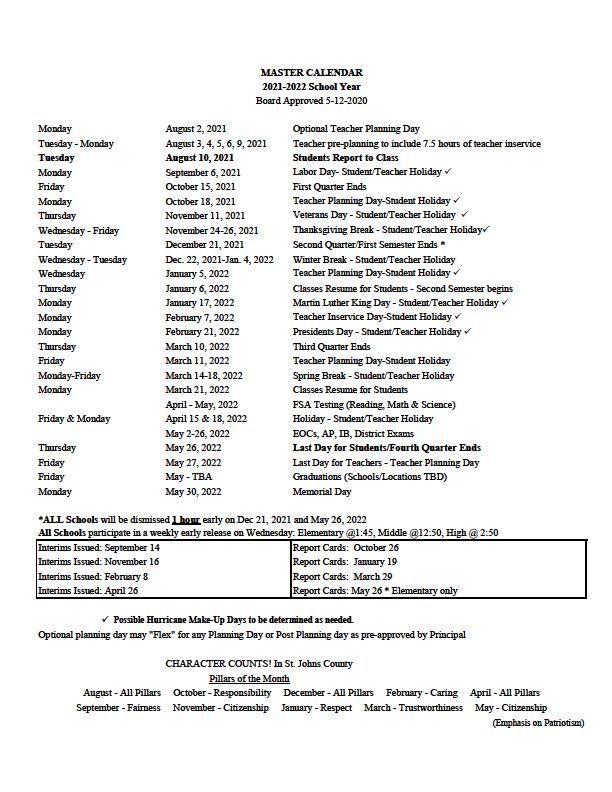
Table of Contents

SJCSD Master Calendar 2021-2022 School Year                      2

School Profile                                                   3

Scheduling Process; Schedule Change Procedures                   4

Grade Scale; Grade Forgiveness                                   6

Academic Recovery Labs; SJVS/FLVS Guidelines; Course Weighting   7

Honors Criteria; Dropping Honors or Advanced Courses             8

Collegiate High School/Dual Enrollment Criteria                  9

Graduation Requirements                                          10

Tocoi Creek Career Academies                                     11

Academy Electives                                                12

Art                                                              13

Computer Education                                               14

Digital Video Technology                                         15

Exceptional Student Education                                    16

Interdisciplinary                                                17

Language Arts                                                    17

Mathematics                                                      19

Performing Arts                                                  22

Physical Education and Health                                    26

Science                                                          27

Social Studies                                                   28

World Languages                                                  32

                                                                      1
2
School Profile

School Mascot - Toros
Colors – Burnt Orange/
Gunmetal Gray/Black
Enrollment -projected 1300
Established - 2021

Community
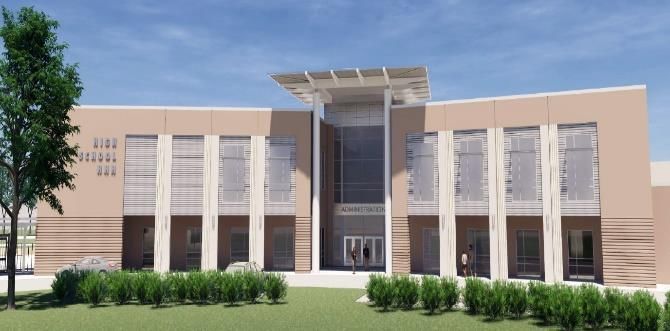
Tocoi Creek High School is in the North Central area of St. Johns County. Tocoi Creek will open in the fall of 2021
and is projected to enroll approximately 1,300 students in its inaugural year with grades 9-11. The school is a
state-of-the-art facility with three academy labs.

Mission Statement
To provide students with the highest quality, rigorous, and challenging education within a safe and secure
environment.
To create a climate within our school academic and extracurricular programs that support high expectations,
character development, and accountability for all.

                                                                                                                      3
SCHEDULING PROCEDURES
Course Registration
Each spring or upon enrollment, students meet with a school counselor to select courses for the upcoming
schoolyear. Course placement is based on a review of pre and/or co-requisite courses, current grades, state
assessment scores and teacher recommendations.
Course registration decisions include:
• Review of core courses
• Selection of elective options
• Choice of traditional or virtual model
• Request for a reduced schedule for seniors and juniors*
* Possible reasons to reduce a schedule during the junior and/or senior year include:
o Travel time to DE courses on the college campus
o Advanced schedule – full time college is typically 4 or 5 courses per semester
o Employment or internship
o Medical situation
o Graduation requirements can be satisfied and Algebra I EOC and FSA requirements
have been met
Schools will try to schedule all the courses selected by a student; however, the following may affect a student’s final
schedule:
• If a course is not requested by a sufficient number of students, that course will not be offered. In this
case every attempt will be made to select a course from the “alternate selections” list from the
student’s course request form.
• If two selected courses are only offered at the same time, the student can only be scheduled into one
of them. Every attempt will be made to use one of the student’s alternate selections to replace the
unscheduled course.
• If a student chooses a course that has a prerequisite and the student’s final grade in the
prerequisite course is not adequate, the student’s schedule will be adjusted accordingly.
For these reasons, it is crucial that the student completes the “alternate selections” section of the course request
form. Please note that if this section is not completed, the student will be scheduled for available electives.
The scheduling procedure is to fill openings in courses in a descending order with 12th graders scheduled first,
11th graders next, etc. This is done to ensure that students closest to graduation meet their graduation
requirements.
Students should discuss and plan their schedule with their parents. Parents should ensure their student’s planned
schedule reflects the scheduling procedures and courses needed for graduation.
4SCHEDULE CHANGE PROCEDURES
Schedule change requests may be made using the Tocoi Creek online scheduling change request form. Please
understand that the school will make final course placement decisions in July after reviewing 2021 FSA scores and
final course grades. The final day to request any ELECTIVE change is June 10th and the deadline for submitting a
CORE course level change is July 16th.
All final requests will be reviewed during the 1st five days of school. All students who register for a full credit
course are expected to remain in the course for both semesters as scheduling is done on a full year basis.
ALL schedule change requests will be denied unless they meet the following criteria:
• A student is incorrectly scheduled because of inadequate or erroneous information
• Administrative action becomes necessary because of imbalance of class loads, loss of a teaching unit,
unique or unforeseen constraints
• An additional course is needed to meet graduation requirements
• A schedule adjustment is required because a student already has received credit in a scheduled class
• Students are enrolled in a course taught by a teacher whose class they had previously failed
St. Johns County School District employs teachers certified by the Florida Department of Education. The
school administration will decide the instructor for each course section. Students and parents are expected
to abide by the choice of instructor. Course content is consistent in all sections with the same course
number and description.
Course Level Change
Students enrolled in a yearlong course, may request a course change at the end of the semester, only if all the
following conditions have been met:
• grade of D or F
• completion of a parent conference
• demonstration of the student seeking consistent academic assistance
Students enrolled in a half-credit course, may request a course change at the end of the quarter, only if all the
following conditions have been met:
• a grade of D or F
• completion of a parent/legal guardian conference
• demonstration of the student seeking consistent academic assistance
Please Note:
• All requests will be honored based on availability
• Placement based on FSA/EOC scores may supersede request
In the case of extenuating circumstances, a petition may be made on a case-by-case basis to the principal (or designee)
for review of criteria to ensure proper course placement.
After 21 days, students who change their schedule will receive the Withdrew Passing (WP) or Withdrew Failing
(WF) determined by their average in the course to that point. After 21 days, the grade earned in the honors/AP
class follows the student to the next course, but teachers have flexibility to adjust the transfer grade based on
demonstrated mastery of standards in the new course.
Withdrawing from an honors or AP course is also denoted with the WP or WF designation but cannot be done until
after midpoint of the course.
Note-withdrawing from dual enrollment courses is governed by the college deadlines, not school policy.
5Grade Scale
Grade Descriptor Standard Honors DE, AP
A = 90-100 Outstanding Progress 4 4.5 5
B = 80-89 Above Average Progress 3 3.5 4
C = 70-79 Average Progress 2 2.5 3
D = 60-69 Lowest Acceptable Progress 1 1.5 2
F = 59-0 Failure 0 0 0
GRADE FORGIVENESS
Grade Forgiveness of High School Credit by Middle School Students
High school level courses taken below grade 9 may be used to satisfy high school graduation requirements and
Bright Futures award requirements. Middle school students who have taken high school courses may receive grade
forgiveness if they have earned a grade of C, D or F or the numerical equivalent of C, D or F. In such case, the district
forgiveness policy must allow the replacement of the grade with a grade of C or higher, or the numerical equivalent
of a grade of C or higher, earned subsequently in the same or comparable course. For a grade of A or B the course
and grade cannot be forgiven and will appear on the student’s high school transcript and will be used in the
calculation of high school grade point average and for Bright Futures. (Section 1003.428 (4)(d), F.S.)
Grade Forgiveness for High School Students
State law requires a cumulative 2.0 GPA to graduate. Forgiveness policies for required courses shall be limited to
replacing a grade of D or F, or their numerical equivalent, with a grade of C or higher, or its numerical equivalent,
earned subsequently in the same or comparable course.
Forgiveness policies for elective courses shall be limited to replacing a grade of D or F, or their equivalent, with a
grade of C or higher, or its equivalent, earned subsequently in another course. These restrictions on forgiveness do
not apply to students below grade 9 taking high school courses.
Any course credit not replaced according to the district's forgiveness policy shall be included in the
calculation of the cumulative GPA required for graduation. All courses and grades must be included on the
student’s transcript. Schools may not count the best 24 credits for all courses taken to meet the cumulative
GPA for graduation requirements.
The district's forgiveness policy is for the express purpose of assisting students in meeting the requirement to
attain a minimum grade point average necessary to graduate from high school. Schools do not have the authority to
purge a student record to delete the first grade of D or F. Student records cannot be altered at any time unless it
has been determined that the information is
inaccurate or a violation of the privacy or other rights of the student.
If an “F” is received in a course required for graduation, the student is strongly encouraged to repeat the course as
soon as possible. Please note that failure to earn a full credit in a year‐long course required for graduation may
keep a student from going on to a higher course in that subject area. See your Guidance Counselor for more
information on retaking a course.
A student is cautioned NOT to repeat courses for which credit has already been received. No credit will be awarded
the second time. Courses in which one earns a C or higher may NOT be retaken to improve a grade.
6ACADEMIC RECOVERY LABS
A review of student academic and attendance records will be conducted prior to the start of school and at the end
of each semester. Students meeting the criteria listed below shall be considered for an opportunity to participate in
the Academic Recovery Labs. These labs are an option, not a requirement for students:
• who are not on schedule to graduate with their cohort – short in credits,
• with a GPA below a 2.0 – in danger of not graduating, or
• who meet one or more of the grade forgiveness criteria.
Students should move through the correct progression of the curriculum before the academic grade recovery lab is
allowed when the GPA is above a 2.0. Students must receive a grade of D or F in order to retake a class.
Due to National Collegiate Athletic Association (NCAA) eligibility requirements, academic recovery lab courses are
not recommended for prospective NCAA Division I and II athletes. For additional information, see:
http://www.ncaa.org/ or http://web1.ncaa.org/ECWR2/NCAA_EMS/NCAA.html
SJVS/FLVS GUIDELINES FOR HIGH SCHOOL
• Learning Labs have been established at each high school to assist in student access to virtual courses.
Students enrolled in these labs will be held to daily class attendance requirements even if course is
completed prior to the end of the enrolled semester.
• It is recommended that students have a 2.0 or higher GPA OR score a level 3 or higher on the FSA in reading
unless the student has medical or behavior issues that may limit success in the traditional classroom.
• Students must meet with school counselor to determine if placement in a SJVS/FLVS is academically
appropriate for the student based on course prerequisites, the student's academic history and age and
appropriateness of the course for the student's Customized Learning Path (CLP). ALL courses must be
approved by the counselor.
• For students with disabilities, an IEP or 504 meeting will be held prior to determining whether placement
in a SJVS/FLVS course is appropriate based on their individual needs.
• Once a semester has begun, a student may not withdraw from a school course to enroll in the same course
online without administrative approval.
• Students may not simultaneously be placed in the same course concurrently at a district high school and at
SJVS/FLVS.
COURSE WEIGHTING
*An additional weight of .5 is added to Honors courses for grade point average (GPA) calculation.
**An additional weight of 1.0 is added to Advanced Placement and Dual Enrollment courses for GPA calculation.
7HONORS CRITERIA
Students who meet AT LEAST ONE of the criteria listed below can take an Honors or AP level course.
• Norm Referenced Test - Stanine of 7, 8, or 9 on an appropriate assessment.
o Math for mathematics and science honors class placement
o Reading for English, social studies and foreign language honors class placement
• Grades – A grade of “C” or better in the previous honors course. Students earning an “A” in a previous
standard class, may be recommended for Honors or AP.
• FSA – Level 4 or 5 in appropriate area and not less than a level 3 in any area
• PSAT – A score of 48 or higher on an appropriate assessment.
• PLAN – A score of 170 (English), 210 (Math), or higher on the appropriate assessment.
FSA Reading scores will be used for placement in English and Social Studies courses and FSA Math scores will be used for Math
and Science courses.
DROPPING HONORS OR ADVANCED COURSES
If a student is enrolled in an honors or AP full-credit course, the student may only drop the course within the first
five class meetings, or he/she may NOT drop the course until the end of the semester and only if the following
conditions exist:
• a grade of D or F,
• completion of a parent conference during each grading period,
• demonstration of the student seeking consistent academic assistance, and
• space available in a comparable course.
If a student is enrolled in an honors or AP half-credit course, the student may only drop the course after the end of
the first nine weeks grading period and only if the following conditions exist:
• a grade of D or F,
• completion of a parent conference,
• demonstration of the student seeking consistent academic assistance, or
• space available in a comparable course.
Withdrawing from an honors or AP course is denoted with the WP or WF designation but cannot be done until
after the midpoint of the course. In the case of extenuating circumstances, a petition may be made on a case-by case
basis to the principal (or designee) for review of criteria to ensure proper course placement.
After 21 days, the grade earned in the honors/AP class follows the student to the next course, but teachers have
flexibility to adjust the transfer grade based on demonstrated mastery of standards in the new course. Note –
withdrawing from dual enrollment courses is governed by the college deadlines, not school policy
*Please choose your classes very carefully!!!
8COLLEGIATE HIGH SCHOOL/DUAL ENROLLMENT INFO AND CRITERIA
Collegiate High School in St. Johns County creates an opportunity for a cohort of eligible students to
enroll in college level classes and earn their Associate in Arts degree, all while still enrolled in high school.
Students in this pathway will take a defined list of courses.
Traditional Dual Enrollment is a program that allows eligible high school students to simultaneously
earn college credit while earning credit toward a high school diploma. Students enrolled in traditional
dual enrollment will select their own courses.
Early Admissions is a type of dual enrollment for students in 11th and 12th grade who enroll full-time at
SJR State, taking a minimum of 12 credit hours per semester. The student will only take classes at the SJR
State campus and takes no classes at the high school site.
HOW ARE THE PROGRAMS DIFFERENT?
Collegiate High School begins in the 9th grade. During grades 9th through 11th, students will take a
defined list of 18 college credits in combination with their high school classes. During the 12th grade,
students will be enrolled full-time at SJR State, taking a total of 33 credits. Students in this pathway will
take a defined list of courses in order to facilitate completion of their Associate in Arts degree.
Traditional Dual Enrollment begins in the 10th or 11th grade. Students may take classes at the high
school site, online, and on SJR State’s campus as available.
Early Admissions begins in the 11th grade with dual enrollment courses online and on SJR State’s
campus as available. Students transition from DE to EA if they become full-time college students
(minimum 12 credits/term, no classes at the high school site).
What makes me eligible for the Collegiate High School?
• Participation in any Dual Enrollment program in Florida requires a minimum of 3.0 un-weighted
high school GPA.
• Students were selected to receive an invitation to today’s information session based upon having a
minimum un-weighted cumulative high school GPA of 3.0.
• Strong performance in English, Reading, and Math courses recommended.
• Students must have a level 3, 4 or 5 on the 8th grade Florida Standards Assessment for English
Language Arts.
• Students must have a level 3 or higher on the 8th grade math FSA or a level 3 or higher on the
Algebra 1 EOC.
9GRADUATION REQUIREMENTS
Graduation
Standard Diploma Scholar Designation Merit Designation
Requirements
• 4 credits of English
• Must take and pass10th
English Credits • Same as standard • Same as standard
grade FSA Reading and
Writing
• 4 credits of Math
• 1 credit in Algebra, EOC • Must Pass Geometry
30% EOC
Math Credits • 1 credit in Geometry, EOC • Algebra 2 • Same as standard
30% • Statistics (or equally
• All students MP Algebra 1 rigorous course)
EOC
• 3 credits of Science
• 1 credit in Biology 1, EOC
• Biology 1, MP EOC
30%
• 1 credit in Chemistry
• 2 credits in an equally
or Physics
Science Credits rigorous course • Same as standard
• 1 credit in a course
• 1 credit may be substituted
equally rigorous to
with allowable industry
chemistry or physics
certification that leads to
college credit
• 3 credits of Social Studies
• World History
Social Studies Credits • US History, EOC 30% • US History, MP EOC • Same as standard
• Government and
Economics
Performing/Practical
• 1 credit • Same as standard • Same as standard
Fine Arts
• 2 credits of same
Foreign Language • None • Same as standard
foreign language
Physical Education
• 1 credit of HOPE • Same as standard • Same as standard
w/ Health
• 8 credits of electives
• 8 credits of electives –
- Must earn one AP, IB,
students must use electives to
Electives/Other • 8 credits of electives AICE, or dual
attain one or more industry
enrollment course
certifications
credit
Online Course
• 1 entire course • Same as standard • Same as standard
Requirement
Total Credits • 24 credits • 24 credits • 24 credits
• 24 credits may be earned • 2.0 cumulative GPA on
• 24 credits may be earned
through equivalent, a 4.0 scale
through equivalent, applied, or
applied, or integrated or
integrated or career education
career education courses,
courses, including work
including work related
related internships
internships
• 2.0 cumulative GPA on a 4.0
• 2.0 cumulative GPA on a
scale
4.0 scale
10TOCOI CREEK CAREER ACADEMIES
Academy of Future Healthcare Professionals
The electives in this academy will offer students an opportunity to explore
careers in healthcare. Students will be able to visit healthcare facilities,
participate in job-shadowing rotations and gain real-world experiences in the
medical field. This course is part of the secondary Health Core consisting of a
study of the human body, both structurally and functionally with emphasis on
the pathophysiology and transmission of disease. Medical terminology is an
integral part of the course. Laboratory investigations that include scientific
inquiry, research, measurement, problem solving, emerging technologies, tools,
and equipment, as well as, experimental quality, and safety procedures will be
an integral part of this course. Students will interact with materials and
primary sources of data or with secondary sources of data to observe and
understand the natural world. Students will develop an understanding of
measurement error, and develop the skills to aggregate, interpret, and present
the data and resulting conclusions. Equipment and supplies will be provided to
enhance these hands-on experiences for students. A minimum of 20% of
classroom time will be dedicated to laboratory experiences.
Academy of Leadership in Emerging Technologies
The electives in this academy will emphasize the use of emerging technologies
and the leadership, entrepreneurial and technical skills needed to be successful
in rapidly changing industries using future technologies. This path provides
students with the content and skills essential to the design and operation of
robotics, including artificial intelligence, sensors, electronic devises,
engineering technologies, motion physics, electrical motors, programming,
simulation and modeling and critical thinking skills. Fields related to the
design, construction, coding and use of industrial, medical, or commercial
robotics will be emphasized. Students will immerse themselves in the use of
drones, robotics and design elements/software and equipment related to
current industrial, commercial, and medical applications.
Academy of Innovation in the Built Environment
The electives in this academy will offer students an opportunity to explore
careers in the various fields of Construction Management. Students will have
hands-on experiences in design and construction, participate in job-shadowing
rotations and gain real-world experiences in the construction field. This
academy is focused on developing a deep understanding of entrepreneurial
programming, Computer Assisted Design (CAD), project fabrication and
marketing. Engineering, design and project construction management are
integral components of the course. Laboratory investigations that include
scientific design, research, measurement, problem solving, emerging
technologies, tools and equipment, as well as, experimental quality, and safety
procedures will be an integral part of this course. Equipment and supplies will
be provided to enhance these hands-on experiences for students.
11ACADEMY ELECTIVES
Future Healthcare Professionals Robotic Systems and Survey of Emerging
Technologies
Health Science Anatomy and Physiology Course No.: 9410130 Credit 1.0*
Course No.: 8417100 Credit: 1.0*
This course provides students with extended content
This course is part of the secondary Health Core and skills essentials to the design and operation of
consisting of a study of the human body, both robotics and operations of robotic systems, including
structurally and functionally with emphasis on the artificial intelligence, specialized sensors, electronic
pathophysiology and transmission of applications, engineering technologies,
disease. Medical terminology is an integral part of environmental physics, manufacturing, topographical
the course. considerations, programming, communications,
simulation and modeling and critical thinking skills.
Health Science Foundations
Course No.: 8417110 Credit: 1.0*
Innovation in the Built Environment
This course is part of the Secondary Health Core
Introduction to Construction Management
designed to provide the student with an in-depth
Construction Design Technology
knowledge of the health care system and associated
Course No.: 8722010 Credit 1.0*
occupations. Emphasis is placed on communication
and interpersonal skills, use of technology, ethics and
The purpose of this course is to provide students
the development of critical thinking and problem-
with competencies in safety practices; the use of
solving skills. Students will also learn first aid skills
hand and power tools; construction components,
and demonstrate the measurement of vital signs.
materials and hardware; construction industry
Students may shadow professionals throughout the
occupations and employability skills.
course.
Construction Management Foundations
Leadership in Emerging Technologies Construction Design Technology
Course No.: 8722030 Credit 1.0*
Foundations in Mechatronic Programming-
Robotic Design Essentials The purpose of this course is to develop student
Course No.: 9410120 Credit 1.0* competencies in construction related math and
(Relevant standards from Foundations of Robotics science, the built environment and the green
will be included 9410110) environment.
This Course provides students with the content and
skills essential to the design and operation of
robotics, including artificial intelligence, sensors,
electronic devises, engineering technologies, motion
physics, electrical motors, programming, simulation
and modeling and critical thinking skills.
12ART on their own artwork and that of others through
critical analysis to achieve artistic goals related to
craftsmanship, technique, and application of 21st-
century skills. This course incorporates hands-on
Ceramics/Pottery 1 activities and consumption of art materials.
Course No.: 0102305 Credit: 0.5 If you choose to take Creating 2D Art, this will be
paired with Ceramics/Pottery 1. One course will be
The purpose of this course is to enable students to taken 1st semester and the other course will be taken
recognize the properties, possibilities, and limitations 2nd semester.
of clay by creating functional and nonfunctional
works of ceramics and pottery using basic hand- Drawing 1
building techniques. Course.: 0104335 Credit 0.5
If you choose to take Ceramics/Pottery 1 this will be
paired with Creating 2D Art or Drawing 1. One course Students experiment with the media and techniques
will be taken 1st semester and the other course will be used to create a variety of two-dimensional (2-D)
taken 2nd semester. artworks through the development of skills in
drawing. Students practice, sketch, and manipulate
the structural elements of art to improve mark
Ceramics/Pottery 2 making and/or the organizational principles of
Course No.: 0102310 Credit: 1.0 design in a composition from observation, research,
Prerequisite: Ceramics/Pottery I and Teacher and/or imagination. Through the critique process,
Recommendation students evaluate and respond to their own work and
that of their peers. This course incorporates hands-
The purpose of this course is to enable students to on activities and consumption of art materials
recognize the properties, possibilities, and limitations
of clay by creating functional and nonfunctional Drawing 2
works of ceramics and pottery using intermediate- Course.: 0104350 Credit 1.0
level hand building and basic wheel-throwing
techniques. Students develop and refine technical skills and
create 2-D compositions with a variety of media in
Ceramics/Pottery 3 Honors Credit: 1.0* drawing. Student artists sketch, manipulate, and
Course No.: 0102320 refine the structural elements of art to improve
Prerequisite: Ceramics/Pottery II and Teacher mark-making and/or the organizational principles of
Recommendation design in a composition from observation, research,
and/or imagination. Through the critique process,
The purpose of this course is to enable students to students evaluate and respond to their own work and
recognize the properties, possibilities, and limitations that of their peers.
of clay by creating functional and nonfunctional
works of ceramics and pottery using advanced hand- Portfolio I, II, or III Honors
building and intermediate-level wheel-throwing and Course No.: 0109310 Credit: 1.0*
firing techniques. Prerequisite: 2D Studio Art, 3D Studio Art and
Teacher Recommendation
Creating Two-Dimensional Art
Course No: 0101355 Credit: 0.50 Students work in a self-directed environment to
Term: Semester develop a portfolio showing a body of their own work
that visually explores a particular artistic concern,
Students investigate a wide range of media and articulated and supported by a written artist's
techniques, from both an historical and statement. Artists may work in, but are not limited to,
contemporary perspective, as they engage in the art- content in drawing, painting, printmaking, and/or
making processes of creating two-dimensional mixed media that emphasizes line quality, rendering
works, which may include drawing, painting, of form, composition, surface manipulation, and/or
printmaking, and/or collage. Student artists reflect
13illusion of depth. Students regularly reflect on language Python. It provides you with the concepts,
aesthetics and art issues individually and as a group techniques, and processes associated with computer
and focus on expressive content that is progressively programming and software development. You will
more innovative and representative of the student's also explore the vast programming career
artistic and cognitive growth. In keeping with the opportunities available in this high-demand field.
rigor expected in an accelerated setting, students' This course provides honors-level credit.
portfolios show personal vision and artistic growth
over time, mastery of visual art skills and techniques, Advanced Placement Computer Science
and evidence of sophisticated analytical and Principles
problem-solving skills based on their structural, Course No: 0200335 Credit: 1.0**
historical, and cultural knowledge. Students are self- Prerequisite: Meets Honors Criteria
directed and display readiness for high levels of
critical thinking, research, conceptual thinking, and AP Computer Science Principles introduces you to the
creative risk-taking. Additional art supplies may need foundations of computer science with a focus on how
to be purchased computing powers the world. Along with the
fundamentals of computing, you will learn to analyze
data, create technology that has a practical impact,
and gain a broader understanding of how computer
COMPUTER EDUCATION science impacts people and society. Students are
expected to take a final AP exam.
Advanced Information Technology
Course No.: 9007610 Credit: 1.0* Advanced Placement Computer Science A
Course No.: 0200320 Credit: 1.0**
This course is designed to provide a basic overview Pre-requisite: AP Computer Science Principles or
of current business and information systems and Foundations of Program
trends, and to introduce students to fundamental
skills required for today's business and academic AP Computer Science A is an introductory course in
environments. Emphasis is placed on developing computer science. Students will learn the Java
fundamental computer skills. The intention of this programming language and develop the skills
course is to prepare students to be successful both required to write programs or parts of programs to
personally and professionally in an information- correctly solve specific problems. Students will learn
based society. Advanced Information Technology design techniques to make programs understandable,
includes the exploration and use of databases, the adaptable, and reusable. Major themes within this
internet, spreadsheets, presentation applications, course are data structures and object-oriented
management of personal information and email, programming. Students are expected to take a final
word processing and document manipulation, HTML, AP exam.
web page design, and the integration of these
programs using software that meets industry Digital Design 1
standards. After successful completion of this core Course No.: 8209510 Credit: 1.0*
course, students will have met Occupational This course is designed to develop basic entry-level
Completion Point A, Information Technology skills required for careers in the digital publishing
Assistant - SOC Code 15-1151. industry. The content includes computer skills,
digital publishing concepts and operations, layout,
Foundations of Programming design, and measurement activities, decision-making
Course No.: 9007210 Credit: 1.0* activities, and digital imaging. Students take the
Prerequisite: Algebra I recommended for student Adobe Photoshop certification exam.
success with integrated math concepts in
programming Digital Design 2
Course No.: 8209520 Credit: 1.0*
Learn the skills required to be competitive in today’s This course is designed to develop basic entry-level
high-tech workforce. This course covers the skills required for careers in the digital publishing
fundamentals of programming using the computer industry. The content includes computer skills,
14digital publishing concepts and operations, layout,
design, and measurement activities, decision-making Digital Video Technology 4 Honors
activities, and digital imaging. Students take the Course No.: 8201440 Credit: 1.0*
Adobe InDesign Certification exam. Prerequisites: Digital Technology 3
Digital Design 3 * Students will demonstrate proficiency in all phases of
Course No.: 8209530 Credit 1.0* the digital video production process (pre-production,
This course is designed to develop basic entry-level production, post-production). This is a level 3 Course,
skills required for careers in the digital publishing Honors Weighting
industry. The content includes computer skills,
digital publishing concepts and operations, layout,
design, and measurement activities, decision-making
activities, and digital imaging. Students take the
Adobe Illustrator Certification exam.
Digital Design 4 *
Course No. 8209540 Credit 1.0*
This course is designed to develop basic entry-level
skills required for careers in the digital publishing
industry. The content includes computer skills,
digital publishing concepts and operations, layout,
design, and measurement activities, decision-making
activities, and digital imaging.
Digital Video Technology
Digital Video Technology 1 Honors
Course No.: 8201410 Credit: 1.0*
Prerequisites: None
This course provides students with an introduction
to the digital video production process; content
includes safe work practices, planning a production
set, designing lighting plans, camera operation, and
audio/video recording, mixing, and editing. This is a
level 3 Course, Honors Weighting.
Digital Video Technology 2 Honors
Course No.: 8201420 Credit: 1.0*
Prerequisites: Digital Video Technology 1
This course provides students with intermediate
level instruction in the digital video production
process. This is a level 3 Course, Honors Weighting.
Digital Video Technology 3 Honors
Course No.: 8201430 Credit: 1.0*
Prerequisites: Digital Video Technology 2
Students will participate in the digital video
preproduction, production, and post-production
processes. This is a level 3 Course, Honors Weighting.
15Exceptional Education Access Biology
I
Access
Algebra 1A
Access World
History
Access courses are intended only for students with a Course No: Course No: Course No:
significant cognitive disability. Access courses are 7920015 7912080 7921027
designed to provide students with access to the Access Access US
general curriculum. Access points reflect increasing Access Algebra IB History
levels of complexity and depth of knowledge aligned Earth/Space Course No: Course No.:
with grade-level expectations. The access points Science 7912090 7921015
included in access courses are intentionally designed Course No: Access Access
to foster high expectations for students with 7920020 Geometry Government
significant cognitive disabilities. Access Course No.: Course:
Access points in the subject areas of science, social Integrated 7912065 7921015
studies, art, dance, physical education, theatre, and Science Access Access
health provide tiered access to the general Course No: English 1 & 2 Economics
curriculum through three levels of access points 7920025 Course No: Course:
(Participatory, Supported, and Independent). Access Access Hope 7910111 7921022
points in English language arts and mathematics do Course No.: Access
not contain these tiers but contain Essential 7915015 English 3 & 4
Understandings (or EUs). EUs consist of skills at Access Liberal Course No:
varying levels of complexity and are a resource when Arts Math 7910112
planning for instruction. Course No:
7912070
Preparation for Post-school Adult Living
Course No.: 7963010 Credit: Multiple Career Placement
The purpose of this course is to enable students with Course No.: 7980130 Credit: Multiple
disabilities to acquire the knowledge and skills The purpose of this course is to enable students with
needed to prepare for post-school adult living. disabilities to use the career knowledge and skills
necessary to identify career options, access
Career Preparation community resources and apply work-related
Course No.: 7980110 Credit: Multiple behaviors. The course will provide placement in a job
The purpose of this course is to enable students with in the community aimed at further progress toward
disabilities to acquire the career knowledge and skills achieving the student’s desired post-school outcomes
necessary to identify career options, obtain related to a career.
community resources and develop work-related
behaviors. The course will provide a foundation for Specially Designed Physical Education
further progress toward achieving the student’s Course No.: 7915010 Credit: Multiple
desired post-school outcomes related to a career. The purpose of this course is to provide
opportunities for students with disabilities to
Career Experiences develop motor skills and to participate in various
Course No.: 7980120 Credit: Multiple physical activities that may be modified to meet
The purpose of this course is to enable students with individual needs.
disabilities to further develop the career knowledge Visual and Performing Arts
and skills necessary to identify career options, access Course No.: 7967010 Credit: Multiple
community resources, and practice work-related
behaviors. The course will provide guided practice The purpose of this course is to enable students with
and experiences in school and community work disabilities to develop a knowledge and appreciation
situations aimed at further progress toward of the visual and performing arts. There will be
achieving the student’s desired post-school outcomes particular emphasis on the visual arts.
related to a career.
16Learning Strategies Prerequisite: Meet Honors Criteria
Course No.: 7963080 Credit: Multiple
The purpose of this course is to build upon previous
The purpose of this course is to provide instruction years’ language arts experiences through accelerated,
that enables students with disabilities to acquire and in depth studies emphasizing a survey of literary
use strategies and skills to enhance their genres, writing process, reading strategies, study
independence as learners in educational and skills and vocabulary development.
community settings.
English II
Interdisciplinary Course No.: 1001340
Prerequisite: English I
Credit: 1.0
AP Capstone Seminar
Course No.: 1700500 Credit: 1.0** The purpose of this course is to build upon previous
years’ language arts experiences emphasizing a
Seminar is a foundational course that engages survey of world literature, advanced reading
student in cross-curricular conversations that strategies, modes of writing including expository,
explore the complexities of academic and real-world persuasive, narrative and descriptive.
topics and issues by analyzing divergent
perspectives. Using an inquiry framework, students English II Honors
practice reading and analyzing articles, research Course No.: 1001350 Credit: 1.0*
studies, and foundational, literary, and philosophical Prerequisite: English I and Meet Honors Criteria
texts; listening to and viewing speeches, broadcasts,
and personal accounts; and experiencing artistic The purpose of this course is to build upon previous
works and performances. years’ language arts experiences through accelerated,
in-depth studies emphasizing a survey of world
AP Capstone Research literature, advanced reading strategies, modes of
Course No.: 1700510 Credit: 1.0** writing including expository, persuasive, narrative
Prerequisite: AP Capstone Seminar and Teacher and descriptive.
Recommendation.
AP Research allows students to deeply explore an English III
academic topic, problem, or issue of individual Course No.: 1001370 Credit: 1.0
interest. Through this exploration, students design, Prerequisite: English II
plan and conduct a year-long research-based
investigation to address a research question The purpose of this course is to build upon previous
years’ language arts experiences and to emphasize
the research process and a survey of American
literature.
Language Arts English III Honors
Course No.: 1001380 Credit: 1.0*
English 1 Prerequisite: English II and Meet Honors Criteria
Course No.: 1001310 Credit: 1.0
Prerequisite: None The purpose of this course is built upon previous
years’ language arts experiences through accelerated,
The purpose of this course is to build upon previous in-depth studies emphasizing the research process
years’ language arts experiences, emphasizing a and a survey of American literature.
survey of literary genres, the writing process, reading
strategies, study skills and vocabulary development. AP English Language and Composition
Course No.: 1001420 Credit: 1.0**
English, I Honors Prerequisite: Meet Honors Criteria
Course No.: 1001320 Credit: 1.0*
17The purpose of this course is to provide students The purpose of this course is to extend the
with an understanding of the semantic, structural and development of the writing and language skills
rhetorical resources of the English language as they needed for individual expression in the literary forms
relate to the principles of effective writing. The as introduced in Creative Writing I.
course also provides a variety of writing If you choose to take Creative Writing I, Creative
opportunities calling for the use of different styles Writing 2 will be taken concurrently. Creative
and tones. Writing 1 will be taken 1st semester and Creative
Students are expected to take a final AP exam. Writing 2 will be taken 2nd semester.
AP English Literature and Composition Speech I
Course No.: 1001430 Credit: 1.0** Course No.: 1007300 Credit: 1.0
Prerequisite: Meet Honors Criteria
The purpose of this course is to provide instruction in
The purpose of this course is to study and practice the fundamentals of formal and informal oral
writing and to study literature. Students will learn to communication.
use the modes of discourse and recognize the
assumptions underlying various rhetorical strategies.
Students will also acquire an understanding of the COLLEGIATE HIGH SCHOOL/DUAL
resources of the language and of the writer’s craft.
They will develop critical standards for the ENROLLMENT
appreciation of any literary work and increase their
sensitivity to literature as shared experience. Composition I (3 College Credits- 3 Hours)
Students are expected to take a final AP exam. Course No.: ENC1101 Credit: 1.0**
Prerequisite: Meet Honors and Dual Enrollment
Intensive Reading Criteria (See page 6)
Course No.: 1000410 Credit: Multiple ENC 1101 is a course in paragraph and essay writing,
Prerequisite: Administrative Placement incorporating some review of basic grammar.
The purpose of this course is to provide remedial Students will learn to write essays that are unified,
instruction and practice in reading skills for students coherent and grammatically correct. An exit grade of
reading below grade level. “C” or higher is required. Composition I fulfill the
junior year English requirement. If you choose to
Journalism 1-6 (Yearbook) take ENC1101, ENC1102 will be taken
Course No.: 1006300-1006340 Credit: 1.0 concurrently. ENC1101 will be taken 1st semester
Prerequisite: Teacher Recommendation, Application and ENC1102 will be taken 2nd semester.
Approval
Composition II (3 College Credits- 3 Hours)
The purpose of this course is to provide instruction in Course No.: ENC1102 Credit: 1.0**
basic aspects of journalism and workshop Prerequisite: ENC1101 with a grade of C or higher
experiences in journalistic production. Students
serve on the yearbook committee. The course includes detailed training in the methods
and applications of expository writing and the
Creative Writing 1 process of logical thinking. Emphasis is placed on
Course No.: 1009320 Credit: 0.5 descriptive, persuasive and argumentative writing.
Students will write a documented research paper. An
The purpose of this course is to develop writing and exit grade of “C” or higher is required. Composition II
language skills needed for individual expression in fulfills the senior year English requirement.
literary forms.
Creative Writing 2
Course No.: 1009330 Credit: 0.5
18MATHEMATICS sense of real-world scenarios. Students must
participate in the End-of-Course examination.
Algebra 1-A
Course No.: 1200370 Credit: 1.0 Algebra I Honors
Course No.: 1200320 Credit: 1.0*
The purpose of this course is to develop the algebraic Prerequisite: Meet Honors Criteria and Teacher
concepts and processes that can be used to solve a Recommendation
variety of real-world and mathematical problems.
This is the first of a two-year sequence of courses, This course is a rigorous study designed for the
Algebra 1-A and Algebra 1-B. Together, the two student who excels in both ability and performance
courses fulfill the Algebra 1 requirements (Course in mathematics. The critical areas of this course
Number 1200310). There are two critical areas of deepen and extend understanding of the number
this course: Relationships Between Quantities and system and of linear and exponential relationships by
Reasoning with Equations and Linear and contrasting them with each other and by applying
Exponential Relationships. These critical areas linear models to statistical data that exhibit a linear
deepen and extend understanding of the number trend, and students engage in methods for analyzing,
system and of linear and exponential relationships by solving, and using quadratic functions. The standards
contrasting them with each other and by applying for these critical areas fall into three reporting
linear models to statistical data that exhibit a linear categories: Algebra and Modeling; Functions and
trend, and students engage in methods for analyzing, Modeling, and Statistics and the Number System. The
solving, and using quadratic functions. The Standards Standards for Mathematical Practice apply
for Mathematical Practice apply throughout each throughout each course and, together with the
course and, together with the content standards, content standards, prescribe that students
prescribe that students experience mathematics as a experience mathematics as a coherent, useful, and
coherent, useful, and logical subject that makes use of logical subject that makes use of their ability to make
their ability to make sense of real-world scenarios. sense of real-world scenarios. Students must
If you are recommended to take Algebra 1A and participate in the End-of-Course examination.
Algebra 1 this will take up 2 class periods for the
entire school year. You will have the opportunity to Liberal Arts Math 1
earn 2 full math credits by the end of the school year. Course No.: 1207300 Credit: 1.0
Prerequisite: Algebra I
Algebra I
Course No.: 1200310 Credit: 1.0 The purpose of this course is to strengthen skills
Prerequisite: None taught in Algebra 1 while providing a foundation for
Geometry. Major topics include: Quantities; Seeing
This course, or its equivalent, is a required course for Structure in Expressions; Arithmetic with
graduation. The critical areas of this course deepen Polynomials and Rational Expressions; Creating
and extend understanding of the number system and Equations; Reasoning with Equations and
of linear and exponential relationships by contrasting Inequalities; Interpreting Functions; Congruence;
them with each other and by applying linear models Similarity, Right Triangles, and Trigonometry;
to statistical data that exhibit a linear trend, and Geometric Measurement and Dimension; Modeling
students engage in methods for analyzing, solving, with Geometry and Interpreting Categorical and
and using quadratic functions. The standards for Quantitative Data.
these critical areas fall into three reporting
categories: Algebra and Modeling; Functions and
Modeling, and Statistics and the Number System. The Geometry
Standards for Mathematical Practice apply Course No.: 1206310 Credit: 1.0
throughout each course and, together with the Prerequisite: Algebra I and Teacher Recommendation
content standards, prescribe that students
experience mathematics as a coherent, useful, and Geometry is a course designed for college bound
logical subject that makes use of their ability to make students. In this course, students explore more
19complex geometric situations and deepen their Arithmetic with Polynomials and Rational
explanations of geometric relationships, moving Expressions; Reasoning with Equations and
towards formal mathematical arguments. The Inequalities; Interpreting Functions; Linear and
standards for this course fall into three critical areas Exponential Models; Expressing Geometric
(reporting categories): Congruence, Similarity, Right Properties with Equations; Making Inferences and
Triangles and Trigonometry; Circles, Geometric Justifying Conclusions, and Conditional Probability
Measurement and Geometric Properties with and the Rules of Probability.
Equations, and Modeling with Geometry. The
Standards for Mathematical Practice apply Algebra II
throughout each course and, together with the Course No.: 1200330 Credit: 1.0
content standards, prescribe that students Prerequisite: Algebra I, Geometry, and Teacher
experience mathematics as a coherent, useful, and Recommendation
logical subject that makes use of their ability to make
sense of real-world scenarios. This course This second course in algebra is designed for college
emphasizes the relationship between Algebra and bound students. This course builds on work with
Geometry in preparation for Algebra 2. linear, quadratic, and exponential functions, and
extends student repertoire of functions to include
Geometry Honors polynomial, rational, and radical functions. Students
Course No.: 1206320 Credit: 1.0* will work closely with the expressions that define the
Prerequisite: Meet Honors Criteria, Algebra I or functions and continue to expand and hone their
Algebra I Honors abilities to model situations and to solve equations,
including solving quadratic equations over the set of
This course is designed for the student who excels in complex numbers and solving exponential equations
both ability and performance in college preparatory using the properties of logarithms. The standards for
mathematics. This is a rigorous study in which this course fall into three reporting categories:
students will explore more complex geometric Algebra and Modeling; Functions and Modeling, and
situations and deepen their explanations of Statistics and the Number System. The Standards for
geometric relationships, moving towards formal Mathematical Practice apply throughout each course
mathematical arguments. The standards for this and, together with the content standards, prescribe
course fall into three critical areas (reporting that students experience mathematics as a coherent,
categories): Congruence, Similarity, Right Triangles useful, and logical subject that makes use of their
and Trigonometry; Circles, Geometric Measurement ability to make sense of real-world scenarios.
and Geometric Properties with Equations, and
Modeling with Geometry. The Standards for Algebra II Honors
Mathematical Practice apply throughout each course Course No.: 1200340 Credit: 1.0*
and, together with the content standards, prescribe Prerequisite: Geometry or Geometry Honors, Meet
that students experience mathematics as a coherent, Honors Criteria, Teacher Recommendation
useful, and logical subject that makes use of their
ability to make sense of real-world scenarios. This course is a rigorous study designed for the
Extensive out-of-class preparation is required. This student who excels both in ability and performance
course emphasizes the relationship between Algebra in college preparatory mathematics. This course
and Geometry in preparation for Algebra 2 Honors. builds on work with linear, quadratic, and
exponential functions, and extends student
Liberal Arts Math 2 repertoire of functions to include polynomial,
Course No.: 1207310 Credit: 1.0 rational, and radical functions. Students will work
Prerequisite: Geometry or LAM1 closely with the expressions that define the functions
and continue to expand and hone their abilities to
The purpose of this course is to strengthen skills model situations and to solve equations, including
taught in Algebra1 and Geometry while preparing solving quadratic equations over the set of complex
students for Algebra 2 or fourth math credit. Major numbers and solving exponential equations using the
topics include: The Real Number System; Complex properties of logarithms. The standards for this
Numbers; Seeing Structure in Expressions; course fall into three reporting categories: Algebra
20and Modeling; Functions and Modeling, and Statistics Major topics include: Conditional Probability and the
and the Number System. The Standards for Rules of Probability; Making Inferences and Justifying
Mathematical Practice apply throughout each course conclusions; Interpreting Categorical and
and, together with the content standards, prescribe Quantitative Data and Using Probability to Make
that students experience mathematics as a coherent, Decisions.
useful, and logical subject that makes use of their
ability to make sense of real-world scenarios. Advanced Placement (AP) Statistics
Course No.: 1210320 Credit: 1.0**
Math for College Readiness Prerequisite: Algebra II Std or Honors, Meet Honors
Course No.: 1200700 Credit: 1.0 Criteria
Prerequisite: 3 credits in math, and in 12th grade The purpose of the AP course in statistics is to
introduce students to the major concepts and tools
This course is recommended for students who simply for collecting, analyzing and drawing conclusions
need some additional instruction in content to from data. Students are exposed to four broad
prepare them for success in college level conceptual themes: 1. Exploring Data: Describing
mathematics. This course incorporates the Florida patterns and departures from patterns 2. Sampling
Standards for 71 Mathematical Practices as well as and Experimentation: Planning and conducting a
the following Florida Standards for Mathematical study 3. Anticipating Patterns: Exploring random
Content: Expressions and Equations, The Number phenomena using probability and simulation 4.
System, Functions, Algebra, Geometry, Number and Statistical Inference: Estimating population
Quantity, Statistics and Probability, and the Florida parameters and testing hypotheses. Extensive out of
Standards for High School Modeling. The standards class preparation is required. Students are expected
align with the Mathematics Postsecondary Readiness to take a final AP exam.
Competencies deemed necessary for entry-level
college courses. Advanced Placement (AP) Calculus AB
Course No.: 1202310 Credit: 1.0**
Pre-Calculus Honors Prerequisite: Pre-Calculus, Meet Honors Criteria,
Course No.: 1202340 Credit: 1.0* Teacher Recommendation
Prerequisite: Meet Honors Criteria, Algebra II
Honors, Teacher Recommendation Calculus AB is primarily concerned with developing
the students’ understanding of the concepts of
This course is designed for the student who excels calculus and providing experience with its methods
both in ability and performance in college and applications. The courses emphasize a multi-
preparatory mathematics and will strengthen the representational approach to calculus, with concepts,
student’s skill in 72 preparation for calculus. Major results, and problems being expressed graphically,
topics include: Limits and Continuity; The Complex numerically, analytically, and verbally. The
Number System; Vector & Matrix Quantities; connections among these representations also are
Arithmetic with Polynomials & Rational Expressions; important. Major topics include: Functions, Graphs,
Building Functions; Trigonometric Functions; and Limits; Derivatives, and Integrals. Extensive out
Similarity, Right Triangles, & Trigonometry, and of class preparation is required. Students are
Expressing Geometric Properties with Equations. expected to take a final AP exam.
NOTE: Students earning credit in pre-calculus may
not earn credit in both trigonometry and analytic Advanced Placement (AP) Calculus BC
geometry. Course No.: 1298310 Credit: 1.0**
Prerequisite: AP Calculus AB, Meet Honors Criteria,
Probability & Statistics with Applications Honors Teacher Recommendation
Course No.: 1210300 Credit: 1.0*
Prerequisite: Meet Honors Criteria The purpose of this course is to enhance and
continue the study of mathematics after Algebra 1,
The purpose of this course is to introduce students to Algebra 2, and Geometry and provide a college level
the fundamentals of descriptive and inferential foundation to students not aspiring to a math, science
statistics with a pronounced emphasis on inference. or technical major. Major topics include: Reasoning
21You can also read


