2021 HUMANITARIAN RESPONSE PLAN - state of Palestine office - UNFPA Palestine
←
→
Page content transcription
If your browser does not render page correctly, please read the page content below
HUMANITARIAN RESPONSE PLAN

2021

        state of Palestine office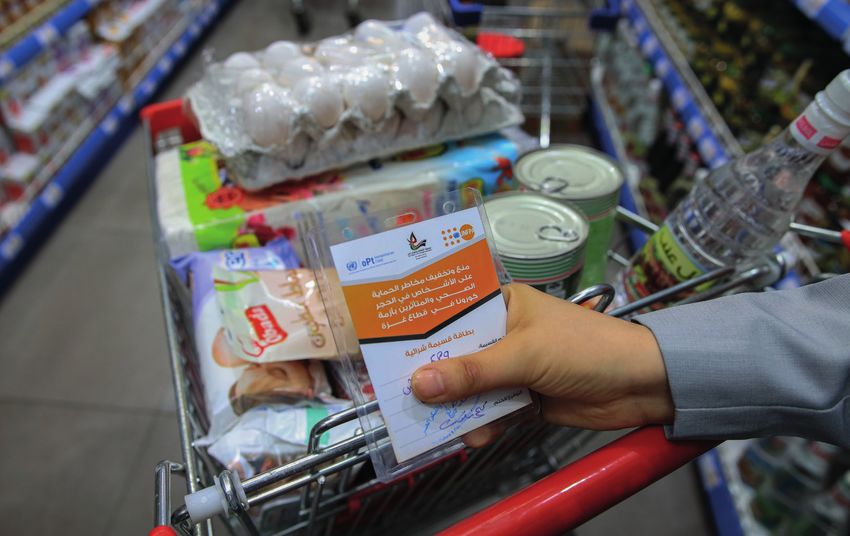
UNFPA
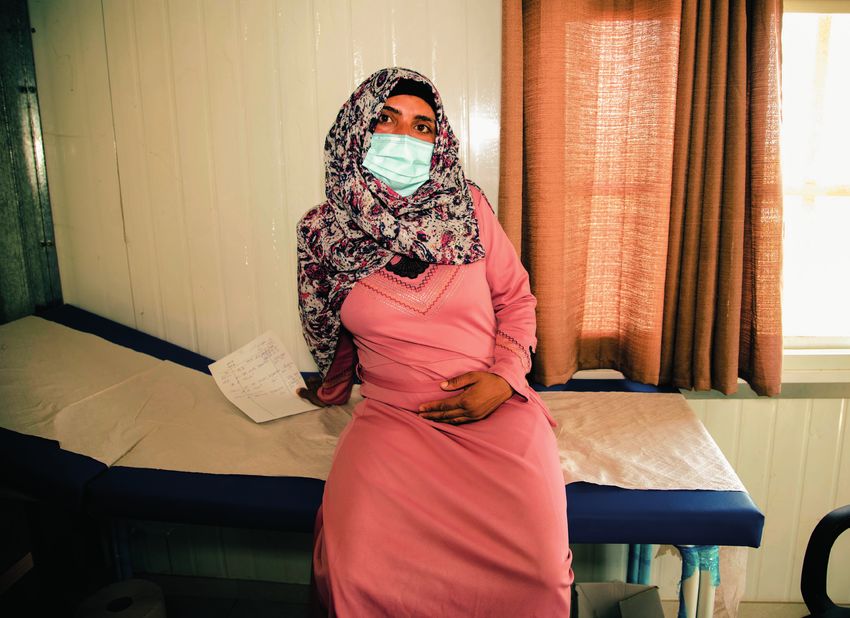
2020 has been a tumultuous year for the occupied Palestinian

                                                                            SITUATION OVERVIEW
territory-oPt which is suffering the economic and health fallouts of the
COVID-19 outbreak, as well as a political standoff that has put
additional pressure on the already fragile economy. In 2020, the
humanitarian situation in the occupied Palestinian territory has further
deteriorated due to two major developments. Firstly, the outbreak of
COVID-19 and the measures imposed to contain the pandemic
including; travel restrictions, school closures, recurrent lockdowns,
reduction of commercial activities; which in turn has resulted in an
increase in the unmet need for primary healthcare (PHC), sexual and
reproductive health (SRH) as well as other services among the most
vulnerable. Secondly, the Palestinian Authority’s decision to halt all
bilateral contacts with Israel as of May 19 in response to Israel’s
decision to annex additional parts of the west bank. Despite the fact
that the PA resumed security coordination with Israel in November, this
decision coupled with the economic slowdown due to COVID-19, has
reduced the PA’s capacity to deliver services, pay salaries and maintain
social safety nets.

In light of the current situation, protection concerns continue to be the
main driver of humanitarian needs in the oPt. Palestinians are
continuously facing a number of protection threats that hamper access
to livelihoods and essential services and result in a continued erosion
of resilience and preparedness.

                                                                    1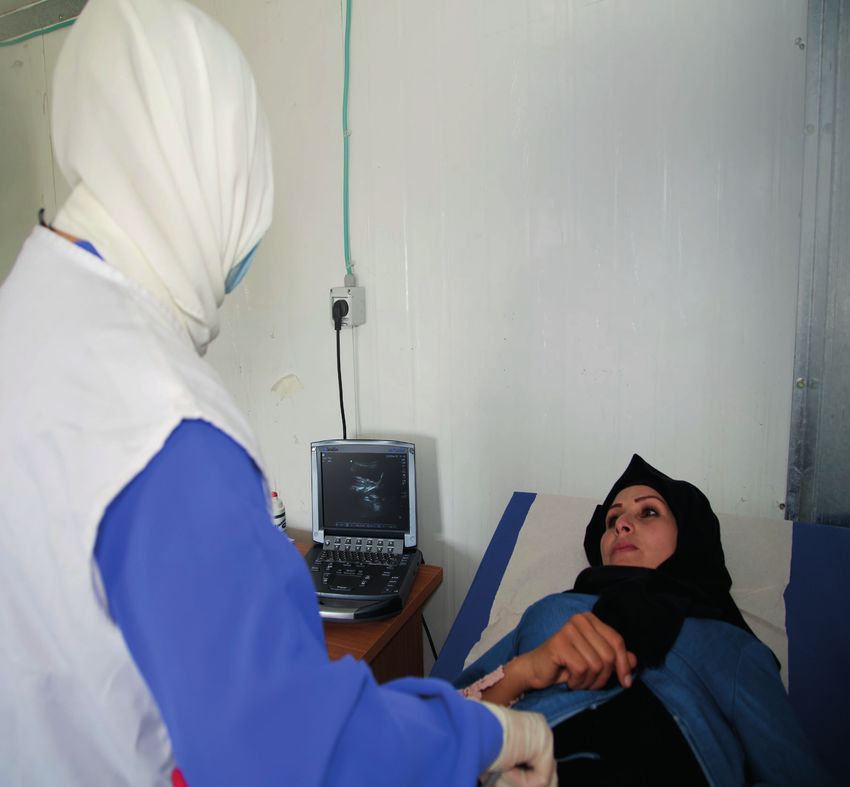
SITUATION OVERVIEW
As estimated by the Humanitarian    support the overburdened health
Country Team (HCT),                 system to address the additional
approximately 2.45 million          challenges generated by the
Palestinians across the oPt will    ongoing pandemic; including
require some sort of humanitarian   through the provision of supplies
assistance in 2021, with a sharp    and capacity building, enhance
increase in the number of people    the health system’s preparedness
suffering from severe as opposed    to address and respond to gaps in
to moderate need reaching around    SRH services, provide access to
346,000.                            legal aid and mental health and
                                    psychosocial support (MHPSS)
Amid this challenging situation,    services to the most vulnerable
UNFPA and through its               and empower women exposed to
humanitarian response plan for      gender based violence (GBV)
2021 will leverage its resources    through the provision of a number
and responsibilities to address     of multi-sectoral GBV services.
these urgent protection needs.
UNFPA will implement a number
of interventions that aim to
mitigate the COVID-19 outbreak
impact on the sustainability and
quality of service provision,

                                                          2
PROTECTION CLUSTER
Strengthening GBV services through
                enhanced GBV Sub-Cluster lead and
                coordination

           Gaza Strip
           West Bank              12 months                250,000
                                  Jan-Dec 2021             US Dollars
           East Jerusalem

          60+ members of the GBV Sub-Cluster including:
TARGETS

          More than 40 national and international NGOs
          8 line ministries
          11 UN agencies

OBJECTIVE
The project aims at strengthening the leadership of the GBV
Sub-Cluster in the Occupied Palestinian Territory in order to tackle
increasing GBV levels in light of COVID-19 through the effective
coordination of GBV prevention, mitigation and response
interventions. More specifically, the project aims at enabling the GBV
Sub-Cluster members to identify and respond to GBV emerging
concerns and gaps, building their capacity with a view to improving
the quality of services, as well as mainstreaming GBV across other
clusters. Moreover, the project seeks to facilitate joint GBV advocacy,
strengthen GBV data collection and management and more broadly,
to respond to the prolonged humanitarian crisis in the occupied
Palestinian territory by contributing to the protection of rights and
dignity of the Palestinian population, especially the most vulnerable.

                                                              4
Preventing and Responding to
Gender-Based Violence within COVID-19
impact on women and girls in Gaza Strip:
Gaza Strip 12 months 860,000
Jan-Dec 2021 US Dollars
100 humanitarian actors “non-GBV specialist” and 120 GBV
TARGETS
service providers through capacity building activities
7,000 persons at risk including women, girls, boys and men
(2000-to be reached in person, 5000-to be reached remotely)
with awareness raising sessions
11,150 GBV survivors through the provision of shelter services,
voucher/cash assistance, economic enablement training , legal
consultation and representation, emergency healthcare, and
MHPSS services both in person and virtually
OBJECTIVE
The project aims at providing a number of multi-sectoral services to
women and girls affected by the pandemic COVID-19, including women
and girls with disabilities and the elderly. The services include; health,
psychosocial, legal, cash assistance, support to small businesses of GBV
survivors in addition to awareness raising and support for special-need
survivors. Service providers within NGO’s and line ministries will be
targeted with awareness raising sessions around GBV topics. Special
focus will be directed at the importance of maintaining PSEA (Protection
from Sexual Exploitation and Abuse) during service delivery and in the
dealings with beneficiaries.
IMPLEMENTING PARTNERS
Red Crescent Society (RCS)
Culture and Free Thought Association (CFTA)
Women’s Affairs Center (WAC)
5Responding to Humanitarian Needs of
GBV in East Jerusalem and Area C:
East Jerusalem 12 months 716,900
and Area C Jan-Dec 2021 US Dollars
150 frontline GBV staff (women and men) through training in
TARGETS
remote service delivery and contingency planning
8,000 persons (women, girls, men and boys) through GBV
awareness raising sessions (3,000 to participate in person,
5,000 remotely)
10,550 GBV survivors including men, women, boys and girls
through provision of dignity kits, shelter services, economic
enablement training or support, cash/voucher assistance,
emergency healthcare and MHPSS services both in person and
remotely
OBJECTIVE
The project aims at strengthening and empowering women exposed to
GBV through the provision of a number of multi-sectoral GBV services.
The project will also enhance the approach of remote service provision
through the use of hotlines and other virtual means in case the current
situation of COVID 19 persists. In this regard, UNFPA is eager to
capitalize upon its successful experience in building the capacity of
service providers both in governmental and non-governmental settings in
the area of remote service provision. Additionally, the project will target
GBV survivors along with service providers to achieve a proper match
between the scaling-up of emergency GBV services and the capacity
building of GBV service providers efforts to ensure provision of quality
GBV services.
IMPLEMENTING PARTNERS
PFPPA - Jerusalem
PWWSD, PCC - Qalqilya
PWWSD, PCC, PMRS - Jordan Valley 6HEALTH CLUSTER
Providing critical MHPSS for young
               people affected by conflict and COVID-19
               pandemic:
          Gaza Strip
          East Jerusalem          12 months                 226,800
          Area C, H2              Jan-Dec 2021              US Dollars

          70 healthcare providers and community workers through
TARGETS

          training sessions
          62,000 patients through access to MHPSS services
          7,000 young people are targeted through awareness sessions
          and mental health promotion activities

OBJECTIVE
In emergencies, young people are particularly vulnerable to the risk of
mental health and psychosocial consequences and destructive
behaviours therefore this project aims to mitigate and respond to the
critical mental health crisis faced by young people in oPt which results in
increasing high-risk coping mechanisms. UNFPA plans to respond to the
growing need for MHPSS among young people during COVID-19,
covering communities in Gaza, Area C, H2 and EJ. Interventions will cover
the following key areas; provision of physical and virtual adolescent and
youth-sensitive mental health services through university youth-friendly
health centres, NGO fixed and mobile health clinics in addition to home
visits , provision of mentoring and in-service training for health providers
(NGO and university clinics) to increase capacity building in managing
and providing adolescent and youth sensitive MHPSS services, delivery of
critical community-based support awareness and education sessions
(physical and virtual) on adolescent and youth’s mental health, MH,
stigma, negative/positive coping mechanisms and misconceptions
around depression, suicide, violence, SRHR, GBV.

IMPLEMENTING PARTNERS
Palestinian Medical Relief Society (PMRS)
Sharek Youth Forum
Save Youth Future Society (SYFS)                                8
Sustaining life-saving sexual and reproductive
health services, by supporting response,
preparedness and resilience of Gaza community
and health system to crises including COVID-19
Gaza Strip 12 months 1,566,000
Jan-Dec 2021 US Dollars
35,000
TARGETS
women in reproductive age, pregnant and lactating through
provision of quality maternal and nutrition services, safe childbirth,
emergency obstetric care, preconception care, early detection of breast
cancer, antenatal care with focus on high-risk pregnancies
50,000 beneficiaries reached through awareness and health education
sessions
40 healthcare facilities through provision of essential SRH medical
supplies, such as drugs, disposables, infection prevention and control
items, contraceptives, lab supplies, capacity building, in addition to
enhanced coordination and communication
300 healthcare workers through provision of PPE
250 healthcare workers through training sessions on neonatal
interventions, safe births, preconception care, infection prevention and
management of malnutrition
OBJECTIVE
As Women’s and girls’ access to resources including life-saving SRH
services and information is being restricted, this project aims to
complement previous and ongoing UNFPA interventions under CERF and
HRP 2020 to increase access of vulnerable women, men and girls to SRH
services, support networks of community activists and implement
community mobilization campaigns including health education/awareness
component. Through this project, UNFPA will support Gaza health system
and enhance its preparedness to address and respond to urgent needs and
gaps in SRH services.
IMPLEMENTING PARTNERS
Ministry of Health- MoH
PMRS and other NGOs 9Sustaining the continuation of essential lifesaving
sexual and reproductive health services for
women, girls, boys and men in Area C, East
Jerusalem, and H2 area in the West Bank during
emergencies
East Jerusalem
Area C 12 months 500,000
Jan-Dec 2021 US Dollars
Hebron H2
37,499 people targeted through provision of level 2 primary health care
TARGETS
services, awareness and health nutrition education
6,000 women through access to SRH services
100 healthcare workers through training sessions on SRH topics
4,000 women in reproductive age, pregnant and lactating women
through provision of quality maternal and nutrition services
100 health cluster partners through training sessions on key priority
themes
100 healthcare workers are protected through provision of PPE
OBJECTIVE
This project aims to mitigate the COVID 19 outbreak impact on the
sustainability and quality of primary health care services in general and the
integrated Sexual and Reproductive Health services (SRH) in particular.
Therefore, the project will increase access to SRH services and MoH primary
health care services to the most vulnerable through: the provision of health
services, community outreach on essential SRH and COVID19 information
and improved coordination of SRH humanitarian partners through the
establishment of emergency committees on governmental level throughout
the targeted areas in close collaboration with MoH.
IMPLEMENTING PARTNERS
Ministry of Health- MoH
Palestinian Medical Relief Society - PMRS
10UNFPA DELIVERING A WORLD WHERE EVERY PREGNANCY IS WANTED, EVERY CHILDBIRTH IS SAFE, AND EVERY YOUNG PERSON’S POTENTIAL IS FULLFIELD. UNITED NATIONS POPULATION FUND JERUSALEM 91517, STATE OF PALESTINE P.O. BOX 67149 TEL.: +972-2-5817167 FAX: +972-2-5817382 PALESTINE.UNFPA.ORG
You can also read


