A BLUEPRINT FOR DEVELOPING A CYCLING HUB
←
→
Page content transcription
If your browser does not render page correctly, please read the page content below
A BLUEPRINT FOR
DEVELOPING A
CYCLING HUB

                  1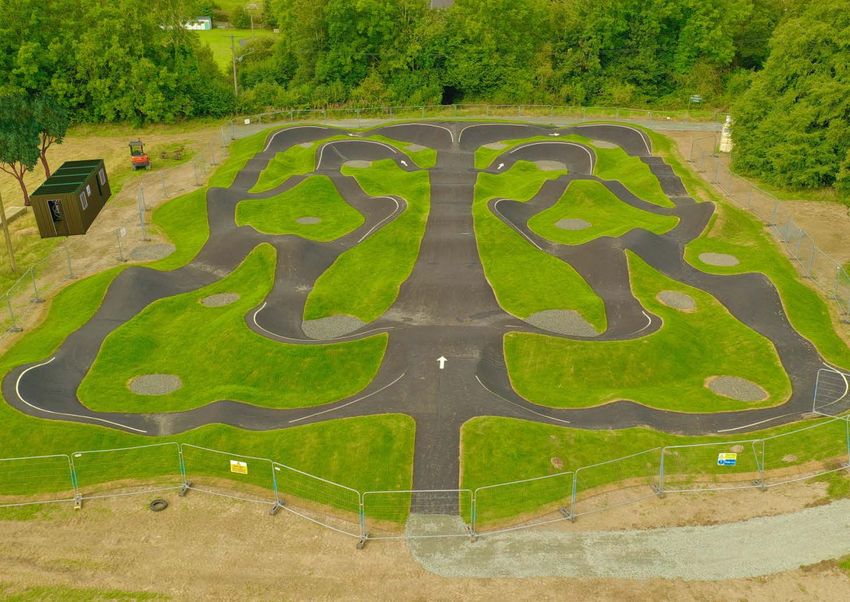
TABLE OF CONTENTS
SECTION 1
Cycling Hubs Overview

SECTION 2
Developing a Cycling Resource

SECTION 3
Cycling Hub Checklist

SECTION 4
Learning from Best Practice

SECTION 5
Cycling Hub Innovation

                                2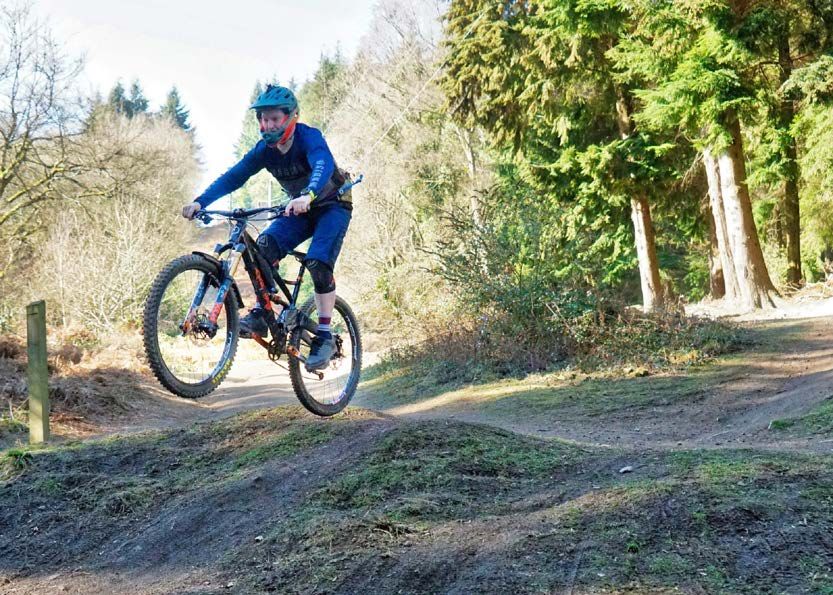
Mission
To provide flexible design and development guidance for the creation of
cycling hubs across a variety of locations and site options to deliver a focal
point for cycling across our communities.

Purpose                                                     How to use the blueprint
The cycling hub blueprint has been developed by             The blueprint is structured around three
Cycling Ireland as an overarching guide for coordinated     categories of cycling hubs. Guidance is
planning and development of cycling hubs across             provided on the options and possible
Ireland. It provides a vision, guiding principles and       configuration of cycling hubs and
cycling hub development options for consideration by        likely user groups to ensure long term
local authorities, land owners, clubs, schools and the      sustainability. Background detail is
community.                                                  provided on the variety of cycling
                                                            facilities that can be incorporated into
The blueprint expresses the aspirations of Cycling
                                                            a cycling hub and how to consider
Ireland to achieve improved and sustainable outcomes
                                                            extending site usage on a year round
for cycling hub development across the county
                                                            basis.
contributing to the growth of cycling within the
community. In the immediate to longer term cycling hub      The blueprint is designed to provide
development will contribute to;                             suggestions and usage scenarios on how
                                                            different sites and local amenities can
The support of the progression of cycling pathways
                                                            accommodate the creation of cycling hubs
introducing children and adults to cycling in a safe
                                                            without significant capital investment.
environment.
                                                            The blueprint assists organisations
The support of the development of well trained              identify hub components that may be
people to grow participation in cycling within local        developed singularly or as part of a wider
communities.                                                cycling amenity developed on a modular
The creation of strong local organisations and structures   approach. A development checklist
to sustain community engagement with cycling as a           provides a step by step guide from project
physical activity and sport.                                inception to on site delivery. This is
                                                            supported by indicative costs categories
The provision of quality facilities across the country.     and a development framework.

                                                                                                         3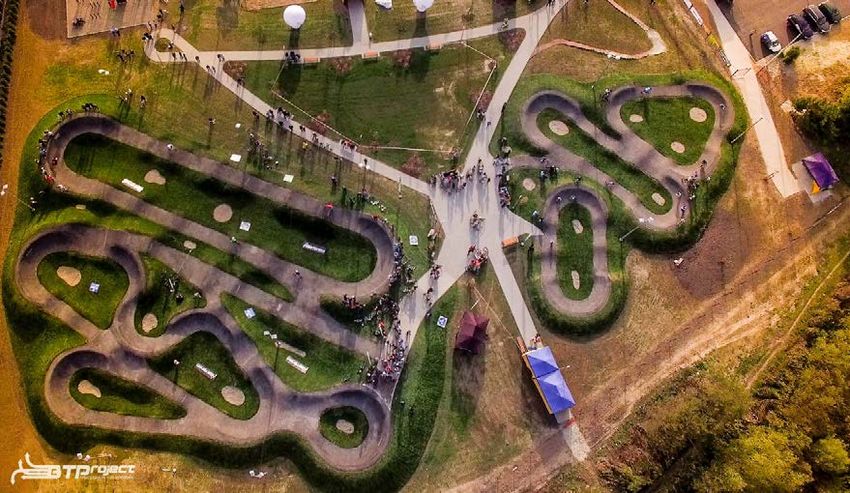
Guiding Principles

        Access                                   Engagement                            Community Benefit                                        Quality
Consideration is given to ease             The community and cycling user            Cycling hubs will offer social, health   Good planning, development and maintenance
 of access for all members of             groups will identify cycling hubs as          and wellbeing benefits for all        will deliver fit for purpose, sustainable and high
       the community                              a resource for all                     members of the community                                  quality hubs

             Consistency                                              Sustainability                                               Innovation
       All stakeholders will embrace the              Cycling hub planning and development takes account of              Cycling hubs will reflect continuous
      blueprint to deliver a consistency in          the immediate to long term community, social, health, and        advances in cycling facilities and the needs
          the delivery of cycling hubs                            environmental considerations                                    of the user groups

             Participation                                                Inclusion                                       Sport development
  Cycling hubs will grow the level of cycling                       Cycling hubs are welcoming                          Cycling hubs will act as a gateway to
  participation across every age and stage of                         environments for every                             the sport of cycling in line with the
            life as a lifetime activity                             member of our community                                   strategy of Cycling Ireland

                                                                                                                                                                     4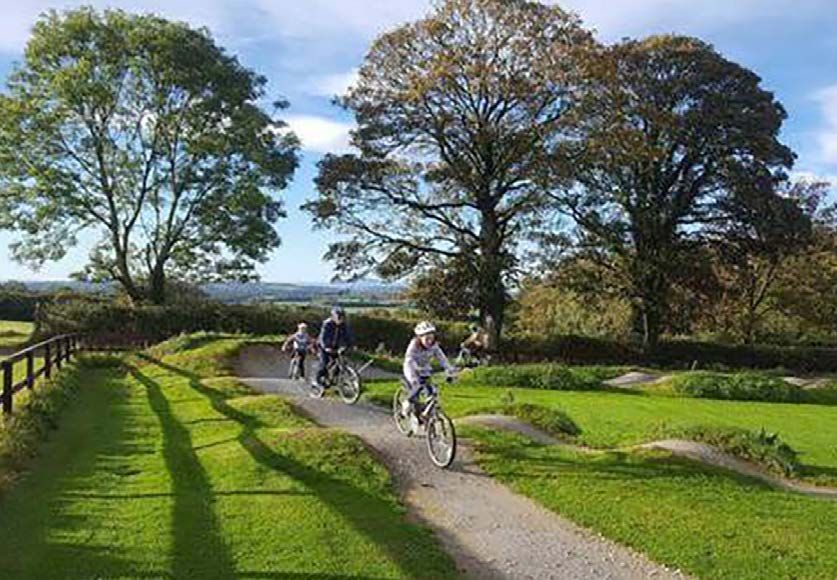
1
                                                                                               N
                                                                                            I O
                                                                                         CT
                                                                                      S E
Cycling Hubs
OVERVIEW

 OVERVIEW
 A cycling hub is a community focal point for cycling development for all ages.
 The hubs will provide a mix of cycling infrastructure facilitating participation,
 training opportunities for all levels and the promotion of physical activity based
 around cycling. Three categories of cycling hub have been proposed from an entry
 cycling amenity to co-shared facilities and the development of standalone hubs.

 Each category features a mix of facilities that will support the goals of cycling
 hubs from supporting the progression of cycling pathways, to training resources
 and enhancing the quality of facilities available across the island of Ireland.
 This approach to cycling hubs is designed to provide a flexible and modular
 framework for developing cycling facilities based on existing local resources,
 spaces and immediate opportunities for local partnership.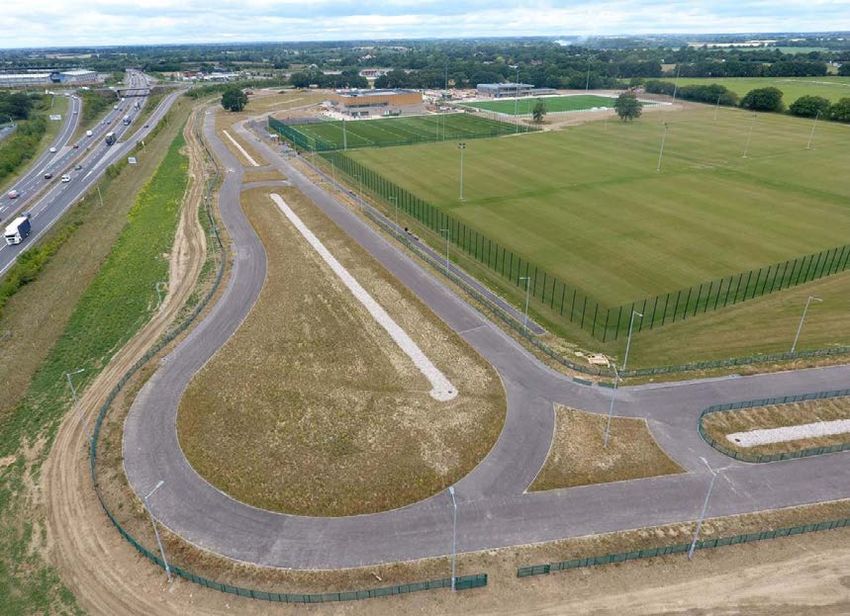
CYCLING HUB: OPTIONS TO CONSIDER
Cycling Hub Cycling Hub Cycling Hub
CYCLING AMENITY CO-SHARED AMENITY STANDALONE HUB
CYCLING FACILITIES CYCLING FACILITIES CYCLING FACILITIES
Learn to Ride areas Learn to Ride areas Learn to Ride areas
Pump Tracks Pump Tracks Pump Tracks
BMX Track BMX Track BMX Track DEDICATED HUB SPACE
MTB Skills Areas USE OF / REPURPOSE MTB Skills Areas
MTB Skills Areas Classroom space
EXISTING FACILITIES
Storage space
School buildings
EXAMPLES Repurposed buildings
Sports centre
Providing a relatively level, surfaced Vacant education / health premises
Sports clubs facilities
area in a vehicle-free space for Vacant commercial/industrial space
Local community centres
beginner and novice cyclists to learn
EXAMPLES
to ride.
EXAMPLES Providing storage and classroom space at an existing cycling facility
Building a pump track in an existing Provision of a learn to ride area in a school to deliver sports programming / bike education activity. Site could
public park amenity. playground with the conversion of an underused facilitate social enterprise activity such as bike maintenance.
school shed for bike and equipment storage used Building a pump track and learn to ride area in a vacant industrial unit
in sports programming. A pump track could be creating a standalone cycling hub able to deliver sports programming
developed on public amenity land outside the and home for cycling clubs in the area.
school.
7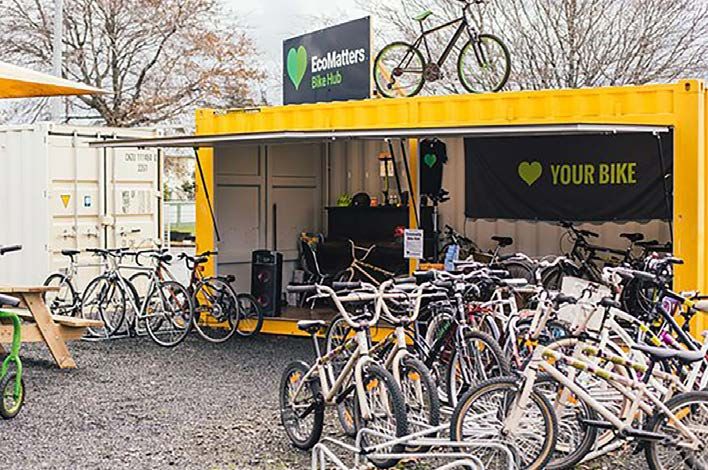
1.1 CYCLING HUB
Cycling Facility
Options

 OVERVIEW
 The cycling facility options section provides an
 overview of the range of cycling facilities that can
 be considered for cycling hubs from learn to ride
 amenities to intermediate and advanced facilities. The
 options contain a variety of considerations from type
 of locations, suitability for various cycling user groups,
 space required, to indicative pricing for the options.
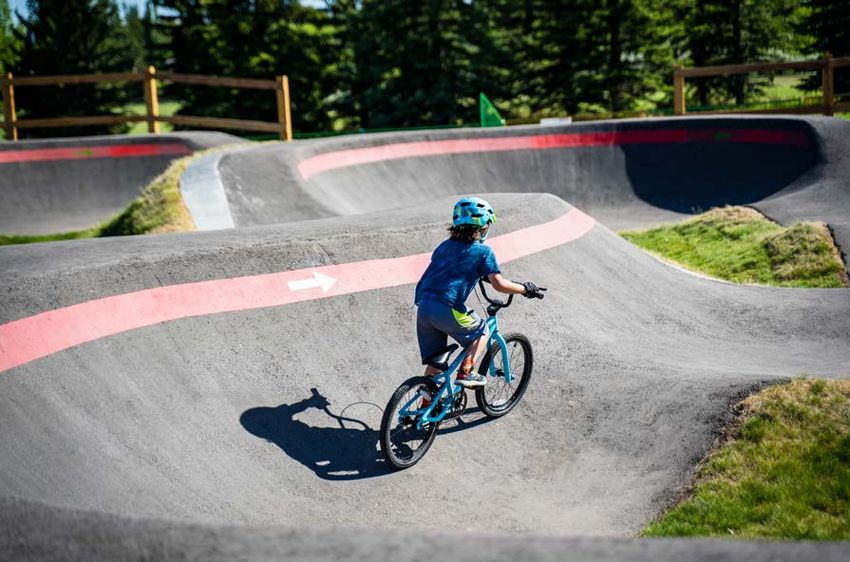
Learn to Ride Area              Beginner Pump Track              Intermediate Pump Track         Advanced Pump Track
                                                                           POSSIBLE LOCATIONS
                                  Primary School                  Primary School                   Secondary School                Town Park
                                  Secondary School                Secondary School                 Small Neighbourhood Park        Country Park
                                  Town Park                       Small Neighbourhood Park         Town Park                       Sport Centres
                                  Sport Centres                   Town Park                        Sport Centres
                                  Local Community Centres         Sport Centres
                                  Sports Club Facilities
AREA REQUIREMENTS
Minimum Area                      25 x 15 metres                  20 x 30 metres                   60 x 40 metres                  80 x 50 metres
Minimum rideable length      N/A                                  50 metres                        140 metres                      180 metres
SITE GEOGRAPHY & CHARACTERISTICS
                                  Flat level ground               Flat level ground                Flat level ground               Flat level ground
                                                                  Direct access for lorry          Direct access for lorry         Direct access for lorry
SPECIALIST DESIGN REQUIREMENT
                              No                                  Yes                              Yes                             Yes
SPECIALIST CONSTRUCTION REQUIREMENT
                                  No                              Yes                              Yes                             Yes
SUITABLE FOR (PEOPLE)
                                  Primary School age Children     Primary School age Children      Primary School age Children     Secondary School age Children
                                  Secondary School age Children   Secondary School age Children    Secondary School age Children   Adults
                                  Adults                          Adults                           Adults                          Progressing Intermediate riders
                                  Total Novices                   Beginners                        Beginners                       Advanced & Expert Riders
                                  Beginners                       Intermediate riders              Intermediate riders
                                                                                                   Advanced & Expert Riders
SUITABLE FOR (BIKES)
                                  Any bike                        Balance Bike                     Hardtail Mountain Bike          Hardtail Mountain Bike
                                                                  Hardtail Mountain Bike           BMX                             BMX
                                                                  BMX                              Dirt Jump Bike                  Dirt Jump Bike
                                                                  Dirt Jump Bike
INDICATIVE BUDGET
Euro(€) / GBP(£)
                                  € 15,000 / £13,000              € 60,000 / £51,000               € 140,000 / £120,000            € 180,000 / €155,000
(exchange rates as of Dec 2021)
Rate (can vary significantly)                                     €1,000 / £850 per linear metre   €1,000 / £850 per lin. m.       €1,000 / £850 per lin. m.

                                                                                                                                                                     9
Modular Pump Track              Beginer MTB Skills Area             Intermediate MTB Skills Area        Advanced MTB Skills Area
                                                                           POSSIBLE LOCATIONS
                                  Primary School                  Primary School                      Secondary School                    Country Park
                                  Secondary School                Secondary School                    Town Park                           Sport Centres
                                                                  Neighbourhood Park                  Country Park
                                                                  Town Park                           Sport Centres
                                                                  Country Park
                                                                  Sport Centres
AREA REQUIREMENTS
Minimum Area                      12 x 22 metres                  0.25 hectares                       0.25 hectares                       1.25 hectares
Minimum rideable length      35 metres                            60 metres                           400 metres                          1200 metres
SITE GEOGRAPHY & CHARACTERISTICS
                                  Flat level ground               Level and slightly sloping ground   Sloping ground                      Sloping ground
SPECIALIST DESIGN REQUIREMENT
                              No                                  Yes                                 Yes                                 Yes
SPECIALIST CONSTRUCTION REQUIREMENT
                                  No                              Yes                                 Yes                                 Yes
SUITABLE FOR (PEOPLE)
                                  Primary School age Children     Primary School age Children         Older Primary School age Children   Secondary School age Children
                                  Secondary School age Children   Secondary School age Children       Secondary School age Children       Adults
                                  Adults                          Adults                              Adults                              Progressing Intermediate riders
                                  Beginners                       Beginners                           Beginners                           Advanced & Expert Riders
                                  Intermediate riders             Intermediate riders                 Intermediate riders
                                  Advanced & Expert Riders
SUITABLE FOR (BIKES)
                                  Balance Bike                    Any Bike                            Mountain Bike                       Mountain Bike
                                  Hardtail Mountain Bike
                                  BMX
                                  Dirt Jump Bike
INDICATIVE BUDGET
Euro(€) / GBP(£)                                                                                                                          €100,000 - €250,000 /
                                  €35,000 / £30,000               €50,000 / £43,000                   €70,000 / £60,000
(exchange rates as of Dec 2021)                                                                                                           €85,000 - £215,000
Rate (can vary significantly)                                     €50 / £43 per lin. m.               €60 / £50 per lin. m.               €80 / £68 per lin m.

                                                                                                                                                                          10
Regional BMX Track Grass Track Local Trail Centres Closed Road Circuit
POSSIBLE LOCATIONS
Sport Centre Primary School Large Town Park Town Parks
Large Park Secondary School Sport Centres Sport Centres
Town Park Disused Golf Courses
Sport Centres
Local Community Centres
Sports Club Facilities
AREA REQUIREMENTS
Minimum Area 0.65 hectares 3 hectares 3 hectares
Minimum rideable length 350 metres 2,000 metres 1,000 metres
SITE GEOGRAPHY & CHARACTERISTICS
Level or slightly sloping ground Sloping ground required Level or sloping ground
Direct access for lorry
SPECIALIST DESIGN REQUIREMENT
Yes No Yes Yes
SPECIALIST CONSTRUCTION REQUIREMENT
Yes No Yes No
SUITABLE FOR (PEOPLE)
Intermediate BMX racers Primary School age Children Primary School age Children Primary School age Children
Advanced BMX racers Secondary School age Children Secondary School age Children Secondary School age Children
Adults Adults Adults
Beginners Beginners Beginners
Intermediate riders Intermediate riders Intermediate riders
Advanced & Expert Riders Advanced & Expert Riders Advanced & Expert Riders
SUITABLE FOR (BIKES)
BMX All bikes Mountain Bike Road Bikes
INDICATIVE BUDGET
Euro(€) / GBP(£)
€175,000 / £150,000 €150,000 / £130,000 upward €800,000 - €1.2m / £680,000 - £1m
(exchange rates as of Dec 2021)
Rate (can vary significantly) €500 - €600 / £425 - £500 per lin. m. €60 - €80 / £50 - £70 per lin. m. €12,000 / £10,000 per lin. m.
111.2 CYCLING HUB Extending Cycling Hub Usage OVERVIEW The modular approach to developing cycling hubs offers the opportunity to incorporate semi permanent structures such as re-purposed storage containers to expand the usage options for hubs. The addition of such structures or incorporating existing buildings into a cycling hub will facilitate an extended level of usage from introducing people to cycling, cycling pathway programme delivery, coach education or delivering classes in activity such as bike maintenance. These structures and blend of facilities are designed to cater for a mix of storage and / or on site training or cycling education uses.
Extending Cycling Hub Usage
Elements of the cycling facilities
matrix can be enhanced to develop
a standalone cycling hub. The
provision of semi-permanent spaces
offers increased flexibility in the
delivery of cycling programming
and training with training room and
bike storage capacity provided.
Shipping containers and modular
units are being increasingly used
as part of active travel networks
providing bike rental and storage
facilities. Within the cycling
community containers have been
developed to become education
                                        EcoMatters Social Enterprise
bases that deliver training             Bike Hub, Auckland
programmes while offering a             (Image: EcoMatters)
meeting location and venue for local
cycling clubs.
Once established, a standalone
hub has the potential to evolve and
expand to reach a wider audience
through the creation of cycling-
related social enterprises and pop-up
ventures providing bike servicing
and repairs with associated retail
elements such as second-hand bike
sales and accessories.

                                                                       13
Standalone Cycling Hub – Cycling Cabins
Potential Locations The customised fit out for cycling classroom cabins may
include electrical fit out, lighting, windows, doors, flooring
Storage containers (Cycling Cabins) can be
and wall lining. There are several suppliers of both
provided in conjunction with cycling facilities to
converted and basic containers in Ireland.
create a standalone cycling hub.
A 20ft x 10ft cycling classroom cabin should be able
Cabins will require flat level ground, accessible
to accommodate a class of 12. The supplied converted
for delivery and placement by HGV and lifting
container can be equipped with chairs with lecture arms,
equipment. Some minor groundworks may be
a projector and table. Portable electric heaters may be
required to prepare the site for delivery.
desirable if not pre-installed. A ramp should be provided for
Suitable locations for cycling cabins include wheelchair and mobility impaired users.
car parks and existing areas of hardstanding or
A 20ft shipping container used as a cycling storage cabin
asphalt.
will store approximately 40 bikes. Consideration can be
Cycling cabins should be in proximity to public given to the provision of bike racks in the cabin for easier
amenities (e.g. toilets) with provision of litter bins storage.
considered.
The site should have access to an electricity supply Cycling Hub Usage Opportunities
for the lighting and delivery of classroom-based
The cycling hub offers a range of cycling progression
activities
opportunities including:
Typical Dimensions Delivery of cycling programming to all ages and abilities
& Characteristics Storage of bikes and equipment used in cycling
programmes
Shipping containers that can be converted into
cycling cabins are available in a variety of sizes up Delivery of bike maintenance workshops and classes
to 40ft long and 8-10ft wide. Base and meeting point for local cycling clubs and elite
training groups
Containers are built to ISO standards with a long-
life expectancy. ‘New’ one-trip containers have To become the focal point for cycle events including Bike
been manufactured overseas, loaded with cargo, Week activities
and shipped to Ireland. Older, used containers are
also available.
142
N
I O
CT
S E
Developing a
Cycling Resource
Indicative Budget Range
OVERVIEW €0k - €50k / £0k - £42.5k
Developing a cycling resource provides a design summary of the €50k - €100k / £42.5k - £85k
range of cycling facilities that can be considered for inclusion within
a cycling hub, as a singular entity or part of a wider sports or cycling €100k - €150k / £85k - £130k
amenity.
Indicative budget estimates for capital expenditure are based on €150k - €25k / £130k - £210k
analysis by industry experts (November 2021). The figures are
indicative and illustrative of typical costs. Final estimates will vary €250k - €500k / £210k - £425k
based on factors such as the final mix of facilities, geographic location,
overall site area and site topography.LEARN TO RIDE AREA
Design Summary
Flat level ground, typically of asphalt or concrete construction aimed at providing a safe, traffic-free area for the delivery of cycle training for beginner and
novice cyclists of all ages. Suitable locations may included marked / coned areas of an existing school playground to new build layouts including turns and road
marking to aid in development of rider etiquette. Users of Learn to Ride areas will be young children and those with little or no cycling experience. Locations that
necessitate cycling beyond their experience to access the facility should be carefully considered and risk assessed.
Specialist Design Requirement
No
Specialist Construction Requirement
No
Area Required & Characteristics
Minimum 25x15m
Flat level ground
Potential Location
Primary school grounds
Secondary school grounds
Town park
Sports Centre
User Profile
Primary school age children Adults
Secondary school age children Total novices
Beginners
Bike Types
Any Bike
Indicative Budget Estimate (Dec 2021)
17BEGINNER PUMP TRACK
Design Summary
Beginner Pump Tracks are designed for children aged 2 or more riding balance bikes. These tracks, due to their small-sized rollers are perfect for small children
enabling them to develop motor coordination as well as balance in a safe environment. They are also suitable for beginner adults and young people on larger
bikes, particularly those who’ve recently learned to ride a bike.
Pump Tracks allow cyclists to learn key balance, pedalling and bike handling skills that can be applied to mountain biking and BMX racing.
Specialist Design Requirement
Yes
Specialist Construction Requirement
Yes Consideration of access for large construction vehicles
Area Required & Characteristics
20x30m
Minimum rideable length – 50m
Flat level ground
Potential Location
Primary school grounds Town Park
Secondary school grounds Regional Park / Forestry Park
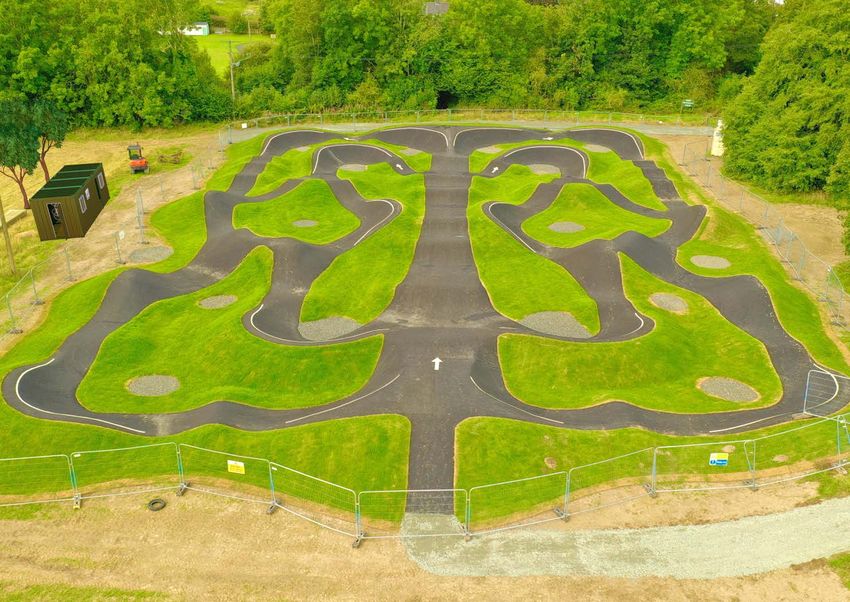
Local park Sports Centre
User Profile
Primary school age children Adults
Secondary school age children Beginners
Intermediate riders
Bike Types BMX
Balance bikes Dirt Jump Bike
Hardtail mountain bikes
Indicative Budget Estimate (Dec 2021)
18INTERMEDIATE PUMP TRACK
Design Summary
Intermediate tracks feature larger obstacles and profiled turns compared to beginner tracks, and form an endless loop. These tracks are still suitable, however,
for beginners and children on balances bikes or scooters as well as very experienced riders. Intermediate tracks appeal to a very wide range of riders, and we
shape them in such a way that there are progressive ‘double’ features that will only be noticeable to very advanced riders. The use of asphalt surfacing provides a
durable, low maintenance surface.
Specialist Design Requirement
Yes
Specialist Construction Requirement
Yes Consideration of access for large construction vehicles
Area Required & Characteristics
60x40m
Minimum rideable length – 140m
Flat level ground required
Potential Location
Secondary school grounds Regional Park / Forestry Park
Local park Sports Centre
Town Park
User Profile
Primary school age children Beginners
Secondary school age children Intermediate riders
Adults Advanced & Expert riders
Bike Types
Hardtail mountain bikes Dirt Jump Bike
BMX
Indicative Budget Estimate (Dec 2021)
19ADVANCED PUMP TRACK
Design Summary
Advanced Pump Tracks deliver constant excitement to both progressing intermediate and advanced users in the full meaning of this word. They enable bikes to
perform jumps smoothly and safely, with large, profiled turns to allow riders to carry speed. Advanced Pump Tracks provide great fun, with multiple line options
and can be ridden in various directions.
The surface of the tracks is made from asphalt which allows for not only cycling but also skateboarding and rollerblading.
Specialist Design Requirement
Yes
Specialist Construction Requirement
Yes Consideration of access for large construction vehicles
Area Required & Characteristics
80x50m
Minimum rideable length – 180m
Flat level ground required
Potential Location
Town Park
Regional Park / Forestry Park
Sports Centre
User Profile
Primary school age children
Beginners
Secondary school age children
Intermediate riders
Adults
Advanced & Expert riders
Bike Types
Hardtail mountain bikes
Dirt Jump Bike
BMX
Indicative Budget Estimate (Dec 2021)
20MODULAR PUMP TRACK
Design Summary
Modular Pump Tracks are a flexible structure that can be set up, taken away and stored, laid out in different configurations, or expanded with additional sections
as required. In many locations, the flexibility of these structures will hold advantages over conventional, permanent Pump Tracks.
Area Required & Characteristics
12 x 22m
Minimum rideable length – 35m
Requires an area of level ground
Potential Location
Primary school grounds
Secondary school grounds
User Profile
Primary school age children
Secondary school age children
Adults
Beginners
Intermediate riders
Advanced & expert riders
Bike Types Image credit : Back on Track
Balance bike
Hardtail Mountain Bike
BMX
Dirt Jump Bike
Indicative Budget Estimate (Dec 2021)
Image credit: Back on Track
21BEGINNER MOUNTAIN BIKE SKILLS AREA
Design Summary
An area with short sections of trail, suitable for young riders on balance bikes as well as adults and young people on balance bikes who may be new to riding off-
road. A series of rollers are mellow enough for young riders is combined with shallow berms and a winding trail to get novice riders used to riding off road trails.
Specialist Design Requirement
Yes Afan Forest Park, South Wales
(Image: Back on Track)
Specialist Construction Requirement
Yes
Area Required & Characteristics
0.25ha
Minimum rideable length – 60m
Level and slightly sloping ground
Potential Location
Primary school grounds Town park
Secondary school grounds Regional Parks / Forest Parks
Local park Sports Centres
User Profile
Primary school age children Beginners
Secondary school age children Intermediate riders
Adults
Bike Types
Any bike
Indicative Budget Estimate (Dec 2021)
Image credit – Back on Track
22INTERMEDIATE MOUNTAIN BIKE SKILLS AREA
Design Summary
An area with short, mountain bike trails, of progressive difficulty, from the beginner friendly singletrack, to short trail sections representative of those found at
trail centres around the country. Skills areas can help riders develop from having recently learnt to ride a bike through to be ready to ride MTB trail centres with
confidence. They are also suitable for riders with experience of riding off road to improve their core skills to take them into the next echelon of riding.
Specialist Design Requirement
Yes
Specialist Construction Requirement
Yes
Area Required & Characteristics
0.5ha
Minimum rideable length – 400m
Sloping ground
Potential Location
Secondary school grounds Regional Parks / Forest Parks
Local park Sports Centres
User Profile
Older primary school age children Beginners
Secondary school age children Intermediate riders
Adults
Bike Types
Any mountain bike
Indicative Budget Estimate (Dec 2021)
23ADVANCED MOUNTAIN BIKE SKILLS AREA
Design Summary
Short trail sections for advanced riders. The advanced skills areas will
generally revolve around trail sections designed to help rider progress their
jumping skills. As such, most advanced skills areas will consist of jump lines
with progressively harder jumps that should be shaped to be safe, with rider
speed controlled through the design of each line.
Specialist Design Requirement
Yes
Specialist Construction Requirement
Yes Consideration of access for large construction vehicles
Area Required & Characteristics
1.25 ha
Minimum rideable length – 1,200m
Sloping ground
Potential Location
Regional Parks / Forest Parks
Sports Centres
User Profile
Secondary school age children
Adults
Progressing intermediate riders
Advanced & expert riders
Bike Types
Mountain Bike
Glencullen Adventure Park, Dublin - The Advanced skills area
Indicative Budget Estimate (Dec 2021) consists of 3 jump lines; Blue, Red and Black grade lines, designed to
allow riders to advance their jumping skills
24BMX TRACK
Design Summary
BMX racing offers a progression pathway from pump tracks and MTB skills BMX Ireland have extensive experience in the design and specification of
area for riders. Racing takes place on purpose-built single lap tracks typically tracks and can be contacted via www.bmxireland.ie to discuss any potential
built from compacted dirt and asphalt. Tracks feature a large starting ramp, developments.
banked corners and a variety of jumps including tabletops, gap jumps and
rhythm sections.
Specialist Design Requirement
Yes
Specialist Construction Requirement
Yes Consideration of access for large construction vehicles
Area Required & Characteristics
0.65 ha Flat level ground
Minimum rideable length – 350m
Potential Location
Sports centre / complex
Regional Park
User Profile
Intermediate BMX Racers
Advanced BMX Racers
Bike Types
BMX
Indicative Budget Estimate
Other Considerations
The use of asphalt surfacing on elements of a track reduces maintenance obligations.
Consideration should be given to user amenities including car parking, changing rooms and toilet facilities.
25GRASS TRACK
Design Summary
Grass track racing provides an entry level introduction to racing or race training with a sports pitch or flat field providing a suitable surface. Cycling Ireland is
developing a Guide for Grass Track Racing details of which may be found at www.cyclingireland.ie
Area Required & Characteristics
A grass track may typically consist of a 300m lap marked Image credit - Irish Cycling
out with cones or other markers, as shown. The outside of the track may be
marked for the benefit of segregating participants and spectators.
Potential Location
Pitches or flat, grassed areas in
Town park
Regional park
Sports centre / complex
Sports club facilities
User Profile Typical grass track layout
Primary school age children
Secondary school age children
Adults
16 m
16 m
Beginners
Intermediate riders
Advanced & expert riders
16 m 50 m 16 m
Bike Types
Any bike
16 m
16 m
Indicative Budget Estimate
Minimal outlay – equipment only
Other considerations
Grass Tracks require minimal set-up and cost however consideration should
be given to any equipment storage locations and transportation to and from events.
image credit - Ulster Cycling News
26LOCAL TRAIL CENTRE
Design Summary
These are similar to larger national trail centres found on the Coillte estate but scaled down to fit smaller areas. Potential locations could include dis-
used golf courses, woodlands, larger town parks or sports centers areas of sloping ground within their curtilage.
Local Trail Centres would ideally be constructed with skills areas within the same site, and would consist of singletrack mountain bike trails, with a
single direction of travel, that start and finish in the same location.
Specialist Design Requirement
Yes
Specialist Construction Requirement
Yes
Area Required & Characteristics
3 ha
Minimum rideable length – 2,000m
Sloping ground required
Potential Location
Town Park
Regional Park / Forestry Park
Disused golf courses
User Profile
Primary school age children
Secondary school age children Beginners
Adults Intermediate riders
Advanced & expert riders
Bike Types
Mountain Bike
Indicative Budget Estimate (Dec 2021)
Image : Nuneaton & Bedworth Borough Council
27ROAD BIKE CYCLE CIRCUIT
Design Summary
A cycle circuit comprises an asphalt surfaced track, accessible for all and suitable for all abilities of cyclist from those looking to increase cycling confidence to
hosting competitions and events.
Tracks are typically 1 to 1.5km in length incorporating a number of loops facilitating shorter laps.
Due to their length, circuits are typically located at larger venues. Examples include Corkagh Park in Dublin, Northern Gateway Sports Park Colchester and the
in development West Lothian Cycle Circuit.
Area Required & Characteristics
3 ha
Minimum rideable length – 1,000m
Level or sloping ground
Potential Location
Regional Park
Sports Centre
User Profile
Primary school age children
Secondary school age children Beginners
Adults Intermediate riders
Advanced & expert riders
Bike Types
Road bikes
Indicative Budget Estimate (Dec 2021)
Capital Investment Project
Other Considerations
With the scale and level of investment required to establish a cycle circuit
consideration should be given to the range of other cycling facilities that
could be accommodated on the site to establish a fully inclusive cycling
centre.
Image : Colchester Borough Council
283
N
I O
CT
S E
Cycling Hub
DEVELOPMENT
CHECKLISTPHASE 1 • CYCLING HUB PROJECT INITIATION
KEY STEPS FOR CONSIDERATION
Define a vision for the cycling hub – what do you want it to
achieve?
PROJECT
VISION Does it adhere to the guiding principles outlined for cycling
hubs to ensure participation, inclusion, community and
physical activity benefits.
Local Authority
Identify and
Local Sports Partnerships
engage with
User groups
potential
Clubs and associations
stakeholders
Landowners (Privately owned / public body)
Having consulted with stakeholders and identified the needs
and possible barriers , you should now be able to define the
SET GOALS
goals of your project and prepare a preliminary business
plan.
Funding
Review funding opportunities that may exist.
Potential
30PHASE 2 • CYCLING HUB PLANNING
KEY STEPS FOR CONSIDERATION
Data review Collate all the information you have gathered to date.
Where is the cycling hub going to be?
Is there only one suitable option or are more potential locations available?
Are potential cycling hub locations accessible for cyclists, cars and public transport (including those with a disability)?
Are potential cycling hub locations in proximity to nearby complementing facilities and amenities that you could link with?
What size, shape and general topography are the potential cycling hub locations?
Location considerations Do locations present opportunities for future expansion?
Are services and utilities available? (e.g. electricity supply, water)
Are there any access issues that may affect construction works? e.g. narrow access routes, environmental considerations
Is the site in an open and inviting setting?
Will the hub be accessible 24/7 or is a secure location preferred?
Is lighting required to encourage year-round use?
Location Selection Undertaking analysis of the Strengths, Weaknesses and future Opportunities for each location would be useful.
Will sports programming be delivered at the hub?
What public user groups you are trying to facilitate? (e.g. young children and families, young adults)
Are storage facilities available for delivery of programmes?
Identify Hub Level Required
Will any other clubs or organisations be accommodated?
Are there any existing premises/building available for reuse as hub space?
Is the location suitable for delivery and siting of a container-type hub space?
Discuss with Local Authority any planning and/or environmental considerations to be fulfilled as part of the cycling hub works.
Cycling Hub Preferred Option
Confirm preferred location and hub level for progression
Funding Progress funding opportunities for design and construction of cycling hub
31PHASE 3 • CYCLING HUB DEVELOPMENT
KEY STEPS FOR CONSIDERATION
Identify Key Performance Indicators that may be measured to determine the future success of the project, including any features that may be incorporated
at design / construction stage, e.g.
KPIs track/trail counters number of community groups availing of programmes
number of cycling programming delivered range of programmes delivered
number of participants in courses damage and maintenance of equipment / facilities
Prepare specification for cycling classroom cabin and/or cycling storage cabin.
Hub Space Facility
Identify potential suppliers cycling cabins – ensure sufficient quotes are obtained to meet any funding requirements.
Repurposed Space Facility Identify the scope of works required to provide for intended storage and/or classroom hub. Obtain quotes for the works required.
Will the proposed cycling facilities identified require specialist design input?
Specialist input
Where specialist track/trail designers and builders are required, seek evidence of appropriate experience and references for projects completed.
Where specialist input is required for cycling facilities, consider a procurement process:
Option 1 – Design & Build
In this option you will appoint a contractor who has an in-house Pump Track/trail designer or may be a Pump Track/trail designer themselves.
Procurement Options Option 2 – Traditional contract route
You appoint a Pump Track/trail designer to design and manage the contract on your behalf. The designer will support you to employ a separate contractor
who will then build their design.
A summary of benefits and considerations for both options is provided hereafter.
Procurement Options Where specialist input is not required for cycling facilities progress with design and procurement using in-house resources.
Agree future responsibilities and actions in Memorandum of Understanding with relevant third parties for co-shared cycling hubs and standalone cycling
hubs e.g.
Agreement for siting on parties’ land (e.g. private owner, local authority, Dept of Education)
Prepare Agreements with Confirmation of future ownership of facilities
Other Stakeholders Insurance obligations
Responsibility for and ongoing payment of any services (electricity, water) supplies
Maintenance and upkeep
Agreed usage by other groups / clubs
Develop any policies and procedures required for the usage of facilities for co-shared cycling hubs and standalone cycling hubs e.g
Agree facility manager
Prepare Cycling Hub Booking procedures for sports programmes and user groups
Operation Procedures Agree keyholders and access times
Signing in/out of bikes and equipment
Damage and fault reporting
32PHASE 4 • CYCLING HUB SUSTAINABILITY
KEY STEPS FOR CONSIDERATION
Implement Operating
Implement operating procedures and review / amend as necessary
Procedures
KPI Measurement Review hub performance against agreed KPIs
Maintenance Costs Monitor ongoing maintenance costs and replacement programme for bikes and equipment
Future Opportunities Review and identify opportunities for expansion of hub or development of activity that will sustain the cycling hub
33Cycling Hub Development –
Summary of Procurement Options
It is advised that you engage a specialists Pump Track / Trail designer and builders for your project. When selecting your specialist Pump Track/ Trail designers
and/or builders, you should always check for evidence of past experience in similar cycling facility projects. Always look for client references for projects they have
completed. You should always contact the references provided and learn from their experience.
OPTION 1: Design & build contract route OPTION 2: Traditional contract route
This option will see you employ a contractor to build the job who will have an in- This option will see you employ a trail designer to design the trail and
house designer or partnership with a designer. thereafter support you to select a contractor by tendering and then manage the
construction contract on your behalf.
POSITIVES
POSITIVES
The client will have security over the overall project cost, should issues arise during
construction the contractor is still required to deliver as per the contract. The designer will be working on your behalf this ensures quality of the
Two tenders will be required in total - one for the feasibility/outline design, (which finished product.
you’ve already done by this stage) one tender that includes construction design Construction design can be developed before you have the funds in place to
work as well as construction contract. build the project, this ensures that clients ‘know what they’re getting’ prior to
Only one point of contact for the client. letting the contract.
Fundraising can continue alongside the design development.
CONSIDERATIONS
CONSIDERATIONS
Much as the trail designers will be keen to deliver a quality product for their
own reputation they will not be working on your behalf. They will be focused on As a client you have less control over the final cost, if issues arise during
bringing the project in on time and budget therefore a common negative of a design construction then the project will need to be redesigned or reduce the scope
and build contract is that the quality may suffer. of the project to maintain the price. Alternatively additional funds may be
Funding for the full contract must be in place before the detailed design is found to resolve issues.
developed. Three tenders will be required in total - one for the feasibility/outline design,
The client won’t know exactly what they’re getting at the point they let the contract (which you’ve already done by this stage) - one for the construction design
work (although you may continue with the feasibility designer)- one for the
construction contract.
344
N
I O
CT
S E
Learning from
Best PracticeCollinstown, South Dublin
South Dublin County Sports Partnership are delivering a cycling reduce day-to-day management input.
hub, comprising storage container facilities, in the grounds
of the Collinstown Park Community College for the storage of
bikes, programme equipment and delivery of bike maintenance
programming. OUTCOMES
Programme being pursued include:
Teen/youth programmes using the pump track to develop
OBJECTIVE experience and skills before taking groups out to trail centres
This co-shared amenity will enable the delivery of cycling Women’s recreational cycling programme
programmes to the local community. The school is a well known Leadership programme with CI in development working with
feature of the local area and in proximity to organisations and two schools
groups who can support participation in outreach programmes to Development of a QQI Level4 bike maintenance programme in
the community. conjunction with local bike shop designed to target getting men
The CSP have rented a dedicated training room from the school active.
which together with the sports hall and playground provide on-
site training facilities. A recently built ‘Teen Space’ including pump
track in the adjacent public park developed in consultation with KEY LEARNINGS
local school children offers an additional cycling facility. ETB’s were noted as offering a good target partner with the
potential to link with training programmes and cover tutor costs.
Provision of the hub is also enabling the LSP to seek funding for
KEY STEPS bike purchases from other groups and organisations.
The CSP approached the school, making funding available to During the pandemic the cost of a basic container doubled in
the school for the purchase of a 20ft container. Delivery of the price. Further pandemic issues around the availability of bikes for
container took approximately nine months. bulk purchase, with the purchase of small number of bikes from
An agreement is in place between the local Education Training several sellers not appropriate to procurement requirements were
Board and the LSP for the use of school grounds with insurance noted.
cover provided by the local authority. Policies and procedures
have been developed for booking and signing in/out of equipment,
with responsibilities being allocated on user group Ride Leaders to
36Fermanagh, Omagh & Downpatrick;
Northern Ireland
Cycling Ireland Ulster has recently opened KEY STEPS
standalone hubs featuring classroom and Cycling Ireland identified multi-disciplinary sports
centres as preferred locations for the hubs, with all
storage space at three locations in Northern
locations offering access to electricity supplies and toilet
Ireland. provision.
CI entered into memorandums of agreement with the
relevant local authority in respect of issues including
OBJECTIVE future asset ownership, maintenance, services costs and
The objective of the hubs is to provide for the delivery insurance. A rental/lease agreement was agreed with the
of coach education programmes, participation landowner of the equestrian centre based hub.
programmes, partnership activities including bike
maintenance and bike safety initiatives. The hubs will
provide a venue for Cycling Ireland and local clubs that
can be used free of charge.
OUTCOMES
An online portal was launched in November 2021 for
Two of the hubs are located in the carparks of existing booking hub space, with programme delivery due to
local authority sports and leisure centres, providing increase from early 2022.
surfaced areas for training and access to the road
network for group cycles. The third hub is based at It is anticipated that the hubs may be utilised to develop
a former equestrian centre, with the potential future training pods for elite development squads, while
opportunity to create cross-country cycling route at the through collaboration with the local authority hubs may
hub. also be used by other sports.
Each hub includes a converted 20x10ft shipping
container fitted out for classroom training with a second
container providing storage facilities and opportunity for KEY LEARNINGS
future maintenance classes. The exterior of containers With plans for a second tranche of hubs progressing,
will be branded for a uniform approach. the increasing costs of containers resulted in the use of
smaller storage containers to meet agreed budgets. Downpatrick cycling hub, Nov 2021
(Storage and classroom awaiting branding)
37Nottingham – Victoria Embankment
Children’s Cycle Park Inverness Pump Track
The Inverness pump track was developed by a local charitable organisation with
funding received from a number of bodies including Sport Scotland.
The pump track is located at the core of the city’s main sports and recreation
infrastructure with existing nearby facilities including a skatepark, leisure centre,
ice rink, athletics track and sports pitches.
The 240m long track incorporates a beginner loop and children’s track and is
floodlit to accommodate evening use.
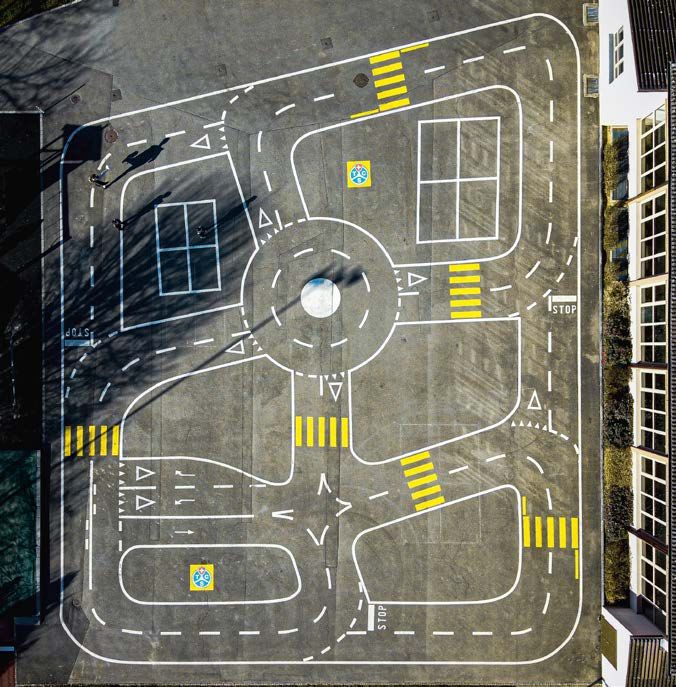
Nottingham City Council installed a junior bike track in a recreational park in the city.
With a footprint of approximately 2,500 sqm, the park provides families with a vehicle-free
environment to help young riders with riding skills, etiquette and road safety utilising a
design incorporating junctions and road markings, pedestrian crossings and traffic lights
Similar cycling facilities can be found in a number of cities around the world, including
the Children’s Traffic Playground in Copenhagen. The Copenhagen facility is operated with
scheduled opening hours, providing bikes and helmets free of charge to young children.
The facility also allows users to bring their own bikes and includes an open maintenance
workshop for cyclists to learn repair skills.
38Nowy Sacz – Poland Harrow Pump Track – Programme
Delivery
The Pump track venue in Nowy Sacz was developed by the local authority
to expand upon the range of sports and recreation facilities in the city. It is
located in a park adjacent to existing sports facilities.
The venue covers a footprint of approximately 0.6 hectares, split over
four distinct zones each catering for a specific level of ability from young
children to expert riders. The venue incorporates all 3 Pump track types
within one facility and is further noted for the provision of one track
intended as a training location for potential Olympic BMX competitors.
Further amenities provided at the site include floodlighting, carparking,
orientation signage and range of street furniture.
This new track in Harrow, London provides pump track loops for
beginner, intermediate and experienced riders and includes a
starting gate feature for BMX racers.
The track is a collaboration between the local authority, British
Cycling’s ‘Places to Ride’ programme, and the Access Sport
organisation which aims to provide inclusive access to sport and
physical activity.
In addition to the track being publicly accessible, Access Sport’s
involvement with the project has seen the establishment of a new
community cycling club based at the track. The club delivers a range
of cycling programmes to the community including school outreach,
Women’s BMX exercise classes, family sessions and the Wingz
disability cycling initiative.
39Wals-Siezenheim, Austria Cycling Hub Social Enterprise
– Auckland New Zealand
EcoMatters operates a free access to tools and advice on
network of three cycling basic bike maintenance
hubs in West Auckland,
restored and safety-checked second-
New Zealand. It is a charity
hand bikes for sale
working with and for the
community to deliver used and new bike parts and
environmental initiatives accessories
around nature, food growth, safe cycling advice and guidance
waste reduction, riding and novelty bikes to try
fixing bikes, and living more free cycling maps,
sustainably.
weekly guided bike rides at
Through its cycling and Henderson and Glen Innes
sustainability focus the
charity is supported by the
local authority, transport
authority, regeneration
boards, lottery grants and
corporate sponsorship.
The Wals-Siezenheim Pump Track provides a 900sq m track suitable for
all levels of rider. It was developed adjacent to an existing adventure Bike Hubs run by EcoMatters
playground enhancing regional recreational facilities. are established in shipping
containers with additional
In developing the facility, the local authority had recognised that the target temporary/pop-up facilities
audience was older children and young adults who used bikes, skateboards, offering
skates and scooters.
The track features a notable design of two mirrored pump tracks enabling
riders to compete against each other on a loop of the track.
The local authority estimated that more than one million laps of the track
had been completed in two years after opening.
405
N
I O
CT
S E
Cycling Hub
Innovation
OVERVIEW
The programme of consultation and research identified a number of
opportunities for cycling hub stakehiolders to consider in applying
a level of innovation to the sites. The suggestions are designed to
enhance the user experience and widen the appeal of the hub to other
cyclists across the community.Installation of associated cycling amenities and Image: Audio
Trails UK
infrastructure
The installation of supplementary infrastructure including public bike pump and repairs
stands will enhance the cycling hub, serving both programme and recreational users of
the cycling hub. These facilities will also be of benefit to any cycling clubs that adopt the
hub as their base. Further facilities for consideration include wall-mounted inner tube
Community
vending machines, aiding riders to repair punctures while at the hub.
Bike Hub Inc,
Melbourne
Development and installation of QR code training guides
In recent years the use of QR code has been an increasing feature at un-staffed heritage
sites and trails, enabling visitors to gain further insight and interpretation of a site.
The development of a QR code training guide delivers an opportunity to enhance the
usage of hub facilities outside of sports programming.
Short video clips could be delivered via QR code installed at a learn to ride facility to assist
parents in teaching children to ride. QR code could also be considered at pump tracks and
MTB skills areas featuring new skills and techniques for riders to try, developing skillset
and rider progression.
Creation of cycling-related social enterprise
Successful development of a cycling hub may provide the opportunity to establish a
cycling-related social enterprise at the hub widening the attraction of the hub and daily
hours of activity. Similar enterprises are in operation at various locations globally with
programmes and revenue opportunities around the circular economy including
Public donation of used and outgrown bike
Sale of reconditioned, donated bikes
Maintenance and repairs service
Sale of reconditioned second hand bikes
Donation of reconditioned bikes to vulnerable community groups
Image UCD Estates
42APPLYING INNOVATION
Opportunities for development of
public bike rental locations
Consultation identified existing challenges
relating to access to bikes for some members
of the community outside of participation in
sports programming. Cycling hubs may offer the
opportunity to establish future rental locations
enabling increased wider access and usage
through a hub with bikes available appropriate
to the hub’s cycling facilities. Bike rental schemes
are regularly available at unstaffed locations with
bikes accessed via QR code / phone app based
secure locking system.
Monitoring of hub usage
Installation of bike counters into pump tracks and
skills areas may be of benefit in monitoring usage
of these facilities as evidence of a hub’s success
against KPIs, recording the number of laps or loops
completed by riders over a period of time. Similar
counters have been installed at pump tracks and
trails enabling monthly and annual comparisons
to be delivered.
43CONSULTING
You can also read


