A Fresh Look on Knowledge Bases: Distilling Named Events from News
←
→
Page content transcription
If your browser does not render page correctly, please read the page content below
A Fresh Look on Knowledge Bases:
                                     Distilling Named Events from News

                           Erdal Kuzey                                           Jilles Vreeken                      Gerhard Weikum
                    Max Planck Institute for                               Max Planck Institute for                Max Planck Institute for
                         Informatics                                          Informatics and                           Informatics
                    Saarbrücken, Germany                                    Saarland University                    Saarbrücken, Germany
               ekuzey@mpi-inf.mpg.de                                     jilles@mpi-inf.mpg.de                 weikum@mpi-inf.mpg.de

ABSTRACT                                                                                      facts are mostly extracted from Wikipedia and similarly cu-
Knowledge bases capture millions of entities such as people,                                  rated sources. None of the above projects taps into news or
companies or movies. However, their knowledge of named                                        social media for increasing their population of named events.
events like sports finals, political scandals, or natural dis-                                Thus, major events are captured only late, after being prop-
asters is fairly limited, as these are continuously emerg-                                    erly edited in Wikipedia, and events in the long tail, such as
ing entities. This paper presents a method for extract-                                       concerts of indie rock bands, and brand-new events, such as
ing named events from news articles, reconciling them into                                    hurricanes or political scandals, are completely out of scope.
canonicalized representation, and organizing them into fine-                                  We aim to capture more events of this kind as early possible.
grained semantic classes to populate a knowledge base. Our                                       Problem Statement: This paper addresses the prob-
method captures similarity measures among news articles                                       lem of populating a knowledge base with fine-grained emerg-
in a multi-view attributed graph, considering textual con-                                    ing events, along with detailed semantic typing (e.g., using
tents, entity occurrences, and temporal ordering. For dis-                                    classes like rock concerts or hurricanes), relationships among
tilling canonicalized events from this raw data, we present a                                 events (sub-events, temporal order, etc.), as well as people
novel graph coarsening algorithm based on the information-                                    and organizations participating in events. The raw input for
theoretic principle of minimum description length. The qual-                                  this task is articles from newspapers, magazines, and online
ity of our method is experimentally demonstrated by ex-                                       feeds. A seemingly obvious approach would be to run a clus-
tracting, organizing, and evaluating 25 000 events from a                                     tering algorithm on a set of news articles, using a text-based
corpus of 300 000 heterogeneous news articles.                                                contents similarity measure. Each resulting cluster would
                                                                                              then be interpreted as a separate event. However, our goal
                                                                                              is to go beyond this and to obtain semantically clear output
Categories and Subject Descriptors                                                            that is ready for populating a high-quality knowledge base.
H.1 [Information Systems]: Models and Principles                                              This entails the following desiderata:
                                                                                               • Canonicalized event entities: Rather than merely clus-
                                                                                                 tering text snippets or noun phrases from news articles,
Keywords                                                                                         we aim to output event entities in canonicalized form:
Knowledge Bases; Temporal Knowledge; Event Mining; In-                                           exactly all news referring to the same event are placed
formation Extraction; Minimum Description Length                                                 in the same equivalence class, and a representative name
                                                                                                 is chosen for the event.
1.     INTRODUCTION                                                                            • Semantic labeling: Each event is labeled with one or more
                                                                                                 semantic types (aka. lexical classes) from a knowledge
   Motivation: Large knowledge bases such as dbpedia.org,
                                                                                                 base such as freebase.org or a high-quality thesaurus
yago-knowledge.org, or freebase.com (the core of the Google
                                                                                                 like WordNet. In this paper, we use the type system
Knowledge Graph), are valuable assets for entity awareness
                                                                                                 from yago-knowledge.org which integrates Wikipedia cat-
in search, summarization, analytics, and recommendations.
                                                                                                 egories and WordNet classes. The type system forms
These assets contain millions of individual entities (people,
                                                                                                 a DAG ranging from broad classes such as disaster,
places, products, etc.), including named events such as elec-
                                                                                                 tournament, or performance to fine-grained classes such
tions, revolutions, notable disasters, important concerts, etc.
                                                                                                 as volcanic_eruptions, football_finals, or benefit_rock_
   However, the coverage of such events is fairly limited in
                                                                                                 concerts. In addition, events should be annotated with
today’s knowledge bases, the reason being that entities and
                                                                                                 their participating entities like people, organizations, lo-
                                                                                                 cations, etc. These in turn should also reside in the
Permission to make digital or hard copies of all or part of this work for personal or            knowledge base, rather than being mere noun phrases.
classroom use is granted without fee provided that copies are not made or distributed
for profit or commercial advantage and that copies bear this notice and the full cita-         • Chronological ordering: Events must be placed on po-
tion on the first page. Copyrights for components of this work owned by others than              sitions or intervals on the time axis. This is a require-
ACM must be honored. Abstracting with credit is permitted. To copy otherwise, or re-             ment for chronological ordering of related events (e.g.,
publish, to post on servers or to redistribute to lists, requires prior specific permission      one causing the other), even if the news articles that
and/or a fee. Request permissions from permissions@acm.org.                                      constitute an event exhibit widely varying timestamps.
CIKM’14, November 3–7, 2014, Shanghai, China.
Copyright 2014 ACM 978-1-4503-2598-1/14/11 ...$15.00.
http://dx.doi.org/10.1145/2661829.2661984.
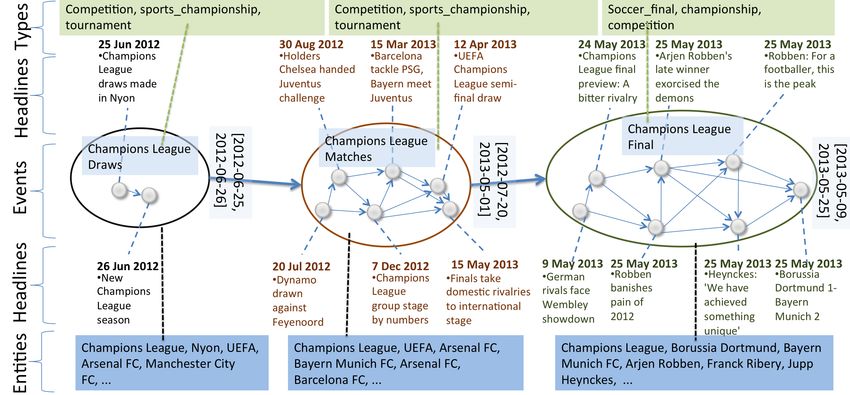
Figure 1: Output for the theme of “UEFA Champions League 2012/2013 ”.

  • Event hierarchies: Events should be organized in a hi-        of populating a knowledge base, satisfying the desiderata
    erarchical manner, with refinements into sub-events and       stated above.
    inclusion in super-events. For example, Edward Snow-             Contribution: This paper presents novel methods for
    den’s request for asylum in several European countries is     populating event classes (concerts, ceremonies, elections, con-
    a sub-event of the Prism Scandal, and Steve Jobs’ fight       flicts, accidents, disasters, tournaments, etc.) of high-quality
    against cancer has sub-events like various therapies, his     knowledge bases by extracting, cleaning, and canonicalizing
    death, the memorial at Stanford, etc.                         fine-grained named events from news corpora. Our method-
From a computational perspective, we address the follow-          ology involves the following contributions:
ing problem. Given a heterogeneous collection of news arti-       • mapping news articles into event classes by automatically
cles (from many different sources), group these into equiva-         labeling them with fine-grained types (Section 3);
lence classes denoting the same events, label the equivalence     • a multi-view graph model that captures relationships and
classes with semantic types and participating entities, chain        relatedness measures between news articles, and a novel
them in chronological order on the timeline, and organize            graph-coarsening algorithm for grouping and temporally
them in a sub-/super-event hierarchy.                                ordering news articles based on the information-theoretic
   An example output that our method achieves, by process-           principle of minimum description length (Sections 4, 5);
ing several hundred articles about the UEFA Champions             • building a high-quality knowledge base with 25 000 named
League season 2012/2013, is shown in Figure 1. The fig-              events automatically derived from 300 000 news articles
ure shows three different events and the news articles from          referenced as external links in Wikipedia (Section 6).
which they were inferred, together with their representative
names (inside ovals), their semantic types (top line), their
participating entities (bottom line), and their chronological
ordering. Note that the underlying articles in each cluster       2.   SYSTEM OVERVIEW
are not necessarily from the same date; so different clusters        Our system taps online news from a heterogeneous set of
can heavily overlap in their overall timespans and inferring      sources (newspapers, magazines, other news feeds). “Distill-
the temporal order between events is not obvious at all.          ing” canonicalized and semantically organized events from
   State of the Art: There are prior methods for mining           these news articles proceeds in three steps. First, news are
events and storylines from a batch or stream of news articles     labeled with semantic types; these are later carried over to
(e.g., [3, 5, 18]). These methods compute output at the level     the distilled events. Second, news are grouped in a hierchical
of (ambiguous) noun phrases such as news headlines rather         manner; each group will eventually be an event. Third, re-
than true entities. For example, a typical output could           lated events are chained in chronological order. The second
be events such as “Bayern wins Champions League”, “Bay-           and the third step are carried out by the same algorithm,
ern beats Borussia”, “Bayern’s triumph in London”, “Bayern        based on coarsening a multi-view attributed graph (MVAG).
overcomes last year’s final trauma”, etc. These are semanti-      Finally, the resulting events and their semantic annotations
cally overlapping and do not denote distinct events. Simple       are placed in the knowledge base, populating a taxonomy of
clusters of news articles are not sufficient for a high-quality   fine-grained semantic types.
knowledge base.                                                   Feature sets: We exploit four kinds of feature groups that
   In contrast to this prior work, our method reconciles all      are provided by each news article n or can be derived from
surface cues for the same event into a single entity in a         it by information extraction methods:
canonicalized representation. Moreover, our method assigns
                                                                   • the textual content C(n) of the article,
fine-grained class labels such as soccer finals or European
sports championships to an event. So there is a fundamen-          • the publication date t(n),
tal difference between traditional event mining and our goal       • the set of entities A(n) : people, organizations, countries,
                                                                     companies, etc., appearing in the content, and
• the semantic types T (n) of events covered by an article, 3. ASSIGNING SEMANTIC TYPE LABELS
for example, bombing, earthquake, festival, concert, etc. We have devised a two-step method for mapping news ar-
The entity names appearing in a news article are extracted ticles onto semantic event types in a knowledge base. First,
using the Stanford NER tagger [7]. Since these are used news articles are mapped to Wikipedia categories (ca. 32 000
as features for subsequent processing, we do not attempt event categories) using statistical language models (LM’s)
to disambiguate entities onto canonical representations in a [24]. Second, Wikipedia categories are mapped to Wordnet
knowledge base, but simply accept a tolerable level of am- event classes by the heuristic of Suchanek et al. [1]. Word-
biguity and noise. Semantic types for news articles are ob- Net provides ca. 6 800 classes under the type label “event”
tained in two steps: first, by constructing statistical lan- in its taxonomy, with 5-6 levels of subclasses. Examples are:
guage models (LM’s) [24] for articles and types; second, final→ match→ contest→ social_event→ event, and
by mapping an article to its similar types using Kullback- riot→ violence→ aggression→ action→ act→ event.
Leibler divergence. This is further explained in Section 3. All WordNet classes are also integrated in YAGO [1, 11], the
Distance measures: Features are used to compute differ- specific knowledge base we aim to populate.
ent kinds of distance measures between news articles.
The content distance is the cosine distance of the articles’
tf · idf vectors over a bag-of-words model: 3.1 Mapping News onto Wikipedia Categories
dist text = cosine(V(ni ), V(nj )) The first step is based on language models for news ar-
where V(ni ) and V(nj ) are the tf ·idf vectors of news articles ticles and categories. The LM of a news article captures
ni and nj , respectively; tf denotes the term frequency of i) the news content in terms of title and body words, and
words, and idf denotes the inverse document frequency of ii) all entities in the news article, including normalized date
words (i.e., the inverse frequency of a word in the corpus). literals that appear in the article. LM’s are a principled
The temporal distance is the normalized time distance be- approach in IR [24], widely used for query-result ranking,
tween the publication dates of news articles: cross-lingual retrieval, question answering, etc. An LM is
|t(ni ) − t(nj )| a probability distribution over words or other text features.
dist temp (ni , nj ) =
H LM’s are usually defined for documents and for queries, with
where H is the time horizon of the entire news corpus. We probabilistic or information-theoretic distance measures be-
define H as the difference between the earliest and the latest tween LM’s. For our setting, we customize and extend the
timestamps appearing in the corpus. notion of LM’s as follows.
The attribute distance between articles is the weighted Jac- Document models: The document model of a news article
card coefficient capturing the overlap in the entity sets or in n is constructed over keywords and entities appearing in the
the type sets respectively: article, so it is a probability distribution over {w : w ∈
P
weight(x) n} ∪ {e : e ∈ n}, where w denotes keywords, and e denotes
x∈X (ni )∩X (nj ) entities.
dist attr (ni , nj ) = P
weight(x) For example, the news article Borussia Dortmund 1-2
x∈X (ni )∪X (nj ) Bayern Munich (http://www.bbc.co.uk/sport/0/football/
where X can be entity set A, or type set T . Entity names 22540468), starting with “Arjen Robben’s late winner exor-
are weighted by their tf · idf values, the types are weighted cised the demons that have haunted him and Bayern Mu-
by their idf values. nich in the Champions League as they won a pulsating all-
These are all standard measures from the information- Bundesliga encounter . . . ”, has a document LM with:
retrieval and text-mining literature. Our specific choices are • keywords: {winner, exorcised, demons, match, goal, . . . }
based on prevalent usage in the state-of-the-art, but could
• entities: {Arjen Robben, Bayern Munich,
be easily replaced.
Champions League, Bundesliga, Wembley Stadium . . . }
Multi-view attributed graph (MVAG): The feature
sets and the distance measures are used together to con- The LM’s probability distribution for news article n is
struct a multi-view attributed graph (MVAG) of news arti- P [s] = µPW [s] + (1 − µ)PE [s]
cles; G = (V, A, E, F ). where s is a word or entity, PW [s] and PE [s] are estimated
Vertices and attributes: A vertex vi ∈ V of the MVAG cor- probability distributions for words and entities in n, respec-
responds to a news article ni . Each vertex inherits a set of tively, and µ is a hyper-parameter that controls the rela-
attributes A from ni : its textual content C, its timestamp t, tive influence of each of the two aspects. The LM of a
its associated entities A, and its types T . Wikipedia category is defined analogously and constructed
Edges and weights: The MVAG has two kinds of edges: undi- from all Wikipedia articles that belong to the category.
rected ones, edge set E, and directed ones, edge set F . All Estimating LM parameters: The LM parameters for
edges are weighted. Two vertices are connected by an undi- both news articles and categories are estimated from fre-
rected edge ei↔j if they share at least one entity and at least quencies in the underlying texts, with Jelinek-Mercer smooth-
one type: ing (using the global frequencies in the entire collection of
A(ni ) ∩ A(nj ) 6= ∅ ∧ T (ni ) ∩ T (nj ) 6= ∅ all news articles and all categories, respectively):
The weight of the edge is the content distance between two PW [s] = λP [s | news n] + (1 − λ)P [s | news corpus]
vertices; w(ei↔j ) = dist text (ni , nj ). where λ is the smoothing coefficient. PE [s] is estimated
Two vertices are connected by a directed edge fi→j if their analogously.
timestamps indicate that they are ordered on the timeline. Comparing news and categories: To compare how close
The weight of a directed edge is the temporal distance be- a Wikipedia category is to a news article, we use the Kullback-
tween the time stamps of vertices: w(fi→j ) = dist temp (ni , nj ). Leibler (KL) divergence (aka. relative entropy) between theV ∗ ∈ 2V (i.e., forming equivalence classes of nodes) and
E ∗ , F ∗ , A∗ , T ∗ is computed such that i) G∗ preserves the
main properties and structure of G, and ii) G∗ is simpler
(smaller, coarser) than G.
The grouping of the original V nodes that leads to V ∗ in-
duces the undirected edges E ∗ , directed edges F ∗ , edge
Figure 2: Coarsening a multi-view attributed graph. weights, and attribute sets of the coarsened graph. This
is explained in the following.
corresponding LM’s: Consider the grouping function Γ for mapping V to V ∗ .
X P [s | n] Γ induces edge sets E ∗ and F ∗ :
KL(news n || category c) = P [s | n] · log
P [s | c] eΓ(x)↔Γ(y) ∈ E ∗ ⇔ ∃ex↔y ∈ E
s
For each news article, we compute the top-k categories based fΓ(x)→Γ(y) ∈ F ∗ ⇔ ∃fx→y ∈ F
on this distance measure, and accept those categories whose
Γ also determines the edge weights in G∗ by averaging the
KL divergence is below a specified threshold.
weights of edges between all node pairs (x, y) that are mapped
3.2 Mapping Categories onto WordNet Classes onto coarsened nodes (Γ(x), Γ(y)):
The second step of our two-step approach maps the ac- w(ex∗ ↔y∗ ) = avg{w(ex↔y )|Γ(x) = x∗ , Γ(y) = y ∗ }
cepted Wikipedia categories to their lowest (i.e., most spe- w(fx∗ →y∗ ) = avg{w(fx→y )|Γ(x) = x∗ , Γ(y) = y ∗ }
cific) event type in the WordNet taxonomy DAG, by adopt-
ing and adjusting the heuristic of [1]. This method uses a Γ induces entity sets A∗ in G∗ . It is worth noting that
natural-language noun-group parser on the category name the entity set of a node in G can be noisy due to imperfect
to identify its head word, and maps the head word to the quality of the named entity recognition tool. In addition,
best matching WordNet type. If the head word is am- there can be entities mentioned in a news article that are
biguous, the word-sense frequency information of WordNet not relevant to the reported event. For example, the enti-
is used to make the choice. For example, for the cate- ties “BBC Radio, BBC Sport website”, extracted from the
gory name “General elections in Italy”, the word “elections” news article “Champions League: Dortmund confident Mats
is found as the head word, and it is mapped to the first Hummels will be fit”, are not relevant to the event mentioned
one of four possible senses in WordNet: election (a vote in the article. Hence, the grouping function Γ induces the
to select the winner of a position or political office) (see entity set of x∗ as the shared entities of the fine nodes that
http://wordnet.princeton.edu/). are mapped to x∗ . Therefore, the main participants (enti-
ties) of an event are captured,Twhereas irrelevant entities are
avoided. Formally, A(x∗ ) = A(xi ), where Γ(xi ) = x∗ . Γ
4. GROUPING NEWS INTO EVENTS induces types T ∗ in G∗ in the same way as entity sets, using
the intersection of type sets.
4.1 Design Alternatives and Choice Figure 2 illustrates the MVAG coarsening.
Once we have all the features of news articles in a collec-
tion, including the semantic type labels, our goal is to distill 4.3 Optimization Model
canonicalized named events from this collection and orga- We formalize our problem using the Minimum Description
nize the events into semantic classes of the knowledge base. Length (MDL) principle [9], which can be paraphrased as
This task entails a grouping and a chaining problem: com- Induction by Compression. In a nutshell, it identifies the
bining thematically highly related news into a single event, best model M ∗ in a family M of models M as the model
and ordering the resulting groups along the timeline. minimizing L(M ) + L(D | M ), where L(M ) is the length, in
A straightforward approach to this problem would be to bits, of the description of M , and L(D | M ) the length of the
proceed in two phases: first compute clusters of news arti- data given M . This scheme ensures that M ∗ neither overfits
cles based on similarity over all features, then infer ordering nor is redundant—otherwise another M would minimize the
relations between clusters (e.g., by majority voting over the sum. We formally define our problem as follows.
items in each pair of clusters). However, computing the Problem: In our setting, the family M of models is the
ordering chains only after the clusters are determined may family of MVAG’s. For a given graph G our goal is to com-
pose a poor if not unsolvable situation for the chaining step. pute the MDL optimal coarsened graph G∗
To overcome these issues, we designed a novel approach to L(G, G∗ ) = L(G∗ ) + L(G | G∗ )
this problem, by means of a graph coarsening. The rationale is minimal. Hence, our algorithms aim to find a minimum
is that we transform the fine-grained MVAG for news articles of this objective function.
into a coarser graph whose nodes correspond to the final To use MDL we have to define how we encode a model,
event entities. Thus, our approach integrates the clustering i.e., a coarsened graph G∗ , and how we encode the input
and ordering tasks. graph G given G∗ . For the latter the high-level idea is to
In order to identify the optimal coarsened graph for a encode the error of G∗ with respect to G, i.e., we encode their
given MVAG, we take a principled approach and employ exclusive OR, G∗ ⊕G, such that the receiver can reconstruct
Minimum Description Length (MDL) principle [9]. the original graph without loss upon receiving G∗ and G∗ ⊕
G. We formalize these encodings as follows.
4.2 MVAG Coarsening
Given a multi-view attributed graph G with node set 4.3.1 Encoding the coarse graph
V , weighted undirected edges E, weighted directed edges To encode a coarse graph G∗ , we encode all its properties:
F , entity sets A, and types T , a coarser graph G∗ with its vertices V , their attributes A, the undirected edges E,and the directed edges F , Algorithm 1 Greedy(MVAG G)
L(G∗ ) = L(V ∗ ) + L(A∗ ) + L(E ∗ ) + L(F ∗ ) 1: Q ← ∅
The vertices. Encoding the vertices entails encoding their 2: for all matched pairs (u, v) ∈ V with gain(u, v ) > 0 do
number (upper bounded by |V |), and encoding per vertex 3: Q.insert((u, v ), gain(u, v ))
v ∈ V ∗ to how many and which nodes in V it maps. Hence, 4: while Q 6= ∅ do . Iterative coarsening phase
` |V |−1 ´ `|V |´ 5: mergeSet ← Q.popHead ()
L(V ∗ ) = log (|V |) + log
P
|V ∗ |−1
+ v∈V ∗ log |v|
6: for all overlapping pairs (n, m) ∈ Q with mergeSet do
7: mergeSet = mergeSet ∪ {n, m}, remove (n, m) from Q
The attributes. We encode the vertex attributes by ! 8: Merge(G, mergeSet), Update(G)
∗ P ∗
` |A| ´ P 9: recompute(Q)
L(A ) = log (|A |) + log |atr(v)| + log(rs) return G
v∈V ∗ a∈atr(v)
where per coarse vertex v ∈ V ∗ we encode how many at-
tributes it has, which these are, and their weights. We en- In sum, we now have a principled and parameter-free
code weights at the resolution of the data, rs = 10#sign. digits , objective function for scoring the quality of coarse graphs
based on the number of significant digits of the data. for a multiview attributed graph.
The undirected edges. For encoding the undirected edges
we first encode their number—using the upper bound ub =
|V ∗ |(|V ∗ | − 1)—then identify which edges exist, and then 5. GRAPH COARSENING ALGORITHMS
encode their weights again using resolution rs. We have For an input graph G, the set of all possible models M
∗ ∗
`ub(E ∗ )´ ∗
is huge. Moreover, it does not exhibit any particular struc-
L(E ) = log (ub(E )) + log |E ∗ |
+ |E | log(rs) ture (e.g., sub-modularity) that we can exploit for efficient
pruning of the search space. Hence, we resort to heuristics.
The directed edges. Encoding the (one-)directional edges The algorithms proceed in iterations; each iteration aims to
is almost identical; in addition we only need to transmit their reduce the input MVAG by the following operations:
direction, for which we require one bit per edge. Thus,
• Match: For a given node, the match operation finds a
∗ ∗
`ub(F ∗ )´ ∗ ∗ suitable node(s) to merge into a coarser node. The MDL
L(F ) = log (ub(F )) + log |F ∗ |
+ |F | log(rs) + |F |
based objective function matches the nodes that result
in the largest gain.
4.3.2 Encoding the data
• Merge: This operation merges two or more nodes into
To reconstruct the original graph, we need to transmit all
a coarser node.
information needed to interpret the coarse graph, as well as
correct any errors it makes with regard to the input data. • Update: Following a Merge step we update the MVAG
That is, we need to correct all missing and superfluous edges, to reflect the new edges, edge weights, attributes, and
attributes, and their weights. At a high level we have attribute weights that result from node merging.
L(G | G∗ ) = L(|V |) + L(A | A∗ ) + L(E | E ∗ ) + L(F | F ∗ ) Within this general framework, we developed two specific
As L(|V |) is constant for all models we can safely ignore it. algorithms: a greedy method and a randomized method,
Attributes: Starting with the node attributes, we transmit which we explain next in turn.
the error per node by encoding i) the number of missing and
superfluous attributes, ii) which attributes these are, and iii)
5.1 The Greedy Method
the correct weights. Thus, L(A|A∗ ) = A standard greedy method would have a Match opera-
tion that, for a given node, always chooses the node(s) for
!
P ∗
` |A\A∗ | ´ P
v∈V log(|A \ A |) + log |atr(v)\A∗ | + log(rs) which a Merge results in the largest gain of the objective
a∈atr(v) function. While our method follows this general principle,
where atr(v) is the set of attributes of v. We encode the at- it has a specific twist by performing a light-weight form of
tribute weight errors using log(rs) bits each—if one is willing look-ahead on the options for subsequent iterations. Specif-
to make assumptions on the error distribution other choices ically, we determine in each iteration if the currently best
are warranted. merge can be combined with other merges whose node pairs
Undirected edges: To reconstruct adjacency matrix E, overlap with the node pair of the best merge. Without this
we transmit the edges in the (upper diagonal part) of the look-ahead, the algorithm produces many tiny event groups.
error matrix Ec = E ∗ ⊕ E where ⊕ the exclusive OR. Thus, The algorithm keeps track of the candidate node pairs
considered for merging, using a priority queue Q of node
L(E | E ∗ ) = log (ub(E)) + log ub(E)
` ´
|Ec |
+ |E| log(rs) pairs sorted in descending order of gain (line 2-3 in Algo-
We encode the weight errors using log(rs) bits per edge in rithm 1). The gain is calculated as the objective function’s
E. improvement caused by a potential node pair merge. The
Directed edges: Last, let us write Fc = F ∗ ⊕ F for the er- algorithm first selects the pair at the head of the queue,
ror matrix for the (uni-)directed edges. As above, we define which decreases the objective function the most. Next, in
L(F | F ∗ ) analogue to L(E | E ∗ ), but in addition need to contrast to standard greedy techniques, our algorithm scans
specify the direction of edges in F which are unmodelled by the queue for other pairs that have one overlapping node
F ∗ using one bit per edge. Hence, we have with the nodes of the head pair (line 6-7). If such a pair is
found, it is added to “mergeSet”. The algorithm then pro-
L(F |F ∗ ) = log (|F \ F ∗ |)+log (ub(F ))+log
`ub(F )´
|Fc |
+|F | log(rs) ceeds further and repeats considering further merges, until
it exhausts a bounded part of the queue.Algorithm 2 Randomized(MVAG G, α, , T ) # of events 24 348
1: best ← ∅ # of sub-events 3 926
2: while T > do # of follow-up events 9 067
3: pick a random node u, and its match v avg # of entities per event 18
4: if gain(u, v ) > 0 then # of distinct classes 453
5: Merge(G, {u, v}), Update(G), best ← G
gain(u,v ) Table 1: Statistics for extracted events.
6: else if Random.probe < e T then
7: Merge(G, {u, v}), Update(G) computation in order to populate a knowledge base with
8: T ←T ∗α named events. We used the Greedy method to process
return best
295 000 news articles that are crawled from the external
links of Wikipedia pages. These news articles are from a
highly heterogeneous set of newspapers and other online
As an example, suppose the algorithm found news providers (e.g., http://aljazeera.net/,
as “bestPair ”, and the next positions in the priority queue http://www.independent.co.uk, http://www.irishtimes.com,
are {, , }. We scan Q and iden- etc.). The Wikipedia pages themselves were not used.
tify n5 and n3 for merging as their best matches are al- Ranking event candidates: The set of extracted named
ready included in “mergeSet”. The algorithm thus expands events exhibit mixed quality and are not quite what a near-
the “mergeSet” into the set (line 7) and human-quality knowledge base would require. However, it
merges all these nodes in one step (line 8). The subse- is easy to rank the event candidates based on the following
quent Update operation incrementally computes the neces- scoring model, and use thresholding for high precision.
sary changes of the MVAG and updates all data structures We use the cumulative gain for a coarse node representing
for the graph. The gain values for nodes in Q are recom- an event in the output graph as a measure of quality. This
puted for the next level of coarsening. When there is no is defined as the total improvement of the objective func-
further coarsening operation that would improve the objec- tion after the merge operations that involved intermediate
tive function, the resulting MVAG is returned. nodes that finally belong to the coarse node at hand. Thus,
P
the score for event E is S(E) = gain(G, qi ), where G is
5.2 The Randomized Method qi ∈E
Our randomized method is based on the principle of sim- the graph, qi is an intermediate node created by a merge
ulated annealing [13]. This is an established framework for operation that contributes to final output node E.
stochastic optimization, traversing the search space (of pos- The acceptance threshold for an event score is set to the
sible Merge operations) in a randomized manner. In con- 90th percentile of the score distribution for all extracted
trast to greedy methods, the method can accept, with a events. This is a conservative choice, motivated by the re-
certain probability, choices that lead to worsening the objec- ported quality of 90 to 95% for knowledge bases like YAGO
tive function. The probability of such choices is gradually [11]. Note that our task here is substantially harder than
reduced, so the algorithm is guaranteed to converge. that of the YAGO extractors, as the latter operate on Wiki-
Our algorithm, in each iteration, performs a randomized pedia infoboxes. Thresholding may break chaining informa-
coarsening step. It does so by picking a random node u and tion between some events. Thus, chaining is re-computed
then identifying its best Match v for a Merge operation by transitively connecting missing links. Each event is la-
(line 3 in Algorithm 2). This is slightly different from stan- beled by a “representative news headline”. The representa-
dard methods where both nodes of a node pair would be tive news article is chosen based on the centrality score in
chosen uniformly at random. Our experiments have shown the original MVAG.
that our choice leads to faster convergence. If the consid- Statistics: Our method computed 24 348 high-quality events
ered coarsening step decreases the objective function, it is from the underlying 295 000 news articles. A good portion
accepted and the energy of the system is updated (line 5). of these events contain sub-events and follow-up events (i.e.,
gain(u,v ) events that appear on a chain). Table 1 shows other statis-
Otherwise, it is accepted with a probability of e T .
tics about the extracted events. The most densely populated
After each accepted coarsening step, the Update opera-
classes of events are: protest (8732), controversy (7514), con-
tor adjusts the graph. The algorithm maintains a so-called
flict (4718), musical (1846), sport event (766), war (727), etc.
“temperature value” T (a standard notion in simulated an-
An event can be assigned to multiple classes.
nealing) which is gradually reduced after each iteration, by
Assessing the KB coverage: We show that the events
geometric progression with factor α. Note that T is initially
distilled by our methods yield much higher coverage than
chosen very high and α is chosen very close to 1, therefore,
traditional knowledge bases which solely tap into semistruc-
the temperature cools down very slowly after each iteration.
tured elements of Wikipedia (infoboxes, category names, ti-
The algorithm terminates when the temperature drops be-
tles, lists). We compared two knowledge bases on their in-
low a specified threshold . Across all iterations, the best
solution is remembered, and this is the final output when
the algorithm terminates.
YAGO Event KB
6. EXPERIMENT SET 1: [2012-1-1,2013-9-4] [2012-1-1,2013-9-4]
KNOWLEDGE BASE COVERAGE total # 624 6423
Our overriding goal in this work is to populate a high % year events 16% 48%
quality knowledge base with high coverage of named events % month events 10% 36%
extracted from news. Thus, we performed a large-scale Table 2: Coverage of events in YAGO vs. Event KB.Q: French military intervention in the Northern Mali conflict.
Event KB: France army in key Mali withdrawal
News Entities Classes Time
• India pledges $1 million to UN mission to Mali French conflict [2013-01-11,
• Gunfire breaks out as Tuareg rebels enter city Army, Mali, 2013-05-25]
• France army in key Mali withdrawal . . . Tuareg, UN
Q: Meteor explodes over the Russian city of Chelyabinsk.
Event KB: Russian Asteroid Strike
News Entities Classes Time
• Russian Asteroid Strike Russia, death, disas- [2013-02-15,
• Exploding Meteorite Injures A Thousand People in Russia Chelyabinsk ter 2013-02-17]
• UN reviewing asteroid impact threat . . .
Table 3: Two sample Event KB events for given queries. YAGO has no results for these queries.
cluded events: YAGO [11], built from the 2013-09-04 dump 7. EXPERIMENT SET 2:
of Wiki-pedia, vs. Event KB, the knowledge base compiled LABELING, GROUPING, CHAINING
by our method as described above.
For comparing the two knowledge bases in their coverage
of events, we used the events section of Wikipedia’s year ar- 7.1 Setup
ticles as a form of ground truth. Specifically we used the In this section, we present experiments to evaluate the
pages en.wikipedia.org/wiki/2012 and en.wikipedia.org output quality of the various components of our method-
/wiki/2013, but excluded events after 2013-09-04, the date ology, in comparison with different baselines. We do this
of the Wikipedia dump for YAGO. In total, these articles systematically by looking at our three main components sep-
contain 51 itemized snippets, each of which briefly describes arately: labeling, grouping, and chaining.
a salient event. We also considered the monthly pages, e.g., Test Data. We prepared two test datasets: news ar-
en.wikipedia.org/wiki/January_2013, for the total relevant ticles from i) Wikinews and ii) news sources referenced in
time period, together providing 9811 events in the same tex- Wikipedia articles. Note that Wikinews (en.wikinews.org)
tual format. is totally independent of Wikipedia. Moreover, we removed
Note that these text items are not canonicalized events: all semi-structured elements from Wikinews articles to cre-
they mention an event but often do not point to an ex- ate a plain text corpus. The Wikipedia-referenced news are
plicit Wikipedia article on the event, and in many cases a highly heterogeneous set, from a variety of newspapers
such an explicit article does not exist at all. For example, and other online news providers. We, therefore, refer to this
the Wikipedia text for January 11, 2013 says: “The French dataset as WildNews.
military begins a five-month intervention into the North- For the Wikinews dataset, we picked articles by starting
ern Mali conflict, targeting the militant Islamist Ansar Dine from topic categories that denote named events. Such cat-
group.” However, the only href links to other Wikipedia ar- egories are identified by matching years in their titles, e.g.,
ticles (i.e., entity markup) here are about the French army, FIFA World Cup 2006, War in South Ossetia (2008), G8
the Ansar Dine group, and the Northern Mali conflict in Summit 2005, etc. In total, we extracted around 70 named
general. The event of the French intervention itself does not event categories from Wikinews, with a total of 800 articles.
have a Wikipedia article. Some named events are simple such as 2010 Papal UK tour
For each of these textually described events in the year or Stanley Cup Playoffs 2007, whereas others are complex
pages, we manually inspected YAGO and Event KB as to and contain sub-events, e.g., 2010 Haiti earthquake or US
whether they cover the event as an explicit entity or not. For War on Terror.
the 9811 event descriptions in the month pages, we inspected For the WildNews dataset, we start with the collection
a random sample of 50. of Wikipedia articles listed in the Wikipedia Current Events
Results: The coverage figures are shown in Table 2. For portal (http://en.wikipedia.org /wiki/Portal:Current_events).
both ground-truth sets (year and month pages of Wikipedia), All news items cited by these Wikipedia articles with ex-
Event KB shows more than 3 times higher coverage. This ternal links are crawled and together constitute the news
demonstrates the ability of our approach to populate a high- corpus. This corpus has 800 news for 26 named events.
quality knowledge base with emerging and long-tail events. Ground Truth. The way we derived the news arti-
The total number of events that Event KB acquired for cles from named event categories already provides us with
the relevant time period is 10 times higher than what YAGO ground truth regarding the grouping and chaining of articles.
could extract from semistructured elements in Wikipedia. However, the data does not come with semantic labels for
Table 3 shows two sample Event KB events, along with their populating a knowledge base. To this end, we have randomly
semantic annotations, entities, and time spans. chosen a subset of 3 news articles per named event, a total of
210 articles for the Wikinews data and a total of 78 articles
for the WildNews data. These samples were manually la-
beled with one or more semantic classes from WordNet tax-
onomy (which is integrated in the YAGO knowledge base).For example, the news article Bomb blasts kill several in Iran cision@k to compare the k top-ranked labels P against the
is labeled with WN_bombing, WN_death, WN_conflict. ground-truth set of labels: precision@k = ( rj )/k where
Methods under Comparison. j=1→k
1. Labeling. Our methodology that uses statistical j is the position, and rj = 1, if the result at the j th position
language models to find semantic labels of news articles is is correct and rj = 0 otherwise.
k
compared with the tf · idf based cosine similarity. We define recall@k analogously: recall @k = (
P
rj )/n
2. Grouping. We compare our Greedy and Random- j=1→k
ized methods (see Section 5) against several baselines: k- where j is the position, and n is the number of ground-
means clustering, hierarchical clustering, METIS [12] and truth labels. Although n is usually close to k, it can be
the Storyline detection [21] method. All features (text, time, smaller than k for certain news articles that have only few
entities, types) are fed into the following flat distance mea- true labels. In this case, one may suspect that the models
sure that is used for the baselines: can easily reach 100% recall. However, in practice, none of
d(ni , nj ) = α · dtext (ni , nj ) + β · dtime (ni , nj ) + the methods compared in this paper was able to reach 100%
γ · dent (ni , nj ) + θ · dtype (ni , nj ) recall for the top-5 labels.
The reported results in the experiments are obtained by
uniform weighting. We varied these parameters to study 7.2.2 Grouping
their sensitivity. This led to small improvements (up to 5% To compare different methods for grouping news articles
in precision) in some cases and small losses in other cases. into events, we look at pairs of news articles. We have
Hence, we only report results for the uniform setting. ground-truth statements stating which articles belong to the
a. k-means clustering is run over both datasets with same group (i.e., named event) and which ones are in differ-
different k values. For each k value, the algorithm is run ent groups. Thus, we can compare the output of different
10 times with different random centroid initializations. k- kinds of grouping algorithms against the ground truth. We
means achieved the best results, when k is set to the real define precision and recall as follows.
number of the named events in the datasets. Thus, we set Precision: the estimated probability of pairs (ni , nj ) of
k = 70 for the Wikinews, k = 26 for the WildNews dataset. news articles being in the same ground-truth event given
b. Hierarchical agglomerative clustering (HAC), that they are assigned to the same group.
unlike flat clustering algorithms, can find clusters with differ- Recall: the estimated probability of pairs (ni , nj ) of news
ent levels of granularity. We tried different linkage criteria: articles being assigned to the same group given that they
single-link (SLINK), complete link (CLINK), unweighted come from the same ground-truth event.
pair group method average (UPGMA), and weighted pair Let GM and GT denote the groups for method M or
group method average (WPGMA). WPGMA achieved the ground truth T , respectively. Then we compute (micro-
best results for our settings. averaged) precision and recall as:
c. METIS [12] is a graph partitioning tool that first P
coarsens a graph and then applies partitioning algorithms GM |{(ni ,nj )∈GM | ∃GT :(ni ,nj )∈GT }|
precision = P
|{(ni ,nj )∈GM }|
to it. METIS takes k number of partitions as input. We G
M
incrementally changed k to see how clustering performance
P
GT |{(ni ,nj )∈GT | ∃GM :(ni ,nj )∈GM }|
recall = P
change. METIS can have the best result, similar to k-means, G |{(ni ,nj )∈GT }|
T
when k is close to the number of real clusters. Thus, we set
k = 70 for the Wikinews, k = 26 for the WildNews dataset. 7.2.3 Chaining
d. Storyline detection [21] is a method to find story For evaluating the quality of ordering events on the time-
chains in a set of news articles returned by a query. Repre- line, we again consider pairs (ni , nj ) of news articles, the
senting news articles as nodes of a graph, the method applies ordering of their corresponding groups by method M and
two steps to compute chains: It first finds the minimum set the ordering of their true events in the ground-truth data
of dominating nodes of the graph. Second, it defines the T . We refer to these orderings as CM (chaining by M ) and
dominating node with the earliest time stamp as a root. CT (chaining in T ). So (ni , nj ) ∈ CT means that there are
Other dominating nodes are combined by a directed Steiner ground-truth groups GT , G0T such that ni ∈ GT , nj ∈ G0T
tree algorithm. The edge weights in the multiview graph and GT is connected to G0T by a directed “happened-before”
are induced via the flat distance measure mentioned above. edge. We compute precision and recall analogous to group-
Note that Storyline detection is designed to return one story ing. Instead of using GM and GT groups for method M
chain at a time. We modified the method to apply it repeat- or ground truth T , we use CM (chaining by M ) and CT
edly for each dominating node. Thus, it can find multiple (chaining in T ) in the formulas.
chains in the test data without any querying. For all three tasks – labeling, grouping, chaining – our very
3. Chaining. We compare the methods that can find primary goal is high precision as we aim to populate a high-
dependencies between news articles. Among the models we quality knowledge base. Nonetheless, recall is also important
introduced so far, Greedy, Randomized, and Storyline de- for high coverage of events. The combined quality is usually
tection can find temporal dependencies. Thus, these are the measured by the harmonic mean of precision and recall, the
only models used for chaining comparisons. F1 score: F 1 = (2 ∗ precision ∗ recall )/(precision + recall ).
7.2 Quality Measures 7.3 Results
7.2.1 Labeling 7.3.1 Labeling
As the labels computed by tf · idf cosine similarity and We compared our method to the baseline of using tf · idf
our LM-based method are ranked, we use the notion of pre- based cosine similarity. Both methods mapped the 78 Wild-Wikinews WildNews
LM Cosine LM Cosine
k prec. recall F1 prec. recall F1 prec. recall F1 prec. recall F1
1 .71 .28 .40 .56 .21 .31 .59 .16 .26 .32 .09 .14
3 .58 .62 .60 .47 .50 .49 .54 .45 .49 .28 .22 .25
5 .58 .72 .64 .44 .62 .51 .47 .61 .53 .24 .30 .27
Table 4: Precision, recall, and F1 scores at k, for labeling.
News and 210 Wikinews news articles, for which we had 7.3.3 Chaining
ground-truth labels, to Wordnet semantic classes through We compare the methods that can find ordering depen-
Wikipedia event categories (Section 3). The top-5 semantic dencies between news articles. This rules out METIS, k-
classes of each of the two methods are compared against the means, and HAC, and leaves us with the Storyline detection
ground-truth classes. Table 4 shows precision and recall for method as our competitor. As Table 6 shows, all methods
different ranking depth k. achieve similar precision for chaining experiments for both
We see that our method substantially outperforms the datasets. However, Greedy and Randomized methods attain
cosine-similarity baseline. much higher F1 scores than Storyline.
7.3.2 Grouping 7.3.4 Discussion
We ran flat clustering (k-means), multi-level clustering We have three main observations on our experiments:
(METIS), hierarchical clustering (HAC), Storyline, Greedy, 1. The baselines METIS, k-means and HAC group news
and Randomized on the Wikinews and the WildNews datasets. articles in an overly aggressive manner, resulting in clusters
The final clusters produced by the methods are automati- that unduly mix different events. Thus, they yield poor
cally evaluated by comparing them to the ground truth as precision values. The Storyline method, on the other hand,
explained in Section 7.2. favors pure clusters and is conservative in its chaining. This
Although we gave k-means and METIS the “oracle” ben- leads to low recall. In contrast, Greedy and Randomized
efit of choosing k to be exactly the number of true events methods exploit the rich features encoded in MVAG model
in the ground truth, they achieve inferior precision for both well and jointly infer groups and chains, which results in high
datasets. k-means obtained 62% precision, METIS 59%, precision values and the best F1 scores for both datasets.
and HAC 58% for the Wikinews dataset. For the WildNews Considering that Randomized requires simulated anneal-
dataset, k-means obtained 68% precision, METIS 71%, and ing parameters as input, and those parameters may vary
HAC 50%. As precision is the crucial property for knowledge based on the news corpus, Greedy is the most practical
base population, k-means, METIS, and HAC are not suit- parameter-free method with very good overall grouping and
able methods to populate knowledge bases for our setting. chaining performance.
The results for the remaining methods are shown in Ta- 2. All methods except Randomized perform well on group-
ble 5. Storyline prioritizes precision at the expense of poor ing for the WildNews dataset, which seems surprising. The
recall. Although Storyline achieves a good precision for the reason is that WildNews articles are longer than Wikinews
WildNews dataset, it loses on F1 score due to low recall. articles and contain more entities. The average number of
Our methods, especially Greedy, yield similarly high preci- entities per article is 19 for Wikinews and 26 for WildNews.
sion at much higher recall. This results in roughly doubling This observation suggests that the semantic features like en-
the F1 scores of Storyline. tities in articles boost the grouping performance.
3. All methods perform better on the Wikinews dataset
on chaining. The reason is that WildNews articles span a
Wikinews WildNews much shorter time period than Wikinews articles, and many
articles have overlapping time stamps, which degrades the
prec. recall F1 prec. recall F1
chaining performance. This observation implies that chain-
Storyline .79 .10 .18 .91 .15 .26 ing is more difficult when news articles have nearby or over-
Greedy .80 .31 .45 .91 .38 .54 lapping timestamps.
Randomized .79 .29 .42 .77 .26 .39 The data of our experimental studies is available on
http://www.mpi-inf.mpg.de/yago-naga/evin/.
Table 5: Precision, recall, and F1 scores for grouping.
8. RELATED WORK
Ontological event extraction: Knowledge bases such as
Wikinews WildNews YAGO [1, 11], DBpedia [4], or freebase.com contain entities
of type event, fine-grained classes to which they belong, and
prec. recall F1 prec. recall F1
facts about them. However, the coverage is fairly limited.
Storyline .94 .32 .47 .96 .29 .45 The rule-based method by [14] has recently shown how to
Greedy .96 .77 .85 .97 .67 .79 increase the number of named events and temporal facts
Randomized .93 .71 .81 .94 .44 .60 that can be extracted from Wikipedia infoboxes, lists, article
titles, and category names. However, all these approaches
Table 6: Precision, recall, and F1 scores for chaining. can capture a new event only after it has a sufficently rich
Wikipedia article (with infobox, categories, etc.).Story mining from news: There is a large amount of work 10. REFERENCES
on topic detection and story mining on news, e.g., [5, 18, 21, [1] F. M. Suchanek, et al. Yago: A Core of Semantic
23, 15, 6]. However, the events found by these systems are Knowledge. WWW, 2007.
not ontological events, for which we require canonical repre- [2] M. K. Agarwal, et al. Real Time Discovery of Dense
sentations and semantic typing, clean enough for populating Clusters in Highly Dynamic Graphs: Identifying Real
a knowledge base. World Events in Highly Dynamic Environments.
Graphs for events: Identifying events in news streams has PVLDB, 2012.
been addressed by modeling news articles as graphs of enti-
[3] A. Angel, et al. Dense Subgraph Maintenance under
ties [3] or as graphs of keywords [2]. Both methods identify
Streaming Edge Weight Updates for Real-time Story
dense clusters in graphs. However, an event here is merely
Identification. PVLDB, 2012.
a set of temporally co-occurring entities and/or keywords.
[4] S. Auer, et al. DBpedia: A Nucleus for a Web of Open
Thus, events are implicitly represented; they are not canon-
Data. ISWC/ASWC, 2007.
icalized and cannot be used to populate a knowledge base.
General graph algorithms: Attributed graphs have been [5] A. Das Sarma, et al. Dynamic Relationship and Event
used by [25, 19], for purposes unrelated to our topic. Graph Discovery. WSDM, 2011.
coarsening has been pursued by [12, 17] for plain graphs in [6] Q. Do, et al. Joint Inference for Event Timeline
the context of graph-cut algorithms. Our setting is different Construction. EMNLP-CoNLL, 2012.
by being based on multi-view attributed graphs (MVAG’s). [7] J. R. Finkel, et al. Incorporating Non-local
We developed novel methods for coarsening with a loss func- Information into Information Extraction Systems by
tion specifically designed for our problem of grouping and Gibbs Sampling. ACL, 2005.
chaining the nodes of an MVAG. [8] E. Gabrilovich, et al. Overcoming the Brittleness
Graph summarization: Graphs can be summarized in Bottleneck Using Wikipedia: Enhancing Text
terms of motif distributions such as frequent triangles or Categorization with Encyclopedic Knowledge. AAAI,
frequent subgraphs, or by showing aggregated views of a 2006.
graph. The latter is related to our coarsening method. [20] [9] P. D. Grünwald. The Minimum Description Length
presents the Snap-k operator for summarizing an attributed Principle. MIT Press, 2007.
graph in terms of k groups. The key differences to our setting [10] X. Hu, et al. Exploiting Wikipedia as External
are that this work considers only graphs with one kind of Knowledge for Document Clustering. SIGKDD, 2009.
edges (as opposed to our notion of MVAG’s) and that the [11] J. Hoffart, et al. Yago2: A Spatially and Temporally
user determines the number of groups. [16] addresses the Enhanced Knowledge Base from Wikipedia. Artificial
task of lossy graph compression by means of summarization Intelligence, Vol. 194, p:28–61, 2013.
using the MDL principle. In contrast to our setting, this [12] G. Karypis, et al. Multilevel Graph Partitioning
work is limited to only plain graphs. Schemes. ICPP, Vol. 3, p:113–122, 1995.
Mapping documents to Wikipedia categories: There [13] S. Kirkpatrick, et al. Optimization by Simulated
are numerous studies on using Wikipedia categories for clus- Annealing. Science, Vol. 220(4598), p:671–680, 1983.
tering documents, e.g., [10, 22, 8]. These methods exploit
[14] E. Kuzey, et al. Extraction of Temporal Facts and
the semantic relatedness of documents to Wikipedia con-
Events from Wikipedia. TempWeb Workshop, 2012.
cepts and the link structure of Wikipedia categories. We use
statistical language models to map news articles to YAGO [15] W. Lu, et al. Automatic Event Extraction with
classes, via specific Wikipedia categories for events. Structured Preference Modeling. ACL, 2012.
[16] S. Navlakha, et al. Graph Summarization with
Bounded Error. SIGMOD, 2008.
9. CONCLUSION [17] I. Safro, et al. Advanced Coarsening Schemes for
The methods presented here fill an important gap in the Graph Partitioning. SEA, 2012.
scope and freshness of knowledge bases. We tap into (the [18] D. Shahaf, et al. Connecting the Dots Between News
latest) news articles for information about events, and dis- Articles. KDD, 2010.
till the extracted cues into informative events along with [19] A. Silva, et al. Mining Attribute-Structure Correlated
temporal ordering. Our experiments demonstrated that our Patterns in Large Attributed Graphs. PVLDB, 2012.
methods yield high quality, compared to a variety of baseline [20] Y. Tian, et al. Efficient Aggregation for Graph
alternatives, and can indeed populate specific event classes Summarization. SIGMOD, 2008.
in a knowledge base with substantial added value. Use-cases [21] D. Wang, et al. Generating Pictorial Storylines Via
of this contribution include strengthening the entity-aware Minimum-Weight Connected Dominating Set
functionality of search engines, and also using the addition- Approximation in Multi-View Graphs. AAAI, 2012.
ally acquired knowledge of events for smarter recommenda-
[22] P. Wang, et al. Using Wikipedia Knowledge to
tions, e.g., when users browse social media, and for better
Improve Text Classification. KAIS, Vol. 19 (3),
summarization. Finally, the events distilled by our methods
p:265–281, 2009.
are themselves entities serving as background knowledge for
[23] R. Yan, et al. Evolutionary Timeline Summarization:
better acquiring more events and other knowledge from news.
A Balanced Optimization Framework via Iterative
Substitution. SIGIR, 2011.
Acknowledgements [24] C. Zhai. Statistical Language Models for Information
Jilles Vreeken is supported by the Cluster of Excellence Retrieval. Morgan & Claypool Publishers, 2008.
“Multimodal Computing and Interaction” within the Excel- [25] Y. Zhou, et al. Graph Clustering Based on
lence Initiative of the German Federal Government. Structural/Attribute Similarities. PVLDB, 2009.You can also read


