Prospectus 2021 Creating better outcomes - the Fire Service College
←
→
Page content transcription
If your browser does not render page correctly, please read the page content below
Creating better outcomes

Prospectus
2021
Creating better outcomes

At the Fire Service College (FSC), we not only equip
today’s firefighters and other emergency responders
with the best possible skills and training, but also train
a diverse range of clients from different sectors in the
latest techniques and procedures. We enable them to
provide protection, prevention and response support to
their communities while working as safely as possible.

▪   Premier training venue
▪   Unique incident ground
▪   Distributed training
▪   Bespoke and open programmes
▪   Robust course development process
▪   Expert instructors
▪   Delivery of clear course outcomes
▪   Accredited training
▪   Cost effective.

                                           3
Contents
Welcome                                        5
Our training delivery                           7
Our training staff                              8
Awarding organisations                          9
Our courses                                    10
Course index                                   12
Apprenticeships                                14
Firefighter Foundation Development Programme   15
Fire service operations                        16
Hazardous materials                            18
Incident command                               21
Instructor programmes                          33
Prevention and protection                      36
Our facilities                                 45
Location                                       47
Booking information                            48
Terms and conditions                           49
Capita People Solutions                        50

                                               4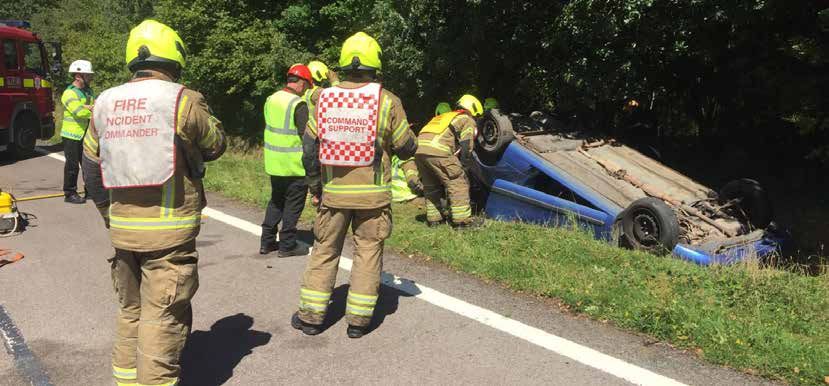
Welcome
     Two thousand and twenty one is going to be
     a year of betterment. Within the ever-evolving
     environments in which we all operate, change
     and improvement are more vital than ever.

That’s why I’m particularly delighted to present the 2021          One area of particular strength is our track record of
FSC course catalogue. I’m sorry that it’s later than usual,        delivery in Firefighter Foundation Development Programme
but Covid-19 has presented us – as it has everyone else            (FFDP) apprenticeships – a cost-effective way for UK
– with several challenges.                                         fire and rescue services (FRS) to attract, retain and
                                                                   develop talent. The FSC’s skills and expertise, combined
However, our team has worked tirelessly to make your               with the capability of one of the UK’s largest apprentice
campus as Covid-19-secure as it can be, while remaining            programmes, provides a great solution. Our programme
fully operational throughout 2020. And we’ll continue to           offers all FRSs in England a cost-effective managed
ensure that high quality training and courses are delivered        service, allowing access to the Apprenticeship Levy to
throughout 2021, alongside full Covid-19 compliance.               fund the training and development of firefighters.
All this hard work has paid off. The Health and Safety             That said, we have some exciting plans for 2021 and
Executive (HSE) inspected our campus and has confirmed             look forward to sharing these with you later this year – the
that we don’t just meet all legislation and government             planned 2022 programme should be published as usual
guidelines – we exceed them. This is a reflection of the           in the summer.
hard work that our dedicated team has put in. We’re fully
committed to providing critical training to ensure the UK’s        I’m truly proud of the work that we do at the Fire Service
– and the global community’s – resilience and security.            College, from our experienced and dedicated trainers
                                                                   to the extra mile we always go to ensure that you meet
We’re offering a full range of programmes and courses              all your development goals in a secure and friendly
once again in 2021. Demand has been strong, so I urge              environment.
you to book your places soon.
                                                                   And while we’re rightly proud of our world-class campus,
Covid-19 has forced us all to operate in different ways.           most of our training can also be delivered at your own
However, while it can be difficult, change can be a positive       facilities, remotely or through a blended solution, no
force, too. And we’re ready to help you to improve and             matter where they might be. Our extensive international
expand your skills and knowledge to meet it.                       experience speaks for itself.
In addition to our standard course offering,                       So, don’t forget to book your courses for 2021, and we
we’re always happy to discuss bespoke                              look forward to helping you to reach your training and
training solutions with you.                                       development goals for the year ahead.

We can also reach back into Capita to help you with
more generic organisational and leadership development             Dominik Wellmann
and corporate learning programmes. Our sales team will             Director, Fire Service College
happily help you with this.

                                                               5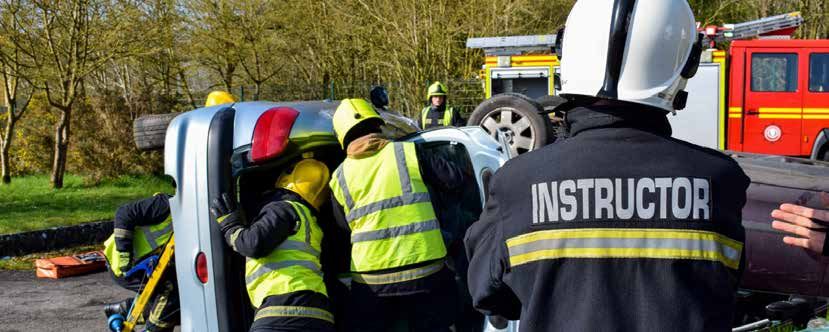
Train Virtually, Experience Reality

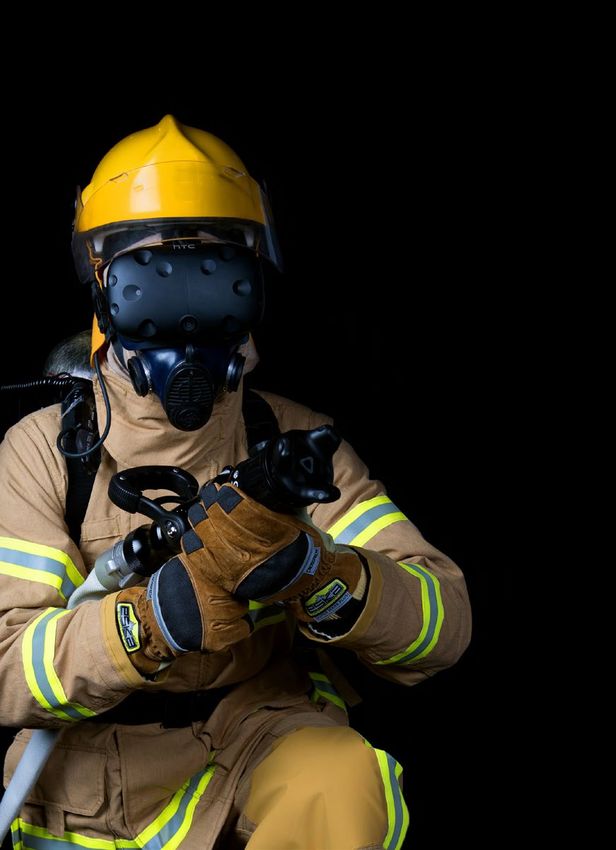
                                                         Virtual Reality Enabled Training
                                                         with FLAIM Trainer®
                                                         Get more from firefighting training
                                                         programmes and scenarios

                                                         ■    Reduces environmental impact
                                                         ■    Strengthens knowledge retention through
                                                              easily repeatable tasks
                                                         ■    Creates immersive and difficult to
                                                              replicate scenarios
                                                         ■    Provides a safe setting for learners and
                                                              instructors
                                                         ■    Support acquisition of basic skills prior to
                                                              traditional BA training
                                                         ■    A next generation training solution

                                                         FLAIM and Fire Service College are bringing
                                                         this innovative product to the UK.

To find out more and to arrange a demo contact Ted O’Brien,
Director of Product and Quality
E: mobrien@fireservicecollege.ac.uk
W: www.flaimsystems.com

                                              6
Our training delivery
The best of both worlds                                              selected partner and is working collectively to develop
                                                                     curriculum around FLAIM scenarios, which will lead
Our unique facilities at Moreton-in-Marsh, coupled with
                                                                     to capturing performance data and organisational
our distributed delivery model, enable us to bring training
                                                                     evidence of engagement and interaction while
to you in the most flexible way. We can offer the best of
                                                                     dealing with complex scenarios, in a safe and
both worlds – excellent on-the-job training at the college
                                                                     environmentally-friendly environment. Also look out for
plus extensive theoretical or smaller-scale practical training
                                                                     the FLAIM Extinguisher virtual reality training aid, for
closer to home.
                                                                     your commercial training needs.

Moreton-in-Marsh                                                     Distributed delivery
We believe that no other organisation in the world can               Our regional and locally-based training brings our
match the facilities offered by our incident ground. Our             expertise and experience closer to our customers.
300-acre venue enables us to replicate building fires,               The benefits of this approach include reduced time
urban search and rescue scenarios, train derailments,                away from the workplace and the opportunity to
motorway pile-ups and even ship fires and rescues. We                train with your own equipment, while still accessing
also design challenging and complex training scenarios               courses developed by our specialist design team to
that really test the skill and ingenuity of firefighters and         national and international standards and delivered by
emergency responders at all levels.                                  our expert instructors.
On top of this, our innovative simulation suite provides
world-class incident command training using XVR
simulation software. Our simulation suite has been
designed specifically to meet all current and future incident                                      We delivered
command training requirements, with the capability to                                              almost

                                                                                                  70
deliver across Operational Incident Command levels 1-4
and Multi-Agency Gold Incident Command (MAGIC). As
part of our blended approach to learning, we now offer our
FLAIM Trainer virtual reality training to selected courses.

As part of our blended approach to learning, the FSC is
continuing to work with the team from FLAIM Systems
(Australia), who have developed a virtual reality firefighter        offsite courses across the UK
training system. Capita Learning is the UK and Ireland               and internationally during 2019.

                                                                 7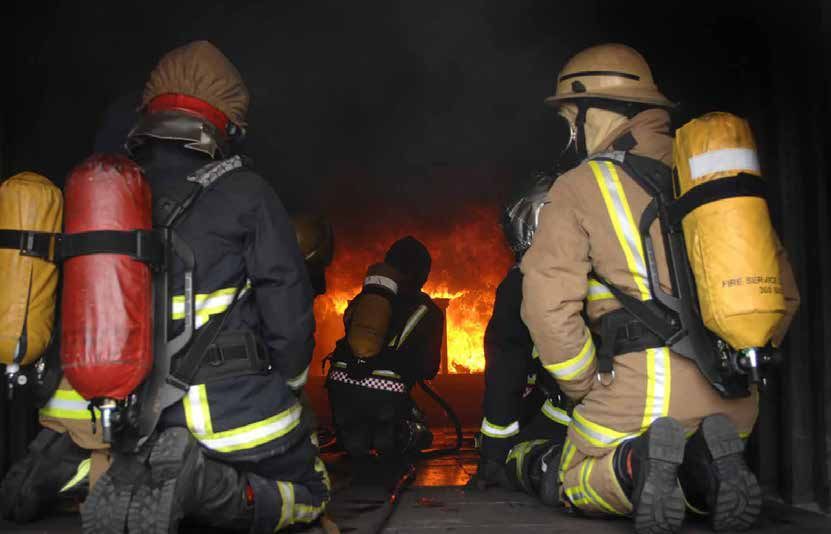
Our training staff
The Fire Service College is proud of the quality, experience        Instructor upskilling
and knowledge offered by our instructors. We apply a
                                                                    As part of our college-wide continuous improvement
careful and rigorous selection process and a regular
                                                                    programme, the training and development department
quality assurance programme to ensure that we use the
                                                                    runs a programme of standardisation and upskilling for all
best available. Many of them serve on, engage with or
                                                                    our internal instructional staff and associate tutors.
contribute to the:
▪   National Inter Agency Liaison Officer                           Our instructor and accredited assessor training teaches
    Governance Group                                                learners how to deliver training, which includes the
                                                                    creation of knowledge and skills sessions. The courses
▪   National Operational Learning User Group
                                                                    are delivered and assessed by competent sector
▪   SFJ(A) Incident Command Instructor qualification                specialists working to Fire Service National Guidance and
▪   NFCC National Operational Effectiveness                         other external awarding body criteria.
    Working Group
                                                                    All instructors and associate tutors employed by the
▪   NFCC Command & Control Users Group                              College must have a minimum of a Level 3 teaching
▪   NFCC Incident Command Conference                                qualification and, where delivery requires it, an instructional
                                                                    qualification in their specific skill set, for example breathing
▪   NFCC Communities: Operational, L&D, Safety,
                                                                    apparatus (BA) or hazardous materials (hazmat) instructor.
    Incident Command.
                                                                    Bringing instructors together for training ensures a
They are also contributors to:                                      consistent level of teaching across our instructor courses,
▪   National Operational Learning                                   while providing a great opportunity for team building and
                                                                    sharing and discussing teaching styles and experiences.
▪   Joint Operational Learning
▪   HSE fire sector audit process.                                  Our upskilling programme allows instructors and
                                                                    associate tutors to maintain their continuing professional
                                                                    development (CPD) hours and obtain the Level 3 SFJ(A)
                                                                    qualification, while the College gains greater resilience as
           Interested in becoming a Fire                            we increase our bank of upskilled associate tutors.
           Service College instructor?

Please email your interest to
opportunities@fireservicecollege.ac.uk

                                                               88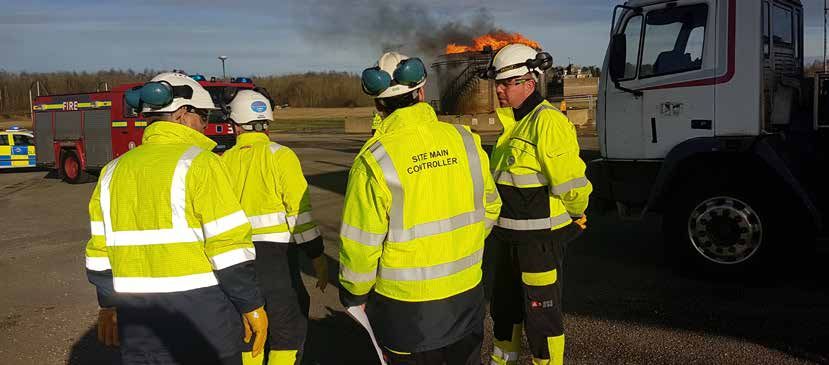
Awarding organisations
Our awarding bodies are approved by the qualification regulators to provide qualifications
in England, Wales and Northern Ireland. They all develop and deliver nationally-
recognised qualifications and ensure that, through regular visits, we maintain the required
standards with robust quality assurance of assessment, verification and delivery.

                SFJ Awards
                Skills for Justice (SFJ) Awards is an awarding organisation approved by the qualification regulators to
                provide qualifications in England, Wales and Northern Ireland.

                JOIFF
                JOIFF accreditation is a system of quality assurance that ensures that a minimum standard of training,
                carried out safely, is provided to all learners.

                BAFE
                BAFE is the independent register of quality fire safety service providers, ensuring quality and
                competence within the fire protection industry.

                Institution of Fire Engineers (IFE)
                The IFE assesses fire professionals’ knowledge and experience, awarding internationally-recognised
                membership grades and registration with the Engineering Council.

                The Pro Board
                The National Fire Protection Association (NFPA) is a leading world authority on fire prevention and
                safety. In 2015, the College became the first centre in Europe to achieve Pro Board accreditation to
                certify to the US-based NFPA.

                                                          9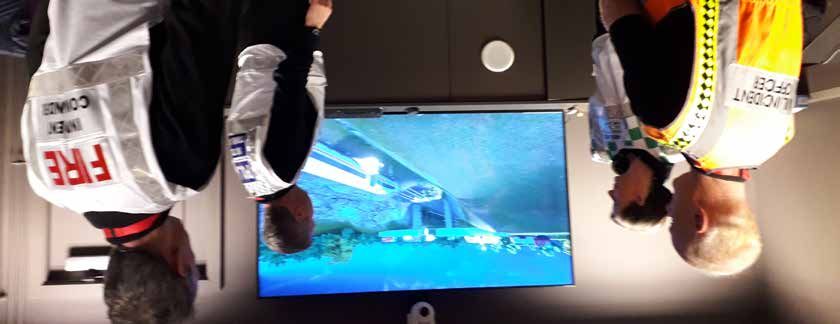
Our courses
The quality of our courses is very important to us. We
                                                                 Pricing and dates
regularly consult with our customers to ensure that we           We welcome the opportunity to discuss your specific
provide courses that meet their needs. We follow a robust        training requirements with you and, therefore, this
development process to design new courses involving              prospectus doesn’t include course costs or dates. We
SMEs and well-qualified and experienced teaching staff.          aim to deliver training that’s competitively priced and that
Courses are also refreshed and updated regularly.                meets your training requirements at a time and place to
                                                                 suit you.
Details of new and refreshed courses are on our website.

           To discuss your training requirements, contact
           our business development team on

01608 812984 or at sales@fireservicecollege.ac.uk.

                                                            10
                                                            10
FSC courses
Course index
                                                                                        Course code   Page

Apprenticeships
                14

Firefighter Foundation Development Programme                                            OSFFDP8        15

Fire service operations		16
Fire Team Members                                                                       OSFTM          17
Fire Team Leader                                                                        OSFTL          17
Tactical Ship Firefighting                                                              OSTSF          17

Hazardous materials		18
Hazardous Materials First Responder                                                     HMFR           19
Hazardous Materials Advisor                                                             HMA            19
Hazardous Materials Advisor Refresher                                                   HMAR           20

Incident command		21
THINCS Behavioural Marker System ratings                                                NEW COURSE     22
Emotional resilience and mental health awareness                                        NEW COURSE     22
Incident Command Assessor 	                                                             ICAT           23
Development, Qualification and Re-validation (DQR) Pathways                             NEW COURSE     23
Initial Incident Command in the Fire Service (NOG Level 1); Development                 ICL1DE 	       22
Initial Incident Command in Fire & Rescue Services (NOG Level 1); Qualification         ICL1Q 	        24
Initial Incident Command in Fire & Rescue Services (NOG Level 1); Re-validation         ICL1R 	        24
Level 2 DQR Pathway: Intermediate Incident Command in the Fire Service (NOG Level 2):
Development                                                                             ICL2DE 	       25
Intermediate Incident Command in the Fire Service (NOG Level 2): Qualification          ICL2Q 	        25
Intermediate Incident Command in the Fire Service (NOG Level 2): Re-validation          ICL2R 	        26
Advanced Tactical Incident Command in the Fire Service (NOG Level 3): Development       ICL3DE 	       26
Advanced Tactical Incident Command in the Fire Service (NOG Level 3): Qualification     ICL3Q 	        27
Advanced Tactical Incident Command in the Fire Service (NOG Level 3): Re-validation     ICL3R 	        28
Strategic (Gold) Command in the Fire Service (NOG Level 4): Qualification               ICL4G 	        28
Strategic (Gold) Command in the Fire Service (NOG Level 4): Re-validation               ICL4GR 	       29
Multi‑Agency Gold Incident Commander (MAGIC)                                            ICMAGIC        29
National Interagency Liaison Officer (NILO)                                             ICNILO         30
Incident Command Instructor – Designing and Delivering Incident Command Training        ICTTT          30
Level 1 Incident Command Scenario Training: Incident Safety Officer                     NEW COURSE     29
Bespoke large-scale exercising                                                          NEW COURSE     31
Emergency incident management courses                                                   NEW COURSE     32
Bespoke leadership and decision-making courses                                          NEW COURSE     32
Team building                                                                           NEW COURSE     32

                                                             12
Course code Page
Instructor programmes 33
Road traffic Collision Instructor OSRTCi 34
Breathing Apparatus Instructor OSBAI 34
Fire Behaviour Training Instructor OSFBTI 34
Tactical Ventilation Instructor OSTVI 34
Hazardous Materials Instructor HMI 35
Prevent and protect 36
Practical Fire Investigation (Level 5) FSPFI 37
Fire marshal course FSFM 38
Fire Safety Engineering Principles FSEP 38
Fire Safety Fire Alarms and Emergency Lighting FSFAEL 38
Fire Safety Management and Fire Risk Assessment - three days FSFRA3D 38
Fire Safety Management and Fire Risk Assessment - four and a half days FSFRA3 39
Portable Fire Extinguisher Recharging and Maintenance FSPFERM 39
Fire Safety Management in Healthcare Premises – Firecode FSHCMB 39
Fire Safety Management in Healthcare Premises – Fire Risk Assessment FSHCMC 39
Fire Safety Sprinklers FSS 40
Fire Safety Residential Sprinklers FSRS 40
Fire Safety Smoke Control for Fire Safety Practitioners FSSCFSP 40
Fire Safety Smoke Control for Design Submissions FSSCDS 40
Fire Safety Foundation – Level 3 Foundation Certificate in Fire Safety FSF 41
Fire Safety Officer / Enforcing Officer Qualification Level 3 Certificate in Fire Safety (Fire Auditor) FSL3 41
Level 4 Certificate in Fire Safety (Fire Auditor) FSL 4 42
Level 4 Diploma in Fire Safety (Fire Inspector) FSL4 42
Level 5 Certificate in Fire Investigation (Theory and Practice) part two NEW COURSE 43
Firework Awareness and Safety for Emergency Responders NEW COURSE 43
Level 5 Fire Safety Management Qualification NEW COURSE 43
13Apprenticeships
Operational Firefighter During the programme, a talent coach will support your
apprentices’ progress and help to gather evidence of
Apprenticeship where they have demonstrated the required knowledge,
skills and behaviour in the workplace. They will contact
Directly linked to the Operational Firefighter Apprentice
your apprentices each month and carry out a review
Standard technical knowledge, skills and behaviours,
with them and their line managers every three months.
this two-year programme includes our internationally-
Apprentices will have access to our apprenticeship
recognised FFDP.
platform, which will support their learning journey and
At the end of the programme, successful apprentices will: provide all the resources they need to go through to
▪ Be awarded a certificate from the Institute of completion.
Apprentices At the end of the programme, apprentices are assessed
▪ Gain a professional qualification from Skills for Justice against the industry set criteria for Operational Firefighter
for completing the FSC FFDP Level 3. The EPA is carried out by an assessor from an
▪ Be eligible for professional registration with the IFE at independently-registered organisation.
technician (TIFireE) level.
The scheme is open to all FRSs in England and to private
To find out how you can
sector organisations employing their own fire and rescue incorporate our apprenticeship
capability. It’s delivered by Capita through Knowledgepool programme into your training
and the FSC. plans, visit
Capita Learning has been delivering apprenticeships for apprentices.fireservicecollege.ac.uk.
more than 11 years, including some of the largest and
best-known schemes.
Why use the FSC
The programme has four elements, all of which ensure The FSC’s skills and experience combined with the
that your apprentices gain a full understanding of the experience and capability of one of the UK’s largest
Standard’s knowledge and skills components. These are: apprentice programme providers makes a great solution.
▪ Delivery of professional qualifications The programme offers all English FRSs and private sector
▪ On-programme support companies employing their own fire and rescue service
a cost-effective managed service, which gives access
▪ Personal development to the Apprenticeship Levy to fund the training and
▪ End-point assessment (EPA). developing of firefighters.
14Firefighter Foundation Course code: OSFFDP8
Development Programme
Flexible, bespoke training The standard eight-week programme is
made up of six modules with individual
The FFDP is an intensive modular course focusing on
learning outcomes:
establishing the fundamental skills so that learners are able
to safely attend operational incidents on its completion. It ▪ Basic Fire Ground Foundation skills including safe
builds on developing learners’ self-discipline, confidence, working at height and water awareness
resilience and adaptability to underpin their first steps ▪ BA and tactical ventilation
towards a successful career in the Fire and Rescue
▪ Trauma care and first person on scene
Service.
▪ Road traffic collision
With a flexible approach, the FFDP can be tailored to
▪ Hazmat
individual services’ requirements, with some choosing to
do most of their training in service but using the FSC’s ▪ Scenario exercises.
incident ground for consolidation training. We have run 8-,
10- and 12-week versions of FFDP. Additionally, it can be FFDP benefits:
undertaken in week or weekend blocks to facilitate training
▪ Provision of accredited, recognisable and transferable
for Retained Duty System Firefighters.
SFJ qualification
In challenging and controlled conditions, learners are ▪ Standardisation of training, meeting National
exposed to realistic and practical training scenarios on Occupational Standards
the College incident ground, which can include night-time
▪ Adherence to the demands and requirements of FRSs’
training. It’s also possible to operate from the College fire
firefighter training and development
station, which is the perfect venue for learners to become
familiar with the working environment they will experience ▪ Support of CPD
when in service. ▪ Reduced training costs
▪ Flexible modular programme.
The FFDP can also be included as part of the
Firefighter Apprenticeship Programme delivered via
our parent company Capita Learning.
For further information or to make a booking on this
course, contact the business development team on
01608 812984 or at sales@fireservicecollege.ac.uk.
15
15Fire service operations 16
Fire service operations
Operations courses provide learners with the essential knowledge and skills required in
specialist operational disciplines, using a blended learning approach within the classroom and at
challenging, world-class incident ground venues.

Each course is designed to enable learners to experience a wide range of realistic scenarios.
Once taught, they will quickly be able to operate confidently, capably and efficiently on the
incident ground.

Fire Team Members                                                                        Course code:
This course is designed for personnel required to respond to an emergency fire           OSFTM
or rescue situation under the guidance of the team leader. It covers the skills and      Duration:
techniques needed to safely respond to an on-site emergency situation.                   4.5 days

Fire Team Leader                                                                         Course code:
This course provides learners with the necessary skills, knowledge and understanding     OSFTL

to lead an industrial fire team in an emergency fire or rescue situation.                Duration:
                                                                                         4.5 days

Tactical Ship Firefighting                                                               Course code:
This course contributes to learners’ CPD in the operational tactics of firefighting in   OSTSF
ships and offshore installations.                                                        Duration:
                                                                                         5 days

                                                                17
Hazardous materials 18
Hazardous materials
Our hazmat courses provide the skills needed to keep the emergency services and commercial
industry at the cutting edge of response to hazmat risks. The College delivers high quality,
fully accredited training to first responders and incident commanders in hazmat and chemical,
biological, radiological and nuclear (explosives) (CBRN(E)), either at the customer’s location or at
our own exclusive facility at Moreton-in-Marsh.

Our courses are assessed by sector specialists, providing an assurance of competence. The
qualifications meet the requirements of the Qualification Credit Framework (QCF) and have
been rewritten to satisfy the requirements of the new National Operational Guidance for Hazmat
Incidents.

Our courses also challenge and test the application of the learner’s knowledge, skill and
understanding of hazmat and CBRN(E) within an accommodating and controlled learning
environment. They support the assessment of operational competence while providing
developmental opportunities and training delivery.

Hazardous Materials First Responder                                                         Course code:
                                                                                            HMFR
This course aims to provide initial incident commanders with the necessary
knowledge, understanding and experience to attend incidents involving hazardous             Duration:
materials and to bring them to a successful conclusion or manage them safely and            5 days
effectively.

Hazardous Materials Advisor
                                                                                            Course code:
This course prepares learners to undertake the role of a hazmat advisor (HMA) as a          HMA
specialist tactical advisor function at emergency incidents. The HMA’s role continues       Duration:
to evolve and is closely allied with other aspects of incident management, including        15 days
environmental protection, detection, identification and monitoring, and areas of
national resilience, such as CBRN(E) and counter terrorism.

Learners can train using our XVR simulation software, which allows them to experience
a range of virtual hazardous materials scenarios. When the software is used alongside
traditional training, learners can develop their understanding, responsibilities and
knowledge before putting those skills into practice on our incident ground.

Specialists brought in to assist with the delivery of the non-technical skill sets aspect
of this course include:
▪   National Chemical Emergency Centre – emotional response workshop
▪   Meteorological Office – chemical and plume modelling
▪   Compass Environmental Consultancy – environmental protection techniques
▪   Gloucestershire Police – CBRN(e).

                                                               19
Hazardous Materials Advisor Refresher Course code:
This course provides a three-year revalidation of the Hazardous Materials Advisor HMAR
qualification and aims to update the learner’s underpinning knowledge and skills and Duration:
create an awareness of current issues within the field of hazardous materials and 3.5 days
environmental protection.
New for 2021 is an exciting collaboration between the FSC
and the National Chemical Emergency Centre (NCEC).
All FSC Hazardous Materials courses have the unique and quality-improving
aspect of being delivered in collaboration with the NCEC.
(Note: This is not a new course, but a new collaboration for delivery.)
20Incident command 21
Incident command
The FSC is an SFJ-accredited centre with direct claim status for all our incident command
qualification courses.

We provide the latest world-class incident command training facilities within our innovative
simulation suites. Our visually immersive XVR On-Scene platform combines with XVR Crisis
Management to place incident commanders at the heart of a dynamic incident environment.

Our tutors challenge, test and assess learners’ application of knowledge, skill and understanding
of incident command within a simulated environment for qualification and re-validation
purposes, while providing learning, developmental and networking opportunities through shared
experiences.

We are equipped with two state-of-the-art simulation suites, each incorporating indoor command
units. Both incident command suites have been designed to meet all current and future incident
command training requirements, capable of delivering across all operational incident command
Levels 1-4 and MAGIC.

Through challenging, purpose-built, realistic scenarios, this regulated, blended learning approach
delivers professional training, accredited, quality-assured qualifications and CPD opportunities,
not only among FRSs but across all emergency services.

Strategic commercial partnerships and the latest simulation technologies enable us to meet the
needs of a diverse range of customers, while also supporting remote incident command delivery
and assessment.

Each course is designed in accordance with best practice as contained within the SFJ Level 5
Award in Designing & Delivering Incident Command Training.

THINCS Behavioural Marker System ratings
The FSC is licensed by Cardiff University to conduct assessments using the
THINCS Behavioural Marker System.

FSC maintains a cadre of qualified THINCS raters who will complete a THINCS
rating for each learner as part of our ICL2 and ICL3 courses in 2021. THINCS
ratings will be extended to our ICL1 courses in 2021.

                                                                                            © Cardiff University

Emotional resilience and mental health awareness
As an integral part of the programmes for our re-designed Level 1, 2 and 3 courses, learners will benefit from sessions
on emotional resilience, stress and decision making, and mental health awareness delivered by an expert in crisis
management solutions.

On the Level 2 and 3 courses, this will include Human Intelligence Observations of learners’ performances during
development exercises.

                                                            22
New for 2021 Course code:
Incident Command Assessor ICAT
Duration:
This course is designed for incident command assessors within organisations who
2 days
hold a valid assessor qualification. This course is designed to complement and / Accredited Learning
Professionally (ALP)
or supplement the SFJ Level 5 Award in Designing & Delivering Incident Command Delivery:
Training and is aimed at those members of staff who are only used in the incident Face-to-face
command assessment function, that is the command assessor. It can also provide Location:
evidence credit to transfer towards SFJ Level 5 Award in Designing & Delivering Fire Service College or
Incident Command Training. off-site at customer’s
premises.
New for 2021
Development, Qualification and Re-validation (DQR) Pathways
To assist Fire and Rescue Services in the development, validation and re-validation of their incident commanders as
recommended in National Operational Guidance Incident Command; Knowledge, Skills and Competence, FSC has
designed DQR Pathways at Incident Command Levels 1, 2 and 3.
Using a truly blended learning approach, each pathway at each level comprises:
▪ An e-learning development course
▪ An assessment and qualification course at FSC or off-site at customer’s premises
▪ A re-validation course within two years of attaining the qualification at FSC or off-site at customer’s premises..
The development and qualification elements are delivered as a package per learner. If the learner remains in role for two
years, the re-validation element will be added to the package at a discounted rate. This protects FRS from the possibility
of people changing role or leaving the service within the two years between qualification and re-validation.
Each development course is interactive and uses the Capita Learning ‘Evolve’ e-learning platform and Tessello learning
management system. The courses are modular and include virtual classroom feedback and coaching sessions with a
dedicated Fire Service College incident command tutor / assessor.
Level 1 DQR Pathway
Course code:
Initial Incident Command in the Fire Service (NOG Level 1): ICL1DE
Development Duration:
N / A;
This course is an integral part of the DQR Pathway and complements the ICL1 Accredited Learning
learner self-led Professionally (ALP)
qualification course.
Delivery:
It helps competent firefighters to gain the knowledge and understanding of incident Modular 30
command needed to demonstrate an ability to lead, monitor and support people to e-learning
resolve operational incidents as an initial commander in accordance with NOS WM7.
It presents a substantial development opportunity before attending the ICL1Q
accredited qualification course. Although it isn’t formally assessed, it does include
a knowledge test. Learners will receive coaching, mentoring, feedback and, if
appropriate, development plans based on their performance.
23Initial Incident Command in Fire & Rescue Services Course code:
(NOG Level 1): Qualification ICL1Q
This course aims to accredit the knowledge and skills development of FRS learners in Duration:
initial incident command in accordance with NOS WM7. Successful completion of the 4.5 days
Level 3 Award in
course will confirm that learners are ready to work as a Level 1 Incident Commander. Initial Incident in
Delivery: Fire and Rescue
Services
Face-to-face
Following the completion of the award, the learner will:
Location:
▪ Understand the key principles of the incident command system 35
Fire Service
▪ Understand roles and responsibilities of personnel within the incident command College or
structure off-site
at customer’s
▪ Understand the management of risk at operational incidents premises
▪ Understand effective communication at operational incidents
▪ Be able to plan an initial response to an operational incident
▪ Be able to implement actions at an operational incident to meet objectives
▪ Be able to close down the operational phase of an incident.
▪ Be able to review a response to an operational incident.
Initial Incident Command in Fire & Rescue Services Course code:
(NOG Level 1): Re-validation ICL1R
The course seeks to confirm knowledge, understanding and the performance of Duration:
technical command skills through a formal assessment process in accordance with Minimum 2 days
depending on learner
the performance learning outcomes and assessment criteria contained within the SFJ
numbers.
Level 3 Award in Initial Incident Command in Fire & Rescue Services. SFJ accreditation
Delivery: pending
Face-to-face
IFE
accreditation
“Exceeded my expectations. I had heard of the incident ground but, after Location: pending
experiencing it first-hand, I was left speechless. Amazing, top quality staff Fire Service
College or
and great live incidents.”
off-site at
South Yorkshire Fire & Rescue Service, 2020 customer’s
premises
24Level 2 DQR Pathway Course code:
Intermediate Incident Command in the Fire Service ICL2DE
(NOG Level 2): Development
Duration:
This course is an integral part of the DQR Pathway and complements the ICL2 N / A;
Accredited Learning
qualification course. learner self-led Professionally (ALP)
Delivery:
The course is designed to assist qualified Level 1 commanders in attaining the
Modular 29.5
knowledge and understanding of incident command that is required to demonstrate e-learning
an ability to lead, monitor and support people to resolve operational incidents as an
intermediate, tactical commander in accordance with EFSM2.
The course presents a substantial development opportunity before attending the
ICL2Q accredited qualification course. Although it isn’t formally assessed, it does
include a knowledge test. Learners will receive coaching, mentoring, feedback and, if
appropriate, development plans based on performance.
Intermediate Incident Command in the Fire Service Course code:
(NOG Level 2): Qualification ICL2Q
This course aims to accredit the knowledge and skills development of FRS learners in Duration:
intermediate incident command. Achievement of the award will confirm that people, 4 days
once developed, are ready to work – but not competent – as a tactical incident Level 4 Award in
Delivery: Intermediate Incident
commander (Level 2). Face-to-face
Command in Fire
and Rescue Services
The course is designed for Level 1 initial incident commanders who are looking to Location:
develop their skills to lead, monitor and support an incident as a Level 2 intermediate Fire Service
incident commander in accordance with NOS EFSM2. Learners should already College or
off-site
possess a working knowledge and technical understanding of the incident command
at customer’s
system. The course seeks to develop knowledge and understanding of wider fire and
premises
multi-agency strategies when dealing with and resolving incidents.
Following the completion of the award the learner will:
▪ Understand key roles and responsibilities within incident command
▪ Understand command and leadership skills within incident command
▪ Understand the application of effective decision-making during operational incidents
▪ Understand the principles of risk management at operational incidents
▪ Understand the methods of communication for operational incidents
▪ Understand joint working and interoperability
▪ Be able to review and determine the status of operational incidents
▪ Be able to assume responsibility for actions to support operational incidents
▪ Be able to review responses to operational incidents.
25Intermediate Incident Command in the Fire Service Course code:
(NOG Level 2): Re-validation ICL2R
This course is designed for existing and previously accredited Level 2 incident Duration:
commanders or above who require re-validation at intermediate level. It seeks to Minimum 2 days;
Accredited
confirm learners’ knowledge, understanding and performance of technical command Variable Learning
Professionally
depending (ALP)
skills through a formal assessment process, in accordance with the performance
on learner
learning outcomes and assessment criteria contained within the SFJ Level 4 Award in numbers.
Intermediate Incident Command in Fire & Rescue Services. 23.5
Delivery:
Face-to-face
“I have heard from the candidates on the ICL2 course that they have all or
virtual classroom
passed. Please pass on my thanks to the instructors for the additional gap
training and for their time and efforts spent on our candidates. We have Location:
carried out ICL2 courses at other training establishments but my staff have Fire Service
College
not brought back as much learning as they have by completing your course.
or off-site at
They have all fed back positive comments on the level of training and the customer’s premises
professionalism of the instructors. I look forward to developing more staff
on your ICL courses in the near future.”
Deputy Chief Fire Officer, UK FRS
Level 3 DQR Pathway Course code:
Advanced Tactical Incident Command in the Fire Service ICL3DE
(NOG Level 3): Development Duration:
N/A;
This course is an integral part of the DQR Pathway and complements the ICL3 Learner self-led
Qualification course. SFJ ALP Status
pending
It is designed to assist qualified Level 2 commanders in attaining the knowledge and
IFE CPD
understanding of incident command that is required to demonstrate an ability to lead, accreditation
pending
monitor and support people to resolve operational incidents as an advanced tactical
commander in accordance with NOS EFSM2.
The course presents a substantial development opportunity prior to attending the
ICL3Q accredited qualification course. Although the course is not formally assessed,
it does include a knowledge test. Learners will receive coaching, mentoring, feedback
and, if appropriate, development plans based on performance.
26Advanced Tactical Incident Command in the Fire Service Course code:
(NOG Level 3): Qualification ICL3Q
This course aims to accredit the knowledge and skills development of FRS learners Duration:
in advanced incident command. Achievement of the award will confirm that learners, 4 days
Level 6 Award in
Advanced Incident
once developed, are ready to work – but not competent – as an advanced tactical Command in Fire &
Delivery: Rescue Services
incident commander (Level 3). Face-to-face
It is designed for competent Level 2 commanders who possess an in-depth Location:
knowledge of the Incident Command System, Civil Contingencies Act 2004 Fire Service
(Contingency Planning) Regulations 2005. The course focuses on the knowledge and College
or off-site at
skills required to provide an advanced level of tactical command and coordination at
customer’s premises
the largest and most serious incidents, using developed command support systems
within a multi-agency environment.
Following the completion of the course the learner will:
▪ Understand the principles of decision making when leading people to resolve
operational incidents
▪ Understand a tactical approach to resolving operational incidents
▪ Understand command and leadership skills within Incident Command
▪ Understand the principles of risk management when leading people to resolve
operational incidents
▪ Understand joint working and interoperability
▪ Understand the principles of debriefing following an operational incident
▪ Be able to evaluate the status of an operational incident
▪ Be able to assume responsibility for action to support those involved in an
operational incident
▪ Be able to close down the operational phase of an incident.
27Advanced Tactical Incident Command in the Fire Service Course code:
(NOG Level 3): Re-validation ICL3R
Designed for existing and previously accredited Level 3 incident commanders who Duration:
require re-validation as an advanced commander. The course seeks to confirm 3 days
Accredited Learning
knowledge, understanding and the performance of technical command skills through Professionally (ALP)
Delivery:
a formal assessment process in accordance with the performance learning outcomes Face-to-face
and assessment criteria contained within the SFJ Level 6 Award in Advanced Incident or
Command in Fire & Rescue Services. virtual classroom
The course provides a platform for learners to demonstrate the knowledge and skills Location: 30.5 CPD hours
Fire Service
required to provide an advanced level of tactical command and coordination at the
College
largest and most serious incidents, utilising developed command support systems or off-site at
within a multi-agency environment. customer’s premises
“The course was well run, challenging and delivered by tutors of the highest
standard. To maintain this level of delivery and experience demonstrates an
exceptional product and performance.”
ICL3 2020 Bedfordshire FRS
Strategic (Gold) Command in the Fire Service Course code:
(NOG Level 4): Qualification ICL4G
This course aims to accredit the knowledge and skills development of FRS learners Duration:
in strategic incident command. Achievement of the unit will confirm that people, once 5 days
Level 7
developed, are ready to work – but not competent – in the context of representing the Award in Strategic
Incident Command
Delivery: in Fire & Rescue
lead authority and as a supporting authority. Face-to-face Services
This is the level of command exercised by the most senior operational commanders Location:
of a fire and rescue service supporting the on-scene operations with the authority to Fire Service
direct and commit resources. It includes the requirement to oversee, coordinate and College
support multiple off-site operations. or off-site at
customer’s premises
This course will deliver the qualification and provide trained Gold commanders to
attend the MAGIC course.
On successful completion of the course, the learner will:
▪ Understand the roles and responsibilities of people and organisations within
incident command arrangements at local, regional and national level
▪ Understand command and leadership skills within incident command
▪ Understand the technical issues being dealt with at tactical level
▪ Understand the role of communications within the context of local, regional and
national incidents
▪ Understand how to manage people involved in incidents within local, regional and
national contexts
▪ Understand how to close down the strategic command phase of the incident
within local, regional and national contexts
▪ Be able to lead a strategic response to an incident within local, regional and
national contexts
▪ Be able to contribute to the debrief following the resolution of an incident.
28Strategic (Gold) Command in the Fire Service
Course code:
(NOG Level 4): Re-validation ICL4GR
Designed for existing and previously accredited Level 4 incident commanders Duration:
who require re-validation as a strategic commander. The course seeks to confirm 2 days
knowledge, understanding and the performance of technical command skills through Delivery: SFJ ALP Status
pending
a formal assessment process in accordance with the performance learning outcomes Face-to-face
and assessment criteria contained within the SFJ Level 7 Award in Strategic Incident IFE CPD
Location: accreditation
Command in Fire & Rescue Services. pending
Fire Service
College
or off-site at
“Some fantastic information and discussion at the Fire Service College customer’s premises
on the new ICL4 course. Five days of learning, challenge, legal and moral
decision making, strategy and ‘the role of GOLD’. Awesome. Love it.”
ICL4G 2020 Gloucestershire FRS
Multi‑Agency Gold Incident Commander (MAGIC) Course code:
MAGIC is aimed at Category 1 responders from the blue light services and ICMAGIC
partner agencies who would normally perform strategic (Gold) command for their Duration:
organisation during a major incident / civil emergency. MAGIC is created for strategic- 5 days
level participants from multi-agencies. It meets the requirement under the Civil
Delivery:
Contingencies Act 2004 (Contingency Planning) Regulations 2005 for the carrying Face-to-face
out of exercises and training of appropriate Category 1 staff with a role in dealing with
major incidents at a strategic (Gold) level. Location:
Fire Service
The course has been designed to develop confidence, understanding and ability College
to perform the role of Gold commander in a multi-agency context by planning,
implementing and reviewing a multi-agency strategy to ensure the timely resolution
of a major incident / civil emergency. It is designed to develop the ability to make
decisions and work within a multi-agency team during a major incident and is
particularly suitable for anyone with the responsibility for a geographic area with the
potential for a multi-agency response to a major incident / emergency such as airport,
port, large shopping centre or large industrial area.
This course is not assessed on its own, however it does form part of the SFJ Level
7 (RQF) Award in Strategic Incident Command in the Fire and Rescue Service also
offered by the Fire Service College.
29National Interagency Liaison Officer (NILO) Course code:
This unique multi-agency training course has been developed in partnership with the ICNILO
National Fire Chiefs Council (NFCC), National Ambulance Resilience Unit (NARU) and Duration:
the National Police Chiefs Council (NPCC) to improve cooperation, communication 10 days
and understanding among the emergency services and other agencies on matters of
Delivery:
organisational capacity, capabilities and command. Face-to-face
Working to the relevant National Occupation Standards, the course aims to give the Location:
learner the skills to improve inter-agency planning, operational preparedness and Fire Service College
response to CBRN(e), conventional terrorism, marauding terrorist attacks, major
incidents, complex police-led incidents and serious public disorder.
On successful completion of the programme, delegates will be able to:
▪ Bridge an intelligence, information sharing and advisory gap identified between the
emergency response organisations and the UK-wide Counter Terrorism Command
/ units
▪ Improve inter-agency planning, operational preparedness and multi-agency incident
command structures at emergencies, terrorist-related and other critical incidents
▪ Improve cooperation and understanding among agencies on matters of
organisational capacity, capability and strategic command
▪ Reduce risk to the public, operational personnel and the environment
▪ Standardise the NILO role across the UK by implementing an agreed multi-agency
governance structure and formalising national intelligence links with partner
agencies
▪ Deliver the NILO role within the MTA operational environment.
Delegates need to be security vetted to a minimum level of SC before being allowed
to attend the course and should be incident commanders / managers experienced at
operating within a multi-agency environment and resolving complex critical incidents.
Incident Command Instructor – Course code:
Designing and Delivering Incident Command Training ICTTT
This qualification’s main objective is to give learners the knowledge, understanding Duration:
and skills to design and deliver incident command training. It’s aimed at incident 10 days
Level 5 Award in
Designing and
command trainers for emergency services including fire and rescue, police, military Delivery: Delivering Incident
Command Training
and ambulance. It reflects the aim of the Joint Emergency Services Interoperability Face-to-face
Programme to standardise multi-agency command of incidents. It is delivered
exclusively for the Fire Service College by the technical author of the award. Location:
Fire Service College
The Award comprises three units covering: or off-site at
customer’s premises
• The underpinning knowledge and understanding required to design command
training, exercise and simulation
• The knowledge and understanding required to design command training,
exercise and simulation
• The skills required to design incident command training, exercises and
simulations. It also requires the learner to deliver exercises.
Learners wishing to take the qualification must already hold a recognised training
qualification, and have experience of delivering training.
30XVR - On Scene Platform: simulation of a real life incident in that occurred in Europe in 2020
Level 1 Incident Command Scenario Training
“Great course. Wide variety of realistic
The Fire Service College provides training and assessment
scenarios giving a real incident management
opportunities for several UK FRS. There are several models
experience. The feedback from experienced
and methodologies for delivering this training. Course duration
instructors with an excellent level of
is usually two or three days and can involve two to six pump
knowledge and communication skills was
incidents and from eight to thirty firefighters and Level 1
very positive.”
commanders.
Cheshire Fire & Rescue Service
All exercises comprise live simulated incidents using FSC’s
unique incident ground. FSC incident command staff will work
closely with you to design and deliver a bespoke programme that
meets your organisational requirements.
For more details, please contact FSC at sales@fireservicecollege.ac.uk.
Bespoke large-scale exercising
We can provide you with a complete design and delivery solution for exercises ranging from discussion-based and
table top to live exercising, at your chosen location or at the College. This includes developing the scenario against an
agreed set of aims and objectives, and provision of all exercise materials - including injects, supporting information, media
simulation, and provision of the appropriate IT equipment and systems.
An experienced and trained delivery team (including an exercise director) and a media team of journalists (radio, print and
TV) are available if required, as well as post-exercise debriefs and reports to add further authenticity.
31Emergency incident management courses
Incident commanders work in challenging and pressurised situations. Our expert instructors regularly share their skills
with non-UKFRS customers through the delivery of bespoke incident management, leadership and decision-making
courses and team-building events.
The College is a Joint Oil Industry Firefighting Forum (JOIFF) and United Kingdom Onshore Pipeline Operators
Association accredited training centre. As such, our incident command department offers customers a range of
bespoke courses that enable their employees to practise their company policies and procedures in a realistic,
immersive, multi-agency, emergency response environment.
We design the courses in collaboration with you and can tailor them to cover all leadership and command levels
within your organisation – operational, tactical and strategic – using a blended approach to learning.
The College also offers JOIFF-accredited site-specific courses, including Site Incident Controller, Site Main Controller
and Emergency Control Centre.
Our customers include oil and gas pipeline operators across both transmission and delivery sectors, fuel storage
and distribution companies, COMAH sites, those responsible for elements of critical national infrastructure, and the
transport sector.
Bespoke leadership and
decision-making courses “I can honestly say that everything, from the
content of the course right through to the
Our incident command department is experienced in way it was delivered and the facilities, was
delivering successful, bespoke leadership, decision-making first class.”
and team-building courses to a wide variety of customers,
including building societies, animal welfare charities, Network Rail
universities, facilities managers, HR professionals and
private sector senior leadership teams.
We design and deliver the courses in collaboration with customers and in accordance with their own aims, objectives
and learning outcomes.
Team building
“We have received such warm and
The College provides team-building events quite unlike
wonderful positive feedback from the
any others. Using our incident ground and firefighter skill
team. Not just about the challenging
sets, we can guarantee our customers a unique, exciting
activities and how much they enjoyed
and enjoyable experience packed full of individual and
participating, but how fantastic your team
team learning outcomes. A team-building element can
were. Such patience, such fun, and such
be included in all of the leadership and decision-making
professionalism. Thank you. We had a ball.”
courses or can be provided as a stand-alone event.
Institution of Fire Engineers
Your team will undertake a number of activities designed to
build and develop:
▪ Communication skills: written, verbal, non-verbal
▪ Mutual trust
▪ Confidence
▪ Shared situational awareness
▪ Team forming: skill and attitude matching
▪ Teamwork
▪ Leadership.
32Instructor programmes 33
Instructor programmes
Road Traffic Collision Instructor
                                                                                            Course code:
With major developments in car safety over the last decade and a global shift towards       OSRTCi
electrification, today’s emergency crews face far greater challenges and complexities       Duration:
in getting casualties safely out of vehicles than ever before. To ensure that our RTCI      9 days
                                                                                                           Level 3
course continues to meet learners’ requirements, we have incorporated several new
developments to enable delivery of a more extensive and in-depth curriculum.

This course provides the skills, knowledge and understanding to enable learners to
design and deliver training on road traffic collision specialist equipment, techniques
and procedures across a wide range of realistic scenarios.

Breathing Apparatus Instructor
                                                                                            Course code:
With the release of the new National Operational Guidance for Breathing Apparatus           OSBAI
and in line with current updates to training and use of BA, we have updated our
                                                                                            Duration:
Breathing Apparatus instructor course to encompass these modifications, continuing          10 days
                                                                                                           Level 3
to meet the high level of learners’ requirements so that they can implement these
changes locally and nationally. To ensure that it continues to meet learners’
requirements, we have incorporated several new developments, including extending it
to enable delivery of a more extensive and in-depth curriculum.

The FSC Breathing Apparatus Instructor course is for personnel who need to design
and deliver safe and effective BA training.

Fire Behaviour Training Instructor
                                                                                            Course code:
Fire behaviour training forms a vital part of the overall strategy for BA wearers in both   OSFBTI
the FRS and industry. Our course ensures that instructors can safely operate fire           Duration:
behaviour units as well as deliver theoretical and practical training. To ensure that our   10 days
                                                                                                           Level 3
course continues to meet learners’ requirements, we have incorporated several new
developments, including extending it to enable delivery of a more extensive and in-
depth curriculum.

The course will enable learners to design and deliver theoretical and practical training
in flashover, backdraught and fire gas ignitions competently and safely.

Tactical Ventilation Instructor                                                             Course code:
With changes in architectural design and more innovative construction methodologies,        OSTVI
it’s essential for today’s firefighters to understand the optimal ventilation tactics       Duration:
and techniques required for different types of buildings. To ensure that our course         5 days
continues to meet learners’ requirements, we have incorporated several new
developments, including extending it to enable delivery of a more extensive and in-
depth curriculum.

This course enables learners to design and deliver training competently and safely,
using the theory and practical application of tactical ventilation.

                                                               34
Hazardous Materials Instructor Course code:
This course aims to confirm the knowledge and skills required for the delivery of HMI
training for, and assessment of, first responders to a hazmat incident. It supports Duration:
learners in developing and delivering high quality knowledge and skills training to meet 9 days
the requirements of all the elements of unit FF5 ‘Protect the environment from the
effects of hazardous materials’.
Designed for personnel with a training responsibility, this course prepares delegates to
deliver hazardous materials training at first responder and supervisory level.
35Prevention and protection 36
Prevention and protection
Fire prevention and protection training provides sector-appropriate qualifications. Courses
are aimed at those in a variety of fire safety roles in fire, health and safety, business continuity
and environmental protection sectors. Learners develop an underpinning level of knowledge
and skills to enhance their ability as practitioners that fundamentally supports the UK’s better
regulation agenda and will reflect the changes to fire safety legislation and guidance resulting
from recent high-profile events. The qualification and course materials used are from a variety of
sector partners and sources, enabling content to be current and relevant.

Learning and developing new skills at the College enables people to help to make buildings safe
and achieve compliance, or audit compliance, with fire standards throughout a building’s full life
cycle, with special emphasis on the ethos of supporting UK business development and growth.

Our quality assurance process ensures that all assessment activity and evidence of previous
learning is valid, reliable, sufficient and authentic.

Off-site delivery methods
We’re pleased to offer a flexible approach to delivery, so our courses and training can often be
delivered off-site at a venue of your choice. For those who find studying online more practicable,
we can also deliver by virtual classroom using Zoom or Teams for discrete groups of up to 20.

                To discuss your training requirements, contact
                our business development team on

    01608 812984 or at sales@fireservicecollege.ac.uk.

Looking to train a group of employees? We can run this course at a location of your choice,
such as your premises or a local venue. To find out more, contact the business development
team using our enquiry form.

Practical Fire Investigation (Level 5)
                                                                                                 Course code:
We have developed this programme in conjunction with the College of Policing                     FSPFI
and the Institution of Fire Engineers for fire and forensic investigators. It meets the          Duration:
requirements of the Fire Investigator Code of Practice and is also in line with the latest       4.5 days and
NFCC framework for fire investigators.                                                           25 hours
                                                                                                 e-learning
This course provides learners with the underpinning knowledge, understanding and
practical skills required for the role of a fire investigator and develops their investigative
skills as a fire / crime scene investigator.

                                                                  37
You can also read


