A generation to end the harm: Diabetes UK Strategy 2020-2025
←
→
Page content transcription
If your browser does not render page correctly, please read the page content below
a generation
to end the harm:
Diabetes UK Strategy
2020-2025
contents

Our ambitions                  4

We’re changing the future 		   13
of diabetes

Our new strategy               15

Getting there quicker, 		      46
doing it better

Diabetes is relentless.		      56
So are we

Join us                        58
Our ambitions
4
A new and very different future for people living
with, and at risk, of diabetes is within our grasp.

we have the opportunity
to shape that future.

                                                      5
At the heart of our strategy, what motivates us every day, and
    what drives us towards our vision of a world where diabetes
    can do no harm, are two ambitions.

                                           1    we want people to
                                                live well and longer
                                                with diabetes.
                                                     2    we want to
                                                          cure or prevent
                                                          diabetes.

6
Over the next five years, all of our
work will focus on making these two
ambitions a reality.
They are grounded in what people living with
type 1, type 2 and all other types of diabetes, or
people at risk of diabetes, tell us they want for
themselves and for others. And, whatever your
personal situation or connection with diabetes,
we hope our ambitions reflect something
important to you.
Because of the scale and seriousness of diabetes,
we must move quickly. We can only do this if we
can inspire more people to raise more money
and awareness, influence at the top level and
learn more from people whose voices are
underrepresented in our work.
The success of this strategy will be measured
by the impact of our efforts on the lives of
people affected by, and at risk, of diabetes.

                                                     7
Society continues to change at a
    dizzying speed. Technological and
    clinical breakthroughs could transform
    the quality of life for people with
    diabetes within a generation.
    But, right now, with obesity on the rise and with the damage
    that all types of diabetes can do greatly underestimated, the
    next generation are facing even more harm. To succeed and
    to create a world where diabetes can do no harm, we need
    a bold, ambitious strategy.
    The effects of diabetes are more serious and widespread
    than the vast majority of people understand. Even though
    500 people die prematurely because of diabetes every
    week, fewer than one in five people in the UK believe it’s a
    serious condition.

    Diabetes can take over your life.
    It damages your blood vessels and organs, and doubles
    your risk of heart disease and stroke. It can lead to
    blindness and amputations. It affects your family and your
    work, interferes with your social life, controls what you can
    eat, and when. It’s a life of medical checks, precise
    regulation, taking meds, injections, and emotional drain.

8
In the UK, nearly five million
people live with diabetes. This is
twice as many as 20 years ago.
For the 36,000 children and young people
living with type 1 diabetes, it can make
childhood a painful, frightening place.
Type 2 diabetes is growing rapidly. With
two-thirds of us overweight, the threat of it
affecting you, or someone you love is real.

                                                9
the good news?
     together, we’re
     going to stop
     diabetes ruining
     and ending lives.
     We know more than ever before about how
     to prevent and treat diabetes, how best to
     manage it, and how to support people to
     live well with it. We’re contributing to global
     efforts to discover more about diabetes, to
     get us closer to a cure.
     Every step forward is another
     life changed.

10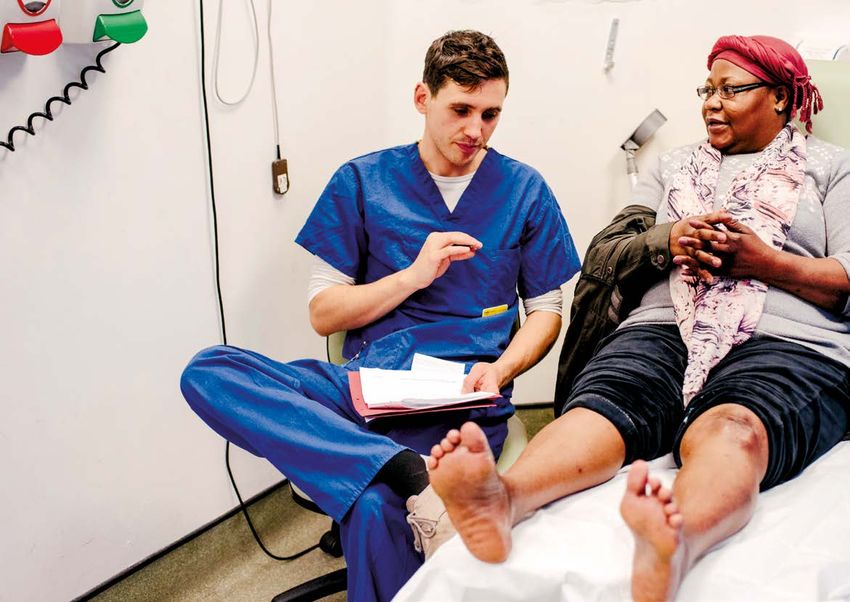
Each step we take will be guided by
the experiences of those living with
and affected by diabetes, and will
only be possible with the generosity
of our fantastic supporters.
We’ll bring the experts together and challenge the decision
makers to be bolder. We’ll listen and act, and persuade
others to join us.
Two years ago we held the biggest ever conversation
about diabetes – the Future of Diabetes. We heard from
more than 9,000 people across the UK who described their
experiences of living with all types of diabetes and shared
their hopes and fears for the future. People told us what
they want and need. Their experiences frame our strategy
for the next five years.

                                                              11
We will work with our donors,
volunteers, partners, researchers,
clinicians and campaigners to make
change happen.
By 2025:
—— more people with type 1, type 2 and all other forms of
diabetes will benefit from new treatments that cure or
prevent the condition
—— more people will be in remission from type 2 diabetes
—— more people will get the quality of care they need to
manage their diabetes well
—— fewer people will get type 2 and gestational diabetes
—— more people will live better and more confident lives
with diabetes, free from discrimination.
The next five years are critical. With more and more people
affected by diabetes, we have no choice but to fight harder
than ever before.
To do it we need you, and not just you.
We need your friends, family, colleagues, places of worship
and social clubs. We need your time, your energy, your
fundraising, your campaigning and your support. None of
this will be possible without you.
12we’re changing
the future
of diabetes
In our last strategy we
committed to:
——getting more people the best care
and support
——helping those affected manage
their diabetes
——investing in research to develop
better treatments and find cures
——campaigning to make everyone
aware of the severe problems the
condition can cause and what
they can do about it.
13Over the last five years we’ve made
impressive progress.
The dedication of supporters and leading UK scientists has
advanced our understanding of diabetes and funded more
research than ever before. They’ve made it possible to
improve diabetes care and create new national programmes
to prevent type 2 diabetes. We’ve propelled a world-leading
consortium to make discoveries in immunotherapy for type 1
diabetes, and funded successful studies into the remission of
type 2 diabetes.
Our powerful campaigns have influenced governments.
We’ve seen unfair prescription fines cancelled, the law
changed on glucose monitoring for drivers and Flash testing
become available on the NHS. We’ve brought about major
changes in local healthcare, especially in tackling
diabetes-related amputations. Together we’ve helped
dispel myths and improve understanding that diabetes is
a life-threatening condition. And, alongside our Diabetes UK
volunteers, we’ve supported millions of people with diabetes
through our services and information.
We know we can change everyday life for people with
diabetes, but someone is still diagnosed every two minutes,
while a quarter of children with type 1 diabetes are diagnosed
dangerously late. With more than 12 million people at
increased risk of type 2 diabetes, we must strive to do
even more.
We’re serious about the challenge. But we’re also excited
about the potential we have to make life better for millions
of people.
14Our new
strategy
15what we
must achieve
Over the next five years
we have five outcomes
which will help us
fulfill our ambitions.
16outcomes Some will happen quicker than
others, but they all embody our
More people with type 1, type 2 passion, belief and determination.
1 and all other forms of diabetes will We don’t have all the answers yet, so we
benefit from new treatments that need to work together and learn from
people living with, affected by and working
cure or prevent the condition. in diabetes.
More people will be in remission If we can do that, we know we can get closer
2 from type 2 diabetes. than ever to a world where diabetes can do
no harm.
More people will get the quality
3 of care they need to manage their
diabetes well.
Fewer people will get type 2 and
4 gestational diabetes.
More people will live better and
5 more confident lives with diabetes,
free from discrimination.
17Outcome 1
More people with type 1, type 2 and
all other forms of diabetes will benefit
from new treatments that cure or
prevent the condition
18how?
——Drive forward innovations to cure
type 1 diabetes, from technological
options to immunotherapies.
——Develop a pipeline of research activity
to find cures for type 2 diabetes,
tackling insulin resistance and keeping
insulin-producing cells healthy.
19immunotherapy
for people with
type 1 diabetes
Type 1 diabetes is a condition where the
body mistakenly attacks its own cells.
Immunotherapies try to stop that attack happening. We’re at
the heart of immunotherapy research, with many top global
researchers based in the UK. Our support of the Type 1
Diabetes Immunotherapy Consortium will help attract more
investment and expand UK clinical trials, helping people have
a better chance of a healthier future.
We believe a licensed immunotherapy can be achieved
within the next five years, bringing us closer to a cure for
type 1 diabetes. Not only would this be a huge leap forward
in changing lives, but it would also inspire new funding and
attract pharmaceutical companies focused on developing
immunotherapies for wider use.
20 Outcome 1a practical cure
A practical cure means you’ll still
have diabetes but your day-to-day
management will be dramatically
simplified, and you won’t have to
worry about short or long-term
blood sugar control.
Closed loop technology exists. Also called an artificial
pancreas, it automatically monitors your blood sugar
levels and delivers the dose of insulin you need. Clinical
trials have shown it improves blood sugar levels and
quality of life.
More research is needed, but we believe we can make
these things a reality for people.
We will support, promote and lobby for easy access to
a safe, effective and practical cure for everyone who
can benefit.
Outcome 1 21investment in research
for all types of diabetes
We believe breakthroughs are close in islet cell
transplantation, stem cell research and more.
But diabetes research is massively underfunded compared with
other health conditions. Unless we see more research investment
and support, the chance to change and save more lives remains
out of reach.
Islet cell transplants have already given some people with
type 1 diabetes years off from their diabetes. We need to find
a way to protect the transplanted cells so they can survive for
longer, or use stem cell research to help people make their own
islet cells again.
For type 2 diabetes, surgical interventions and new pills to
increase weight loss, or alter the microbes in your gut to
overcome insulin resistance, need to be further explored.
There’s a simple equation: if we are to improve and save
more lives, millions more in funding needs to be invested in
research. We also need to translate new research into real world
prevention, care and cures, and work with health services to get
new treatments and therapies available as quickly as possible.
22 Outcome 1we will
——Lead and work in partnership
to develop immunotherapy
treatment faster.
——Invest more in basic, clinical
and translational research
and influence others to invest
more too.
——Find and support the next
generation of researchers
and clinicians.
——Recruit more people with
diabetes into clinical trials.
23Outcome 2
More people will be in remission
from type 2 diabetes
24how?
——Support and influence the NHS to
develop UK-wide programmes to put
type 2 diabetes into remission.
——Further our understanding and help find
new ways to put more people into type 2
diabetes remission.
——Support people to stay in remission.
25Making remission of
type 2 diabetes a reality
for more people
Remission offers people living with type 2
diabetes a chance of a better quality of life,
without the complications of diabetes.
It’s still early days in our understanding, but we believe remission has the
potential to benefit millions of people here and around the world.
Thanks to the findings of our groundbreaking research, remission is being
offered by the NHS. They focus on supporting people with an intensive
low-calorie, weight management programme. We want to see health
services use the results to develop programmes that can support more
people all over the UK.
What we know already is extremely promising but there is a lot more
we must learn and discover. We need to explore other ways remission
can be achieved, understand how long it might last and make it a
possibility for those people with type 2 diabetes who don’t need to lose
weight. We also need people with type 2 diabetes to be promptly
diagnosed so that they have the best chance of achieving remission.
26 Outcome 2we will
——Make type 2 diabetes remission
available and applicable to as many
people as possible.
——Fund research to better understand
how to put type 2 diabetes
into remission.
——Help make sure people have
support to stay in remission.
27Outcome 3
More people will get the
quality of care they need to
manage their diabetes well
28how?
——A good diagnosis – quick, clear, correct
and supported.
——Equal access to the right care, treatments
and technologies.
——Trained, knowledgeable and confident
healthcare professionals.
29a quick, clear
and correct
diagnosis
A quarter of children with type 1
diabetes are diagnosed dangerously
late, and it’s only when they’re already
very poorly – even in a coma – that the
right diagnosis is made.
People are wrongly diagnosed, and given treatments that
don’t work or are simply wrong.
There are at least 1 million people living with undiagnosed
type 2 diabetes. Without a diagnosis, they can’t make the
changes that improve management of their condition and
reduce their risk of complications.
All this must change. People deserve better.
30 Outcome 3equal access to the
right care, treatments
and technologies
Getting the right care, at the right time, is
vital to helping people avoid the complications
of diabetes.
But depending on where someone lives, people with diabetes may not even get
the basic, routine checks to help them manage their condition.
We will work with the health services across the UK to make sure everyone
is clear on what good care is, and we’ll challenge them when it isn’t good
enough. We want to make sure health services provide great care in every
community, at a consistently high quality that doesn’t depend on where
you live.
Everyone should have the right medication and equipment to manage their
diabetes well, but nearly one in three people who took part in the Future of
Diabetes conversations had problems getting access to these.
We will make sure that new medicines, technology and treatments get to
people quicker by helping research discoveries move into everyday healthcare
more quickly. If they’re not provided fairly to people, we will campaign to make
sure they are.
Outcome 3 31trained, knowledgeable,
confident healthcare
professionals
Having access to knowledgeable and skilled
healthcare professionals should be a given for
people with diabetes.
But many of the people we heard from in our Future of Diabetes
conversations were worried about the level of understanding some
professionals have.
We will work with healthcare professionals to help them better
understand diabetes, the needs of people living with it and what good
care looks like. We will raise the standard of care to meet the
expectations of all people with diabetes, wherever they live,
regardless of age, income or ethnicity.
Our leadership programmes for healthcare professionals will make
sure the best care and new treatments and technology spread
quickly across the NHS.
32 Outcome 3we will
——Press for diabetes care and
treatment to be a priority in all
four UK health services, with
national plans and investment
in place.
——Fund and support research
that improves care and leads
to quicker and more accurate
diagnoses.
——Make sure routine healthcare
and checks are completed for
everyone with diabetes.
——Make sure diabetes
complications are well
understood and identified early.
——Work more effectively with the
NHS so changes happen quicker
across the whole of the UK.
33Outcome 4
Fewer people will get type 2 and
gestational diabetes
34how?
——Sustained and ambitious government
action on health and obesity to make the
healthy choice the easy choice.
——Support more people to understand their
risk of developing type 2 and gestational
diabetes and help reduce it where possible.
35increased and sustained
government action on
health and obesity
We’re facing an urgent public health problem.
We’ve seen the numbers of people who are living with obesity in the UK rise to
29% of adults, and up to 20% of 10 to 11 year olds.
Although one in 10 people with type 2 diabetes aren’t overweight, we know
that one of the biggest causes is obesity. It’s behind the leap in type 2
diabetes over the last 20 years and the increase of diabetes in pregnancy.
We’re also seeing a worrying rise in younger people developing type 2 diabetes,
putting them at more risk of complications in the future.
Tackling this requires ambitious and sustained action from national
governments, across sectors and departments. That’s because, right
now, it’s hard to be healthy. We will keep challenging government and
industry to put in place regulations and practices that make healthy
choices easier for everyone, including making food and drinks healthier,
and addressing the marketing and promotion of unhealthy foods.
36 Outcome 4More people supported
to reduce their risk
Not everyone who is overweight will
develop type 2 diabetes, and not
everyone who develops type 2 diabetes
is overweight.
We know that there’s a complex mix of risk factors including our
genes and our age. Some are at greater risk, including people
who are South Asian, black African and African Caribbean.
Through research we will build our knowledge about how
type 2 and gestational diabetes develop, and why some
people are more at risk than others. At the same time, we’ll
help more people understand their own risk and make sure there
are personalised and tailored information programmes in place
to support more people to lower their risk. We will work with local
and national partners to make sure their services are as easy to
find, access and as useful as possible.
Without action, more people will develop type 2 and gestational
diabetes – but with more awareness, government action and the
right investment and support, we can change this.
Outcome 4 37we will
——Campaign for ambitious
government and industry action
to make healthy choices easier
for everyone.
——Help people understand their
personal risk of type 2 diabetes
and find tailored support to
reduce it.
——Build stronger connections with
those at high risk like South
Asian, black African and African
Caribbean people.
——Invest in research to increase
our understanding of how we
can prevent type 2 and
gestational diabetes.
3839
outcome 5
     People with diabetes will live
     better and more confident lives,
     free from discrimination

40
how?
——Personalised emotional and psychological
support so that people don’t feel
alone and have confidence to manage
their diabetes.
——Education for all, with care and support
available when people need it.
——Better understanding so that diabetes is
seen as a serious condition and people are
not judged for having it.
41personalised emotional and
psychological support
We all need support to feel confident and live well.
Having to cope with a life-changing and life-threatening condition
without the right support can make life unbearable.
A lack of support can leave people with diabetes feeling isolated,
confused and trapped. Emotional and psychological support is in
especially short supply. We will make sure more people get the
information they need, helping them to make sense of their situation,
and bringing back more control to their lives.
We will help people to understand the best questions to ask,
understand what different management approaches look like, and
encourage them to feel more confident in sharing experiences and
asking for support.
We also know the phenomenal potential in peer-to-peer learning, and
so we’ll help people with diabetes to support each other by sharing
their experiences.
42 Outcome 5education
for all
There is a lot to learn when you’ve
got diabetes.
People don’t just need the right information at
diagnosis, they need it throughout their whole life.
We will work with the health services to make sure that
everyone receives good support from the moment
of diagnosis.
We want people to get the education they need
promptly so they can manage their condition as well as
possible, helping to reduce their risk of complications.
We want them to enjoy the same quality of life as
someone without the condition.
Outcome 5 43increase understanding to
reduce the stigma of diabetes
For a serious and life-threatening condition
that contributes to 500 premature deaths a
week, diabetes is shockingly misunderstood.
Only 17% of people in the UK think diabetes is a serious condition.
Type 2 diabetes, which affects 90% of all people with diabetes, is
often seen as being entirely self-inflicted.
People face discrimination, which stops them getting the
support they need and makes it even harder to live a fulfilling life.
This has to change.
Based on the experiences of people affected by all types of
diabetes, we will develop information and campaigns that make its
life-threatening seriousness unavoidably clear and support a change
in the way people think about diabetes. We will lead the charge to
change the public conversation about diabetes, and make it easy for
people to talk openly and without fear of judgement, and to manage
their condition in public without discrimination.
44 Outcome 5we will
——Give people information and support
through our services, our website and
in their local communities.
——Improve the emotional and
psychological support available for
everyone with diabetes.
——Help people get support from each
other – learning from our volunteers,
local groups and online forum.
——Drive a change in public perception
so that people don’t feel judged for
having diabetes.
——Provide support for children with
type 1 diabetes to enjoy a good
quality of life.
——Increase our understanding of the
psychological impact of diabetes,
to help improve care and develop
new treatments.
45getting there
quicker, doing
it better
46We’ve identified key cross-cutting areas that
will be a part of everything we do, accelerating
our progress, helping us have more impact and
delivering power to our mission.
fighting diabetes with you
addressing and fighting inequality
using technology and innovation
to improve everything we do
learning and improving together
47fighting diabetes
with you
We already work with thousands of
members, volunteers, researchers,
campaigners, donors and healthcare
professionals who share our passion
about making life better for people
affected by diabetes.
But there are people we don’t hear from, and we
want to work harder so we can listen to even more
people. We don’t always make it as easy for people to
take action in ways they’d want to, and there are millions
of people with, at risk of, and affected by diabetes who
we don’t reach at all.
To achieve impact, we also know we need to engage
more people in the fight against diabetes. If we are to do
more and do it faster, we need more people, businesses
and organisations across the UK to fundraise, campaign
and raise awareness alongside us as part of a community
of millions who make change happen.
48we will
——Listen to and understand the priorities
of people affected by and at risk of
diabetes, and people working in
diabetes research and care.
——Create more opportunities for people to
donate, get involved and support others
by inspiring them to do more with us.
——Treat everyone we come into contact
with in a way that makes them want to
be a part of our charity.
——Explore opportunities to build strategic
partnerships with organisations from
across sectors and society.
——Learn how best to support grassroots
and community-led groups to make
change happen.
49addressing and
fighting inequality
Obesity, type 2 diabetes and gestational
diabetes are more common if you are
from a lower income background.
The link between obesity and poverty is rising, especially if
you‘re a woman.
If you live in a deprived area, especially if you’re an older white
man, you face some of the worst health outcomes.
If you are South Asian, black African or African Caribbean
you’re at greater risk of type 2 diabetes, more likely to have it,
and can develop it younger. You’re more likely to experience
complications, and at a younger age.
We also know all of these things mean you’re more likely to
find it harder to get the information and support you need
from us, and from others. This isn’t right.
We need to listen, learn and understand how best to communicate
with everyone, providing the right support, at the right time and
in the right way.
50we will
——Research the causes, physiology
and genetic risks of developing all
types of diabetes within different
communities and ethnicities.
——Deliver more targeted support,
campaigns, and improvement work
to different communities.
——Target our work where we know
there is the biggest risk of unequal
health outcomes.
——Explore the risk of diabetes
and complications for people
facing disadvantage.
51technology and innovation
to improve everything we do
Technology is already radically changing
the treatment and management of diabetes,
with more potential developments across
every aspect.
From the artificial pancreas to continuous glucose monitoring,
innovation and technology are improving and saving lives. The problem
is that the tech isn’t always available to everybody. And trends like big
data and artificial intelligence aren’t being used enough to prevent, cure
or better manage diabetes.
As a global leader in diabetes, we must exploit technological advances.
We will make sure inequalities don’t lead to a two-tier health
system. We will support people who lack confidence in, or
access to technology. We are already looking at ways to work with
innovators and entrepreneurs in digital health to bring more ideas to
reality, producing them at scale and making sure they’re affordable to all.
We also know that we need to make the most of technology to
improve how we work as a charity, using it to help us achieve our
goals faster. There’s so much potential benefit for so many aspects
of our work.
52we will
——Champion the right of all people with
diabetes to get the technology that
helps them.
——Influence government and industry to
improve the uptake of digital and tech
innovation within the NHS.
——Work with digital health start-ups to
access more funding.
——Build a network that connects people
and companies developing technology
solutions with healthcare professionals,
venture capitalists, commissioners and
people with diabetes.
——Make sure we can use technology
and data to help us increase our
engagement and impact and to achieve
our outcomes faster.
53learning and
improving together
To keep us on track and fully
accountable, we will use data and
insight from those living with and
at risk of diabetes, to measure
progress towards our goals.
Our success will be measured by the differences we
make to people’s lives.
As well as learning from our own progress, we’ll
constantly review how the world is changing, and always
aim to respond to stay efficient and effective.
For our strategy to be a success, we’re going to have
to evolve our culture and build our capacity and
capabilities to deliver it.
54we will
——Encourage creativity and innovation
in every area of our work.
——Increase diversity in our work to
broaden thinking and experience.
——Keep building an increasingly
collaborative, agile, responsive,
open and passionate charity.
——Hold ourselves to account, making
sure we’re always guided by people
living with and affected by diabetes.
55Diabetes
is relentless.
So are we. If we don’t push ourselves, our partners
and society forward, to a world where
diabetes does no harm, who will?
Our ambition is bigger than ever before because the challenges
and opportunities demand it. We know we can reach our
vision, but we can only get there by working together,
with you.
We need your experience, your energy, your fundraising and
your determination. Living with diabetes is hard, and we might
not stop it in the next five years but there is hope now like
never before.
Together we will take big steps towards making people’s lives
healthier, easier, better, longer. We will reduce the harm it does.
We know diabetes is relentless.
But so are we.
5657
if you’re feeling inspired,
     join us in fighting for a world
     where diabetes can do no harm.
     www.diabetes.org.uk/join-the-fight

58
59
The British Diabetic Association operating as Diabetes UK, a
charity registered in England and Wales (no. 215199) and in
Scotland (no. SC039136). © Diabetes UK 2019 1830C.
You can also read


