A New School of Thought - Avenues New York - Storyblok
←
→
Page content transcription
If your browser does not render page correctly, please read the page content below
A New School
of Thought.

Avenues New York
OUR MISSION

              We will graduate students who are accomplished in the academic skills one would expect;
              at ease beyond their borders; truly fluent in a second language; good writers and speakers
              one and all; confident because they excel in a particular passion; artists no matter their field;
              practical in the ways of the world; emotionally unafraid and physically fit; humble about their
              gifts and generous of spirit; trustworthy; aware that their behavior makes a difference in our
              ecosystem; great leaders when they can be, good followers when they should be; on their
              way to well-chosen higher education; and, most importantly, architects of lives that transcend
              the ordinary. We will share our prosperity with those who need it, initially through traditional
              financial aid and, as we grow, in more innovative and broader-scale ways that leap the walls
              of our campuses. We will provide our faculty and staff members a special place to pursue
              the science and art of teaching. We want to align the rewards of teaching more closely with the
              value it brings to society, provide teachers opportunities to deepen their skills and be a place
              where careers, in and out of the classroom, can flourish. We will advance education by setting
              an example as an effective, diverse and accountable school; by continuously investing in ways
              to become better at what we do; and by making available our discoveries, large and small, to
              colleagues in the cause of education.

                                                                                                                  1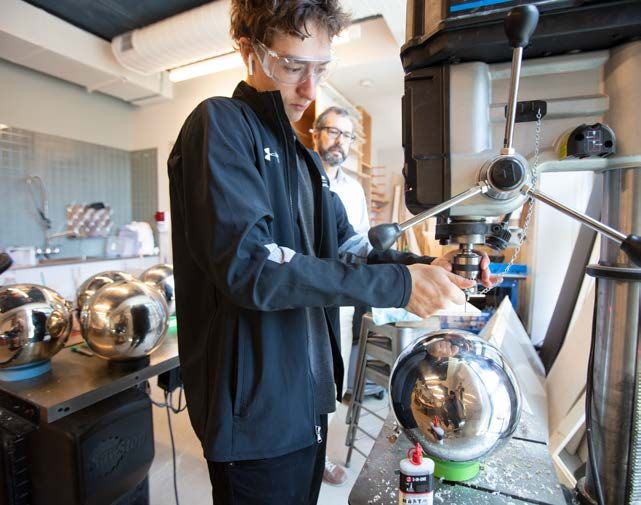
2
WELCOME       Welcome to the New York campus of Avenues: The World School, a 15-grade independent school located in the
              Chelsea neighborhood of Manhattan, adjacent to the High Line park. Since opening in 2012, Avenues New York
              has grown its student body from 740 students to more than 1,700 in 2020, and has expanded to offer Small
              World, an innovative program for 2-year-olds. Students from our first five graduating classes are studying at many
              of the finest educational institutions in the world and are well on their way to becoming, in the words of our
              mission statement, “architects of lives that transcend the ordinary.”
              Avenues is proud to operate as one school with many interconnected campuses around the world. In fall 2018,
              Avenues São Paulo opened with more than 830 attending during the first year. One year later, Avenues Shenzhen
              opened serving students from the ages of 2 to 6, with the aim of expanding to serve students through 12th grade
              in coming years. With the launch of Avenues Online in 2019, an Avenues education became available to students
              wherever there is an internet connection. Avenues is currently developing campuses in Silicon Valley, Shanghai
              and Miami, with plans to open additional campuses in Asia, Europe and North America in the coming years.
              For more on Avenues around the world, see page 32.
              We understand that choosing a school is one of the most important decisions in a parent’s life, and we want you
              to have all the information you need to consider whether Avenues is right for your family. Contained in this book
              are augmented reality experiences intended to convey Avenues’ DNA—our mission, vision and approach—as
              vividly as possible. We warmly invite you to keep in touch as you consider Avenues and look forward to getting
              to know you better.
              Welcome to A New School of Thought. We’re so glad you’re here.

WHY AVENUES   We believe that there are many reasons to choose Avenues: The World School; two things in particular, however,
              make Avenues truly distinct.
              Avenues’ innovative and rigorous curriculum continues to be shaped by expert faculty with support from our
              in-house research and development team. Some of the unique programs that we have developed since opening
              in 2012, and that you will learn about in this book, include the World Course, High Intensity Practice, the Mastery
              Program, Avenues Mastery Academies and the Avenues World Elements. Language immersion, offered in either
              Chinese or Spanish, is a core part of an Avenues education from nursery to 5th grade, cultivating students who
              are truly proficient in a second language by the time they enter the middle grades.
              As one school with many campuses, Avenues is a highly integrated global learning community, connected and
              supported by a common vision, a shared curriculum, the same admissions standards, collective professional
              development of its faculty and best-in-class facilities. Our global admissions policy means that a student admitted
              to one campus is admitted to all.

                                                                                                                                    3
DIFFERENT PHOTO?

4
WELCOME,          Our community values are deceptively simple: three small words that we hear all the time. But at Avenues,
SAFETY, RESPECT   these values run deep, and they permeate every aspect of school life, from the way we treat each other and our
                  neighbors in Chelsea to the social-emotional learning that happens in our classrooms. We talk about their
ABOUT THE         significance on campus frequently, and while these words take on different connotations in each new situation
AVENUES
                  we find ourselves in, their core meaning remains firm:
COMMUNITY
                  Welcome means that we behave inclusively, making members of the school community and guests feel comfortable
                  and at home.
                  Safety means that every student, teacher, faculty member and visitor should work to keep one another safe—
                  physically as well as in other ways—at all times.
                  Respect means that all members of the Avenues community regard one another as partners in a common
                  enterprise, recognizing each person’s dignity, worth and contribution.

                                                                                     “In our mission statement, we promise to graduate
                                                                                     students who are at “ease beyond their borders”;
                                                                                     that is, students who have the cultural competencies
                                                                                     necessary to engage with and serve in communities
                                                                                     other than their own. Whether those borders are
                                                                                     defined by race, culture, physical ability, socio-
                                                                                     economic background or other measures of identity,
                                                                                     Avenues equips our students to connect across
                                                                                     differences and embrace access for all—both in and
                                                                                     out of the classroom.”

                                                                                     Kym Ward Gaffney, Global Director of Diversity,
                                                                                     Equity and Inclusion

                                                                                                                                            5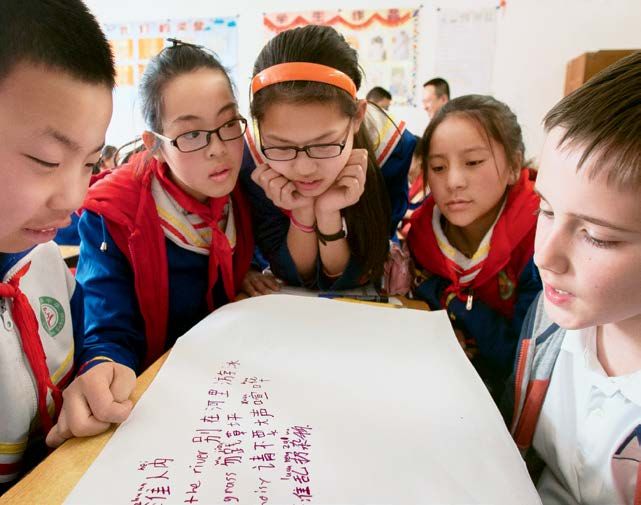
AVENUES LEARNING   Here, we present the distinguishing differences of an Avenues education—the learning experiences that define
    EXPERIENCES        a child’s journey through Avenues, whether it begins in Small World (2-year-olds), the Early Learning Center
                       (comprising nursery, pre-kindergarten and kindergarten), the Lower Division (1st–5th grade) or the Upper Division
                       (6th–12th grade). These experiences underpin the Avenues World Elements, our unique curricular system that lays
                       out the essential and enduring learning outcomes for Avenues graduates around the world. The full table of
                       Avenues World Elements can be viewed on page 31.
                       In this book, we’re using augmented reality technology to bring these core learning experiences to life. After
                       downloading the AvenuesAR app, you’ll be able to use your smartphone or tablet to see our campuses and step
                       inside our classrooms; meet our students and faculty; and experience the defining features of an Avenues
                       education for yourself.

                       EXPERIENCING AUGMENTED REALITY

                       STEP ONE         Download the AvenuesAR app to your smartphone from the App Store.

                       STEP TWO         Place the book flat on a table or desk.
                       		               The AR experience has been designed to be viewed from
                       		               a seated position.

                       STEP THREE       Open the AvenuesAR app and point at any page with the camera icon. Watch the pages
                       		               come to life in augmented reality on your smartphone’s screen. Enjoy!

6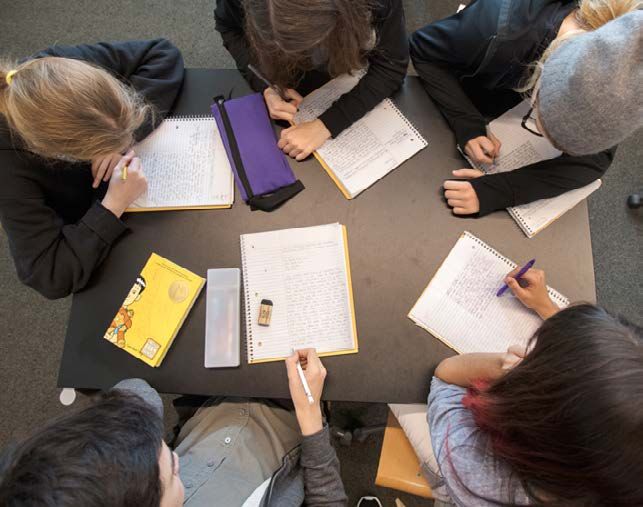
1                              2                              3

                                       X
                                      Exchange
                                                                   Hi
                                                                  High Intensity
                                                                                                  Im
                                                                                                   Immersion
                                                                     Practice

                               E 1 2 3 4 5 6 7 8 9 10 11 12   E 1 2 3 4 5 6 7 8 9 10 11 12   E 1 2 3 4 5 6 7 8 9 10 11 12

4                              5                              6                              7

        Ir
         Inquiry
                                      Is
                                   Interdisciplinary
                                                                    M Mastery
                                                                                                  Mt
                                                                                                   Mentorship
                                        Studies

E 1 2 3 4 5 6 7 8 9 10 11 12   E 1 2 3 4 5 6 7 8 9 10 11 12   E 1 2 3 4 5 6 7 8 9 10 11 12   E 1 2 3 4 5 6 7 8 9 10 11 12

8                              9                              10                             11

        P Play
                                     PrProjects
                                                                  Se  Service
                                                                                                  Sa
                                                                                                  Study Abroad

E 1 2 3 4 5 6 7 8 9 10 11 12   E 1 2 3 4 5 6 7 8 9 10 11 12   E 1 2 3 4 5 6 7 8 9 10 11 12   E 1 2 3 4 5 6 7 8 9 10 11 12

                                                                                                                            7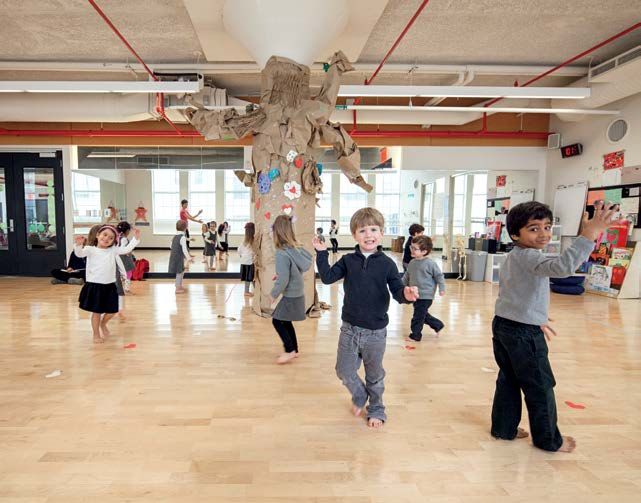
1                              What students know is important to us, but we care even more about what they can do with their knowledge—

           X
                                   how they evaluate information, question assumptions and solve problems. By extension, we value the ability to
                                   formulate incisive questions and evaluate multiple answers over the memorization of content. That is why in
                                   Avenues’ Upper Division classrooms, students learn through dialogue—the exchange and weighing of perspec-
                                   tives on a particular text, math problem or global issue.
                                   Exchange works like this: instead of sitting in rows, students sit at a round table, so they can make eye contact
                                   with one another. Instead of standing at the front, their teacher sits shoulder-to-shoulder with students as part of
          Exchange                 the circle and guides the discussion by asking incisive questions. Students respond, then follow up by asking
                                   their own questions. Wrong answers are not penalized; instead, their inaccuracy is revealed through further
                                   questioning. Every student is a visible part of the discussion and each is encouraged to speak. It’s a beguilingly
    E 1 2 3 4 5 6 7 8 9 10 11 12   simple setup that yields profound results.

                                   In discussion-based learning, the teacher challenges
                                   students to formulate and evaluate the answers to
                                   open-ended questions themselves. Whether the class
                                   is discussing a literary text or debating a contemporary
                                   world issue, this approach cultivates articulate public
                                   speakers and careful listeners who are able to present
                                   their opinions with extraordinary poise.

                                                                                                            “Avenues students know what it means to
                                                                                                            have a productive discussion. It’s this level of
                                                                                                            empathy and understanding that you don’t
                                                                                                            see anywhere else. There is not one person
                                                                                                            in my grade that I would not call an eloquent
                                                                                                            speaker and a good listener.”

                                                                                                            Olivia, Class of 2020 (currently attending
                                                                                                            the University of Chicago)

8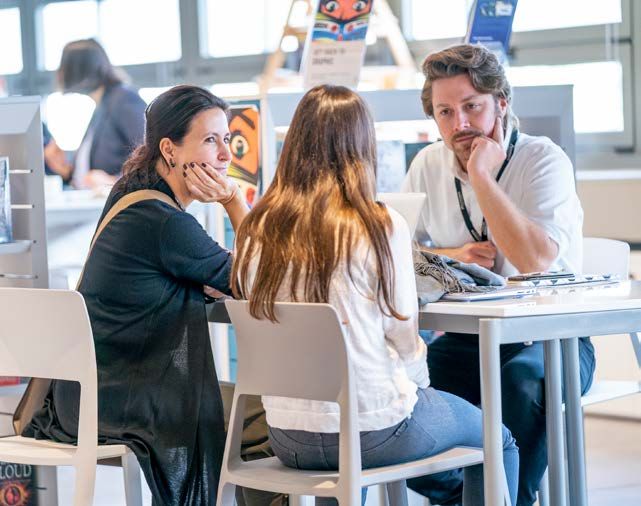
9
2                              We embrace the idea that the best way to cultivate lifelong skills is to spend a lot of time practicing with the right

         Hi
                                    kind of guidance and coaching. To that end, we developed the High Intensity Practice (HIP) program for students
                                    in the Upper Division. By practicing often and over a number of years, students develop a set of thinking skills
                                    related to the brain’s key executive functions: working memory, cognitive flexibility and inhibitory control
                                    (executive function is often likened to the air traffic control system of the brain). In writing sessions, students are
                                    given 20 minutes to write, uninterrupted and in silence, on a variety of prompts. In math and coding sessions,
                                    students spend the same amount of time solving problems in small groups. In these short bursts of creative and
                                    analytical freedom, students cultivate essential thinking skills—mental agility, empathy, creativity and critical
       High Intensity
                                    thinking—through persistent practice. As a regular part of the Upper Division schedule, HIP Thinking builds the
          Practice
                                    intellectual “muscle memory” that will enable students to unleash their creativity while staying focused—in college
                                    and beyond.
     E 1 2 3 4 5 6 7 8 9 10 11 12

                                                                                                              “I always tell students that one of the
                                                                                                              foundational goals of HIP is self-knowledge.
                                                                                                              We want them to come out of the experience
                                                                                                              with a strong sense of their strengths as thinkers
                                                                                                              and how they can use those strengths in every
                                                                                                              aspect of their lives.”

                                                                                                              —Brady Smith, High Intensity Practice (HIP)
                                                                                                              Thinking Instructor

10
11
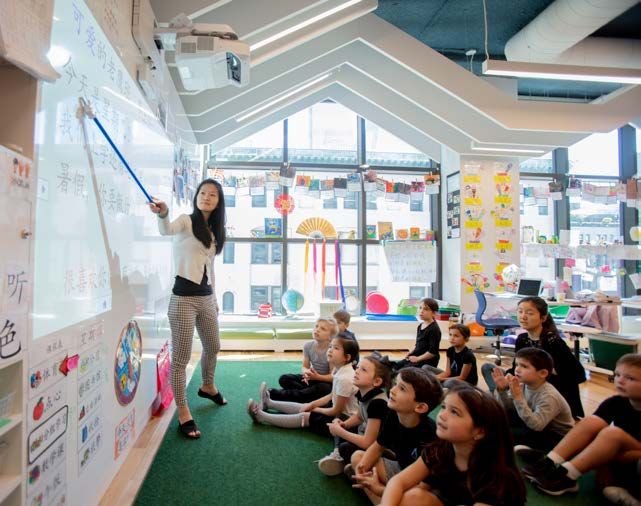
3                              At Avenues, learning a second language is more than an academic pursuit; it is a daily practice that transforms the

       Im
                                    way students see and think about the world. We don’t teach Chinese or Spanish; we teach in Chinese or Spanish.
                                    From nursery through 5th grade, students spend 50% of their time learning in English and 50% learning in a second
                                    language: one day in English, one day in Chinese or Spanish, and so on. In the Small World program for 2-year-olds,
                                    children are exposed to all three languages, in preparation for the beginning of formal immersion in nursery.
                                    Knowing multiple languages opens up untold cultural, intellectual and professional pathways through the world.
                                    It also literally opens a child’s mind: multilingual education activates and expands parts of the brain untapped by
          Immersion                 monolingual study. Research shows that those who speak multiple languages benefit from improved executive
                                    functioning, stronger memory and more flexible thinking.
                                    In 6th grade, students transition from the immersion program into intensive study of their chosen language, which
     E 1 2 3 4 5 6 7 8 9 10 11 12   provides one 90-minute class every other day augmented by electives, clubs and international programs such as
                                    Global Journeys (see page 28) and Avenues Mastery Academy (see page 32). Students entering the Upper
                                    Division are assessed for proficiency in either Mandarin or Spanish; introductory courses are offered for those with
                                    no prior experience.

                                                                                                             “Think of learning a language like learning
                                                                                                             to swim. Traditional language instruction is
                                                                                                             like practicing the strokes while standing on
                                                                                                             the shore, whereas immersion is like getting
                                                                                                             into the water and actually moving your limbs.
                                                                                                             The water is the language environment that
                                                                                                             we create for our students, where their learning
                                                                                                             is direct and intuitive.”

                                                                                                             Angela Xu, Head of Avenues Shenzhen
                                                                                                             Kindergarten

12
13
4                              Inquiry is the process whereby students expand their knowledge, discover solutions to problems, uncover

           Ir
                                    inconsistencies and answer questions. It is fundamental to the learning and the growth of human civilization, and
                                    it happens in every classroom and at every grade level at Avenues.
                                    An example of inquiry in action is the Avenues World Course, our interdisciplinary global studies program that
                                    spirals from nursery to 12th grade. Adopting a global (rather than a Western-centric) perspective on the humanities
                                    and social studies, the course takes students on a 15-year journey across intellectual, cultural and geographical
                                    boundaries, structured around a series of questions that begin with the self and expand gradually to encompass
             Inquiry                cities, civilizations and the future of the planet. “Who am I?” leads to “What is community?” leads to “Why do
                                    civilizations rise and fall?” leads to “What kind of impact can I make on the world in my lifetime?” There are no
                                    easy answers to these questions; guiding students to find their own is one of the ways we prepare them to live
     E 1 2 3 4 5 6 7 8 9 10 11 12   meaningful lives in a future we cannot imagine.

                                    In the Upper Division, inquiry often takes the form
                                    of solving “future problems,” requiring students
                                    to first inquire into the current state of a given
                                    issue and then to extrapolate from their learning
                                    to find a solution. Students are often required to
                                    share and defend their answers with peers in a
                                    discussion-based class.

14
15
5                              By encouraging students to think across, rather than within, traditional fields of study, interdisciplinary

           Is
                                    study invites them to practice the expansive thinking necessary to formulate solutions to the world’s most
                                    pressing problems.
                                    In our mission statement, we pledge to graduate students who are “accomplished in the academic skills one
                                    would expect,” and interdisciplinary studies elevate—rather than replace—those skills and disciplines at Avenues.
                                    In one recent example, upper grades students designed, constructed and installed a self-sustaining “tiny house”
                                    in Black Rock Forest in upstate New York, requiring inputs from math, science, design, engineering and art. In
                                    another example, Lower Division students designed their own solutions to a particular problem and pitched them
     Interdisciplinary
                                    at the annual Invention Convention—they were so focused on their projects that only later did they realize they
          Studies
                                    had been doing math, science and art all along. The Upper Division schedule takes this approach to the next level,
                                    with alternating days dedicated to interdisciplinary study, during which students complete projects incorporating
     E 1 2 3 4 5 6 7 8 9 10 11 12
                                    art and design, World Course, English and science—all designed by collaborative faculty teams.

                                    In the Lower Division, students bring their budding
                                    research skills to bear on studies of ancient
                                    civilizations such as Egypt, China, the Mayans and
                                    the Aztecs. In these inquiry-driven, interdisciplinary
                                    units, students are challenged to formulate questions,
                                    gather information, present their conclusions to their
                                    peers and finally, evaluate and reflect on their own
                                    process.

                                                                                                           “There will always be a role for specialists. But
                                                                                                           the biggest challenges facing the world today
                                                                                                           call for thinkers who can pull together insights
                                                                                                           and innovation from different disciplines.”

                                                                                                           Ty Tingley, Founding Co-Head of School,
                                                                                                           Avenues New York and Chief Academic
                                                                                                           Officer Emeritus

16
17
6                              We pledge to graduate students who are confident because they excel in a particular passion, and we provide

          M
                                    students with the space, time and resources to first identify and then pursue that passion in depth and over
                                    multiple years. As an Upper Division learning experience (6th–12th grade), Mastery places control directly in the
                                    hands of students, facilitating autonomy, providing access to mentors and resources, and striving to help students
                                    connect their work with a larger sense of purpose.
                                    Mastery projects have ranged from engineering (e.g. the design and construction of small scale drones) to the arts
                                    (e.g. a self-published book of fashion photography) to law (e.g. the creation of the first high school law review in
            Mastery                 the United States) to science (e.g. using AI for the early detection of cancer) and everything in between. Indeed,
                                    the possibilities are limited only by our students’ imaginations. The Mastery experience is profoundly useful—it
                                    might anchor a student’s college essay or inspire a future career—but its heart is intrinsic reward: to inspire a
     E 1 2 3 4 5 6 7 8 9 10 11 12   world of happier, more meaningful lives through the beautiful engagement of one’s passions.

                                    Isadora checks the tension on the student built
                                    hangprinter, an open source 3D printer that is
                                    suspended from the corners of the room. The
                                    Mastery Program is an opportunity for students
                                    to pursue a field that is of particular interest to
                                    them while receiving providing support and
                                    guidance from a teacher mentor.
                                                                                                           “Whenever I see students working at these
                                                                                                           advanced levels in Mastery, I inevitably begin
                                                                                                           to wonder, ‘where are the limits to this type
                                                                                                           of work?’ The answer is, we haven’t found
                                                                                                           them yet. As educators, we have to constantly
                                                                                                           ask ourselves what we can do to push the
                                                                                                           learning, the projects and the experience even
                                                                                                           further next year. We have an obligation to
                                                                                                           seek those limits with our students.”

                                                                                                           Mark Gutkowski, Director of Mastery

18
19
7                              We believe that students do best in school when they feel known by and closely connected to adults who provide

      Mt
                                    advice and mentorship. The Upper Division deans program is our expression of that belief. The deans at Avenues
                                    are full-time mentors whose sole responsibility is the social-emotional well-being and academic success of their
                                    students. Deans develop close relationships with their students by meeting regularly with them, both one-on-one
                                    and in small groups, over multiple years.
                                    We are serious about guiding our students towards postsecondary environments in which they will thrive.
                                    Accordingly, our approach to college counseling is to help a student identify the best fit based on their aspirations
         Mentorship                 and passions. With their holistic understanding of their mentees and encyclopedic knowledge of institutions of
                                    higher education, deans are uniquely placed to guide students through the admissions process. More than 260
                                    students from Avenues’ first five graduating classes are studying at a distinctive array of colleges and universities
                                    around the world. Our students’ choices reflect their diverse interests and aspirations; most frequently chosen
     E 1 2 3 4 5 6 7 8 9 10 11 12
                                    schools include Barnard, the University of Chicago, Cornell, New York University, the University of Pennsylvania,
                                    Skidmore, the University of Southern California and Stanford. To view a full list of colleges attended by Avenues
                                    students, please turn to the back cover.

                                                                                                            “Soon, I’ll be starting college in another city,
                                                                                                            a plane journey away. Although I am slightly
                                                                                                            terrified, I know that the education I have
                                                                                                            received at Avenues will guide me throughout
                                                                                                            my college career. Yes, I’m talking about the
                                                                                                            calculus skills I got in math, but also the
                                                                                                            emotional availability I learned through
                                                                                                            drama, the collaboration skills I gained by
                                                                                                            practicing design thinking and the willingness
                                                                                                            to question everything that I developed
                                                                                                            through exchange.”

                                                                                                            Sabrina, Class of 2017

20
21
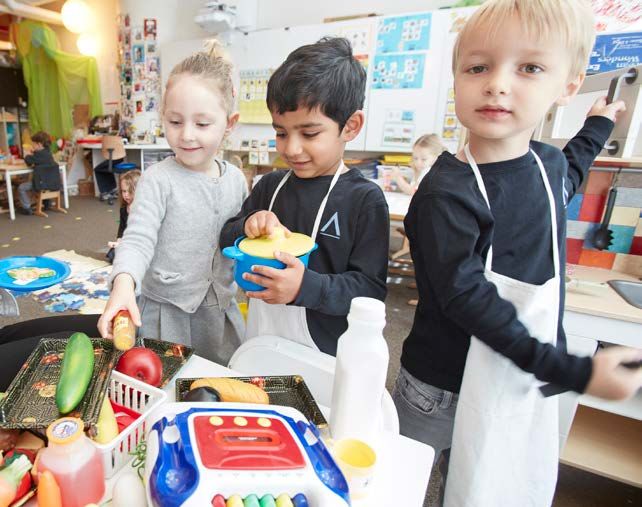
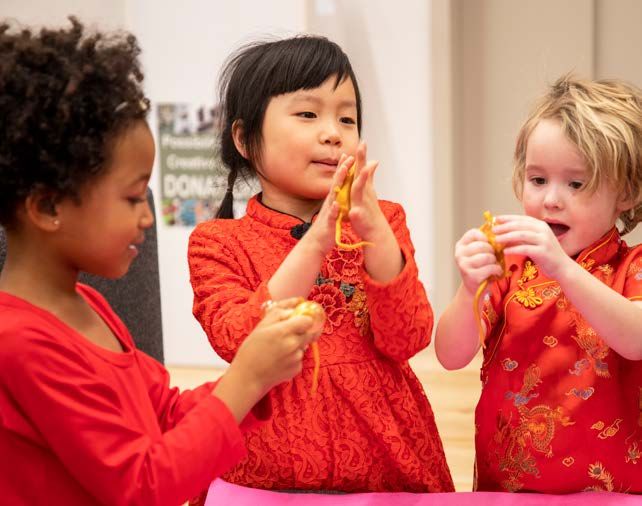
8 Play is the medium through which students learn about themselves and the world, and in Small World—a program
P
for 2-year-olds—and the Early Learning Center, it is prioritized as a key to child development. Avenues’ early
childhood curriculum is designed to promote competency and the mastery of developmental skills through a
variety of multi-sensory experiences, using open-ended materials that ignite children’s imaginations. Whether
students are playing with wooden blocks and sand or solving math problems with counters, teachers act as
guides, seeking to stimulate their natural curiosity and ensure that they feel challenged but not frustrated. Tactile
play develops fine and gross motor skills, physical play stimulates growth and make-believe play accelerates
social-emotional learning. Most importantly for us, all kinds of play foster a love of learning that young children
Play
will carry with them as they move upwards through school.
E 1 2 3 4 5 6 7 8 9 10 11 12
The Early Learning Center schedule includes daily
structured play sessions in which students move
between stations, encountering various kinds of
open-ended materials that trigger curiosity and
promote the development of key skills.
“Children play naturally. But there’s a difference
between just play and playful learning. In our
program, play is facilitated by teachers who
understand that difference and guide children
to acquire certain skills through play. It’s almost
like the children don’t even know they’re learning
because they’re having so much fun, and the
fun is what keeps them engaged.”
Nancy Schulman, Head of the Early Learning
Center
2223
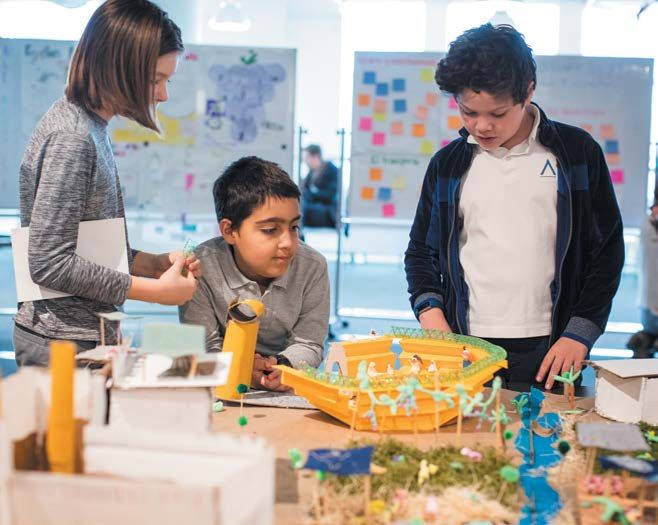
9                              Project-based learning challenges students not only to understand, but also to apply complex ideas and discrete

         Pr
                                    skills in innovative, tangible and rigorous ways. It is one of the most powerful tools that we have at our disposal for
                                    cultivating real-world problem solvers and confident collaborators, and in the process, for transcending the
                                    conventional definition of schooling.
                                    Across every subject area and at all grade levels, projects are thoughtfully designed to send students deep into a
                                    particular topic and apply themselves in ways that establish enduring knowledge and skills. In 1st grade, for
                                    example, students spent a whole year studying the role of parks in communities before embarking on group
                                    projects to design their own playgrounds. Meanwhile, after spending 12 weeks writing research papers on the
            Projects
                                    conflict in Syria, a group of upper grades students designed and executed a United Nations-style symposium
                                    featuring a roster of outside experts.

     E 1 2 3 4 5 6 7 8 9 10 11 12   By making students fully accountable for their work, project-based learning builds persistence, communication
                                    skills and self-awareness—in other words, it builds character. Remarkable things happen when young people are
                                    given a stake in their own learning—something we witness firsthand every day at Avenues.

                                    Dylan, class of 2021, works on the production of a
                                    giant Newton’s cradle, a device that demonstrates
                                    conservation of momentum and energy using a series
                                    of swinging spheres. Dylan began this long-term
                                    project as part of the Mastery Learning System, an
                                    extension of the Mastery Program that provides
                                    additional time and resources for students to pursue
                                    their passions. After completing the project next year,                  “It’s really important to go through the
                                    Dylan plans to install the cradle on campus.                             process of making something. Pedagogically,
                                                                                                             there’s no replacement for that authentic
                                                                                                             moment where a student realizes, ‘I’m stuck.’
                                                                                                             The more opportunities students have to do
                                                                                                             that, the more they will develop tools and
                                                                                                             skills to cope with it and find a solution.”

                                                                                                             Katy Garnier, Avenues iLab Director

24
25
10                             We are committed to helping students get out of their bubbles—whether socio-economic, cultural or linguistic—not

       Se
                                    only because it’s the right thing to do but also, because young people learn and grow in extraordinary ways when
                                    they do.
                                    In the Early Learning Center, our youngest students participate in an annual series of book, clothing and food drives
                                    supported by the Avenues Parent Association. Lower Division students might use their second language to get to
                                    know “grandparent” language buddies at the Hudson Guild’s Senior Center, while middle grades students dedicate
                                    entire days to service around the city. The Social Innovation Program and Mastery Program continue to integrate
                                    service into the curriculum from 6th grade on, connecting students to community partners and challenging them to
            Service
                                    solve real-world problems through design thinking. These deep and sustained forms of engagement are a crucial
                                    part of our effort to cultivate the next generation of courageous, compassionate and enterprising global citizens.

     E 1 2 3 4 5 6 7 8 9 10 11 12   In spring 2020, service was at the heart of our community’s response to COVID-19. Faculty, students and families
                                    came together to sew and donate hundreds of face masks, 3-D print personal protective equipment from our iLab,
                                    organize food drives, assemble care packages for families living in temporary housing, and offer translation services
                                    for check-ins with local Mandarin, Spanish, and Cantonese-speaking seniors—among other initiatives.

                                    For several weeks, the Avenues band performed jazz
                                    and funk at Holy Apostles Soup Kitchen in Chelsea while
                                    dozens of New Yorkers in need enjoyed a hot meal.                      “Community engagement gives students the
                                                                                                           chance to apply their academic experience
                                                                                                           and passion for social impact to the real world
                                                                                                           while building meaningful relationships within
                                                                                                           our neighborhood, city and beyond. It’s a
                                                                                                           powerful way of helping students grow “at
                                                                                                           ease beyond their borders,” in the words of
                                                                                                           our mission statement.”

                                                                                                           Morgan Jones, Director of Community
                                                                                                           Engagement & Partnerships

26
27
11                             Avenues’ international programs are designed to push students beyond their comfort zones, allowing them to

       Sa
                                    experience the world from new perspectives while having fun and deepening their knowledge about a particular
                                    topic. By making authentic and personal connections to other cultures, students expand not only their world-
                                    views, but also their own definitions of themselves.
                                    Avenues’ international programs include Global Journeys programs, campus exchanges and the Avenues Mastery
                                    Academy (see page 32). Designed by Avenues faculty, Global Journeys programs are rooted in the curriculum and
                                    structured around inquiry into a particular topic (climate change in New Zealand; art history in Italy; astronomy in
       Study Abroad                 Hawaii, for example). All programs prioritize ethical and sustainable travel, social impact and service, and building
                                    cooperative, reciprocal relationships with host communities.
                                    Study abroad is in the DNA of Avenues. With campuses in São Paulo, Brazil, and Shenzhen, China, students
     E 1 2 3 4 5 6 7 8 9 10 11 12   at our New York campus have opportunities to study on two continents and collaborate with their peers on
                                    campus exchanges.

                                    Places We’ve Been       Argentina          Chile              Hawaii       The Netherlands         Spain
                                                            Belize             China              India        New Zealand             Uruguay
                                                            Botswana           Ecuador            Italy        Puerto Rico
                                                            Brazil             Guatemala          Japan        South Africa

                                                                                                            “I was away from home, in a foreign country,
                                                                                                            with a whole new group of friends, and so I
                                                                                                            really got to grow as a person. I also figured
                                                                                                            out what I love. I discovered a passion for
                                                                                                            climate change research, which is what I plan
                                                                                                            to study in college.”

                                                                                                            Sophia, Class of 2019
                                                                                                            (currently attending Cornell University)

28
29
30
AVENUES          Developed by our in-house research and development team, the Avenues World Elements define and describes the
WORLD ELEMENTS   essential and enduring learning outcomes for graduates of Avenues: The World School across all of our campuses. As
                 a living document, the table will be updated every two years, incorporating insights from our new campuses around
                 the world and our own research.
                 For example, the first Avenues World Element is empathy: the ability to recognize, understand and experience
                 the feelings of others. Empathy is often considered a building block of emotional intelligence. Empathy may have
                 limits on its own, but when combined with other elements like persistence, beliefs and ethics, the result can be
                 direct moral action and community engagement. Empathy can also be combined with creativity, design and
                 entrepreneurship to help a student solve problems in a more user-centered manner. In these ways, curricular elements
                 can be combined to form a wide variety of programmatic “molecules”—courses, projects and approaches—within
                 the curriculum, that form the very building blocks of the thought and behavior of an Avenues student.

                                                                                              Thinking
                                                         Avenues
                                                         number                               Character
                                                                                              Well-being
                                                         Element                              Understanding
                                                          symbol                              Purpose
                                                                                              Interconnections
                                                         Element                              Origins
                                                            name
                                                                                              Nature
                                                                                              Innovation
                                                          Grade
                                                          levels   T   K    5     8     12    Investigation

                                                                       Learning Experiences

                                                                                                                                        31
AVENUES AROUND São Paulo. In August 2018, Avenues opened its second campus in São Paulo, with more than 830 students enrolled
THE WORLD by the end of its first year of operation—a figure that has grown to more than 1,020 as of fall 2019. Avenues São Paulo
is located in the Cidade Jardim neighborhood in a 40,000 square meter, state-of-the-art educational facility designed
around Avenues’ core principles of sustainability, innovation and student-centered pedagogy.
Avenues São Paulo is built to accommodate up to 2,100 students from toddler to 12th grade. At all grade levels, the
merging of the Avenues global curriculum and the Brazilian national curriculum yields a rich, rigorous program that
is at once global and local in focus.
Shenzhen. Avenues Shenzhen is the newest campus of Avenues: The World School, located in the heart of China’s
booming southern metropolis. The campus opened in fall 2019 with an early childhood program serving students
in Small World (2-year-olds), nursery, pre-kindergarten and kindergarten, with the aim of expanding over time to
serve students through 12th grade. Suffused with natural light, surrounded by greenery and seamlessly integrating
the most advanced educational technology, the campus is a haven for learning in the heart of one of China’s most
innovative cities.
In 2018, the Avenues Shenzhen Learning Innovation Center opened in Nanshan District. Located in Sunmax
Technology Park, the Center showcases innovations in education, hosts events for students and families and
provides a venue for the Avenues Mastery Academy in Innovation and Making. The Center also houses the Small
World program for 2-year-olds.
Avenues Online. Avenues Online is the virtual campus of Avenues: The World School, supporting 2-year-olds
through grade 12. Developed by Avenues’ research and development team, Avenues Online uses a proprietary
learning platform to provide an Avenues education to students whose circumstances have placed them in diverse
global locations. So far, students have attended Avenues Online from locations such as Lima, Peru; Seoul, South
Korea and Madrid, Spain.
Future Campus Avenues Mastery Academy. Following a successful pilot, the second iteration of the Avenues Mastery Academy was
Development held in spring 2019 at the Avenues Shenzhen Learning Innovation Center. This time, upper grades students from our
Avenues is actively New York campus joined peers from São Paulo and local Chinese students for a deep dive into innovation and
developing campuses making in Shenzhen, China. In fall 2021, Avenues Mastery Academy plans to expand to provide a new kind of
in Silicon Valley, academic experience for students in grades 10-12: a specialized three-year program, based in Shenzhen, to foster
Shanghai and Miami the inventors and innovators of the future.
and plans, in coming The Avenues Mastery Academy was inspired by 15th-century Renaissance workshops and the long tradition of
years, to open polymath masters such as Leonardo da Vinci: an academic apprentice-learning model in which high school students
additional campuses work side-by-side with master instructors and expert practitioners to complete ambitious, real-world projects.
in Asia, Europe and
North America.
32Avenues São Paulo
Avenues Shenzhen
33“Student life at Avenues is defined by the sheer amount of learning that happens outside
the classroom. From spending a month in China building my own cell phone, to interning
with a State Senator, to representing the school at the National Association of Independent
Schools’ Student Diversity Leadership Conference, Avenues has given me a wide range of
opportunities that have inspired new passions and perspectives.”
Nicole, Class of 2020 (currently attending Stanford University)
34Avenues College Matriculation The Class of 2020 We proudly celebrate our 57 graduating seniors who are heading off to 40 different colleges and universities. If more than one alumni is attending an institution, the number attending is indicated in parenthesis. American University Rice University Bates College Sarah Lawrence College Boston University (3) Skidmore College (2) Brown University Stanford University (2) College of William & Mary SUNY Stony Brook Colorado College Swarthmore College Columbia University The New School Cornell University (3) Tufts University Emerson College Tulane University (2) Emory University University of Chicago Georgetown University University of Miami (2) Howard University University of Michigan-Ann Arbor Johns Hopkins University University of North Carolina-Chapel Hill Loyola Marymount University University of Pennsylvania (2) Loyola University New Orleans University of Southern California Morehouse College University of St. Andrew’s (Scotland) (2) New York University (4) University of Virginia Northwestern University (3) Vanderbilt University Parsons School of Design Wesleyan University (3) Rensselaer Polytechnic Institute Yale University
Avenues New York            avenues_org
259 Tenth Avenue
New York, NY 10001-7020     avenuestheworldschool
646.664.0800
admissions-ny@avenues.org   avenuesdotorg
www.avenues.org/nyc
                            avenuesed
You can also read


