Accelerating digital transformation in challenging times - Advocacy toolkit - World Telecommunication & Information Society Day 17 May 2021 - ITU
←
→
Page content transcription
If your browser does not render page correctly, please read the page content below

International Telecommunication Union

    Accelerating digital
    transformation in
    challenging times
    Advocacy toolkit

World Telecommunication
& Information Society Day
17 May 2021
1   WTISD 2021 | Advocacy toolkit

Accelerating                  The information society
                          has emerged as one of the
digital                   main lines of defence against
transformation in         COVID‑19. In 2021, ITU will use
                          World Telecommunication and
challenging times         Information Society Day to unite
                          the world in pursuit of digital
                          transformation in every field
                          of business and all aspects of
                          life. We would like to hear your
                          success stories, but also about your
                          challenges, and about the lessons
                          we could learn to prepare for
                          challenging times in the future.

                          Houlin Zhao, ITU Secretary-General

                            World Telecommunication
                            & Information Society Day
                            17 May 2021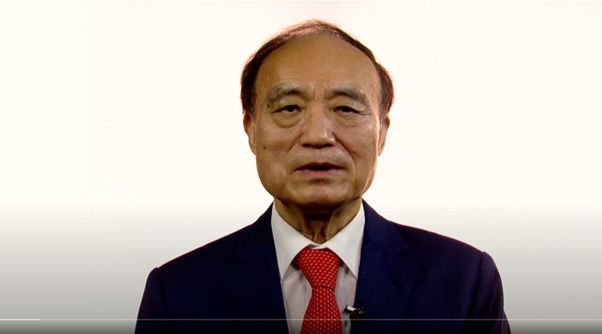
2   WTISD 2021 | Advocacy toolkit

Contents

               3     Our focus: Digital transformation in challenging times

               4     For you: Campaign materials

               5     Get inspired: Stories that are moving the cursor

               6     Our common goals: The Connect 2030 Agenda

               11    Why care? Billions of people still lack the benefits of
                     Internet access

               12    What’s next? Everyone has a part to play

               14    Why celebrate?
3 WTISD 2021 | Advocacy toolkit
Our focus: The COVID‑19 crisis has not only highlighted the critical
role of information and communication technologies
Digital transformation (ICTs) for the continued functioning of societies. It has
also brought to the fore startling digital inequalities, both
in challenging times between and within countries.
ITU members and other stakeholders have stepped
up with essential services, saving lives and sustaining
economies. Governments and the private sector alike
have demonstrated remarkable resilience.
At the same time, the COVID‑19 pandemic has
highlighted the urgency of accelerating digital
transformation. This means advancing the goals and
targets of ITU’s Connect 2030 Agenda and leaving no
one behind.
World Telecommunication and Information Society Day
(WTISD) takes place on 17 May, ITU’s birthday. This year’s
occasion, WTISD 2021, focuses on a timely theme:
Accelerating digital transformation in challenging times.
Throughout 2021, all of us here at the ITU Secretariat are
aiming to inspire, guide and mobilize the transformation.
We need you — ITU members and partners, other
stakeholders and independent media professionals — to
do this with us.
Technology For Good # 9
Digital transformation for
the world4 WTISD 2021 | Advocacy toolkit
For you: To help you celebrate ahead of 17 May and beyond,
we are putting together multimedia, audio and visual
Campaign materials materials which are updated on ITU’s WTISD campaign
site as they materialize.
We will also be communicating via our web, social media
and multimedia channels:
Twitter | Facebook | YouTube | Flickr | LinkedIn | Instagram
SoundCloud | Apple Podcasts | Spotify | Spreaker
MyITU beta | ITU News | ITU News Magazine
Make use of our #Connect2030 and
#DigitalTransformation hashtags.
Our 2021 campaign poster is available in ITU’s six official
languages: Arabic, Chinese, English, French, Russian
and Spanish.
We encourage you to share our materials with your own
networks, share your own materials with us, and join
conversations on issues related to the campaign.
World Telecommunication #DigitalTransformation
& Information Society Day #Connect2030
17 May 2021
Accelerating digital
transformation
in challenging times
World Telecommunication #DigitalTransformation
& Information Society Day #Connect2030
17 May 2021
Accelerating digital
transformation
in challenging times itu.int/wtisd
World Telecommunication #DigitalTransformation
& Information Society Day #Connect2030
17 May 2021
Accelerating digital
itu.int/wtisd
transformation
in challenging times
itu.int/wtisd5 WTISD 2021 | Advocacy toolkit
Get inspired: From Digital Transformation Centres in the Dominican
Republic to delivering life-saving information amid
Stories that are moving COVID‑19 in Niger to green digital responses
to COVID‑19 in Slovenia, digital technologies
the cursor are driving development and spurring socio-
economic transformation.
ITU reports regularly about digital transformation
initiatives around the world.
Check out the latest stories Search — My ITU
Digital transformation is about improving each citizen’s
experience and changing the way we do business.
It improves quality of life and enhances people’s
wellbeing, while ultimately aiming to meet United
Nations Sustainable Development Goals (SDGs). Factors
driving these changes range from increasingly diverse
technologies to new business models, aiming to deliver
excellence through services that are personalized,
paperless, cashless and mobile, as well as based on every
customer’s informed consent.6 WTISD 2021 | Advocacy toolkit
Our common ITU is united in connecting the world. Our Connect
2030 Agenda contributes to the UN Decade of Action to
goals: achieve the 2030 Agenda for Sustainable Development
and SDG9 in particular: Build resilient infrastructure,
The Connect 2030 promote inclusive and sustainable industrialization and
foster innovation.
Agenda
Digital technologies, and the work of ITU, are vital to
achieve all 17 SDGs.
ITU’s Connect 2030 Agenda includes key goals and
targets related to digital transformation.
Goal 1 Goal 2 Goal 3 Goal 4 Goal 5
Growth Inclusiveness Sustainability Innovation Partnership
Target 1.4 All countries should have a national digital agenda, policy,
All countries adopt a strategy, legislation or policy statement identifying and
digital agenda/strategy listing their national goals and objectives in relation to
digital transformation, and how to go about achieving it.
National policies can help set out a clear vision for
national infrastructure and connectivity. They can
establish clear principles and priorities, and help define
mechanisms for extending connectivity, while building
protection and online safeguards for more vulnerable
members of society.
Resources for target 1.4 here.7 WTISD 2021 | Advocacy toolkit
Target 1.7 Governments aiming for digital transformation need to
Population should be interacting start by delivering citizen-centric public services for all.
with government services online
While e‑government initiatives vary from country
to country, digital technologies consistently help to
modernize government and public services and vastly
improve the citizen experience.
In essence, countries engaging in digital transformation
aim to improve how to operate, how to deliver public
services, how to engage stakeholders better and how to
provide impactful citizen-centric solutions to all.
For example, online voter registration, birth registration
and passport applications are often carried out through
online access, speeding up application processes and
ensuring faster and more efficient services.
Resources for target 1.7 here.
Target 3.1 In this digital age, trust is everything. Cybersecurity is
Improve cybersecurity preparedness crucial to ensuring universal, trustworthy, and equitable
access to connectivity.
Yet cyberthreats and cyberattacks give rise to ever-
growing security challenges for both the public and
private sectors in all countries. These range from attacks
on individual targets to attacks on specific platforms and
actors, or generalized attacks that can transcend national
borders.
Enhancing cybersecurity and protecting critical
information infrastructures are essential to every nation’s
social and economic development. All countries should
have a national cybersecurity preparedness action plan,
legislation or policy statement in place, identifying and
listing their national goals and objectives in relation to
cybersecurity and cyberattacks, and how to go about
protecting national infrastructure and systems in the event
of cyberattack.
Resources for target 3.1 here.8 WTISD 2021 | Advocacy toolkit
Target 3.5 All countries should have a national action plan,
All countries should have a National framework, legislation or policy for emergency
Emergency Telecommunication Plan telecommunication preparedness, identifying and
as part of their national and local listing their national goals and objectives in relation
disaster risk reduction strategies to natural disasters and emergencies, and how to go
about protecting populations, national infrastructure and
systems in the event of natural disaster.
Population growth, rapid urbanization and climate
change are making a growing number of communities
and people around the world more vulnerable to extreme
weather events and natural disasters that pose risks of
death, destruction, displacement, injury and damage to
people, communities and livelihoods, as well as critical
telecommunication/ICT infrastructure.
Timely and effective information flow is important
for early warning and alerting and for the effective
coordination and articulation of response activities within
all stakeholders working in disaster management, from
first responders to senior officials.
Resources for target 3.5 here.9 WTISD 2021 | Advocacy toolkit
Target 4.1 All countries should have policies and strategies for ICT-
All countries should have policies/ centric innovation.
strategies fostering telecommunication/
ICT-centric innovation Today, innovation is being transformed by ICTs, big data
and AI. Innovation and learning can be either formal or
informal (e.g. incremental learning), while ’innovation
hubs’ play a large role in promoting the cross-fertilization
of ideas in the modern digital.
For example, the Radio Regulations established since the
first Radiotelegraph Convention in 1906 not only ensure
that radiocommunication services can coexist, but also
provide the stability required to attract investments and
enable the exponential growth of telecommunications
and ICTs. They provide a solid foundation to support
a variety of emerging radio systems, applications and
technologies that revolutionize the digital economy.
These innovations positively impact the lives of billions of
people around the world through the creation of a digital
landscape for sustainable growth and development.
They help ensure more people across the world are
connected and able to benefit from the widening range
of digital services offered via wireless communication.
Cooperation and partnerships between all stakeholders
are what allows us to come to common agreements that
are then adopted by countries throughout the world.
Meanwhile, ITU standards help to share innovation
worldwide. As the world becomes more connected,
the need to bring innovators together is greater than
ever. Collaboration is the key to develop international
standards that capture the latest breakthroughs for the
benefit of all.
Resources for target 4.1 here.10 WTISD 2021 | Advocacy toolkit
Target 5.1 In modern society, innovation can come from any
Increased effective partnerships with angle. Including new, and diverse stakeholders,
stakeholders and cooperation with and different points of view is a way to ensure
other organization and entities in the that social change is harnessed for the good, and
telecommunication/ICT environment that the most vulnerable members of society can
be protected. The need for partnerships among
different stakeholders was recognized in both
the Millennium Development Goals (MDGs) and
the Sustainable Development Goals (SDGs).
Forming effective, cross-sectoral partnerships
among different stakeholders is proving key
to addressing the critical challenges facing
humanity and the planet. ITU is committed to
ensuring that partnerships and cooperation are
more effective, as we address the challenges
facing us head-on.
Resources for target 5.1 here.11 WTISD 2021 | Advocacy toolkit
Why care? People who are connected can work from home,
obtain information and learning tools, and enhance
Billions of people still their businesses. They can be more productive at work,
connect with loved-ones remotely and make themselves
lack the benefits of better protected in emergencies.
Internet access When countries invest to bring people online,
everyone wins.
About 4 billion people, or just over half the world’s
population, were online by 2019. But the other 3.7 billion
people lacked Internet access and could not take
advantage of the digital revolution. Hundreds of millions
more have struggled with slow, costly, and unreliable
access, even in normal times.
Global Internet access, in %, 2019
Urban Rural
Female Male
households households
World 72 37.7 48.3 55.2
Africa 28 6.3 20.2 37.1
Arab States 74 38.4 47.3 61.3
Asia & Pacific 70.4 37 41.3 48.3
CIS 80.6 66.4 71.7 74.0
Europe 87.7 77.9 80.1 85.1
The Americas 74.4 49.9 77.0 76.3
Resources: ITU statistics, ITU facts and figures 2020.12 WTISD 2021 | Advocacy toolkit
What’s next? We must all work together to bring everyone, everywhere
online.
Everyone has a part Member States can:
to play
• Continue leveraging telecommunications/ICTs by
developing digital policies and strategies to adapt and
respond timely and effectively to different challenges
that may occur.
• Report national progress with special focus on
the targets that particularly contribute to digital
transformation in the framework of the Connect
2030 Agenda, by providing data and statistics, as
appropriate, as well as initiatives to be included in the
Connect 2030 Agenda microsite.
Sector Members, Associates and Academia can:
• Continue to facilitate cooperation and partnership in
areas such as innovation, infrastructure, investment
and capacity development to advance digital
transformation for all and achieve the Connect
2030 Agenda.
• Share their technology-driven strategies with the
world, considering the possible opportunities and/or
challenges of digital transformation, and how these
challenging times, such as the COVID‑19 pandemic,
can be used as an opportunity to connect all.
Media can:
• Tell stories about how digital transformation is
benefiting citizens, consumers and society.
• Hold governments accountable, highlighting the
strengths and weaknesses of current policies,
strategies and plans, identifying policy gaps and
describing new challenges to address amid the rapid
evolution of technologies.
• Tell exciting stories — through talk shows, interviews,
radio debates and social media campaigns — about
how governments, companies or people are making
a difference.13 WTISD 2021 | Advocacy toolkit
All stakeholders can:
• Identify a tangible problem — within your family, your
school, your university, your workplace, your network
or your community — and take action.
• Raise awareness of our key WTISD 2021
theme, Accelerating digital transformation in
challenging times.
• Reflect how ITU responds and adapts to new
challenges through ICTs.
• Enhance cooperation with governments, business
communities, United Nations bodies, civil society and
other stakeholders to accelerate digital transformation.
• Reinforce the importance of developing digital
strategies and other technology-driven initiatives.
• Share your story on social media to inspire others.
• Consider both the opportunities and the challenges
of digital transformation while seeking timely and
effective answers to broader global challenges.
• Share with ITU your expertise, guidelines, lessons
learned, success stories, case studies, good practices,
solutions, publications, and policies put in place to
better meet future challenging times.14 WTISD 2021 | Advocacy toolkit
Why celebrate? World Telecommunication and Information
Society Day (WTISD) has been celebrated
annually every 17 May since 1969 to mark the
founding of ITU and the signing of the first
International Telegraph Convention in 1865.
WTISD 2021 will take place virtually in the
framework of the World Summit on the
Information Society Forum 2021 (WSIS).
The event will address the importance of
enhancing collaboration and cooperation
across countries and sectors and showcase
how governments, companies and academia
can accelerate digital transformation through
telecommunication/ICT in and for future
challenging times.
Related events within the WSIS Forum
2021 will address digital transformation in
challenging times.
Register here for WSIS events.International
Telecommunication
Union
Place des Nations
CH-1211 Geneva 20
Switzerland
Published in Switzerland
Geneva, 2021
Photo credits: ShutterstockYou can also read


