Accommodation Sector Skills Summary - ServiceIQ
←
→
Page content transcription
If your browser does not render page correctly, please read the page content below
Accommodation Sector
Skills Summary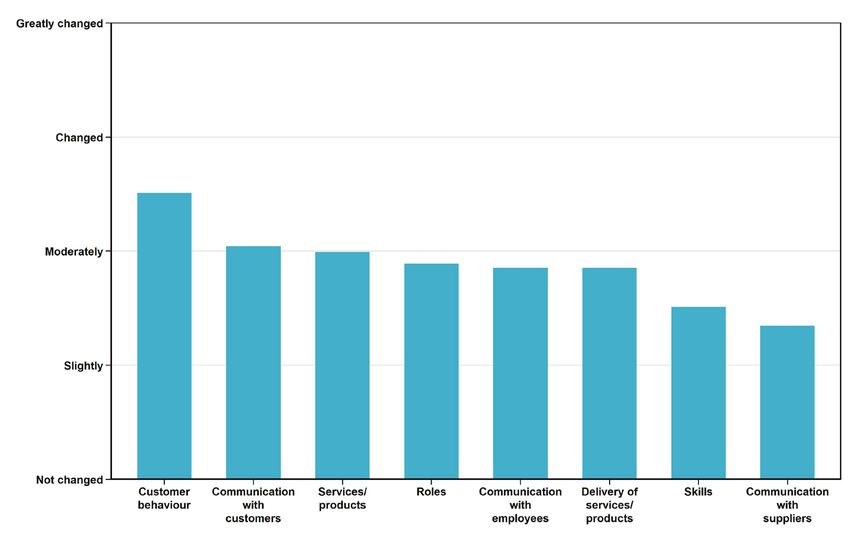
Contents
Hinonga Kōkiri / Head Start Project                                                  1

Accommodation Sector Snapshot                                                       2

Sector Consultation Insights                                                        4

1. The impacts of COVID-19 on the accommodation sector                              4

2. The response to date as a result of COVID-19                                     7

3. Key drivers of future success for the accommodation sector                       10

4. Skills needed to support the accommodation sector recovery                       14

5. Skills initiatives and solutions to support the sector over the next two years   18

Hinonga Kōkiri / Head Start Project
The Hinonga Kōkiri / Head Start Project              The consultation results have been combined with
is an initiative from ServiceIQ that brings          industry insights, data and forecasting to produce
                                                     nine sector skills summaries, one for each sector
together service sector stakeholders from
                                                     represented by ServiceIQ in our capacity as a
industry, employers, schools, tertiary               Transitional Industry Training Organisation for
education providers, and iwi throughout              the Services Workforce Development Council. This
Aotearoa New Zealand to reflect on the               skills summary is for the accommodation sector.
impacts of COVID-19.                                 There are eight other summaries for the aviation;
                                                     cafés, bars and restaurants; catering; clubs; quick
The purpose of the project is to hear stakeholder    service restaurants; retail and retail supply chain;
perspectives on:                                     travel; and tourism sectors.
u   how COVID-19 has reshaped vocational             From this research ServiceIQ will produce a
    pathways and business, and                       workforce strategy for the Services Workforce
u   what people and skills, training, and learning   Development Council Establishment Board.
    pathways are needed to get a head start to       The strategy will include industry, employer,
    COVID-19 recovery.                               schools, provider, and iwi voices. In this way the
                                                     project gives service sector stakeholders an
The stakeholder consultation began in October
                                                     opportunity to shape vocational education in
2020 and concluded in January 2021. In total,
                                                     Aotearoa New Zealand.
321 sector representatives attended 41 focus
group sessions in 10 regions throughout              The report is structured into five main areas
New Zealand. Their perspectives shaped the           to show what impacts COVID-19 has had on the
creation of online surveys, resulting in 488         sector; the sector response to COVID-19; key
responses that provided further views on how         drivers of future success; skills needed to
COVID-19 impacted the service sectors, and           support sector recovery; and skills initiatives
what support is needed for recovery.                 and strategies.

                                                                        Accommodation Sector Skills Summary   1
Accommodation Sector Snapshot1
Accommodation sector jobs

     45,000
                                                                                      Forecast
    40,000

     35,000

     30,000

     25,000

     20,000

     15,000

     10,000

      5,000

          0
                2015          2016      2017        2018         2019      2020         2021       2022        2023     2024   2025

u      Prior to COVID-19 the accommodation sector workforce was forecast to grow 4.1% between 2020 and
       2025. By end of March 2020 the sector had fallen one percent to 37,127 and Infometrics now forecasts
       job losses of 3,090 or 8.3% of the sector workforce in the year to March 2021, growth of 5.6% (1,916 jobs)
       in the year to March 2022 and 2.4% growth (874 jobs) the following year. The accommodation sector
       workforce is forecast to reach pre COVID-19 levels by 2024, and to have a workforce of 39,536 by 2025.

2020 Regional employment
                 Auckland                                                                              7,925

                    Otago                                                         5,698

               Canterbury                                                 4,753

                Wellington                                      3,642

                   Waikato                                     3,379

     Tas-Nel-Mar-W Coast                                2,853

              Bay of Plenty                            2,730

                 Northland                  1,487

    Manawatu-Whanganui                      1,380

          Gis-Hawke’s Bay                  1,313

                 Southland             1,063

                  Taranaki            903

u      There were 3,011 accommodation businesses employing one or more people, with an average of five jobs
       per business.
u      Main occupations include hotel or motel managers, commercial cleaners and commercial housekeepers,
       receptionists, chefs and waiters.

1
    Sector data and forecasts supplied by Infometrics February 2021. N.B. 2020 sector data is as at end of March 2020

2     © ServiceIQ – Published April 2021
2020 Sector data

            37,127       JOBS
                                                           30,114  FTE JOBS
                                                                                                                  -1.0%
                                                                                                        GROWTH FROM 2019–2020

               1.4%
           OF ALL JOBS IN NZ
                                                       $1,627m $54,017   GDP                                      GDP PER FTE

                                                                                 SKILL LEVEL
    SIZE OF BUSINESS HOURS OF WORK                                                OF ROLES                              GENDER

      Under 20 employees – 85.4%            30 hours or more – 60.1%           Medium to highly skilled – 58.7%      Female – 59.9%
      20 employees or more – 14.6%          Less than 30 hours – 39.9%         Low skilled – 41.3%                   Male – 40.1%

Sector demographic data from 2018 Census
          ETHNICITY2                         BIRTHPLACE                                  AGE                      QUALIFICATIONS

         European – 63.1%                       New Zealand – 57.3%                Over 30 – 67.9%                    Post school – 58.3%
         Asian – 21.5%                          Overseas – 42.7%                   Under 30 – 32.1%                   No post school – 41.7%
         Māori – 13.9%
         Pacific peoples – 6%

2
    Employees may identify with more than one ethnicity.

                                                                                                       Accommodation Sector Skills Summary     3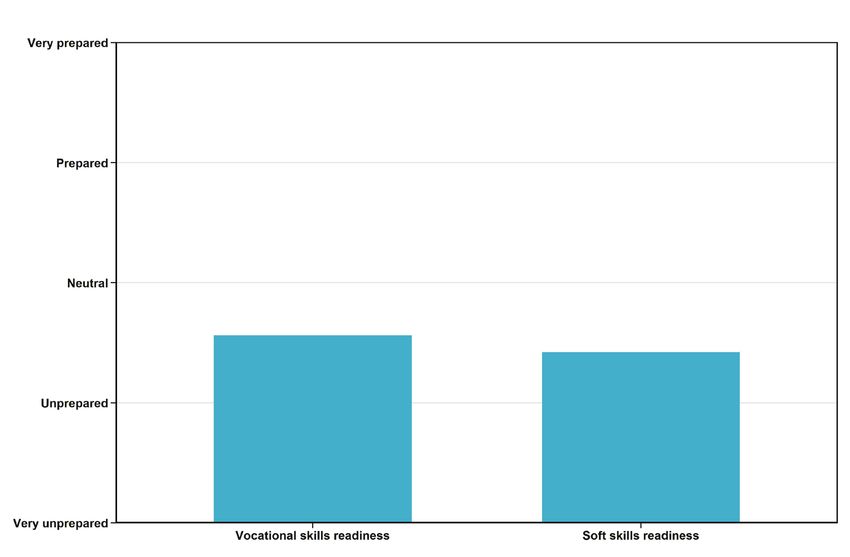
Sector Consultation Insights
                 1. The impacts of COVID-19
                    on the accommodation sector
                 Customers
                 It has been an uncertain time for the accommodation sector. There are large regional
                 variations but generally, accommodation providers are reporting reduced occupancy and
                 much lower revenue. Uncertainty continues, especially around the reopening of the border and
                 when international tourism can recommence.

                 Post lockdown some international tourism hotspots dropped to very low occupancy. There
                 was more domestic demand once domestic travel restrictions lifted but domestic travellers are
                 a different type of traveller. They often do not book in advance or give very short notice and
                 domestic leisure visitors do seem to be more demanding.

                 The corporate accommodation market is still down, with less corporate travel and fewer
                 meetings and events. Events could not take place at Alert Levels 3 and 4 and are limited due
                 to social distancing requirements at Alert Level 2. There is reluctance to plan ahead, and
                 although deferred conferences and events are now happening, revenue from this part of
                 accommodation businesses is still well down.

                 Many holiday parks have done well due to increased domestic visitation. They have
                 encouraged membership signups and partnerships were developed e.g. motorhomes were
                 set up in regional campgrounds. Schools continue to be risk averse regarding school group
                 activities which has affected camp accommodation providers.

                 Motels have struggled and emergency housing is helping with occupancy and revenue. There
                 are hotels now operating as Managed Isolation and Quarantine (MIQ) facilities. Hotels being
                 repurposed as MIQ facilities has helped the occupancy of other hotels who can target those
                 visitors who cannot stay at their usual hotel.

                 There are examples of visitor accommodation shortages due to repurposing of
                 accommodation and better than expected domestic visitor demand e.g. in Gisborne, although
                 campervan companies are helping to meet this demand. Use of hotels as MIQ facilities e.g.
                 in Rotorua and Hamilton, is impacting accommodation availability for tourism and events in
                 those cities.

                 Staff
                 COVID-19 has led to restructures across the sector, especially in large hotels affected by the
                 loss of international tourists and fewer business travellers. There have been redundancies,
                 reduced hours, job cuts, variation of hours, job merging and redeployment. There is increased
                 use of casual contracts and outsourcing of housekeeping has occurred where individual hotels
                 cannot guarantee work. Many accommodation businesses are much smaller operations than
                 they were pre-COVID-19. Some staff have returned overseas and some have been lost to other
                 sectors.

4   © ServiceIQ – Published April 2021
Many accommodation providers have done better than initially expected post-lockdown,
and some are rehiring, but more redundancies are also likely. The wage subsidy helped to
retain staff, and provided breathing space for accommodation providers, but it is still a tough
operating environment. Staff needed help to understand the wage subsidy, especially when
they were required to work during Alert Levels 3 and 4.
Accommodation providers have retained talent by cross skilling and upskilling staff.
Utilisation of multiskilled employees, with transferable skills, has allowed staff to work across
departments as needed and this flexibility has been a way to retain know how and build
capability. Employees have displayed a willingness to learn new parts of the business and
increased teamwork has been a positive outcome.
Alternative uses for accommodation such as government contracts for emergency housing
and MIQ facilities have helped to keep people employed. Hotels that are operating as
managed isolation facilities have found it more of a challenge keeping staff engaged and some
existing staff have left as they miss interaction with guests.
There has been immigration uncertainty and cases of inflexibility. Businesses need to offer a
minimum 30 hours of work to staff on work visas, which in some cases has meant combination
roles e.g. housekeeping and food and beverage to offer enough hours. Holiday Parks lost
capability as those on working holidays left and it can be hard to attract a local workforce to
smaller locations e.g. Tekapo, Te Anau.
Wellbeing
Wellbeing is a major focus for the accommodation sector. COVID-19 has taken a toll on mental
health, due to the initial shock and then ongoing uncertainty and pressure, affecting both
employees and management. There is stress and fatigue from the ongoing need to adapt
and change. Leave, time out and flexi working have all been used to support staff, along with
positive reinforcement for staff and being mindful of burnout.
SMEs in particular are having to do more with less which increases pressure on those left and
it has been tough on owner/operators keeping their businesses afloat. Earlier in 2020 there
was some negativity from guests towards staff from early affected countries e.g. China, which
was distressing for the staff affected.
Support has been provided to international staff who have immigration/visa uncertainty and
are away from family. It is good to support these people who have stayed and supported NZ
during COVID-19. A number of employees have been forced to leave roles as there was no
clear pathway for them or the ability to continue supporting their family visas despite having a
valid visa. It was particularly distressing for those families of migrant workers sent emails that
mistakenly informed them their visas had been extended.
Keeping the lines of communication open is helping to give some certainty to employees in
uncertain times, it is important to be transparent and honest. Accessibility helps people feel
that they have some control over their environment.
Accommodation Sector Skills Summary 5Training
COVID-19 has affected who to train and how to train, with a lot of cross skilling needed.
Learning, and development staff redundancies and cost cutting has led to a reduction in
training which is concerning at a time when changes have meant developing staff knowledge
and capability is essential.
Some accommodation providers are running at reduced capacity due to staff shortages
(especially senior chefs and front of house managers), meaning they could not take advantage
of increased guest numbers post lockdown. In holiday parks and motels lower staff levels have
affected the service provided, especially in the regions.
Recruitment
Recruitment is a key issue. Some accommodation providers who downsized are now recruiting,
but many staff have found other work and are declining when reemployment is offered, so
those skills are lost. Immigration settings are creating uncertainty where working visas are due
to expire. Staff have returned to their home country and there is no access to new overseas
workers due to border restrictions.
There has been a decrease in applications from visa holders and New Zealanders are not
applying, especially in the case of food and beverage attendant and housekeeping roles.
While fun, remuneration and hours are an issue, and restructures have meant some reduction
in career pathways and relocation opportunities. MSD does not seem to be able to supply
suitable domestic applicants, so there are staff shortages emerging, with concerns around lack
of staff for peak times.
It has been hard to recruit staff to remote parts of New Zealand.
Some MIQ hotels are finding it hard to employ staff who are fearful of the MIQ status. There
are accommodation shortages for seasonal workers in regions where a lot of accommodation
is being used for emergency housing.
In the case of one new hotel opening in 2020, all staff were retained to keep the skills and
capability that has been developed, which enabled the hotel to open with a well-trained and
grateful team.
Operational / Process
All processes and procedures needed to be reviewed with standard operating procedures
at different alert levels. Accommodation providers who remained open for guests during
lockdown had to adapt their operating model very quickly, with strict cleaning regimes.
Organisations have had to be adaptable throughout different alert levels. It took longer for
accommodation options that were not self-contained to fully reopen.
Health and safety policies and protocols were needed to build the confidence of both staff and
guests. There is now greater emphasis from guests and team members on health and safety
measures providing the reassurance of a safe environment. International businesses were able
to learn from earlier overseas experiences.
The accommodation sector responded quickly to the subsequent lockdowns, as processes
were in place and staff displayed adaptability, dealing with more change as business as usual.
Processes are now well established for operating at different alert levels.
6 © ServiceIQ – Published April 2021Lower occupancy means lower revenue, but many expenses cannot be reduced. There has
been a lot of operational decision making needed and new business models to respond to
cashflow pressure, refunds etc. Supply chain is starting to be impacted with import delays e.g.
linen supplies.
Workforce planning is difficult with so much uncertainty and fluctuating visitor numbers.
There is a lot of “lumpiness”, with good occupancy weekends and school holidays but quiet
weekdays, plus lower room rates to meet the domestic market affect profitability.
Figure 1. The extent to which COVID-19 impacted the accommodation industry. *
2. The response to date as a result of COVID-19
Customers
The lack of international visitors is creating more competition within a smaller market i.e.
domestic and business travellers. Accommodation providers are targeting different customers,
marketing to the domestic market, especially free independent travellers and leisure travellers.
They are pushing out more deals, specials and campaigns, especially for weekdays.
While there has been increase in kiwi travellers they are only partially replacing international
travellers. There is downward pressure on pricing, with fewer people on premium offers,
leading to premium lounges closed currently in many hotels. Food and beverage services
have been a focus for revenue while occupancy levels are low, but it is a difficult balance.
Accommodation providers are managing costs by running fewer bars and restaurants,
reducing hours, or offering smaller menus. It is challenging to maintain service levels; pricing
and service levels have both had to change.
* Hinonga Kōkiri / Head Start Project COVID-19 Industry Response Survey – Accommodation sector respondents
Accommodation Sector Skills Summary 7The accommodation sector is experiencing short lead times for all bookings, and especially
for domestic leisure travel. Free cancellation and book now/pay later offers are helping to give
people confidence to book ahead. Holiday Parks have encouraged people, especially those
with large annual leave balances to take long weekends to help with weekday occupancy.
The pivot to emergency community housing has worked well but does come with reputational
issues and managers have needed support in managing clients, replacing reception with
security desks and managing social behaviours. Local support is variable, but iwi support has
been helpful, creating a more localised community feeling. It is important that the reputation
of individual sites and the sector is not negatively impacted.
Staff
People are doing a broader range of activities and cross training has helped make them
stronger by developing the capability and flexibility to be able to work in multiple and
varied roles. It is not always easy to move existing staff from specialised roles, especially
when asking them to cover multiple skills/roles. Adaptability is needed, so the business has
built in flexibility. Businesses have become smaller and more efficient, so need staff to be
able to crossover to any department. Roles have been redefined within businesses and job
descriptions changed.
Retraining has taken place for combined roles and skill share roles e.g. front of house staff
doing housekeeping. This has either been on-job or through local or online training providers,
however you can only cross train so much e.g. you can train a chef to be a porter more easily
than the other way around.
It is hard to guarantee hours. Casual contracts are helpful in addressing variable staffing needs
and may lead to permanent roles as business recover. Casual pools (e.g. Sidekickers) have
been created.
Rostering is challenging as it is hard to plan occupancy, with domestic guests less likely to
book ahead, but operators still wanting to offer good customer service.
People management has been challenging, with an unpredictable future creating anxiety.
There has been a lot of change management, and a lot is being asked of teams, but effective
management has helped to create good teams. It is important to be realistic with staff (not
too pessimistic or optimistic) and to follow employment law when changes are being made.
Managers have had to adapt to a heavy administration workload, with a focus on remaining
financially sustainable. New managers have looked at the business with fresh eyes.
There has been a greater focus on staff wellbeing and support, being understanding about
leave and more open discussion around wellbeing and mental health. Remaining connected
through regular communication has been key and humour helps. Some staff are enjoying
working fewer hours and finding it creates a better work life balance. Staff surveys have been
used to ensure staff feel supported. Where possible, businesses are keeping in touch with
redundant staff.
8 © ServiceIQ – Published April 2021Support for migrant workers has included grants, accommodation support, pastoral care and
travel help. Honest clear conversations have had to take place e.g. regarding immigration
issues. There is a looming skills shortage with no pipeline of people on working holiday visas
and post study visas. The sector has successfully advocated for visa extensions, but it can
be difficult to reach the required hours and remuneration levels. Sourcing labour has become
a key challenge as people on migrant visas leave New Zealand. Accommodation roles are
on labour oversupply lists (apart from Queenstown Lakes District where an exemption now
applies), yet there is little interest from local jobseekers when roles are advertised. New
Zealanders have high expectations of pay and hours and recruits often pull out before starting
or early on.
Partnerships have been developed with MSD who can provide onsite support and, in some
cases, top ups to help with transport costs. Mana in Mahi and Flexiwage are initiatives to
support businesses to take on and train new staff who are at risk of long-term unemployment.
Accommodation providers are looking for people with good attitudes from schools, education
providers, MSD and Dept of Corrections.
Generally fewer new staff are being taken on but, when they are recruiting, accommodation
providers are considering suitability for different roles. They are taking a broader view, being
more prepared to take people on and develop them i.e. recruiting for personality then training
skillsets. Students are often qualified but lack work experience.
Technology
Greater confidence in online communication through Yammer, Teams, Zoom and via email
has enabled more remote working and flexible working conditions where possible. Zoom calls
and social media group pages have helped staff to remain connected. One example is Zoom
being used for staff recognition and digital awards across multiple sites. Phone and text
communication is still used where staff are not digitally connected.
Online learning was utilised during lockdown, especially short bite sized learning e.g. Linked In
Learning. Apps are being used to support staff wellbeing.
COVID-19 has accelerated the use of technology with more automation and streamlined
processes. The accommodation sector is engaging in more digital marketing through social
media and making greater use of booking systems. Skills in using booking systems have
increased, and there is more online communication with customers. Clear messaging to
customers is essential, especially for hotel chains who offer different levels of accommodation
e.g. backpacker accommodation and hotels.
Operations / Process
Staff in different departments all need to understand policies and procedures, especially where
there are differences at each alert level.
Strengthened health and hygiene processes and procedures have been implemented to
ensure guests and staff feel safe. This has resulted in some activity taking longer, e.g. cleaning
rooms. One hotel group has introduced “Commitment to Clean”, where each department has
a staff member who champions this initiative and health and safety training is interactive and
fun e.g. how to smile through your mask, locations making health and safety videos.
Accommodation Sector Skills Summary 9The ability to operate while social distancing has been developed, including contactless check
in. Those working in managed isolation have developed alternative ways (non-contact) to
interact with guests.
Changes have been made and HR policies updated to prepare for upcoming changes such as
the minimum wage increase and higher sick leave provisions.
Figure 2. The extent of change the accommodation industry has felt since the arrival of COVID-19.*
3. Key drivers of future success for the
accommodation sector
Industry
Accommodation providers will need to review their business and find new key drivers
and innovations to generate good cashflow and a strong balance sheet. Collaboration and
connectivity are needed throughout the sector, uniting the industry for a common cause, with
support from industry associations, regional tourism organisations and good relationships
with unions.
In the current environment, the sector needs to understand and meet domestic customer
expectations, including short lead times, self-catering, earlier arrival, value for money and
discounting. Further to this, it is important to understand expectations of different types
of domestic customers e.g. business, leisure, local market. It is also important to clearly
communicate enhanced health and safety procedures.
When borders reopen international visitors are expected to have higher demands when they
return (especially around hygiene and safety), so high quality and standards will be needed.
Heightened hygiene that is internationally visible e.g. online will reassure international visitors
and tour operators at the time of booking. There is likely to be a need to overcome staff fear
as borders reopen.
* Hinonga Kōkiri / Head Start Project COVID-19 Industry Response Survey – Accommodation sector respondents
10 © ServiceIQ – Published April 2021Adaptability, agility and flexibility
Businesses need flexibility and adaptability in both staff and priorities at all levels of
the organisation, so that they can be nimble in staffing and decision making. Many
accommodation providers have flattened their structure and reduced organisational hierarchy,
with management modelling a willingness to work in all parts of the business.
Retention of capable staff where possible and attracting staff back whose roles have been
disestablished are key factors in the recovery of the accommodation sector.
Automation / technology
Use of technology will enable a shift away from face-to-face interaction to more contactless
service. This includes self-check in, check in pods, contactless door entry, digital menus, QR
codes for room service and hotel information, room key sanitisers and electrostatic spraying.
There are currently financial restraints to embracing new technology, due to lower revenue.
The ongoing challenge is combining personal human touches with efficient use of technology.
Operations
A reliable and flexible supply chain is essential for the accommodation sector, so they
can meet their market, especially their food and beverage offering. This involves contract
management and maintenance, room inventory management, pivoting to meet the market
and supply availability e.g. simplifying menus, changes to expectations (and communicating
changes to guests).
Shifting perceptions
Perceptions of the accommodation sector must change so that it is valued and the sector is an
employer of choice. Confidence in the industry can be regained through:
u Rebuilding, with a staffing and training pipeline to support a long recovery.
u Removal of legacy issues and restore pride in roles e.g. housekeeping.
u Identifying who will be the new “soldiers of industry” and developing domestic talent.
u Improving pay, especially for duty managers, and offering at least a living wage for all
employees will help improve perceptions of the accommodation sector.
u A better work/life balance (e.g. highlighting flexibility of hours, ability to do things at off
peak times) housing support in high-cost regions and overseas opportunities (once the
borders reopen).
Accommodation Sector Skills Summary 11Government
The government have been somewhat unsympathetic to the accommodation sector and
there is continuing uncertainty due to policy decisions. Financial support is needed to help
businesses survive. (both SMEs and large businesses). Policy and support are also needed to
protect the workforce (both domestic and migrant labour). There is support for a higher wage
economy to stimulate the economy, but the money needs to be spent in the areas where it is
most needed.
The accommodation sector would like more flexibility and support from ImmigrationNZ. This
includes retaining migrant staff that the business has trained and easing the rules to allow
skilled workers to enter New Zealand, especially when there is a shortage of New Zealanders
willing or capable of filling roles. Allowing existing migrant workers to have more than one role
or sharing workers between day and evening positions would give the worker more hours and
pay and enable them to meet 30 hours minimum work per week to retain their visa. Allowing
staff with employer/role specific visas to be cross-trained across other departments or
properties would help in regions with an undersupply of hospitality workers, where upskilling
the current migrant workforce is critical for business viability.Clearer communications from
government are needed on policy and direction. e.g. Changes to transport routes, timeframes
for opening the borders, as the sector needs to prepare for operational changes. The
accommodation sector would like a greater voice on the needs of the sector in government
e.g. regarding changes to the ERA, a coordinated approach for staffing and training pipelines
and localised models to support small-town New Zealand.
Clearer communications from government are needed on policy and direction. e.g. Changes
to transport routes, timeframes for opening the borders, as the sector needs to prepare for
operational changes. The accommodation sector would like a greater voice on the needs of the
sector in government e.g. regarding changes to the ERA, a coordinated approach for staffing
and training pipelines and localised models to support small-town New Zealand.
On-job training
The accommodation sector needs more support with workplace training. They consider their
people, people management and people development as key success factors. Cross training is
needed so that staff are multiskilled. This will support people working in multi roles and this
expectation is now being set from the beginning. An example is hiring for front of house then
training housekeeping and barista training, so the employee has the skills to perform any of
those roles as needed.
There is a willingness to recruit less experienced people who are ready and willing, with broad
skills, prepared to do less niche work. The advantage is that they can be moulded, have not
developed bad habits; and are likely to thrive in a nurturing environment.
Transferable skills gained in the accommodation sector can lead to a variety of roles in many
career directions. This includes basic communication and people skills, the ability to deliver
exceptional customer service and sales skills.
The sector see value in apprenticeship passports for industry training, where skills and
qualifications are developed across multiple workplaces e.g. across a city or even multiple
cities. The advantage of this approach is the breadth of knowledge and skills that the trainee
gains and that smaller accommodation providers can contribute to the capability of the sector.
12 © ServiceIQ – Published April 2021Training providers
Collaboration between training providers and the accommodation sector will ensure training
programmes meet the needs of the sector. This connection can help with work experience
and job opportunities. Students that are qualified still need to have expectations of entering
full time employment at starting levels to gain the experience, not straight into management.
Accommodation providers would like customer service skills for the industry to be
incorporated in training to raise service levels.
Schools
There is a need for schools to promote hospitality as a valid career that is valued as a vocation
with career path development. Pathways can be highlighted using career success stories
and workplace familiarisation visits. Perceptions can be improved by promoting pathways
to students, career advisors, teachers and parents to help them understand the jobs,
opportunities and potential speed of progression in the industry. Schools can play a part in
promoting the good aspects of the sector and growing awareness of the breadth of roles e.g.
in hotels. It has been suggested that separating hotels and hospitality from the umbrella of
tourism careers promotion could create greater career pathway and role clarity.
The accommodation sector would like schools to produce students who have real experience
as well as qualifications. Greater collaboration between school and the accommodation sector
can help students gain this experience and develop work readiness skills.
Figure 3. The communication level the accommodation industry has with tertiary education providers
and schools.*
* Hinonga Kōkiri / Head Start Project COVID-19 Industry Response Survey – Accommodation sector respondents
Accommodation Sector Skills Summary 134. Skills needed to support the accommodation
sector recovery
Changes in skills and roles
Downsizing due to COVID-19 has created a need for multiskilled staff with the ability to
multitask and work across departments as needed. This is the case across the accommodation
sector including holiday parks, backpackers, motels and hotels. Job descriptions are broader,
requiring more flexibility and adaptability, with hybrid roles in some cases. Some hidden gems
have been found by looking at the skillsets and résumés of existing staff and utilising that
capability.
For businesses and regions who predominantly catered to the international market pre-
COVID-19, adapting to the domestic market has meant a change in some roles, especially
customer service skills. Those in customer facing roles needed to develop an understanding of
the different expectations of domestic versus international guests.
Changes in the importance of skills
Skills that have increased in importance include:
u Core skills including customer service, empathy and emotional intelligence. It’s all about the
guest and using good communication for guest engagement.
u Handling challenging customers (some staff have become more fearful).
u A good attitude and the ability to work hard and consistently.
u Resilience, adaptability and flexibility.
u Experience and understanding of all parts of the business.
u Adherence to guidelines especially health and safety compliance.
u Financial literacy.
u Technical skills.
With less training capacity within accommodation providers there is a greater need for work
readiness in new staff including:
u Customer service skills.
u Communication and literacy skills.
u A realistic attitude and understanding what work is.
u Common sense / good judgement.
u Initiative and personality.
The importance of vocational skills and soft skills has increased since COVID-19 and the
accommodation sector reports that jobseekers are somewhat unprepared in both.
14 © ServiceIQ – Published April 2021Figure 4.1. Vocational and soft skill preparedness of job seekers in the accommodation sector.*
Management skills that have increased in importance include:
u People management (need to be nimble).
u Effective middle management, including team leadership skills, management soft skills and
supervisory skills.
u Developing and coaching staff.
u Encouraging ideas and innovation at all levels
u Identification, recognition and acknowledgement of team members who are struggling to
maintain resilience and as a result require a manager or colleague to support them in ways
which were not as prevalent previously. Supporting staff with resilience, wellbeing/wellness
and stress management.
u Problem solving.
u Emergency management.
* Hinonga Kōkiri / Head Start Project COVID-19 Industry Response Survey – Accommodation sector respondents
Accommodation Sector Skills Summary 15New skills needed
u Embracing different ways of communicating e.g. Microsoft Teams, Zoom.
u Working from home effectively.
u Managing remote teams.
u Sharing information transparently across organisations and the sector, using multiple
communication channels.
u Sector workforce receptive to changes in technology and automation.
u Digital media skills e.g. social media posting.
u Identifying opportunities e.g. direct marketing and booking opportunities.
u Sustainability focus.
u Developing health and safety collateral online and onsite to reassure guests at time of
booking and during their stay.
u Decision making and issue resolution (at lower levels). This empowers staff and resolves
issues more quickly.
u Development of dedicated learning management systems with online training modules.
u Train the trainer to help them make work more meaningful.
u Online HR.
u HR recruitment strategies.
u Workplace culture building within organisations including values, leadership, positive
reinforcement, teamwork and improved retention strategies.
u Project management e.g. MIQ hotels learning to adapt and communicate with different
agencies (MBIE, NZDF and NZ Police) and situations.
Skills shortages
u A shortage of chefs is being felt across all of hospitality including the accommodation
sector. There are a lot of vacancies and a lack of experienced applicants for roles at chef
de partie or higher. This long-term issuehas been exacerbated by no new migrant workers
arriving.
u Front of house managers.
u Duty managers.
u Middle management, e.g. junior managers and restaurant managers.
u People with five-star luxury property experience e.g. food and beverage attendants.
u Housekeepers, cleaners and grounds people.
u Temp staff.
u There are shortages of hospitality staff generally in the regions.
16 © ServiceIQ – Published April 2021Reliance on migrants
The accommodation sector has relied on migrant workers for seasonal roles for a long time
and closed borders mean no new workers can enter New Zealand. This is resulting in a smaller
pool of job seekers, especially for middle management roles such as junior managers and
restaurant managers, which are often filled by international workers. The sector is trying to
focus on finding local talent, but New Zealanders are reluctant to work in accommodation
businesses, due to pay, having to work weekends and public holidays or move to another
region e.g. Queenstown. Often, they are not as skilled or experienced as their international
counterparts. Accommodation providers would like to make visa renewals easier where there
are skills shortages and to be able to support existing staff looking for residency.
Figure 4.2. Rating of major skills shortages identified in accommodation sector focus groups.*
* Hinonga Kōkiri / Head Start Project COVID-19 Industry Response Survey – Accommodation sector respondents
Accommodation Sector Skills Summary 175. Skills initiatives and solutions to support the
sector over the next two years
How to get the skills
u Recruit skilled staff including attracting experienced staff whose roles were disestablished.
u Short terms strategies to upskill and cross train quickly to cope with increased demand
e.g. cleaning, bar work and housekeeping (alternatively some accommodation businesses
cannot open or food and beverage areas operate with reduced hours or menu options).
u Training for those in other industries wishing to join the accommodation sector, as this
can increase sector knowledge. Currently applications are being received for high level
roles from people with transferable management skills but without the technical skills or
industry experience.
u On-job training including leadership training e.g. Introduction to team leadership.
u Modulised learning, short credentialised courses.
u Allow trainees to mix and match unit standards to fit their role e.g. administration and
business units as part of a housekeeping qualification.
u Online learning.
u Training courses, ideally a mix of theory and on-job, plus getting together and
collaborating with peers. Post-study validation on-job to demonstrate the skills learned.
u Work experience helps students understand the workplace, get to know staff and be part
of a larger whanau. Students could gain credits through hospitality work experience
(e.g. 2 weeks), giving them visibility as well as gaining skills.
u Internships where students rotate through roles.
u Attracting talent through fast tracking and cadetships.
u Sector collaboration – sharing best practices, ideas for improvement or coordinating
attraction strategies. Comradery across brands, connectedness. This could include a
passport or business apprenticeships across hotels/brands (maybe moving quarterly) and
mentoring.
u A hotel specific apprenticeship programme or hotel management qualification gained
on the job with practical cross-department rotations. First year frontline work e.g.
three months in four departments, second year team lead, then food and beverage or
management apprenticeship. Industry is much more likely to embrace this, as tertiary
training providers often expect industry to provide the practical experience and training
but then students do not enter the industry on completion. Industry delivering their own
apprenticeship programmes, with learning and training plans curated by the industry
training organisation, will retain people once they complete training and continue to
develop them.
u A holiday park management apprenticeship.
u A short-term immigration solution is needed for immediate skill shortages such as chefs, as
well as a longer-term solution to build capability. For other roles, with sector coordination
and union input, enable staff to work across multiple employers, to provide enough hours.
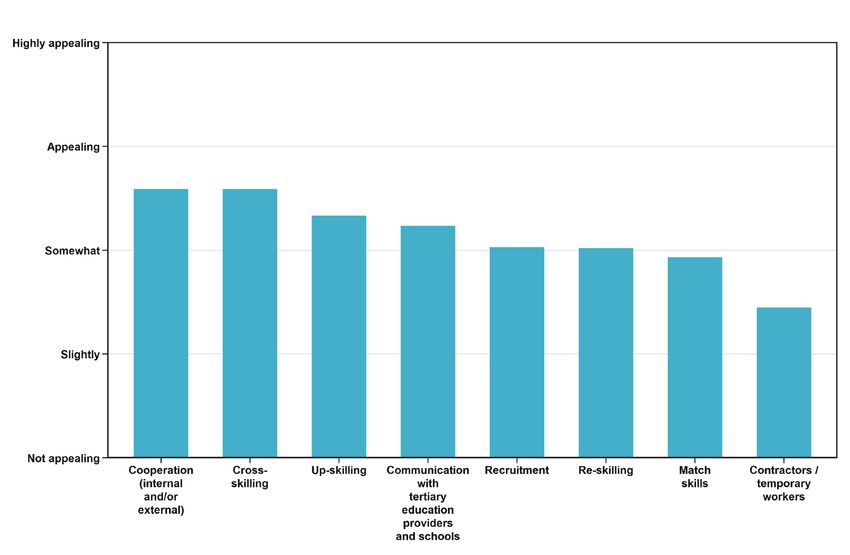
18 © ServiceIQ – Published April 2021Figure 5.1. COVID-19 recovery strategies that will be considered by the accommodation sector.*
Support needed
u Ongoing collaboration between the Workforce Development Council (WDC) and industry.
The WDC to provide advisory plus brokerage and promote careers in the sector. Sector
advocacy is needed, bringing together and building on current initiatives, with sustainable
funding to promote the sector and build the workforce. Ensure consistency of messaging
about the industry to future employees, influencers and education providers.
u Workforce planning to understand employers’ skill needs, so that skills can be delivered at
both a regional and role level by the education sector.
u Corporate traineeships, scholarships.
u Promote sector stories, especially where people can utilise transferable skills (to help both
applicants and employers recognise this).
u Promote the accommodation sector as global and fun, a place for “people people”, who can
be of service and develop skills. Showcase careers, highlight the opportunities and create
more positivity around the sector.
u Support hotels with training, as previous trainers are now too busy, e.g. bring in a trainer.
u Support for employees to become workplace assessors quickly and conveniently, through
an online 4098 programme, rather than face to face programmes run sporadically
in regions. E-learning to deliver 4098 could be self-paced with online support and
assessment.
u Support businesses to understand how to build back better, identify new opportunities and
create new habits.
u Promote affected regions e.g. Queenstown, as a destination to attract a talent pipeline (as
well as domestic visitors).
u More on the ground support is needed to help the wellbeing of the workforce e.g. EAP,
especially in the hardest hit regions.
* Hinonga Kōkiri / Head Start Project COVID-19 Industry Response Survey – Accommodation sector respondents
Accommodation Sector Skills Summary 19u There is a generational shift happening, so find ways of leveraging the gig economy,
with short term hospitality and tourism work to meet the fluctuating needs of the
accommodation sector.
u One idea is to develop a pool of trained, commercially competent casual staff in hospitality
that can step into a business and make a contribution rather than having to put the
pressure on the rest of the team (and maybe compromising service).
Training needs
u Individualisation: matching people’s needs, provide employment opportunities and develop
learning and career pathways.
u Suggest guidance from youth on the length of qualifications i.e. is 3 years too long?
u Not everyone wants to progress into management, job mastery can be enough. But it is
good for all staff to understand the whole operation and be empowered to make decisions.
u Ideally managers gain industry experience first, then develop the following management
skills:
u People.
u Finance.
u Technical.
u Time management.
u Problem solving.
u Conflict resolution.
u The accommodation sector needs digital marketing support, especially in the regions. This
could be provided through regional support networks.
u Regional accommodation providers would like more support for training staff in high class
hospitality service skills; as training facilities tend to be too far away.
u Improve the quality of MSD job applicants to ensure they are work ready.
u While occupancy is low, there are opportunities to work with other industries to retrain and
for job sharing so staff can be retained.
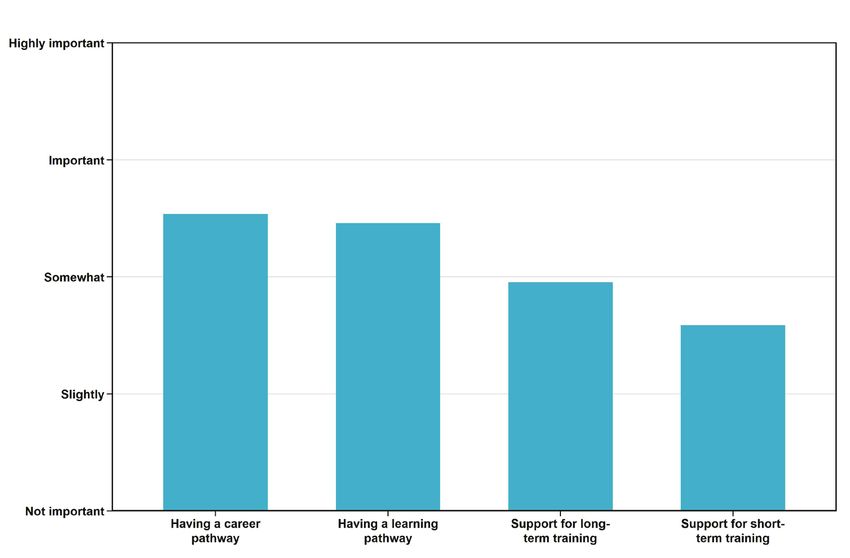
Learning pathways
Highlighting and profiling career pathways and the diverse range of jobs available in the
accommodation sector will help attract young people. Careers should be promoted from Year
9 onwards, making the sector visible e.g. industry leaders going into schools, communicating
their passion to students, teachers and parents, and students visiting accommodation
businesses to experience the sector. One hotel group is working on a taster programme for
secondary school students.
In the medium term a pipeline of future employees including apprentices is critical. There must
be a consistent skill level for people entering the sector from tertiary providers, with graduates
understanding the starting point. Graduates should have realistic expectations of first roles,
and the need for experience as well as knowledge.
20 © ServiceIQ – Published April 2021The industry will benefit from good connections with secondary and tertiary providers.
Attraction strategies for young Māori and Pacific people should include connecting with iwi
and families. Providing scholarships could help reduce barriers to entry for under-served
groups.
Figure 5.2. The importance of training and pathways.**
Post COVID-19
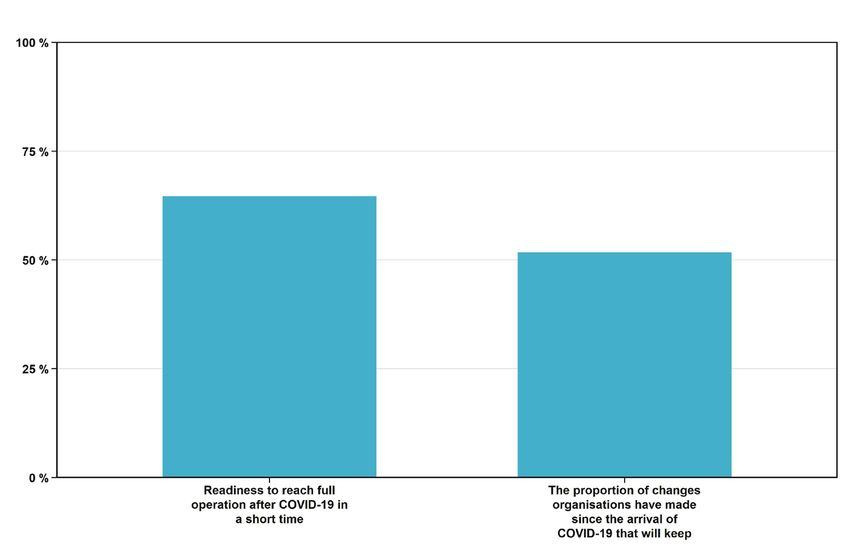
While the accommodation sector is somewhat ready to be fully operational when the borders
reopen and over half of the changes they have made will be retained, there is still a perception
that opportunities will be lost across the country because of skills shortages. A sharp increase
in demand will be challenging to service equitably whilst maintaining high service standards.
Accommodation providers are currently addressing issues of recruitment and establishing
candidate/talent pipelines. Survey respondents employing less than 20 employees indicate
greater readiness than larger businesses, many who are operating with greatly reduced staff
numbers currently and may take longer to scale back up.Businesses are intending to retain
multiskilled roles in case of future lockdowns or other business restrictions. Accommodation
providers intend to keep the hands-on approach as it gives everyone an insight into various
roles and better appreciation for other team members. Others are hoping that employees can
return to their full salary/wages and previous occupations where possible. They would also
like to invest in formal training and recognition which is currently on hold. As the sector is
suffering financially it is difficult to invest now in anticipation for this.
Greater staff productivity will be required to help recover finances and to cope with the added
costs e.g. increased minimum wage, increased sick leave entitlements and the introduction of
an additional public holiday in 2022.
Greater staff productivity will be required to help recover finances and to cope with the added
costs e.g. increased minimum wage, increased sick leave entitlements.
** Hinonga Kōkiri / Head Start Project COVID-19 Industry Response Survey – Accommodation sector respondents
Accommodation Sector Skills Summary 21COVID-19 health and safety protocols introduced will remain in place with safeguards around
reception and housekeeping. This includes sanitising room keys, reception doorknobs,
reception counters and pens, and more stringent cleaning.
There is uncertainty over immigration restrictions post COVID-19 and it is unlikely that there
will be enough skilled and willing domestic workers to fill roles. Regional accommodation
providers will need to employ seasonal workers prepared to live in a rural location for three to
four months.
Trans-tasman FIT (free independent travellers) travel is an important segment for
accommodation businesses and there are hopes of a trans-tasman bubble so this can
recommence. The extent to which staffing and service resumes will be dependent on the
demand and uptake for travel at that time.
Figure 5.3. Operational stability and agility of the accommodation sector when COVID-19 border
restrictions end.*
* Hinonga Kōkiri / Head Start Project COVID-19 Industry Response Survey – Accommodation sector respondents
22 © ServiceIQ – Published April 2021Accommodation Sector Skills Summary 23
ServiceIQ.org.nz
Level 14, Plimmer Towers
2–6 Gilmer Terrace, Wellington 6011
PO Box 25522, Wellington 6140

      24   © ServiceIQ – Published April 2021
You can also read


