Standalone Bushfire Plan 2020-2021 Balga Senior High School - Balga Senior High ...
←
→
Page content transcription
If your browser does not render page correctly, please read the page content below
Standalone Bushfire Plan
       2020–2021
    Balga Senior High
        School
Standalone bushfire plan 2020-2021

Purpose

The Standalone bushfire plan document is a detailed plan of how your school is to prepare and
respond to a catastrophic fire danger rating alert or to a bushfire event.

All staff, students, contractors and visitors on the school or facility site are to follow this completed
plan in the event of a bushfire emergency. All other emergencies are to be managed in accordance
with the school’s Emergency and critical incident management plan.

                                                  Page ii                                  Printed 15/07/2020
Standalone bushfire plan 2020-2021

                                                                Contents
1          School details.................................................................................................................... 1
2       Emergency response contact list ..................................................................................... 2
    2.1 Other important emergency sources .................................................................................... 2
3          Incident management team............................................................................................... 3
4          Bushfire response telephone tree .................................................................................... 4
5          Emergency equipment ...................................................................................................... 5
6          Bushfire preparation checklist ......................................................................................... 6
7          Bushfire action plan maps ................................................................................................ 9
8          Bushfire mitigation management register ...................................................................... 11
9          Advice from Department of Fire and Emergency Services and other agencies............ 12
Appendix A – Bushfire warnings stages .................................................................................. 13
Appendix B – Procedures in event of a sudden bushfire......................................................... 15
 Relocate to onsite ‘safer building location(s)’.............................................................................. 15
 Offsite evacuation procedures ................................................................................................... 17
Appendix C - Pre-emptive (planned) closure procedures ........................................................ 19
 Flow chart – Principal’s response to ‘catastrophic’ fire danger rating........................................... 20
Appendix D – After hours or school holiday procedures......................................................... 21
Appendix E – Communication templates ................................................................................. 22
    Emergency text message alert templates................................................................................... 22
    School newsletter sample text ................................................................................................... 23
    Sample text for a notice of temporary school closure.................................................................. 24

                                                                     Page iii                                              Printed 15/07/2020
Standalone bushfire plan 2020-2021
1 School details
School name Balga Senior High School
(include name of co-located
school or facilities if applicable)
School address 2 Markham Way, Balga WA 6061
Number of students 605
Number of staff 111
Number of students requiring 6
extra support if evacuating
Number of school sides bordered 2
by bush
Names of major roads bordering Redcliffe Avenue, Markham Way, Newport Way
school
School’s site-specific alert, for Siren & Code Red Alert
example:
siren/pause x 3
continuous handbell
continuous siren or short
whistle blasts
Plan prepared by Mark Carton
(principal’s name)
Date prepared 10 September 2020
Page 1 Printed 15/07/2020Standalone bushfire plan 2020-2021
2 Emergency response contact list
Organisation Details Phone number /
Website
Local police Mirrabooka Police 9345 9000
(eg name of nearest police
station)
Local hospital Joondalup Hospital 9400 9400
(eg name of nearest hospital
or medical emergency
facility)
Local fire brigade Malaga Fire Station 9249 6444
(eg name of nearest fire
station)
Bus contractors Not Applicable
(ready for pre-emptive
closure or offsite evacuation)
Electricity provider - in the Western Power 13 13 51
case of a power outage
(eg Horizon Power or
Western Power)
State emergency service (if DFES Emergency Assistance 13 25 00
known)
Poisons information (where WA Poisons Information Centre 13 11 26
relevant)
Regional Executive Director Jim Webb 0434 325 649
– contact name
Dial 000 in an EMERGENCY
2.1 Other important emergency sources
1) Emergency WA website - https://www.emergency.wa.gov.au/
2) Department of Fire and Emergency Services
Information line – 13 33 37
Twitter - https://twitter.com/dfes_wa
3) Local radio
o ABC Emergency WA
o ABC local radio
o 6PR
Page 2 Printed 15/07/2020Standalone bushfire plan 2020-2021
3 Incident management team
Position Staff Name Duties Mobile number
Principal Mark Carton Incident Manager 0412 472 324
Deputy Rosemary Evans Assume duties as per Emergency 0405 100 497
principal Evacuation Plan
Hayley McGill 0422 971 417
Norbert Samuels 0403 029 881
Manager Sonia Dunstan Assume duties as per Emergency 0407 080 755
corporate Evacuation Plan
services
OSH Rep Sally Parcej Assume duties as per Emergency 0450 013 367
Evacuation Plan
Accredited first Ros Playforth Administer First Aid as required 0438 012 916
aid officers
Facilities Mike Leadbitter Assume duties as per Emergency 0436 699 230
Coordinator Evacuation Plan
and OSH Rep
Page 3 Printed 15/07/2020Standalone bushfire plan 2020-2021
4 Bushfire response telephone tree
SMS Parents
sMS Send emergency
SMS SMS templates to
notify
Coordinator Regional executive Principal Staff
regional operations director Name: Mark Carton Send emergency
Name: Melissa Name: Jim Webb Mobile:0412472324 SMS if school is
Rinaldi Mobile: 0434325649 closed
Mobile:0413006259
Associate Principal Department
Name: Rosemary Security Unit
Evans T: (08) 92644632
Mobile: 0405100497 Media Unit
T: (08) 9264 5821
Community Manager corporate Emergency School council, Neighbouring schools:
kindergarten services response contact board or P&C Name: Warriapendi PS
Name: Name: Sonia Dunstan list Name: Ross McLean Telephone:(08) 9345 6100
Mobile: (refer to Section 2)
Mobile: 0400 364 104
Mobile: 0407 080 755
Name: Gladys Newton
ESC
Telephone:(08) 94131900
Buses Canteen Out-of-hours Community
Company: Name: Eko Priyono childcare hirers Name:
Telephone: Mobile:0426198897 Name: Carol Lyons Name: NA Telephone:(08)
Mobile: Mobile:
0411346227
Page 4 Printed 15/07/2020Standalone bushfire plan 2020-2021
5 Emergency equipment
Equipment Details
(include location/s, date checked and any other comments)
Evacuation kit Administration and located with Fire Wardens Checked
20/07/2020
First aid kit(s) A14 Nurse’s Room
B2 IEC Deputy Office
B16 Senior School Office, N6 Music Room
N10 Gym Office,
R29 Food Technology Office,
R32 Downstairs Art Room
R35 Metal Work
R36 Wood Work,
Science Block Store Room
R14 LS Staff Office,
R16 Staff Office,
R5 LS Prog Manager’s Office,
M1 Pastoral Care Office,
A7 Storeroom at Main Reception,
No first aid kit at front office any longer.
Family Childcare Centre
Buses have first aid kits.
Emergency warning or alert Mobile Phones always on hand and charged
system, eg: PA system for warnings
mobile telephones Portable radios always on hand and charged
(charged) Spare batteries available
hand-operated fire
alarm (portable siren)
portable radios
spare batteries
Emergency communications Each Warden has megaphone and a portable radio
equipment
Registers for:
students Student Services
staff MCS
visitors MCS
Page 5 Printed 15/07/2020Standalone bushfire plan 2020-2021
6 Bushfire preparation checklist
Management activities ☑ or Evidence
NA
The annual review of the Standalone bushfire plan
has been completed before the start of bushfire 25/9/20
season.
Consulted and received advice in preparing your
Standalone bushfire plan from any of the below (as
relevant):
local Emergency Services NA
Department of Fire and Emergency
Services
Department of Biodiversity, Conservation NA
and Attractions – Parks and Wildlife Service
local volunteer fire brigade
WA Police Force NA
local government local emergency
management committee or local NA
government representative
community emergency services manager if
there is one for the area. NA
Staff have been made aware of the Standalone 20/7/2020
bushfire plan through:
staff meetings Next scheduled : 12/10/2020
staff bushfire induction session that
includes:
o an overview of the Standalone
bushfire plan
o how to turn off evaporative air
conditioner units, the location of
switches
o how to close roof vents
o the types of Bushfire Warnings issued
by the Department of Fire and
Emergency Services and the
Emergency Alert telephone warning
system
o to direct bushfire media enquiries to
the Department’s media unit (08) 9264
5821.
Students and parents or carers have been made
aware of the Standalone bushfire plan through:
key bushfire safety messages incorporated Facebook
into the curriculum Balga SHS Website
newsletters B
school information booklet (include actions Balga SHS website
and procedures)
school website
Communication plans are in place:
20/07/2020
Page 6 Printed 15/07/2020Standalone bushfire plan 2020-2021
‘emergency response contact list’
completed (refer to section 2)
‘bushfire response telephone tree’
completed (refer to section 4)
communication templates for sample
emergency text message, newsletter
content and school notice text are complete
(refer to Appendix D)
Note: Contact lists for staff and parents must be
current.
Emergency equipment available and checked (as
listed in section 5): 20/07/2020
evacuation kit checked at least once per
term
emergency warning or alert system works
emergency communications equipment
available
first aid kit(s) available
registers for students, staff and visitors
readily accessible for roll call
Evacuation drills practised to your onsite ‘safer 20/07/2020
building location(s)’:
before the start of the bushfire season
at least once per term during the bushfire
season.
Note: You must do at least three drills per year.
Identified your onsite ‘safer building location(s)’
and: Safer Building Location school
shown in your school site plan in section gymnasium
7.1
regularly checked for readiness Bushfire action plan map – onsite
safer building location(s) – section
informed local emergency services of
location(s) 7.1
listed in the Emergency and critical incident
management plan
Note: For further information, refer to section 4.2 in
Principal’s guide.
Two or more suitable offsite evacuation locations
have been identified in case one of the offsite Offsite Evacuation Locations:
locations is under threat from the bushfire. Primary site: Warriapendi Primary
School Oval
Local government authority has provided written or Secondary site: Open Space 26
email approval on the use of these offsite locations. Newport Way
Note: For further information, refer section 4.3 in Bushfire action plan map – offsite
the Principal’s guide. locations – Appendix section 7.2
Page 7 Printed 15/07/2020Standalone bushfire plan 2020-2021
Checked the asset protection zone, which is a
minimum distance of 20 meters surrounding the Department inspections and follow up
school is: completed
clear of all rubbish, long dry grass, bark,
flammable and combustible materials,
including leaf litter and unused piles of
mulch
maintained routinely throughout the year
Note: For further information, refer to section 4.3 in
the Principal’s guide.
Checked the fuel load management (the clearing of
dry grass, leaves, twigs, dead vegetation and dead Department inspections and follow up
bark) within the hazard separation zone (extending completed
80 meters from the outer edge of the asset
protection zone) has reduced:
the likelihood of crown fires developing
close to buildings
spot fire ignition potential within the zone
Made sure that the use of machinery (such as
angle grinders, mowers or machines with internal Emails to staff.
combustion engines) are restricted on severe fire Advice display on walls in appropriate
danger days. areas.
Make sure that the use of any machinery or power
tools that can generate sparks on total fire ban
days are not permitted.
Note:
Any ‘hot works’ including welding and
grinding or the operation of plant,
equipment or machinery in bushland areas,
can potentially ignite vegetation and cause
bushfires.
Refer to the Principal’s guide to bushfire –
‘Terminology’ (section 13 of the guide)
Page 8 Printed 15/07/2020Standalone bushfire plan 2020-2021
7 Bushfire action plan maps
7.1 Onsite ‘safer building location(s)’
Page 9 Printed 15/07/2020Standalone bushfire plan 2020-2021
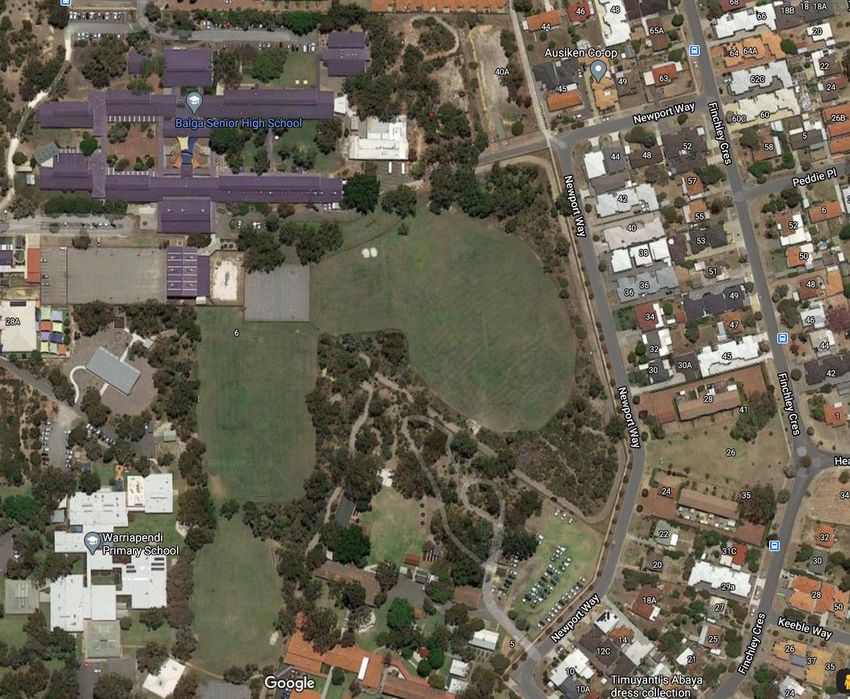
7.2 Offsite Evacuation Location
Map N
Emergency Dial: 000
Assembly Point:
Netball Courts
Primary Evacuation Site:
Warriapendi Primary School
Oval
Secondary Evacuation Site:
Open Space 26 Newport Way
Secondary Evacuation
Site 26 Newport Way
Primary Evacuation site
Warriapendi Primary
Oval
Page 10 Printed 15/07/2020Standalone bushfire plan 2020-2021
8 Bushfire mitigation management register
Reference Bushfire mitigation actions Target date Responsible Source of Notes Completion
number for funds date
completion
DFES map Treatment strategy / works Date The staff eg school Progress or issues Date
item required (dd/mm/yyyy) member name or central associated with the (dd/mm/yyyy)
reference who will sign off funding work (including date
the action as of progress or
complete issues)
Page 11 Printed 15/07/2020Standalone bushfire plan 2020-2021
9 Advice from Department of Fire and Emergency Services and other agencies
Date of Agency Advice received Name of officer (who Contact number or
advice name provided advice) email address
Page 12 Printed 15/07/2020Standalone bushfire plan 2020-2021
Appendix A – Bushfire warnings stages
Issued by the Department of Fire and Emergency Services and Department of Biodiversity,
Conservation and Attractions – Parks and Wildlife Service.
Emergency services communicate information in a number ways during a bushfire event. Use these
warnings to understand when your need to activate your bushfire procedures (refer to Appendix B).
Bushfire warning stages
1 A fire has started but there is no known danger.
This is general information to keep principals informed and
up to date with developments.
Principals must:
turn off evaporative air conditioners and ensure roof
vents are closed.
check and patrol school regularly for bushfire
activity, paying special attention to the evaporative
air conditioners.
2 There is a possible threat to lives and property.
Conditions are changing.
Principals must prepare to:
evacuate
or
move students, staff and visitors to their pre-
determined onsite ‘safer building location’. They
must not be moved to an open area.
Evacuation orders are:
issued by emergency services if required.
relayed via a variety of official sources such as the
DFES website and Emergency WA website.
It is vital that the principal:
accesses bushfire information from official sources.
makes an informed decision to stay on-site or
evacuate offsite based on advice from emergency
services.
3 A school is in danger as its area will be impacted by
fire. Take immediate action to survive.
Principal will be advised whether staff, students and visitors
can leave the area or if they must shelter where they are as
the fire burns through the area.
An emergency warning may be accompanied by a siren
sound called the Standard Emergency Warning Signal
(SEWS).
Evacuation orders are:
directed by the emergency services
Page 13 Printed 15/07/2020Standalone bushfire plan 2020-2021
relayed via a variety of official sources, such as the
Bushfire warning system, DFES website and
Emergency WA website.
It is vital that the principal:
accesses bushfire information from official sources
makes an informed decision to stay onsite or
evacuate offsite based on the advice .
4 The danger has passed and the fire is under control,
but stay alert in case the situation changes.
It may not be safe to return to school yet.
Page 14 Printed 15/07/2020Standalone bushfire plan 2020-2021
Appendix B – Procedures in event of a sudden bushfire
Relocate to onsite ‘safer building location(s)’
You may be instructed to relocate to your onsite ‘safer building location(s)’.
Initiate the below procedure if the following occurs:
a ‘Watch and Act’ or ‘Emergency Warning’ alert is issued on the Emergency WA website or
the Department of Fire and Emergency Services Bushfire Warnings page of the Department of
Fire and Emergency Services website (refer to Appendix A for details about the alerts); and
instruction from the Department of Fire and Emergency Services, Emergency Services or your
Regional Executive Director.
Follow these procedures to relocate to the onsite safer building location(s).
Action Notes (if required)
Dial 000 for emergency services and follow advice.
Remain in contact with the Department of Fire and Emergency
Services and monitor official bushfire information sources shown
in section 2.1.
Activate your incident management team to carry out their
responsibilities (refer to section 3).
Use your emergency response contact list to contact
stakeholders (refer to section 2).
Follow your bushfire response telephone call tree to
communicate with the school community.
Ensure parents receive emergency text message alerts to:
inform them of relocation
keep them updated (use the emergency text message
alert templates).
Note: Parents must not collect students until instructed.
Confirm:
evaporative air conditioners are turned off
all building roof vents, windows and doors are closed
before anyone enters the onsite safer building location(s).
Take emergency equipment (refer to section 5):
registers for students, staff and visitors
evacuation kit
mobile phones (charged).
Sound school emergency warning or alert system.
Follow advice from the emergency services, the Manager,
Security and Emergency Management or the Regional Executive
Page 15 Printed 15/07/2020Standalone bushfire plan 2020-2021
Director to move to the onsite safer building location(s) (refer to
section 7.1 for map)
Note: Students and staff must remain in classrooms unless they
are directed to move to an onsite safer building location.
Check student, staff and visitor registers after moving to an onsite
safer building location (roll call). Advise the police if anyone is
missing.
Note: You must give special consideration to students with known
respiratory conditions.
Update the emergency services on the location of students, staff
and visitors.
Wait for the emergency services to arrive or provide you with
further information.
Ongoing advice will also be provided by the Manager, Security
and Emergency Management or the Regional Executive Director.
Continue to monitor official bushfire information sources shown in
section 2.1.
The Department will consult the emergency services and notify
you when it is safe to return to classrooms or for students to be
collected by parents. You will receive advice from the Regional
Executive Director.
Page 16 Printed 15/07/2020Standalone bushfire plan 2020-2021
Offsite evacuation procedures
You may be instructed to relocate to your offsite evacuation.
Initiate the below procedure if the following occurs:
‘Watch and act’ or ‘emergency warning’ bushfire warning alert on the Emergency WA website
or the Department of Fire and Emergency Services Bushfire Warning system is invoked (refer
to the bushfire warnings listed in Appendix A); and
Direction from Department of Fire and Emergency Services or Emergency services to
evacuate offsite; or
Direction from the Deputy Director General Schools or the Manager, Security and Emergency
Management. The Regional Executive Director will relay the decision to you to evacuate
offsite.
Follow these procedures if you need to evacuate to an offsite evacuation location during a bushfire
event.
Action Notes (if required)
Dial 000 for emergency services and follow advice. Remain in
contact with Department of Fire and Emergency Services and
your Regional Executive Director. Monitor official bushfire
information sources shown in section 2.1.
Activate your incident management team to carry out their
responsibilities (refer to section 3).
Refer to the ‘emergency response contact list’ to contact
stakeholders (refer to section 2).
Follow advice from the emergency services or the Manager,
Security and Emergency Management or the Regional
Executive Director to decide which of the school’s offsite
evacuation location(s) is the safest to use (refer to section 7.2).
Identify an assembly area where staff, students and visitors can
gather to prepare for offsite evacuation.
Note: Students and staff must remain in classrooms unless they
are directed to move to an onsite safer building location and/or
onsite assembly area.
Follow the ‘bushfire response telephone call tree’ to
communicate with the school community.
Ensure parents receive emergency SMS alerts to:
inform them of relocation
keep them updated (refer to emergency text message
alert templates in Appendix C).
Note: parents must not collect students until instructed.
Confirm:
evaporative air conditioners are turned off
Page 17 Printed 15/07/2020Standalone bushfire plan 2020-2021
building roof vents and doors are closed.
Take emergency equipment (refer to section 5):
registers for students, staff and visitors
evacuation kit
mobile phones (charged).
Sound school emergency warning or alert system.
Move all students, staff and visitors from the assembly area to
evacuate offsite.
Check registers after evacuating staff, students and visitors (roll
call). Advise the police if anyone is missing.
Update the emergency services incident controller on location of
students, staff and visitors.
Wait for emergency services to arrive or provide further
information. The Manager, Security and Emergency
Management or the Regional Executive Director will provide
ongoing advice. Continue to monitor official bushfire information
sources shown in section 2.1.
The Department will consult the Emergency Services and notify
you when it is safe to return to classrooms or for students to be
collected by parents. You will receive advice from the Regional
Executive Director.
Page 18 Printed 15/07/2020Standalone bushfire plan 2020-2021
Appendix C - Pre-emptive (planned) closure procedures
You may be instructed to pre-emptively close your school due to a predicted catastrophic fire danger
rating.
Initiate the below procedure if the following occurs:
Alert received from the Department of Fire and Emergency Services; or
Direction from the Deputy Director General, Schools or the Manager, Security and Emergency
Management. The Regional Executive Director will relay the decision to you.
Follow these procedures for a planned school closure in response to predicted catastrophic fire
conditions. Also refer to the Flow chart – Principal’s response to catastrophic fire danger rating below.
Action Notes (if required)
Monitor official bushfire information sources shown in
section 2.1.
Activate your incident management team to carry out their
responsibilities (refer to section 3).
Use your emergency response contact list to contact
stakeholders (refer to section 2).
If it is safe and there is no active fire in the region, two
nominated staff members (usually the Principal and one
other staff member) attend school from 8.00am to
10.00am on the day of pre-emptive closure. They:
inform community members of the school closure
secure the facility and activate the electronic
security system when leaving (only if it is safe to
do so) the site at 10.00am.
Communicate the pre-emptive closure, continued closure
or school reopening:
follow the bushfire response telephone tree (refer
to communication templates in Appendix C)
place the notice of temporary closure on external
school access points and on the school website
use social media channels to keep the school
community updated.
Note: Contact lists for staff and parents must be current.
Confirm:
windows and doors are closed
evaporative air conditioners are turned off
roof vents closed
money is removed from the school premises
expensive items of equipment secured.
Page 19 Printed 15/07/2020Standalone bushfire plan 2020-2021
Secure school premises and activate security system.
Before departing, email
AssetPlanningServices.SecurityEM@education.wa.edu.au
or call 9264 4632 to confirm:
o all security systems armed
o site is secure.
Remove the notice of temporary closure from external
school access points if pre-emptive closure is reversed.
Flow chart – Principal’s response to ‘catastrophic’ fire danger rating
Catastrophic fire danger rating has been declared
Regional Executive Director (RED) notifies the Principal to prepare for pre-emptive closure.
Delegated Officer
invokes pre-closure, Principal notifies school community
no
prior to 4.30? closure will not go ahead – school will open as normal
yes
Principal follows the pre-emptive closure procedure
(refer to Standalone bushfire plan Appendix C)
Deputy Director General Schools and Manager, Security and Emergency
Management decides if school is to reopen next day. The Regional Executive
Director will instruct the Principal.
Principal notifies school community whether school remains closed or reopens
Page 20 Printed 15/07/2020Standalone bushfire plan 2020-2021
Appendix D – After hours or school holiday procedures
You may be instructed to keep your school closed during the school holidays or after hours during a
bushfire event.
Initiate the below procedure if the following occurs:
‘Watch and act’ or ‘emergency warning’ bushfire warning alert on the Emergency WA website
or the Department of Fire and Emergency Services Bushfire Warning system is invoked (refer
to the bushfire warnings listed in Appendix A); and
Direction from the Deputy Director General, Schools or the Manager, Security and Emergency
Management. The Regional Executive Director will relay the decision to you.
Follow these procedures if a bushfire starts during the school holidays or after hours.
Action Notes (if required)
Remain in contact with your Regional Executive Director
and monitor official bushfire information sources shown
in section 2.1.
Use your emergency response contact list to contact
stakeholders (refer to section 2).
Follow the bushfire response telephone call tree to
communicate with the school community.
Send parents and staff emergency text message alerts to
inform them of the school closure (refer to emergency
text message alert templates in Appendix E).
Work with the Regional Executive Director to seek
alternative school and transport arrangements (if
required).
Department Media Unit uses media outlets to make
public announcements of:
the school closure
temporary alternative accommodation.
The Department will consult the Emergency Services
and notify you when it is safe for the school to reopen.
You will receive advice from the Regional Executive
Director or the Manager, Security and Emergency
Management.
Send parents and staff emergency text message alerts to
inform them when school can reopen (refer to
emergency text message alert templates in Appendix C).
Page 21 Printed 15/07/2020Standalone bushfire plan 2020-2021
Appendix E – Communication templates
Emergency text message alert templates
You can use these sample text templates update parents, carers and staff about a response to a
bushfire. These texts are also located on Ikon – refer to Manage bushfire and emergency incident
communications.
Public schools to close tomorrow due to catastrophic fire danger rating
Balga SHS / all public schools in region/area] will be closed tomorrow [date] due to a catastrophic
fire danger rating for the area. See emergency.wa.gov.au/#firedangerratings for more information.
There will be no staff on site. Please ensure that you make arrangements for your child.
Students are safe and still on school site
Students from Balga SHS are safe and being supervised at school. We will follow the instructions of
emergency services and update you if the situation changes. Monitor emergency.wa.gov.au or call
your education regional office on [telephone number] for more information.
Students have been relocated
Students from Balga SHS have been relocated for their safety. Please collect your children from the
relocation centre at [exact location]. Follow the instructions of emergency personnel and monitor
emergency.wa.gov.au or call your education regional office on [telephone number] for more
information.
Not safe to pick up children
Students from Balga SHS are safe and [are still on school site / have been relocated for their
safety]. Please wait for further instructions before attempting to collect your child. We are working
with emergency services and will advise when it is safe to do so. Monitor emergency.wa.gov.au or
call your education regional office on [telephone number] for more information.
School to reopen on [day]
Balga SHS will reopen tomorrow/day [date].
Page 22 Printed 15/07/2020Standalone bushfire plan 2020-2021
School newsletter sample text
You can use this sample text below can be used to provide the school community with information
about a pre-emptive closure.
Pre-emptive (planned) school closure during the bushfire season
Balga SHS has been place on the Department of Education bushfire zone register as it is located in
a designated bushfire risk area.
If a ‘Catastrophic’ fire danger rating has been declared for the [City/Town/Shire] of [ name of your
school’s local government area], the school may be required to invoke a pre-emptive (planned)
closure. A ‘Catastrophic’ fire danger rating poses a significant threat to the school as if a fire starts,
it is likely to be uncontrollable, unpredictable and fast moving.
Parents will receive a text message to inform them of a possible Pre-emptive closure of the school.
The final decision to pre-emptively close the school will be confirmed with the principal no later than
4.30pm on the day before the pre-emptive closure. If the forecast changes after the 4.30pm
deadline, the school remains closed to limit confusion within the school community.
Parents will receive a text message to either confirm or reverse a Pre -emptive closure of the
school.
Typically, schools will only be required to close for a day at a time. However, this will depend on
changing weather conditions. Parents will receive a text message to advise if the school will reopen
the day after the pre-emptive closure, or whether it will remain closed.
Parents are encouraged to monitor official bushfire information sources for current information
about fire danger ratings:
1) Emergency WA website - https://www.emergency.wa.gov.au/
2) Department of Fire and Emergency Services
Information line – 13 33 37
Twitter - https://twitter.com/dfes_wa
3) Local radio
o ABC Emergency WA
o ABC local radio
o 6PR
Please contact the school on with any concerns relating to Pre -emptive
closures during the bushfire season.
Mark Carton
Principal
Page 23 Printed 15/07/2020Standalone bushfire plan 2020-2021
Sample text for a notice of temporary school closure
The sample text below can be used in a notice to be placed on:
the school main notice board at front of the school
main administration entrance doors
other entry/exit doors throughout the buildings
kindergarten and pre-primary, where relevant.
BUSHFIRE ALERT
NOTICE OF TEMPORARY SCHOOL
CLOSURE
As the result of a ‘Catastrophic’ fire danger rating, this school is temporarily closed.
The school will re-open on advice from the Department of Fire and Emergency Services (DFES).
For more information about the bushfire threat:
call 13 DFES (13 33 37)
visit www.dfes.wa.gov.au and Emergency WA
stay tuned to ABC local radio.
For more information about the school, contact the principal on 0412472324 or the North
Metropolitan Regional Education Office on 92853600
Thank you.
Mark Carton
Principal
Page 24 Printed 15/07/2020Standalone bushfire plan 2020-2021
Appendix F: Balga SHS Emergency Evacuation Management Plan
2020
Emergency
Management
Plan
Page 25 Printed 15/07/2020Standalone bushfire plan 2020-2021
This document was prepared by: Sally Parcej and Mike Leadbitter OSH representatives, in
consultation with the management of Balga Senior High School.
Purpose
The purpose of this plan is the prevention of, preparedness for, response to and
good management of, recovery from, and review of Emergencies and Critical
Incidents which impact on the school in order that:
Injury is prevented, minimized or effectively dealt with.
Trauma and distress to students and staff and damage to property are
minimized.
There is containment of effect of a critical incident on the school
community.
The school is returned to normal functioning as quickly as possible after the
event.
Likelihood of further traumatic incidents occurring is minimized.
Page 26 Printed 15/07/2020Standalone bushfire plan 2020-2021
Definitions
Emergency:
An event, actual or imminent, which:
occurs on or off site;
endangers or threatens to endanger life, property or the environment; and
requires a significant and coordinated response.
Critical Incident:
An incident in which there is a high likelihood of traumatic effects, evoking
unusual or unexpectedly strong emotional reactions, which have the potential to
interfere with the ability of the individual, group, school or system to function
either at the time or later. Such incidents may include an accident causing death
or serious injury, suicide, a major bush fire, drug related incidents, serious
medical or health emergency, use of weapons onsite, threats of or actual
physical violence.
A critical incident will often involve rapid time sequences, attract media
attention, and require interventions from DET and inter-agency partners to
achieve a recovery to normal operations.
Incident Manager:
The person responsible for the overall control of an emergency or critical
incident, usually principal/site manager or delegate.
Hazard Management Agency:
The organization designated with responsibility by legislation or in State level
emergency management plans.
Emergency Coordination Centre:
The facility established to coordinate and organise emergency management
provision of services.
Closure: A full closure of the school resulting in the complete cessation of
normal operations in which both students and staff are required to remain away
from school for a specified duration (normally seven days).
Partial closure: The closure of parts of the school (e.g. classrooms, year groups
or an offsite campus) that requires some staff or students to remain away from
school for a specified duration
(normally seven days).
Page 27 Printed 15/07/2020Standalone bushfire plan 2020-2021
Responding to Emergencies and Critical Incidents
All emergencies and critical incidents in schools must be handled
promptly by considering the following:
Assess:
student safety
staff safety
community safety
danger to property
need for emergency services
Evacuate:
Who? All persons in danger or likely to be in danger.
Where to? Designated assembly area.
How? Via the designated route or the safest possible route.
Inform:
Principal
Teachers
Director
Students
Parents
Other schools
Other agencies
In emergency situations the Incident Notification form (Appendix B) can be
completed by District Office staff during the notification phone call.
Organise:
Support
Resources
Notices/statements.
Undertake:
Recovery
Review
N.B. All DET employees must be mindful of their responsibility for
confidentiality related to emergencies and critical incidents.
Page 28 Printed 15/07/2020Standalone bushfire plan 2020-2021
EMERGENCY AND EVACUATION PROCEDURE
Staff need to be familiar with the following procedures should the need arise.
WARNING:
PA system will be used to announce code RED – FIRE, BLUE –BOMB or
YELLOW – LOCKDOWN if circumstances permit.
Announcement will include instructions on which MUSTER POINT to
evacuate to:
MUSTER POINT A – Soccer Pitch
MUSTER POINT B – Wythburn Redcliffe Reserve
If PA system is not available, a loud hailer will be used and the designated
Fire Wardens will give instructions.
LOCK DOWN PROCEDURE
An announcement will be made over the PA system informing the school of a
CODE YELLOW. Lock all doors and remain in place until notified. If outside move
to the closest room and lock the door.
EVACUATION:
Staff will be advised if alteration to planned route is required.
Staff exit students through external doors in an orderly manner with the class
roll. Follow the routes as per map or as instructed by wardens.
Move as designated to MUSTER POINT await further instructions. Class
teacher is to remain with students. Take the roll and report any missing
students or staff to Warden.
Wardens will report to Principal. (Incident Manager)
Education Assistants to provide direct support to students with disabilities to
ensure safety.eg.
Sight: provide hand to hold
Hearing: provide hand to hold
Mobility: assist with apparatus
All rooms to be left unlocked.
Staff use discretion when moving through the school
Medication kept in the Medical Room will be collected by Nurse or School
Officer and taken to the Assembly Point.
Fire Wardens to check all rooms in assigned areas.
Gate Wardens
Gate 1 - Norbert Samuels Emergency – Rosemary Evans
Gate 2 - Mike Leadbitter Emergency – Hayley McGill
All staff are required to report to the Assembly Point.
All parents and visitors must comply with the Warden’s instructions
NB: DO NOT re-enter building after evacuation until all-clear is given.
Page 29 Printed 15/07/2020Standalone bushfire plan 2020-2021
STUDENT DETAILS
Pastoral Care staff will take student detail sheets to the Muster
Point.
COMMUNICATION PROTOCOL
Communication: Chief Warden Associate Principal only initiates
communications with Wardens via the two-way radio channel 32.
Communication outside school only via Principal or delegate.
COMMUNICATION TREE
Coordinator Region Principal Police
Regional Executive Mark Carton Fire
operations Director Associate Ambulance
Melissa Rinaldi Jim Webb Deputy Principal LEMC
9285 3605 9285 3708 Dr Rosemary Local Government
Evans Department of
0405100497 Education
Security
Hospital
State Emergency
Services
Childcare Centre Registrars School Neighbouring
9343 6038 Sonia Dunstan Council Schools
0407 080 755 Jenny Moutou Warriapendi PS
Laurel Woods 0403 336 741 9349 7413
0422 408 176 Gladys Newton
School
9349 6499
Buses Balga SHS
Mike Childcare
Leadbitter Centre
0436 699 9343 6038
230
Page 30 Printed 15/07/2020Standalone bushfire plan 2020-2021
Zone Wardens
Gym Bejhan Alitovski
Science Block Andy McCheyne
Redcliffe North Neil Arnold
Redcliffe South Jessica Brown
Markham Satwant Mioduszewski
Senior School Sarah Bath/ Jenna Broadhurst
(Emergency Hayley McGill)
Childcare Rachael Elliot
IEC Enda Gilbert-Rosette
Admin Tia Turkovic
Library Tammy Allen
Student Services / PC Ros Playforth
Girls Academy Ros Playforth
Page 31 Printed 15/07/2020Standalone bushfire plan 2020-2021
Students Unaccounted for:
Students Name Form
Page 32 Printed 15/07/2020Standalone bushfire plan 2020-2021
EMERGENCY SITUATIONS
FIRE
Classroom fire – evacuate immediate vicinity
Partial or complete school evacuation - Principal
Windows/Rooms closed off to prevent smoke inhalation or to contain fire
Air conditioning turned off
Follow Evacuation Plan
DO NOT RE-ENTER fire-damaged area
BUSHFIRE
Use identified Safe Haven
Students kept indoors and seated
Air conditioning fan off / water on
Close doors and windows
Teacher to have class register at hand
Wait for further advice from Warden/Principal
BOMB THREAT
Admin and Police notified
Class teachers & wardens to identify items foreign to the location
Principal to manage until suspect package located. Then police assume
control
If evacuating, leave all bags
Leave windows/doors open
GAS LEAK
Evacuate immediately
Notify gas authority & FESA
Incident manager to isolate gas supply and ignition sources
Page 33 Printed 15/07/2020Standalone bushfire plan 2020-2021
EARTHQUAKE
During initial stages students are to remain in class and are best served
sitting under their desk
Report injuries to Wardens at assembly area
First Aid station will be at front Staff Car Park
Wardens and/or Principal will instruct school on evacuation procedures
should that be necessary
Teachers are to wait for these instructions and have class register at hand
Check proposed evacuation route for structure safety before evacuating
Evacuation: follow procedure
Wardens will communicate with staff and after DHW All Clear; the
Principal will give the signal to resume class.
Teacher to take responsibility of children in his/her care. Evacuation
procedure as per above
Form Teacher to report with register to designated area
CYCLONE
Use identified Safe Haven within building
Secure windows, doors, loose objects
Wardens to check damaged buildings, walkways, fallen power lines, debris,
flooded areas, prior to any people movement.
FLOODS
Identify flood-prone areas within the school site
Use identified Safe Haven
Identify alternative high ground areas
Evacuate as directed
Page 34 Printed 15/07/2020Standalone bushfire plan 2020-2021
UNAUTHORIZED PERSON ON SCHOOL GROUNDS / INTRUDER
All visitors need to come through the school office and should follow the School
Visitor’s Policy. Please refer to this policy for further information.
All visitors to the school will sign in at the front office and will then be given a
visitor’s sticker and this will be worn in a highly visible location. If a person is
seen on school grounds and does not have this sticker visible they will be
considered an intruder. Staff are to immediately call Administration for support.
Staff are not to question/confront the intruder; a member of the Administration
team will assess the situation. If the intruder is considered a risk to students a
Lock-Down procedure will occur. This can only be called by a member of the
administrative staff.
LOCK DOWN PROCEDURE
An announcement will be made over the PA system informing the school of a
CODE YELLOW
During Class time
Administration building and all classrooms will be locked.
An announcement will be made over the PA system to inform staff when
the Lock Down procedure is over.
During recess, lunch, before and after school
Move to closest classroom/building and lock the door
Page 35 Printed 15/07/2020Standalone bushfire plan 2020-2021
TEMPORARY SCHOOL CLOSURE
Under Section 56(1)(b) of the School Education Act1999 the Director general or
the Deputy Director General, schools may, on such terms or conditions as they
think fit, close any government school temporarily.
The principal or Department Head of security may order the temporarily closure
of the whole or a part of the school’s premises.
To protect the health or safety of persons in the vicinity of the school’s
premises or the part of the premises to be closed: or
To protect or secure the school premises or the part of the premises to be
closed from damage or despoliation or further damage or despoliation.
The principal is to notify the Executive Director, Metropolitan Schools after
an order to temporarily close the school or part of the school has been
made.
Page 36 Printed 15/07/2020Standalone bushfire plan 2020-2021
EMERGENCY MANAGEMENT RESPONSE
INCIDENT WITHIN THE SCHOOL
PLAN A
Incident occurring within the school
Immediately contact: Principal OR Deputies by written note OR phone
extension
CONVENE EMERGENCY MANAGEMENT RESPONSE TEAM
CONTROL CENTRE IS THE STAFF ROOM – Principal to give
clear explanation of incident to:
Contact police (in the event of death)
Contact family (in the event of injury)
Contact District Director (in the event of any critical incident)
9285 3600 or 0417 964 342
Manager student services (to arrange counselling and crisis support)
Principal calls emergency meeting of all staff (teaching and ancillary)
Written statement provided to registrar by Principal OR Deputies for
screening of telephone calls Principal prepares reports, media statements
SEE C.O. Fatal Accident Reporting Procedures In School (See Attached)
End of day; Crisis Response Team meeting – follow up arrangement for
day 2 (include debriefing for whole staff 24 - 72 hours after the event).
Principal & delegated staff member/s
Containment of students at site
Dep Principal plus trained first aid staff attend site, medical assessment
doctor / ambulance if required
Page 37 Printed 15/07/2020Standalone bushfire plan 2020-2021
EMERGENCY MANAGEMENT RESPONSE
INCIDENT AWAY FROM SCHOOL
PLAN B
Major emergency ‘on the spot’ Plan – bus / camp / excursion
Teacher in charge / senior staff member take control & assess situation
Remove uninjured students clear of incident
Remove further possibility of danger (eg danger signs up)
Treat injured.
DO NOT MOVE possible head / neck / back injuries unless further danger
imminent.
Delegate other adults to check student roll and welfare of other students.
Keep uninjured students in one place and maintain calmness
Do not contact parents or media
This is done by Admin Team.
Ensure most qualified person attends to injured and do not leave injured
unattended.
AS SOON AS POSSIBLE CONTACT SCHOOL PRINCIPAL OR
DEPUTY PRINCIPAL
If necessary, send teacher / adult OR if in a public place and no adults
available send 2 x calm students for help / telephone – preferably with
written instructions, time / location / number of injured and type of injuries
AMBULANCE & FIRE AND RESCUE 000
JOONDALUP HEALTH CAMPUS 9400 9400
MIRRABOOKA POLICE 93459000
WEST COAST DISTRICT OFFICE 9285 3600
CENTRAL OFFICE INCIDENT OFFICE 9264 4416
Page 38 Printed 15/07/2020Standalone bushfire plan 2020-2021
RESPONSIBILITIES
Principal (Incident Manager):
Confirm information and facts
Contact with emergency agencies
Removal of students from the scene
Take appropriate safety precautions
Liaise with DPs and other key staff
Ensure accident site remains undisturbed
Contact with affected family/ families
Family permission to release information
Inform District Director
Coordinate response and assist recovery process
Convene Emergency Management Team
Brief Registrar re handling of enquiries
Prepare written statements for classrooms, parents, phone enquiries and
media
Record all events, actions and witness details
Handle media enquiries in consultation with District Director
Contact LEMC
Be visible, available, and supportive, to empower staff
Brief whole staff
Update staff, parents and students as appropriate.
Liaise with School Council, and P&C.
Monitor needs of teachers and support staff.
Alert other local schools.
Organise an operational debriefing.
Prepare post incident report.
Review school needs post response
Review and modify EM plan
Page 39 Printed 15/07/2020Standalone bushfire plan 2020-2021
Associate and Deputy Principals
Take appropriate safety precautions
Liaise closely with Principal (Incident Manager)
Evacuation.
Alert staff to predetermined marshalling roles.
Arrange room changes.
Engage and brief relief staff.
Organise assembly if required.
Check on activities/ excursions.
Liaise with parent helpers, mentors & volunteers.
Manage needs of students with disabilities.
Arrange early student pick-up/ reunification process.
Inform absent staff, and students as appropriate.
Liaise with District Student Services.
Facilitate parent meetings.
Identify and monitor high risk students via Emergency Response Team.
Establish student referral process.
Assign counsellor/ appropriate adult to monitor deceased’s classes for day.
Parent liaison: targeted students.
Identify high-needs/ risk parents.
Take care of deceased’s property.
Arrange for notices, cards, flowers.
Monitor out of class students.
Daily record keeping
Registrar
Brief and support administrative and ancillary staff
Quarantine phone line for specific use
Buses for evacuation
Establish counselling venues
Register of visitors to school site
Organise refreshments, tissues etc
Amend school rolls and records/ class lists
Information on any student fees or charges redirected to Principal
Notify bus drivers and cross walk attendants
Daily record keeping
Page 40 Printed 15/07/2020Standalone bushfire plan 2020-2021
Class Teachers
Take appropriate safety precautions
Read Principal’s statement to students
Provide accurate information in order to dispel rumours
Maintain routine of normality
Allow students to talk
Explain the support services available
Monitor students and refer to support team
Consultation to parents as requested
Keep accurate attendance records
Monitor grounds for students leaving without permission
Marshalling duties in evacuation
Daily record keeping
Psychologist / Social Worker
Administration support and consultation
Staff support
Student support
Family liaison & support
Identify and monitor at risk personnel
Interagency links
Liaise with District Service Centre.
Daily record keeping.
Written report for Directors and Manager Student Services.
District Student Services Critical Incident Data Sheet.
Page 41 Printed 15/07/2020Standalone bushfire plan 2020-2021
SIGNIFICANT CONSIDERATIONS FOR PRINCIPAL AND KEY
STAFF
Prevention/Preparedness
Risk Management, Excursions, Health Care, Duty of Care, BMIS, Child
Protection policies etc.
Hard copies of essential lists and contact information at home.
School/site security information
Location of security gate keys.
Mobile phones/ emergency communication arrangements.
First Aid training
Cultural and religious considerations
Large map of school locality in prominent position.
Location of power, telephone and water mains.
Establish links with Local Emergency Management Committee (LEMC)
Special parking/ bus pickup/ re-unification point
Provision for people with special needs or disabilities.
Warning signal and evacuation tones (SEWS)
Data sheets on flammables in Cleaners’/Gardeners’ store rooms, kept with
evacuation plan
Emergency/ Fire drills Terms 1
Local bush fire brigade in fire drill bi-annually when appropriate
Identify and establish Safe Havens within the school site (For guidelines:
Bushfire Ready Schools, DoET, 2002, (Phone 9264 4090); Safe Havens
from Bush Fires, FESA, 1998)
Daily list of all people on site
Evacuation sheet in each classroom/major area
Plans for evacuation during recess/lunch
Annual staff EM familiarization
Copy of school EM Plan to be sent to relevant support agencies and
District Office
Page 42 Printed 15/07/2020Standalone bushfire plan 2020-2021
Response/Recovery
Monitor friends and associates of victim
Handouts for staff and parents
Parent meeting
Death notice
Funeral attendance
Memorial service
Anniversary
Cultural and religious issues and sensitivities
Control interruptions during reading of statement (e.g. P.A., late students
etc.)
Need for interpreter services
Contact with local clergy
Review
Operational debrief
Post-incident report
Annual plan review
Emergency Coordination Centre
Dedicated phone line, mobile phone, e-mail, 2-way radio, fax, printer,
whiteboard, supplies.
Plans of school and locality
Staff and student details
Emergency, DET and transport numbers
Page 43 Printed 15/07/2020Standalone bushfire plan 2020-2021
OPERATIONAL DEBRIEFING
PURPOSE
A review of the management of an emergency or critical incident in order to
affirm and reinforce what worked well, and refine and improve future processes
and practice.
PROCESS
Who? Key staff or entire staff to be involved?
Include District Office and interagency partners?
When? Principal will convene when the emergency or critical incident is
declared over.
Where? Venue as agreed
How? Independent facilitator (DEO Student Services?)
Verbal format
Brief introduction
Formal sequential process, or informal small group discussion
Ground rules?
Confidentiality
Time sequenced action input
Recorder takes notes
Outcome: Post Incident Report compiled
Modification to EM plan
POST INCIDENT REPORT
The event Who was involved?
Where?
When?
Who else was present?
Response Actions taken
DEO support?
Interagency support?
Other important details
Recovery Current situation
Future actions?
Review What worked well?
Recommendations for change/ improvement at school, district, central,
local community and interagency levels.
Page 44 Printed 15/07/2020Standalone bushfire plan 2020-2021
NB: Remember:
Record factually correct information
Avoid defamatory statements
Avoid attributing motives or explanations for other people’s behaviour.
The report is a legal record. As such it is “discoverable” under FOI.
Page 45 Printed 15/07/2020Standalone bushfire plan 2020-2021
Guidelines for teachers following death by suicide
Students react to death in different ways, varying from tears to anger to
seeming indifference. Close attention should be paid to students who have
previously been identified with regard to suicidal ideation or attempts. A
contagion effect can occur in the months following a suicide. The guidelines
below seek to reduce potential for contagion.
It is vital the school only refer to a death as suicide once the Coroner has
confirmed this.
Teachers can assist by:
Reporting concerns to Principal / Student Services
Ensuring consistent, factual information is given to students in as small a
group setting as possible and normal (e.g. form group not year assembly).
Helping to dispel misinformation and rumour.
Be clear and factual in sharing information about an apparent suicide, but
avoid detailing the method. It is important to reduce attention on methods of
suicide.
Helping students to separate fantasy from reality
Not normalising suicide– i.e. reduce hype about suicide, avoid strong
linking of cause and effect, eg. not all who are depressed, abused,
stressing, fail at school suicide.
Allowing discussion in class, as appropriate, following guidelines in Mind
Matters
Not romanticising or glorifying death by suicide. Refer to ‘completed’ not
successful. No public display of photos of the deceased. It is also
recommended that no physical permanent memorial is set up for a student
who dies by suicide, rather donations could be given to a support service
such as a crisis call line or local non-government service or youth group.
Being prepared to listen
Being aware that students may feel responsibility or guilt relating to the
death. Encouraging such students to talk with student services/pastoral
care staff about their reactions.
Those who did not know the deceased may also be affected. You may not
know personal histories and connections so allow students to access
support services and leave monitoring of this to the support staff.
Affirm the value of seeking help – identify people and services that can
assist with problem solving, with feelings of anxiety, despair, confusion or
depression, with counselling to assist in difficult time. Suicide is a poor
choice, a permanent solution to a temporary problem.
Dispel the idea of keeping secret their worries about a friend, rather the
importance of affirming concern and the need to access effective support.
Be sensitive to curriculum topics and prescribed reading material
Page 46 Printed 15/07/2020You can also read


