ACMA supports Melbourne's Commonwealth Games
←
→
Page content transcription
If your browser does not render page correctly, please read the page content below

Australia’s regulator for broadcasting, the internet,
radiocommunications and telecommunications              www.acma.gov.au           Issue 7 – April 2006

ACMA supports Melbourne’s
Commonwealth Games
ACMA played a significant part in the staging of the XVIII Commonwealth Games held in Melbourne
in March 2006. Support was provided by ACMA under a service agreement with the Melbourne
Commonwealth Games Corporation (M2006).
Providing a reliable communications environment (both
radiocommunications and telecommunications) was
essential for the safety of all individuals involved and to
enable the Games to be broadcast with minimal
interference from external radiocommunications sources.
   The Commonwealth Games Workforce set up by ACMA
consisted of 33 technical and three administrative staff
from its offices throughout Australia. The workforce
provided on-site guidance and support to M2006
organisers about the operation of telecommunications and
radiocommunications equipment within Australian
standards.
   Key roles for the ACMA workforce were testing of
communications equipment being used by media
representatives at Games venues, allocation of
radiofrequencies to M2006, including ceremonies and
teams, and authorising short-term use of services by
international media representatives, including issuing
licences.
   An important responsibility for ACMA was the
monitoring and inspection of Games venues, before and
throughout the Games, to prevent radiocommunications
interference. Some of the issues dealt with by ACMA were
the use of uncoordinated wireless microphones, unlicensed
two-way radios used by visiting hockey teams and
monitoring the visit of international dignitaries..
   This monitoring and inspection service was vital for the
smooth functioning of the Games and ensuring minimal
disruption within the Melbourne CBD. Safety of
individuals was the primary concern for ACMA staff in
carrying out their responsibilities, allowing emergency
services, public transport and general users of
radiocommunications equipment to continue their daily
routines with minimal interference.

                                    SCANNING FREQUENCIES AT THE
                                   MELBOURNE SPORTS AND AQUATIC
                                                         CENTRE

                                         DIRECTION-FINDING AT THE
                                       MELBOURNE CRICKET GROUND
ACMAsphere                                        ISSUE 7 – APRIL 2006

    WE WANT TO HEAR FROM YOU                      News
                                                       Townsville schools play Cybersmart Detectives
    We welcome your comments on
                                                  3
                                                       ACMA regulation update
    ACMAsphere.
                                                  4
                                                       Spam Act review an opportunity to update anti-spam framework
    Send your comments to:
    Manager Communications                        6
                                                       Retreat of the zombies
    and Publishing
                                                  6
                                                       Spam code registered
    email: candinfo@acma.gov.au
                                                  7
                                                       Pre-paid mobile identity-check processes being reviewed
    fax: (03) 9963 6899
    mail: PO Box 13112 Law Courts                 8
                                                       New standards for narrowcast television services
    Melbourne Vic 8010.
                                                  8
                                                  9    High level of activity in administering the Spam Act
                                                  9    Report on internet performance released
                                                  9    Children’s and preschool programs
                                                       200th carrier licence issued
    ISSN 1832-8784
                                                  10
                                                       New community radio licence for Upper Murray
    © Commonwealth of Australia 2006
                                                  10
                                                       OFTA talks anti-spam with ACMA
    Australian Communications and
    Media Authority                               11
    ACMAsphere: 11 issues a year.                 11   If an email seems phishy, don’t take the bait
    ACMAsphere is also on the                     12   New scheme to reimburse consumer code development costs
                                                       Temporary community broadcasting licences allocated, 31 January–15 March 2006
    ACMA website, www.acma.gov.au
                                                  12
                                                       Tanzanian visitor hears about consumer issues
    (go to ACMA > Publications >
    Authority > Newsletters), where you           13
                                                       Guidelines for ACMA’s use of enforceable undertakings released
    can subscribe to receive an email alert
    each time a new issue is released.            13
    To subscribe to ACMAsphere, or if you
    have difficulty downloading any of the
                                                  Matters for comment
                                                       New high-power open narrowcasting radio service proposed for Canberra
    documents referred to in this issue of
    ACMAsphere, please contact ACMA:              14
    telephone: 03 9963 6968 or                    15   Proposal to allow class licences in spectrum designated for spectrum licensing
    1800 226 667, email:
                                                  15   Future use of unassigned TV channels examined
                                                       UWB to be supported by proposed Spectrum Plan variation
    candinfo@acma.gov.au.
                                                  15
                                                       Hutchison applies for LNP exemption
    For editorial enquiries or permission
    to reproduce articles, contact:               16
                                                       LIPD Class Licence change proposed
    Manager Communications
                                                  16
                                                       Proposal to allow 3AW and 3EE to swap frequencies
    and Publishing
    Australian Communications and                 16
    Media Authority
    PO Box 13112 Law Courts
    Melbourne Vic 8010                            Investigations
    Illustrations: Stuart Roth                    17   Big Brother Uncut breaches TV code again
    Printed by Mailing and Print Services,        18   2DAY FM breached codes during Lowie’s Hot 30 Countdown
                                                       Broadcasting complaints investigations October–December 2005
    Sydney
                                                  19
                                                  23   Internet complaints in February 2006

2    ACMAsphere        |   Issue 7 – April 2006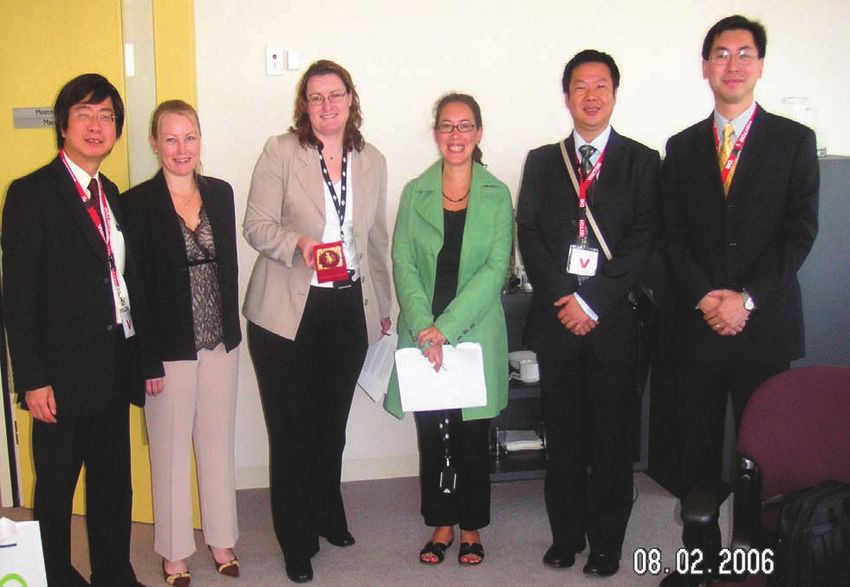
N E W S

Townsville schools play
Cybersmart Detectives
More than two hundred                  out personal information           the Broadcasting Services Act       internet safety matters,
Townsville schoolchildren              when they’re chatting online       1992. Awareness and education       primarily through its internet
recently participated in             • if children want to meet           are seen as essential               safety website,
Cybersmart Detectives,                 someone face-to-face who           components of the strategy to       www.cybersmartkids.com.au,
ACMA’s online safety activity          they've chatted with online,       manage potential risks              and printed resources, such as
that teaches children key              they should always take a          associated with the internet.       the brochures Cybersmart
internet safety messages. It was       parent with them                   ACMA works with internet            Guide and How to be Phone
the second activity to be held in    • people may not be who they         safety bodies such as NetAlert      Smart. The brochures are on the
Queensland and the first to            say they are in the online
exclusively involve Townsville         environment.
schools.                               The Cybersmart Detectives
   Cybersmart Detectives is an       activity was initially developed
innovative online game where         by Childnet International, a
children can learn, in a safe        body based in the United
environment, tips for safe           Kingdom, and operated under
online chatting and ways to          the name of Net Detectives
identify dangers associated with     until 2005. The activity is now
meeting people online. Internet      independently operated by E-
chat rooms are popular with          ngagelive. By agreement with
young people and internet chat       E-ngagelive, ACMA adapted
is often used by children and        the activity for use in Australian
teenagers, in conjunction with       schools under the name
mobile phone text messaging          Cybersmart Detectives, as part
and email, to make and stay in       of its program of activities to
touch with friends, plan social      educate the community about
activities and even do               internet safety.
homework.                              The activity is managed by
   ACMA organised the event in       internet safety experts,
                                                                             TOWNSVILLE SCHOOLCHILDREN PARTICIPATING IN THE

partnership with the Townsville      including law enforcement and
                                                                             CYBERSMART KIDS ACTIVITY

Police’s Juvenile Aid Bureau.        internet industry
The bureau approached ACMA           representatives, who deliver
to run Cybersmart Detectives         clues and respond to questions
after receiving interest from        from virtual control rooms.
schools eager to register for the    Children play the role of a
activity. The bureau provided a      Deputy Principal concerned
virtual ‘control room’ to guide      about the welfare of a new
students through the activity.       student, Sarah, who may be
School-based police officers         being bullied by someone she
were on hand to answer student       has met in an internet chat
questions after the event.           room. Guided by a series of
Support was also provided by         clues, children work
Queensland Police, who               collaboratively in teams to
operated a virtual control room      solve the mystery of what is
at their Brisbane Headquarters.      worrying Sarah, and why.
   Aimed at young people in the      Experts respond to the
upper primary school age range,      questions and theories posed by
Cybersmart Detectives uses the       the students, and guide the
internet to teach young people       teams through each of the clues.
key internet safety messages,        As the scenario unfolds, the         to raise awareness of internet      ACMA website
especially those related to use      children discuss the risks of        safety issues and provide           (www.acma.gov.au and go to
of internet chat rooms. These        certain online and offline           parents with information that       Internet > Content regulation >
key messages are:                    behaviours, and ways of              helps them supervise their          Community awareness).
• parents should monitor their       managing those risks.                children's internet usage.
   children’s use of the internet,     Australia’s co-regulatory            As part of the scheme,
   particularly chat rooms           scheme for internet content is       ACMA provides advice and
• children should never give         administered by ACMA under           assistance to families about

                                                                                                           ACMAsphere   |   Issue 7 – April 2006   3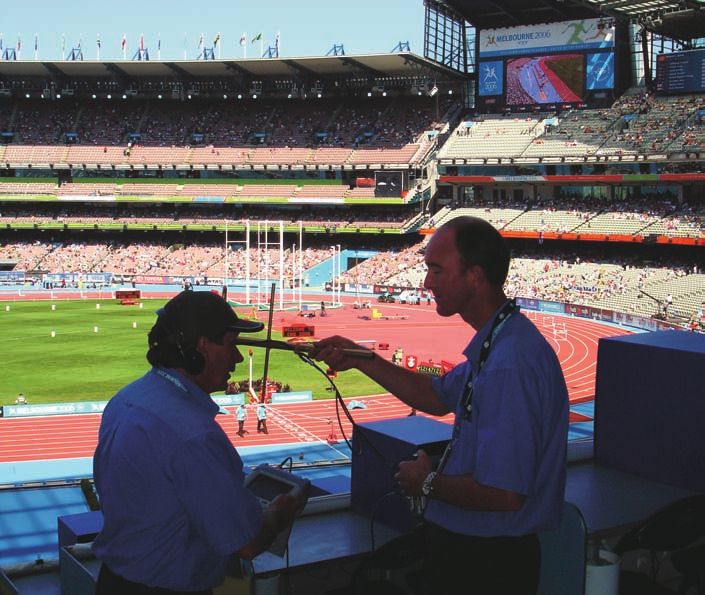
N E W S
ACMA regulation update
Speech by Lyn Maddock, ACMA Deputy Chair, at ATUG 2006 Conference: Collaborate, Communicate,
Innovate, on 7 March 2006
management, standards and
• monitoring and regulating
industry outputs, such as
quality, access, cost and
content, to ensure social
objectives are met.
Our regulatory intent is to
support a dynamic
communications sector. And the
very dynamism of the sector
creates real challenges for the
regulator. We do not want to
cramp the industry but we want
to make sure community
concerns are addressed.
How do we do that in this
dynamic environment, in a
market that is changing
increasingly quickly and in
which geography and national
borders are less important?
I have reflected from time to
time that our generation enjoys
a unique distinction. Our
forbears saw technological
change as the replacement of
one technology by another. We
have a more compressed
experience. I think we are the
first generation to have seen
whole technologies work out
their life-span within our own—
the audio cassette will have
come and gone, the fax held
sway for a decade or two before
succumbing to the internet, and
the job of computer operators as
we know them in the 70s and
80s has come and gone.
With this level of change in
ACMA DEPUTY CHAIR LYN MADDOCK SPEAKING AT THE CONFERENCE
the market, the old ‘command
My involvement with ATUG • industry responsibility as a distinctions between and control’ approach to
goes back to the early 1990s core principle radiocommunications, regulation becomes increasingly
when I was working at Westpac • transparency as a regulatory telecommunications and difficult. If we try to address
and we combined with ATUG tool. broadcasting still exist, they are community concerns through
to do some high quality analysis The creation of ACMA has becoming less important for command and control
on the economic benefits of been about more than just consumers. ACMA was mechanisms, we can act as a
deregulation in this area. The bringing together the ACA and established in recognition of roadblock to much of this
world moves on and I am now a the ABA. It has provided (and that. dynamism. I read that Stephen
member of a regulatory board. was meant to) a whole new way We have essentially two Carter, head of Ofcom in the
This conference provides me of looking at the world that functions: UK, recently described this
with the opportunity to talk recognised that digital • provision of services to challenge as ‘avoiding the
about the new ACMA and the technology had fundamentally industry to help them to transitory comfort of ill-formed
way we are approaching our changed the choices you can operate efficiently, for certainty’.
task. I want to talk particularly make in providing services and example, spectrum, phone So how do we approach the
about two aspects of our in the choices available to you numbers, allocation of challenge of ensuring the
approach to regulation: as consumers. While the licences, interference community’s social objectives
4 ACMAsphere | Issue 7 – April 2006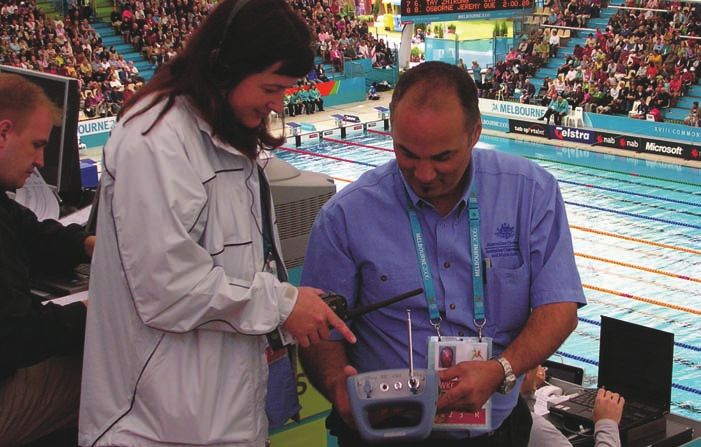
N E W S
are met without hobbling have done so and what we seem finally to be on the edge develop innovative services,
industry? expect. of a significant growth in increase quality and reduce
It makes sense to have a We will do this because: broadband penetration and prices.
reliance on industry • we need to be accountable for digital television take-up.
responsibility as one of the key our actions and We need to continue to
EMERGING CHALLENGES
How will ACMA manage the
elements of the regulatory • you need to know what we monitor performance by
emerging challenges posed by
approach. We recognise that are thinking and why we are Telstra’s network services in
the telecommunications,
industry itself is often best acting. rural Australia and have set up a
radiocommunications and
placed to evaluate and handle We will be more active in special team to focus on this.
broadcasting sectors?
trade-offs that might be needed. generating research which will The advent of VOIP or voice
ACMA is operating in a
As a relative newcomer to the go to the general issues where over internet protocol telephone
regulatory environment that is
world of telecommunications, I we may consider intervening. calls has forced us to look at
highly dynamic, unpredictable
was struck by the continuing And we will be more active in whether the current regulatory
and varied. It is likely to be a
debate around the use of ‘self- making public the details of framework is adequate. One of
regulator defined by its
regulation’ and ‘co-regulation’ individual cases where we use the big challenges to regulation
awareness of those new realities
to describe the regulatory our regulatory powers. here has been how to facilitate
implicit in the converged
environment in which the We will not make everything the entry of a useful new
broadcasting-
industry operates. public without consideration— technology without stifling it
telecommunications
Let’s look at what is there is often a fine balance to with the regulatory imperatives
marketplace. We want to be
intended: it is that industry as a be struck between transparency of the previous generation of
evidence-led in our approach
community has the first and privacy—but the bias will fixed-line and even mobile
and so will put a high priority
responsibility for acting to be towards transparency. This services.
on research and analysis.
ensure social objectives are may well be uncomfortable in Mobile communications
The changing environment
achieved. These social individual instances, where the continues to present new
may mean starting to look at
objectives will in the main be transgressions (in our view) of challenges, especially its
things quite differently and
consistent with your long-term particular companies are relationship with the internet
developing new strategies. We
economic interests. revealed, but we consider that and the question of how content
need to use our regulatory
We hope to provide you with in the main, good public policy should be regulated.
powers flexibly and cleverly to
the space to address them so commits us to this approach. Telecommunications
be able to handle emerging
they do not undercut your regulatory costs are a
issues.
commercial interests—you are continuing concern and we are
Regulators play a vital role in
TELECOMMUNICATIONS
best placed to do this. But conscious that ‘because you
informing consumers of their
ISSUES
where the social objectives are So what do we see as the pay’ is not an excuse for lack of
telecommunications issues rights and opportunities so that
not met or where some parties concern by us.
facing us over the next 12 they can better navigate the
are not meeting their We recognise the role of
months? marketplace. And education
obligations, we will act. conferences such as this one
A raft of new policy changes plays a central role in an
We want to make ‘industry and the need for openness. And
is being considered by authority’s ability to regulate in
responsibility’ work, so we are we need to do more to
government across all aspects the public interest because
reviewing the way we interact encourage consumer
of ACMA’s responsibilities, consumers require information
with you—we aim to be more participation in the regulatory
from the requirements for high and knowledge in order to make
research-based in assessing process.
definition television informed decisions.
what social objectives are The challenges are
broadcasting through to the So in conclusion, the
appropriate and how they can significant, but they also
regulatory obligations characteristics of the
be effectively met, to have early provide exciting opportunities
associated with the privatisation environment we are operating
discussions about these with for both the industry and the
of Telstra, our major in have changed. As regulators,
you and your representatives, regulator. We need to improve
telecommunications provider. our aim should be to create a
but to leave the method by the way ACMA operates so it
In particular, the full regulatory framework that
which you address issues more can be a ‘state of the art’
privatisation of Telstra, which is encourages the creation of
in your hands. regulator.
currently majority owned by the innovation and competition.
But if industry is to accept And for Australia to take full
government, and the likely To respond to the demands of
this responsibility with advantage of the social and
relaxation of the cross and a changing market environment,
confidence, it is important that economic opportunities
foreign ownership restrictions regulators must continue to
we as the regulator are more presented by technology and
in media may well transform evaluate whether the market
open about where we have service developments, it must
our broadcasting and that we have created allows
intervened, both broadly or in have a communications and
telecommunications players. competition and innovation to
individual cases, and in what media industry that is
As well as these changes, we flourish.
ways, and make clear why we constantly challenged to
ACMAsphere | Issue 7 – April 2006 5
N E W S
Spam Act review an opportunity to
update anti-spam framework
A review of the operations of the However, the activities and some areas of uncertainty. In Telecommunications Act be amended
Spam Act 2003 and the relevant methods utilised by spammers are particular, the rules for determining to make them more appropriate to
parts of the Telecommunications Act continually evolving and the ACMA customer ‘consent’ for the receipt of the spam context.
1997 that support it was announced submission recommended commercial electronic messages While the Spam Act has been
by the Minister for Communications, amendments to the Spam Act to could be more fully prescribed in generally successful in combating the
Information Technology and the capture some practices recently some areas. SMS marketing also is problem of spam originating in
Arts, Senator Helen Coonan, in adopted by professional spammers, creating some problems. ACMA Australia, the challenge now is to
December 2005. such as the inclusion of misleading suggested in its submission that a accelerate the global fight against
ACMA provided a submission to or deceptive sender or subject body representative of industry and spam. There must be appropriate
the review, which is being conducted information, and the use of consumers (such as the eMarketing regulatory, enforcement,
by the Department of compromised machines to send Code Body) could be asked to technological and cooperative
Communications, Information emails. develop detailed practices that could frameworks in place to detect and
Technology and the Arts (DCITA), in The Spam Act places considerable become ‘safe harbour’ provisions for punish professional spammers
February 2006. ACMA’s submission obligations on business in businesses. wherever they are located. This will
concluded that the legislation has appropriately controlling its email The ACMA submission also become increasingly important if
generally been successful, communications. Most businesses recommended that several powers spam continues its rise as the main
appropriate and ‘a model for spam made the required changes to their and obligations of ACMA related to delivery mechanism for e-security
legislation around the world’. practices when the Act was passed, the administration and enforcement threats and crime.
Most professional spammers that and many incurred considerable cost of the Spam Act be clarified. It was The ACMA submission to the
were active in Australia prior to the in doing so. As there is no evidence recommended that ACMA be given a review of the Spam Act is on the
commencement of the that the Spam Act is insufficient in legislative power to share ACMA website (www.acma.gov.au),
Telecommunications Act have ceased this regard, ACMA did not information with international and all submissions to the review
operations, and Australia has recommend any changes to the Act regulators, similar to the power held are on the DCITA website
dropped from tenth to twenty-third that would further impact on such by the Australian Securities and (www.dcita.gov.au).
on the list of worldwide spamming businesses. Investments Commission, and that
nations. However, businesses still face the complaint provisions of the
Retreat of the zombies
A trial of the Australian Internet internet, owners of these PCs may number of events or instances of the outcome of the AISI trial to
Security Initiative (AISI), an ACMA find themselves paying for bandwidth compromised PCs reported daily by decide whether to commence a wider
database containing up-to-date data they did not know they were using. ACMA to participant ISPs. The trend rollout of the initiative. ACMA
on ‘compromised’ personal Six Australian ISPs are currently has reduced from more than 60 commends participant ISPs in
computers, was launched on participating in the trial: Telstra events daily at the start of the trial assisting with the trial and assisting
November 2005 by the Minister for BigPond, OptusNet, Westnet, to fewer than 20 per day at the end in efforts to make the internet a
Communications, Information Uecomm, Pacific Internet and West of March 2006. more safe and secure environment, to
Technology and the Arts, Senator Australian Networks. These ISPs ACMA, in collaboration with other the mutual benefit of business and
Helen Coonan. The data is supplied to receive daily reports from ACMA on government agencies, is assessing consumers.
internet service providers (ISPs) for infected PCs on their networks. The
Internet Security Initiative – Reportable Events – 1 Nov 2005 to 1 April 2006
them to take action to rectify the ISPs then contact the customers 120
problems caused by these PCs. operating these PCs to advise them
These are generally ‘zombie’ PCs— of actions they can take to fix the
100
computers that have been infected problem. If the problem is not fixed
by a computer virus, trojan horse or and the PC remains a threat to other
80
similar intrusion, including hacking. internet users, the computer may be
Once infected, zombies can be used disconnected from the internet until
to commit online crimes, such as the problem is resolved. 60
sending spam or hosting offensive Preliminary results from the AISI
material, remotely from anywhere in trial indicate it is having a positive 40
the world without the computer impact, in conjunction with other
owner knowing—hence the term internet security activities, in 20
‘zombie’. In addition to the reducing the incidence of
detrimental impact zombie PCs have compromised PCs on the Australian
0
internet. The chart records the total
1/11/06
8/11/05
15/11/05
22/11/05
29/11/05
6/12/05
13/12/05
20/12/05
27/12/05
3/01/06
10/01/06
17/01/06
24/01/06
31/01/06
7/02/06
14/02/06
21/02/06
26/02/06
7/03/06
14/03/06
21/03/06
26/03/06
on the safety and security of the
6 ACMAsphere | Issue 7 – April 2006
N E W S

Spam code registered                                                                  Summary of
                                                                                      code provisions
A world-first code of practice on          technical best practices being            The code requires internet service providers and email service providers:
countering spam for internet and           promoted by global internet and           • to provide spam filtering options to their subscribers
email service providers, developed by      email service provider associations.      • to tell subscribers what default filtering of the subscriber’s email the
industry to support the Spam Act               The Australian internet industry is     internet or email service provider does at its own servers
2003, was registered by ACMA in            already actively combating spam. For      • to advise subscribers how to deal with and report spam
March 2006.                                example, three-quarters of all            • to ensure their acceptable use policies prohibit the use of their networks for
    Registration of the Internet           internet service providers in Australia     spamming; and to inform subscribers to that effect and
Industry Spam Code of Practice             already voluntarily offer a spam-         • to comply with all lawful requests of law enforcement and regulatory
shows Australia is again leading the       filtering product to their customers        agencies investigating spam activity.
world in the global fight against          as either a free or charged service       The code requires internet service providers:
spam, which requires joint action by       (Australian Bureau of Statistics          • not to have open relay or open proxy servers, and to impose the same
industry, regulators and end-users.        figures).                                   obligations on their subscribers through their acceptable use policies
    Industry codes represent one               The code applies to all 689 active    • to retain the right in their acceptable use policies to scan their own
element of Australia’s multilayered        internet service providers in               networks for subscribers’ misconfigured mail and proxy servers
strategy against spam, which               Australia, as well as global email        • to ensure their acceptable use policies allow for the immediate termination
includes legislation, technical counter-   service providers in Australia, such as     of connections they host where the connection has become an open relay or
measures, education and awareness          Hotmail and Yahoo.                          open server (a zombie), either due to intentional misconfiguration or to
initiatives and international                  Registration of the code allows         unintentional infection by a virus or other intrusion
cooperation.                               ACMA to direct individual internet        • if notified that a subscriber’s account is spamming (for example, where the
    Under the code, internet and email     and email service providers to comply       subscriber’s computer is a zombie), to take reasonable steps to warn the
service providers must provide spam-       with the code if necessary. The code        subscriber and offer suggestions on how to correct the problem—the
filtering options to their subscribers.    obligations will come into force on 16      internet service provider may immediately terminate the connection if the
They must also give end-users              July 2006.                                  problem is serious or continuing and
information about how to deal with             The code was developed by an          • if the internet service provider is using dynamic IP address allocation, to
spam and have a process for handling       Internet Industry Association (IIA)         use all reasonable efforts to retain records of subscriber allocation for at
complaints from subscribers.               Task Force, which included                  least seven days.
    The code also sets out how             representatives from the Western
                                           Australian and South Australian
                                                                                     SUMMARY OF BEST PRACTICE TECHNICAL MEASURES
internet and email service providers
                                                                                     An internet service provider or email service provider
will address the sources of spam           internet service provider associations,
                                                                                     • should publish sender policy framework (SPF) records for each domain
within their own networks, including       and was chaired by Mr Jeremy
                                                                                       administered by it and
actual spammers, misconfigured             Malcolm of the Western Australian
                                                                                     • shall comply with all Asia Pacific Network Information Centre requirements
customer email servers and the virus-      Internet Association. The IIA
                                                                                       for keeping WHOIS (domain names and IP addresses) data updated,
infected computers used to spread          committee consulted on a draft of
                                                                                       including ensuring that their own internet service provider customers do
spam (known as ‘zombies’).                 the code with consumer and business
                                                                                       the same.
    Suggested technical best practices     representatives, including calling for
for hardening the network against          public comment.                           IN ADDITION, AN INTERNET SERVICE PROVIDER SHOULD:
spam and related threats such as               The code is on the ACMA website       • impose reasonable limits on the rate subscribers can send email
zombies are also included in the code.     at www.spam.acma.gov.au.                  • allow subscribers to authenticate to their mail servers using SMTP AUTH
These are consistent with the                                                          (see below) or an equivalent
                                                                                     • not distribute customer premises equipment that is configured by default
                                                                                       so as to allow remote administration across the internet
                                                                                     • prevent automated registration of email accounts
                                                                                     • provide reverse domain name system entries for any server on an internet
                                                                                       service provider’s network being used to send email, including those of the
                                                                                       internet service provider’s subscribers and
                                                                                     • where technically and commercially viable, not permit computers at
                                                                                       dynamically allocated internet protocol addresses to connect directly via
                                                                                       internet port 25, which is generally used for SMTP.

                                                                                     Note: SMTP-AUTH extends SMTP (simple mail transfer protocol—a protocol for
                                                                                     sending email messages between servers) to include an authentication step through
                                                                                     which the client effectively logs in to the mail server during the process of sending
                                                                                     mail.

                                                                                                                             ACMAsphere      |   Issue 7 – April 2006   7
N E W S

                                                                                                        identity-checking regime for pre-paid            Telecommunications Act 1997. The
Pre-paid mobile identity-check                                                                          mobile phones similar to the
                                                                                                        Australia system. Other countries
                                                                                                                                                         IPND is managed by Telstra as a
                                                                                                                                                         condition of its carrier licence. It
processes being reviewed                                                                                have announced tightening of
                                                                                                        identity-security arrangements that
                                                                                                                                                         contains customer data including a
                                                                                                                                                         public number and associated
ACMA is reviewing the way                          stations, and requiring mobile phone                 may have similar benefits.                       information such as the customer’s
telephone companies collect identity               companies to collect and verify the                     Pre-paid mobile phone services                name and address and the name of
information about their pre-paid                   information at the time the pre-paid                 enable users to pay in advance for               the service provider. This data may
mobile phone customers.                            mobile service is activated.                         the costs of their mobile phone calls.           only be accessed and used for certain
   This information can help                          The rules applying to supply of                   As credit is reduced, the user has the           ‘approved purposes’ such as
emergency service organisations                    pre-paid public mobile                               option of purchasing another pre-                providing directory services,
respond quickly to time-critical                   telecommunications services are set                  paid service or recharging the credit            producing public number directories,
emergencies and also help identify                 out in the Telecommunications                        for their existing service. Post-paid            and assisting law enforcement
people who make hoax calls to                      (Service Provider – Identity Checks                  services typically involve a fixed-term          agencies or emergency service
emergency services. It can also be                 for Pre-paid Public Mobile                           contract with bills sent to the                  organisations.
used to assist law enforcement and                 Telecommunications Services)                         customer at regular intervals.                      Telecommunications service
national security agencies in                      Determination 2000, which provides                      In 2001–02, pre-paid services                 providers must ensure the IPND
investigating crime, including                     for three alternative methods of                     accounted for approximately 32.5                 Manager receives correct information
prosecuting people who make life-                  identity checking:                                   per cent of the mobile phone service             about their customers for the
threatening calls.                                 • a point-of-sale process where                      market in Australia. At the close of             effective operation of the 000
   The information is stored in the                   carriage service providers collect                2004–05, pre-paid services                       emergency call service. They are also
Integrated Public Number Database                     information about purchasers of                   accounted for approximately 51 per               required to provide assistance to law
(IPND), an industry-wide database of                  pre-paid services, including name                 cent of the 16.5 million mobile                  enforcement and national security
all listed and unlisted public                        and address, at the time the                      services in operation in Australia and           agencies. A vital part of this is to
telephone numbers. The current                        service is purchased or                           represented the major area of                    maintain accurate records of their
information collection processes are               • a post-sale process where they                     growth in the mobiles market. This               customers’ personal details.
not providing data of sufficient                      verify collected identity                         strong growth can be expected to                    As part of its review, ACMA
quality and consistency.                              information or                                    continue, particularly as pre-paid               released a discussion paper, Identity
   Other possible improvements to                  • a process where a carriage service                 mobile services are enhanced with                Checks for Pre-paid Mobile Services,
the identity-checking process, which                  provider could comply with an                     the addition of value-added services             for which submissions close on
may reduce industry costs and                         ACMA-approved compliance plan.                    previously only available to post-paid           28 April 2006. For more information
provide a simpler process for                         In response to increased concerns                 customers.                                       about the review, contact ACMA’s
consumers, are also being examined.                worldwide about identity security                       All telecommunications carriage               Community and National Interests
These include removing the identity-               and the anonymous use of pre-paid                    service providers are required to                section by email cnit@acma.gov.au
checking process from retail outlets               mobile phones, several countries have                provide information for the IPND                 or telephone 03 9963 6800.
such as supermarkets and petrol                    announced the introduction of an                     under Part 4 of Schedule 2 to the

  New standards for narrowcast television services                                                                                                     organisations by calling for donations and
                                                                                                                                                       publishing their website addresses.
                                                                                                                                                          Work on the investigation highlighted a
To prevent the broadcast of programs that              The definition of ‘terrorist organisation’ in   codes amendment because a standard              gap in the regulatory framework. Under the
directly recruit or solicit donations for          the standards is linked to the list of terrorist    enables stronger, more expeditious              relevant class licence condition,
terrorist organisations and terrorist              organisations prescribed in the                     enforcement mechanisms to be used in the        narrowcasters only commit an offence and
activities, ACMA has determined new                Commonwealth Criminal Code Regulations              event of a breach and does not require the      breach the class licence condition if they
program standards for subscription and open        2002.                                               complainant to complain to the broadcaster      intend to use a broadcasting service to
narrowcasting television services. The new             The standards place the obligation on           first.                                          commit the offence or are reckless in their
standards reflect existing Commonwealth            television narrowcasters to ensure that                 ACMA decided to impose standards            knowledge of whether the service is being
anti-terrorism laws and will ensure that           prohibited programs will not be broadcast.          following an investigation into the broadcast   used to commit the offence.
ACMA can act more effectively if                   Program content that is part of a bona fide         of Al Manar programming by Television and          In most cases, narrowcasters will not
inappropriate material is broadcast.               report, comment on a matter of public               Radio Broadcasting Services (TARBS) in          have the intention or direct knowledge
   The standards state that open and               interest or political opinion is not prohibited.    2004. Al Manar is a channel based in            required for such an offence. They are not
subscription narrowcast television services        This exception is intended to ensure that           Lebanon and was being delivered by TARBS,       necessarily directly involved in program
must not broadcast programs that can               freedom of expression is not unduly                 a service provider based in Australia, which    production, may acquire their content from
reasonably be construed as:                        restricted.                                         offered subscription narrowcasting services.    third parties and may not have viewed the
• directly recruiting persons to join, or              The current television narrowcast codes             While the investigation was terminated      programs that they broadcast.
   participate in, the activities of a terrorist   of practice already limit the ability of            before findings were made owing to the             The new standards address this gap by
   organisation; or                                narrowcasters to broadcast views that are           cessation of the TARBS business, the            prohibiting programs that directly recruit
• soliciting or assisting in the collection or     likely to incite or perpetrate hatred towards,      investigation had revealed that programs on     participants or solicit donations for terrorist
   provision of funds for a terrorist              or vilify particular groups, and they provide       the Al Manar channel included material          organisations, regardless of a narrowcaster’s
   organisation.                                   adequate safeguards on these matters.               directed towards soliciting funds and           intention or knowledge about the program
                                                       Determining standards was preferred to          promoting the activities of terrorist           content.

8    ACMAsphere       |   Issue 7 – April 2006
N E W S

High level of activity in administering the Spam Act                                                                                    1000

                                                                                                                                        900

Up to 31 March 2006, ACMA has                              reporting system                       • entered into enforceable            800

undertaken a level of complaint and                    •   received approximately 300,000            undertakings with five
                                                                                                                                        700
enforcement action under the Spam                          reports of spam to ACMA’s                 companies and individuals
Act 2003 that indicates the                                ‘Reporting Spam’ email address         • issued 13 fines collectively to     600

considerable activity occurring in this                •   responded to more than 2,700              five companies/individuals and
                                                                                                                                        500
regulatory area. In this period of                         verbal and written enquiries           • commenced action in the
almost two years since the Spam Act                        submitted by business and                 Federal Court against one          400

came into effect on 10 April 2004,                         consumers                                 alleged global spammer.
                                                                                                                                        300
ACMA has:                                              •   written to around 600 companies           The chart presents quarterly
• received 4,162 formal complaints                         advising them of their obligations     complaint figures with SMS            200

• received approximately 880,000                           under the Spam Act                     complaints separately highlighted
                                                                                                                                         100
  reports of spam through ACMA’s                       •   issued formal warning letters to       to indicate their growing incidence
  SpamMATTERS automated                                    10 companies or individuals            since 2004.                              0
                                                                                                                                               Jan 04 Sep 04 Dec 05 Mar 05   Jun 05   Sep 05 Dec 05   Mar 06

Report on internet performance released
Australian internet performance                        availability and latency.                  current engineering limitations of the           regional areas and caution should be
across different technologies and                         The speed with which internet           technologies.                                    exercised in drawing inferences about
access plans is generally consistent                   users can download data was a key             Actual data rates experienced by              the applicability to Australian
with transmission protocols and the                    performance consideration. The study       subscribers are unlikely to be exactly           internet users more generally.
inherent nature of the internet,                       found that digital subscriber line         as advertised. The advertised rates                 ACMA is currently considering the
according to a recent ACMA report.                     (DSL) and dial-up internet, which          (the theoretical maximum rate                    most appropriate strategy for future
   The report, Understanding your                      serve the majority of Australian           advertised in access plans) cannot be            monitoring of internet services.
internet quality of service 2004–05,                   internet users, achieved download          guaranteed in every instance because                The report is on the ACMA
provides some insights into the                        data rates of around 83 and 74 per         of technical and environmental                   website (www.acma.gov.au and go to
performance consumers are                              cent of advertised rates respectively.     factors that are outside an internet             Internet > Internet quality of
experiencing in using internet                            As expected, cable users achieved       service provider’s control.                      service) or email industry.analysis
services. It assesses Australian                       high download and upload data rates,          The data used in this study comes             @acma.gov.au. The same web page
consumers’ experience in using                         but with greater levels of variation,      from a sample of internet users that             contains other information about
internet services, including download                  while wireless services also displayed     have been self-selected and is                   internet service, including a link to a
and upload data rates across major                     greater variation than DSL. These          therefore not randomly generated.                fact sheet about factors affecting
cities and regional areas, network                     results are consistent with the            Data samples are also limited for                internet performance.

CHILDREN’S AND PRESCHOOL PROGRAMS
Programs granted classification, February 2006

                                    Episode                                                       Country of
Program title           Series                         Program style             Program type                   New/ renewal Class.        Decision date Applicant
                                    description                                                   origin

                                                                                                                                                                   Media World Pictures Pty
Dogstar                 1           1–13               Animation                 Drama – series   Australia     New             CD         28/2/06
                                                                                                                                                                   Ltd

Lockie Leonard –
                 1                  1–13               Live action               Drama – series   Australia     New             CD         10/2/06                 RB Films Pty Ltd
Human Torpedo

                                                                                                                                                                   Australian Children's
Mortified               1           20–26              Live action               Drama – series   Australia     New             CD         21/2/06
                                                                                                                                                                   Television Foundation

                                                                                                                                                                   Southern Star
Outriders               1           1–26               Live action               Drama – series   Australia     Renewal         CD         2/2/06
                                                                                                                                                                   Entertainment Pty Ltd

Pirate Islands 2 – The                                                                                                                                             Jonathan M Shiff
                       2            1–13               Live action               Drama – series   Australia     New             CD         28/2/06
Lost Treasure of Fiji                                                                                                                                              Productions Pty Ltd

                                                                                                                                                                   Southern Star
Sleepover Club          3           1–26               Live action               Drama – series   Australia     New             PRC        24/2/06
                                                                                                                                                                   Entertainment Pty Ltd

C – children’s program, P – preschool program, CD – C drama, PRC – provisional

                                                                                                                                           ACMAsphere              |   Issue 7 – April 2006                    9
N E W S

                                                                                           200th carrier
                                                                                           licence issued
                                                                                           The number of telecommunications carrier licences issued has risen from
                                                                                           three to 200 in the period since the introduction of full and open
                                                                                           competition in July 1997.
                                                                                              ACMA issued the 200th licence on 9 March 2006 to Dragnet Internet
                                                                                           Service Pty Ltd, an internet service provider operating from Albury that
                                                                                           provides services throughout Victoria and New South Wales to rural
                                                                                           areas and some major inland cities. It proposes to expand its operations
                                                                                           by building its own infrastructure to provide wireless internet services in
                                                                                           rural Victoria and New South Wales.
                                                                                              The majority of new carrier licences have been issued to operators
                                                                                           providing wireless broadband services in regional and rural areas. Cheap
                                                                                           wireless technology, government subsidies to operators providing services
                                                                                           in the regional and rural areas and a growing economy have driven the
                                                                                           increase in the number of carriers.
                                                                                              Another factor has been a reduction in carrier licence charges. From
                                                                                           1 July 2004, ACMA reduced the carrier licence application fee from
                                                                                           $10,000 to $2,200 and the minimum annual charge from $10,000 to
                                                                                           less than $1,000. Up to that date, ACMA had issued 134 carrier licences,
                                                                                           with 66 licences issued in the period since.
RAOUL CRUZ DIRECTOR OF DRAGNET INTERNET SERVICES RECEIVES THE 200TH
CARRIER LICENCE AT ACMA’S MELBOURNE OFFICE FROM JONQUIL RITTER, EXECUTIVE                     A list of licensed carriers is on the ACMA website at www.acma.gov.au
MANAGER ALLOCATIONS, AND ROBERT JOHNSTON, MANAGER, TELECOMMUNICATIONS                      (go to Licences > Telecomms > List of licensed carriers).
LICENSING AND NUMBERING ALLOCATION

   New community radio licence for
   Upper Murray
   ACMA has allocated a new community radio               (2AAY) and one community broadcasting service              community broadcasting licence that is a
   licence in the Upper Murray region of New South        (2BDR – Corryong only). The area is also served by         broadcasting services bands licence in the same
   Wales and Victoria to Upper Murray Community           two national television services (ABC and SBS) and         licence area and
   Radio Inc. (UMCR), which will add to the range and     three commercial television services (Prime TV,         • the undesirability of the
   diversity of services in the area.                     Southern Cross Ten Victoria, and WIN TV).                  Commonwealth, a
      The service will broadcast on 88.7 MHz, 98.7           Part 6 of the Broadcasting Services Act 1992            state or territory or a
   MHz and 107.7 MHz on the FM band. UMCR is              provides for the allocation of community                   political party being
   currently broadcasting on 88.7 MHz and 107 MHz         broadcasting licences. Applicants are required to          in a position to
   under a temporary community broadcasting licence       compete for licences on the basis of merit. The            exercise control of
   that began in 1994 and expires on 30 April 2006.       process includes opportunity for the public to             a community
   The permanent licence will commence on 1 May           comment on applications received.                          broadcasting
   2006.                                                     In considering applications, ACMA must have             licence.
      Applications for two Upper Murray licences were     regard to:                                                 Under section 85 of
   invited in 2005 and UMCR was the only applicant        • the extent to which the proposed service would        the Broadcasting
   for this licence. Its application was assessed with       meet the existing and perceived future needs of      Services Act, ACMA is
   particular regard to whether the proposed general         the community within the licence area of the         not required to
   interest service would meet the existing and              proposed service                                     allocate a community
   perceived future needs of the community in the         • the nature and diversity of the interests of that     broadcasting licence
   Upper Murray area. UMCR currently operates                community                                            to any applicant.
   24 hours a day, seven days a week. The proposed        • the nature and diversity of other broadcasting
   service will provide programs that will cover a wide      services (including national broadcasting
   range of local issues to appeal to the general            services) available within that licence area
   community in the Upper Murray.                         • the capacity of the applicant to provide the
      The Upper Murray area is currently served by           proposed service
   four national radio services (3ABCFM, 3ABCRN,          • the undesirability of one person being in a
   3MRR and 3JJJ), one commercial radio service              position to exercise control of more than one

   10   ACMAsphere     |   Issue 7 – April 2006
N E W S
OFTA talks anti-spam with ACMA
Representatives of the Office of the therefore be able to opt out of all includes marketing via recorded voice messages as a low-cost form of
Telecommunications Authority marketing via a certain medium by telephone calls. In Hong Kong, local marketing. Fax marketing (currently
(OFTA) in Hong Kong recently visited simply registering on the relevant list. calls are free and as a result, many excluded from Australia’s Spam Act)
ACMA’s Melbourne office to discuss The proposed legislation also companies use recorded voice will also be covered by the new law.
ACMA’s anti-spam strategies.
The Hong Kong Government is in
the process of introducing anti-spam
legislation. It has decided to adopt
‘opt-out’ legislation, similar to the
United States ‘Can-Spam’ Act,
instead of ‘opt-in’ legislation like the
Australian Spam Act. In an opt-out
regime, companies can send
electronic messages to potential
customers until the recipient chooses
to unsubscribe. In Australia, a sender
needs the consent of the recipient
before a commercial electronic
message can be sent.
Hong Kong intends to supplement
its opt-out regime with separate ‘do-
not-contact’ lists for voice telephony,
fax and short message service.
Businesses and consumers will
LEFT TO RIGHT: OFTA'S ASSISTANT DIRECTOR, SO TAT-FOON, ACMA'S SANDY KNOWLES, HEATHER NEATE AND JACKIE FAM, OFTA'S
REGULATORY AFFAIRS MANAGER, ELVIN LAM, AND HEAD OF INFORMATION AND COMMUNICATIONS
TECHNOLOGIES, HENRY CHANG
If an email seems phishy, don’t take the bait
ACMA has renewed its warning to the increased intensity and technical offshore, it is extremely difficult to should only visit a bank, retailer or
consumers to take precautions sophistication of phishing scams. recover or police. credit card website directly by typing
against ‘phishing’, as part of a four- They come in different shapes and ACMA advises that people should a known website address themselves
week campaign by the Australasian sizes, but they all share a common not respond to emails asking for into their internet browser, or by
Consumer Fraud Taskforce to help purpose—to trick people into confidential information, account using their Favourites list—not by
people protect themselves from disclosing personal details such as details or passwords. Customers clicking on email links.
scams. PINs and passwords or to click on a
‘Phishing’ refers to fraudulent link that downloads a dangerous
messages usually sent via email (or in code that can capture personal
some cases a telephone call) and information.
used to gain illicit access to personal The ploys used appear legitimate,
and banking information. These such as asking people to supply
messages appear to come from personal information in response to
legitimate businesses, most warnings about ‘security and
commonly financial institutions. They maintenance upgrades’, ‘investigation
are designed to lure recipients into of irregularities’ or ‘bills or charges
disclosing personal data such as bank due.
account numbers, passwords and More and more of these attacks
credit card numbers, which are then are being committed by sophisticated
used to commit fraud. crime gangs. The increasing
The Australian Bankers sophistication of the scams means
Association has advised that banks they can all too easily slip under the
and other financial institutions will guard of many computer and
NEVER initiate a telephone call or internet users. Phishing scams often
email asking for your password, PIN originate from overseas?once
or personal banking details. Australians respond and money or
Phishing isn’t new. What is new is personal information has gone
ACMAsphere | Issue 7 – April 2006 11N E W S
New scheme to reimburse consumer code development costs
Under a new scheme, Refundable costs are able to the telecommunications industry by ACMA, such as codes made
telecommunications industry be approved by ACMA before a can apply for a declaration of under the Broadcasting Services
bodies and associations can now code is developed, which will eligibility for reimbursement at Act 1992.
apply to ACMA for provide increased funding the time a code is proposed, and Until now,
reimbursement of the refundable certainty. Refundable costs are required to provide an telecommunications industry
costs they incur in developing include the costs of securing estimate of the total costs they bodies and associations have
consumer-related professional services and expect to incur. A declaration of directly borne most of the cost
telecommunications industry specialist advice to assist in eligibility will be in force for of code development, with the
codes. timely code development. two years and a claim for exception of financial assistance
Industry self-regulatory bodies Some costs are non- reimbursement can be made in provided to some consumer
and associations will be able to refundable, such as costs not that period once the code is representatives by the Minister
recover the costs of consumer wholly related to the developed and submitted to for Communications,
code development from industry development of a code or that ACMA for registration. Information Technology and the
through carrier licence charges have been funded through other Only certain codes are Arts under subsection 593(1) of
collected annually by ACMA, means (for example, by covered by the reimbursement the Telecommunications Act.
which are incurred by carriers in membership fees, salary or scheme. Codes that do not deal Funding arrangements under this
an amount proportionate to their Commonwealth funding), but wholly or mainly with the subsection will be varied to
market share. ACMA will consider all other relationship between carriage prevent duplication of funding.
The scheme applies to categories of costs. Costs may service providers and their retail A guide to the reimbursement
telecommunications industry only be reimbursed if ACMA is customers are excluded, such as scheme and online application
codes that deal principally with satisfied that the total of the codes that deal wholly or mainly forms are on the ACMA website
consumer-related issues and are claim is reasonable. with community safeguards or at www.acma.gov.au (go to
submitted to ACMA for Bodies or associations that network operability. The scheme Industry > Codes >
registration. represent a particular section of does not cover codes made Reimbursement of Code
under other legislation overseen Development Costs).
TEMPORARY COMMUNITY BROADCASTING LICENCES ALLOCATED, 31 JANUARY–15 MARCH 2006
Licence area Licensee Community served Frequency Start Finish Allocated
New South Wales
Milton Ulladulla & Districts Community Radio
Ulladulla RA1 General 102.7 MHz 7/2/06 6/2/07 31/1/06
Association of Broadcasters Inc.
Coffs Harbour RA3 Coffs Harbour Christian Broadcasters Inc. Christian 94.1 MHz 1/3/06 28/2/07 2/2/06
Taree RA3 Manning Great Lakes Christian Broadcasters Inc. Christian 106.5 MHz 16/3/06 15/3/07 2/2/06
Narrandera RA1 Narrandera District Community Radio Inc. General 92.3 MHz 3/5/06 2/5/07 15/3/06
Queensland
Weipa RA1 Cape Care Association General 94.5 MHz 22/2/06 21/2/07 31/1/06
Tiaro RA1 Tiaro Shire Community Centre Inc. General 107.1 MHz 1/3/06 28/2/07 2/2/06
Bundaberg Burnett Community Broadcasting
Bundaberg RA2 General 96.3 MHz 9/3/06 8/3/07 27/2/06
Association Inc.#
Bundaberg RA2 Bundaberg Media Aboriginal Corporation# Aboriginal 96.3 MHz 4/7/06 28/12/06 6/3/06
Tasmania
Oatlands RA1 Southern Midlands Community Radio Station Inc. General 97.1 MHz 5/5/06 4/5/07 15/3/06
Victoria
Kilmore RA1 Mitchell Community Radio Inc. General 97.1 MHz 13/2/06 12/2/07 31/1/06
Bendigo RA4 Central Victorian Gospel Radio Inc Christian 101.5 MHz 1/3/06 28/2/07 2/2/06
Western Australia
Port Hedland RA2 Hedland Community Radio Inc Aboriginal 101.3 MHz 30/1/06 29/1/07 30/1/06
Perth RA2 Capital Community Radio Inc.# Senior Citizens 90.5 MHz 21/3/06 20/3/07 9/3/06
Perth RA2 Western Sports Media Inc.# Sport 90.5 MHz 21/3/06 20/3/07 9/3/06
# Operating under a time-share arrangements
12 ACMAsphere | Issue 7 – April 2006N E W S
Tanzanian visitor hears
about consumer issues
Dr Cleophas Kente Rutabingwa, Chief Executive Office of the Consumer
Consultative Council (CCC) of the Tanzania Communications Regulatory
Authority, recently spent several days visiting ACMA. He was keen to learn from
ACMA’s experience of consumer issues in the communications sector in
Australia and to meet with other regulatory bodies as well as consumer
advocacy groups.
Dr Rutabingwa was particularly interested in ACMA’s approach to consumer
consultation through the Consumer Consultative Forum and our current
proposal to include industry representatives on the forum to achieve better
balanced outcomes.
The Tanzanian CCC is a relatively new body and faces multiple challenges in
advocating for lower tariffs, fairer billing systems, high quality service delivery
and universal access. There is also a need to ensure Tanzanian consumers are
better informed about their rights and consumer law.
During his visit, as well as discussing regulatory and consumer interest
Telecommunications Industry matters with ACMA representatives, Dr
Rutabingwa met with the Deputy Telecommunications IndustryOmbudsman and
representatives of the Australian Competition and Consumer Commission, the LEFT TO RIGHT: VINCE HUMPHRIES, MANAGER CONTENT, CREDIT
MANAGEMENT AND INFRASTRUCTURE, MICK OWENS, ACTING MANAGER
Australian Communications Industry Forum, the Consumer Telecommunications INTERNATIONAL TELECOMMUNICATIONS, DR RUTABINGWA, NERIDA
Network and the Australian Telecommunications Users’ Group (ATUG). While in O’LOUGHLIN, GENERAL MANAGER INDUSTRY OUTPUTS, AND JACKIE THORPE,
FORMERLY OF ACMA’S CONSUMER INTERESTS SECTION
Australia, he also attended the ATUG conference, held in Sydney in early March
2006.
Guidelines for ACMA’s use of enforceable undertakings released
Guidelines about ACMA’s use of regulatory measures available to ensure that the regulated entity’s An undertaking is a formal
enforceable undertakings associated ACMA and could be used as an process of compliance is ongoing, for promise to act or refrain from acting
with compliance with alternative to, or in addition to, the example, compared to a one-off fine. in a particular manner. Enforceable
telecommunications obligations were exercise of other enforcement ACMA can accept enforceable undertakings for the purposes of the
released recently. Enforceable powers. Measures available to ensure undertakings about compliance with Telecommunications Act are a
undertakings are aimed at compliance with telecommunications the Telecommunications Act 1997 person’s written promise expressed
encouraging behavioural change in an obligations include advice and and the Telecommunications to be undertakings under section
organisation. encouragement, formal warnings, (Consumer Protection and Service 572B of the Telecommunications Act
They are able to address systemic enforceable undertakings, Standards) Act 1999. It may accept which are accepted by ACMA.
problems rather than simply penalise infringement notices, remedial enforceable undertakings at any time, Practically, they are included in a
isolated instances of non-compliance directions or notices to comply, including during or following an document signed by both parties
or misconduct and a key advantage cancellation and suspension of investigation of a breach or alleged which can be used by ACMA as the
of this approach from the regulator’s licences, court action, and civil and breach of these Acts. Undertakings basis for a court order without
point of view is that the undertaking criminal penalties. are enforceable by the Federal Court. ACMA having to establish, in court, a
party takes responsibility for its own While ACMA seeks to use the ACMA may accept undertakings that contravention of the relevant Act if
organisational and behavioural minimum power or intervention a person will take specified action or the promise is broken.
change. necessary to achieve a sustained and refrain from taking specified action Enforceable undertakings can be
This power has been successfully ongoing commitment to compliance to comply with these Acts, or take cancelled by ACMA, or withdrawn or
used by other regulators to require from regulated entities, the ability to action directed towards avoiding varied by the undertaking party with
compliance in a cost-effective and accept undertakings is seen as a contravention in the future. ACMA’s consent.
tailored manner. It is similar to the more responsive and flexible ACMA also has the power to Unless exceptional circumstances
powers of the Australian Competition regulatory tool. Undertakings have accept enforceable undertakings to apply, ACMA will publish enforceable
and Consumer Commission, the advantages over other regulatory prevent spam under the Spam Act undertakings on its website at
Australian Securities and measures—they can save time and 2003, although that framework is www.acma.gov.au, as they are given.
Investments Commission and the the financial and court resources slightly different. Accordingly, these Guidelines for the use of enforceable
Australian Prudential Regulation required for litigation; they allow guidelines do not apply to the undertakings – telecommunications
Authority to accept enforceable flexibility and compromise, in that acceptance of enforceable obligations is also on the ACMA
undertakings. both parties can contribute to undertakings under the Spam Act, or website.
The acceptance of enforceable structuring the compliance action; to undertakings that may be given
undertakings is part of a suite of they encourage learning; and they under other legislation.
ACMAsphere | Issue 7 – April 2006 13You can also read


