HUMANITARIAN NEEDS OVERVIEW OPT - HUMANITARIAN PROGRAMME CYCLE 2021 - OCHA oPt
←
→
Page content transcription
If your browser does not render page correctly, please read the page content below
WORKING DOCUMENT
                   WORKING DOCUMENT
HUMANITARIAN            HUMANITARIAN
                        PROGRAMME CYCLE

NEEDS OVERVIEW
                        2021
                        ISSUED DECEMBER 2020

OPT

                                               1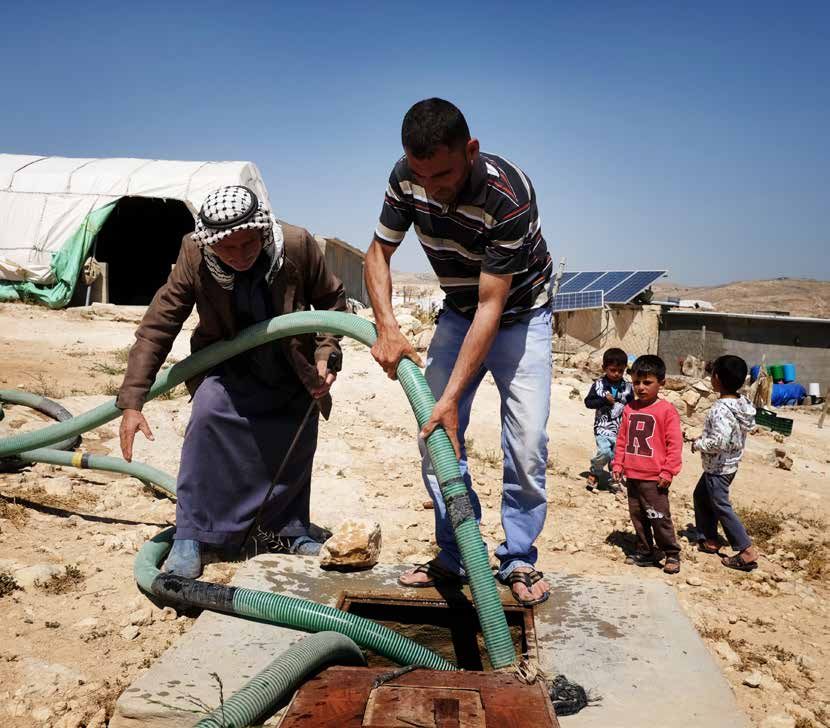
HUMANITARIAN NEEDS OVERVIEW 2021

About                                                                      Get the latest updates

This document is consolidated by OCHA on behalf of the                     OCHA coordinates humanitarian action to
                                                                           ensure crisis-affected people receive the
Humanitarian Country Team and partners. It provides a shared               assistance and protection they need. It
understanding of the crisis, including the most pressing                   works to overcome obstacles that impede
humanitarian need and the estimated number of people who                   humanitarian assistance from reaching people
                                                                           affected by crises, and provides leadership in
need assistance. It represents a consolidated evidence base and
                                                                           mobilizing assistance and resources on behalf
helps inform joint strategic response planning. The designations           of the humanitarian system.
employed and the presentation of material in the report do not             www.ochaopt.org
imply the expression of any opinion whatsoever on the part                 twitter.com/ochaopt
of the Secretariat of the United Nations concerning the legal
status of any country, territory, city or area or of its authorities, or
concerning the delimitation of its frontiers or boundaries

PHOTO ON COVER                                                             Humanitarian Response aims to be the central
Reem, 9th grade, Bethlehem Governorate. © 2020                             website for Information Management tools
Photo: Save the Children/Jonathan Hyams.                                   and services, enabling information exchange
                                                                           between clusters and IASC members
                                                                           operating within a protracted or sudden onset
GENERAL DISCLAIMER:                                                        crisis.
Unless otherwise indicated, data in this document is valid as of
end September 2020.                                                        https://www.humanitarianresponse.info/en/
                                                                           operations/occupied-palestinian-territory

                                                                           Humanitarian InSight supports decision-
                                                                           makers by giving them access to key
                                                                           humanitarian data. It provides the latest
                                                                           verified information on needs and delivery of
                                                                           the humanitarian response as well as financial
                                                                           contributions.

                                                                           www.hum-insight.com

                                                                           The Financial Tracking Service (FTS) is the
                                                                           primary provider of continuously updated
                                                                           data on global humanitarian funding, and
                                                                           is a major contributor to strategic decision
                                                                           making by highlighting gaps and priorities,
                                                                           thus contributing to effective, efficient and
                                                                           principled humanitarian assistance.

                                                                           fts.org/appeals/2019

02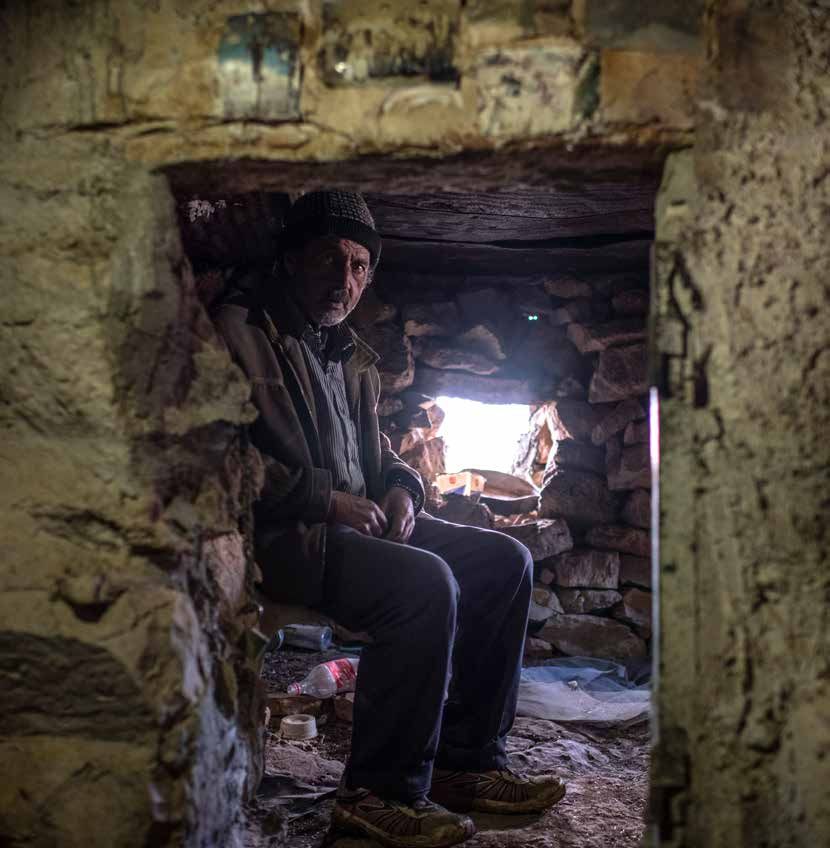
TABLE OF CONTENTS

Table of
Contents

04    Summary of Humanitarian Needs

12    Part 1: Impact of the Crisis and Humanitarian Conditions
      Context and Drivers of the Crisis
      Scope of Analysis
      Accountability to Affected Populations
      People in Need

25    Part 3: Sectoral Analysis
      Protection
      Health and Nutrition
      Food Security
      Education
      Water, Sanitation and Hygiene
      Shelter and Non-Food Items (NFIs)

41    Part 4: Annexes
      Data Sources
      Methodology
      2021 HNO Key Figures
      People in Need by Cluster
      Acronyms
      End Notes

                                                                 03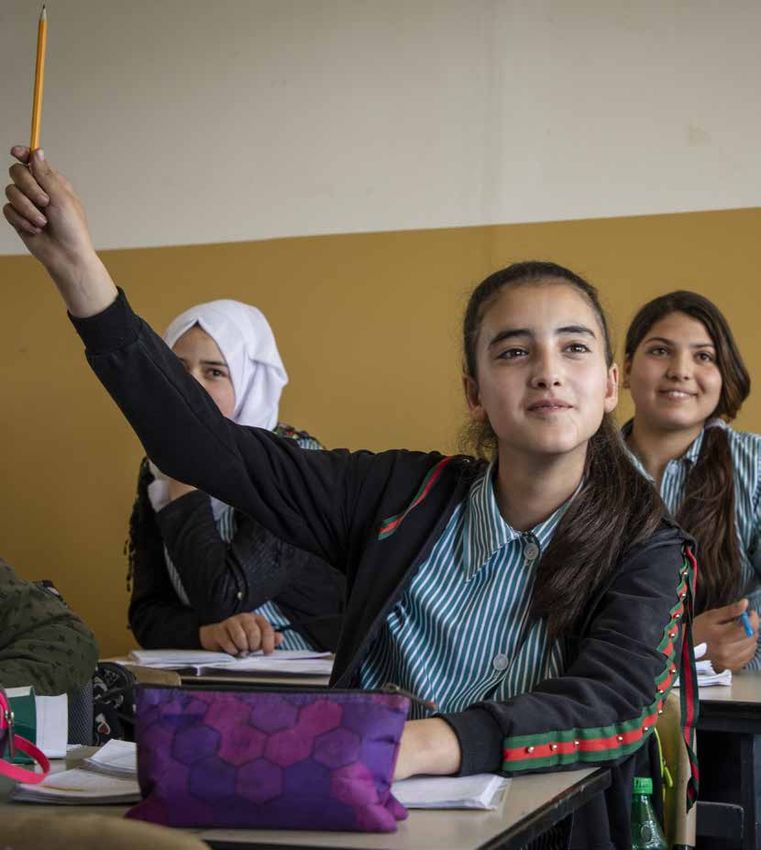
HUMANITARIAN NEEDS OVERVIEW 2021
Summary of
Humanitarian Needs
¥
Occupied Golan Heights
Severity of Needs*
TOTAL POPULATION PEOPLE IN NEED STRESS
Lebanon SEVERE P
5.2M 2.45M 40% 60%
Al Qunaytirah
(Syria)
(1M) (1.4M)
Source: PCBS, 2021 projection Among the 1.4 million severely impacted by the crisis, 77
percent are in Gaza and 23 percent in the West bank
Acre
P
Syria
LAKE
TIB ERI AS
471K
Gaza 1.570M 1.1M P Tiberias P
Haifa
547.8K Nazareth
West Bank 883.6K 335.8K P
209.1K
Area C 312.0K 103K Jordan River / Irbid
Sheikh Hussein P
282.5K
Area A and B 448.4K 165.9K Jenin
P
43.1K
East Jerusalem 86.2K 43.1K
a
Tulkarm Tubas Ajloun
S e
P
JORDAN RI VER
P
14K P
H2
36.9K 22.9K
Nablus
Qalqiliya P
n
Of which: Stressed Of which: Severe
P
e a
Tel Aviv-Yaffo Salfit
P Balqa
a n
P
West Bank
P
Amman
r r
People in Allenby /
Ramallah
need Jericho King Hussein
t e
P
Jerusalem
0.9M P
d i
Ashdod
P
P
Madaba
M e
P
P
Bethlehem
S e a
Hebron
D e a d
North Gaza P
Gaza
People in
need
Middle Area
Khan
Gaza
Strip
Yunis
1.6M Jordan
RafahRafah Be'er Sheva
P
Karak
P
Israel
Al ‘Ojah / Nitzana
The designations employed and the presentation of material in the report do not imply the expression of any opinion whatsoever on the part of the Secretariat of the
United Nations concerning the legal status of any country, territory, city or area or of its authorities, or concerning the delimitation of its frontiers or boundaries.
*Severity of needs was calculated based on the Joint Inter-sectoral Analytical Framework (JIAF). For more information see the methodology page 58.
04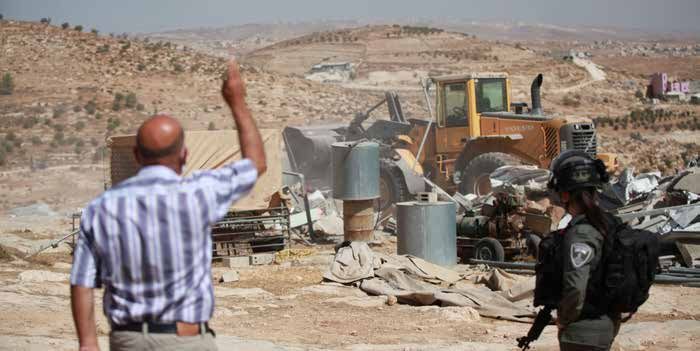
SUMMARY OF HUMANITARIAN NEEDS

TOTAL POPULATION

PEOPLE IN NEED

                          BY SECTOR            BY AGE & SEX

                                                              MALE
                                      FEMALE
                                      49%                     51%

                                                                     05
HUMANITARIAN NEEDS OVERVIEW 2021
2013 2014 2015 2016 2017 2018 2019 2020
Structures Demolished People Displaced
2021 HNO Key Figures
5 out of 6
36%
West Bank
2.45m 2.45m
PiN
64%
Gaza
Clusters have increased
their estimates about the
People in Need (PiN) number of PIN
out of a population of 5.2M
Palestinians
People with severe needs
out of all PiN increased 23%
70% of Gaza PiN
from 40% to 60% West Bank
2020 0.9m people (40%) 1.4m
with severe
needs
77%
Gaza 38% of West Bank PiN
2021 1.4m people (60%) are severely impacted by
the crisis
The context in the occupied Palestinian territory protection of civilians and forced displacement, access
(oPt) remains a protracted protection crisis, where to essential services, and erosion of resilience with
toothe
change many Palestinians
pie chart struggle
with a bar chart with 2 to live in
columns fordignity.
2020 andThe associated
2021 each showing thehumanitarian consequences
absolute number that translate
of people with severe needs.
Narrative: "the proportion of people with severe needs out
crisis is characterized by more than 53 years of Israeli of all PiN increased from 40% to 60%"
into needs. 2020 witnessed a significant increase in
military occupation, lack of respect for international the severity of humanitarian needs across the oPt, due
humanitarian and human rights law, internal Palestinian to the COVID-19 outbreak and the unilateral measures
political divisions, and recurrent escalations of hostilities taken by the Palestinian Authority in response to Israel’s
between Israel and Palestinian armed groups. plans to annex parts of the West Bank.
Recognising that the situation in the oPt is effectively a In 2021, the Humanitarian Country Team (HCT)
chronic protection crisis, protection concerns continue estimates that approximately 2.45 million Palestinians
to be the primary drivers of humanitarian need. across the oPt will require some form of humanitarian
Palestinians in the oPt face a range of threats, including assistance. Although this is only slightly more than the
to life, liberty and security, destruction or damage estimate for 2020 (2.41 million), the number of people
to homes and other property, forced displacement, suffering from severe, as opposed to moderate, need
restrictions on freedom of movement and on access has increased by 346,000. About 64 per cent of those
to natural resources and livelihoods, and lack of in need of assistance, or 1.57 million people, live in the
accountability and effective remedy. These policies Gaza Strip and 36 per cent, 880,000 people, in the West
and practises impact differently on people, depending Bank, including East Jerusalem.
on their gender, age, location and resources, among
other factors. Critical problems of concern relate to the
06KEY FINDINGS
Key Findings
PEOPLE IN NEED TREND (2015-2021) WOMEN CHILDREN WITH DISABILITY
2.45M 49% 50% 5.8%
By Humanitarian Consequence By Age and Gender
More on pages 16-21, 26-29
CONSEQUENCE PEOPLE IN NEED AGE AND GENDER PEOPLE IN NEED % PIN
Humanitarian consequences Male 0-HUMANITARIAN NEEDS OVERVIEW 2021
OCCUPIED WEST BANK: INCREASING FRAGMENTATION
Area C
The over 60% of the West Bank where Israel retains
almost exclusive control. Over 350,000 Palestinians and !
? "
J
¥
over 400,000 Israeli settlers reside in Area C Jenin
!
?
Area A
The 18% of the West Bank where the Palestinian !
?
Authority has extensive law enforcement and planning
powers.
Tubas
Area B Tulkarm "
J
The 22% of the West Bank where the Palestinian !
? "J
Authority has planning powers and joint law enforcement !
?!?
authority with Israel. Some 80% of Palestinians live in
Areas A and B combined.
"
J
Qalqiliya Nablus
Settlements municipal boundaries
Cover around 10% of the West Bank where some 150 "
J !
?
!
?
settlements were established in contravention to int'l
law. These areas are off limits for Palestinian access.
Some 630,000 Israelis live there
!
?
River Jordan
Firing zones J Salfit
"
Cover some 18% of the West Bank and are closed for
military training. Some 50 herding communities living !
?
there are at risk of expulsion.
The West Bank Barrier
Jordan
Built since 2002 following wave of Palestinian attacks in
Israel. Most of the route encroaches into the West Bank, !
?
in contravention to int'l law. Palestinians access is Ramallah
subject to a restrictive permit and coordination system. No Man's !
? "
J Jericho
Constructed Barrier
Land !
? !
?
!
? "
J
Projected; Under Construction Barrier
!
? !
?
East Jerusalem !
?
Covers 70 KM2, unilaterally annexed to Israel in East Jerusalem !
!
?
?
contravention of international law. Over 350,000
Palestinians and more than 200,000 Israeli settlers ?!
!?!?
reside there.
!
? ! !
? "
J !
?
? Bethlehem
Green Line !
?
y
Sea
r
unda
The 1949 Armistice boundry agreed between Israel and
Jordan.
o
nal B
Dead
Internatio
!
?
Hebron city: H2
Hebron
The 20% of Hebron city which remains under direct Israeli
"
J
control. Some 42,000 Palestinians and a few hundreds
Israeli settlers live there. Hebron H2
ea
n S
nea
West
Jord an
rra
Bank
dite
Me
!
?
Se a
Gaza
D ea d
Strip
0 2.5 5 10 Israel
Km
Eg
yp
t
082021 HNO KEY FIGURES
GAZA STRIP: CROSSINGS AND RESTRICTED AREAS
Erez (Beit Hanoun)
Controlled by Israel and
accessible only to holders of
¥
Israeli-issued exit permits,
which are granted mainly to
traders, patients and Zikim
accompaniers, foreign nationals Karmiya
and international agencies’
l es
staff, with security clearance.
mi
Yad Mordekhai
As Siafa
al
B
?
34
tic
au
3n
Netiv ha-Asara
Erez Crossing
(BeitB?Hanoun) 4
Beit Lahiya
!
¹
º
»
s
J
"
il e
DD
® DD D
D
D
D D
D D
m
D DD
DD D
D DD
DD D
D D
D D
D D
al !
D D
J®Beit Hanun
"
D
DD
D DD D D
tic
D DD
DD
DDDD
Jabalya
DD DD D
au
D DD
J
"
DD
DD D
6n
D DD
DD D
D D
D D
D
DD
D D
DD
a
DD D
D D
D D
D
DD D D D D D
D D D DDD D
D D
e
DD D
DD
DD D
D
D D
D D
D D
D DD
DD
DD D
D DD D
D DD D D
DD D
D DD D
S
D DD D
Gaza City
D DD D
D DD D
J
"
D DD D
D DD
DD D
D D
D D
D D
D DD D D
Mefalsim
DD D D DD
DDD DDDD
DD D
D DDD
D D DD D
D DDD
D DD
DD D
D D
D D
D D
D D
D D
D D
D D
D D
n
D D
D D
D D
D D
D D
D D
D D
D D
D D
¹º
D D
»
D D
D D
Nahal Oz Fuel
D
DD D
D D
B
D D
?
a
Kfar Aza 232
D D
D D
D
Pipeline
DD D
D D
¹
º
D D
»
D D
D D
D DD
(Ash Shuja'iah)
DD
D DD
D
DD D
e
D DD
D D
DD
DD D
® Karni
D D
D
DD DD
D D DD
DD D
D D
D D
Crossing
n
D D
!
D D
Sa'ad
D
DD D
D D
(Al Montar)
D
D D
D
D D
D DD
DD D
Nahal Oz
DDD
a
DD
DD D
D
DD D
Main entry point for fuel, shut
D D
!
D
DD D
D D
D D
D D
D D
D D
Alumim
down in 2011.
D D
r
D
DD D
D
Shuva
DD D D
DD D
B
?
D D
Zimrat 25
D D
D D
D D
D D
r
D D
D D
D D
D
DD D D D
DDD DD
DD D
D D
D DD
D
D DD
e
D DD
D
Karni
DD D
D D
D D
D D
Kfar Maimon
D DD D D
Gaza’s former main commercial
D D DD
Tushiya
it
DD
DD D
! D D
D D
crossing, gradually shut down
D DD
D DD
D
DD
DD DD
DD D D
DD
Be'eri
between 2007 and 2011.
D
D DD D
Shokeda
D
DD
DD D
D D
D D
d
®
D DD
DD D
D
D D
J
"
DD
DD
DD D
D
!
DD
D D DD
D D
D
DD
Deir al Balah
D DD
DD D
e
D D D DD D
B
DD D
?
D
232
DD
D D
D DD
DD D
D DD
D
D DD
DD
M
Perimeter fence
DD
DDD
D DD D
D DD D
D D
An electronic fence, and in a few areas
D
DD D
D D
D
DDD
D
D
D DD
a wall, built by Israel during the 1990s
DD D
D DD
DD D
D D
D
DD D
D D
! along the 1949 Armistice line with
D DDD D
D D D
DD
Re'im
D
D
Egypt (the Green Line).
D DD
D DD D
D
D DD
DD D
D DD D
D DD D D
D DD D D
D
DD
DD
DD
DD D DD
Kisufim
DD
DD
ISRAEL
D
D D
D DD DD D
D DD D D D
D
!
DD
D DDD DDD
Access restricted area
D D D D DDD
!
DD D D DD D
Access to land located within 200-300
DDD
meters from the fence is prohibited by Israel,
DDDD
DDD D
D DDDD DD
DDDD DD DD D DD D D
while areas up to 1,500 meters from the
Ein ha-Shlosha
fence are considered by Palestinians as
DD DDDD DD D
Khan Yunis 0 1 2 4
risky. Kilometres
D D D DD D
! !
J
"
DDD D D D
D D D D D DD D
Nirim
DDD D D DD D
D DD DDDDD
DDDD DDDD D
!
D D D DD D DD
!
DD
D D D DDDDDD
DD
D
DD
DDDDD DD DD
D
DD
DD
D D D D D D D D D D D DD D
DD
NM
DD
DD
Nir Oz
NM
D D D D DD D DD
DD
20
DD
®
DD
D
15
DD
®
D
DD
DD
DDD DD
D
DD D
DD
NM
DD
D
DD D
DD
!
D D DD D
Salah Ad Din gate
DD
!
M
D DDDD D
DDDD D
12
DD
6N
J
"
D DD D
DD
Open on an ad hoc basis for the informal
D DD
DD
M
D
D DD D
DD
D DD D
®
3N
D DD D
PROHIBITED
DDD
import of commercial goods. Controlled by
D DD D
Rafah
D DD
DD D
DD
D DD D
D DD D
DD
D DD
Egypt. AREA
D D
DD D
D
D DD D
DD
D DD D
D DD D
D
D DD D
DD
D
D DD D D
D
DD
DD D
D
DD
D DD
DD D
®
DDD
¹
D DD D
Salah
º
»"J
D DD D
Sufa
DD
D DD D
DD
D DD D
Rafah (Al 'Awda)
DD
Ad Din
AREA
D D
Main entry point for
DD
D D
D D
D DD
DD
DD D
Reopened regularly since mid-2018. Gate Sufa
D D
DD
INTERMITTENTLY
D D
D
construction material,
DDD
¹
DD D
º
»
D D
D D
Crossing
D D
DD
ACCESSIBLE
D D
Controlled by Egypt, which imposes limits of
D D
DD
D D
shut down in 2007.
D DD
DD D
DD
Point
D D
D D
DD
D D
the number of passengers and severe
D D
D D
DD
D D
D DD D
D DD D
DD
¹
D DD D
Rafah
º
»
D DD D
DD
D DD D D
security controls.
DD D
DD
D DD D
Yesha
D D
D DD
DD
Crossing
DD D D
DD D
D
D DD D
DD
D DD D
D DD D
DD
(Al 'Awda)
D DD D
D DD D
DD
D D
D
DD D
DD
D D
D D
Kerem Shalom (Karm abu Salem)
D D
DD
D D
D DD
DD
DD D
D D
DD
D D
Controlled by Israel, is currently the only official
D
D DD
DD D
D D
D
DD D
DD
D D
D D
B
?
D
DD
crossing for imports and exports. Movement of
232
Kerem Shalom
EGYPT
D
D DD D
DD
D DD D
¹
D DD D D
º
»
DD DDD
DD
DD D
D D DD
Crossing Point
DD D D
DD
goods is subject to coordination with Israel and
DD
(Karm abu Salem)
severe restrictions. Goods are transferred in
pallets back to back, first from Israel to a “sterile
area”, and from there to Gaza.
09HUMANITARIAN NEEDS OVERVIEW 2021
Summary of Humanitarian
Consequences
CRITICAL PROBLEM 1: HUMANITARIAN CONSEQUENCES RELATED TO PROTECTION
AND FORCED DISPLACEMENT
PEOPLE WITH
PEOPLE IN NEED FEMALES CHILDREN DISABILITY
2.1 million
INCLUDING
52% 50% 5.8%
PEOPLE IN
HUMANITARIAN CONSEQUENCE
NEED
Mental health issues 246,940
Education
Violations/ Attacks on education facilities 21,085
Attack on Healthcare patients, staff and facilities leading to increased
50,864
morbidity, injuries, death, and reduced health facility access
Health Increased caseload of mental health issues as result of conflict 255,960
People at risk of contracting COVID-19 65,000
Children affected by conflict-related violence 1,500
Displacement and forcible transfer 22,146
Exposure to protection risks in the context of COVID-19 isolation and
quarantining
Gender-based violence 277,749
Protection Grave violations against children (as defined by UNSC Res. 1612) 12,934
Impact of military occupation and protracted protection crises 2,120,959
Psychosocial distress and mental disorders 549,716
Settler violence 337,695
Severe restrictions on freedom of movement 2,496
Shelter Forcible transfer and displacement, and risk thereof 65,960
WASH Limited access to WASH services 1,229,732
10SUMMARY OF HUMANITARIAN CONSEQUENCES
CRITICAL PROBLEM 2: CRITICAL PROBLEMS RELATED TO ACCESS TO
ESSENTIAL SERVICES
PEOPLE WITH
PEOPLE IN NEED FEMALES CHILDREN DISABILITY
INCLUDING
1.5 million 51% 68% 5.8%
HUMANITARIAN CONSEQUENCE PEOPLE IN NEED
Lack of access to education 930,342
Education
Unsafe access to schools 100,618
Increasing levels of morbidity, GBV, high rates of NCDs, high risk
172,983
pregnancies and micronutrition deficiencies amongst children under 5
Increasing rate of maternal and infant mortality 401,808
Lack of acute care for emergency cases 162,705
Health
Patients suffering non-communicable diseases have no access or
64,456
disrupted treatment and face a deterioration in their morbidity status
Postponed elective surgeries leading to complications and morbidity 12,000
Severe cases with disability do not have access to multidisciplinary care 10,000
Individuals injured due to GMR and need shelter adaptation 143,400
Shelter Lack of adequate living conditions 221,900
Lack of protection from weather conditions 69,800
Inadequate sanitation and hygiene conditions 732,337
WASH Limited access to safe drinking and domestic water services 1,280,024
Limited access to WASH services in key institutions 361,369
CRITICAL PROBLEM 3: HUMANITARIAN CONSEQUENCES RELATED TO
RESILIENCE AND RECOVERY
PEOPLE WITH
PEOPLE IN NEED FEMALES CHILDREN DISABILITY
INCLUDING
2 million 49% 49% 5.8%
HUMANITARIAN CONSEQUENCE PEOPLE IN NEED
EDUCATION Lack of emergency preparedness
63,850
FSS Food insecurity
2,022,664
Limited preparedness capacity leading to increased risk of mortality and
Health
morbidity 251,058
Shelter Lack of emergency preparedness in Shelter
150,000
Lack of preparedness
1,618,889
WASH
Lack of preparedness and response against the risks of floods
135,686
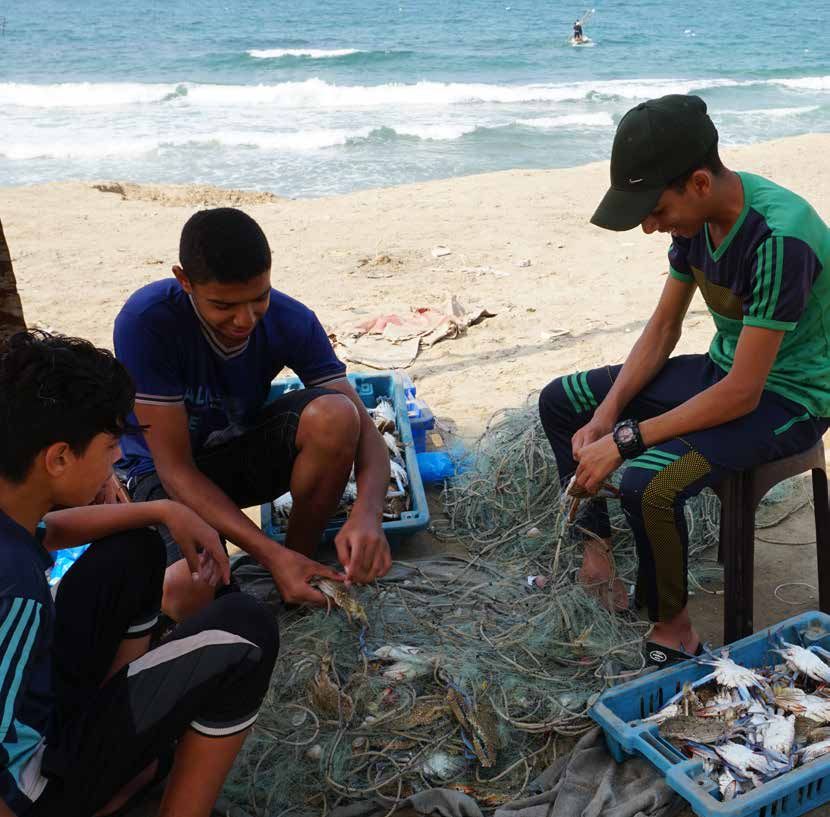
11HUMANITARIAN NEEDS OVERVIEW 2021 Part 1 IMPACT OF THE CRISIS AND HUMANITARIAN CONDITIONS WEST BANK Area C communities that are not connected to the water network depend on trucked water and cisterns. April 2017. ©Photo by WASH Cluster. 12
IMPACT OF THE CRISIS AND HUMANITARIAN CONDITIONS

1.1
Context and Drivers of the Crisis

Humanitarian needs in the occupied Palestinian territory
                                                                LATEST DEVELOPMENTS
(oPt) continue to be driven by a protracted protection
crisis that leaves many Palestinians struggling to live a       By mid-November 2020, the PA indicated that
life with dignity. This crisis is characterized by more than    it would resume civil and security coordination
53 years of Israeli military occupation, lack of respect        with Israel. This may reduce or eliminate some
for international humanitarian and human rights law,            of the no-contact policy’s negative humanitarian
internal Palestinian political divisions, and recurrent         ramifications identified in this HNO. However, the
escalations of hostilities between Israel and Palestinian       actual implementation of this decision and its impact
armed groups. 2020 witnessed a significant increase in          on vulnerable Palestinian is yet to be assessed.
the severity of humanitarian needs across the oPt, due
to two major developments.
                                                               and will more than double in the West Bank, from 14 to
The first is the outbreak of COVID-19: as of
                                                               30 per cent.2
end-September over 50,000 Palestinians have
contracted the virus and nearly 400 have died. While           The second development in 2020 is the Palestinian
the mortality rate remains low by global standards (77         Authority’s (PA) unilateral decision to halt almost
persons per million people), the measures imposed to           all bilateral contacts with Israel, in response to the
contain the pandemic - including recurrent lockdowns           Israel’s plan to formally annex parts of the West
and travel restrictions, school closures, reduction of         Bank.3 In this context, the PA has stopped accepting
commercial activities and mandatory quarantines -              the tax clearance revenues that Israel collects on its
have severely undermined living conditions across the          behalf.4 Together with the economic slowdown due
oPt. (As of mid-December, over 131,000 had contracted          to the pandemic, this has resulted in the loss of 80 per
the virus and nearly 1,150 had died.)                          cent of its income, reducing the PA’s capacity to pay
                                                               salaries, deliver services and maintain its social safety
The World Bank forecasts that by the end of the year,
                                                               nets. The no-contact policy exacerbated the impact of
the Palestinian economy will shrink by eight per cent
                                                               longstanding access restrictions, particularly for those
compared to 2019.1 The proportion of poor households
                                                               requiring Israeli permits, or special authorization, to
in the Gaza Strip will increase from 53 to 64 per cent
                                                               access workplaces, farmland and basic services. This

 TRENDS IN PALESTINIAN CAUSALTIES 2015-2020
                 FATALITIES BY REGION                                   FATALLITIES BY AGE AND SEX
                          13                                                       32         11
                       Israel                                                   Women         Girls
                                                   373                    162
                                                   West Bank             Boys

                              825                                                       825
                                Total                                                    Total
                                                                                                        620
                439                                                                                     Men
          Gaza Strip
                                                                                                        Data source: OCHAoPt

                                                                                                                           13

                     FATALITIES BY YEAR
HUMANITARIAN NEEDS OVERVIEW 2021
439
Gaza Strip
policy also undermined Israeli-Palestinian joint efforts
to contain the pandemic, which were implemented
during the two months following the initial outbreak. FATALITIES BY YEAR
SoTRENDS IN PALESTINIAN
far in 2020, there has beenCAUSALTIES 2015-2020
a significant decline
in conflict-related violence and casualties, which
299
are recordedFATALITIES
mainly amongBY REGION
young men. Between FATALLITIES BY AGE AND SEX
January and September, 13 24 Palestinians were killed 174 32 11
Israel to 91 and 229 fatalities in
by Israeli forces, compared Women Girls
137
373
the equivalent periods in 2019 and 2018, respectively. 108
162
West Bank
Similarly, the number of Palestinian injuries in 2020 Boys 77
declined by nearly 85 per cent, compared to 2019 30
825
(approximately 2,000 vs 13,000). This decline is primarily
due the halt in the mass demonstrations that had been 2015 2016 2017 Total 2018 2019
825
2020
Total
taking place along Israel’s perimeter fence around Gaza
in 2018 and 2019. While the occasional shooting of 620
439 the potential for an increase in violence, Men including an
projectiles and launching of incendiary balloons from
Gaza Strip escalation of hostilities in Gaza, during 2021.
Gaza towards southern Israel, and Israel’s subsequent EXITS OF PEOPLE INTO ISRAEL Data source: OCHAoPt
E
In the Gaza Strip, the two million Palestinians, who, for
airstrikes in Gaza continued, these did not result in THROUGH EREZ
over 13 years, have been under a blockade imposed
casualties or further escalation. Albeit more limited 27k Entries to G
than in Gaza, the FATALITIES BY YEARa reduction by Israel citing security concerns, have been further
West Bank too witnessed
22k
isolated from the external world by COVID-19 related
in clashes and casualties, with the number of search- 3k
1.5k
restrictions. Since the outbreak, Israel has allowed
299
and-arrest operations by Israeli forces in Palestinian 16k
only the most serious medical cases to exit Gaza via
localities falling by nearly 30 per cent during January- Exits to Eg
the Erez
9.5k Crossing, a situation further complicated by
September 2020, compared to the same period in 2019. 6.9k 5.8k
174 the PA’s halt in the processing of applications for exit 5k
However, concerns about excessive use of force by
137 permits, as well as by the long mandatory
229 233 255 325 417 409 quarantine 1.4k
Israeli soldiers108
resulting in the killing or serious injury
imposed
2017 2018 2019
by Hamas
Jan
on
Feb patients
Mar Apr Mayreturning
Jun Jul Aug to Gaza. Sep
of Palestinians, as well 77 as lack of accountability The entry of Palestinian workers 2020 from Gaza to Israel,
2017 2018
Monthly average
for such possible violations of international 30 law, Monthly a
which resumed in 2019 after more than a decade of
remain. Moreover, against the backdrop of a general
5
suspension, was halted again following the outbreak of
Source: OCHA/Palestinian Ministry of Civil Affairs
2015 2016 2017 2018 2019 2020
deterioration in living conditions and the lack of security
the pandemic, resulting in the loss of some 7,000 jobs.
coordination between the PA and Israel, there remains HOURS OF ELECTRICITY SUPPLY PER DAY (ON AVERAGE)
The Egyptian-controlled crossing with Gaza (Rafah)
EXITS OF PEOPLE INTO ISRAEL EXITS AND ENTRIES OF PEOPLE 14
15
THROUGH EREZ THROUGH RAFAH
12
11
12
27k Entries to Gaza
6.6
5.7
7.2k
22k 5.7k 6k Jan Feb Mar Ap
4.1k
3k
1.5k 1.6k 1.2 1.9k 1.7k
16k 14 6
2017 2018 2019
9.5k
Exits to Egypt
6.9k 5.8k 6.5k 6.7k 6.5k
5k
2.7k
1.4k 2.2k
229 233 255 325 417 409 1.1k
0 0 0 0
2017 2018 2019 Jan Feb Mar Apr May Jun Jul Aug Sep
2017 2018 2019 Jan Feb Mar Apr May Jun Jul Aug Sep
2020 2020
Monthly average Monthly average
Source: OCHA/Palestinian Ministry of Civil Affairs Source: OCHA/Palestinian Ministry of Civil Affairs
HOURS OF ELECTRICITY SUPPLY PER DAY (ON AVERAGE)
14
15 15
14 140 0 0 0
2017 2018 2019 Jan Feb Mar Apr May Jun Jul Aug Sep
IMPACT OF THE CRISIS AND HUMANITARIAN CONDITIONS 2017 2018 2019 Jan Feb Mar Apr May Jun Jul Aug Sep
2020 2020
Monthly average Monthly average
Source: OCHA/Palestinian Ministry of Civil Affairs Source: OCHA/Palestinian Ministry of Civil Affairs
HOURS OF ELECTRICITY SUPPLY PER DAY (ON AVERAGE)
15 15
14 14
12 12 11 11
11
8
6.6
5.7
Jan Feb Mar Apr May Jun Jul Aug Sep
2017 2018 2019 2020
has been largely shut down for all passengers, except restrictions on access to the sea off the Gaza coast, in
for a few scheduled openings. Overall, during March- response to the Palestinians’ launching of projectiles or
September 2020, the number of exits from Gaza, both incendiary balloons towards Israel.7
via Israel (Erez) and via Egypt (Rafah) was about 10 per
SETTLER ATTACKS RESULTING
cent of the figures in the same period in 2019.
IN PALESTINIAN
Prolonged electricity blackouts of about 12 hours a day
(the same as in 2019, but an improvement compared
Meanwhile, the
CASUALTIES OR PROPERTY
main factors driving the fragile
DAMAGE
to 2017-2018) continue disrupting all aspects of life
humanitarian situation in Gaza remain in place. Although in Gaza, particularly the delivery of essential services.8
Gaza’s main crossing for goods (Kerem Shalom) Finally, despite a new round of reconciliation talks
has been operating as previously, the longstanding launched this year, the divisions between Hamas and
423
397 the Fatah-led PA remain unresolved, undermining the
import restrictions, as well as lack of
369agreement and
the PA and Israel, continue323
coordination between 314 to payment of salaries to civil 340
servants,9 and providing for
280 population in general.
the needs of the Gaza’s
impede the implementation of291infrastructure projects,
269 305 228
economic recovery and 216 6
employment generation. 265
170 242 The mobility restrictions
207 imposed since the outbreak of
131 157 143
Continuing insecurity
112 discourages the 3,000 farmers COVID-19
95 amplify the impact of pre-existing conditions
105 106
who own, or work, land located132
up to 1,000
100 meters
92 from
107 on
97 the 65
Gazan economy: combined, they have resulted
58 72 7352 75
30 37
Israel’s perimeter fence from developing agricultural in a further increase in unemployment in the second
2009 2010 2011 2012 2013 2014 2015 2016 2017 2018 2019 2020
livelihoods. Similarly, the fishing livelihoods of about quarter of 2020, which reached an historical high
Incidents resulting in Palestinian Casuality Incidents resulting in Palestinian property/land damage
4,000 families continue to be disrupted by Israeli of over 49 per cent,. 10
The absence of employment
WEST BANK DEMOLITIONS AND DISPLACEMENT
1,601
1,236
1,103 1,094
914
738 705
663 607 664 621
560 530
419 456 470
2013 2014 2015 2016 2017 2018 2019 2020
Structures Demolished People Displaced
15HUMANITARIAN NEEDS OVERVIEW 2021
SETTLER ATTACKS RESULTING IN PALESTINIAN
CASUALTIES OR PROPERTY DAMAGE
423
397
369
323 340
314
291
280
269 305 228
216 265
170 242
131 157 207
143
112 95 105 106
132 107 65
72 100 92 97 73 75
58 30 52 37
2009 2010 2011 2012 2013 2014 2015 2016 2017 2018 2019 2020
Incidents resulting in Palestinian Casuality Incidents resulting in Palestinian property/land damage
opportunities and low salaries also discourage people Palestinian injuries, or damage to their property, have
WEST BANK DEMOLITIONS
from seeking work, further reducing the already low beenAND DISPLACEMENT
recorded, approximately the same rate as in 2019.
labour force participation rate. This has declined from1,601 Historically, settler violence has facilitated the takeover
41 per cent of the population in 2019 to less than 35 of Palestinian land and the establishment of settlement
per cent in April-June 2020, and1,236
to a mere 15 per cent outposts, without the building permits or authorization
1,103 1,094
among women (people outside the labour force are not required under Israeli law. Subsequently, many of
914
counted as unemployed).11 these outposts established on areas designated as
738 705
663 607families560 public664
(‘state’) land have621been “legalized” under Israeli
It is estimated that some 9,500 in Gaza living
530
in rented accommodation are at risk of eviction due to legislation.
419
15
456 470
their inability to pay rental costs.12 Palestinian access to areas separated from the
In the West Bank, Palestinian households and remainder of the West Bank by the Barrier has also
communities in Area2013
C, East Jerusalem
2014 and
2015the H2 area
2016 deteriorated
2017 in 2020. Following
2018 2019 the2020
outbreak of COVID-
of Hebron city continue to face a coercive environment, 19, Palestinian access to East Jerusalem hospitals
Structures Demolished People Displaced
due to a range of longstanding Israeli policies and has been limited by both the Israeli and Palestinian
practices. The restrictive and discriminatory planning authorities, mostly to cancer patients; in turn, this has
regime applied in Area C and in East Jerusalem prevents
Palestinians from addressing basic housing, livelihood
MOVEMENT OBSTACLES IN WEST BANK
5 out of 6
and service needs. Between January and September, 36%
550 structures were demolished or confiscated West Bank
on the BY TYPE
2.45m
grounds of a lack of building permits, displacing some2.45m
750 Palestinians,
PiN
64%
Gaza
Clusters have increased
their
34 estimates about the
Peopleainsignificant
Need (PiN)increase compared with 3 71
Other of PIN
number
Trench Checkpoint
2019. Of particular concern isofthe
out of a population increasing application
5.2M
49
of militaryPalestinians
orders permitting the expedited demolition Road Barrier
or seizure of properties in Area C, as well as the greater 20 108
Earthwall Partial Checkpoint
punitive fines against
People unauthorized
with severe needs construction in East
Jerusalem, outwhich
of all PiN
hasincreased
led to a significant increase
23% in 68 593
70%
from 40% to 60% West Bank Road Block Movement
self-demolitions. 13
Obstaclesof Gaza PiN
Further components
2020 of people
0.9m the (40%)
coercive environment with severe
77%
Gaza
154
1.4m
38% of West86Bank PiN
of continuing
2021 concern 1.4mare continuing
people (60%) attacks needs Road Gate are severely impacted by
Earthmound
and intimidation by Israeli settlers, along with the the crisis
authorities’ lack of adequate law enforcement.14 As of
end-September, nearly 230 such incidents resulting in
16IMPACT OF THE CRISIS AND HUMANITARIAN CONDITIONS
further undermined the financial situation of these are, at present, over 630,000 Israeli settlers living in
hospitals. Following a tightening of the eligibility criteria the West Bank, including East Jerusalem, in some 250
for farmers to obtain permits to access their land in the settlements and settlement outposts, which directly
‘Seam Zone’, the closed area behind the Barrier, some control approximately 10 per cent of West Bank land.19
84 per cent of such applications in the first half of Despite a slowdown in the number of building permits
2020 were rejected, mostly on bureaucratic grounds.16 issued, and housing unit starts during the first half of
However, while there has been some disruptions during 2020 compared to same period in 2019, 20 settlement
intensified lockdowns, the access of tens of thousands expansion continued. Of particular concern this year, is
of West Bank Palestinians to their workplaces in Israel, the advancement of the E1 settlement project, entailing
has largely continued. the construction of 3,500 housing units in a strategic
Palestinian access to and within the central part of part of Area C, to the east of East Jerusalem.21 If actually
H2, physically segregated from the rest of Hebron city implemented, this project will intensify the coercive
by multiple checkpoints and barriers, is still permitted environment on 18 Palestinian Bedouin communities
only to those registered as residents of that area.17 The located in the area, in addition to further separating East
access challenges faced by these residents have been Jerusalem from the remainder of the West Bank.
further compounded since May 2020, as they cannot Finally, Palestinians living in the 19 refugee camps
rely any longer on the PA to intervene on their behalf across the West Bank, have been seriously affected
with the Israeli authorities. by the pandemic and related measures, as well as by
Across the West Bank, however, a comprehensive significant shortfalls in donor support to UNRWA, the
survey conducted in January-February 2020, showed UN agency for Palestine refugees. Overcrowded living
a 16 per cent decrease in the overall number of fixed conditions have exacerbated tensions and hardship
permanent obstacles (checkpoints, earthmounds, at the household level during lockdowns and school
roadblocks, etc.), compared with the last survey in July closures and increased the difficulties in isolating
2018: from 705 to 593 obstacles.18 family members who contract the virus. Increasing
Many of the above restrictions are aimed at protecting unemployment, the salary crisis in the governmental
and providing space for the expansion of Israeli sector, and the weakening of social safety nets as a
settlements and their gradual annexation to Israel, some result of the growing deficit in both the PA and UNRWA,
de jure (as in East Jerusalem) and others de facto (as further undermine the situation of vulnerable refugee
in Area C), in contravention to international law. There households.
WEST BANK
Israeli forces demolishing Palestinian residential structure in Mantiqat Shib Al Butum in Massafer Yatta area. September 2020. ©Photo by Mashhour Wahwah.
17HUMANITARIAN NEEDS OVERVIEW 2021
PEOPLE IN NEED BY GENDER AND AGE
1.4 Female 65+
of people who need one or 43,513
Scope of Analysis more humanitarian
assistance live in Gaza
compared to 0.9 m (36%)
Male 65+ 36,283
Female 18-65 563,392
Affected geographical areas, groups and severity
in the West Bank
Male 18-65 581,619
Female 0-SCOPE OF ANALYSIS
CRITICAL PROBLEM 1: HUMANITARIAN CONSEQUENCES RELATED TO PROTECTION
AND FORCED DISPLACEMENT
PEOPLE WITH
PEOPLE IN NEED FEMALES CHILDREN DISABILITY
2.1 million
INCLUDING
52COVID-19
% 50% 5.8%
HEALTH CASELOAD BY MAIN
POPULATION GROUPS PEOPLE IN
HUMANITARIAN CONSEQUENCE
NEED
Mental health issues 246,940
Education West Bank 80,000
Violations/ Attacks on education facilities 21,085
Attack on Healthcare patients, staff and facilities
Womenleading to increased morbidity,
and Girls 55,212
50,864
injuries, death, and reduced health facility access
Health Increased caseload of mental health issues as a Gaza
resultStrip
of conflict 35,000 255,960
People at risk of contracting COVID-19 65,000
Elderly 5,600
Children affected by conflict-related violence 1,500
Displacement and forcible transfer People with disabilities 4,897 22,146
Exposure to protection risks in theChildren
context under the ageisolation
of COVID-19 of and quarantining
2,800
five years old
Gender-based violence 277,749
Protection Grave violations against children (as defined by UNSC Res. 1612) 12,934
COVID-19 CASES BY GENDER
Impact of military occupation and protracted protection crises 2,120,959
Psychosocial distress and mental disorders 549,716
Settler violence 337,695
Severe restrictions on freedom of movement 2,496
Shelter 53%thereof 47%
Forcible transfer and displacement, and risk 53% 47%
65,960
28,001 25,075 5,628 5,105
WASH Limited access to WASH services 1,229,732
Over 85 per cent of the people in need, or 2.1 million Palestinians, are estimated to be affected by problems related
Female Male Female 0-18 Male 0-18
to the lack of protection and displacement.
People in this category include those affected by the
severe access restrictions to and from Gaza and the PEOPLE IN NEED BY
coercive environment in the West Bank, including those GEOGRAPHICAL LOCATION
who require legal aid to protect their housing, land and
Rest of Gaza Area A&B Area C East H2
property rights, or secure their access and movement. Jerusalem
Those displaced due to demolitions or evictions and
require emergency shelters, or cash assistance, and,
often, also support to maintain their livelihoods and to 1.57m 448k 312k 86k 37k
ensure access to basic services, are included as well. Gaza, still require follow-up treatment and rehabilitation.
The same factors, along with chronic recurrent Protection measures addressing explosive remnants of
exposure to violence, including conflict related and war (ERW) in the Gaza Strip, and settler violence in the
SCHOOL DROPOUT IN OPT
gender-based violence, have increased mental health West Bank, are also needed.
and psychosocial needs. The COVID-19 pandemic The continuous monitoring and documentation of
33%
has further eroded mental health through loss of 1.2% 4.9% 25%
violations of international law, as well as advocacy to
livelihoods, increased domestic violence, and economic prevent further violations and end the cycle of impunity,
vulnerability. Hundreds of those injured or traumatized remain overarching needs.
in the context of the 2018-19 protests at the fence in
Students not completing
12 years of schooling in
6-9 10 - 15 16 -17
year year year East Jerusalem 19HUMANITARIAN NEEDS OVERVIEW 2021
CRITICAL PROBLEM 2: HUMANITARIAN CONSEQUENCES RELATED TO ACCESS
TO ESSENTIAL SERVICES
PEOPLE WITH
PEOPLE IN NEED FEMALES CHILDREN DISABILITY
1.5 million
INCLUDING
51% 68% 5.8%
HUMANITARIAN CONSEQUENCE PEOPLE IN NEED
Lack of access to education 930,342
Education
Unsafe access to schools 100,618
Increasing levels of morbidity, GBV, high rates of NCDs, high risk pregnancies
172,983
and micronutrition deficiencies amongst children under 5
Increasing rate of maternal and infant mortality 401,808
Lack of acute care for emergency cases 162,705
Health
Patients suffering non communicable diseases have no access or disrupted
64,456
treatment and face a deterioration in their morbidity status
Postponed elective surgeries leading to complications and morbidity 12,000
Severe cases with disability do not have access to multidisciplinary care 10,000
Individuals injured due to GMR and need shelter adaptation 143,400
Shelter Lack of adequate living condition 221,900
Lack of protection from weather conditions 69,800
Inadequate sanitation and hygiene conditions 732,337
WASH Limited access to safe drinking and domestic water services 1,280,024
Limited access to WASH services in key institutions 361,369
More than 1.5 million Palestinians, or over 60 per cent of those in need, are affected by problems related to their
limited access to basic services.
Over 60 per cent of those in need, or more than 1.5 In Gaza, the longstanding restrictions on the movement
million Palestinians, are affected by problems related to of people and goods, internal Palestinian divide and
their limited access to basic services. chronic electricity shortages have contributed to the
The already overburdened healthcare system in the severe degradation of infrastructure, including in the
oPt requires continuous support to address the new/ area of health, education, water and sanitation. In the
additional challenges generated by the ongoing West Bank, especially in East Jerusalem, Area C, the H2
pandemic, including through the provision of supplies area of Hebron city and the ‘Seam Zone’, infrastructure
and capacity building. The reallocation of resources and related services have been undermined by the
and mobility restrictions resulting from the pandemic, discriminatory planning regime and by movement
have further undermined the access of people to restrictions.
regular healthcare, including mental health, obstetric In the same context, tens of thousands of families across
and neonatal care and emergency nutrition services. the oPt are residing in sub-standard homes that do not
Due to existing gender norms, there has been an meet minimum requirements of living space per person,
increased demand on women and girls to care for the weather protection, hygiene facilities and privacy; they
sick and the elderly. Public institutions require support need urgent rehabilitation or reconstruction.
to adapt their WASH facilities to meet COVID-19 safety
measures, while quarantine centres also need non-food
items (NFIs).
20SCOPE OF ANALYSIS
CRITICAL PROBLEM 3: HUMANITARIAN CONSEQUENCES
RELATED RESILIENCE AND RECOVERY
PEOPLE WITH
PEOPLE IN NEED FEMALES CHILDREN DISABILITY
2 million
INCLUDING
49% 49% 5.8%
HUMANITARIAN CONSEQUENCE PEOPLE IN NEED
EDUCATION Lack of emergency preparedness
63,850
FSS Food insecurity
1,987,640
Limited preparedness capacity leading to increased risk of mortality and
Health
morbidity 251,058
Shelter Lack of emergency preparedness in Shelter
150,000
Lack of Preparedness
1,618,889
WASH
Lack of preparedness and response against the risks of floods
135,686
Almost 82 per cent of Palestinians in need, or about 2 million people, are affected by problems related to the erosion
of their resilience and their capacity to cope with various shocks.
These people are estimated to suffer from severe, People residing in low-lying areas are exposed to the
or moderate, food insecurity and will require food risk of flooding during the rainy season, as well as the
assistance, and/or support to maintain their farming, overflow of stormwater facilities and sewage pumping
herding or fishing livelihoods.22 Driven by an increase stations, due to the poor status of the sanitation
in poverty and unemployment generated by the above infrastructure.
developments, this represents a net increase of
approximately 300,000 newly food insecure people
compared to 2019. Furthermore, over 217,000 people,
previously considered moderately food insecure, have
become severely food insecure.
21HUMANITARIAN NEEDS OVERVIEW 2021
6% 6%
5%
4% 3% 3% 3% 3% 3% 3% 2%
0% 0%
1.5
Facebook Websites
Telephone text Instagram Newspapers Twitter Facebook TikTok
messenger
Accountability to Affected Populations
messages
Local TV stations Radio Email YouTube Phone or tablet Telephone calls Public Snapchap
applications announcements
(billboards,
loudspeakers, fliers)
Data source: KAP survey/UNICEF
Views and perceptions of affected persons in the oPt
including women, men, boys and girls, elderly and people
TRUSTED SOURCES OF INFORMATION
with disabilities, shape the identification of needs and
ON THE COVID-19 PANDEMIC
responses. While the oPt does not yet have a systematic
inter-cluster channel that institutionalizes the collection Palestinian national government 56%
of feedback from communities, implementing partners
Medical doctors and other
collect this information through interviews, focus 41%
health workers
groups, and surveys they carry out among beneficiaries.
UN Organizations or NGOs 38%
The collected data is analyzed by the implementing
partners in order to identify the needs and determine
Palestinian local government 17%
the most efficient way of communication with the
affected persons though out the implementation of University professors and 13%
academics
the projects. Additionally, in 2020, UNICEF conducted
a comprehensive study on Knowledge, Attitude and Family and friends 7%
Practice (KAP) in relation to COVID-19 and the Risk
Local neighborhood centers
Communications and Community Engagement 2%
or associations
response; while focused on the pandemic, key elements
Religious leaders 0%
of the findings will be relevant for broader issues and
will inform responses to be implemented in 2021,
Data source: KAP survey/UNICEF
MEDIA/INFORMATION CHANNELS OF PREFERENCE FOR
43% RECEIVING INFORMATION ABOUT COVID-19
38%
27%
6% 6%
5%
4% 3% 3% 3% 3% 3% 3% 2%
0% 0%
Facebook Telephone text Instagram Newspapers Twitter Facebook TikTok
Websites messenger
messages
Local TV stations Radio Email YouTube Phone or tablet Telephone calls Public Snapchap
applications announcements
(billboards,
loudspeakers, fliers)
Data source: KAP survey/UNICEF
22
TRUSTED SOURCES OF INFORMATION
ON THE COVID-19 PANDEMICACCOUNTABILITY TO AFFECTED POPULATIONS
ATTITUDES TOWARD TWO-WAY COMMUNICATION CHANNELS
100% Very likely or likely Possibly Not likely or not likely at all
72%
66%
56% 54%
27% 27%
16% 18% 17% 19% 17%
11%
Download and use an application Participate in group online Participate in individual online Use videos or messages with
through which you could communicate counselling or psychosocial counselng or psychosocial support ideas about activities to do as a
with experts on subjects related to support if needed (n=813) if needed (n=810) family (n=809)
COVID-19 (n=814)
Data source: KAP survey/UNICEF
(see charts herein). For example, Palestinian national stakeholders, including affected community members
sources of information on the pandemic were the most in Gaza and the West Bank, designed to identify needs
trusted, at 56 per cent, while 38 per cent of respondents and gaps. This information has guided the HCT PSEA
trusted UN and NGOs as sources of information. The Network’s Action Plan. During 2020, the PSEA Network
top three preferred channels for receiving information conducted a learning review to assess systems in place
were Facebook (43%), Local TV (38%) and websites for PSEA among a sample of Network members, most
(27%). Of particular relevance, the survey revealed a of which were identified to have moderate risk because
high willingness of participants to engage in two-way complaint channels are not fully mainstreamed among
communication channels, including group or individual beneficiaries and because PSEA practices are mainly
online counseling sessions. informal and not yet enshrined in a code of conduct and
The HCT previously, in 2018, conducted a mapping of internal policies.
organizational capacity on the Prevention of Sexual For further details on specific needs see the respective
Exploitation and Abuse (PSEA), and supplemented cluster sections below.
this with a second mapping of SEA knowledge and
capacities among community-based organizations in
2020. These mappings were supplemented by a series of
consultancies in 2019 and 2020, inputs from a range of
23HUMANITARIAN NEEDS OVERVIEW 2021
1.6
People in Need
The HNO provides analysis of the overall affected since 2019 of defining vulnerability and most vulnerable
population disaggregated by different age cohorts groups in the oPt based on their geographic location,
and gender across key geographic areas of concern, status, gender, protection risks and severity of needs.
including Gaza, Areas A & B, Area C, East Jerusalem and The below table provides an overview of the scope of the
H2 area of Hebron city. In addition, particular attention HNO analysis, which was determined by the relevance
is placed on the most vulnerable groups: of the identified vulnerable groups per geographic
These specific vulnerable groups and geographic areas vulnerable area as well as to the availability of data.
have been identified by the Humanitarian Country Team
and analysis is drawn from a range of different primary
and secondary date sources. The identification of who
is in need in the 2020 HNO follows the new approach
SPECIFIC VULNERABLE
GROUPS
People living under People living with
the poverty line disabilities Refugees
Small scale
Bedouins and farmers, herders
IDPs herders and fishermen Elderly
Scope of Analysis Matrix
Population Groups
Gaza Area C Area A&B East Jerusalem H2
Male 0 -SECTORAL ANALYSIS
Part 2
SECTORAL
ANALYSIS
GAZA STRIP
Gaza shore, 2019 ©Photo by OCHA
25HUMANITARIAN NEEDS OVERVIEW 2021
3.1
Protection
TOTAL IN NEED SEVERE STRESSED GAZA WEST BANK WOMEN % CHILDREN % ELDERLY %
2.1m 1.3m 868k 1.3m 836k 49% 46% 3%
Over 2.1 million Palestinians across the oPt, 60 per cent in the Gaza Strip and 40 per cent in the West Bank,
experience or are at risk of conflict, violence and forcible displacement/transfer, and will be in need of protection
assistance in 2021.
2020 has seen a profound deterioration in the severity and confiscations, forced evictions, access restrictions
of the protection risks in the oPt. This has been driven and lack of law enforcement and impunity for settler
by the outbreak of COVID-19 and related movement violence. A range of settlement expansion projects,
restrictions, school closures, job losses and socio- currently underway, threaten to further encroach onto
economic distress. The administrative vacuum, as a Palestinian land, increase fragmentation, and heighten
result of the PA’s halt in coordination with Israel, has the risk of displacement.
disrupted government-run protection services and led In 2020, there has been an increased application of
to additional challenges. military orders permitting expedited demolitions and
In the Gaza Strip, the longstanding Israeli blockade and confiscations in Area C, significantly impeding access
related limitations on economic opportunities, recurring to legal recourse. The introduction of greater punitive
escalations of violence, the internal Palestinian divide measures against unauthorized construction in East
and prevailing traditional gender norms, are key drivers Jerusalem has led to an increase in self-demolitions.
of protection needs. The already limited freedom of Access to farmland behind the Barrier in the ‘Seam
movement afforded to Palestinians in Gaza has been
further reduced by the pandemic, with only minimal INJURIES BY GENDER
movement allowed through the external crossings Between July 2019 and June 2020
with Israel and Egypt. Internal movement and business
operations have also been curtailed by the lockdown 2,503 (97%) 68 (3%)
Boys Girls
imposed since late August.
The overall deterioration in living conditions has had a
disproportionate impact on children, youth, women and INJURIES BY REGION
persons with disability (PwD). It has increased the risk
of poor mental health, stress, anxiety and depression, 65% 35%
lower educational outcomes, child labour and domestic Gaza West Bank
violence. Vulnerability also remains high among those 1,671 children 900 children
including 3 Israeli boys
seriously wounded or traumatized during the ‘Great
March of Return’ demonstrations in 2018-2019,23 IDPs
AVERAGE/MONTH OF PALESTINIAN CHILDREN
from the 2014 conflict, refugees, and poor households,
HELD IN ISRAELI DETENTION FACILITIES
in particular those at risk of eviction due to their inability
to pay rent.
181
In the West Bank, the coercive environment facing Palestinian boys 14-17
many Palestinians in Area C, East Jerusalem and the Children detained for alleged security related offences between
Israeli-controlled part of Hebron city, H2, continue to July 2019 and June 2020
generate a risk of forcible transfer. Related policies and Data source: Israeli Prison Services (IPS) in response to FOI petitions by Btselem
practices include discriminatory planning, demolitions
26
EDUCATION RELATED INCIDENTSPROTECTION
Zone’ continues to deteriorate, following a tightening of including increased risk of school dropout and forced
the eligibility criteria for farmers and workers to obtain marriage. Although child detention has declined since
permits. The additional restrictions due to the COVID-19 the outbreak of COVID-19, related restrictions have
has also further undermined the access of the ‘Seam added hardship and challenges to their access to legal
Zone’ residents to basic critical services. advice and proceedings.29
Throughout the West Bank, Palestinians have been The pandemic also amplified protection risks affecting
exposed to excessive use of force by Israeli forces in orphaned children and children whose primary
clashes that erupt during search-and-arrest operations caregivers are quarantined or hospitalized.30 Children
and protests, including the shooting of live ammunition transferred into facility-based isolation or quarantine
and excessive amounts to tear gas. Meanwhile, ongoing face stress, fear, and panic, especially if separation from
pressures on civil society organizations by both Israeli primary caregivers is required or if children are placed in
and Palestinian authorities pose a threat to their ability facilities, where non-relative adults are present.
to deliver protection services to those in need.
A broad range of assistance to respond to rising needs Across the oPt, it is estimated that three per cent of
is required, including: child protection responses; children aged 10 to 17 are engaged in child labour.31 In
prevention of gender-based violence (GBV) and support households living in poverty, the pandemic has increased
for its survivors; mental health and psychosocial pressure on boys to work and generate income, and
support (MHPSS) interventions; and legal aid to protect exposed girls to additional burdens associated with
housing, land and property rights, and secure access domestic work and caregiver duties. Preliminary data
and movement. The monitoring and documentation of indicates that child labour in Gaza increased by 52
violations of international law, as well as advocacy to per cent, in the first eight months of 2020 compared
prevent further violations and end the cycle of impunity, to the same period in 2019.32 A recent survey has also
as well as mine action, remain central. shown that some 26 per cent of boys under the age
PwDs are one of the most disadvantaged, vulnerable of 11 experience severe physical violence from their
and marginalized groups in Palestinian society in need caregivers,33 with children with disabilities three to four
of protection services: in addition to the aforementioned times more likely to experience all forms of violence, and
pressures, they face institutional and attitudinal barriers, three times more likely to experience sexual violence.34
which impede their access to appropriate multi-sectoral Against the backdrop of the deteriorating living
responses. PwDs experience lower educational conditions, there is an increased need for MHPSS
outcomes; poor health; high rates of unemployment interventions. Of particular concern is the situation
and poverty, and greater risks of violence, stigma in Gaza, where, since the start of the pandemic, there
and discrimination.24 Females with disabilities are have been 44 attempted suicides involving children,
significantly more vulnerable to these risks than males.25 compared to eight in all of 2019.35 The Protection
Children exposed to conflict-related violence Cluster estimates that some 198,000 children in Gaza
remain a most vulnerable group, requiring various are in need of structured protection and psychosocial
protection responses. Between July 2019 and June support, due to risk of severe and moderate mental
2020, Child Protection partners documented 516 health conditions,36 while nearly 36,000 children require
violations, affecting nearly 13,000 children across the individual case management. Additionally, over 242,000
oPt.26 During this period, 21 children, including one girl adults in Gaza, including caregivers, are also in need of
and 20 boys were killed, and 2,571, including 68 girls and various MHPSS services.37
2,503 boys, injured; a monthly average of 181 Palestinian The pandemic-related restrictions have also exacerbated
boys, aged 14 to 17, were held in Israeli detention for the prevalence of GBV, including domestic violence,
alleged security related offences.27 Children normally sexual abuse and forced marriage. Lockdown measures
remain in detention for the duration of their investigation, have increased the burden on mothers to support their
indictment and trial proceedings, and are at high risk of children’s online education, on top of their traditional
violence, ill-treatment and due process violations.28 After domestic and reproductive roles.
their release, they face various reintegration challenges,
27You can also read


