Social Enterprise Action Plan - The Way Forward - Tourism, Culture, Industry and Innovation
←
→
Page content transcription
If your browser does not render page correctly, please read the page content below
The Way Forward

                  Social Enterprise
                  Action Plan

Table of Contents
Minister’s Message............................................................................................................1
Introduction.......................................................................................................................2
Social Enterprise Innovation and Research in Newfoundland and Labrador.......................4
Social Enterprise Engagement Process...............................................................................6
Continued Collaboration....................................................................................................7
Action Plan........................................................................................................................8
Policy Development Pillar..................................................................................................9
Business Skills and Organizational Development Pillar.................................................... 11
Research and Opportunity Identification Pillar.................................................................13
Promotion and Awareness Pillar.......................................................................................15
Access to Financing and Capital Pillar..............................................................................17
Summary..........................................................................................................................19

Cover photo: Michael Schmidt (SmartICE)
Inside cover photo: Barrett & MacKay
IV

Message from the Minister

                                 Social enterprises enrich our communities by conducting
                                 business in an innovative way that furthers social, community
                                 economic, cultural and environmental goals.

                                 Be it poverty reduction, employing clients from vulnerable
                                 populations, supporting cultural objectives, training at-risk
                                 youth or addressing environmental issues, social enterprises
                                 demonstrate their vision and value to our communities
                                 every day.

This Social Enterprise Action Plan delivers on our commitment to support the development,
expansion and enhancement of social enterprises that benefit our province. We have engaged
province-wide with individuals and representatives of established social enterprises,
co-operatives, credit unions, not-for-profit organizations, municipalities, industry associations,
Provincial Government departments, the Federal Government, and other organizations.

The action plan represents an opportunity for us to focus our work on key areas of
development while complementing our partners’ work and our government’s programs
and services. The design also provides for a continuous improvement process as it will be
supplemented by an annual implementation plan, created in tandem with key partners. The
action plan intends to enhance, not replace the continuous delivery of important programming
from the Provincial Government.

Our government is encouraging the use of the social enterprise model as a tool for social and
economic development. We want to discover its full potential to address social, community
economic, cultural and environmental issues and find innovative ways to support the economy.

Hon. Christopher Mitchelmore
Minister of Tourism, Culture, Industry and Innovation

                                                                                                     1
Introduction
                                        Social enterprises play an important role in Newfoundland
                                        and Labrador. They find innovative ways to increase the
                                        well-being of our communities through the sale of goods
                                        or services to further social, community economic, cultural
                                        and environmental goals.

                                        In November 2016, the Provincial Government released
                                        The Way Forward: A Vision for Sustainability and Growth
    Key Components of a                 in Newfoundland and Labrador, which is a road-map
    Social Enterprise                   to guide the province toward economic growth and
                                        fiscal sustainability. As part of The Way Forward’s plan
                                        to strengthen and diversify the economy, the Provincial
    • A Social Enterprise earns         Government committed to developing a Social Enterprise
      revenue through the sale          Action Plan.
      of goods or services to
      further a social, community       The Social Enterprise Action Plan is based upon the
      economic, cultural and/or         principles of community economic development, which
      environmental purpose.            means the primary aim is to serve members of the
                                        community and collectively contribute to economic
    • A Social Enterprise reinvests     diversification in all regions of Newfoundland and
      its profits into the mission of   Labrador. It provides actions to support not-for-profit
      the organization.                 and co-operative organizations looking to explore
                                        new approaches to revenue generation. Its focus is on
    • A Social Enterprise has           collaboration at the provincial level, whereby a collective
      a blended return on               approach with partners and stakeholders is necessary
      investment that is both           in order to identify new opportunities and help existing
      social and financial.             social enterprises accomplish their mandates in socially
                                        innovative and sustainable ways.
Photo: Kathleen Tucker (Sabri)
                                        This action plan outlines four growth objectives to build a
                                        stronger economy, leverage local knowledge and capitalize
                                        on existing networks to improve the well-being of our
                                        communities.

2
Growth Objectives
• Increase the number of social enterprises in Newfoundland and Labrador
• Enhance services for existing social enterprises
• Provide government and stakeholders with an engagement approach that ensures ongoing
  social enterprise input
• Foster a culture of innovation through regional co-operation using the innovative tools of
  community economic development

To achieve these growth objectives, the Department of Tourism, Culture, Industry and
Innovation (TCII) will establish a Social Enterprise Partner Network. The network will ensure
ways to appropriately build the sector and support implementation of the action plan, including
the development of annual targets and indicators. This document outlines the objectives, goals
and actions which will be prioritized over the next three years: 2018-2021.

   ‘Social enterprise is both a different way of doing business and a different way of
  supporting social, cultural and economic growth. At its essence, social enterprise is about
  a not-for-profit organization earning revenue in the marketplace by producing goods and
  services.

  But the heart of it is about building opportunities to generate employment, meeting social,
  cultural and economic needs in a manner different from traditional nonprofit models, and
  finding new ways to support economic development in local communities.’

  “Ready for Takeoff: Social Enterprise in Newfoundland and Labrador” report released by Community Sector Council of
  Newfoundland and Labrador, Enterprising Non-Profits Canada, Mount Royal University and Simon Fraser University in
  March 2016.

Photo: Conne River Craft Store                Photo: Impact Construction           Photo: Theatre Newfoundland Labrador
                                                                                                                       3
Social Enterprise Innovation and Research
in Newfoundland and Labrador
Innovation is a means to making life better – generating value for individuals, organizations,
communities and regions. Social enterprises are driving social innovation. “Social innovation” as
adopted by the Organisation for Economic Co-operation and Development (OECD) seeks new
answers to social problems by:

• Identifying and delivering services that improve the quality of life of individuals and
  communities; and,
• Identifying and implementing inclusive labour market processes, new skills, new jobs and
  new forms of participation that improve the position of individuals in the workforce.

Social enterprises bring creativity and resourcefulness to the table while addressing societal
issues such as workforce development for vulnerable youth or persons with disabilities or other
employment barriers. They are increasingly recognized as innovators in community economic
development.

Photo: Michael Schmidt (SmartICE)   Photo: David Hiscock (Stella’s Circle)

Often the complex issues these innovators work on cannot be solved using traditional
approaches, by individual supports or by any single level of government or organization. To solve
these issues, innovators are required to work together, challenge perceptions to improve current
processes and provide for better outcomes. This requires time, creativity, resources and focus.

Internationally, social enterprise development is synonymous with social innovation and an
understanding of community development. For example, Scotland, United Kingdom is a leader
in the field and recently launched a ten-year (2016-2026) social enterprise strategy. Closer to
home, Newfoundland and Labrador now joins provinces such as Nova Scotia, Quebec, Ontario,
Manitoba and British Columbia. These provinces have focused on social enterprise development
by setting shared goals through the release of a social enterprise plan. Similar to these provinces,
Newfoundland and Labrador is enhancing supports and services to build the social enterprise
sector in a collaborative way.

4

2014           Snapshot of 30 Social Enterprises in Newfoundland and Labrador

                                                    Make an                          Moving into debt
                                                    Economic                         financing:
                Diverse Missions:                   Impact:                          Used banks and
                Social, cultural                    $10 Million                      credit unions
                and environmental                  in revenue,                       to finance their
                                                   $6 Million in Sales               ventures

     Hired        Employ                           Do business in           70,000          Engage
                                                                                            thousands
     528                                                                    People
                  thousands of                     many sectors:
                  people:                           Worked in                               of people:
                    Hired 528                       construction,                            Trained more
     people as part of their            trade, accommodations,              than 1,200 people, provided
     mission, such as those             tourism, health, social             services to over 70,000
     with disabilities and/or           services, the arts, and             people, and involved at least
     employment barriers                professional services               568 volunteers

   “Ready for Takeoff: Social Enterprise in Newfoundland and Labrador” report released by Community Sector
   Council of Newfoundland and Labrador, Enterprising Non-Profits Canada, Mount Royal University and
   Simon Fraser University in March 2016

To fully understand social enterprise and the role for innovation within the sector in
Newfoundland and Labrador, a baseline of information and research is required. While a few
sector studies can be identified, there is limited research available to provide a comprehensive
background about the impact of social enterprise and social innovation in Newfoundland and
Labrador. For example, we do not have a reference point for the number of social enterprises
currently operating within the province. The report “Ready for Takeoff: Social Enterprise in
Newfoundland and Labrador” released by the Community Sector Council of Newfoundland and
Labrador, Enterprising Non-Profits Canada, Mount Royal University and Simon Fraser University
in March 2016 provides a summary of results of 30 organizations.

In 2016, TCII conducted Business Retention and Expansion (BR&E) assessments of 24 social
enterprises. The goal was to gain better insight about their current operating environment.
These social enterprises are subject to the same economic and financial principles of any
business operation. They also have an added complexity in obtaining a blended return on
investment that is financial and social. To understand their unique challenges and opportunities,
the BR&E assessment included topics such as marketing and sales, operations, current location,
finance, human resources, future plans, and organizational governance.

The findings suggest that some organizations are further along in some areas than others. Also,
there are opportunities for increasing collaboration, enhancing business management skills and
pursuing new innovative approaches.

                                                                                                             5
Social Enterprise Engagement Process
In considering how to encourage social enterprise development, the Government
of Newfoundland and Labrador completed an engagement process and identified
areas where trends emerged and outlined in the document, “What We Heard: Social
Enterprise,” released in November 2017.

A total of 129 stakeholders participated and provided input on ways to address social
enterprise development through facilitated sessions and an online public survey. Views
and perspectives were expressed by representatives of established social enterprises,
co-operatives, credit unions, not-for-profit organizations, municipalities, industry
associations, federal government, other sector representatives and the general public.

The engagement process provided an opportunity to discuss pillars within social
enterprise development and collaborate with community to ensure ways to appropriately
build the sector with broad supports.

In addition to the public engagement process, TCII established an interdepartmental
committee to inform the action plan. Recognizing that social enterprise development
affects multiple mandates throughout government, the committee will continue to
engage in the implementation process for this action plan.

6
Continued Collaboration
TCII is working with a social enterprise interdepartmental committee to support social
enterprise development. The following departments are represented on the interdepartmental
committee:
Advanced Education, Skills and Labour;
Children, Seniors and Social Development;
Education and Early Childhood Development;
Executive Council;
Health and Community Services;
Municipal Affairs and Environment;
Service NL;
TCII;
Transportation and Works; and
Women’s Policy Office.
During the engagement process, stakeholders suggested that TCII find ways to keep the
conversation going between the Provincial Government and the social enterprise sector.
As well, the 2018 report, “Untapped Potential: Social Enterprise as a Tool to Stimulate
Economic Development” by Choices for Youth recommends that governments, private industry,
community organizations and social enterprise practitioners work to connect key departmental
commitments and policy goals.
To address these recommendations, TCII will create a Social Enterprise Partner Network. Along
with the Provincial Government’s social enterprise interdepartmental committee, leaders who
work in the social enterprise sector will be invited to participate in focused planning activities
to advance implementation of the action plan.
The approach is similar to the one used for the province’s Co-operative Development
Memorandum of Understanding with the Newfoundland - Labrador Federation of
Co-operatives. Over the next three years, the network will develop an annual implementation
plan and assist in determining how things move forward. This includes prioritizing actions,
determining appropriate lead and support organizations and setting reasonable timelines.
7Action Plan
TCII, in collaboration with key governmental departments and community partners, was
mandated to lead the development and implementation of the action plan. Currently, TCII
supports not-for-profit organizations to plan, develop, and strengthen their social enterprise
activity.
Five pillars form the basis of the Social Enterprise Action Plan: Policy Development, Business
Skills and Organizational Development, Research and Opportunity Identification, Promotion
and Awareness, and Access to Financing and Capital.
These pillars are similar to the components of a supportive environment for social enterprise
development as outlined by Social Enterprise Council of Canada.
Pillars for a Supportive Environment for Social Enterprise Development
Business
Skills and
Organizational
Development
Access to Research and
Financing and Opportunity
Capital Social Identification
Enterprise
Growth
Promotion and Policy
Awareness Development
8Policy Development Pillar
Goal:
Improve collaboration between departments and with sector leaders to enhance social
enterprise development.
Social enterprises operate in many sectors such as construction, food and beverage, tourism,
health and community services, the arts, and the fishery. One day an organization could be
dealing with Service NL on a food establishment inspection, the Public Procurement Agency
on a potential procurement and the Department of Advanced Education, Skills and Labour
on income support issues. Some not-for-profit organizations operate more than one social
enterprise and regularly deal with multiple departments.
Through coordination and continual improvement
processes, the Provincial Government can create effective
policies and procedures to resolve simple roadblocks
that limit social enterprise development and help social
enterprises navigate throughout government.
A policy area that was raised during the engagement
process was public procurement. Recently, the Provincial
Government modernized the public procurement
framework, which now provides for the consideration
of social, economic and environmental priorities within
the development of general policies respecting the
procurement of commodities.
The 2016-17 Annual
Report for Choices for
Actions: Youth
1. Establish a Social Enterprise Partner Network The 2016-17 Annual Report
including leaders from the social enterprise sector for Choices for Youth
and the Provincial Government’s social enterprise demonstrates the impact of
interdepartmental committee. Led by TCII, in addition the social enterprise model.
to establishing and monitoring deliverables for an Impact Construction provided
annual implementation plan, this will involve prioritizing $628,298 in revenue and
social policy areas and research to investigate how the provided 18,832 hours of
social enterprise model may be used to create greater youth employment. As the
economic and social impact. This includes identifying sole manufacturing partner of
key performance indicators. Enactus Memorial’s Sucseed,
youth were provided with 1,266
2. Promote and provide social impact purchasing hours of employment, taught
information within government and share new learning how to use power tools, and
tools with other sectors. The Public Procurement worked semi-independently to
Agency and TCII will offer learning opportunities manufacture 600 hydroponic
for social enterprises interested in the public sector units.
procurement process and supply opportunities. Photo: Choices for Youth, Sucseed
93. Government of Newfoundland and Labrador representatives will engage in learning
opportunities such as the National Community of Practice on Social Value Marketplace,
which is chaired by Buy Social Canada. Information and best practices on social procurement
will be shared with stakeholders such as social enterprises, municipalities, industry
association and other community organizations.
4. Regulatory issues and needs of the sector will be identified through the Social Enterprise
Partner Network to determine potential deliverables within Government of Newfoundland
and Labrador.
Photo: School Lunch Association
In 2017, Tourism, Culture, Industry and Innovation and partners (Newfoundland
- Labrador Federation of Co-operatives, School Lunch Association and Memorial
University’s Centre for Social Enterprise) delivered an “Introduction to Social Enterprise”
session to increase the awareness of the social enterprise model to the Newfoundland
and Labrador Association for Community Living. The mandate of the organization is to
work with, and on behalf of, individuals with an intellectual disability and their families,
advocating for people to live as full participants in their communities.
The purpose of the community capacity building session was to learn more about social
innovation approaches by bringing together representatives from each of its five local
associations and community leaders. During the workshop, participants explored how
the social enterprise model can foster sustainability for the organization, support its
membership and the inclusion of individuals with intellectual disabilities, as a viable
option for future growth and development.
10Business Skills and Organizational
Development Pillar
Goal:
Increase the business and organizational governance skills of organizations who operate
(or aspire to operate) a social enterprise.
For a not-for-profit organization to successfully create and sell a product or service and deliver
on its social mission (i.e. use market-based approaches to address a social problem), its staff
and board of directors require a wide range of skills.
During the social enterprise engagement process, many organizations requested support in
areas such as board governance, proposal writing, networking, project management, opportunity
management and professional development skills.
Local institutions and industry groups, such as Memorial University’s Centre for Social Enterprise,
College of the North Atlantic, Community Business Development Corporations, Community
Sector Council of Newfoundland and Labrador, TCII and Newfoundland and Labrador Federation
of Co-operatives offer some business development training throughout the province. There is
opportunity to build upon these offerings and support groups in new areas of social innovation.
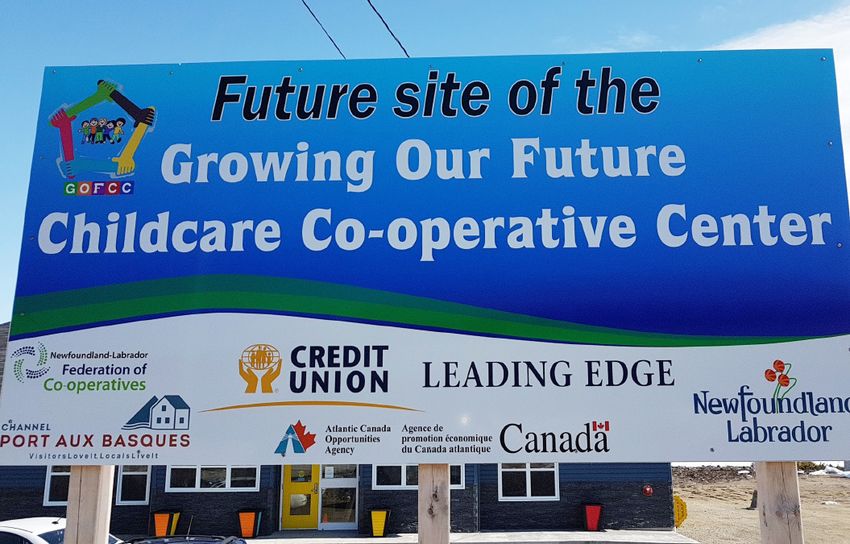
Photo: Growing Our Future Childcare Co-operative Center
11Actions:
Tourism, Culture,
1. Invest in skills and development training sessions for social enterprise
Industry and through TCII’s Community Capacity Building Program for delivery
Innovation’s Business throughout the province. This will include development of content
Retention and or other developmental tools in areas including marketing and sales,
Expansion Social operations, financial management, business plan development,
Enterprise Initiative proposal writing, project management and opportunity management.
24 social
A portion of the allocation will be used to support best practice
surveyed missions in Newfoundland and Labrador which will expose new
enterprises; 58
entrants to existing successful social enterprises.
per cent regularly 2. Work with existing partners to ensure a collaborative approach
conducted board to training and development. Through TCII’s Community Capacity
orientation activities Building program, organizations will bring board directors and staff
for new board representatives together to explore community development within
members. the context of the social enterprise model. For example, TCII will
collaborate with Memorial University’s Centre for Social Enterprise
and other organizations to demonstrate the benefits of the social
enterprise model.
3. Work with the Newfoundland - Labrador Federation of Co-operatives
to implement the delivery of co-operative development training
modules, as well as organize co-operative development training
sessions for provincial government departments and ensure updated
modules and supporting material are available online.
4. Work with national partners to share existing resources that support
business skills and organizational development. This will avoid
duplication, identify efficiencies, and foster new partnerships with
sector leaders.
5. Promote and increase opportunities for social enterprises to conduct
regular orientation programs and activities for employees and board
members including the development of an e-learning module.
BizPaL is an
online source 6. Connect new social enterprises to Service NL’s Bizpal program,
of information where applicable.
on permits and
licenses.
Photo: Growing Our Future
Childcare Co-operative Center
12Photo: Clean Start
Research and Opportunity Identification Pillar
Goal:
Use research to understand the social enterprise sector and identify and support new social
enterprise opportunities in both rural and urban areas.
Social enterprises have a strong track record for pursuing innovative approaches. For some
social enterprises with limited financial resources, testing a new idea is not always perceived
as possible.
To make it easier, TCII will support research and opportunity identification pilot projects in
various sectors. The projects will tap into the ingenuity of community members and help
organizations improve the design of a new initiative while addressing social, community
economic, cultural, and environment issues. These
projects may potentially lead to viable
and sustainable social enterprises.
Post-secondary institutions can support this
process by providing research assistance at both the
undergraduate and graduate levels. Other training
institutions can contribute with basic skill development
and workforce development.
Community partners such as the Community Sector
Council of Newfoundland and Labrador and the
Newfoundland - Labrador Federation of Co-operatives
can also play a role, in conjunction with academic
institutions, in enhancing research from a practitioner’s
perspective. Photo: Kathleen Tucker (SmartICE)
13Actions:
1. Develop baseline information and research to understand the economic impact of social
enterprises in the province, as well as social return on investment. For example, explore ways
to measure reduced dependency on income support and other social programming
for employees of social enterprises.
2. Work with community partners to complete a skills profile for the social enterprise sector.
It is vital to have accurate and updated information about the social enterprise sector in
Newfoundland and Labrador. The Department of Advanced Education, Skills and Labour will
collaborate with the sector to explore and better understand emerging labour market needs.
3. Conduct an annual open call for proposals from interested applicants to research projects
which pilot social enterprise opportunities in the province. Using the Regional Development
Fund, TCII will invest in research by social enterprises. This will provide opportunities to
conduct research about the social enterprise model and investigate application in various
industries.
4. Enhance awareness of the research activities of Memorial University’s Centre for Social
Enterprise amongst existing social enterprises, co-operatives and credit unions.
5. Identify sector development opportunities by conducting research about social enterprise
business models used in other jurisdictions. A diverse group of sectors will be explored in
rural and urban areas. The information will be made available to the public in an effort to
generate new social enterprise activity and encourage social innovation.
Now in its 10th year, the Hungry Heart Café, a social enterprise is used as part of the
Employment Services Food Training program and all revenue goes directly back into
the services they provide.
Photo: Greg Locke, (Hungry Heart Café)
14Promotion and Awareness Pillar
Goal:
Work with partners to promote the social enterprise model to the general public and show
not-for-profit organizations how the model can help deliver upon social, community economic,
cultural and environmental mandates.
Social enterprise activities are rooted in community economic development. Our communities
have been shaped through the work of co-operatives, not-for-profit organizations, and
volunteers for decades. While social enterprise in one form or another is not new to the
province; today a certain “buzz” around the term exists. Some organizations are exploring social
enterprise activity as a way to deliver on their social, community economic, cultural,
and environmental mandates. Some people are using their purchasing power to buy products
and services from local social enterprises.
As more consumers are concerned about the products and services they buy, there is an
opportunity to promote and showcase the impact of purchasing from recognized social
enterprises.
As more organizations are concerned about sustainability, there is an opportunity to
demonstrate how the model can diversify and supplement revenue streams and create social
value.
Actions:
1. Build networks to support social enterprise
partnership development. For example,
as stated in the Business Skills and
Organizational Development Pillar there
will be an opportunity for social enterprises
to explore best practices with other social
enterprises in the province. Similarly, TCII
will support collaboration between social
enterprises and the private sector, beginning
with targeted networking sessions.
2. Enhance the labour market information
products of the Department of Advanced
Education, Skills and Labour to increase
awareness and profile of the sector among
the general public, post-secondary students,
and potential employees.
Photo: Battle Harbour Historic Trust
153. Partner with service providers and Advanced Education, Skills
and Labour to promote social enterprise among temporary and
permanent residents, including international students, graduates,
immigrants, and refugees.
4. Working with partners such as Memorial University’s Centre of
Social Enterprise, capture best practices and lessons learned by
social enterprises to identify innovative practices which increase
the resilience capacity of social enterprises. For example, complete
a case study on Sucseed and make it available to social enterprises
and students in Memorial’s University’s Master of Business
Administration in Social Enterprise and Entrepreneurship (MBA-
SEE), the first degree of its kind in Canada.
5. Provide a greater awareness and understanding among provincial
government departments and agencies about social enterprise
activity which can support policy development and planning
processes. This will include activities such as information sessions
and circulation of research documents related to specific mandates.
Enactus Memorial
won the World
Cup in 2016 and
placed 2nd in the
2017 Enactus World
Cup competition with
Sucseed.
An economic and
environmental
solution created
to address the
overwhelming need
for fresh affordable
produce in Northern
Canada. Enactus
Memorial has been
recognized as the
best in Canada ten
times, and also won
the Enactus World
Cup in 2008.
16Photo: Choices for Youth
Access to Financing and Capital Pillar
Goal:
Improve financial management skills and work with partners to help social enterprises explore
new approaches to financing.
Access to financing and capital is often a barrier to the development of the social enterprise
sector. Financing sources for social enterprises include a mix of earned revenue, grants,
contributions, and fundraising. Some social enterprises are exploring alternative ways of
financing operations, depending on their business model and level of comfort with financing
tools such as loans. It is common to hear from sector stakeholders about restrictions such as
inflexible lending policies, limited financing instruments, and restrictive policies of funding
programs.
Findings from the TCII Business Retention and Expansion Social Enterprise Initiative offer
insight into 24 fairly experienced social enterprises across the province. The top challenges from
respondents include managing cash flow, securing short-term line of credit, and determining
working capital position.
The findings also confirmed that revenue generation is a vital element of operational
sustainability. Self-generated sales represent a significant source of revenue for all respondents,
with over half (55 per cent) reporting that it comprises between 80-100 per cent of their annual
revenue source and an additional 23 per cent reporting it comprises between 40-79 per cent of
revenue.
There is opportunity to support the sector through responsive forms of finance based on the
individual needs of the enterprise.
17Actions: 1. Build upon the findings of the Provincial Government’s Business Financing Review to determine ways to support the sector. This will include consideration for types of security and repayment structures that support the unique aspects of a social enterprise model. 2. Increase outside investment into Newfoundland and Labrador’s social enterprise activity by identifying national funding sources and establishing connections for the sector. 3. Work with the Newfoundland - Labrador Federation of Co-operatives to complete a review of the existing co-operative development equity fund offered via the federation. A revamped program will be launched which aims to address financing gaps and other needs of the co- operative sector. 4. Increase awareness of existing financing available for social enterprises and demonstrate how it meets the needs of social enterprises. TCII will continue to share tools, techniques and best practices with clients. This includes working with other lending organizations such as the Atlantic Canada Opportunities Agency, Community Business Development Corporations, and credit unions to identify opportunities, barriers, and solutions for social enterprises wanting to access financing. 5. Implement a pilot initiative with Community Business Development Corporations to explore new financing approaches such as pairing TCII’s grant programming with Community Business Development Corporations’ loan programming. Tourism, Culture, Industry and Innovation participates on Metro Business Opportunities (MBO) Social Enterprise Support Lending Committee, an oversight committee assessing loan applications to MBO under the Support Program. 18
Summary
A way to increase the social and economic viability of communities in Newfoundland and
Labrador is to support social enterprises. They have the potential to provide innovative services
which can result in a number of social benefits for communities such as better health outcomes,
greater food security, increased immigration, more affordable housing, more employment
opportunities, better child care, and greater workforce inclusion.

The Social Enterprise Partner Network, interdepartmental committee, and TCII will use
the Social Enterprise Action Plan as a guide to advance social enterprise development in
Newfoundland and Labrador.

TCII will continue to seek perspectives from community leaders on the action plan and will
also draw on previous findings from the engagement process related to social enterprise
development.

There is considerable opportunity to advance social enterprise development in collaboration
with partners and stakeholders. The five pillars outlined in this action plan acknowledge the
important role of many stakeholders and reflects a commitment to enhance support in all areas
that impact the development of the sector.

                                         On the Bonavista Peninsula, the Trinity Historical
                                         Society took a leadership role for a cultural craft
                                         project on behalf of five partners in the region.
                                         All partners sell craft product at the not-for-profit
                                         tourism establishments they operate. Revenue is
                                         used to support culture, heritage, and employment.

                                         Due to the higher cost of high quality craft product,
                                         the operators were finding it difficult to purchase
                                         product before the tourism season began. They
                                         found they could only purchase such product well
                                         into the tourism season, after they earned revenue
                                         from operations.

                                         The cultural craft group received a Business
                                         Investment term loan which was used to purchase
                                         craft for their shops long before the season began.
                                         The loan gives them the opportunity to purchase
                                         product at the Provincial Wholesale Show hosted in
                                         the winter season. It allows them to purchase high
                                         volume, more cost effective and a higher yield type
                                         of product. Repayment terms were based on sales
                                         reports from the operating
                                         tourism season.

                                                                                                 19
Alternate formats available upon request Tourism, Culture, Industry and Innovation P.O. Box 8700, St. John’s Newfoundland and Labrador, Canada A1B 4J6 Phone: 709.729.7000 Toll Free: 1.800.563.2299 E-mail: TCII@gov.nl.ca
You can also read


