SA CONNECT BRIEFING TO THE PARLIAMENTARY POTFOLIO COMMITTEE - 22 May 2018 - Ellipsis
←
→
Page content transcription
If your browser does not render page correctly, please read the page content below
SA CONNECT BRIEFING TO THE
PARLIAMENTARY POTFOLIO COMMITTEE
          22 May 2018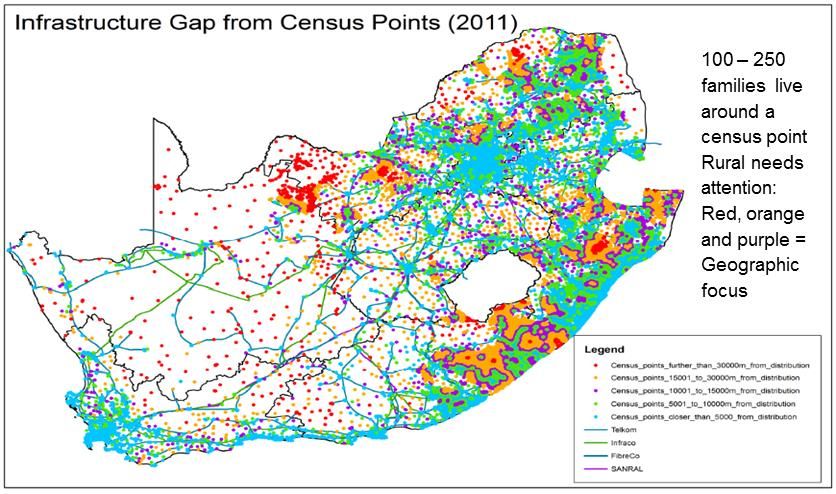
Presentation Outline

•     Global Perspective
•     Broadband Challenge in SA
•     SA Connect Programme - Progress on the implementation of the 4
      Strategic Pillars
       • Digital Readiness
       • Digital Development
            •   DTPS-led Broadband Programmes
            •   Other DTPS Monitored Broadband Programmes
                 •    Provincial led programmes
                 •    Universal Service Obligations
                 •    USAASA
                 •    Fiber to the Home
                 •    Mobile Broadband
                       •   Mobile Broadband evolution up to 5G
                       •   3G/4G Coverage
       •   Digital Future
       •   Digital Opportunity
            •   e-Government
            •   e-Skills
    Making South Africa a Global Leader in Harnessing ICTs for Socio-economic Development
                                                    2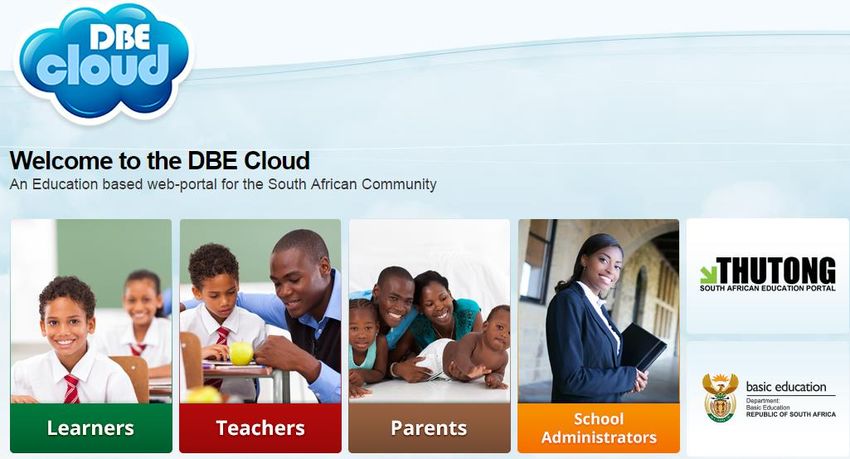
Global Perspective

Making South Africa a Global Leader in Harnessing ICTs for Socio-economic Development
                                                3
International Benchmarks for South Africa
                                                    - ICT Development index (IDI)

South Africa’s IDI global ranking (Source: ICASA Report, 2018)
                                                                 ❑    The ICT Development Index (IDI) is an index
                                                                     published by the ITU based on internationally
                                                                     agreed ICT indicators. IDI comprises of the
                                                                     following sub-indices:
                                                                         o   ICT Access (ICT readiness – infrastructure
                                                                             and access)
                                                                         o   ICT Use
                                                                         o   ICT Skills

        South Africa’s IDI ranking at variance level             ❑   South Africa’s overall global ranking on the IDI
                                                                     regressed for the second time to position 92 in
                                                                     2017 (out of 176 countries), having lost 2 spots in
                                                                     2016 to be at position 88 (from position 86 in
                                                                     2015).

                                                                 ❑   South Africa’s ranking was affected by both Use
                                                                     and Skills, which dropped from 86 and 80 in 2016
                                                                     to on 95 and 93 in 2017. Access improved from 91
                                                                     in 2016 to 90 in 2017.

  Making South Africa a Global Leader in Harnessing ICTs for Socio-economic Development
                                                                     4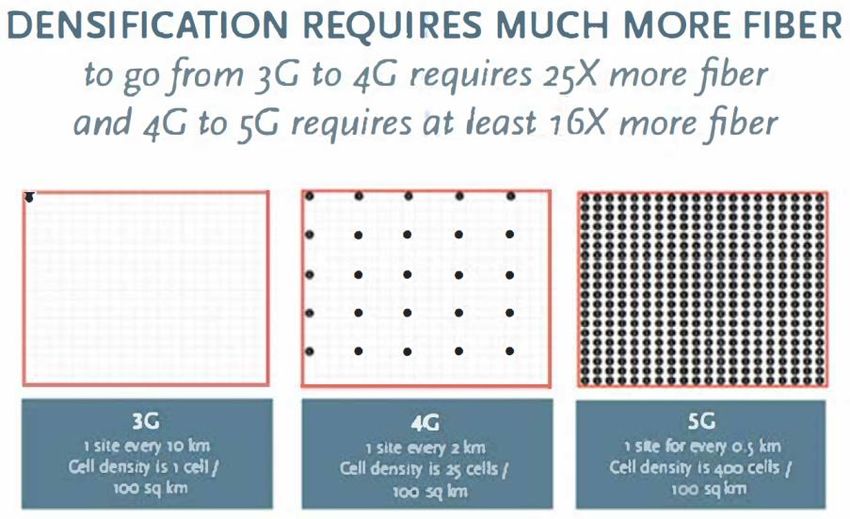
International Benchmarks for South
                                              Africa - ICT Development index (IDI)

❑ Comparing South Africa to some of its neighbouring African counterparts, its ranking
  regressed from position 2 in 2016 to position 3 in 2017

                          South Africa’s IDI ranking compared to other neighbouring countries

    Source: ICASA Report, 2018

   Making South Africa a Global Leader in Harnessing ICTs for Socio-economic Development
                                                               5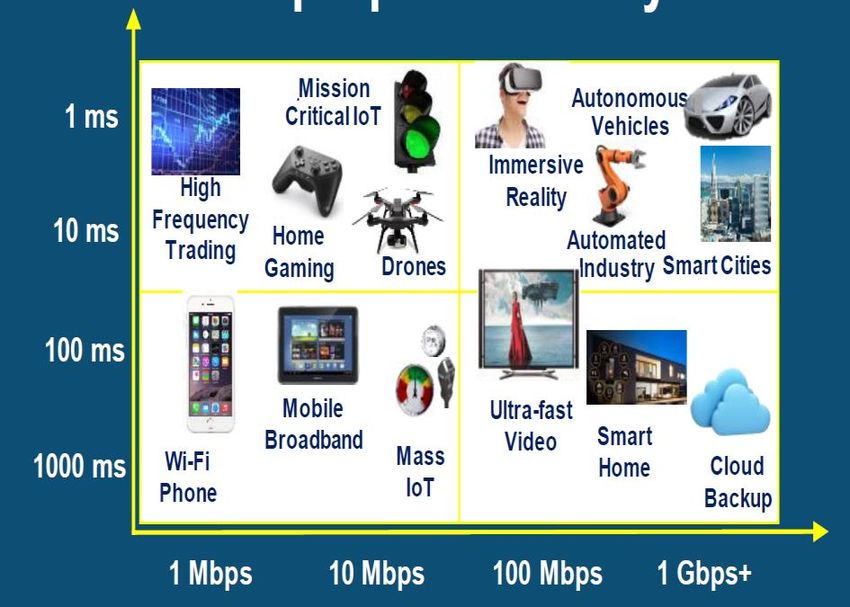
Broadband Challenge

Making South Africa a Global Leader in Harnessing ICTs for Socio-economic Development
                                                   6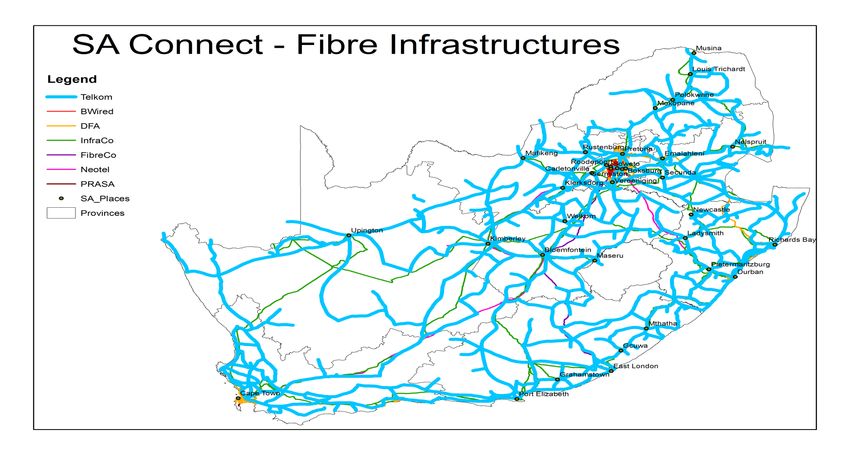
Broadband Challenge in South
                                                                   Africa

Broadband Challenge
                                                                Supply Side
• While ICT is seen as a powerful tool to economic
  development and to an effective and efficient service         Considerations
  delivery by government, SA is still challenged with
  issues of accessibility, usability and affordability.
• Inability to access ICT is closely associated with poverty    • Broadband roll-out is very capital intensive and
  which is most prevalent in predominantly rural or poor          requires billions of Rands
  areas.
                                                                • Recovery of investments must be secured – long
• The Statistics SA, General Household Survey (GHS)               payback period
  2016 re-affirms the existence of a digital divide between
  provinces, districts and municipalities.                      • SA Geography challenges - population is dispersed
                                                                • Uneconomical to roll-out in certain areas and
                                                                  requires cross-subsidization.

                                                                Demand Side
                                                                Considerations
                                                                •   Affordability of services and devices
                                                                •   Availability of local content
                                                                •   E-literacy and massification of e-skills
                                                                •   Availability of electricity

 Making South Africa a Global Leader in Harnessing ICTs for Socio-economic Development
                                                                     7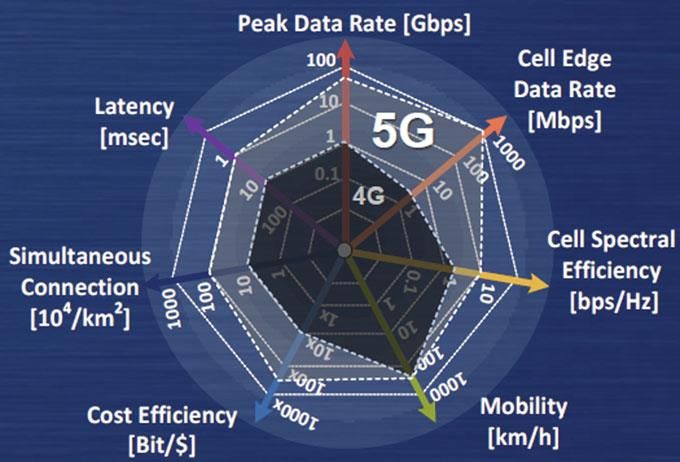
Broadband Network
                                                    Layers

                     The largest gap is in aggregation and access layers
                                          Cape Town

                                               Vredendal

                                                                                                     Biggest Infrastructure gap
                                               (Matzikamma)
                  Johannesburg
               Johannesburg /
                  Durban                      Bloemfontein

      Before 2009:0,34 T bps
      T oday:     11,5 T bps
                                     > 50 000km                       Graafwater

            International        National backbone            Aggregation /          Access /
International
          and links
                services                                      distribution /         last mile
                                                              metro
                                                                                   • Fibre
  • Under sea Fibre             • Fibre                       • Fibre
                                                                                   • Copper
    Optic cables                                              • Microwave          •Mobile
  • Satellite                                                 •Satellite           •Fixed Wireless
                                                                                   •Satellite
  Making South Africa a Global Leader in Harnessing ICTs for Socio-economic Development
                                                          8
International Bandwidth
                                    Connectivity in South Africa

Making South Africa a Global Leader in Harnessing ICTs for Socio-economic Development
                                                   9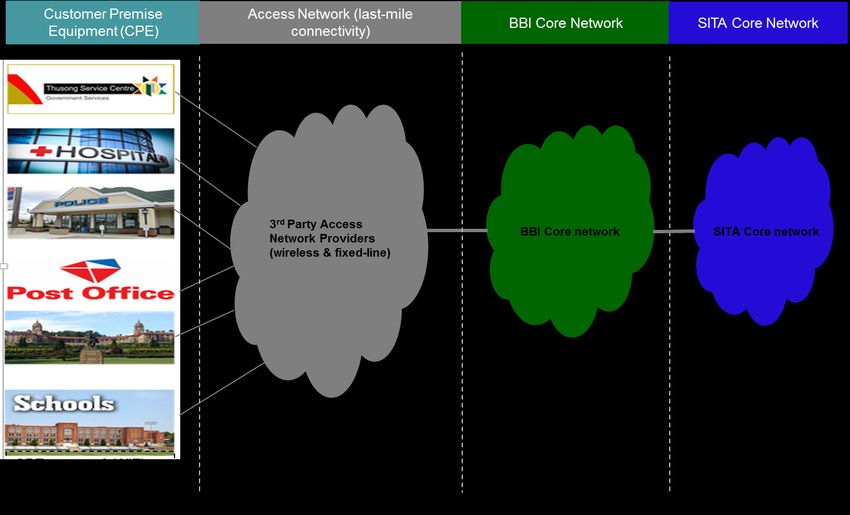
Combined Fibre
                                              Infrastructure

Making South Africa a Global Leader in Harnessing ICTs for Socio-economic Development
                                                  10
SA Connect Programme
Making South Africa a Global Leader in Harnessing ICTs for Socio-economic Development
11SA Connect - Meeting the Broadband
Challenge in SA
Four Key strategic
Digital Readiness Digital Development Digital Future Digital Opportunity
Pillars
Enabling policy & regulatory Public sector demand
frameworks; institutional aggregation to address National Broadband Network Demand Stimulation
capacity critical gaps
❑ Broadband as an ecosystem
of digital networks,
services, applications,
content and devices, will be
firmly integrated into the
economic and social fabric of
the country.
❑ A key objective of SA
Connect is that broadband
must reach a critical mass
of South Africans
Making South Africa a Global Leader in Harnessing ICTs for Socio-economic Development
12SA Connect Digital Readiness
Progress
• Key Policy and Regulatory issues to enable broadband infrastructure rollout and
adoption of data services
• Allocation of spectrum to address broadband coverage and capacity
(bandwidth)
• Electronic Communications Amendment Bill published for public comments and held
hearings
• CSIR has concluded the study on the Spectrum requirements by the Wireless Open
Access Network (WOAN). Study will be submitted to Cabinet.
• Rapid Deployment of ICT Infrastructure
• Conducive environment for investment in efficient networks that enable the reduction of
costs, enhance competition and remove barriers to entry
• Reduction of cost to communicate
• Priority market study by ICASA and Competition Commission’s market inquiry underway
• ICASA released the final regulations on the end-user and subscriber charter on 26 April
2018 addressing the following:
• All licensees to send usage notifications to customers at set intervals to assist
them to manage and control spend on voice, SMS and data services
• All licensees must allow customers to roll over unused data
• All licensees must allow customers to transfer data to other customers on the
same network
• All licensees must not charge default customers to out-of-bundle usage charges
without their specific consent.
Making South Africa a Global Leader in Harnessing ICTs for Socio-economic Development
13Broadband Connectivity
Coordinated by DTPS
Making South Africa a Global Leader in Harnessing ICTs for Socio-economic Development
14SA Connect Approach
Connect government, business and individual users
Enabled by Government through aggregated procurement of services. (Phase 1
and 2 will ensure 100% connectivity to Government facilities.)
To build an enabling ICT infrastructure for the connected government
Government
Enabled by government through Enabled by government through
policy (spectrum – Coverage and policy (spectrum – Coverage and
capacity spectrum, capacity spectrum,
Infrastructure non-duplication Infrastructure Infrastructure non-duplication
and sharing (open access) and and sharing (open access) and
Streamlined/Coordinated Streamlined/Coordinated
application and approval process application and approval process
for deployment rapid for deployment rapid
Individual Business deployment).
deployment).
Mobile and fixed broadband Mobile and fixed broadband
initiatives by public and private initiatives by public and private
sector. sector.
Making South Africa a Global Leader in Harnessing ICTs for Socio-economic Development
15SA Connect Digital Development Pillar
- Scope
To facilitate and stimulate the expansion of broadband infrastructure, the Department has developed business cases that will aggregate
government’s demand for broadband. The implementation will be achieved through a two phased approach.
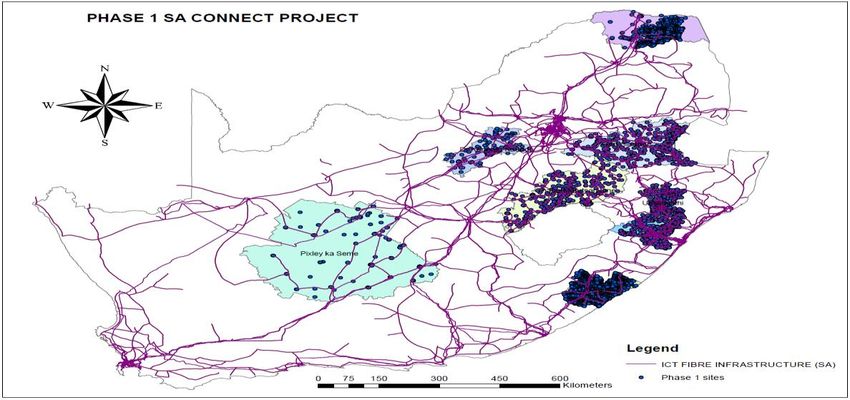
Phase 1 Phase 2
• Focuses on providing broadband connection services in
• The strategy includes cconnecting schools, clinics, post the remaining 44 districts to schools, health and a number
offices, police stations and other government facilities of other government facilities within these identified
• To expand broadband Infrastructure to provide universal districts.
access by connecting 6135 Government facilities in the 8 • To expand broadband Infrastructure to provide universal
prioritized districts access by connecting 35211 Government facilities in the 8
prioritized districts
Making South Africa a Global Leader in Harnessing ICTs for Socio-economic Development
16SA Connect Digital Development Pillar
- Phase1 - Scope
Penetration Baseline
Broadband Policy Target By 2016 By 2020 By 2030
measure (2013)
Broadband access in 33.7% Internet 90% at 5Mbps 100% at 10Mbps
% of population 50% at 5Mbps
Mbps user experience access 50% at 100Mbps 80% at 100Mbps
50% at 10 100% at 10Mbps
Schools % of schools 25% connected
Mbps
100% at 1Gbps
80% at 100Mbps
50% at 100% at 10Mbps
Health facilities % of health facilities 13% connected
10Mbps
100% at 1Gbps
80% at 100Mbps
% of government 100% at
Public sector facilities offices
50% at 5Mbps 100% at 10Mbps
100Mbps
No Phase 1 District Facilities
1 Dr Kenneth Kaunda(NW) 340
2 Gert Sibande(MP) 797
3 O.R.Tambo(EC) 1444
4 Pixley ka Seme(NC) 225
5 Thabo Mofutsanyane(FS) 747
6 uMgungundlovu(KZN) 771
7 uMzinyathi (KZN) 601
8 Vhembe(LIM) 1210
TOTAL 6135
Making South Africa a Global Leader in Harnessing ICTs for Socio-economic Development
17SA Connect Phase 1 -
Implementation Model
3rd Party Access BBI Core Network SITA Core Network
Network Providers
(wireless & fixed-
line)
❑ In May 2017, Broadband Infraco and SITA were jointly mandated by the Department to implement
Phase 1 of SA Connect Project.
❑ In August 2017 the tripartite Master Services Agreement (MSA) contract was signed by the DTPS,
Broadband Infraco and SITA effectively commencing the rollout of SA Connect.
Making South Africa a Global Leader in Harnessing ICTs for Socio-economic Development
18SA Connect Phase 1 – Procurement
Challenge
Below is an outline of the procurement options undertaken to appoint a service provider to implement SA Connect Phase
1. Option 1-4 have not been successful, implementation of Option 5 is underway.
Application for SITA Tender to implement
Deviation from tender OPTION 2 Phase 1 issued and later
OPTION 4 BBI and SITA to
processes to appoint a cancelled, due to bidders collaborate in line with
service provider for SA not meeting minimum the IGRF, ECA, SITA Act
Connect Phase 1 requirements
2015 2016 2017
2015 2017
Decision to use ICT SOCs.
SITA’s application for
Application for deviation to appoint BBI for
Exemption from the aggregation of ICT
OPTION 1 PFMA to appoint OPTION 3 infrastructure from multiple OPTION 5
Service Provider providers
Making South Africa a Global Leader in Harnessing ICTs for Socio-economic Development
19SA Connect Phase 1 Funding -
Budget cuts
❑ In December 2017 National Treasury informed the Department of budget cuts on the SA
Connect over the MTEF in line with Government’s expenditure reduction as approved by
Cabinet.
❑ The budget has been cut by 33.8% in 2017/18, 98.7% in 2018/19, 75.9% in 2019/20, and
75.9% in 2020/21
Financial year 2017/18 2018/19 2019/20 2020/21
MTEF allocation (R’ 000) R411 000 R703 619 R724 530 R764 379
Budget cut (R’ 000) R139 000 R693 900 R550 000 R580 000
% Budget cut 33.8% 98.7% 75.9% 75.9%
Balance (R’ 000) R272 000 R9 719 R174 530 R184 379
Making South Africa a Global Leader in Harnessing ICTs for Socio-economic Development
20SA Connect Phase 1 Budget Cut –
Implications on facilities
❑ Budget cut resulted in drastic reduction in a number of the facilities being
connected in 2018/19 than initially planned
2018/19 facilities planned vs facilities being connected
600
556 552
501
500
400 365
311
300
223 Facilities planned to be connected
200 Facilities being connected
159
118
101 90 98
100
43 34 47 40
33
0
Making South Africa a Global Leader in Harnessing ICTs for Socio-economic Development
21SA Connect Phase 1 Connectivity
Progress
• Focus was on network equipment and capacity upgrade
• On capacity upgrade , 13 key network nodes were successfully commissioned. Integration work in progress.
• More than 40% of obsolete active network elements were replace in the network
• About 2km of additional fibre was added
SA Connect
SA Connect Status Planned May-
Phase 1A Jun-18 Jul-18 Aug-18 Sep-18
Count 18
Planned Site Handover Actual (313)
Cumulative Target Cumulative Actual
Dr K Kaunda 32 16 16
160 350
146 311 313 Gert Sibande 54 20 34
140 285 300
120
221 250 O R Tambo 93 40 46 7
100
200 Pixley ka Seme 20 9 9 2
80 75 Thabo
64 150 Mofutsanyane 39 15 24
60 uMgungundlo
75 100 vu 34 16 18
40
26
20 50 uMzinyathi 22 8 14
28 2
00 Vhembe 19 9 10
0 0
Apr-18 May-18 Jun-18 Jul-18 Aug-18 Sep-18 Total 313 75 146 64 26 2
Making South Africa a Global Leader in Harnessing ICTs for Socio-economic Development
22SA Connect Phase 1 -
Implementation Progress
❑ Subsequent to SA Connect budget cuts the Department has issued purchase orders to BBI
and SITA to connect 570 SA Connect government facilities (schools, health, government
offices) in 2018/19.
❑ A detailed physical site surveys of the government facilities to be connected have been
completed.
❑ BBI has concluded a tender process to expand its core network in order to address
infrastructure gaps that were identified. The work to expand the core network by 999 km of
fibre is underway.
❑ BBI has also concluded a tender process for access network connectivity to provide last
mile services in 8 district municipalities. Access network providers have been appointed and
work to provide last mile connectivity to 313 facilities is underway in 8 district municipalities.
❑ SITA has renegotiated its contract with its service provider to upgrade capacity of existing
services that form part of SA Connect to 10Mbps. This work has commenced and upgrade
of services to 8 facilities (out of 63) have been completed
❑ The Department has established district task teams in all 8 districts municipalities to
facilitate SA Connect implementation at the district level.
Making South Africa a Global Leader in Harnessing ICTs for Socio-economic Development
23SA Connect Phase 2 -
Progress Status
❑ In September 2017 the Department
submitted an application for
Phase 2 funding to National
Treasury.
❑ In April 2018 National Treasury
responded to the application for
funding with a recommendation
that the Department should
conduct a comprehensive feasibility
for funding for Phase 2 and
resubmit the application.
❑ The Department has engaged a
development bank to assist with
the feasibility study and a bankable
business case. The MoU between
the Department and the
development bank signed and
engagement with National Treasury
on execution underway.
Making South Africa a Global Leader in Harnessing ICTs for Socio-economic Development
24SA Connect Phase 1 and Phase 2
Progress Status
Finalization of Infrastructure
SLA’s Roll-out
DTPS, BBI&
SITA sign
MSA
Mandate Infrastructure
SOCs Roll-out
Funding to
procure Appointment
services of a service
provider
Business Case Site
development Verification
High Level
Planning Funding
Infrastructure Feasibility
Gap Analysis
Study
Governance and
Co-ordination Business Case
Framework development
High Level
Planning
Completed
Infrastructure Underway
Gap Analysis
Not yet started
Governance and
Co-ordination
Making South
Framework Africa a Global Leader in Harnessing ICTs for Socio-economic Development
25Connectivity Programmes
Monitored by DTPS
Making South Africa a Global Leader in Harnessing ICTs for Socio-economic Development
26Agreed Coordination Framework
across All spheres of government
National Sphere
National Dept of National National National Other
Public Service Dept of Dept of national
& Basic
Treasury
Health
--- depts
Administration Education Co
ord
ina
tio
n
Coordination DTPS Coordination
Private Sector Co
SOCs
or
di n
Provincial Sphere a ti
Other Provincial on Provincial Other
provincial Depts of Depts of provincial
line
function
--- Basic
Education
Health --- line
function
depts depts
Coordination Coordination
Provincial
Steering
Local Sphere Committees
Coordination Coordination
District District District District
Municipalit ies Municipalit ies Municipalit ies Municipalit ies
LMs LMs LMs LMs LMs LMs LMs LMs
Figure 1 : DTPS as central coordi nating bo dy for t he roll out of S A Con nect
Making South Africa a Global Leader in Harnessing ICTs for Socio-economic Development
27Agreed Coordination Framework
across All spheres of government
❑ The main purpose of the broadband steering
committees is to coordinate and facilitate broadband
implementation across all the role players in the
province and to ensure that the benefits of
Broadband are achieved in the provinces.
❑ Identify synergies and opportunities with other
infrastructure projects with a view of aligning them to
the Broadband implementation plan.
❑ Ensure alignment between both existing and planned
infrastructure roll-out of public and private sector
operators;
❑ Line Departments have appointed officials in the
Steering Committees
❑ Different task teams have been established to assist
the steering committee in facilitating the
implementation of broadband.
❑ Demand stimulation initiatives have been identified
and task teams appointed to ensure successful
implementation.
Making South Africa a Global Leader in Harnessing ICTs for Socio-economic Development
28Provincial Led Initiatives
Complementing SA Connect
March March March
Gauteng Broadband
June 2014 2016 2017 2019
2018
Network (GBN)
Core Nodes = 8 Core = 8 Core = 8
Core = 0 Access Sites Access Sites Access Sites Target3000
Access = 0 Connected = Connected = Connected = Sites
592 1000 1066
Target of 3000
Phase 1 Phase 2 Phase 3 Phase 1
Western Cape Broadband
2014 -
2017 - 2021 2022 & beyond • A total of 1908 facilities
2016 connected to 10 Mb/s
Duration 3 years 5 years 2 years broadband services.
Project
Cumulative Duration 3 years 8 years 10 years
10 Mbps 90% 0% 0% Phase 2
100 Mbps 4% 90% 0%
• Commenced October 2017;
1 Gbps 6% 10% 90% • 500 Phase 1 facilities
10 Gbps 3 Sites 3 Sites 10% upgraded to 100 Mb/s.
Making South Africa a Global Leader in Harnessing ICTs for Socio-economic Development
29Universal Service Access
Obligation (USAO)
• The USAO rollout forms part of the license obligations for MTN, Vodacom & Cell C at 1500 schools each
and Neotel at 750 schools
• Target of 5250 Schools in 5 years from 2015/16 until 2019/20 with a yearly target of 1050 schools
• MTN, Vodacom & Cell C at 1500 schools each and Neotel at 750 schools
Progress:
Education content placed in local servers
• 4366 schools connected to date
• 1822 (2015/16)
• 1429 (2016/17)
• 1115 (2016/18)
PROVINCE MTN Cell C Vodacom Neotel Total
EC 204 201 367 772
FS 166 21 233 420
GP 72 53 0 125
KZN 358 218 300 186 1062
LP 205 261 50 516
NW 70 86 97 253
NC 141 76 217 434
WC 101 96 62 185 444
MP 43 190 107 340
Total 1360 1202 1433 371 4366
Making South Africa a Global Leader in Harnessing ICTs for Socio-economic Development
30Universal Service Access
Obligation (USAO)
• When the solution is installed at a school, the district official from DBE with the
Principal of the school will sign off the installation report by the licensee. From
there onwards it is the responsibility of the school / DBE to take ownership of the
devices.
• In line with e-rate regulations i.e 50% of the connectivity charges are supposed
to be supported by USASSA through USAF, but that model didn’t work.
• DTPS & DBE are engaging with ICASA to review the payment model stipulated in the
obligation.
Making South Africa a Global Leader in Harnessing ICTs for Socio-economic Development
31USAASA Broadband
Expansion Programme
❑ USAASA used the Universal Service Access Fund (USAF) to expand their program of connecting underserved
areas in the:
• OR Tambo District Municipality (King Sabata Dalindyebo and Mhlontlo local Municipality)
2017/18
Category Planned Completed
Health Facilities 65 24
Police 4 -
Post Office 5 -
Schools 533 184
Community Centre 2 2
Total 609 210
Making South Africa a Global Leader in Harnessing ICTs for Socio-economic Development
32Fibre to the Home
Broadband Connectivity
According to the FTTX Council:
• The number of houses passed by fibre has grown from 439 000 in 2017 to 933 000 by
March 2018, which is equivalent to 112% year on year growth.
• The number of houses connected grew from 89 000 in 2016/17 to 280 000 in 2017/18.
Africa Analysis: FTTH deployments and uptake as of March 2018
Making South Africa a Global Leader in Harnessing ICTs for Socio-economic Development
33Mobile Broadband
Making South Africa a Global Leader in Harnessing ICTs for Socio-economic Development
34Mobile Technology Evolution
2013 2020
1980 1991 2003
1G
• Enhance Mobile
Analogue voice • Digital Voice- • Networks with • Data-centric Networks Broadband (eMBB)
dominated Networks matured data services services services
• Simple text message • Multimedia • Higher data rate with • Massive Internet of
• Low data rates • Video calling broad coverage Things (IoT)
• Video is key traffic to the • Ultra-reliable and Low
consumer Communications
• Huge variety of
industry possible use
cases
Making South Africa a Global Leader in Harnessing ICTs for Socio-economic Development
355G Key Requirements and
Opportunities
5G with Massive IoT
• 5G together with Massive Machine-to-Machine (M2M)/IoT are game changers
viewed as business creator and opening doors for new industry development
• Agriculture, Automotive, Energy, Health, Manufacturing, Logistics, Security etc
Making South Africa a Global Leader in Harnessing ICTs for Socio-economic Development
363G and 4G Network Coverage
❑ Coverage for 3G remained stable at 99% of the population between 2016 and 2017
❑ Coverage for 4G/LTE increased from 75% to 77% of the population for the same period.
Source: ICASA Report, 2018
Making South Africa a Global Leader in Harnessing ICTs for Socio-economic Development
37Fibre enabled 5G
Fibre Networks are a Springboard to 5G
The evolution to 5G wireless service will require the construction and operation of dense, mesh fibre
networks. To achieve these aims most efficiently, 5G and all-fibre providers will need access on a
reasonable and non-discriminatory basis to public and private land, to poles, ducts, and conduits, and
to commercial and residential buildings.
5G densification requires 10 to 100 times more cell sites than exist today.
Fibre Enabled 5G Applications and
Associated Network Requirements
(Source: FTTH Council Asia/Pac Whitepaper: The Role of Fibre
in 5G Deployments)
Source: Verizon, Kyle Fibre Connect Conference 2017
Making South Africa a Global Leader in Harnessing ICTs for Socio-economic Development
38Digital Future Programme
Making South Africa a Global Leader in Harnessing ICTs for Socio-economic Development
39SOC Rationalisation Roadmap
❑ In line with the PRC Report and the NDP, the DTPS through the ICT SOE rationalisation project, seeks to achieve consolidation of
ICT resources in order to capitalize on available technology capabilities and convergence of available resources to deliver robust
digitized services across Government.
❑ Having considered the severity of the challenges raised (which include amongst others, infrastructure duplication, wastage of
scarce financial resources, etc.) the department is determined to move from the current fragmented mode of service delivery to a
more consolidated approach by creating an NBN Co and the State IT Company.
❑ On 6 Dec 2017 Cabinet approved the framework and mandates for the establishment of the State ICT Infrastructure (NBN Co) and
State IT companies
Phase 2
Phase 1 Access
Consolidation of NBNCo Formed Agreements btw
BBI and Sentech NBN Co and
None-ICT entities
Making South Africa a Global Leader in Harnessing ICTs for Socio-economic Development
40Digital Opportunity Programme
Making South Africa a Global Leader in Harnessing ICTs for Socio-economic Development
41E-Government
❑ National e-Government Framework and Roadmap was developed as mandated by the
Electronic Communications and Transactions Act No.25 of 2002, the National Development
Plan as well as the National Integrated ICT Policy White Paper. The Framework was
approved by Cabinet on 01 November 2017.
❑ DTPS in collaboration with SITA are a developing standardized national e-services portal to
allow for a connected government and identifying citizen facing public services that are
candidates for electronic service delivery and consolidate them on the portal.
❑ SITA as the e-Government strategy technical executor has developed a business model
that seeks to address how e-Services will be planned, build, and test and deployed or
acquired from the market.
Making South Africa a Global Leader in Harnessing ICTs for Socio-economic Development
42e-Education
❑ DBE Cloud - An education based web
portal-
▪ Teacher will have ability to develop
own lessons and upload supporting
content
▪ Learner login to interface to access
content, assessments include
specific grades,
▪ Parents to access learner
information
❑ DBE Cloud -solution ( will work as an
online /offline platform )
▪ Online datacenter is needed to host
the content in order for cloud
solution to work.
▪ Offline platform require localised
server in schools for the solution to
be loaded
Making South Africa a Global Leader in Harnessing ICTs for Socio-economic Development
43Contribution to e-skills
Provincial e-skills CoLabs are based at universities. Each has a focus on a
specific area in e-skills. Discussions are underway with universities to cover
the remaining provinces
Limpopo CoLab EC CoLab
Univ of Limpopo Walter Sisulu University
Connected Health ICT for Rural Dev / Agriculture
01
WC CoLab Gauteng CoLab
Univ of WC NEMISA
E-inclusion and Creative New media industries
social innovation 04 02
KZN CoLab Gauteng CoLab
Durban Univ of Tech Vaal Univ of Technology
e-Enablement for e-Literacy, e-Business
effective service delivery 03
North West CoLab Northern Cape CoLab
North West University Vaal Univ of Technology
e-Agro Tourism e-Literacy, e-Business
Making South Africa a Global Leader in Harnessing ICTs for Socio-economic Development
44Contribution to e-skills
• Through the Internet for ALL programme the DTPS has collaborated with several private
sector players to deliver training to more people by the end of 2017. The training includes
basic e-literacy to technical training such as networking and cybersecurity. The partners have
committed to further train more people in 2018.
• NEMISA collaborates with relevant organisations around e-skills interventions to maximise the
impact, avoid duplication, fill gaps, and maximise the use of infrastructure and resources.
(This involves e-skills interventions originating from NEMISA or from partners.)
Type of Training Trained in 2017/18 To be trained in
Offered (up to 31 Dec 2017) 2018/19
e-Literacy 2440 4465
Sector users 1217 2000
ICT Practitioners 447 700
e-Leaders 58 200
Total 4162 7365
Making South Africa a Global Leader in Harnessing ICTs for Socio-economic Development
45Contribution to e-skills
Some of the e-Skills activity in Quarter 4 of 2017-18
• NEMISA, with the DTPS, hosted the National e-Skills Summit 2018 from 13-15 March 2018
at the Emnotweni Conference Centre in Mbombela. Participants included government, e-skills
stakeholders, education institutions, researchers, and business.
• NEMISA, trained 37 youths, who were predominantly female, on the Object Orientation
Programming Training, in Phillipi and Leonsdale.
• In Gauteng, NEMISA provided a 15-day course (from 27 February 2018 to 16 March 2018 ) in
desktop publishing and photography to 11 participants in support of SMME development.
• NEMISA will work on programmes aimed at enabling massification of e-Skills in a
meaningful scale.
• The ICT for Rural Development CoLab, based at Walter Sisulu University, and the KSD TVET
College entered into an initial agreement. The college piloted the roll-out of the eSkills4All e-
literacy course for community members on a part-time basis and a number of college
staff were trained as course facilitators
• 20 unemployed youth (engineering students), of which 18 were female drawn by the college from
databases of unemployed students and youth in the KSD municipal district.
Making South Africa a Global Leader in Harnessing ICTs for Socio-economic Development
46Contribution to e-skills
• This EC CoLab is a member of the recently-established Provincial Cyber Security Task Team,
hosted a workshop in November at which Cisco presented on cyber security. Subsequent
the CoLab has collaborated with Cisco Academy and Walter Sisulu University to offer the
Cisco-accredited ‘Introduction to Cyber Security’ course.
• As part of the eSkills4All, on 12 February 2018, the Northern Cape Co Lab presented 67 De
Aar community with certificates for completing the e-Literacy course which is accredited by
Vaal University of Technology (VUT). There were also 21 people from the community who
completed the IT Technical Support course.
• On 28 February 2018, the Knowledge based Economy and e-Social Astuteness (e-Literacy) e-
Skills CoLab hosted its first official certificate ceremony at the Nama e-Skills Business Centre
in Nababeep, Springbok. There were 26 people receiving certificates for the e-literacy
course and 21 for the IT Technical Support course.
• On 6 February 2018, The e-Inclusion and Social Innovation e-Skills CoLab based at the
University of the Western Cape held a Digital Identity workshop in Gugulethu Kwezi
Recreation Centre which was attended by 25 high school learners. The second workshop held
on 2 March 2018 was attended by 25 youth delegates.
Making South Africa a Global Leader in Harnessing ICTs for Socio-economic Development
47Internet for ALL Contribution to e-
Skills
• From 1 August 2017 todate, Cisco has trained 10,590 student beneficiaries via their
Networking Academy program.
Google Training in SA Overall Impact: (Google’s Analysis)
2016: The training is making a real difference to
48368 people trained offline South Africans and their businesses
• 19% have found jobs since training
• 43% reported that their job situation
2017- to date: changed for the better since training
56656 people trained offline • 72% business owners developed an
online presence for their businesses since
- Number of Males Trained: 23547 training
• 46% of business owners intended to hire
- Number of Females trained: 33109 new staff within 6 months
Google has trained 105,024 since the start of
the project in 2016.
The target for 2018 is 100 000
Making South Africa a Global Leader in Harnessing ICTs for Socio-economic Development
48Thank
you
Ke a Inkomu
leboga
Ngiyabonga Ngiyathokoza
Ke a
Enkosi
leboha
Ndo Dankie
livhuwa
Siyabonga
Making South Africa a Global Leader in Harnessing ICTs for Socio-economic Development
49You can also read


