Arborist Report 14 Austin Street, Somerville 3912 - Mornington Peninsula Shire
←
→
Page content transcription
If your browser does not render page correctly, please read the page content below
Paul Jameson
                                  (Grad. Cert. Arb. (Melb) Ass. Dip. Hort. (Burnley) BA, BSW)
                                                                 Consultant Arborist
                                                        Info@bluegumreports.com.au
                                                                     0425 879 811

               Arborist Report

           14 Austin Street, Somerville 3912

1 | Page          14 Austin St, Somerville 3912                              Ver:08/20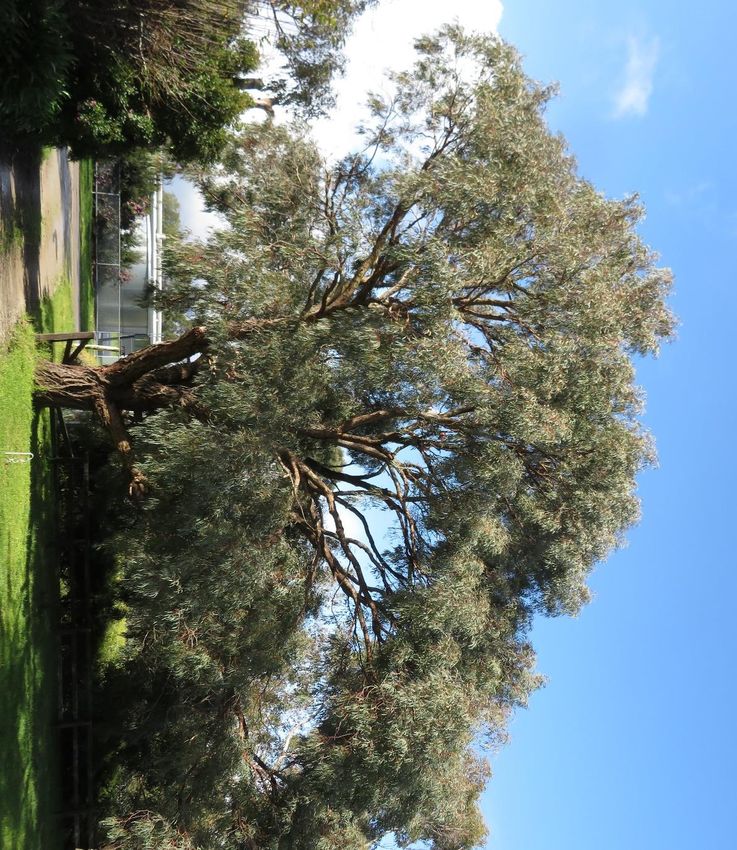
Paul Jameson
                                                     (Grad. Cert. Arb. (Melb) Ass. Dip. Hort. (Burnley) BA, BSW)
                                                                                    Consultant Arborist
                                                                           Info@bluegumreports.com.au
                                                                                        0425 879 811

   Client                       Bayside Town Planning

   Client Address               35-37 Genoa Street, Moorabbin 3189

   Site Address                 14 Austin Street, Somerville 3912

   Document Type                Arborist    Report        –      Tree        assessment          &
                                recommendations.
   Date                         24th August 2020

      1. Contents
                                                           Page
   Sections
      1. Contents                                          2
      2. Key Findings                                      3
       3. Introduction                                     3
       4. Methodology                                      5
       5. Site Context                                     6
       6. Discussion                                       7
       7. Recommendations                                  13
       8. Tree Protection Requirements                     14

       9. Suggested Replacement Species                    16

       10. References                                      18

   Appendices
      1. Tree Assessment Criteria                          19
      2. S.U.L.E Rating Schedule                           21
      3. Assessment of Trees                               22
      4. Tree Images                                       24
      5. Site Plan                                         31
   Tables:
       1. Trees to be removed                              11
       2. Trees to be retained                             12
   Figures:
       1. Assessment area                                  6
       2. Trees 7, 16, 18 & 26 (figures 2-5)               8-12
       6. Temporary protective fencing                     15

2 | Page                 14 Austin St, Somerville 3912                                          Ver:08/20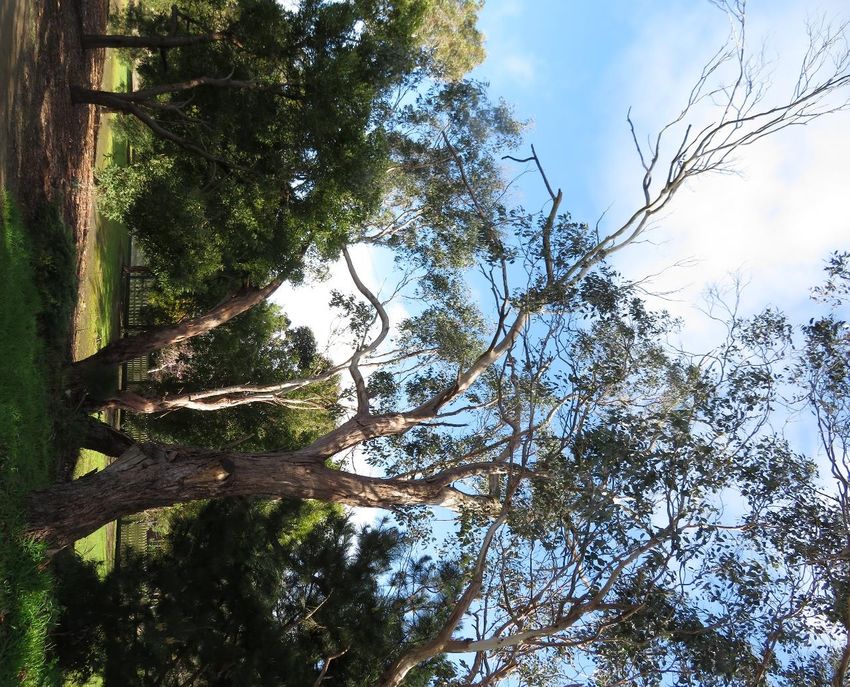
Paul Jameson
                                                       (Grad. Cert. Arb. (Melb) Ass. Dip. Hort. (Burnley) BA, BSW)
                                                                                      Consultant Arborist
                                                                             Info@bluegumreports.com.au
                                                                                          0425 879 811

           2.     Key findings

      •    This is a preliminary arborist report and does not include an arboricultural impact
           assessment.

      •    Trees 1-15 are all located in the road reserve outside this property; except for trees 5-7
           & 9-10 these trees are unlikely to be directly affected by the proposed development.

      •    Trees 5-7 & 9-10 are likely to be directly affected by the proposed development.

      •    There are 11 trees located on this property, except for trees 16, 18 & 22 these trees have
           low retention value and could be removed.

      •    Trees 16, 18 & 22 have moderate to high retention value and could be retained and
           incorporated into the proposed development. These trees are likely to be directly
           affected by the proposed development.

      •    Trees 27-28 are in adjoining properties.

      •    Tree 27 (tree group) is likely to be directly affected by the proposed development.

      •    Tree 28 (tree group) is unlikely to be directly affected by the proposed development.

           3.     Introduction

  I was contacted by Bayside Town Planning regarding providing an Arborist report for a
  proposed development at this address. The proposed development will affect 28 trees, most of
  these trees are in adjoining properties. As part of my assessment I have reported on the health
  and condition of these trees and have provided recommendations based on my assessment.

  The site is within the Shire of Mornington Peninsula, it is located within a Low Density
  Residential Zone (LDRZ), The site is covered by a Vegetation Protection Overlay (VPO1), this
  states that a permit is required to remove, destroy or lop any vegetation, except for:

      •    The removal of vegetation carried out in conjunction with a development approved
           under a planning permit and in accordance with an endorsed plan.
      •    The removal of vegetation necessary for the construction of a dwelling, dwelling
           extension or outbuilding where no planning permit is required and provided that:
               o A building permit has been granted for the proposed development.
               o Vegetation is only removed from the building footprint or within 2 metres of
                  the proposed building.
               o No tree with a trunk circumference greater than 0.35 metres is removed within
                  6 metres of a road frontage.
      •    The removal of vegetation to enable the formation of a single crossing and access
           driveway with a maximum width of 3.7 metres.

3 | Page                   14 Austin St, Somerville 3912                                          Ver:08/20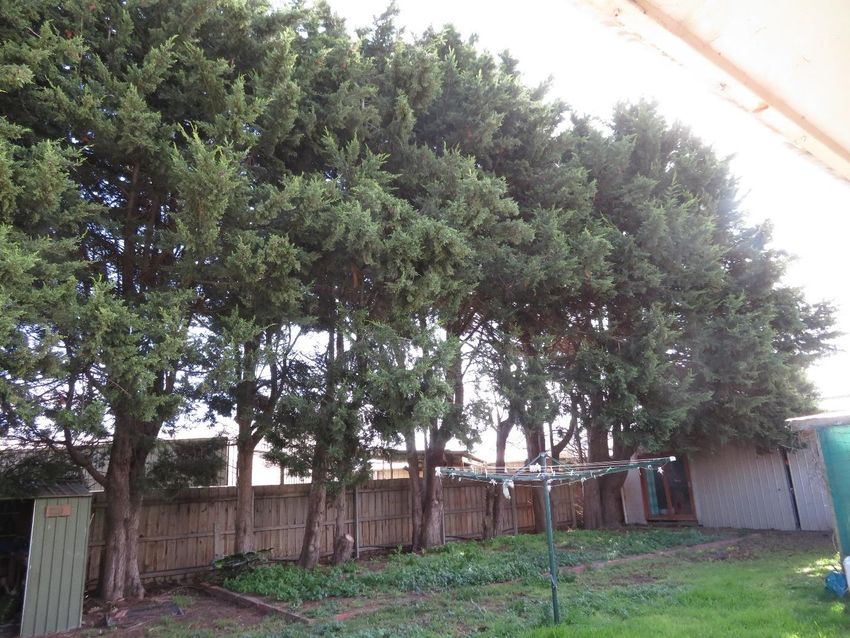
Paul Jameson
                                                      (Grad. Cert. Arb. (Melb) Ass. Dip. Hort. (Burnley) BA, BSW)
                                                                                     Consultant Arborist
                                                                            Info@bluegumreports.com.au
                                                                                         0425 879 811

      •    The removal of vegetation which presents an immediate risk of personal injury or
           damage to property including the culling of single trees located within 3 metres of a
           dwelling or outbuilding, or which overhangs a boundary line.
      •    The removal of any dead timber or branch which has occurred through natural
           circumstances, fire or the spread of noxious weeds.
      •    The removal of any tree or branch of a tree which impairs the access of motor vehicles
           along any existing or approved access track, provided that such access track has a width
           no greater than 3.7 metres.
      •    The maintenance of landscaping, including pruning, which not affect the stability,
           general forms and viability of the vegetation.
      •    The removal of vegetation that has been established for less than 10 years and which is
           not required as landscaping under a planning approval.

  Based on this a permit will be required to remove trees 16-26.

  This report is a preliminary arboricultural report and is intended to provide detailed advice on
  the nature of trees on the site, this includes basic tree information (name, species, health,
  condition, structure, size, age class, safe useful life expectancy, trunk diameter at breast height
  and ground level, tree protection zone and structural root zone) as well as significance and
  suitability for retention (rated as low, moderate and high). An assessment of suitability for
  retention considers tree health, structure, size, environmental and habitat value, landscape
  value (aesthetic and streetscape value) age and longevity, and species factors, it also considers
  potential constraints on retaining trees and the potential design modifications required to
  accommodate a tree on the site.

  I have conducted a site visit on the 4/08/2020, and assessed the health, condition and safety of
  the trees in question. Recommendations are outlined in section 5 of this report. A detailed list
  of the surveyed trees is provided in Appendix 2 of this report. A site plan is included which
  identifies and shows the location of the trees concerned, photographs of the trees have also
  been included.

4 | Page                   14 Austin St, Somerville 3912                                         Ver:08/20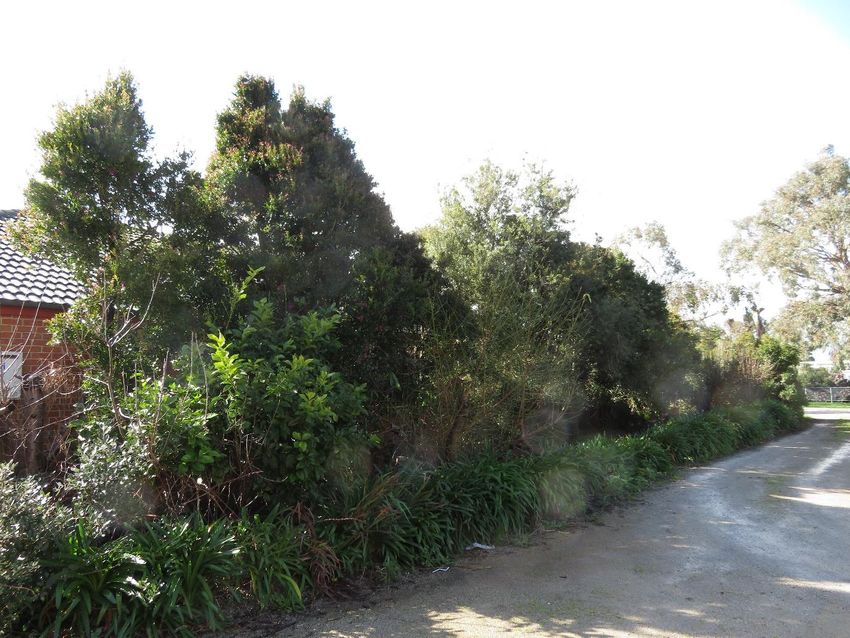
Paul Jameson
                                                       (Grad. Cert. Arb. (Melb) Ass. Dip. Hort. (Burnley) BA, BSW)
                                                                                      Consultant Arborist
                                                                             Info@bluegumreports.com.au
                                                                                          0425 879 811

      4. Methodology

  The trees were assessed using the standard Visual Tree Assessment technique (VTA). The trees
  were assessed from the ground for this report. VTA is an internationally recognised practice in
  the visual assessment of trees as formulated by Mattheck & Breloer (1999).

  A Yama 20m diameter tape was used to obtain the Diameter at breast height (DBH) at 1.4
  metres above ground level. The height was measured using a Nikon Forestry Pro Laser Range
  Finder, the spread of the tree’s canopy was paced out. Photographs were taken with a Canon
  700D DSLR camera. Aerial photographs were taken from www.nearmap.com.au.

  The report considers relevant sections of the Australian Standard: AS4970-2009: Protection of
  trees on development sites and uses this as the basis for determining tree protection and
  structural root zones.

  This report includes all trees located on the subject site/s, trees in adjoining properties that may
  be impacted by the proposed development (within 5m of the property boundary unless
  requested otherwise) and council street trees located directly outside the subject property/s. For
  the purposes of this report the definition of a tree is based on AS4970, which states that a tree
  is a ‘long lived woody perennial plant greater than (or usually greater than) 3 m in height with
  one or relatively few main stems or trunks (or as defined by the determining authority)’.

  The ULE rating system has been used as a guide to assist in determining the Useful Life
  Expectancy of the tree surveyed. Refer to Appendix 1 (Barrell 1993).

  A scaled site plan has been prepared using ArborCAD software.

  Reference was made to the Shire of Mornington Peninsula’s Planning Scheme at Victoria’s
  Planning Scheme’s online (www.dse.vic.gov.au/planningschemes) and the Victorian
  government online Property Reports at: www.land.vic.gov.au.

  Bluegum consultancy was been engaged by the client to provide an arborist report for this
  project prior to the development of the proposed plans.

5 | Page                   14 Austin St, Somerville 3912                                          Ver:08/20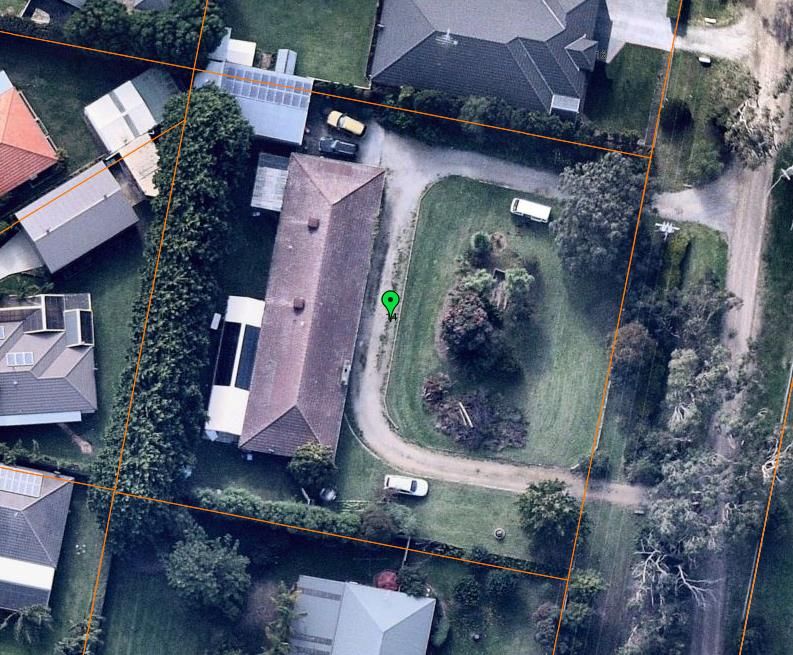
Paul Jameson
                                                    (Grad. Cert. Arb. (Melb) Ass. Dip. Hort. (Burnley) BA, BSW)
                                                                                   Consultant Arborist
                                                                          Info@bluegumreports.com.au
                                                                                       0425 879 811

           5.    Site Context

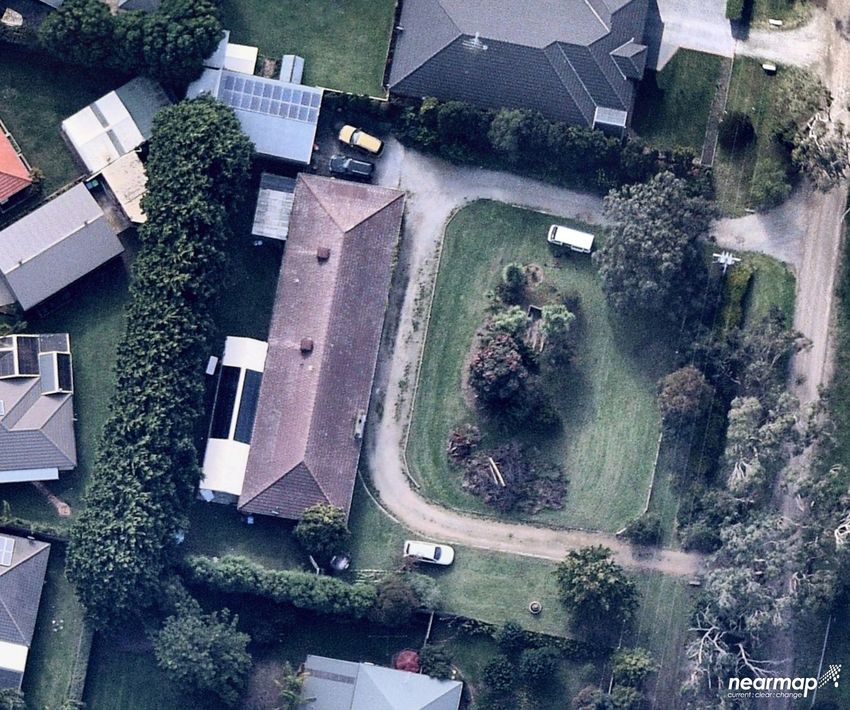
  This is a large sized property (2739m2) which is in a low-density residential area; the site is
  level and has an east-west orientation with an easterly aspect. There are 28 trees included in
  this report.

  Figure 1: Assessment area (Nearmap, 2020)

6 | Page                 14 Austin St, Somerville 3912                                         Ver:08/20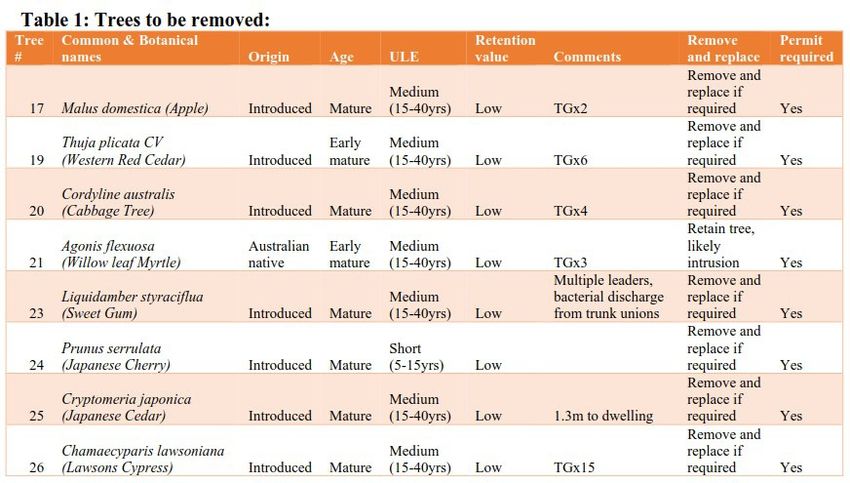
Paul Jameson
                                                    (Grad. Cert. Arb. (Melb) Ass. Dip. Hort. (Burnley) BA, BSW)
                                                                                   Consultant Arborist
                                                                          Info@bluegumreports.com.au
                                                                                       0425 879 811

           6.    Discussion

  Trees 1-16 are all located in the road reserve outside this property. Except for trees 5-7 and
  9-10 these trees are unlikely to be directly affected by the proposed development at this
  address due to their size and location. Provided that basic tree protection measures are
  implemented there should be no adverse impact on the health of these trees from the proposed
  development.

  Trees 5-7 and 9-10 are likely to be directly affected by the proposed development,
  consideration will need to be given to minimize any intrusion into their tree protection zone
  (TPZ) from the proposed development. Provided that there is only a minor intrusion (≤10%)
  from the proposed development and that basic tree protection measures are implemented there
  should be no adverse impacts on the health of these trees from the proposed development.

  The road reserve is dominated by large sized, over-mature Eucalyptus ovata (Swamp Gum)
  these trees are in average to poor health and condition and most have a short useful life
  expectancy (ULE). These trees require further assessment and should be pruned to remove any
                                                                         dead,    dying,   or
                                                                         dangerous branches.
                                                                         Tree 7 is dead and
                                                                         should be removed.

                                                                                  Figure 2: Tree 7
                                                                                  Eucalyptus    ovata
                                                                                  (Swamp Gum) is
                                                                                  dead and should be
                                                                                  removed & replaced.

7 | Page                  14 Austin St, Somerville 3912                                        Ver:08/20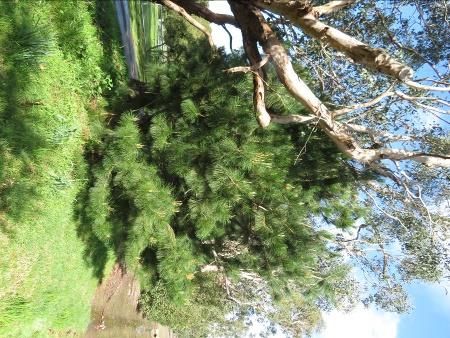
Paul Jameson
                                                     (Grad. Cert. Arb. (Melb) Ass. Dip. Hort. (Burnley) BA, BSW)
                                                                                    Consultant Arborist
                                                                           Info@bluegumreports.com.au
                                                                                        0425 879 811

  Trees 16-25 are located at the front of this property, except for trees 16, 18 and 22 these trees
  all have low retention value due to their small size, poor health and/or trunk and branch
  structure and low landscape value. These trees do not warrant being retained and incorporated
  into the proposed development and could be removed and replaced.

  Tree 16 is a large sized, mature Eucalyptus nicholii (Narrow leaved Black Peppermint) this
  tree is in good health and condition and has moderate to high retention value. This tree should
  be retained as part of the proposed development. The tree is likely to be directly affected by
  the proposed development, consideration will need to be given to minimize any intrusion into
  its TPZ from the proposed development. Provided that there is only a minor intrusion (≤10%)
  from the proposed development and that basic tree protection measures are implemented there
  should be no adverse impacts on the health of this tree from the proposed development.

  Figure 3: Tree 16 is a large sized, mature Eucalyptus nicholii (Narrow leaved Black
  Peppermint). This tree is in good health and condition and has moderate to high retention
  value. This tree should be retained as part of the proposed development.

8 | Page                  14 Austin St, Somerville 3912                                         Ver:08/20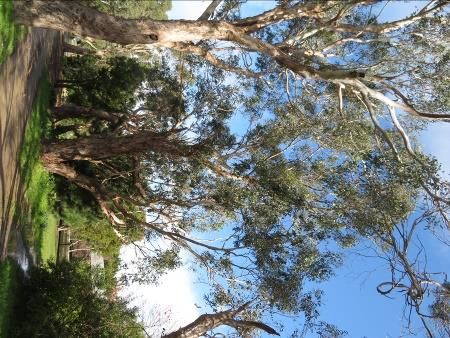
Paul Jameson
                                                      (Grad. Cert. Arb. (Melb) Ass. Dip. Hort. (Burnley) BA, BSW)
                                                                                     Consultant Arborist
                                                                            Info@bluegumreports.com.au
                                                                                         0425 879 811

  Trees 18 (tree group) and 22 are all small to medium sized, early mature, and mature trees that
  are in average to good health and condition. These trees have moderate retention value and
  consideration could be given to retaining these trees and incorporating them into the proposed
  development. These trees are likely to be directly affected by the proposed development,
  consideration will need to be given to minimize any intrusion into their TPZ from the proposed
  development. Provided that there is only a minor intrusion (≤10%) from the proposed
  development and that basic tree protection measures are implemented there should be no
  adverse impacts on the health of these trees from the proposed development.

  Figure 4: Tree 18 (tree group) Syzygium smithii (Lily Pilly), these trees have moderate
  retention value due to their size, maturity, ULE and amenity value. These trees could be
  retained as part of the proposed development.

  Tree group 26 is located at the back of this property, these trees are all large sized, mature
  Chamaecyparis lawsoniana (Lawsons Cypress). These trees are in good health and condition.
  These trees are still relatively young but are already large sized trees that dominate much of
  the rear yard. Lawson’s Cypress are a large, fast growing species and unless they are trimmed
  regularly will become too large for the average backyard. The trees are all located in a relatively
  small backyard and it is my opinion that these are poorly positioned for such large growing
  trees. Based on this these trees have low retention value and do not warrant being retained and
  incorporated into the proposed development. These trees could be removed and replaced as
  part of the proposed development.

9 | Page                  14 Austin St, Somerville 3912                                          Ver:08/20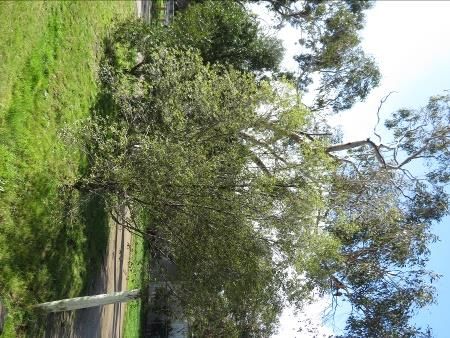
Paul Jameson
                                                    (Grad. Cert. Arb. (Melb) Ass. Dip. Hort. (Burnley) BA, BSW)
                                                                                   Consultant Arborist
                                                                          Info@bluegumreports.com.au
                                                                                       0425 879 811

  Figure 5: Tree group 26 Chamaecyparis lawsoniana (Lawsons Cypress). Lawson’s Cypress
  are a large, fast growing species and unless they are trimmed regularly will become too large
  for the average backyard. The trees are all located in a relatively small backyard and it is my
  opinion that these are poorly positioned for such large growing trees.

  Trees 27-28 are in adjoining properties.

  Tree 27 (tree group) is likely to be directly affected by the proposed development,
  consideration will need to be given to minimize any intrusion into their TPZ from the proposed
  development. Provided that there is only a minor intrusion (≤10%) from the proposed
  development and that basic tree protection measures are implemented there should be no
  adverse impacts on the health of these trees from the proposed development.

  Tree 28 (tree group) is unlikely to be directly affected by the proposed development at this
  address due to their size and location. Provided that basic tree protection measures are
  implemented there should be no adverse impact on the health of these trees from the proposed
  development.

10 | Page                14 Austin St, Somerville 3912                                         Ver:08/20
Paul Jameson
(Grad. Cert. Arb. (Melb) Ass. Dip. Hort. (Burnley) BA, BSW)
Consultant Arborist
Info@bluegumreports.com.au
0425 879 811
Table 1: Trees to be removed:
Tree Common & Botanical Retention Remove Permit
# names Origin Age ULE value Comments and replace required
Remove and
Medium replace if
17 Malus domestica (Apple) Introduced Mature (15-40yrs) Low TGx2 required Yes
Remove and
Thuja plicata CV Early Medium replace if
19 (Western Red Cedar) Introduced mature (15-40yrs) Low TGx6 required Yes
Remove and
Cordyline australis Medium replace if
20 (Cabbage Tree) Introduced Mature (15-40yrs) Low TGx4 required Yes
Retain tree,
Agonis flexuosa Australian Early Medium likely
21 (Willow leaf Myrtle) native mature (15-40yrs) Low TGx3 intrusion Yes
Multiple leaders, Remove and
Liquidamber styraciflua Medium bacterial discharge replace if
23 (Sweet Gum) Introduced Mature (15-40yrs) Low from trunk unions required Yes
Remove and
Prunus serrulata Short replace if
24 (Japanese Cherry) Introduced Mature (5-15yrs) Low required Yes
Remove and
Cryptomeria japonica Medium replace if
25 (Japanese Cedar) Introduced Mature (15-40yrs) Low 1.3m to dwelling required Yes
Remove and
Chamaecyparis lawsoniana Medium replace if
26 (Lawsons Cypress) Introduced Mature (15-40yrs) Low TGx15 required Yes
11 | Page 14 Austin St, Somerville 3912 Ver:08/20Paul Jameson
(Grad. Cert. Arb. (Melb) Ass. Dip. Hort. (Burnley) BA, BSW)
Consultant Arborist
Info@bluegumreports.com.au
0425 879 811
Table 2: Trees to be retained:
Min clearance
Tree# TPZ (one side) Recommended tree protection measures
Road reserve tree, unlikely intrusion, implement basic tree
1 2.4 1.6 protection measures.
Road reserve tree, unlikely intrusion, implement basic tree
2 2.5 1.7 protection measures.
Road reserve tree, unlikely intrusion, implement basic tree
3 8.9 1.7 protection measures.
Road reserve tree, unlikely intrusion, implement basic tree
4 7.3 5.0 protection measures.
Road reserve tree, likely intrusion, minimise and implement
5 7.0 4.8 basic tree protection measures.
Road reserve tree, likely intrusion, minimise and implement
6 13.0 8.9 basic tree protection measures.
Road reserve tree, likely intrusion, minimise and implement
7 3 (SRZ) 3.0 basic tree protection measures.
Road reserve tree, unlikely intrusion, implement basic tree
8 7.0 4.8 protection measures.
Road reserve tree, likely intrusion, minimise and implement
9 3.8 2.6 basic tree protection measures.
Road reserve tree, likely intrusion, minimise and implement
10 2.0 1.4 basic tree protection measures.
Road reserve tree, unlikely intrusion, implement basic tree
11 2.8 1.9 protection measures.
Road reserve tree, unlikely intrusion, implement basic tree
12 2.0 2.6 protection measures.
Road reserve tree, unlikely intrusion, implement basic tree
13 2.9 2.0 protection measures.
Road reserve tree, unlikely intrusion, implement basic tree
14 2.0 1.4 protection measures.
Road reserve tree, unlikely intrusion, implement basic tree
15 2.0 1.4 protection measures.
Retain tree, likely intrusion, minimise and implement basic
16 9.8 6.7 tree protection measures.
Retain tree, unlikely intrusion, implement basic tree protection
18 2.0 1.4 measures.
Retain tree, likely intrusion, minimise and implement basic
22 4.4 3.0 tree protection measures.
Neighbouring tree, likely intrusion, minimise and implement
27 6.1 4.2 basic tree protection measures.
Neighbouring tree, unlikely intrusion, implement basic tree
28 2.0 1.4 protection measures.
12 | Page 14 Austin St, Somerville 3912 Ver:08/20Paul Jameson
(Grad. Cert. Arb. (Melb) Ass. Dip. Hort. (Burnley) BA, BSW)
Consultant Arborist
Info@bluegumreports.com.au
0425 879 811
7. Recommendations
There are 11 trees located on this property, except for trees 16, 18 and 22 these trees all have
low retention value and could be removed and replaced as part of the proposed development.
Tree 16 is in good health and condition and has moderate to high retention value. This tree
should be retained as part of the proposed development. The tree is likely to be directly affected
by the proposed development. Provided that there is only a minor intrusion (≤10%) from the
proposed development and that basic tree protection measures (see below) are implemented
there should be no adverse impacts on the health of this tree from the proposed development.
Trees 18 and 22 have moderate retention value; consideration should be given to retaining
these trees and incorporating them into the proposed development. These trees are likely to
be directly affected by the proposed development. Provided that there is only a minor
intrusion (≤10%) from the proposed development and that basic tree protection measures
(see below) are implemented there should be no adverse impacts on the health of these trees
from the proposed development.
Trees 27-28 are in adjoining properties.
Tree 27 (tree group) is likely to be directly affected by the proposed development. Provided
that there is only a minor intrusion (≤10%) from the proposed development and that basic
tree protection measures (see below) are implemented there should be no adverse impacts on
the health of these trees from the proposed development.
Tree 28 (tree group) is unlikely to be directly affected by the proposed development.
Provided that basic tree protection measures (see below) are implemented there should be no
adverse impact on the health of these trees from the proposed development.
The remaining tree included in this report are 15 trees located in the road reserve outside this
property. Except for trees 5-7 and 9-10 these trees are unlikely to be directly affected by the
proposed development. Provided that basic tree protection measures (see below) are
implemented there should be no adverse impact on the health of these trees from the proposed
development.
Trees 5-7 and 9-10 are likely to be directly affected by the proposed development. Provided
that there is only a minor intrusion (≤10%) from the proposed development and that basic
tree protection measures (see below) are implemented there should be no adverse impacts on
the health of these trees from the proposed development.
13 | Page 14 Austin St, Somerville 3912 Ver:08/20Paul Jameson
(Grad. Cert. Arb. (Melb) Ass. Dip. Hort. (Burnley) BA, BSW)
Consultant Arborist
Info@bluegumreports.com.au
0425 879 811
8. Tree Protection Requirements
Specific Tree Protection Requirements
Demolition and site clearing
Site clearing has the potential to cause significant damage to any trees to be retained on site or
trees that are in adjoining properties through disturbance to the soil, changes in soil gradients,
soil compaction and physical destruction of tree roots from excavation and scraping.
Tree protection measures (see below) need to be implement prior to any site clearing and
demolition works commencing. Where site clearing intrudes into the TPZ of trees to be retained
and/or trees in neighbouring properties care must be taken to prevent any unnecessary damage
to trees and tree roots.
Basic Tree Protection Requirements
The following basic tree protection measures will need to be implemented prior to any work
commencing on site and remain in place for the duration of the work
1. Before commencing work on site, the contractor is required to meet with the
consultant arborist to review all work procedures, access routes, storage areas and
tree protection measures.
2. Temporary protective fencing to a minimum height of 1.8m must be erected along
the perimeter of the TPZ (or modified TPZ) for any trees that are to be retained on the
site. Prior to any machinery or materials being brought on site and before any works
including demolition commences.
3. Once erected protective fencing must not be removed or altered without approval
from the project arborist.
4. Protective fencing needs to be in accordance with AS 4687. Signs identifying the
TPZ should be placed around the protective fencing.
5. Construction vehicles and storage areas must remain outside fenced areas always.
6. If tree roots are encountered or damaged during construction, they need to be
cut cleanly to sound tissue with sharp secateurs or a pruning saw.
7. Surplus construction materials (e.g. soil, cement, base rock etc.) are not to be stored
or allowed to remain inside the trees’ TPZ.
8. Additional tree pruning required during construction must be carried out by an
appropriately qualified contractor and in accordance with Australian Standards 4373:
2007, Pruning of Amenity Trees and not by construction personnel.
9. All underground services including drainage and irrigation must be routed outside of
trees’ TPZs, if this is not possible excavation is to be carried out by tunneling or
boring beneath the tree protection zone.
10. Trees retained on site are to be regularly watered (minimum weekly) during periods
of dry conditions within the tree protection zone.
11. If trees are damaged during construction, it should be evaluated as soon as possible
by the project arborist so that appropriate treatments can be applied.
14 | Page 14 Austin St, Somerville 3912 Ver:08/20Paul Jameson
(Grad. Cert. Arb. (Melb) Ass. Dip. Hort. (Burnley) BA, BSW)
Consultant Arborist
Info@bluegumreports.com.au
0425 879 811
12. Erosion control such as silt fencing, debris basins and water diversion methods shall
be installed to prevent siltation and/or erosion within the tree protection zone.
13. If temporary access roads must pass over the root areas (TPZ) of trees to be retained
a roadbed of 150mm of mulch or crushed rock shall be created to prevent soil
compaction within the tree’s root area. The roadbed material shall be maintained to
a depth of 150mm throughout construction.
14. Once construction is completed all foreign (non-organic) debris needs to be
removed from within the tree protection zone.
Figure 6: Tree protection zone and temporary protective fencing.
The creation of an exclusion zone around trees to be retained on site is the primary means of tree
protection during construction. Tree protection zone signage provides clear and readily accessible
information to indicate that a TPZ has been established.
15 | Page 14 Austin St, Somerville 3912 Ver:08/20Paul Jameson
(Grad. Cert. Arb. (Melb) Ass. Dip. Hort. (Burnley) BA, BSW)
Consultant Arborist
Info@bluegumreports.com.au
0425 879 811
9. Suggested Replacement Species
Possible replacement tree species could include (selection and placement of trees will need to
take into consideration the eventual size of the trees when mature) – see landscape plan for
complete planting schedule:
Large (canopy) trees:
• Red Box (Eucalyptus polyanthemos ssp. Vestita) - Indigenous
• Yellow Box (Eucalyptus melliodora) - Indigenous
• Blackwood (Acacia melanoxylon) - Indigenous
• Smooth-barked Apple Myrtle (Angophora costata) - Native
• Red Ironbark (Eucalyptus sideroxylon) - Native
• Argyle Apple (Eucalyptus cinerea) - Native
• Illawarra Flame Tree (Brachychiton acerifolius) - Native
• Red Maple (Acer rubrum) - Exotic
• Pin Oak (Quercus palustris) - Exotic
Medium sized trees:
• Lightwood (Acacia implexa) - Indigenous
• Silver Banksia (Banksia marginata) - Indigenous
• Dwarf Apple Myrtle (Angophora costata ‘Little Gumball’) - Native
• Lemon-Scented Gum (Corymbia citriodora ‘Scentuous’) - Native
• Dwarf Yellow Bloodwood (Corymbia eximia nana) - Native
• Flowering Gum (Corymbia ficifolia) - Native
• Victorian Silver Gum (Eucalyptus crenulata) - Native
• Yellow Gum (Eucalyptus leucoxylon ‘Euky Dwarf’) - Native
• Pink-Flowering Gum (Eucalyptus leucoxylon Rosea) - Native
• Smooth-barked Coolabah (Eucalyptus victrix) - Native
• Water Gum (Tristaniopsis laurina) - Native
• Honey Locust (Gleditsia tricanthos) - Exotic
• Callery Pear (Pyrus calleryana) – Exotic
Small sized trees:
• Gungurru (Eucalyptus caesia) - Native
• Fuschia Gum (Eucalyptus forrestiana) - Native
• Nullabor Lime (Eucalyptus macrocarpa ‘Nullabor Lime’) - Native
• Risdon Peppermint (Eucalyptus risdonii) - Native
• Coral Gum (Eucalyptus torquata) - Native
• Crepe Myrtle (Lagerstroemia indica) - Exotic
• Iowa Crab Apple (Malus ioensis ‘Plena’) – Exotic
Replacement trees should be sourced from a reputable nursery with care taken to ensure that
they are in good health, free of structural defects and pests and diseases. They should be
advanced grown specimens that are a minimum 1.5 metres in height. When planting advanced
16 | Page 14 Austin St, Somerville 3912 Ver:08/20Paul Jameson
(Grad. Cert. Arb. (Melb) Ass. Dip. Hort. (Burnley) BA, BSW)
Consultant Arborist
Info@bluegumreports.com.au
0425 879 811
grown trees, it is important that they are planted correctly, staked to provide additional support
and provided with adequate aftercare to ensure that they become established (the plant supplier
should be able to help with planting and establishment guidelines).
Please do not hesitate to call 0425 879 811 if you have any questions regarding the contents or
recommendations provided in this report.
Sincerely
Paul Jameson
Graduate Certificate in Arboriculture (Melbourne)
Associate Diploma in Arboriculture (Burnley)
BA/BSW (Monash)
Copyright Notice: © Bluegum Consultancy 2015. All rights reserved.
Disclaimer: Although Bluegum Consultancy uses all due care and skill in providing you the information
made available in this report, to the extent permitted by law Bluegum Consultancy otherwise excludes
all warranties of any kind, either expressed or implied.
To the extent permitted by law, you agree that Bluegum Consultancy is not liable to you or any
other person or entity for any loss or damage caused or alleged to have been caused (including
loss or damage resulting from negligence), either directly or indirectly, by your use of the
information (including by way of example, arboricultural advice) made available to you in this
report. Without limiting this disclaimer, in no event will Bluegum Consultancy be liable to you
for any lost revenue or profits, or for special, indirect, consequential or incidental damage
(however caused and regardless of the theory of liability) arising out of or related to your use
of that information, even if Bluegum Consultancy has been advised of the possibility of such
loss or damage.
17 | Page 14 Austin St, Somerville 3912 Ver:08/20Paul Jameson
(Grad. Cert. Arb. (Melb) Ass. Dip. Hort. (Burnley) BA, BSW)
Consultant Arborist
Info@bluegumreports.com.au
0425 879 811
10. References
• Australian Standards (2007). AS4373: 2007, Pruning of Amenity Trees. Sydney, Standards
Australia.
• Australian Standards (2009). AS4970: 2009, Protection of trees on development sites.
Sydney, Standards Australia.
• Barrell, J. (1993) Pre-Planning Tree Surveys: Safe Useful Life Expectancy (SULE) is the
natural progression. Arboricultural Journal, 17:1, 33-46.
• DELWP (2019) Land Channel accessed from http://www.land.vic.gov.au/
• Dunster, J., Smiley, T., Mattheny, N. & Lily, S. (2013). Tree Risk Assessment Manual.
Champaign, Illinois, International Society of Arboriculture.
• Draper, Danny, B & Richards, Peter, A. (2009). Dictionary for managing trees in urban
environments. CSIRO Publishing, Collingwood, Australia.
• Matheny, N. & Clark, J. (1998). Trees and Development – A technical guide to the
preservation of trees during land development. Champaign, Illinois, International Society of
Arboriculture.
• Nearmap (2019) accessed from http://maps.au.nearmap.com
18 | Page 14 Austin St, Somerville 3912 Ver:08/20Paul Jameson
(Grad. Cert. Arb. (Melb) Ass. Dip. Hort. (Burnley) BA, BSW)
Consultant Arborist
Info@bluegumreports.com.au
0425 879 811
Appendix 1 – Tree Assessment Criteria
1. Height describes the height of the tree in metres from ground level.
2. Trunk diameter (DBH) is calculated from the measured trunk circumference at 1.4m
above ground level or at an alternative location if required (in accordance with AS
4970-2009).
3. Canopy spread describes the crown spread across the widest point.
4. Estimated age class is the tree’s relative age to its species and is expressed as - Young
(the first one third of the estimated life expectancy), Semi Mature (the second third of
the estimated life expectancy), or Mature (the last third of the estimated life
expectancy).
5. Useful life expectancy (ULE) – see appendix 2.
6. Tree protection zone (TPZ) is the principal means of protecting trees on a development
site. The TPZ is a combination of the root area and the crown area requiring protection.
It is an area isolated from construction disturbance, so that the tree remains viable. The
radius of the TPZ is calculated for each tree by multiplying its DBH x 12, the TPZ
radius is measured from the centre of the stem at ground level. A TPZ should not be
less than 2m nor greater than 15m (except where crown protection is required).
7. Structural root zone (SRZ) is the area required for tree stability. A larger area is required
to maintain tree health.
8. Retention value is adapted from BS5837:2005 – Cascade chart for tree quality
assessment. The retention value is applied to the tree in the context of the proposed land
use.
High retention value
High ranked trees would meet one or more of the following criteria:
• Trees in such a condition as to be able to make a substantial contribution (a minimum
of 40 years is suggested).
• Trees that are particularly good examples of their species, especially if rare or unusual,
or essential components of groups, or of formal or semi-formal arboricultural features
(e.g. the dominant and/or principal trees within an avenue).
• Trees of visual importance (e.g. avenues or other arboricultural features assessed as
groups).
• Trees of significant historical, commemorative or other value (e.g. veteran trees).
19 | Page 14 Austin St, Somerville 3912 Ver:08/20Paul Jameson
(Grad. Cert. Arb. (Melb) Ass. Dip. Hort. (Burnley) BA, BSW)
Consultant Arborist
Info@bluegumreports.com.au
0425 879 811
Moderate retention value
• Moderate ranked trees would meet one or more of the following criteria:
• Trees in such a condition as to make a significant contribution (a minimum of 20 years
is suggested).
• Trees that might be included in the high category but may be downgraded because of
impaired condition (e.g. presence of remediable defects including unsympathetic past
management and minor storm damage).
• Trees present in numbers, usually as groups or woodlands, such that they form distinct
landscape features, thereby attracting a higher collective rating than they might as
individuals, but which are not, individually, essential components of formal or semi-
formal arboricultural features, or trees situated mainly internally to the site, therefore
individually having little visual impact on the wider locality.
Low retention value
• Trees currently in adequate condition to remain until new planting could be established
(a minimum of 10 years is suggested), or young trees with a stem diameter below 150
mm.
• Low category trees will usually not be retained where they would impose a significant
constraint on development. However, young trees with a stem diameter of less than 150
mm could be considered for relocation.
Remove/None
• Trees ranked for removal/no retention value would meet one or more of the following
criteria:
• Trees in such a condition that any existing value would be lost within 10 years and
which should, in the current context, be removed for reasons of sound arboricultural
management.
• Trees that have a serious, irremediable, structural defect, such that their early loss is
expected due to collapse, including those that will become unviable after removal of
other trees (i.e. where, for whatever reason, the loss of companion shelter cannot be
mitigated by pruning).
• Trees that have a serious hazard potential (this may consider the context of any
proposed development).
• Trees that are dead or are showing signs of significant, immediate and irreversible
overall decline.
• Trees that are environmental weeds.
20 | Page 14 Austin St, Somerville 3912 Ver:08/20Paul Jameson
(Grad. Cert. Arb. (Melb) Ass. Dip. Hort. (Burnley) BA, BSW)
Consultant Arborist
Info@bluegumreports.com.au
0425 879 811
Appendix 2 – Useful Life Expectancy Categories (ULE)
Long U.L.E- the tree appeared retainable at the time of assessment for over 40 years with an acceptable
degree of risk, assuming reasonable maintenance:
Structurally sound trees located in positions that can accommodate future growth.
Trees which could be made suitable for long term retention by remedial care.
Trees of special significance, which would warrant extraordinary efforts to secure their long-
term retention.
Medium U.L.E- the tree appeared to be retainable at the time of assessment for 15 to 40 years
with an acceptable degree of risk, assuming reasonable maintenance:
Trees which may only live from 15-40 years.
Trees that may live for more than 40 years but may be removed for safety or nuisance reasons.
Trees which may live for more than 40 years but would be removed to prevent interference
with more suitable individuals or to provide space for new plantings.
Trees which could be made suitable for retention in the medium term with remedial care.
Short U.L.E- trees that appeared to be retainable at the time of assessment for 5-15 years with an
acceptable degree of risk, assuming reasonable maintenance:
Trees which may only live from 5 to 15 years.
Trees that may live for more than 15 years but may be removed for safety or nuisance reasons.
Trees which may live for more than 15 years but would be removed to prevent interference
with more suitable individuals or to provide space for new plantings.
Trees which require substantial remediation and are only suitable for retention in the short term.
Removal- Tree which should be removed within the next 5 years.
Dead, dying suppressed or declining trees
Dangerous trees through instability or recent loss of adjacent trees.
Dangerous trees because of structural defects including cavities, decay included bark, wounds
or poor form.
Damaged trees that are clearly not safe to retain.
Trees which may live for more than 5 years but would be removed to prevent interference with
more suitable individuals or to provide space for new plantings.
Trees which are damaging or may cause damage to existing structures within the next 5 years.
Trees that will become dangerous after the removal of other trees for the reasons given in (A)
to (F).
Trees in categories (A) to (G) that have a high wildlife habitat value and with appropriate
treatment could be retained subject to regular review.
Small, young or regularly pruned- Trees that can be reliably moved or replaced.
Small trees less than 5m in height.
Young trees less than 15 years old but over 5m in height.
Formal hedges and trees intended for regular pruning to artificially control growth
21 | Page 14 Austin St, Somerville 3912 Ver:08/20Paul Jameson
(Grad. Cert. Arb. (Melb) Ass. Dip. Hort. (Burnley) BA, BSW)
Consultant Arborist
0425 879 811
arboristreports@gmail.com
Appendix 3 – Tree Species
Tree Botanical & common Canopy Total Diameter Amenity Retention
# names Origin Health Structure Height spread DBH ground Age ULE value value TPZ SRZ Comments Recommendations
ST, bifurcated
main trunk,
Moderate trunk
Corymbia calophylla Australian Early 3rd Party lean, Suppressed Road reserve tree,
1 (Marri) native Good Poor 3 3 0.2 0.24 mature Medium Minimal Tree 2.4 1.82 Form unlikely intrusion
Eucalyptus mannifera Australian Early 3rd Party ST, Suppressed Road reserve tree,
2 (Red Spotted Gum) native Good Poor 4.5 4 0.21 0.24 mature Medium Minimal Tree 2.52 1.82 Form unlikely intrusion
Eucalyptus ovata Australian Average Over- 3rd Party ST, Lower trunk Road reserve tree,
3 (Swamp Gum) native to Poor Poor 13.8 12 0.74 0.82 mature Short Moderate Tree 8.88 3.04 Decay unlikely intrusion
Eucalyptus ovata Australian Over- 3rd Party ST, Lower trunk Road reserve tree,
4 (Swamp Gum) native Good Poor 13.8 8 0.61 0.41 mature Short Moderate Tree 7.32 2.28 Decay unlikely intrusion
ST, Hangers,
Previous branch
failure, Moderate
Eucalyptus ovata Australian Very Over- 3rd Party trunk lean, 80% Road reserve tree,
5 (Swamp Gum) native Poor Poor 8 7 0.58 0.72 mature Short Moderate Tree 6.96 2.88 dieback likely intrusion
Eucalyptus ovata Australian Over- 3rd Party ST, Lower & Road reserve tree,
6 (Swamp Gum) native Average Poor 14.8 12 1.08 1.15 mature Short Moderate Tree 12.96 3.51 mid-trunk Decay likely intrusion
Eucalyptus ovata Australian Over- 3rd Party Road reserve tree,
7 (Swamp Gum) native Dead Removal 14 10 0.71 0.78 mature Removal Moderate Tree n/a 2.98 ST likely intrusion
ST,
Multistemmed,
Eucalyptus ovata Australian Very Over- 3rd Party Lower trunk Road reserve tree,
8 (Swamp Gum) native Poor Poor 10 12 0.58 0.68 mature Short Moderate Tree 6.96 2.81 Decay unlikely intrusion
Pinus radiata Early 3rd Party ST, Suppressed Road reserve tree,
9 (Monterey Pine) Introduced Good Average 5 6 0.32 0.35 mature Medium Moderate Tree 3.84 2.13 Form likely intrusion
Hakea salicifolia Australian Early 3rd Party Road reserve tree,
10 (Willow leaved Hakea) native Good Average 3 7 0.14 0.15 mature Medium Moderate Tree 2 1.5 ST, TGx2 likely intrusion
Eucalyptus pryoriana
(Rough barked Manna Australian Average Early 3rd Party Road reserve tree,
11 Gum) native to Poor Average 5 6 0.23 0.28 mature Medium Moderate Tree 2.76 1.94 ST, 40% dieback unlikely intrusion
Corymbia calophylla Australian Early 3rd Party Road reserve tree,
12 (Marri) native Good Good 4 3.5 0.16 0.22 mature Medium Moderate Tree 2 1.75 ST unlikely intrusion
Eucalyptus polyanthemos Australian Early 3rd Party Road reserve tree,
13 (Red Box) native Good Good 4.5 4 0.24 0.28 mature Medium Moderate Tree 2.88 1.94 ST unlikely intrusion
Corymbia calophylla Australian Early 3rd Party Road reserve tree,
14 (Marri) native Good Good 3 3 0.15 0.16 mature Medium Moderate Tree 2 1.53 ST unlikely intrusion
Pittosporum tenuifolium Early 3rd Party Road reserve tree,
15 CV (Kohuhu) Introduced Good Average 3 3 0.13 0.14 mature Medium Moderate Tree 2 1.5 ST unlikely intrusion
22 | Page 14 Austin St, Somerville 3912 Ver:08/20Paul Jameson
(Grad. Cert. Arb. (Melb) Ass. Dip. Hort. (Burnley) BA, BSW)
Consultant Arborist
0425 879 811
arboristreports@gmail.com
Eucalyptus nicholii
(Narrow leaved Black Australian High to Powerline Retain tree, likely
16 Peppermint) native Good Good 11 13 0.82 0.97 Mature Medium Moderate moderate 9.84 3.27 clearance intrusion
Remove and
17 Malus domestica (Apple) Introduced Good Good 3.5 4 0.23 0.26 Mature Medium Moderate Low 2.76 1.88 TGx2 replace if required
TGx18,
Pittosporum
tenuifolium CV,
planted as hedge
Syzygium smithii Australian Early but had not been Retain tree, likely
18 (Lily Pilly) native Average Good 4.5 3 0.16 0.18 mature Medium Moderate Moderate 2 1.61 maintained intrusion
Thuja plicata CV Early Remove and
19 (Western Red Cedar) Introduced Average Average 3 1 0.11 0.12 mature Medium Moderate Low 2 1.5 TGx6 replace if required
Cordyline australis Remove and
20 (Cabbage Tree) Introduced Average Average 5.8 2.5 0.3 0.37 Mature Medium Moderate Low 1.5 n/a TGx4 replace if required
Agonis flexuosa Australian Early Retain tree, likely
21 (Willow leaf Myrtle) native Good Average 4.5 3 0.12 0.14 mature Medium Minimal Low 2 1.5 TGx3 intrusion
Moderate trunk
Corymbia calophylla Australian lean, Epicormic Remove and
22 (Marri) native Good Average 7 6 0.37 0.41 Mature Medium Moderate Moderate 4.44 2.28 growth at base replace if required
Multiple leaders,
bacterial
Liquidamber styraciflua Average discharge from Remove and
23 (Sweet Gum) Introduced Good to Poor 9.8 8 0.34 0.39 Mature Medium Moderate Low 4.08 2.23 trunk unions replace if required
Prunus serrulata Average Remove and
24 (Japanese Cherry) Introduced to Poor Poor 4 4 0.13 0.15 Mature Short Moderate Low 2 1.5 replace if required
Cryptomeria japonica Remove and
25 (Japanese Cedar) Introduced Good Average 8.4 6 0.26 0.29 Mature Medium Moderate Low 3.12 1.97 1.3m to dwelling replace if required
Chamaecyparis
lawsoniana Remove and
26 (Lawsons Cypress) Introduced Good Average 13.8 7 0.36 0.53 Mature Medium Moderate Low 4.32 2.53 TGx15 replace if required
Chamaecyparis
lawsoniana 3rd Party Neighbouring tree,
27 (Lawsons Cypress) Introduced Good Average 13.8 7 0.51 0.58 Mature Medium Moderate Tree 6.12 2.63 NT, 0.7m, TGx2 likely intrusion
NT, 0.8m,
Pittosporum tenuifolium 3rd Party TGx15, Photinia Neighbouring tree,
28 CV (Kohuhu) Introduced Good Average 7 3 0.14 0.15 Mature Medium Moderate Tree 2 1.5 x fraseri unlikely intrusion
* Please Note: All measurements are in metres.
* Note: unless otherwise stated the diameters of neighbouring trees have been estimated.
23 | Page 14 Austin St, Somerville 3912 Ver:08/20Paul Jameson
(Grad. Cert. Arb. (Melb) Ass. Dip. Hort. (Burnley) BA, BSW)
Consultant Arborist
Info@bluegumreports.com.au
0425 879 811
Appendix 4 – Tree Images
Tree 1 Tree 2
Tree 3 Tree 4
24 | Page 14 Austin St, Somerville 3912 Ver:08/20Paul Jameson
(Grad. Cert. Arb. (Melb) Ass. Dip. Hort. (Burnley) BA, BSW)
Consultant Arborist
Info@bluegumreports.com.au
0425 879 811
Tree 6 Tree 7
Tree 8 Tree 9
25 | Page 14 Austin St, Somerville 3912 Ver:08/20Paul Jameson
(Grad. Cert. Arb. (Melb) Ass. Dip. Hort. (Burnley) BA, BSW)
Consultant Arborist
Info@bluegumreports.com.au
0425 879 811
Tree 10 Trees 12-13
Tree 15 Tree 16
26 | Page 14 Austin St, Somerville 3912 Ver:08/20Paul Jameson
(Grad. Cert. Arb. (Melb) Ass. Dip. Hort. (Burnley) BA, BSW)
Consultant Arborist
Info@bluegumreports.com.au
0425 879 811
Tree 17 Tree 18
Tree 19 Tree 20
27 | Page 14 Austin St, Somerville 3912 Ver:08/20Paul Jameson
(Grad. Cert. Arb. (Melb) Ass. Dip. Hort. (Burnley) BA, BSW)
Consultant Arborist
Info@bluegumreports.com.au
0425 879 811
Tree 21 Tree 12
Tree 23 Tree 24
28 | Page 14 Austin St, Somerville 3912 Ver:08/20Paul Jameson
(Grad. Cert. Arb. (Melb) Ass. Dip. Hort. (Burnley) BA, BSW)
Consultant Arborist
Info@bluegumreports.com.au
0425 879 811
Tree 25 Tree 26
Tree 26
29 | Page 14 Austin St, Somerville 3912 Ver:08/20Paul Jameson
(Grad. Cert. Arb. (Melb) Ass. Dip. Hort. (Burnley) BA, BSW)
Consultant Arborist
Info@bluegumreports.com.au
0425 879 811
Tree 28
30 | Page 14 Austin St, Somerville 3912 Ver:08/20TG27
TG26
TG28
25
TG19
24
TG18
20
22
20
20
20
21 21
21
TG18
23
17
16
12 13
10
8 9 11 14
7
6
5 4
Tree 7 2
is dead 3 15
1
Legend
Bluegum Consultancy
TPZ Tree to be removed Proposed intrusion PO Box 107
TPZ Tree to be retained Hampton VIC 3188 arboristreports@gmail.com - 0425 879 811
Structural Root Zone Proposed intrusion with
Date: 24/08/2020
Prescribed TPZ offset
root sensitive footings
Drawn by: Paul Jameson Bayside Town Planning A3
SCALE 1:400 @A3 Site Plan - 14 Austin Road, SomervilleYou can also read


