Active Victoria A strategic framework for sport and recreation in Victoria 2017 2021 - A strategic framework for sport and recreation ...
←
→
Page content transcription
If your browser does not render page correctly, please read the page content below
Active
Victoria
  A strategic framework
for sport and recreation
   in Victoria 2017 - 2021
The department proudly acknowledges Victoria’s
    Aboriginal community and their rich culture and pays
    respect to their Elders past and present. We acknowledge
    Aboriginal people as Australia’s first peoples and as the
    Traditional Owners and custodians of the land and water
    on which we rely. We recognise and value the ongoing
    contribution of Aboriginal people and communities to
    Victorian life and how this enriches us. We embrace the
    spirit of reconciliation, working towards the equality of
    outcomes and ensuring an equal voice.
    To receive this publication in an accessible format
    phone 1300 366 356 using the National Relay Service
    13 36 77 if required, or email strategy@sport.vic.gov.au.
    Authorised and published by the Victorian Government,
    1 Treasury Place, Melbourne.
    © State of Victoria, Department of Health and Human
    Services, July 2017
    ISBN 978-0-7311-7287-0 (pdf/online)
    (1704018)
    Available at www.sport.vic.gov.au
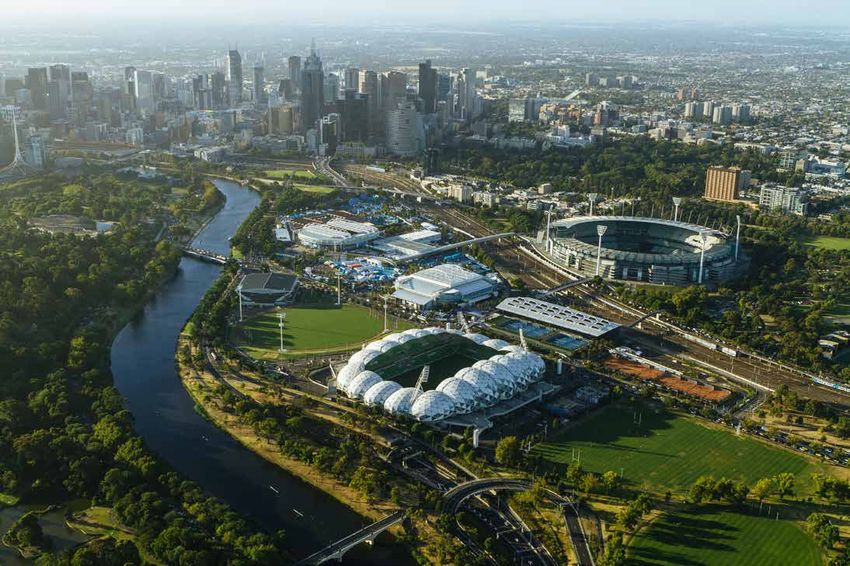
    “Melbourne sporting precinct” by Roberto Seba

2
Minister’s
Foreword

Victoria is the sport and recreation capital of Australia.
Sport and active recreation is an integral part of our state.
It is essential to our health and wellbeing. Our sense of belonging.
Our connection to our community.
It means that across thousands of local facilities, parks, playgrounds
and reserves, some 3.9 million Victorians play sport or engage in
activity every week.
At the same time, sport and recreation also brings significant economic
and cultural benefits to our state.
In 2016 sport and recreation added $8.5 billion to Victoria’s economy,
and the equivalent of 65,000 full time jobs.
It is underpinned by our world-class facilities, our strong calendar of
events and our unrivalled volunteer culture.
In short, a more active Victoria is a stronger, healthier, better Victoria.
For all these reasons and more, supporting sport and active recreation
is a high priority for the Victorian Government.
Building on our existing achievements requires a coordinated
approach. Local councils, the Federal Government, sporting
associations and local community clubs all play a key role.
Through this strategy, we provide a framework to work together.
Active Victoria is our plan to strengthen the sport and recreation
sector, boost participation and ensure every Victorian has the
chance to be involved.

The Hon. John Eren MP
Minister for Sport

                                                                              3
Strategic
framework
at a glance
    Sport and active recreation leads to:

      Healthier                      Economic                          Community
                                                                                                     Liveability
      Victorians                   growth & jobs                        cohesion

    Key terms:
                                       Changes and challenges:
                                        -- Growing population                      -- L
                                                                                       and availability in inner city
    Sport: ‘structured,                 -- Ageing population                          and established suburbs
    competitive activity’               -- Changing lifestyles and expectations   -- B
                                                                                       uilding rural and regional
                                                                                      opportunities
    Active Recreation:                  -- Meeting physical activity targets
                                                                                   -- M
                                                                                       aintaining Victoria’s competitive
    ‘leisure time,                      -- I ncreasing female participation          edge in sport and events
    non-competitive,                        in sport
                                                                                   -- Future-proofing sport
    physical activity’                  -- B
                                            roader and more inclusive                 and recreation
                                           participation
                                                                                   -- S
                                                                                       trengthening system resilience
                                        -- M
                                            eeting sport and recreation              and capacity
                                           needs in growth corridors
                                                                                   -- A
                                                                                       changing high performance
                                                                                      system.
Our vision:
                         More active
                         An increased proportion of Victorians
                         participate in sport and active recreation.

                                                                                                  Broad-based
                                                                                                  and connected
                                                                                                  An integrated system
                                                                                                  that addresses the
                                                                                                  different demands,
More diverse                     Collaborative                  Robust, flexible,                 contributors
and inclusive                    Well-planned and               sustainable and                   and structure of
                                                                                                  community sport,
An inclusive system that         connected investment           affordable                        active recreation and
provides all Victorians          that maximises
                                 participation and health,      A sustainable and                 high-performance
with the opportunity to                                         efficient approach that           sport and events
be involved.                     economic, community
                                 and liveability benefits.      responds to changing              and maximises
                                                                demands and provides              the pathways and
                                                                flexible and affordable           connections across
4                                                               choices for participants.         the system.
Strategic directions:

1. Meeting demand                     2. Broader and                       3. Additional focus on
-- Increase the capacity of              more inclusive                        active recreation
    sport and active recreation           participation                     -- Create a model that supports
    infrastructure.                                                             the structure and needs of
                                      -- Build inclusion into the system.
-- Create flexible and innovative                                              active recreation.
    participation options.            -- Provide affordable
                                          participation options.            -- Provide information and
-- Find new sources of investment.                                             encouragement to support
                                      -- Address racism, discrimination        non-organised and
-- Invest in a network of                and harassment.                       unstructured physical activity.
    international, metropolitan,
    regional and local                -- Continue investment in female     -- Invest in infrastructure that
    infrastructure.                       participation.                        enables active recreation.
                                      -- S
                                          upport increased participation
                                         of Aboriginal Victorians.
                                      -- Provide support and flexible
                                          participation options for
                                          other under-represented
                                          communities including people
                                          with disability, LGBTI people
                                          and disengaged youth.

4. Build system                      5. Connect investment                6. Work together for
    resilience and                        in events, high                        shared outcomes
    capacity                              performance and                   -- Develop agreed priorities
-- Support volunteers and                infrastructure                        for collaborative action.
    the sport and active              -- Invest in state and regional      -- Ensure complementary
    recreation workforce.                 facilities that underpin              investment to create
-- Encourage good governance             Victoria’s event calendar.            collective impact.
    and diverse leadership.           -- Create new trade and business
-- Develop a strong evidence             opportunities through
    base and analytical capacity.         ‘sport diplomacy’.
-- Address reputational risk and     -- Strengthen linkages between
    threats to integrity.                 events and high performance
                                          sport and grassroots sport.
                                      -- Develop pathways to excellence.
                                      -- Provide new and integrated
                                          support for high performance
                                          athletes across the Victorian
                                          Institute of Sport, regional
                                          academies and sports.

                                                                                                                  5
Changes and
challenges
Sport and active recreation is a large part of the cultural, social and
economic life of Victoria. It is a strong and diverse system with many
investors, participants and opportunities.
But we cannot rest on our laurels. Changes must be made to maximise
the contribution sport and active recreation makes to Victoria’s
economy, community cohesion and liveability, and to the health
and wellbeing of Victorians.

Our changing                                           Future-proofing
population                                             sport and recreation
Victoria’s population will almost                      Sport and active recreation will become
double in the next four decades.                       increasingly significant as Victoria
This, and increasing the proportion of                 continues its shift to a knowledge and
Victorians who regularly participate in                service-based economy.
sport or active recreation, will increase
                                                       Maintaining a competitive edge as
demand for programs, infrastructure
                                                       Australia’s sport and events capital is
and opportunities.
                                                       essential to continued growth of tourism
Our population is also ageing and                      and trade and business opportunities.
growing in diversity, creating the
                                                       It means our sport and recreation
need for a wider variety of sport and
                                                       infrastructure must be future-
recreation options. The varying levels of
                                                       proofed to meet both changed and
population change in rural and regional
                                                       increasing demand and the impacts
Victoria will also need to be considered.
                                                       of climate change.
Changes in work patterns and
                                                       Key systems and structures that underpin
lifestyle, and cost, time and transport
                                                       the capacity of the sport and recreation
issues, are all driving people to
                                                       system – quality research, data and
active recreation options that best
                                                       analysis, skilled volunteers/workforce, good
fit individual circumstances.
                                                       governance, effective integrity processes –
                                                       need to be built on and improved.
Not enough of us are
physically active
Around 3.2 million Victorians do not
                                                         Meeting these
currently meet the recommended                           challenges
level of weekly physical activity.1
Women participate in sport at half the                   Victoria’s vibrant sport and
rate of men. And significant sections of                 recreation system is the result
Victoria’s population have substantially                 of collective effort and investment
lower levels of participation in sport                   by sport and active recreation
and active recreation (see figure 9).                    organisations and all levels
                                                         of government.
We must create new opportunities for
Victorians to get active.                                Meeting future challenges will
                                                         require the involvement and
                                                         ownership of everybody in the sport
                                                         and active recreation system. This
                                                         strategic framework identifies the
                                                         vision, key challenges and strategic
                                                         directions to guide future planning
                                                         and investment by all those involved.

1. Marsden Jacob Associates, 2017 (unpublished), The economic impacts of active recreatio in Victoria

6
7
8
Benefits of sport
and active recreation
Victorians’ involvement in sport and active recreation makes us healthier.
Increasing the rate of physical activity by 10 per cent has been estimated to
reduce physical-inactivity-related deaths by 15 per cent and new cases by
13 per cent.2

Sport and active recreation creates economic growth and jobs and
added approximately $8.5 billion to Victoria’s economy in 2016.3

Sport and active recreation brings people together and builds
community cohesion. It connects Victorians to their communities,
healthcare, education, training and economic opportunities.

Sport and active recreation makes a significant contribution to Victoria’s
liveability. This is a key to attracting and retaining the highly mobile
workforce of Victoria’s future knowledge and service based economy.

Our vision for sport
and active recreation
A strong and connected sport and active                Robust, flexible, sustainable
recreation system that helps make
Victorians healthier, creates economic                 and affordable
growth and jobs, builds community                      A sustainable and efficient system that
cohesion and contributes to our liveability.           responds to changing demands and
Sport and active recreation in Victoria                provides flexible and affordable choices.
will be:
                                                       Broad-based and connected
More active                                            A system that addresses the different
An increased proportion of Victorians                  demands, contributors and structure of
regularly participate in sport or                      sport and active recreation and maximises
active recreation.                                     connections across the system.

More diverse and inclusive                             Collaborative
Inclusive sport and active recreation that             Well-planned and connected
provides all Victorians with opportunities             investment that maximises participation
to be involved.                                        and health, economic, community and
                                                       liveability benefits.

2. VicHealth, 2016, Physical activity and sedentary behaviour

3. Marsden Jacob Associates (unpublished), 2017, The economic impacts of active recreation in Victoria   9
Sport and active
recreation in Victoria
Who is involved?
 Sport                            Active Recreation
 -   State government             -   State government
 -   Local government             -   Local government
 -   Federal government           -   Federal government
 -   Schools                      -   Schools
 -   Sports                       -   Community organisations
 -   Community organisations      -   Commercial facility, event
 -   Commercial facility, event       and program providers
     and program providers

10
What is involved?
Sport Active Recreation
16,000
community sporting clubs
Adventure and
lifestyle activities
- non structured recreation
- nature based recreation
- camping
More than
90
Victorian government
funded major and significant
Gyms and
leisure centres
sporting events each year
Roads and
9,500
community sport facilities
footpaths
More than
44 2,000
trails
state facilities supporting high
performance sport events
Over
30
professional teams playing
10,000
parks, playgrounds
and reserves
in national competitions
High performance
sport
Victorian Institute of Sport and
other high performance centres
11Resulting in...
Participation:4
3.9 million
Victorians 15 or older participating in sport
or active recreation at least once a week
2.5 million
Victorians 15 or older participating in
3.1 million
Victorians 15 or older participating in
sport at least once a week active recreation at least once a week
111 million
times Victorians aged 15+ years
690 million
times Victorians aged 15+ years
participated in sport in 2016 participated in active recreation in 2016
Economic growth and jobs:5
$8.5 billion
Gross value added
attributable to sport
$8.1 billion
Estimated total spending on
and active recreation active recreation
$3.5 billion
Gross value added by sport (2016)
$5 billion
Gross value added by active
recreation (2016)
15,000
Estimated full time equivalent jobs
50,000
Estimated full time equivalent jobs
attributable to sport attributable to active recreation
4. Australian Sport Commission, 2016, AusPlay Survey
Marsden Jacob Associates, 2017 (unpublished), The economic impacts of active recreation in Victoria
Marsden Jacob Associates, 2017 (unpublished), The economic impacts of sport in Victoria
5. Marsden Jacob Associates, 2017 (unpublished), The economic impacts of active recreation in Victoria
Marsden Jacob Associates, 2017 (unpublished), The economic impacts of sport in Victoria
12Health and wellbeing:6
$245 million $3.1 billion
lifetime avoided health costs by lifetime workplace productivity
increasing activity of physically impact by increasing activity of
inactive Victorians physically inactive Victorians
Community cohesion:
580,000 16,000
*
Volunteers in sport7 Sporting clubs
Liveability:
6 9 million Sport Business
Ultimate Sport
Consecutive years Attendees at events at
Melbourne voted “world’s our major venues City of the
most liveable city” every year Decade
6. Marsden Jacob Associates, 2017 (unpublished), The economic impacts of active recreation in Victoria
7. Australian Bureau of Statistics, 2012, Volunteers in sport
13Victoria’s sport
and active
recreation system
Active recreation and sport are major contributors to overall levels
of physical activity. Sport involves structured, competitive activity,
while active recreation can be defined as leisure time physical
activity undertaken outside of structured, competitive sport. Active
recreation makes up 67 per cent and sport 18 per cent of the total
time spent on discretionary physical activity.
AusPlay data indicates that almost 3.9 million Victorians over 15
(79 per cent of the population) are involved in a sport or active
recreation activity at least once each week (see Figure 1).
Figure 1: Participation of Victorians aged 15 years or over
at least once per week8
15%
21%
28% 35% Sport only
Sport and active recreation
Active recreation only
No participation
8. Australian Sport Commission, 2016, AusPlay Survey
14An interconnected
system with many
key players
Investments from sport and active recreation bodies, commercial
operators and all three levels of government interconnect and
reinforce each other to produce a strong and vibrant sport and
active recreation system (see Figure 2).
Figure 2: Interconnected investment in sport
Infrastructure
Sport
Programs Policy
Events Participation Research
Active
Recreation
High
Performance
15Figure 3: Partners working together
Not for profit Commercial Schools
-- Sport and recreation -- Facility providers -- Curriculum
-- Clubs -- Program providers -- Programs
-- Facilities
Local Government State Government Federal Government
-- F acilities funding and -- Funding -- Funding
management -- Research -- Research
-- Health and Wellbeing Plans -- Regulation -- Regulation
-- Opportunities and programs
Sport and active recreation in Victoria and wellbeing, economy, community
has many key players and partners cohesion and liveability (see Figure 4).
working together to achieve higher
This means that actions to implement
levels of sport and active recreation
Active Victoria will be informed by and
participation (see Figure 3).
interact with related strategic directions,
Victorian Government involvement principles and actions as outlined
in our sport and active recreation in, for example, Plan Melbourne and
system involves a wide range of state regional growth plans, the Victorian
departments and agencies, reflecting both Visitor Economy Strategy, Health 2040:
the integral role of sport and recreation Advancing health access and care, and
in Victoria’s social and cultural life and Victorian and municipal public health
the impact it has on Victoria’s health and wellbeing plans.
Figure 4: State government involvement in sport and active recreation
Policy areas
Aboriginal Victorians Parks and reserves
Active transport Planning
Biodiversity Preventative health
Climate change Regional development
Crime prevention Roads and paths
Disability Social cohesion Outcomes
Diversity Sport and recreation Healthier Victorians
Education Suburban development Economic growth and jobs
Equity Tourism Community cohesion
Family violence Tracks and trails Liveability
Infrastructure Trade and investment
Local government Visitor economy
Mental health Women
Multicultural Young Victorians
Older Victorians
Achieving our vision for sport and active recreation in Victoria will require collaboration between people
and organisations across the not-for-profit and private sectors and the various levels of government.
16There are opportunities
to do better...
Victoria’s rate of participation in sport and active recreation is
higher than the national average, but 21 per cent of Victorians are not
involved in any form of sport or active recreation. In addition, many
other Victorians are not sufficiently physically active to obtain the
health benefits of that activity.
Australia’s Physical activity and Participation in sport falls significantly
sedentary behaviour guidelines in the late teenage and young adult
recommend that adults do 2.5–5 hours years, and half as many women as men
of moderate, or 1.25–2.5 hours of vigorous, participate in sport (see Figure 5). There
physical activity per week. Around 3.2 is also a significant drop in total sport
million Victorians (almost 60 per cent and recreation activity as people age
of us) do not reach the recommended (see Figures 6 and 7).
levels of physical activity.
Figure 5: Male and female participation in sport9
25%
20%
15%
10%
5%
0%
Male Female
Figure 6: Participation rate in sport by age and gender9
100%
Male
Female
80%
60%
40%
20%
0%
5-9 10-14 15-19 20-24 25-34 35-44 45-54 55-64 65+
Figure 7: Participation rate in sport and recreation by age and gender10
80%
Male
Female
70%
60%
50%
40%
15-17 18-24 25-34 35-44 45-54 55-64 65+
9. Sport and recreation spatial 2016, Sport participation rates - Victoria 2016
10. Australian Bureau of Statistics, 2014, Participation in sport and physical recreation 1718
Figure 8: Popular activities by gender11
25%
20%
Males
Females
15%
10%
5%
0%
tb ian
s
ga
ll
is
ci or
er
ll
t g/
g/
s/
n /
in g/
f
ol
Xi ling
te
ba
ba
nn
ym es
l
cc
er g f
se
lle cin
g in
nn gin
al
G
Yo
oo l
g
Jo g
la
a
et
et
in m
G n
Te
so
BM c
r
ex in
Pi
Ba an
Ru g
t
sF t
y
sk
N
D wim
Fi
le us
k
C
or
al
D
Ba
Ru A
do
W
S
iv
ut
The decrease in sport is partially made O
There are other significant groups
up by increased participation in active of Victorians who are less likely to
recreation. Participation levels among participate in sport or active recreation,
women are significantly higher than men including Aboriginal Victorians, people
in non-competitive activities (see Figure 8). with a disability, people with poor health,
recently arrived migrants and those
The lower participation levels of women
with little or no English, and people
in sport limits the benefits of social
with low incomes or living in areas of
connectedness and community cohesion
relative socioeconomic disadvantage.
provided by organised and structured
(see Figure 9).
community level sport.
These lower levels of participation
Lower levels of female participation
affect Victorian’s health and wellbeing
in sport reflect deeply entrenched
and connection to community. They also
practices, cultural norms and
represent lost opportunities to grow
stereotypes in our broader society.
Victoria’s sport and active recreation
Getting women and girls more involved sector and the Victorian economy.
in all roles in sport and active recreation
and providing females with the same
opportunities as men are essential
elements in creating a broader and
more inclusive state.
Figure 9: Lower levels of participation in sport and recreation12
High People who
Victorian socio-economic Aboriginal People with do not speak
average disadvantage communities disability English
17%
30% 24%
51%
79%
Participation No participation
Discrimination and harassment international survey found that 73 per
continues to be a sizeable barrier to cent of survey respondents felt that sport
participation for many Victorians. was not a safe environment for lesbian,
Although there is no reliable data on the gay and bisexual participants and 82
proportion of lesbian, gay, bisexual, trans per cent of LGBTI sport participants said
and gender diverse and intersex (LGBTI) they witnessed homophobia in sport.13
people who participate in sport, a 2015
11. Australian Bureau of Statistics, 2014, Participation in sport and physical recreation
12. Australian Bureau of Statistics, 2012, Sport and Recreation: A Statistical Overview
19
13. Denison E, Kitchen A, 2015, Out on the FieldsStrategic
direction one
Increasing the level of participation of Victorians in sport
and active recreation will boost demand for infrastructure,
programs and opportunities.
Our population will also grow, almost doubling from 5.5 million
in 2011 to 10.1 million by 2051, increasing this demand further.
The majority of this population growth will occur through
increased population density in established areas. Greater
Melbourne is expected to grow to 8 million people and
Meeting Victoria’s regions will grow to 2.1 million people by 2051.
demand The mix of sport and active recreation activities enjoyed
by Victorians is also changing. Time and lifestyle pressures
mean Victorians are looking for more flexible options that
better fit their circumstances.
Key areas of change:
More demand for sport and active recreation opportunities – and
for different options for participation – will require new approaches
and resources.
Increasing capacity Increased participation
of facilities and opportunities
infrastructure -- Actions to support increased
-- New and existing infrastructure capacity of sporting clubs and
that ‘works harder for longer’. recreation providers.
This includes lighting, more -- Better connection of schools and
durable turf/synthetic/hybrid health providers with the sport
surfaces, and multi-sport spaces. and recreation system.
-- High-capacity regional sport and
Flexible and
active recreation facilities and
infrastructure complementing innovative options
local community facilities. -- M
ore flexibility in the timing
-- Maximised use of existing and type of activities offered
spaces (for example, Parks to recognise our changing
Victoria land, school land, population and increasingly busy
government surplus land, lifestyles.
tracks, trails, paths and roads). -- M
odified versions of sports that
-- Designing infrastructure in better meet the needs of potential
accordance with universal design participants
principles and to be resilient to -- M
ore teams and competitions
future risks. aimed at retaining players who
-- Investment in female sport enjoy playing sport but are not
participation. playing at the highest level within
their club or age group.
-- Balanced investment across
rural and regional and -- S
upport for new sports and
metropolitan Victoria. active recreation opportunities,
including those involving
-- Investment across the facility
emerging technologies
network to ensure venues meet
changing demands.
-- Integrated school and
community sport and recreation
infrastructure.
20What does change
look like?
-- I ncreased levels of regular
Finding new sources participation in sport and active
recreation.
of investment
-- A
mix of local and regional sport
-- Development of commercial and and recreation facilities that
sponsorship opportunities and have the capacity to cater for
other potential income streams. a larger population and higher
-- ‘Pay for play’ and other non- participation levels.
membership-based options. -- S
port and active recreation use
-- Encouraging the private sector of community spaces integrated
to offer more structured and with other community uses.
unstructured sport and active -- C
lose and effective relationships
recreation opportunities. between community sporting
-- Investment in new sport and clubs, active recreation
recreation infrastructure at the providers and schools to increase
same time we plan for residential opportunities for participation.
and community development. -- W
ell-planned, high-capacity
infrastructure integrated with
residential developments that are
resilient to future risks and meet
universal design principles.
-- Infrastructure and programs that
reflect the needs of local and
regional communities.
-- S
port and recreation providers
offering a range of inclusive, high-
quality and flexible opportunities
for participation.
-- H
igher retention rates and
reduced churn, particularly
among adolescent participants.
-- A
network of facilities that meets
the range of participation, athlete
development and event demands.
21Strategic
direction two
Participation in sport and active recreation is not evenly
spread across our state. This comes at a cost to both people
who are not participating and to Victoria as a whole.
Participation in sport falls significantly in the late teenage
and young adult years and there is also a significant drop in
total sport and recreation activity as people age.
There are significant groups of Victorians whose participation
in sport or active recreation is well below the state average.
Broader Aboriginal Victorians, people with a disability, people with
and more poor health, recently arrived migrants, and those with
little or no English all have significantly lower levels of
inclusive participation. People with low incomes or living in areas of
relative socio-economic disadvantage are also much less
participation likely to engage in any sport or active recreation activity.
Discrimination and harassment continues to be a sizeable
barrier. This is of particular significance in the case of
Aboriginal Victorians and LGBTI Victorians.
Although the rate of participation by women and men is
approximately the same when sport and active recreation
is combined, participation in sport by women and girls is
only half that of men and boys.
Key areas of change:
Operational structure Addressing racism,
of sport and active discrimination and
recreation harassment
-- Access for low-participation -- Sport and active recreation
population groups prioritised organisations are supported
for both programs and to address racism, sexism,
infrastructure investment. homophobia and other forms of
discrimination and harassment.
-- Inclusive participation built
into the basic operational -- All sport and active recreation
model of sport and active organisations have codes of
recreation providers. conduct in place and policies to
ensure their implementation.
-- Adoption of universal design
in both infrastructure and Increasing the
program delivery to increase the
proportion of Victorians able to participation of women
use programs and infrastructure. in sport
-- Development of affordable -- Mandated gender balance and
options for participation in sport good governance principles
and active recreation. across sport and active
-- Training and other support recreation organisations.
provided to clubs and recreation -- Reformed recruitment practices
providers, and their staff and and processes within sport and
volunteers, to establish and active recreation.
maintain safe and inclusive
-- Female-friendly sport and
spaces for sport and recreation,
active recreation infrastructure
and to mitigate unconscious bias.
and facilities.
22-- A
t least 40 per cent of board
What does members of sport and active
change look like? recreation organisations
are female.
-- B
roader participation in
-- T
he creation of Australia’s
sport and recreation across
first Office for Women in
Victoria and fewer barriers
Sport within Sport and
to participation.
Recreation Victoria.
-- I ncreased levels of
-- Female-friendly infrastructure
participation by Victorians
and facilities.
from underrepresented groups.
-- I ncreased capacity of sport to
-- S
port and active recreation is a
attract, engage with and retain
safe and inclusive space.
Aboriginal participants.
-- I nclusive participation is the
-- W
orld-class training and
default operational model for
event environments for high
sport and recreation providers.
performance and professional
-- I nfrastructure and programs women’s teams.
are designed to ensure that
-- S
trong and diverse leadership
all sport and recreation
across sport and active
participants can be active,
recreation.
included and comfortable.
-- Build the capacity of sports,
clubs, and active recreation
organisations to support
participation by women and girls.
Leadership
-- S
trong leadership driving
increased diversity and
participation.
-- Increased diversity of leadership
and management to provide a
broader base of experience and
knowledge for organisations to
draw on.
23
Photo by Dylan FletcherStrategic
direction three
More Victorians participate in active recreation than in
organised sport.
Adult Victorians spend 736 million hours a year on physical
recreation, exercise and sport. Eighty per cent of these hours
are spent in active recreation and 20 per cent in sport.
The three most common activities – walking, fitness and
gym, and jogging or running – make up 44 per cent of all
recorded sport and recreation activity.
Additional This means that increasing participation in active
focus on active recreation offers the best opportunity to improve
Victorian’s health and wellbeing. Physical activity in
recreation outdoor green spaces is also strongly connected to health
and wellbeing.
Active recreation in Victoria does not, however, have the
consistent organisational structure that state sporting
associations provide. This presents challenges in achieving
coordinated effort among stakeholders.
The diverse nature of the active recreation system, with
its mix of providers and activities, also requires different
models of support.
Key areas of change:
-- More focus on active recreation -- Planning for active recreation
from all levels of government, infrastructure connected to
to improve active recreation other community uses and
opportunities, programs and urban development.
infrastructure. -- Connecting planning and
-- Engagement of health and development of outdoor
mental health providers to recreation to nature-based
improve health and wellbeing tourism opportunities, with
of Victorians. particular emphasis on potential
benefits to regional economies.
-- School-based actions to improve
children’s physical literacy and -- Maximising the potential of
levels of physical activity. existing spaces to be used for
active recreation.
-- The development of agreed
priorities for investment -- ‘Incidental’ use for active
across both government and recreation of other infrastructure
nongovernment sectors to (such as footpaths, roads, tracks
support the growth of active and trails) considered in the
outdoor play. planning of that infrastructure.
-- More information and
encouragement of Victorians
to participate in unstructured
and non-organised
recreation activities.
-- Increased capacity of
stakeholders to respond to
demand with a wide range of
safe, accessible and high-quality
active recreation opportunities.
24What does
change look like?
-- Increased levels of regular
participation in active recreation.
-- 2
0 per cent increase in the
number of adolescents doing
sufficient physical activity
by 2025.
-- 1 0 per cent increase in the
number of adults doing sufficient
physical activity by 2025.
-- I mproved physical literacy and
levels of physical activity of
Victorian students.
-- A
n increased focus on
unstructured outdoor activity
(nature play) in the early
years that underpins lifelong
physical activity.
-- C
lose relationships between
health and mental health
providers and active
recreation organisations to link
Victorians to active recreation
opportunities and better health
and wellbeing.
-- E
asily accessible and reliable
information on active recreation
opportunities available to
Victorians of all ages, including
under-active groups.
25Strategic
direction four
The ability of sport and active recreation to create
participation opportunities and grow those opportunities
relies on having the right systems and structures.
Increased research, data collection and evaluation provides
a starting point for future planning and growth.
Our 580,000 volunteers are central to the effective
operation of community sport and active recreation in
Build system Victoria. Volunteers are more likely to stay involved if
they are supported. This feeds into member retention
resilience and and boosting participation numbers.
Good governance is needed to grow participation. It enables
capacity organisations to respond to, and take advantage of,
changing demand.
Match-fixing, performance-enhancing drugs and other
forms of corruption threaten the integrity and reputation
of sport, and its ability to attract participants, partners and
commercial opportunities. Other ‘reputational threats’ such
as illicit drugs, misuse of alcohol, violence and inappropriate
behaviour also need to be addressed.
Key areas of change:
A strong evidence base Supporting volunteers,
-- Consistent system-wide data participants and
collection and sharing. the workforce
-- Evaluation and analysis of -- Responsive processes, that
what is happening, and what is acknowledge the reasons
working. volunteers choose to be involved,
-- Prioritising research into low and appropriate facilities for
participation levels within training and development, to
underrepresented communities make it easy for volunteers to
for which there is currently become and stay involved.
limited available information.
-- Open access to research and
information.
26-- S
port and active recreation
-- Minimising injury and reducing What does bodies are well governed,
the impact of injury through
improved training programs, change look like? with clear and effective
governance, leadership
resting participants and
-- C
onsistent data, research and and succession structures.
managing recovery, health
analysis of information that is
and wellbeing -- A
ll sports have well-
available to, and can be applied
documented and clearly
-- Support for volunteers, by, system participants.
understood policies and
participants and the workforce to
-- T
raining and support of processes for resolving
manage their mental health and
volunteers is provided in ways disputes within that sport.
wellbeing.
that minimises any additional
-- S
port and active recreation
--Governance time commitment required of
bodies are financially stable
volunteers.
-- Clarity of roles and and their organisational
responsibilities of board -- V
olunteers and employees of structures, activities and
members and other leaders sport and active recreation programs are sustainable.
of sport and active recreation bodies are confident in both
-- C
lubs and their volunteers
organisations. their skills and knowledge and
are aware of the potential
in the support available to
-- Well-documented and well- risks to the integrity of
them in fulfilling their role.
understood dispute-resolution community-level sport, and
systems within sports and active -- H
igher retention rates have the necessary information
recreation bodies. through increased mental and support to avoid or
health and wellbeing. address those risks.
-- Financial stability and
sustainability of sport and active -- G
reater awareness of injury
recreation organisations prevention and management.
Addressing sport
integrity
-- Increased awareness within
sport and active recreation
organisations of threats to
integrity and reputational risk.
-- Sport and active recreation
organisations supported to
develop policies and procedures
to address these risks.
27Strategic
direction five
Victoria is the major events capital of Australia. We are
the envy of our interstate and international competitors
due to our infrastructure, high performance programs
and events calendar.
Major and significant sporting events encourage grassroots
participation, build our capacity to deliver future
events, provide legacy programs and facilities, provide
opportunities for Victorian businesses to connect with
Connect overseas markets and deliver significant economic benefits.
investment in High performance sport and elite athletic performances
provide inspiration, entertainment and pride to Victorians.
events, high Victoria is a unique market boasting 30 professional teams
playing in national competitions and home annually to over
performance 90 major sporting events.
To maximise the benefits from high performance sport
and and events, an integrated approach is required to deliver
facilities that support:
infrastructure • major and regionally significant events
• supporting representative, state and national teams
• the peak of the elite athletes’ pathway
• administration of the wider sports system.
This network of facilities have flow on benefits that include
opportunities for wider community use, creating local
jobs and economic and tourism benefits through direct
attendances and promotion of Victoria.
Infrastructure, and the programs and policies it supports,
are key enablers of high performance sport and event delivery.
28Key areas of change:
-- Getting the best results from our
What does change
high performance system, state look like?
facilities and events calendar
requires integrated investment. -- A
Victorian events calendar that
attracts and retains national and
-- Ensuring we have a diverse international sporting events,
events calendar by building and creates legacy opportunities for
maintaining Victoria’s capacity grassroots sport and provides
to attract and retain major and a national and international
significant events. platform for Victoria.
-- Supporting state-level and -- A
network of facilities that
professional sporting teams. supports major and significant
-- Supporting athlete development events, high performance
with quality high performance athletes and professional teams,
coaching, training, sports science with an agreed plan for renewal
and recovery facilities. and development.
-- Facilities that support the state -- P
rograms with clear pathways
wide administration of sport, between high performance
including workforce, coaching and community sport that
and referee development. maximise the competitiveness of
Victorian athletes.
-- Ongoing planning and
investment to renew Victoria’s -- A
n integrated high performance
network of state-level facilities. sport system across metropolitan
Melbourne and regional Victoria
-- The development of ‘sport
including the Victorian Institute
diplomacy’ to provide
of Sport, Regional Academies
opportunities for Victorian
of Sport, individual sports,
businesses to connect with
Regional Sport Assemblies and
overseas markets and
university partners.
investment opportunities.
-- Strong linkages – and clear
pathways to excellence –
between high performance
and community sport.
-- Planning for programming and
use integrated in the planning of
new or renewed infrastructure.
-- T
alent identification programs
and support for coaches that
maximises the opportunity for
promising young athletes to
engage in high performance sport.
-- Increased engagement and
sharing of high performance
expertise with community sport to
help develop promising athletes
and coaches across Victoria.
29Strategic
direction six
The continued development of sport and active recreation
depends on collaboration across the not-for-profit and
private sectors and all levels of government.
Complementary effort and investment by sport and
recreation organisations, governments and private providers
can multiply the impact of that effort and investment.
By integrating sport and active recreation with other
Work policy goals, the State Government and local councils
can strengthen both the outcomes for sport and active
together recreation and the health, community cohesion, economic
and liveability benefits for Victorians.
for shared
outcomes Key areas of change:
-- Successful system wide -- Planning for sport and active
collaboration will rely on recreation infrastructure and
the development of agreed use connected to planning for
priorities, complementary other community uses and
investment and the urban development.
coordination of action. -- Investment in new community
-- Joined-up planning across sport infrastructure integrated
regions and across sports with planning for residential
with coordinated, whole-of development and growth.
government action. -- Coordinated action across
-- Joint action and investment the Victorian Government
by sport and recreation to meet shared objectives
organisations, councils and the and outcomes.
Victorian Government.
-- Better connections between
sport and recreation
organisations, councils and the
Victorian Government.
30What does
change look like?
-- Planning
for sport and recreation
infrastructure is integrated with
planning for other community
infrastructure, residential
development and growth.
-- S
tate and municipal sport
and recreation plans inform,
and are informed by, Victorian
and municipal health and
wellbeing plans.
-- S
chool and community sport
and recreation facilities are
developed and managed
to support both education
and community sport and
recreation outcomes.
-- V
ictorian Government support
for, or connection with, sport
and active recreation is
coordinated to maximise the
health, economic, community
and liveability outcomes
for Victorians.
31You can also read


