ALTERNATIVE DEVELOPMENT - Sustainable change through development-oriented drug policy - gpdpd
←
→
Page content transcription
If your browser does not render page correctly, please read the page content below
ALTERNATIVE
DEVELOPMENT
Sustainable change through
development-oriented drug policy
2
1. Context
1.1. Increasing drug crop                                                   The main cultivation areas of opium poppy are
                                                                            mainly located in remote rural areas of Afghani-
     cultivation as a global challenge                                      stan, Myanmar, Mexico and Laos. There are also
                                                                            smaller areas in Colombia and Guatemala. Coca
The illegal cultivation of the drug crops coca and                          cultivation is concentrated in the Andean coun-
opium poppy has increased sharply over the past                             tries of Bolivia, Colombia and Peru.
ten years. In 2019, coca cultivation reached an
all-time high of 244,200 hectares. Furthermore,                             Illicit drug crop cultivation, drug trade and
the production of the coca and opium-poppy                                  consumption are global phenomena. However,
based drugs cocaine and heroin is continuously at                           the harmful consequences of the drug economy
a high level. It is estimated that 1,723 tonnes of                          hit the countries of the Global South particularly
cocaine were produced across the globe in 2018,                             hard and have a deep impact on the social struc-
and 472–722 tonnes of heroin in 2019.1 In the                               tures. According to data from 2017-2018, between
European Union (EU)2 and also in Germany,3                                  605,000 and 970,000 households worldwide
more cocaine was seized than ever before. In                                illegally cultivate coca bush and opium poppy.4 In
2018, an estimated 269 million people consumed                              some regions of West Africa, South-East Asia and
illegal drugs, of whom 30 million people used                               Latin America, entire political systems are
opiates and 19 million cocaine.                                             influenced by drug cartels and thus limited in its
                                                                            ability to act.

Main cultivation countries of coca and opium poppy

                                                                             Afghanistan
                                                                                                          Laos
                          Mexico

                                                                                           Myanmar
                                       Colombia

                                             Peru
     Coca
     Opium                                     Bolivia

1   United Nations Office on Drugs and Crime (2020): World Drug Report 2020, https://wdr.unodc.org/wdr2020/
2    MCDDA (2019): European Drug Report, p. 14, https://www.emcdda.europa.eu/system/files/publications/11364/20191724_
    E
    TDAT19001ENN_PDF.pdf
3    erman Federal Criminal Police Office – BKA (2019): Rauschgiftkriminalität. Bundeslagebild 2018 (‘Drug crime. Federal situation report
    G
    2018’), p. 20, https://www.bka.de/DE/AktuelleInformationen/StatistikenLagebilder/Lagebilder/Rauschgiftkriminalitaet/
    rauschgiftkriminalitaet_node.html
4   United Nations Office on Drugs and Crime (2020): World Drug Report 2020, https://wdr.unodc.org/wdr2020/

                                                                        3
While drug crops are grown in Asia and South The usually remote drug-crop cultivation
America, the trafficking routes of cocaine and regions are characterised by:
heroin are increasingly passing through African
countries too. Transnational drug trafficking poverty
networks use these routes in an attempt to avoid
a lack of income opportunities
international drug control measures on the direct
transit routes between drug producing countries poor infrastructure
and target markets.
insecure land rights
Cannabis is the most commonly produced and a lack of access to legal markets
consumed drug worldwide, with 192 million
insufficient access to basic services
users – 3.9% of the world population – in 2018. In
such as health and education.
contrast to coca and opium poppy, cannabis is
grown illegally not only in developing but also in
many industrialised countries. Morocco and Smallholder farmers in these regions often belong
Albania are regarded as the main countries of to the poorest part of the rural population.5 Due
origin of the illegal cannabis sold in the EU. to a lack of alternatives and markets for legal
products, cultivating drug crops is often their
only source of income. However, the huge profit
1.2. A lack of prospects provides margins in the illegal value chain of the drug
trade are found at the end of the supply chain, and
a conducive environment for not in the regions of origin. In addition, due to the
drug crop cultivation illegal nature of drug economies, environmental,
labour and social standards do not apply; there is
Drug economies flourish in places where the no insurance against crop failure or other loss of
framework conditions permit them to do so. Coca income, and there are greater risks of exploitative
and opium poppy cultivation regions have many working conditions, including child labour.
similarities that make them particularly vulnera- Moreover, economic crises further exacerbate the
ble to the emergence of illegal economies. Organ- precarious living conditions in the drug crop
ised crime, violence and corruption are closely cultivation regions. A number of governments
connected to the expansion of drug economies. respond to illegal cultivation by destroying the
There is little or no state presence, and criminal drug crops. This can reduce the supply in the
groups and conflict actors can exploit these gaps short term, but – in the absence of other sources
for their own ends. of income – it exacerbates poverty, food and
livelihood insecurity among smallholder families,
undermines trust in state structures and thus
paves the way for new criminal activity.
5 arzón, Juan Carlos; Gélvez, Juan David (2018) ¿Quiénes son las familias que viven en las zonas con cultivos de coca? Caracterización de las
G
familias beneficiarias del Programa Nacional Integral de Sustitución de Cultivos Ilícitos (PNIS), Fundación Ideas Para la Paz, Bogotá,
https://www.unodc.org/documents/colombia/2018/Agosto/Quienes_son_las_familias_que_viven_en_las_zonas_con_cultivos_de_
coca_N.1.pdf
41.3. Changing international contexts
The lack of success and the high financial and so- opment approaches and a new, broader under-
cial costs of the ‘war on drugs’ are causing many standing of Alternative Development, the docu-
countries to rethink their policies. A growing ment is regarded as a milestone in international
number of governments are seeking for other drug policy. Development-oriented measures that
solutions, such as Alternative Development. The address other illegal drug-related activities in ur-
EU defines Alternative Development as a holistic ban and rural areas, such as the production, pro-
strategy that addresses the main causes of the il- cessing and trafficking of illegal drugs, are now to
licit cultivation of drug crops and combines vari- be addressed with the Alternative Development
ous development-oriented measures. Respect for approach. Despite its importance in the interna-
human rights and gender equality are important tional debate, little funding is being allocated to
principles that guide Alternative Development.6 the implementation of Alternative Development.
In 2017, the total global value of the measures
At the United Nations General Assembly Special amounted to approximately 275 million US dol-
Session on the World Drug Problem (UNGASS) in lars,7 which represents 0.1% of the global funding
2016, the outcome document placed Alternative for development cooperation.8 In contrast, the
Development high on the international agenda by revenues of international drug trafficking net-
devoting a separate chapter to the topic. Due to its works are estimated to amount to between 426
progressive sections on human rights and devel- and 652 billion dollars. 9
6 EU Council Conclusions on Alternative Development 2018, 14338/18; CORDROGUE 101, https://data.consilium.europa.eu/doc/document/
ST-14338-2018-INIT/en/pdf
7 nited Nations Office on Drugs and Crime (2019): Global Overview of Alternative Development (2013–2017), Research Brief,
U
https://www.unodc.org/documents/crop-monitoring/Research_brief_Overview_of_AD.pdf
8 nited Nations Office on Drugs and Crime (2015): World Drug Report 2015, p. 84, https://www.unodc.org/documents/wdr2015/
U
World_Drug_Report_2015.pdf
9 ay, Channing (2017) Transnational Crime and the Developing World, Global Financial Integrity,
M
https://secureservercdn.net/45.40.149.159/34n.8bd.myftpupload.com/wp-content/uploads/2017/03/Transnational_Crime-final.pdf#page=13
52. Our approach
2.1. Principles of Alternative smallholder families are being denied basic rights,
such as the right to food, clean water and health.
Development The protection of human rights and support for
ICONS
partner countries in fulfilling their human rights
ICONSICONS
Germany promotes a balanced drug policy. In
obligations are thus a key condition of German
addition to health and social policy aspects as well
development policy and a basic principle of
as criminal prosecution, development approaches
development-oriented drug policy.
are part of an international drug and addiction
policy that focuses on the individual. Our work is
17 ICONS: COLOUR VERSION
ICONSICONS
ICONSICONS
17 ICONS: COLOUR VERSION
based on the United Nations principle of common
ICONSICONS
17 ICONS: COLOUR VERSION
ICONS 40
ICONS
ICONS 40 ICONS 40
ICONS
ICONS
ICON
and shared responsibility. This principle is of Alternative development
particular importance for countries where drugs thus contributes directly
such as cocaine and opiates are consumed. The to the Sustainable
EU’s principle of a multi-disciplinary, integrated Development Goals
17 ICONS: COLOUR VERSION 17 ICONS: COLOUR VERSION
17 ICONS: COLOURand
17 balanced
VERSION
ICONS: approach
COLOUR VERSION is central to Germany’s
17
1717
ICONS:
ICONS:
ICONS:
COLOUR
COLOUR
COLOUR
VERSION
VERSION
VERSION
drug policy.
Alternative Development must comply
with human rights
States are obliged to respect and protect human
rights also when dealing with illicit drug crop
cultivation. Nevertheless, these rights are repeat-
edly violated by law enforcement measures in the
fight against the illegal cultivation of drug crops.
If the state destroys cultivation areas, hence
When an icon is on a square, that square must be proportional
depriving families of their livelihoods in the When an icon is on a square, that square must be proportional 1 x 1.
When an icon is on a square, that square must be proportional
The white icon should be contained by its defined colour, or bla
absence of alternative sources of income, the The white icon should be contained by its defined colour, or black
background.
The white icon should be contained by its defined colour, or bla
background.
people affected fall into poverty. If chemicals are background.
Do not alter the colours of the SDG icons.
Do not alter the colours of the SDG icons.
used to eradicate the plants, it is harmful for the Do not alter the colours of the SDG icons.
people and the environment. As a result, the In January 2018, the United Nations launched a revised design o
In January 2018, the United Nations launched a revised design of Icon 10, as seen on this pa
In January 2018, the United Nations launched a revised design o
When an icon is on a square, that square must be proportional When an icon 1 x 1.
is on a square, that square must be proportional 1 x 1.
When an icon is on a square,
When that
ansquare
icon ismust
on a square,
be proportional
that square1 x 1.
must be proportional 1 x 1.
When
When
When
ananicon
an
icon
icon
isison
is
onaon
asquare,
square,
a square,that
that
that
square
square
squaremust
must
must
bebeproportional
be
proportional
proportional1 1x x1
1.1.
x 1.
The white icon should be contained by its defined colour, The white
or black
icon should be contained by its defined colour, or black
The white icon should be The
contained
white icon
by itsshould
background. defined
becolour,
contained
or black
by its defined colour, or black
background.
TheThe
The
white
white
white
icon
icon
icon
should
should
shouldbebecontained
be contained
contained
bybyits
by
itsdefined
its
defined
defined
colour,
colour,
colour,
ororblack
or
black
black
background. background.
background.
background.
background.
Do not alter the colours of the SDG icons. Do not alter the colours of the SDG icons.
Do not alter the colours ofDo
the
not
SDG
alter
icons.
the colours of the SDG icons.
Do Donot
Do
notnot
alter
alter
alter
the
thethe
colours
colours
colours
ofofthe
of
the
the
SDG
SDG
SDG
icons.
icons.
icons.
In January 2018, the United Nations launched a revised In January
design of2018,
Icon the
10, United
as seenNations
on this launched
page a revised design of Icon 10, as seen on this page
In January 2018, the United
In Nations
Januarylaunched
2018, the aUnited
revisedNations
designlaunched
of Icon 10,
a revised
as seendesign
on thisofpage
Icon 10, as seen on this page
InInJanuary
In
January
January
2018,
2018,
2018,
the
the
the
United
United
United
Nations
Nations
Nations
launched
launched
launched
a arevised
revised
a revised
design
design
design
ofofIcon
of
Icon
Icon
10,
10,as
10,
asseen
as
seen
seen
ononthis
on
this
this
page
page
page
6ICONS 40
Effective Alternative Develop- Alternative Development promotes the
ment promotes gender sustainable use of natural resources
equality. Projects improve
women’s access to resources Illicit drug crop cultivation often has a negative
such as income or land
and empowers them in deci-
sion-making processes.
ICONS
impact on the environment with deforestation
being one of the most pressing environmental
problems.11 Monoculture and the excessive use of
fertilisers and chemicals contaminate the soil. In
17 ICONS: provisional
COLOUR VERSION laboratories, cement, petrol and other
ICONS
ICONS
chemicals are added to the coca leaves to produce
Women’s rights are of key importance coca paste. When the paste is produced and
in Alternative Development subsequently turned into cocaine, harmful
chemicals are released into the soil and rivers. The
Women in drug crop cultivation regions are often combination of forest protection measures and
17 ICONS: COLOUR VERSION
confronted with adverse living conditions. In Alternative Development can break the cycle of
smallholder communities, they often do not have these dynamics. In the transition from illegal to
equal access to resources. Violence against women legal livelihoods, sustainable strategies to protect
is widespread in many coca and opium poppy the environment need to be taken into account.
cultivation areas. Structural barriers and discrim-
inatory social norms prevent them from partici-
pating in economic and political decision-making Alternative Development
processes. At the same time, however, they bear encourages sustainable
the main responsibility for food security in their agricultural and agroforestry
families. These inequalities therefore need to be systems, which helps to
made visible, and Alternative Development reduce CO2 emissions and
measures must be implemented in a gender-sensi- preserve biodiversity.
When an icon is on a square, that square must be proportional 1 x 1.
tive manner. Gender equality (SDG 5) is a key
The white icon should be contained by its defined colour, or black
factor for sustainable change and hence one of thebackground.
principles underlying the German approach of Do not alter the colours of the SDG icons.
Alternative Development.10
In January 2018, the United Nations launched a revised design of Icon 10, as seen on this page
When an icon is on a square, that square must be proportional 1 x 1.
The white icon should be contained by its defined colour, or black
background.
Do not alter the colours of the SDG icons.
In January 2018, the United Nations launched a revised design of Icon 10, as seen on this page
10 or more information about the role of women in drug producing areas, see GIZ 2019: Empowering female farmers
F
in drug crop cultivation areas, https://mia.giz.de/qlink/ID=246270000; and UNODC 2018: World Drug Report, Booklet 5:
https://www.unodc.org/wdr2018/prelaunch/WDR18_Booklet_5_WOMEN.pdf
11 nited Nations Office on Drugs and Crime (2016): World Drug Report 2016, pp. 86–94,
U
https://www.unodc.org/doc/wdr2016/WORLD_DRUG_REPORT_2016_web.pdf
72.2. Alternative Development tural sector, for example in eco-tourism. German
development cooperation follows the basic
promotes sustainable change principle of addressing the root causes, not merely
the symptoms of drug economies. This holistic
The aim of the German approach to Alternative
approach combines measures of:
Development is to reduce the dependency of
smallholder families on drug crop cultivation in → rural development
the long term, to offer alternative options of
→ alleviation of poverty
income and hence to improve their living condi-
tions. As part of integral rural development, legal → promoting access to land and land rights
economic prospects are created, thus improving
→ environment and climate protection
income-generating opportunities. Smallholder
farmers are supported in cultivating and market- → strengthening the rule of law, security and
ing sustainable, locally adapted crops such as good governance
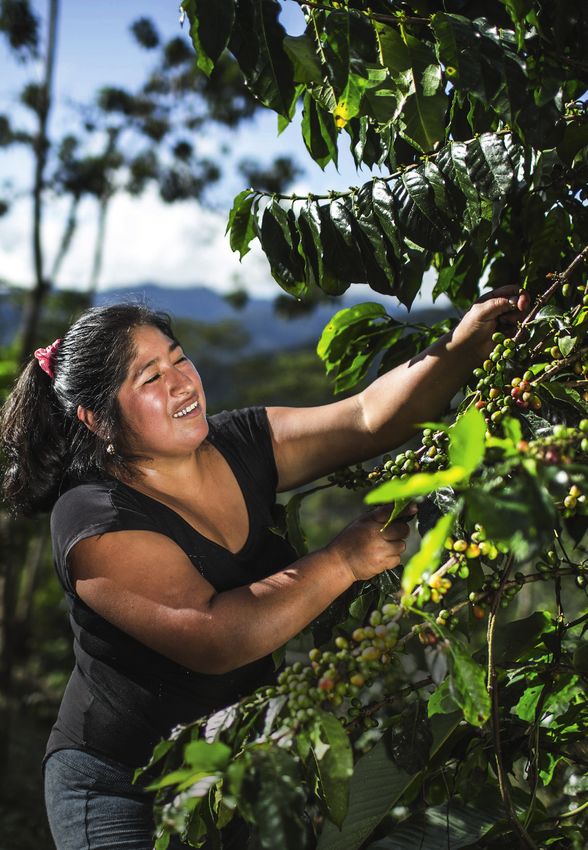
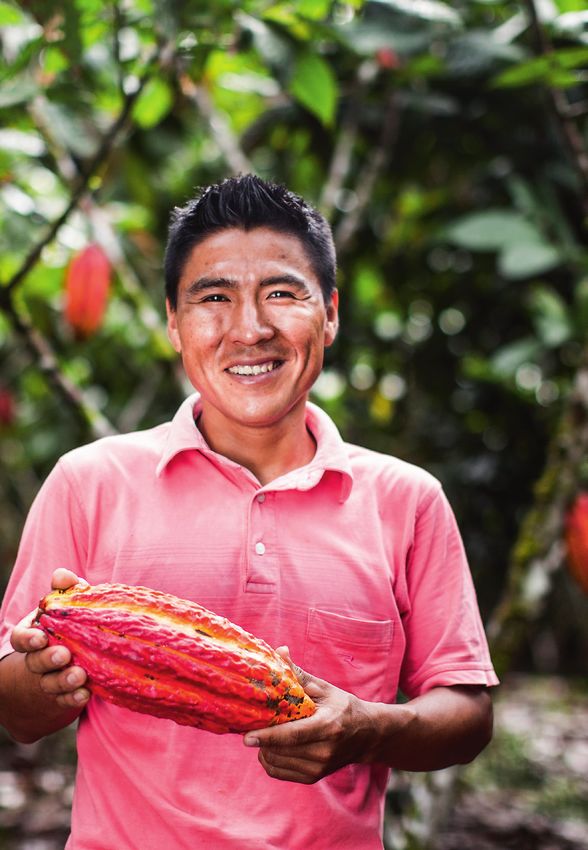
coffee and cocoa. Alternatives to drug crop
cultivation may also be found outside the agricul-
Alternative Development addresses the root causes of illicit crop cultivation, rather than
fighting the symptoms.
ROOT CAUSES
Poverty Powerful drug
trafficking networks
Violence
Lack of access to basic
Food insecurity
public services
Weak rule of law
Lack of infrastructure,
Fragile state institutions legal markets, land tenure
8Sustainable change
Aus- und Fortbildung von Kleinbäuerinnen und -bauern
Advising on establishment of co-operatives
Creating infrastructure to access markets
Providing training in good agricultural practice
Helping farmers acquire land titles
Promoting education and healthcare
Considering the needs of women
In this context, the focus is on promoting profita- in Asia, Latin America and South East Europe
ble value chains to generate income for small- with a broad network of partners. These include
holder families. Incorporating the private sector the United Nations Office on Drugs and Crime
can help enhance the competitiveness and quality (UNODC), the Thai Mae Fah Luang Foundation
of products as well as improve the long-term under Royal Patronage (MFLF) and numerous
chances of success. In addition, food security, the non-governmental organisations, such as the
promotion of education, health care and infra- International Drug Policy Consortium (IDPC), the
structure measures are important success factors Transnational Institute (TNI) and the Global
along with the creation of local administrative Initiative Against Transnational Organized Crime
structures. In over four decades, Alternative (GI-TOC).
Development measures have been implemented
9ICONSICONS
ICONS 40 ICONS 40
Guidelines on Alternative Development
17 ICONS: COLOUR 17 ICONS: COLOUR VERSION
VERSION
Experience from drug crop cultivation regions promoted livestock and, in some cases, small
shows that Alternative Development measures fish farms. As a result, livelihoods were sustain-
are only successful if the achievement of the ably secured for the smallholder farmers during
goals does not solely depend on a reduction in the transition from coca to legal alternatives.12
the drugs supply. A reduction in the cultivation
regions occurs as a result of a development
process and is not a condition for implementing
measures (non-conditionality). Legal alternatives
should be established before drug crops are
destroyed to ensure that the livelihoods of
smallholder farmers are not endangered (proper
sequencing). Those affected are not compelled to
take part in measures if that would expose them Alternative Development helps to
to higher risks (do no harm). In Peru, for exam- integrate marginalised small-scale farm-
ple, vegetable gardens were created to provide ers in the legal economy, overcoming
food security for the smallholder farmers until inequalities within society and between
agroforestry systems could be set up for banan- regions. It supports the provision of an
When
When an icon is on a square, as, cocoa
ansquare
that icon on aand
ismust coffee.
square, 1 As
that square
be proportional part
must
x 1. of the income
be proportional 1 x 1. infrastructure, as well as access to
The white icon should be The diversification
white
contained icon
by itsshould strategy,
becolour,
defined contained the colour,
by its defined
or black measures
or black also public services and legal markets.
background. background.
Do not alter the colours ofDo not
the alter
SDG the colours of the SDG icons.
icons.
In Nations
In January 2018, the United Januarylaunched
2018, the aUnited Nations
revised designlaunched a revised
of Icon 10, as seendesign
on thisofpage
Icon 10, as seen on this page
12 NODC project PERU87, Sustainable agricultural development to reduce poverty through an environmentally sustainable and women
U
empowering approach in Peru and Bolivia, funded by BMZ from 2011 to 2016.
103. Our achievements
→ Alternative Development is Alternative Development has become an impor-
tant pillar of a balanced EU drug policy. Germany
becoming increasingly played a major role in the Council Conclusions on
important in international Alternative Development adopted in December
2018, which highlight the European approach to a
and European drug policy development-oriented drug policy.
Germany has been actively shaping global drug
In 2019, BMZ was involved in drawing up
policy at the level of the United Nations (UN) and
international guidelines on human rights in drug
the EU for years. The main bodies include the UN
policy.13 They provide a guideline for governments
Commission on Narcotic Drugs (CND) and the EU
that want to gear their drug policy more strongly
Horizontal Working Party on Drugs (HDG).
towards the rights of all affected individuals as
well as to development and health.
At the United Nations General Assembly
Special Session on the World Drug Problem
(UNGASS) in 2016, Germany negotiated a sepa- → More and more countries
rate chapter on Alternative Development and
socio-economic aspects of drug policy in the
see Alternative Development
outcome document for the EU for the first time. as an element of their
Together with Thailand and Peru, four resolu-
tions on development-oriented drug policy have
national drug policies
been successfully submitted and adopted by CND
Through cooperation within the Global
since then.
Partnership on Drug Policies and Development
(GPDPD), we accompany drug producing coun-
BMZ played a crucial role in the formulation
tries that have pursued rather restrictive drug
of the chapter on international cooperation in the
policies in the past on their way to adopt develop-
EU Drug Strategy 2013–2020 and the EU Drug
ment policy and human rights approaches and
Action Plans (2013–2016, 2017–2020), in which
even to become active supporters of progressive
drug policies at international level. Thus, we have
assisted Colombia in incorporating environmen-
tal measures into its policy on coca cultivation,
which now integrates the protection and sustain-
able use of forest ecosystems too. Myanmar has
included development approaches in its national
drug strategy, and Thailand has adopted the
principle of harm reduction in dealing with drug
use at national level.
13 he guidelines were developed by the International Centre on Human Rights and Drug Policy at the University of Essex and the United
T
Nations Development Programme (UNDP): https://www.humanrights-drugpolicy.org
11Since 2011, BMZ has been supporting COPO- Alternative Development in Colombia
LAD, a cooperation programme between Latin
America, the Caribbean and the EU on drugs
policies, by providing expertise on the implemen-
tation of the Alternative Development compo-
nent.14 As a result, Guatemala, Paraguay and Mexi-
co have set up their own national bodies for 1,400 people have
Alternative Development. Guatemala, Jamaica, been reached
1,600 hectares
Paraguay, Mexico, and Trinidad and Tobago have
of rainforest have
implemented Alternative Development measures been protected
for the first time. 18,000 timber
and fruit trees have
been planted
→ Using Alternative Development
to generate legal income
The profit margins for smallholder households at In Colombia, Alternative Development
the beginning of the value chain are extremely measures in the coca cultivation regions of
small. Only 1.5% of the profits from the global Putumayo, Caquetá, Guaviare and Meta, have
cocaine economy are accounted for by smallhold- protected 1,600 hectares of forest and planted
er households that grow coca plants. The huge more than 18,000 native timber and fruit trees,
profits of the global drug economy emerge only at thereby providing additional sources of income
the end of the chain – in the countries of transit for the people living there. A total of 1,400 people
and destination. Thus, Colombian smallholders has benefited from these measures.
receive less for coca leaves (EUR 1 per kg) than for
alternative legal agricultural products such as Since 2011, BMZ has been promoting meas-
coffee (EUR 2 per kg). ures implemented by the UNODC Office in
Myanmar to reduce opium cultivation and
improve living conditions for the communities in
the region. Coffee cultivation is one of the main
alternative sources of income. The Green Gold
Coffee Cooperative, founded in 2014, which
Myanmar: From cooperative coffee
almost 1,000 smallholder farmers from 55 villages
growing to Fairtrade certification
have now joined, entered into a partnership with
the French coffee company Malongo in 2017,
guaranteeing the producers fair prices and a
commitment to purchase their coffee for five
years. The Cooperative actively promotes gender
equality and the abolition of child labour and
obtained Fairtrade certification in 2019.
14 ebsite of COPOLAD, the Cooperation Programme between Latin America, the Caribbean and the European Union on drugs policies,
W
led by Spain’s International and Ibero-American Foundation for Administration and Public Policies (FIIAPP): http://copolad.eu/en
124. Outlook:
facing the challenges together
The production of cocaine and heroin has The current Alternative Development approach
reached record levels. In 2017, more people in partner countries is also being extended to
died of an overdose of heroin or other opiates cover other illegal drug-related activities in
than ever before.15 At the same time, record urban and rural areas, such as the transport and
amounts of cocaine were seized in the EU16 and trade of illegal drugs. The new trafficking routes
also in Germany.17 bring African countries into focus. The Alterna-
tive Development approach thus needs to be
In view of the alarming figures, new drug policy further developed and adapted to the specific
approaches in drug crop cultivation countries are problems. There are already some examples:
more important than ever. Germany is therefore Alternative Development measures in rural
continuing to advocate using development-ori- drug-trafficking regions near the borders be-
ented approaches to achieve a long-term reduc- tween Thailand, Myanmar and Laos are promot-
tion in the cultivation of illicit drug crops. ing legal income-generating opportunities for
the local population.
At international level, a change is becoming
apparent in the way countries are dealing with One of the tasks of Germany’s EU Council Presi-
cannabis and cannabis products. More and more dency in the second half of 2020 in the field of
countries, including Germany, are adopting laws drug and addiction policy is to negotiate the new
to regulate the medical use. This might increase EU Agenda and Action Plan on Drugs (2021–2025).
the demand for legally cultivated medical canna- Together with our European partners, we are
bis and open up development potentials in regions committed to a human rights and develop-
in which cannabis has only been grown illegally ment-oriented approach to drug crop cultivation.t
to date. Alternative Development should be anchored in
the relevant documents as part of EU drug policy
and hence promoted as an important element of
EU development cooperation.
15 United Nations Office on Drugs and Crime (2020): World Drug Report 2020, https://wdr.unodc.org/wdr2020/
16 MCDDA (2019): European Drug Report, p. 14, https://www.emcdda.europa.eu/system/files/publications/11364/20191724_
E
TDAT19001ENN_PDF.pdf
17 erman Federal Criminal Police Office – BKA (2019): Rauschgiftkriminalität. Bundeslagebild 2018 (‘Drug crime. Federal situation report
G
2018’), p. 20, https://www.bka.de/SharedDocs/Downloads/DE/Publikationen/JahresberichteUndLagebilder/
Rauschgiftkriminalitaet/2018RauschgiftBundeslagebildZ.html;jsessionid=91F4CF5A37B44E05F3537672E0111457.live2292?nn=27972
135. What is needed now
Development-oriented drug policy requires → Review of the feasibility and potential of
greater commitment and political will, both in the medical cannabis as a legal value chain
drug crop cultivation countries and in the coun- for Alternative Development in developing
tries of transit and destination. The following countries
points need to be focused on in the next years:
→ New indicators that measure the success of
Alternative Development more clearly, because
→ Consistent implementation of the resolutions
the reduction of drug crop cultivation is not
adopted at UNGASS in 2016, thereby strength-
useful as an indicator on its own
ening the global commitment to a develop-
ment-oriented drug policy approach → The expansion of the scientific evidence base
on development-oriented drug policy with
→ A new EU Drugs Agenda and Action Plan on
regard to the role of women and young people
Drugs (2021–2025) that takes even greater
in drug crop cultivation
emphasis on development policy aspects
→ Adaptation of the current Alternative Develop-
→ More financial resources for the implemen
ment approaches to the drug transit countries
tation of Alternative Development by
in Africa.
the countries concerned and the international
community
→ An extension of Alternative Development
measures in line with international human
rights obligations, taking account of
gender equality and the sustainable use
of natural resources
→ Greater involvement of the private sector and
civil society in planning and implementing
Alternative Development measures
1415
Imprint

PUBLISHED BY THE
Federal Ministry for Economic Cooperation and Development
Division 121 – Agrarpolitik, Landwirtschaft, Innovation

DESIGN AND LAYOUT
wbv Media, Bielefeld

DRUCK
BMZ
Gedruckt auf Blauer Engel zertifiziertem Papier

PHOTOS
©GIZ/Leslie Searles

AS AT
October 2020
You can also read


