Amanda Gorman's Poetry United Critics. It's Dividing Translators.
←
→
Page content transcription
If your browser does not render page correctly, please read the page content below
Amanda Gorman’s Poetry United Critics. It’s Dividing Translators. - The New York Times                               2021-03-30, 7:13 PM

       Amanda Gorman’s Poetry United
       Critics. It’s Dividing Translators.
       Should a white writer translate a Black poet’s work? A
       debate in Europe has exposed the lack of diversity in
       the world of literary translation.
       Published March 26, 2021Updated March 29, 2021

       The poet Amanda Gorman reciting her poem “The Hill We Climb” during President Biden’s inauguration ceremony
       in January.Ruth Fremson/The New York Times

       LONDON — Hadija Haruna-Oelker, a Black journalist, has just produced the
       German translation of Amanda Gorman’s “The Hill We Climb,” the poem

https://www.nytimes.com/2021/03/26/books/amanda-gorman-hill-we-climb-translation.html?referringSource=articleShare            Page 1 of 8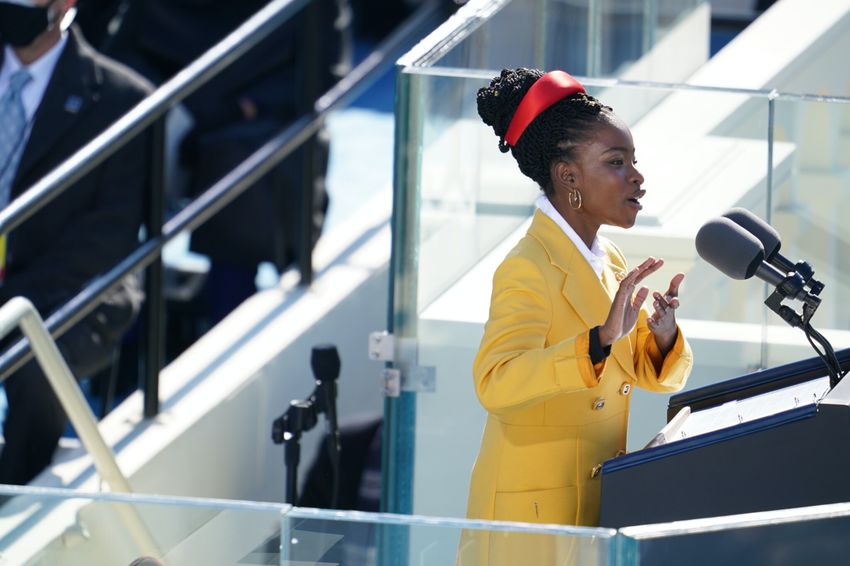
Amanda Gorman’s Poetry United Critics. It’s Dividing Translators. - The New York Times                               2021-03-30, 7:13 PM

       about a “skinny Black girl” that for many people was the highlight of
       President Biden’s inauguration.

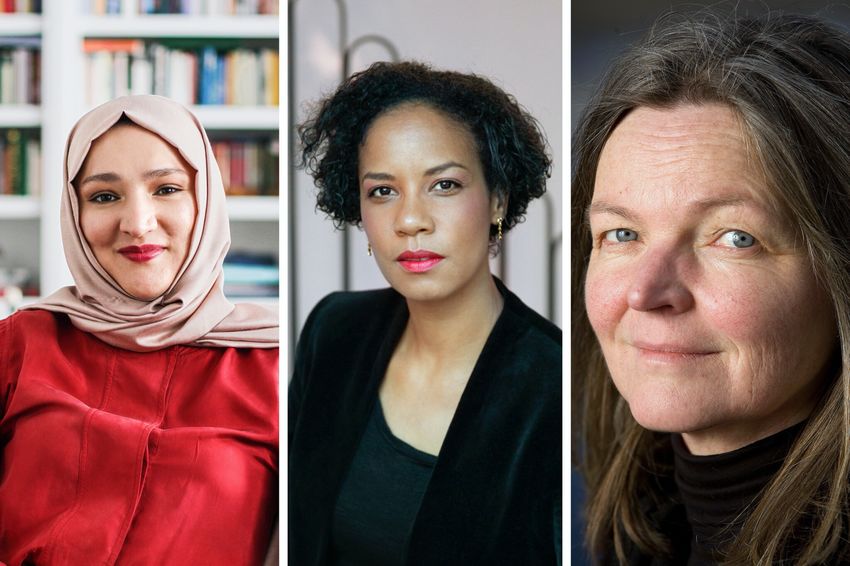
       So has Kubra Gumusay, a German writer of Turkish descent.

       As has Uda Strätling, a translator, who is white.

       Literary translation is usually a solitary pursuit, but the poem’s German
       publisher went for a team of writers to ensure the poem — just 710 words —
       wasn’t just true to Gorman’s voice. The three were also asked to make its
       political and social significance clear, and to avoid anything that might
       exclude people of color, people with disabilities, women, or other
       marginalized groups.

       From left, Kubra Gumusay, Hadija Haruna-Oelker and Uda Strätling, who have worked together on the German
       translation of Amanda Gorman’s poem “The Hill We Climb.”Katarina Ivanisevic (center); Christoph Keller (right)

https://www.nytimes.com/2021/03/26/books/amanda-gorman-hill-we-climb-translation.html?referringSource=articleShare           Page 2 of 8
Amanda Gorman’s Poetry United Critics. It’s Dividing Translators. - The New York Times 2021-03-30, 7:13 PM
For nearly two weeks, the team debated word choices, occasionally
emailing Ms. Gorman for clarifications. But as they worked, an argument
was brewing elsewhere in Europe about who has the right to translate the
poet’s work — an international conversation about identity, language and
diversity in a proud but often overlooked segment of the literary world.
“This whole debate started,” Gumusay said, with a sigh.
It began in February when Meulenhoff, a publisher in the Netherlands, said
it had asked Marieke Lucas Rijneveld, a writer whose debut novel won last
year’s Booker International Prize, to translate Gorman’s poem into Dutch.
Rijneveld, who uses the pronouns they and them, was the “ideal candidate,”
Meulenhoff said in a statement. But many social media users disagreed,
asking why a white writer had been chosen when Gorman’s reading at the
inauguration had been a significant cultural moment for Black people.
Three days later, Rijneveld quit.
Then, the poem’s Catalan publisher dropped Victor Obiols, a white
translator, who said in a phone interview his publisher told him his profile
“was not suitable for the project.”
The Swedish, German and Spanish editions of Gorman’s “The Hill We Climb.”
Literary figures and newspaper columnists across Europe have been
arguing for weeks about what these decisions mean, turning Ms. Gorman’s
poem of hope for “a nation that isn’t broken, but simply unfinished” into the
latest focus of debates about identity politics across the continent. The
discussion has shone a light on the often unexamined world of literary
translation and its lack of racial diversity.
“I can’t recall a translation controversy ever taking the world by storm like
https://www.nytimes.com/2021/03/26/books/amanda-gorman-hill-we-climb-translation.html?referringSource=articleShare Page 3 of 8Amanda Gorman’s Poetry United Critics. It’s Dividing Translators. - The New York Times 2021-03-30, 7:13 PM
this,” Aaron Robertson, a Black Italian-to-English translator, said in a phone
interview.
“This feels something of a watershed moment,” he added.
Last week, the American Literary Translators Association waded in. “The
question of whether identity should be the deciding factor in who is allowed
to translate whom is a false framing of the issues at play,” it said in a
statement published on its website.
The real problem underlying the controversy was “the scarcity of Black
translators,” it added. Last year, the association carried out a diversity
survey. Only 2 percent of the 362 translators who responded were Black, a
spokeswoman for the association said in an email.
Translation is a job for the passionate, given it is work that comes with
limited recognition (translators’ names often don’t appear on book jackets)
and is hard to do full time. Many translators are also academics or authors
themselves.
A translator’s main task is to capture the nuance and feeling of a language
in a way that you could never achieve with Google Translate, and most
translators have long happily wrestled with questions of how to faithfully
translate works when they are about people completely unlike them.
“No good translator denies they’re bringing their own experience to a text,”
Mr. Robertson said.
In a video interview, the members of the German team said they had
certainly done such wrestling to make sure their translation of the text —
about a weary country whose “people diverse and beautiful will emerge,” —
was faithful to Ms. Gorman’s spirit.
https://www.nytimes.com/2021/03/26/books/amanda-gorman-hill-we-climb-translation.html?referringSource=articleShare Page 4 of 8Amanda Gorman’s Poetry United Critics. It’s Dividing Translators. - The New York Times 2021-03-30, 7:13 PM
The team spent a long time discussing how to translate the word “skinny”
without conjuring images of an overly thin woman, Ms. Gumusay said. They
also debated how to bring a sense of the poem’s gender-inclusive language
into German, in which many objects — and all people — are either
masculine or feminine. A common practice in Germany to signify gender
neutrality involves inserting an asterisk in the middle of a word then using
its feminine plural form. But such accommodations would be “catastrophic”
to a poem, Ms. Strätling said, as it “destroys your metric rhythm.” They had
to change one sentence where Gorman spoke of “successors” to avoid
using it, she added.
“You’re constantly moving back and forth between the politics and the
composition,” she said.
“To me it felt like dancing,” Ms. Gumusay said of the process. Ms. Haruna-
Oelker added that the team tried hard to find words “which don’t hurt
anyone.”
Each member of the team brought different things to the group, said Ms.
Haruna-Oelker, the Black journalist. It was more than their color, she said:
“It’s about quality, it’s about the skills you have, and about perspectives.”
But while the German translators managed to negotiate the text, elsewhere
in Europe frustration was rising over the matter of who should do the work.
Nuria Barrios, the translator of the poem’s Spanish edition, who is white,
wrote in the newspaper El País that Rijneveld’s stepping down from the
project was “a catastrophe.” (Rijneveld declined an interview request for
this article.)
“It is the victory of identity politics over creative freedom,” she wrote,
adding: “To remove imagination from translation is to subject the craft to a
https://www.nytimes.com/2021/03/26/books/amanda-gorman-hill-we-climb-translation.html?referringSource=articleShare Page 5 of 8Amanda Gorman’s Poetry United Critics. It’s Dividing Translators. - The New York Times 2021-03-30, 7:13 PM
lobotomy.”
Ms. Barrios wrote that she did not want a world where “only whites can
translate whites, only women can translate women, only trans people can
translate trans people,” she added.
Marieke Lucas Rijneveld was chosen to translate Ms. Gorman’s poem to Dutch but later stepped down.Jeroen
Jumelet/EPA, via Shutterstock
Couching the discussion in such terms was “really ridiculous,” said Janice
Deul, a Black Dutch journalist and activist who on Feb. 25 wrote an opinion
piece for De Volkskrant, a Dutch newspaper, calling Rijneveld’s appointment
“incomprehensible.”
“This is not about who can translate, it’s about who gets opportunities to
translate,” Deul said in a phone interview. She listed 10 Black Dutch spoken-
word artists who could have done the job in her article but said all of them
had been overlooked.
But John McWhorter, a linguist and professor of English at Columbia
University who has written critically of identity politics, said in an email that
“there is a tacit idea that we are supposed to be especially concerned about
the ‘appropriateness’ of a translator’s identity in the particular case of
blackness.”
Other differences between writers and their translators — such as wealth
levels, or political views — were not sparking concern, Mr. McWhorter, who
is Black, added. “Instead, our sense of ‘diversity’ is narrower than that word
implies: It’s only about skin color,” he said.
The one opinion missing in all of this is, of course, Ms. Gorman’s. Viking is
releasing “The Hill We Climb” in the United States on Tuesday, but Ms.
Gorman’s spokeswoman has not so far responded to requests for comment.
https://www.nytimes.com/2021/03/26/books/amanda-gorman-hill-we-climb-translation.html?referringSource=articleShare Page 6 of 8Amanda Gorman’s Poetry United Critics. It’s Dividing Translators. - The New York Times 2021-03-30, 7:13 PM
Whether Ms. Gorman weighed in on the translator choices is not clear. But
either she or her agent, Writers House, which represents the translation
rights, apparently has the authority to do so.
Aylin LaMorey-Salzmann, the editor of the German edition for publisher
Hoffmann und Campe, said in a phone interview that the rights owner had
to agree to the choice, which had to be someone of similar profile to Ms.
Gorman.
Univers, the Catalan publisher who dropped Mr. Obiols, said in a statement
it had chosen him “without the knowledge or approval of the agents and the
poet.” It declined to answer further questions.
Irene Christopoulou, an editor at Psichogios, the poem’s Greek publisher,
was still waiting for approval for its choice of translator. The translator was a
white “emerging female poet,” Ms. Christopoulou said in an email. “Due to
the racial profile of the Greek population, there are no translators/poets of
color to choose from,” she added.
A spokeswoman for Tammi, the poem’s Finnish publisher, said in an email
that “The negotiations are still going on with the agent and Amanda Gorman
herself.”
The rapper Timbuktu translated “The Hill We Climb” into Swedish.Therese Öhrvall
Several other European publishers named Black musicians as their
translators. Timbuktu, a rapper, has completed a Swedish version, and
Marie-Pierra Kakoma, a singer better known as Lous and the Yakuza, has
translated the French edition, which will be published by Editions Fayard in
May.
“I thought Lous’s writing skills, her sense of rhythm, her connection with
spoken poetry would be tremendous assets,” Sophie de Closets, a publisher
https://www.nytimes.com/2021/03/26/books/amanda-gorman-hill-we-climb-translation.html?referringSource=articleShare Page 7 of 8Amanda Gorman’s Poetry United Critics. It’s Dividing Translators. - The New York Times 2021-03-30, 7:13 PM
at Fayard, said in an email explaining why she chose a pop star.
Issues of identity “should definitely be considered” when hiring translators,
Ms. de Closets added, but that went beyond race. “It is the publisher’s
responsibility to look for the ideal combination between one given work and
the person who will translate it,” she said.
Ms. Haruna-Oelker, one of the German translators, said one disappointing
outcome of the debate in Europe was that it had diverted attention from the
message of Gorman’s poem. “The Hill We Climb” spoke about bringing
people together, Ms. Haruna-Oelker said, just as the German publisher had
done by assembling a team.
“We’ve tried a beautiful experiment here, and this is where the future lies,”
Ms. Gumusay said. “The future lies in trying to find new forms of
collaboration, trying to bring together more voices, more sets of eyes, more
perspectives to create something new.”
https://www.nytimes.com/2021/03/26/books/amanda-gorman-hill-we-climb-translation.html?referringSource=articleShare Page 8 of 8You can also read


