An Coiste um Fhormhaoirsiú Buiséid Tuarascáil Eatramhach Réamh-Bhuiséid 2022 Iúil 2021 Committee on Budgetary Oversight Interim Pre-Budget Report ...
←
→
Page content transcription
If your browser does not render page correctly, please read the page content below

An Coiste um Fhormhaoirsiú Buiséid
           Tuarascáil Eatramhach Réamh-Bhuiséid 2022
                                             Iúil 2021

                   Committee on Budgetary Oversight
                      Interim Pre-Budget Report 2022
                                            July 2021

33CBO006

Committee
Committee     on Budgetary
          on Budgetary      Oversight
                       Oversight         – Interim
                                 – Interim         Pre-Budget
                                           Pre-Budget          Report 2022
                                                      Report 2022

  Committee Membership

            Richard Boyd-Barrett       Seán Canney TD        Ciaran Cannon TD    Pearse Doherty TD
                      TD
             Solidarity – People        Independent               Fine Gael          Sinn Féin
                Before Profit

             Bernard Durkan TD        Mairéad Farrell TD     Michael Healy-Rae   Neasa Hourigan TD
                                                                    TD
                 Fine Gael                Sinn Féin            Independent          Green Party

               John Lahart TD          Brian Leddin TD       Aindrias Moynihan     Ged Nash TD
                                                                     TD
                 Fianna Fáil             Green Party             Fianna Fáil          Labour

              Willie O’Dea TD        Kieran O’Donnell TD      Patricia Ryan TD
                Fianna Fáil               Fine Gael              Sinn Féin

                                                Page 1 of 82

                                                Page 1 of 82
An An Coiste
   Coiste     um Fhormhaoirsiú
          um Fhormhaoirsiú BuiséidBuiséid  - Tuarascáil
                                   - Tuarascáil         Eatramhach
                                                Eatramhach         Réamh-Bhuiséid
                                                           Réamh-Bhuiséid 2022    2022

  Foreword
                               Pre-Budget scrutiny is a core function of the Select
                               Committee on Budgetary Oversight’s work programme. The
                               Committee identified a number of budgetary priorities and
                               decided to hold meetings on three topics, the cost of climate
                               change, tax expenditures and capital investment. The
                               Committee has also identified a number of other issues
  throughout its recent engagements.

  As the economy recovers from the pandemic there will need to be continued support
  for some sectors, while significant investment is required across a number of areas
  such as housing, health, climate action, transport etc. The Summer Economic
  Statement has set out the expenditure ceilings for the coming years.

  The Committee has made a number of observations and recommendations that
  should be considered in Budget 2022 and beyond. The Committee is committed to
  continuing its scrutiny prior to the publication of the Budget and beyond. The
  Committee will continue to seek improvements to the budgetary process to improve
  the transparency and effectiveness of decision making.

  The Committee will continue its pre-budget scrutiny in September and publish a Final
  Pre-Budget 2022 Report in early October.

  I would like to express the Committee’s thanks to the , the Committee on Disability
  Matters, the Committee on Environment and Climate Action and the Committee on
  Social Protection, Community, Rural Development, and the Islands for their
  submissions and involvement in the process. I hope as we continue to develop
  budgetary scrutiny in the Oireachtas the role of other Committees will grow,

  On behalf of the Committee I would also like to thank the witnesses from the
  Department of Public Expenditure and Reform, the Irish Fiscal Advisory Council,
  Social Justice Ireland, the University of Limerick, the OECD, TASC, ESRI and UCD.
  Their input has enabled the Committee to gain a greater understanding of the
  budgetary priorities and the factors that will frame budgetary decisions. I would also

                                              Page 2 of 82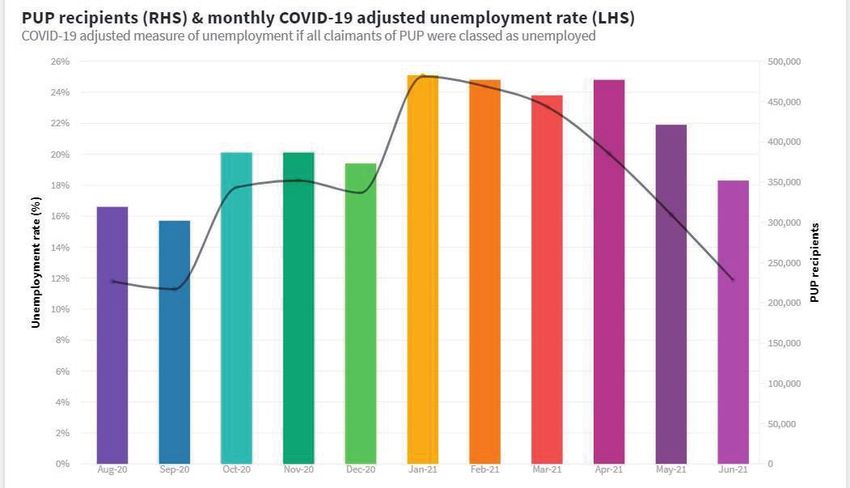
Committee
Committee     on Budgetary
          on Budgetary      Oversight
                       Oversight         – Interim
                                 – Interim         Pre-Budget
                                           Pre-Budget          Report 2022
                                                      Report 2022

  like to thank Minister of Finance Paschal Donohoe T.D. and Minister for Public
  Expenditure and Reform Michael McGrath T.D for meeting with the Committee.
  These engagements are important for the Minsters and the Committee to share
  views and discuss budgetary issue and priorities.

  I would also like to thank the Parliamentary Budget Office for their input into the
  Committee and their publications which have been very useful to the Committee and
  the secretariat of the committee who have worked so hard during a challenging year.
  Finally, I would like to thank the Members of the Committee for their input and insight
  throughout our engagements leading to this report.

  _____________
  Neasa Hourigan T.D.

                                                Page 3 of 82

                                                Page 3 of 82
An An Coiste
   Coiste     um Fhormhaoirsiú
          um Fhormhaoirsiú BuiséidBuiséid  - Tuarascáil
                                   - Tuarascáil         Eatramhach
                                                Eatramhach         Réamh-Bhuiséid
                                                           Réamh-Bhuiséid 2022    2022

  Table of Contents
  Committee Membership........................................................................................... 1

  Foreword ................................................................................................................... 2

  Executive Summary ................................................................................................. 7

  Summary of Observations and Recommendations ............................................ 11

  Section 1: Introduction .......................................................................................... 15
     1.1       The Role of the Committee on Budgetary Oversight ............................................................ 15
     1.2       Process to date ..................................................................................................................... 15
     1.3       Final Report on Parliamentary Engagement in the Budgetary Cycle into Budget 2022 ....... 16

  Section 2: Sectoral Committees’ Pre-Budget Submissions ............................... 17
     2.1       Summary of Submissions ..................................................................................................... 18
        Committee on Disability Matters ................................................................................................... 18
        Committee on Environment and Climate Action ........................................................................... 18
        Committee on Social Protection, Community, Rural Development, and the Islands .................... 19

  Section 3: Macroeconomic and Fiscal Outlook ................................................... 20
     3.1       Economic Outlook ................................................................................................................. 20
     3.2       Unemployment ...................................................................................................................... 22
     3.3       Inflation .................................................................................................................................. 25
     3.4       Government Expenditure ...................................................................................................... 25
     3.5       Revenue ................................................................................................................................ 28
        Corporation tax .............................................................................................................................. 28
     3.6       Additional Considerations ..................................................................................................... 29
        Global Economic Outlook .............................................................................................................. 29
        Brexit ............................................................................................................................................. 29

  Section 4: Stakeholder evidence .......................................................................... 31
     4.1       Tax Expenditures .................................................................................................................. 31
        Tax Expenditures Evaluation and Scrutiny ................................................................................... 32
        Pension-related Tax Expenditures ................................................................................................ 34
        Capital Acquisitions Tax (CAT) ..................................................................................................... 35
        Capital Gains Tax (CGT) Reliefs .................................................................................................. 36
        Elimination of Environmental Tax Reliefs ..................................................................................... 38

                                                                   Page 4 of 82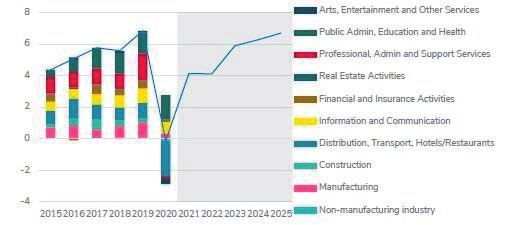
Committee
Committee     on Budgetary
          on Budgetary      Oversight
                       Oversight         – Interim
                                 – Interim         Pre-Budget
                                           Pre-Budget          Report 2022
                                                      Report 2022

        Higher rates of income tax relief ................................................................................................... 38
        Standardisation of VAT Rates ....................................................................................................... 39
        Equalising PRSI Treatment of Self-Employed and Employees .................................................... 40
     4.2        Cost of Climate Change ........................................................................................................ 42
        Managing Travel Demand ............................................................................................................. 42
        Tax and Subsidy System .............................................................................................................. 42
        Climate Investment ....................................................................................................................... 44
        Cost of Inaction ............................................................................................................................. 47
        Just Transition ............................................................................................................................... 47
     4.3        Capital Investment ................................................................................................................ 48
        National Development Plan........................................................................................................... 48
        Oversight of Capital Spending ...................................................................................................... 50
        Capacity for Capital Investment .................................................................................................... 51
     4.4        Budgetary Issues .................................................................................................................. 53
        Corporation Tax ............................................................................................................................ 53
        Budgetary Planning/process ......................................................................................................... 55
        Fiscal Rules ................................................................................................................................... 57
        Deficit and Debt Sustainability ...................................................................................................... 58
        Household savings ........................................................................................................................ 60
        Unemployment .............................................................................................................................. 60
        Sectoral Differences ...................................................................................................................... 61
        Taxation Changes ......................................................................................................................... 62
        Social Welfare Rates ..................................................................................................................... 63

  Section 5             Performance Management ................................................................ 64
     5.1        The Public Sector Performance Report ................................................................................ 64
     5.2        Well-Being Framework and Indicators ................................................................................. 65
     5.3        Green Budgeting ................................................................................................................... 65

  Appendices ............................................................................................................. 67
     Appendix: A:             Meetings and Stakeholders ................................................................................... 67
     Appendix B:           Actions of the Final Report on the Framework for Parliamentary Engagement in the
     Budgetary Cycle ................................................................................................................................ 70
     Appendix C: Contributions off Sectoral Committees ......................................................................... 73
        C1:        Committee on Climate Action ............................................................................................ 73
        C2:        Committee on Disability Matters ....................................................................................... 76

                                                                  Page 5 of 82

                                                                  Page 5 of 82
An An Coiste
   Coiste     um Fhormhaoirsiú
          um Fhormhaoirsiú BuiséidBuiséid  - Tuarascáil
                                   - Tuarascáil         Eatramhach
                                                Eatramhach         Réamh-Bhuiséid
                                                           Réamh-Bhuiséid 2022    2022

        C3:        Joint Commttee on Education, Further and Higher Education, Research Innovation and
        Science.......................................................................................................................................... 78
        C4:        Committee on Social Protection, Community and Rural Development and the Islands ... 79
     Appendix E: Terms of Reference ...................................................................................................... 80

                                                                  Page 6 of 82
Committee
Committee     on Budgetary
          on Budgetary      Oversight
                       Oversight         – Interim
                                 – Interim         Pre-Budget
                                           Pre-Budget          Report 2022
                                                      Report 2022

  Executive Summary
  One of the primary outputs of Select Committee on Budgetary Oversight (“the
  Committee”) is the publication of its annual pre-budget report. The Committee
  identified a number of budgetary priorities and held a number of meetings to discuss
  these topics.

  After summer recess in September, the Committee will re-engage in its pre-budget
  scrutiny for Budget 2022. The Committee intends to publish its Final Pre-Budget
  Report in early October 2022. This report will consider a variety of further
  publications which are due to be published in the coming months, including the Mid-
  Year Expenditure Report, Tax Strategy Group papers and Spending Review papers.
  The Committee also intends to invite the Minister for Finance and the Minister for
  Public Expenditure and Reform to engage with the Committee in September/
  October prior to Budget Day to discuss their objectives for the Budget.

  The Committee approached a number of sectoral committees to seek their input on
  identified priorities. Three committees, the Committee on Disability Matters, the
  Committee on Environment and Climate Action and the Committee on Social
  Protection, Community, Rural Development, and the Islands sent submissions to the
  Committee making a number of budgetary recommendations.

  Macroeconomic and Fiscal Outlook

  The macroeconomic and fiscal outlook has been dominated by the impact of Covid-
  19. Economic growth and domestic demand are forecast to grow rapidly over the
  next years. The unwinding of increased personal savings should have a positive
  impact on the economy. However, unemployment projections expect higher levels of
  unemployment than would be expected given the economic recovery.

  The global economic outlook also appears favourable for Ireland, particularly given
  the expected growth in US and UK economies.

                                                Page 7 of 82

                                                Page 7 of 82
An An Coiste
   Coiste     um Fhormhaoirsiú
          um Fhormhaoirsiú BuiséidBuiséid  - Tuarascáil
                                   - Tuarascáil         Eatramhach
                                                Eatramhach         Réamh-Bhuiséid
                                                           Réamh-Bhuiséid 2022    2022

  Stakeholder Evidence

  The Committee met with a number of witnesses to discuss budgetary priorities. The
  Committee agreed three topics for dedicated meetings: tax expenditures; the cost of
  climate change; and capital investment. The Committee also held a number of other
  meetings to examine priorities more generally.

  Tax expenditures have been identified by the Committee as a recurring topic in its
  work programme. The lack of transparency around tax expenditures is a significant
  issue for the Committee. In particular, the scrutiny of tax expenditures is complicated
  by the lack of information around the cost of many tax expenditures.

  The Committee also discussed specific tax expenditures such as those related to
  pensions, capital gains tax and capital acquisitions tax.

  During its examination of the cost of climate change a number of areas for
  consideration were raised: managing travel demand; the tax and subsidy system
  (such as carbon taxes and the electric vehicle strategy); climate investment; the cost
  of inaction; and a just transition. The importance of investment, taxes and subsidies
  being well targeted at lowering emissions but also ensuring a just transition and
  providing economic development across the country was discussed.

  Capital investment will be vital to the economy going forward. During its engagement
  the Committee discussed the capacity for and oversight of capital investment. The
  review of the National Development Plan will reassess investment priorities and new
  issues will be taken into account. The oversight of capital spending is an important
  component of ensuring value for money. The Committee heard that projects undergo
  rigorous analysis and that the public spending code is regularly adapted and
  improved.

  Capacity constraints and the potential for increased cost were also discussed. The
  restrictions on activity at the beginning of the year have resulted in some
  underspending of Department’s capital allocation, however the Committee heard that
  Departments have indicated that full allocations will be used.

                                              Page 8 of 82
Committee
Committee on Budgetary
on Budgetary Oversight
Oversight – Interim
– Interim Pre-Budget
Pre-Budget Report 2022
Report 2022
A number of other issues were identified during the Committee’s engagements.
The Committee discussed the risk of a fall in corporation tax revenue due to changes
in the international environment and heard that while the Department of Finance had
allowed for a €2 billion reduction to its forecasts, the impact could be larger.
The Committee also discussed the deficit and debt projections. While Ireland’s debt
level remains high, which carries risks, it is broadly considered that the debt is
currently sustainable. The Committee also noted that the SES incorporates larger
deficits than the SPU, allowing for greater investment. The impact of the
reintroduction of fiscal rules, expected in 2023, will also have an impact on Ireland’s
budgetary trajectory.
Changes to the taxation system, including the medium term need for raising
additional revenue, and the social welfare system were also raised with the
Committee.
The Committee also considered other issues related to the impact of Covid-19 such
as the impact of increased household savings, sectoral differences and tackling the
increased unemployment.
Performance Management
The Committee examined performance management with the budgetary process
through the Public Service Performance Report. The consideration of this report is a
key milestone for sectoral committees in the budgetary calendar. The Committee
also discussed the selection of indicators, noting that sectoral Committees should
have a greater role in their selection.
The lack an overall well-being framework was raised with the Committee, however, it
heard that the development of such a framework was at an advanced stage. The
framework includes the development of a set of economic and social indicators to
see whether Ireland is making progress in improving the lives of citizens, including
alternatives to GDP.
Page 9 of 82
Page 9 of 82An An Coiste
Coiste um Fhormhaoirsiú
um Fhormhaoirsiú BuiséidBuiséid - Tuarascáil
- Tuarascáil Eatramhach
Eatramhach Réamh-Bhuiséid
Réamh-Bhuiséid 2022 2022
Green budgeting was also examined and the Committee notes the importance of
their embedding and use to ensure effective outcomes.
Page 10 of 82Committee
Committee on Budgetary
on Budgetary Oversight
Oversight – Interim
– Interim Pre-Budget
Pre-Budget Report 2022
Report 2022
Summary of Observations and Recommendations
1. The Committee on Budgetary Oversight welcomes the pre-budget reports
published by a number of Committees. However, the Committee notes that
the recommendations made by the Committees were not costed and that
this requires attention going forward.
2. The Committee notes the economic context appears positive, however,
there are significant risks including the trajectory of the virus, inflation, Brexit
and corporation tax.
3. The Committee notes that North-South trade has increased significantly in
the first four months of 2020 compared to 2019, in part as a consequence of
opportunities created by the Protocol, and recommends that trade and
enterprise policy be developed to deepen and strengthen North-South trade
and the all-island economy.
4. The Committee recommends that tax expenditure reviews be published in
advance of the budget to allow proper scrutiny
5. The Committee reaffirms its commitment to examining tax expenditures on
a regular basis and will examine the rationale for the introduction of any new
tax expenditures in Budget 2022.
6. The Committee is of the opinion that pension-related tax expenditures
should be considered as part of the wider reform of the pension system.
7. The Committee has discussed a number of areas where tax expenditures
could be better targeted. The Committee will continue to examine this issue
as part of its work programme.
8. The Committee recommends that an examination of congestion charges be
undertaken.
Page 11 of 82
Page 11 of 82An An Coiste
Coiste um Fhormhaoirsiú
um Fhormhaoirsiú BuiséidBuiséid - Tuarascáil
- Tuarascáil Eatramhach
Eatramhach Réamh-Bhuiséid
Réamh-Bhuiséid 2022 2022
9. The Committee recommends that EV strategy be reviewed to ensure it
represents value for money and is achieving its objectives.
10. The Committee notes the debate around the benefits of tax exemptions on
fuel use.
11. The Committee emphasises the need for significant investment in climate-
related infrastructure.
12. The Committee recommends that such investment should be structured to
maximise sustainable and quality jobs, energy efficiency and lower carbon
emissions, while ensuring a just transition, protecting livlihoods and
providing economic development across the country.
13. The Committee recommends that increased investment in sustainable
public transport and walking and cycling infrastructure be prioritised.
14. The Committee notes that the lack of public and affordable housing and
rental accommodation is a result of the under-provision of social and
affordable housing by successive Governments, notes that ESRI warned
that without a significant scaling up of publicly provided construction we will
fall significantly short of meeting the level of demand for accommodation in
the absence of such investment, and therefore recommends that capital
investment in public housing be doubled in Budget 2022.
15. The Committee notes that the ongoing international discussions could have
a significant impact on Ireland’s corporation tax revenue.
16. The Committee welcomes the inclusion of a decrease in corporation tax
revenue over the coming years in the Government’s forecasts. However,
the Committee also notes that the impact could be greater.
17. The Committee recommends that any short-term increases in corporation
tax revenue should not, in general, be used to fund increases in current
expenditure though there may be some exceptions.
Page 12 of 82Committee
Committee on Budgetary
on Budgetary Oversight
Oversight – Interim
– Interim Pre-Budget
Pre-Budget Report 2022
Report 2022
18. The Committee is concerned that the concentration of corporation tax in a
small number of corporate groups leaves Ireland’s tax revenues vulnerable
to a sudden change in policy from a small number of companies.
19. The Committee recognises that the public consultation into the review of EU
Fiscal Rules is to be reopened in 2021. The Committee commits to
examining as part of work programme some of the different proposals for
reform and their compatibility with the Green New Deal, which could assist
the government in making in its submission to the public consultation.
20. The Committee notes the commitment in the SES to stick to the expenditure
ceilings even in the event of a drop in revenue due to poorer than expected
economic performance.
21. The Committee is of the opinion that the deficit should be allowed increase
if there is a negative shock to the economy resulting in lower than expected
revenue. However, the Committee also emphasises that permanent
increases in current expenditure should be matched by increases in
revenue.
22. The Committee notes the deficit and debt trajectories set out in the Summer
Economic Statement and further notes the allowance for larger deficits to
2025 to fund increased investment.
23. The Committee highlights the importance of investment in re-skilling, in
particular for those most disadvantaged by the pandemic such as young
people, older workers, women etc.
24. The Committee notes that additional revenue will have to be raised to fund
new investment and services.
Page 13 of 82
Page 13 of 82An An Coiste
Coiste um Fhormhaoirsiú
um Fhormhaoirsiú BuiséidBuiséid - Tuarascáil
- Tuarascáil Eatramhach
Eatramhach Réamh-Bhuiséid
Réamh-Bhuiséid 2022 2022
25. The Committee welcomes the establishment of the Commission on
Taxation and Welfare and looks forward to engaging with it.
26. The Committee welcomes developments around a well-being framework
and ongoing consultation with various stakeholders.
27. The Committee is of the opinion that their engagement should remain
throughout the process of implementing the well-being indicators and not
just during the creation of the system.
28. The Committee is of the opinion that sectoral committees should have a
greater role in establishing the indicators in the Public Service Performance
Report, with the Department of Public Expenditure and Reform, providing a
role in ensuring that indicators meet best standards, are consistent with
other indicators and best represent the performance of the Department
which is measured.
29. The Committee recommends that appropriate stakeholders, such as
academics, universities and community groups should be included in
discussions regarding equality and well-being indicators and that such
consultation should continue throughout the process.
30. The Committee is of the opinion that qualitative indicators, in addition to
quantitative indicators, should be included in any framework for equality and
well-being indicators.
believe that qualititave indicators, in addition to quantitative indicators should be
included in any framework for equality and well-being indicators.
Page 14 of 82Committee
Committee on Budgetary
on Budgetary Oversight
Oversight – Interim
– Interim Pre-Budget
Pre-Budget Report 2022
Report 2022
Section 1: Introduction
1.1 The Role of the Committee on Budgetary Oversight
The Select Committee on Budgetary Oversight was established during the 32 nd Dáil
to enhance the role of the Oireachtas in scrutinising the budget and to review the
macroeconomic and fiscal issues that form part of the budget considerations. Since
its establishment, one of the primary outputs of the Committee has been the
publication of the annual pre-budget report, based on the Committee’s pre-budget
scrutiny.
The Select Committee on Budgetary Oversight of the 33rd Dáil (“the Committee”)
undertook pre-budget scrutiny for Budget 2021, however this was at a condensed
level due to scheduling pressures in the Covid-19 environment and the limited time
available to the Committee as it was only established in September 2021. This year
the Committee’s pre-budget scrutiny of Budget 2022 was initiated at an earlier stage
and considered the actions recommended in its Final Report on Parliamentary
Engagement throughout the Budgetary Cycle.1
1.2 Process to date
In March 2021, the Committee undertook ex-ante scrutiny of the Stability Programme
Update (SPU) 2022, publishing a pre-SPU report2 on 1 April 2021 and engaged with
the Minister for Finance to discuss the draft SPU in late April 2021.
Following this engagement, the Committee considered expert publications and
analysis to further identify pre-budget priorities. The Committee then scheduled a
series of meetings to discuss these topics and engage with relevant stakeholders
1 Committee on Budgetary Oversight, Final Report on Parliamentary Engagement throughout the
course of the Budgetary Cycle
https://data.oireachtas.ie/ie/oireachtas/committee/dail/33/committee_on_budgetary_oversight/reports/
2021/2021-02-24_final-report-on-the-framework-for-parliamentary-engagement-throughout-the-
course-of-the-budgetary-cycle_en.pdf
2 Committee on Budgetary Oversight, Pre-Stability Programme Update Report, 2021 2021-04-01_pre-
stability-programme-update-2021_en.pdf (oireachtas.ie)
Page 15 of 82
Page 15 of 82An An Coiste
Coiste um Fhormhaoirsiú
um Fhormhaoirsiú BuiséidBuiséid - Tuarascáil
- Tuarascáil Eatramhach
Eatramhach Réamh-Bhuiséid
Réamh-Bhuiséid 2022 2022
(see Appendix A). The evidence heard by the Committee is summarised in Section 3
of this report.
Following the summer recess in September, the Committee will re-engage in its pre-
budget scrutiny for Budget 2022. The Committee intends to publish its Final Pre-
Budget Report in early October 2022 and this report will consider a variety of further
publications which are due to be published in the coming months, including the Mid-
Year Expenditure Report, Tax Strategy Group papers and Spending Review papers.
The Committee also intends to invite the Minister for Finance and the Minister for
Public Expenditure and Reform to engage with the Committee in September/
October prior to Budget Day to discuss their objectives for the Budget.
1.3 Final Report on Parliamentary Engagement in the Budgetary
Cycle into Budget 2022
The Committee’s Final Report on Parliamentary Engagement in the Budgetary Cycle
was published in February 2021 and recommended 18 Actions which are intended to
strengthen the framework for budgetary scrutiny within the Oireachtas and to
establish an integrated Committee-wide approach to budgetary and performance
scrutiny.
Appendix B lists the report’s actions which are relevant in the Committee’s ex-ante
scrutiny of Budget 2022. It is intended that further integration of these actions will be
introduced into the Committee’s scrutiny framework going forward.
Page 16 of 82Committee
Committee on Budgetary
on Budgetary Oversight
Oversight – Interim
– Interim Pre-Budget
Pre-Budget Report 2022
Report 2022
Section 2: Sectoral Committees’ Pre-Budget Submissions
The Committee’s Final Report on Parliamentary Engagement throughout the
Budgetary Cycle recommended an integrated Committee-wide approach to budget
and performance scrutiny.
As noted previously, the implementation of the framework is ongoing. The
Committee wrote to sectoral committees in advance of the publication of the Public
Service Performance Report (PSPR) and its pre-budget scrutiny of Budget 2022. In
relation to the latter correspondence, the Committee identified several budget topics
which were considered by it to be of considerable importance to Budget 2022 and
which lay within the remit of specific committees. These are listed in Table 1 below.
The Committee wrote to the listed sectoral committees, inviting them to provide
contributions on the topics indicated and to identify work undertaken or due to be
undertaken. In addition, to the listed committees, the Committee on Disability Matters
and the Committee on Social Protection, Community, Rural Development and the
Islands also provided pre-budget submissions. All responses received by the
Committee on Budgetary Oversight are listed in Appendix C.
Table 1: Budget Priorities for sectoral committees
Topic Committee
• Committee on Health
• Covid Spending
• Non-Covid Spending
• Committee on Education
• Reskilling of workers impacted by Covid
• Committee on Housing
• The effect of the housing crises on
individuals
• The potential impact of the housing
crises on attracting investment,
economic growth, and capital
investment
Page 17 of 82
Page 17 of 82An An Coiste
Coiste um Fhormhaoirsiú
um Fhormhaoirsiú BuiséidBuiséid - Tuarascáil
- Tuarascáil Eatramhach
Eatramhach Réamh-Bhuiséid
Réamh-Bhuiséid 2022 2022
• Committee on Climate Action and
• The cost of Climate Change
Environment
• Committee on Enterprise, Trade and
• Employment Wage subsidy scheme
Employment
• Supports and initiatives for sectors
impacted by Covid-19
2.1 Summary of Submissions
Committee on Disability Matters
The Committee on Disability Matters’ remit is to consider all disability matters
including the monitoring Ireland’s implementation of the UN Convention on the
Rights of Persons with Disabilities (UNCPRD). That Committee published its pre-
budget 2022 report on 7 July 20213. This report makes 38 recommendations
covering a range of topics including employment, education, and accessibility.
The report notes that a key measure for ensuring the effective implementation of the
provisions of the UNCPRD is the requirement for adequate funding to be allocated in
the national budget to the various sectors relevant to the realisation of the rights of
people with disabilities.
While the Committee on Budgetary Oversight notes that individual departments will
be responsible for implementing many of the report’s recommendations, it believes
that a central role is required to ensure consistency across departments. It also
notes that equality budgeting has the potential to ensure better outcomes for people
with disabilities and that the inclusion of disability metrics in the PSPR would be
beneficial in implementing these measures.
Committee on Environment and Climate Action
The Committee on Environment and Climate Action’s (“CECA”) remit is to consider
relevant areas under the auspices of the Department of Environment, Climate and
Communications. The CECA provided a contribution to the Committee on Budgetary
3Joint Committee on Disability Matters Aligning Disability Funding with the United Nations Convention
on the Rights of Persons with Disabilities - Budget 2022 Pre-Budget Submission - July 2021 -
33/DM/02 (oireachtas.ie)
Page 18 of 82Committee
Committee on Budgetary
on Budgetary Oversight
Oversight – Interim
– Interim Pre-Budget
Pre-Budget Report 2022
Report 2022
Oversight. The CECA was of the opinion “that the framing of future budgets will need
to change to take account of climate objectives across all Departments”. The CECA
has also published a number of reports including recommendations calling for
significant investment on public transport, cycling infrastructure, retrofitting and
renewable energy production.
The examination of road user charges was also recommended by the CECA,
including the reallocation of the revenue from these charges to sustainable transport
alternatives. In addition to Disability/ Equality Budgeting, there is an important role
for Green Budgeting to be introduced for all expenditure by Departments. The PSPR
has potential to measure and report upon these factors.
Committee on Social Protection, Community, Rural Development, and the
Islands
The Committee on Social Protection, Community, Rural Development, and the
Islands has published a pre-budget submission for the Department of Social
Protection, following three public meetings and the receipt of submissions4.
The report for the Department Social Protection report makes 76 recommendations
covering a wide range of payments, assessments and operations of the Department.
The need to focus on anti-poverty measures and indexing social welfare payments to
the cost of living were also highlighted in the report.
Observations & Recommendations
1. The Committee on Budgetary Oversight welcomes the pre-budget reports
published by a number of Committees. However, the Committee notes that
the recommendations made by the Committees were not costed and that
this requires attention going forward.
4Joint Committee on Social Protection, Community and Rural Development and the Islands – Report:
Pre-Budget Submission to the Department of Social Protection(oireachtas.ie)
Page 19 of 82
Page 19 of 82An An Coiste
Coiste um Fhormhaoirsiú
um Fhormhaoirsiú BuiséidBuiséid - Tuarascáil
- Tuarascáil Eatramhach
Eatramhach Réamh-Bhuiséid
Réamh-Bhuiséid 2022 2022
Section 3: Macroeconomic and Fiscal Outlook
3.1 Economic Outlook
In the years between the Financial Crash and the Covid-19 pandemic, the economy
recorded strong growth with Gross Domestic Product (GDP) increasing by an
average of 9.8% annually between 2014 and 2019. It is noted that GDP, while an
internationally accepted measurement, has limitations in accurately representing
domestic activity in an Irish context. Indicators measuring domestic activity also grew
during this period, albeit at a more subdued rate.
Covid-19 first impacted Ireland in early 2020. Public measures implemented to
address the health crisis resulted in the introduction of restrictions on economic and
other activity effectively stalling economic activity, with some sectors of the economy
proving resilient and others suffering significantly.
In 2020, GDP grew by 5.9%, making Ireland an outlier in showing strong GDP
performance among EU countries. However, this growth was not reflected in
domestic activity with modified domestic demand growth falling by 4.2% in the same
year, a fall that would have been greater but for significantly increased Government
spending.
GDP growth has been primarily generated by the activity of Multi-National
Companies (MNCs). The activity of MNCs grew by 23.1%5 in 2020, principally
through strong pharmaceutical and ICT exports. This feature of the economy reflects
the growth of MNCs in recent years,6 and this growth has resulted in increasing
Corporation Tax receipts. However, the Committee notes that there are also
increased risks, as the economy becomes increasingly vulnerable as a result of its
dependence on MNC activity.
5 Central Statistics Office, Quarterly National Accounts Quarter 1 2021 Final
https://www.cso.ie/en/releasesandpublications/ep/p-
na/quarterlynationalaccountsquarter12021final/foreignanddomesticgva/
6 Foreign Multi-Nationals accounted for 15% of total economic activity (Gross Added Value) in Ireland
in 2005, rising to 40% in 2015 and over 50% in 2020.
Page 20 of 82Committee
Committee on Budgetary
on Budgetary Oversight
Oversight – Interim
– Interim Pre-Budget
Pre-Budget Report 2022
Report 2022
GDP and Modified Domestic Demand (MDD) are both forecast to grow in 2021
although this is on the assumption that an increase in the vaccine rollout will allow for
further reduction of restrictions and the continued re-opening of the economy. While
MDD continued to fall in Q1 of 2021, Q2 will likely see an increase when compared
to the same period of 2020. However, it should be noted Q2 of 2020 had very low
activity due to the strong restrictions implemented at the time. The Summer
Economic Statement (SES) forecasts MDD to grow by 2.5% in 2021 and 7.5% in
2022, although assumptions are built on several factors such as the speed at which
households normalise saving and spending decisions.
The SES also notes that there is some potential upside to the forecast for MDD
growth in 2021, but that this is primarily a timing issue (whether some activity is
brought forward to 2021); and that the level of activity at end-2022 will be the same.
Recent trends in the labour market and consumer spending also suggest signs of
recovery. However, there is still some way to reach the levels of pre-pandemic
activity. As shown in table 2, GDP is forecast to continue to grow in 2021 and 2022,
with growth reducing in the years following (2023 to 2025).
Table 2: GDP Forecasts
2021 2022 2023 2024 2025
SPU (Spring 2021) 4.5 5
SES (Summer 8.8 5.1 3.7 3.3 3.2
2021)
The Fiscal Council 4.5 5 3.5 3.2 3.1
(May 2021)
ESRI (June 2021) 11.1 6.9
Central Bank 3.4 5.6 4.8
EU 7.2 5.1
Page 21 of 82
Page 21 of 82An An Coiste
Coiste um Fhormhaoirsiú
um Fhormhaoirsiú BuiséidBuiséid - Tuarascáil
- Tuarascáil Eatramhach
Eatramhach Réamh-Bhuiséid
Réamh-Bhuiséid 2022 2022
One knock-on effect of the pandemic has been the increase in consumer savings. It
is estimated that approximately €29.6 billion was saved by Irish households in 2020,
which is double the gross savings of 2019 (the Fiscal Council).
However, a rise in savings was also notable in 2018. While the reason for this is
unclear, some may be attributable to precautionary savings following the Brexit
referendum. The Fiscal Council noted that it is therefore difficult to assess a “normal”
post-Brexit saving level.
The SPU estimates that excess household deposits, generated by the pandemic,
were approximately €11.5 billion in February 2021 and assumes that around €2.25
billion of excess savings will be used to fund personal consumption, as part of the
rebound of consumption in late 2021 and 2022.
3.2 Unemployment
The labour market has been dramatically affected by the pandemic. The Covid-19
adjusted unemployment rate (which includes Pandemic Unemployment Payment
[PUP] recipients) was at 24.2% in March 2021 (CSO). This figure has fluctuated over
in the last two years, in response to the various Covid-19 restrictions implemented.
Page 22 of 82Committee
Committee on Budgetary
on Budgetary Oversight
Oversight – Interim
– Interim Pre-Budget
Pre-Budget Report 2022
Report 2022
Figure 1: PUP Recipients. Source PBO
The number of PUP claims continues to fall, with the hospitality and retail sectors
continuing to be the source of the highest numbers of recipients. On the 22 July there
were still 244,000 claimants, in addition to those seeking Jobseekers benefit/
allowances.
The Committee also notes that the impact of the pandemic has not been consistent
across economic sectors or socio-economic groups. For example, younger people
have been more adversely affected with unemployment rates higher for the 15 to 24-
year-old cohort, reaching over 20%7 (non-Covid adjusted rate) in the summer of
2020. Further disparity is visible in the impact upon job types, with the number of
people employed in high-skilled jobs8 increasing while the number employed in other
sectors fell.
7Central Statistics Office, Monthly Unemployment June 2021 - CSO - Central Statistics Office
8High skill employment is defined using OECD skill groups which classify high skill workers as those
holding a job in managerial, professional, technician and associate professional occupations.
Page 23 of 82
Page 23 of 82An An Coiste
Coiste um Fhormhaoirsiú
um Fhormhaoirsiú BuiséidBuiséid - Tuarascáil
- Tuarascáil Eatramhach
Eatramhach Réamh-Bhuiséid
Réamh-Bhuiséid 2022 2022
Figure 2: Impact by Sector (The Fiscal Council)
Unemployment is forecast to fall in 2021 when compared to 2020 but will remain
high at 16.3%. It is however expected that this level will continue to fall in the
medium term.
Figure 3: Unemployment Level. Source: Summer Economic Statement 2021
Unemployment level (%)
20 18.7
18 16.3
16
14
12
10 8.2
6.7
8 5.8 5 5.5
6
6
4
2
0
2018 2019 2020 2021 2022 2023 2024 2025
Unemployment level (%)
Page 24 of 82Committee
Committee on Budgetary
on Budgetary Oversight
Oversight – Interim
– Interim Pre-Budget
Pre-Budget Report 2022
Report 2022
3.3 Inflation
The annual inflation rate was 1.7% in May, the largest increase since April 2019.
This was largely due to higher energy prices, which initially fell at the beginning of
the pandemic but are now returning to previous levels.
There is some concern that the increase in domestic savings together with the
proposed Affordable Purchase Shared Equity scheme could also drive house price
inflation, as supply fails to meet demand. Building costs have also increased in
recent months, which could hinder future construction activity.
Rising inflation risks resulting from increased energy costs due to the growing
presence of data centres needs to be examined, as does the impact they have on
the budgetary position from the requirement for greater energy imports.
The SES presents two views on the current inflationary pressures. The first view is
that current inflation is due to transitory factors and will stabilise at a level consistent
with price stability. The second view is that the strong recovery in a number of
countries and the high levels of fiscal and monetary support will result in supply-
demand imbalances leading to higher inflation. This latter view also highlights the
risk that factors that have kept inflation low, such as globalisation, could unwind and
increase inflationary pressures.
3.4 Government Expenditure
The SES notes that, in the last year, over €31 billion has been made available to
Government to fund expenditure measures to support and protect households and
enterprises, as well as to fund additional public services during the pandemic. This
brings the gross expenditure position for 2021 to almost €91 billion.
To date, gross spending stands at €39.9 billion which is €1.7 billion behind profile.
This level of exchequer spending is, however, the highest it has ever been at this
stage of the year. This is mainly due to spending relating to Social Protection, where
Page 25 of 82
Page 25 of 82An An Coiste
Coiste um Fhormhaoirsiú
um Fhormhaoirsiú BuiséidBuiséid - Tuarascáil
- Tuarascáil Eatramhach
Eatramhach Réamh-Bhuiséid
Réamh-Bhuiséid 2022 2022
PUP payments have contributed significantly to the €16.1 billion in expenditure so far
this year.
Figure 4: Current Spending Profile vs Outturn
Page 26 of 82Committee
Committee on Budgetary
on Budgetary Oversight
Oversight – Interim
– Interim Pre-Budget
Pre-Budget Report 2022
Report 2022
Figure 5: Capital Spending Profile vs Outturn
As with many EU members states, the Government’s deficit has been significantly
above the limits set by the EU fiscal rules. While the suspension of these rules has
allowed EU member states greater flexibility in implementing measures in response
to the pandemic, the Minister for Finance noted that these rules are expected to
return by 2023. This is further discussed in Section 4.4 of this report.
The SES sets out an expenditure ceiling of €88.2 billion for next year and further
ceilings until 2025 as indicated in Table 4.
Page 27 of 82
Page 27 of 82An An Coiste
Coiste um Fhormhaoirsiú
um Fhormhaoirsiú BuiséidBuiséid - Tuarascáil
- Tuarascáil Eatramhach
Eatramhach Réamh-Bhuiséid
Réamh-Bhuiséid 2022 2022
Table 3: Expenditure Ceilings 2021-2025. Source Dept of Finance
3.5 Revenue
In the first half of 2021, tax revenue was almost 20% higher than in the first half of
2020 and over 5% higher than expected. On a cumulative basis, tax receipts to the
end of June were €29,501 million, €1,462 million (5.2%) ahead of target.
Tax receipts have improved for all major tax headings compared to the same period
last year, although excise duty was the only significant revenue stream to
underperform against profile.
Corporation tax
Corporation tax has increased by 156% between 2014 and 20209. Corporation tax
receipts to June 2021 have reached €5.7 billion, ahead of profile by €449 million (or
8.5%).10 These receipts have been impacted by the Covid Restrictions Support
Scheme (CRSS) which explains the small (€152 million or 2.6%) drop in revenue
compared to the same period last year.
9 Central Bank of Ireland, Corporation Tax Risks to the Public Finances
https://www.centralbank.ie/docs/default-source/publications/quarterly-bulletins/boxes/qb3-2021/box-f-
corporation-tax-risks-to-the-public-finances.pdf
10 Fiscal Monitor, June 2021 gov.ie - Fiscal Monitor June 2021 (www.gov.ie)
Page 28 of 82Committee
Committee on Budgetary
on Budgetary Oversight
Oversight – Interim
– Interim Pre-Budget
Pre-Budget Report 2022
Report 2022
However, many stakeholders have highlighted concerns on the reliability and
sustainability of this trend. The Committee also notes the risk to future corporation
tax receipts especially in the context of potential changes in international tax rules.
(See section 4.4)
3.6 Additional Considerations
Global Economic Outlook
As Ireland is a small and open economy, it is particularly responsive to global
economic trends. The global economic outlook has improved as a result of vaccine
rollouts and expansive fiscal policies in major economies, including the Next
Generation EU instrument in the EU and the American Rescue Plan Act in the
United States. An improved outlook has the potential to have positive implications for
Ireland. The SES stated that an improved outlook in key export markets should help
indigenous Irish exporters.
The IMF has forecast that both the US and UK economies will experience strong
recovery in 2021 due to the quick deployment of Covid-19 vaccines. The Eurozone
economy is forecast to have weaker economic recovery in 2021, however it should
have stronger growth in 2022.
However, this is based on the assumption that a strong vaccine rollout will allow for
fewer Covid cases and hospitalisations and allow the further removal of restrictions
to the economy.
The SES outlines that exports have performed strongly so far in 2021, driven
primarily by pharmaceuticals, ICT services and contract manufacturing goods.11
Brexit
Trade with the UK has been impacted by Brexit and the pandemic. The SES notes
that Irish imports from the UK declined by 30% in the period January to April 2021
compared to the previous year. Trade had increased at the end of 2020, as many
11 See Contract Manufacturing - CSO - Central Statistics Office
Page 29 of 82
Page 29 of 82An An Coiste
Coiste um Fhormhaoirsiú
um Fhormhaoirsiú BuiséidBuiséid - Tuarascáil
- Tuarascáil Eatramhach
Eatramhach Réamh-Bhuiséid
Réamh-Bhuiséid 2022 2022
firms were stockpiling goods, but fell significantly in the first few months of 2021.
There are, however, initial signs of a recovery.
Observations & Recommendations
2. The Committee notes the economic context appears positive, however,
there are significant risks including the trajectory of the virus, inflation, Brexit
and corporation tax.
3. The Committee notes that North-South trade has increased significantly in
the first four months of 2020 compared to 2019, in part as a consequence of
opportunities created by the Protocol, and recommends that trade and
enterprise policy be developed to deepen and strengthen North-South trade
and the all-island economy.
Page 30 of 82Committee
Committee on Budgetary
on Budgetary Oversight
Oversight – Interim
– Interim Pre-Budget
Pre-Budget Report 2022
Report 2022
Section 4: Stakeholder evidence
As noted earlier, the Committee examined several topics during its pre-budget
scrutiny and met with several stakeholders to discuss these topics. These meetings
and the stakeholders are listed in Appendix A and a summary of these engagements
is presented below.
The Committee identified three issues, tax expenditures, cost of climate change and
capital investment, on which to hold specific engagements and also considered a
number of other budgetary issues in the course of its engagements.
4.1 Tax Expenditures
The Committee has identified tax expenditures as a key area warranting ongoing
scrutiny and has decided to include it as an annual part of the Committee’s work
programme.
Tax expenditures are defined in secondary legislation (S.I. No. 508/2013) as a:
“transfer of public resources that is achieved by: (a) reducing tax obligations with
respect to a benchmark tax rather than by direct expenditure, or (b) provisions of tax
legislation that reduce or postpone revenue for a comparatively narrow population of
taxpayers relative to the tax base.”12
The Committee met with Dr Michéal Collins from UCD and Dr Barra Roantree and Dr
Theano Kakoulidou from the Economic and Social Research Institute (ESRI) to
examine tax expenditures. The issue was also briefly raised by Social Justice Ireland
(SJI) when it appeared before the Committee.
Dr Collins outlined that in 2018, 85 tax expenditure measures resulted in a total of
€15.8 billion in forgone revenue and that for every €5 collected, the State currently
forgoes an additional €1.
12Parliamentary Budget Office – Tax Expenditure in Ireland: Key Issues for Consideration – Briefing
Paper 14 (oireachtas.ie)
Page 31 of 82
Page 31 of 82An An Coiste
Coiste um Fhormhaoirsiú
um Fhormhaoirsiú BuiséidBuiséid - Tuarascáil
- Tuarascáil Eatramhach
Eatramhach Réamh-Bhuiséid
Réamh-Bhuiséid 2022 2022
Tax expenditures are an integral part of the taxation system. However, the
Committee has heard from a number of stakeholders that many are not well
targeted. Dr Collins outlined that such measures are “entirely legitimate”13 but
questioned if all were worthwhile for the State.
Dr Collins outlined that the decision to forgo revenue through tax expenditures has
resulted in a knock-on effect by requiring a decision to raise revenue in other areas
or to reduce expenditure.
SJI also called for tax expenditures to be reviewed as one method of providing
additional revenue to the State.
Tax Expenditures Evaluation and Scrutiny
The need for greater information, oversight and scrutiny of tax expenditures was
emphasised by Dr Collins and he called for the establishment of “recurring and
structured assessments of tax expenditure as part of the process of budgetary
oversight”.14
Dr Roantree also highlighted the availability and transparency of information around
tax expenditures. While welcoming improvements in the last number of years, Dr
Roantree still considers there is much room for improvement. In particular, Dr
Roantree suggested that review and evaluation of tax expenditures could be
improved, noting that evaluations are often only based on surveys of the
beneficiaries, which does not provide robust evidence of the impact of tax
expenditures.
Dr Roantree suggested that development of capacity and expertise is important to
improve the scrutiny of tax expenditures due their frequent complexity. Dr. Roantree
advocated development of expertise within Irish Government Economic and
Evaluation Service (IGEES) as a means of achieving this.
13 Committee on Budgetary Oversight debate - Thursday, 24 Jun 2021 (oireachtas.ie)
14 Committee on Budgetary Oversight debate - Thursday, 24 Jun 2021 (oireachtas.ie)
Page 32 of 82You can also read


