Analysis and Prediction of Sentiments for Cricket Tweets Using Hadoop - irjet
←
→
Page content transcription
If your browser does not render page correctly, please read the page content below
International Research Journal of Engineering and Technology (IRJET)                                          e-ISSN: 2395-0056
         Volume: 04 Issue: 10 | Oct -2017                    www.irjet.net                                            p-ISSN: 2395-0072

Analysis and Prediction of Sentiments for Cricket Tweets Using Hadoop

                                     Bharati S. Kannolli1, Prabhu R. Bevinmarad2

                                   1M.  Tech Student, Dept. of Computer Science Engineering,
           BLDEA’s V. P. Dr. P. G. Halakatti College of Engineering & Technology, Vijaypur, Karnataka, India
                                       2 Professor, Dept. of Computer Science Engineering,

           BLDEA’s V. P. Dr. P. G. Halakatti College of Engineering & Technology, Vijaypur, Karnataka, India
---------------------------------------------------------------------***---------------------------------------------------------------------
Abstract –With increasing technologies and inventions                    media is very much difficult to handle systematically and
the data is also increasing tremendously which is called as              accurately by using traditional system. Hence it requires a
“Big Data”. This term is applied to large volume of data that            specialized techniques i.e. the concept of Big data.
becomes difficult for traditional system to process within
specified amount of time. Social media is one of the                     The major characteristics and challenges of big data are
platform, most of the people use to express their feelings,              defined as ‘3v’s’ .Which are namely Volume, Velocity and
thoughts, suggestions and opinion via blog posts, status                 Variety of data. In addition of two more new
update, website, forums and online discussion groups etc.                characteristics they are veracity and value
Due to facilities a large volume of data is found to be
generated every day. Especially when sports like cricket,                Volume: It is the amount of data generated from different
soccer and football are played, than many discussion are                 sources. It is growing rapidly such as a text file may be of
made on social media like Twitter and respective forums                  few KBs of data, an audio file may contain few MBs and a
using their restricted words. The opinion expressed by huge              video file may contain few GBs of data. According to study
population may be in a different manner/different notations              in 2013 there was around 4.4 zettabytes of data generated
and they may comprise different polarity like positive,                  till then and it is estimated to increase to 44 zettabytes by
negative or both positivity and negativity regarding current             2020.
trend. So, simply looking at each opinion and drawing a
conclusion is very difficult and time consuming. Because the             Velocity: It is rate at which the data is generated from
opinion/tweets collected from Twitter consists lot of                    different sources. The best example is twitter on topic
unwanted information which burdens the process. Hence we                 “2014 world cup, Germany’s victory against Argentina”. It
need an intelligent system to retrieve tweets from Twitter,              has been seen that there were 618,725 tweets posted per
analysis systematically and draw an accurate result based                minute which was a record breaking one recently. So, this
on its positivity and negativity. In this paper we have                  indicates the velocity the speed of data generation and
presented an implementation of unsupervised method for                   delivery.
sentimental analysis for cricket match. Here we predict the
outcome (winning team and losing team) of cricket match                  Variety: Data that exists today is in many types of format
prior to its commencement, based on the tweets shared by                 and they are classified mainly into three types of data.
their fans using Twitter.                                                They structured unstructured and semi-structured data.
                                                                         Structured data have specified set of structure which can
Key Words: Big Data, Social Media, Twitter, Sentiment                    be easily stored in relational database whereas
Analysis, Cricket.                                                       unstructured and semi-structured data is one which does
                                                                         not follow any predefined structure and needs large time
1. INTRODUCTION                                                          and energy for computation.

                                                                         Veracity: It refers to noisy, confusedness and abnormality
Big data seems today as a new concept but actually it is a
                                                                         of data generated from different sources of data. This
very old one. In earlier days the large volume of data is
                                                                         characteristic is one of the biggest challenges when
managed i.e. data was stored in retrieved, modified and
                                                                         compared to velocity and volume.
processed using traditional database system. Then you
may arise a question, what makes the difference between
                                                                         Value: The final and most important characteristic of big
traditional database system and recent advancements in
                                                                         data is value. The data becomes useless until we are able
Big data techniques? The answer is its volume, variety and
                                                                         to access it and turn into valuable information. The large
veracity of data. It refers to the data that is being
                                                                         volume of data contains valuable information which we
generated from many sources like companies, social
                                                                         cannot see directly in fact they are hidden.
media, mobiles, hand held devices, sensors, satellites, etc.
are naturally unstructured and semi-structured form. Such
                                                                         Twitter which is one of the famous micro blogging sites
a large amount of data which is generated from social
                                                                         allows registered users to share their feelings, ideas,

© 2017, IRJET          |    Impact Factor value: 6.171               |    ISO 9001:2008 Certified Journal                 | Page 987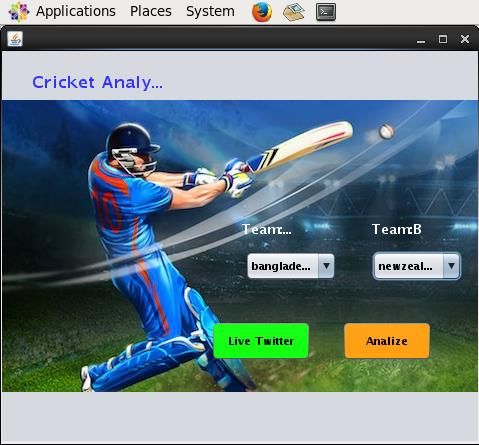
International Research Journal of Engineering and Technology (IRJET)                                 e-ISSN: 2395-0056
        Volume: 04 Issue: 10 | Oct -2017                www.irjet.net                                       p-ISSN: 2395-0072

opinion and thoughts etc. in short restricted number of              In [4] R. Piryani et al. presented a method for sentiment
characters. These messages are called as tweets. The                 analysis, which are expressed from reviews of movies and
Sentiment Analysis is a one of growing research field                blog posts. They considered are of two types data for
which allow us to analyse the people sentiment and feeling           analysis i.e. movie reviews and blog posts from Libya and
present in the text messages and draw the accurate                   Tunisia. Their main aim was to find out the performance of
conclusion. The analysed information further used by                 SentiWordNet approach using two main machine learning
many companies in varieties of way. For example it allows            techniques. They are SVM and NB for sentiment
companies to know sentiments of their customers towards              classification. It was found that using Naive Bayes and SVM
their products, improve current working strategies,                  techniques approaches has better performance as
impose new policies and understand the client                        compared to SentiWordNet approach. Also it was found
expectations etc. This is one of the toughest tasks because          that the performance level was not same for both movies
different people express different views in different ways.          reviews and blog posts using SVM and NB, whereas the
Until now many research work has been done in finding                performance is same in case of SentiWordNet for both
the sentiments from textual data generated from social               varieties of datasets.
media like Facebook, Twitter etc. to know the product
reviews[1], movies reviews, etc. but very few research has           In [5], the authors have discussed a machine learning and
been done on cricket matches and other sports. Now a                 symbolic techniques for analyses of sentiments of any
days the sports and matches been played are discussed                electronic items like PC, mobiles etc. Here they used a
widely on social media especially on twitter. The Cricket            Twitter API to collect the tweets and then pre-processed to
match is a second most popular game after soccer and has             remove URL’s, misspellings and slang words. After that
millions of fans worldwide. They share their views and               features related to emoticons and hash tags are extracted.
express their feelings. So, in this paper we will retrieve the       Finally the extracted features are classified using machine
tweets of cricket match and apply unsupervised algorithm             learning techniques namely, Naïve Bayes, SVM, Maximum
to analyse predict the results of the cricket match.                 Entropy classifier, and Ensemble classifier. According to
                                                                     obtained result it is found that Naïve Bayes classification
The remaining part of this paper is organised as follows. In         technique has gave a good precision over other classifiers.
section 2: Survey on recent work on sentimental analysis
is presented. Section 3 and 4: consists of a short                    In [6], author A.H.A. Rahnama propose a system which
introduction to Hadoop, sentimental analysis and its                 works on streaming data. The pre-processing step of the
lexicons. Section 5 comprises in detail the proposed                 proposed system stores the summarized data in the main
approach for sentiment analysis. Finally section 6 includes          memory. For pre-processing the data distributed system is
the results and discussion.                                          used because to cope up with the streaming data, so that
                                                                     none are left unvisited or unattended. Sentinel system is
2. SENTIMENT ANALYSIS APPROACHES                                     used to support the distributed processing of data. The
                                                                     streaming data which used for preprocessing is generated
There are mainly three types of approaches for sentiment             by using Twitter API. Once data preprocessing is done the
analysis: (1) Machine learning based algorithms such as              features are classified using different classifiers. Such as
Naïve Bayes, S.V. M and KNN. (2) Classifying as unigrams             Vertical Hoeffding Tree as well as Multinomial Naïve
or n-grams and assigning them positive and negative                  Bayes. Finally their results are compared and it was found
polarity (3) Using sentiment lexicons which classifies the           that vertical Hoeffding Tree gave faster and accurate
words present i.e. positive, negative or neutral. Few even           results compared to Multinomial Naïve.
add their degree of sentiment to each word.
                                                                     In [7], author proposed a method to find out the sentiment
In [2] P. D. Turney proposed a PMI-IR algorithm to classify          from the social media. The proposed system uses various
the reviews on movies, banks, travelling areas, vehicles             novel machine learning techniques such as NB, SVM and
and he achieved the accuracy of 74% but among all movie              maximum entropy. The model was designed as a WEKA
reviews were found to be difficult to analyze because of             and SentiView tool which are widely used as a data
annoying words present.                                              visualization tools.

In [3] S. Asur and B. A. Huberman considered movies for              In [8] authors, did a research on predicting the outcome of
their studies to predict box office revenue. They were               cricket match based on tweets collected from the twitter
interested in finding how attentions are created in Twitter          social media. The inputs were based on 2014 IPL match
before the movie release. And predicted the box office               and 2015 world cup match. From them some linguistic
revenues in the first weekend and also for given weekend.            features are extracted to predict three basic things: (1) No.
Finally results are compared with the Hollywood Stock                of fan followers (2) No. of tweets (3) prediction of scores
Exchanges to check for the accuracy.                                 by classifying the tweets as positive, negative and neutral.
                                                                     Here they found that SVM technique gave more accurate
                                                                     results with accuracy 75%.

© 2017, IRJET        |    Impact Factor value: 6.171             |    ISO 9001:2008 Certified Journal            | Page 988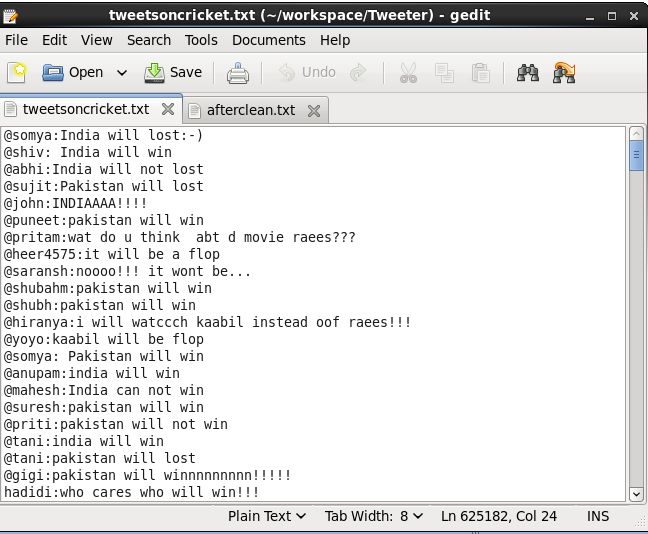
International Research Journal of Engineering and Technology (IRJET)                                e-ISSN: 2395-0056
        Volume: 04 Issue: 10 | Oct -2017              www.irjet.net                                         p-ISSN: 2395-0072

In [9] J. Chungand E. Mustafaraj proposed a system to              4. SENTIMENT ANALYSIS
predict the outcomes of the election by using the tweets
tweeted on election held at Massachusetts in 2010. The             Sentiment Analysis is the field of study used to find the
proposed system uses SentiWordNet lexicons to increase             sentiment, emotions, feelings and expression present in the
the efficiency and obtained results with 80% accuracy.             textual data. It can be studied at three different levels: (1)
 N. Azam et al. [10] presented a method to analyze the             Document level (2) Sentence level and (3) Entity level. In
sentiment of the tweets by tokenizing them using n-gram            document level the whole document is analyzed to
technique. The features are extracted using Latent Dirichlet       determine whether it produces positive or negative
allocation and then the tweets are represented using vector        opinion. In sentence level sentiment analysis each sentence
space model. Also to find the dense regions the Markov             is checked to verify its opinion towards positive, negative
clustering method is applied on the tweets and finally the         and neutral. In case of entity level analysis the holder’s like
author concluded that, they can achieve better results by          or dislike about the target can be explored.
using hybrid model.
                                                                   4.1. SENTIMENT LEXICONS
3. HADOOP
                                                                   A sentiment lexicon refers to a phrase or bag of words that
Since the proposed system works on streaming tweets for            gives us a negative or positive polarity based on the data. In
a cricket match collected from twitter. We need some               sentimental analysis lexicons are essential resource which
distributed system to handle streaming data. In traditional        gives the information of the feelings about each word or
system it is difficult to process such type of data. Because       feature or linguistic unit. Till now many lexicons are
for processing streaming data it requires slower data rate         developed and are used for different level of analysis. They
than processing. But this is not possible in traditional           are described as follow:
approach. So we need a distributed system which can work
on streaming as well as unstructured data.                         1) MPQA subjective lexicon: This is a part of MPQA
                                                                      opinion corpus4. These are accessible under certain
Hadoop is a one of the open source platform widely used               terms called as GNU License. It describes different
for analysis of big data. It solves the problems of big data          entries, which signifies word, word length, polarity,
by providing a flexible infrastructure for large scale                strength and POS. This lexicon provides a wide range
computation and data processing on a network commodity                of information which helps in study of various fields.
of hardware systems. Hadoop works on map-reduce                    2) SentiWordNet: In SentiWordNet lexicon each word
concept through master slave method. The map() function               sentiment scores are added to indicate the polarity for
takes an input key/value pair and produces a list of                  sentiment, which may be positive, negative and
intermediate key/value pairs. Intermediate pairs based on             objective. Here each word may contain the speech
the intermediate keys and passes them to reduce ()                    information other than that its context information to
function for producing the final results.                             enhance the structure of lexicon.
                                                                   3) VADER Sentiment Lexicon6: These lexicons are
                                                                      especially used for sentimental analysis of data
                                                                      collected from social media and micro-blogging sites.
                                                                      Here the polarity and strength are provided to each
                                                                      for analysis purpose.

                                                                   5. THE PROPOSED APPROACH

                                                                   The Cricket match is a second most popular game after
                                                                   soccer and has millions of fans worldwide. All most all fans
                                                                   use Twitter social media to share their views and express
                                                                   their feelings. In a proposed system we implemented an
    Fig -1: Map-Reduce working through Master slave                unsupervised algorithm to analyse and predict the results
                     methodology                                   of the cricket match tweets, which are collected from
                                                                   twitter social media. The figure 2 depicts the proposed
Name node acts as a master node manages the HDFS                   system architecture and detail description of each module.
metadata and assigns task to data nodes which are slaves.          The proposed system comprises following modules to
The job tracker tracks whether the assigned work by                determine the sentiment present in cricket match tweets.
master has been done by slaves or not. Finally the task
tracker runs the map-reduce operation and gives the                (1) Data collection
results.                                                           (2) Pre-processing

© 2017, IRJET       |    Impact Factor value: 6.171            |    ISO 9001:2008 Certified Journal             | Page 989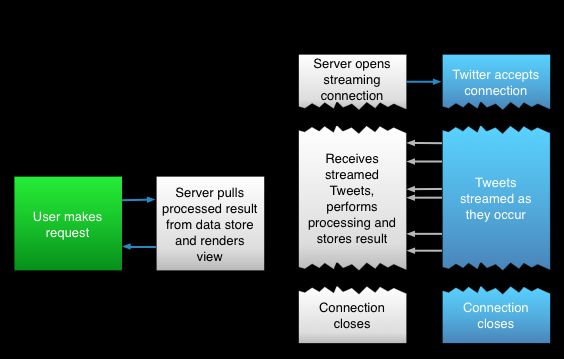
International Research Journal of Engineering and Technology (IRJET)                               e-ISSN: 2395-0056
        Volume: 04 Issue: 10 | Oct -2017                www.irjet.net                                     p-ISSN: 2395-0072

(3) Sentiment Classification                                         A twitter data can be accessed by creating a valid twitter
(4) Sentiment Analysis                                               account and providing authentication information through
                                                                     HTTP request. Once the request is sent to Twitter API, the
                                                                     twitter API formulates a response and sends the tweets in
                                                                     form of streaming fashion to the requesting source. The
                                                                     figure 3 shows the process involved in retrieving the
                                                                     tweets from twitter API.

                                                                     5.2. Pre – Processing

                                                                     Pre-processing is process of removing unwanted data or
                                                                     cleaning the data. The tweets collected from Twitter may
                                                                     contain many words which are not relevant and important
                                                                     for analysis purpose. Such irrelevant information burdens
                                                                     the analysis process. Hence they should be removed to
                                                                     increase the value of information. For example
                                                                     @username, stops words, white spaces, URLs, and
                                                                     emotions symbols.

      Fig -2: System architecture of proposed system                 a) @Username: It indicates the name of the user used in
                                                                        the tweet. This information doesn’t play any role
5.1. Data Collection                                                    during analysis hence it must be removed.
                                                                     b) White spaces: This indicates the presences of one or
In this step the millions of tweets posted by cricket fans are          more than one space in the information. Here
collected using twitter API interface. The twitter API                  preprocessing of data should replace more than one
provides a communication between application and system                 space with only one space.
software. The interface provides two types of API’s a                c) Stop words: This indicates the presence of words like
streaming API’s and REST API’s. The streaming data can be               a, an, the, this etc. which are not useful during
accessed by using HTTP commands like GET, POST and                      analyzing sentiment such a words are removed.
DELETE requests.                                                     d) URL: The user may tag URL’s in their tweet to
                                                                        indicate the detailed information on the topic. Such
                                                                        information not at all needed during analysis process.
                                                                        So it has to remove during preprocessing stage.
                                                                     e) Emoticons: User will use emoticons to express their
                                                                        feelings so that emoticon has to be changed to the
                                                                        words indicating the expression.

                                                                     5.3. Sentiment Classification

                                                                     In this step we classify the cricket tweets as positive,
                                                                     negative or neutral based on the sentiment present in the
                                                                     tweets. The positive indicates likely to win, negative
                                                                     indicates likely to lose the match, and neutral indicates
                                                                     draw. The proposed system performs classification using
                                                                     Naïve Bayes technique in two stages.

                                                                     (1) Firstly, we will find out to which team the tweet are
                                                                         belong to, i.e. we will first find the team name and
                                                                         classify the tweets accordingly.
                                                                     (2) In the second stage the sentiment expressed in the
                                                                         tweet are extracted according to team.

                                                                     In the proposed system we have created our own
                                                                     sentiment lexicons or bag of words i.e. dictionary, which
                                                                     hold all possible words used to express the feelings about
                                                                     the cricket mach. Here we have created two dictionaries to
          Fig -3: Request sending to Twitter API
                                                                     perform better classification. They are positive words and

© 2017, IRJET        |    Impact Factor value: 6.171             |    ISO 9001:2008 Certified Journal         | Page 990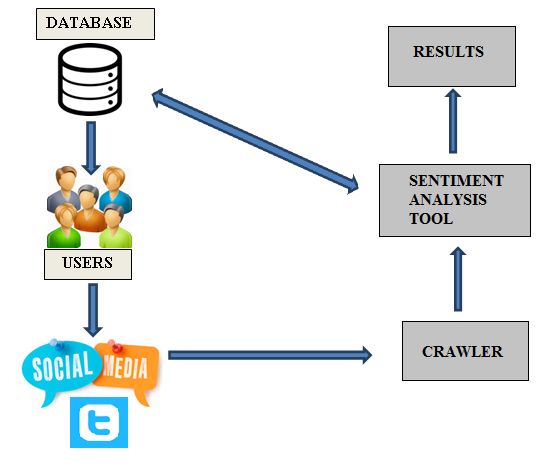
International Research Journal of Engineering and Technology (IRJET)                               e-ISSN: 2395-0056
        Volume: 04 Issue: 10 | Oct -2017              www.irjet.net                                       p-ISSN: 2395-0072

negative words. It also consists of two count values i.e.         Figure 4 indicates the GUI for analyzing the offline tweets.
positive and negative count represented by ‘PC’ and ‘NC’          It will read the tweets priory stored and will be analyzed.
respectively. Each tweet accessed from a Twitter is               When we click the Read Data button it will access the
compared with the words present in the dictionary. If it          offline stored tweets and display it for further analysis as
matches with the word then the respective counters are            shown in figure 5.
incremented. Finally the overall results are calculated for
the teams and result is displayed in the form of graph
depicts the potential chances of winning and losing cricket
match by teams.

6. RESULTS

The proposed model is tested using two types of inputs: (1)
Offline cricket tweet and (2) Real time streaming cricket
tweet. For offline tweets we collected around 6,25,198
tweets related to India and Pakistan cricket team and then
analyzed their likeliness of winning and losing. For real
time streaming tweet we have used the Twitter API to
retrieve streaming tweets online and then it was analyzed.
This system was built to use virtual machine CLOUDERA
software that runs on Hadoop platform that will work in                Fig-6: Results of offline analysis of cricket tweets
distributed form and gave quicker results indicating which
team will win the match. The following screen shot depicts        Since in above chart India has more number of positive
the step-by-step execution of proposed system.                    tweets the result will be given as winning team is INDIA.

           Fig-4: GUI for offline tweet analysis
                                                                      Fig-7: Home page for analysis of real time tweets.

                                                                  Figure 7 indicates the home page for analysis of real time
                                                                  tweets. There are two buttons Live Twitter and Analyzer.
                                                                  Former button is used to post and load live tweets from
                                                                  twitter whereas later button is used for analyzing the
                                                                  tweets to predict the results of the match based on tweets.
                                                                  Drop down lists are used to select the teams whose tweets
                                                                  we have to analyze.

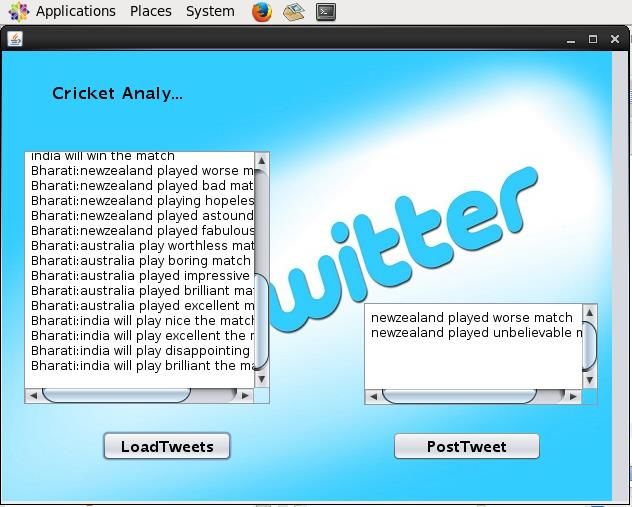
                                                                  Figure 8 indicates the window from where we will load and
                                                                  post the tweets directly to our twitter account. For online
            Fig-5: Input offline cricket tweets.                  tweet analysis we collected real time tweets of Bangladesh

© 2017, IRJET       |    Impact Factor value: 6.171           |    ISO 9001:2008 Certified Journal             | Page 991
International Research Journal of Engineering and Technology (IRJET) e-ISSN: 2395-0056
Volume: 04 Issue: 10 | Oct -2017 www.irjet.net p-ISSN: 2395-0072
and newzeland. After pre-processing and classification the Figure 10 displays the number of positive tweets tweeted
final results are given showing the pie chart for winning on winning team, its accuracy etc. whereas figure 11
team with its accuracy and time taken to analyze. displays the number of negative tweets tweeted on
winning team, its accuracy, etc. and finally the time taken
to by the system to analyze the tweets are displayed as
shown in figure 12.
Fig-8: loading the tweets from twitter.
Once the tweets are loaded we will select the cricket teams Fig -11: Displaying the No. of negative tweets and
which are needed to analyze and then click the analyzer accuracy of winning team
button. The system will than analyze the tweets and
display the results of winning team as show in figure 9.
Fig -12: Window displaying the time taken to analyze the
tweets.
Fig -9: window displaying the winning team name
7. CONCLUSIONS
With increasing technologies and inventions the data is
also increasing tremendously in terms of volume with
rapid velocity and variety. This term is applied to large
volume of data that becomes difficult for traditional
system to process within specified amount of time. In this
paper we have proposed an unsupervised method to
analyze a data collected from Twitter social media to
predict the outcomes of the cricket match prior to
beginning using Naïve Bayes algorithm and sentiment
lexicons. The system is tested both offline and online using
large number of tweets. According to the test result it is
found that the proposed method performs pre-processing,
classification and analysis accurately within a specified
time. The only limitation of a proposed method is it
doesn’t handle the tweets which contain negation
Fig -10: Displaying the No. of positive tweets and accuracy keywords this can be considered as a future improvement.
of winning team
© 2017, IRJET | Impact Factor value: 6.171 | ISO 9001:2008 Certified Journal | Page 992International Research Journal of Engineering and Technology (IRJET) e-ISSN: 2395-0056
Volume: 04 Issue: 10 | Oct -2017 www.irjet.net p-ISSN: 2395-0072
REFERENCES
[1] Erik Boiy, Pieter Hens, Koen Deschacht, Marie-
Francine Moens, “Automatic Sentiment Analysis in On-
line Text,”Proceedings ELPUB2007 Conference on
Electronic Publishing – Vienna, Austria – June 2007,
pp. 349-360
[2] Peter D. Turney, “Thumbs Up or Thumbs Down?
Semantic Orientation Applied to Unsupervised
Classification of Reviews,” Proceedings of the 40th
Annual Meeting of the Association for Computational
Linguistics (ACL), Philadelphia, July 2002, pp. 417-
424.
[3] Sitaram Asur and Bernardo A. Huberman,”Predicting
the Future With Social Media,”arXiv:1003.5699v1
[cs.CY] 29 Mar 2010
[4] V.K. Singh, R. Piryani, A. Uddin P. Waila,“Sentiment
Analysis of Movie Reviews and Blog Posts,”2013 3rd
IEEE International Advance Computing Conference
(IACC), pp. 893-898.
[5] Neethu M S, Rajasree R, “Sentiment Analysis in Twitter
using MachineLearning Techniques, “4th ICCCNT
2013, July 4 - 6, 2013, Tiruchengode, India
[6] Amir Hossein Akhavan Rahnama, “ Distributed Real-
Time Sentiment Analysis for Big Data Social Streams,
“978-1-4799-6773-5/14/$31.00 ©2014 IEEE, pp.
789-794.
[7] Varsha Sahayak, Vijaya Shete, Apashabi
Pathan,“Sentiment Analysis on Twitter Data,”
International Journal of Innovative Research in
Advanced Engineering (IJIRAE), Issue 1, Volume 2,
January 2015, pp. 178-183.
[8] Raza Ul Mustafa, M. Saqib Nawaz, M. Ikram Ullah Lali,
Tehseen Zia, Waqar Mehmood, “Predicting The Cricket
Match Outcome Using Crowd Opinions On
SocialNetworks: A Comparative Study Of Machine
Learning Methods,”Malaysian Journal of Computer
Science. Vol. 30(1), 2017, pp. 63-76.
[9] Jessica Chung and Eni Mustafaraj, “Can Collective
Sentiment Expressed on Twitter Predict Political
Elections?,”Association for the Advancement of
ArtificialIntelligence 2011.
[10] Nausheen Azam, Jahiruddin, Muhammad Abulaish,
SMIEEE, and Nur Al-Hasan Haldar, “Twitter Data
Mining for Events Classification and Analysis,”2015
Second International Conference on Soft Computing
and Machine Intelligence, pp. 79-83.
© 2017, IRJET | Impact Factor value: 6.171 | ISO 9001:2008 Certified Journal | Page 993You can also read


