Transport Sector Progress Report and Work Plan 2019-2021
←
→
Page content transcription
If your browser does not render page correctly, please read the page content below
Reference Document
For Session 1 of the 18th Transport Sector Coordinating Committee Meeting
April 2019

Transport Sector Progress Report
and Work Plan
2019–2021

18th Transport Sector Coordinating Committee Meeting
Central Asia Regional Economic Cooperation
25–26 April 2019
Tashkent, Uzbekistan
2

                                        I.       KEY DEVELOPMENTS

A.      Introduction

1.      The 11 Central Asia Regional Economic Cooperation (CAREC) countries continue to
implement the CAREC Transport and Trade Facilitation Strategy 2020 (TTFS 2020), which aims
to establish competitive corridors, facilitate the movement of goods and people though these
corridors, and provide sustainable, safe, and user-friendly transport networks.

2.      Priority infrastructure work focuses on the construction and upgrade of roads and rail lines
along the six CAREC multimodal corridors connecting the mainly landlocked CAREC countries to
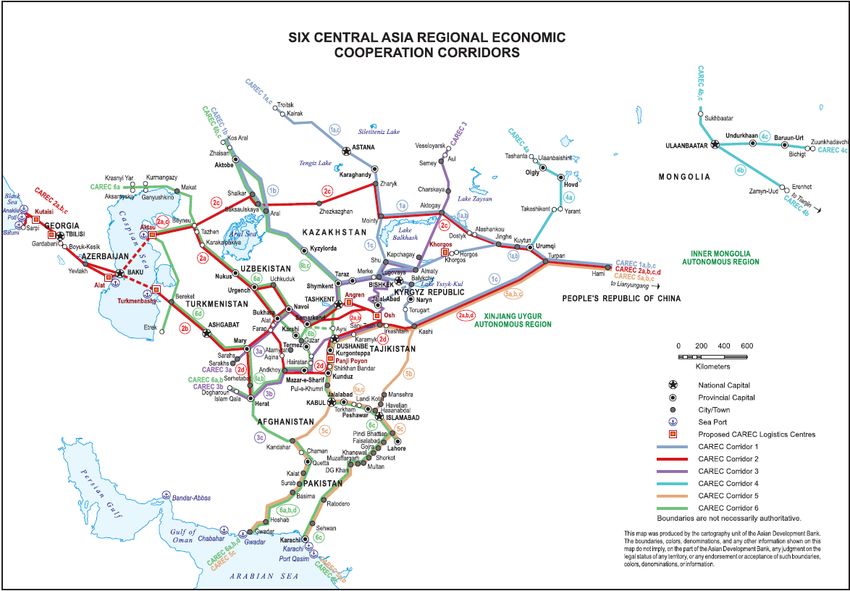
wider regional and global networks. Appendix 1 shows the CAREC Multimodal Corridor Map,
which was revised in 2017 to include Georgia, thus providing the corridor network with access to
the Black Sea ports and the land border with Turkey. The implementation of physical investments
(hard infrastructure) is supported by a set of complementary soft side initiatives under five pillars,
namely (i) road safety, (ii) railways, (iii) road asset management, (iv) transport facilitation, and (v)
aviation.

B.      Sector Implementation

3.      This report covers progress made by the CAREC member countries in 2018 against the
TTFS 2020 and subsequently the CAREC Transport Sector Work Plan 2018–2020. I t also covers
progress achieved in the implementation of the two major subsector strategies: the CAREC
railway strategy (Unlocking the Potential of Railways: A Railway Strategy for CAREC, 2017-2030)
and the CAREC road safety strategy (Safely Connected: A Regional Road Safety Strategy for
CAREC Countries, 2017-2030).

4.       The CAREC TTFS 2020 Results-Based Framework identifies three targets to be achieved
by 2020 for physical infrastructure: (i) completion of 7,800 km of road construction or
rehabilitation1; (ii) 1,800 km of newly constructed railway track; and (iii) 2,000 km of renovated,
electrified, or signalized railway track. In addition, the TTFS 2020 Results-Based Framework also
targets five multimodal logistics centers to be operational and at least five BCPs in the region to
be improved by 2020. Figures 1-3 show the cumulative progress from 2008 to 2018 towards the
goals for road and railways while Table 1 shows further details of the transport sector performance
from 2008 through 2018.

5.      The TTFS 2020 and Work Plan continues to be implemented satisfactorily. The progress
of road and railway projects in CAREC countries has already surpassed the 2020 targets. For
roads, the [498] km of expressways or national highways built, upgraded or improved in 2018
brought the cumulative road infrastructure to 10,462 km, which already exceeds the 7,800 km
corridor length targeted for construction or improvement by 2020. While no new railway lines were
completed in 2018, 600 km of railway line along the East-West Corridor (Baku-Boyuk Kasik route)
in Azerbaijan were successfully rehabilitated. The cumulative progress in railway (1,995 km new
and 4,033 km of improved railway) has also surpassed the targets set for 2020.

1Should the TTFS 2020 road target be achieved, this will be indicative of having achieved improvement of more than
70% of the enlarged CAREC TTFS 2020 road network, assuming that roads previous assessed as in, or improved to,
good condition have been properly maintained.
3
Figures 1–3. Progress of Multimodal Corridor Network Development (2008–2018)
Fig 1. Roads
12000
10000
8000
KM
6000
4000
2000
0
2008
2009
2010
2011
2012
2013
2014
2015
2016
2017
2018
2019
2020
Roads built/improved (cumulative) 2020 Target
Fig 2. New Railways
2500
2000
1500
KM
1000
500
0
2008
2009
2010
2011
2012
2013
2014
2015
2016
2017
2018
2019
2020
New railways built (cumulative) 2020 Target
Fig 3. Improved Railways
4500
4000
3500
3000
2500
KM
2000
1500
1000
500
0
2008
2009
2010
2011
2012
2013
2014
2015
2016
2017
2018
2019
2020
Railways improved (cumulative) 2020 Target2
Table 1: Annual Transport Sector Outputs (2008–2018)
2008
Baseline 2018 2018
Indicator Value 2009 2010 2011 2012 2013 2014 2015 2016 2017 Actual Target Progress
Annual expressways 181 254 1,154 953 1,116 1,312 1,450 809 1,363 1,372 [498] 475
or national highways
built or improved (km)
Cumulative 181 435 1,589 2,542 3,658 4,970 6,420 7,229 8,592 9,964 [10,462] 6,387
expressways or
national highways
built or improved (km)
Cumulative proportion 64 66 71 75 79 85 74 77 82 74** [76]** 70
of total CAREC road
corridor in good
condition (%)*
Annual new railways 0 286 179 293 75 0 1,036 0 126 0 [0] 58
built (km)
Cumulative 0 286 465 758 833 833 1,869 1,869 1,995 1,995 [1,995] 1,635
new railways built
(km)
Annual improved 251 468 600 1,014 60 0 317 140 509 325 [600] 30
railways (km)
Cumulative improved 251 719 1,319 2,333 2,393 2,393 2,710 2,850 3,108 3,433 [4,033] 1,908
railways (km)
CAREC = Central Asia Regional Cooperation; km = kilometer.
*The TTFS 2020 aims to have at least 70% of the expanded road corridor (29,350 km) built or improved by 2020. It
should be noted that this may overstate overall road condition due to ongoing deterioration on some early road sections
rated in good condition as of 31 December 2007.
**Based on updated length of road corridors with the expansion to Georgia.2
6. Progress also continues in other transport subsectors. Under ports and shipping, two
major projects have been completed to date. The expansion of Aktau Port was completed in 2017
while the construction of the new international seaport in Turkmenbashi was completed in 2018.
The logistics centers (LC) which is integrated with the international seaport in Turkmenbashi was
also completed in 2018. Meanwhile, the construction of LC Zamyn-Uud (Mongolia) is expected to
be completed by 2019. Two border crossing points (BCPs) in Tajikistan have been improved to
date: BCP Dusti in 2015 and Guliston in 2016. Four more BCPs are being implemented under
the Regional Improvement of Border Services (RIBS) project by the Asian Development Bank.
The construction of BCP Karamyk in the Kyrgyz Republic is currently ongoing. The BCPs
Torkham, Chaman, and Wagha in Pakistan are [under procurement, land acquisition and facility
design]. Appendix 2 shows the progress and status of the 108 transport investment priority
projects under TTFS 2020.
(i) Multimodal Corridor Network Implementation Progress
7. Afghanistan. The transportation sector of Afghanistan continues to implement road and
rail projects under TTFS 2020 projects as part of its strategy to rehabilitate the country’s
infrastructure. The construction of the 31 km Pul-e-Khumri-Doshi road, financed by the Islamic
Development Bank (IDB), [has been completed]. The construction of the 52 km section of the
Ring Road between Leman and Armalik, financed by the Government of Saudi Arabia is ongoing.
The Asian Development Bank (ADB) is financing the 151 km Qaisar-Dari Bum section of the
remaining missing link of the Ring Road between Qaisar and Leman. Also in progress is Kabul-
Jalalabad road maintenance project, financed by ADB. A feasibility study and detail design for the
construction of an alternative tunnel to the existing Salang tunnel is in progress, financed by ADB
and the Afghanistan Infrastructure Trust Fund. Meanwhile, the World Bank (WB) is supporting the
construction of the Baghlan-Bamiyan road as well as the rehabilitation of the existing Salang road
and tunnel. For the rail sector, the construction of the 224 km Khaf–Herat Railway, connecting
Iran and Afghanistan, is ongoing, supported by financing from the Iranian Government. The
construction of the Torghundi railway station in Herat was completed in 2017.
8. Azerbaijan. Azerbaijan continues to implement railway, road, and maritime projects along
CAREC Corridor 2. The construction of Baku International Sea Trade Port at Alyat (Phase 1) was
completed in 2018, financed by the Government of Azerbaijan. Under railway and trade
facilitation, the rehabilitation of the East-West line is ongoing. The power supply, communication
and signaling upgrades are ongoing, financed by WB and the government of Azerbaijan, while
599.63 km of carriageway had been reconstructed as of 2018, financed by the Syndicate of Czech
Banks and the Government of Azerbaijan. The construction of two additional lanes in the 130 km
Gyandja-Gazakh-Georgian border road is ongoing, financed by the European Bank for
Reconstruction and Development (EBRD). The construction of a Logistics Center at the Baku
International Sea Trade Port is planned as part of the government’s program to establish a special
economic zone at the port. A CAREC national road safety engineering workshop was held in Baku
in April 2019.
9. People’s Republic of China (PRC). During the 15th TSCC meeting in Bangkok in 2016,
PRC underscored the common grounds between the Belt and Road Initiative and TTFS 2020,
affirming their willingness to work with other CAREC member countries to fully implement the
TTFS 2020 projects. The People’s Republic of China continues to support the implementation
of TTFS 2020 projects through loan financing of investment projects by the Export-Import Bank
of China and the Government of PRC. As part of promoting transport and trade facilitation, the
PRC ratified the United Nation’s Transports Internationaux Routiers (TIR) Convention in 2016.3 The PRC started its TIR operations in May 2018. Under aviation, the Urumqi airport comprehensive passenger transport hub was completed in 2018. 10. Georgia. Georgia’s membership to CAREC in 2016 paved the way for the expansion of the CAREC corridor network to the Black Sea ports and the land border with Turkey. The 11 CAREC member countries endorsed the revised CAREC Corridors in 2017. In line with the Government of Georgia’s plan to develop its logistics sector, the planned Tbilisi and Kutaisi Logistics Centers are included are proposed CAREC Logistics Centers. The expansion of Kutaisi International Airport and soft side initiatives including the implementation of European regulations in the national legislation to promote safer and secure air transport system in Georgia are proposed to be included as CAREC investment projects under the Aviation pillar. Georgia supports the CAREC Road Safety Strategy, and is implementing its national road safety strategy. One of the CAREC national road safety engineering technical workshops was held in Tbilisi in April 2019. 11. Kazakhstan. Kazakhstan continues to implement TTFS 2020 projects along the CAREC Corridors 1, 2, 3, and 6. The Aktau – Beyneu Road Rehabilitation project, finance by ADB and the Government of Kazakhstan, was completed in 2018. The Astana-Karaganda road rehabilitation project is expected to be completed in 2019. All other road projects under TTFS 2020 in Kazakhstan had been completed, including Kazakhstan portion of the Western Europe - Western China Transit Corridor, the rehabilitation of Almaty-Kapshagai road, Almaty-Khorgos road, and the Shymkent-Tashkent road. The expansion of Aktau port (Phase 3) financed by the Kazakhstan Development Bank, Aktau Sea Port and private investments, was also completed in 2018. The construction of LC Khorgos is ongoing. 12. Kyrgyz Republic. Progress of transport projects continues in Kyrgyz Republic along CAREC corridors 1, 2 and 3. The CAREC Corridor 3 Improvement Project (Bishkek-Osh road rehabilitation) is ongoing, financed by a loan and grant from ADB, the Eurasian Development Bank, and the Government of Kyrgyz Republic’s own budget. The rehabilitation of the North-South Road (Balykchy-Kochkor-Aral-Kazarman-Jalal-Abad), which links transport corridors CAREC Corridor 3 (Bishkek-Osh) and CAREC Corridor 1 (Bishkek-Naryn-Torugart) is ongoing. The finalization of the feasibility study for the electrification of Lugovaya-Bishkek (Alamedin) railway is underway. Under aviation, the expansion of air traffic control (ATC) system is being implemented from 2019-2023. The Kyrgyz Republic is piloting a performance-based road maintenance contract for the Kara-Balta – Too-Ashuu Tunnel section of the Bishkek-Osh Road. 13. Mongolia. Mongolia continues to implement transport projects along CAREC Corridor 4. Three major projects under TTFS 2020 were completed in 2018, including the new international airport in Ulaanbaatar, the access road from Ulaanbaatar to the new international airport, and the construction of the Western Regional Road Development to the PRC border. The Western Regional Road Development Phase 2, connecting Ulaanbaishint (border point to Russia) and Yarant (border point to PRC) is expected to be completed in 2019, while the Undurkhaan-Baruun- Urt-Bichigt-Huludao/Chifeng-Jinzhou road is also in progress and expected to be completed by 2020. Under logistics, construction is ongoing for the Zamyn Uud Logistics Center, financed by a loan and grant from ADB. The development of a national road safety policy and action plan is also in progress, supported by a technical assistance from ADB. 14. Pakistan. Progress continues towards the completion of transport projects along Corridors 5 and 6 in Pakistan. The Hasanabdal-Havelian section of the E-35 expressway, which provides a link to Northern Pakistan and PRC via Karakoram Highway was completed in 2018, financed by ADB, the Department for International Development (DFID) and the Government of
4

Pakistan. The upgrading of 80 km section of N-70 form Muzaffargarh to DG Khan was also
completed in 2018. The 62 km Gojra-Shorkot (Section 2) of M-4 Motorway was also completed,
financed by a loan from ADB and a grant from DFID. Section 3 of M-4 Motorway (64 km from
Shorkot to Khanewal) is in progress, financed by ADB, the Asian Infrastructure Investment Bank
(AIIB), DFID, and the Government of Pakistan. The improvement of BCP infrastructure at
Torkham, Wagha, and Chaman is under procurement, land acquisition, and facility design,
supported by a loan from ADB under the CAREC Regional Improving Border Services (RIBS)
Project. A railway rehabilitation of the main trunk line (ML-1) between Karachi and Peshawar is
planned under China-Pakistan Economic Corridor (CPEC) program.

15.     Tajikistan. Tajikistan continues to implement road, railway, and logistics projects along
CAREC Corridors 3, 5, and 6. The rehabilitation of the Vose-Khovaling and Sairon-Karamyk roads
(174 km) under the CAREC Corridors 3 and 5 Enhancement Project, financed by ADB and the
Government of Tajikistan, has been completed. Two performance-based contracts are being
implemented to maintain these two road sections. The CAREC Corridor 3 (Dushanbe-Uzbekistan
Border) is ongoing and expected to be completed by 2020, supported by loans from ADB, EBRD,
AIIB and the Government of Tajikistan’s own budget. The alignment design and feasibility study
for the construction of the Kholkhozabad-Dusti-Panji-Poyon-Afghan border railway line (50 km) is
in progress. Under logistics, the feasibility study for the construction of Logistics Center Nizhniy
Pyandzh has been completed.

16.    Turkmenistan. Turkmenistan continues to implement multimodal and logistics projects
along CAREC Corridor 2, supported by the Government of Turkmenistan’s own budget. The
construction of the International Seaport in Turkmenbashi and the integrated logistics center was
completed in 2018. The rehabilitation of the Ashgabat-Turkmenbashi Highway in ongoing and is
expected to be completed by 2020.

17.      Uzbekistan. Uzbekistan continues to implement road, rail, and trade facilitation projects
along CAREC Corridors 2, 3, and 6. The reconstruction and modernization of 100 km along M39
was completed in 2018, financed by IDB and the Government of Uzbekistan Under railways, the
electrification of Karshi-Termez railway section (325 km) was completed in 2017, supported by a
loan from JICA and Uzbekistan Temir Yollari’s (Uzbekistan Railways) own funds. This follows the
successful electrification of the 140 km Marakand-Karshi line (CAREC Corridor 6) in 2016. The
electrification of the Marokand-Navoi-Bukhara railway section (452 km) is planned to be
completed by 2022, to be financed by AIIB and the Government of Uzbekistan. Phase 3 of the
CAREC Corridor 2 Road Investment Program, which aims to reconstruct 220 km of road in
Tashkent, Namangan and Bukhara oblast is in progress, financed by ADB and the Government
of Uzbekistan. Under aviation, the construction of a hangar for Boeing-787 is ongoing and
expected to be completed by 2020, financed by the Uzbekistan Airways’ own funds and a loan
from the Uzbekistan Reconstruction and Development Fund.

                      (iii)   Operational and Institutional Strengthening

18.       The transport sector implements the TTFS 2020 through initiatives in five priority areas,
namely (i) road safety, (ii) railways, (iii) road asset management, (iv) cross-border transport
facilitation, and (v) aviation. Progress and accomplishments under the five pillars are summarized
below.
5 Road Safety 19. CAREC countries are currently implementing Safely Connected: A Regional Road Safety Strategy for CAREC Countries (2017–2030), a regional road safety strategy (RSS) endorsed by the 15th Ministerial Conference in November 2016. Following the framework provided by the United Nations Global Plan for the Decade of Action for Road Safety 2011-2020, the CAREC RSS rests on the five pillars that underpin road safety planning: (i) road safety management, (ii) safer roads, (iii) safer vehicles, (iv) safer road users, and (v) post-crash care. Initial implementation efforts focused on pillar 2 (safer roads) through the conduct of two regional road safety engineering workshops in Dushanbe (August 2018) and Istanbul (April 2018). 20. CAREC countries continue to operationalize the RSS. Ongoing efforts focus on Pillar 2 (Safer Roads). The three CAREC Road Safety Engineering Manuals (Manual 1: Road Safety Audit; Manual 2: Safer Road Works; Manual 3: Roadside Hazard Management) were published in 2018 and are now available in four languages (English, Russian, Mongolian, and Mandarin). A series of national road safety engineering workshops have been conducted (in Kyrgyz Republic, Tajikistan, Azerbaijan, Georgia, and Uzbekistan) to assist road agencies in CAREC countries in providing safer roads. The 4-day workshops featuring practical training on blackspot investigations and road safety audits were well-received by the participating road transport practitioners and stakeholders. 21. Appendix 3 provides a summary of road safety status among the CAREC member countries as of 2018. Seven out of the 11 member countries (Azerbaijan, the People’s Republic of China, Georgia, Mongolia, Pakistan, Turkmenistan, and Uzbekistan) have a government- approved national road safety strategy. Kyrgyz Republic is currently finalizing their national road safety strategy. Having a system for coordinating, managing and funding road safety at the national level remains a challenge for most of the countries. Road Asset Management 22. Road Asset Management was identified as a key priority to the TTFS 2020 in recognition of the continuing challenge to meet adequate levels of financial and technical inputs to maintain existing and new road assets along CAREC corridors. Three knowledge products (Compendium of Best Practices in Road Asset Management; Guide to Performance Based Road Maintenance Contracts, and Decision Makers’ Guide to Road Tolling in CAREC) have been published in two languages (English and Russian) and are now being disseminated to CAREC countries. 23. As of 2018, RAM components have been included in road projects in CAREC countries including Afghanistan, Georgia, and Tajikistan. Performance-Based Maintenance contracts are being implemented in several road projects in Afghanistan, People’s Republic of China, the Kyrgyz Republic and Tajikistan. Railways 24. The 11 CAREC member countries are currently implementing Unlocking the Potential of Railways: A Railway Strategy for CAREC, 2017–2030, which was developed to serve as a guiding document for the sound, long-term development of CAREC railways. At the 17th TSCC meeting
6
in Istanbul, Turkey in April 2018, CAREC member countries sought further assistance to
accelerate the implementation of the railway strategy. Based on this request, ADB has now
mobilized a new technical assistance (TA) project with the financial support of the People's
Republic of China Poverty Reduction and Regional Cooperation Fund (PRCF), and the United
Kingdom Fund for Asia Regional Trade and Connectivity (ARTCF). The TA has a budget of $2
million and is being implemented from 2019-2021.
25. The CAREC Railway Working Group (RWG) convened in Tashkent, Uzbekistan on 22-25
April to agree on practical measures to implement the CAREC Railway Strategy. The RWG
reviewed the proposed approach to the new TA project and agreed on how it may be optimized
for the effective implementation of the Strategy in the following key areas:
Sector assessments, to identify the key strengths and opportunities for further improvement
of the railway subsector in each CAREC member country;
Development of a subregional rail traffic model to allow for a data-driven approach to
railway corridor development;
Project preparation, to be guided by sound principles and to be supported by the TA;
Capacity development, knowledge products and events, aligned with CAREC member
country needs.
Cross-Border Transport Facilitation
26. The transport facilitation regime in the CAREC region is regulated by multiple transport
facilitation agreements, which allow movement of vehicles and cargo across borders. Bilateral
and plurilateral transport agreements primarily focus on traffic rights regulation, while international
agreements and conventions establish general harmonized procedures for movement of vehicles,
cargo and crew across borders.
27. With the recent accession of Pakistan and PRC to the UN Transports Internationaux
Routiers (TIR) Convention, the entire CAREC region is now covered by the TIR customs transit
guarantee system. The newest signatories, Pakistan and the People’s Republic of China have
both launched the operations of TIR transport in 2018. CAREC countries continue to implement
regional improvement of border services projects in Kyrgyz Republic, Tajikistan, Pakistan, and
Mongolia.
Aviation
28. The strategic location of CAREC countries means that the region has the potential to serve
as a hub for aviation, including for both passengers and freight. The land-locked nature of many
CAREC countries makes air transport an essential mode. During the 15th CAREC Ministerial
Conference, held in October 2016, Prime Minister Nawaz Sharif of Pakistan encouraged CAREC
countries to work toward more regional integration in the aviation sector. In support of this
initiative, a consultation workshop was held in Singapore in April 2017.
29. The 16th TSCC in Tbilisi, Georgia (May 2017) endorsed the inclusion of aviation as a fifth
pillar under the CAREC transport sector. Furthermore, the 16th TSCC endorsed the development
of a Scoping Study on CAREC aviation to understand the current state of aviation in the CAREC
region and identify areas in which CAREC can support regional connectivity and economic
development through aviation. The Aviation Scoping Study was published in 2018 and is now
being disseminated among the CAREC countries. The study is structured around three principal7
components of aviation development: policy and regulation, infrastructure and equipment, and
operations. A phased approach to opening the CAREC aviation market is a principal
recommendation of the study.
30. Upon the request of the Government of Mongolia, a project is currently being developed
to help Mongolia and other CAREC countries understand how the air transport sector can be
liberalized to the benefit of tourism and the overall economy. The study will look at the numerous
issues constraining aviation in Mongolia and within CAREC.
II. KEY ISSUES FOR GUIDANCE BY THE TSCC
31. Approval to submit the draft Transport Strategy 2030 for endorsement by the
CAREC Senior Officials and Ministers. During the 17th TSCC meeting held in Istanbul, Turkey
on 18-20 April 2018, the CAREC member countries confirmed the need to prepare a new CAREC
Transport Strategy 2030 to build on the progress achieved through TTFS 2020, deepen the work
on all the transport subsectors, and align activities with the infrastructure agenda of the CAREC
Strategy 2030. The draft Strategy has been prepared and circulated for comments to the CAREC
member countries. The TSCC is therefore requested to approve the submission of the draft
CAREC Transport Strategy 2030 for consideration of the CAREC Senior Officials and Ministers.
32. Guidance to proceed with the preparation of the new technical assistance to
support transport sector activities. ADB is currently preparing a $1 million technical assistance
(TA: Knowledge Sharing and Services in Transport and Transport Facilitation, Phase 2) to support
activities of the Transport Sector Coordinating Committee including the implementation of the
CAREC Transport Strategy 2030. The TSCC’s approval is therefore requested to proceed with
the finalization and approval of the TA by June 2019.16 APPENDIX 1: CAREC CORRIDOR MAP
APPENDIX 2: LIST OF INVESTMENT PROJECTS BY COUNTRY
                                                                                                       Cost        Implementation      Status
No.   Country     IP No.                               Project Title
                                                                                                    ($ million)         Period
1      AFG      IP 1       Qaisar–Bala Murghab Road                                                          407      2012–2023        Ongoing
2      AFG      IP 3       Laman–Armalick Road                                                                39        2012–          Ongoing
3      AFG      IP 4       Pul-e-Khumri–Doshi Road                                                            21     [2013–2018]     [Completed]
4      AFG      IP 8       Construction of Kabul–Jalalabad Road                                              172      2011–2019        Ongoing
5      AFG      IP 9       Rozanak/Ghorian–Herat Railway Line Construction                                   150      2015–2020     F/S completed
                           (Iran–Afghanistan)
6      AFG      IP 11.1    Construction of Shirkhan Bandar–Kunduz–Kholam–Naibabad–                        2,000      2015–2020        F/S partly
                           Andkhoy–Herat Railway                                                                                      completed
7      AFG      IP 12      Construction of Aqina–Andkhoy Railway                                             75      2016–2020      F/S completed
                           (Turkmenistan–Afghanistan)
8      AFG      IP 101     Construction Turkmenistan Border–Herat Railway                                  TBD       2015–2020        Pre-F/S
                                                                                                                                     completed
 9     AFG      IP 102     Salang Road Tunnel                                                             1,000      2014–2020        Ongoing
10     AFG      IP 103     Rehabilitation of Mazar-e-Sharif–Kunduz Road                                      99        2011–          Ongoing
                                                                                         Subtotal         3,963
11     AZE      IP 1       East–West Highway (Yevlakh-Ganja: additional two lanes; Ganja Ring               237      2007–2014       Completed
                           Road: four lanes)
12     AZE      IP 2       Railway Trade and Transport Facilitation: Reconstruction of Azerbaijan         1,600      2010–2020        Ongoing
                           Railways
13     AZE      IP 3       Acquisition of High Capacity Ferries and Ro/Ros by Caspian Sea                    69      2010–2014       Completed
                           Shipping
14     AZE      IP 4       Construction of Baku International Sea Trade Port Complex (Alyat)                440      2011–2018       Completed
                           Phase 1                                                                                    (Phase 1)

15     AZE      IP 5       Hajigabul–Yevlakh and Ganja–Qazakh Roads                                       1,212      2011–2021        Ongoing
                           (Hajigabul-Kurdamir: additional two lanes; Kurdamir-Ujar-Yevlakh:
                           additional two lanes; Ganja-Gazak-Georgian Border: additional two
                           lanes)
16     AZE      IP 101     LC Baku Port at Alyat                                                           TBD          TBD           Planned
                                                                                         Subtotal         3,558

                                                                                                                                                 Appendix 2
17     KAZ      IP 1       Astana–Karaganda Road Rehabilitation                                             415      2013–2019        Ongoing
18     KAZ      IP 2       Almaty–Kapchagay (Kapshagai) Road Rehabilitation                                 208      2013–2017       Completed
       KAZ      IP 3       Aktau–Beyneu Road Rehabilitation (MFF CAREC Corridor 2:                          718      2010–2017       Completed
19
                           Mangystau Oblast Section)

                                                                                                                                                 13
10
Cost Implementation Status
No. Country IP No. Project Title
($ million) Period
KAZ IP 4 Rehabilitation of Western Europe–Western PRC Transit Corridor 4,670 2009–2017 Completed
20
(Aktubinskaya Oblast, Kazakhstan, to Xinjiang, PRC)
21 KAZ IP 5 Electrification of Almaty–Aktogay Railway Section 740 TBD Planned
22 KAZ IP 6 Electrification of Dostyk–Aktogay Railway Section 510 TBD Planned
23 KAZ IP 7 Electrification of Aktogay–Mointy Railway Section 740 TBD Planned
24 KAZ IP 10 Expansion of Aktau Port (Phase 1&2) 82 2006-2015 Completed
Expansion of Aktau Port (Phase 3) – New Project 38 2015-2018 Completed
25 KAZ IP 13 Construction of New Railway Line Zhezkazghan–Saksaulskaya 3,032 2012–2016 Completed
26 KAZ IP 17 Shymkent–Tashkent Road 267 2012–2017 Completed
27 KAZ IP 101 Almaty–Khorgos Road 1,068 2013–2017 Completed
28 KAZ IP 102 BCP Improvement for Road Vehicles at Dostyk 8 2014– Ongoing
29 KAZ IP 103 BCP Improvement for Trains at Dostyk 300 TBD Planned
30 KAZ IP 104 BCP Improvement for Road Vehicles at Khorgos 8 2014- Ongoing
31 KAZ IP 105 BCP Improvement for Road Vehicles at Tazhen 8 2014– Ongoing
32 KAZ IP 106 BCP Improvement for Road Vehicles at Konysbaeva 3 2014– Ongoing
33 KAZ IP 107 LC Aktau Port 31 TBD Planned
34 KAZ IP 108 LC Khorgos 85 2014– Ongoing
Subtotal 12,931
35 KGZ IP 1 Bishkek–Torugart Road Rehabilitation 453 2010–2017 Completed
36 KGZ IP 4 Electrification of Lugovaya–Bishkek (Alamedin) Railway TBD 2019-2025 Ongoing
37 KGZ IP 5 Rehabilitation of Balykchy–Chaldovar–Lugovaya Railroad TBD 2019-2025 Ongoing
38 KGZ IP 6 Equipment Purchase for Wagon Repair/Maintenance Facility for Rail TBD 2019-2025 Ongoing
39 KGZ IP 7 Reconstruction of Osh International Airport 105 TBD Planned
40 KGZ IP 8 Kyrgyz ATC System Capacity Enhancement 14 2019-2023 Ongoing
41 KGZ IP 9 Rehabilitation of Bishkek–Osh Road 192 2014–2019 Ongoing
42 KGZ IP 11 Construction of the Northern Bypass Road (Bishkek–Kara-Balta) 350 TBD Planned
43 KGZ IP 102 North–South Road: Balykchy–Kochkor–Aral–Kazarman–Jalal-Abad 850 2014–2020 Ongoing
44 KGZ IP 104 BCP Improvement for Road Vehicles at Karamyk 8 2016–2018 Ongoing
45 KGZ IP 105 LC Osh 15 TBD Planned
Subtotal 1,987
46 MON IP 1 Western Regional Road Development (PRC Border at Yarant–Khovd– 145 1995–2018 Completed
Ulgii–Ulaanbaishint)
47 MON IP 2 Regional Road Development (Construction of Altanbulag-Ulaanbaatar- 126 1995–2014 Completed
Zamiin-Uud)
48 MON IP 5 Construction of New International Airport in Ulaanbaatar 591 2008–2018 CompletedCost Implementation Status
No. Country IP No. Project Title
($ million) Period
Cost Implementation
No. Country IP No. Project Title
($ million) Period
49 MON IP 10 Access Road to the New International Airport in Ulaanbaatar 140 2015–2018 Completed
50 MON IP 11 Western Regional Road Development Phase 2 MFF—Bayan Ulgii and 120 2012-2019 Ongoing
Khovd Aimags (provinces)
51 MON IP 12 Railway Rolling Stock Maintenance Depot 59 2020–2022 Planned
52 MON IP 13 Railway Centralized Traffic Control Center 29 2020–2021 Planned
53 MON IP 14 Ulaanbaatar City Railway Passenger Station 36 2020-2021 Planned
54 MON IP 101 Undurkhaan (AH32)–Baruun-Urt–Bichigt–Huludao/ Chifeng–Jinzhou 268 2014–2024 Ongoing
Road
Subtotal 1,514
55 PAK IP 101 Realignment of Karakoram Highway at Hunza due to Attabad Lake 281 2012–2015 Completed
Overflow, N-35
56 PAK IP 103 Karachi–Hub-Dureji–Sehwan–M-7 (250 km), New Alignment, 6-Lane 1,050 2020-2025 Planned
Motorway
57 PAK IP 104 Sehwan–Ratodero, N-55 (Expressway, 199 km) 219 2010-2015 Completed
58 PAK IP 105 Ratodero–Dera Ghazi (DG) Khan, N-55 (Expressway, 200 km) 600 2019-2023 Ongoing
59 PAK IP 110 Peshawar–Torkham, N-5 150 2014–2016 Completed
60 PAK IP 111 Gwadar–Hoshab (M8) 550 2014-2016 Completed
61 PAK IP 115 BCP Expansion and Upgrading at Torkham, Wagah and Chaman 250 2015-2020 Ongoing
62 PAK IP 116.1 M-4 (Section 2 Gojra–Shorkot (4-Lane Motorway) 317 2015-2018 Completed
63 PAK IP 116.2 M-4 (Section 3–Shorkot–Khanewal (4-Lane Motorway, including bridges 273 2016–2018 Ongoing
over Ravi and Sidhnai Rivers)
64 PAK IP 118 M-4 (Section 1 Faisalabad–Gojra 4-Lane Motorway) 170 2013–2015 Completed
65 PAK IP 119 Railway Rehabilitation Lahore–Peshawar 665 TBD TBD
66 PAK IP 120.1 Hoshab–Surab (N85 and N25) 450 2014–2017 Completed
67 PAK IP 120.2 Surab–Kalat (N85 and N25) 100 2017–2019 Planned
68 PAK IP 121 E-35 (Section 1 Hasanabdal–Havelian) 4-Lane Expressway 150 2015–2017 Completed
69 PAK IP 122 E-35 (Section 1 Havelian–Mansehra) 4-Lane Expressway 200 2015–2018 Ongoing
70 PAK IP 123 M-4 (Section 4 Khanewal–Multan) 4-Lane Motorway 150 2012–2015 Completed
Appendix 2
71 PAK IP 124 N-70 Muzaffargarh–DG Khan Section (Upgrading of Existing Road to 4- 150 2016–2019 Completed
Lane Dual Carriageway)
Subtotal 5,725
72 TAJ IP 4 Kurgonteppa–Dusti–Panji Poyon Road Rehabilitation 58 2007–2014 Completed
73 TAJ IP 7 Dushanbe–Tursunzade–Uzbekistan Border Road 313 2011–2020 Ongoing
1312
Cost Implementation Status
No. Country IP No. Project Title
($ million) Period
74 Reconstruction of Some Sections of Dushanbe–Kurgonteppa– 231 2017-2021 Ongoing
TAJ IP 8
Dangara–Kulyab Road (243.3 km)
75 TAJ IP 9 Vahdat–Yavan Railway Construction (New) 127 2009–2016 Completed
76 Construction of Railway Line of Kolkhozabad–Dusti–Panji Poyon– 90 TBD Planned
TAJ IP 10
Afghan Border (50 km)
77 TAJ IP 11 Construction of Ayni–Panjakent to Uzbekistan Border (114 km) 115 2012–2016 Completed
78 TAJ IP 101 LC Panji Poyon 8 TBD Ongoing
79 TAJ IP 102 CAREC Corridors 3 and 5 Enhancement Project 140 2014–2021 Ongoing
Subtotal 1,082
80 TKM IP 101 Construction of Dashoguz–Shasenem–Gazojak Railway 490 2013–2015 Completed
81 TKM IP 102 Construction of Atamyrat–Ymamnazar–Aqina Railway 297 2013–2016 Completed
82 LC Turkmenbashi (included in the construction of International Seaport 1,500 2014–2018 Completed
TKM IP 103
at Turkmenbashi)
83 TKM IP 104 Reconstruction of Ashgabat–Turkmenbashi Highway 975 2014–2020 Ongoing
84 CAREC Maritime Transport Corridor Development (Construction of Ongoing
TKM IP 105 50 2013-2018
International Sea Port at Turkmenbashi)
Subtotal 3,312
85 UZB IP 3 Acquisition of New Cargo and Passenger Locomotives 167 2009-2016 Completed
86 UZB IP 4 Electrification of Karshi–Termez Railway Section 328 2012–2017 Completed
87 UZB IP 16 First MFF: CAREC Corridor 2 Road Investment Program (Phase 2) 552 2008–2017 Completed
88 UZB IP 17 Electrification of Marokand–Karshi Railway Section 208 2012–2017 Completed
89 UZB IP 18 Electrification of Marokand–Navoi–Bukhara Railway Section 359 2017–2022 Planned
90 UZB IP 19 Reconstruction of Landing Strip in Andijan Airport 16 TBD Postponed
91 UZB IP 24 Reconstruction and Modernization of M39 243 2011–2018 Completed
92 UZB IP 26 Construction of Hangar for Boeing-787 TBD 2014–2020 Ongoing
93 UZB IP 27 Reconstruction of Airport Complex in Termez Airport 6 2019–2020 Planned
94 UZB IP 30 Second MFF: Second CAREC Corridor 2 Road Investment Program Ongoing
441 2011–2020
(Phase 3)
95 UZB IP 31 Acquisition and Standardization of Uzbekistan Airway Aircraft 784 2010– Ongoing
96 UZB IP 32 Reconstruction R87 Guzar–Chim Kukdala 114 2011–2019 Ongoing
97 UZB IP 33 Construction of Centralized Filling Station in Navoi Airport and LC Navoi 35 2016-2020 Planned
98 UZB IP 101 BCP Improvement for Road Vehicles at Yallama - 2014- Ongoing
99 UZB IP 102 BCP Improvement for Road Vehicles at Alat 5 2014– Ongoing
100 UZB IP 103 BCP Improvement for Road Vehicles at Daut-Ata 2 2014–2015 Completed
101 UZB IP 104 LC Angren (Extension) 25 TBD PlannedCost Implementation Status
No. Country IP No. Project Title
($ million) Period
102 UZB IP 105 Third MFF: Third CAREC Road Investment Program 1,600 2016-2022 Planned
Subtotal 4,885
Cost Implementation Status
No. Country IP No. Project Title
($ million) Period
103 REG IP 1 Regional Improvement of Border Services 1: Border Crossing Point 21 Ongoing to 2017
Improvement and Single Window Development
104 REG IP 2 Customs IT Systems Enhancements 100 Ongoing to 2017
105 REG IP 4 Trade and Industrial Logistics Centers with Information Exchange 300 Ongoing to 2014
System
106 REG IP 101 Regional Improvement of Border Services 2 300 2016–2020
107 REG IP 102 Regional Improvement of Corridor Efficiency 176 2015–2020
108 REG IP 103 Regional Upgrade of SPS Measures for Trade 176 2015–2020
Subtotal 1,073
Total [40,300]
AFG = Afghanistan, ATC = Air Traffic Control; AZE = Azerbaijan, BCP = border crossing point, CAREC = Central Asia Regional Economic Cooperation,
IP = investment project, IT = information technology, LC = Logistics Center, KAZ = Kazakhstan, KGZ = Kyrgyz Republic, MON = Mongolia,
PAK = Pakistan, PRC = People’s Republic of China, Ro/Ros = roll on/roll off, SPS = sanitary and phytosanitary, REG = regional, TAJ = Tajikistan,
TKM = Turkmenistan, UZB = Uzbekistan.
Sources: CAREC Secretariat.
Appendix 2
1314
Appendix 3a: Road Safety Status (2018)
Indicator AFG AZE PRC GEO KAZ KGZ MON PAK TAJ TKM UZB
Does your country have a government-approved national road NO YES YES YES NO NO YES YES NO YES YES
safety strategy and action plan?
Does your country have a system for coordinating, managing YES NO YES YES NO NO NO YES YES
and funding road safety at the national level?
Does your country have access to a road crash database for YES YES NO NO NO YES YES YES YES
monitoring and planning road safety?
Do the road engineering standards used for the CAREC road YES YES YES YES YES YES YES YES YES
corridors in your country conform to internationally accepted
standards?
Are road safety audits carried out for all CAREC road projects NO NO YES NO NO YES YES YES YES
in your country?
Do the regulations for new vehicles in your country incorporate YES YES YES YES YES NO YES YES YES
internationally accepted safety standards?
Are heavy vehicle load limits enforced and monitored on YES YES YES YES YES NO YES YES YES YES
CAREC road corridors in your country?
Does your country have an effective vehicle inspection, YES YES YES YES YES NO NO YES YES YES
maintenance and insurance system in place?
Has your country carried out a review of the legislation for road YES NO YES YES YES YES YES YES NO
safety in the last 5 years?
If yes, has your country made improvements, where required, YES YES YES YES YES YES YES
including
penalties for traffic offences?
Does your country regularly conduct effective enforcement YES YES YES YES YES YES YES YES YES
programs designed to mitigate high risk road safety behavior,
specifically: Speeding
Alcohol/drug-impaired driving YES YES YES YES YES YES YES YES YES
Seat belt wearing YES YES YES YES YES YES YES YES YES
Helmet wearing YES NO YES YES YES YES YES YES YES
Distracted driving (e.g. using phone while driving) YES NO YES YES YES YES YES YES YES
In your country, are effective public awareness and education YES YES YES YES YES YES YES YES YES
campaigns held regularly to improve road safety?
Does your country have a driver licensing and training system YES YES YES YES NO YES YES YES YES
that ensures drivers are qualified and safe to use CARE road
corridors?Indicator AFG AZE PRC GEO KAZ KGZ MON PAK TAJ TKM UZB
In your country, do commercial and public transport fleet safety YES YES YES YES NO NO YES YES YES
regulations, management and standards reflect international
good practice?
In your country, is an appropriately equipped and skilled YES NO YES YES NO YES YES YES YES
emergency response provided to all crash victims within 1 hour
on CAREC road corridors?
Are all parts of CAREC corridors in your country no more than YES NO YES NO NO YES YES YES NO
1 hour away from an adequately staffed and equipped trauma
treatment center?
Are drivers of goods and public transport vehicles in your NO NO NO YES NO NO YES YES YES
country trained in first aid?
If yes, do they have access to appropriate equipment? NO NO NO NO YES YES YES
Is modern and reliable communication coverage available on all YES YES YES YES NO YES YES YES NO
CAREC roads in your country?
Is a single emergency call number available for all CAREC YES YES YES YES NO YES YES YES YES
roads in your country?
Appendix 2
1316
Appendix 3b: Road Traffic Deaths (CAREC Corridors)
Country 2010 2011 2012 2013 2014 2015 2016 2017 2018
AFG No data No data No data No data No data No data No data No data No data
AZE 238 262 347 343 318 289 251 53 45
PRC No data No data No data No data No data No data No data No data No data
GEO 233 185 225 182 195 202 197 98 87
KAZ 712 673 777 856 810 704 592 645 No data
KGZ No data No data No data No data No data No data No data No data 177
MON No data No data No data No data No data No data 48 48
PAK 545
TAJ 192 167 141 126 118 121 117 110
TKM No data No data No data No data No data No data No data No data No data
UZB 9 12 14 12 9 9 11 12 18
Appendix 3c: Road Traffic Deaths (National)
Country 2010 2011 2012 2013 2014 2015 2016 2017 2018
AFG No data No data No data No data No data No data No data No data No data
AZE 925 1,016 1,168 1,164 1,124 894 759 750 722
PRC 65,225 62,387 59,997 58,539 58,523 58,022 63,772
GEO 685 526 605 514 511 602 581 517 459
KAZ 1,130 1,084 1,186 1,211 1,041 1,027 922 791 No data
KGZ No data No data No data No data No data No data No data No data 297
MON 333 434 541 560 654 556 479 392
PAK 6,548
TAJ 412 438 442 472 446 449 483 395
TKM 771 771 750 821 674 580 451 No data
UZB No data No data No data No data No data No data No data 2,430 2,262You can also read


